I’m travelling to Paris and London and I’m trying to both sketch much more and journal more consistently. The first leg of the trip is a four day stint in Paris and I just completed it.
Here are the sketches that I made:
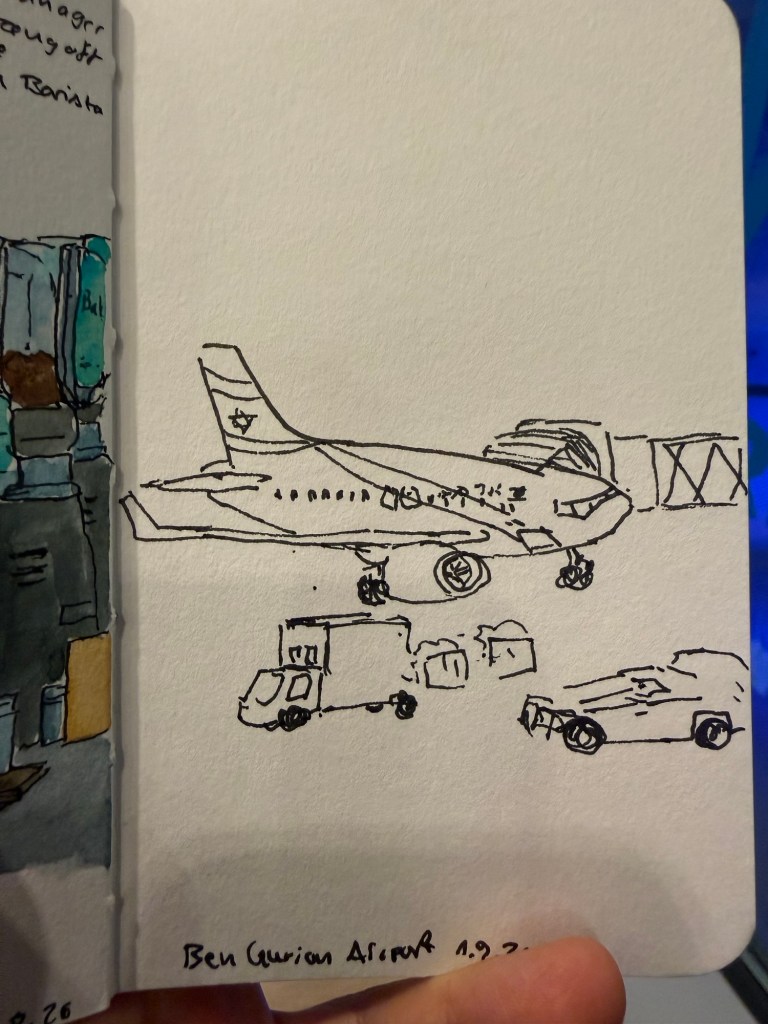
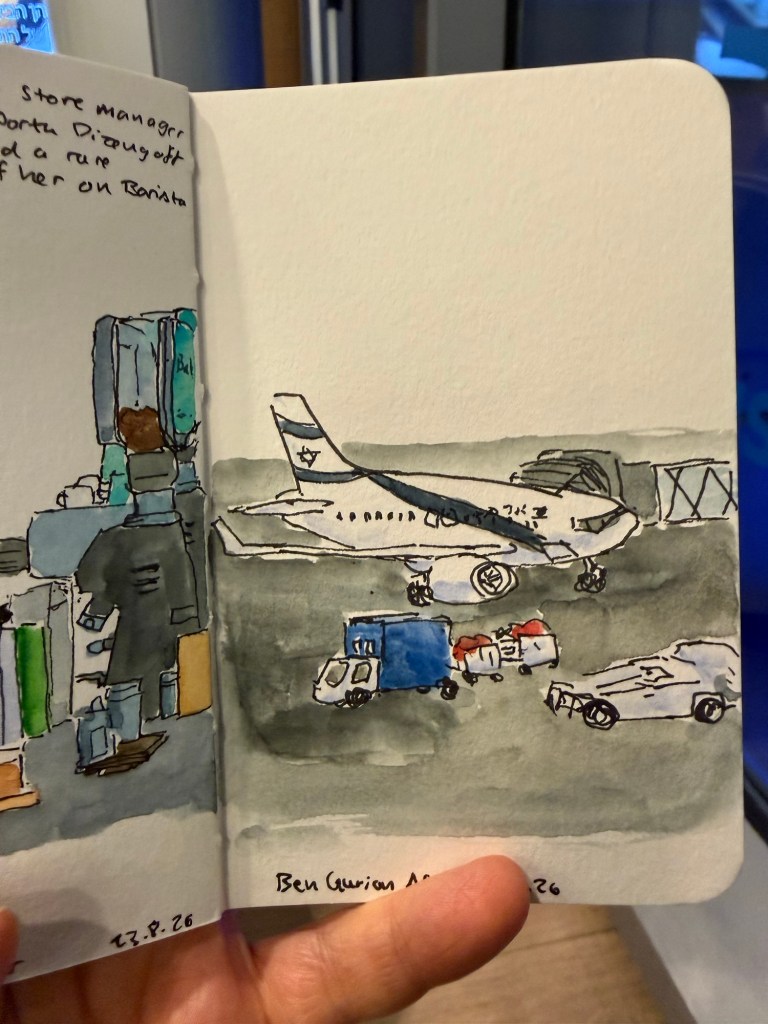
5 minute sketch at the airport
I was tired and this came out wonky but I don’t mind as it captures the moment well and I had less than 10 minutes to get it done.
Stillman and Birn pocket beta watercolour and fineliner.
Sketch of the wonderful lunch at my favourite cafe:
Stillman and Birn pocket beta watercolour and fineliner.
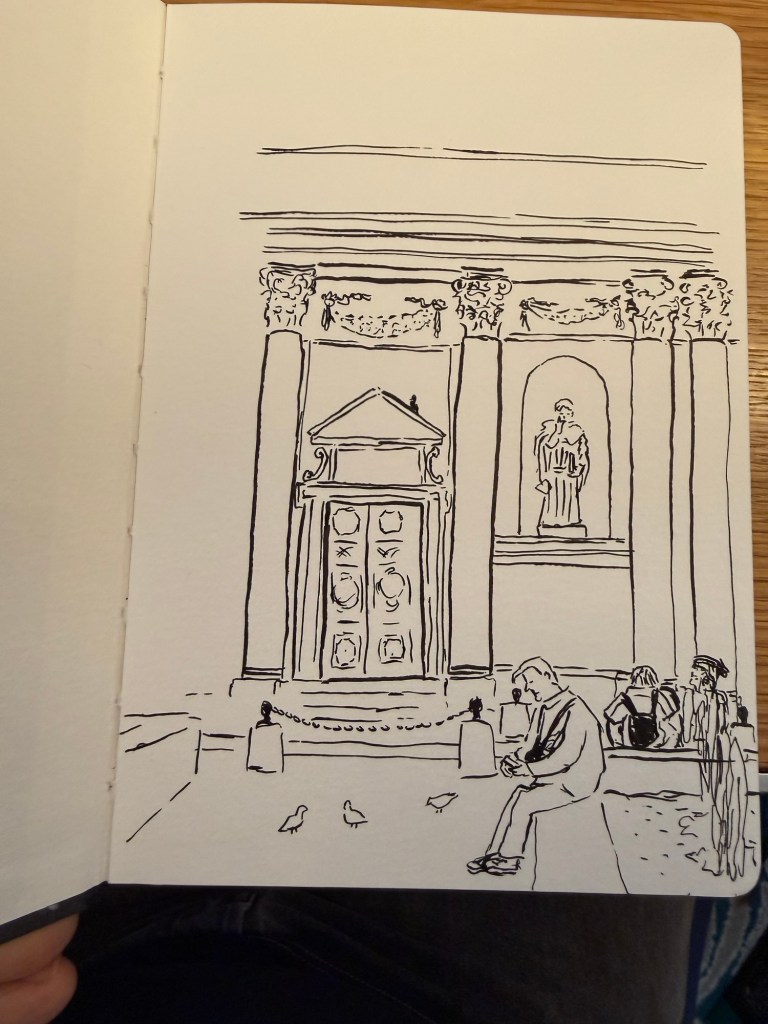
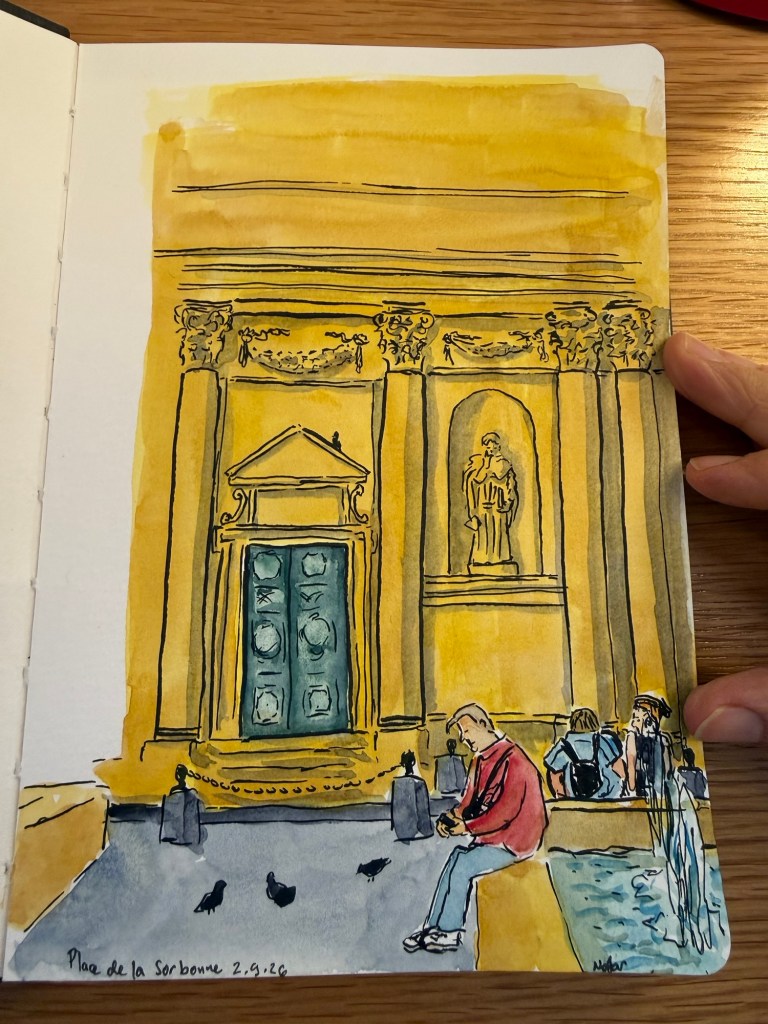
I bought a Hahnemuhle A5 watercolour sketchbook and a new set of Uni Pin fineliners. This sketch of Place de la Sorbonne was done in situ with a brush pen but I ran out of time so I took reference photos and added the watercolour later.
Line work Now with watercolour
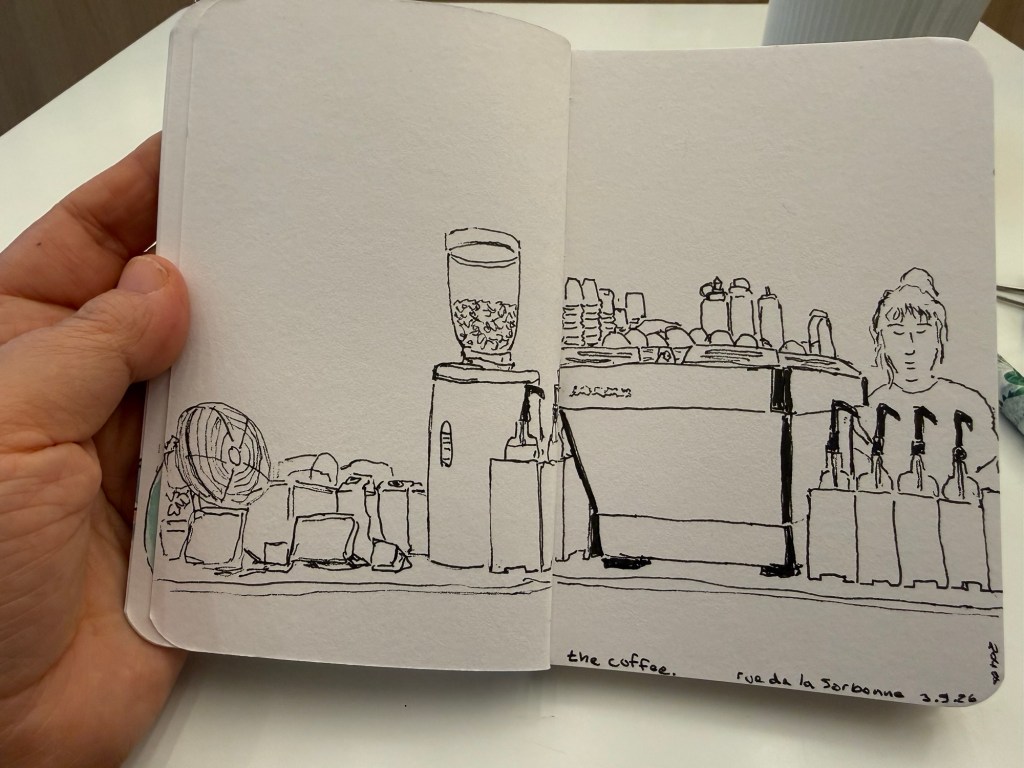
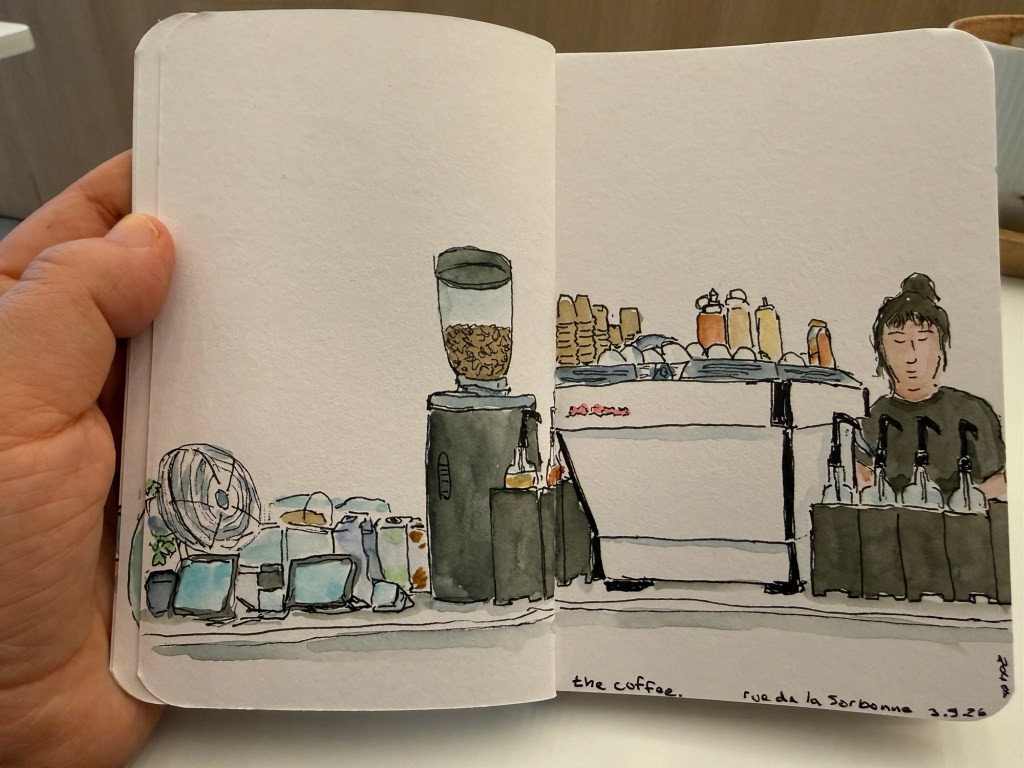
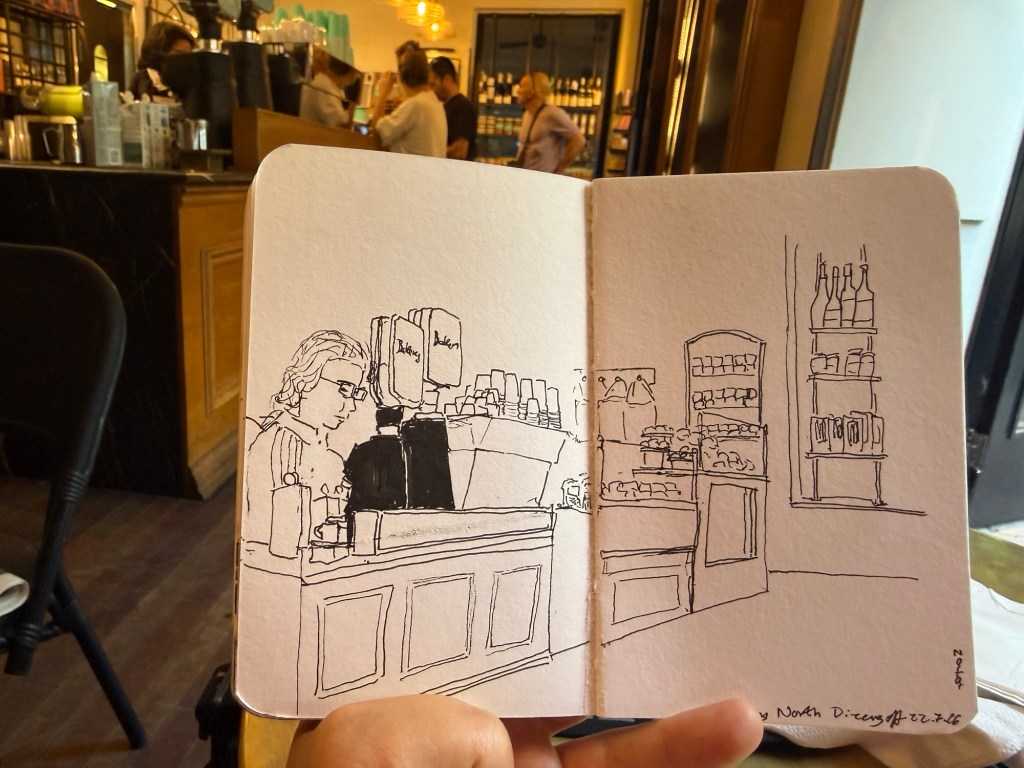
I went to The Coffee, one of my favourite local cafes. I sketched the shop and the barista:
And had enough time to add watercolour. I was hesitant to show it to the barista once I was done but in the end I mustered the courage and did and she liked it.
The finished sketch.
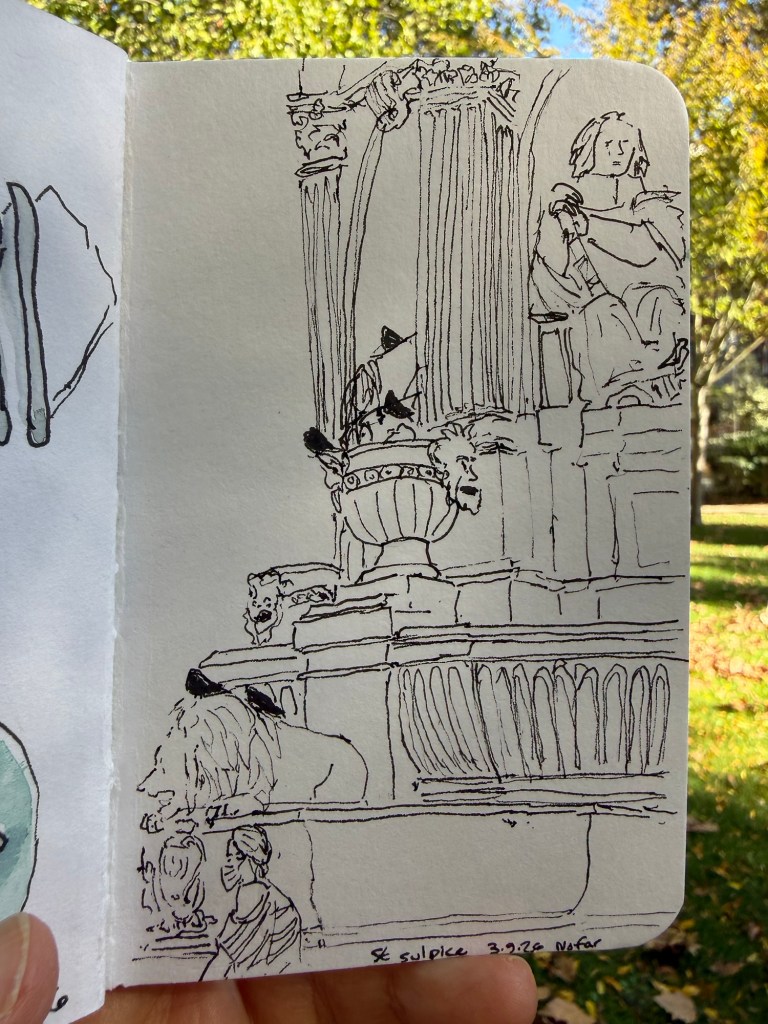
Had about 10 minutes to sketch in the St Sulpice square which was enough to get some quick line work done and take some reference photos for later.
The sketch of the fountain
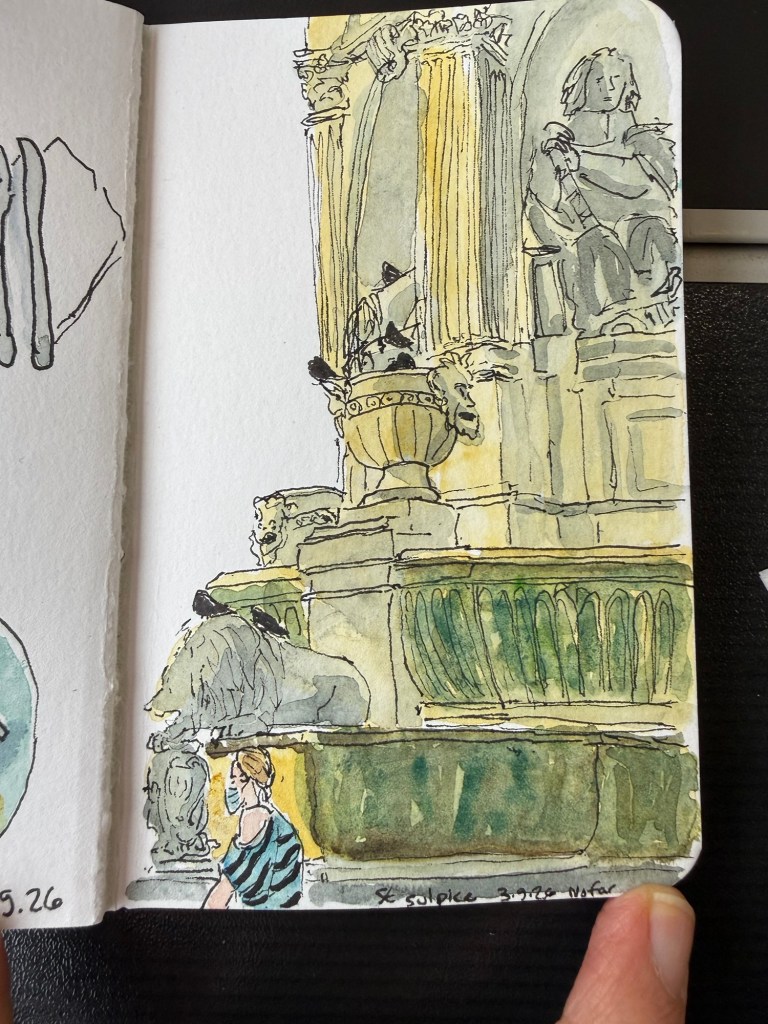
Finished it later:
The complete sketch
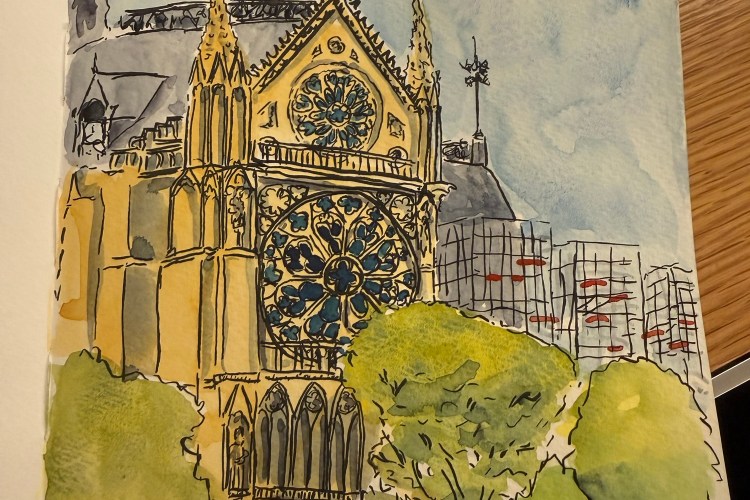
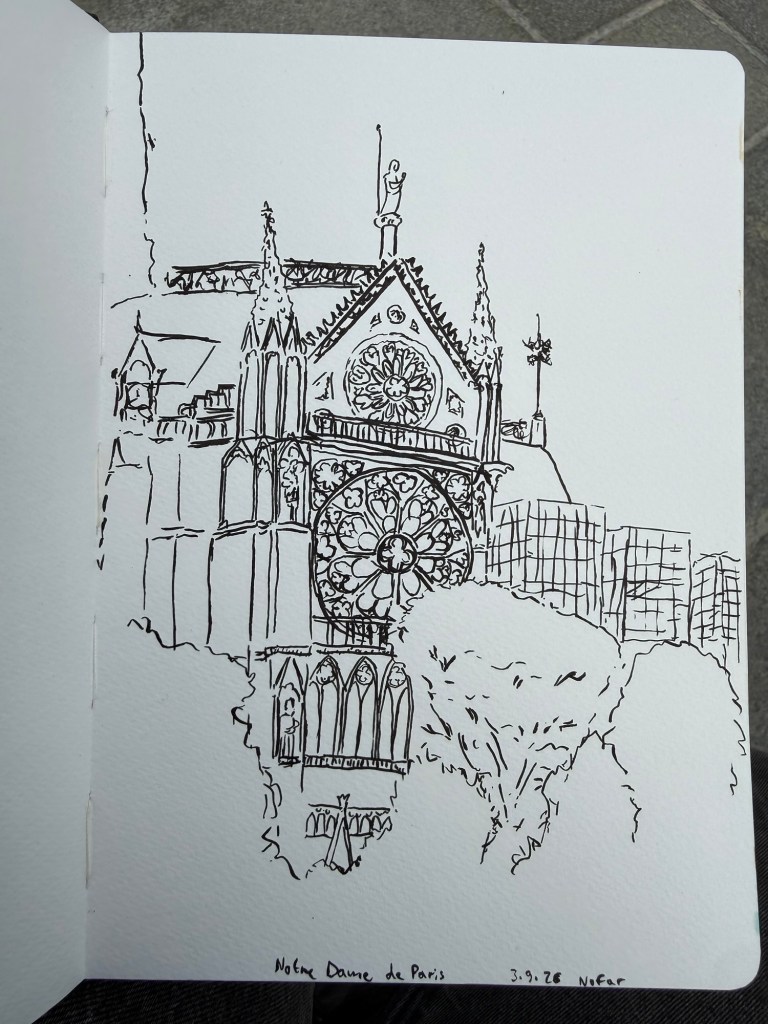
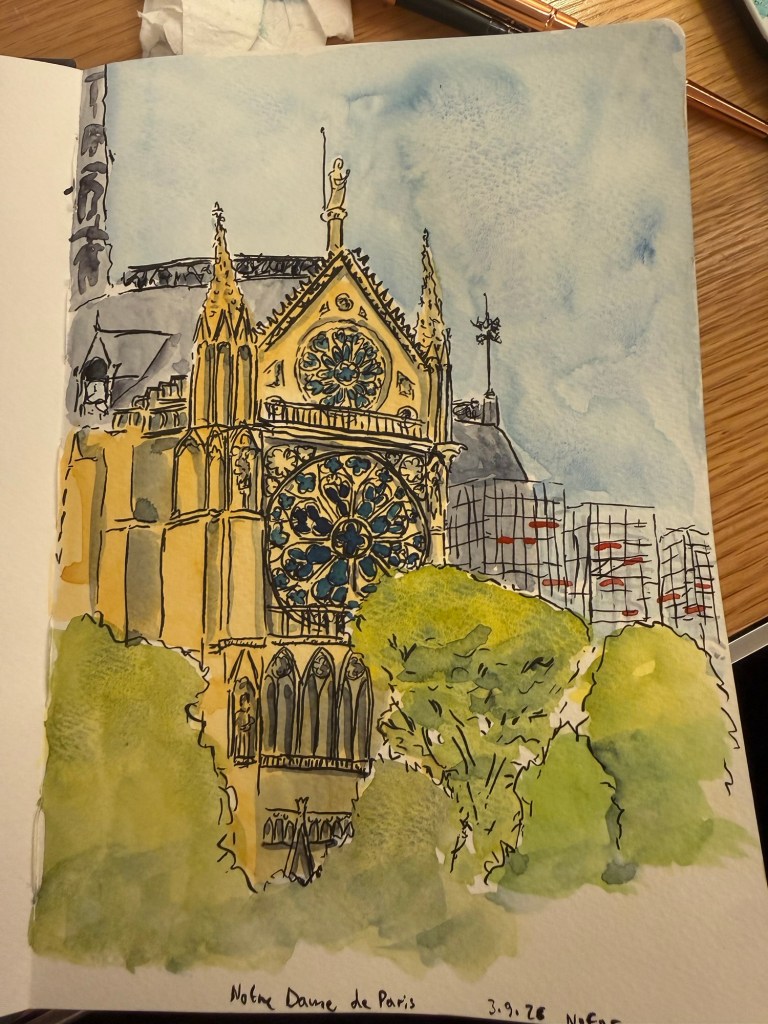
Yesterday I went to the Notre Dame, my favourite, and managed to get a line sketch in my Hahnemuhle A5 watercolour sketchbook but then the heat and crowds were too much for me so I completed the sketch in my hotel room later that evening.
Notre Dame sketchThe complete sketch
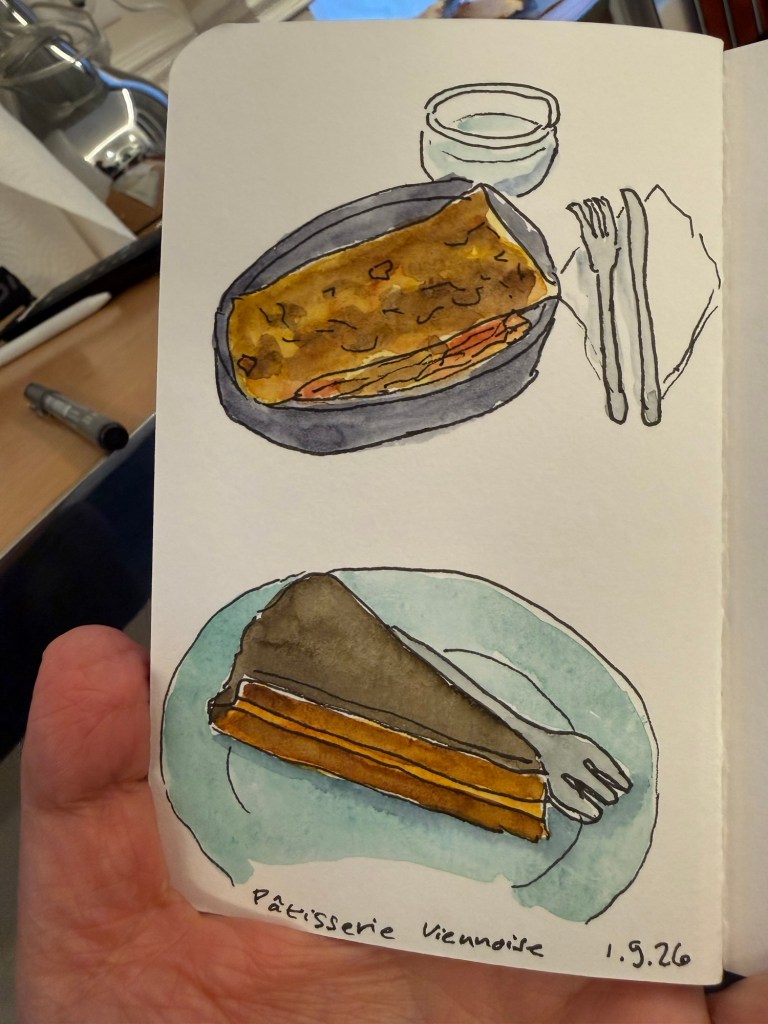
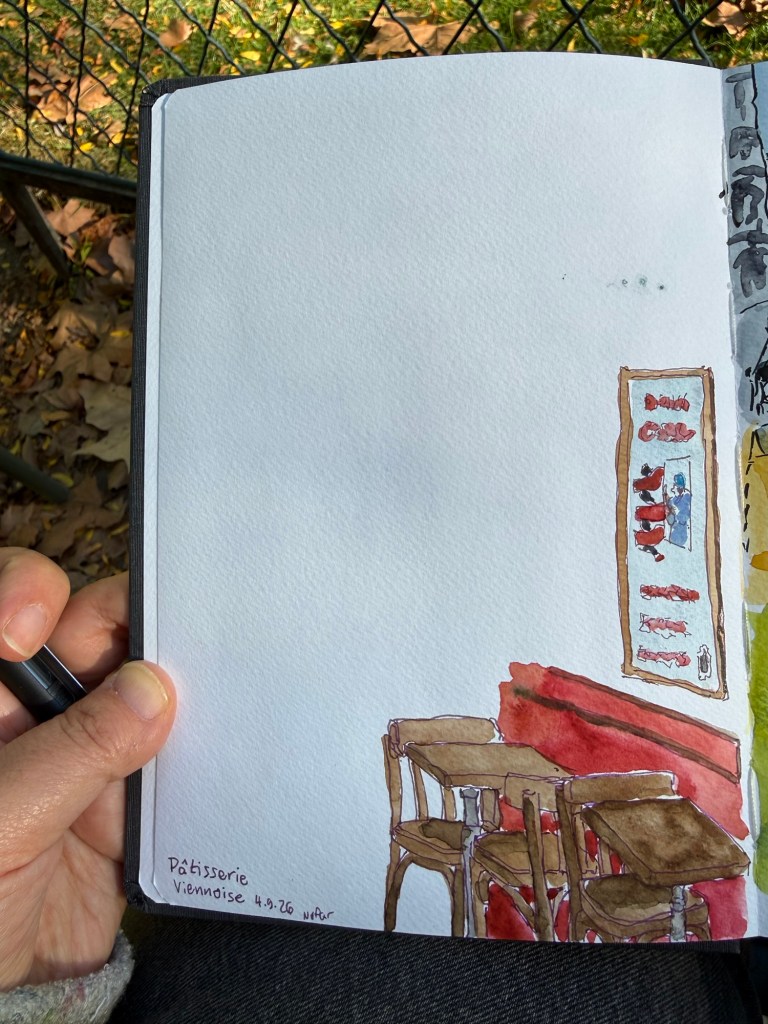
I tried sketching the interior of Patisserie Viennoise, my favourite cafe, this morning but didn’t find an inspiring angle so I just created a brief vignette in my Hahnemuhle:
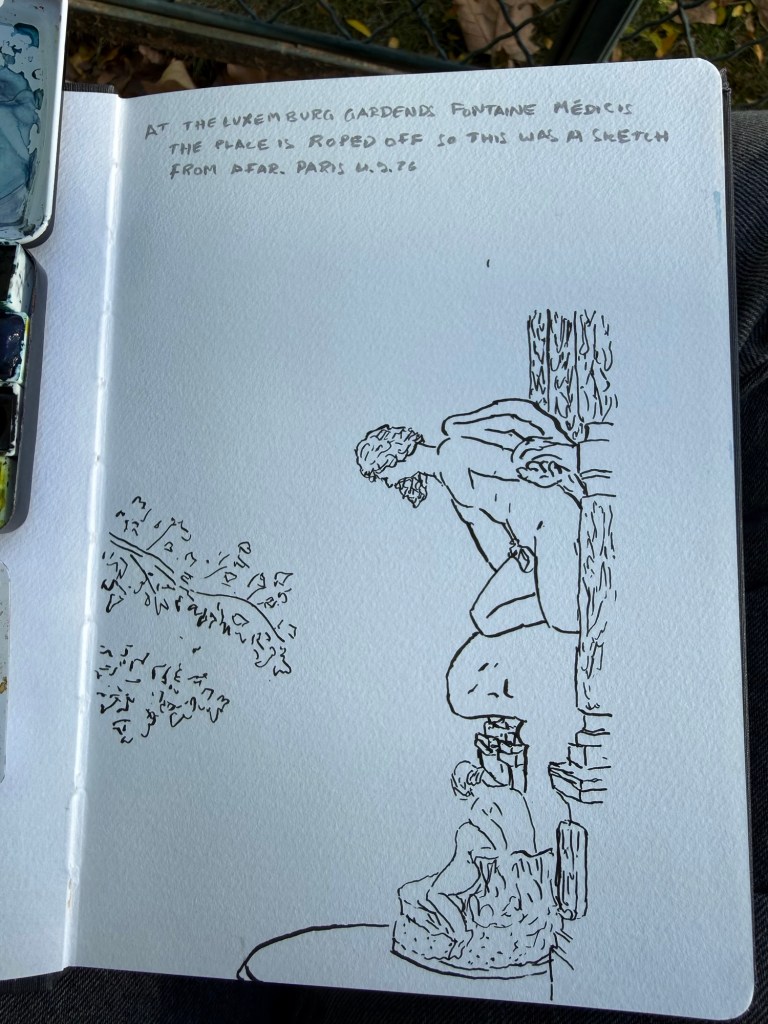
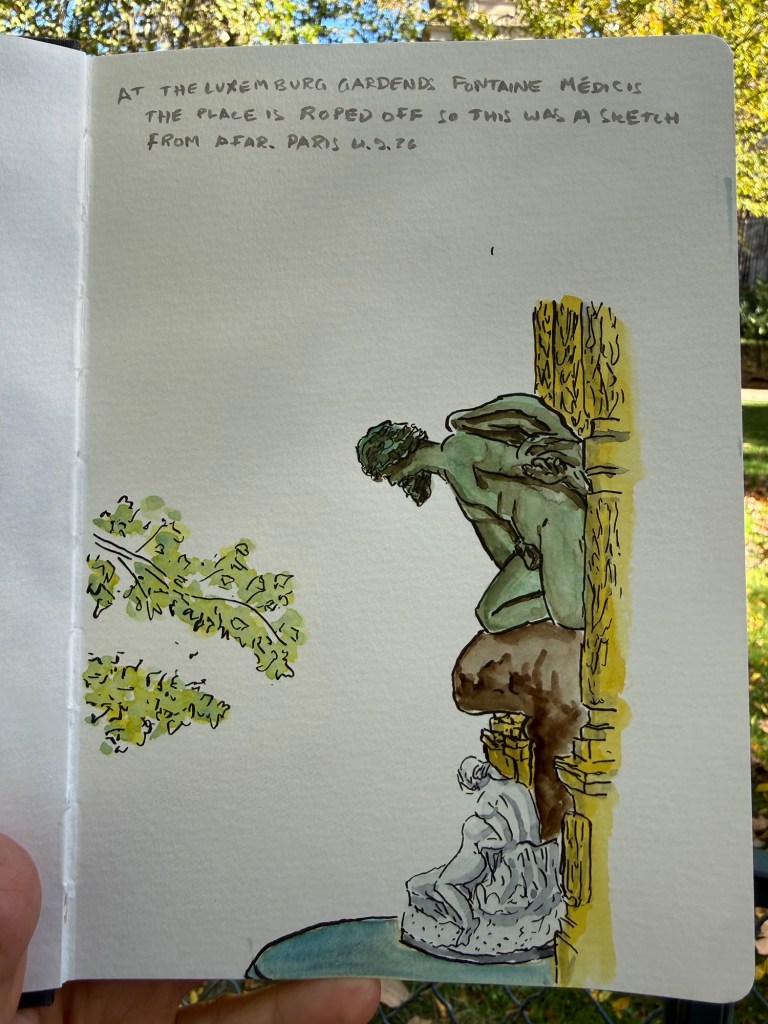
Later I went to the Luxembourg gardens and sketched the Medici’s fountain. It was closed off to visitors for some sort of maintenance so I sketched it from a distance.
Line sketch in my Hahnemuhle A5
The complete sketch:
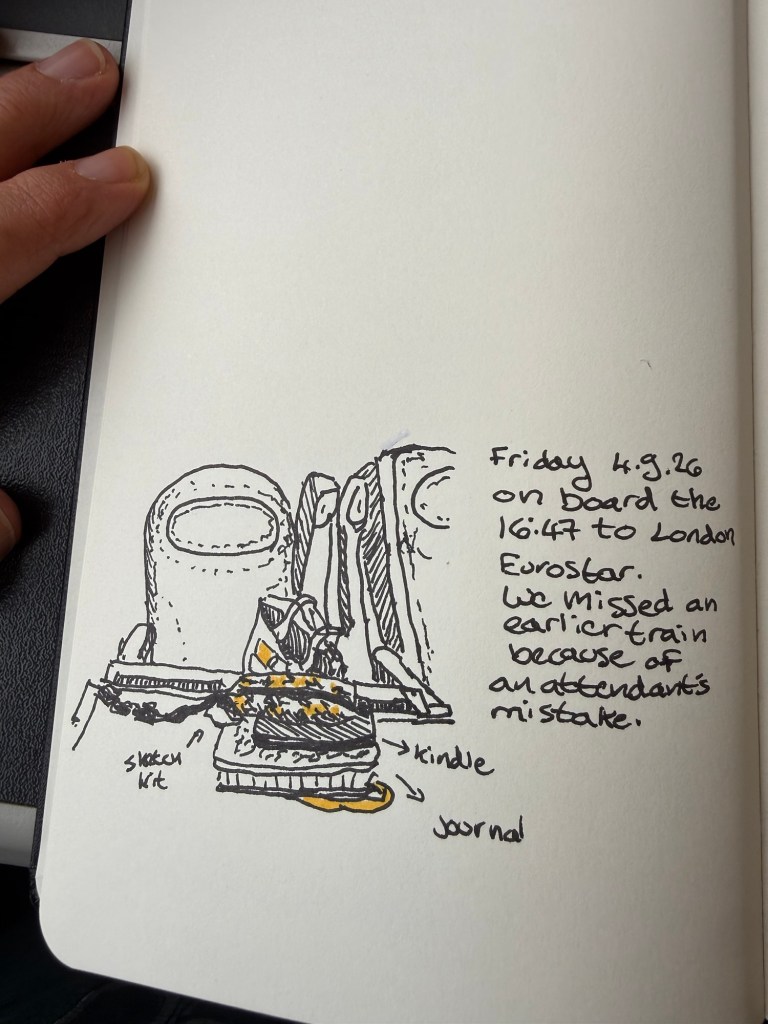
Bought an A5 Moleskine sketchbook on sale and made this sketch on the bumpy train ride from Paris to London:
So far I have managed to sketch and journal daily. London’s schedule is more hectic so we’ll see how things go there.
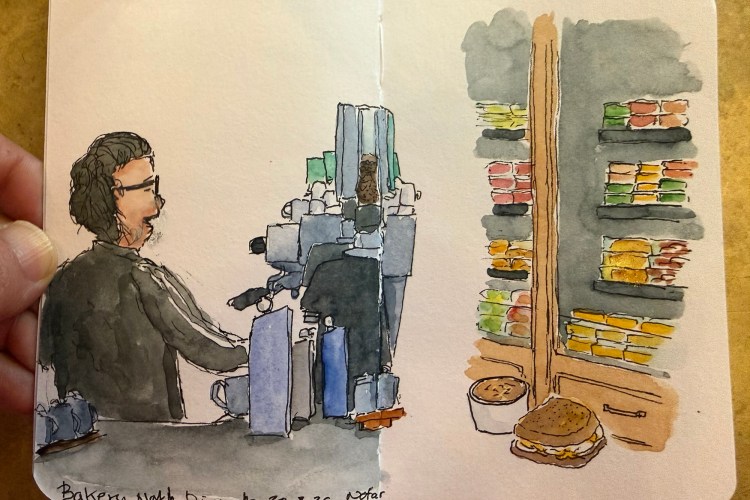
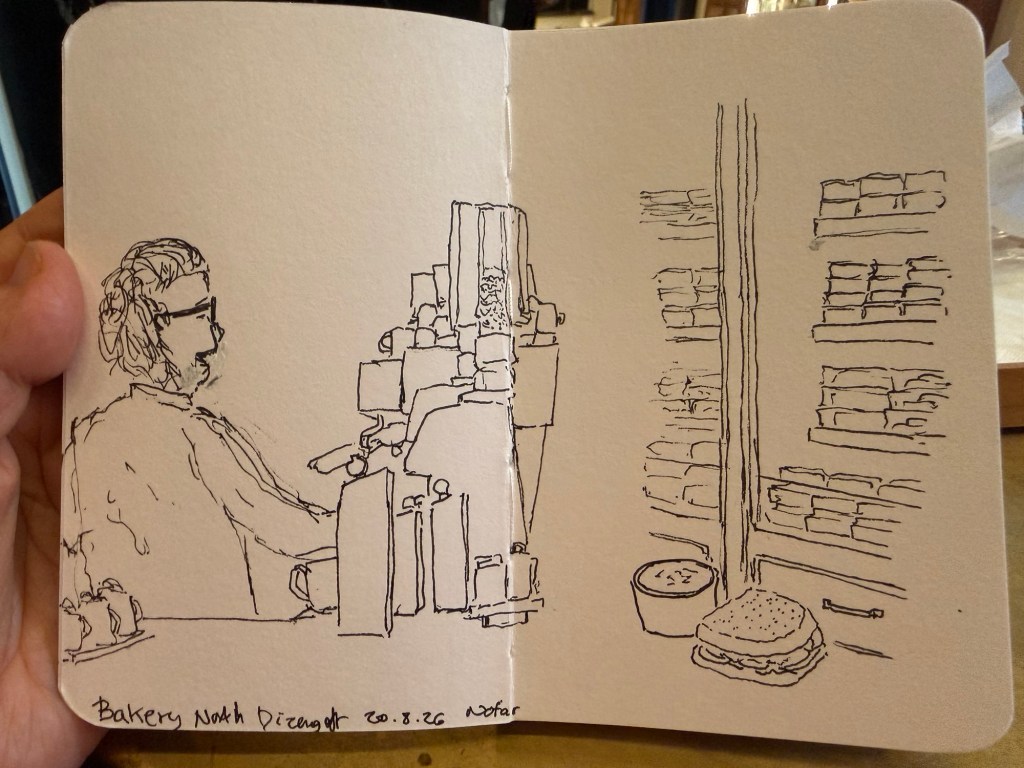
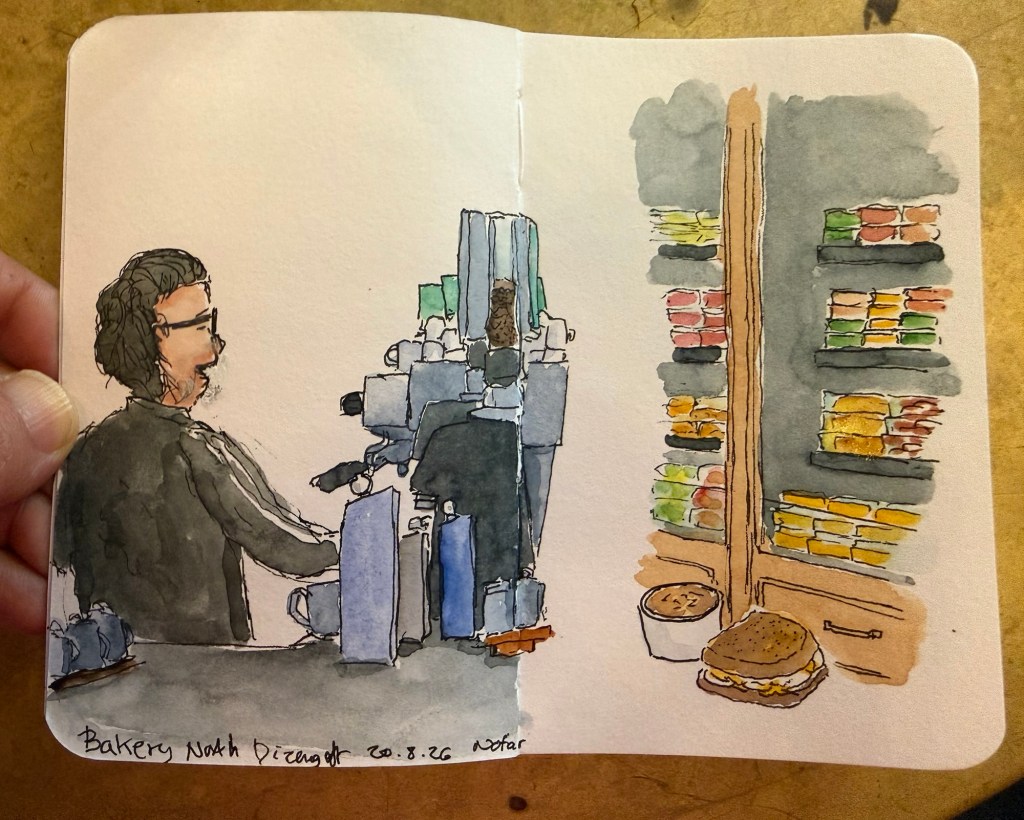
After finishing my previous Stillman and Birn pocket Beta sketchbook I started a new one. I normally use the first page to draw my palette, but this time I just skipped the first page and started a full page spread. I was sketching in my favourite cafe after a hot and humid run and for a change I decided to also sketch the fridge full of deli food.
My favourite barista on the left, deli food fridge on the right and my breakfast at the bottom
I made a few mistakes with the original barista sketch, which I erased with a white gel pen. It’s not the cleanest, but that’s the nature of urban sketching. I also forgot to colour in the tomatoes in my sandwich – an omission that I’ll correct later.
The full sketch
It’s a bit of an unusual spread for me, but I like it enough to continue experimenting with spreads like it in this sketchbook.
I filled the last page of my Stillman and Birn pocket beta today, a bit less than a year after starting it.
Last page
After a hot and humid run this morning I went to my favourite cafe and sketched Orit, my favourite barista. The line drawing was done with a Staedtler 0.8 pigment liner pen.
Line sketch
Then came the watercolours- Schmincke Horadam in a tiny art toolkit palette.
It’s been a while since my last update, and though I drafted a post in my blogging notebook over a month ago, I didn’t get to posting it here.
I got a new job! The process was much quicker than I expected both because of my excellent friends and colleagues network and because I aggressively pursued new employment opportunities. I was getting three interviews a day plus sending several applications a day despite being sick and having another “delightful” rocket round from Iran to deal with. In the end it took me two and a half weeks to find a new (and better) place, and I learned a lot from the process.
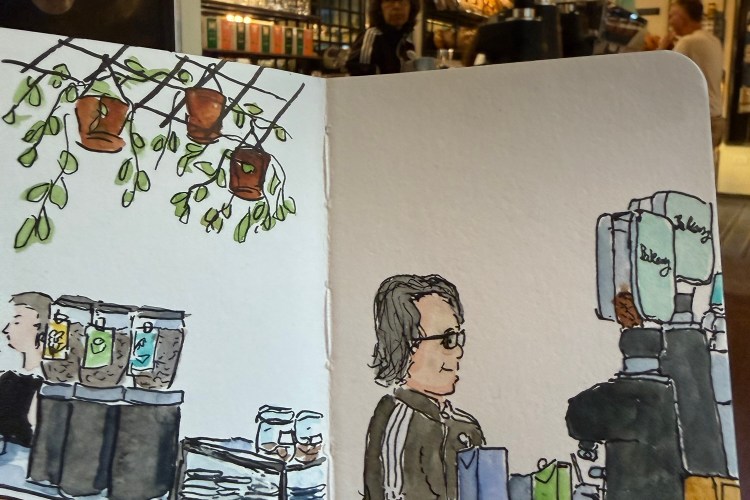
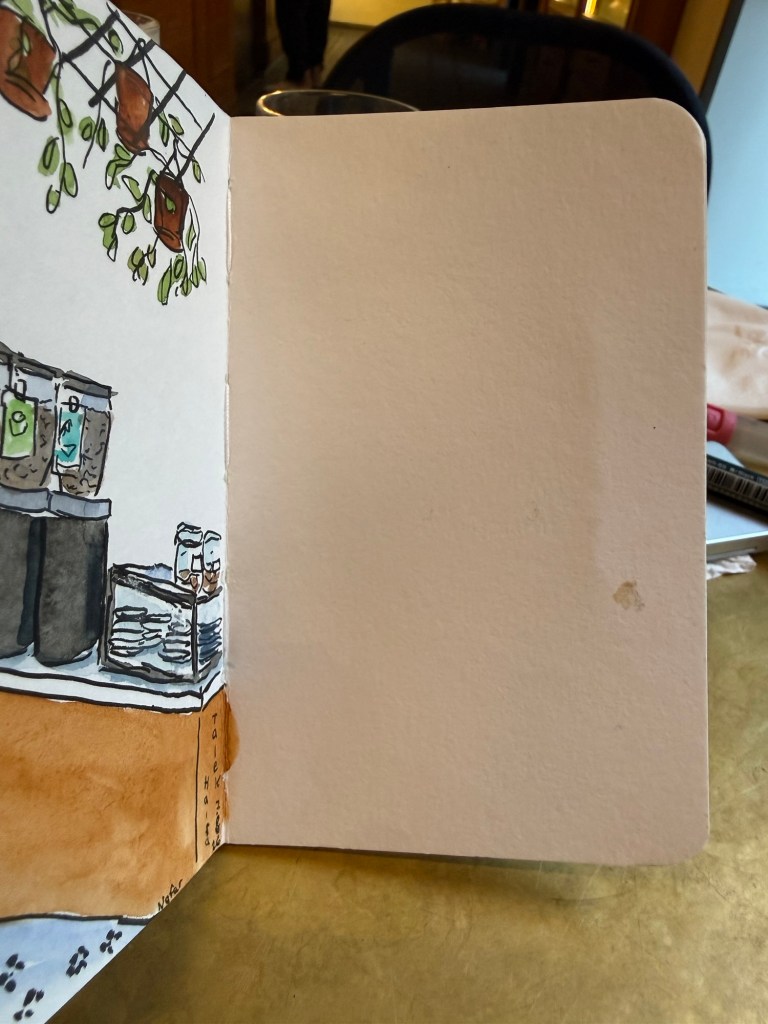
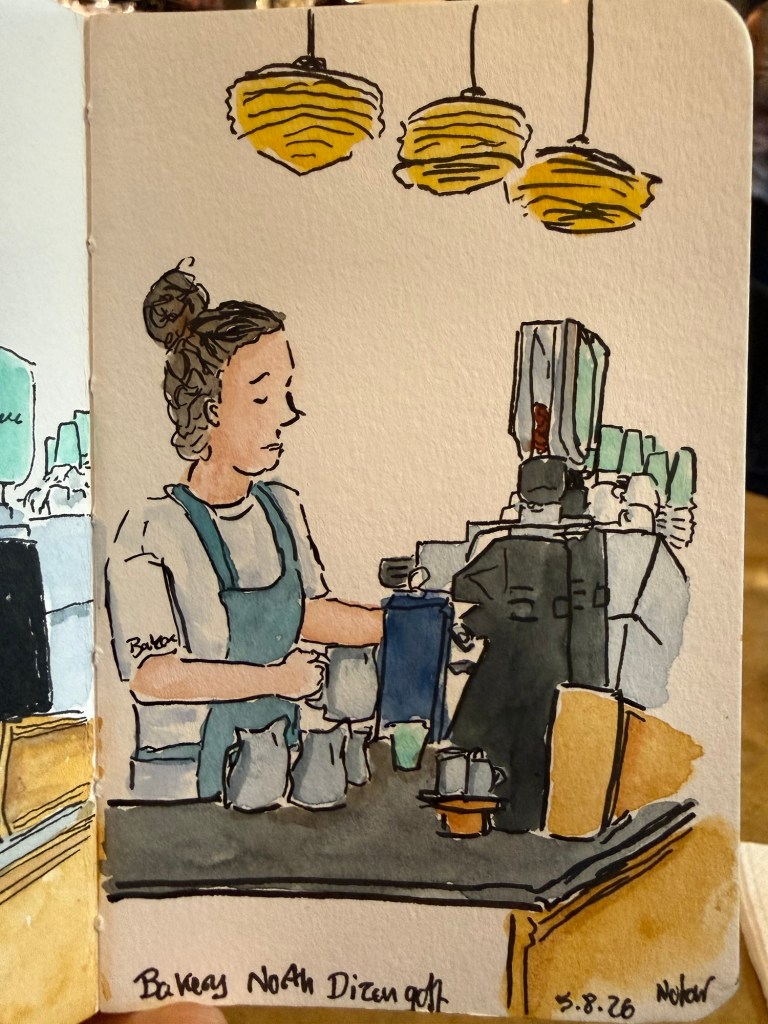
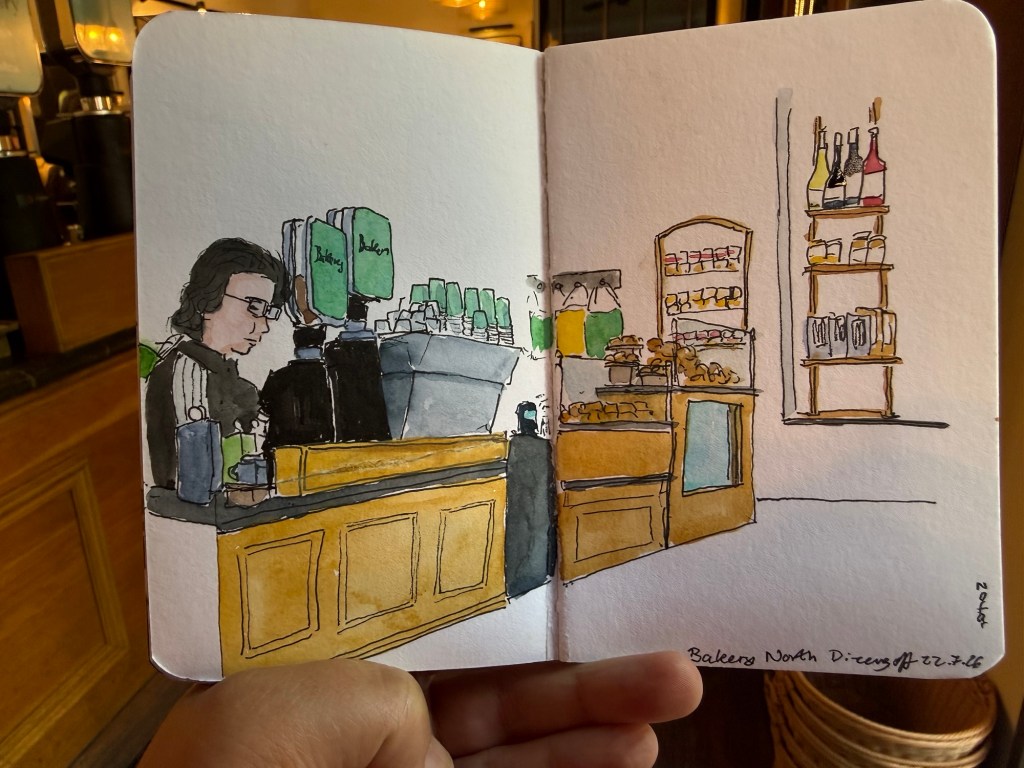
Bakery cafe sketch
I had a little time off before I started my new job (I started two weeks ago) and I spent most of it on catching up with friends, getting on top of doctor’s appointments, decluttering and honing my technical skills. I didn’t get half of what I planned on doing done, but that’s the nature of the beast. I am very glad that I prioritised meeting friends because it was so energising and fun and fulfilling to be able to do that. It made me realise yet again just how important real life meetings with friends are.
I finished the NYT Summer Reading Challenge on the 6th of August, well before the deadline. I enjoyed the challenge and I’m glad that I participated as it got me reading books that have long been languishing on my reading list. I decided that I will review each of the ten books that I read, so expect those reviews up shortly.
I saw the new Spiderman movie (Spiderman: Brand New Day) and it’s very good. It reminded me of The Thunderbolts, which I loved. It was well written and performed, and Florence Pugh and Jon Berenthal steal every scene they’re in they are so magnetic.
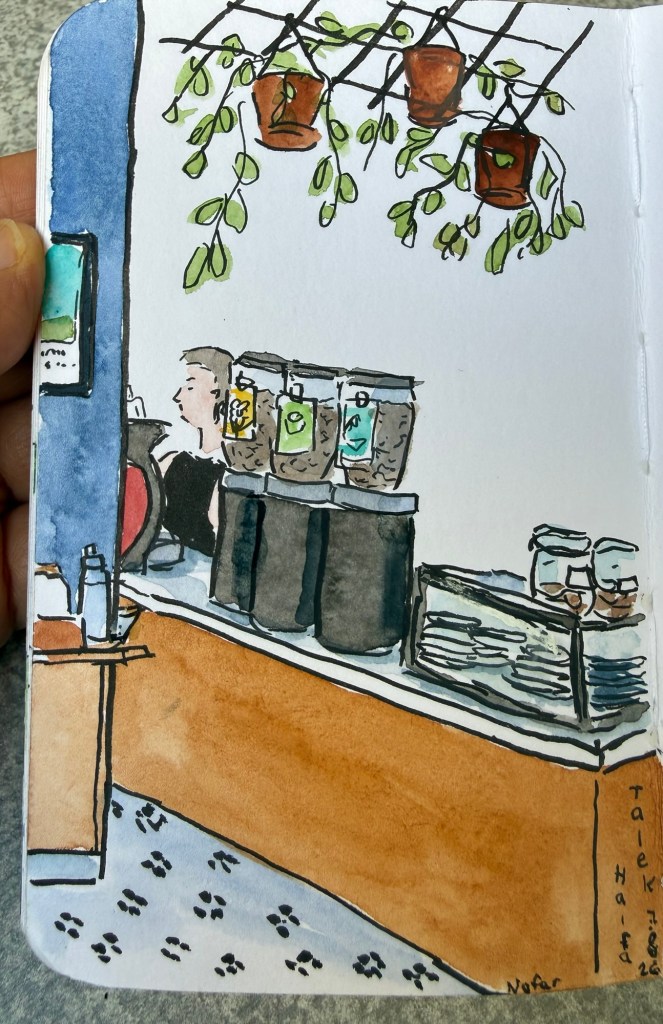
Talek cafe sketch
I’m almost done with my Stillman and Birn pocket beta sketchbook and I might post a flip-through here. I normally take ages to finish a sketchbook because I have so many sketchbooks running in parallel, but this one took about a year, which is super fast for me. Most of it is full of cafe sketches, because I’ve put a focus on sketching people on the move. I do plan on getting back to more landscape and other sketches in my next sketchbook.
I’m still struggling with my journaling, and I also have a large pile of notebooks that I was planning to review but I’m not so sure how to go about that. Standard reviews take a lot of time and I’m not sure that they’re that enjoyable or interesting to read. I don’t want to spew a fact sheet of information on paper weight and binding types as you can find more accurate information on the manufacturer’s website these days. Even Moleksine, who had been elusive about their paper weights in the past, now publish all the relevant details on their website. I think it would be more interesting to read about why I selected a notebook, who I think would enjoy it, and who I think should steer clear of it. What do you think?
I really like today’s cafe sketch, so I decided to post it.
Here’s the line work before I added watercolour:
Cafe sketches are a great way to get used to sketching people in real life. If you want to get started, take a sketchbook and a pen to a cafe near you, and just spend 10-15 minutes drawing as many people as you can.
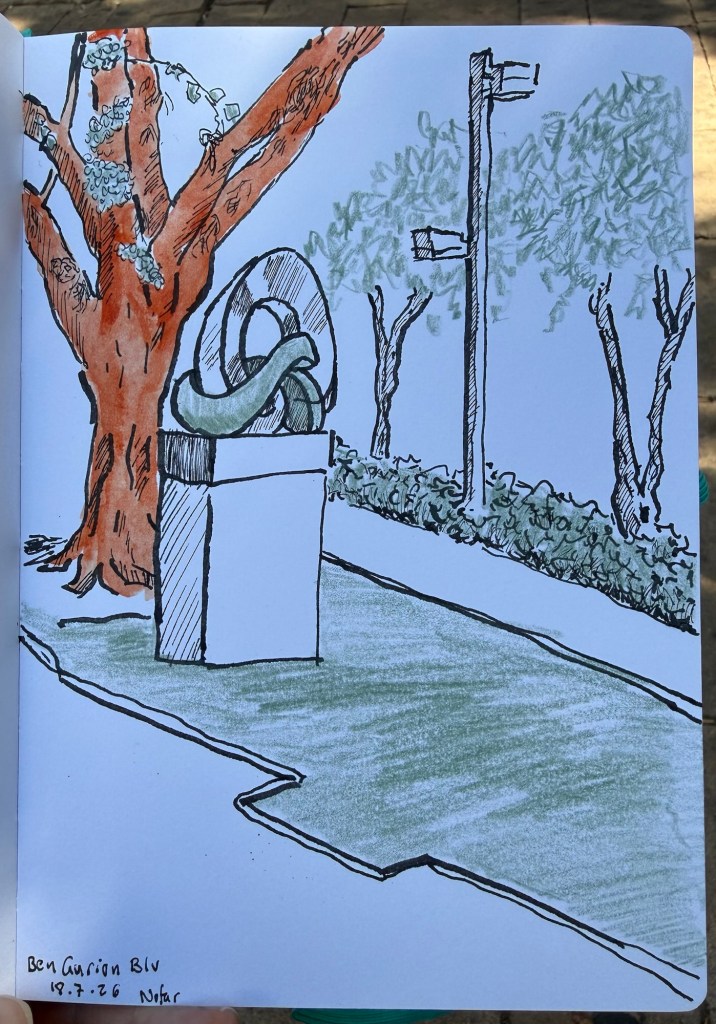
I wasn’t feeling well earlier this week, so I decided to sketch close to home and to simplify my setup. I was feeling the “Toulouse Blues” (where you’re part of the urban sketchers community but miss out on the urban sketchers symposium in Toulouse), so I wanted to sketch to cheer myself up.
The sketch
The setup was unusual for me on all counts:
The notebook is a Leuccchturm1917 sketchbook that I’ve had since my first urban sketchers symposium in Porto back in 2018. It was Leucchturm’s first foray into sketchbooks, and so the paper isn’t the best. They have since improved it somewhat, even though it’s still far from a high end sketchbook. In this case I wanted something simple and serviceable, and it helped that this evoked fond memories of symposiums past.
The pen is a Sailor Fude Mannen fountain pen with De Atramentis Black Document ink. I usually don’t bother with the Fude pen and use fineliners but in this case I wanted something more expressive.
Two colors only – the green is a Faber Castell Polychromo earth green (172) and the Sienna is a Daniel Smith Quinacridone Sienna watercolor stick. That with a waterbrush provided the reddish earth tones on the tree trunk. The stick was a gift from the Poznan symposium goody bag, and I still find it very cumbersome and messy to use.
I kind of like the result, and I’ll try to create more experiments like it in the future.
The Urban Sketchers Symposium in Toulouse is starting next week, and this year I won’t be participating. For the lucky few that are going to be there, whether as official symposium participants or as “free range” sketchers I thought I’d write down some insights and tips that I gathered from last year’s symposium in Poznan.
In no particular order, here they are:
Talk to people – even if you’re shy or an introvert, the symposium is THE place to connect with people not only because everyone will be nice and kind and many are also introverts, but also because you have a guaranteed shared interest: urban sketching. If you’re unsure how to approach people, just ask them about their favorite sketching setup or tool and see what happens.
Wear your badge everywhere, even at breakfast at the hotel, even if it’s “just” an urban sketcher ID tag. This lets other sketchers know who you are, and opens up opportunities to connect and share with other sketchers. Invite them to join your table at the busy hotel buffet, or ask them where they had lunch or where they’re going to sketch next.
Swap and share art supplies. People rush from place to place, and people forget or misplace art supplies all the time. It’s worth packing some extras and sharing them around – pencils, pens, a tube of paint, etc. You could save someone’s workshop experience with this simple gesture, and it costs you next to nothing. And swapping art supplies, even for a brief sketch is a great cost-effective way to try before you buy. I packed a whole pencil case full of a range of pencils for a workshop and then forgot it on the desk in my hotel room. Thankfully the wonderful instructor and workshop participants had enough to share to help me out and allow me to fully participate in the workshop.
Don’t be afraid to ask for help – whether it be directions to the starting point of the sketchwalk, help with understanding something you didn’t get in a workshop or demo, or assistance with your gear, people are ready to help if you just ask them.
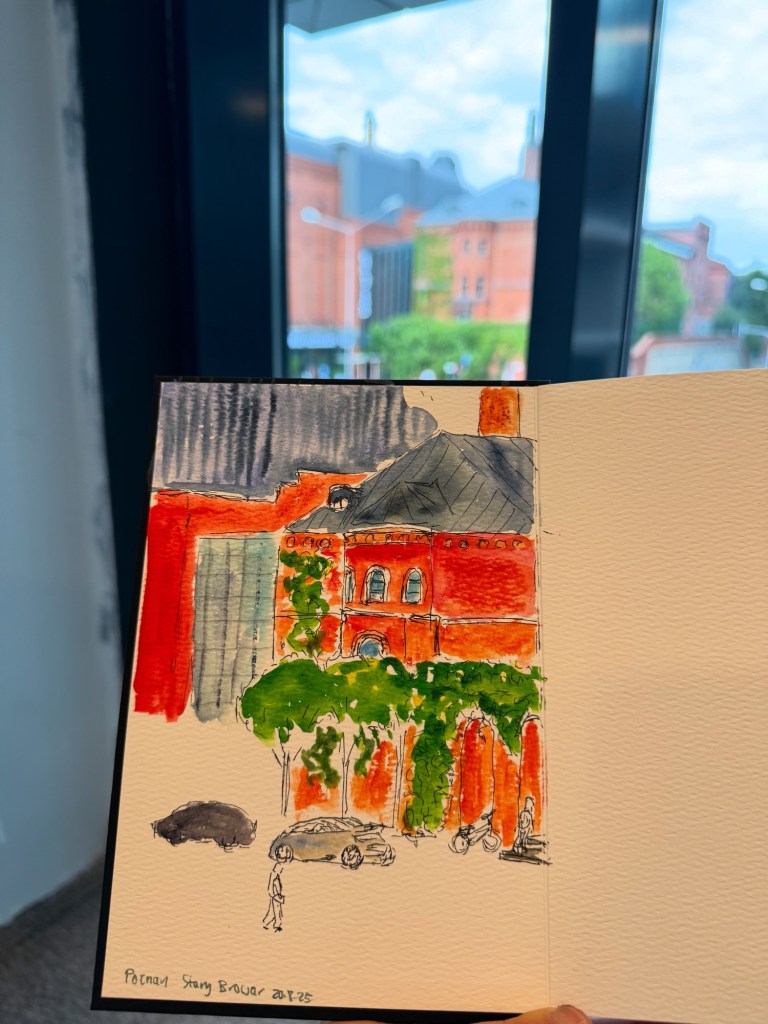
Quick sketch made from goody bag supplies just outside the art market
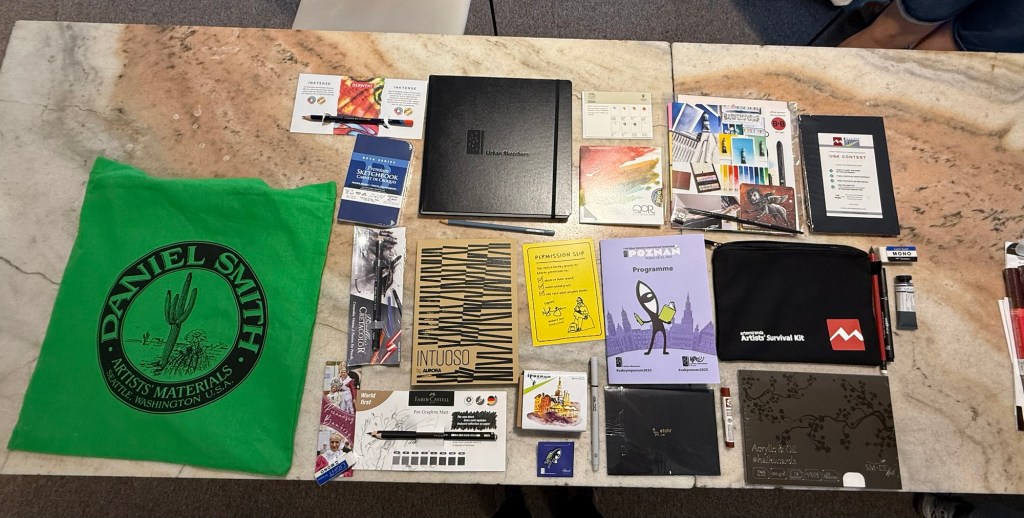
Go early to collect your badge and goody bag and take time to appreciate them. The symposium crew put in a LOT of effort to create amazing goody bags with the sponsors. Collect the bags early and help the symposium and sponsor out by posting about them on social media (Instagram in particular, using the correct tags), and by using them and enjoying them. In Poznan most of the attendees sat in a room adjacent to the one where we collected the bags, did a throw down post and then a sketch with lovely supplies that we got. There was a wonderful view of a historic building next door and it was really fun to create this shared sketching moment. Also remember to share and swap with other sketchers and the volunteers.
Goody bag from the Poznan symposium
Follow the official symposium instagram and use the official tags. The Instagram will have giveaways and useful information (some of the giveaways are also open to non-symposium participants), and the tags help spread the word around and bring positive attention to the city and the sponsors. It was amazing to see as the symposium advanced how much attention Poznan got due to hundreds of talented sketchers bringing it to life.
Embrace the locals. They will notice you because you’ll be noticeable – large groups of sketchers call attention to themselves. Remember to represent the urban sketchers community, be kind and welcoming, and answer any questions they have. From my Poznan experience the locals will embrace you in return – with kind words, tips, stories and sometimes a free drink or a bite to eat (but don’t do it for the freebies!). Children in particular are attracted to sketchers, and we oftentimes shared bits of sketching paper and art supplies and invited them to join in.
Respect the instructors and lecturers. It’s tough to stand in front of a crowd and talk about your art. Don’t mess with your phone during lectures, listen to the instructors, be kind and respectful, and be open to learning. This is a given, but it’s worth stating anyway just in case because it’s that important.
Be nice and kind to the volunteers and talk to them. Many of them are sketchers, many of them are just locals who answered ads and are curious about sketching and the symposium. Share your work and be kind to them – it’s a tough job performed by a dedicated and small group. People gave them stickers, sketches, art supplies, and just chatted with them. A great volunteer can really improve a workshop, and it’s worth acknowledging their work.
Be nice and kind to restaurant and cafe waiters, baristas and owners. Urban sketchers love to camp in these locations to sketch, but be aware of your surroundings. Don’t hog tables during rush hour, be sure to order food and drink (don’t share one dish for four people, even if you’re broke. It’s not fair for the waiter or for the restaurant), tip well, and clean up after yourself. Tag places if you sketch them to raise awareness to the meal you enjoyed there, and remember that you represent urban sketchers everywhere.
Come with art supplies to donate. There will be an opportunity to do so throughout the symposium. We all have too much or supplies that we no longer use, so donate them (if they’re in good condition) to the local charity the symposium is sponsoring. The front desk volunteers usually start the collection on the first full day of the symposium.
Go to the art market. Make sure to visit all the stalls – many if not all of them are sponsors, and there will be local suppliers that are worth checking out. Try new things, talk to the vendors (they’re usually very knowledgeable), and be prepared for the rush of the first day crowds. Many stalls will also have giveaways and contests set up, so be sure and ask about them.
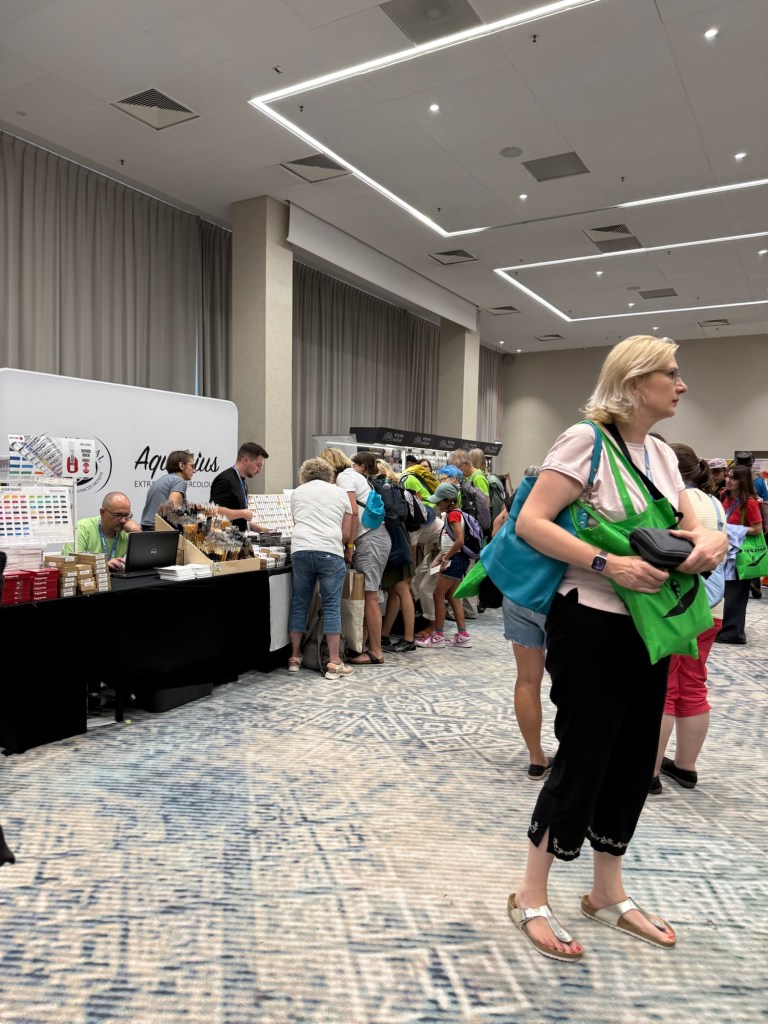
Art market first day madness
If you are looking for deals, go the art market during the final hours it is open. Although you will find many things out of stock, most vendors will have deals on the last hour or two of the market, to avoid having to ship back supplies.
Talk to the locals, whether they are sketchers, volunteers or instructors. Ask them for good, cheap restaurants for lunch, cafes worth visiting, shops and market stalls of note, cool places to sketch in, and where they get their art supplies. Their local knowledge is priceless.
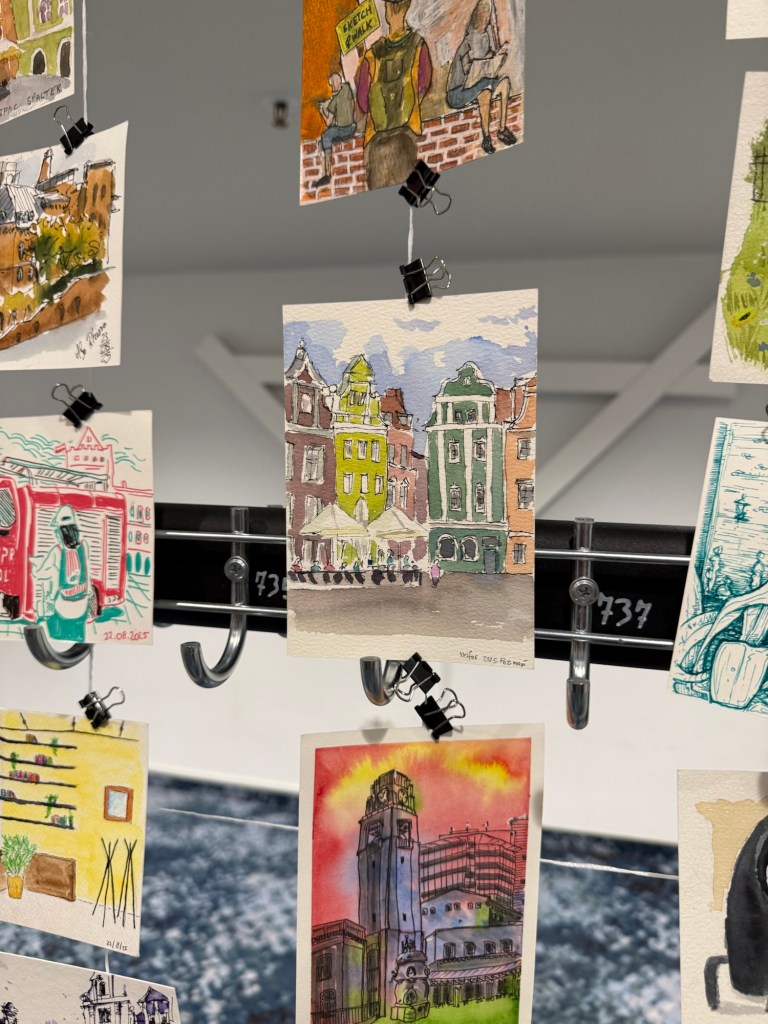
Sketch a postcard. Even if you don’t work in postcard size, or you don’t love the paper, or you feel self-conscious about your work, sketch a postcard and participate in the postcard exhibition. It’s fun to see your work out there, and most participants get prizes, plus you can always donate the postcard for the silent auction and help raise some money for the organization.
Go to the daily morning briefing. Even if you’re tired, even if you don’t feel like it. It’s short, it starts on time, and it has a lot of important information that you just won’t get anywhere else. Also there are giveaways, but I won’t ruin the surprise…
Go to the demos, lectures, drink and draws – the morning lectures were great, and worth listening to and learning from. The demos were a fantastic way to get to experience the techniques of sketchers that you couldn’t get a workshop with, and the drink and draws are just a nice way to connect with people and share your sketching love. I will confess that I was so tired at the end of each day that I missed out on the drink and draws and I regret it.
Be ready to be tired, and try to pace yourself. It’s a lot of fun but very draining to run around town and sketch all day. If you take a lot of workshops or go to all the sketchwalks you will have very little down time between events. Be sure to hydrate, rest, and know your limits. Take into account that you’ll be lugging a lot of weight around (art supplies, a stool, water), and that adds to the fatigue. Check your schedule and if you have only an hour or so between workshops, find someplace close and convenient to grab a bite to eat. Save the fancy restaurant for the evening.
Share knowledge among the group – found a great place to sketch in? A wonderful restaurant or patisserie? A clean toilet or a decent supermarket? Share that information with other sketchers.
Follow people on Instagram. Even if you normally avoid social media, this is how you can stay connected with other sketchers after the symposium, and be inspired by other artists.
Never, ever, ever critique someone’s work. Ever.
We share, we don’t compare. This is a Liz Steel mantra and something you should carry with you during the symposium. Be inspired, not intimidated, by other sketchers’ work.
Follow along with the demos – if you’re going to a demo, it’s OK to watch and listen but it’s equally valid to sit down and sketch while the demo is going on, trying to follow along as you work. There is value in both these approaches – don’t be afraid to start out by observing and then dig in with a sketch of your own.
Try new things, and don’t worry about the results. This is a tough one, but an important one – the point of the workshops and demos isn’t for you to come out with masterpieces, but for you to try out new things. When you do that, you may not like the results, or it may take a few tries. That’s OK. The best workshop I had in Poznan was also “traumatic” in this way – I made several sketches and they were all terrible. Only on the last sketch did things click, and I got one of the best sketches I have ever made – and one that took third place in the postcard exhibition.
My postcard on display (it’s the one in the middle)
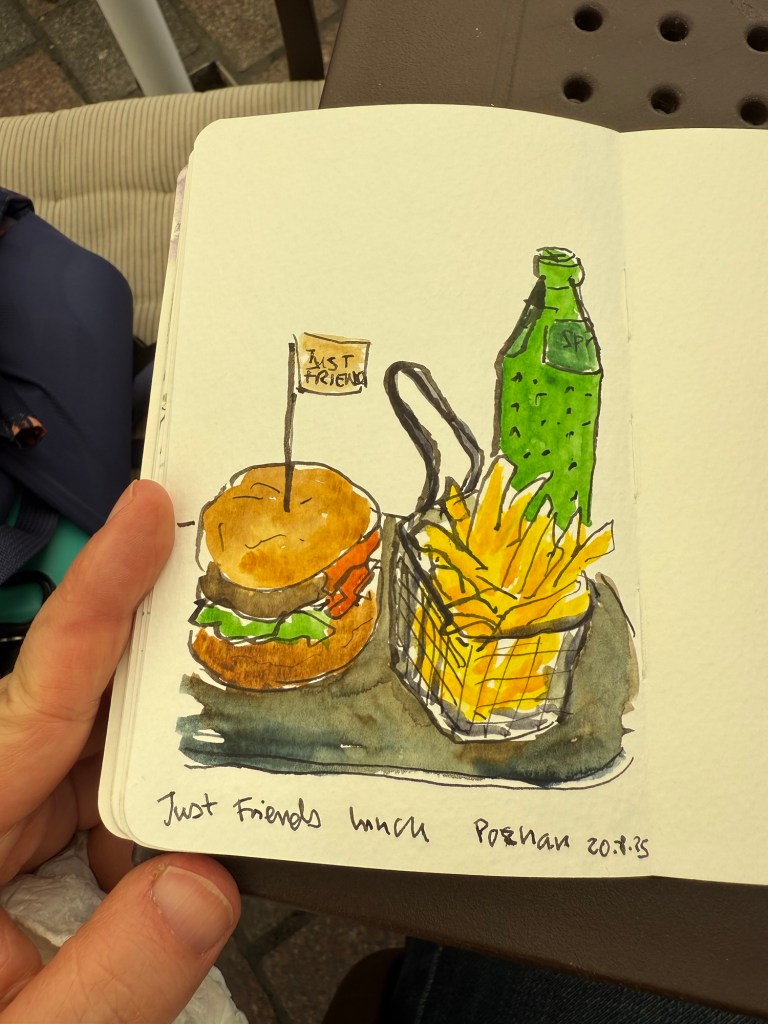
Draw your food. It’s an urban sketchers tradition and a great way to remember a restaurant or cafe.
Drawing food
Take reference photos – you may not be able to finish a sketch, but if you have reference photos you can return to it later on and complete it.
If you can, give away sketches. People who were kind to you love receiving sketches as a gift, and you should see them light up when you give them that quick napkin sketch, or a page from your sketchbook. Also consider donating artwork to the silent auction if you can – it helps Urban Sketchers raise money for the great work they do.
Tell the instructors how great they are. They really are amazing, and they’re artists so they all have imposter syndrome and they love to hear good feedback about their demo, workshop or compliments about their sketches. They are all volunteers and they put in a LOT of work and research into their sessions so be generous with your praise.
Tell the organizers how great they are. They’re also volunteers and they work like crazy before, after and during the symposium. Let them know that you see them and appreciate them.
Be very, very kind to the symposium correspondents – they put in a crazy amount of work and effort into bringing the symposium to life for those of us who can’t be there. That means that while you were at that one workshop they zigzagged across the city and went to three, making sure to sketch and take photos in each. And while you were sleeping they were staying up late editing photos and posting to social media. They do a mammoth amount of work every single day, so take the time to be extra nice and helpful to them.
Be kind. People can get tired, hot, blustered, overwhelmed. Give them the benefit of the doubt and be kind. Look out for each other and help each other through the whirlwind of this symposium.
Take time after the symposium to decompress and process what you’ve learned. Go over your notes and sketches, look back and what you’ve learned, try out the new techniques and supplies that you’ve gathered, and go out there and sketch!
Have fun, remember to hydrate and use sunscreen, and bring Toulouse to life with sketches!
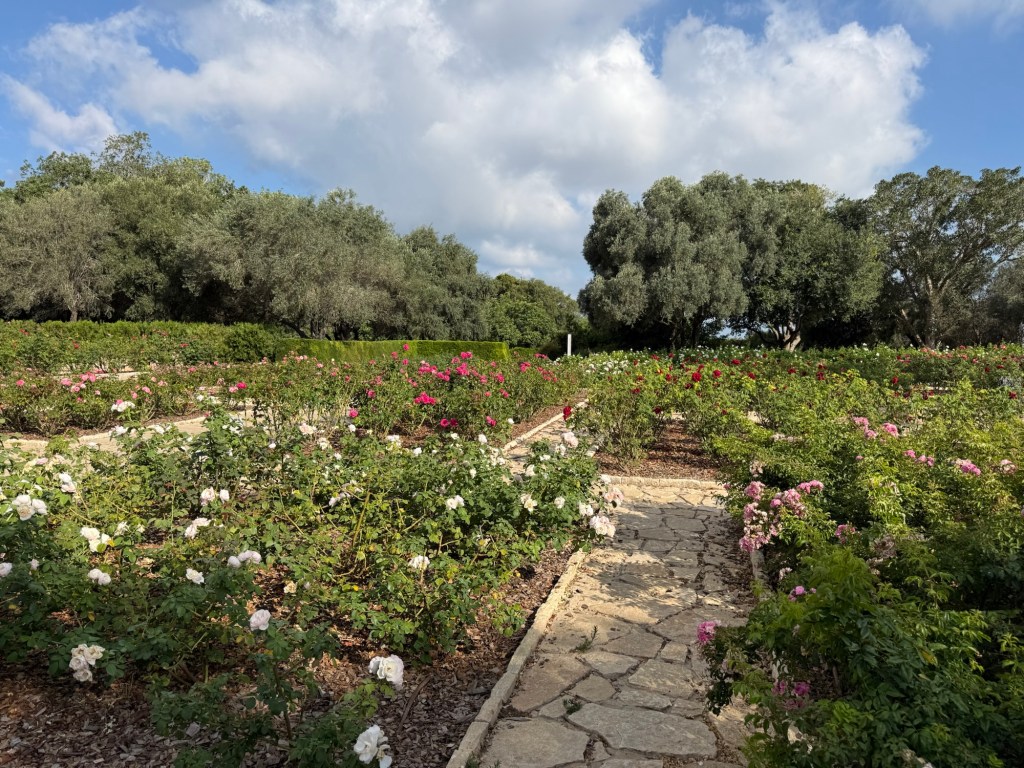
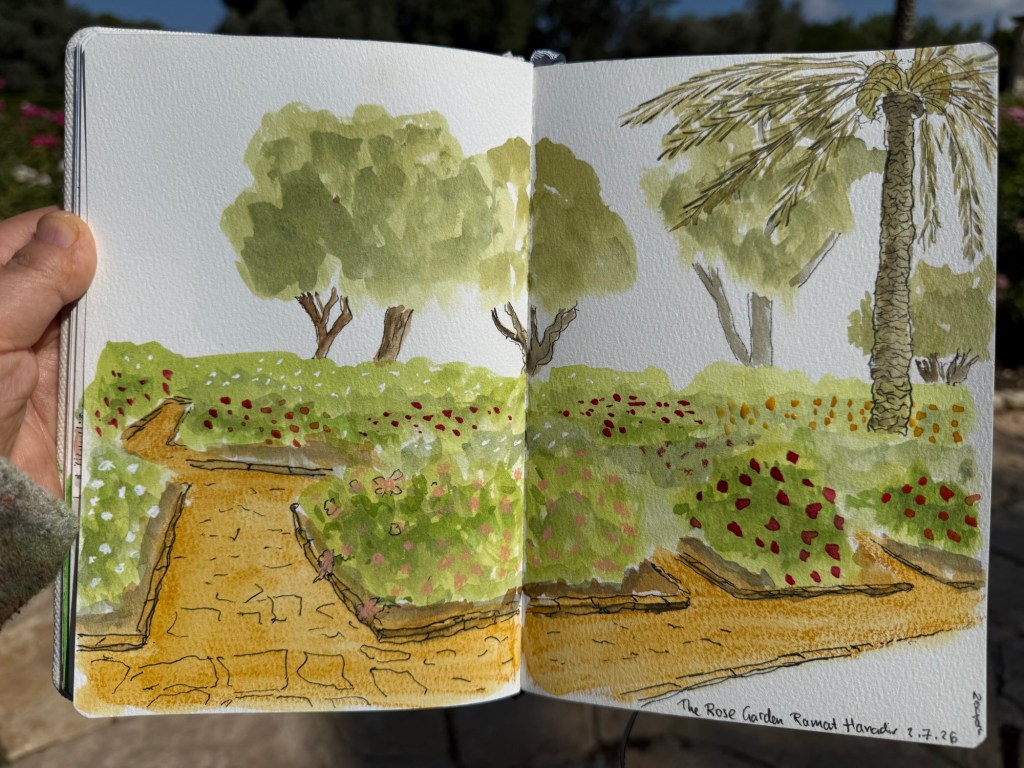
I went to Ramat Hanadiv garden today, and created a quick watercolour sketch on location. There were a lot of details in the scene, and I wanted to capture a relatively wide angle, so I had to do a little planning ahead. I normally don’t take photos or videos when I sketch (only once I’m done), but this time I made some unusual choices for me, so I decided to document them as I went along.
This is part of the scene that I was sketching:
The rose garden. This is about half the scene that I was sketching, and by the time that I was done the sun was fully up overhead so I lost the interesting shadows.
I was using a cold pressed Etchr watercolour sketch book. It’s wonderful for watercolours, but pen and ink struggle on this paper. I usually start the sketch with pen and ink (a fineliner or a fountain pen) and then move to watercolours, but since there was so much detail here and I didn’t want to get carried away by it, I started with a Caran d’Ache Neocolor II crayon:
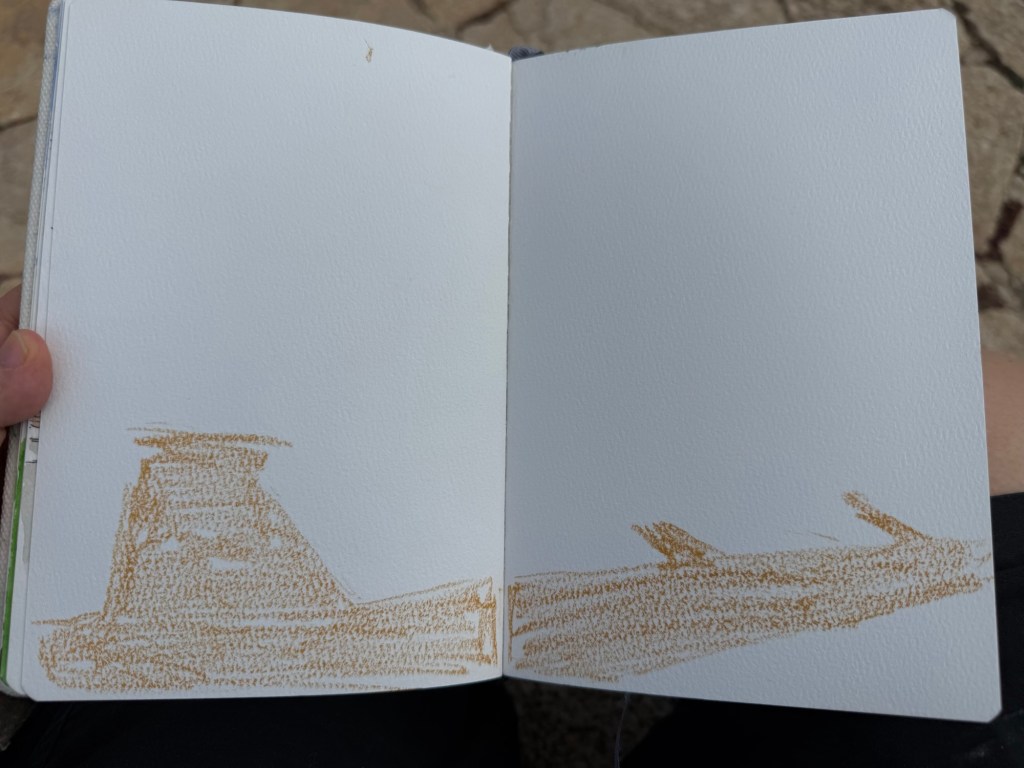
Laying down the rough location of the path.
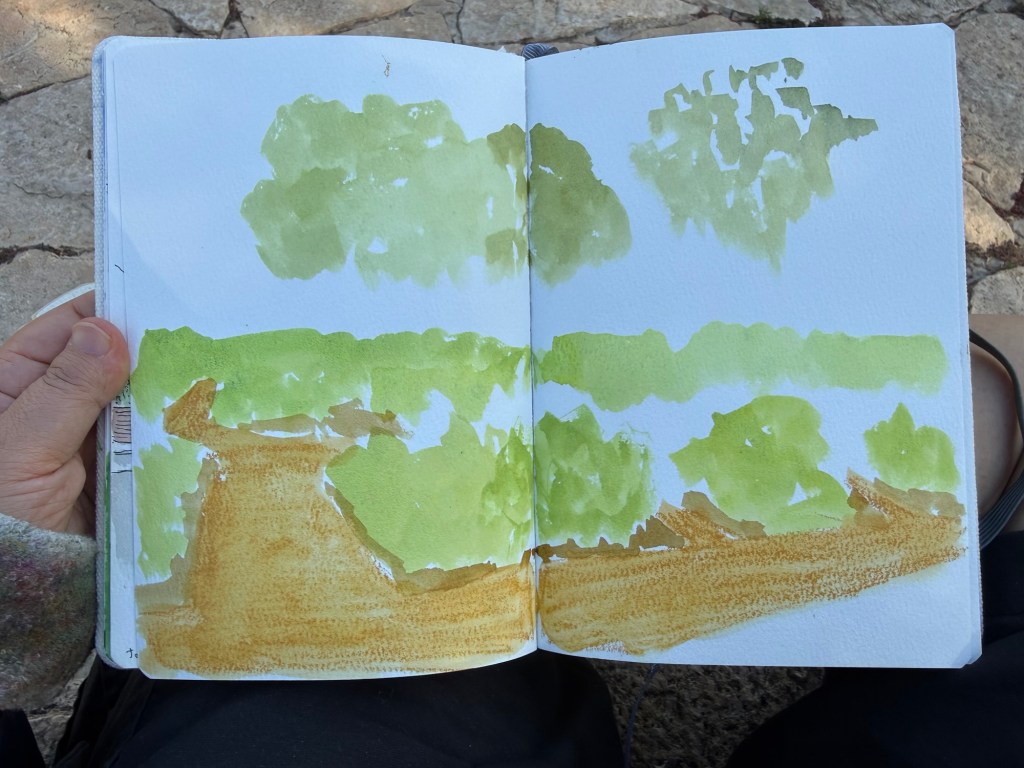
Then I blocked in the greens of the roses, the trees, and a bit of the ground. I’m using the lightest green hues as this point – I’ll add darker greens later to add volume and depth. In watercolour you work light to dark. I also went over the Neocolour II with some water.
Blocking things in.
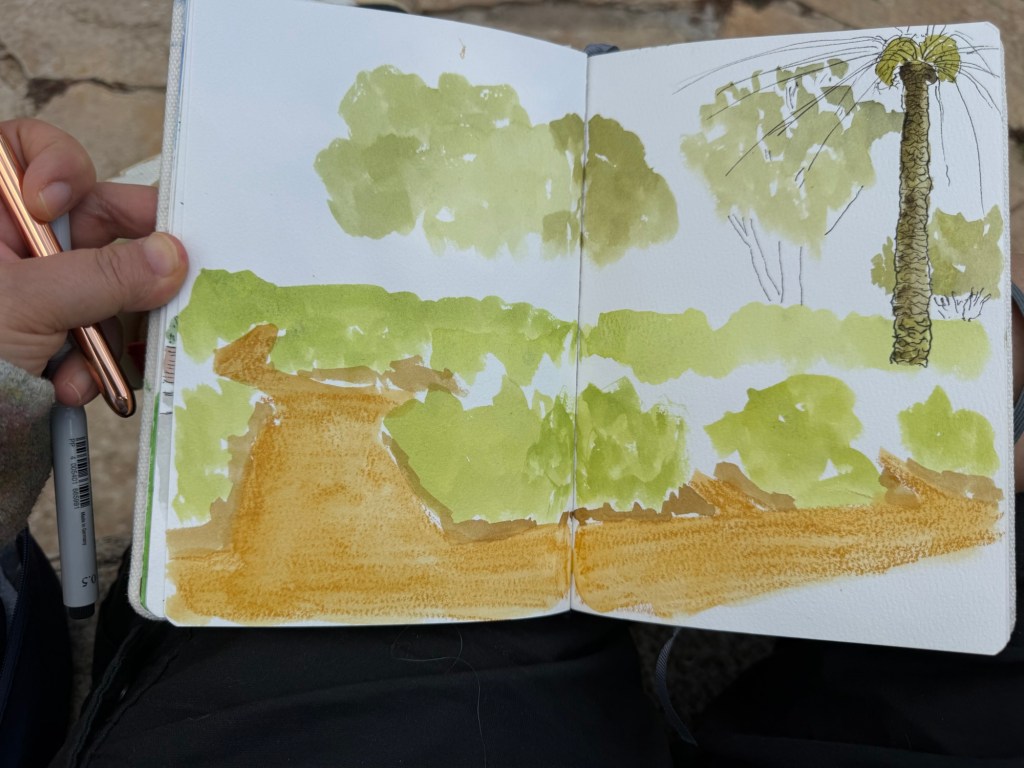
At this point I took out the fineliner and sketched out the palm tree and started sketching in the tree trunks. I also added colour to the palm tree trunk. The palm isn’t supposed to be the focal point of this sketch, the roses are, but it’s there to give things perspective (and it literally was standing nearby – I just pulled it into the frame because I thought the sketch needed it).
Palm tree in.
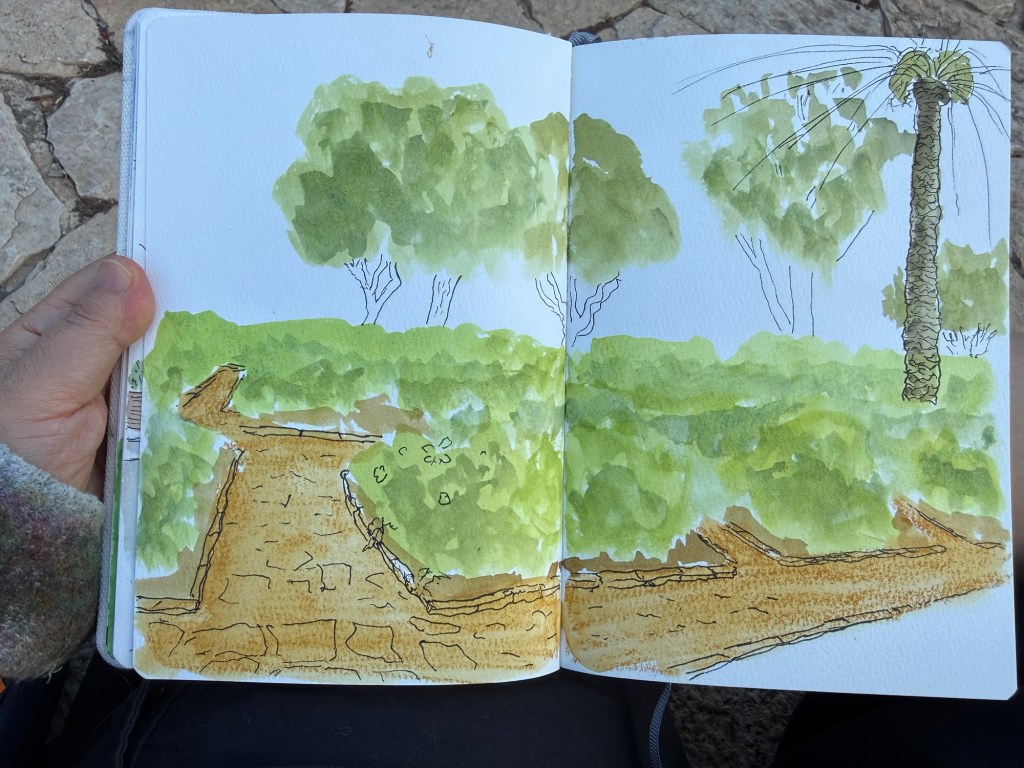
At this point I finished the line work, and then moved to adding depth to the greens. I deliberately left the path largely flat because I wanted the roses to be the focus, not the cobble stones. There’s only so much detail our eye can take, so you need to be mindful of that when sketching. This is something I’ve been struggling with for years – what to leave in and what to edit out.
Line work done and some depth added.
This is the finished sketch. There are roses added in, some shadows under the plants, tree trunks, the palm fronds. I was tempted to add the sky after I was done, which is why I knew I shouldn’t add the sky. Never add anything after the bulk of the sketch is done just because you had the idea as an afterthought. It’s the best way to “ruin” a painting.
The finished sketch
This took me about 40 minutes, much of the time spent waiting for the paint to dry or mixing greens.
What do you think? Would you try and sketch something like this – by blocking it in paint first before moving to pen and ink?
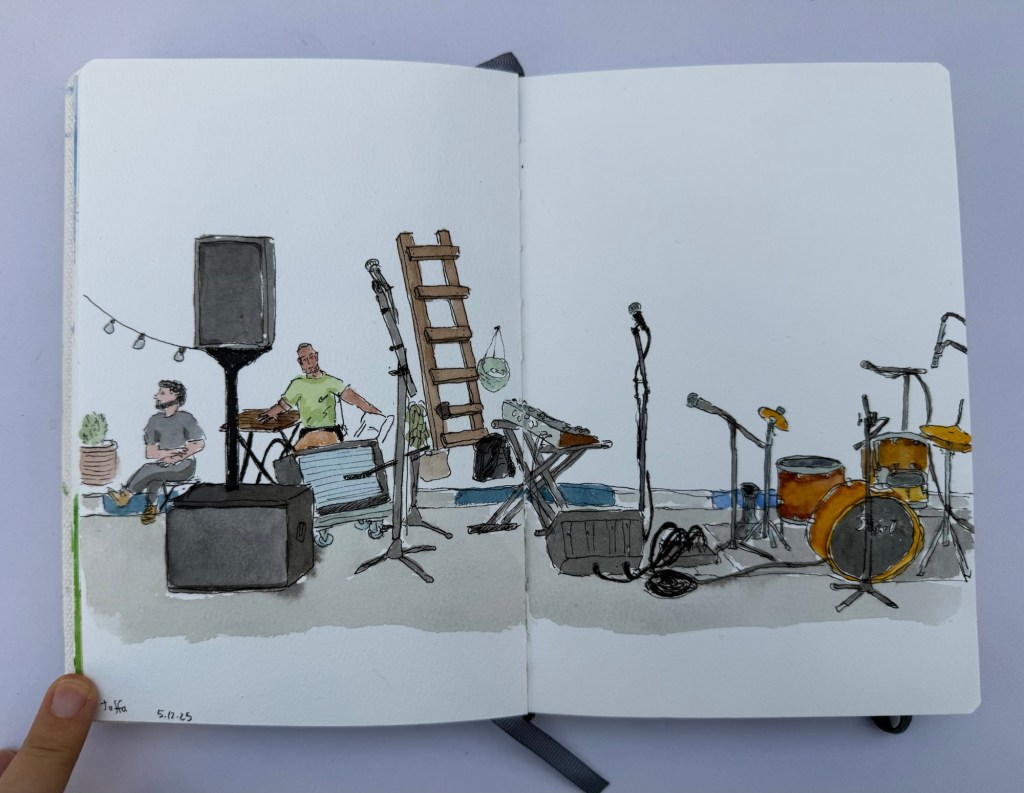
On Friday we went to an Urban Sketchers outing in Jaffa. It was celebrating local designers, and there were street performances as well as open studios and an arts and crafts market. The weather was hot and sunny, and the place was pretty packed with people and full of interesting old buildings. The main trouble I had was focusing on what to draw, as there were so many subjects.
I took a new sketchbook, a Pith Oroblanco in A4 size, and an A5 portrait Etchr Labs 100% cotton watercolour sketchbook. I don’t normally work in such a large format, but I decided to challenge myself to use the Oroblanco as much as possible. The 170gsm paper is identical to the one in the smaller Pith Kabosu, and so is great for mixed media and light washes. The Etchr Labs sketchbook is the best watercolour sketchbook that I’ve ever used – the paper works wonderfully with washes, and is very forgiving for mistakes and reworking.
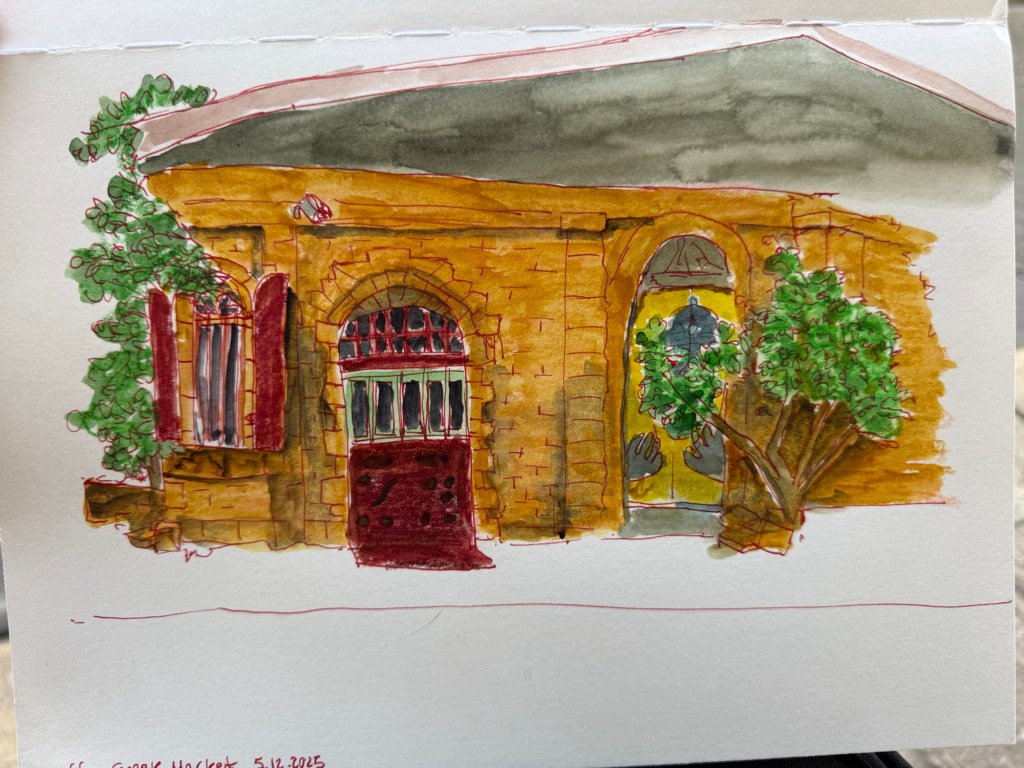
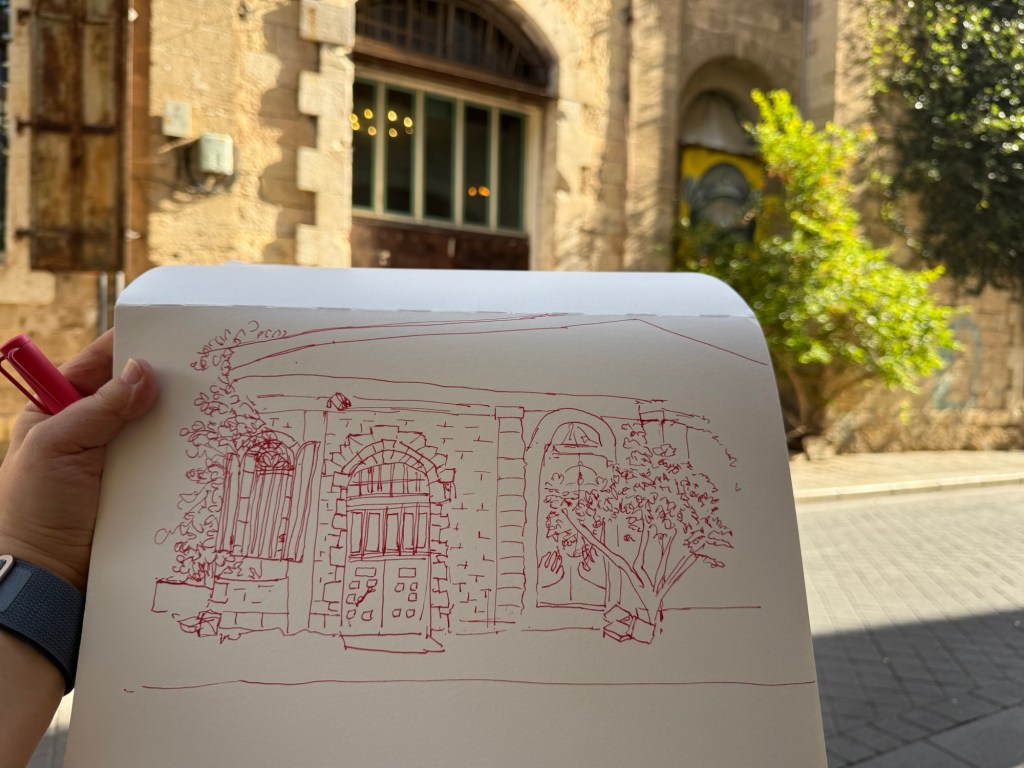
I started out 30 minutes before the official start time, and sketched a local building. I liked the combination of the beautiful old stone building together with the graffiti and the semi wild trees and shrubs. Inspired by Liz Steel’s Patreon sketching community (I just joined it) and December’s theme of “Red” I selected to sketch this building with Diamine Inkvent 2025 Day 3’s Carousel – a red ink – and to highlight the rust colour in the shutters and door. I had enough time to finish the line sketch before going to say hello to Marina, our local chapter head and the organizer of this sketchwalk (a wonderful person and artist). I took reference photos just in case, and then returned and quickly finished the sketch:
First sketch on a Pith Oroblanco
To avoid having to lay down a large wash I used Caran d’Ache Neocolor II to lay in most of the base colour – except for the roof bit (where you can see why laying down a large wash on this paper was problematic).
Initial sketch.
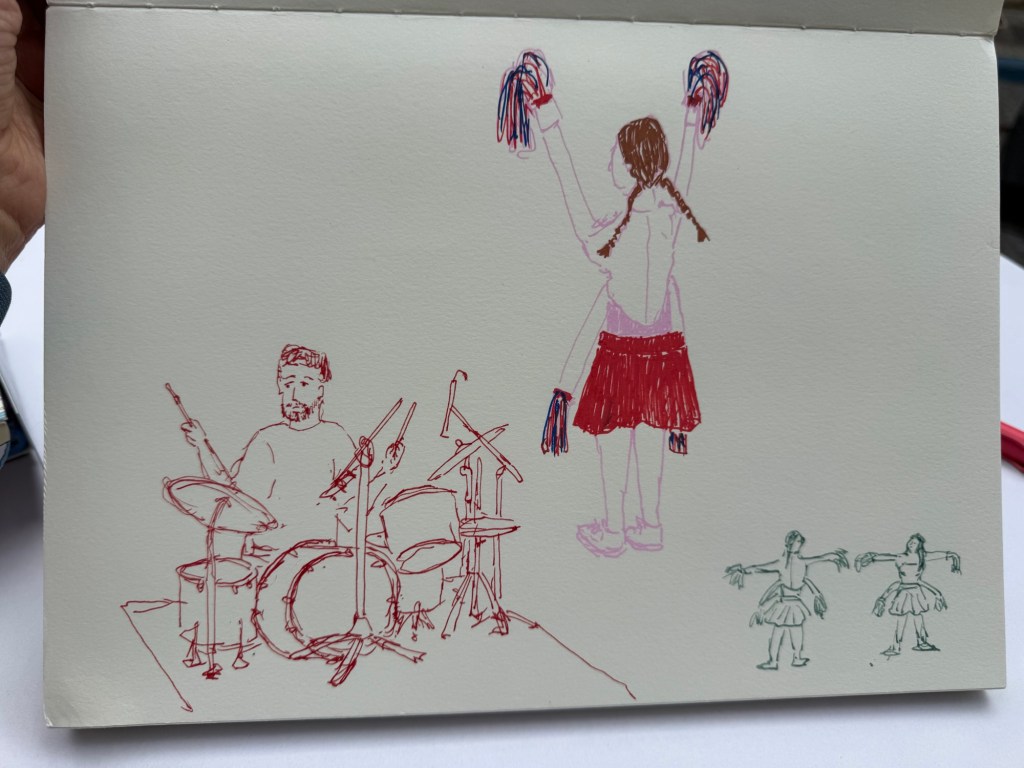
I then went in search for the music performance that was supposed to take place in an adjacent street. I managed to sketch the drummer as he was doing a sound check, but then he left and two girls in peculiar 4 armed cheerleader outfits came out and did a sort of otherworldly dance-march. They kept moving but I did manage to capture them. I used Diamine Carousel in a Lamy Safari medium nib for the drummer, and Posca markers for the cheerleader. The tiny cheerleader thumbnail was sketched with a TWSBI Eco 1.1 fountain pen and De Atramentis Document Ink Green Grey.
Quick, loose sketches
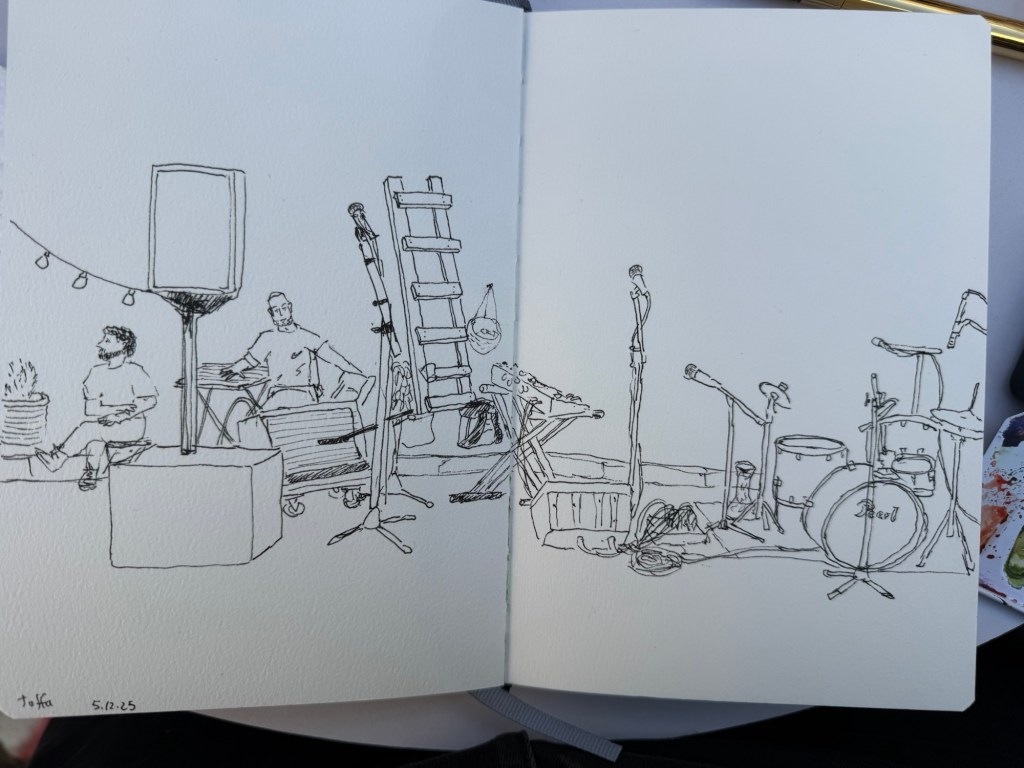
I then settled in to prepare to sketch the musicians when they returned. There was a Flamenco dancer in a nearby stage, but the place was too crowded for me to get a good viewing angle of her dancing so I spent the time creating a detailed fountain pen and watercolour sketch of the location where the musicians were supposed to play in. I was hoping to add them in once they started, but their show was delayed and i had to get back to the throwdown. I did get a sketch of their instruments and some local viewers, but I rushed in the end and didn’t get a chance to get proper shadows in. Oh well.
Watercolour sketch
The line work was done with a Platinum Preppy 0.3 filled with De Atramentis Document Ink Black on an Etchr sketchbook:
Ink sketch
There was a lady there that was clearly on her first every Sketchwalk, and my heart went to her. Seeing her struggle made me realize that there are so many things that are obvious to me as a seasoned “sketchwalker” that aren’t obvious to people going out with an Urban Sketchers chapter for the first time. Here are a few useful tips:
Say hello. Sketchwalks start at a meeting point and usually end in the same one. Come a few minutes early and talk to people – they’re usually nice and friendly and share many of your interests. Say hello and introduce yourself to the organizers, and thank them for organizing the walk – it’s a lot of work! If there’s a local special event that’s taking place during the walk, be sure to get the details of the time and place and be there. Even if you don’t end up sketching the event, there is bound to be something else interesting going on, and you’ll help represent the chapter. If you come in late and miss the initial gathering, find a sketcher in the area and politely ask when and where the end meeting is. It’s usually posted in advance, but it is worth double checking.
There’s a throwdown in the end of sketchwalk, and group photo. Even if you don’t like your picture taken, bring your sketches to the throwdown. It’s a great way to see great sketches in a large range of styles, and get inspiration from wonderful artists. Do not compare your work to others. Be generous and specific with complements (“The way you caught the energy between the dancers is amazing!”, “The colour choices are phenomenal – that building really comes to life!” is better than “that’s so pretty!” Although, of course saying a sketch is beautiful is also nice). Take photos not just of your work, but of other’s work that inspires you, especially of those that do work in a style that’s far from your own. Learning and experimentation is part of the Urban Sketchers experience.
Thank the organizers. I know I said that before, it’s worth repeating.
Never ever critique another artist’s work. It’s not that kind of an artistic gathering.
Bring less. We all fail at this (I did too, of course), but the less stuff you bring the more fun you’ll have. Choose one or two sketchbooks, at least one in a size and format you are comfortable with. Bring only the supplies you know you’ll use, not those that you might need. It’s OK to bring something new with you, but if you do I suggest that you force yourself to actually use it, and start the first sketch with it.
Do not bring an easel, particularly not to your first sketchwalk. You want to be mobile and flexible. The best way to get the most out of a sketchwalk is to change locations at least 2-3 times. The idea is to work quickly and loosely and to capture a location from several angles and with different focuses (that’s why it’s called a sketch walk). There will be those that choose to stick to one location, but having an easel tends to force you into a single location, as does having too much gear.
Bring a stool. It doesn’t have to be the most comfortable one in the world, but it does have to be portable. That will allow you to sketch wherever you like, and not just where there’s a free bench or table.
Take reference photos, in case you don’t get to finish a sketch or the lighting changes, or a white van decides to park in front of the building that you were just sketching.
Talk to people. Share art supplies. Ask questions about their process – unless you see that are too absorbed in their work to answer. But people usually are kind and enjoy sharing information and tools with other sketchers. That being said, bring all the gear that you’ll actually need.
If you’re just starting out sketchwalking, use smaller formats (no larger than A5), sketchbooks and not loose paper, and supplies that are portable and well known to you. That will allow you to work faster, and it will give you a chance to get more comfortable with working on location.
Sketchwalks usually last 3 hours. That’s both a lot of time and not enough time. Keep an eye on the clock, take into account that it takes time to warm up, and be kind to yourself, especially during the first 30 minutes. I usually take the first hour to work very quickly and loosely, and leave the last hour, hour and a half to work on a more detailed, well composed piece. Take breaks – sketchwalks are in urban environments so there’s usually a place to grab a coffee and snack (which you can and should sketch – it’s an Urban Sketcher’s tradition!). It’s not a race – the point is to enjoy yourself. I usually take a few minutes to stroll around, getting a feel for the location and the options before I settle in and get to work.
Bring water and weather appropriate gear. Be a responsible adult and check the weather before you go. Bring a hat and sunscreen, coat, umbrella, etc depending on the weather.
Post to social media, and tag your local chapter. There’s usually a Facebook group, and an Instagram account for the USK chapter. If the sketchwalk involved a local business, museum or organization, be sure to tag them too. You are an ambassador to the community now. Represent this wonderful organization with pride.
If you go on Urban Sketcher Sketchwalks and have tips for newcomers, I would love it if you could reply with them.
In September I traveled to Paris and London.See part 1 of my travelogue here, part 2 here and part 3 here.
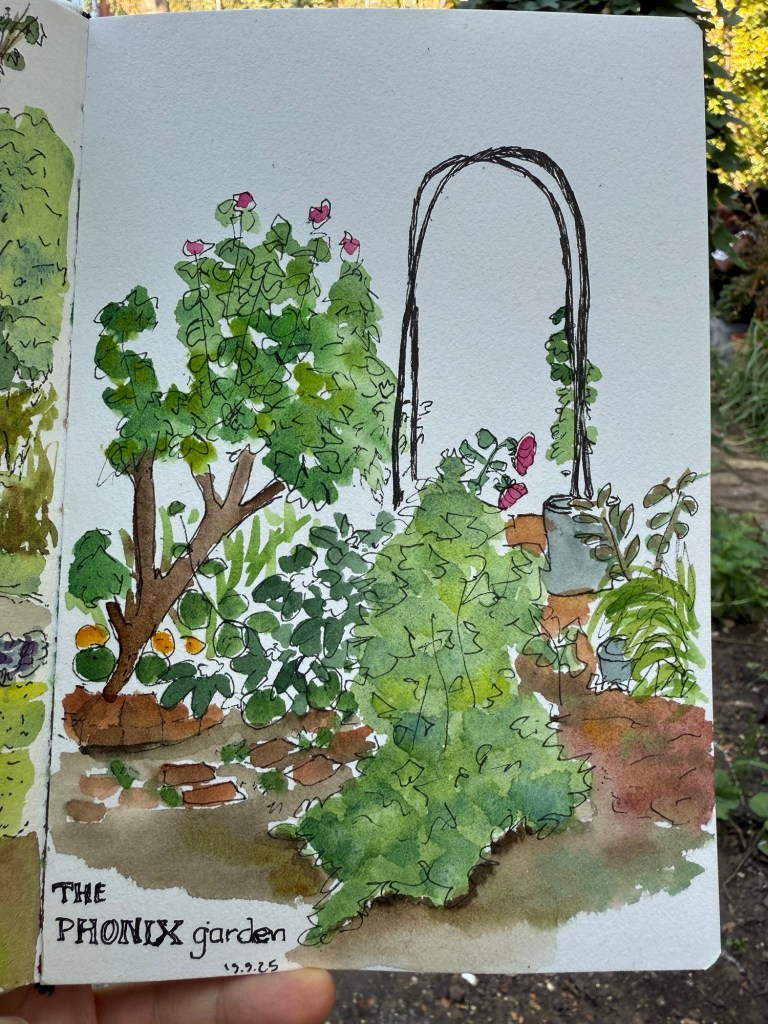
Another visit to the Phoenix garden resulted in this sketch in my Etchr lab sketchbook. I love the paper so much – even a super quick sketch pops on it.
Phoenix garden sketch
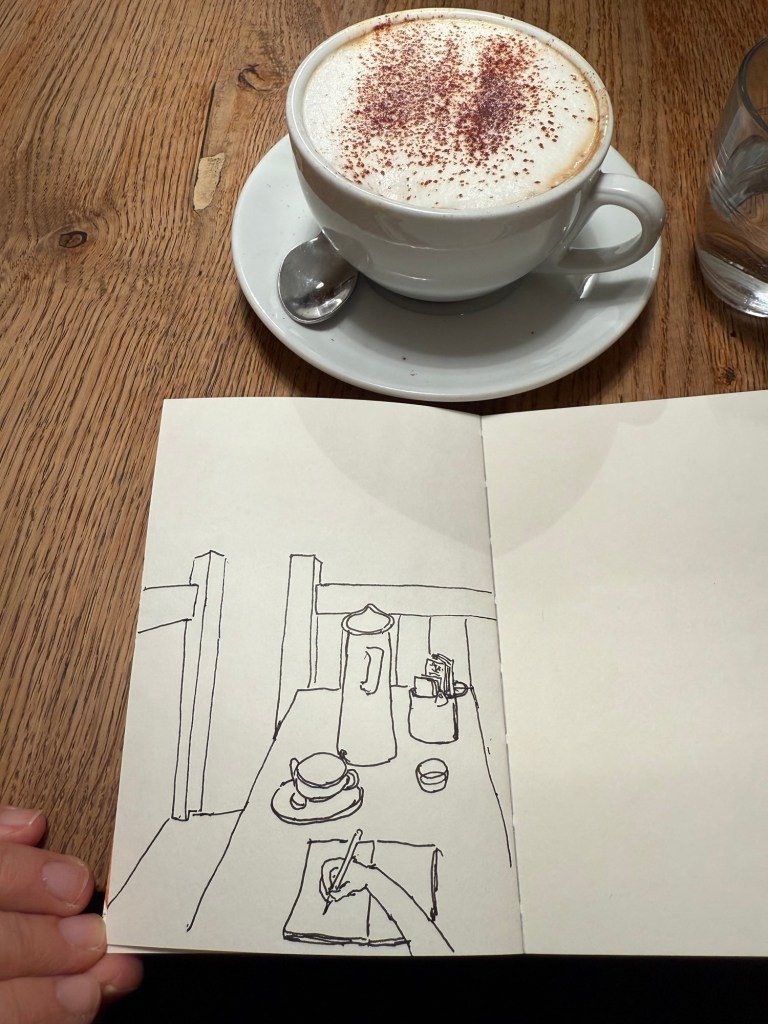
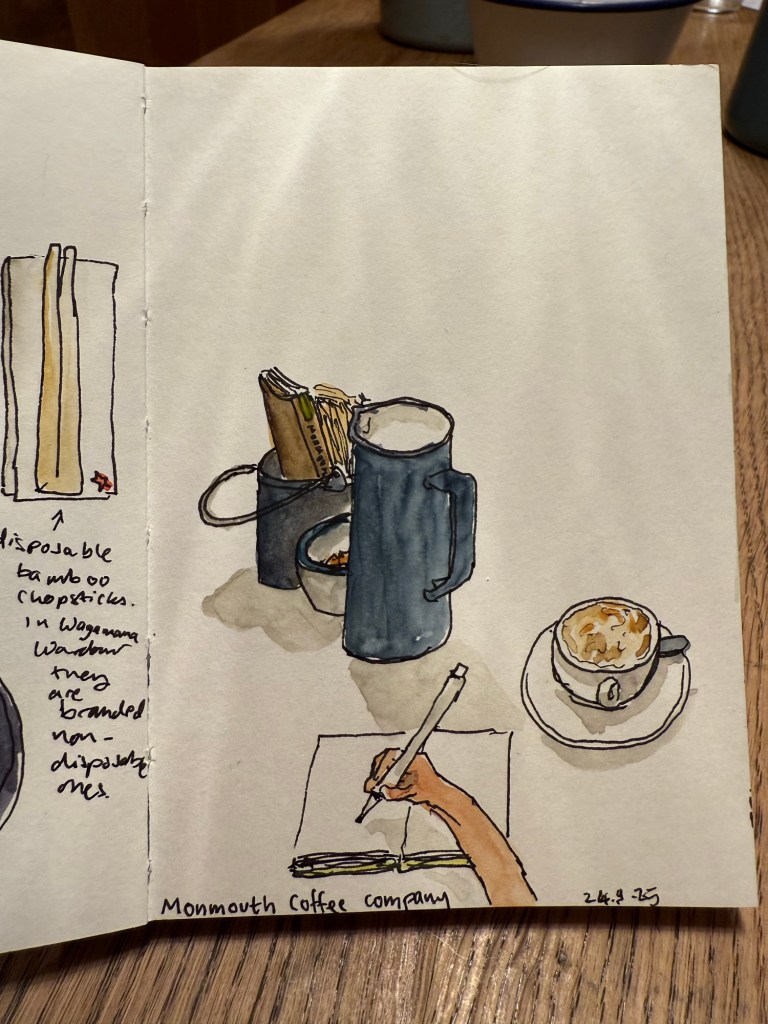
I had a coffee at the Monmouth Coffee Company. I love their coffee, but the place was both packed and super hot and stuffy so I made this quick sketch in my Pith Kabosu sketchbook and didn’t bother to add watercolour to it. It’s the first time I tried a POV sketch, and you can see the weird way I oftentimes hold my pen. I got to talk to a super nice young South Korean woman, as I shared the table with her and a young Japanese father and his 4 year old son.
POV sketch of the Monmouth Coffee Company table
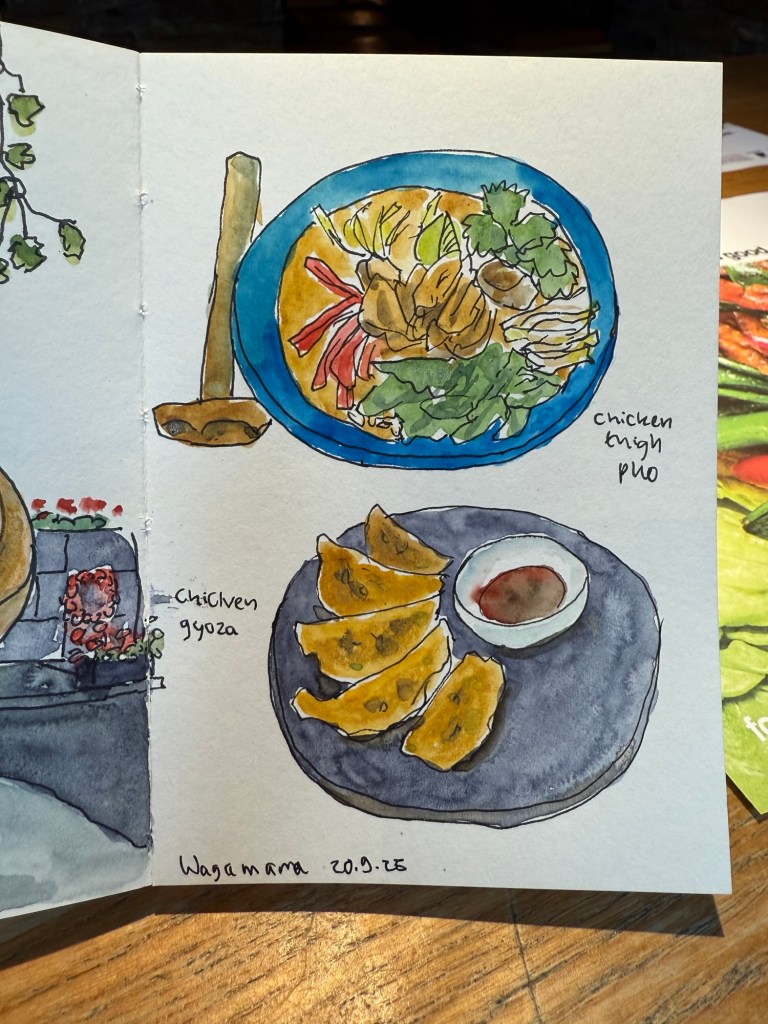
Lunch was at Wagamama again. I tried their pho for first time (it’s new on the menu) and really liked it.
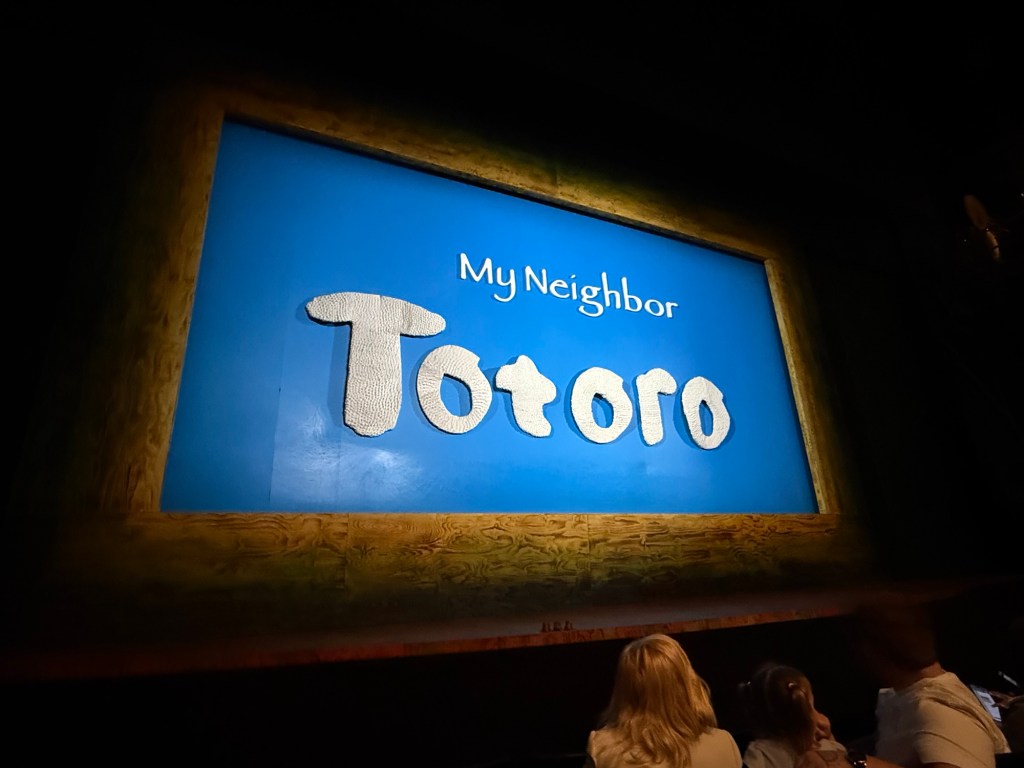
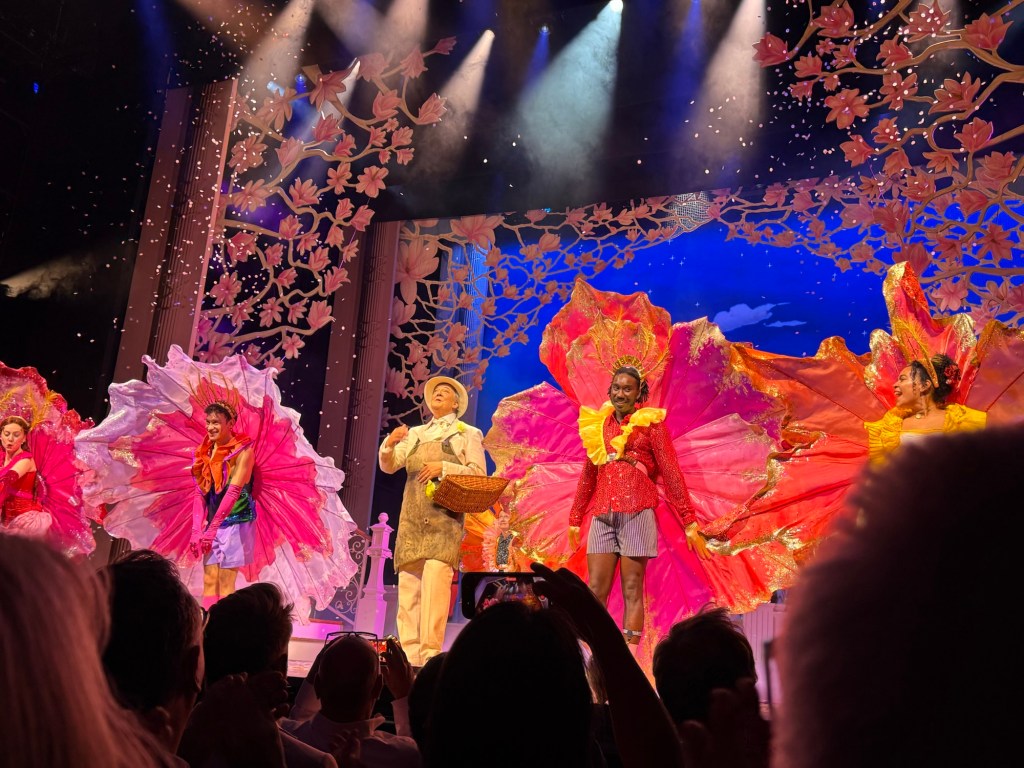
In the evening we went to see My Neighbour Totoro. It’s a lovely play, very well considered and beautifully acted and puppeteered.
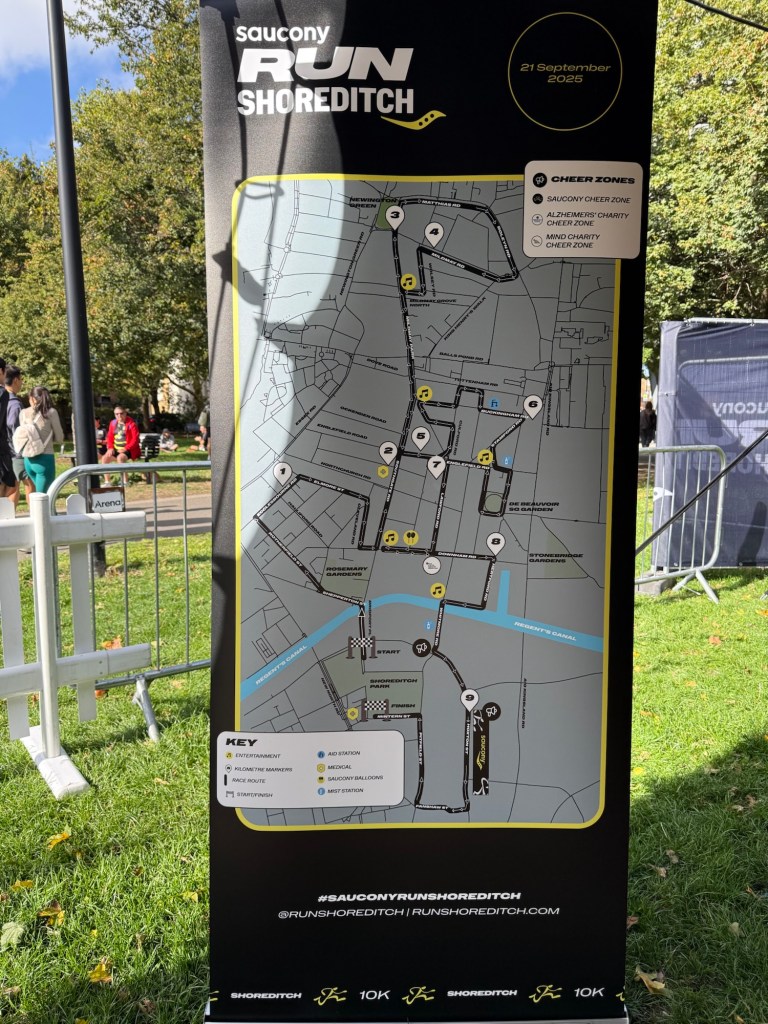
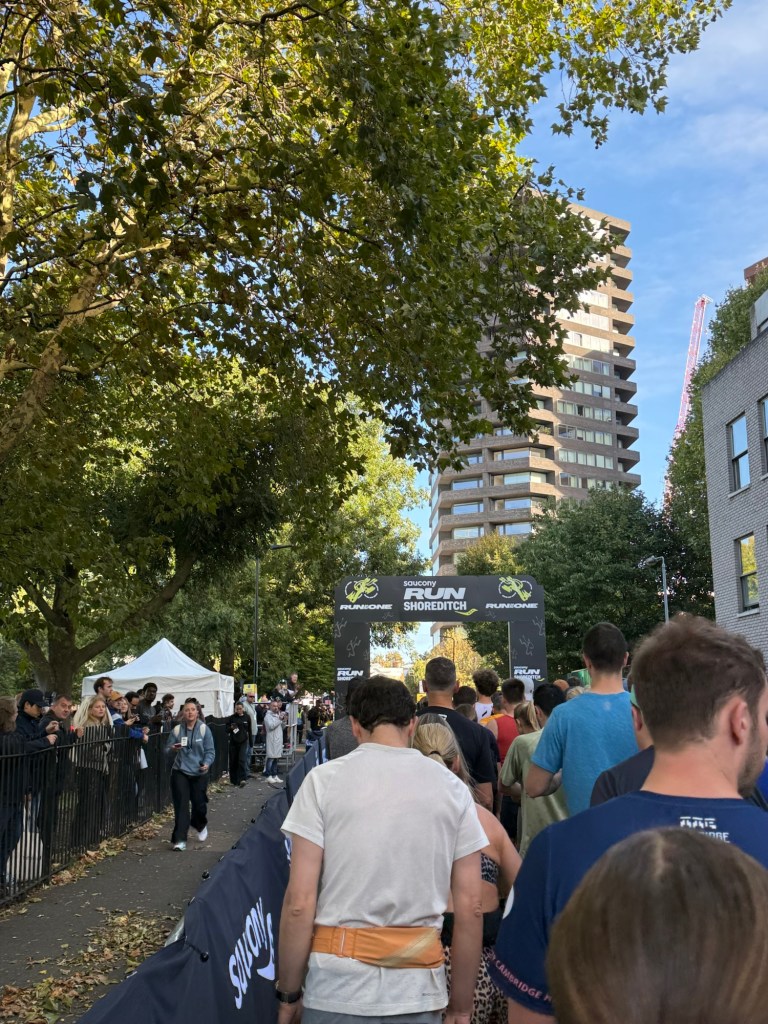
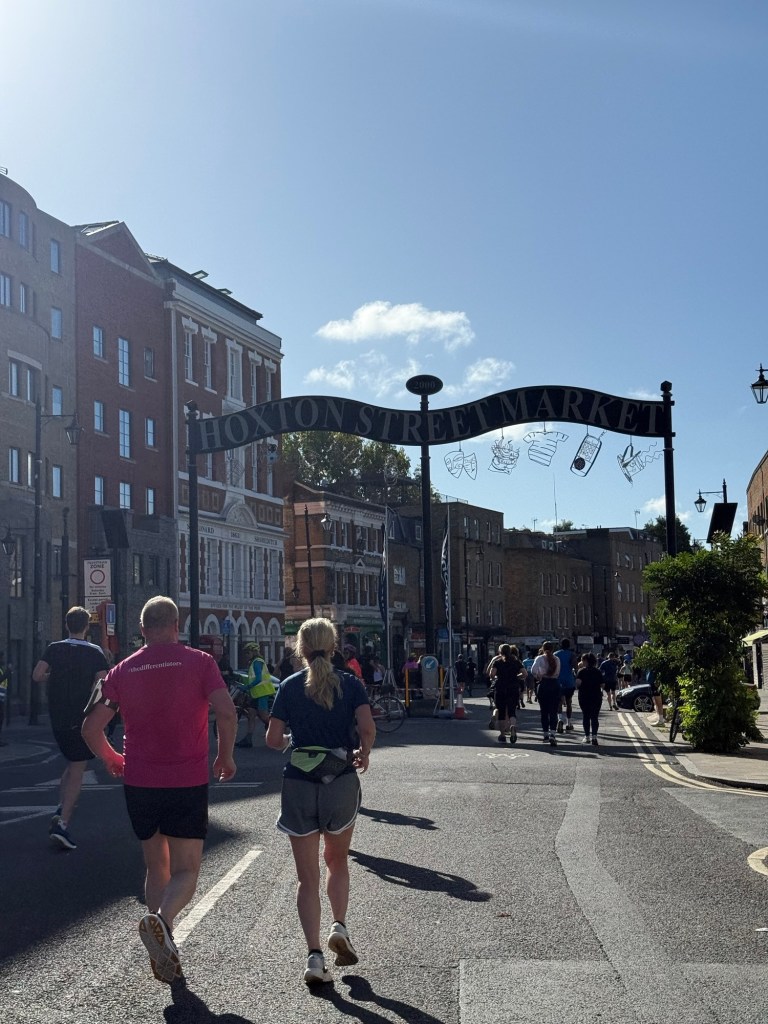
On Sunday my family went to Greenwich and I went to the Saucony Run Shoreditch 10k race. It was bright and cold, perfect running weather, and the route was pretty flat – but chock full of speed bumps, which really hampered the race flow and caused a few nasty spills.
Here’s the route:
And the starting line:
And some of the entertainment on the way:
We ran a lot of loops, mostly through pretty dull residential streets. Only in the final kilometre or so did we get to see a bit of Shoreditch high street etc.
Overall the race was fairly well organized, and not overly crowded (about 6,000 runners), but I didn’t enjoy the route mostly due to the speed bumps. They seem to have taken the worst out of the local runners, as people pushed, jostled and shoved to avoid running over them (I just started running over them from around the 3rd kilometre or so).
Here’s the medal:
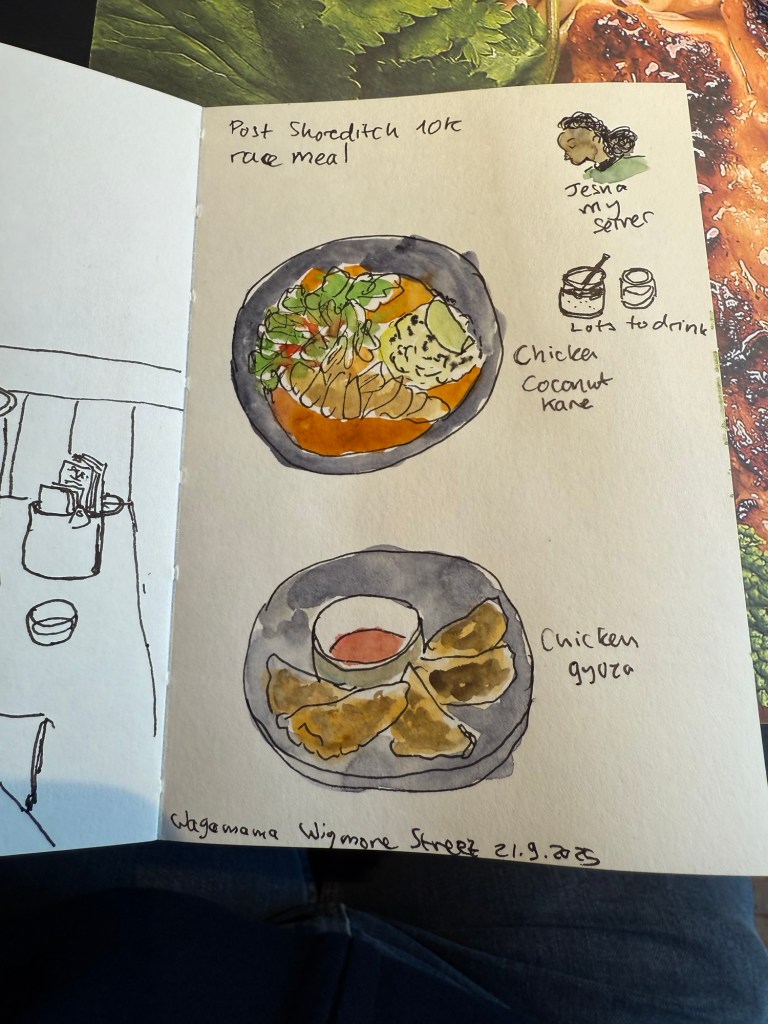
After the race I went for a celebratory meal at Wagamama. I hadn’t had breakfast and I was parched so I had a ton to drink and tried one of their new curries. Jesna, my server, was really curious about the sketches and we got to talk a bit.
Another Wagamama meal.
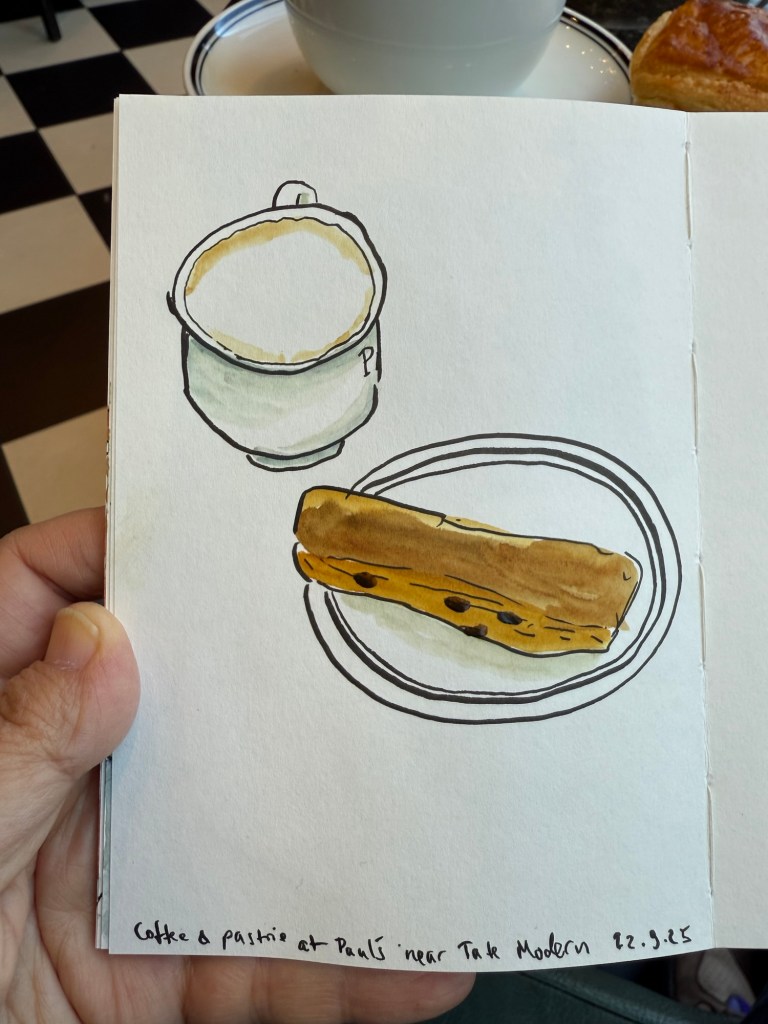
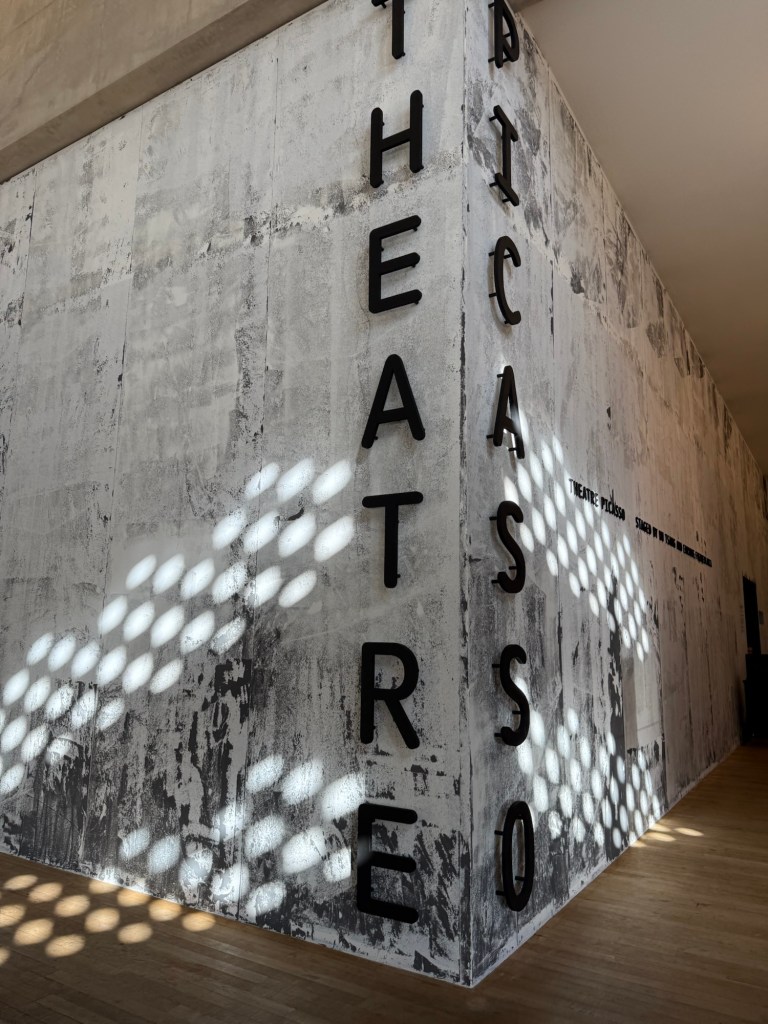
On Monday my dad and I went to Tate Modern to see a Picasso and the Theatre exhibition. We arrived early so we sat at Paul’s and sketched.
Coffee and pastry at Paul’s
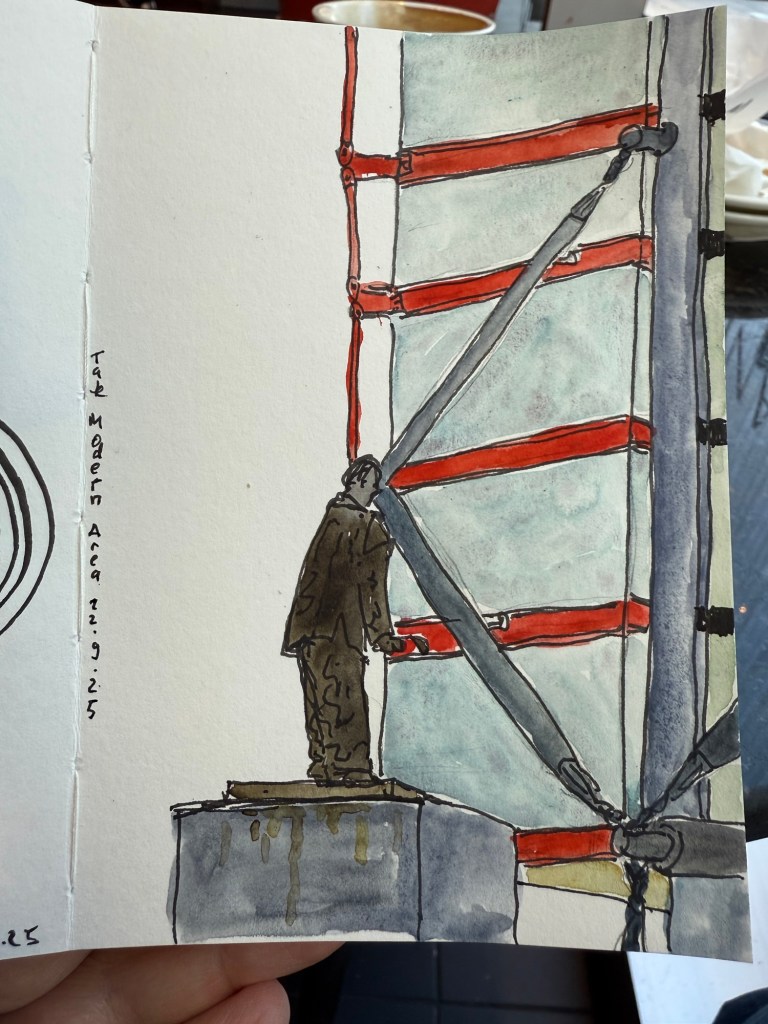
I also sketched the statue and part of the modern building across the street.
The “Theatre Picasso” exhibition was hands down one of the biggest disappointments of the trip. Never have I felt my intelligence or interest in art more insulted than in this exhibition, and I left after about 20 minutes.
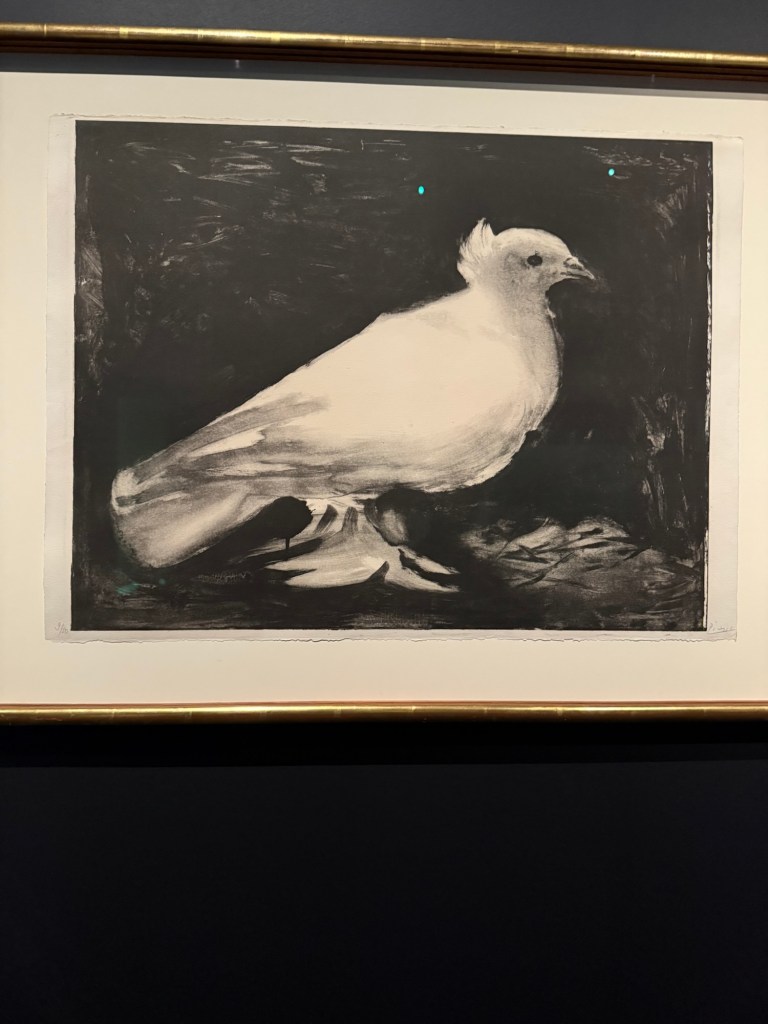
Here’s a Picasso dove to relax for a bit:
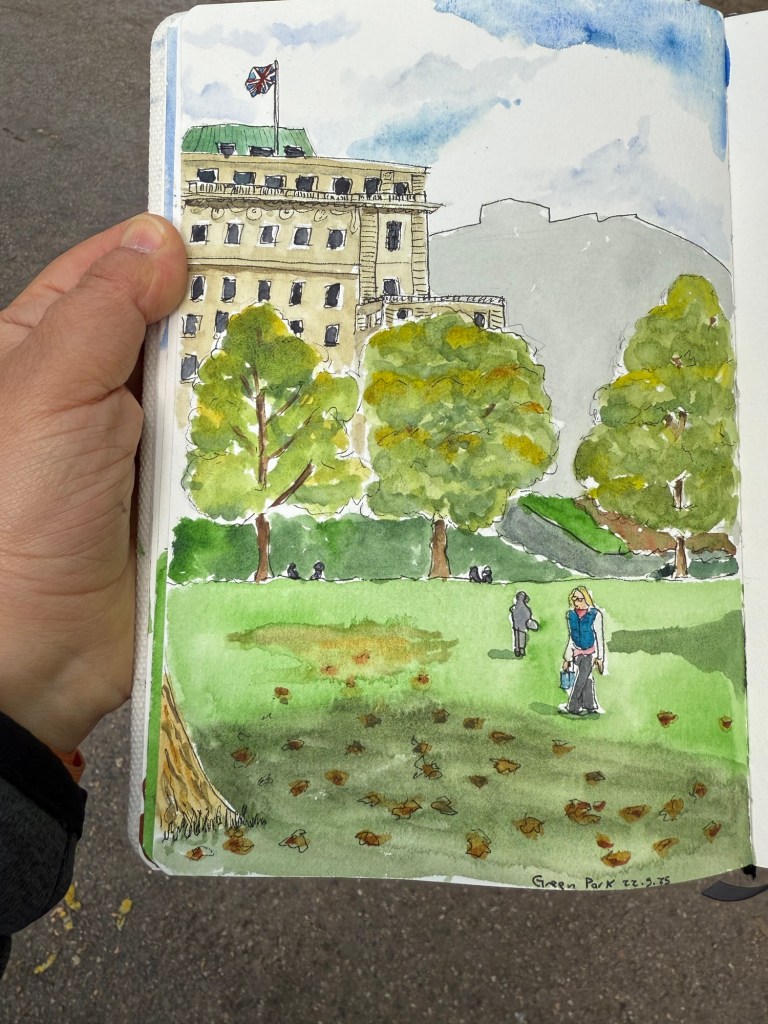
I was in a bad mood when I left and I didn’t know what to do with myself so I made my way to Green Park and sat and sketched there for a while:
Pencil and pen
The final sketch:
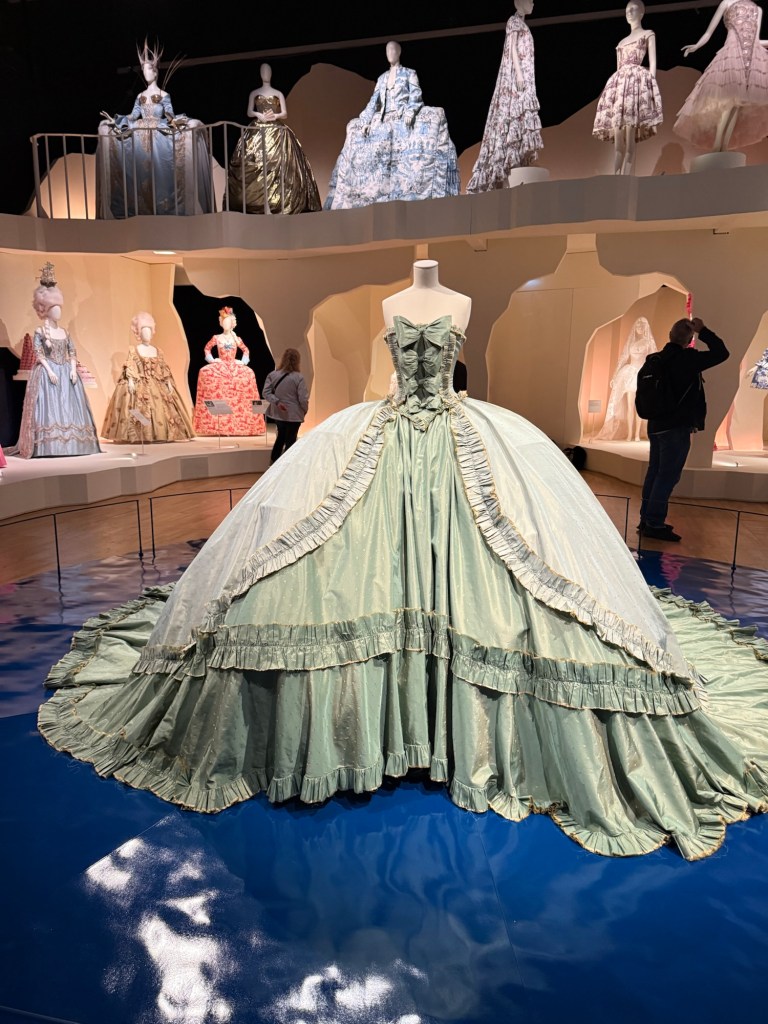
Thankfully the best exhibition was still ahead of me – Marie Antoinette Style at Victoria and Alberts. The thought, curation, staging, flow, items – everything about this exhibition was perfection. You saw Marie Antoinette as a style icon, as a woman trapped in a role, as a doomed queen, as a harried and slandered victim, and as a larger than life figure. Her foibles, her eye for fashion, her courage, her very flawed life and her terrible death made her immortal in a way she likely could never have imagined.
Marie Antoinette Style
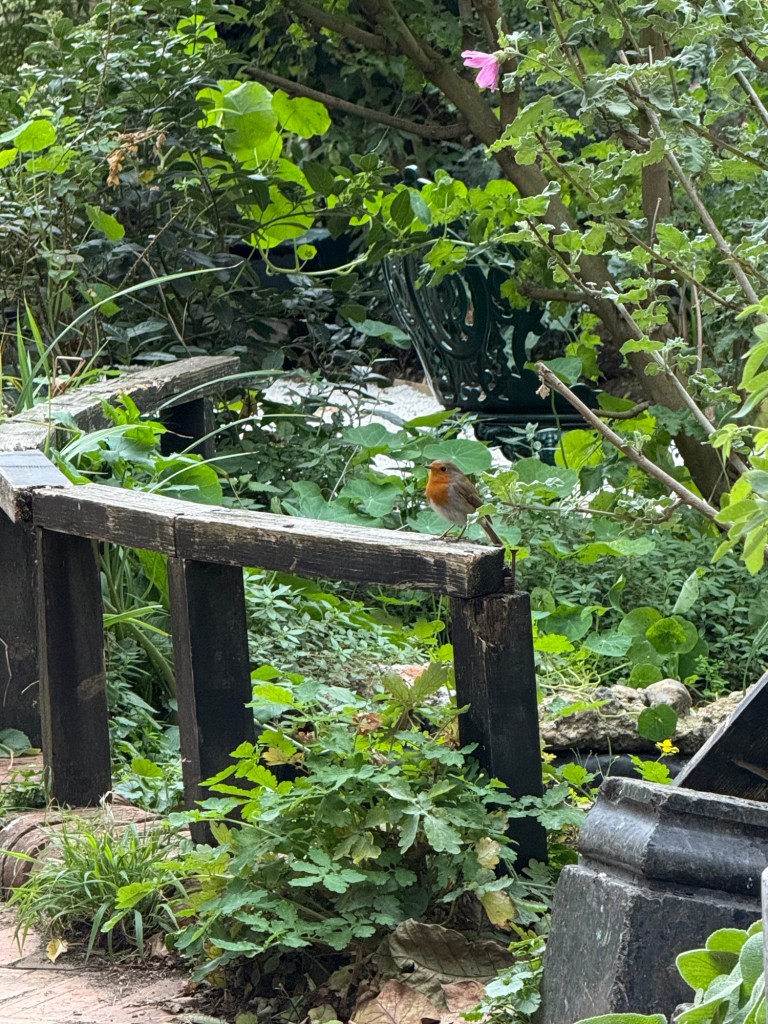
We don’t have robins here, so it was nice to get to see a few of them at Hyde park during my morning runs and at the Phoenix garden.
Robin
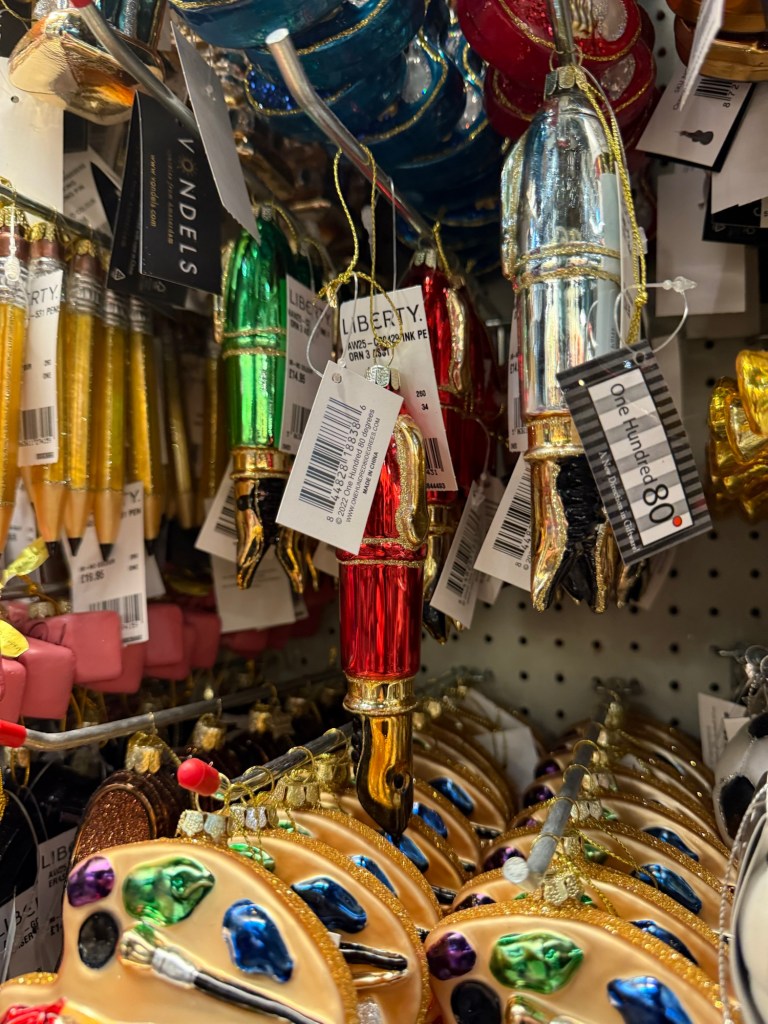
There were surprisingly few Halloween decorations out but the Christmas shops were on full blast in all the big stores. Of course I had to buy this red fountain pen ornament from Liberty:
Pencils, pink pearl erasers, fountain pens and palette ornaments at Liberty London.
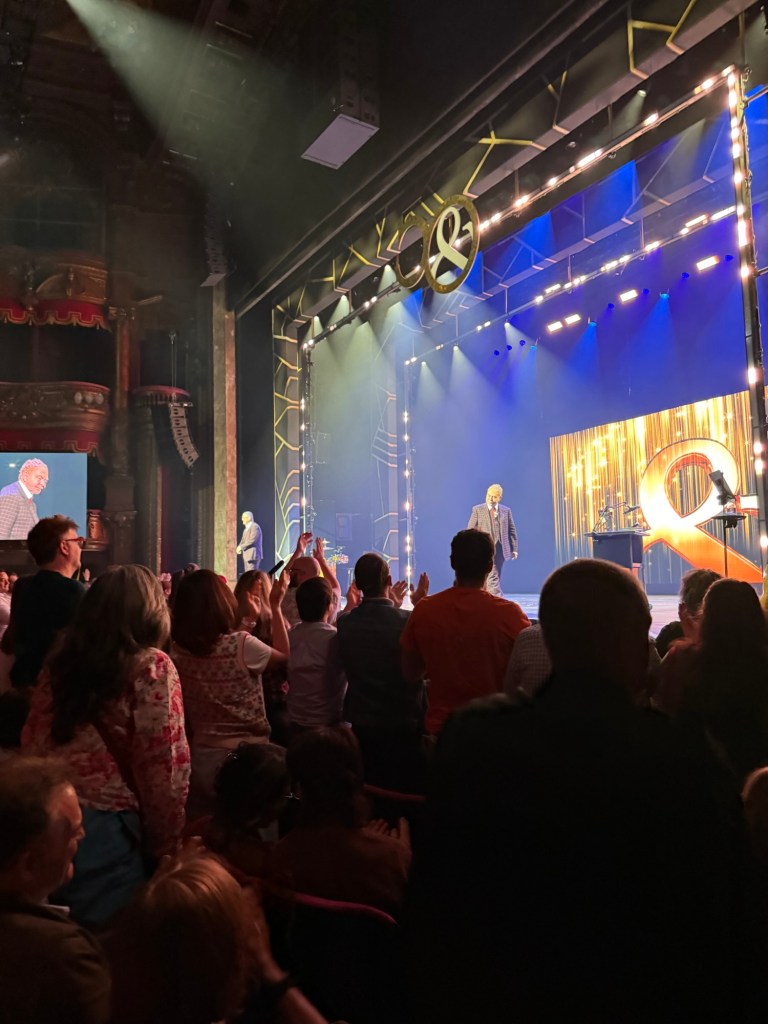
We then got to see Penn and Teller’s 50th anniversary show (and first West End tour). They were funny, surprising, and wonderful, and it was an overall delightful and very memorable evening. I even got a signed poster of their show!
Penn and Teller
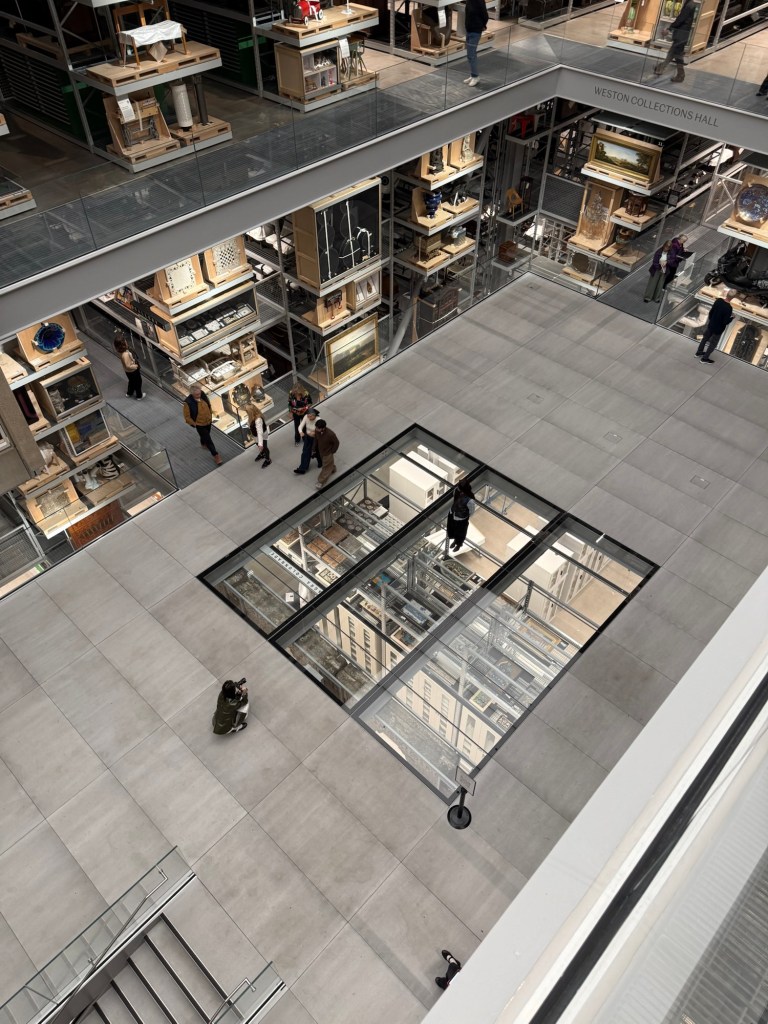
On one of the last days of the trip I went to see the new Victoria and Albert East Storehouse museum. It’s a unique experience, and it’s worth the visit – but I recommend planning to go there well ahead of time and ordering items to interact with. It’s not a standard museum by any stretch of the imagination – it’s more of a museum about museums and how they handle their collections.
While I found many of the explanations to be overly politicized, it nevertheless is a place that I’d return to – provided I manage to book a “meeting” with an item (Order and Object at the study centre). It’s also interesting to see what other people ordered and how they interact with their chosen objects.
Victoria and Albert East Storehouse
I had lunch at the nearby Wagamama for the last time, and sketched my lunch for the last time:
Final lunch and sketch
And then went for my last coffee at Monmouth Coffee Company:
Another POV sketch
In the evening we went to see “The Importance of Being Earnest”. Stephen Fry was excellent as Lady Bracknell, but I didn’t like the director’s interpretation of the play (Algernon is gay, Jack is gay, Cecily is gay, Gwendolen is gay), and the two main actors weren’t very good. For the life of me I don’t understand the director’s need to try and outsmart Oscar Wilde. Wilde’s work is polished to a mirror finish – there really is no need to be clever with it. It packs enough punch as it is.
Stephen Fry and the cast of The Importance of Being Earnest
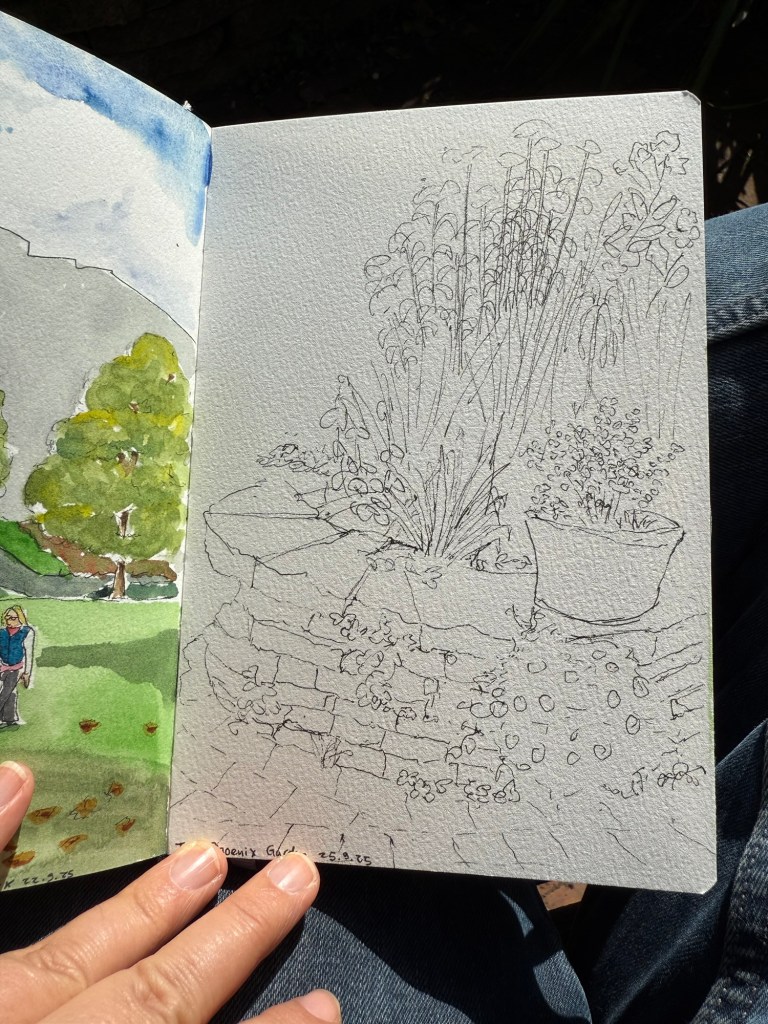
On the last day of the trip I went to the Phoenix garden for a last sketch:
Pen sketch
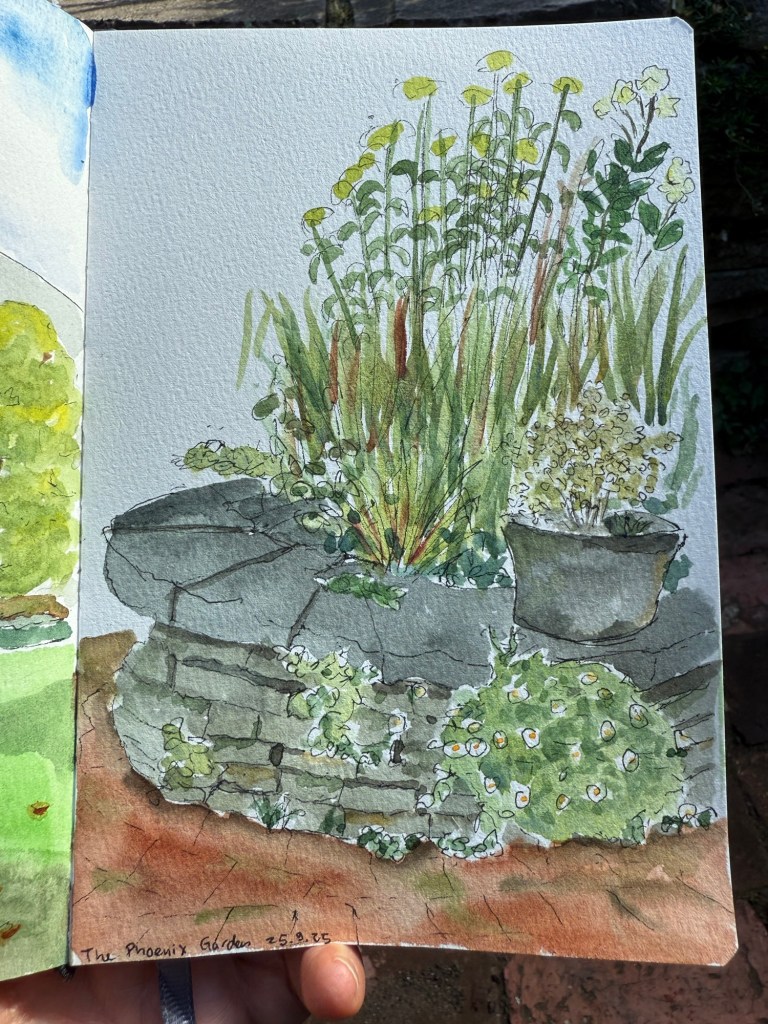
I got to talk to a lady that works in the garden, and it was nice showing her all of my various sketches of the place.
Final watercolour
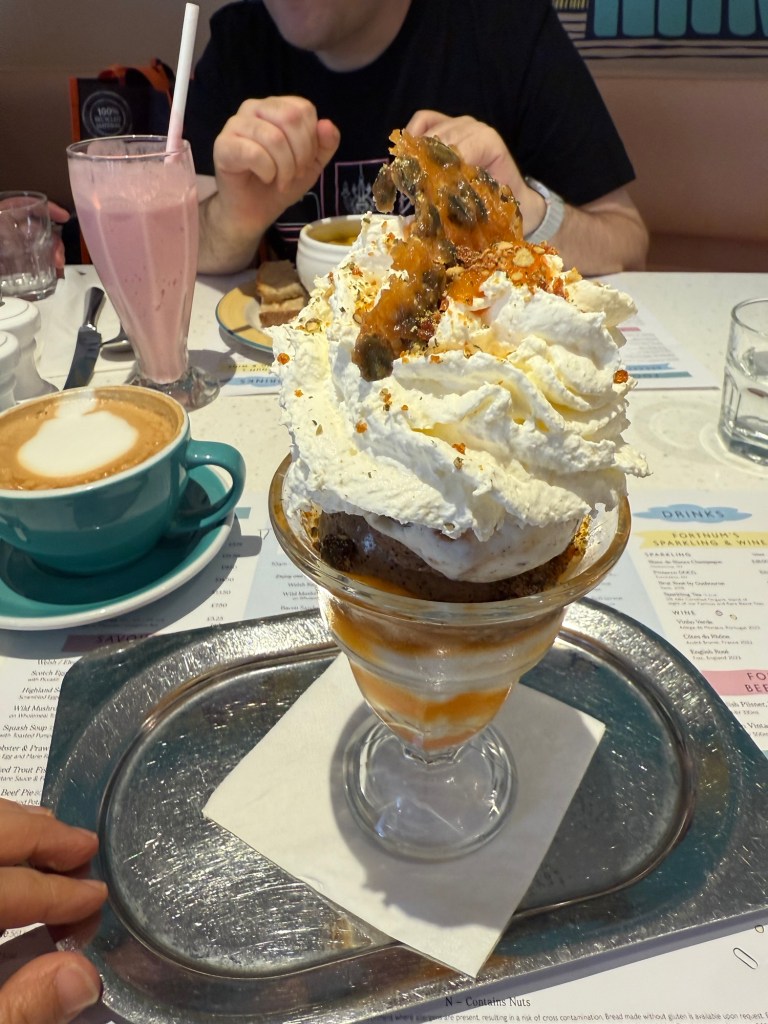
And we went to The Parlour at Fortnum and Mason for celebratory Sundaes before the flight.
Tres Leches sundae – Coffee, Bickfield Milk and Fior de Leche & Chocolate Biscuit Ice Cream and Pumpkin Seed Praline
Overall it was a great trip even though I was sick during its first leg. I’ve never sketched so much during a trip before, largely thanks to some recently acquired sketchbooks and watercolour palettes, and some skills I learned during USK Poznan. I got a ton of watercolours, pens, pencils, inks and art supplies that I can’t wait to try out, and I got a nice stack of books to peruse over the coming months. Hopefully this was fun to read, and perhaps you got some inspiration for your next trip to Paris or London.