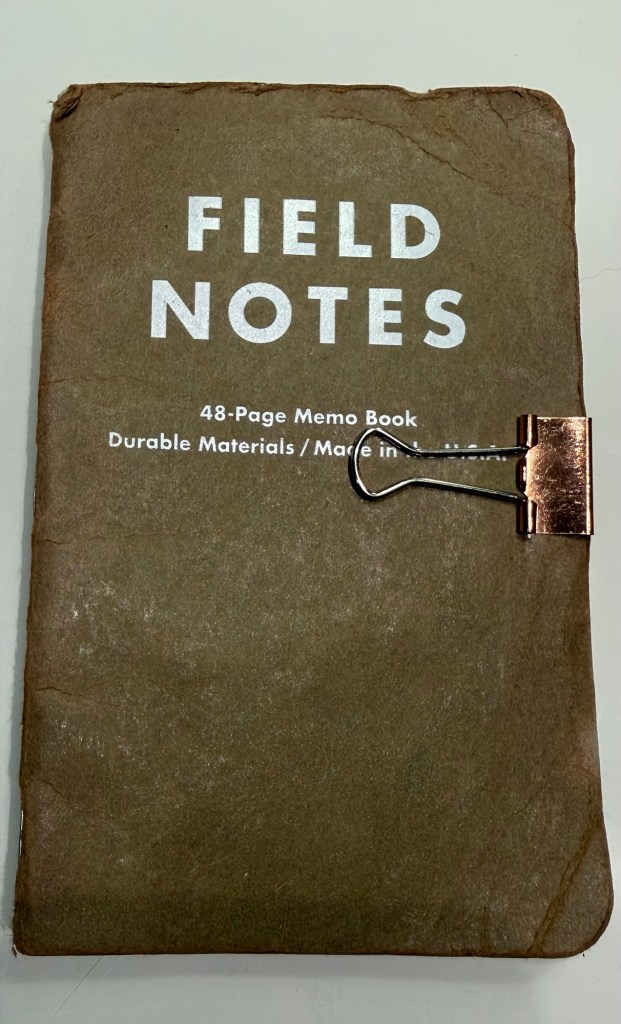
This battered little notebook is my travel Field Notes. I bought it in August of 2016 (over 10 years ago) at London Graphic Centre in Covent Garden, London. It’s the Field Notes Balsam Fir limited edition (then called Field Notes Colors). As you can see it’s been through a lot.
Battered old Field Notes
The notebook contains mostly lists:
Pre-trip planning lists
Packing lists
Places to visit
Shopping lists
Clothing and shoe size reference lists (my sizes in various brands)
Tax return lists
Yes, I have an iPhone with me and I can keep track of these things on various apps, but I like keeping this notebook. It’s become an artefact, a physical memento of my travels. And notebooks never run out of batteries…
I’m travelling to Paris and London and I’m trying to both sketch much more and journal more consistently. The first leg of the trip is a four day stint in Paris and I just completed it.
Here are the sketches that I made:
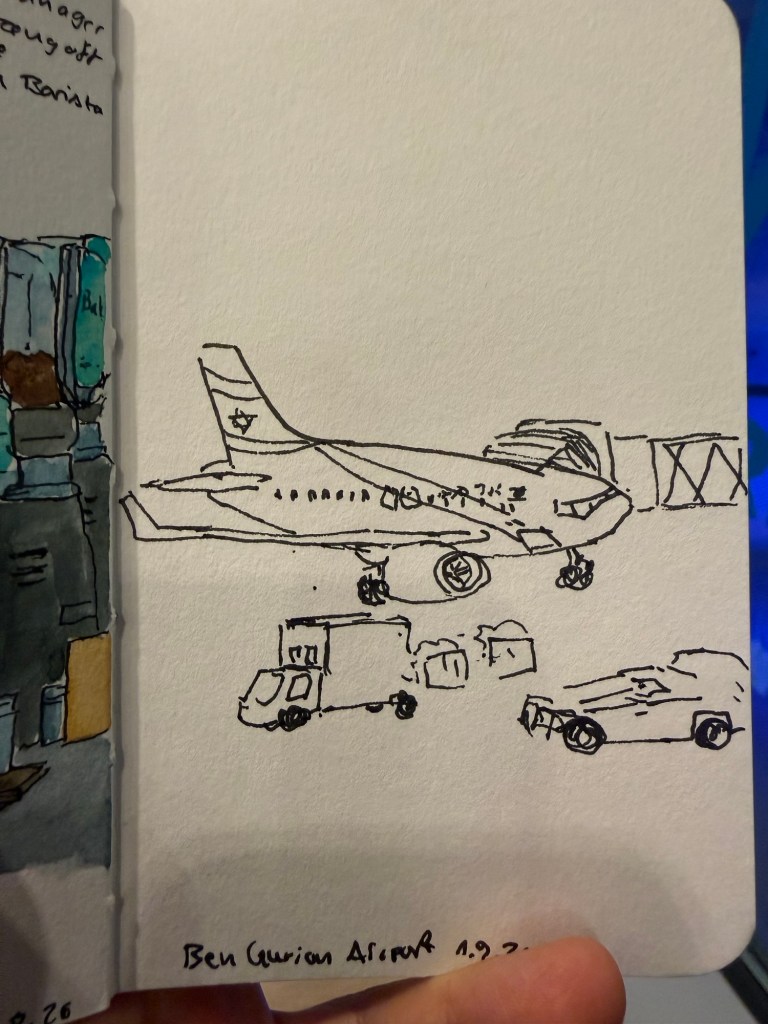
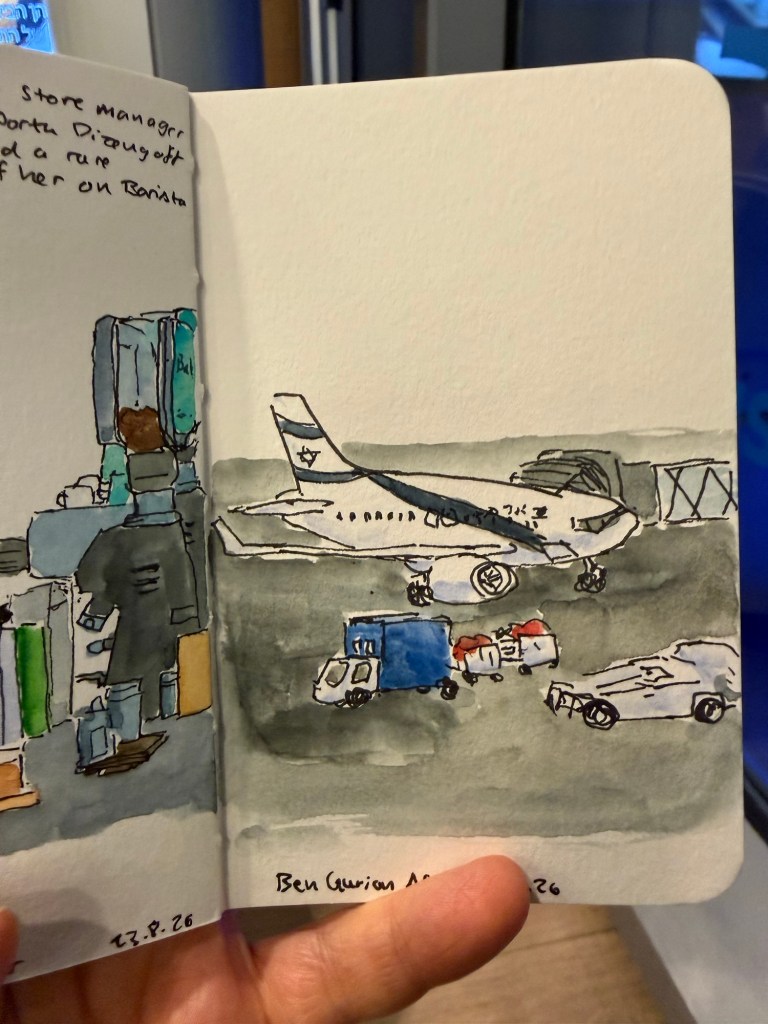
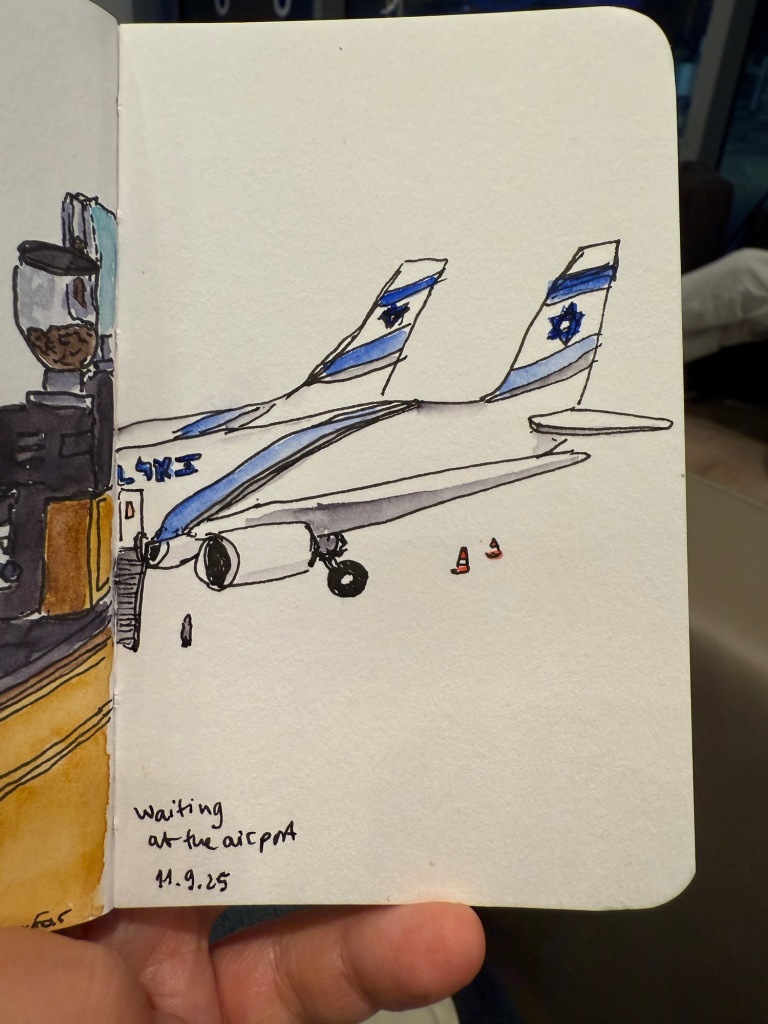
5 minute sketch at the airport
I was tired and this came out wonky but I don’t mind as it captures the moment well and I had less than 10 minutes to get it done.
Stillman and Birn pocket beta watercolour and fineliner.
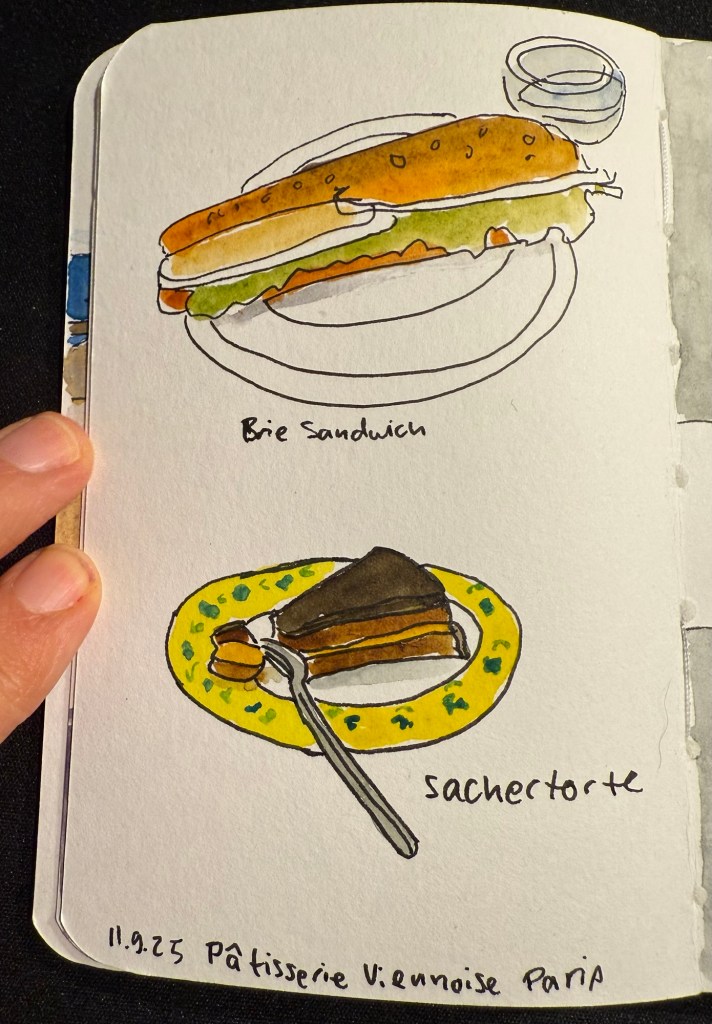
Sketch of the wonderful lunch at my favourite cafe:
Stillman and Birn pocket beta watercolour and fineliner.
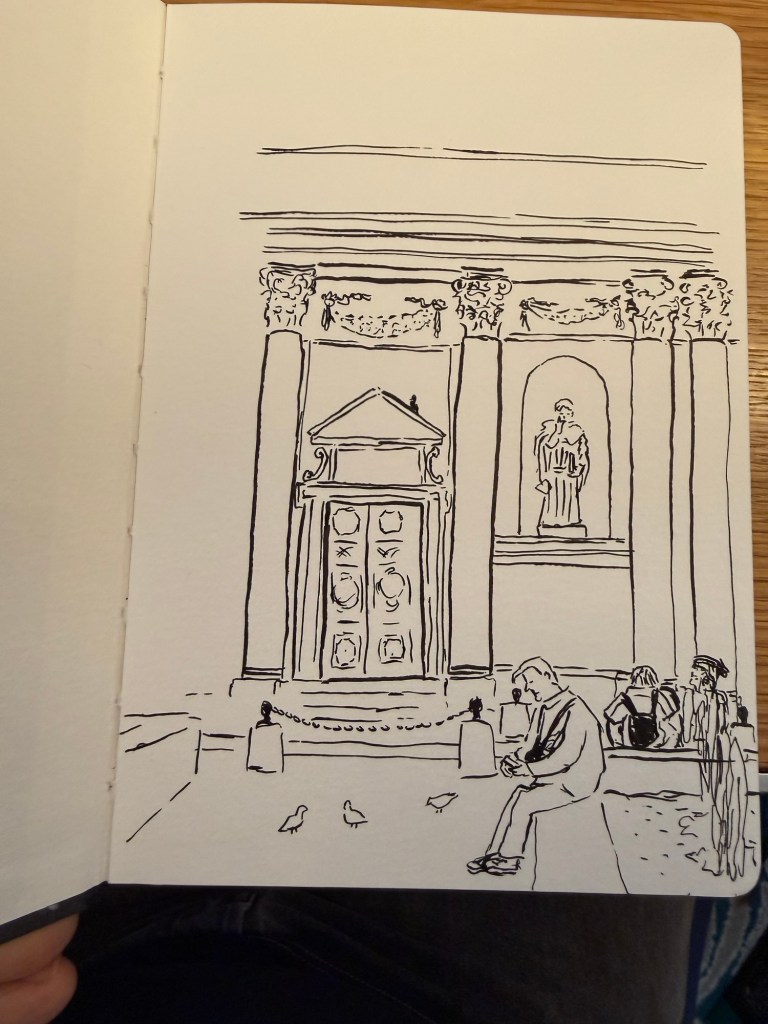
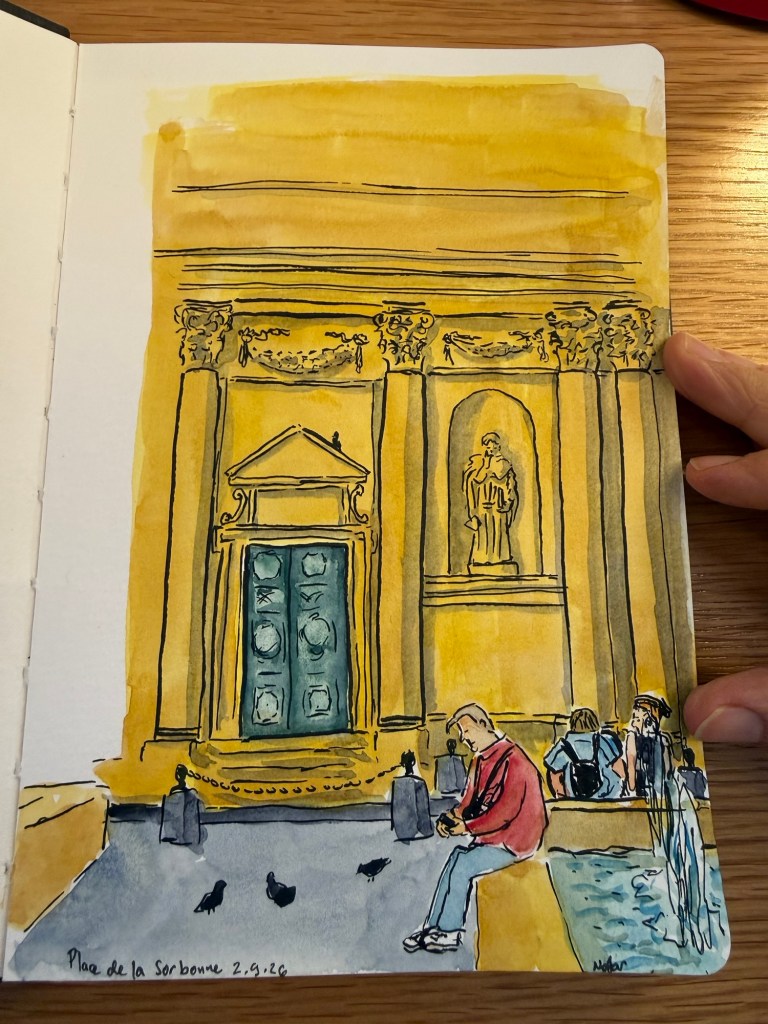
I bought a Hahnemuhle A5 watercolour sketchbook and a new set of Uni Pin fineliners. This sketch of Place de la Sorbonne was done in situ with a brush pen but I ran out of time so I took reference photos and added the watercolour later.
Line work Now with watercolour
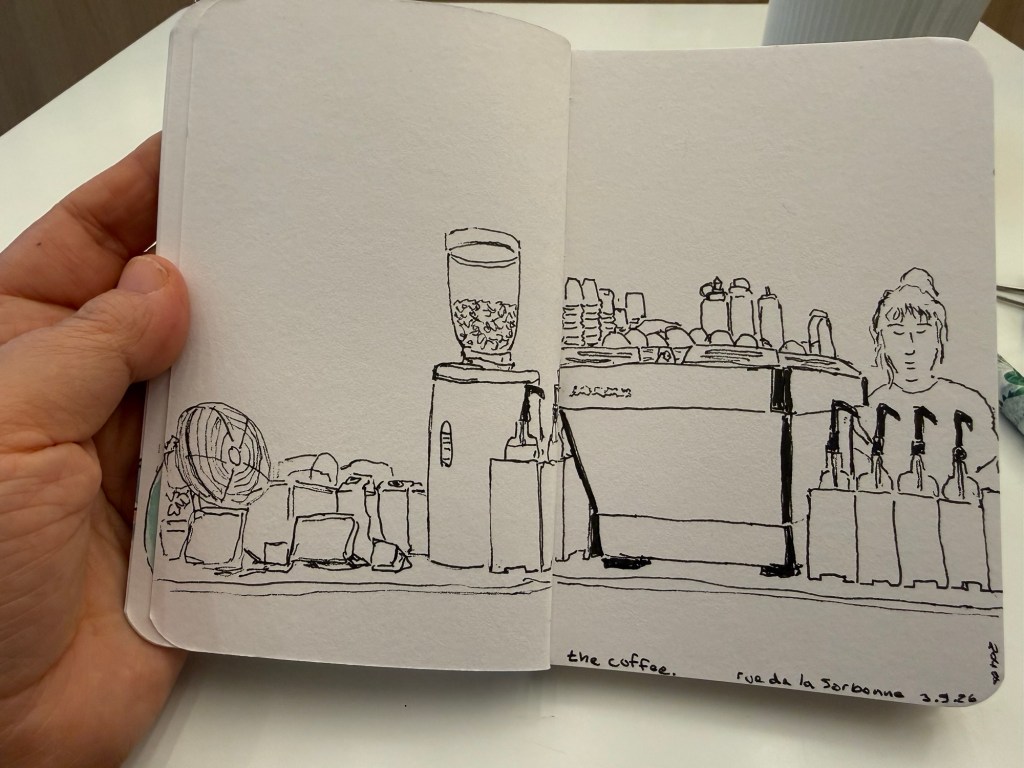
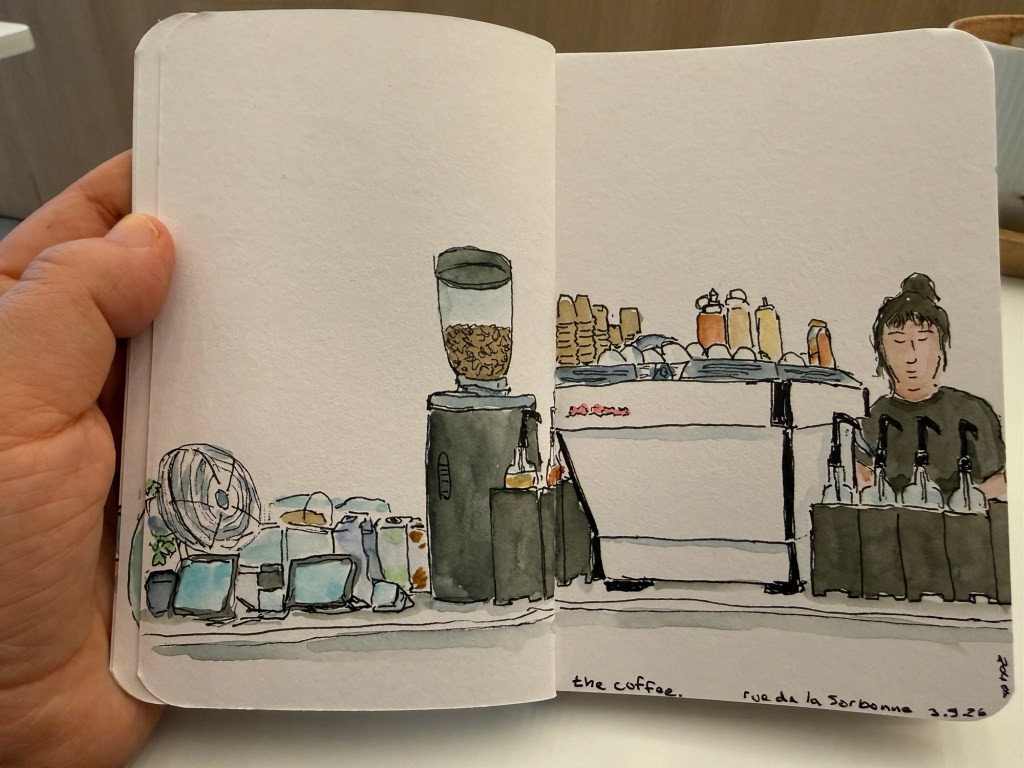
I went to The Coffee, one of my favourite local cafes. I sketched the shop and the barista:
And had enough time to add watercolour. I was hesitant to show it to the barista once I was done but in the end I mustered the courage and did and she liked it.
The finished sketch.
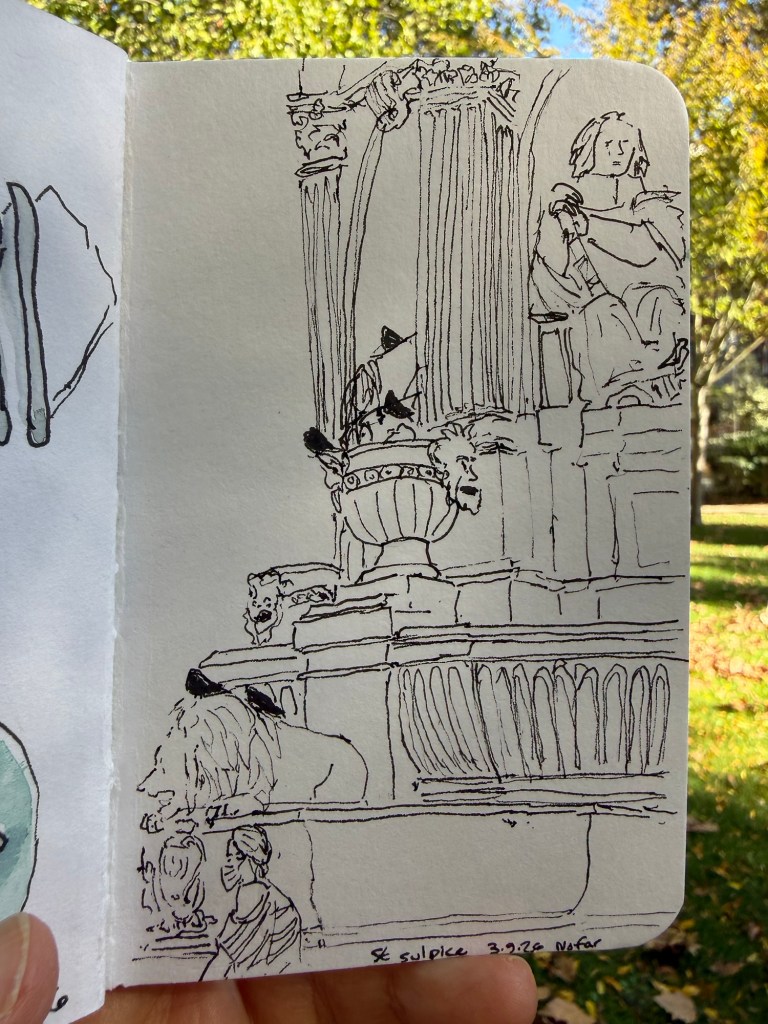
Had about 10 minutes to sketch in the St Sulpice square which was enough to get some quick line work done and take some reference photos for later.
The sketch of the fountain
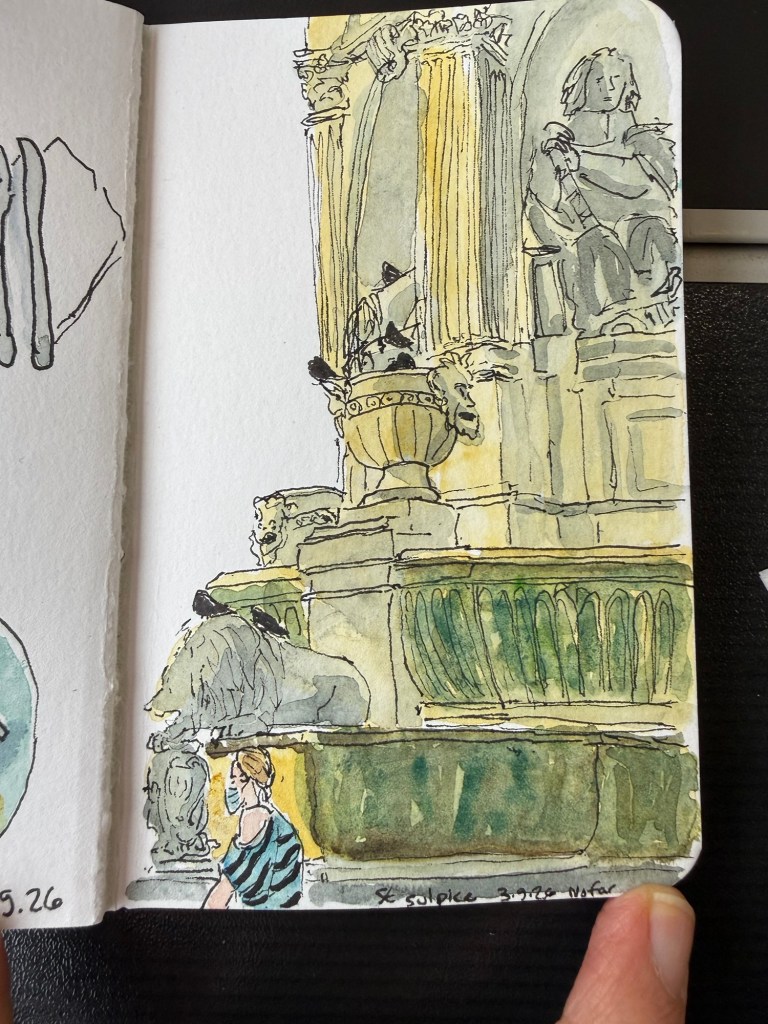
Finished it later:
The complete sketch
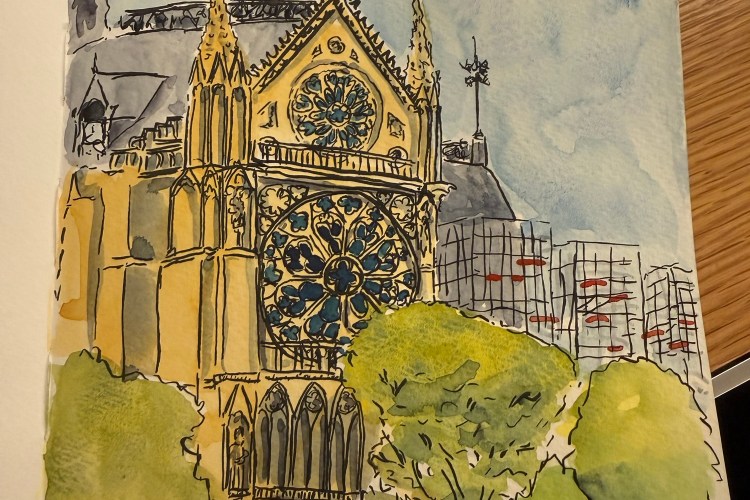
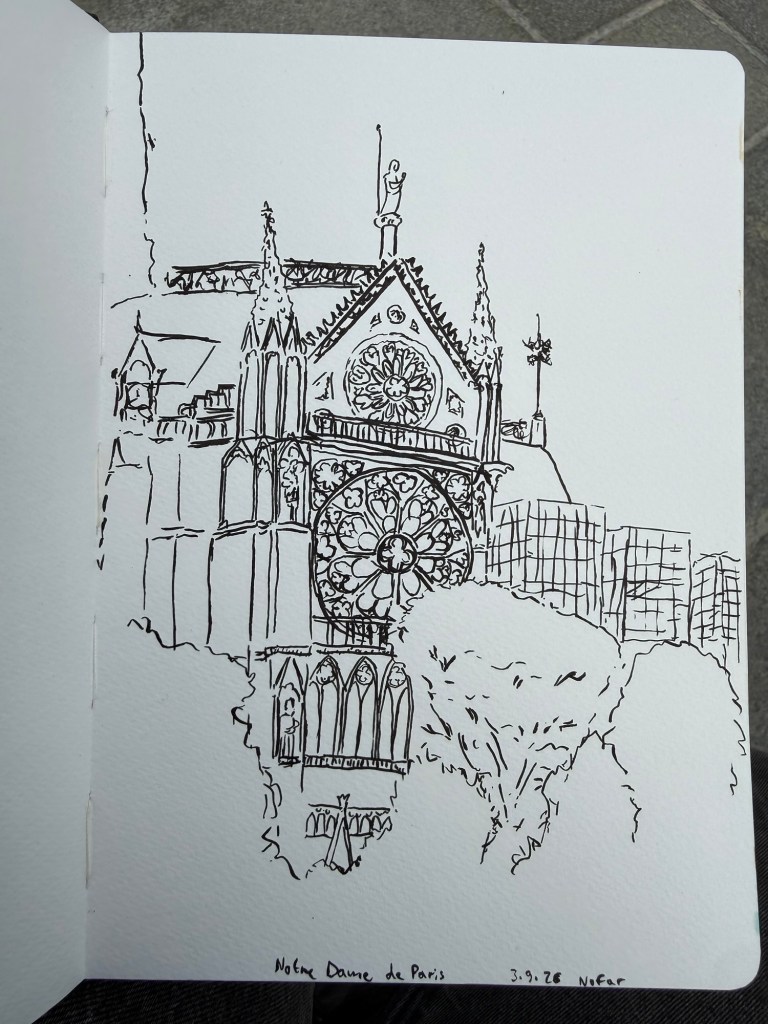
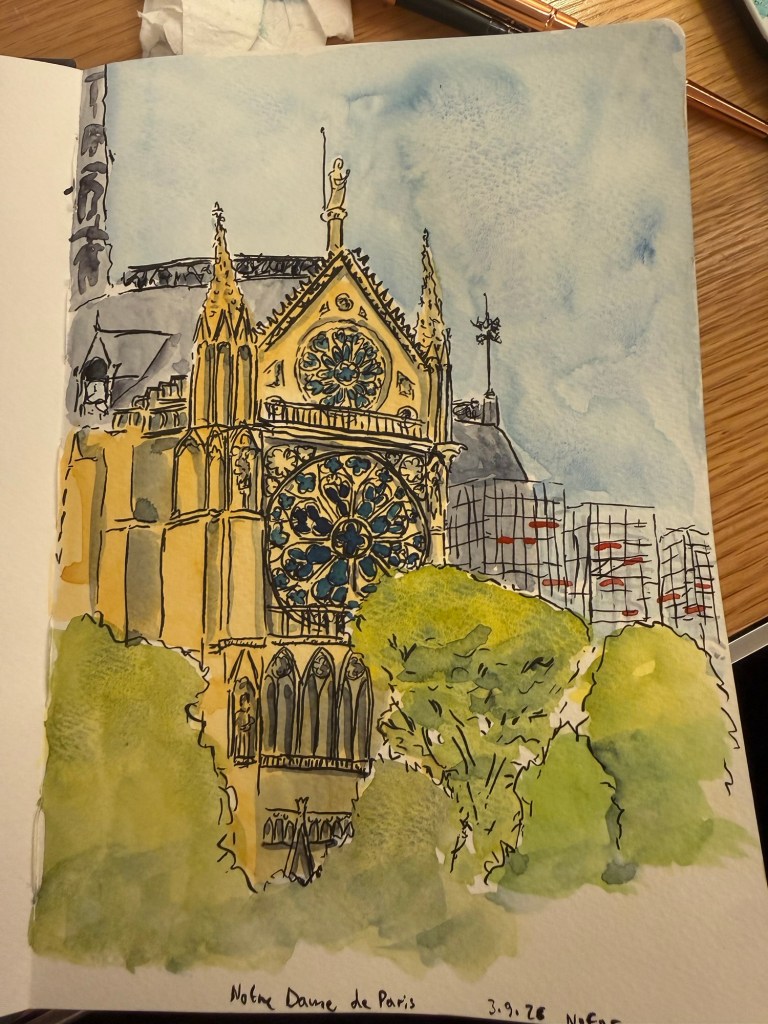
Yesterday I went to the Notre Dame, my favourite, and managed to get a line sketch in my Hahnemuhle A5 watercolour sketchbook but then the heat and crowds were too much for me so I completed the sketch in my hotel room later that evening.
Notre Dame sketchThe complete sketch
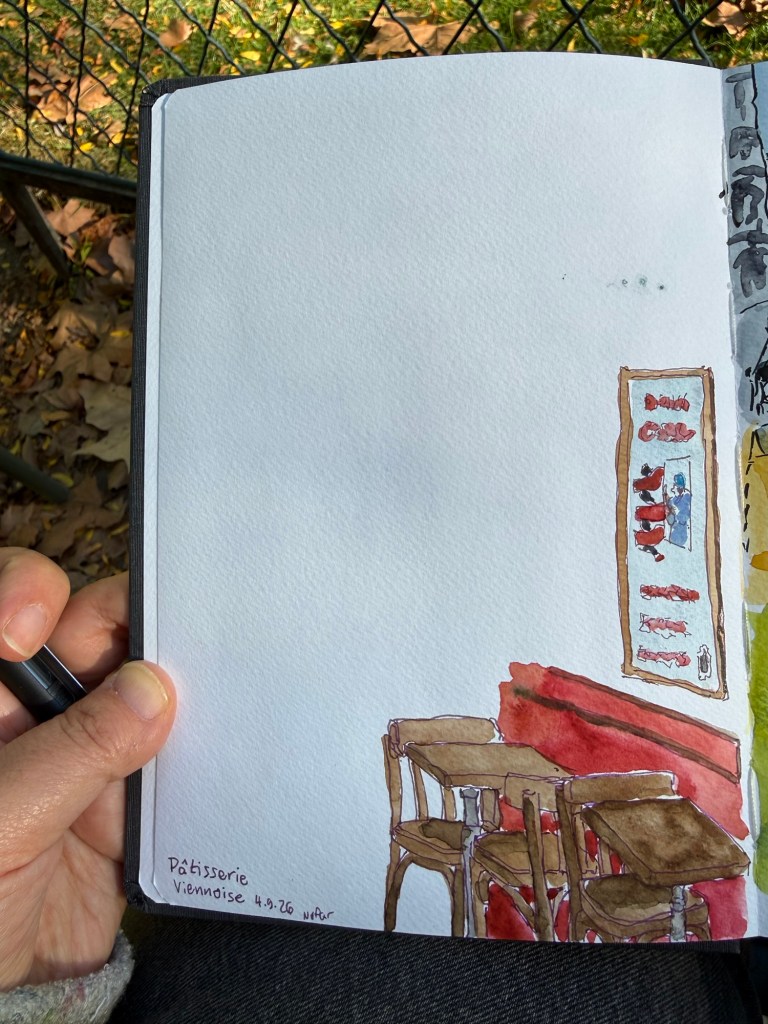
I tried sketching the interior of Patisserie Viennoise, my favourite cafe, this morning but didn’t find an inspiring angle so I just created a brief vignette in my Hahnemuhle:
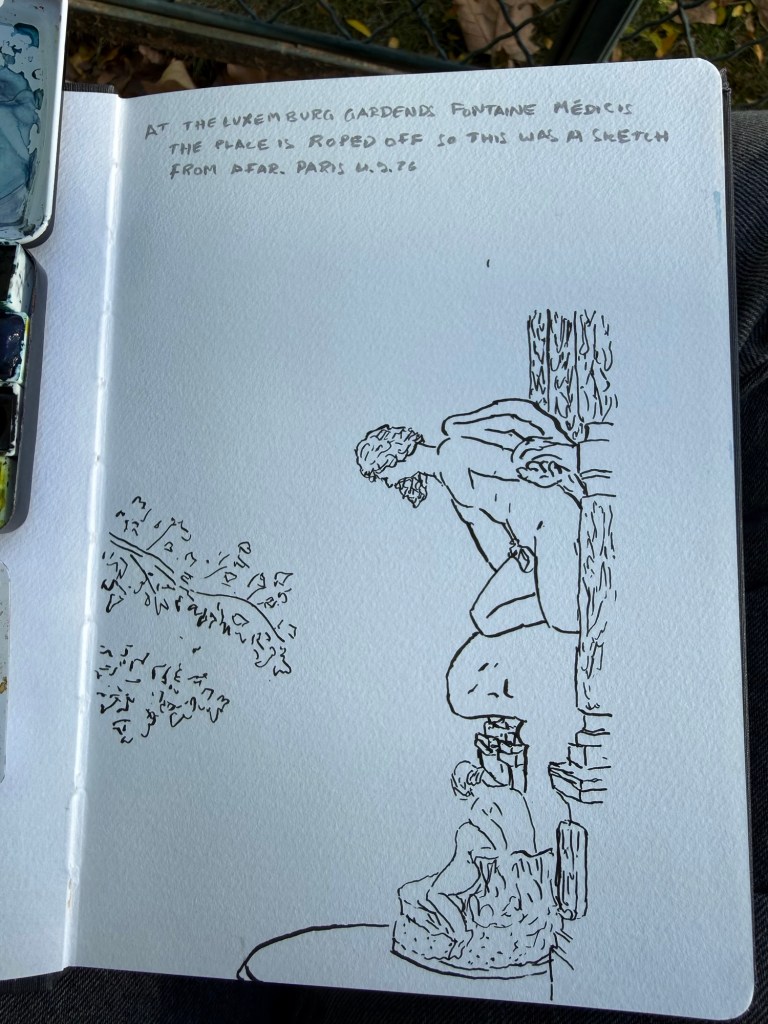
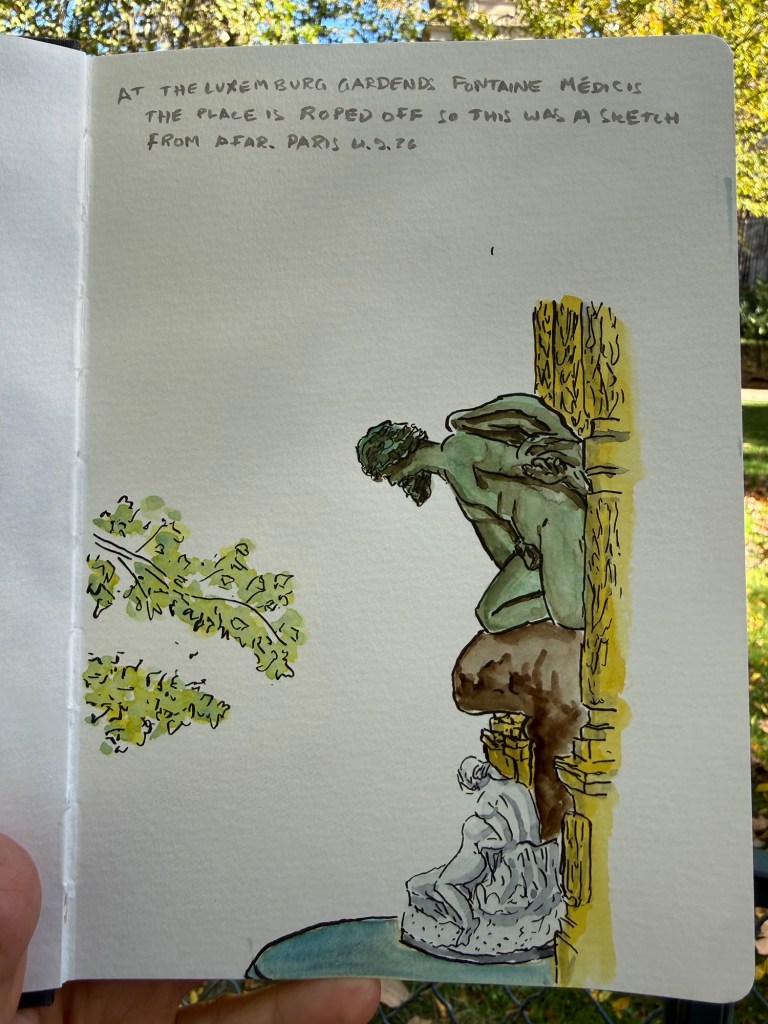
Later I went to the Luxembourg gardens and sketched the Medici’s fountain. It was closed off to visitors for some sort of maintenance so I sketched it from a distance.
Line sketch in my Hahnemuhle A5
The complete sketch:
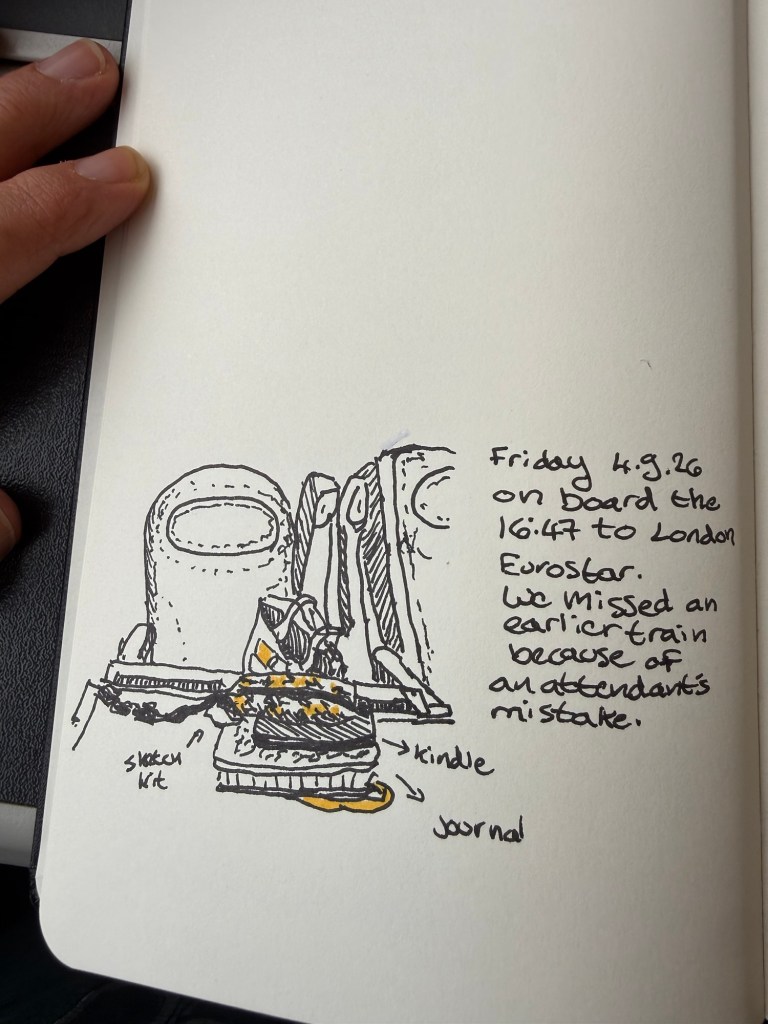
Bought an A5 Moleskine sketchbook on sale and made this sketch on the bumpy train ride from Paris to London:
So far I have managed to sketch and journal daily. London’s schedule is more hectic so we’ll see how things go there.
As part of the Urban Sketchers symposium in Toulouse and general summer travel I know that a lot of sketchers will be visiting Paris this summer. Paris is full of wonderful art supply shops but I wanted to highlight three in particular that are worth visits. Each store caters for a different need, at a different price range, and with a different ambience. If you can, I recommend visiting all three, but if you can’t hopefully this will help guide to the store that best suits your needs.
Rougier & Plé Saint German – the most centrally located and accessible of the three stores, Rougier & Plé is on boulevard Saint German not far from Saint Michelle. This multi-level store is easy to navigate and expansive. The top floor is for sketching supplies – pencils, pens, markers, charcoal, sketching paper, glue, erasers, measuring and cutting tools, etc. The second floor is dedicated to watercolors, ink, printmaking and their related materials (brushes, paper, masking fluids, etc). The first floor is where you’ll find the discounted section, student art supplies, packing materials, hobby materials (beads, clay, etc) and stationary items. They provide tax free forms if you spend more than 100 euros (which won’t be hard), they have a very good selection of brands (this is a good place to buy Schmincke watercolors) and they usually have a good selection of products on sale – particularly paper. This is the “bread and butter” store and if you only have time for one I’d select this one. There’s also a good selection of stores nearby that can interest other members of your party, a nice coffee shop (Cuvée Noire) and a nice park just around the corner (Jardin médiéval du Musée de Cluny) so if you’re traveling with none-sketchers you don’t have to drag them in with you. There is an elevator so if you have accessibility needs this store caters for you. The staff is a bit surly and I wouldn’t go in looking for assistance, but they do have a decent website so you can check things out before you go.
Magasin Sennelier – You’ll find this store all over Paris art supply store recommendations but this is a store with quite a few caveats. On the pro side it’s beautiful, it has a wide selection of supplies that you just won’t find anywhere else (like Etchr sketchbooks for instance, Japanese fountain pen ink, certain sketching supplies), the staff is knowledgeable, and they have tax-free shopping over 100 euros. However the store is open in very particular hours (10:00-12:45 after which they close until 14:00 when they open until 18:30) and they will kick you out at 12:45 regardless of whether you’re just about to pay them or not. It is also inaccessible in terms of public transport because it’s on a one way street with no nearby metro station (so you can take the bus one way to the place, but you’ll have an issue getting back – or vice-versa, depending on where you’re coming from). It’s best to pair a visit to the store with a visit to the d’Orsay or the Louvre but make sure that you don’t end up there when they’re closed for lunch. The store is on two floors, but there’s no elevator and the place is very cramped and chaotic. It’s most likely that you’ll need to ask for help finding things, and you may have to rummage around or ask the staff to bring up things from the back. The staff is helpful (up until lunchtime when they become surly and brusque), and while the prices aren’t the best to be found they do have things that you just can’t get anywhere else so it may be worth scheduling a visit there. This is, however, not a store that you can spontaneously slip into your schedule. Plan your visit carefully so as to not be disappointed.
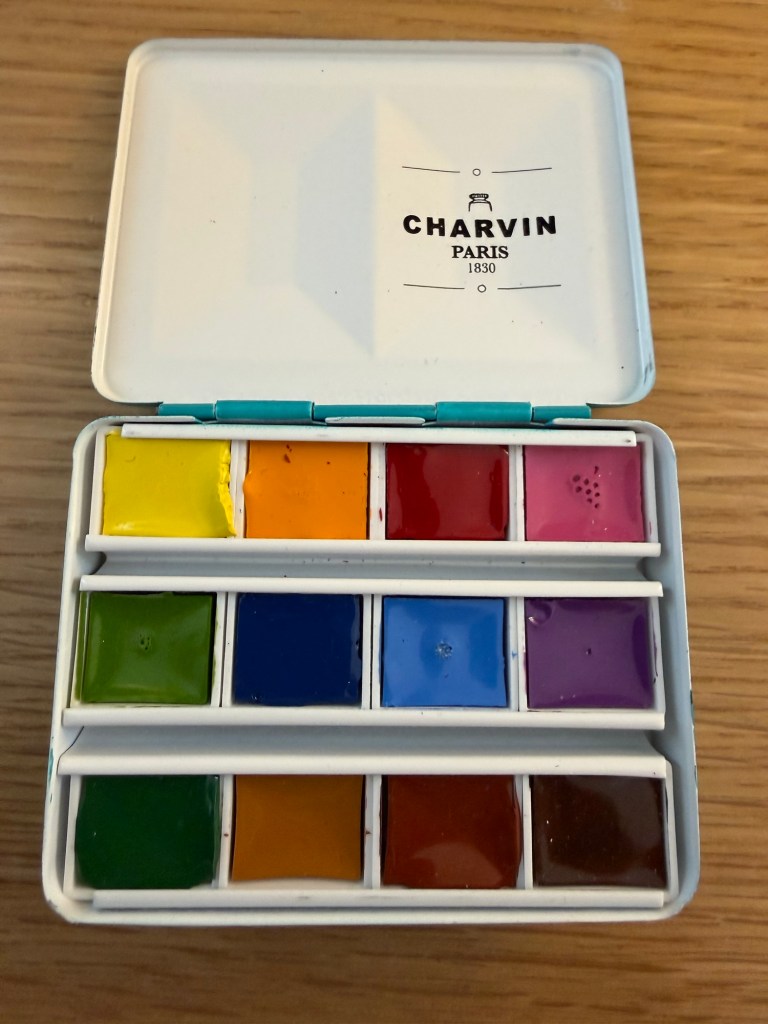
Charvin watercolours purchases in Le Géant des Beaux-Arts
Le Géant des Beaux-Arts – this store is not as centrally located as the other two, but is still not too far away from public transport to make in inaccessible. This is a warehouse kind of store, huge, sprawling, and the cheapest by far of the three. You won’t get a tax return here, but you will get a significant discount on practically everything you buy (the cashiers will sign you up as a member for free if you aren’t, so you’ll get the most discounts on your shopping). They have a very wide selection of supplies and brands (though not everything – it’s worth checking their website first), and the biggest problem there is not getting lost in the cavern of supplies or overdoing it. There are stairs here and there so if you have accessibility issues I’d stick with Rougier & Plé, and there is only some method to the madness (particularly in the paper section). The staff is largely busy stacking art supplies and while they’re nice and try to be helpful, usually only the staff behind the till is knowledgeable. You will find Paris exclusive brands like Charvin and the widest array of Clairfontaine paper you could ever want, so it’s worth visiting the store even if you’re not particularly in search for bargains.
Paris is a wonderful city for artists in terms of its art supply stores, so this is far from a comprehensive list (there’s Charvin, various Sennelier stores, etc). Use this if you are short on time and want to hone in on which store best suits your needs and budget.
The Urban Sketchers Symposium in Toulouse is starting next week, and this year I won’t be participating. For the lucky few that are going to be there, whether as official symposium participants or as “free range” sketchers I thought I’d write down some insights and tips that I gathered from last year’s symposium in Poznan.
In no particular order, here they are:
Talk to people – even if you’re shy or an introvert, the symposium is THE place to connect with people not only because everyone will be nice and kind and many are also introverts, but also because you have a guaranteed shared interest: urban sketching. If you’re unsure how to approach people, just ask them about their favorite sketching setup or tool and see what happens.
Wear your badge everywhere, even at breakfast at the hotel, even if it’s “just” an urban sketcher ID tag. This lets other sketchers know who you are, and opens up opportunities to connect and share with other sketchers. Invite them to join your table at the busy hotel buffet, or ask them where they had lunch or where they’re going to sketch next.
Swap and share art supplies. People rush from place to place, and people forget or misplace art supplies all the time. It’s worth packing some extras and sharing them around – pencils, pens, a tube of paint, etc. You could save someone’s workshop experience with this simple gesture, and it costs you next to nothing. And swapping art supplies, even for a brief sketch is a great cost-effective way to try before you buy. I packed a whole pencil case full of a range of pencils for a workshop and then forgot it on the desk in my hotel room. Thankfully the wonderful instructor and workshop participants had enough to share to help me out and allow me to fully participate in the workshop.
Don’t be afraid to ask for help – whether it be directions to the starting point of the sketchwalk, help with understanding something you didn’t get in a workshop or demo, or assistance with your gear, people are ready to help if you just ask them.
Quick sketch made from goody bag supplies just outside the art market
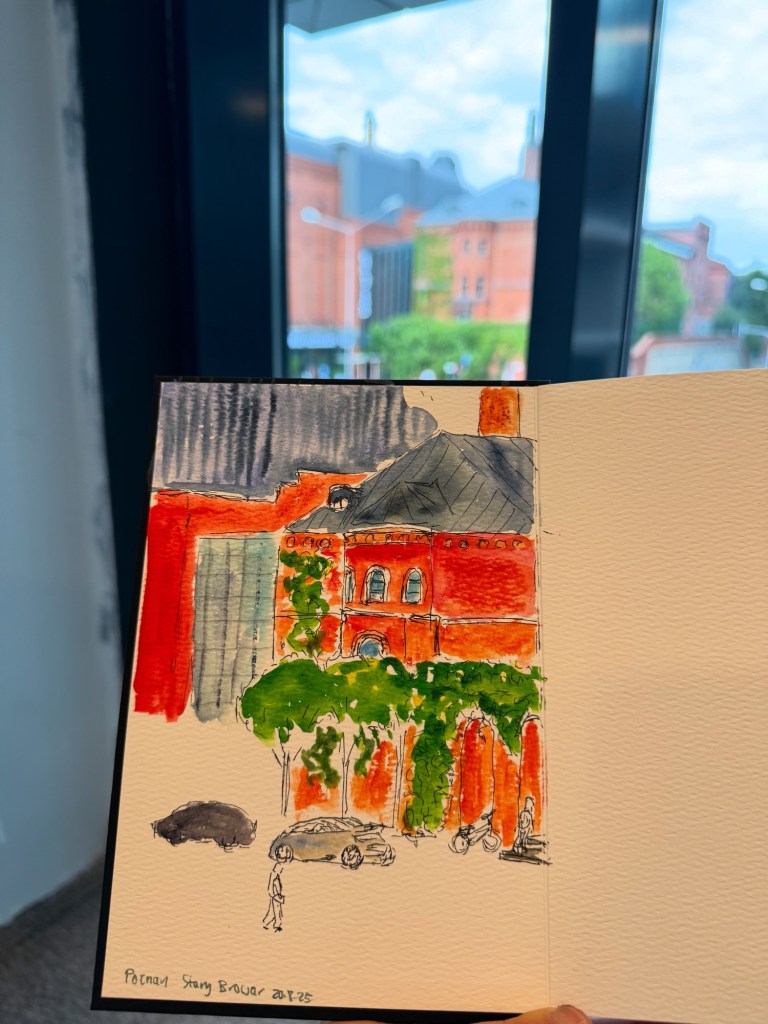
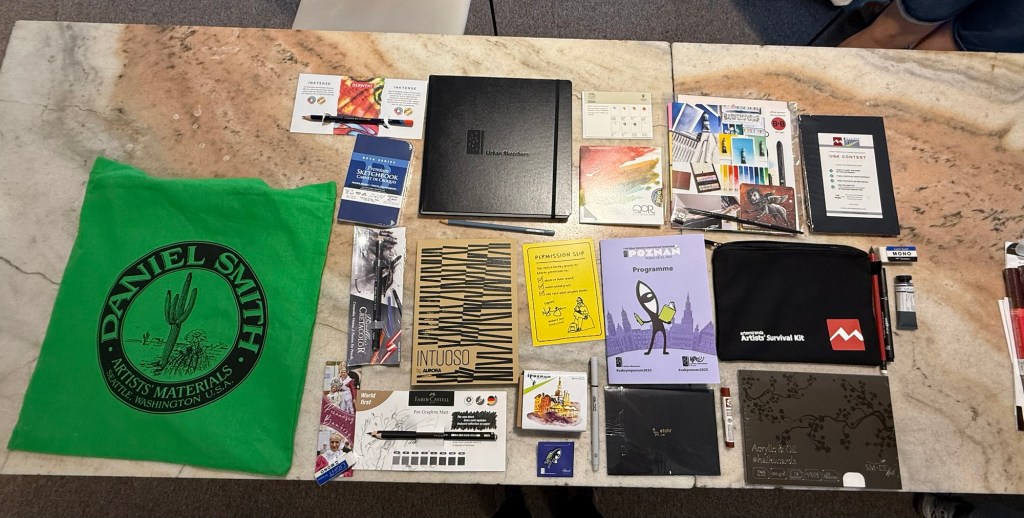
Go early to collect your badge and goody bag and take time to appreciate them. The symposium crew put in a LOT of effort to create amazing goody bags with the sponsors. Collect the bags early and help the symposium and sponsor out by posting about them on social media (Instagram in particular, using the correct tags), and by using them and enjoying them. In Poznan most of the attendees sat in a room adjacent to the one where we collected the bags, did a throw down post and then a sketch with lovely supplies that we got. There was a wonderful view of a historic building next door and it was really fun to create this shared sketching moment. Also remember to share and swap with other sketchers and the volunteers.
Goody bag from the Poznan symposium
Follow the official symposium instagram and use the official tags. The Instagram will have giveaways and useful information (some of the giveaways are also open to non-symposium participants), and the tags help spread the word around and bring positive attention to the city and the sponsors. It was amazing to see as the symposium advanced how much attention Poznan got due to hundreds of talented sketchers bringing it to life.
Embrace the locals. They will notice you because you’ll be noticeable – large groups of sketchers call attention to themselves. Remember to represent the urban sketchers community, be kind and welcoming, and answer any questions they have. From my Poznan experience the locals will embrace you in return – with kind words, tips, stories and sometimes a free drink or a bite to eat (but don’t do it for the freebies!). Children in particular are attracted to sketchers, and we oftentimes shared bits of sketching paper and art supplies and invited them to join in.
Respect the instructors and lecturers. It’s tough to stand in front of a crowd and talk about your art. Don’t mess with your phone during lectures, listen to the instructors, be kind and respectful, and be open to learning. This is a given, but it’s worth stating anyway just in case because it’s that important.
Be nice and kind to the volunteers and talk to them. Many of them are sketchers, many of them are just locals who answered ads and are curious about sketching and the symposium. Share your work and be kind to them – it’s a tough job performed by a dedicated and small group. People gave them stickers, sketches, art supplies, and just chatted with them. A great volunteer can really improve a workshop, and it’s worth acknowledging their work.
Be nice and kind to restaurant and cafe waiters, baristas and owners. Urban sketchers love to camp in these locations to sketch, but be aware of your surroundings. Don’t hog tables during rush hour, be sure to order food and drink (don’t share one dish for four people, even if you’re broke. It’s not fair for the waiter or for the restaurant), tip well, and clean up after yourself. Tag places if you sketch them to raise awareness to the meal you enjoyed there, and remember that you represent urban sketchers everywhere.
Come with art supplies to donate. There will be an opportunity to do so throughout the symposium. We all have too much or supplies that we no longer use, so donate them (if they’re in good condition) to the local charity the symposium is sponsoring. The front desk volunteers usually start the collection on the first full day of the symposium.
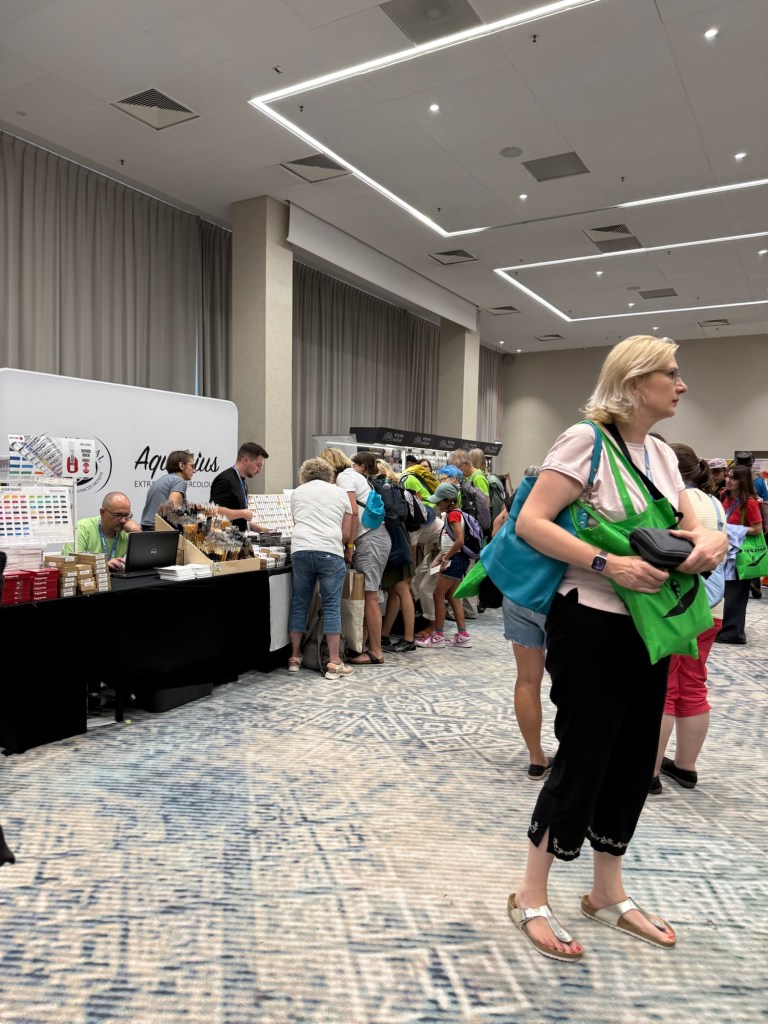
Go to the art market. Make sure to visit all the stalls – many if not all of them are sponsors, and there will be local suppliers that are worth checking out. Try new things, talk to the vendors (they’re usually very knowledgeable), and be prepared for the rush of the first day crowds. Many stalls will also have giveaways and contests set up, so be sure and ask about them.
Art market first day madness
If you are looking for deals, go the art market during the final hours it is open. Although you will find many things out of stock, most vendors will have deals on the last hour or two of the market, to avoid having to ship back supplies.
Talk to the locals, whether they are sketchers, volunteers or instructors. Ask them for good, cheap restaurants for lunch, cafes worth visiting, shops and market stalls of note, cool places to sketch in, and where they get their art supplies. Their local knowledge is priceless.
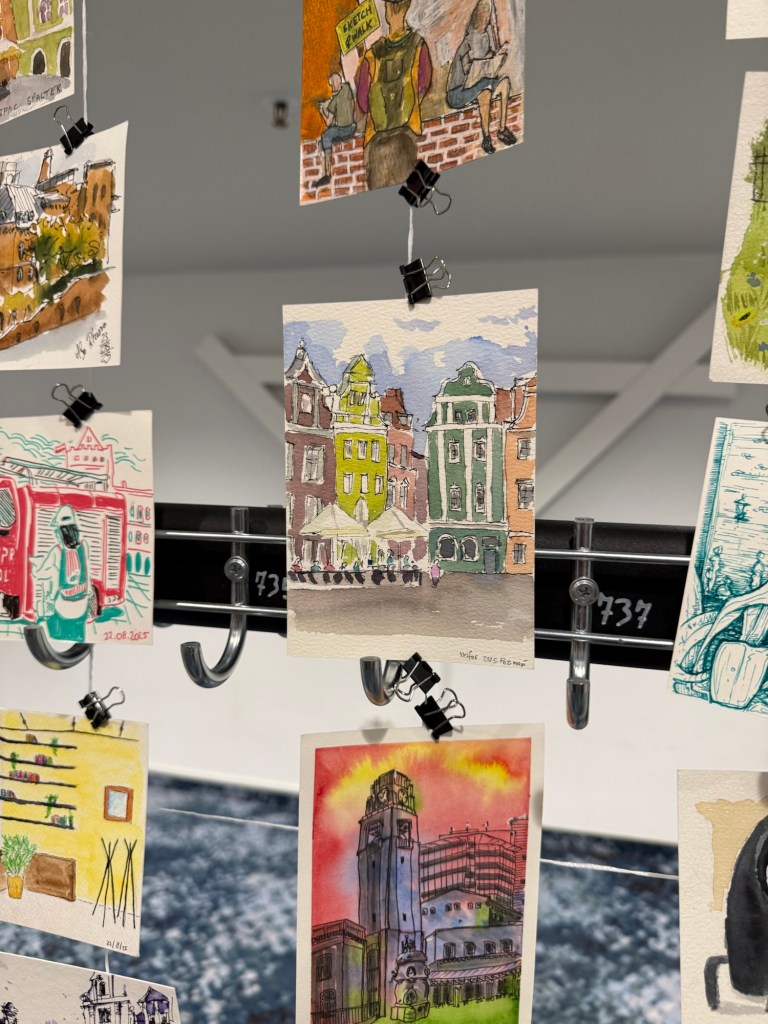
Sketch a postcard. Even if you don’t work in postcard size, or you don’t love the paper, or you feel self-conscious about your work, sketch a postcard and participate in the postcard exhibition. It’s fun to see your work out there, and most participants get prizes, plus you can always donate the postcard for the silent auction and help raise some money for the organization.
Go to the daily morning briefing. Even if you’re tired, even if you don’t feel like it. It’s short, it starts on time, and it has a lot of important information that you just won’t get anywhere else. Also there are giveaways, but I won’t ruin the surprise…
Go to the demos, lectures, drink and draws – the morning lectures were great, and worth listening to and learning from. The demos were a fantastic way to get to experience the techniques of sketchers that you couldn’t get a workshop with, and the drink and draws are just a nice way to connect with people and share your sketching love. I will confess that I was so tired at the end of each day that I missed out on the drink and draws and I regret it.
Be ready to be tired, and try to pace yourself. It’s a lot of fun but very draining to run around town and sketch all day. If you take a lot of workshops or go to all the sketchwalks you will have very little down time between events. Be sure to hydrate, rest, and know your limits. Take into account that you’ll be lugging a lot of weight around (art supplies, a stool, water), and that adds to the fatigue. Check your schedule and if you have only an hour or so between workshops, find someplace close and convenient to grab a bite to eat. Save the fancy restaurant for the evening.
Share knowledge among the group – found a great place to sketch in? A wonderful restaurant or patisserie? A clean toilet or a decent supermarket? Share that information with other sketchers.
Follow people on Instagram. Even if you normally avoid social media, this is how you can stay connected with other sketchers after the symposium, and be inspired by other artists.
Never, ever, ever critique someone’s work. Ever.
We share, we don’t compare. This is a Liz Steel mantra and something you should carry with you during the symposium. Be inspired, not intimidated, by other sketchers’ work.
Follow along with the demos – if you’re going to a demo, it’s OK to watch and listen but it’s equally valid to sit down and sketch while the demo is going on, trying to follow along as you work. There is value in both these approaches – don’t be afraid to start out by observing and then dig in with a sketch of your own.
Try new things, and don’t worry about the results. This is a tough one, but an important one – the point of the workshops and demos isn’t for you to come out with masterpieces, but for you to try out new things. When you do that, you may not like the results, or it may take a few tries. That’s OK. The best workshop I had in Poznan was also “traumatic” in this way – I made several sketches and they were all terrible. Only on the last sketch did things click, and I got one of the best sketches I have ever made – and one that took third place in the postcard exhibition.
My postcard on display (it’s the one in the middle)
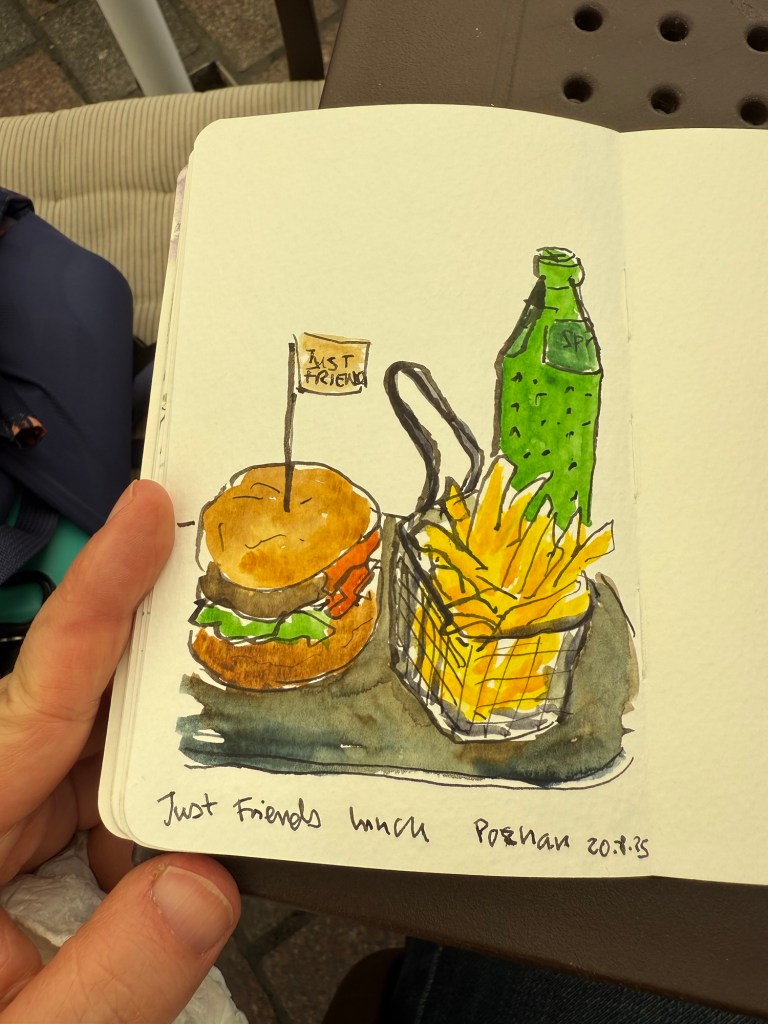
Draw your food. It’s an urban sketchers tradition and a great way to remember a restaurant or cafe.
Drawing food
Take reference photos – you may not be able to finish a sketch, but if you have reference photos you can return to it later on and complete it.
If you can, give away sketches. People who were kind to you love receiving sketches as a gift, and you should see them light up when you give them that quick napkin sketch, or a page from your sketchbook. Also consider donating artwork to the silent auction if you can – it helps Urban Sketchers raise money for the great work they do.
Tell the instructors how great they are. They really are amazing, and they’re artists so they all have imposter syndrome and they love to hear good feedback about their demo, workshop or compliments about their sketches. They are all volunteers and they put in a LOT of work and research into their sessions so be generous with your praise.
Tell the organizers how great they are. They’re also volunteers and they work like crazy before, after and during the symposium. Let them know that you see them and appreciate them.
Be very, very kind to the symposium correspondents – they put in a crazy amount of work and effort into bringing the symposium to life for those of us who can’t be there. That means that while you were at that one workshop they zigzagged across the city and went to three, making sure to sketch and take photos in each. And while you were sleeping they were staying up late editing photos and posting to social media. They do a mammoth amount of work every single day, so take the time to be extra nice and helpful to them.
Be kind. People can get tired, hot, blustered, overwhelmed. Give them the benefit of the doubt and be kind. Look out for each other and help each other through the whirlwind of this symposium.
Take time after the symposium to decompress and process what you’ve learned. Go over your notes and sketches, look back and what you’ve learned, try out the new techniques and supplies that you’ve gathered, and go out there and sketch!
Have fun, remember to hydrate and use sunscreen, and bring Toulouse to life with sketches!
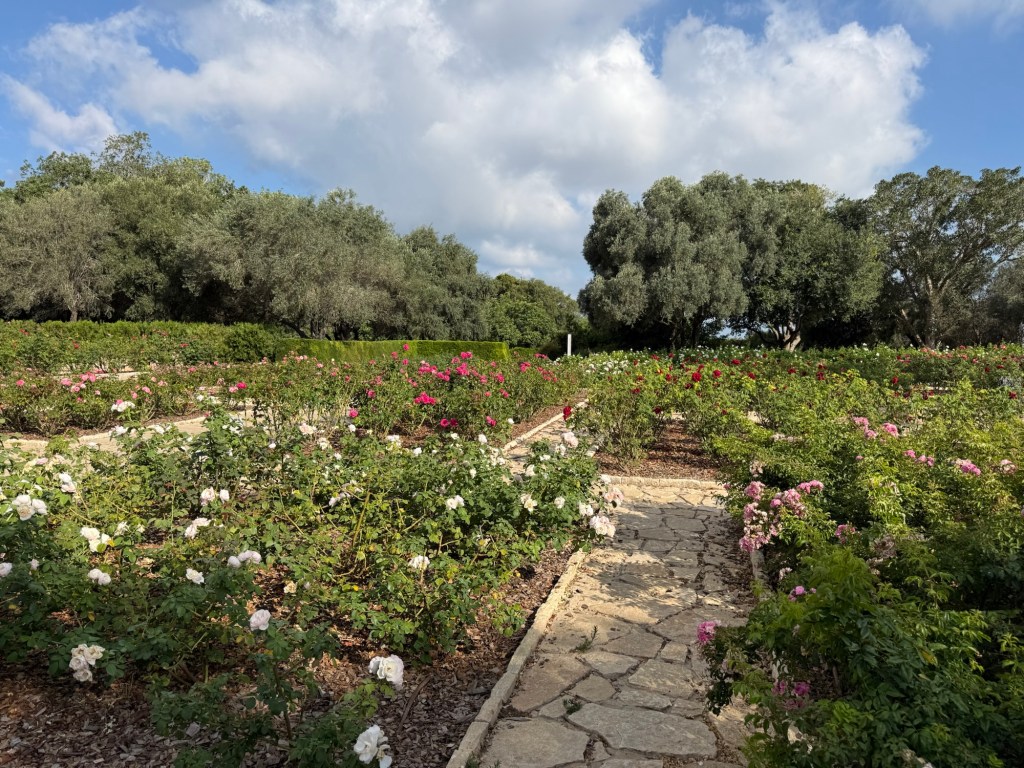
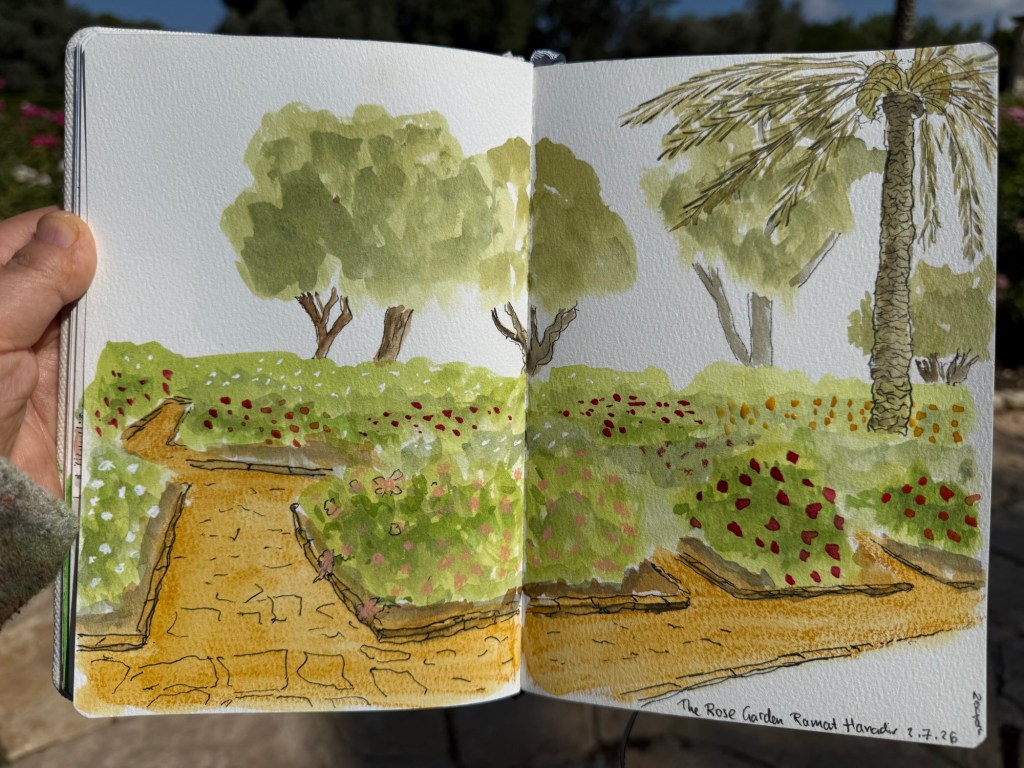
I went to Ramat Hanadiv garden today, and created a quick watercolour sketch on location. There were a lot of details in the scene, and I wanted to capture a relatively wide angle, so I had to do a little planning ahead. I normally don’t take photos or videos when I sketch (only once I’m done), but this time I made some unusual choices for me, so I decided to document them as I went along.
This is part of the scene that I was sketching:
The rose garden. This is about half the scene that I was sketching, and by the time that I was done the sun was fully up overhead so I lost the interesting shadows.
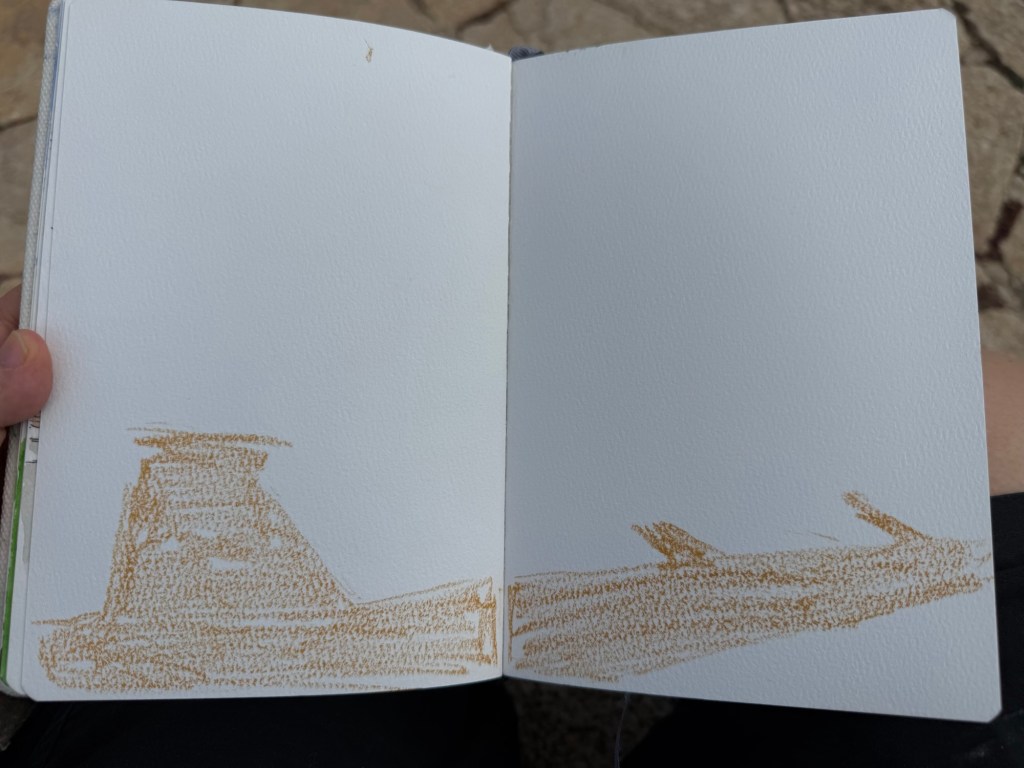
I was using a cold pressed Etchr watercolour sketch book. It’s wonderful for watercolours, but pen and ink struggle on this paper. I usually start the sketch with pen and ink (a fineliner or a fountain pen) and then move to watercolours, but since there was so much detail here and I didn’t want to get carried away by it, I started with a Caran d’Ache Neocolor II crayon:
Laying down the rough location of the path.
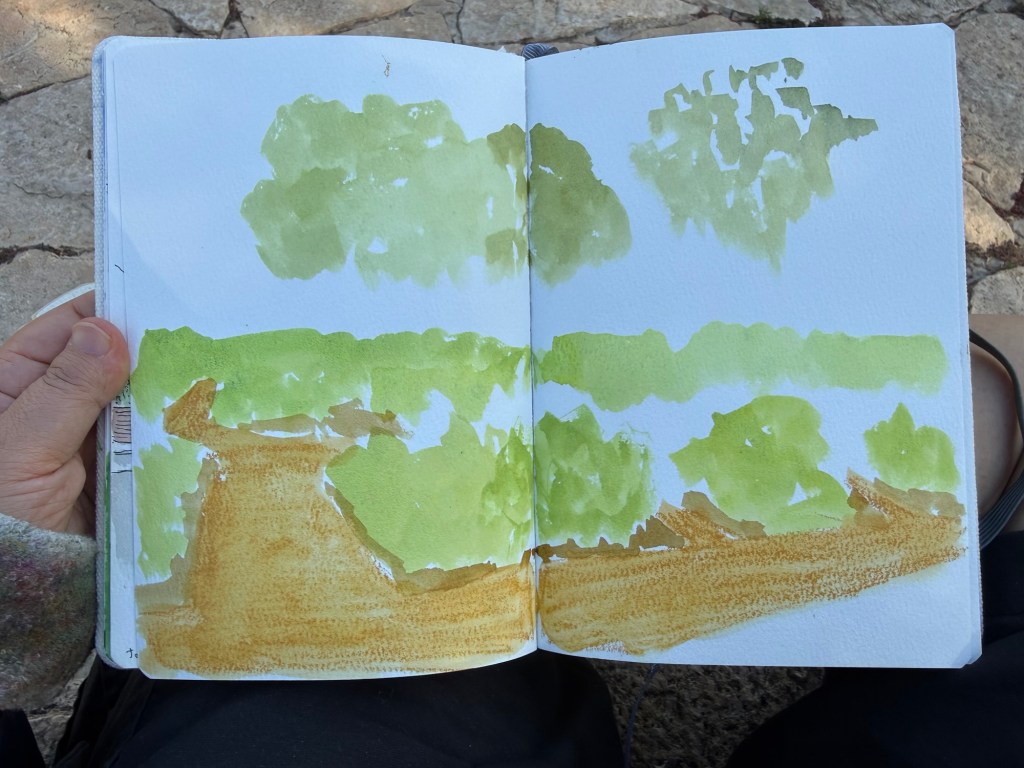
Then I blocked in the greens of the roses, the trees, and a bit of the ground. I’m using the lightest green hues as this point – I’ll add darker greens later to add volume and depth. In watercolour you work light to dark. I also went over the Neocolour II with some water.
Blocking things in.
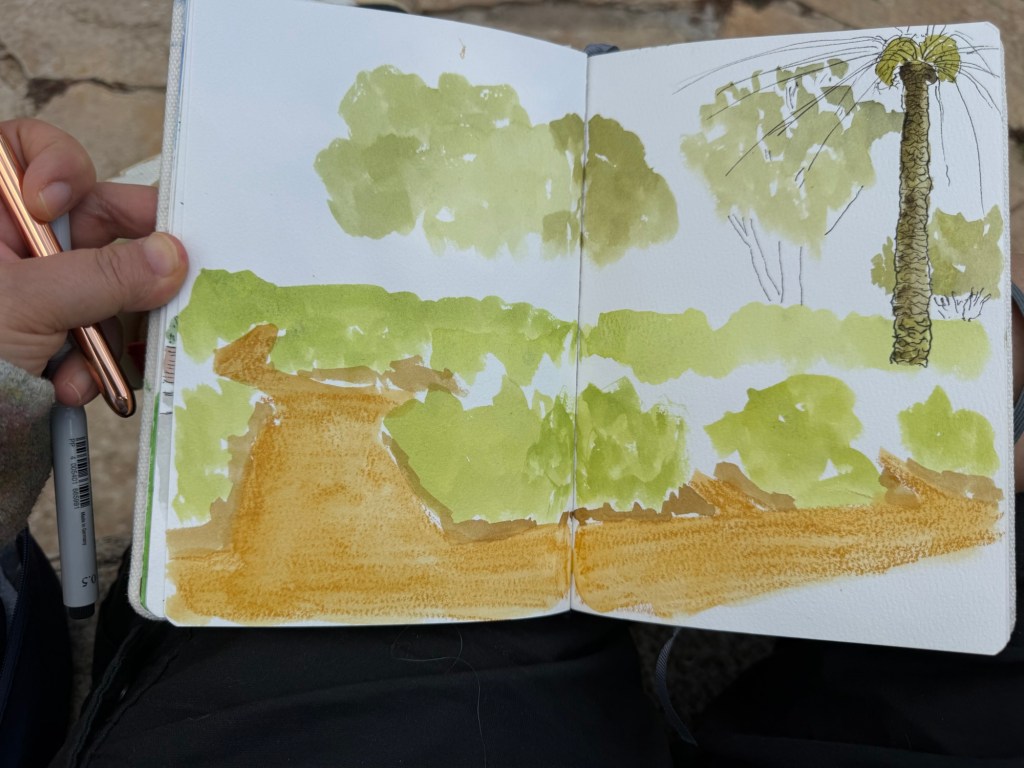
At this point I took out the fineliner and sketched out the palm tree and started sketching in the tree trunks. I also added colour to the palm tree trunk. The palm isn’t supposed to be the focal point of this sketch, the roses are, but it’s there to give things perspective (and it literally was standing nearby – I just pulled it into the frame because I thought the sketch needed it).
Palm tree in.
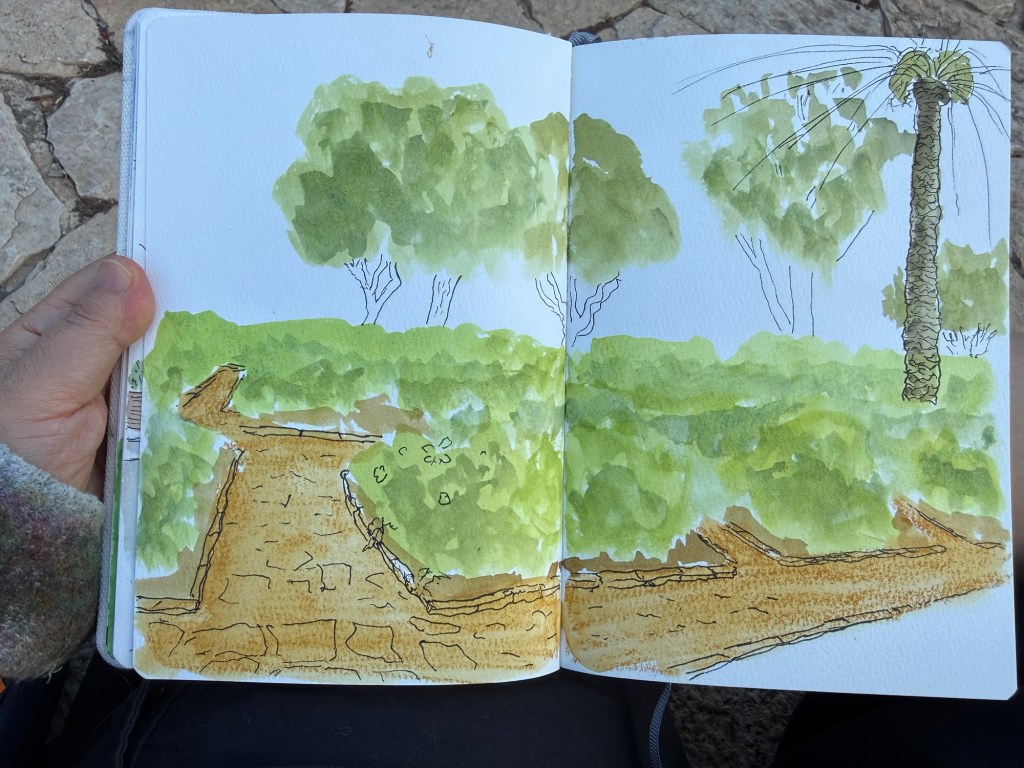
At this point I finished the line work, and then moved to adding depth to the greens. I deliberately left the path largely flat because I wanted the roses to be the focus, not the cobble stones. There’s only so much detail our eye can take, so you need to be mindful of that when sketching. This is something I’ve been struggling with for years – what to leave in and what to edit out.
Line work done and some depth added.
This is the finished sketch. There are roses added in, some shadows under the plants, tree trunks, the palm fronds. I was tempted to add the sky after I was done, which is why I knew I shouldn’t add the sky. Never add anything after the bulk of the sketch is done just because you had the idea as an afterthought. It’s the best way to “ruin” a painting.
The finished sketch
This took me about 40 minutes, much of the time spent waiting for the paint to dry or mixing greens.
What do you think? Would you try and sketch something like this – by blocking it in paint first before moving to pen and ink?
In September I traveled to Paris and London.See part 1 of my travelogue here, part 2 here and part 3 here.
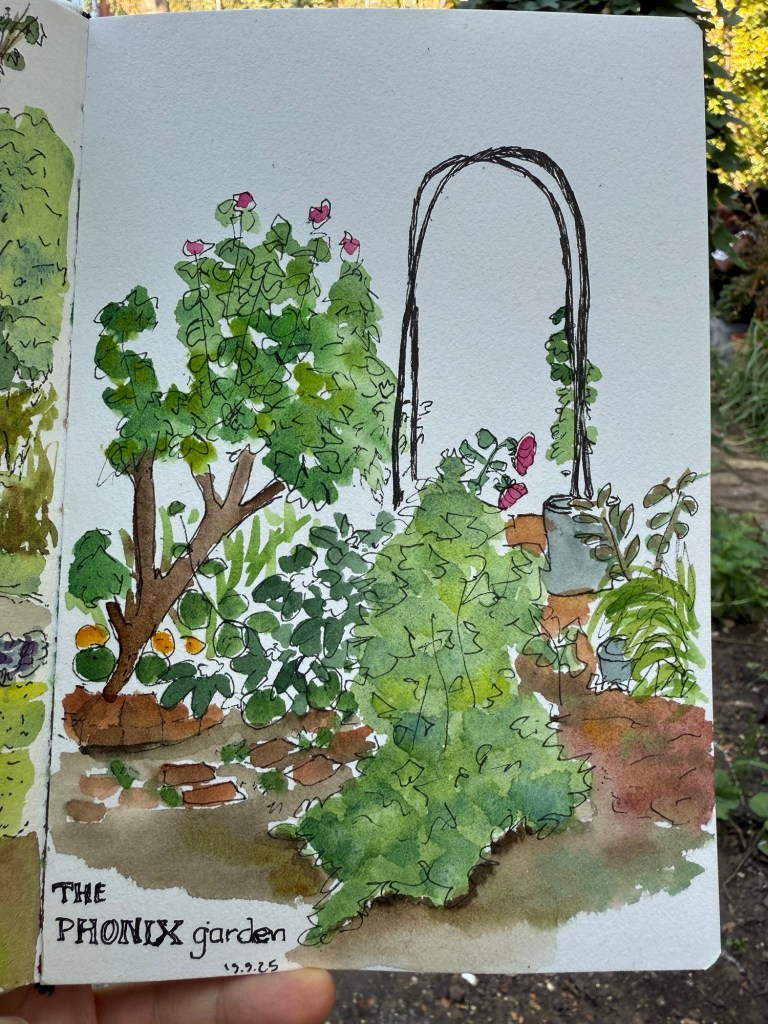
Another visit to the Phoenix garden resulted in this sketch in my Etchr lab sketchbook. I love the paper so much – even a super quick sketch pops on it.
Phoenix garden sketch
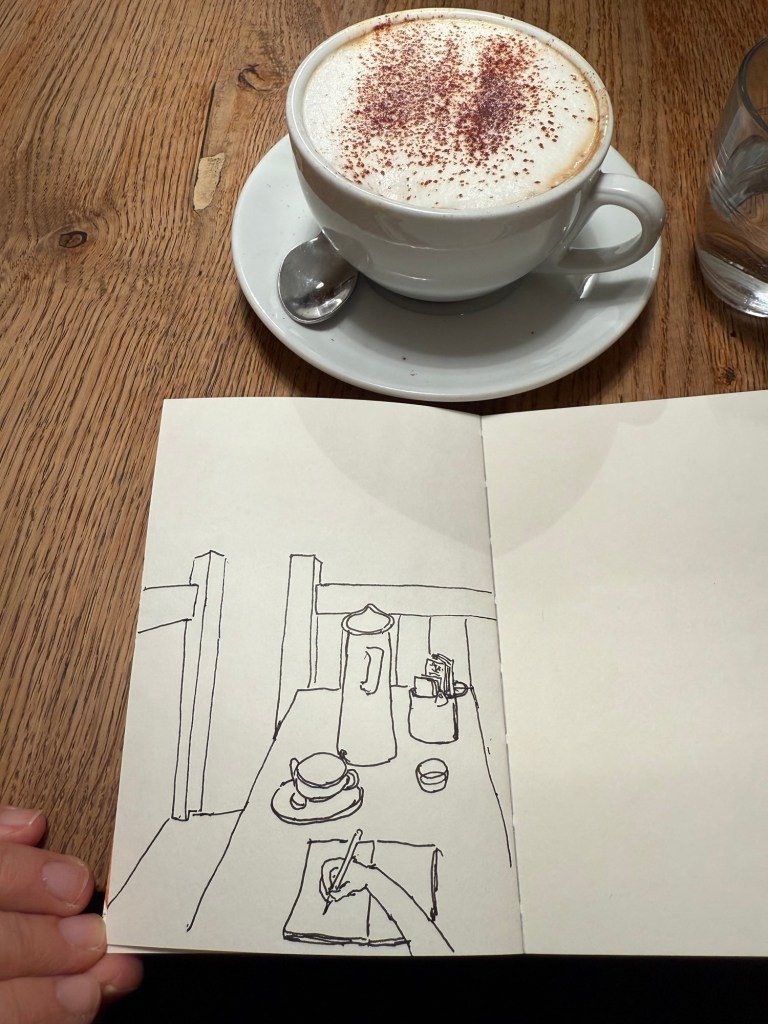
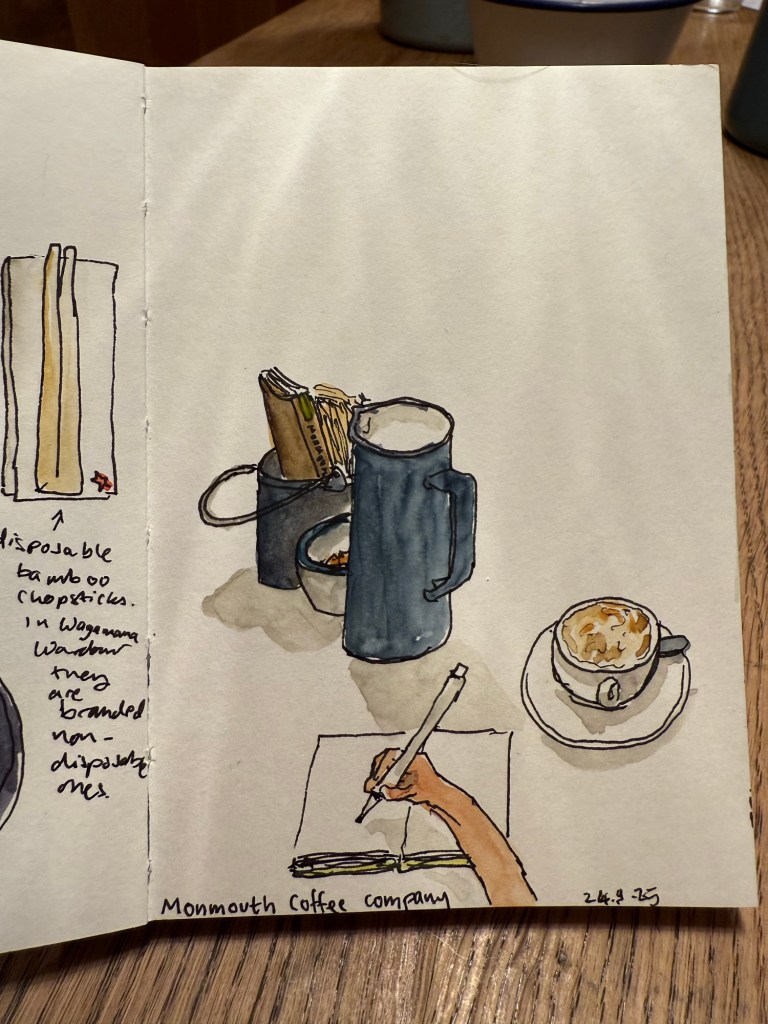
I had a coffee at the Monmouth Coffee Company. I love their coffee, but the place was both packed and super hot and stuffy so I made this quick sketch in my Pith Kabosu sketchbook and didn’t bother to add watercolour to it. It’s the first time I tried a POV sketch, and you can see the weird way I oftentimes hold my pen. I got to talk to a super nice young South Korean woman, as I shared the table with her and a young Japanese father and his 4 year old son.
POV sketch of the Monmouth Coffee Company table
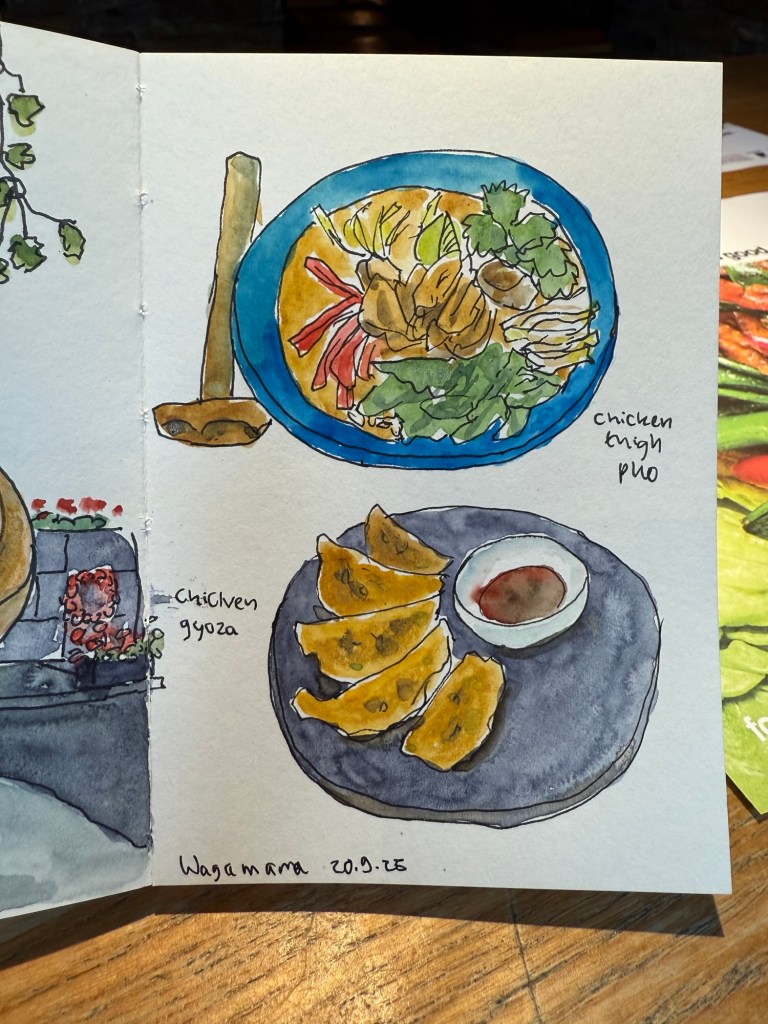
Lunch was at Wagamama again. I tried their pho for first time (it’s new on the menu) and really liked it.
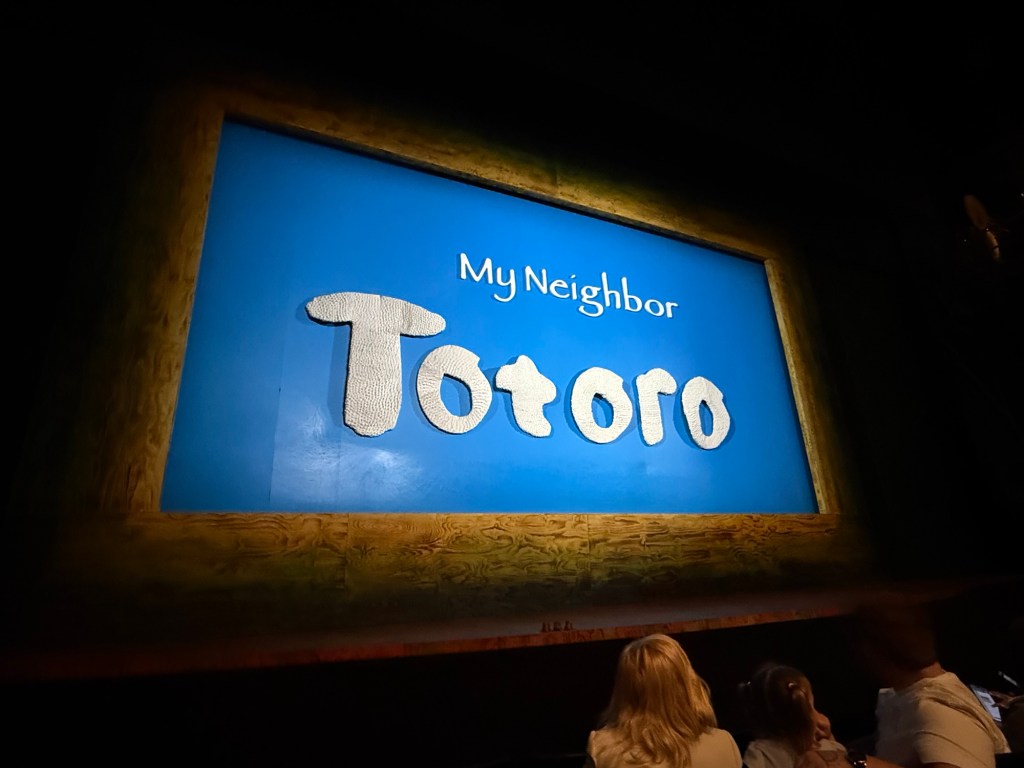
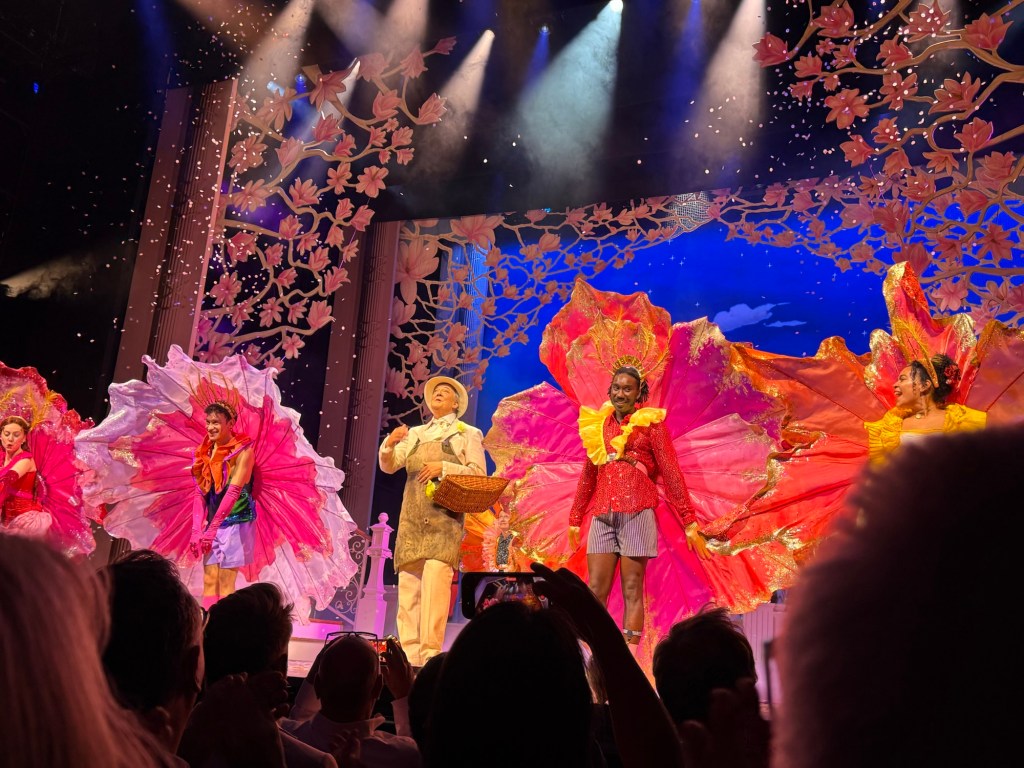
In the evening we went to see My Neighbour Totoro. It’s a lovely play, very well considered and beautifully acted and puppeteered.
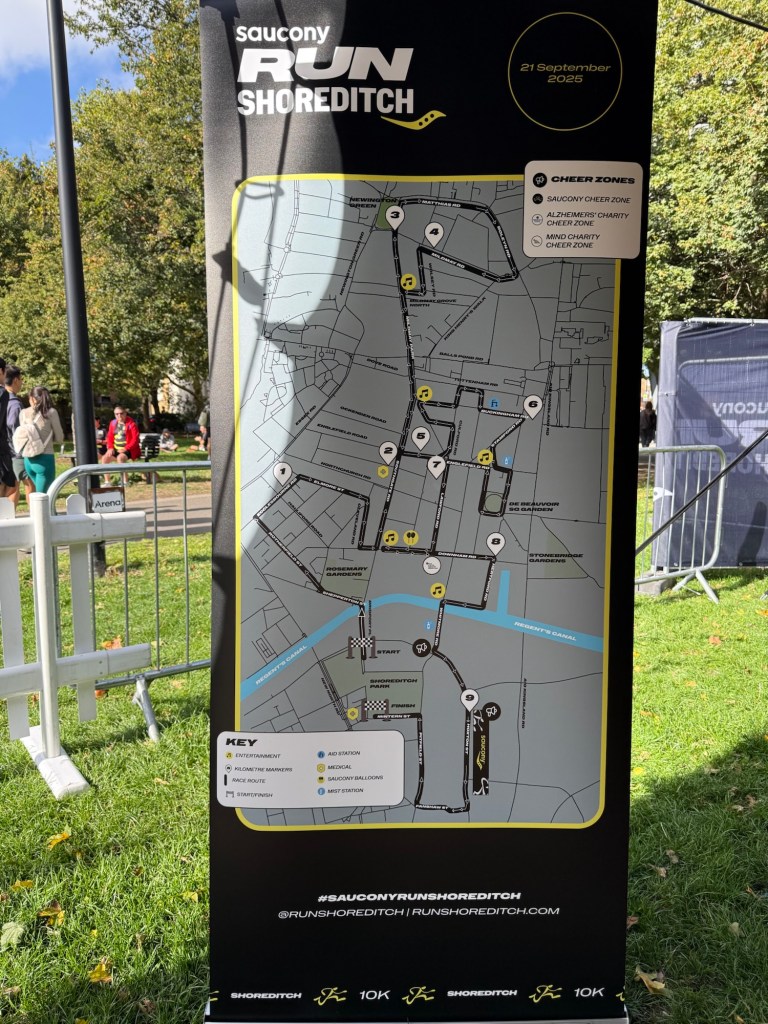
On Sunday my family went to Greenwich and I went to the Saucony Run Shoreditch 10k race. It was bright and cold, perfect running weather, and the route was pretty flat – but chock full of speed bumps, which really hampered the race flow and caused a few nasty spills.
Here’s the route:
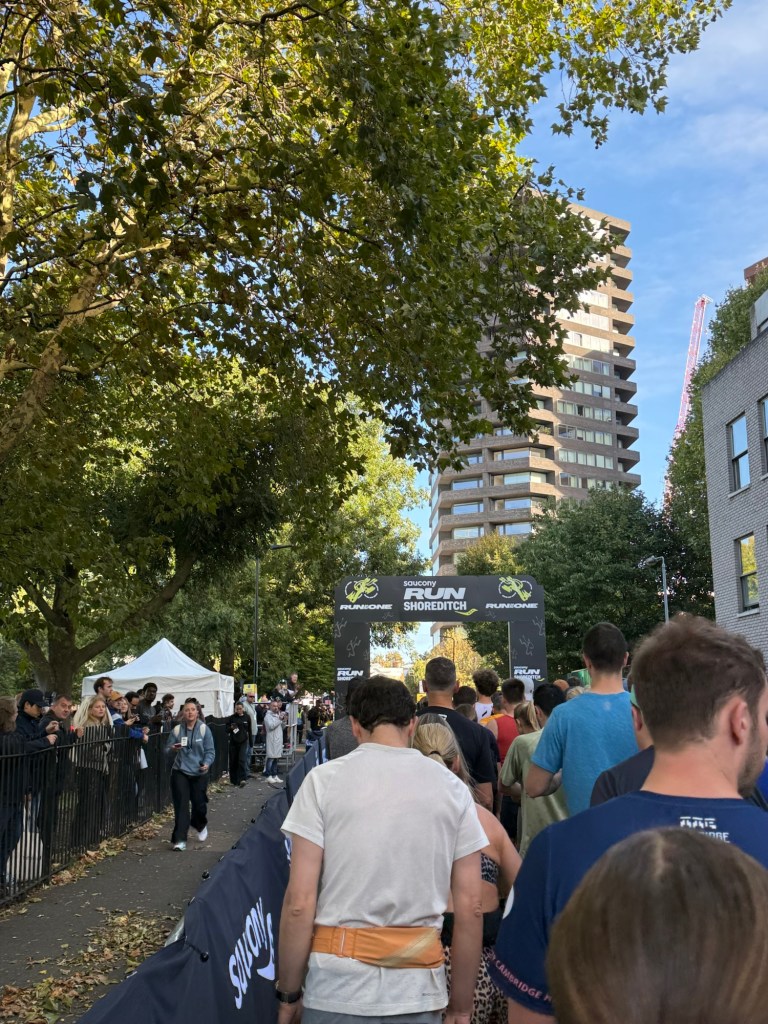
And the starting line:
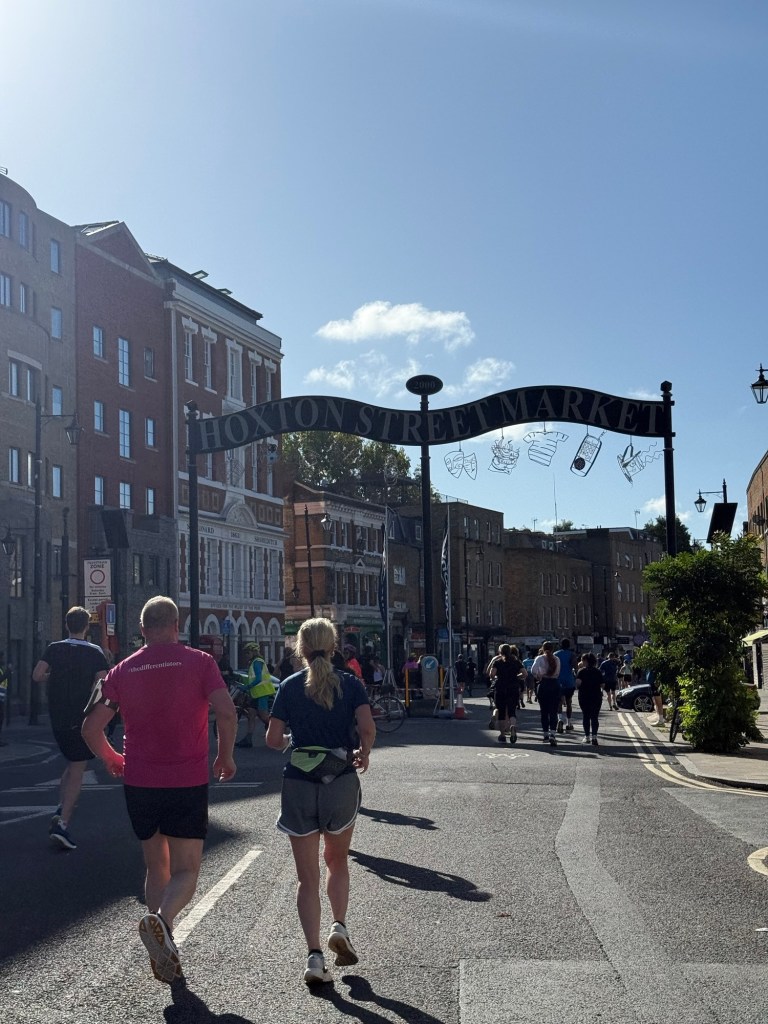
And some of the entertainment on the way:
We ran a lot of loops, mostly through pretty dull residential streets. Only in the final kilometre or so did we get to see a bit of Shoreditch high street etc.
Overall the race was fairly well organized, and not overly crowded (about 6,000 runners), but I didn’t enjoy the route mostly due to the speed bumps. They seem to have taken the worst out of the local runners, as people pushed, jostled and shoved to avoid running over them (I just started running over them from around the 3rd kilometre or so).
Here’s the medal:
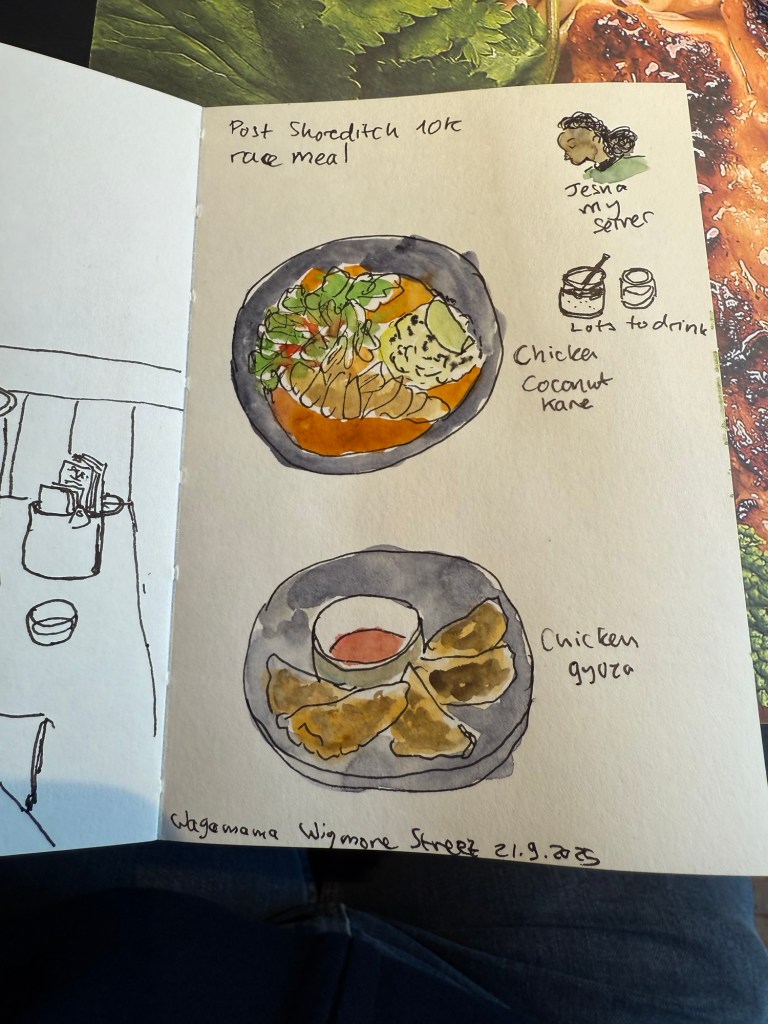
After the race I went for a celebratory meal at Wagamama. I hadn’t had breakfast and I was parched so I had a ton to drink and tried one of their new curries. Jesna, my server, was really curious about the sketches and we got to talk a bit.
Another Wagamama meal.
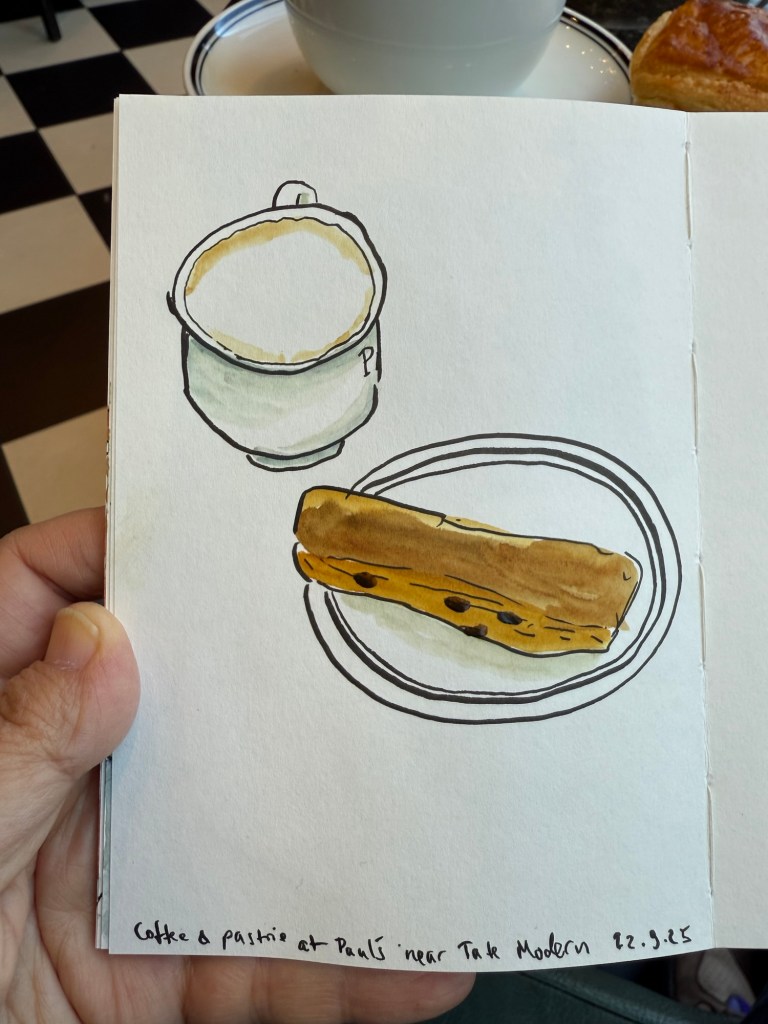
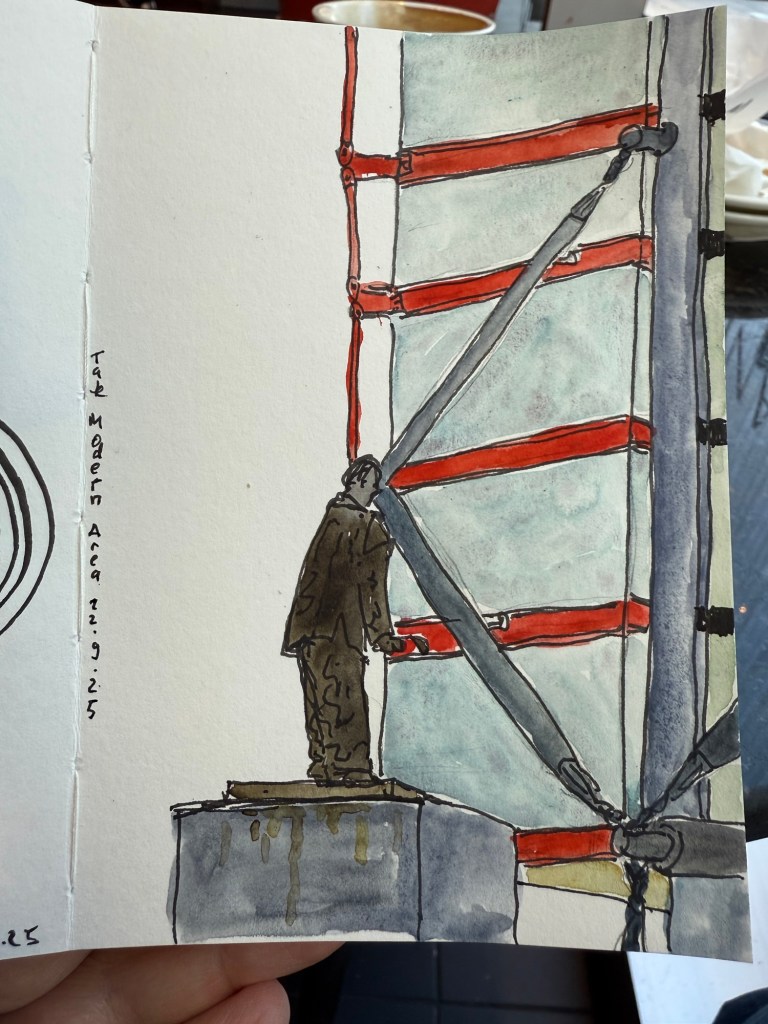
On Monday my dad and I went to Tate Modern to see a Picasso and the Theatre exhibition. We arrived early so we sat at Paul’s and sketched.
Coffee and pastry at Paul’s
I also sketched the statue and part of the modern building across the street.
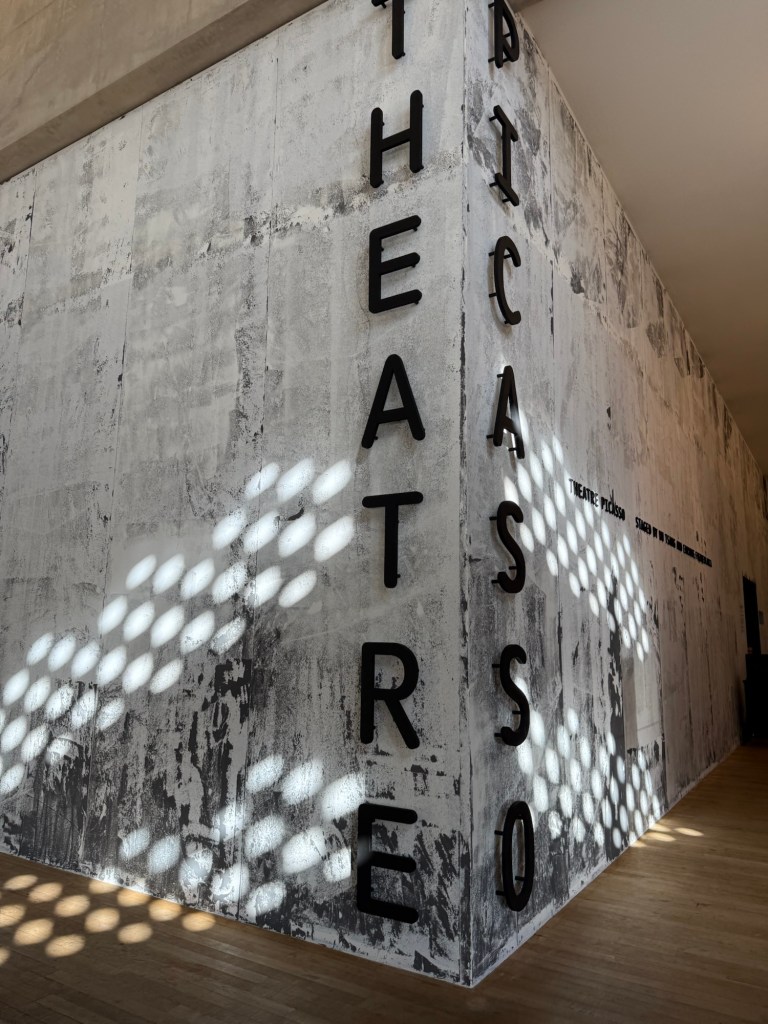
The “Theatre Picasso” exhibition was hands down one of the biggest disappointments of the trip. Never have I felt my intelligence or interest in art more insulted than in this exhibition, and I left after about 20 minutes.
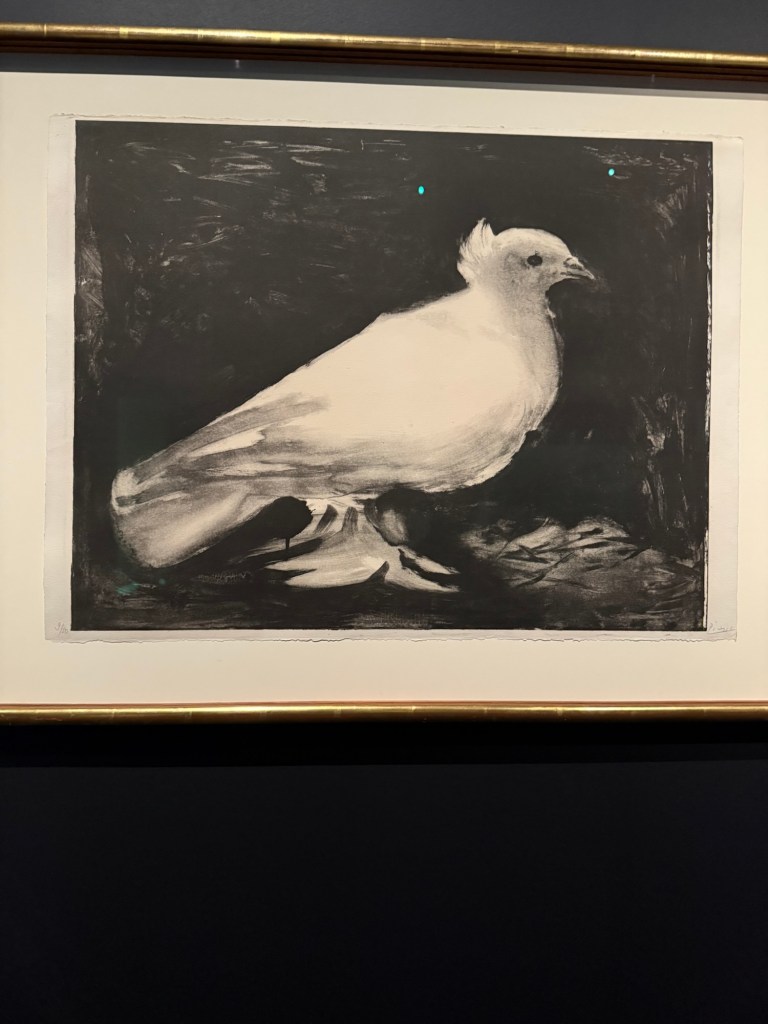
Here’s a Picasso dove to relax for a bit:
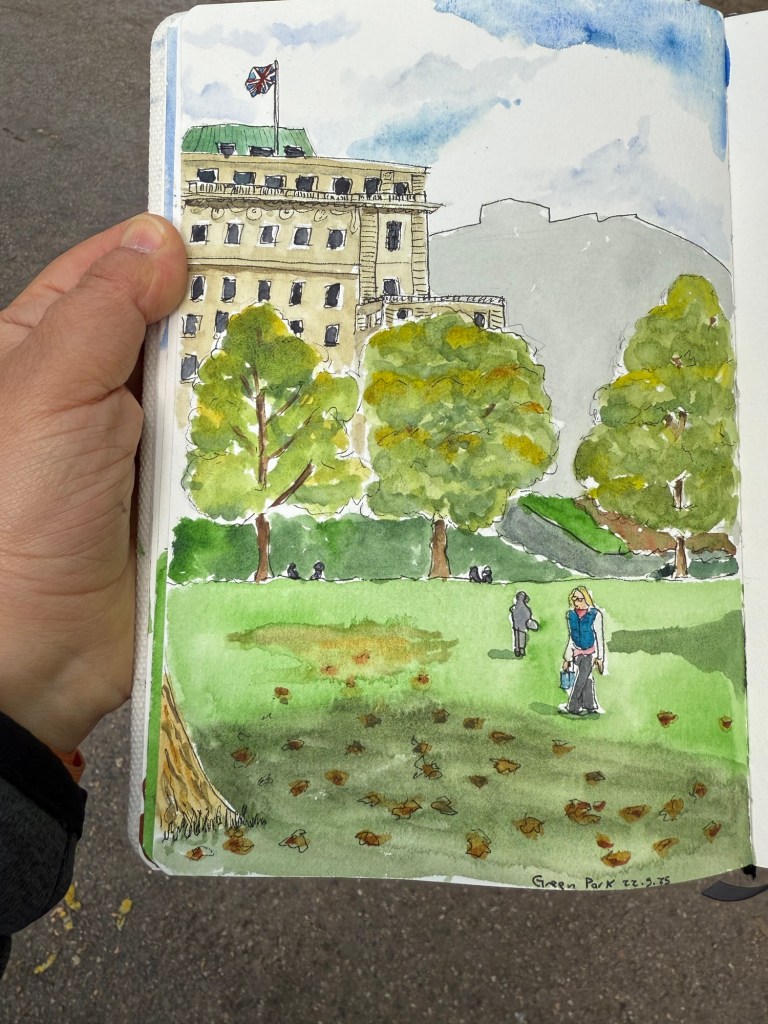
I was in a bad mood when I left and I didn’t know what to do with myself so I made my way to Green Park and sat and sketched there for a while:
Pencil and pen
The final sketch:
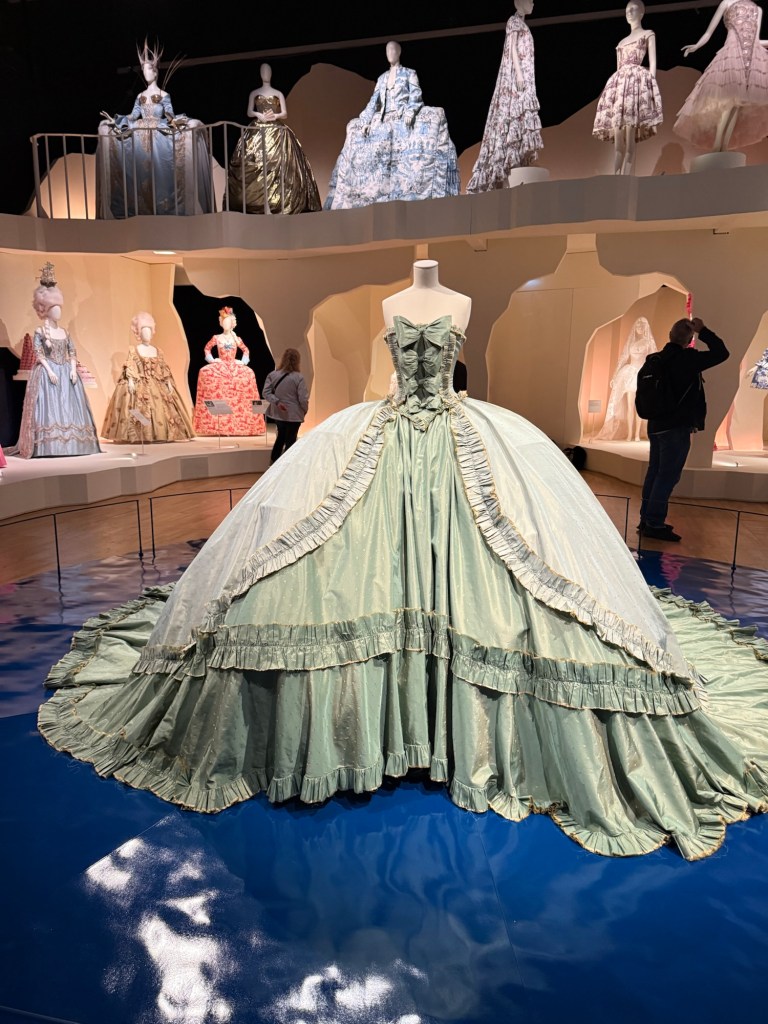
Thankfully the best exhibition was still ahead of me – Marie Antoinette Style at Victoria and Alberts. The thought, curation, staging, flow, items – everything about this exhibition was perfection. You saw Marie Antoinette as a style icon, as a woman trapped in a role, as a doomed queen, as a harried and slandered victim, and as a larger than life figure. Her foibles, her eye for fashion, her courage, her very flawed life and her terrible death made her immortal in a way she likely could never have imagined.
Marie Antoinette Style
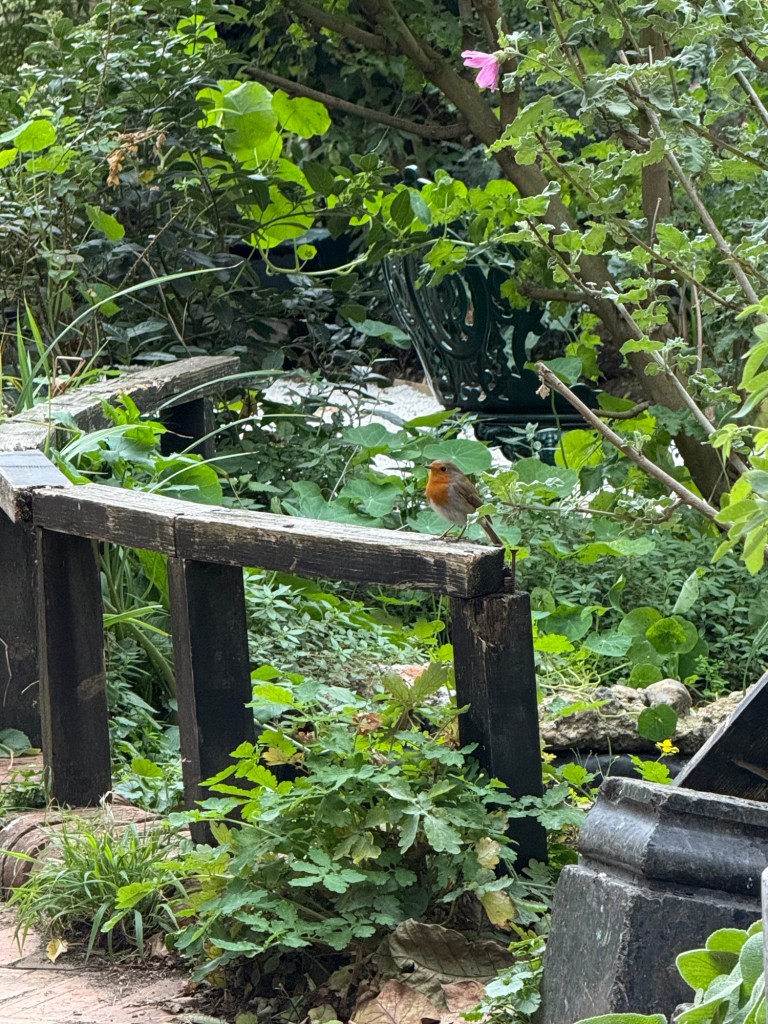
We don’t have robins here, so it was nice to get to see a few of them at Hyde park during my morning runs and at the Phoenix garden.
Robin
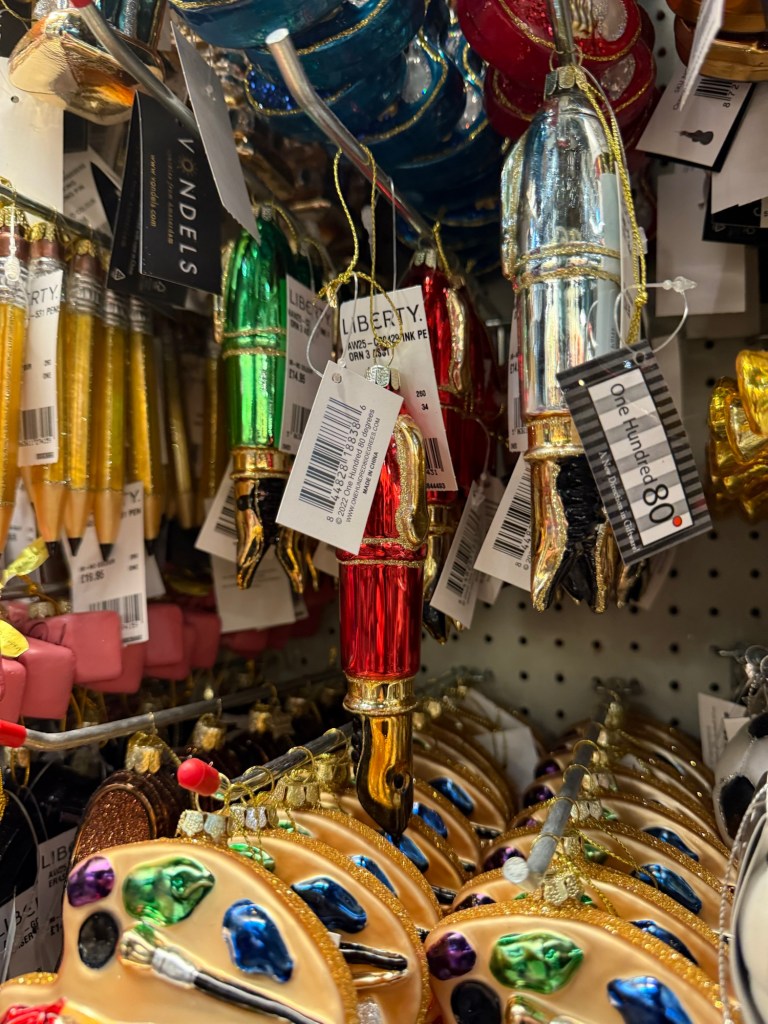
There were surprisingly few Halloween decorations out but the Christmas shops were on full blast in all the big stores. Of course I had to buy this red fountain pen ornament from Liberty:
Pencils, pink pearl erasers, fountain pens and palette ornaments at Liberty London.
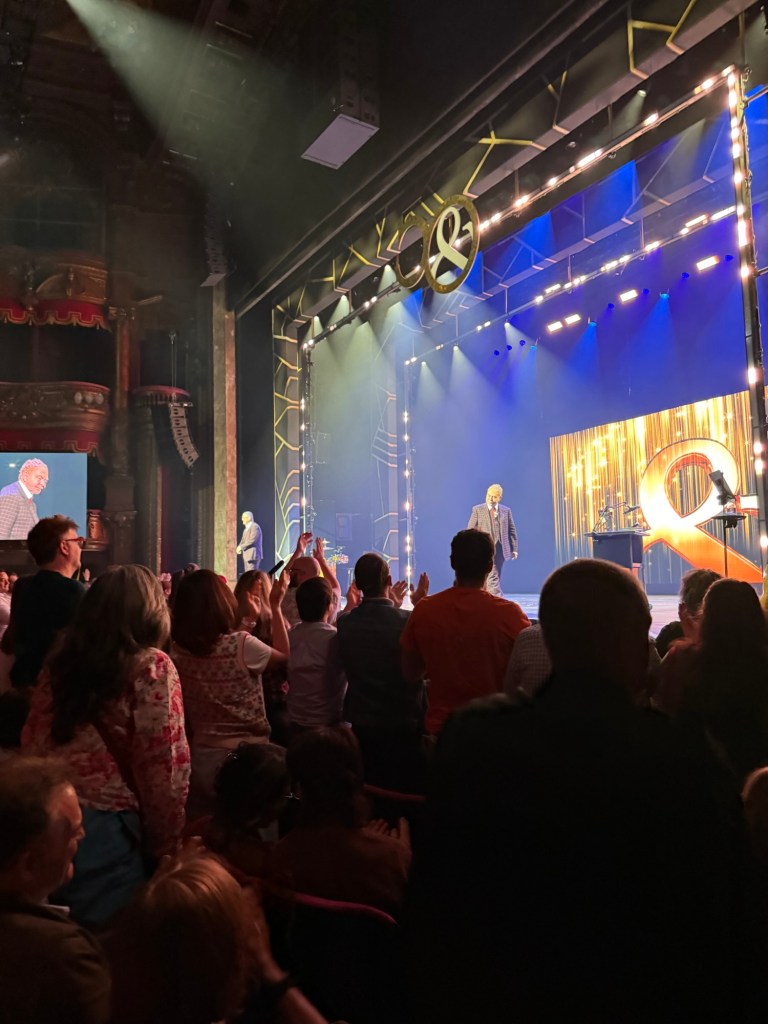
We then got to see Penn and Teller’s 50th anniversary show (and first West End tour). They were funny, surprising, and wonderful, and it was an overall delightful and very memorable evening. I even got a signed poster of their show!
Penn and Teller
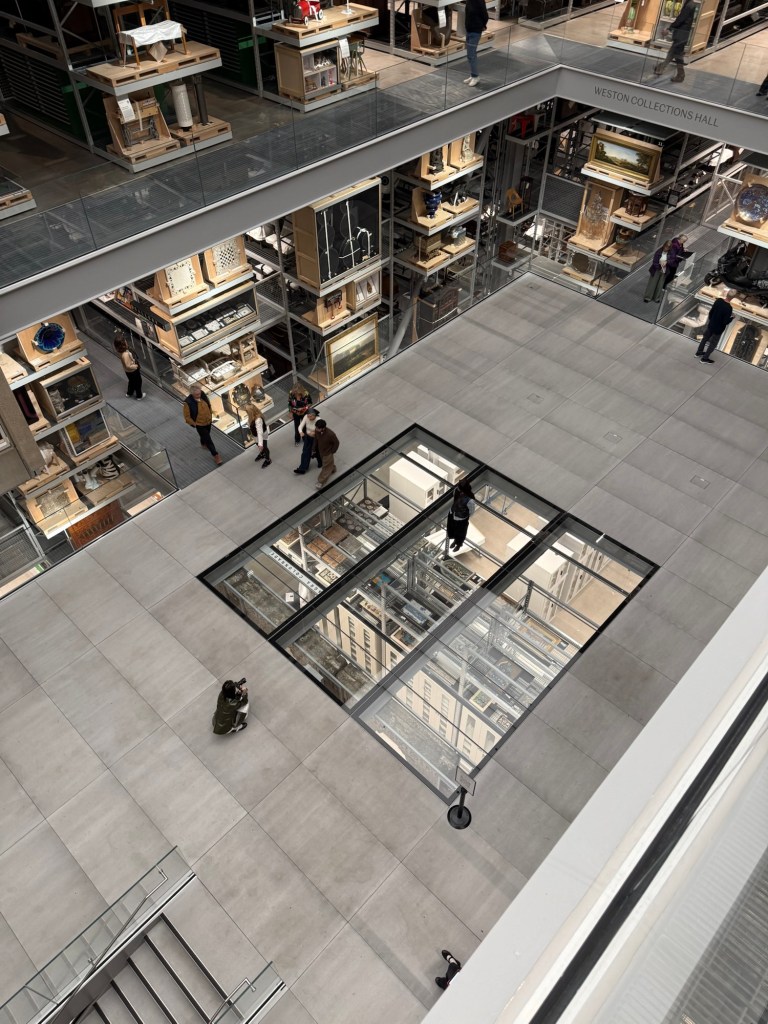
On one of the last days of the trip I went to see the new Victoria and Albert East Storehouse museum. It’s a unique experience, and it’s worth the visit – but I recommend planning to go there well ahead of time and ordering items to interact with. It’s not a standard museum by any stretch of the imagination – it’s more of a museum about museums and how they handle their collections.
While I found many of the explanations to be overly politicized, it nevertheless is a place that I’d return to – provided I manage to book a “meeting” with an item (Order and Object at the study centre). It’s also interesting to see what other people ordered and how they interact with their chosen objects.
Victoria and Albert East Storehouse
I had lunch at the nearby Wagamama for the last time, and sketched my lunch for the last time:
Final lunch and sketch
And then went for my last coffee at Monmouth Coffee Company:
Another POV sketch
In the evening we went to see “The Importance of Being Earnest”. Stephen Fry was excellent as Lady Bracknell, but I didn’t like the director’s interpretation of the play (Algernon is gay, Jack is gay, Cecily is gay, Gwendolen is gay), and the two main actors weren’t very good. For the life of me I don’t understand the director’s need to try and outsmart Oscar Wilde. Wilde’s work is polished to a mirror finish – there really is no need to be clever with it. It packs enough punch as it is.
Stephen Fry and the cast of The Importance of Being Earnest
On the last day of the trip I went to the Phoenix garden for a last sketch:
Pen sketch
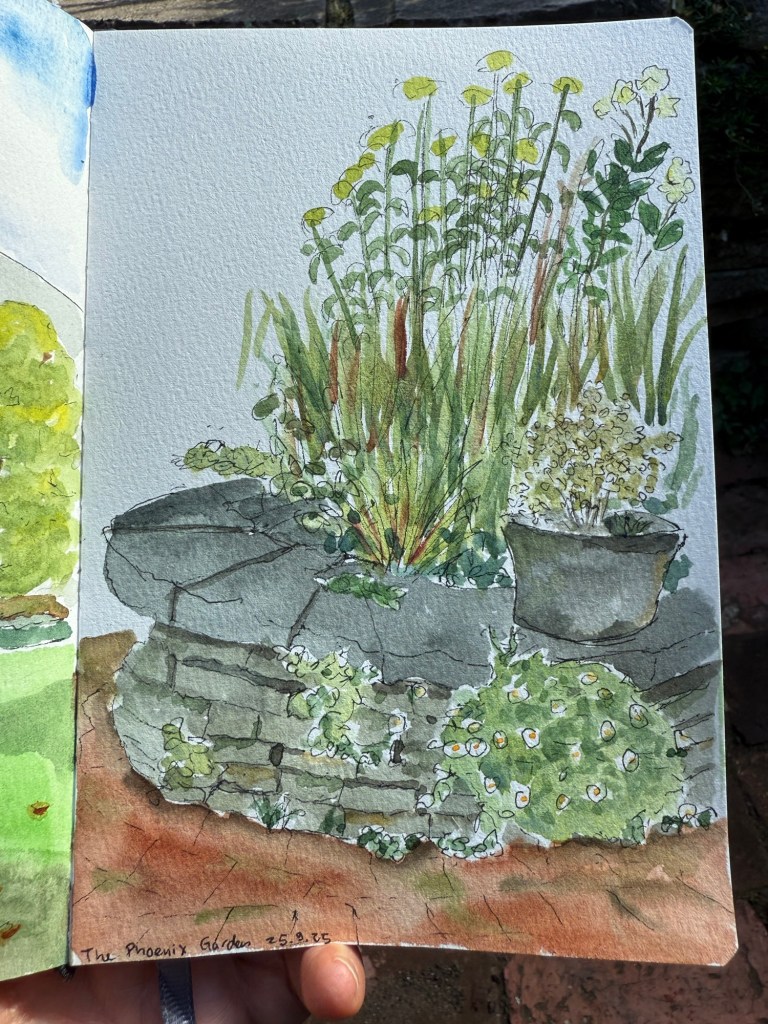
I got to talk to a lady that works in the garden, and it was nice showing her all of my various sketches of the place.
Final watercolour
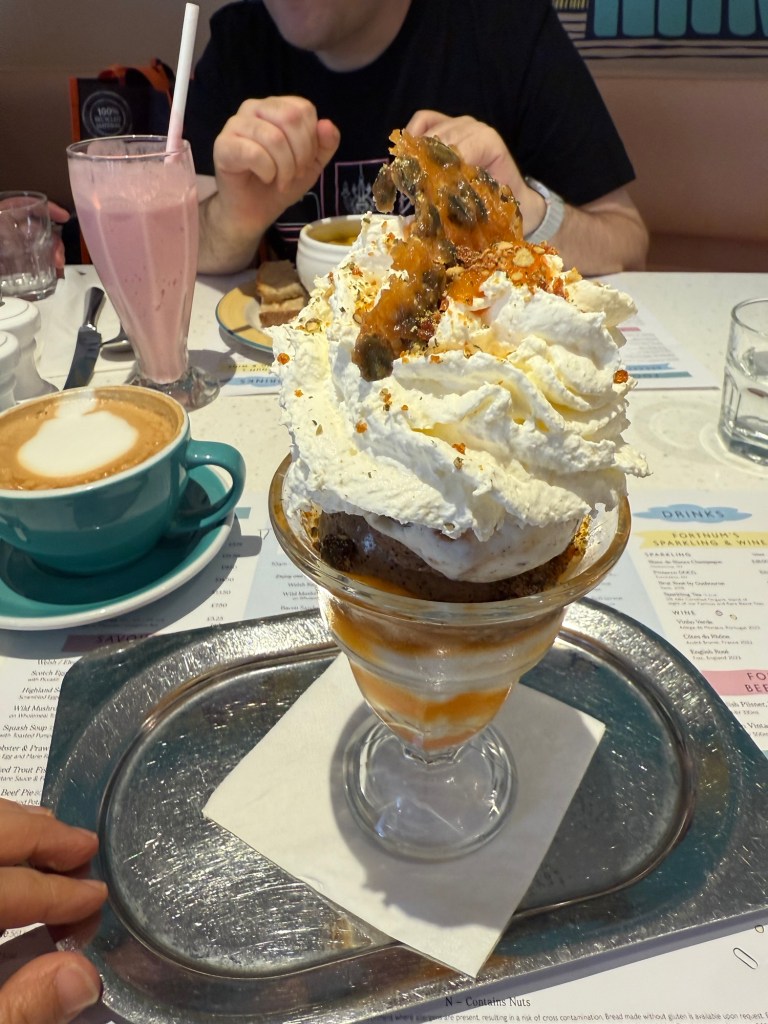
And we went to The Parlour at Fortnum and Mason for celebratory Sundaes before the flight.
Tres Leches sundae – Coffee, Bickfield Milk and Fior de Leche & Chocolate Biscuit Ice Cream and Pumpkin Seed Praline
Overall it was a great trip even though I was sick during its first leg. I’ve never sketched so much during a trip before, largely thanks to some recently acquired sketchbooks and watercolour palettes, and some skills I learned during USK Poznan. I got a ton of watercolours, pens, pencils, inks and art supplies that I can’t wait to try out, and I got a nice stack of books to peruse over the coming months. Hopefully this was fun to read, and perhaps you got some inspiration for your next trip to Paris or London.
In September I traveled to Paris and London.See part 1 of my travelogue here and part 2 here.
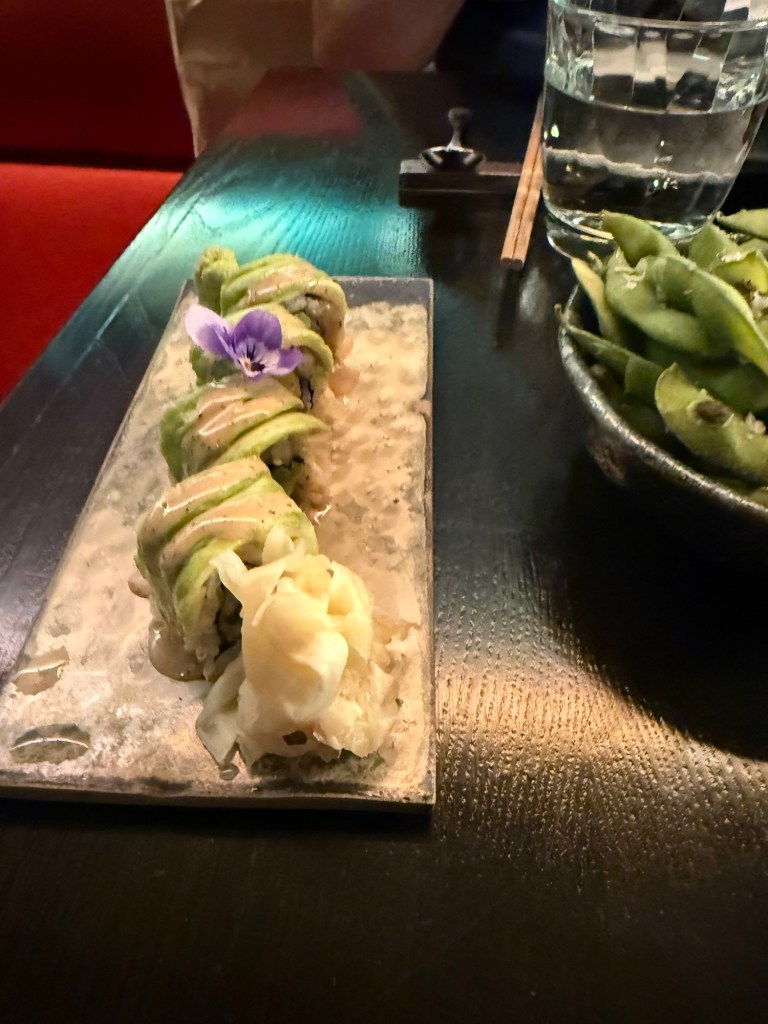
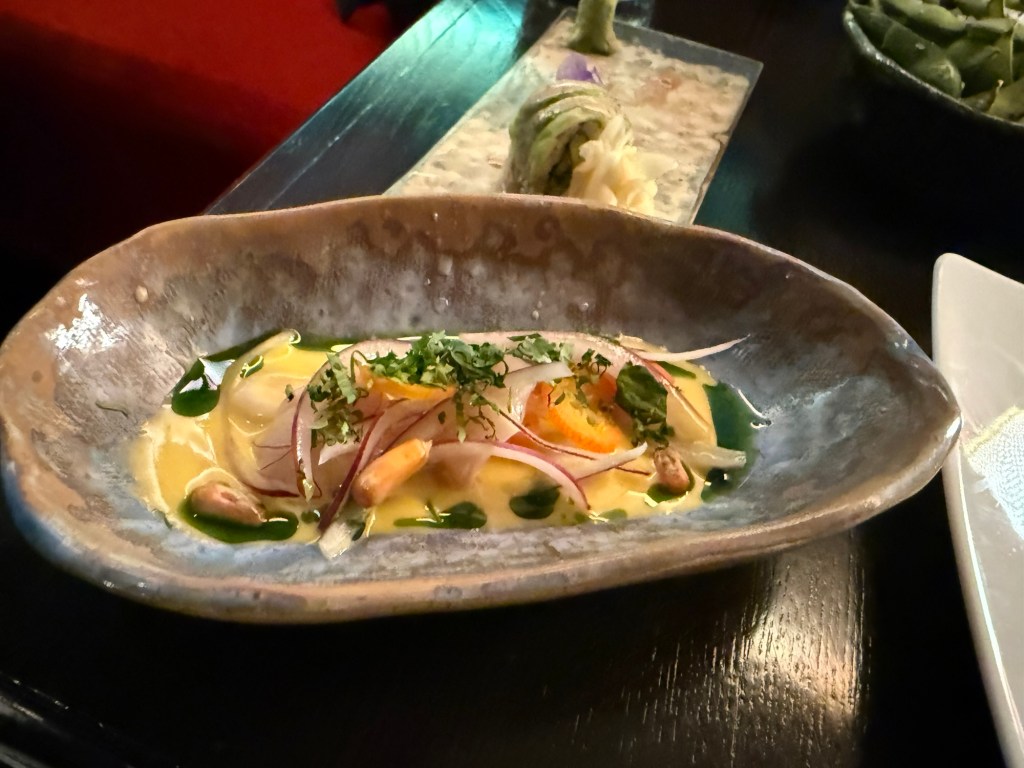
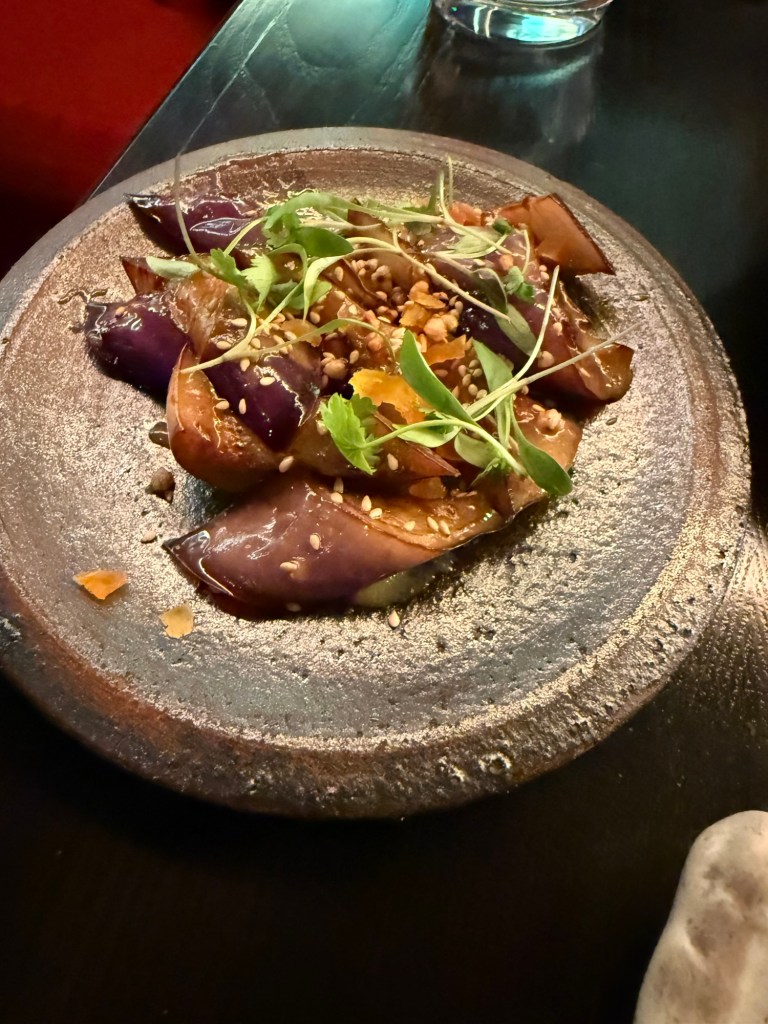
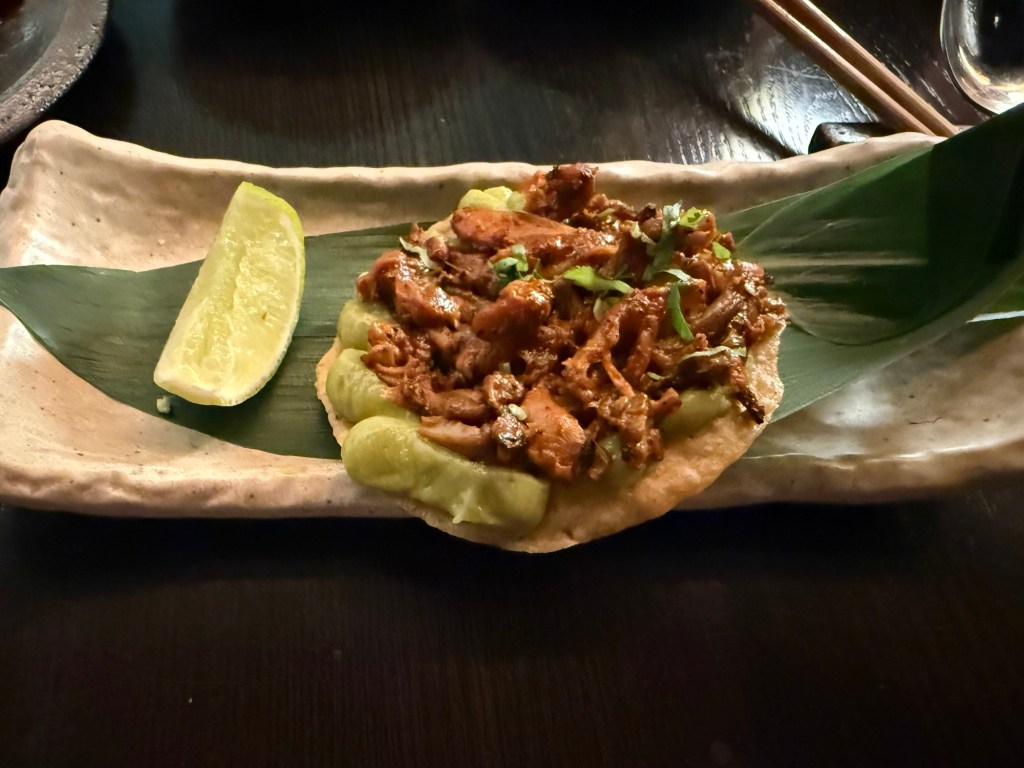
I met up with a dear friend for a pre-theatre tasting meal at Chotto-Matte, a trendy restaurant that combines Mexican and Japanese cuisines. I am not a foodie, and I will now confess that this was the first time that I’ve had sushi (I hate the smell and taste of fish and seaweed and everything that comes from the sea and so I’ve avoided it), and I really enjoyed it. It was the best meal that I had in London, and the company, the weird design and the very attentive service added to it.
I had the vegetarian pre-theatre menu, which meant that mine had no fish, seafood, meat or chicken in it. It was phenomenal.
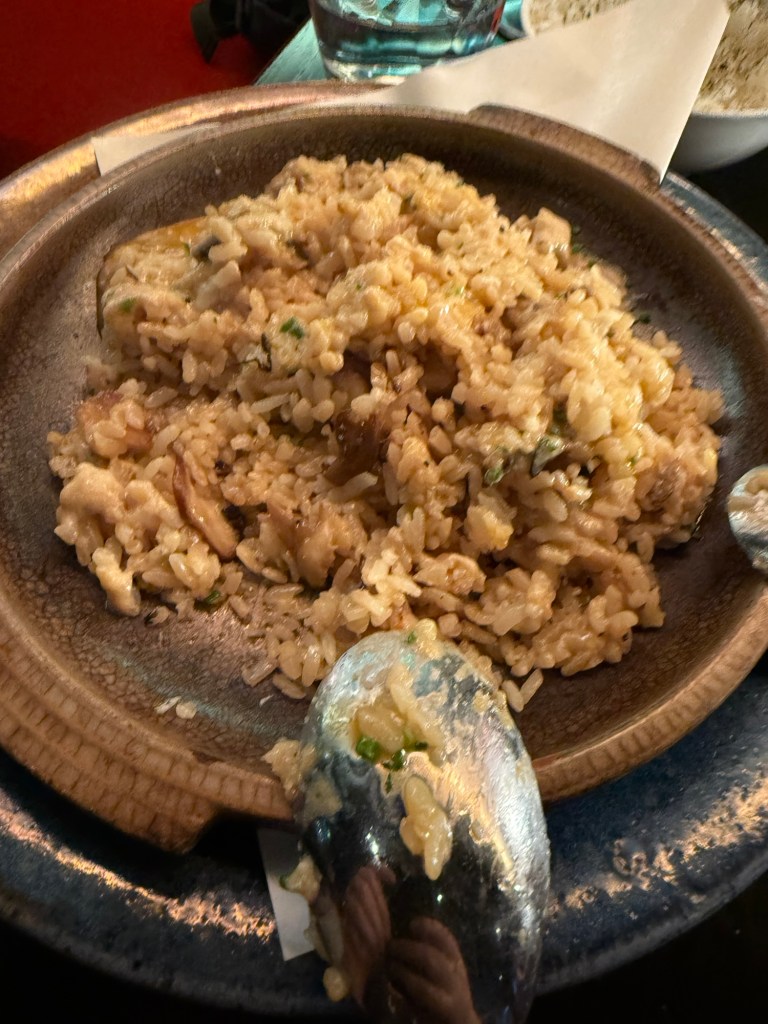
On the right is the Edamame, which we shared and was good, and in the centre is Truffled Avocado Roll – Cucumber, sesame seeds, yuzu truffle soy. It was light and refreshing.Lychee Ceviche – Leche de tigre, chive oil, sweet potato, Peruvian corn, coriander. One of the biggest surprises of the meal. Delicious, zingy and the textures were phenomenal. Yasai Miso Crispy Sushi – Picante miso vegetables, takuan, shiso cress. Sticky but very good.Nasu Miso – Aubergine miso, apricot, puffed soba, sesame seeds. Aubergine like I’ve never tasted it before. Again, a lot of great textures here and a ton of deep flavours.King Oyster Mushroom Tostada – Pulled mushroom, smoked aji panca chilli, guacamole, lime, coriander. I’m not normally a mushroom fan, but this was smoky, “meaty” and satisfying. Truffled Mushroom Rice – Sweet corn & queso fresco dip, jalapeño, coriander, corn tostadas. This was a rice heavy meal, and at this point I could eat no longer. I had about three spoonfuls and no more. It was a good dish, but it lacked the depth of flavour and the uniqueness of the rest of the dishes.Milk Soft Serve Ice Cream with toasted almonds, chocolate sauce. It’s ice cream, it was good, but we had to rush to the theatre so we didn’t get to finish it. It wasn’t a particularly interesting desert though.
This is definitely a place that I’d return to for a special occasion.
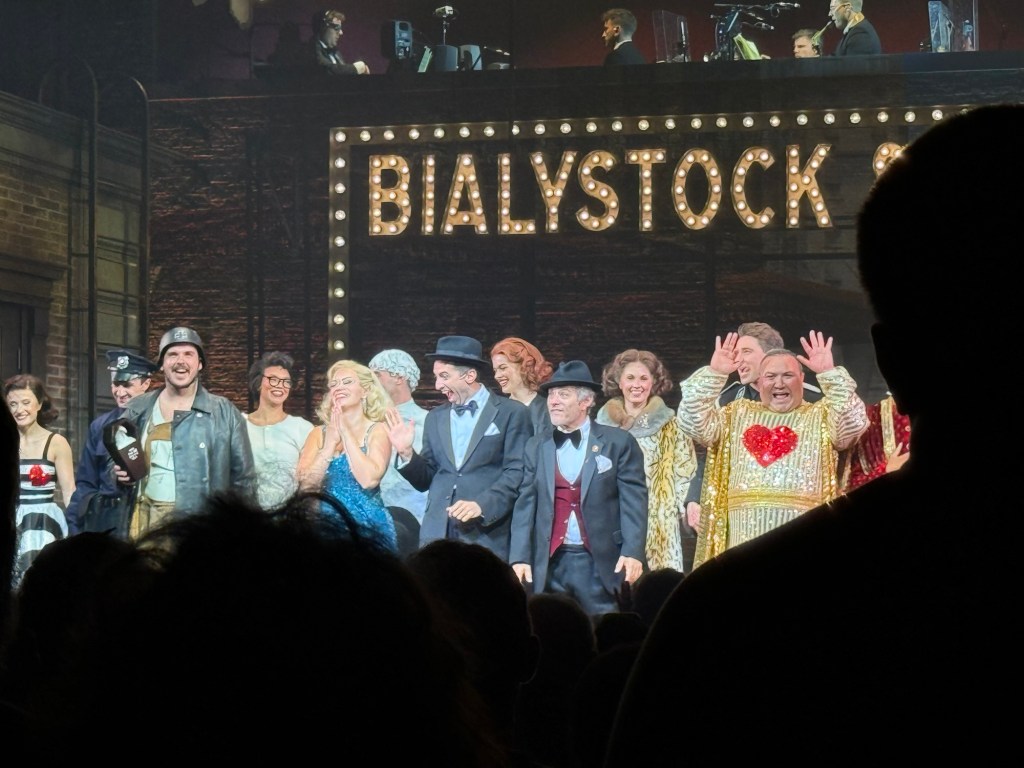
We then went to see the classic musical, “The Producers”, and it was excellent. The cast was brilliant, and it’s a very good musical with some great (if disturbing) songs. Mel Brooks is a comedy genius, and this musical still packs a punch.
The Producers
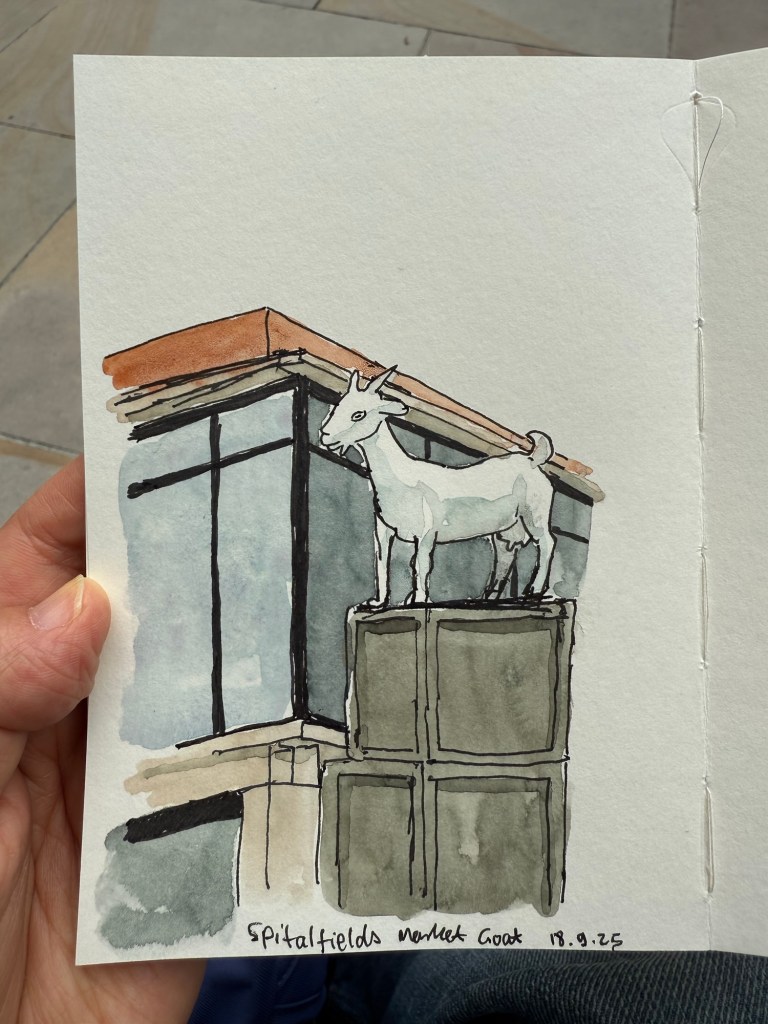
We also went to Spitalfields market, which meant that I could sketch this guy:
Sketch of a statue of a goat in Spitalfields market.
This was my very first sketch in the new Pith Kabosu sketchbook that I purchased at Cass Art. I debated whether to buy this sketchbook or not, as it had smooth, 200gsm paper and it opened flat, but I wasn’t sure it would work with watercolours. The great sellers at Cass Art told me it would, as they use it themselves, and they were right. It’s now my “daily driver” having replaced the Stillman and Birn pocket beta. The beta has thicker and more textured paper but the Pith Kabosu is slightly larger, has a more durable cover, and opens flat much better than the Stillman and Birn does. I later returned and purchased two more of these sketchbooks, they were so good.
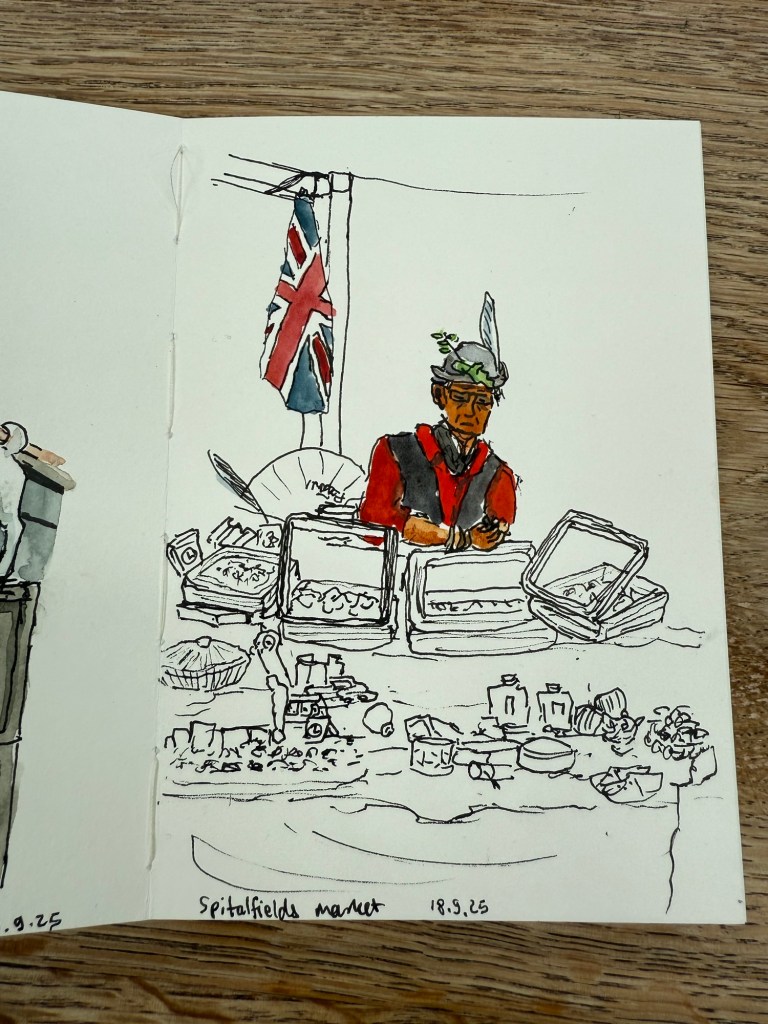
I later sketched this seller in his stall, after purchasing an old set of folding rulers from his stall. I decided to paint him and the flag but left the rest of the stall as line drawings.
Spitalfields market
The Pith Kabosu is also cheaper than the Stillman and Birn and as it has smoother paper, works better for ink sketches and dry medium (pencils of various kinds, for example). It means that I’m more inclined to bring it out and make quick sketches in it, even if I don’t get to adding watercolour to them.
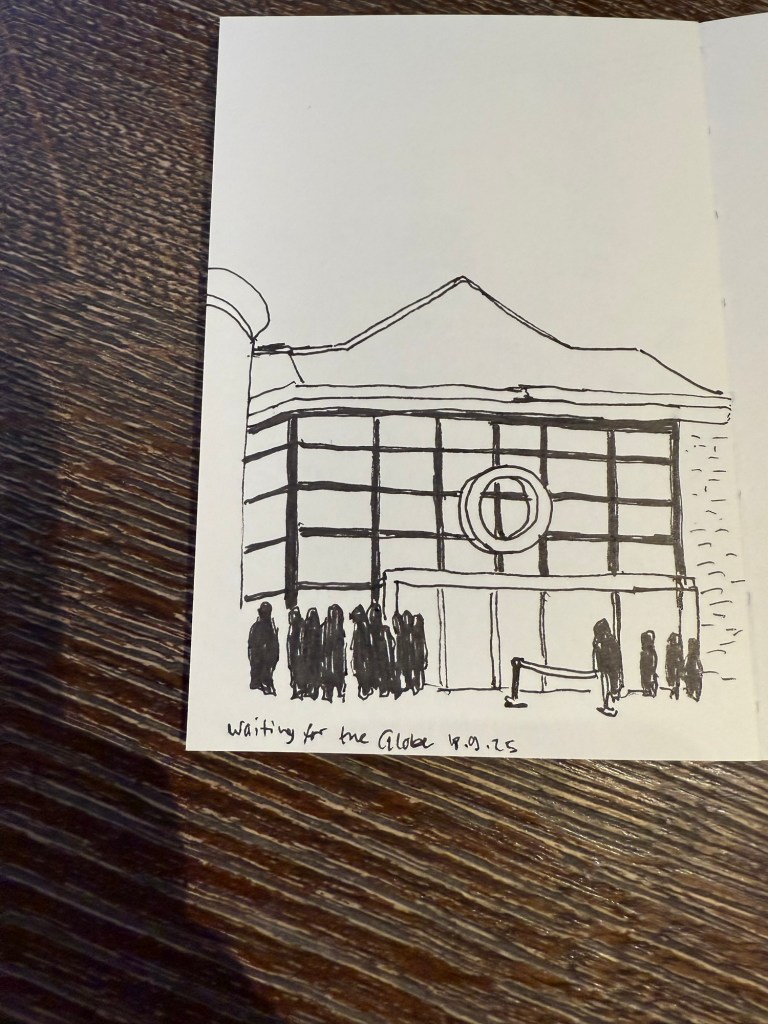
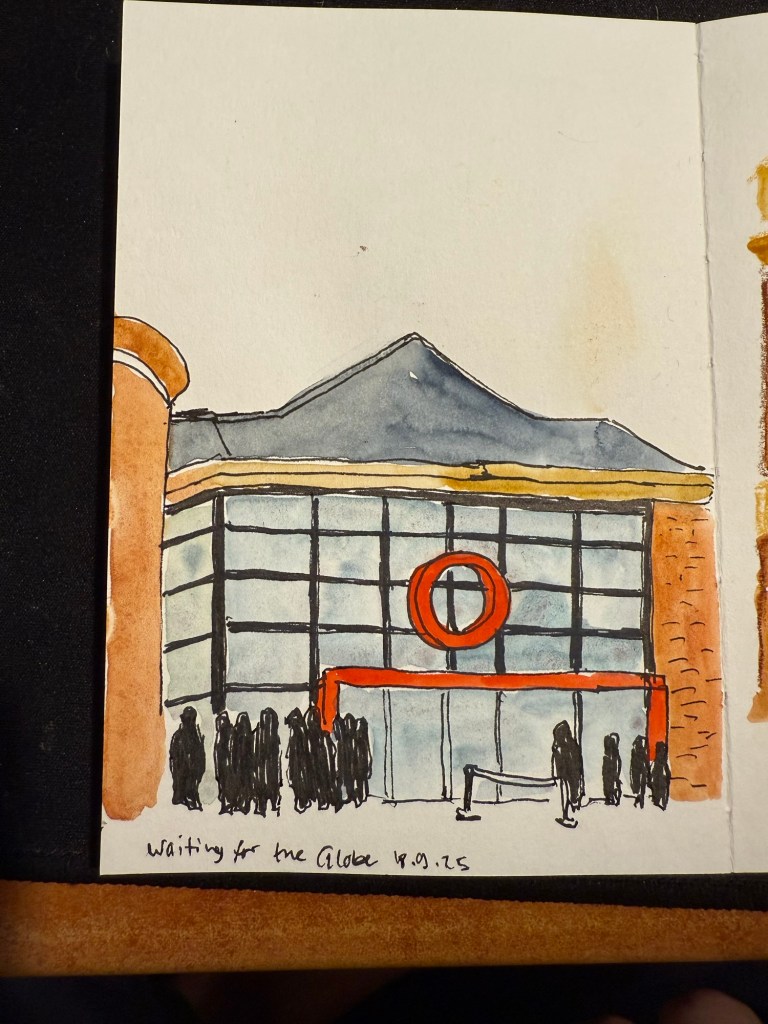
We then went to the second play at The Globe – Shakespeare’s Twelfth Night. We arrived early so I sat in the Starbucks across the entrance and sketched the place:
I originally didn’t have time to add colour to this. I just bashed out this 5 minute sketch and then added watercolour later, from reference photos.
I later added colour to the sketch. In hindsight I would have gone for a looser sketch, but I was still unsure what this paper could and couldn’t do. The answer is – practically everything. Only very heavy washes make the page buckle.
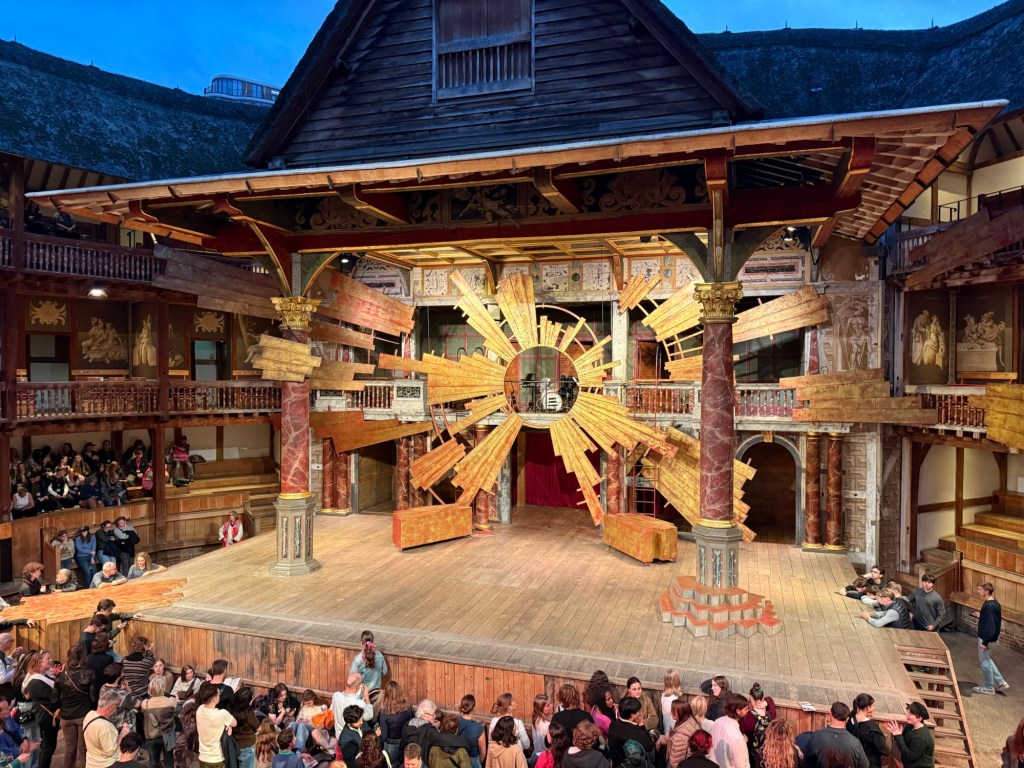
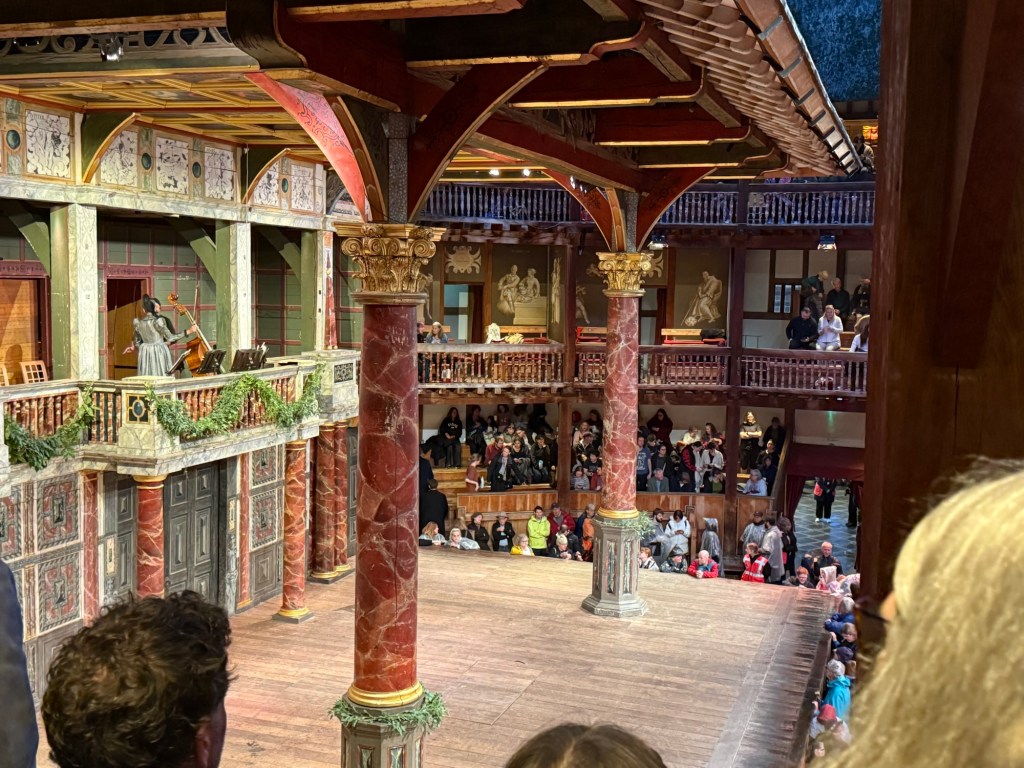
This was a regular Shakespeare play, and so there was some set design. this is the stage:
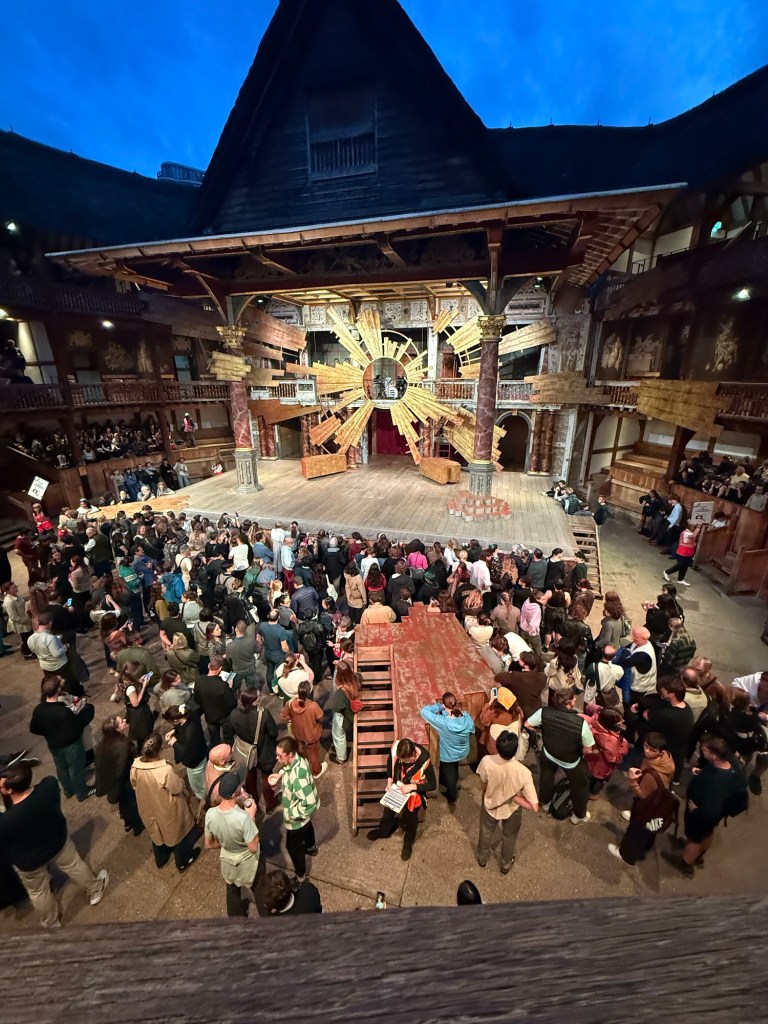
And in the yard where the groundlings are you can see another bit of the stage that isn’t normally there, but was used to represent the beach and other locales in the play.
I enjoyed the play a lot, and would recommend seeing plays at the Globe if you can tolerate the extremely uncomfortable seats (yes, even with the cushions).
We went to the Cartier exhibition at the Victoria and Albert museum. The exhibition is sold out, and it’s well considered, but we found it a bit dull compared to the Marie Antoinette exhibition at the same museum.
This is the Patiala necklace that was part of the exhibition. It was made by Jacques Cartier for the Maharaja of Nawanagar in 1928. He also made the Maharaja of Nawanagar’s necklace, later named the Jeanne Toussaint in the “Ocean’s 8” movie (it was a recreation made by Cartier for the movie).
My favourite parts were the film where they showed how a Cartier leopard is made, and the famous mystery clocks. There was a whole room dedicated to them, and it was fabulous.
Next post will be the last in the series. You can read it here.
In September I traveled to Paris and London.See part 1 of my travelogue here.
I went to see two plays in The Globe theatre in London. The first was a one night only performance of Midsummer Night’s Dream that was a reenactment of how the actors in Shakespeare’s time would have performed a play. The actors didn’t rehearse the play beforehand, and they didn’t have the full text of the play to work with, just their lines and their cues and staging directions. They practiced the dances alone, and they had no idea what their fellow actors would do during the performance. Now this is Midsummer Night’s Dream so all the actors and everyone in the audience knew exactly how the story unfolds, but the lack of rehearsals made this a very live performance.
The Globe stage before the show
The play was sold out in minutes and I’m glad that I managed to get tickets at all. It was an amazing experience. As this was a one night performance the stage was the bare Globe stage – nowhere to hide as the audience surrounds the actors practically from all sides. There was a lady on stage in period costume, sitting with the full text and helping actors in the very few times that they fumbled. The energy was beyond description. It was the most electric staging of Shakespeare that I have ever seen. Everybody was “on” all the time because they weren’t entirely sure what would come next.
It was a raw performance – I later saw another, standard Shakespeare play there and it was much more polished because it was clearly rehearsed and performed several times before we saw it. Yet that was what made this performance so special – the actors’ reaction to their fellow actors was genuine and unvarnished. They were having fun, improvising, owning the text in a way they normally never do. The highlight was the play within the play at the end – seeing the actors laugh to the point where they had trouble saying their lines because Bottom was so very, very hilariously over the top was amazing.
The musicians at the Globe.
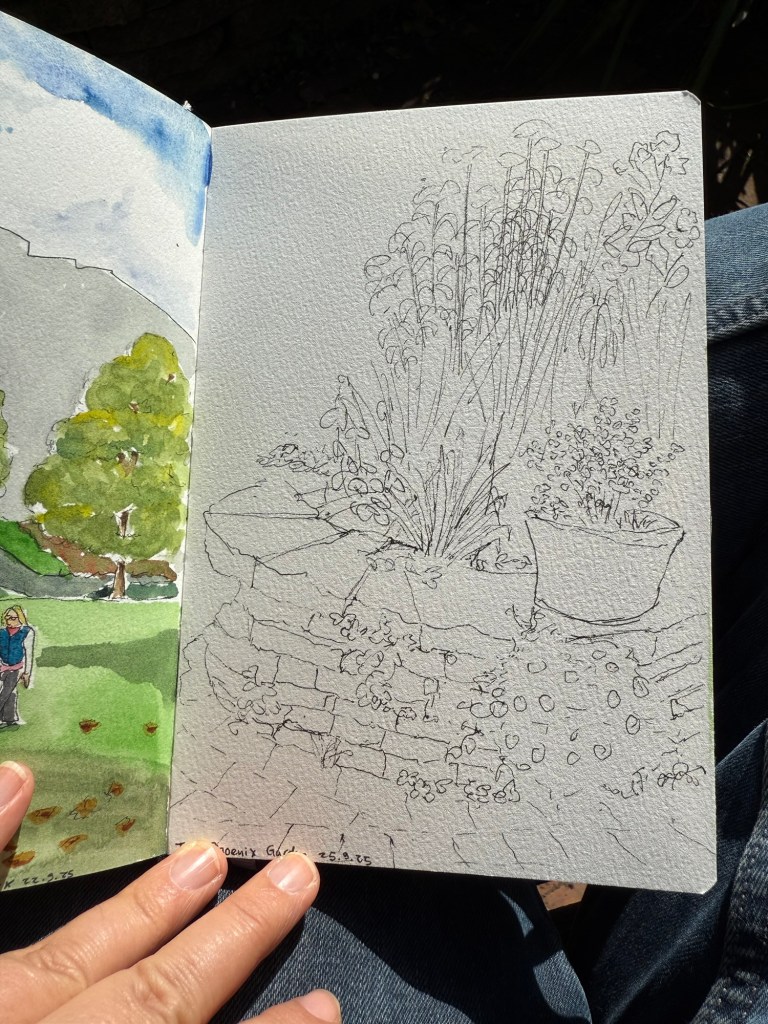
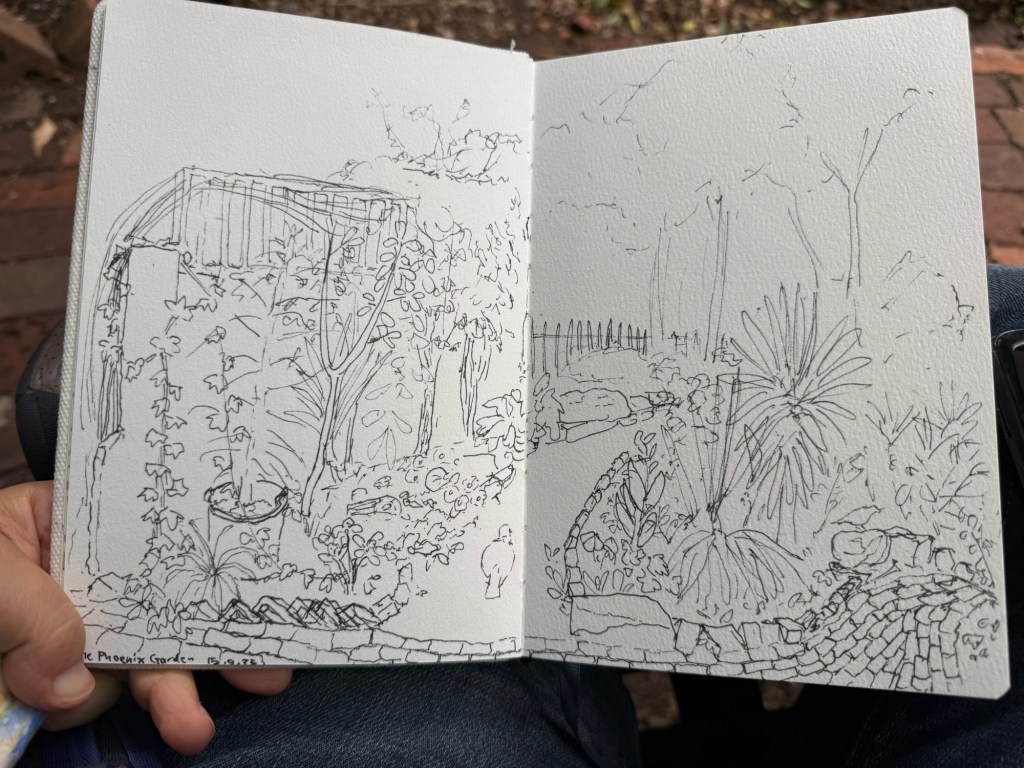
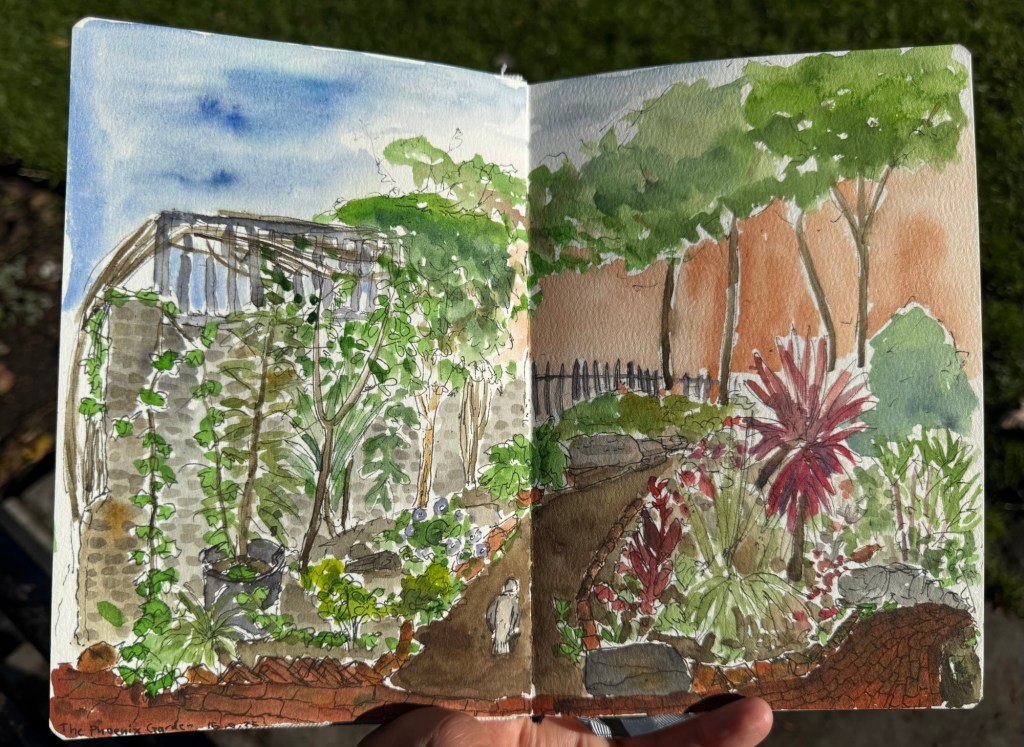
One of my favourite places in London is the Phoenix community garden. I spent a lot of time there, and sketched it several times. This was my first and longest sketch of the garden, done on the wonderful Etchr Lab cold pressed watercolour sketchbook:
Fineliner sketch – no pencil underdrawing.Final sketch.
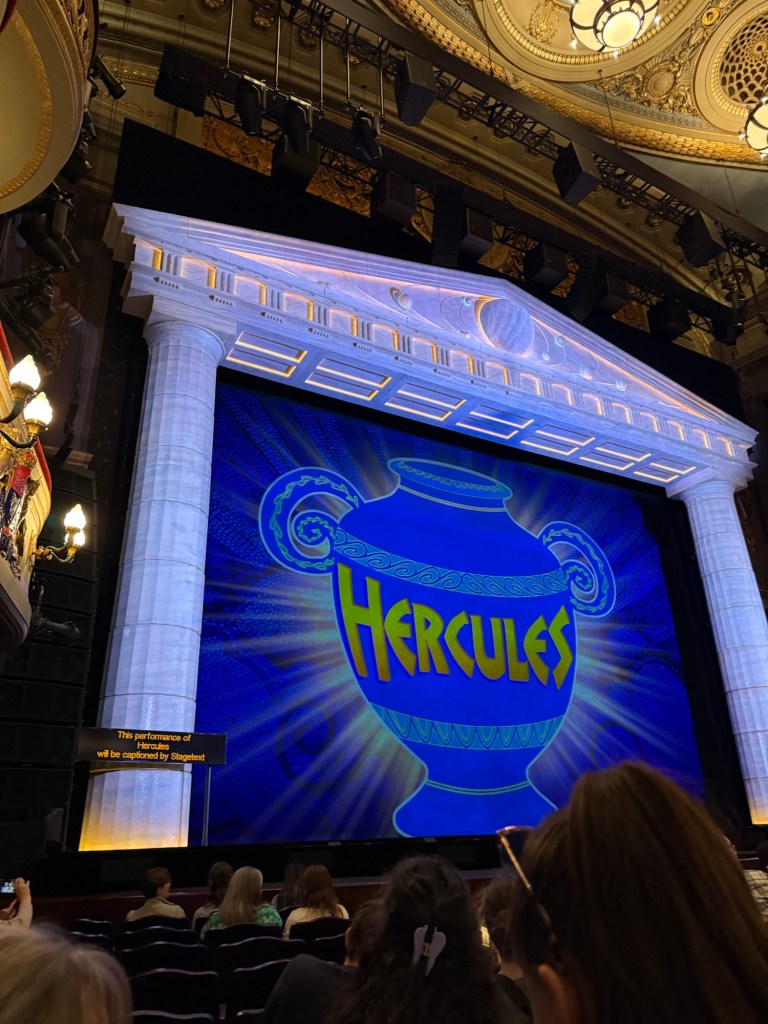
We went to see Disney’s Hercules – a new musical in West End. I wasn’t expecting much as I’m not a fan of the movie, but the musical was one of the best that we saw in the London. The production is stunning, the music is great, the actors were talented – particularly Megara – and the only minus is that Hades was a bit over the top even by the movie standards. They would do better to cut down on the amount of his jokes because they lose their impact otherwise. The Disney merch machine was out in full force that night, and I was one of only a handful that didn’t leave with something from their store.
Hercules the Musical
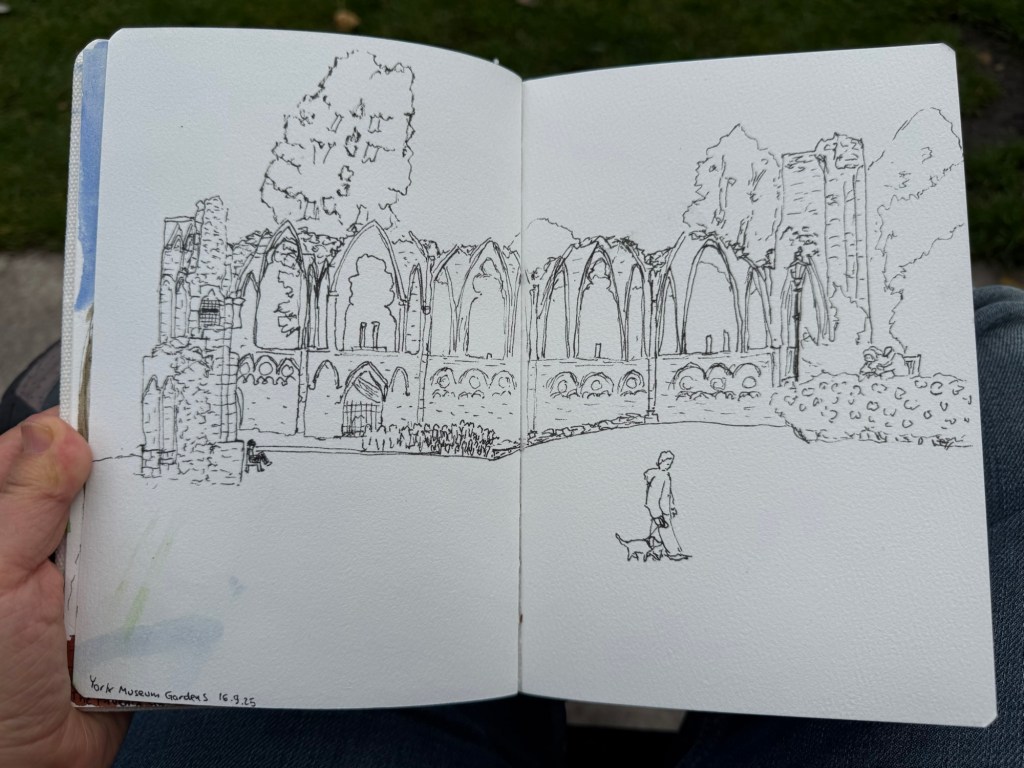
We spent a day in York, and I started it with a sketch of the York Museum grounds, also in my Etchr Labs watercolour sketchbook:
Fineliner sketchComplete watercolour.
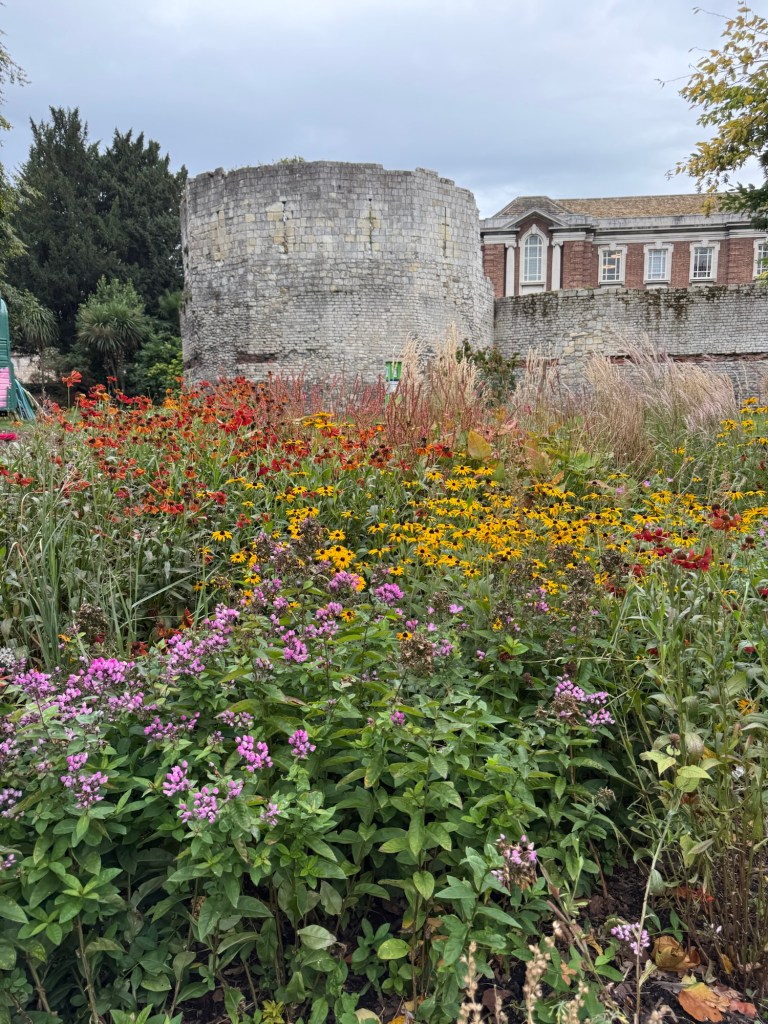
York is full of wonderful bits of history that are just layered freely on each other:
York museum
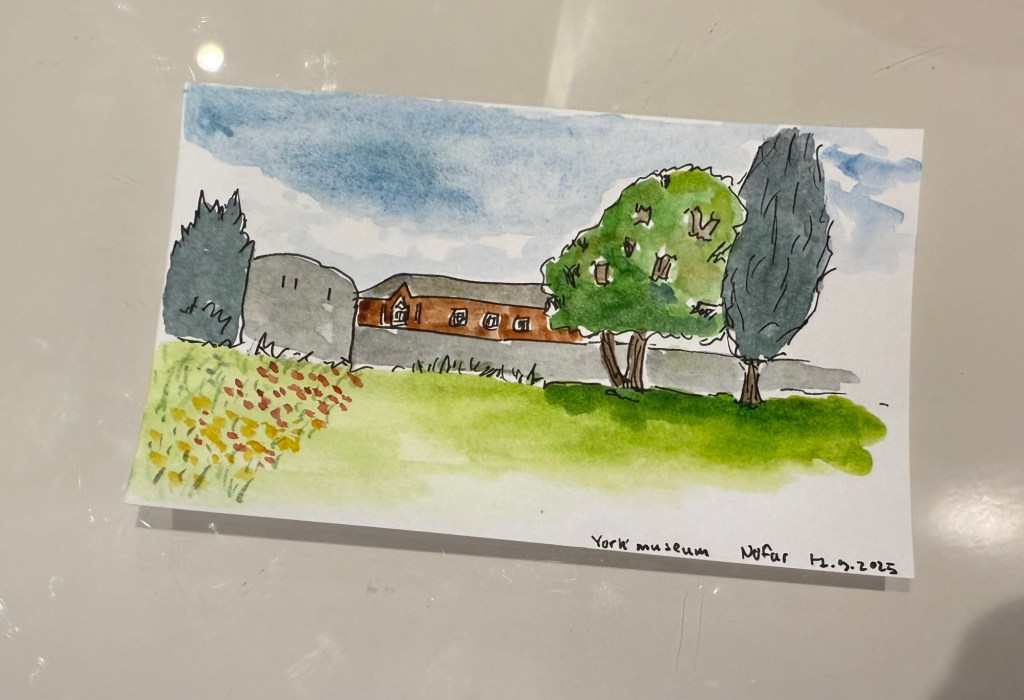
I did a very quick sketch of this scene later on, on an Exacompta Bristol card:
Quick sketch on Brisol card
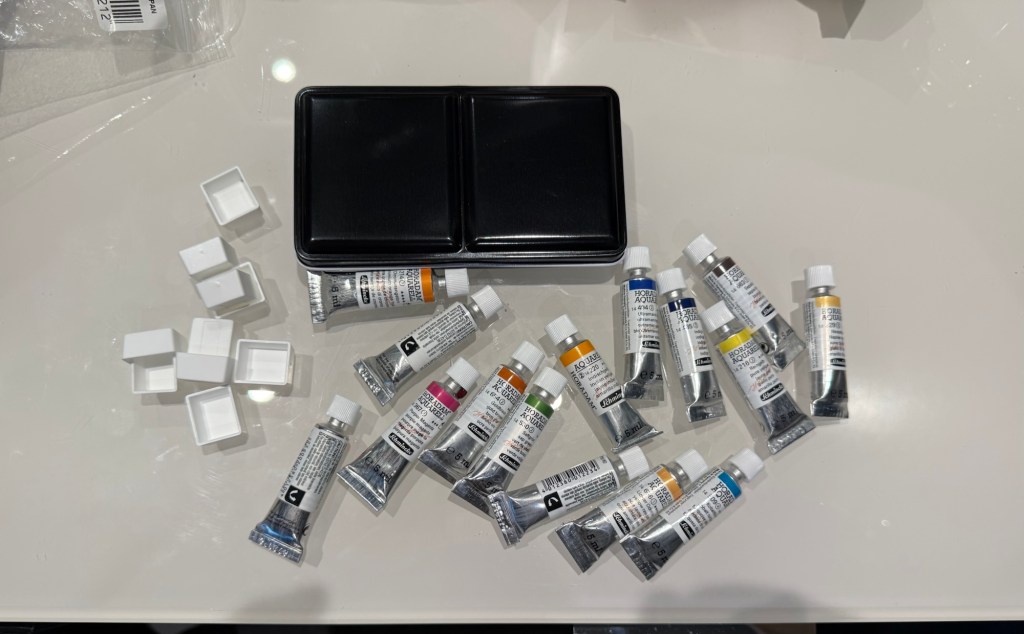
I also bought a decent amount of watercolour paints – enough to build out two new palettes that I want to try.
This post is getting long and photo heavy, so I will be completing this trip journal in two additional posts.
I recently returned from a pretty long trip to Paris and London with my family. I ended up sketching a lot more than I normally do during trips, largely thanks to things that I learned during the Urban Sketchers Symposium in Poznan (more on that in a later post). Here is part 1 of some highlights from my trip.
Quick sketch in a Stillman & Birn pocket beta while I was waiting for my flight
Centre Pompidou, my favourite museum in the world, was closing down until 2030 (!) so I went to pay it a last visit. Already parts of the colourful outside facade have been repainted white, and I’ve never seen the area around the museum so deserted.
The iconic Pompidou facade
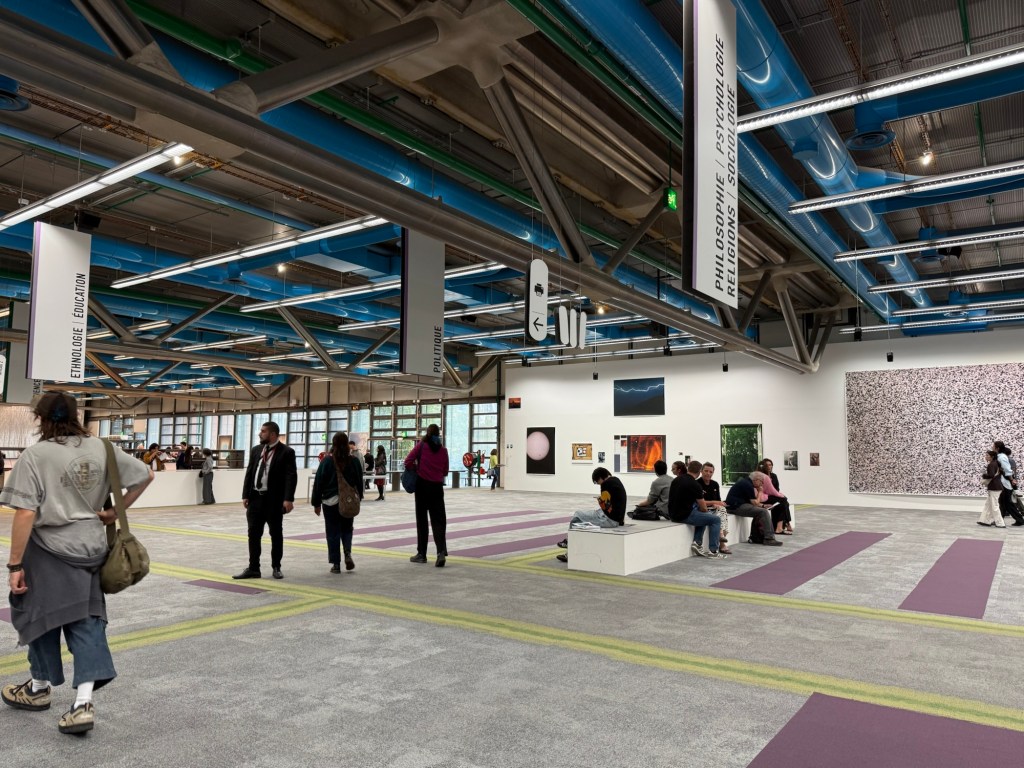
The library was the only area still accessible, and it had been turned into a giant project playground for German photographer Wolfgang Tillmans to work with. It was something that only Pompidou could do, and it was breathtaking, thought provoking, fun, interesting, and unique. I wish I could have spent hours there, but at this point in my trip I became badly ill and for the entire Paris leg of the trip I was struggling.
The Pompidou library transformed.
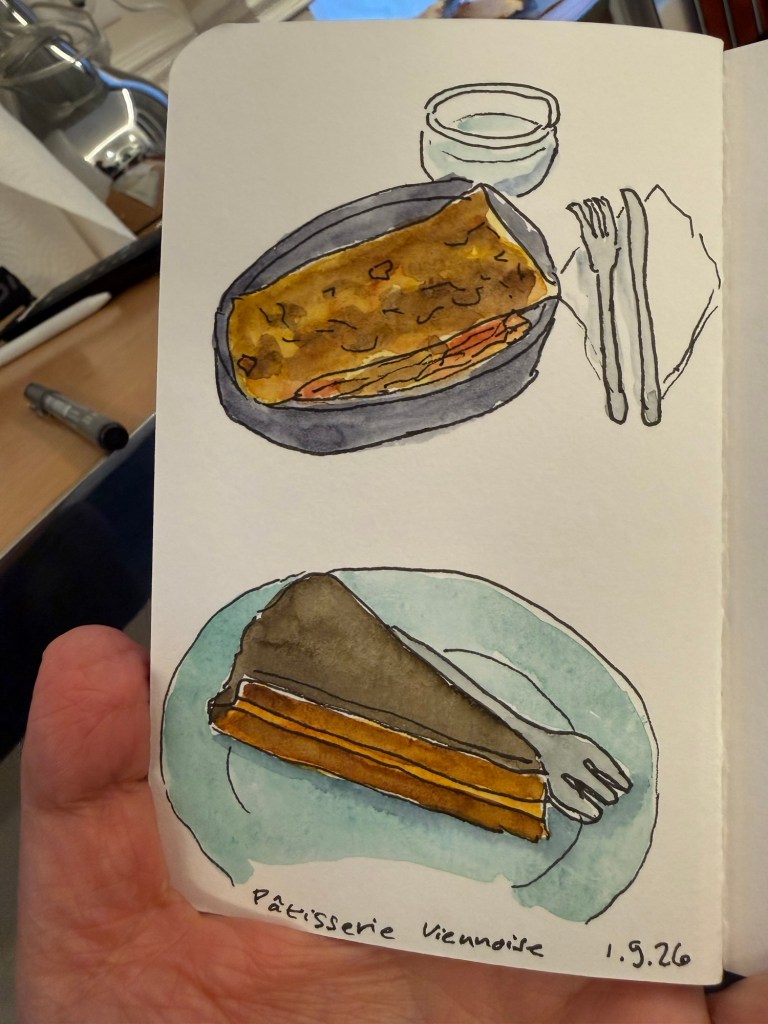
I ended up largely not eating in Paris, but this was my first meal there – in the fantastic Patisserie Viennoise in the Latin Quarter.
Stillman and Birn pocket alpha watercolour sketch
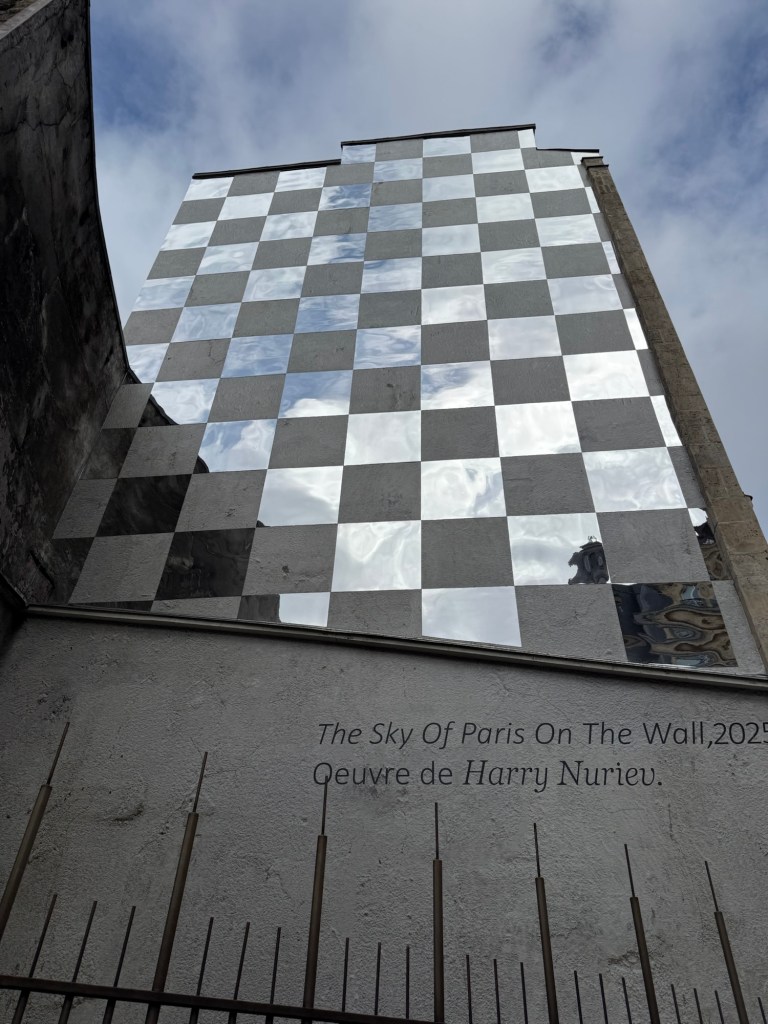
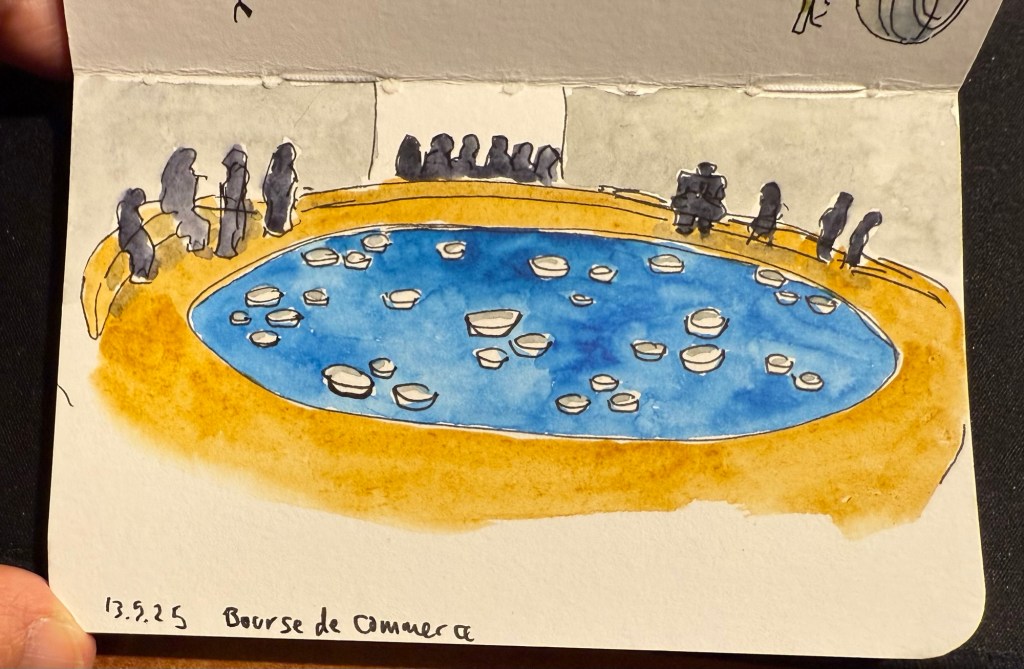
We also went to a new museum, the Bourse de Commerce and I saw this great artwork on the way there:
The museum was in between putting up exhibitions, so while a large part of it was closed we managed to view some great and moving art pieces with relatively few crowds and at a discounted price. I did a VERY quick sketch while I was there:
Stillman and Birn pocket alpha watercolour sketch
This is the artwork that I was sketching.
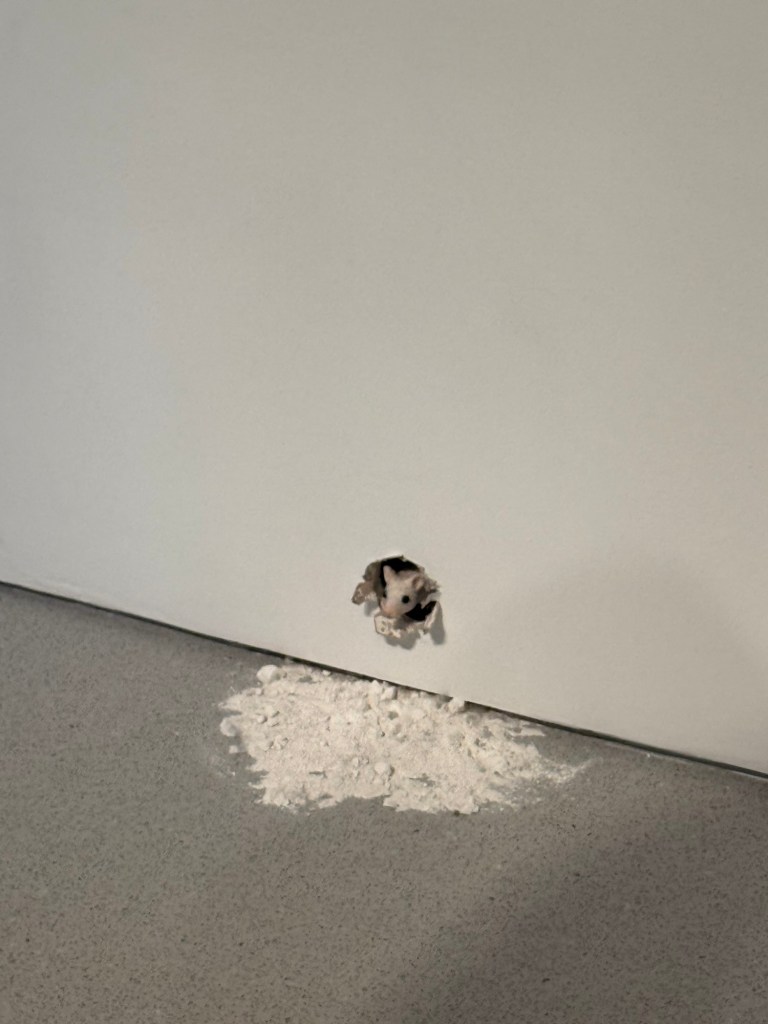
And this little fellow is also part of the art exhibits there:
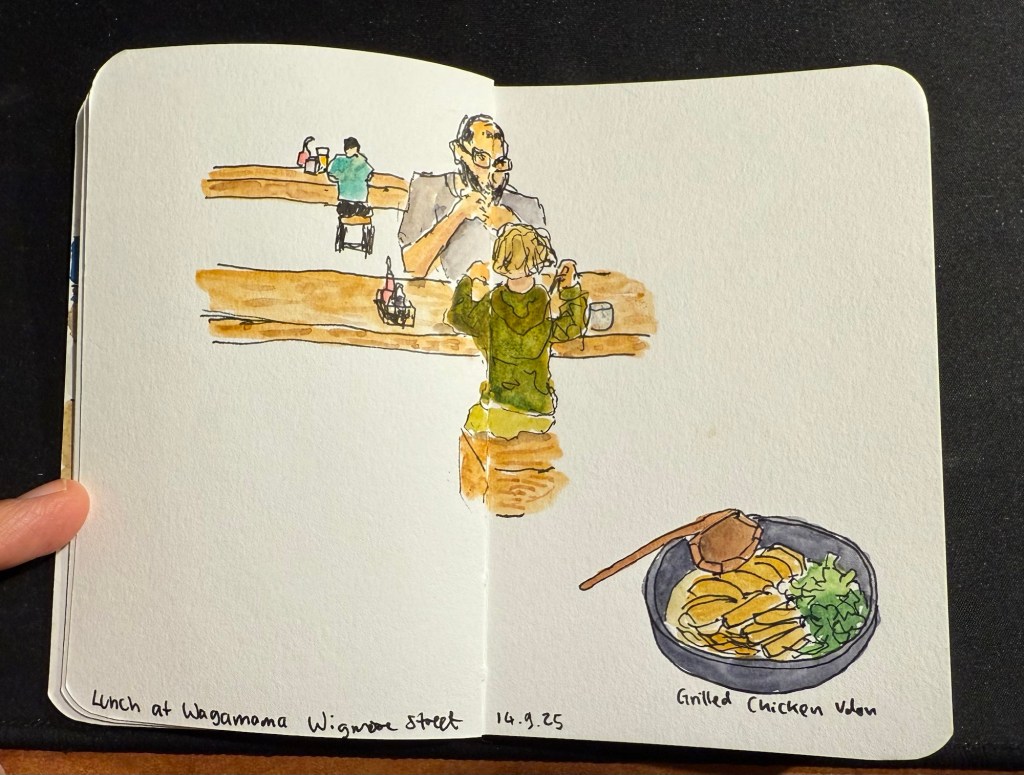
We then took the Eurostar to London. This is where I switched sketchbooks – this sketch of a boy and his father having lunch at a table across from me at Wagamama is the last sketch I created in my Stillman and Birn pocket beta. The beta has decent watercolour paper but it’s not half as good as the paper in my Etchr labs watercolour sketchbook, and the glued in pages make it a struggle to create full page spread sketches, as you can see here:
Last trip sketch in the Stillman and Birn pocket beta.
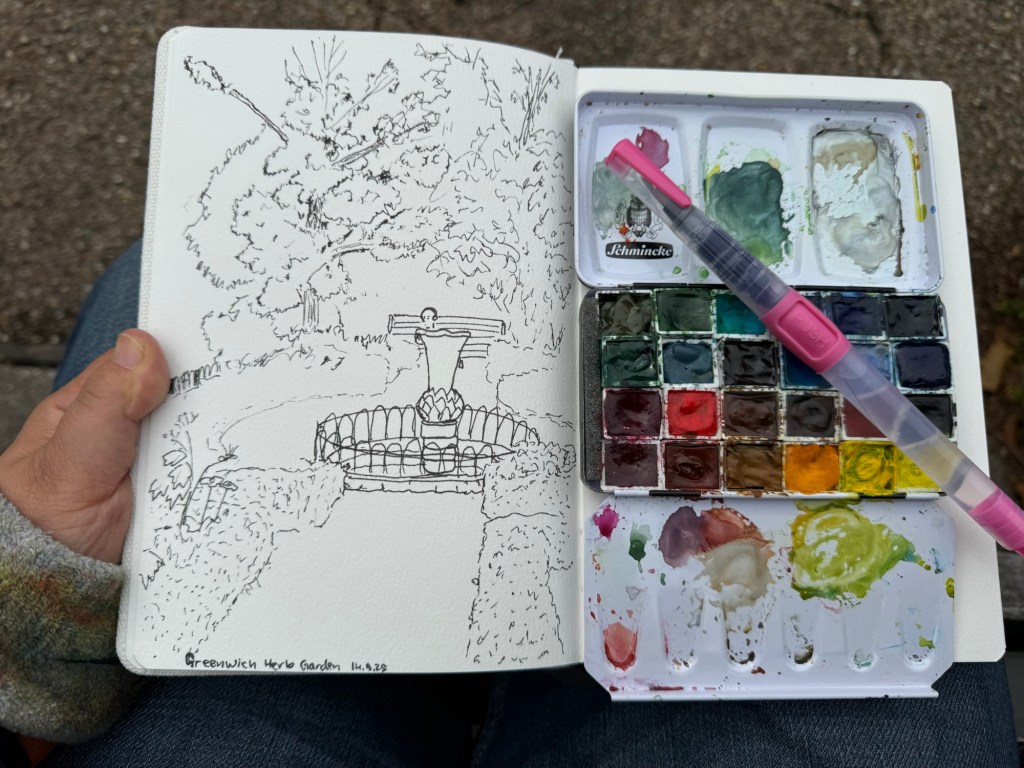
I created my first sketch in an Etchr lab cold pressed watercolour notebook while in the Greenwich Park herb garden and the paper is astonishingly good. Here’s the ink sketch (my tree sketches have gotten so much better thanks to a workshop I took in Poznan):
Etchr lab watercolour sketchbook sketch
And here is the watercolour:
The paper not only makes the colours pop, it actually allowed me ample time and space to work with the washes, adding layers of well blended colours that gave depth and life to the scene. Never have I ever seen the importance of good quality watercolour paper demonstrated so well. I have about half a dozen sketches of this garden throughout the years and this is by far the best one.
That’s it for part 1, I’ll try and upload part 2 later this week.
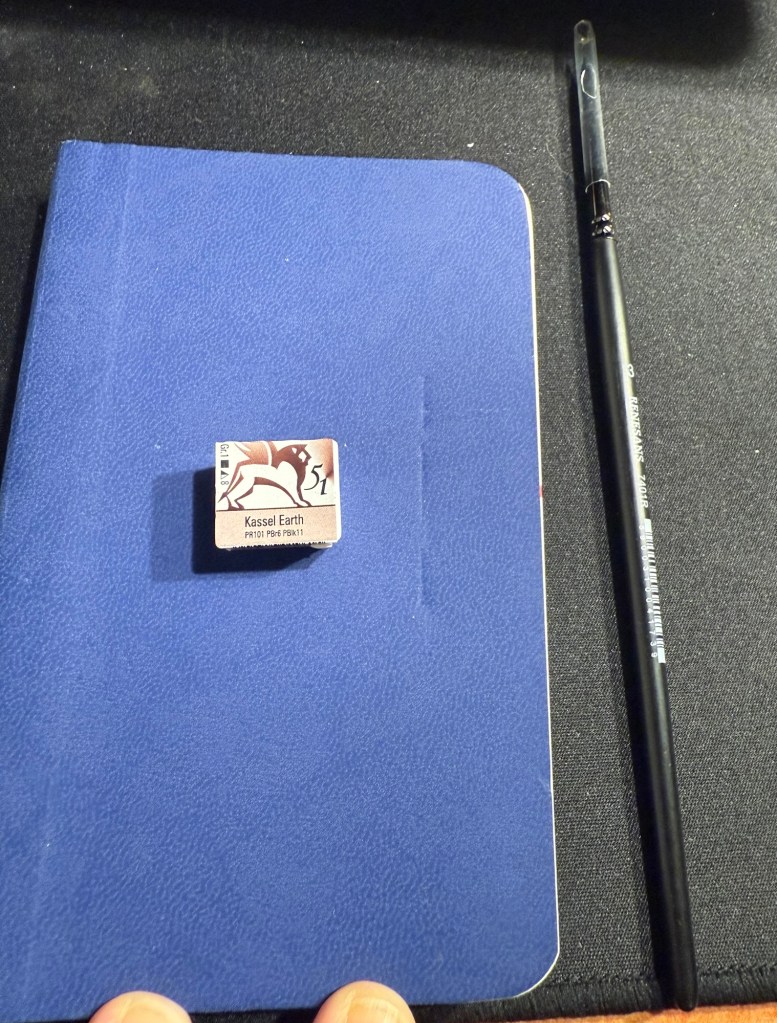
As part of the Urban Sketcher’s 2025 Symposium in Poznan I got a very generous goodie bag filled with art supplies from the Symposium sponsors. One of those sponsors was Renesans, a Polish art supply manufacturer, and they gave us a half pan of Kassel Earth extra fine watercolour and a number 3 synthetic watercolour brush.
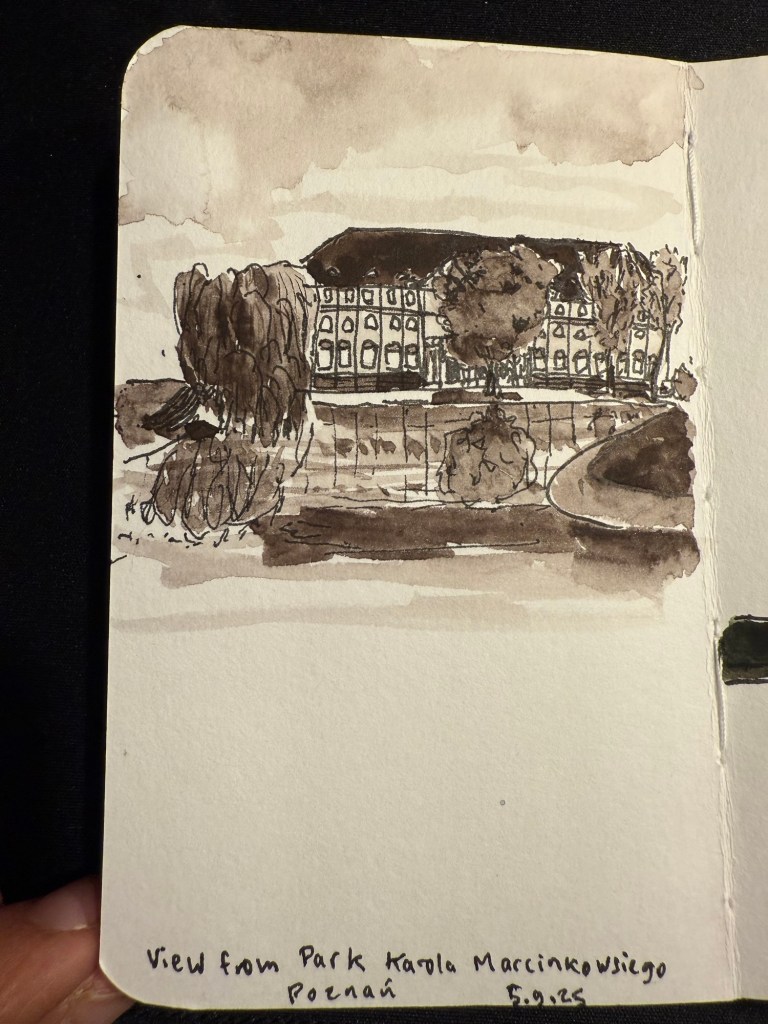
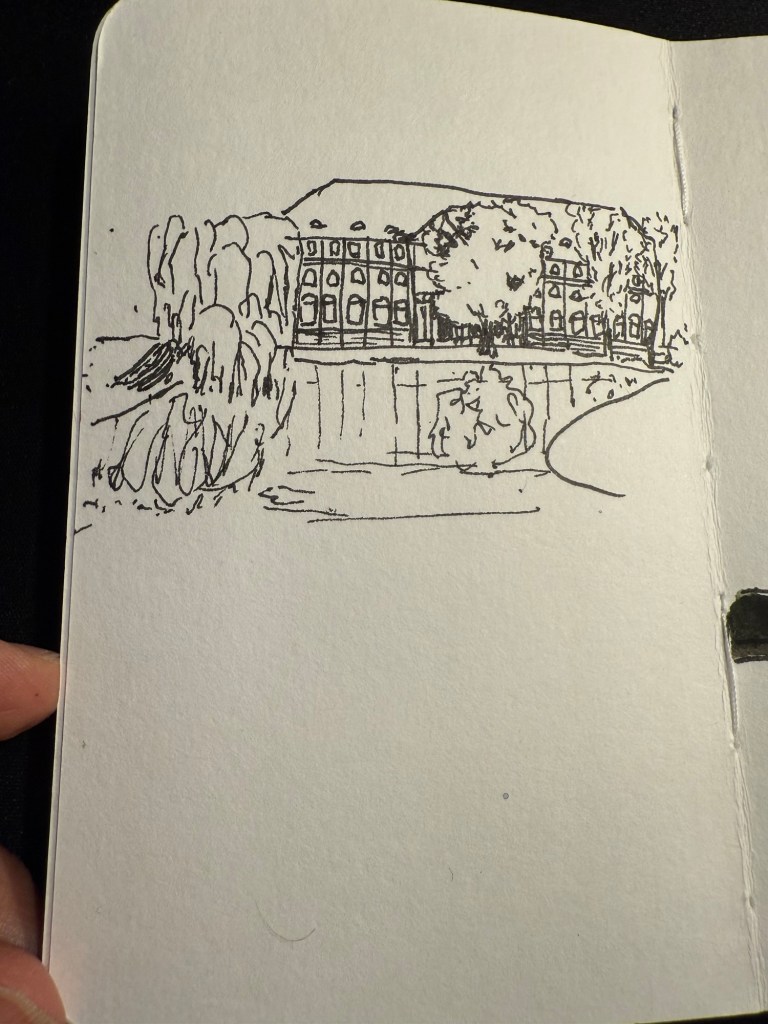
Today I decided to try them out. I used a Stillman and Birn pocket beta, a Staedtler 0.8 pigment liner and only the Kassel Earth watercolour and the Renesans brush. This is the result:
It’s a sketch of a beautiful building across from a pond in a park in Poznan. I drew it from a photo that I took during my morning run through the park. I was planning on returning to the park during the Symposium but I ended up not having time.
This is the sketch:
I used some of what I learned in the symposium to create more realistic trees.
I rarely sketch in monochrome so this sketch was a challenge. It’s about seeing the grades and shades in a scene, and not the colours, and that’s a hard exercise.
This is the paint and brush on the sketchbook:
And this is a swab of the paint. It’s a classic Van Dyke brown, artist grade quality. The brush was surprisingly good, especially for a synthetic brush. It retained quite a lot of water, and it has a good, sharp point.
Though the paint pan has bubbles in it, which isn’t great, I am happy with the quality of the paint and I would consider using Renesans watercolours in the future. The brush is excellent and I am adding it to my rotation. What a wonderful gift to get!