Weekly Update: Streaming Edition

I stopped using streaming services for a few months as I was studying for a certification exam, but as I now have more time in the evenings I’ve been back to watching stuff on my iPad. Here are a few things that I’ve watched over the last month or so.

  • “Shrinking” (Apple TV) – I bought a new iPad in December and so I got three free months of Apple TV. After I finished watching the fifth season of “Slow Horses” (excellent as usual), I watched the three seasons of “Shrinking”. It’s a wonderful show that manages to be both upbeat and constantly make you cry. The actors, the writing, the concept are all fantastic, and Harrison Ford (like Gary Oldman in “Slow Horses”) steal every scene he’s in. You tend to generally dislike the characters when they first appear on screen, and they gradually earn your respect and compassion, which is refreshing. My last experience with therapy was not good, and all three of the therapists in this show are deeply flawed, if very well meaning. It speaks to the quality of the writing and the acting that despite this I would be happy to have either one of them as my therapist.
  • “Murderbot” (Apple TV) – I love Matha Wells’s Murderbot Diaries series of books that this is based on, so I was apprehensive about this series. After watching the first season I can say that it’s a good series, although it isn’t as good as “All Systems Red”, the novella that it is based on. The novella was adapted for the format, and while the result works and it’s a good sci-fi series, the TV murderbot lacks the humour and heart of the book one. I recommend watching it, and I recommend even more reading the books.
  • “Lilo & Stitch” and “Lilo & Stitch Live Action” (Disney+) – I didn’t watch the original animated film when it came out and until now I haven’t taken the time to watch it. I wish that I had – it’s an unexpected gem, a lovely story about family, love, being unique and belonging. I generally don’t watch live action adaptations of Disney animated features, but this one was highly recommended and it is very good. The story was changed to update it and fit the format and to update it for the times, and the result is delightful. I highly recommend both.
  • “Elio” (Disney+) – this Pixar film isn’t one of their classics, but it’s still a cute sci-fi story, with charming humour, and whimsical world-building. It lacks the depth or punch of “Up”, “Inside Out”, “Wall-E” and other Pixar classics, but it’s still a fun way to pass an evening.
  • “Elemental” (Disney+) – this Pixar film is supposed to be a rom-com but ends up being a preachy and lackluster story about first and second generation immigrants. “Turning Red” dealt with the immigrant story much better than “Elemental” – it was funnier, more interesting, and more relatable. The world-building in “Elemental” is patchy as is the animation (it moves from weirdly hyper realistic backgrounds to almost 2D characters), and I didn’t feel that there was chemistry between the two main characters. The world has some charming moments, but doesn’t hold a candle to that of “Inside Out”, “Monsters Inc” or “Wall-E”, and the humour isn’t really there. It ends up being a mediocre movie, and there are too many good things to watch to justify spending any time with this film.
  • “Scrubs” (Disney+) – the team is back after years for a new season, and it’s an absolute delight. I like the new interns, and I love how they accounted for the growth and age of the original cast – and yet how at their core they remain the same. The series manages to deal with the many shortcomings of the American health system without becoming preachy, and it still keeps a balance between humour and heart.
  • “Star Trek: Starfleet Academy” (Paramount Plus) – before this series aired I thought that only Star Wars had “anti-diversity bro” reviewers, but boy was I wrong. The pilot is important story-wise but is far from perfect, but the rest of the series has the Star Trek heart and vibe that are missing from “Star Trek: Discovery” and “Star Trek: Picard”. The mean reviewers seem to forget that Star Trek was always both “woke” and campy, and this series is both (it features a pacifist gay Klingon, which apparently is a bridge too far for the dudes). While I don’t like Captain Ake (I find her mannerisms more annoying than charming) the rest of the cast is wonderful and the cadets grow and evolve significantly throughout the series. This series features the best Klingon episode to date, as well as lovely homage to my favourite Star Trek series, “Deep Space Nine”. I recommend this series, despite the pilot and Captain Ake and her weird mannerisms, as it has a lot of heart, a lot of humour and a lot of good stories and good characters.

Apart from that I managed to get four short runs in this week (my runs are now laps around the bomb shelter) and I went to my favourite cafe and sketched my favourite barista at work:
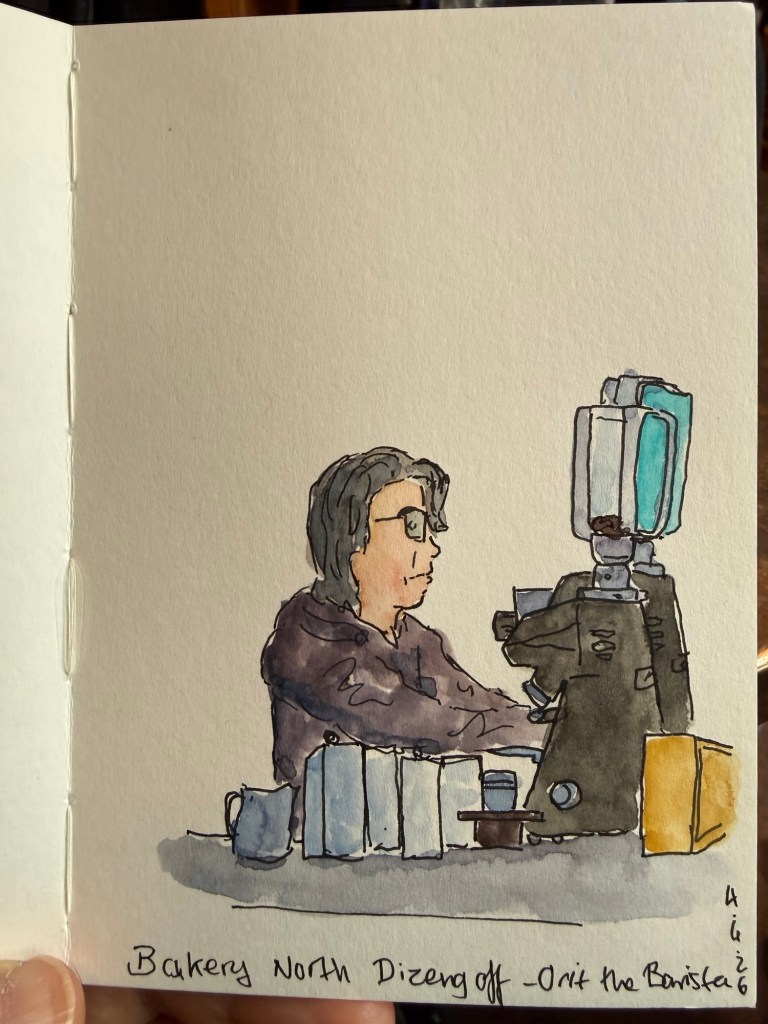
Watercolours and fineliner on Pith sketchbook

Here’s the sketch before I added watercolours:
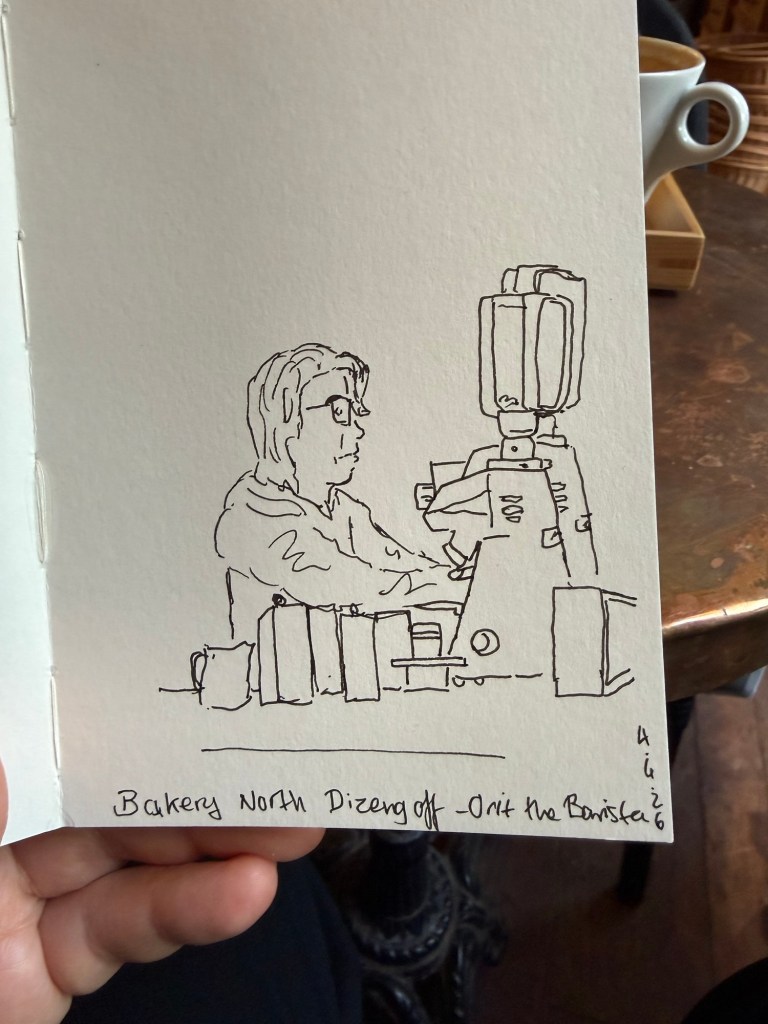
Faber Castell 0.3 fineliner on Pith sketchbook

And I’m back to building Lego, as it really helps reduce stress (at least for me). My brother bought me this set for my birthday last year and I haven’t had the chance to build it yet. It took me about two hours:
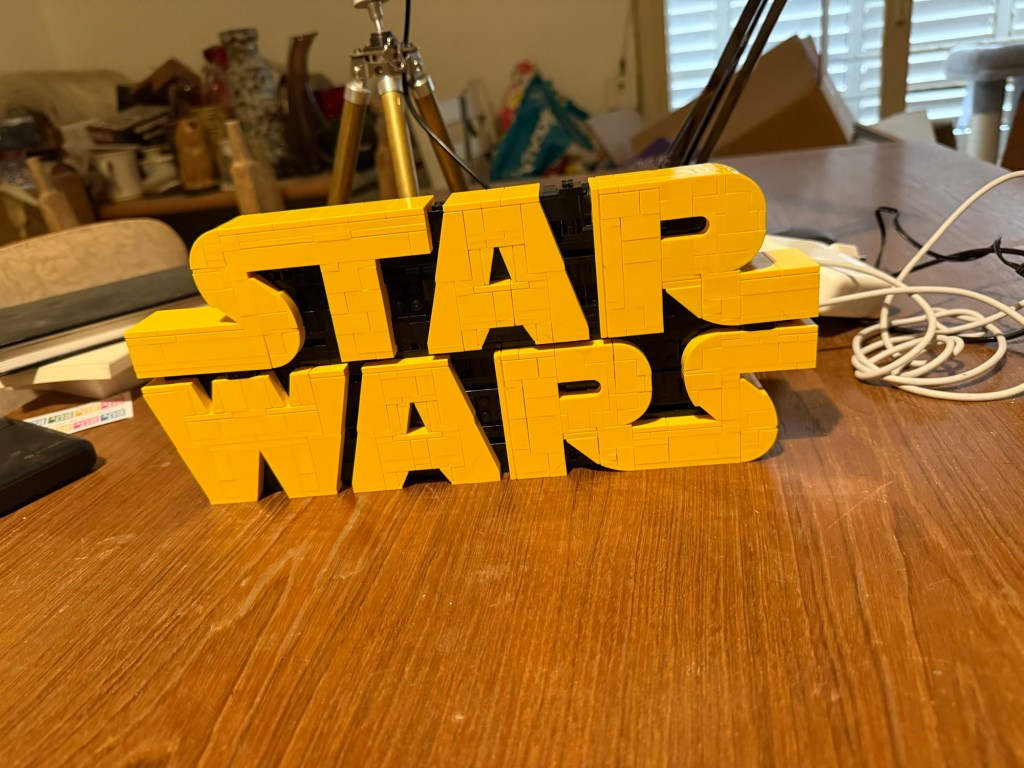
Star Wars logo Lego

There’s a nice hidden Star Wars scene at the top of the “T”. Can you guess what it is?
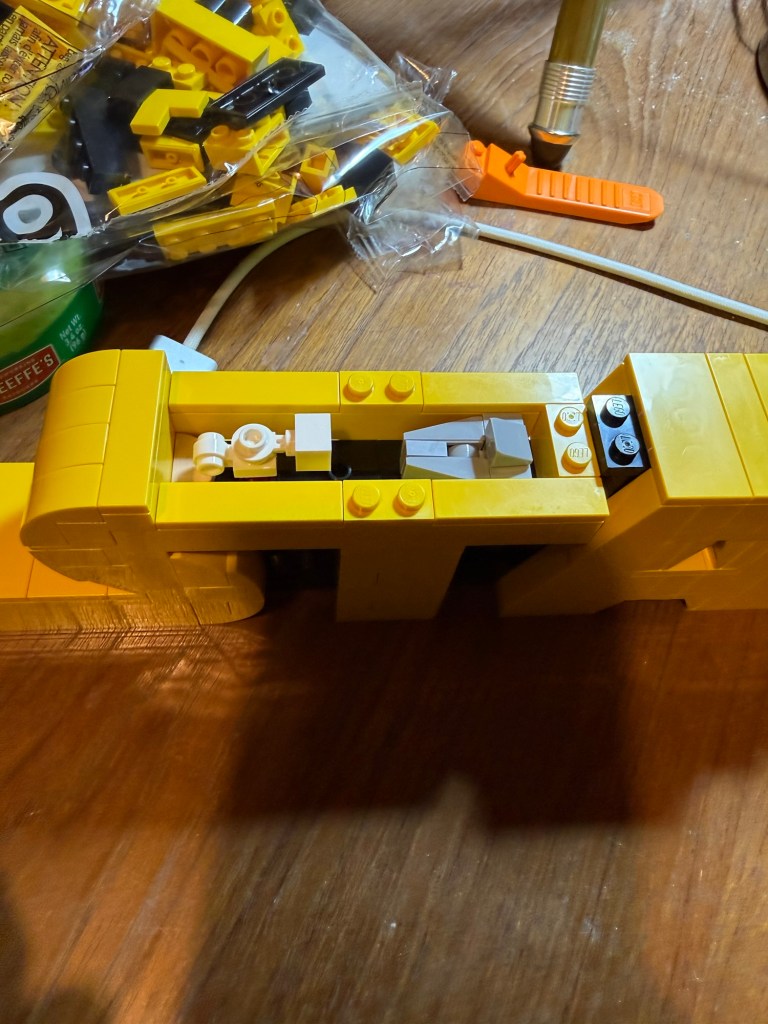
Hidden Star Wars scene

Hoping that the downed airman is safely recovered and this war ends.
Journaling Under Stress

We have this vision, this ideal of journaling. It’s a ritual, perhaps done while sitting in a comfortable chair in a room with a lot of books and just the right ambience, our leather-bound journal resting on a antique desk, our expensive fountain pen poised to write our thoughts in the perfect handwriting.

There’s nothing wrong with that vision, with wanting that experience. There is joy in writing using a great pen on beautiful paper.

But this isn’t what this post is about. It’s about journaling in a poorly lit bomb shelter with little privacy and the journal balanced precariously on your knees. It’s about the soldiers who journal in the battlefield, writing in the margins of their Bible. It’s about the patient journaling in their hospital bed, using an exercise book and the cheapest pen they could find (because the good stuff gets stolen). It’s about the achingly tired parent scribbling a few words when their child finally drifts to sleep.

Journaling provides an immense and lasting source of comfort to those who regularly practice it. You gain insight, clarity and perspective when you journal. It is most needed when life deals the worst blows, the toughest challenges, yet at precisely those moments the mind balks at the very idea of picking up a pen and writing things down.

Writing doesn’t come naturally to us. It requires effort, it always comes with friction. The very act of writing means that you have, at least momentarily, not merely surviving, but reflecting, planning, detaching yourself from the current turmoil of your life. Writing will never be natural, mindless, effortless – that’s why people pick up their phone and doom-scroll to numb their pain, instead of journal their way through it. Writing means walking into the pain, describing it, facing it, dealing with it. It means that you have to think about what it is you are going through instead of avoiding it.

There is no “life-hack,” no shortcut, no magic pill that will make journaling easy. Anyone who promises you quick and easy ways to journal when you really need to, when life deals your a bad hand, is wasting your time. You will need to force yourself to sit down and write. Techniques like setting a timer, using reminders, chaining habits (journaling right after you perform a habit that is already ingrained, like brushing your teeth) can help, but you will still have to overcome the resistance to writing that you’ll have every single time you sit down and journal. It’s the same kind of resistance that you encounter when you exercise – your mind will find every excuse there is, every alternative activity there is, just to avoid doing what’s good for it. That’s just how it is.

If you’re wondering where to start, how to put into words the overwhelming experience you’re in, I can make a few suggestions:

  • Ground yourself. Start by writing the date, what day it is, what time. How much time has passed since whatever is started. Your location. Your physical situation. Stick to dry facts. This should be relatively easy to write down, it will get you started and it will give you a bit of your sense of self back.
  • Lists are your friends. They’re easy, they allow you to track things without worrying too much about the connections between items or sentences. If just pouring everything on your mind onto the page seems daunting, lists can help. List actions you did or plan to do. List people you saw that day. List what you ate. It doesn’t matter – anything you write is worth writing down.
  • Don’t judge, don’t edit. Nobody cares. Nobody is marking this. Make grammar and spelling mistakes, typos, be mean and vulgar, curse, write sentences that go nowhere. Everything that’s on the page is out of your mind, and everything that’s out of your mind gives you more breathing room. The point of writing is writing, not producing masterpieces for future generations.
  • If you can, try to find something funny or interesting or kind that’s happening around you and write it down. A young man trying to impress a group of young women in a bomb shelter by performing card tricks. The two X-Ray technicians that try to make everyone around them laugh by clowning around as they rush from bed to bed in the hospital with their portable X-Ray machine. The young woman who paid for part of the groceries the old lady in front of her in the line couldn’t afford.
  • Try to find a few things that you are grateful for even now. The point isn’t to be a Pollyanna, it’s to convince yourself that it is worth trudging on, putting one foot in front of the other. It’s the difference between letting yourself give up on your life, and finding enough strength and light to keep going on. The darker your life is, more important this is.

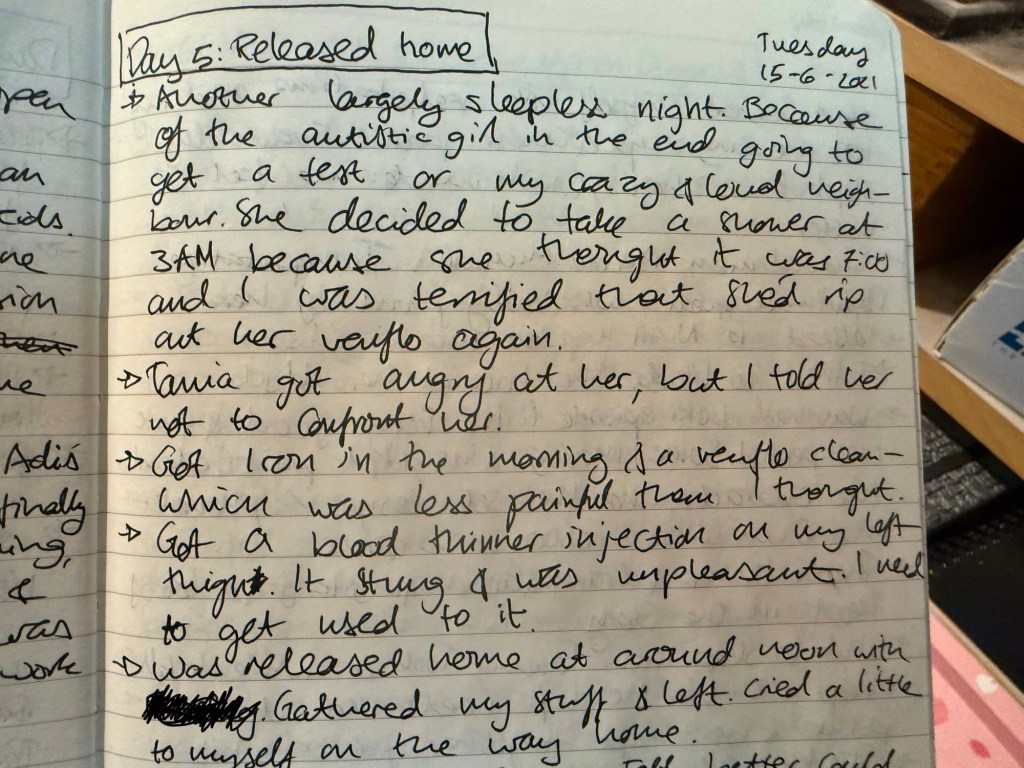
I don’t normally publish excerpts from my journals, as they are private, but in this case I thought it might be useful to see a few snippets of what journaling under stress looks like.

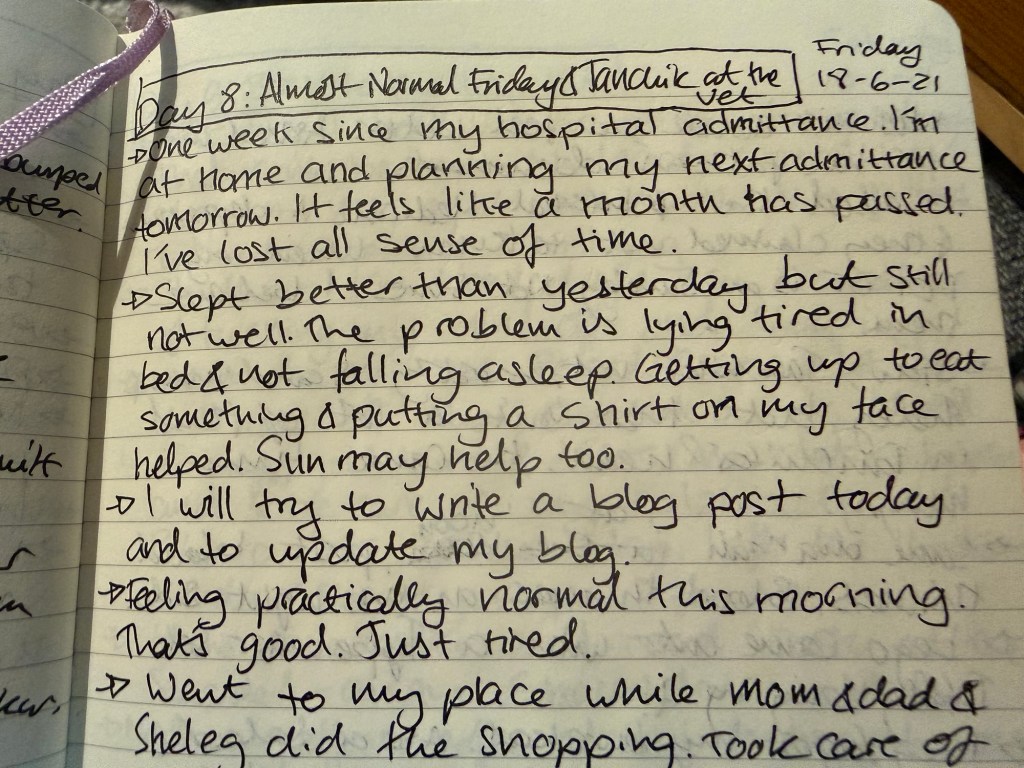
Journal excerpt from my first hospitalisation in an Internal Medicine ward. Written in bullet-point (i.e. list) format on a Moleskine using a gel ink pen.
Journal excerpt from a few days later. I was suffering from cancer related stress disorder at the time but it would be months before I realised it and got treatment. Journaling allows present me to see things that past me couldn’t see at the time.
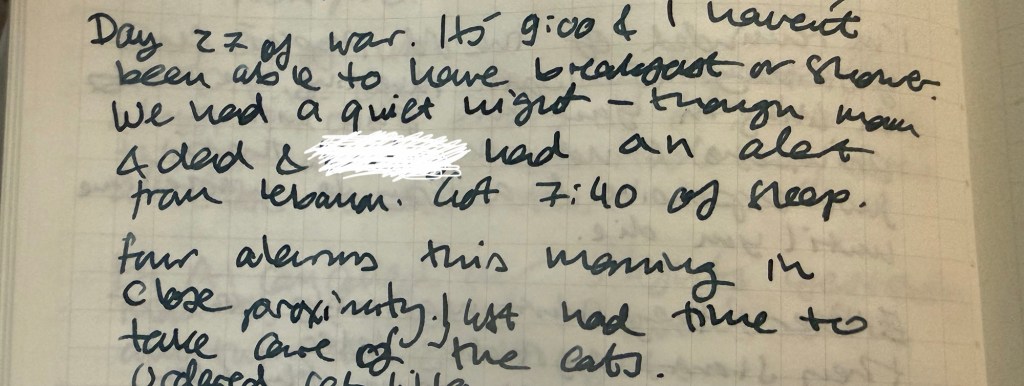
Messy handwriting because I wrote this balancing my journal on my lap, cramped in a chair in the corner of a bomb shelter packed with people.

If you happen to be in an extremely stressful situation, I hope this post helps you find a way to journal through the experience. I promise that it’s worth the effort.