Tournament of Books 2020: Girl, Woman, Other

44666924. sy475

After reading Bernadine Evaristo’s “Girl, Woman, Other“, I have to say that Atwood’s “The Testaments” better be a flawless novel to justify giving it the joint Booker prize with this masterpiece.
“Girl, Woman, Other” is a perfect gem. She manages to pull off one of the most daring tightrope acts in modern literature:

  • Create a unique narrative in a unique narrative voice that oftentimes flows into poetry, yet still remains very readable.
  • Give voice to those who are rarely, if ever, heard, yet not turn them into iconic stand-ins, but let them be individuals. And oh what an ensemble of glorious individuals they are.
  • Render a plot that is packed full of fascinating, realistic action, and yet that is non-linear, tying disparate characters from widely varying backgrounds and generations in a web of past-present-future reality. A plot that brings the historic and iconic with the present and personal, the petty with the epic, and brings them all together under the title of “life”.
  • Bring slices of everyday London, the UK, Africa and the US to life in a way that makes each character grounded in their background and yet also universally relatable. A school is this particular school, but it’s also all high-schools everywhere.
  • Talk about the darkest parts of the human experience, the worst deeds, the worst mindsets, and yet retain a measure of hope, empathy, understanding for those who experienced the worst and those that inflicted it.

“Girl, Woman, Other” is an absolute must read book, and I’m thankful that I “had” to read it as part of the2020 Tournament of Books challenge.
Karas Kustoms Retrakt Review

Back in 2016 I purchased the 2016 Anniversary edition of the Karas Kustoms EDK. It was a Parker refill machined pen (i.e. relatively short) that came with a Schmidt P2186 rollerball refill (and a Rickshaw bag pouch with a notebook which I won’t review here).

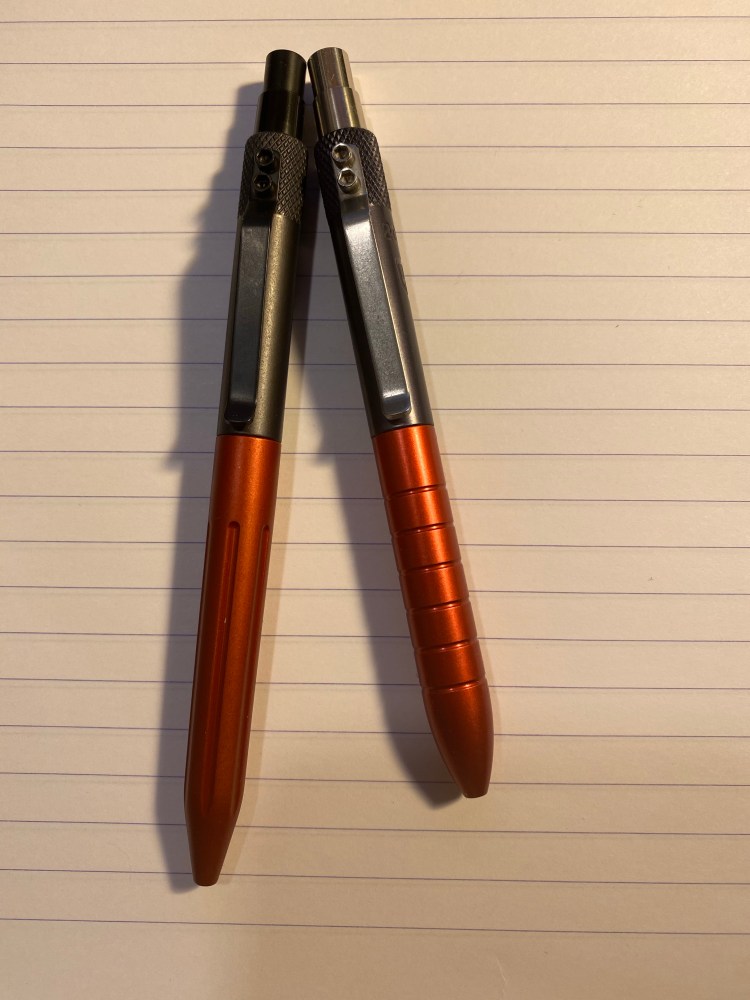
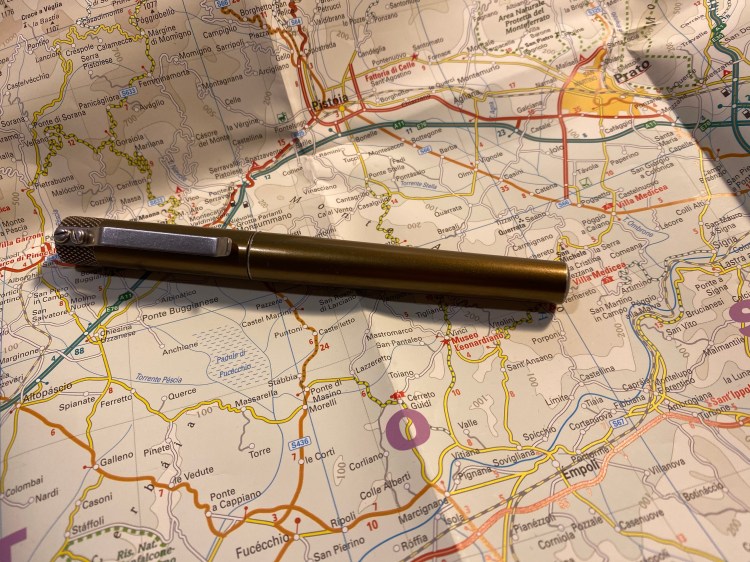
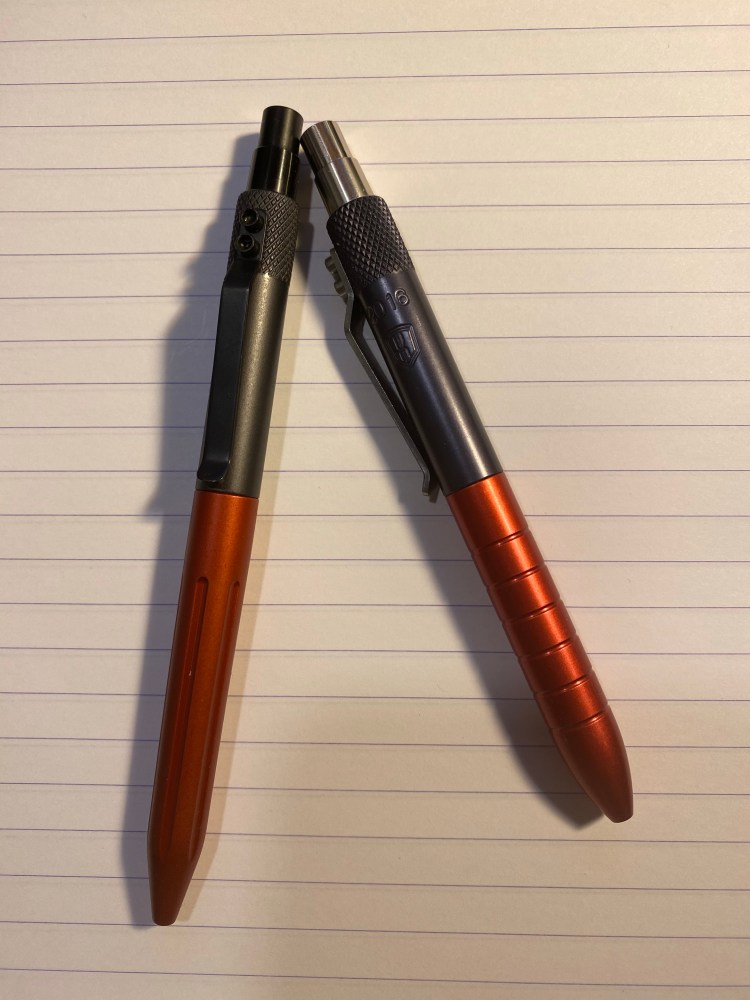
You can see that pen on the right, with it’s grey red finish and its Karas logo with the year 2016 engraved into the barrel:


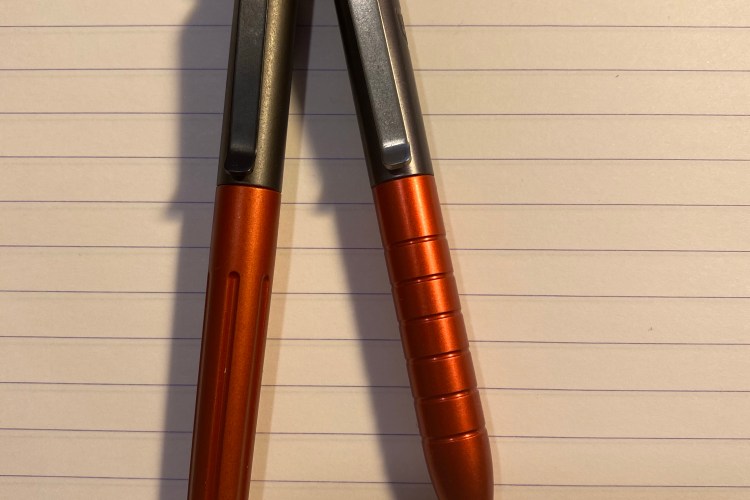
The 2019Anniversary Retrakt is the pen on the left, and when I first saw it during Karas end of the year sale I fell in love with the sleek design. The 2019 anniversary Retrakt fits a Pilot G2 refill (astrix. We’ll get to that later), comes in a matt finish with a black click mechanism and clip, and a “fluted” grip. Unlike the 2016 edition, it’s completely unbranded.


Both pens have a distinctive and attractive industrial design, and both are built like tanks. The anodization is fantastic, and both the clip and click mechanism are rock solid. The pens are fairly priced for the quality you get, they have good heft and balance, and are a joy to use. I personally found the fluted grip slightly less comfortable for use in long writing sessions than the regular grip, but I have a tendency to go “grip of death” sometimes. The fluted grip just reminds me to let go a bit, the pen isn’t going anywhere without me.

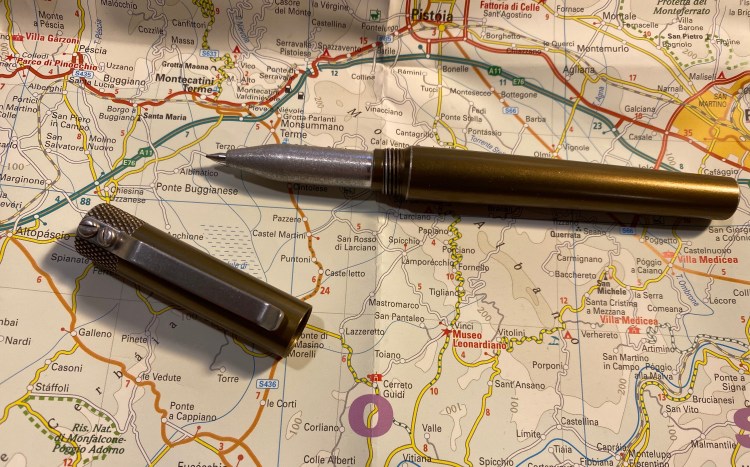
2016 Anniversary Retrakt on the right, 2019 Anniversary Fluted Retrakt on the left

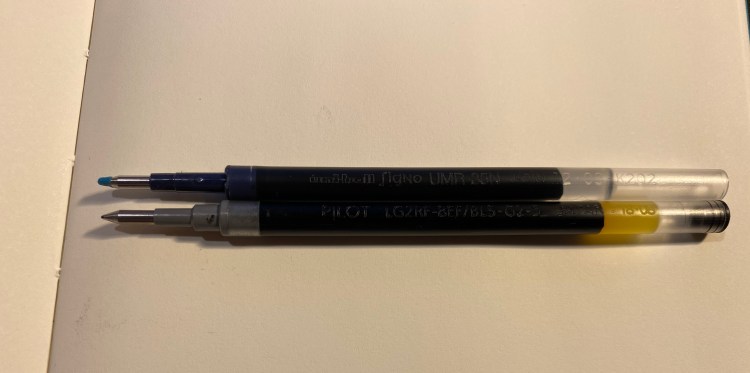
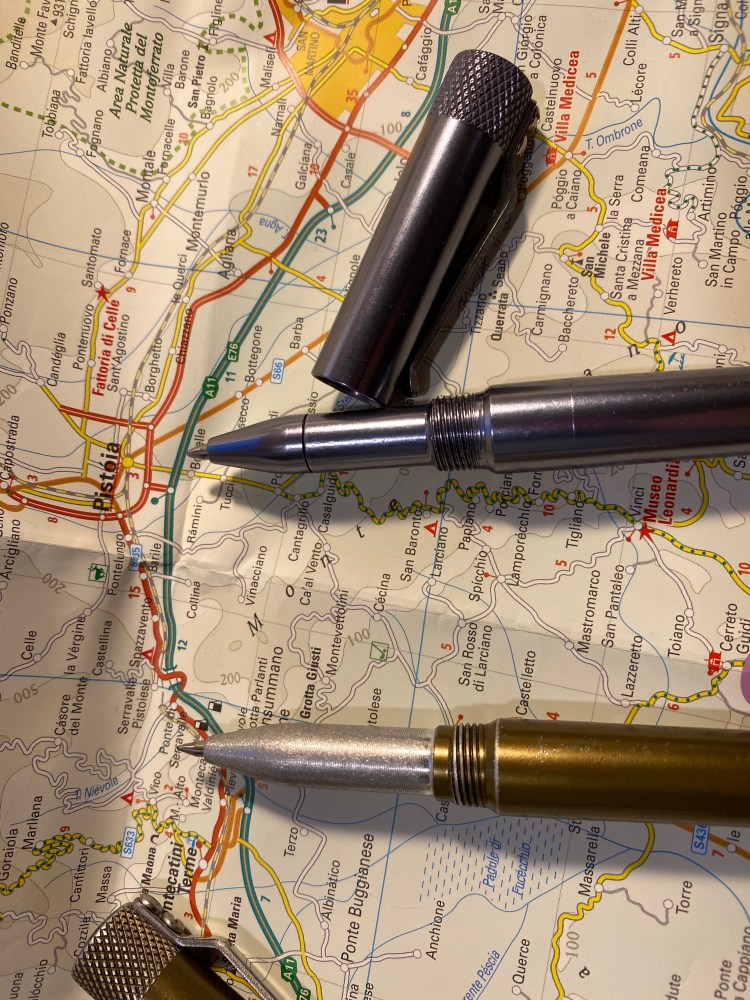
This brings us to the refill situation on the 2019 Anniversary Retrakt. As soon as I got it I took out the Pilot G2 refill it came with and tried to replace it with my favourite G2 compatible refill, the Uni-ball UMR-85. It’s something that I do automatically with every G2 compatible machined pen. The click mechanism wouldn’t engage. The plunger went down but didn’t stay down, the tip of the refill never saw the light of day. This has never happened to me with a G2 compatible pen before, so I grabbed the original refill and placed it side by side with the Uni-ball one:

Uni-ball UMR-85N on the top, Pilot G2 on the bottom

This was when I realized that the Retrakt V2 must have somehow been designed to accommodate the Pilot G2 tip configuration and only the Pilot G2 tip configuration (unless you purchase a Parker style conversion kit from Karas). This was a big disappointment to me.

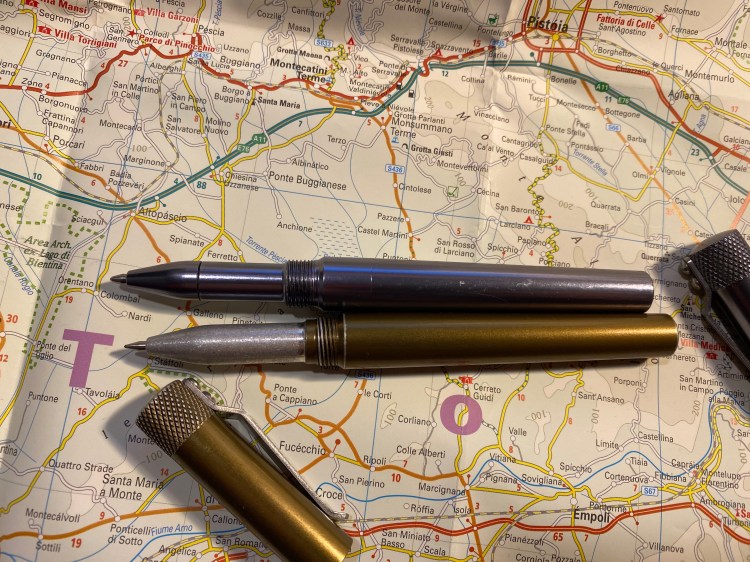
Schmidt vs Pilot G2 Retrakts

I probably wouldn’t have purchased this pen had I known this going in. I don’t hate the Pilot G2 refills, but I’m also not a huge fan of their tendency to be globby or stop working while they’re still half full. This means that I’ll be trying to hack a Uni-ball refill into this pen one way or another. Here’s hoping that I succeed because this the 2019 Anniversary Retrakt is a handsome and well made pen that I would really like to have in my rotation.

Tournament of Books 2020: We Cast a Shadow

40956710. sy475

Writing a satire that is also “good high fiction” (i.e. not trite, full of one dimensional characters, in a world lacking verisimilitude) verges on the impossible, partially because of the demands of the genre.
Maurice Carlos Ruffin comes damn close to achieving the impossible in “We Cast a Shadow“. The nameless main character, a black father obsessed with demelanating his son in an extremely racist “post-racial” American South, is a stand-in for desperate black parents tormented by the responsibility of raising a child in a world so hostile to them. Yet he’s also a fully realized character, in inadvertent “monster” created out of good intentions, love, trauma, despair, and an attempt to navigate that which can’t be navigated. If you don’t understand his fears, acknowledge your privilege and read the news. If you think demelanization isn’t a thing, listen to Tan France speak up against it.
The plot is where “We Cast a Shadow” shows its rough edges. Most of it is excellent, some of it gets carried away in the need to find literary legitimacy by pulling in references. There’s a noticeable amount of literary callback in the writing as well. Some of it is called for, some of it just pulls you out of the narrative. “We Cast a Shadow” lacks the polish and flow of “The Sellout” (and it’s not nearly as funny), which is why I think it got less attention from the public and the press. It’s still an accomplished, good book, well worth the read.
Unlike “The Sellout”, in “We Cast a Shadow” Ruffin doesn’t set a clownish character in motion in a contemporary setting. His is a dystopian near future, one that may very well be realized. For the sake of the Nigels and Pennys of the world, let’s hope it doesn’t.
I read “We Cast a Shadow” as part of the Tournament of Books 2020, where it’s in the play-in round against “Golden State” and “Oval“, two other 2019 dystopian novels. While “We Cast a Shadow” is the least speculative of the three, it’s my opinion that it’s the best.

Old Favourites: Zebra G-301 review

In 2013, while I was at a convention in Boston, I went into the FedEx at the convention centre to collect a package. As I was waiting in line my eye caught the Zebra G-301 pen on a rack near the till. I’d heard good things about the Zebra F-301, but it’s a ballpoint pen and I wasn’t a fan of those. The Zebra G-301 was a gel pen. In stainless-steel. For just a few bucks.

Of course I bought it.

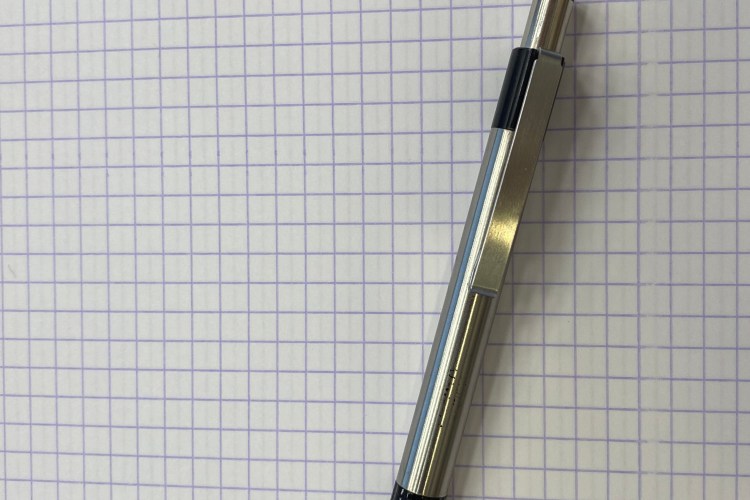
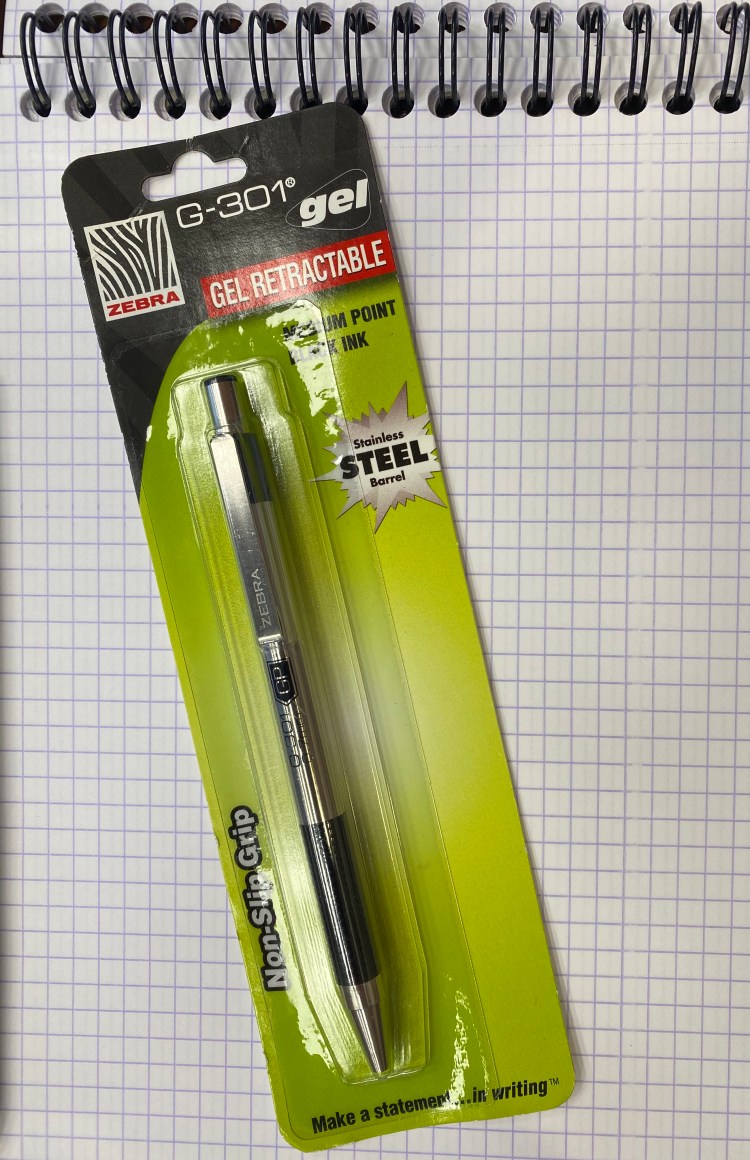
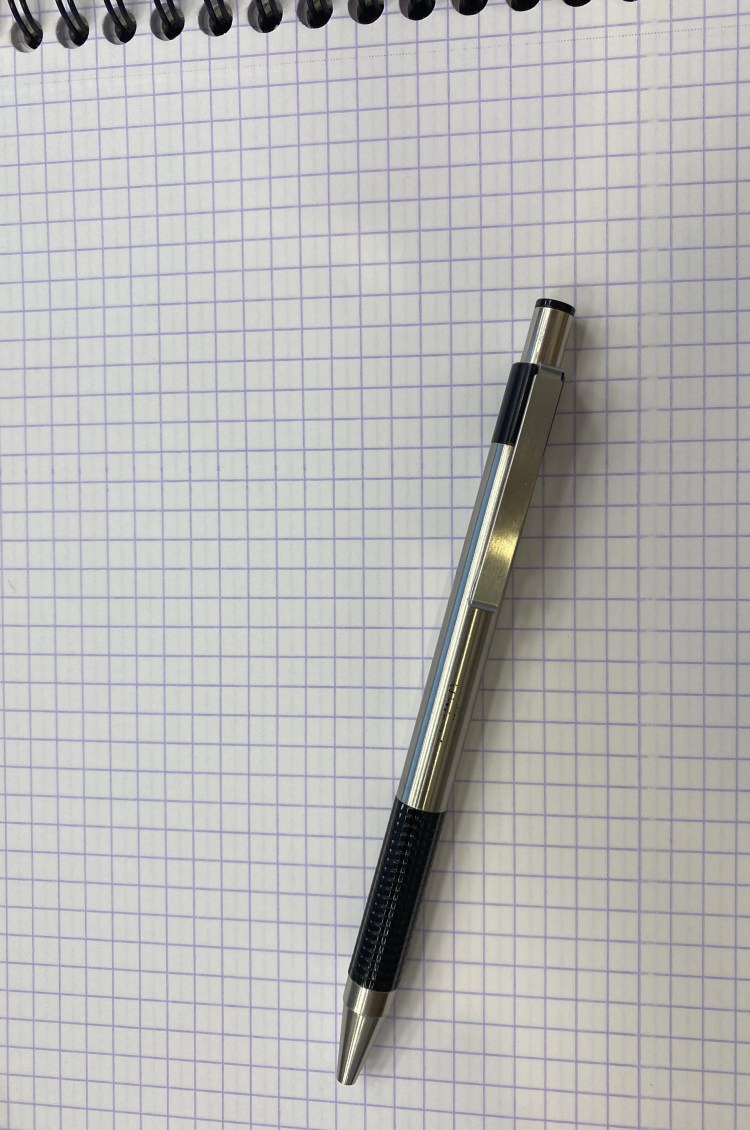
Fast forward six (!) years and that same Zebra G-301, the exact same one, is still on my desk, and is still my daily workhorse pen in the office. Here’s how it looks now:

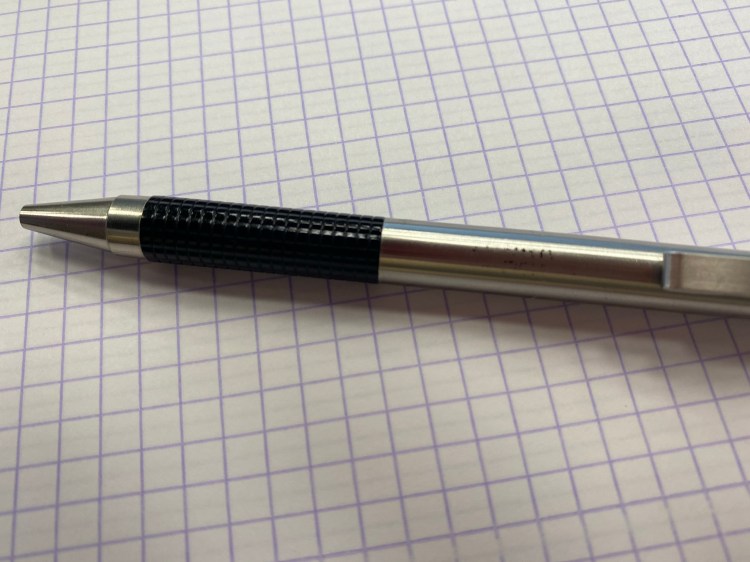
Impressive, right? The imprint is almost gone (mine didn’t have the Zebra logo etched into the clip, so it now looks like an unbranded pen), and the plastic grip is a little worn with use, but otherwise the pen looks practically brand new.

The pen costs $2.5 on JetPens. I’ve been using it for my daily to do list and for general planning and meeting notes every day for six years. It just shows that a pen doesn’t need to cost hundreds of dollars to be a good, solid workhorse that’s a joy to use.

Oh wait, I haven’t actually reviewed it yet…

The Zebra G-301 has a stainless steel body that is durable, gives it more heft than a plastic bodied pen, and yet isn’t too heavy to be uncomfortable to use or unwieldy. The plastic grip has no give, so if you like mushy grips it’s not for you. Otherwise it gets the job done. The branding is classy (one font, understated, sleek and modern), and well suited for office use. The pen is durable, and the click mechanism isn’t mushy and lasts for years.

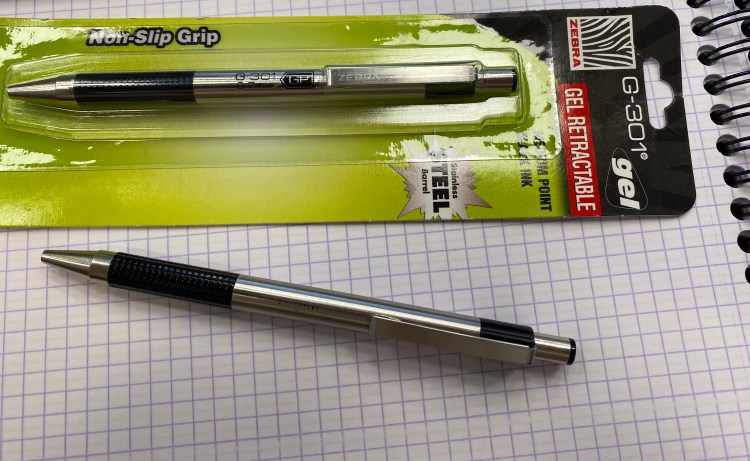
New and Old

The only possible downside of the Zebra G-301 is the refill. It’s proprietary, on the expensive side (a pack with two refills costs $1.90 on JetPens, almost as much as the pen), and they don’t last long if you write a lot with them (I get about 2 months out of each refill). I also only use the G-301 refills (theSteel JK 2 pack), so they come only in black or blue, and only in 0.7mm. JetPens also notes that the Zebra Sarsa JK refills fit the Zebra G-301, which come in 0.5 and also in green and red, but they cost a little more per refill. As I view the Zebra G-301 as an office use pen, I don’t mind the ink limitations.

Writing Sample

I never thought when I picked up this pen back in 2013 as an impulse buy that I’ll be using it six years later. I like it so much that I bought a backup a few years ago, because I was sure a $2.5 pen wouldn’t last for long and I didn’t want to be stuck without it. The replacement is still in its blister pack, as you can see in the photos above, and the original G-301 is still going strong on my desk. I wonder if I’ve accidentally stumbled on the modern equivalent of the Esterbrook Dollar Pen.

Tournament of Books 2020: Oval

Oval

Dystopias are rarely boring. Dystopias rarely make you think, “meh”, when the characters meet the horrors of their world. Dystopias rarely lack plot, drive, an every calling telos. The world of dystopia may be hedonistic but the characters rarely are: after all, what’s the point of creating that kind of world if your character are too nihilistic, hedonistic and selfish to care what is going on around them?
Elvia Wilk’s “Oval” manages to be all that: a boring, bland, myopic, pointless dystopia full of nihilistic and selfish characters that don the mantle of social awareness and environmentalism as nothing more than a status symbol. I hesitate to call “Oval” a speculative novel, since so little speculation happens in it. Corporations are going to be ever more powerful at the expense of governments? That’s a known truth in 2020. The housing crisis is a thing worldwide? No kidding. Economic disparity, young people despairing from the political system, partying your way to the end – it’s not just that there’s nothing new here, it’s also that Wilk didn’t even try to dress it differently, give it an interesting or thought provoking spin. After reading “Oval” to the end I felt like I felt after watching “Star Wars: The Phantom Menace”: was this all that it’s for?
I don’t like feeling cheated as a reader, and “Oval” wears the mantle of a high brow novel while providing less satisfaction, interest and down to earth character moments than works like Corey Doctorow’s wonderful “Radicalized”. Go read that instead.

I read “Oval” as part of the 2020 Tournament of Books, where it’s up in the play-in round against “Golden State” and “We Cast a Shadow”.

Tournament of Books 2020: Golden State

43473236. sy475

In a dystopian California, obsessed about the truth and capturing every moment of reality, a detective in the lie-detecting “Speculative Service” encounters an accidental death that may be more than it seems. Ben H. Winters’ “Golden State” is a clever mirror of “1984”, built for our cynical and surveillance heavy world, and it has a lot to say about truth, fiction, human relationships, guilt and objectivity. There’s something very “Caves of Steel” about it, and yet Winters’s characters are actual characters, and not robots-in-flesh as in Asimov’s work. This isn’t just a novel of ideas, but also a novel of people, of Lazlo dealing with pain, guilt, ambition.
A clever speculative novel that is worth reading even if speculative novels aren’t your thing.

I read this as part of the 2020 Tournament of Books Play-In round, where it’s up against “Oval” and “We Cast a Shadow”.

Tournament of Books 2020: Fleishman is in Trouble

Taffy Brodesser-Akner’s “Fleishman is in Trouble” is a readable book. The pages fly by as you absorb them, looking for something, anything, more than superficial, entitled, dull misery. I kept waiting for the promises humour to appear. I kept waiting for the novel to get to even the basic insights in David Foster Wallace’s “This is Water” as it dug into the daily grind of its rich, white, healthy, able-bodied, cis-gendered, supremely selfish and childish characters. I kept saying, “so what, who cares?” and the novel didn’t answer. What things it had to say about women’s place had been said much more poignantly by authors with a better story to tell.
There is some attempt at narrative sophistication, but that doesn’t land. Akner chooses to use the second person for parts of the narrative, but she doesn’t commit, doesn’t fully create a witness account. Then there’s an attempt to mirror a fictional narrative within the narrative, a magazine article like telling of a divorce falling apart. Again, Akner pulls her punches, the comparison of “divorce story as written by a man vs. divorce story as written by a woman” doesn’t land. At some point I started hoping that she would pull off a trite move like revealing that she’s gender switched the narrative all along, just so I could have something to look forward to. Toby talks about rich people not knowing how to deal with tragedies or hardship in a novel devoid of any tragedies or hardship, as a character, in a cast, that has never truly dealt with the terrors of the world. The only character that has the potential for some depth, Rachel, is rendered as a selfish, driven, social climber with no empathy to anyone but herself.
The novel, like its characters, is pleasantly whiling the time as the world around it burns and it eats beef lo mein.
I read this book as part of the2020 Tournament of Books, where it’s up against Jami Attenberg’s “All This Could Be Yours” in the first round. Both novels are about rich, white people going through a crisis of sorts, but Attenberg’s novel has a depth to it, the darkness of Victor vs. the light of its post-Katrina New Orlean’s residents, that makes it worth spending some time with.
If you’re looking for a “Sex in the City Post Divorce” type of book, “Fleishman is in Trouble” may be what you’re looking for. Otherwise, I’d avoid it.

Karas Kustoms Battleworn Render K Review

In 2016 I purchased my first Karas Kustoms pens, a grey Render K. Brad Dowdy said that the grey Render K is worth checking out, as photos don’t do the pen justice, and he was right. I love that pen and I still use it regularly, despite it having two minuses:

  1. The refill is a ballpoint, which I’m not a fan of.
  2. The cap doesn’t stay on. Ever.

So I relegated my Render K to desk use, and I only used it in my reading journal, where I don’t write as much, so I can usually wait a few minutes for the ink to dry.

The “cap not staying on” bit didn’t bother just me, and Karas decided that it was worth addressing. Their Render K V2 mainly came out to address that problem. When one of the V2 Render Ks in Battleworn finish came on sale on Black Friday, I decided to give it a try. And this time I got the G2 version, which accepts Pilot G-2 refills (my favourite refill, the Uni-ball UMR-85N is G-2 compatible).

This is the olive coloured Battleworn Render K, and though it looks heavy and hefty it’s super light. It’s much lighter than my old Render K, and more well balanced.

The “Battleworn” finish means that the pen was tumbled after anodization, and so it’s full of nicks and has an “old jeans” kind of look to the top of the cap, the threads, and the tip.

You can see the effects of the tumbling most significantly on the grip. The rings on it are pretty well battered and chewed. While it may look rough, the finish is smooth and there’s no risk of cutting your fingers on a raw edge.

The finish on the cap looks great too. The cap has an o-ring inside that makes sure that it stays on unless you unscrew it, and the threads have also been redesigned to make capping more secure. As in the old Render K, you can’t post the cap.

I was prepared to dislike the olive colour, but I like its subtlety. It’s interesting without calling too much attention to itself.

Render K V2 on the left and the original Render K on the right

When you put the new and old Render Ks side by side you can see that they’re practically the same size, that the grip section has been redesigned, and that their threads look different.

The old Render K accepted refills through the top part of the grip, unlike the new Render K, where the entire grip section unscrews. I think that the new design is more streamlined and elegant, and in general the rings on the new grip make the Render K V2’s grip much better designed and less slippery to hold.

The old Render K feels much heavier than the new one, partly because I think that it’s not as well balanced as the Render K V2. However, it’s worth noting that in both Render K versions the grip section is a little on the thin side, so you might not find them well suited for long writing sessions.

The Karas Kustoms Render K V2 is one of the best machined pens in the market, and now that the cap stays on its a great EDC pen. I personally love the look of the “Battleworn” finish, and I highly recommend getting the G2 version of the pen and swapping the Pilot G2 refill with one of the many, better, G2 compatible refills in the market.

Tournament of Books 2020: All This Could Be Yours

All This Could Be Yours

“All happy families are alike; each unhappy family is unhappy in its own way.” ― Leo Tolstoy , Anna Karenina
The Tuchman family is unhappy in its own way, as Jami Attenberg deftly portrays in “All This Could Be Yours“. The patriarch, Victor, is lying on his deathbed, and Attenberg creates a mosaic of family members around him, with each character radiating out to other characters, the narrative touching on them for a moment (a conductor on a streetcar, a bartender, nurses, a coroner) placing them in the city of New Orleans, the world at large, and then floating away. The result is a lyrical telling of the consequences the life of a monster has on the people around him, almost a mirror image of Alberto Luis Urrea’s wonderful and touching “The House of Broken Angels”.
Victor Tuchman is a monster, but we only see his shadow, his effect in “All This Could Be Yours”. Alex’s obsession with knowing the truth about his life, why her mother stayed with him, what he did is what mostly drives the narrative, which is very thin on plot. It is rich with vibrant and interesting characters, the verve and buzz of New Orleans, the tang of misery brought on by people acting as people tend to do.
These are rich white people having rich white people problems in the city of New Orleans, in the America of Trump. I expected to not care less about the Tuchmans and their collective misery (no real tragedy here). But Attenberg knows how to write a book, and she knows what she’s doing even though you might get a little distracted at times along the way. Take a look at what’s described and what’s not, whose childhood is narrated and whose’s not, and on which character doing what the main narrative ends. A cruel man starts the narrative, but kind women have the last word.

I read this as part of my Tournament of Books 2020 challenge, and I thoroughly enjoyed it, even though the narrative jumps and amount of characters can be confusing at times.

Diamine Inkvent Calendar Day 25

Diamine Inkvent Calendar is an advent calendar with a tiny (7ml) bottle of ink behind 24 windows, and a larger, 30ml, bottle of ink behind the 25th window. All the inks are limited edition, and only available through this calendar. You can read more about the calendar here.

It’s the final day of the Diamine Inkvent calendar, and there’s a full 30ml bottle of ink behind today’s door. I guessed that today’s ink will probably be a shimmer and sheen ink, perhaps in the same shade of blue of the calendar. Then again, from the ink name there was a chance that it would be a green or a red, which I find less useful.

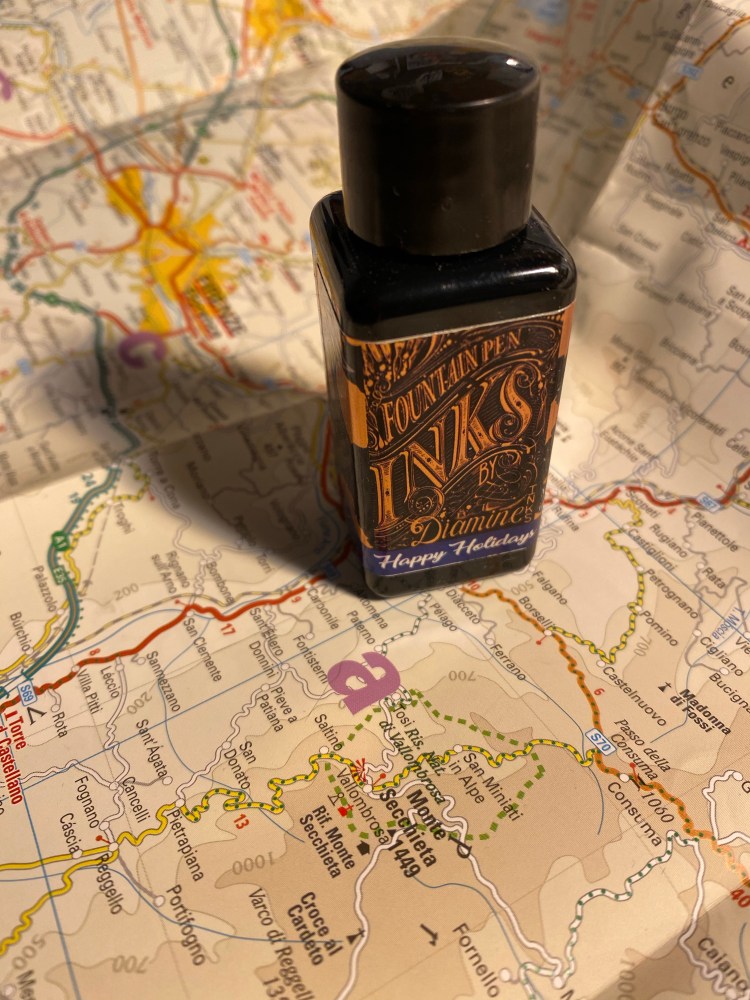
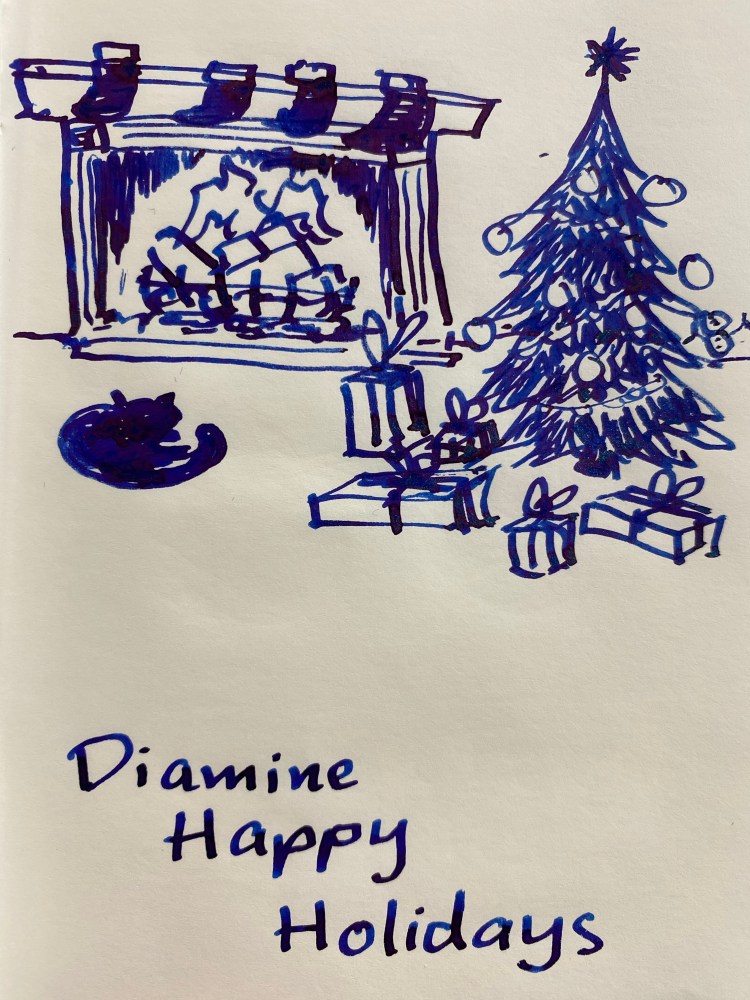
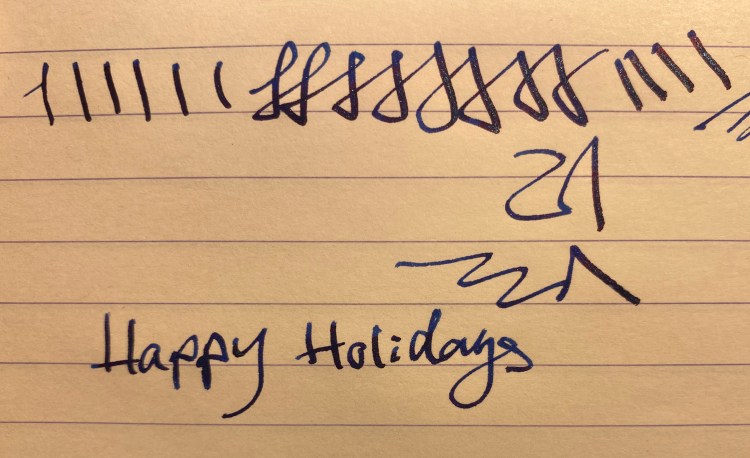
Turns out that my first guess was right. Day 25’s ink is Diamine Happy Holidays, and it’s a sheen and shimmer rich royal blue, just like the Inkvent calendar. The blue they chose is beautiful, dark but not so dark that it becomes black. It shades well, even though it’s saturated, and has a red sheen and light blue glitter in it.


You can see the shading. Where the ink pools there’s sheen, and if you shake the ink well before use (including in the pen) you’ll see a good amount of shimmer. I filled a TWSBI Go 1.1 stub with this ink and on Tomoe river paper this ink shines.

You can see the sheen and shimmer best when you tilt the paper slightly.

Even on Rhodia paper you can see the shimmer and sheen:

Diamine Happy Holidays is a lovely ink, and I’m glad that I now have a 30ml bottle of it. Is it the most unique colour in the calendar? No, it’s pretty close to the other four dark blues. However, looking over all of the other colours in the calendar, I don’t think that they could have selected a better ink for the last day.

I loved almost all of the inks in the Diamine Inkvent calendar (apart from Diamine Triple Chocolate). The calendar itself is a beautiful and well designed objects, the tiny bottles were charming (some of the labels had minor flaking problems, but who cares), and the sheer amount of unique inks produced for this is astounding. I know that Diamine said that these inks were made only for the calendar, but I would be glad to see some of them re-issued in larger bottles. If Diamine issue another calendar next year I will definitely buy it, probably even if it has the exact same ink colours. The Diamine Inkvent calendar is one of the best stationery products of the year, and certainly one of the most entertaining ones.