January 2024 in Reading

I decided to try and create monthly reading reviews of what I read instead of individual reviews or a giant yearly reading list post. Here’s what I read this January:

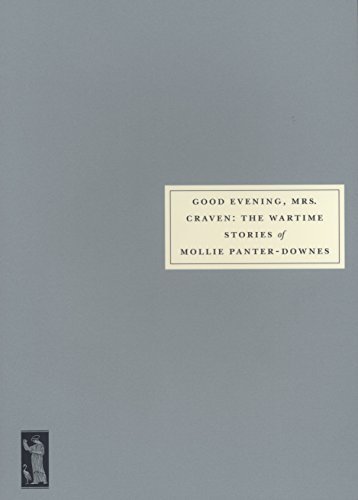
Good Evening, Mrs. Craven: The Wartime Stories of Mollie Panter-Downes, by Mollie Panter-Downes

A collection of very well written realistic short stories mostly about British women during WWII. Mollie Panter-Downes was a prolific and long time contributor to the New Yorker, and wrote both fiction and non fiction pieces for the magazine. This collection is bookended by two of her “Letter from London” non-fiction pieces, one from the beginning of WWII and one from the end. In between are 21 gems of short stories, all very realistic, all showing aspects of the war rarely discussed. Panter-Downes shows the great upheaval in British society at the time, both in the role of women and in the class system. She is sympathetic to her characters with all their flaws and foibles, and you grow to love them over their brief appearances. There are hints of dry humour, wonderful characterization, and an exploration of character that is both tied to Britain during WWII, and yet still universal. Highly recommended, even if you’re not a fan of short stories or historical fiction.

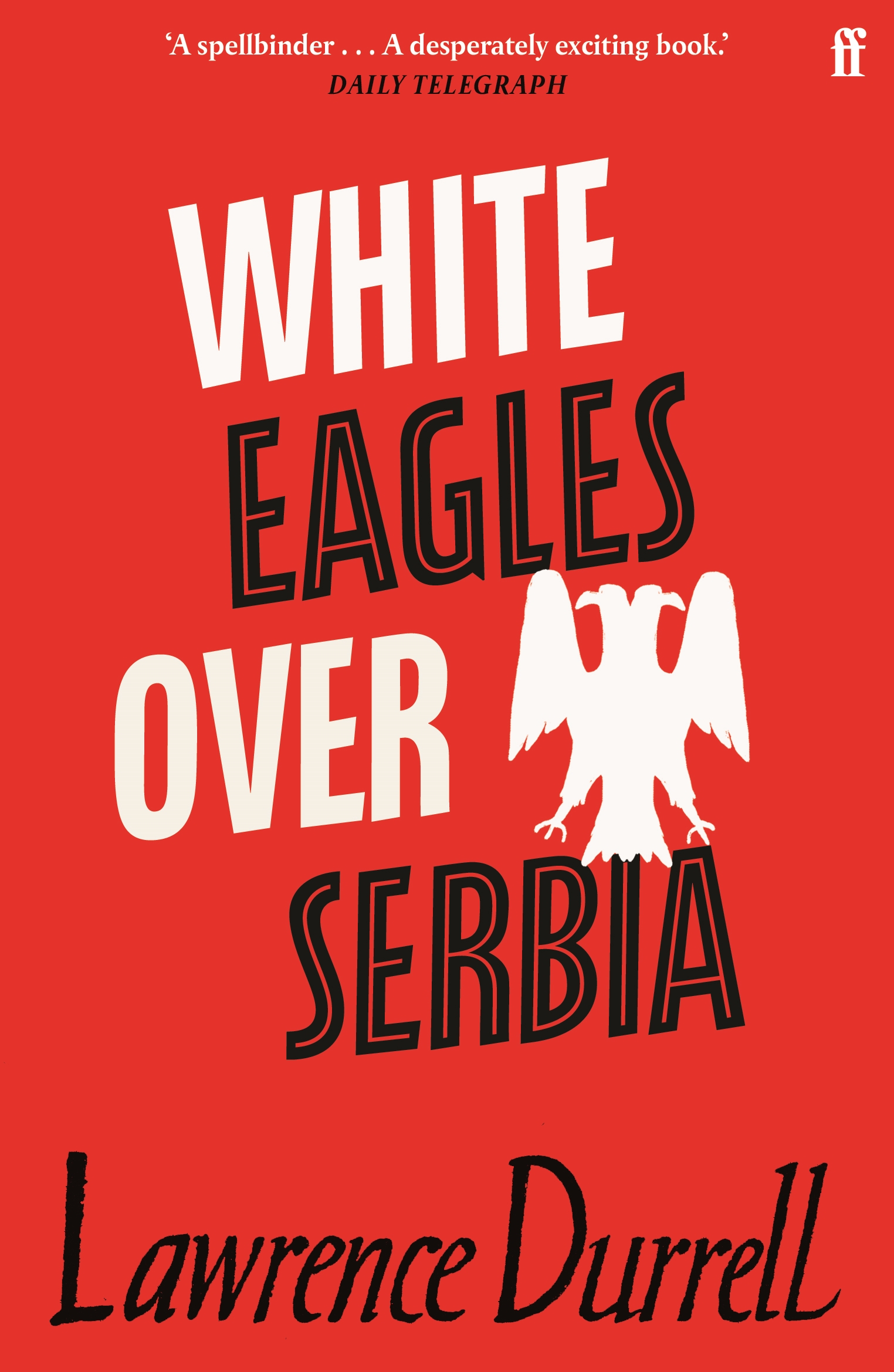
White Eagles Over Serbia, Laurence Durrell

Laurence Durrell started his career as a writer writing poetry, and it shows. The descriptions of landscape and character here are stunning. Never have I read a spy thriller that is written like a Literature with a capital L on the one hand, yet is still supremely entertaining and exciting to read – and very realistic.

Durrell is an excellent writer, and White Eagles is based on his experiences working for the British Foreign Office. The book is not flashy, it’s not high stakes, and it reads like something that could actually happen. The main character, Methuen, is a reluctant, tired hero spurred to action by his love of fishing more than his love of danger and intrigue. The descriptions read like poetry, and the characters are all individual gems – none of them are perfect, none of them are heroic, they are real people in very real situations. 
I wish there was a series of Methuen books (there isn’t), and I recommend this even to those who normally don’t read Cold War era spy thrillers.

Ragtime, E.L. Doctorow

Set in the New York area at the turn of the 20th century to the syncopated beats of ragtime, Ragtime is a tour de force of modern writing. The first part of the book is slightly overwhelming, as Doctorow takes us with lightening speed and fast cuts through many luminaries of New York city during the early 20th century, and intersperses them with the story of a wealthy WASP family, a Jewish immigrant family and a black family to be. The cuts remind me of a Wes Anderson movie, and it takes a while to realize that the narrator is actually creating a ragtime with his description of the events: the emphasis on seeming minutiae is deliberate, and the juxtaposition of things that don’t go together is purposeful. You feel like all the books you’ve read so far have been horse drawn in comparison to this piece, and suddenly you’re speeding your way on a model-T.

Very original, not an easy read, but highly recommended.

Note: the narrator speaks in the voice of a reporter from that era, and hence there’s a lot of the N-word (and worse) in this book.

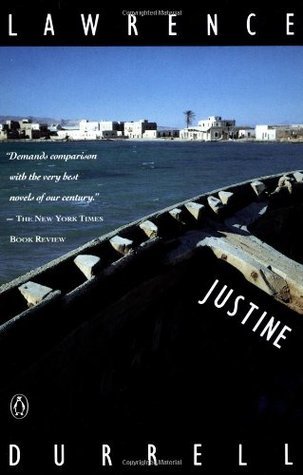
Justine, Lawrence Durrell

The first of Durrell’s Alexandria Quartet of novels.

Some books are easy to review, but this one isn’t. I’ll try to do it justice, but reading Justine was an experience difficult to summarize in words.

The good – the writing is exquisite. Durrell is a phenomenally good writer, and he’s at his best when bringing Alexandria to life. Alexandria itself appears to be the main character here, and it’s a fascinating portrait of the city during the ’30s. Durrell is doing interesting things with narrative structure here, and while it makes following along difficult at the start, the narrative builds up in layers over time. You aren’t viewing the story of the four lovers chronologically, but rather through the reminiscences of the narrator, as things come to his mind and gain importance. Thus you survey the scene several times from different angles, through the growing understanding of the narrator. It’s a fascinating narrative structure, and it adds nuance and interest to the story, and fits well with Durrell’s evocation of Alexandria.

The bad – the characters aren’t quite there. They remain ghosts of themselves, mythical creatures, never becoming palpably real. The only exception is Scobie, a character that seems to have been created as a caricature of sorts, a comic relief, and yet is the most fully realized character in the novel. My guess is that as we are returning to the same characters from different points of view in the following novels of the quartet, that this issue may be resolved.

The ugly – whether these are Durrell’s views or his narrator’s views, Justine is rife with misogyny, homophobia and whiffs of racism and antisemitism. The novel was written in the ’50s and its views on homosexuals were likely advanced for the time, but they’re still terrible. There’s also depictions of child prostitution, prostitution, and mentions of slavery that seem perfectly fine with the narrator and the people around him.

Justine is a difficult book to read, both for the narrative structure, which is disorienting at first, and the way it jars on modern sensibilities. It is well written and intriguing enough for me to give the rest of the Alexandria Quartet a chance.

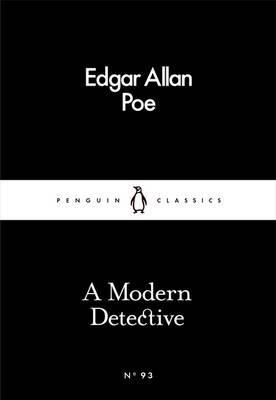
A Modern Detective, Edgar Allan Poe

This is a mini collection of two short detective stories featuring C. Auguste Dupin, the first fictional detective.

Poe is pretty talkative here, and his detective, Dupin, is a long-winded, charmless, cerebral Sherlock Holmes type. The cases discussed are interesting, and the second story in this collection was inspired by a real unsolved murder case. The characters, though, lack charisma, mystery or charm, and the reader is left wondering why they ended up spending time with them.

The detecting techniques are more primitive than those portrayed by Conan Doyle, and they are magnificently padded with paragraph upon paragraph of Poe delighting at his protagonist’s cleverness. A full third of the first story is skippable without missing a beat, and the second one fares much the same. What Poe does do well is evoke an atmosphere of gothic horror around both cases. What he utterly fails to understand (but Agatha Christie knew so well) is that the heart and interest of a detective story is the characters in it, not so much the analytical prowess of the detective at large. Holmes, Marpel, Poirot, and Father Brown are all first and foremost compelling characters. Dupin has not earned his place among them, and is remembered merely for being the first, not (as Poe would have you think) for being the best.

Dull, overly wordy, not worth reading, despite its historical importance.

That’s it for January 2024. What interesting books did you read this month?

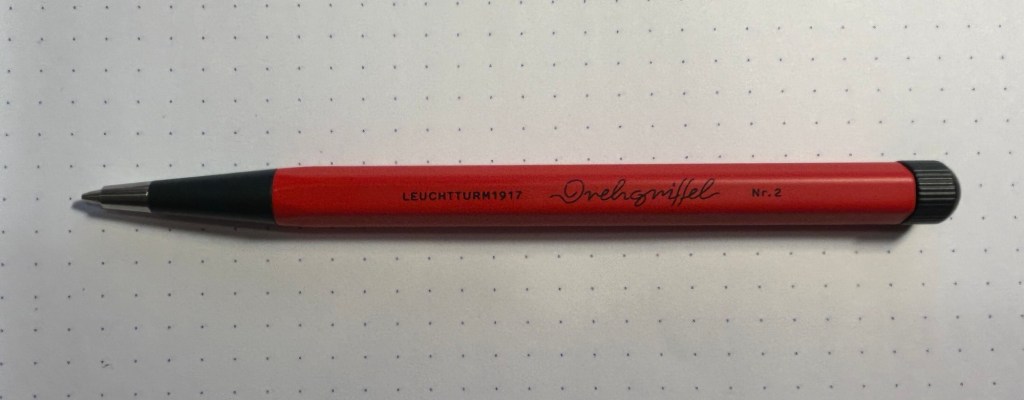
Leuchtturm1917 Drehgriffle Nr. 2 Mechanical Pencil Review

The Leuchtturm1917 Drehgriffel Nr.1 is a charming little pen that comes with either a gel refill or a ballpoint refill. The Drehgriffel Nr. 2 is its pencil counterpart: a short but hefty mechanical pencil with a twist mechanism that comes in a variety of colours. My pencil is a bright red and dark grey one, and it has quickly become my most used pencil by far.

Small but mighty, the Drehgriffel Nr. 2

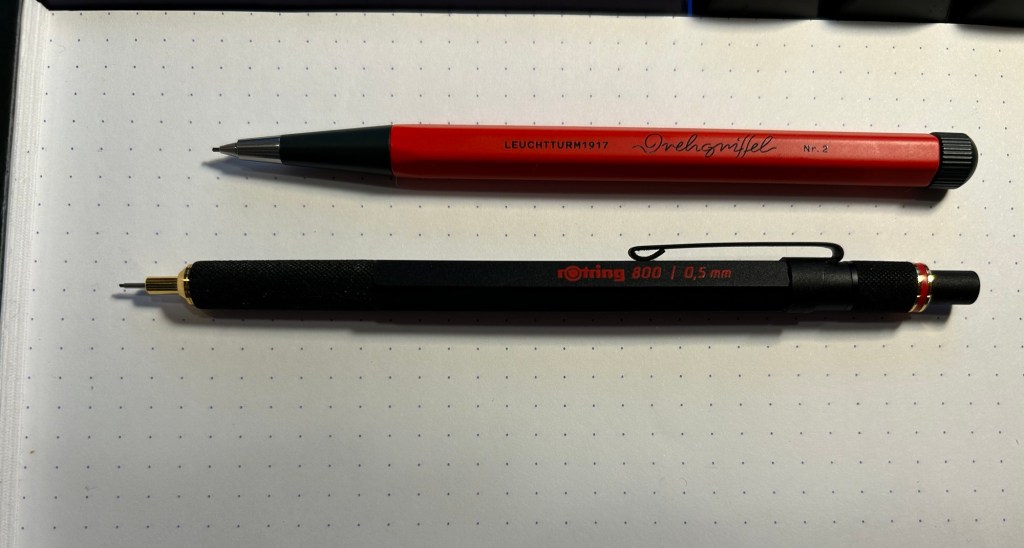
The pencil is shorter than other mechanical pencils, but as it’s an aluminium bodied pencil with a steel tip it has some weight and heft to it. It’s lighter than the Rotring 800, and the weight is balanced towards the tip so it’s very comfortable to use.

Drehgriffel Nr. 2 on top, Rotring 800 on the bottom

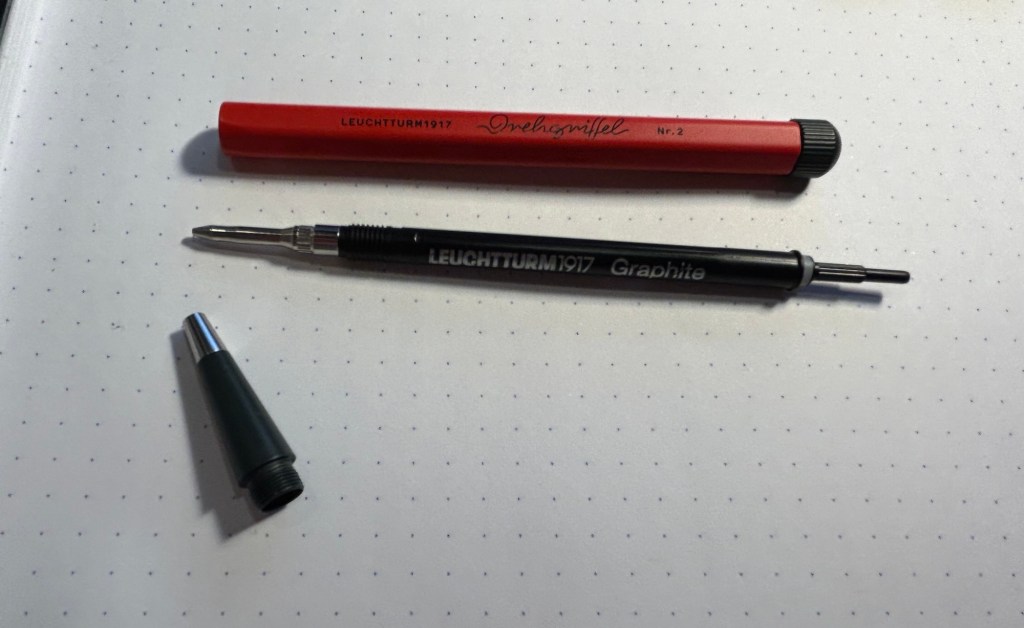
The pencil mechanism is proprietary to Leuchtturm, and it’s a pretty unique affair. You give the nob on the top a quarter twist and then you hear a satisfying click and the lead advances. The pencil mechanism looks like a gel ink or ballpoint refill, but the little pole on the top pulls out and you can add more pencil leads to the pencil that way. You get to the mechanism through unscrewing the front cone tip of the pencil.

The Drehgriffel Nr. 2 and its mechanism

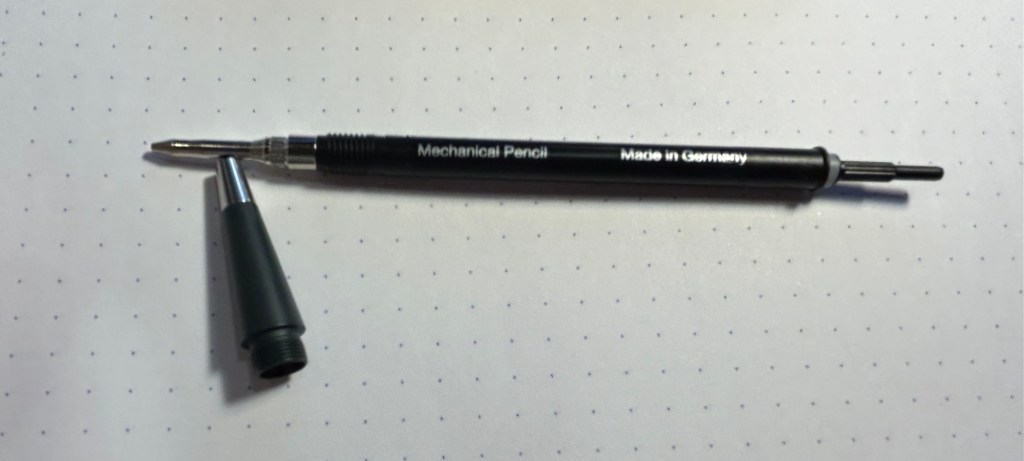
Here’s a closeup of the mechanism (my camera had issues focusing on the lettering):

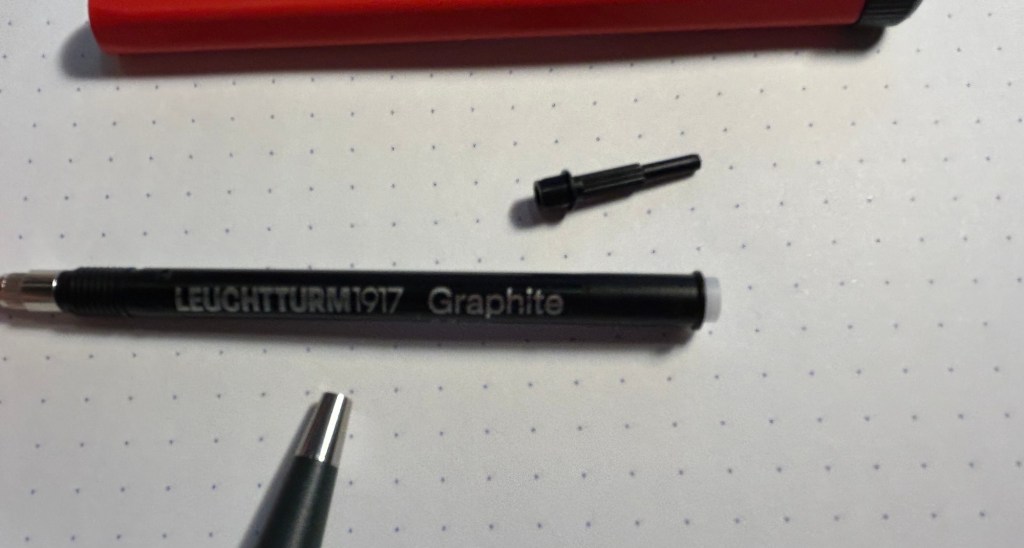
Here you can see where the leads go in:

The Drehgriffel Nr. 2 is a 0.7 mechanical pencil and it comes with HB leads inside. It’s a great pencil with a classic, sleek design, and a very solid and unique mechanism. The size is plus as it makes it ideal for everyday carry, and it doesn’t have the silly little eraser that certain mechanical pencils have and is always terrible. The only minus to this design is that to add more leads to it you basically have to take the pencil apart. That’s no big chore, but the end bit (the little pole thing) is very small and would be easy to misplace. I’d suggest doing the refilling in batches of a few leads at a time, and being careful to not lose sight of the mechanism end bit.

Otherwise this is an excellent mechanical pencil, a solid and handsome little workhorse that’s a joy to use and would make for a great gift even for people who are not great pencil lovers.

Quick Update

My dad is going through open heart surgery next week to replace his aortic valve and repair his aorta. It’s a serious surgery. I’ve been lining up so posts in the buffer for the next two weeks, but my posting schedule may be erratic in the near future.

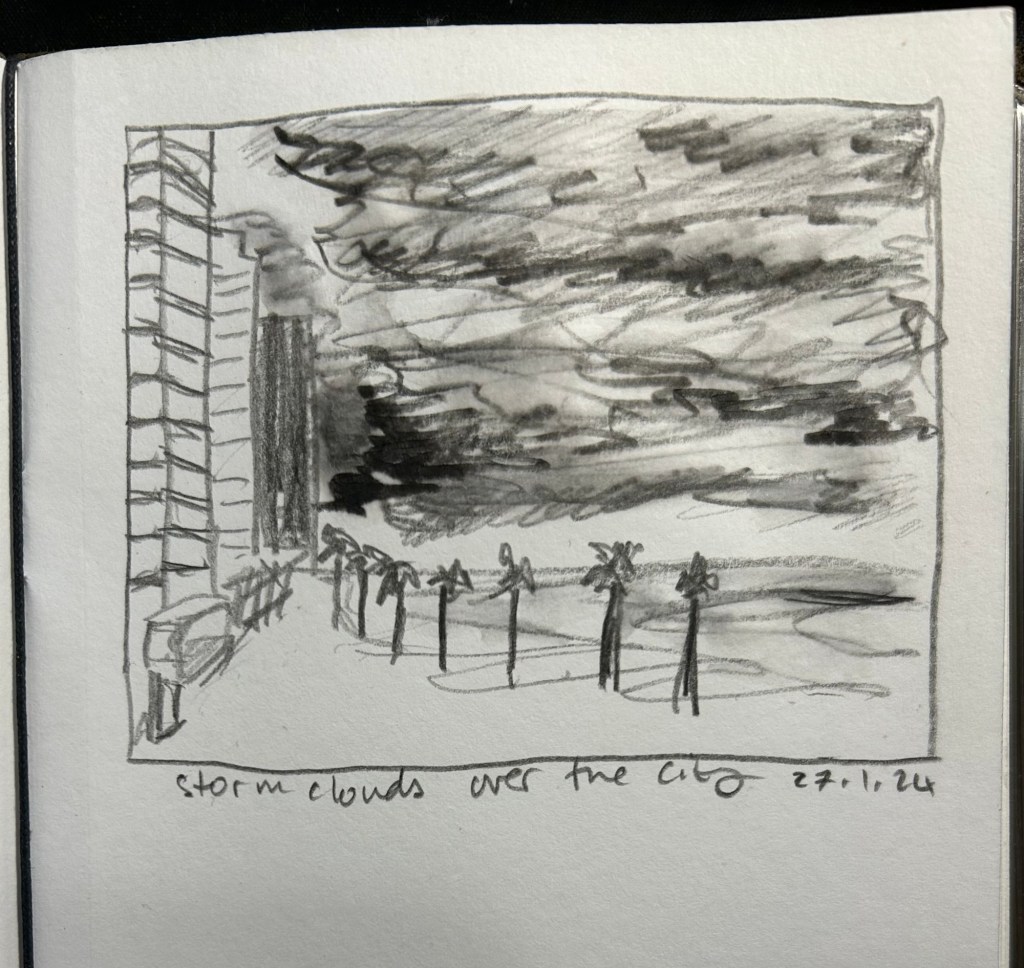
Sketch on Midori TN sketch paper with a Faber Castell 4B water soluble graphite.

Adventures in Time Blocked Planning

With time blocked planning the idea is to break down your day into blocks of time where you do things. The point is to structure your day so that you’re never faced with the question of “what do I do next?” Instead you sit down ahead of time and block out large sections of time where you do a specific large task, or bundle together a group of small tasks. You don’t block the day out into a minute by minute plan, but instead work in blocks of at least 30 minutes and usually 1-2 hours.

The idea isn’t new, and I haphazardly gave it a try when I was a student, and not surprisingly I failed spectacularly at it. It was only very recently when I decided to give it a serious try. The reason I decided to give time blocking a try was to solve a problem that I think is pretty common: I’d run out of steam about two-thirds into my day and end up just vegging out in the evenings, not accomplishing what I wanted, not even consuming the sort of media that really interested me. There’s only so many decisions my mind could make throughout the day, and late in the afternoon I would run on empty.

Since I was already “front-loading” my day (i.e. doing the really important work first thing in the morning or as early as possible) it was pretty easy to see the benefit of deciding what to do at a given point of time early on in the day, or even the night before. My issue with time blocking in the past had been that my work day is inherently unstructured. I may plan to work on something in the morning, but then a slack message or an email comes in, or someone bursts into the room with a problem and suddenly I’m working on something completely different.

Here, however, is where maturity kicks in. When I gave time blocking a chance years ago, I didn’t really take it seriously as an approach to work and life. Once something interrupted my day (and something always interrupted my day), the plan went out the window never to return. The plans rarely survived until lunchtime, and very quickly I decided that there was little point in time blocking for people like me. What I failed to realize at the time was that the majority of people are people like me: we live in a world where we are constantly being interrupted, and rarely does the day end in the way we envisioned it at the beginning.

Given this new found realization, and the realization that some very smart, very accomplished people whose work I follow use time blocking successfully and consistently, it was clear that the issue wasn’t with time blocking itself but with how I was approaching it. So I decided to make a more consistent, serious attempt to use time blocking for at least a month or two and see where it gets me.

I’m still very early into the process, but I decided to write about it as I go along, so I’ll have a record of how I tweaked things, and for those who like me, wanted to try time blocking but have failed in the past. Maybe my successes and failures will help them in their journey.

The First Mistakes

I started out with two mistakes, one easily fixed and another a mistake that I’m still working on correcting. The first mistake was trying to create separate time blocks for my work day and my “home day”. That failed spectacularly. Lesson learned: you need to follow one timeline, one plan, from waking up until going to sleep. If you use two different plans you are setting yourself up to fail because you’re creating two points in the day where you have to switch plans. While the morning switch may be relatively easy, by the time you’re off work you don’t feel like opening a different notebook or calendar and seeing what it is exactly that you’re supposed to be doing right now. I kept my home plan on a Rhodia dot pad and my work plan on a Moleskine squared notebook, and it just didn’t work for me. I had to carry two different plans with me, I had to reference and cross reference them, it was a mess. Now I have one plan per day, on a Rhodia dot pad.

The second mistake is one that I’m still working on correcting, which is what do I do when things don’t go as planned. What I should be doing is taking 5 minutes and replanning the rest of my day basically from that point onwards. What I currently do and doesn’t work well is either try to get back to the plan the moment I can (at which point things start to fall apart pretty quickly), or try to make only minor adjustments to the plan. The reality is that if there’s a significant break in my plan (i.e. something that takes more than 30 minutes to deal with), then I need to take a few minutes to stop and completely reassess my day. No, I will not be able to fit everything I planned into it now. Yes, my energy reserves are most likely more depleted at this point than I originally planned. Rather than trying to stick to the plan and crashing and burning, I need to be kinder to myself and look at what’s left of my day with fresh eyes. “That production outage took a lot from me, so let’s switch things up so I have a lighter workload until I’ve had a chance to recover, maybe even schedule a significant break here. Then rebuild my evening so I also have a bit more recovery time then – add a meditation session, or more reading time, etc.”. This is something I’m currently working on doing consistently.

The First Successes

While I’ve been time blocking only for a short time, I have already seen the value of this system. I’m getting much more done, and I am able to dedicate long stretches of time focused on meaningful work. I batch emails to the beginning and end of the day, and slack messages only to the times between large blocks of deep focus. I haven’t had an episode of mindless YouTube watching in the evenings since I’ve started. I’m reading more, journaling more, meditating more, spending more meaningful time with friends and family. I’m also being much more realistic about my goals. Once you start putting things in the context of the hours you have in the day, it becomes easier to assess how much you can get done in a given day.

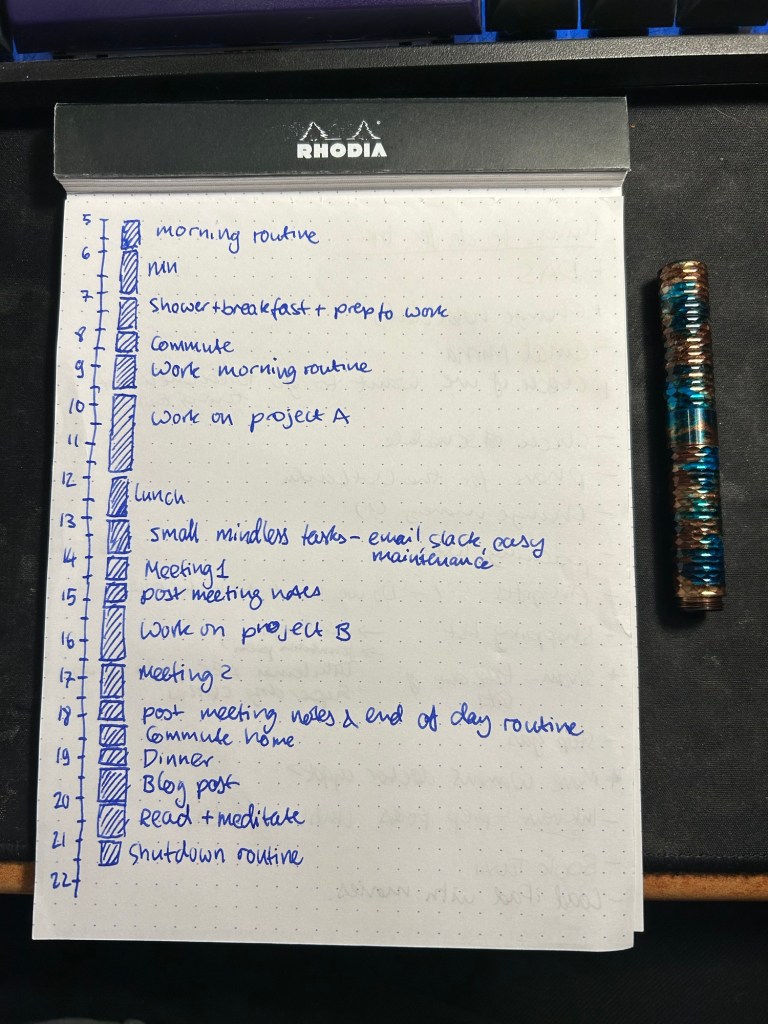
A sample of a time block plan.

It’s not just a result of the time blocking itself, of course. It’s also the way I’ve structured my year, a commitment to deep focus and digital minimalism which mean no social media, no mindless media consumption, more reading and more deliberate practice of the things that matter to me. I’m also far from reaching a point where the way in which I time block my day is stable, well-defined routine. Things are still shifting around as I’m recording in my journal what worked and what didn’t work. While I’m not looking for perfection, I do want to reach a point where I have a system that works for me (and not I for it), and that helps me better shape my days.

I’ll be writing more about time blocking in the future, whether my experiments with it succeed or fail. If you’re giving it a try or use time block planning regularly I’d love to hear your thoughts on it in the comments.

Journaling Series: My Current Journaling Setup

I realized that the last journaling sample that I uploaded is three years old and my setup and journaling format changed considerably, so I decided to post an update.

I currently use a Stalogy 365Days B5 grid notebook in light blue. This is the second such notebook that I’ve used, the previous one being black. Before that I used Moleskines, and it’s quite possible that I’ll return to using Moleskines, but currently I enjoy both the smaller format of the Stalogy B5, and its fountain pen friendly pages. The notebook is thick but the pages are thin, so there’s show through (and sometimes bleed through) on every page. It doesn’t bother me, but if it bothers you then you’ll need to either write on only one side of the page or choose a different notebook.

I exclusively use fountains pens in this notebook, whatever is currently inked, though I prefer fine nibbed pens.

My journaling format has also changed, and it’s now as follows:

  • Gratitude – I tried writing this in the evening but I found that it works better to write this part as early as possible in the morning. Sometimes it’s divided into sections (health, family, work, home, etc), but it’s usually a bulleted list of around 4-5 things. I try to be specific, and I try to remember even the most mundane of things. Especially during tough times it’s super helpful, and it also serves to get me journaling early in the day. Some days I only get this done, but those days are rare.
  • Notes on what happened during the day. I used to try and be a completionist, but that was just a source of frustration and eventually gaps in my journaling practice. Instead I now journal only things that are meaningful, which means that I journal less to record the day and more to reflect on key moments in it. I try to include a story of some kind (like seeing something interesting on the bus drive to work), and a reflection or insight of some sort (for example, my thoughts on someone being fired, or what the news appears to do to people’s mood and patience).
  • I end with something out of Acceptance Commitment Therapy (ACT), which is a note on how I tried to advance each of my chosen values (for me it’s self development, courage, creativity, fitness and friendliness). This helps me manage my PTSD, especially during tough days. I know that I’ll be keeping myself accountable in the evening, so I try to keep them top of mind throughout the day.

I journal in the morning, and usually also once or twice during the day and once in the evening. I’m trying to develop both a shutdown routine and a task switching routine, and use them both as opportunities to journal and reflect.

Apart from these, once a week ever since the beginning of the year I reflect on how well I achieved my goals for the week, and once per month I reflect about the month. At the end of the year I review the entire year, and that’s usually the longest entry in my journal for that year. I tend to write 2-3 pages a day, though some days it’s just one page, and some days it closer to 5-6.

Sometimes I sketch in my journal, but it’s rare, and unlike my Moleskines, I don’t glue things in my Stalogy (so not ticket stubs, tags, stickers, business cards, etc).

Sketch sample on the right, the blotting paper on the left, and the fountain pen I used.

I keep a folded piece of A5 blotting paper in my journal, as the ink takes time to dry in the Stalogy, and without it the whole page becomes a mess.

Dip Pens Part 2: Ink and Watercolour

This time I decided to combine testing out a new (to me) India ink, a new (vintage) nib and watercolours. The ink is US made Higgins Black Magic. The bottle shape is unique, and it’s a plastic bottle, not a glass one like my British made inks. While the very wide base of this bottle does cut down the possibility of you accidentally tipping it over, I don’t like the bottle design. The bottle opening is too narrow and tall, and it’s very easy to get ink on your nib holder and hands this way. The ink itself is less shiny and flows wetter than other India inks that I’ve tried, but that’s not a bad thing.

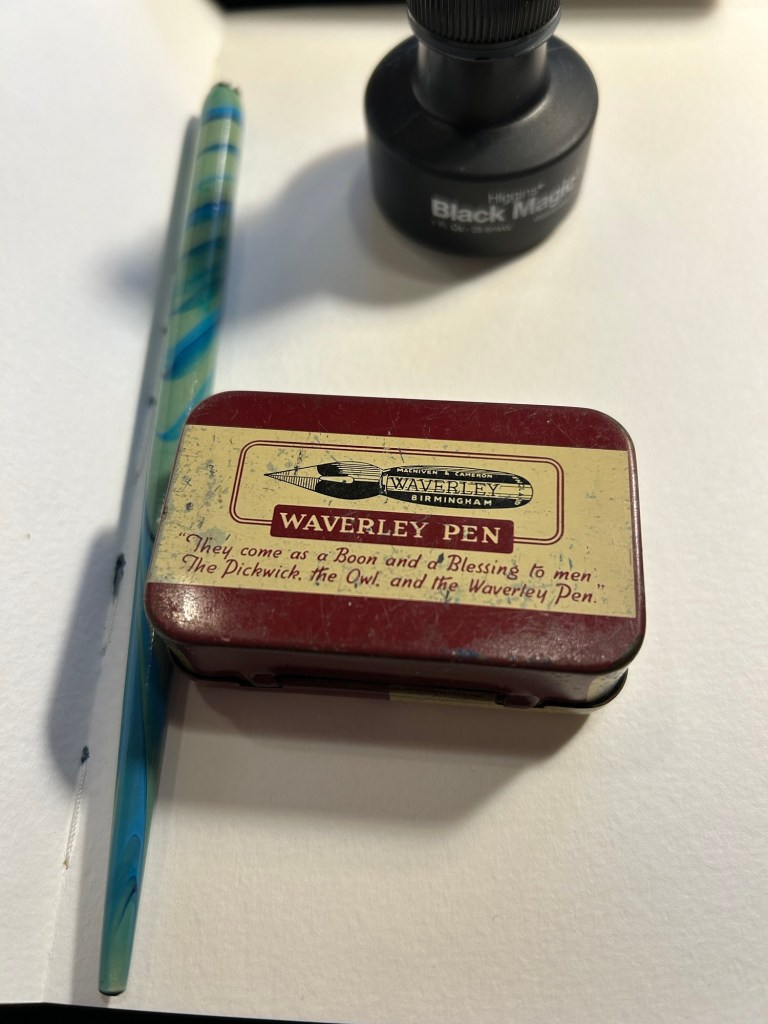
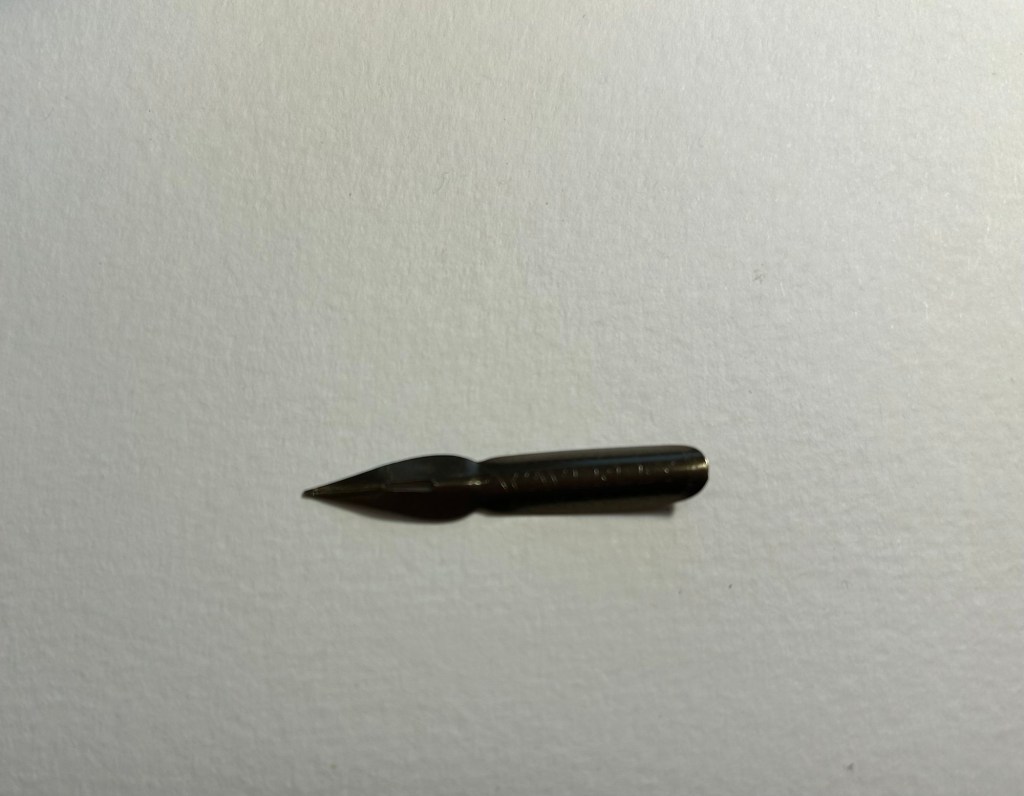
The nibs are Waverley Pen nibs, made in Birmingham (a British steel producing city), and made by Macniven and Camron Ltd.

The tin itself is a delight, with the Waverley Pen advertising doggerel on it (the Pickwick, Own and Waverley were all nibs made by the Macniven & Cameron company). I bought it for a few pounds at Spitalfields market, London, and would have bought the tin even if it was empty:

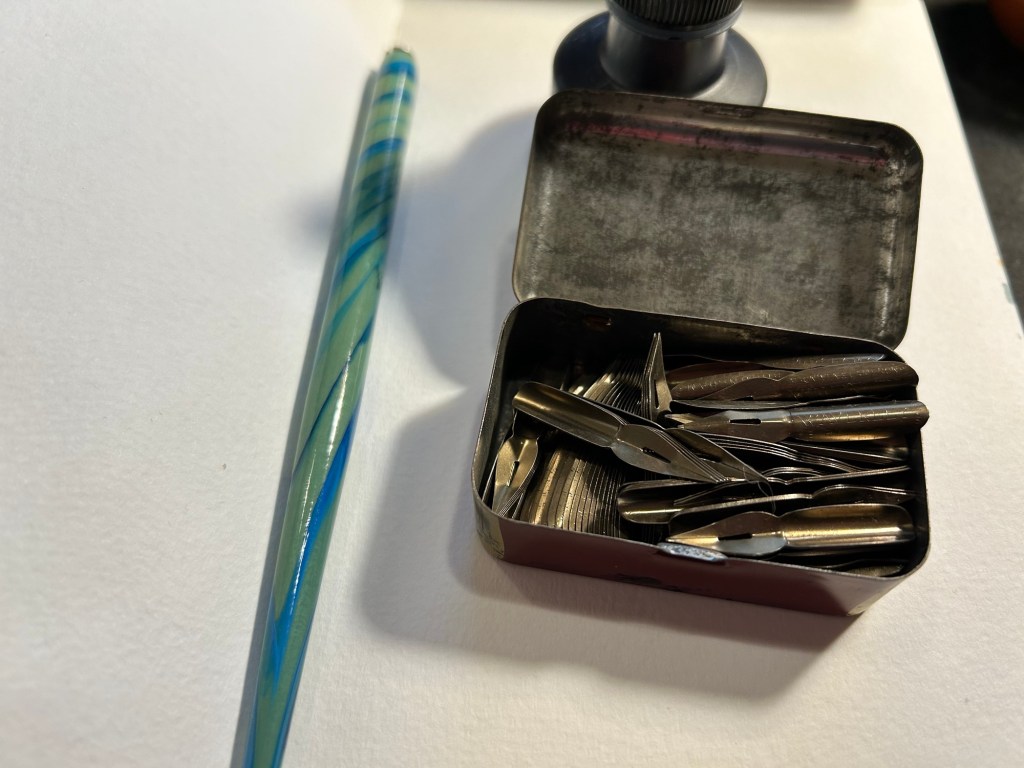
It’s not empty, but rather filled with dozens of Waverley nibs in excellent condition. I took one out, tested its flexing properties (medium flex), and then primed it as described here. To test a nib for its flexing properties you gently push the tines against your thumbnail (don’t ever do this with fountain pen nibs!).

Here’s the nib. It has a bit of kink to it that helps it hold more ink than it otherwise could hold:

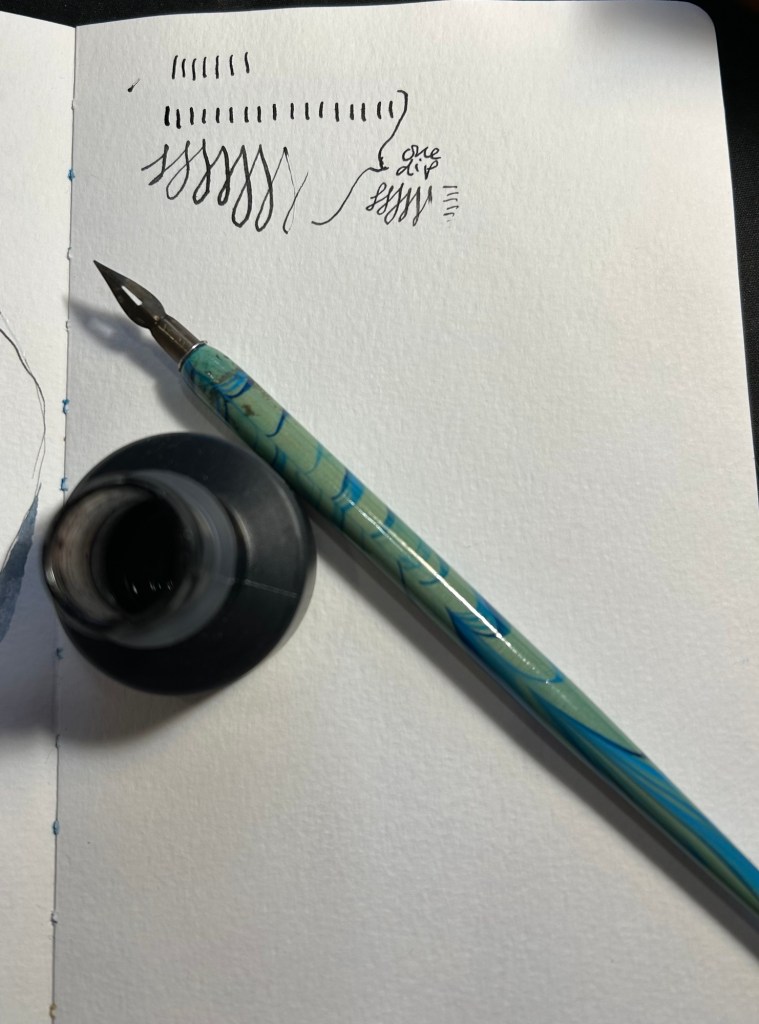
I took one dip and tested out how much ink it holds. It’s quite a lot:

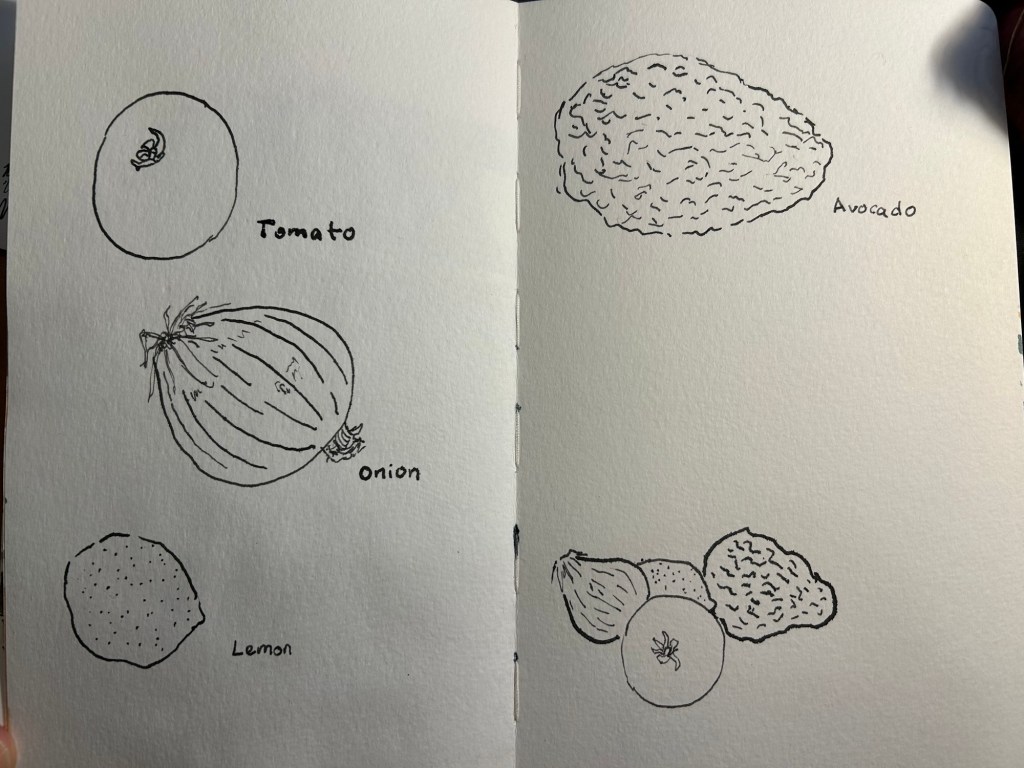
I decided to use it on a Moleskine Watercolour sketchbook. The paper isn’t ideal for dip pens (it’s not smooth and the properties that make it watercolour friendly mean that the ink will spread and feather no matter what), but I wanted to use it with watercolours. As in this case the line sketch wasn’t crucial to me (i.e. it didn’t need to be particularly accurate), I decided to accept some level of feathering and spread for a decent watercolour wash.

Here’s the ink sketch:

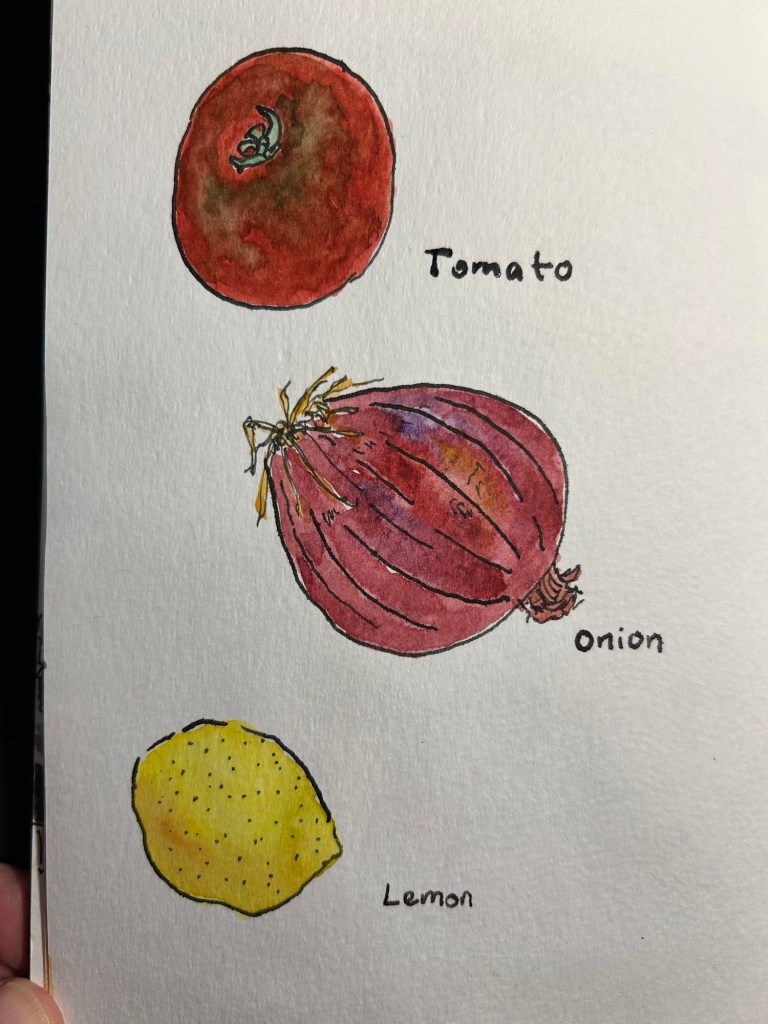
A closeup on the onion sketch shows how much line variation you can get from this kind of nib, just how expressive these nibs are, and some of the feathering and spread that I talked about earlier:

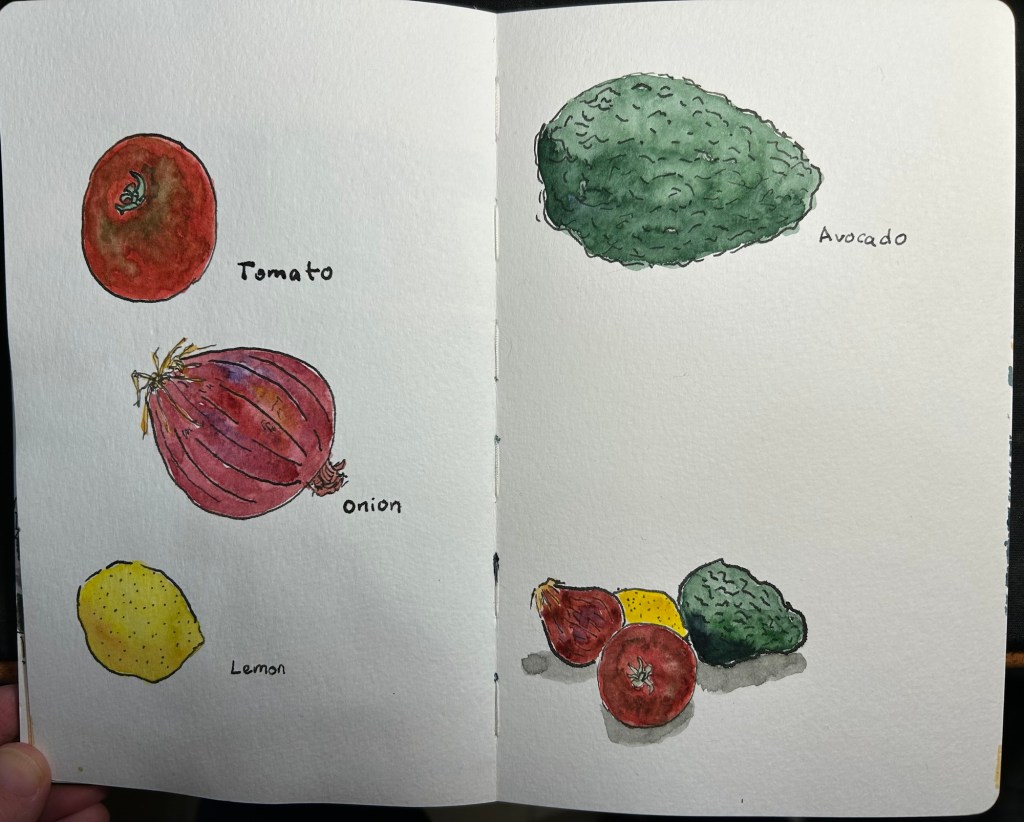
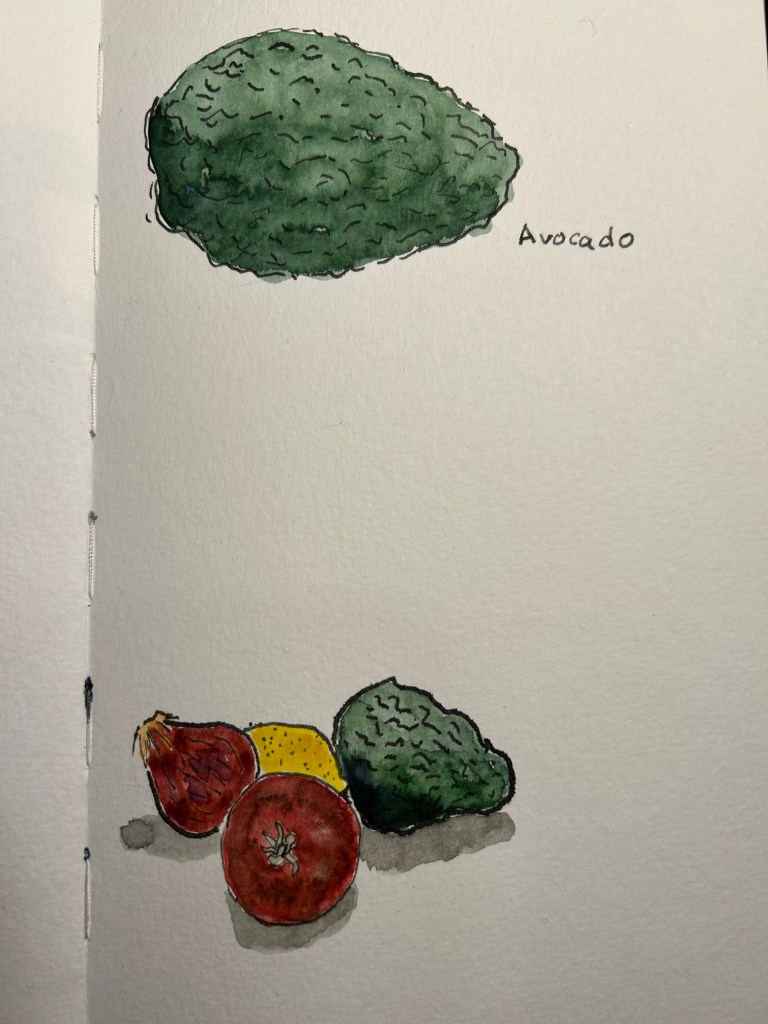
Watercolour brings these sketches to life, and makes the ink compromises worth it:

A closeup on the sketches:

The second page:

The group thumbnail:

There are a few things that you need to remember when combining dip pens and watercolours:

  1. You must let the ink completely dry or you’ll have a ruined drawing, and potentially a ruined brush (if this happens immediately wash your brush well, as India ink will destroy it if left to dry).
  2. The more cotton content in your paper the better the watercolour washes will be, and the worse the India ink will behave. I wouldn’t go over 25% cotton content.
  3. The rougher the paper the better the watercolour washes will be, and the worse the ink sketches will be.
  4. Hot pressed watercolour paper will give you washes with more sharp edges and hard transitions, but will be best for the India ink in terms of smoothness.
  5. Mapping nibs provide less dramatic lines, but they also lay down less ink and so the ink will dry faster and spread less. On the other hand they will snag more easily on rougher watercolour paper.

Have you tried combining the two mediums? If so, let me know how it went.

Dip Pens Part 1: Some Basics

It’s been a while since I used my dip pens, and since I had a project in mind for them, I thought I’d document parts of it here.

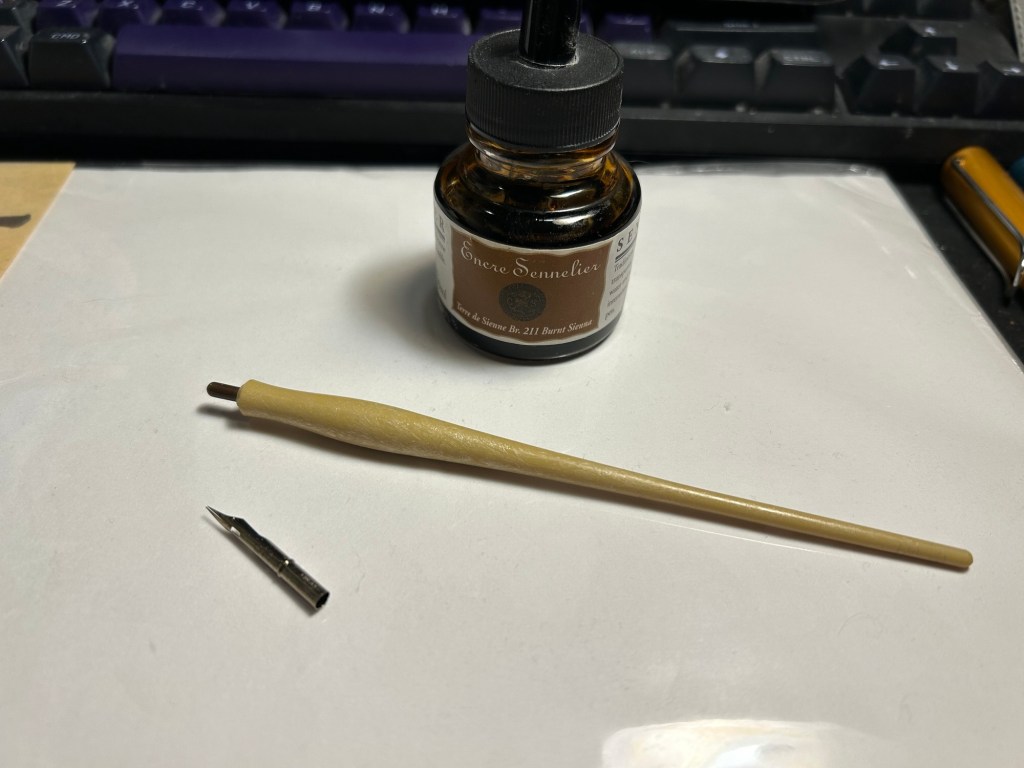
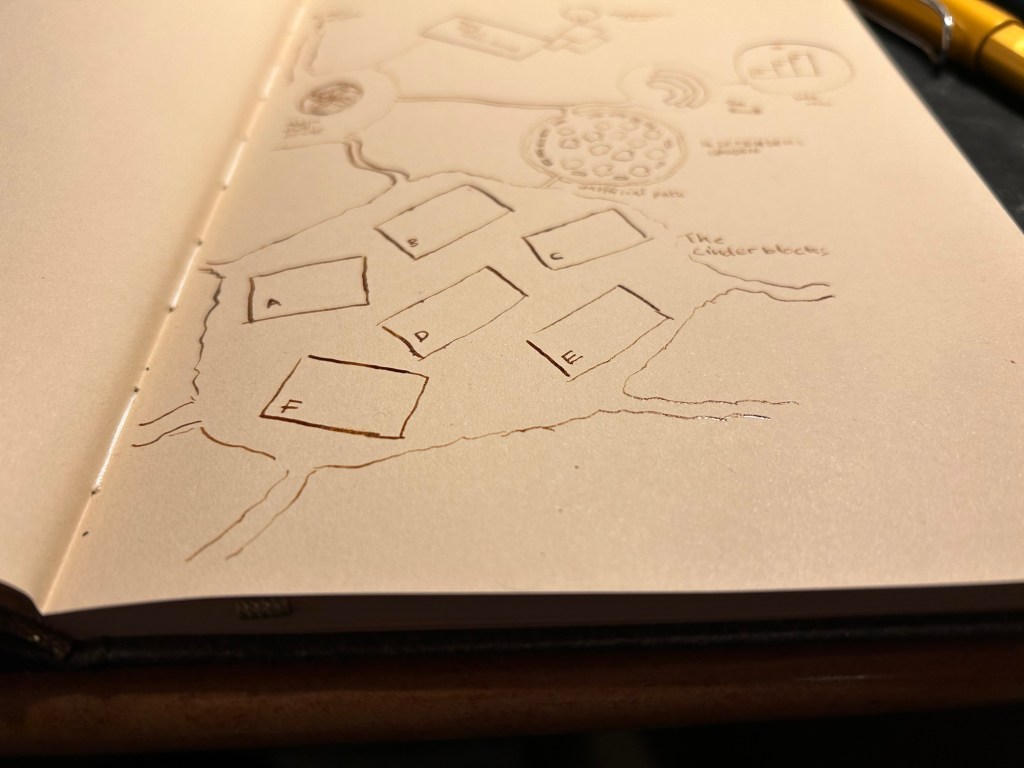
I was looking to draw a map, part of a series of maps for a D&D game. Since I was trying to get a certain look to these maps, I pulled out a mapping nib and a mapping nib holder, and some Sennelier Sepia ink.

The ink is shellac based and meant to be used in dip pens only. If you use it in a fountain pen it will destroy it upon first use. You only need to see how sticky these inks are once to understand that, but most of them helpfully provide warnings on the bottle.

The nib is a Leonardt 801 mapping nib, made in England by the British company Manuscript and purchased, together with the mapping nib holder at Cornelissen & Son in London. They have the largest and best variety of dip nib supplies that I’ve ever seen, and are used by many illustrators and cartoonists. The beauty of dip nibs, however, is that they’re pretty easily and cheaply obtainable. Speedball sells a kit that includes a wide variety of nibs, including a mapping nib, and two holders (a standard one and a mapping one, known as a crow quill).

What’s the deal with a mapping nib? It’s a small, round nib with an end that’s actually a cylinder, and you pop it onto the little peg at the top of the holder. Mapping nibs allow for very thin lines, and yet also a good line variety as the tines are sensitive to pressure.

If you’ve used a fountain pen before and then try to use a dip pen, you’ll likely be surprised by several things. The first is that most dip pen nibs, and mapping nibs in particular, are very sensitive to pressure. The slightest push down will give you more line variation that you’ll get from even the most flexible of flexible fountain pens. The second is that there’s no tipping material. That means more feedback from the page, and that you need to be aware of the directionality of the nib if you don’t want it to snag and spray ink everywhere. This is also why the paper you want to use will be smooth. Smooth surface cartridge paper is your friend.

India ink (the shellac based ink used for dip pens) lays on top of the paper and retains a level of gloss and a dimensionality that you just don’t get with fountain pen paper. You can feel the ink lines with your fingers once the ink dries. The ink dries quickly, and is sticky and staining when wet, so beware of nice clothes and wash your hands well once you’re done.

You can see the line variation and shiny properties of the ink.

The nib itself needs to be prepared before you use it for the first time. New nibs are coated in oil and sometimes with wax before being packaged. This prevents them from rusting, and helps them not stick to each other too much as they’re being packaged. If you use a new nib without preparing it, you’ll be disappointed. It will carry little to no ink, and you’ll find yourself dipping the nib again and again. The map above was made with 4-5 dips only, using a new nib, but one that I prepared.

How do you prepare a dip nib? The simplest and safest way (no, don’t take a lighter to it) is as follows: gently clean the nib with water and dish soap (you can use a soft toothbrush if you want, but it doesn’t really require scrubbing) and then put it in cup with boiling water for 1-2 minutes. Then fish the nib out and dry it very, very, very well with a paper towel. You don’t want to air dry the nib at any point or it will rust.

You can see that the ink is raised above the paper and retains its shininess

You can use fountain pen ink with dip pens, but I don’t recommend it. Fountain pen ink is thin and water based, so it doesn’t cling to the nib like India inks. You’ll be dipping a lot more often, and your results won’t be as good. If you plan on using a dip pen to test out fountain pen inks, know that your test will only show the colour properties of the ink but not its flow (wet/dry). Also don’t use a mapping nib for that – mapping nibs are best used for small sketches, maps, things that require very thin lines and some line variation.

When I work with a dipping nib I keep the nib constantly wet with ink (not water!), and immediately when I’m done I either wash the ink from the nib and dry it very well, or I wipe the ink off with a cotton rag if I just plan to take a short break. Ink left to dry on the nib may clog it (particularly with mapping nibs), and soaking a nib in water will cause it to rust.

You may find dip nibs in flea markets for very cheap, usually in a pile in a little box. Check if they aren’t rusted (don’t buy rusted nibs), and then clean them as you would a new nib (water, soap, heat).

I’ll be going over various kinds of India inks and various kinds of nibs in future posts, but in the meanwhile if there’s anything that interests you in dip nibs let me know in the comments.

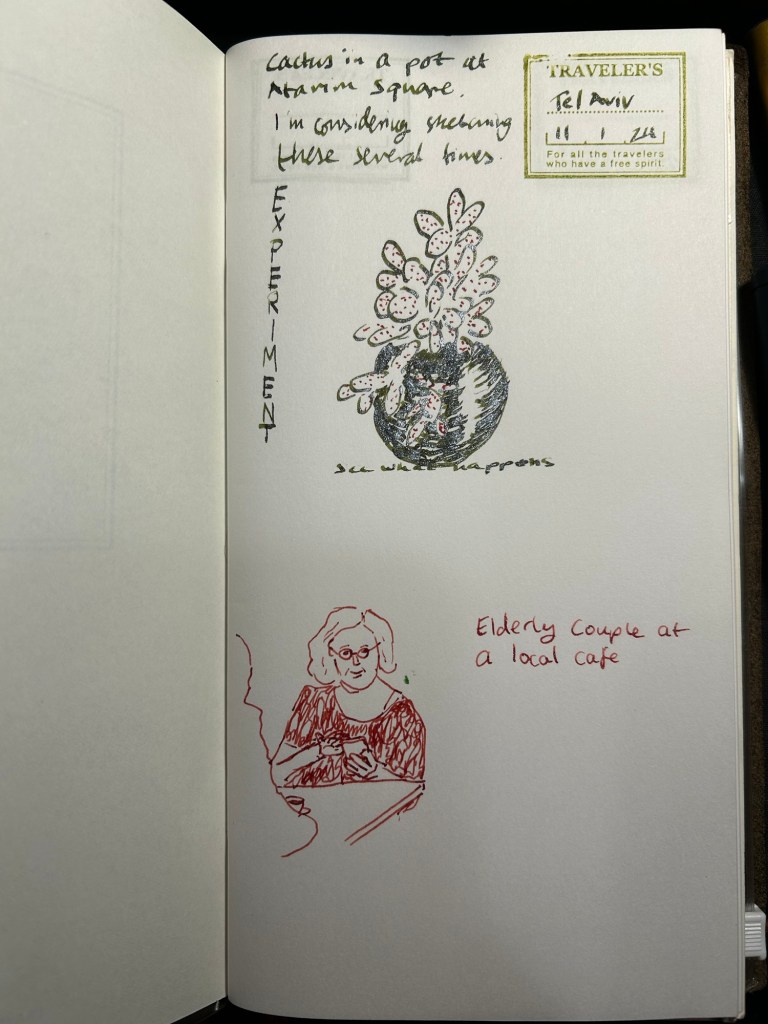
Two Traveler’s Notebook sketches.

I’m still working my way through the Inkvent inks (9 pens left to write dry), and I’m trying to sketch more even on busy weeks. So I dusted off an old Traveler’s Notebook that I set up years ago and didn’t fill, and I started playing with fountain pens.

My 2023 Year in Reading

I read 35 and two half books in 2023, and for various reasons this year’s reading contains more detective novels than usual. The topics and style range widely, so there’s bound to be something for everyone in this list. So make a nice cup of coffee or tea and sit down for a bit of a long read.

Note: the links are to reviews I wrote in my blog or to Goodreads. No affiliate links whatsoever here.

Fiction

The Murder on the Links, Agatha Christie

The second appearance of Hercule Poirot, Christie’s “little Belgian” detective. Christie weaves a clever plot here, particularly around various character pairings. If you’re looking for a satisfying light read, I recommend picking this book up. Bonus tip for Christie books: they can often be found at your local library or for very cheap at second hand bookshops.

Murder on the Orient Express, Agatha Christie

If there’s one Agatha Christie mystery you need to read, it’s this one. I’ve read this book several times before but return to it when I want to see a master at work. Christie is perfectly polished here, and this book is always a joy to read.

A Gentleman in Moscow, Amor Towles

Delightfully charming, polished and delightful I highly recommend this book for everyone, even if historical fiction isn’t your cup of tea. Towles doesn’t create a realist novel, but rather casts a fairytale that is a joy to read, and yet still reminds you of the time and place it takes place in and the implications of that on all the characters at play. One of the best books I read in 2023 and one that I keep remembering and will likely return to.

Offshore, Penelope Fitzgerald

Offshore won the Booker in 1979, and while it’s a well written novella length novel, it hasn’t stood the test of time. Fitzgerald writes about houseboat dwellers on the Thames, people that are in between land and water, outsiders to London and its society and yet still moored to it. I think that to readers in 80s this book would have resonated more, but somehow it seemed to remain on the surface level, detached and amorphous to me. Not a book I would go out of my way to read.

Drive Your Plow Over the Bones of the Dead, Olga Tokarczuk

Wow. The best book I’ve read this year by a large margin. Tokarczuk is an astoundingly good writer and this is a phenomenal book that I highly recommend. It’s not a light read but it’s a very, very good one.

The Books of Jacob, Olga Tokarczuk

This is one of the two books that I stopped reading halfway through. It’s exceptionally well written and researched but I just couldn’t bring myself to finish it at the time for personal reasons. I do, however, see myself returning to it at some point.

Miss Pettigrew Lives for a Day, Winifred Watson

This book is featherweight and frothy, a little ditty about a middle-aged governess that finds herself in the middle of the flashiest, most debauched group of young people you can imagine. It was written in 1938 so there’s racism and favourable talk about wife abuse here, and I’m not at all sure that this servants’ fairytale is worth it. It’s well written, but loses its charm whenever the naughtiness is coloured by its racism and sexism.

How Steeple Sinderby Wanderers Won the FA Cup, J.L. Carr

I read Carr’s wonderful “A Month in the Country” and I wasn’t disappointed by this fairytale. Yes, it’s about football. No, you don’t need to know a thing about the game. Do read the book’s introduction, though, as it does clarify and highlight a few things worth knowing.

This is Ted Lasso decades before Ted Lasso, but as Carr wrote it there’s also a touch of melancholy to the affair. It’s a charming little thing that will win your heart over much like its bunch of villagers win the coveted FA Cup. Like “A Month in the Country” this little book is an ode and a slice of brilliantly clever comedy. It reminded me of “Dad’s Army”: poking fun at its characters while deeply loving and respecting them, with a mist of nostalgia over it all.

All Systems Red, Martha Wells

For years this has been on my list and highly recommended by several friends and boy were they right. Wells created one of the best written, most distinct voices in fiction (yes, fiction, not just science fiction) in her murderbot. It’s a funny story about a misanthropic android saving a bunch of human scientists, but it’s also a tale about who gets to be human and who doesn’t, how fiction creates humanity, the future of corporations and how people learn to trust each other. Even if you don’t like science-fiction, this is a must read. If you don’t end up loving murderbot in the end, I suggest you check your pulse. They will make you laugh and they will make your heart ache for them, and you’ll want to be a better person to deserve to live in a world where murderbot exists.

Artificial Condition, Martha Wells

The second of the murderbot series, this one introduces ART. Murderbot teams up with a research transport with an attitude and I learn that I am in fact capable of loving this series even more than I did before. Wells deals so well with the themes of friendship, trauma and humanity as well as fiction as a bonding medium between strangers that it’s astounding. Again, even if you’re not a science fiction reader, this book is for you.

Rogue Protocol, Martha Wells

This isn’t as good as the first two murderbot stories, but is still very good and worth reading. The humour is still great, the questions about humanity are still there, as is the commentary about the growing power of corporations.

Exit Strategy, Martha Wells

This is the fourth murderbot story and one that closes the GreyCris arc. Murderbot cares now, how revolting 🙂 Full of humour, action and questions about personhood and friendship. A fitting end for the first arc of Murderbot diaries.

Network Effect, Martha Wells

A new murderbot arc begins, and ART is back. The two of them are superb together, the plot is very well done as are the action sequences. It lacks some of the innovation of the first two murderbots, but that’s to be expected in what is now a pretty well established world. Very enjoyable, funny and deeply touching.

Fugitive Telemetry, Martha Wells

This is another excellent murderbot story, but outside the timeline of the new murderbot arc and after the GreyCris arc was completed. It’s much more a detective novel than previous murderbot stories, and it’s very well done and fun to read.

System Collapse, Martha Wells

The seventh and latest instalment of the murderbot diaries, this story picks up not long after Network Effect finishes. There are some interesting ideas about communication and establishing trust, and some very good writing about trauma. Very well done and worth reading.

Home, Martha Wells

I think this is the best description of post traumatic stress disorder that I’ve read. As someone who suffers from cancer related PTSD this story really hit home. It’s an excellent short story, and it’s not told from murderbot’s point of view, but from Dr. Mensah.

The Well of Ascension, Brandon Sanderson

One of the biggest disappointments of the year. I really liked the first Mystborn novel and I was looking forward to reading the second book in the trilogy. It was not good. The characters were stupid, flat, and annoying. The villains were stereotypical and the twist (which at least brought the pace up in the end) wasn’t worth it. A long, bloated tale that never landed for me and has me wondering whether it’s worth slogging through the third book in the trilogy.

Winter’s Gifts, Ben Aaronovitch

I love Aaronovitch’s Rivers of London but this novella fell flat. The characters didn’t come to life, Henderson was somehow less likeable than she was in her previous appearances and the story didn’t gel. I’d recommend skipping this one unless you’re a completionist or looking for a light read.

Starter Villian, John Scalzi

Scalzi is back in full force here, light, funny and entertaining. If you liked the Kaiju Preservation Society you’ll love Starter Villain. Charlie inherits his uncle’s super villain operation, including secret volcano lair, talking cats and communist dolphins and it’s a delight from start to finish. There’s a plot but it doesn’t really matter: the dialogue, characters and situations make this novel hum. A perfect pick-me-up.

Slow Horses, Mick Herron

I saw the Apple TV series (it’s phenomenally good) and decided to try reading the books it’s based on. The first book, Slow Horses, is almost entirely like the series, though if you pay attention you can see the cracks here and there (particularly in the ending). Not really worth reading as the series is the same, but better.

Dead Lions, Mick Herron

This was the second book in the Slow Horses series that I read, and it will be the last one. The book is far inferior to the series in terms of both plot and dialogue. Watch the series instead.

The Long Game, Ann Leckie

A short story from Ann Leckie with some interesting ideas about society building. It remains a little too abstract, although it is interesting in terms of character and concept.

Translation State, Ann Leckie

A very high concept novel, even more so than her previous work. What makes a place home? What makes being connect with others? What constitutes personhood and free choice? What makes a being, nature or nurture? What takes precedence: the needs of the many or the rights of the few? What makes you belong to a place, group or family? There are some excellent characters here, and some excellent questions raised. The most interesting sci-fi book I read this year, and worth picking up.

Death in Fine Condition, Andrew Cartmel

I liked Cartmel’s Vinyl Detective series, so I was looking forward to reading the Paperback Sleuth. I was disappointed. This book suffered from all the minuses of Cartmel’s previous work (a tendency to overwhelm with tedious details, an infatuation with certain characters, plots that are oftentimes outlandish even for detective novels) with none of the charm. Large swaths of it are regurgitated characters and bits from his previous work, and I don’t see myself returning to this series any time soon).

Lot No. 249, Arthur Conan Doyle

This is a horror story about a resurrected mummy, and it’s competently written but not the genre for me.

Passenger to Frankfurt, Agatha Christie

The second book that I didn’t finish reading, and so bad that it should never have been published. Christie is clearly being taken advantage by her publishers here, as she’s obviously already suffering from dementia at this point. Don’t read it, and hopefully it will go out of print and stop tarnishing a wonderful writer’s reputation.

The Making of Another Major Motion Picture Masterpiece, Tom Hanks

This is lightweight fun, a good read for an airplane ride or a holiday. I’d recommend skipping or skimming the in-character preface as it’s the weakest part of the book by far. There are comic strips involved and in the book itself, so I recommend reading the book so you don’t miss them as they’re very well done. It’s charming, with no real villain and a lot of love for filmmaking and filmmakers.

Non-Fiction

You Just Need to Lose Weight, Aubrey Gordon

Gordon writes a compelling set of essays about anti-fat myths. It’s well written and informative, and regardless of what your thoughts are on the subject, it’s worth a read.

Erebus, Michael Palin

Excellent, excellent, excellent. Palin takes a fascinating topic and renders it to perfection. A Victorian ship designed for war but converted for arctic exploration has two epic voyages: on the first it reaches the farthest south that anyone had reached before, and on the second it vanished as it was searching for the Northwest passage. Multiple attempts were made to find her and her 129 crew members, but for 160 years nobody knew where it was. Until it was found, perfectly preserved, in 2014. The story of the ship, Erebus, its crew, voyages, and the search for it is interesting in and of itself, but Palin really makes it all come to life for the reader.

Your Head is a Houseboat, Campbell Walker

Walker is better known for his YouTube moniker Struthless. This is an illustrated book about reaching mental clarity through journaling. It’s well written, well drawn and well conceived, and if you have any interest in journaling for mental clarity, I highly recommend it.

The Miracle of Mindfulness, Thich Nhat Hanh

A short, beautiful guide to meditation written as a series of letters between master and student. It’s gentle, humorous and kind, and well worth a read, and many rereads.

M Train, Patti Smith

Patti Smith rambles around world drinking coffee. The general theme is dealing with loss, but in hindsight Smith’s writing didn’t leave much of a mark on me, even though I really wanted to like it. It’s like she’s trying to be Joan Didion and failing, because somehow her landscapes and people remain abstract shadows, not really leaving their mark on the reader.

Deep Work, Cal Newport

How to get meaningful work done in an age of constant distraction, especially if you’re a knowledge worker. Some very good ideas here, though it could have been better organised. One of the few productivity books I’d actually recommend.

Digital Minimalism, Cal Newport

How to turn down the signal to noise ratio on your digital devices using a methodical approach that allows you to tailor your technology use to your needs. This could have been a series of blog posts and suffers from the usual self-help book bloat, but there are some very good ideas here that I’ve successfully used. Recommended.

So Good They Can’t Ignore You, Cal Newport

After reading Deep Work and Digital Minimalism, this book was a disappointment. Newport struggles to make his point, it’s overly long and padded with examples that do him little favour. The whole thing should have been a blog post. The basics? Don’t look for a job that fits your passion, find a job that lets you have the lifestyle you want to have (hours, control, impact, etc). Do that by gradually and systematically acquiring skill in something that is rare and valuable. This is done through deliberate practice, like a musician or an athlete.

These Precious Days, Ann Patchett

A well written series of essays about a pretty wide range of topics. It was very well written and enjoyable to read. I recommend it even if you normally don’t read essay collections.

Think Again, Adam Grant

Organisational psychologist Adam Grant talks about how to change your mind. Some interesting ideas here, though as usual with this sort of book Grant doesn’t shy away from cherry picking anecdotes and manipulating data to support his argument. I take all social study research papers and everything based on them with a grain of salt after their replication crisis, but there are some things here that are worth trying out or considering.

Here’s to a 2024 full of good books!
Planning in 2024: The 12 Week Year

It’s 2024 and this time I’m doing neither yearly goals nor themes. I find themes to be too vague to be useful: they don’t provide enough structure or motivation for my needs. My old yearly goals worked perfectly before I got cancer, but now I can’t commit to a full year of goals (my brain just won’t let me). So I’m trying something new this time: the twelve week year. The idea is to treat each quarter as a new year, with all that entails.

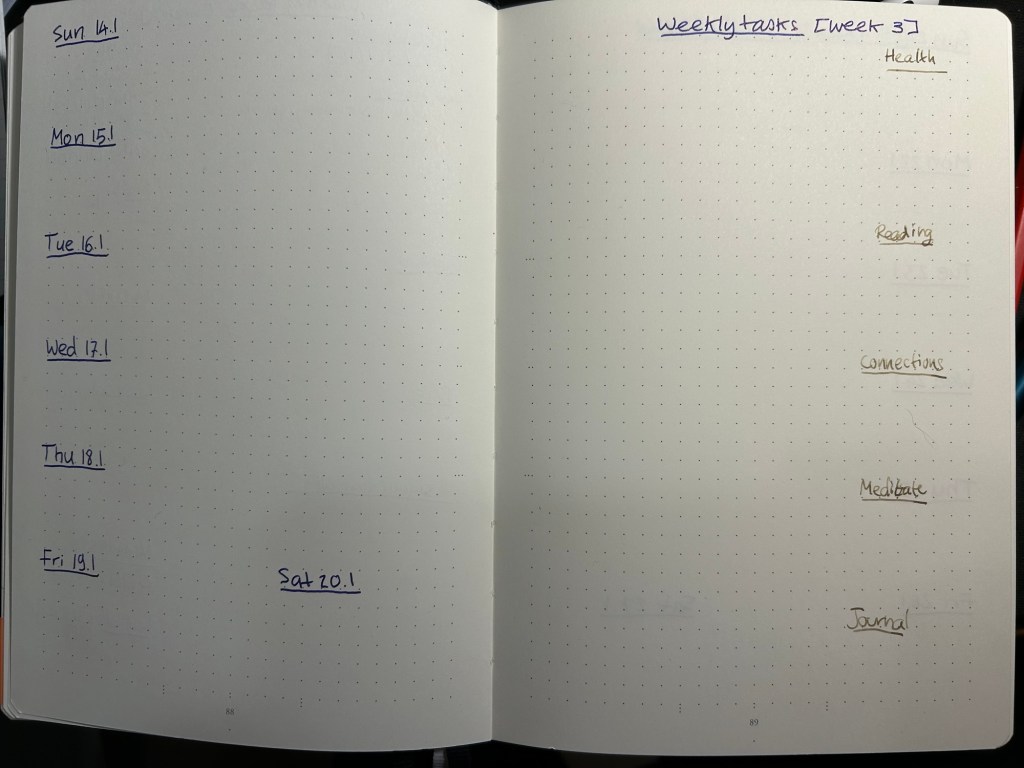
I mapped out the first 13 weeks (from the 31st of December to the 30th of March) in my Leuchtturm1917 Bullet Journal, each week on two pages. On the left are the days of the week and on the right is my set of tasks for the week. The list of tasks is divided into two columns, and each column is divided into categories. The left column is for categories and tasks that vary widely from week to week: blogging, general tasks, various courses and challenges I’m taking. The right column is for my permanent categories that happen every week in the quarter: health, reading, connections, meditation and journaling.

The weekly layout

The health category tracks fitness and health related tasks (on a given week it will have checkboxes for running, swimming and gym sessions for example, as well as reminders to go to the dentist or get my blood pressure checked). The reading category is for where I want to be with my reading in a given week (halfway through book x, 30 pages into book y). Connections is something I added after reading Cal Newport’s Digital Minimalism and it’s been well worth doing: I call or meet up with 2-4 friends every week. Messaging doesn’t count, only phone calls, zoom calls, or physical meetups. If there’s one habit I’d recommend picking up in 2024 it’s this one. Meditate and Journal are just tracking locations for my meditation and journaling sessions.

I then set out goals in various categories for the entire “12 week year”, as if it was a full year. Each of these will be evaluated at the end of the 13 weeks, and a complete new set of goals will be set for next quarter. The goals are all SMART goals: specific, measurable, achievable, relevant and time bound. Unlike themes there’s a possibility of not achieving all my goals, but that’s also something worth learning and carrying on to the next “year”.

So for instance under my health category for the next “year” is to get back to a 5k running base and an 8k long run (I’ve had a break in running for a few weeks due to illness and travel). If at the end of March I’m only at a 7k long run that’s not the end of the world, it just means that I need to take that into account when planning my next 12 weeks.

I then break down the goals into tasks that go into the weekly page. Each week I look at my goals, calculate where I am and where I want to be by the end of the week and fill out the weekly planning page accordingly. I use the calendar side of the page to block out time sensitive things or things that provide useful context (days of the week where I work from home and those where I work from the office, rainy days, holidays, etc).

To be clear: I don’t block the tasks for all the “year” in advance, but rather on a week by week basis. Only the goals for the entire 12 week period are planned in advance. The goals themselves are realistic, and many of them are broken into “base goals” and “stretch goals” much like in Kickstarter. At the last week of the quarter I set aside time to review and “shutdown” the quarter and plan and set up the new one coming up. If I end up not liking the weekly page setup, if there’s a goal that just didn’t work for me, if there’s something new in my life I can easily take it into account without feeling like I’ve “wasted” precious planning time or I’m bailing out on my plans.

So, if you’re unsure on how to plan your year, I suggest just planning the next 12 or 13 weeks. It may just work for you.