January 2024 in Reading

I decided to try and create monthly reading reviews of what I read instead of individual reviews or a giant yearly reading list post. Here’s what I read this January:

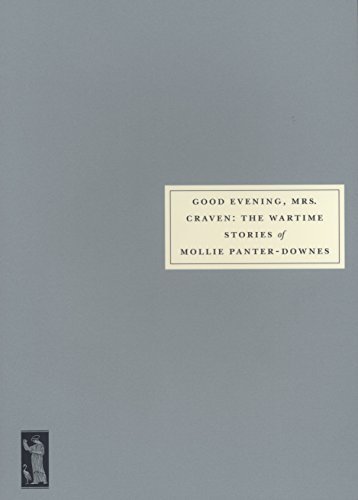
Good Evening, Mrs. Craven: The Wartime Stories of Mollie Panter-Downes, by Mollie Panter-Downes

A collection of very well written realistic short stories mostly about British women during WWII. Mollie Panter-Downes was a prolific and long time contributor to the New Yorker, and wrote both fiction and non fiction pieces for the magazine. This collection is bookended by two of her “Letter from London” non-fiction pieces, one from the beginning of WWII and one from the end. In between are 21 gems of short stories, all very realistic, all showing aspects of the war rarely discussed. Panter-Downes shows the great upheaval in British society at the time, both in the role of women and in the class system. She is sympathetic to her characters with all their flaws and foibles, and you grow to love them over their brief appearances. There are hints of dry humour, wonderful characterization, and an exploration of character that is both tied to Britain during WWII, and yet still universal. Highly recommended, even if you’re not a fan of short stories or historical fiction.

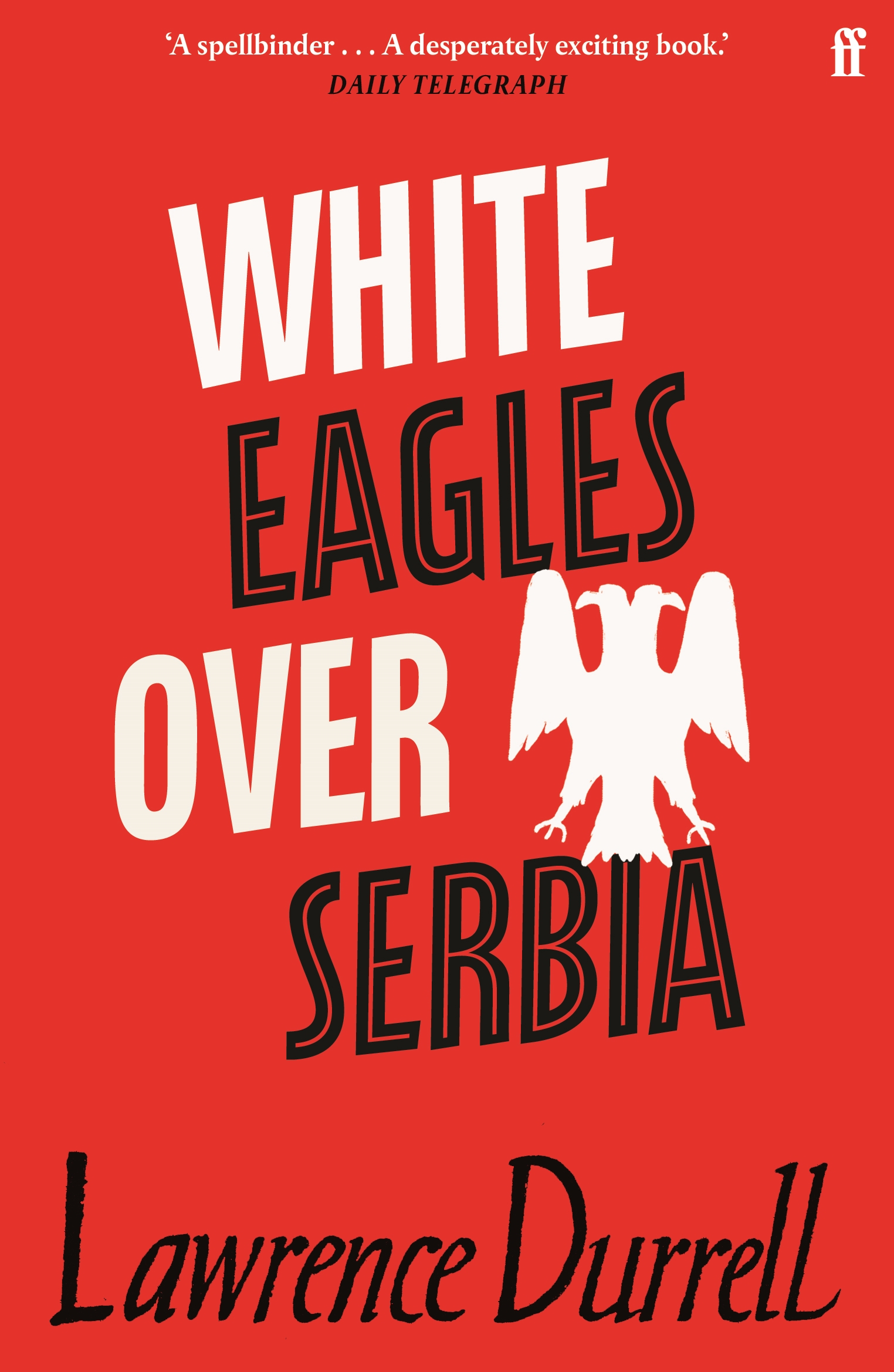
White Eagles Over Serbia, Laurence Durrell

Laurence Durrell started his career as a writer writing poetry, and it shows. The descriptions of landscape and character here are stunning. Never have I read a spy thriller that is written like a Literature with a capital L on the one hand, yet is still supremely entertaining and exciting to read – and very realistic.

Durrell is an excellent writer, and White Eagles is based on his experiences working for the British Foreign Office. The book is not flashy, it’s not high stakes, and it reads like something that could actually happen. The main character, Methuen, is a reluctant, tired hero spurred to action by his love of fishing more than his love of danger and intrigue. The descriptions read like poetry, and the characters are all individual gems – none of them are perfect, none of them are heroic, they are real people in very real situations. 
I wish there was a series of Methuen books (there isn’t), and I recommend this even to those who normally don’t read Cold War era spy thrillers.

Ragtime, E.L. Doctorow

Set in the New York area at the turn of the 20th century to the syncopated beats of ragtime, Ragtime is a tour de force of modern writing. The first part of the book is slightly overwhelming, as Doctorow takes us with lightening speed and fast cuts through many luminaries of New York city during the early 20th century, and intersperses them with the story of a wealthy WASP family, a Jewish immigrant family and a black family to be. The cuts remind me of a Wes Anderson movie, and it takes a while to realize that the narrator is actually creating a ragtime with his description of the events: the emphasis on seeming minutiae is deliberate, and the juxtaposition of things that don’t go together is purposeful. You feel like all the books you’ve read so far have been horse drawn in comparison to this piece, and suddenly you’re speeding your way on a model-T.

Very original, not an easy read, but highly recommended.

Note: the narrator speaks in the voice of a reporter from that era, and hence there’s a lot of the N-word (and worse) in this book.

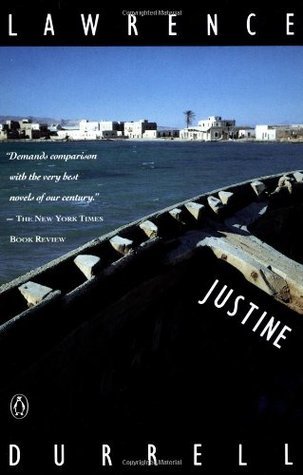
Justine, Lawrence Durrell

The first of Durrell’s Alexandria Quartet of novels.

Some books are easy to review, but this one isn’t. I’ll try to do it justice, but reading Justine was an experience difficult to summarize in words.

The good – the writing is exquisite. Durrell is a phenomenally good writer, and he’s at his best when bringing Alexandria to life. Alexandria itself appears to be the main character here, and it’s a fascinating portrait of the city during the ’30s. Durrell is doing interesting things with narrative structure here, and while it makes following along difficult at the start, the narrative builds up in layers over time. You aren’t viewing the story of the four lovers chronologically, but rather through the reminiscences of the narrator, as things come to his mind and gain importance. Thus you survey the scene several times from different angles, through the growing understanding of the narrator. It’s a fascinating narrative structure, and it adds nuance and interest to the story, and fits well with Durrell’s evocation of Alexandria.

The bad – the characters aren’t quite there. They remain ghosts of themselves, mythical creatures, never becoming palpably real. The only exception is Scobie, a character that seems to have been created as a caricature of sorts, a comic relief, and yet is the most fully realized character in the novel. My guess is that as we are returning to the same characters from different points of view in the following novels of the quartet, that this issue may be resolved.

The ugly – whether these are Durrell’s views or his narrator’s views, Justine is rife with misogyny, homophobia and whiffs of racism and antisemitism. The novel was written in the ’50s and its views on homosexuals were likely advanced for the time, but they’re still terrible. There’s also depictions of child prostitution, prostitution, and mentions of slavery that seem perfectly fine with the narrator and the people around him.

Justine is a difficult book to read, both for the narrative structure, which is disorienting at first, and the way it jars on modern sensibilities. It is well written and intriguing enough for me to give the rest of the Alexandria Quartet a chance.

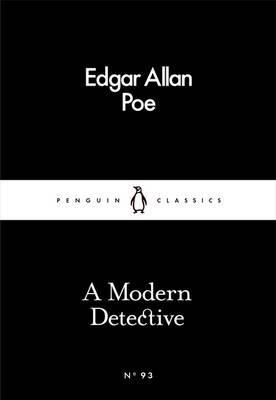
A Modern Detective, Edgar Allan Poe

This is a mini collection of two short detective stories featuring C. Auguste Dupin, the first fictional detective.

Poe is pretty talkative here, and his detective, Dupin, is a long-winded, charmless, cerebral Sherlock Holmes type. The cases discussed are interesting, and the second story in this collection was inspired by a real unsolved murder case. The characters, though, lack charisma, mystery or charm, and the reader is left wondering why they ended up spending time with them.

The detecting techniques are more primitive than those portrayed by Conan Doyle, and they are magnificently padded with paragraph upon paragraph of Poe delighting at his protagonist’s cleverness. A full third of the first story is skippable without missing a beat, and the second one fares much the same. What Poe does do well is evoke an atmosphere of gothic horror around both cases. What he utterly fails to understand (but Agatha Christie knew so well) is that the heart and interest of a detective story is the characters in it, not so much the analytical prowess of the detective at large. Holmes, Marpel, Poirot, and Father Brown are all first and foremost compelling characters. Dupin has not earned his place among them, and is remembered merely for being the first, not (as Poe would have you think) for being the best.

Dull, overly wordy, not worth reading, despite its historical importance.

That’s it for January 2024. What interesting books did you read this month?

My 2023 Year in Reading

I read 35 and two half books in 2023, and for various reasons this year’s reading contains more detective novels than usual. The topics and style range widely, so there’s bound to be something for everyone in this list. So make a nice cup of coffee or tea and sit down for a bit of a long read.

Note: the links are to reviews I wrote in my blog or to Goodreads. No affiliate links whatsoever here.

Fiction

The Murder on the Links, Agatha Christie

The second appearance of Hercule Poirot, Christie’s “little Belgian” detective. Christie weaves a clever plot here, particularly around various character pairings. If you’re looking for a satisfying light read, I recommend picking this book up. Bonus tip for Christie books: they can often be found at your local library or for very cheap at second hand bookshops.

Murder on the Orient Express, Agatha Christie

If there’s one Agatha Christie mystery you need to read, it’s this one. I’ve read this book several times before but return to it when I want to see a master at work. Christie is perfectly polished here, and this book is always a joy to read.

A Gentleman in Moscow, Amor Towles

Delightfully charming, polished and delightful I highly recommend this book for everyone, even if historical fiction isn’t your cup of tea. Towles doesn’t create a realist novel, but rather casts a fairytale that is a joy to read, and yet still reminds you of the time and place it takes place in and the implications of that on all the characters at play. One of the best books I read in 2023 and one that I keep remembering and will likely return to.

Offshore, Penelope Fitzgerald

Offshore won the Booker in 1979, and while it’s a well written novella length novel, it hasn’t stood the test of time. Fitzgerald writes about houseboat dwellers on the Thames, people that are in between land and water, outsiders to London and its society and yet still moored to it. I think that to readers in 80s this book would have resonated more, but somehow it seemed to remain on the surface level, detached and amorphous to me. Not a book I would go out of my way to read.

Drive Your Plow Over the Bones of the Dead, Olga Tokarczuk

Wow. The best book I’ve read this year by a large margin. Tokarczuk is an astoundingly good writer and this is a phenomenal book that I highly recommend. It’s not a light read but it’s a very, very good one.

The Books of Jacob, Olga Tokarczuk

This is one of the two books that I stopped reading halfway through. It’s exceptionally well written and researched but I just couldn’t bring myself to finish it at the time for personal reasons. I do, however, see myself returning to it at some point.

Miss Pettigrew Lives for a Day, Winifred Watson

This book is featherweight and frothy, a little ditty about a middle-aged governess that finds herself in the middle of the flashiest, most debauched group of young people you can imagine. It was written in 1938 so there’s racism and favourable talk about wife abuse here, and I’m not at all sure that this servants’ fairytale is worth it. It’s well written, but loses its charm whenever the naughtiness is coloured by its racism and sexism.

How Steeple Sinderby Wanderers Won the FA Cup, J.L. Carr

I read Carr’s wonderful “A Month in the Country” and I wasn’t disappointed by this fairytale. Yes, it’s about football. No, you don’t need to know a thing about the game. Do read the book’s introduction, though, as it does clarify and highlight a few things worth knowing.

This is Ted Lasso decades before Ted Lasso, but as Carr wrote it there’s also a touch of melancholy to the affair. It’s a charming little thing that will win your heart over much like its bunch of villagers win the coveted FA Cup. Like “A Month in the Country” this little book is an ode and a slice of brilliantly clever comedy. It reminded me of “Dad’s Army”: poking fun at its characters while deeply loving and respecting them, with a mist of nostalgia over it all.

All Systems Red, Martha Wells

For years this has been on my list and highly recommended by several friends and boy were they right. Wells created one of the best written, most distinct voices in fiction (yes, fiction, not just science fiction) in her murderbot. It’s a funny story about a misanthropic android saving a bunch of human scientists, but it’s also a tale about who gets to be human and who doesn’t, how fiction creates humanity, the future of corporations and how people learn to trust each other. Even if you don’t like science-fiction, this is a must read. If you don’t end up loving murderbot in the end, I suggest you check your pulse. They will make you laugh and they will make your heart ache for them, and you’ll want to be a better person to deserve to live in a world where murderbot exists.

Artificial Condition, Martha Wells

The second of the murderbot series, this one introduces ART. Murderbot teams up with a research transport with an attitude and I learn that I am in fact capable of loving this series even more than I did before. Wells deals so well with the themes of friendship, trauma and humanity as well as fiction as a bonding medium between strangers that it’s astounding. Again, even if you’re not a science fiction reader, this book is for you.

Rogue Protocol, Martha Wells

This isn’t as good as the first two murderbot stories, but is still very good and worth reading. The humour is still great, the questions about humanity are still there, as is the commentary about the growing power of corporations.

Exit Strategy, Martha Wells

This is the fourth murderbot story and one that closes the GreyCris arc. Murderbot cares now, how revolting 🙂 Full of humour, action and questions about personhood and friendship. A fitting end for the first arc of Murderbot diaries.

Network Effect, Martha Wells

A new murderbot arc begins, and ART is back. The two of them are superb together, the plot is very well done as are the action sequences. It lacks some of the innovation of the first two murderbots, but that’s to be expected in what is now a pretty well established world. Very enjoyable, funny and deeply touching.

Fugitive Telemetry, Martha Wells

This is another excellent murderbot story, but outside the timeline of the new murderbot arc and after the GreyCris arc was completed. It’s much more a detective novel than previous murderbot stories, and it’s very well done and fun to read.

System Collapse, Martha Wells

The seventh and latest instalment of the murderbot diaries, this story picks up not long after Network Effect finishes. There are some interesting ideas about communication and establishing trust, and some very good writing about trauma. Very well done and worth reading.

Home, Martha Wells

I think this is the best description of post traumatic stress disorder that I’ve read. As someone who suffers from cancer related PTSD this story really hit home. It’s an excellent short story, and it’s not told from murderbot’s point of view, but from Dr. Mensah.

The Well of Ascension, Brandon Sanderson

One of the biggest disappointments of the year. I really liked the first Mystborn novel and I was looking forward to reading the second book in the trilogy. It was not good. The characters were stupid, flat, and annoying. The villains were stereotypical and the twist (which at least brought the pace up in the end) wasn’t worth it. A long, bloated tale that never landed for me and has me wondering whether it’s worth slogging through the third book in the trilogy.

Winter’s Gifts, Ben Aaronovitch

I love Aaronovitch’s Rivers of London but this novella fell flat. The characters didn’t come to life, Henderson was somehow less likeable than she was in her previous appearances and the story didn’t gel. I’d recommend skipping this one unless you’re a completionist or looking for a light read.

Starter Villian, John Scalzi

Scalzi is back in full force here, light, funny and entertaining. If you liked the Kaiju Preservation Society you’ll love Starter Villain. Charlie inherits his uncle’s super villain operation, including secret volcano lair, talking cats and communist dolphins and it’s a delight from start to finish. There’s a plot but it doesn’t really matter: the dialogue, characters and situations make this novel hum. A perfect pick-me-up.

Slow Horses, Mick Herron

I saw the Apple TV series (it’s phenomenally good) and decided to try reading the books it’s based on. The first book, Slow Horses, is almost entirely like the series, though if you pay attention you can see the cracks here and there (particularly in the ending). Not really worth reading as the series is the same, but better.

Dead Lions, Mick Herron

This was the second book in the Slow Horses series that I read, and it will be the last one. The book is far inferior to the series in terms of both plot and dialogue. Watch the series instead.

The Long Game, Ann Leckie

A short story from Ann Leckie with some interesting ideas about society building. It remains a little too abstract, although it is interesting in terms of character and concept.

Translation State, Ann Leckie

A very high concept novel, even more so than her previous work. What makes a place home? What makes being connect with others? What constitutes personhood and free choice? What makes a being, nature or nurture? What takes precedence: the needs of the many or the rights of the few? What makes you belong to a place, group or family? There are some excellent characters here, and some excellent questions raised. The most interesting sci-fi book I read this year, and worth picking up.

Death in Fine Condition, Andrew Cartmel

I liked Cartmel’s Vinyl Detective series, so I was looking forward to reading the Paperback Sleuth. I was disappointed. This book suffered from all the minuses of Cartmel’s previous work (a tendency to overwhelm with tedious details, an infatuation with certain characters, plots that are oftentimes outlandish even for detective novels) with none of the charm. Large swaths of it are regurgitated characters and bits from his previous work, and I don’t see myself returning to this series any time soon).

Lot No. 249, Arthur Conan Doyle

This is a horror story about a resurrected mummy, and it’s competently written but not the genre for me.

Passenger to Frankfurt, Agatha Christie

The second book that I didn’t finish reading, and so bad that it should never have been published. Christie is clearly being taken advantage by her publishers here, as she’s obviously already suffering from dementia at this point. Don’t read it, and hopefully it will go out of print and stop tarnishing a wonderful writer’s reputation.

The Making of Another Major Motion Picture Masterpiece, Tom Hanks

This is lightweight fun, a good read for an airplane ride or a holiday. I’d recommend skipping or skimming the in-character preface as it’s the weakest part of the book by far. There are comic strips involved and in the book itself, so I recommend reading the book so you don’t miss them as they’re very well done. It’s charming, with no real villain and a lot of love for filmmaking and filmmakers.

Non-Fiction

You Just Need to Lose Weight, Aubrey Gordon

Gordon writes a compelling set of essays about anti-fat myths. It’s well written and informative, and regardless of what your thoughts are on the subject, it’s worth a read.

Erebus, Michael Palin

Excellent, excellent, excellent. Palin takes a fascinating topic and renders it to perfection. A Victorian ship designed for war but converted for arctic exploration has two epic voyages: on the first it reaches the farthest south that anyone had reached before, and on the second it vanished as it was searching for the Northwest passage. Multiple attempts were made to find her and her 129 crew members, but for 160 years nobody knew where it was. Until it was found, perfectly preserved, in 2014. The story of the ship, Erebus, its crew, voyages, and the search for it is interesting in and of itself, but Palin really makes it all come to life for the reader.

Your Head is a Houseboat, Campbell Walker

Walker is better known for his YouTube moniker Struthless. This is an illustrated book about reaching mental clarity through journaling. It’s well written, well drawn and well conceived, and if you have any interest in journaling for mental clarity, I highly recommend it.

The Miracle of Mindfulness, Thich Nhat Hanh

A short, beautiful guide to meditation written as a series of letters between master and student. It’s gentle, humorous and kind, and well worth a read, and many rereads.

M Train, Patti Smith

Patti Smith rambles around world drinking coffee. The general theme is dealing with loss, but in hindsight Smith’s writing didn’t leave much of a mark on me, even though I really wanted to like it. It’s like she’s trying to be Joan Didion and failing, because somehow her landscapes and people remain abstract shadows, not really leaving their mark on the reader.

Deep Work, Cal Newport

How to get meaningful work done in an age of constant distraction, especially if you’re a knowledge worker. Some very good ideas here, though it could have been better organised. One of the few productivity books I’d actually recommend.

Digital Minimalism, Cal Newport

How to turn down the signal to noise ratio on your digital devices using a methodical approach that allows you to tailor your technology use to your needs. This could have been a series of blog posts and suffers from the usual self-help book bloat, but there are some very good ideas here that I’ve successfully used. Recommended.

So Good They Can’t Ignore You, Cal Newport

After reading Deep Work and Digital Minimalism, this book was a disappointment. Newport struggles to make his point, it’s overly long and padded with examples that do him little favour. The whole thing should have been a blog post. The basics? Don’t look for a job that fits your passion, find a job that lets you have the lifestyle you want to have (hours, control, impact, etc). Do that by gradually and systematically acquiring skill in something that is rare and valuable. This is done through deliberate practice, like a musician or an athlete.

These Precious Days, Ann Patchett

A well written series of essays about a pretty wide range of topics. It was very well written and enjoyable to read. I recommend it even if you normally don’t read essay collections.

Think Again, Adam Grant

Organisational psychologist Adam Grant talks about how to change your mind. Some interesting ideas here, though as usual with this sort of book Grant doesn’t shy away from cherry picking anecdotes and manipulating data to support his argument. I take all social study research papers and everything based on them with a grain of salt after their replication crisis, but there are some things here that are worth trying out or considering.

Here’s to a 2024 full of good books!
Weekly Update: Long Time No Update

I got back last week from a week in Orlando (no, I wasn’t at the pen show, I was on the Galactic Starcruiser — of which I will write a post later on) and am starting to get back to my routine, sort of. In any case, I haven’t posted a weekly update in a while, so I figured that it’s about time.

Health

  • I got my CPET (Cardio-Pulmonary Exercise Test) results back. I have less lung capacity to work with, which is likely the result of the chemo I underwent. There’s nothing to do about it but keep on running and hoping that my lungs will recover in time. It does mean that I won’t be able to break any more speed PRs anytime soon, but I can live with that. It’s better to be alive than to break running PRs.
  • I’ve been on an enforced break from running due to plantar fasciitis caused by my not getting my insoles replaced in time. As I have two races next month I’m really hoping to get back to running soon.
  • For the first time in my life I had perfect bloodwork results, which was very nice indeed and made me and my oncologist very happy.

Reading

  • I finished reading M Train, and found it both delightful and slightly disappointing.
  • I finished reading “Well of Ascension”, Brandon Sanderson’s second Mistborn novel. I really didn’t like this one, and I’m not really sure that I’ll bother with the third book in the trilogy.
  • I read “Winter’s Gifts”, a Rivers of London novella by Ben Aaronovich. I love the Rivers of London series, but this novella wasn’t the best, and you can feel free to skip it and not miss much. It was an OK plane read.
  • I’m reading “Deep Work” by Cal Newport right now, and so far it’s been pretty insightful. As someone who gets constantly interrupted while working I was interested in seeing if there was a way that I could carve out bigger chunks of time for more meaningful work, and I hope this book will help.

Sketching

  • I did a tremendous amount of repetitive sketching as giveaways on the Galactic Starcruiser, to the point where my carpal tunnel lifted its head and said hi. I’m giving myself a bit of a break from regular sketching and starting to plan out Inktober. Anything in particular that you’d like to see?

Pens and Ink

I’ve replaced almost my entire rotation. As this is starting to get a little too lengthy of a post, I’ll post a separate blog post about what I’m currently using.

D&D, tabletop roleplaying and LARPs

  • I ran a convention game, a new one I wrote just for the convention, and it turned out pretty well. Something that I can tweak and rerun in a different convention next year.
  • My adventure got accepted to the biggest convention in Israel, I-Con, and for the first time ever I’ll be running a game in the “big league”. My game was one of the first to be sold out, with all the tickets going in the first 24 hours, which was super nice and big boost to my confidence.
  • I’m nearing the end of another adventure in my current D&D campaign, and it’s been going well so far. I took a risk of creating a no combat adventure, but everyone seems to be enjoying themselves so far.
  • LARPs – I got to participate in the Star Wars Galactic Starcruiser before it shuts down at the end of the month and it was beyond amazing, and is going to get its own dedicated post. Locally, next week marks a turning point in the space themed LARP that we’re participating in and I can’t wait to see where the story takes us next.
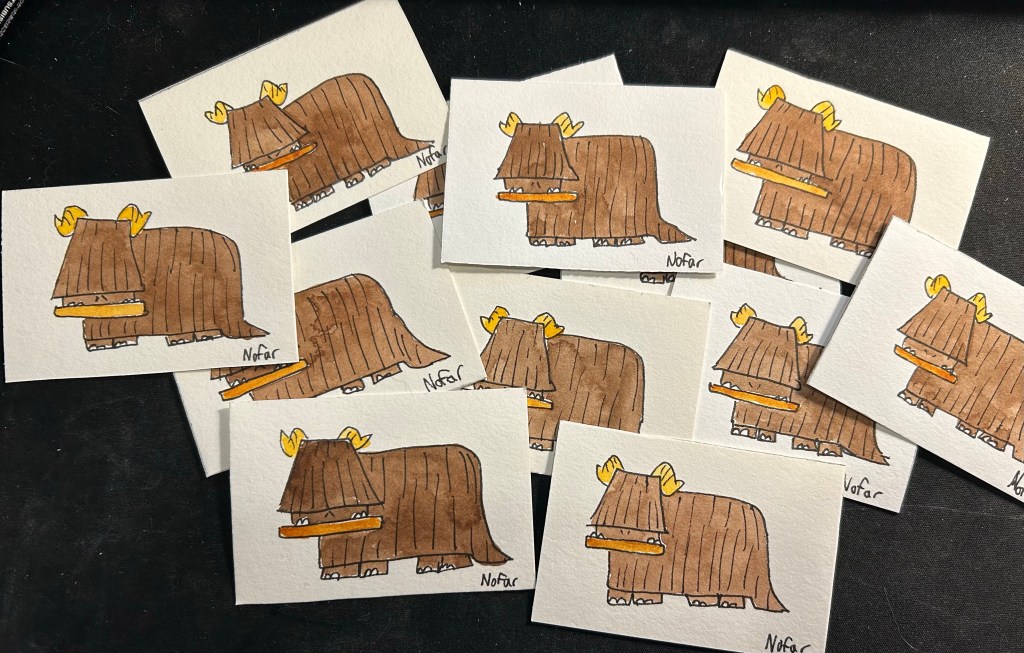
Sketches of Banthas for the Galactic Starcruiser. I drew about 100 of these.

General Stuff

  • I watched season 1 and 2 of “Slow Horses” on Apple TV and I loved it. Phenomenal actors, excellent writing, and my beloved London at its best. I purchased the first book in the series because I loved it so much.
  • I spent about two hours today clearing out all of my plant pots, adding new earth, sowing seeds. I haven’t planted anything since I got sick in 2021 because I didn’t want to burden anyone with taking care of my plants for me. It took more time and courage than I thought I would need to get out there and sow some seeds, but hopefully I’ll get to see them germinate, grow and bloom. All the seeds I have are from 2021, so I’m not sure they’ll germinate at all, but as I planted basically only nasturtiums and they’re hardy little plants, I’m hoping for the best. In any case progress is marked in the little things, and this little step is something too, I guess.

I hope you have a great week!
Weekly Update: Go on a Run Anyway

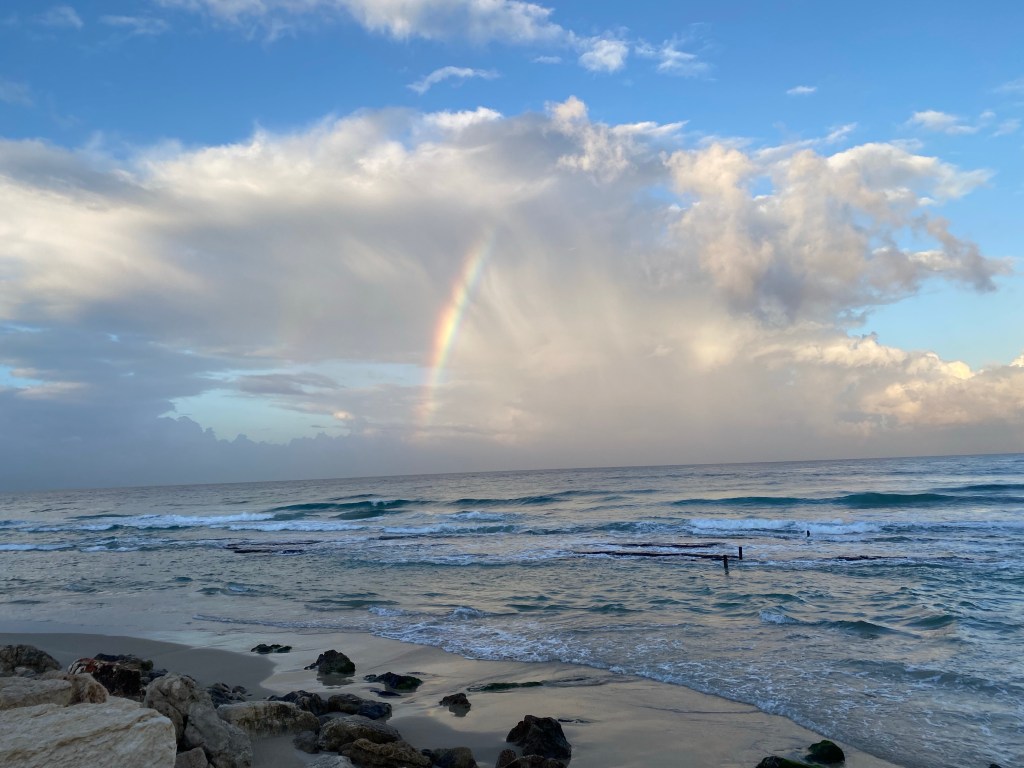
It was cold and dark outside this morning, with a chance of rain. My legs and body were sore from a combination of an intense gym session and standing/walking around at a conference yesterday. I didn’t feel like running. I went on a run anyway.

This was my reward:

Rainbow over the Mediterranean

I’ve never regretted a run yet, and today was no different.

Health

I started getting my post chemo treatment tests done, and while my lungs still aren’t 100% (but hopefully will someday get there), my heart and SVC got a clean bill of health. As both the tumour and the chemo slammed it, I’m very relieved that my ticker survived. Can I chalk it up to years of running? Maybe. It surely didn’t hurt.

Reading

I just finished reading “The Golden Enclaves” by Naomi Novik, the final book in the Scholomance trilogy.

It’s rare that I see an author really working out a new concept, a new kind of world building out of a tired trope, and doing it so well. It’s even rarer that the author in question is able to pull it off while still creating a readable and enjoyable story, and one so cohesive that it is clear at every point that this was constructed as a trilogy on purpose, from the start, with every piece of the narrative falling exactly into place in the end with elegance, and without calling attention to itself. This is a mechanically excellent piece of writing that doesn’t call attention to its mechanics.

Instead it calls attention to its characters, their relationships with each other, and in particular their relationship to the deep, inherent, and seemingly justified inequalities in their world. Inequalities and injustices that aren’t very hard to map onto many of those that exist in our world today.

Is the Scholomance trilogy perfect? Of course not. The characters don’t attain true depth because the cast is too large, the world needs building and that needs room, plus, these are teenagers after all. Many of them are still working out their personality. But despite its imperfections this is a very enjoyable trilogy that is worth reading, and won’t leave you feeling like you just consumed several hours of empty air. There’s substance here.

Other stuff

I’ve been creeping back to writing, albeit only adventure writing for D&D. I’m creating a new campaign, in a new world, something that I haven’t done for years.

I’m also looking into planning for next year. I have been really struggling with this mostly because of my cancer related PTSD. More on that maybe in later posts.

If you have Disney+, I recommend watching “The Magic of Animal Kingdom”. It made me smile.

Weekly Update: PET CT, Pens and Mischief Movie Night In

I haven’t written an update in a long time, because my neuropathy has gotten much worse since I finished my treatments. It’s painful to type, to write or draw, and it gets worse in the cold. Of course we’ve been having a series of cold days here, which has meant that typing a blog post has been a considerable challenge.

Two Egyptian Geese are having a dip in a roadside “pond”.

Health

I went through a PET-CT, my third and hopefully my last, last Sunday. It’s a long and not very pleasant experience, but it’s not the worst thing in the world. This week I’ll get the results and discuss with my doctor what to expect over the coming months. Meanwhile, neuropathy is kicking my ass, so posts will be sporadic until things get a little better.

This contraption injected me with radioactive sugar before my PET-CT.

I also got my fourth Covid vaccine, in the hopes of staving off the dreaded Omicron variant. I’ve been constantly masked and hiding as much as possible at home, but I’ve got a series of hospital visits coming up, so I’m hoping that the vaccine (and mask) will help me avoid infection and stay safe.

Reading

I started a new reading challenge, but I’m taking my time with it. I just finished the fabulous “The Trees” by Percival Everett, and the pretty terrible “All’s Well” by Mona Awad (lots of good intentions, terrible delivery). If you enjoyed “My Sister, Serial Killer,” you’ll love “The Trees”. It is a darkly funny, fast and very clever detective/revenge story that is just a joy to read, despite the very difficult topic.

I’m not sure what’s next on my reading list, but it may just be a non-fiction book before I delve into the next Tournament of Books pairing.

Writing

My hands are making writing problematic, but I did manage to write a pretty long post on the blog this week. It’s a taste of a project that I’ve been wanting to work on even since I got sick, and I look forward to be able to actually sit down and type for longer periods of time to get it done.

Currently Inked

I finished my Diamine Inkvent 2021 reviews with 32 pens inked, and I promised myself that I will write them all dry. That’s the most pens I’ve ever had inked at one time, and it’s turning out to be quite a challenge, but a fun and interesting one. This week I’ve written four pens dry (a Lamy Safari, two Monteverde Giant Sequoias and a Sailor Pro Gear Graphite Lighthouse), bringing the count of inked pens down to 22. It’s slow going because I have trouble using my pens, but I am making an effort to journal each day with them, so I do hope to write them all dry by the end of next month. I’ve been using them in my Moleskine, because I love their format the best, and just writing on one side of the page since I have enough notebooks to afford to do that. That way I can use the pens I like in the notebook I like and not worry about avoiding bleedthrough.

Other Things

I got back to running, which is major. I’ve been a runner since November 2011, until the 7 month break in running that I was forced to take last year due to my cancer and treatments. It was very hard for me to stop running, and it is difficult to get back into it now for various reasons, but I’m lacing up and getting out there and that’s what matters at this point. The most important thing I’m having to learn is to be kind and patient with my body after all it’s been through.

I’ve also watched the charity broadcast of the Mischief Theatre group (of “The Play that Goes Wrong” fame), “Mischief Movie Night In: The Wizard of Paddington Station” . You have until the 31st of January to purchase a ticket to see the broadcast and all the profit goes to charity. It’s a fun, family friendly way to pass an evening and do some good at the same time.

On Reading and the Tournament of Books

I’ve started a new reading challenge: reading all the Tournament of Books 2022 books. I’ve done this twice in the past, in 2019 and in 2020, and it has been a great way to read contemporary fiction that is not necessarily on the best sellers list or the awards circuit. I would never have read “The Book of Broken Angels,” “Overstory,” “Milkman,” “My Sister, Serial Killer,” “So Lucky,” “America is Not the Heart,” “A Terrible Country,” “The Brief Wonderous Life of Oscar Wao,” “Cloud Atlas,” “Wolf Hall,” “A Mercy,” “On Earth We’re Briefly Gorgeous,” “Nothing to See Here,” or “Girl, Woman, Other” if not for the Tournament of Books lists, and that would have been my loss. And while I generally like the list and particularly the way that books are pitched against each other, I tend to not like the judges’ commentary or choices, so I usually ignore them and create my own rankings. Why compare pairings of books in this way in the first place? It’s usually a way to gain some more insight into the books that I’m reading, which is why I keep the “tournament” aspect of it in mind when I log or review the books that I read.

The Tournament of Books logo for this year.

I read significantly less last year (2021) than I did in previous years, only partly because I got cancer. I allowed myself to get off the “maximum books per year” racetrack, and focused more on reading either books that interested me, or books that comforted me. Some of my reading plans went completely awry once I got sick – I was planning on reading the Tournament of Books Tournament of Tournament books (I still do, as they all seem fantastic), but I just couldn’t face the effort once I started chemotherapy. Books were a huge comfort and a necessary distraction for me during my hospitalization and treatments, but they weren’t literary fiction kind of books. I read cozy mysteries and fast paced sci-fi because that’s my reading equivalent of comfort food. Sometimes that’s what you need in a book, and that’s part of the magic of reading: there is a whole array of “comfort books” geared perfectly for your specific needs, if you only know what you’re looking for. 

I’ve talked to other people who have gone through chemotherapy (they tend to come out of the woodwork once you start treatments yourself), and even the avid readers among them stopped reading during treatments, and sometimes well after them. Chemo brain is a real thing, and it makes reading challenging, and oftentimes you want something a lot more attention grabbing than a book during treatments or while you’re recovering from surgery. That’s what streaming is for, and I thank Disney+’s “Loki” and “The Mandalorian” for helping me out during some really rough nights. But somehow books never lost their appeal to me, despite the lure of endless, easily consumable, entertaining content. This isn’t to condescend on “non-readers,” especially not my fellow cancer patients. It’s just to say that different minds are wired in different ways, and mine is wired in this specific way. Once I start reading I generally get carried away and have trouble putting the book down (unless it’s a truly terrible one). This was useful when I tried to forget that I was connected to 3-litres of poison that was dripping into my veins, although it was a little annoying to my long suffering family who were with me during treatments and often just wanted to talk. Sorry, guys. You deserved better.

Once the 2022 Tournament of Books list was published I decided to give it a go again this year, to challenge myself to read all eighteen books on the list. Unlike in previous years I’m being kind to myself and not trying to rush through all of them by the time the tournament judging begins in March. As I started reading before the brackets were published, and so started alphabetically, I read Mona Awad’s “All’s Well” first. It’s a very well intentioned book that completely fails on delivery for me, and I struggled to finish it. I almost gave up on the challenge entirely, except thankfully I decided to read the book that it’s up against, “The Trees” by Percival Everett before doing so and it is phenomenal. I’m almost done with it, and it is viciously funny, dark, thought provoking, and a fascinating and original read. Everything you hope for in a book, and all this in a book that I’ve never heard of before, from a writer I’ve never heard of before. This is exactly why I put myself up for this challenge in the first place.

My neuropathy is killing me in this weather, and this was a literal pain to write, so I will end here by saying: treat yourself to some book exploration this year, if you haven’t done so recently. You never know what gems you’ll find. 

2021: Looking Back at a “Heavy” Year

My hands have been killing me with the worst neuropathy since my treatments began, so I’ve been trying to limit my typing to what I need to do for work. That is why this post took so long to write, and why my posting schedule may be a little off until things improve with my neuropathy.

2021 was a hell of a year for me. It started with me doing Liz Steel‘s excellent Sketchbook Design course. I also took some fantastic and very illuminating tea seminars with Juyan Webster from the Chinese Tea Company. If you have any interest in tea and you get a chance to have a tea seminar with her, I highly recommend it.

Early on in the year is also when a close family member got diagnosed with thyroid cancer, and that’s also when my journalling went on the fritz. This was the notebook I was using at the time, a Moleskine Pokemon Charmander limited edition and I abandoned it 2/3rds of the way through.

Abandoned Moleskine.

Covid was raging, I was working from home, at a new job, and I spent the first quarter of the year trying to fit my drawing and running into the new quarantine rules that kept getting both stricter and more confusing with each iteration. I happily got vaccinated as soon as I could, and I’m still very grateful to the amazing scientists and doctors who came up with vaccines in such a short time frame.
I managed to participate in the OneWeek100People challenge, which is very demanding but also a lot of fun. If you can spare the time I recommend giving it a try.

In the beginning of April I started having shortness of breath (dyspnea) while running. It got worse with time and soon I couldn’t run at all, and then I couldn’t walk very fast or far, climb stairs, etc. After a long and laborious road to get a diagnosis, in the beginning of June I learned that I had cancer, and in the beginning of July I got a diagnosis and started ABVD chemotherapy to treat Hodgkin’s Lymphoma.
A few things helped me get through that incredibly difficult time. First and foremost, my phenomenal family (mother, father and brother) that rallied around me and took care of me from the moment of the first diagnosis and to this day. I can’t imagine going through this process without them. Almost as important were my friends, who visited me in the hospital and cheered me up, and kept in touch and cheered me on during the treatments. Finally it was journaling and reading. I started this Moleskine “I am New York” on the day I was first admitted to hospital, and writing in it gave me perspective and kept me sane.

Journal of a bad year.

And books? Books have always been my comfort and escape. I saw a few things on Disney+ while I was hospitalized, but books helped distract me from a lot the most unpleasant and painful parts of this journey.
I was happy to discover that one of my favourite Moleskine limited edition series, the denim ones, was back in stock, and so once I finished the “I am New York” journal I moved into this Moleskine “Skinny. Flared. Bookcut.” one. It’s such a well conceptualized and executed design, it was a joy to use. This was when I decided to regularly use fountain pens to journal with, and just use only one side of the page. I have more than enough notebooks to support that decision.

This notebook took me through the second part of chemo to the end of it.

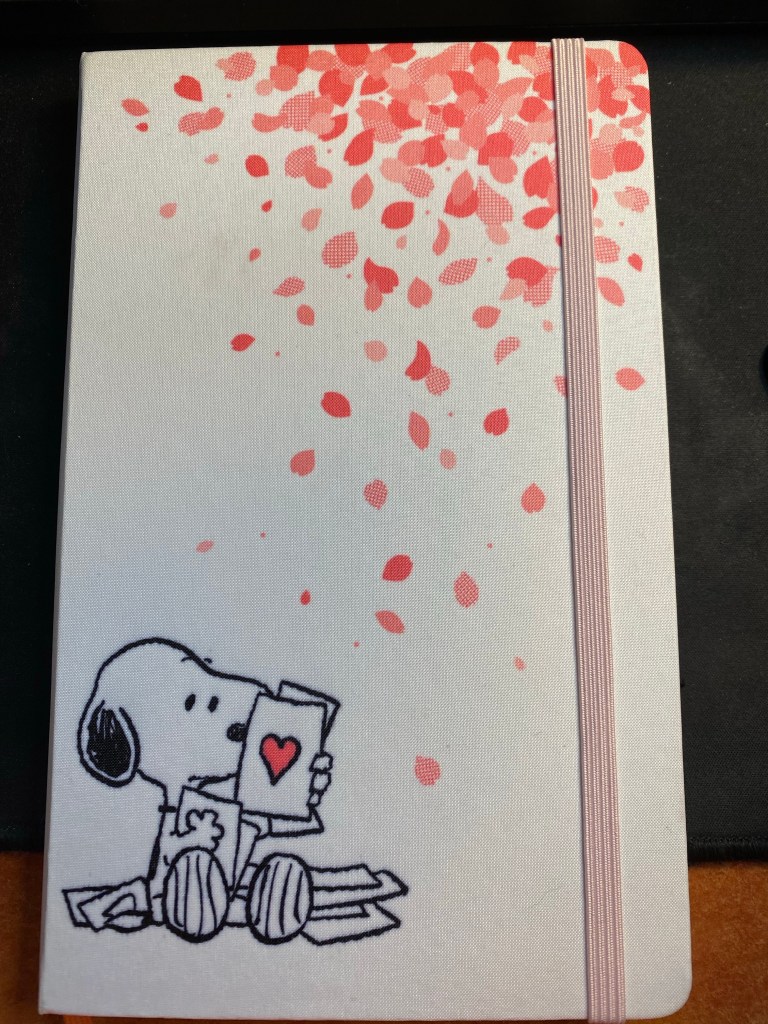
And now, and the beginning of 2022 I started a new journal, a Moleskine Peanuts Sakura. Pretty, right? Let’s hope I get to fill it with good news and positive thoughts.

A new Moleskine for a new and better year.

Some favourites from the past year:

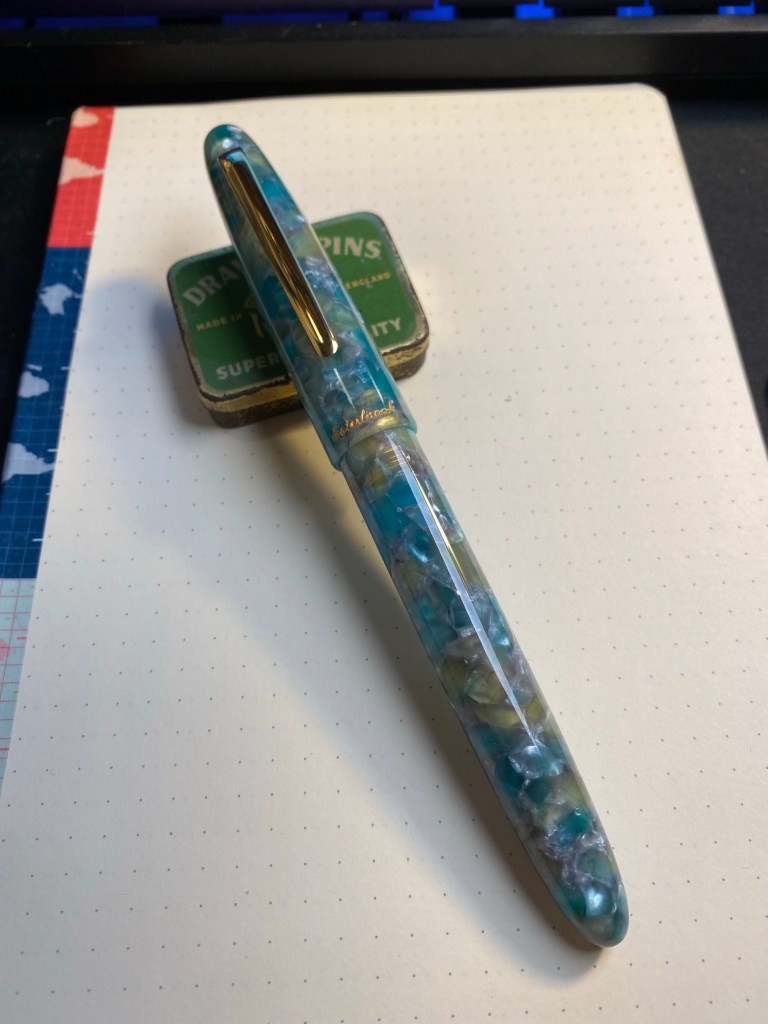
My favourite pen was the Esterbrook Estie Sea Glass. Quite a surprise for me, but it hasn’t been out of rotation since I got it.

Esterbrook Estie Sea Glass – fantastic and beautiful pen.

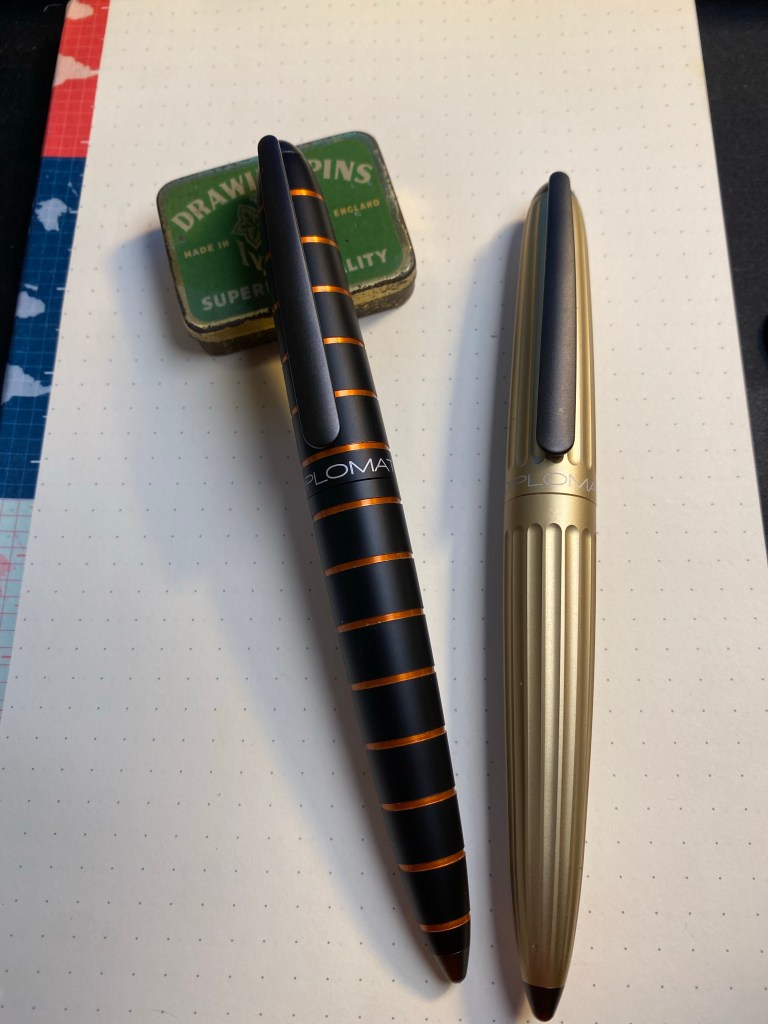
Another pen purchase that came in at a close second was the Diplomat Elox Rings and the Diplomat Aero (basically the same pen with a slightly different body design). These are wonderful workhorses, and a joy to use.

Diplomat Elox Rings on the left and Diplomat Aero in Champagne on the right.

I didn’t read as much this year as last year, but I did read a few really great books. Here’s a list of a few standouts among them:

  • The Good War, by Studs Terkel. WWII as I’ve never experienced it before – as seen and told by the “regular people” who lived through it.
  • Cloud Atlas, by David Mitchell. Not an easy read by far, but a breathtaking work of fiction nonetheless. Worth the effort.
  • The Brief Wondrous Life of Oscar Wao, by Junot Diaz. A surprisingly moving tale of a character that you won’t expect to fall in love with, and yet you will.
  • Wolf Hall, Bring Up the Bodies, by Hillary Mantel. Why should I care about Thomas Cromwell? How can you not care about Thomas Cromwell after reading these books? An era and place come to life, in a world filled with complex and compelling characters.
  • Nomadland, by Jessica Bruder. Watch the movie AND read the book. Both are excellent, and both offer a chance to look into a part of modern living that we were hitherto oblivious of.
  • Project Hail Mary, Andy Weir. Just a fun and interesting sci-fi novel. If you enjoyed the Martian, you’ll enjoy this.
  • Underland, by Robert Macfarlane. What happens in the deep dark places beneath our feet? A lyrical work of non-fiction.
  • The Song of Achilles, by Madeline Miller. The love story between Achilles and Patroclus told with great gentleness and heart.
  • Klara and the Sun, by Kazuo Ishiguro. An understated and masterful work of science fiction that explores themes of humanity, identity, friendship and love, among other things.
  • Harlem Shuffle, by Colson Whitehead. How can you write a heist novel that isn’t a heist novel but rather a story of a person, a time and place? Whitehead’s writing is exceptional, and Harlem Shuffle is just another proof of that.
  • The Expanse books 1-4, James S.A. Corey. I haven’t read book 5 and onwards yet, but I did read the first four books of The Expanse this year. They aren’t perfect (Holden is a bit much), but they are very good at world-building, with interesting and unique plots and complex and believable characters (apart from Holden, who is a bit much). The books are each written in a different style, and they improve with time.

In terms of art supplies, 2021 was the year of the super-granulating watercolours from Schmincke, and also when I added Daniel Smith watercolours to my palette. Schmincke just announced that the super-granulating colours will be permanently added to their offerings, and that they are issuing three more permanent sets into this series (Desert, Shire and Vulcano), and another limited edition set, Haze.

I’ll be talking about planning for 2022 on one of my next posts. In the meanwhile, have a great new year, and don’t forget to take time and breath.

Weekly Update: Winter Cats and Yayoi Kusama

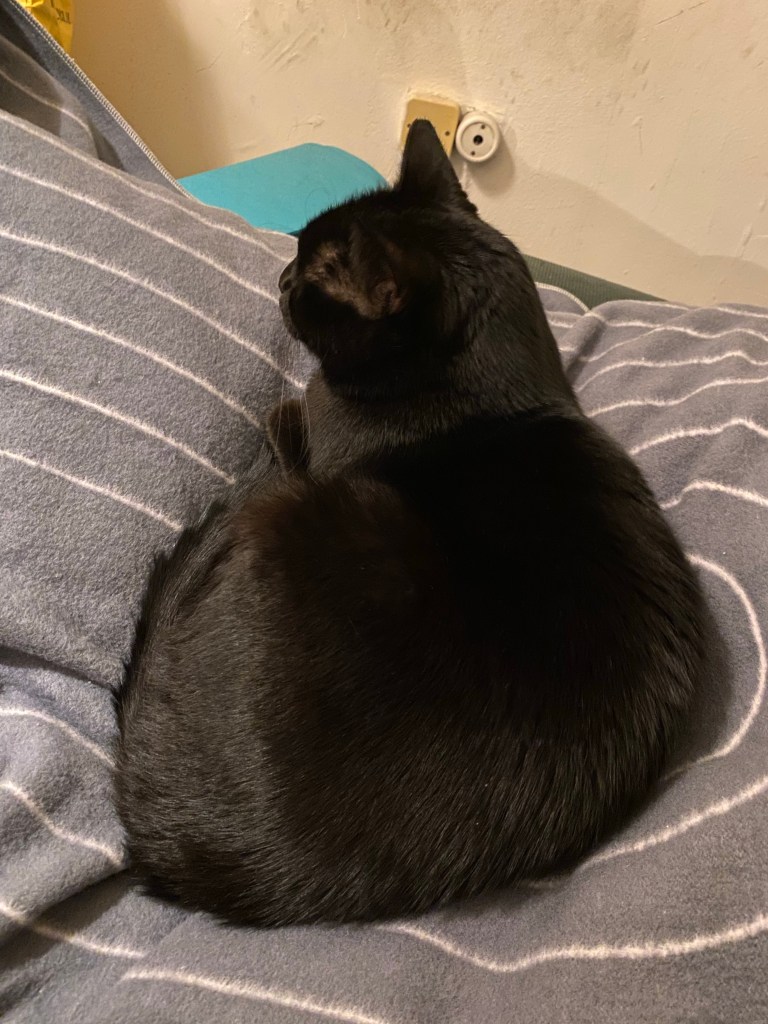
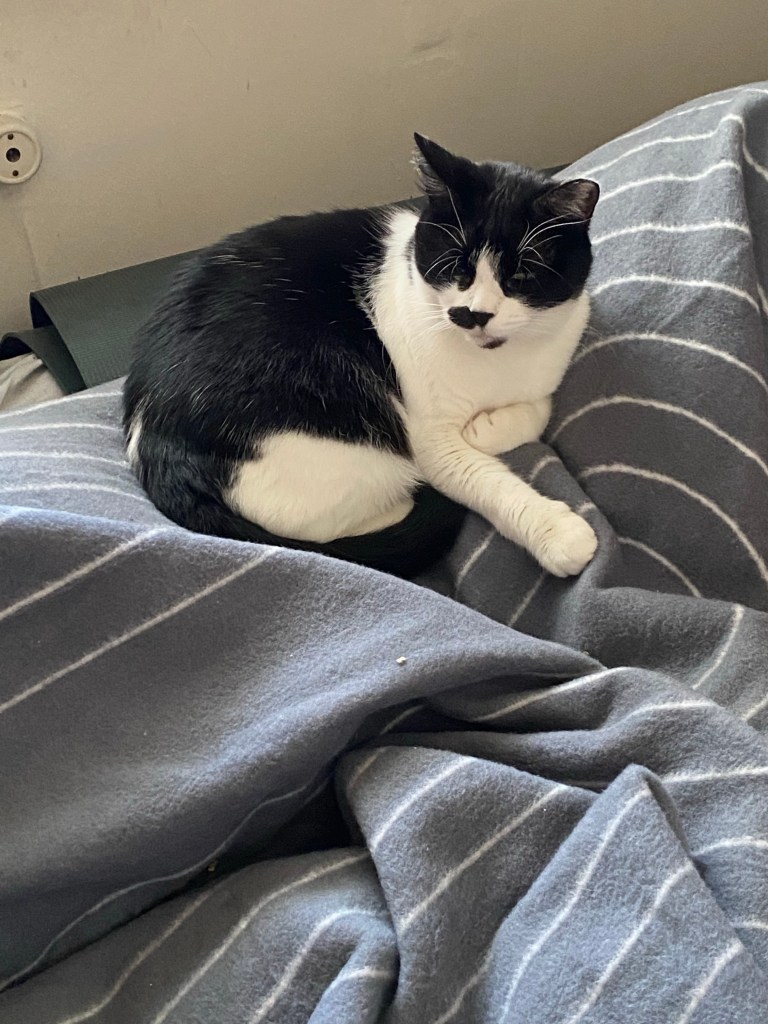
We’re still not getting a real winter yet, but I did get some new Rumpl blankets in this week and that was enough to get my cats into full winter mode. Hopefully there will be some rain next week to justify their need for winter cuddles.

The gentleman.
The lady.

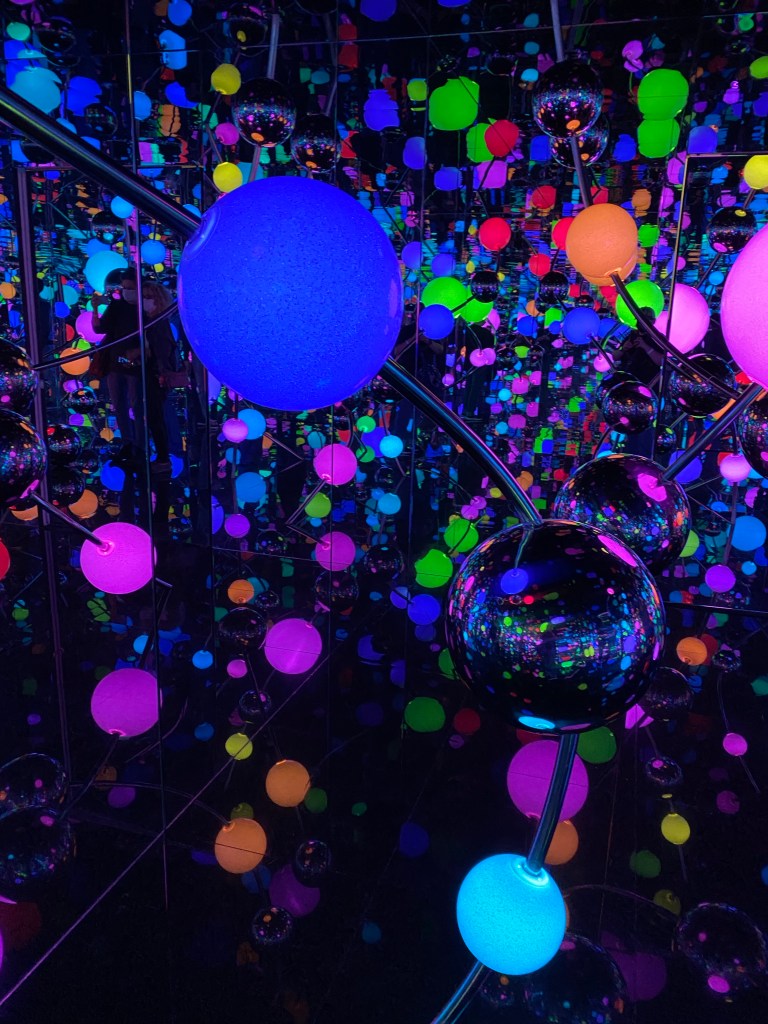
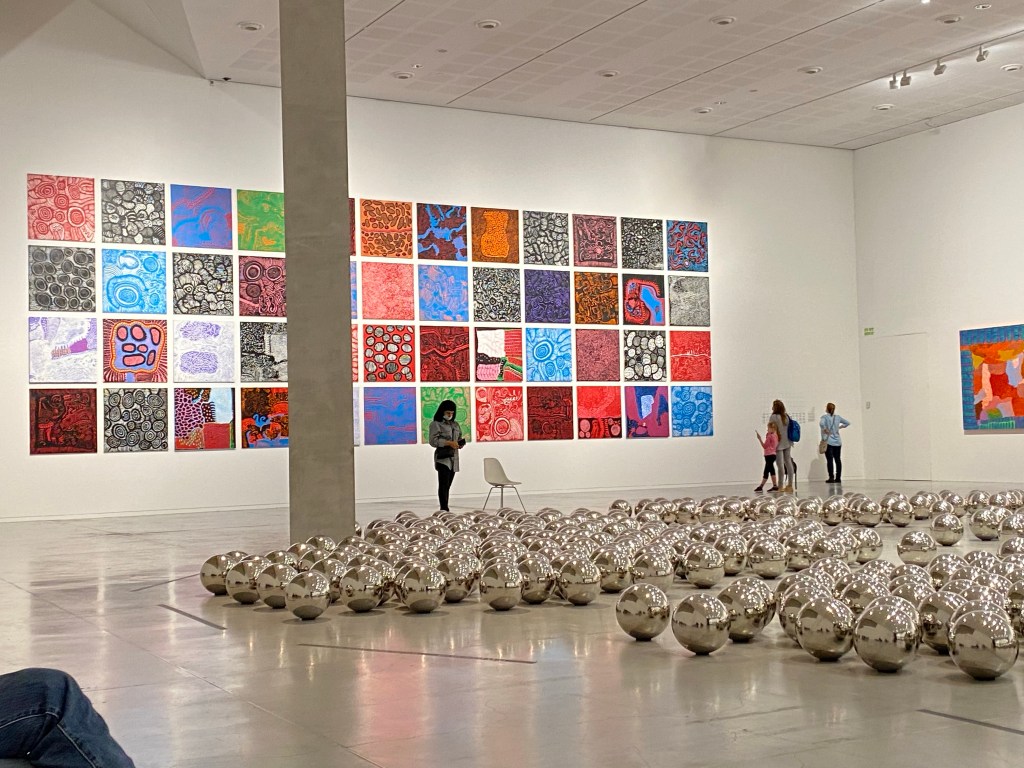
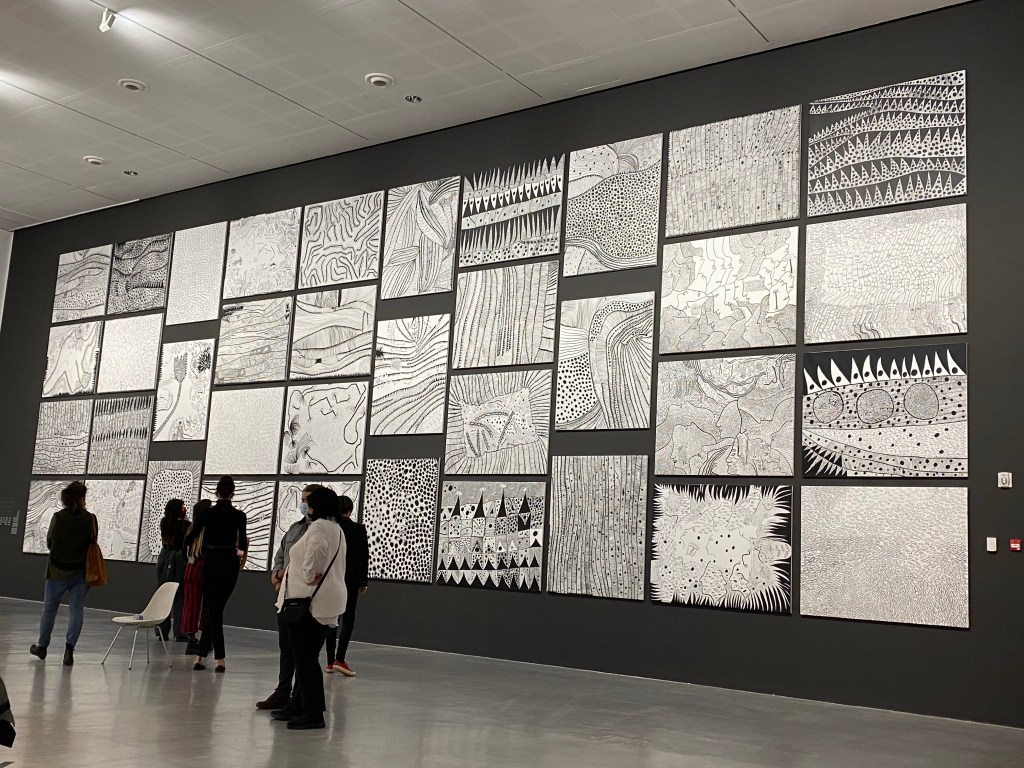
I dared to venture out on the day before my Chemo session, because I really wanted to see the Yayoi Kusama retrospective in the Tel Aviv Museum of Art. I arrived when the place was relatively empty, and wore a mask the entire time (as did almost all of the other visitors). The curation of the exhibit was phenomenal, and I enjoyed it very much. I loved seeing Kusama’s early sketches in her sketchbook, as well as her later sculptors and rooms. There was a new room, created specifically for this exhibit, the “Galaxy” room, which was my favourite:

Inside the Galaxy room.

Walking through the museum became a very colourful and oftentimes surreal experience. There’s nothing like being dwarfed by pink tentacles:

Pink tentacles in the atrium.

The penultimate room was phenomenal, with a steel ball exhibit on the floor that toyed with people’s need to view themselves (so many people lay down on the floor to take selfies), and two mosaics of Kusama’s paintings: one colourful and one in black and white, on opposite walls. It was very striking.

With my treatments getting progressively harder, flu season (yes, I’m vaccinated, but that doesn’t necessarily guarantee that I won’t get sick), and a new Covid variant on the rise I doubt that I’ll be going out much for the next few months. That just makes my visit to this colourful, interesting and joyful exhibition even more precious to me.

Health

I had my 10th Chemo treatment (the second treatment of the fifth cycle) on Tuesday, and this time I asked to get less steroids. So instead of a really, really, really, really, really large amount of steroids, I was given a really, really large amount of steroids. It was a risk (the steroids serve as anti-emetics and general boosters to help me get through the treatment), but so far it has paid off. I could sleep better and longer after the treatment, which helped me feel a little better. The treatments are getting harder, and as I suspected I now no longer have a break in my neuropathy. As I’m typing this, I feel about four out of ten fingers. The secret to typing like this is to be like Wile E. Coyote and not look down or think about typing as I type 🙂

Reading

I got less reading done than I expected this week, and I’m only about a third of the way through James S.A. Corey’s “Cibola Burn” (the Expanse #4). I also need to dedicate some time to update my Goodreads reviews. I have a few notes on books that I’ve read that I’ve yet to publish there. Luckily my reading journal is still around to help me keep track of things.

I’m enjoying the way that the Expanse novels unfold, with 3-4 viewpoints in each one, and large systems of government, military and industry are made human without being overly simplified.

Writing

I journaled a lot this week, but other than that I didn’t get any writing done. My neuropathy meant that holding a pen has become virtually impossible since Thursday evening. I really miss holding and using my pens.

Currently Inked

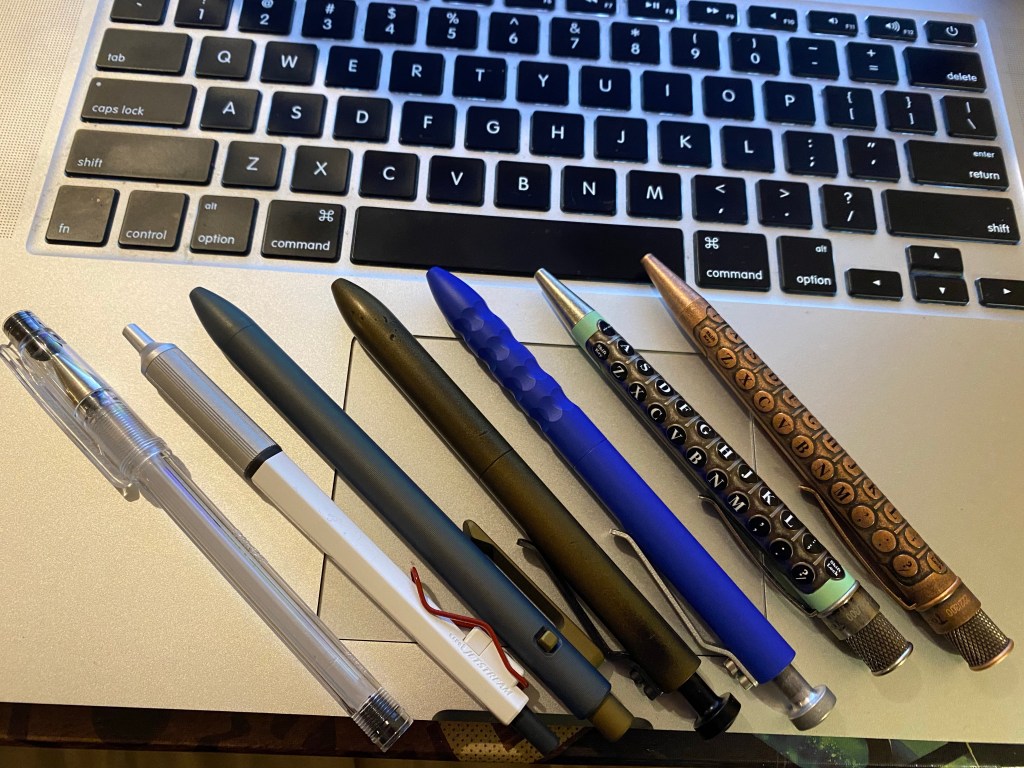
I’ve been focusing on my standard pens this week (while I could still hold them). The Retro 51 Typewriters have Monteverde gel ink refills installed, and I’m really enjoying them (I don’t like the standard Schmitt refill). The Karas Kustoms Periwinkle Bolt V2 has a dragonskin grip and a cerakote finish and is gorgeous. The other Bolt is the steampunk one, which I love and use regularly. The Tactile Turn Nautilus is the most unique and gorgeous of my standard pens, and the click mechanism is a lot of fun to fidget with. The Uni Jetstream Edge was a pen that I wasn’t expecting to enjoy very much, but I ended up writing the most journal pages with it this week. I can’t explain why I love writing with this pen so much, but I just do. The same can be said of the Pilot Hi-Tec-C next to it, which I’m about to run dry (a pen achievement, if ever there was one). The barrel is cracked, of course, but somehow the tip has remained intact and the gel ink refill hasn’t yet inexplicably stopped flowing.

From left to right: Pilot Hi-Tec-C, Uni Jetstream Edge, Tactile Turn Nautilus, Karas Kustoms Steampunk Bolt V2, Karas Kustoms Periwinkle Bolt V2, Retro 51 Typewriter green, Retro 51 Typewriter copper.

Other Things

I’m hoping that my neuropathy improves next week, so that I can get back to journalling. I’ve started working on some long term projects and with the encouragement of my therapist I may actually get back to planning more than two weeks ahead.

The seeds in my garden have started germinating, which is always a joy to see. Monday is going to be very dry and warm so I’ll have to keep a look out for their health and mine then.

As is usual for a Chemo week, a lot of my time was spent trying to fall asleep and failing, so productivity wise it’s not the best. Hopefully next week will be better.

Weekly Update: Acrylic Markers, Hilary Mantel and Podcasts

I was planning on posting a review this week, but I had chemo this week and it really took me to town. Two days of practically no sleep (due to steroids) and the terribly hot and dry weather we’ve been having meant that I had to spend more time than I planned letting my body recover from the wallop it received mid-week. As I’m typing this I can barely feel my fingers due to neuropathy (a common side effect of my treatment), which means that typing, writing and drawing have been a challenge.

HOWEVER, I’m still here, still smiling, still picking up my pens and journalling, and even messing around with new art supplies that don’t require the precision and control that my beloved watercolours do.

Sakura Pigma BB brush pen on a Maggie Rogers Field Notes sketchbook.

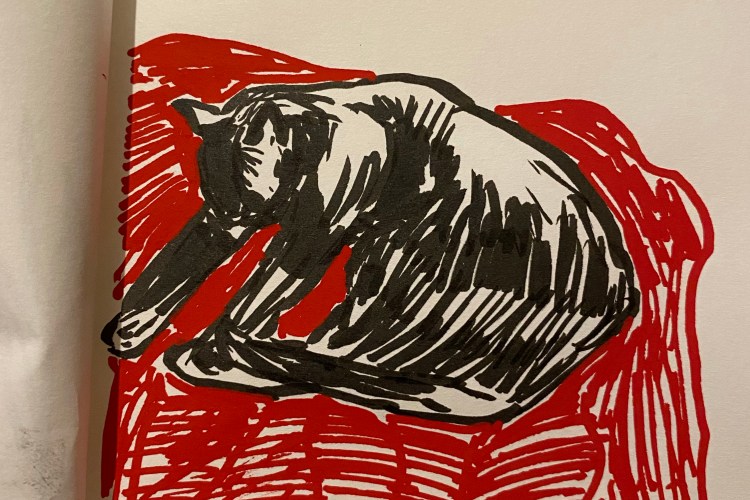
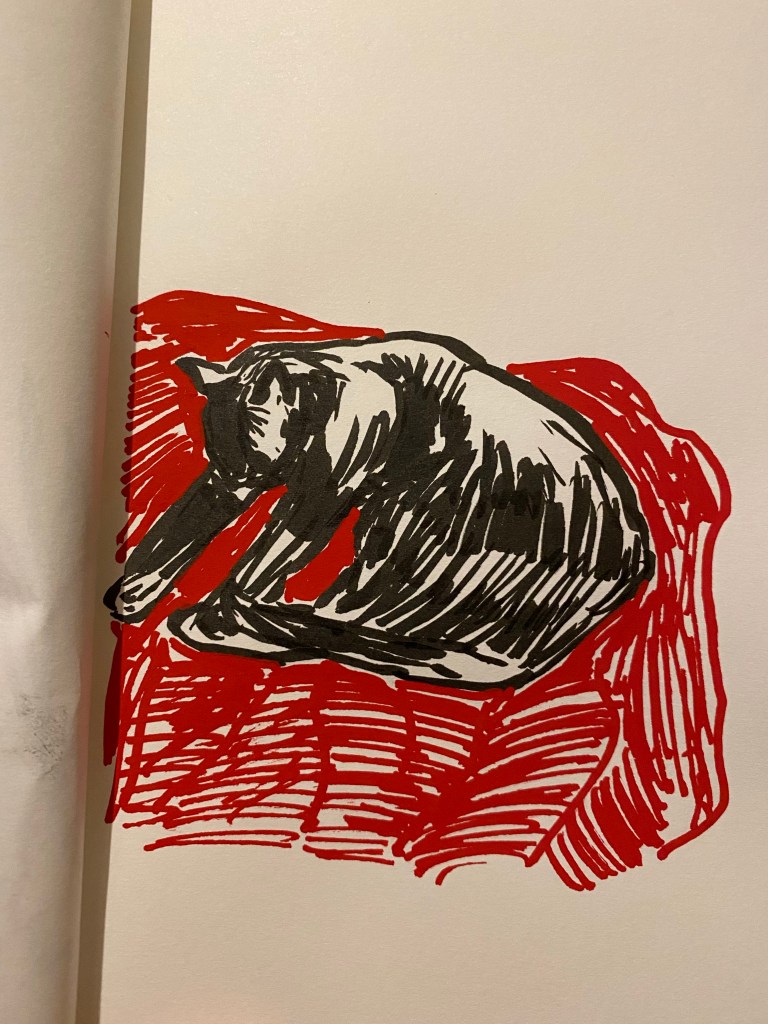
I’m not sure if I’ll dedicate a review to the Sakura Pigma BB brush pen, but I will say that it’s a super soft, relatively wide brush pen that is very expressive and fun to use for spontaneous sketching. The Marabu Yono, which I got as part of a notebook package from Cult Pens, is a delight. I’ve never used acrylic markers before, and I love using this one. This is definitely opening up a whole world of possibilities for me.

Sakura Pigma BB brush pen and Marabu Yono acrylic red marker on a Maggie Rogers Field Notes sketchbook.

Health

I got Chemo number 9 of 12. Had a scary new side effect of the treatment or the blood thinners I’m on (likely the blood thinners), but I weathered that too. Next week I hope to get back to walking after the few days off I took for recovery (and because of hazardous weather). Also got to see a psychologist that works with cancer patients. Hopefully he’ll help me deal with the anxiety of what lies ahead.

Reading

I was planning on reading “Cibola Burn” by James S.A. Corey but Hilary Mantel’s “Bring Up the Bodies” has utterly mesmerised me and I haven’t been able to put it down. The quality of the writing, research and characterisation is evident in every page, and the result is a bewitching narrative – no mean feat considering the fact that very little happens in the book and the ending is well known.

Writing

None whatsoever apart from my journal and my three good things, and even they were backlogged for half the week. A combination of sleeplessness and neuropathy (which, if you’re wondering, feels like what your hands feel like after they’ve grown numb and then started to prickle back to life) made writing unattainable for most of the week.

Currently Inked

No change from last week because I didn’t write much. I’m about to write my Kanilea dry, after which I’ll probably hold off inking any new pen since I’m gearing up for my new Diamine Inkvent calendar. Like last time, I’m planning on filling 25 pens with 25 inks, and unlike last time I’m planning on writing them all dry.

Other Things

I’ve been building Lego sets as a form of meditation and relaxation. I’m currently working my way through the Lego Harry Potter’s Collector’s Edition, and will probably finish it next week.

I’m starting to get back to podcast listening. I used to listen to 3-4 hours of podcasts a day, every day. When I learned that I had cancer I stopped listening to podcasts entirely, and I’ve discovered that there are still podcasts that I can’t listen to right now. On my current listening list are: The Pen Addict, Maintenance Phase, and Reconcilable Differences.

New Reading Journal

Yesterday I finished my fifth reading journal, and so I thought that it would be a good opportunity to write a post about how I set up my reading journal.

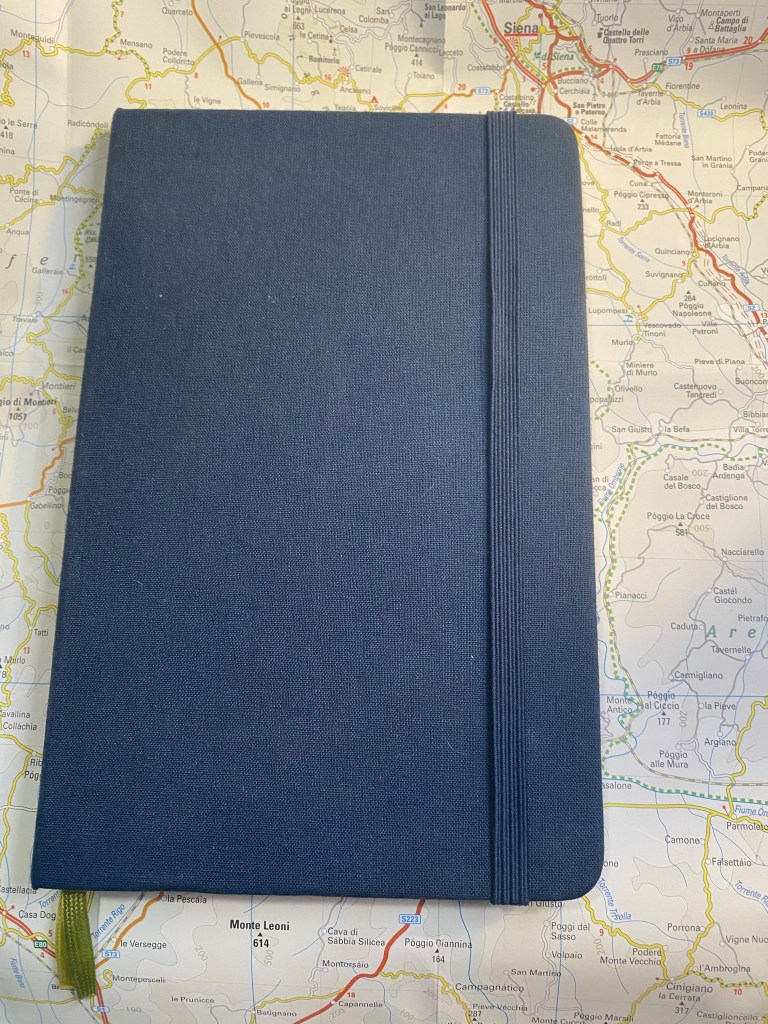
I use my reading journal to keep track of what I read and to encourage me to read more. This is the journal that I’ve just finished, a Moleskine Two-Go:

Moleskine Two-Go. The perfect size and format for my needs.

I used to use a Field Notes Arts and Sciences notebook for my reading journal, but once I got back to reading more it made sense to move to a larger journal. For the past three years I’ve used the Moleskine Two-Go, and I fill one book journal a year (70 books are logged in each notebook).

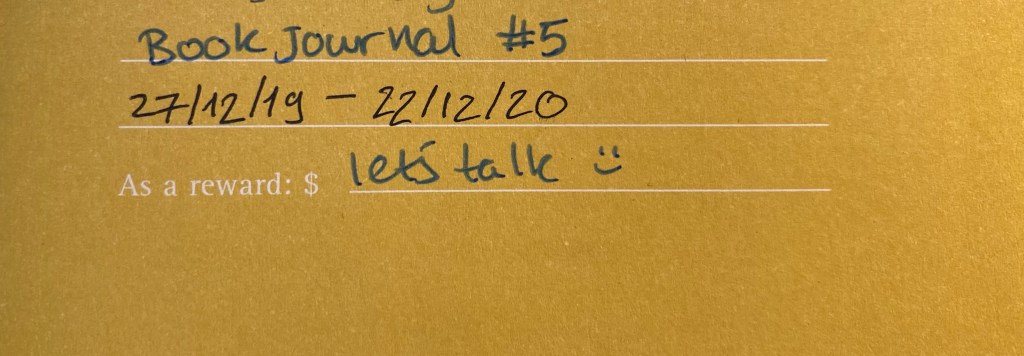
Start and end date for this reading journal.

This is the setup in my old reading journal. Three pages of index:

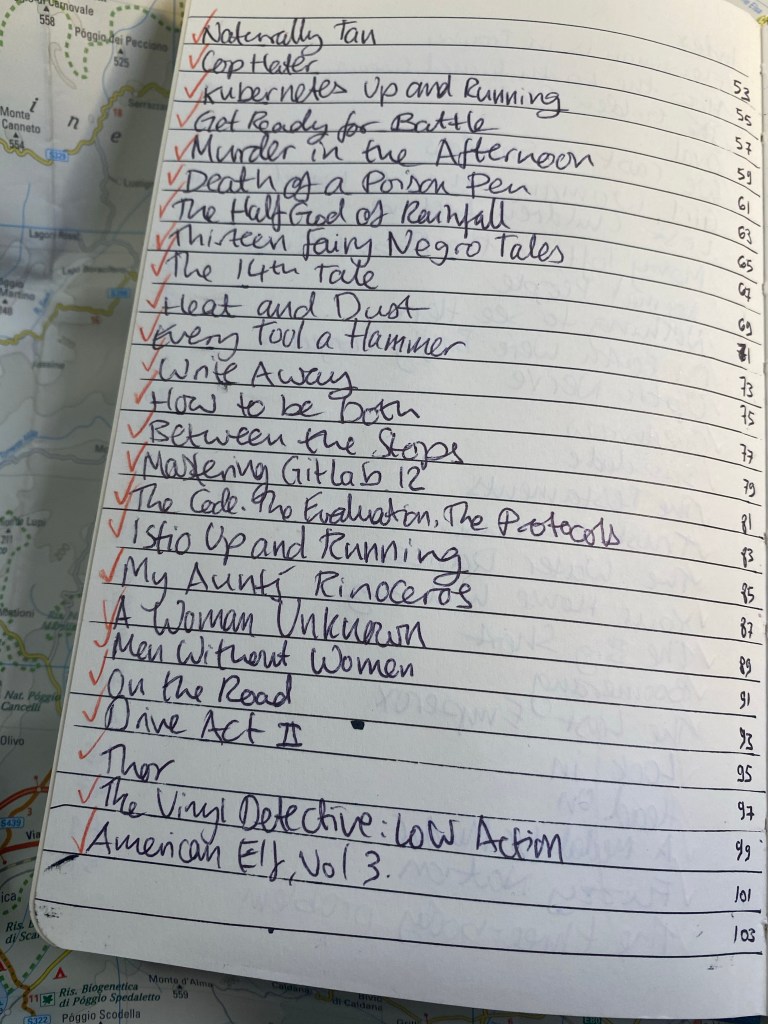
First index page. Red checkmarks for books that I’ve read.

The Moleskine Two-Go comes with pages that are blank on one side and lined on another, which is perfect for my use case, except for the second index page, which I need to rule myself:

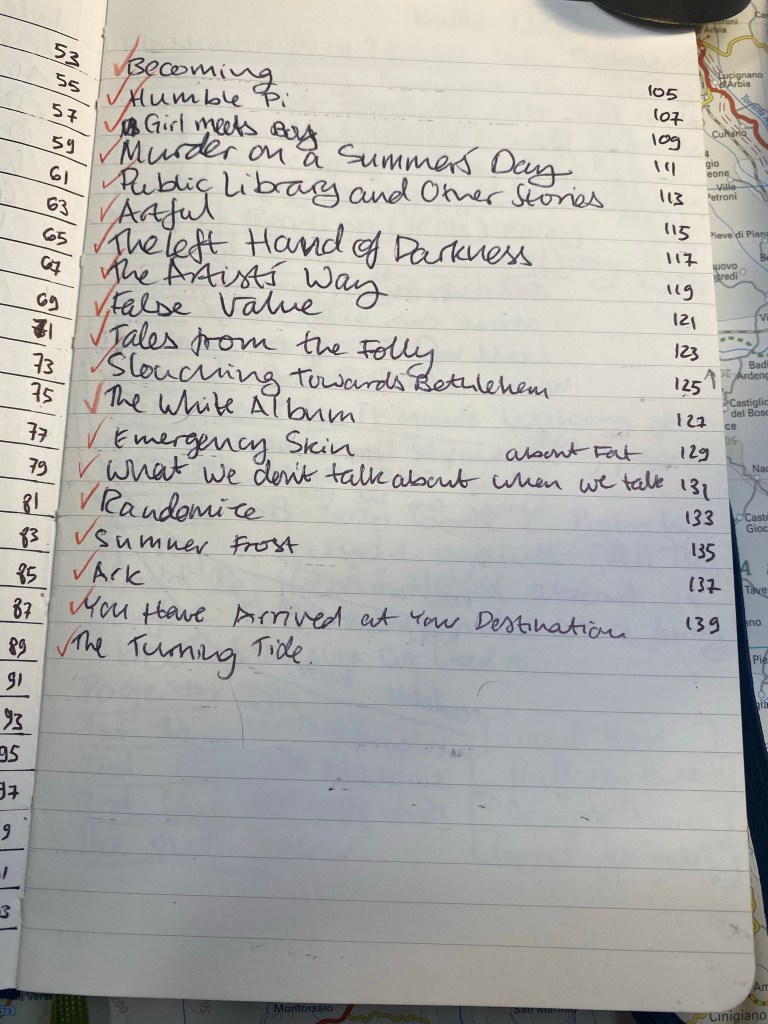
Ruled second index page.

I missed a line on the second index page, so the index numbering came out a little wonky. It’s only for me, so I don’t mind.

Off by one error in my index.

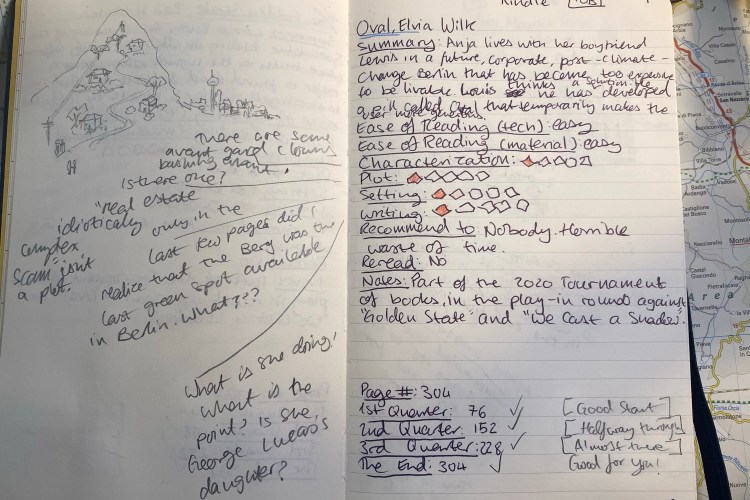
Here’s a sample of a complete page. I talked more about my thoughts behind the design in a previous post, but you can get the gist by looking at this sample. I like drawing something that captures the book for me on the opposite page, which is why I love the Moleskine Two-Go format.

I remember really not liking this book, and this is a reminder of why.

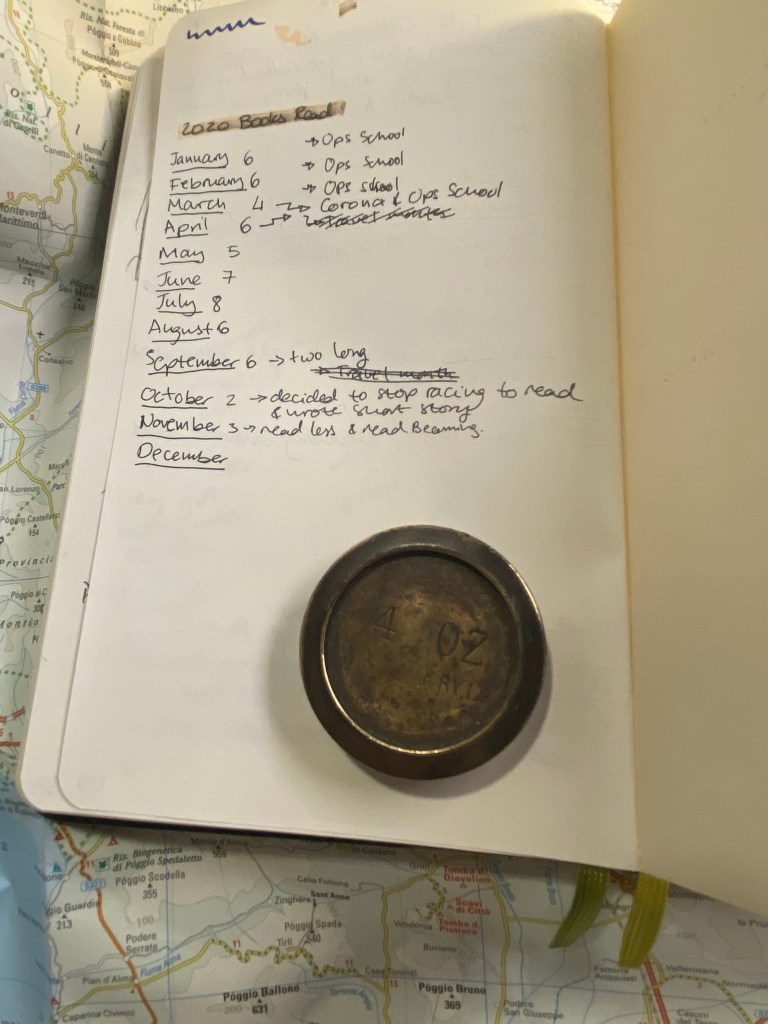
At the very last page of the journal I keep a log of how many books I read that month. It’s ten books so far for December, but the month isn’t done yet so that line isn’t filled.

Number of books per month tracker.

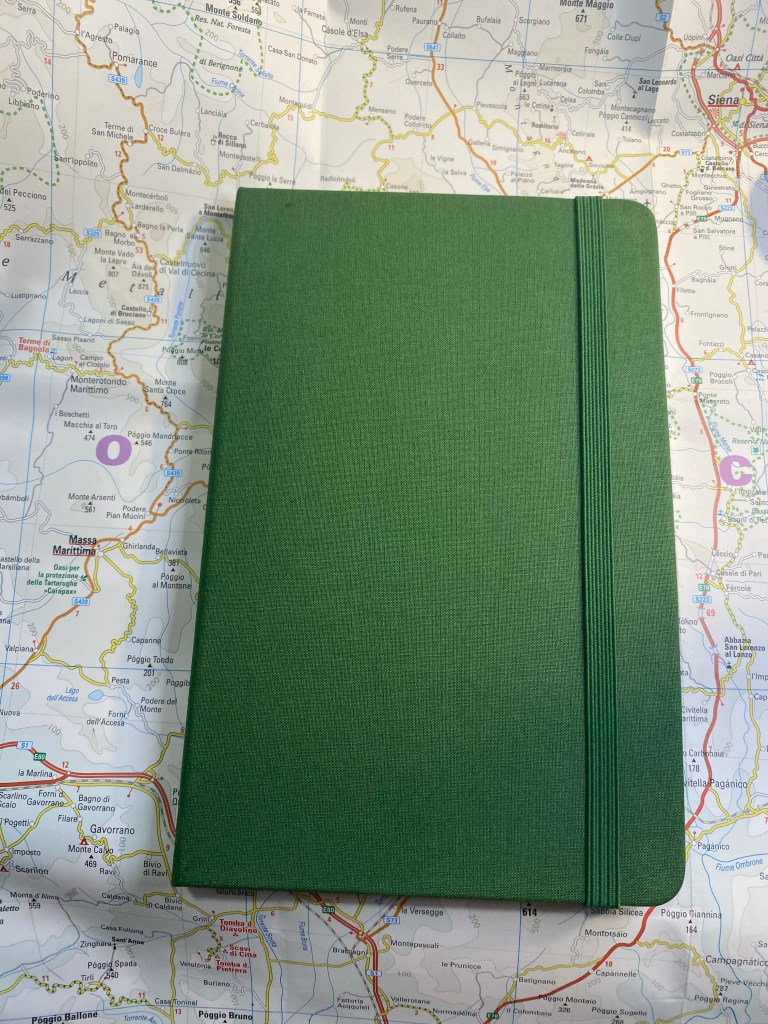
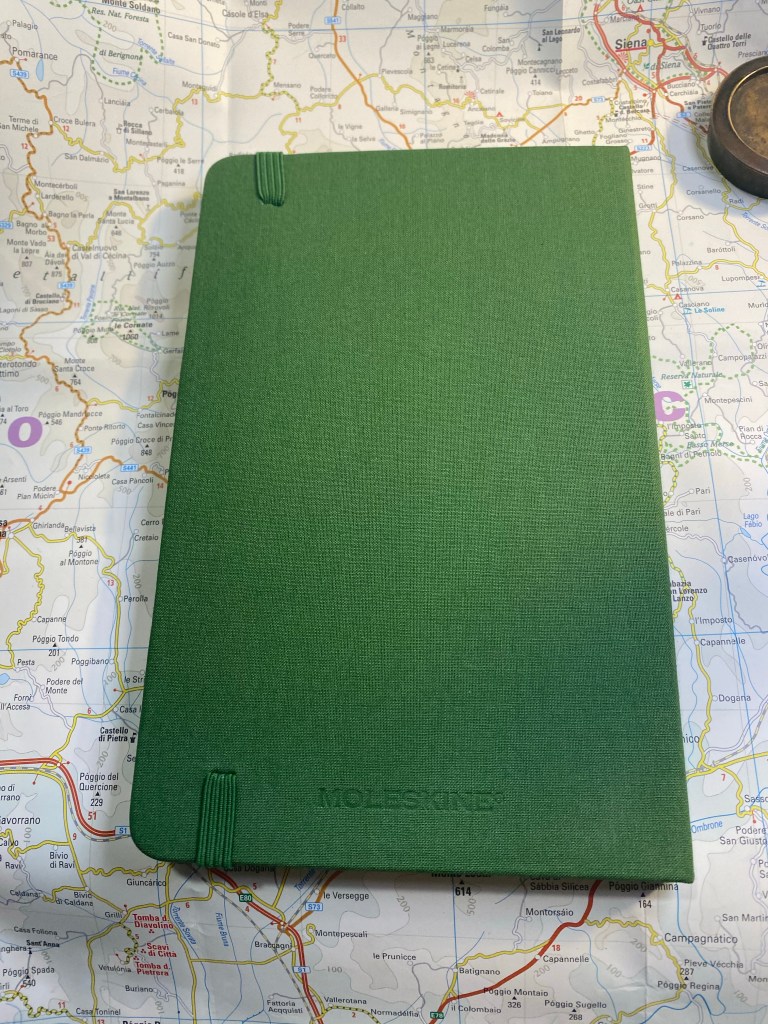
Here is my new reading journal, a Moleskine Two-Go, this time in green (my previous ones were in light grey, dark grey and navy):

Front cover.

I love the texture of the fabric colours on this, and the shade of green is interesting. The two contrasting bookmarks and the endpapers are grey.

Back cover

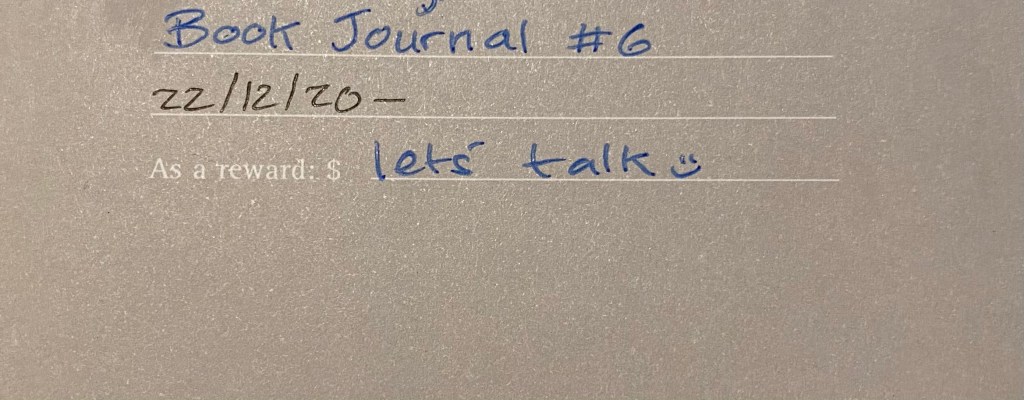
The first page, marking when I started the notebook and which journal number it is. This notebook doesn’t leave my desk yet I still write my name and email in case I misplace it somehow.

Front page

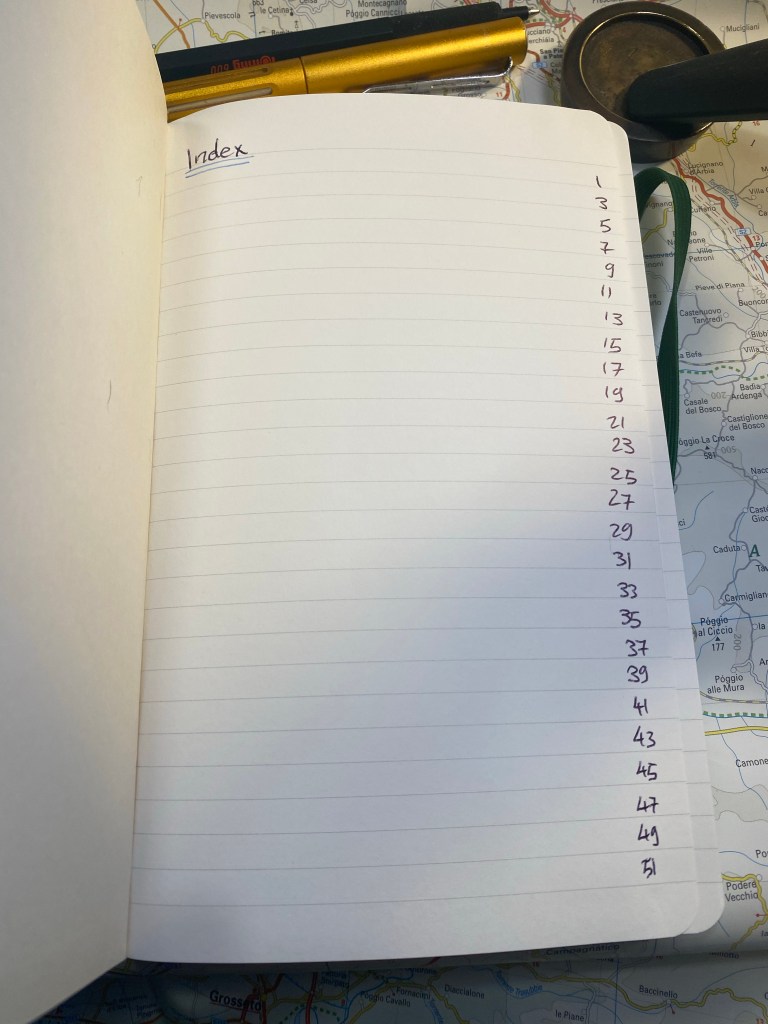
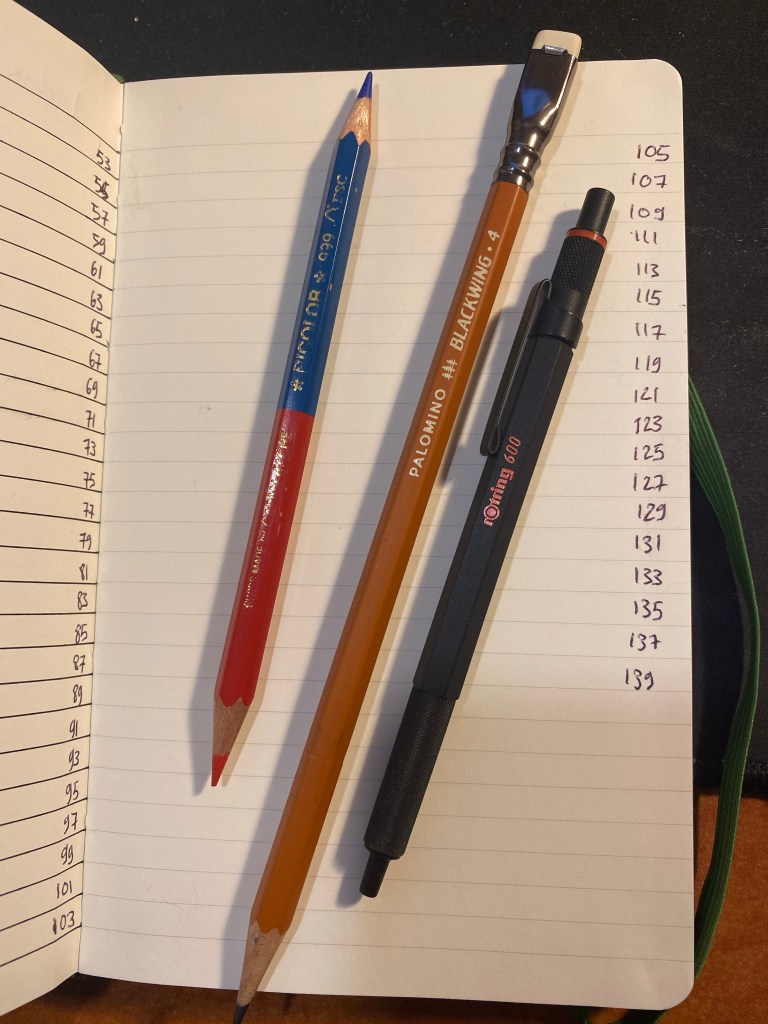
Next comes the index page. Since this is my third Two-Go reading journal I already know to number the pages until 139 (I number odd pages only, since my reviews are on odd pages), which comes out to 70 books.

Index page.

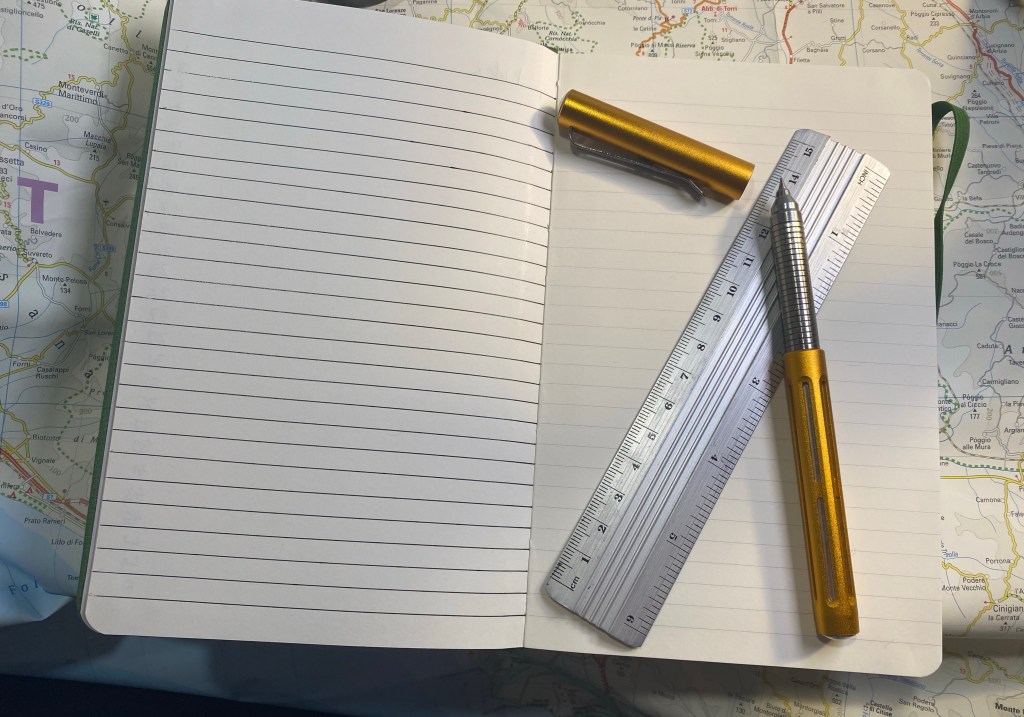
I rule the second page, because I tried just winging it on the first year and it didn’t come out great.

Spoke pen for the win.

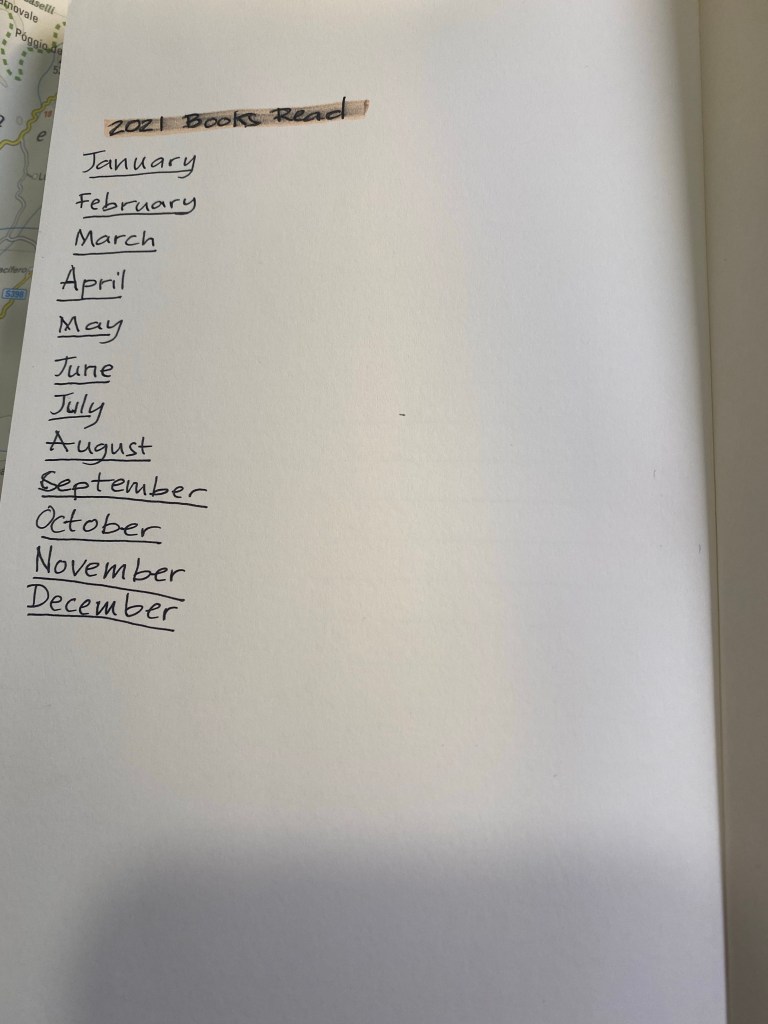
On the last page I create my books per month tracker:

Zebra mildliner highligher smears gel ink, but I still like it.

I number all the pages of the index, but only the first 25 pages of the actual book journal. I will continue numbering pages in batches as I add books to the journal. The great advantage of using a completely unstructured book here is that I can do whatever I want with it, including starting the numbering after the index pages and not on the first notebook page.

These are the pen and pencils that I’ll be using in this journal. The Rotring 600 is a ballpoint, and the only ballpoint that I regularly use. The Caran d’Ache Bicolor has been my companion in these notebooks for several years. I use it to highlight things, and sometimes in my book scene sketches. I used the Blackwing 611 in my previous reading journal, and this time I’ll be using the Blackwing 4.

Caran d’Ache Bicolor, Blackwing 4, Rotring 600 ballpoint.

The first non fiction book in this journal:

The Good War

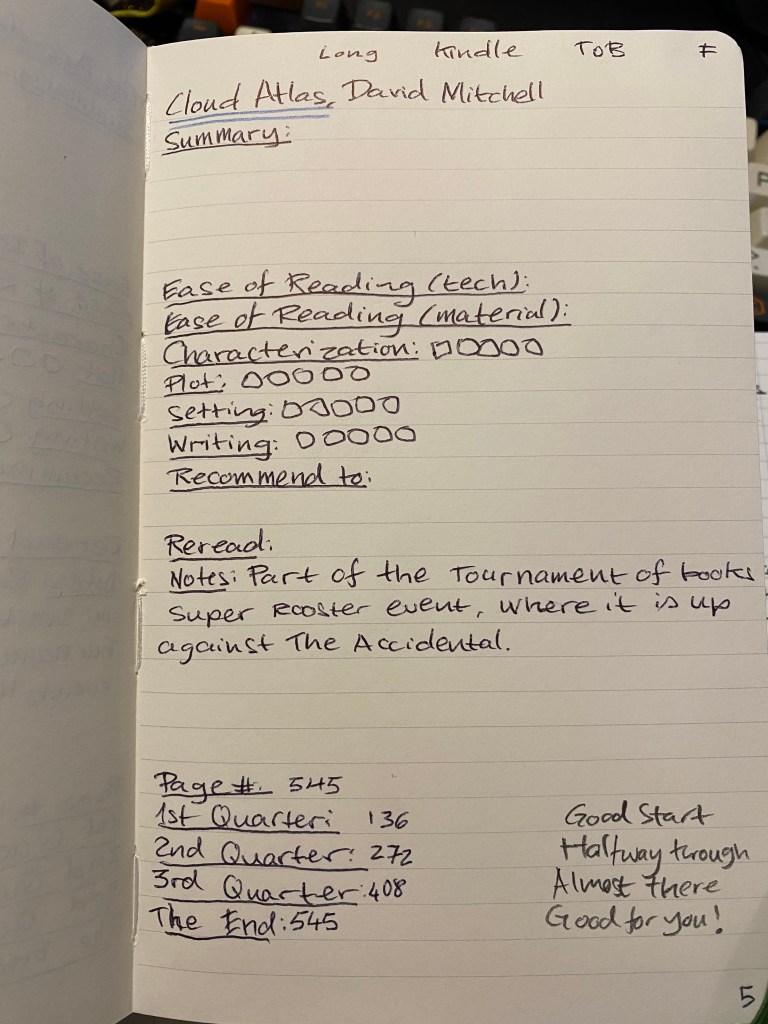
The first fiction book in this journal:

Cloud Atlas. ToB means Tournament of Books.

That’s my new reading journal all set up and ready to go. I hope that this inspires you to keep a reading journal of your own, one that will encourage you to read more and help evoke the memories of reading a specific book.