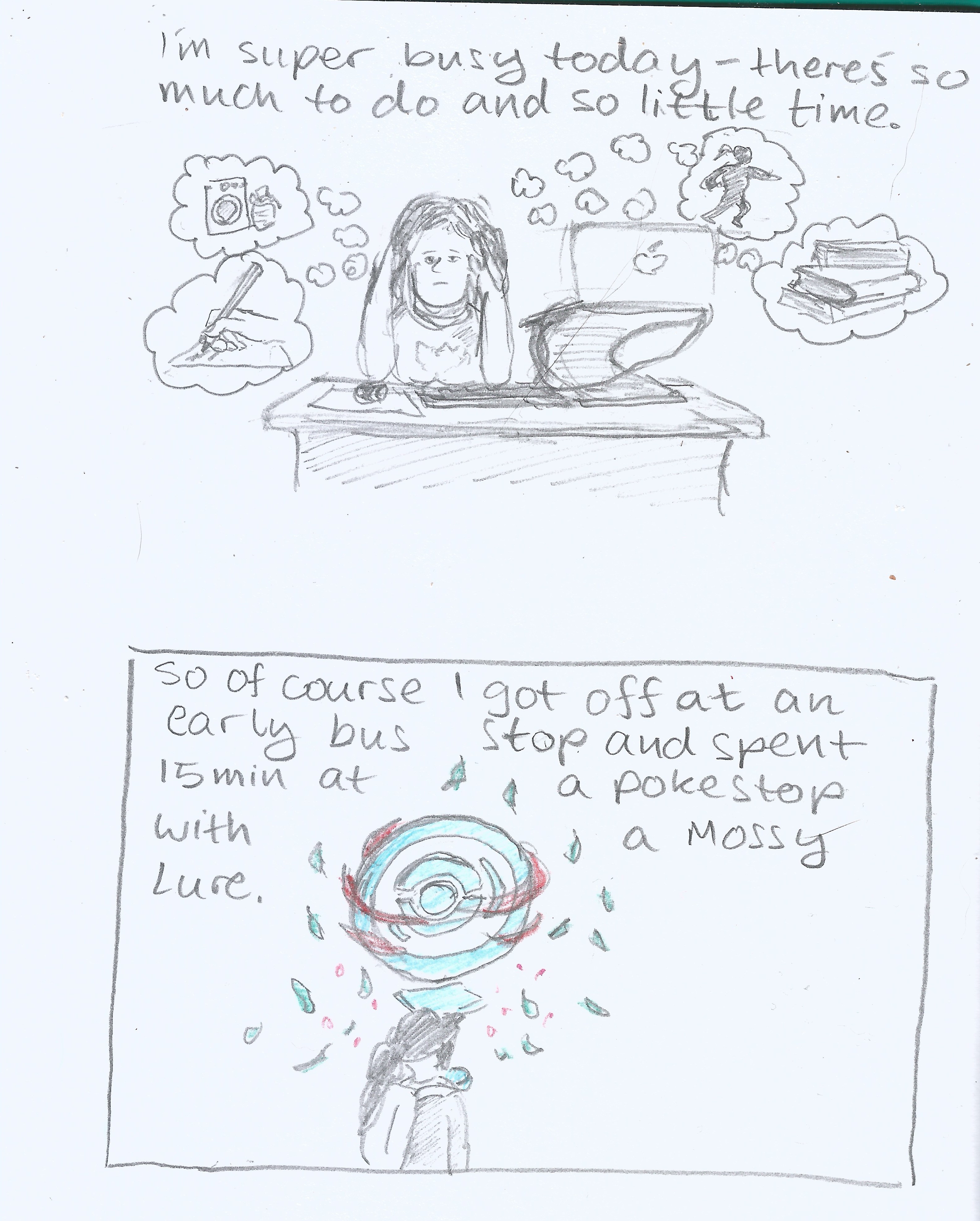
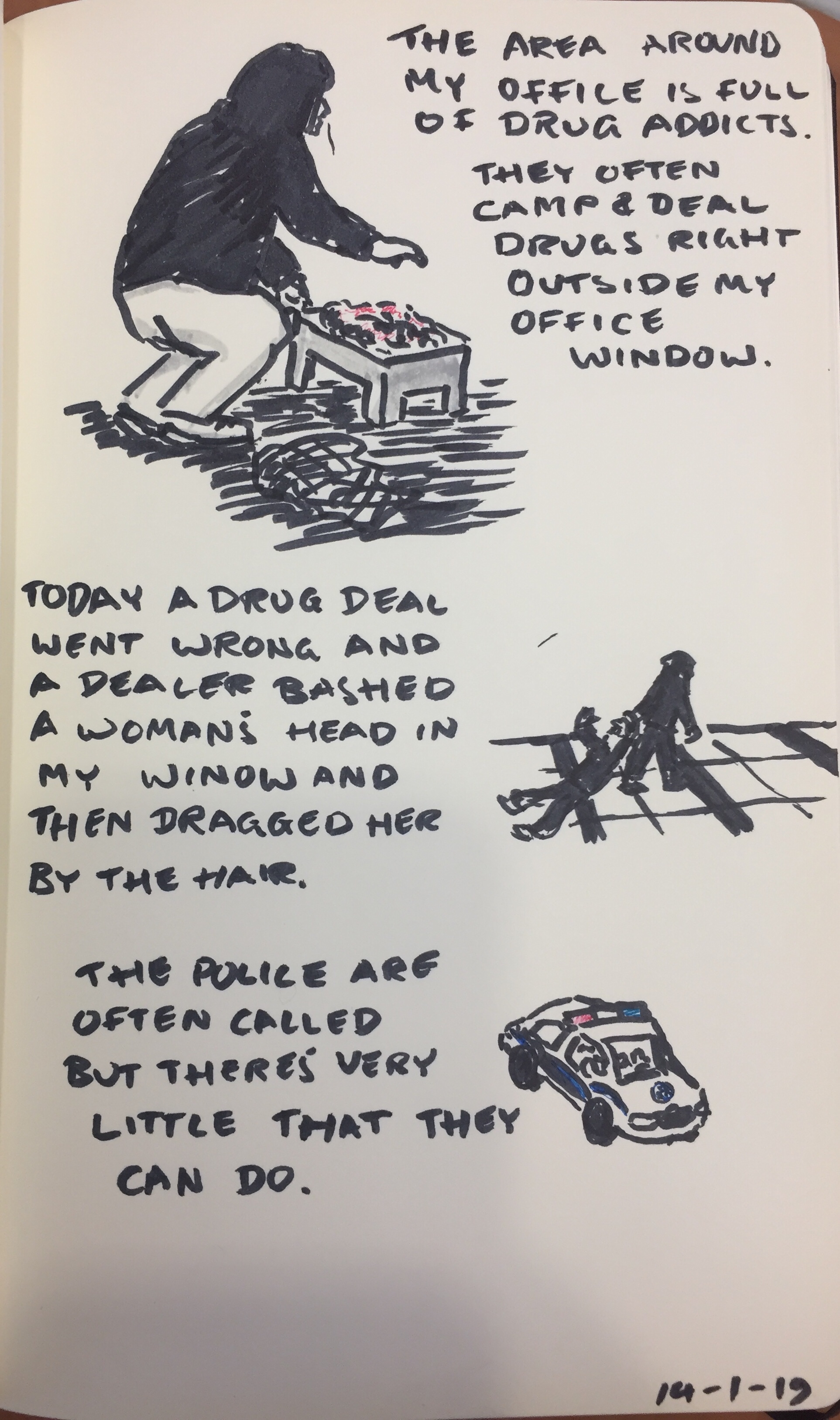
A handwritten journal is an artifact in a way that an app can never be. It’s tactile, endlessly flexible, there to be used and customized in every way possible. Tear out pages, glue stuff in, doodle, scribble, sketch and write whatever you wish however you wish. There’s no autocorrect, nothing editing or censuring your words. Analogue journalling is about freedom, flow and pure creativity.
This is my last day journaling in this journal, and tomorrow I’ll write up the last page and start a new one for the thoughts of that day.
Every time I finish a journal, I use the last two pages to summarize what that journal contains and means to me. Analogue journals are fantastic, but they do make searching for old entries a bit of a chore. Luckily I don’t find myself looking for an old entry that often, and if I do the last two pages help me narrow it down to the specific journal, and the dates and titles to the specific entry.
I also like taking the last few pages as a chance to reflect on the time the journal covers and how things have changed (and I have changed) as the time has gone by. There’s usually about three months in each journal, sometimes more, so that’s a good chuck of time to look back on: short enough to make it simple to summarize and contextualize, and yet long enough to have some impact and meaning. This journal contains two trips abroad, my decision to move into a new career path, and a pandemic that wrecked havoc on everyone I know (including me, of course). That’s quite a lot, even for a journal that covers a relatively long span of time (almost 6 months).
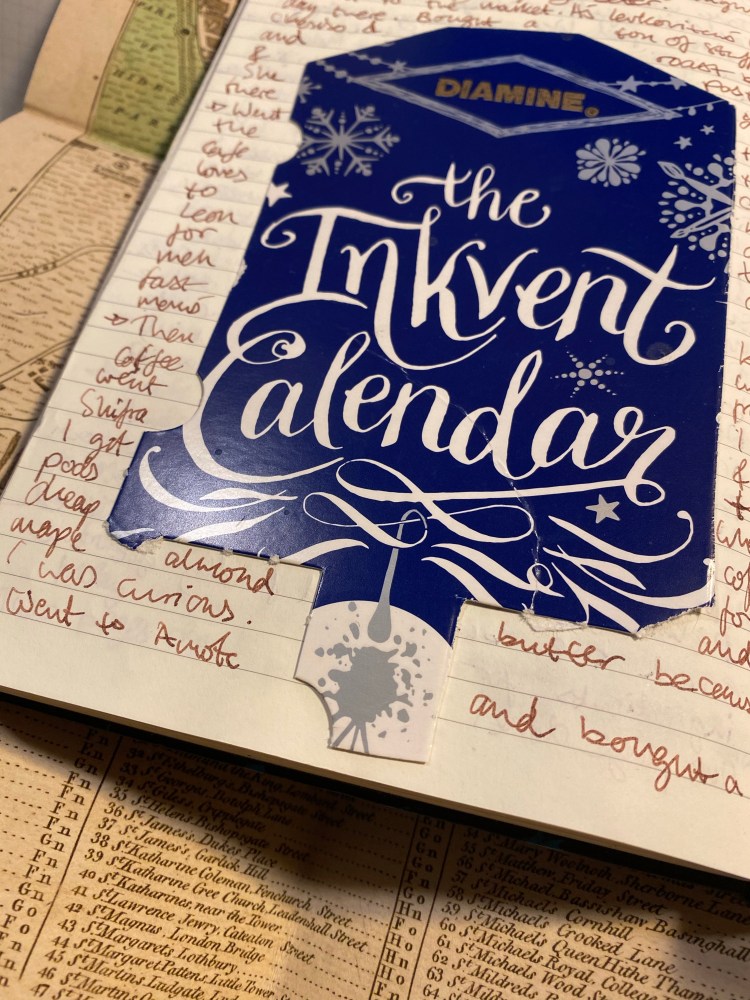
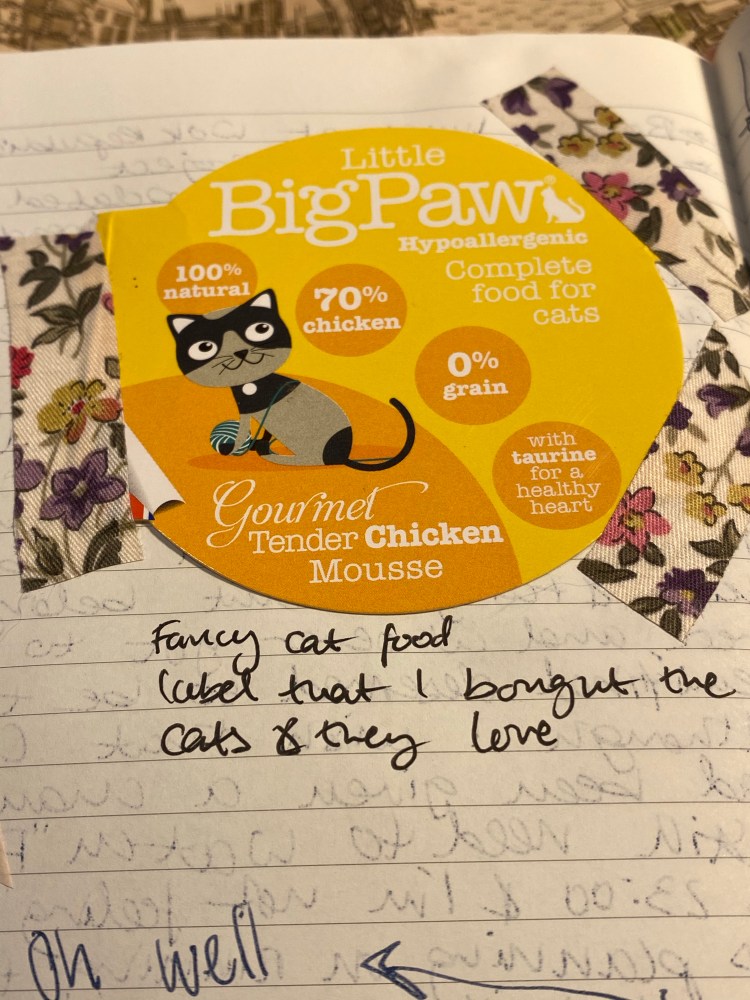
It’s also full of bits and pieces that I stuck in, to make the page come to life. So here’s part of the Diamine Inkvent packaging that I glued in after I opened the last window and before I tossed out the box:
I just ripped out a panel that I liked. This journal is for me, not Instagram, and it can be as messy as I need it to be.
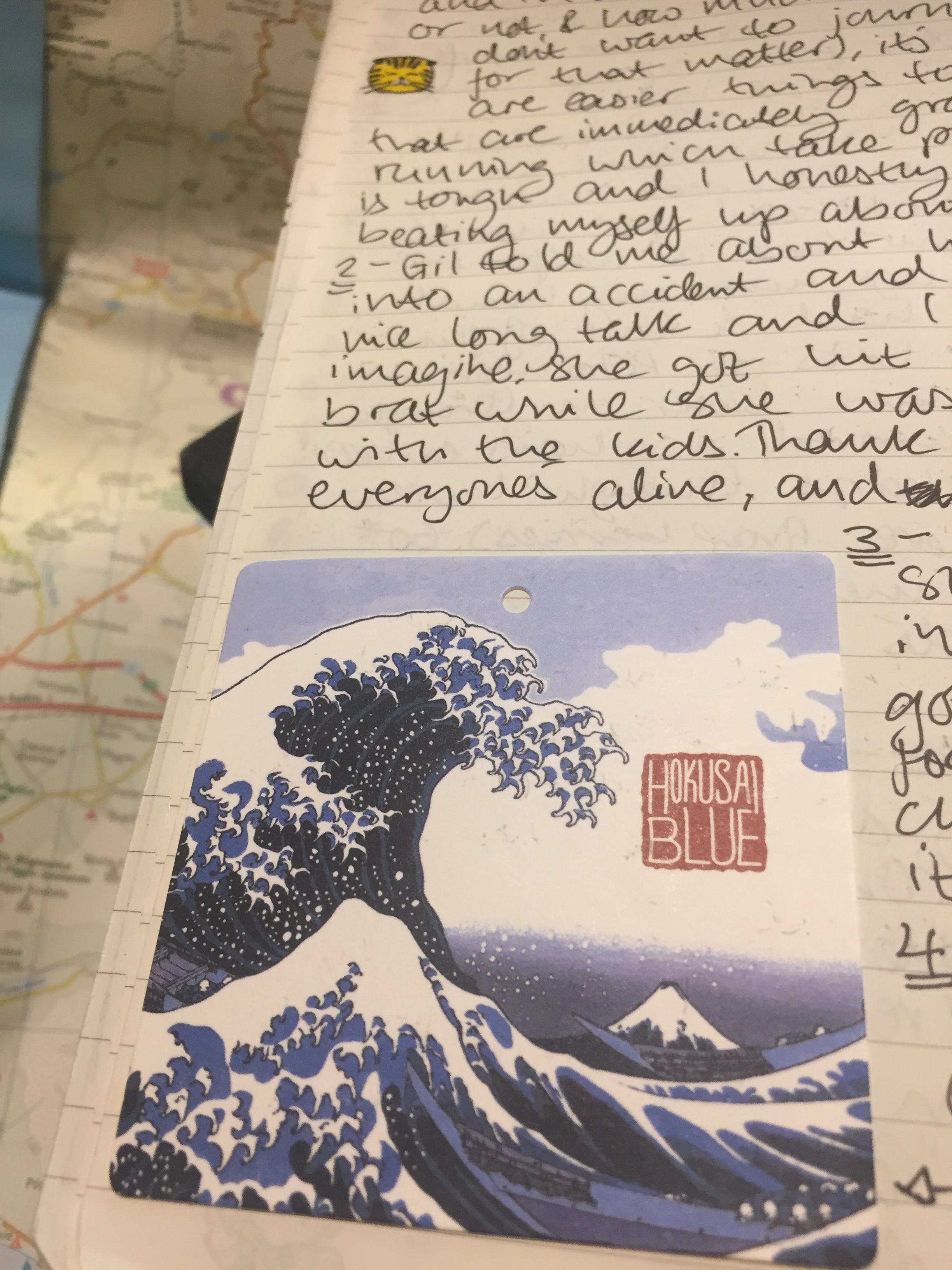
Cool clothing tags also sometimes make it in, especially if it’s from a piece of clothing that I really like:
This tag came of one of my favourite sweatshirts.
I got a lot of Star Wars themedvinyl stickers as a gift near the end of last year and a lot of them ended in my journal:
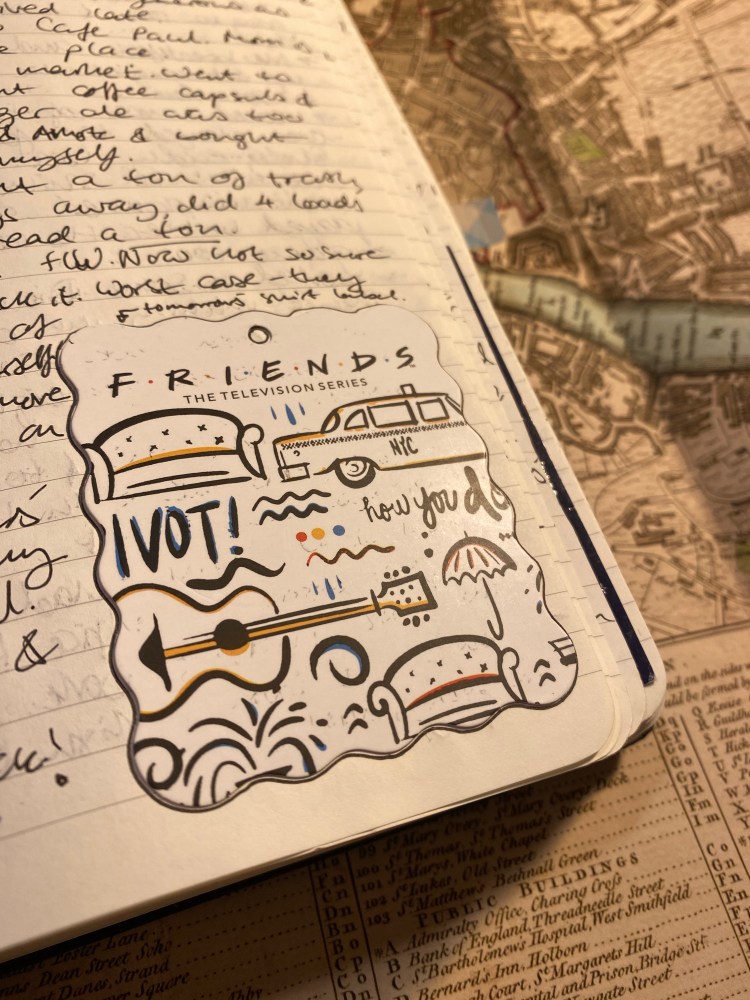
Even the silliest of things can be used to brighten up a page:
See that bleedthrough? It’s fountain pen bleedthrough. I don’t give a damn. If I wanted to write with a Sharpie in here, I’d write with a Sharpie. Use what makes you feel good.
There are little drawings and illustrations everywhere:
Messy, messy handwriting.
And bits and pieces of washi tape that were leftover from other projects:
The point is, tomorrow I finish another journal, a small analogue memory artifact that is entirely mine. I created it for me and me only, and it was worth every minute I put into it.
If there’s one habit that you can pick up during your time at home these days, pick journaling. You’ll end up getting quite a treasure in the end, and I’d be truly surprised if you won’t enjoy the process.
Near the end of one year and the beginning of another various articles and podcasts about New Year resolutions start popping up. They either give tips on how to make resolutions, debunk resolutions in favour of something else, and almost all of them try to sell you something.
This post is about how I create yearly goals (i.e. resolutions), using things that I already have, in a way that has worked for me since 2015.
I wrote about the way I do “New Years Resolutions” in the past. I call them that because I like the non-business ring of “resolution” over the “business-jargon” sounding goal. My “resolutions” are, however, S.M.A.R.T. goals: specific, measurable, attainable, relevant and time-bound. I manage them using the least used notebook that I had lying around (a Baron Fig Confidant), and whichever pen I have at hand. They aren’t made for instagram, rather I use my plain ugly handwriting, and what marking are on the page are there because they’re useful. Over the past five years I’ve attained about 90% of what I set out to achieve, with even an annus horribilis like 2018 not putting me too much off track. My goals are tiered, much like Kickstarter stretch goals, with most goals having a fairly easily attainable first tier, just in case life decides to kick me in a tender place.
I’m going to go over this year’s goals, and last year’s goals (apart from a few that I’ve censored for privacy’s sake). I know that February is usually the month when people give up on their resolutions. I hope that this post will help and inspire people to give yearly goals or resolutions a chance.
My 2020 resolutions
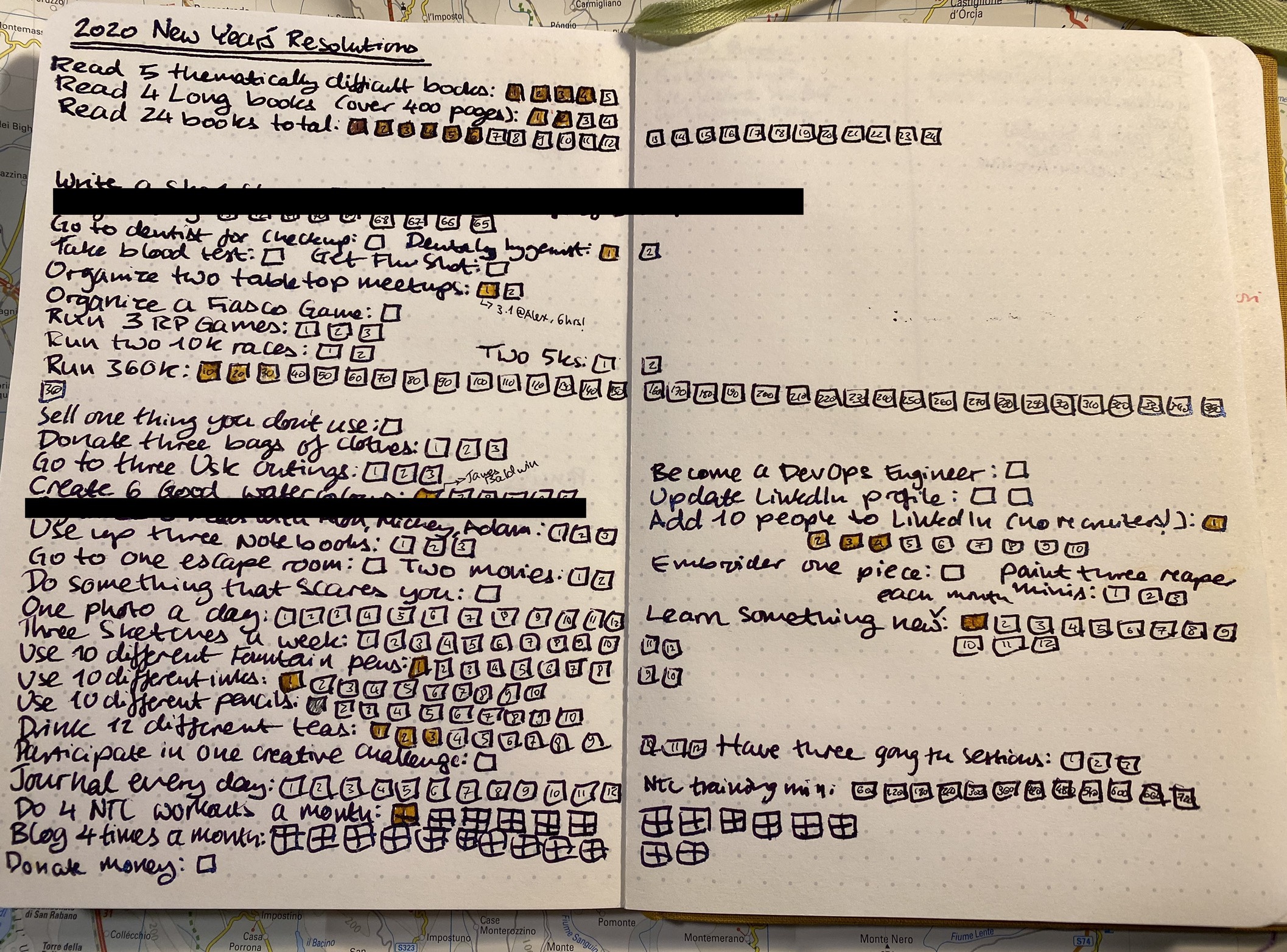
Above you can see my 2020 resolutions. A lot of them are things that appear in almost every year. The professional goals are all new (I didn’t manage my professional goals with my personal goals until this year, and even now only a small part of my professional goals are here).
Every goal at this point only has the basic, first tier goals set beside it. The first three goals for example, all reading related, will eventually have stretch goals. They’re interesting to note here because back in 2016 I only had one reading goal: read 24 books. Once I got back into the habit of reading, I started to challenge myself with longer and more challenging books. These are all my base reading goals. I usually stretch them to around 50 books a year.
Why don’t I start with 50 books then? Because the point of these goals is to build myself up for success. The basic goals are the “even if I have a horrible year I should be able to reach these” goals. They are there to remind me that there’s a tomorrow, and something I can and should do about that tomorrow, even if a family member is hospitalized (or worse). The stretch goals are then built in small increments, reaching to my my final goal for the year.
Why don’t I write my stretch goals down from the start? Because the point is to keep myself focused on the next small step. That’s why things are broken down to the smallest increment that makes sense: one book, 10k, one month.
There’s a reason for each goal on this spread. I won’t go into each one specifically, but they all fall into the following general categories:
Read more.
Write more (my writing goals are censored, because if I publish them, I won’t do them. I know myself well enough by now).
Use the stuff I own.
Challenge myself to get out of my comfort zone.
Social goals (partly censored).
Health goals (running, cross-training, bloodwork, dentist visits).
Professional goals (partial list).
Everything has to fit in on a two page spread, or I lose track of things. That’s why I spill over to other pages in the same notebook to track some of the details of my goals:
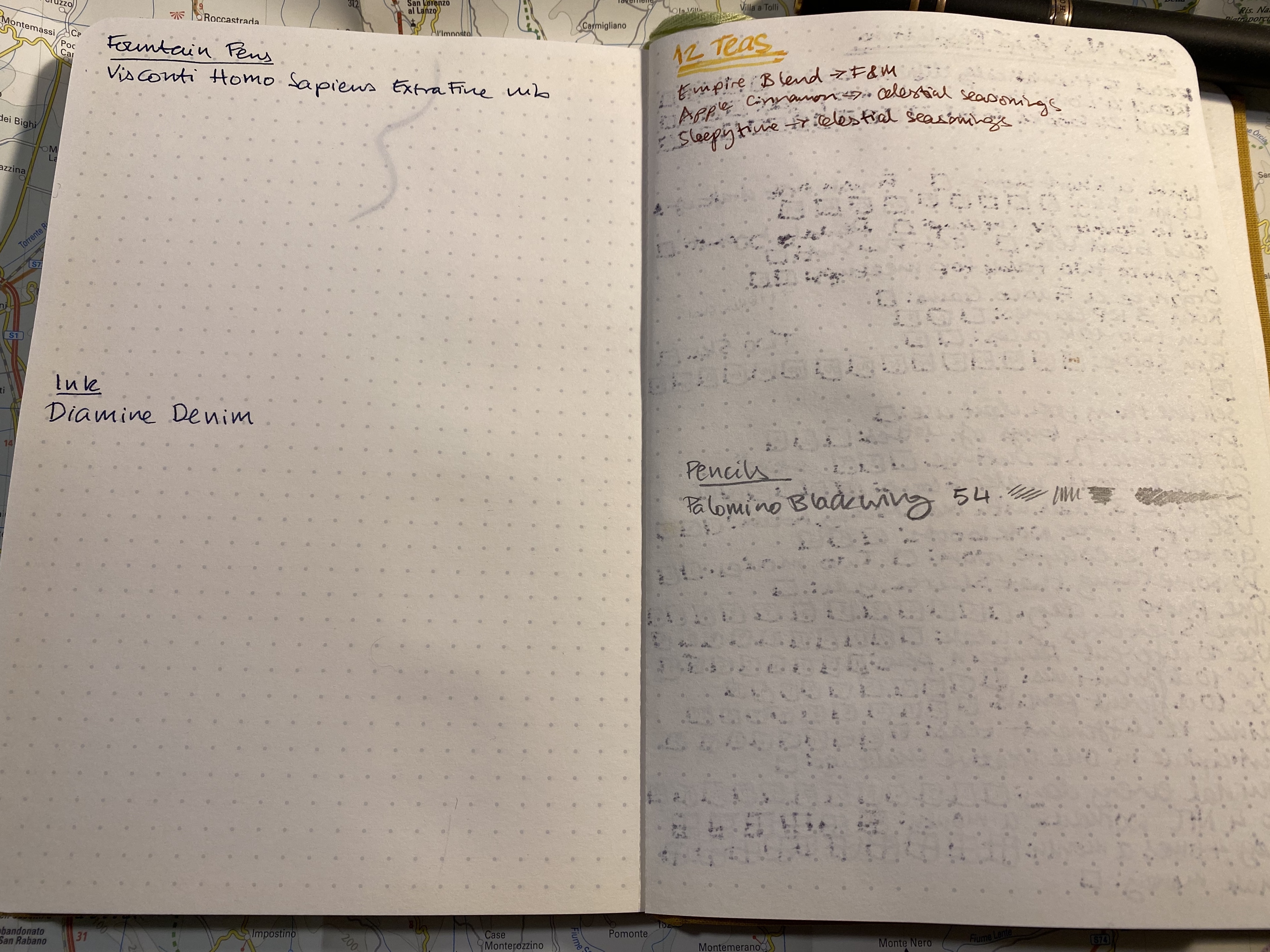
Tracking page for fountain pens, ink, tea and pencils.
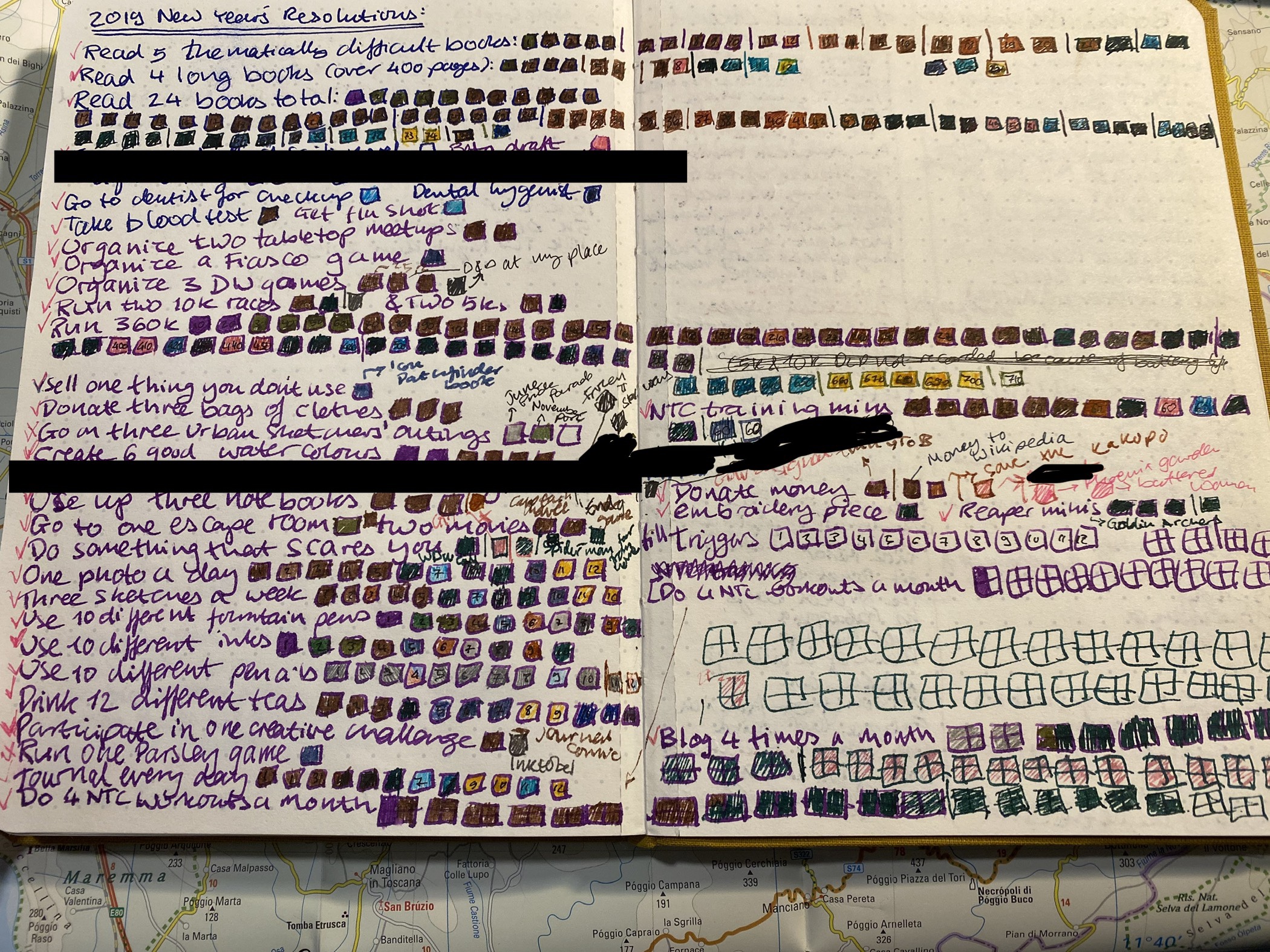
Here are my 2019 resolutions. A pink check mark means that the basic goal is finished. You can see the increments things grow by (my stretch goals):
2019 resolutions
You may have noticed that the “fill triggers” goal isn’t filled up at all. This is the “relevant” part of the S.M.A.R.T. goals. I used the trigger system from Marshal Goldsmith’s “Triggers” book for a few months in 2018, and I decided at the beginning of 2019 to not continue with it. It was a conscious decision, and so I just ignored that goal.
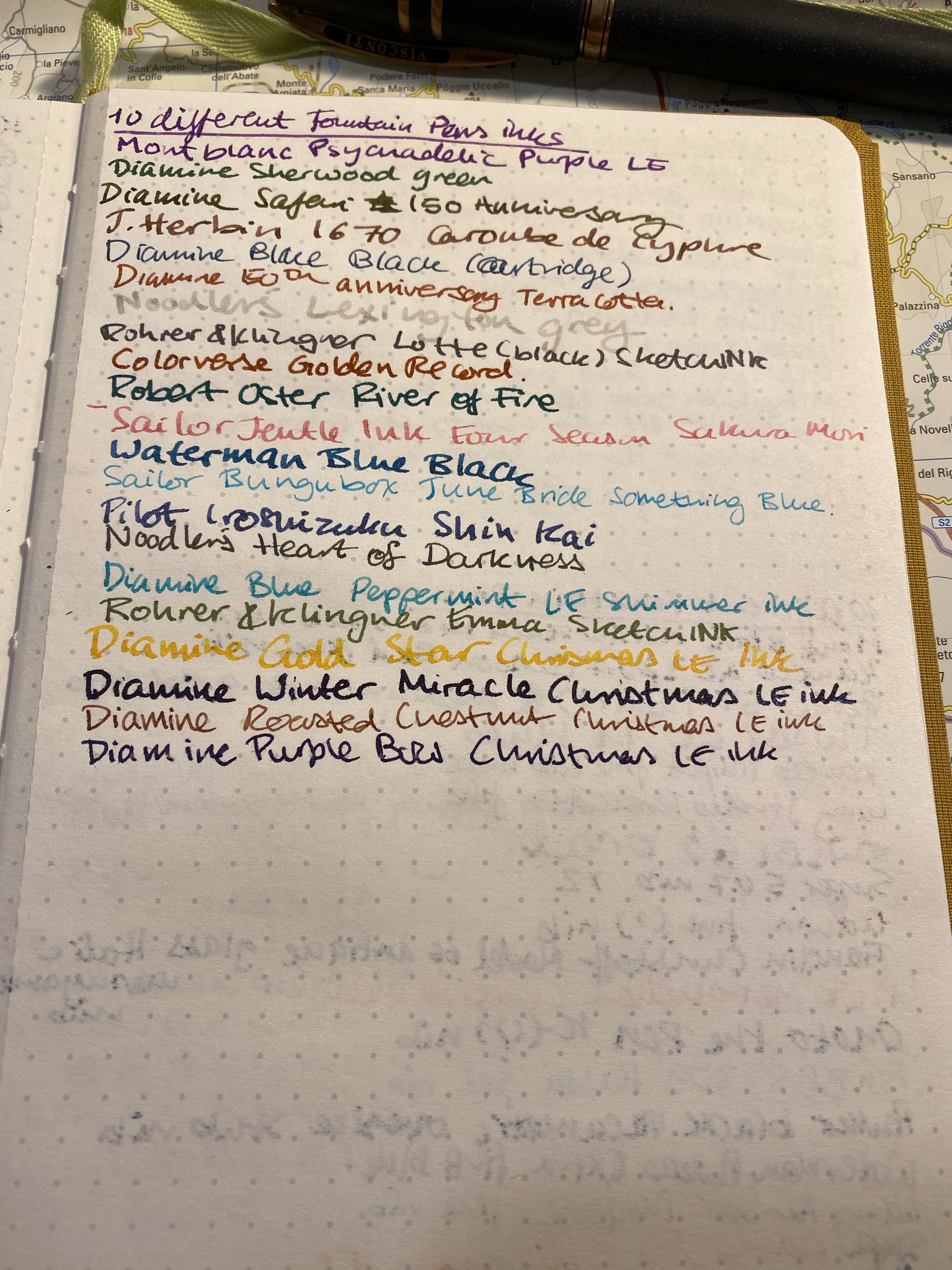
Here are my 2019 “spill” pages, just to get an idea of how the whole thing works together:
10 different fountain pen inks. Can you see where the stretch goal is marked?
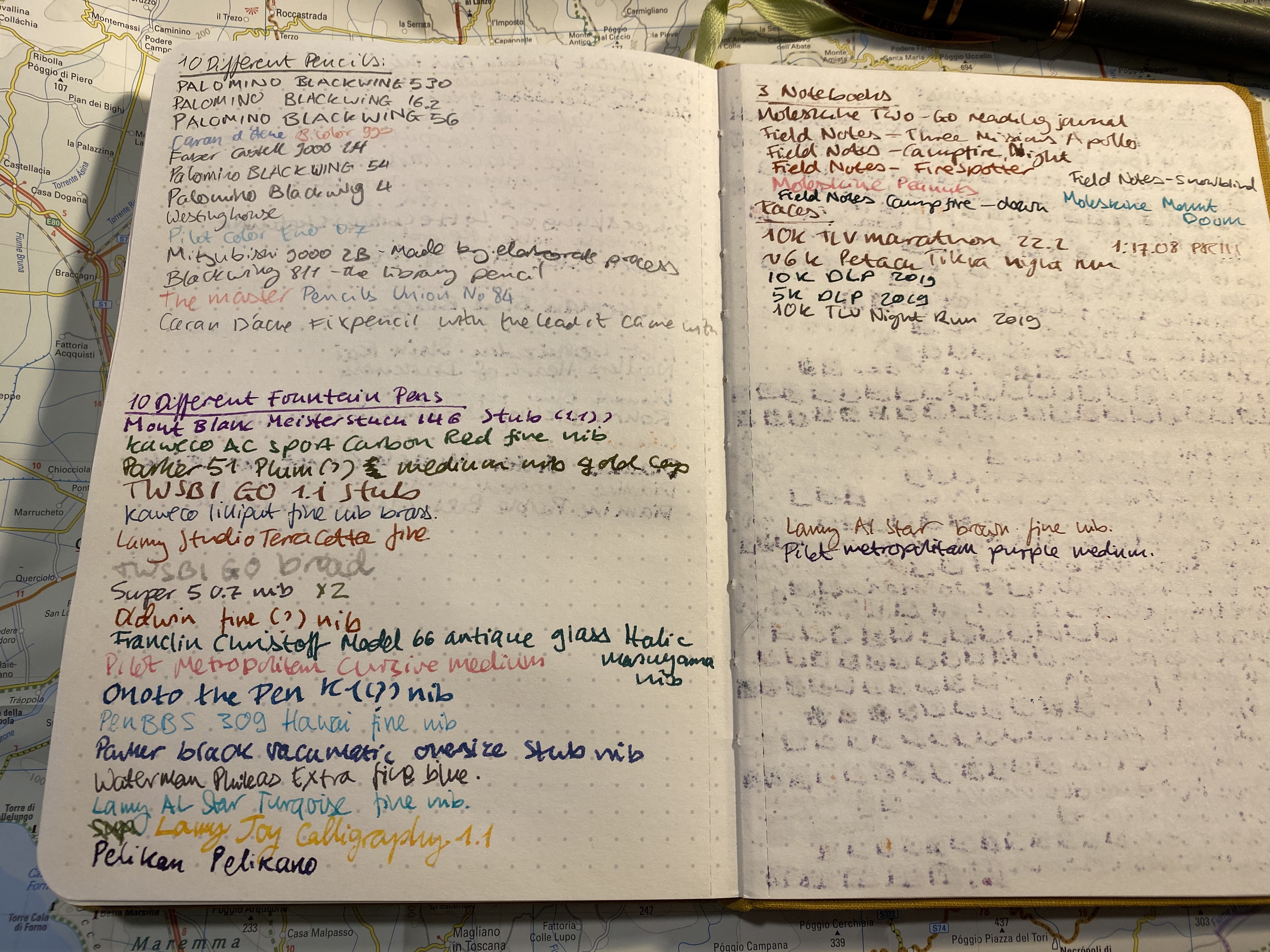
Here are pencils, fountain pens, notebooks and races tracking:
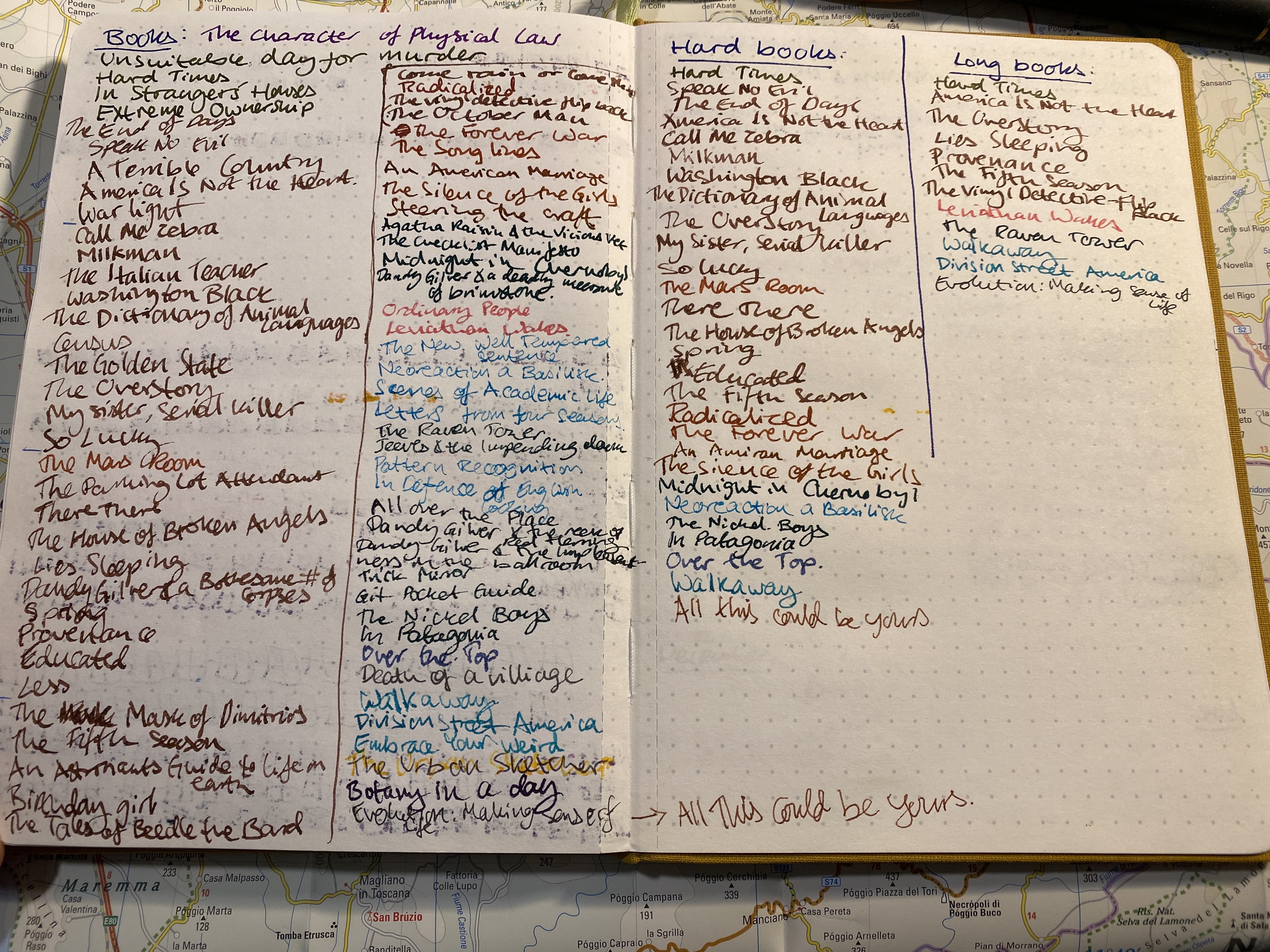
And my largest tracking list, books:
The Baron Fig Confidant that holds this list has a bright cover and sits right in front of me, on my desk, at all times. I set up my goals that at every day or two I crack the notebook open and update the lists. Once there, I scan everything and check if there’s something that I can do to get it done. The point is to have this list on the top of my mind as much as possible, or else I’ll just forget about it, or it becomes something that I avoid checking out.
This is a system that supports me every day, giving my goals and aspirations much needed structure. I hope that this will help you build a personal system of this kind for yourself.
This week I celebrated two years of daily journaling. While I’ve been keeping journals for years, until the last two years I’ve only done so sporadically. Journaling was something that I did only when things got really rough, to keep myself going, or when I was travelling, to preserve the memories of my trip. I used pocket notebooks for my sporadic journals, as it was more important for me to capture things than to reflect on them. It was a utilitarian process, not an enjoyable one. I knew that once I decided to really start a journaling habit, that would have to change.
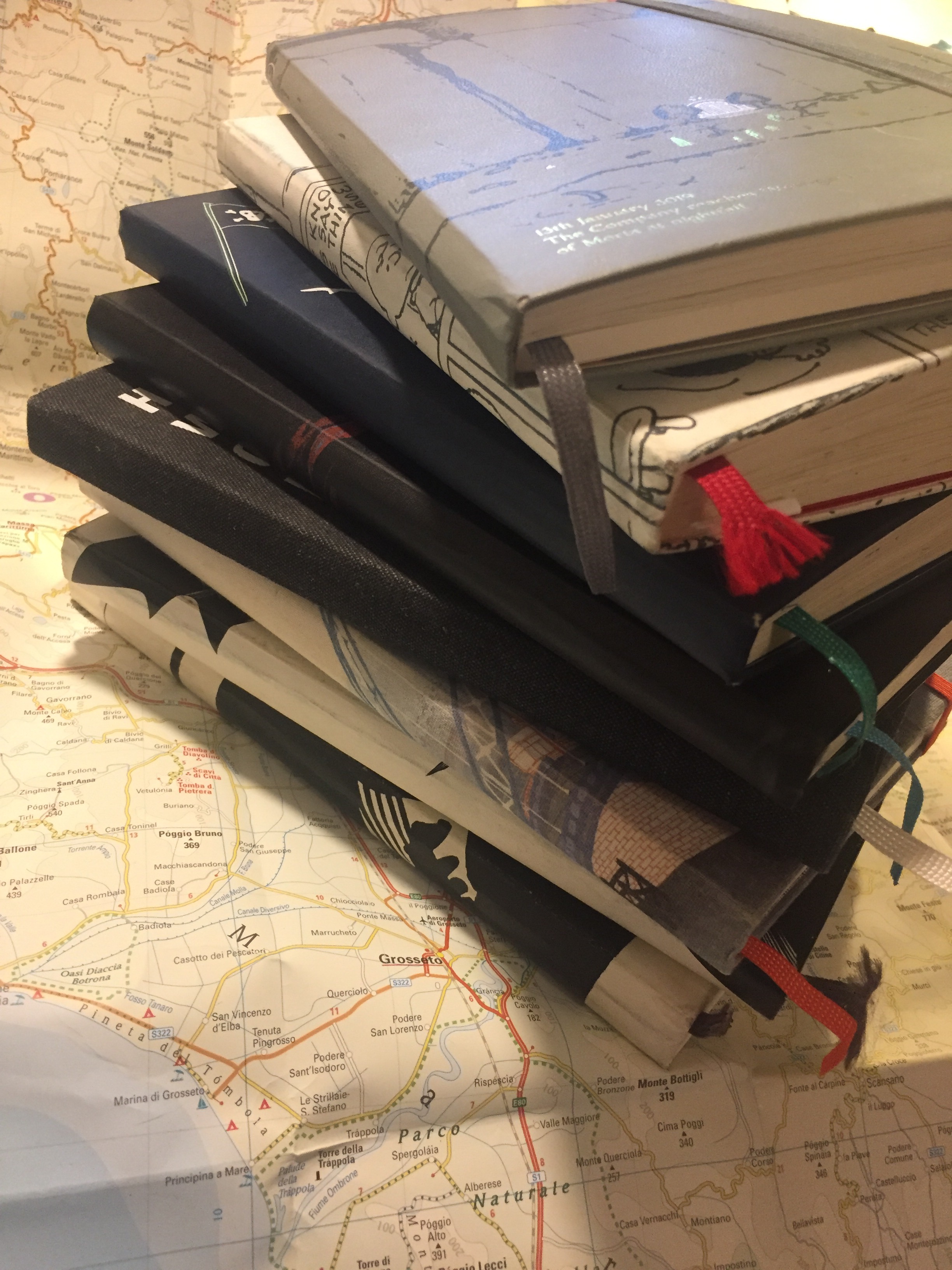
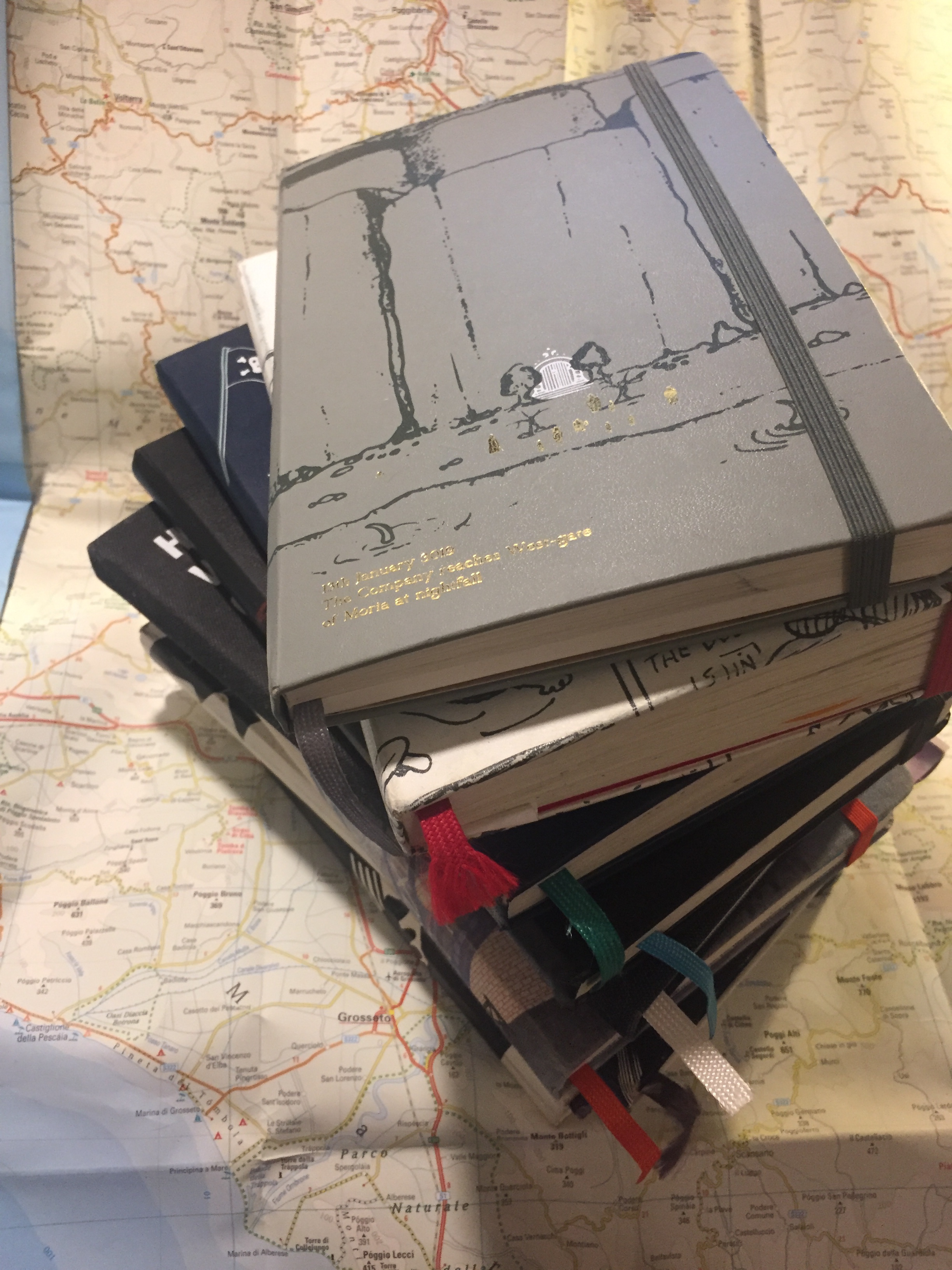
These are all the journals which I’ve used during the past two years.
So the first thing I did was pick a notebook that I knew I’d want to use, and use daily. The only rules were that it had to make me happy, and that it had to be large enough for me to be able to actually write in it, not just jot things down. I wasn’t looking for the best notebook with the best paper in the best format (I don’t think that exists, actually, but for us stationery geeks the search is always on), just a good enough notebook for me.
My notebooks of choice.
I also decided very early on that I couldn’t use a fountain pen for this, because I wanted a pen that I could write with even not under the most ideal circumstances. I was also planning for both the notebook and the pen to bash around freely in my bag. These were going to be used and look used.
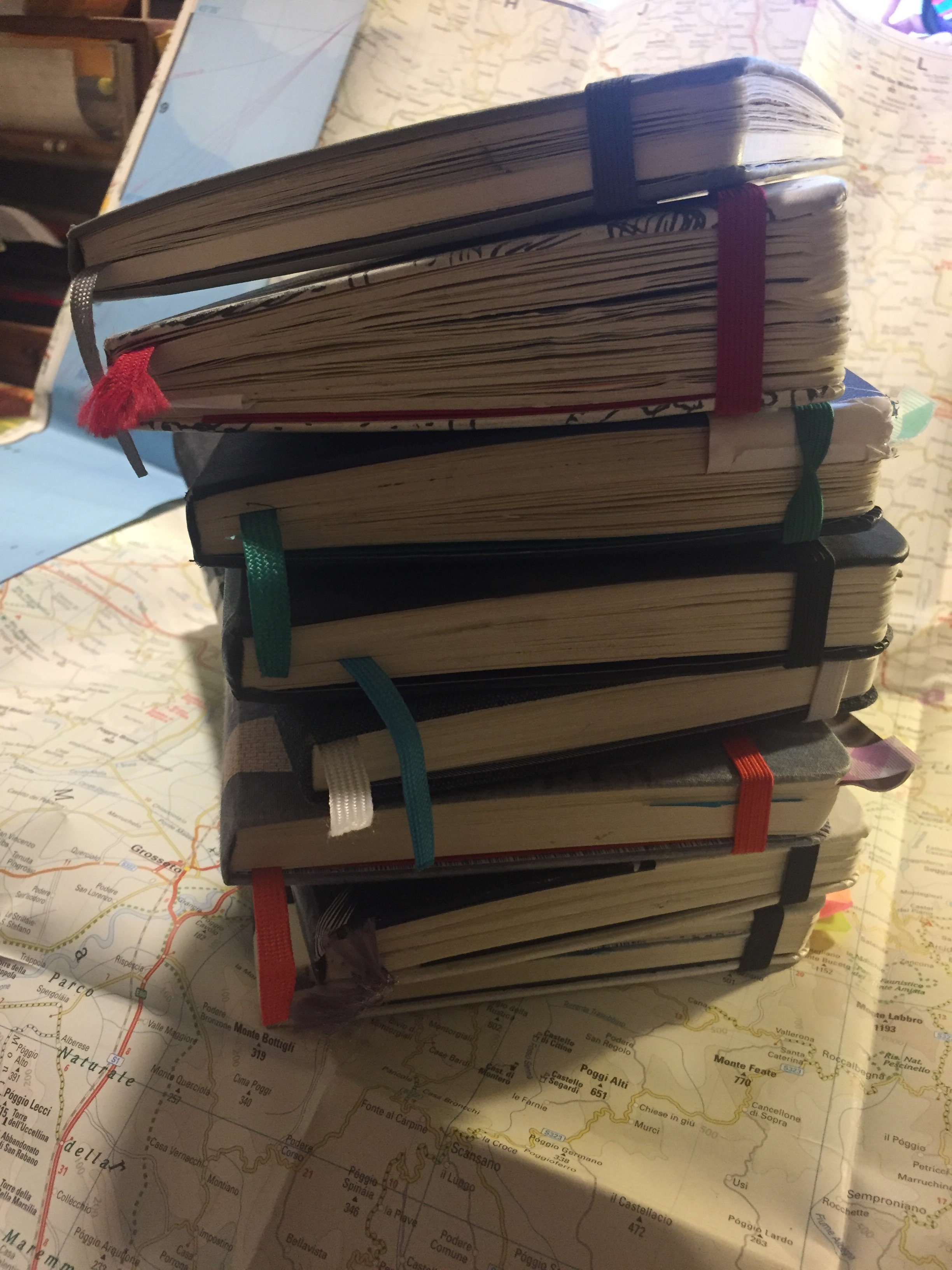
Can you see how bloated these notebooks are? Moleskine makes them sturdy enough to take a beating.
I chose Moleskine large ruled hardcover notebooks as my notebook of choice, and the uni-ball Signo RT 0.5 gel ink pen as my pen/refill (UMR-85N) of choice. I wanted a sturdy lined notebook that I’d enjoy using and looking at once it was done, and after years of neglecting the Moleskine for other notebooks I came back to it because of some of their limited edition designs. I knew that I was going to use the uni-ball Signo RT 0.5 as my pen or refill of choice (inside a BigiDesign Ti Arto or Ti Arto EDC), so I didn’t need fountain pen friendly paper. I had decided to pick up the steady journaling habit by starting with a travel journal, which I already had some experience with, and then carrying on from there. On the first evening of a trip to London I happened to walk by the Moleskine store in Covent Garden, and I decided to go in and check out what they had. There was a beautifully designed Batman limited edition notebook in exactly the kind of format I was looking for, and it was only available for sale at the Moleskine stores. I bought it, unwrapped and stamped it with the Moleskine Covent Garden stamps, and I haven’t looked back.
That pen and notebook combo has hardly changed over the years. What has changed is the format I use to journal, and the amount of daily journaling I do. When I started out I was used to only jotting a few lines down here and there when I journaled, so I knew I couldn’t expect to write 4-5 pages per day right from day one. Starting with just a paragraph to half a page a day, I pretty quickly moved to one page per day of just writing.
Then I saw a Neistat Brothers video on Youtube and realized that I could use my journal as a visual capturing device as well, and anything could go in it, so long as it made me remember a moment or a place.
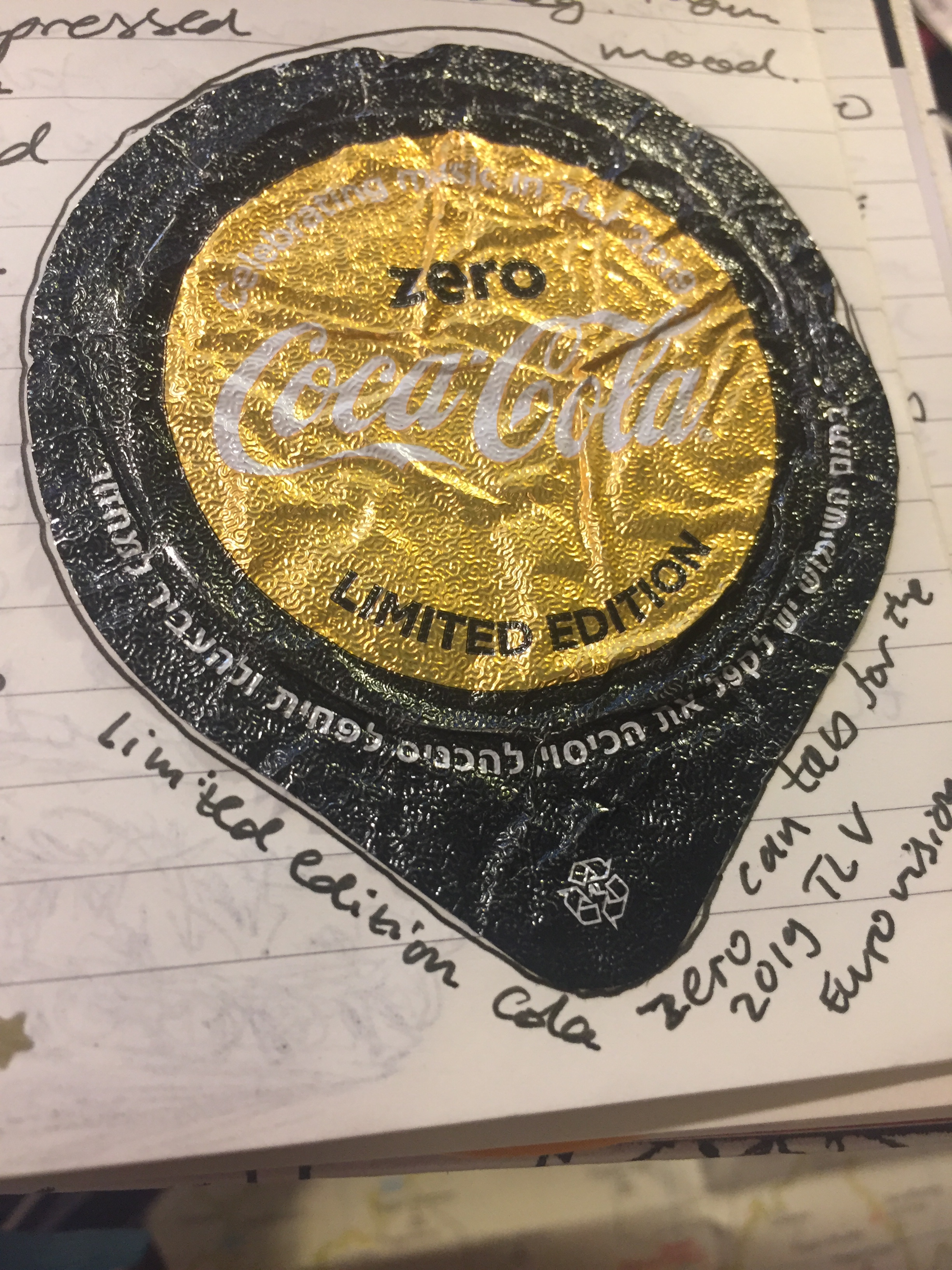
Limited Edition Cola Zero tab created for the 2019 Eurovision song contest in Tel Aviv. I don’t even drink Cola Zero, but this little piece of metal is still totally evocative to me.
That’s when the notebooks really started to get bloated. From clothing labels to business cards and ticket stubs, if I can put glue on it and it’s visually appealing or evocative, it goes in. I almost always also write a little note for future me, to remind myself what I’m looking at and why it’s there. That change really made these notebooks a kind of personal artifact for me, and I can’t say how precious they’ve all become.
A bit of cat themed washi tape and a Uniqlo shirt label. Sometimes things go in because I find them visually appealing or they make me smile.
At a certain point I started getting ambitious, moving from writing one page a day to two pages, then four pages, then six. That’s when I had to take a step back and make sure that I wasn’t burning out on journaling for all the wrong reasons. I enjoy writing and I enjoy journaling, but I’m also trying to write fiction, and my journal can’t become something that consumes that, an excuse for not writing. It’s also easy to get carried away and want to finish the notebook as fast as possible just so you can open a fresh one, or brag (even if it’s only to yourself) that you’ve finished a notebook. Nowadays I write one or two pages a day for most days, moving up to more pages only if I really have something special to write about.
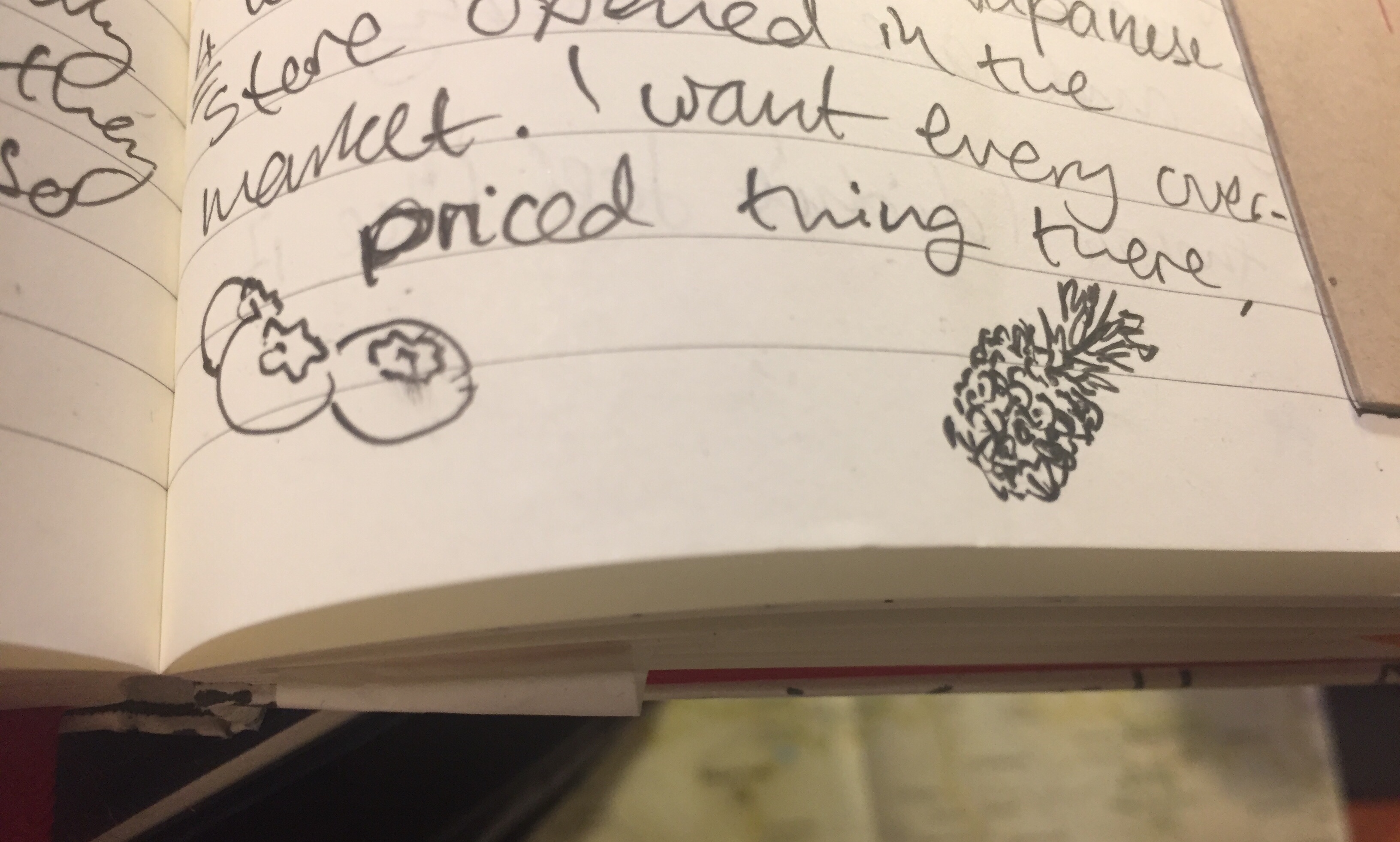
Doodling seasonal fruit in the margins.
Life also happens, and oftentimes it’s scary and ugly, a black hole that threatens to consume all that is good in your life, including journaling. My mom got unexpectedly and very seriously ill last year, and we’ve been struggling with her disease ever since. When she was in hospital I couldn’t bring myself to journal. I backlogged those (thankfully few) dark days, and I realized that I would have to accept that as much as journaling is important to me, family comes first, so backlogging is going to have to become acceptable. I try to backlog as little as possible, but some days just demand that.
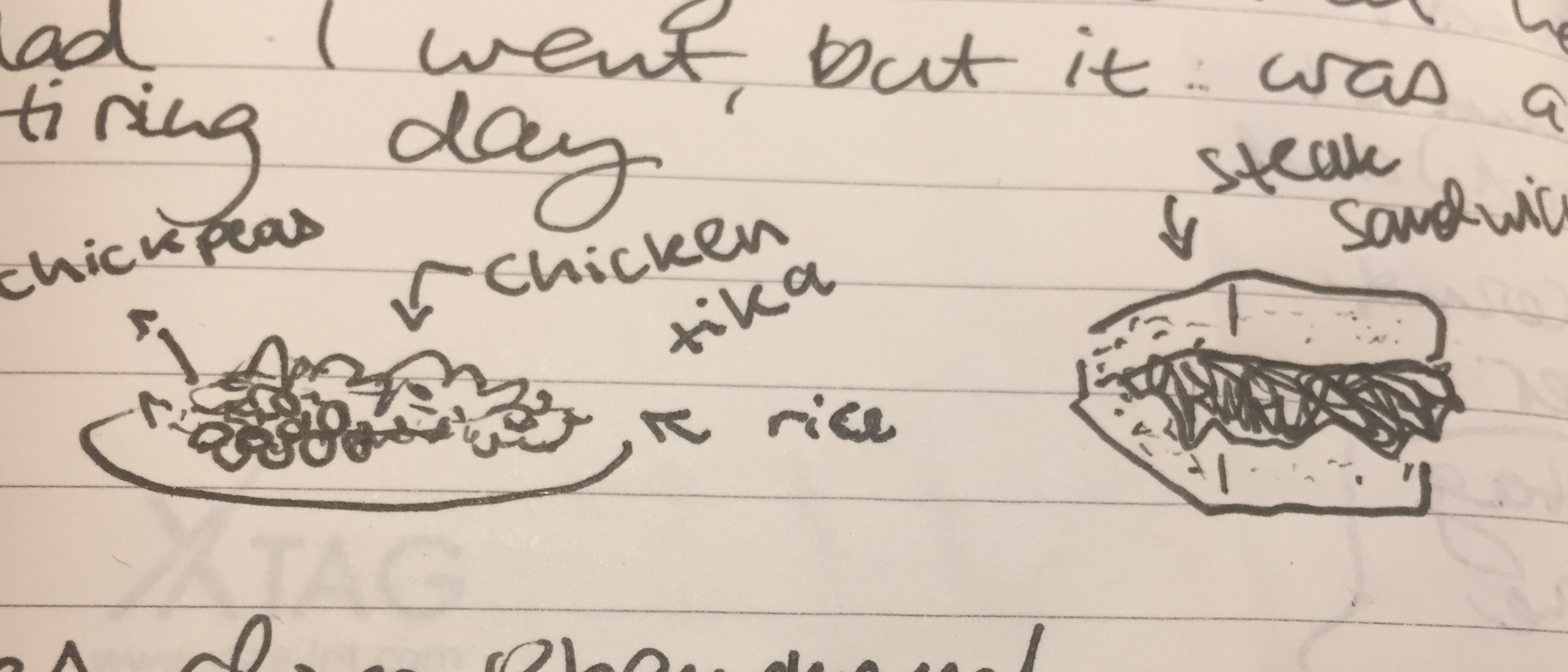
If I want to remember a good meal I’ll sometimes draw it.
I also draw a little in my notebook, tiny thumbnails of things that I want to remember later, or that I just feel like drawing. These are usually food doodles, as I don’t really like to photograph my food.
I still use my journal in trips, and ticket stubs and bit and bobs like these make it more interesting.
If you’re looking for some journaling tips, I wrote two posts on that subject here and here. If there’s one thing I can leave you with it’s that if you want to journal, you need to figure out a way to it make it work for you, and be ready to adapt as your life changes over time. There is no perfect journaling system, or perfect journaling notebook, there’s only what works for you.
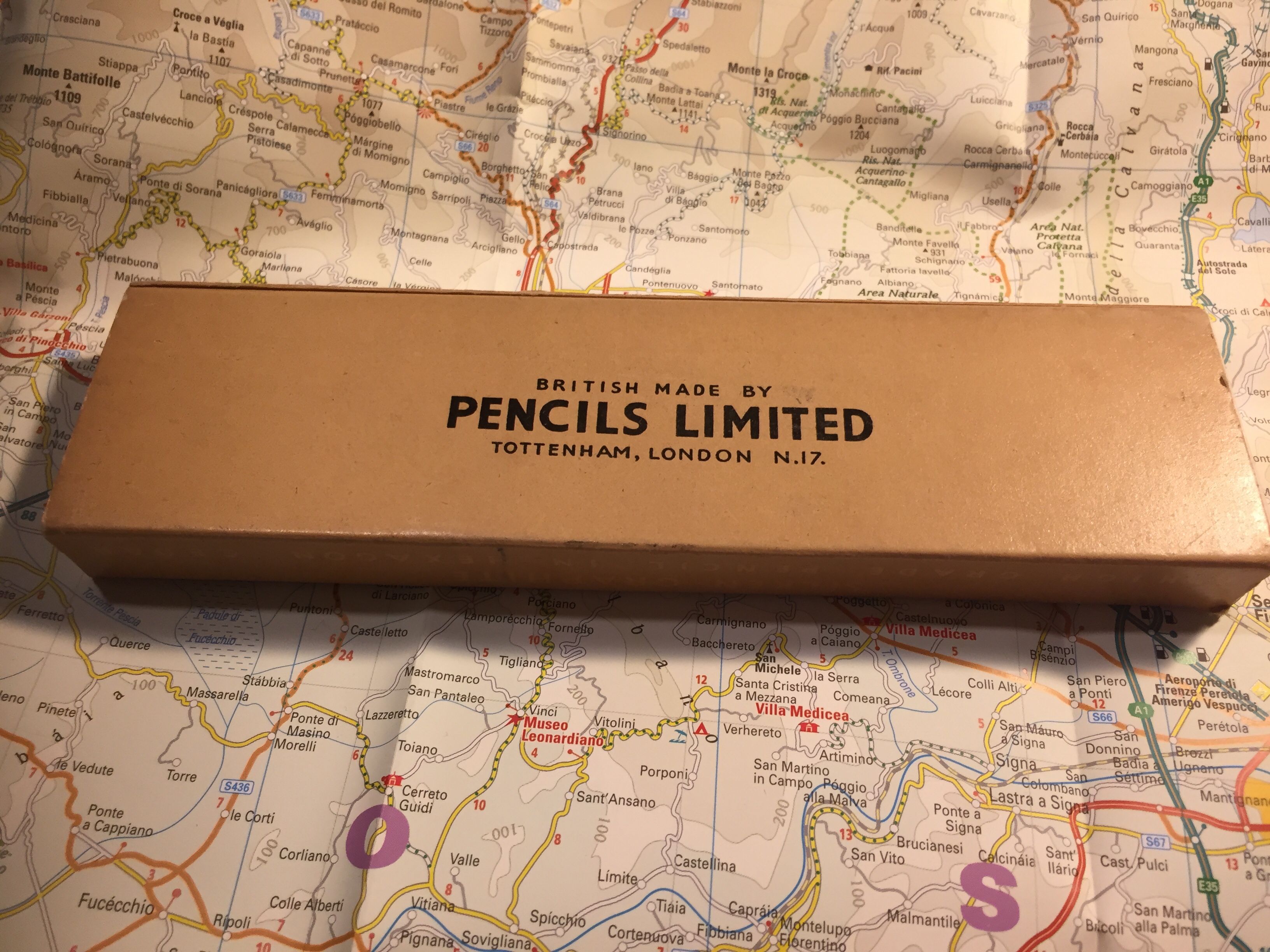
A box of these beauties was languishing together with other art supplies in a stall in London’s Spitalfields market. I saw the box, saw their name, “The ‘Golden Master’ Pencil” and I couldn’t resist.
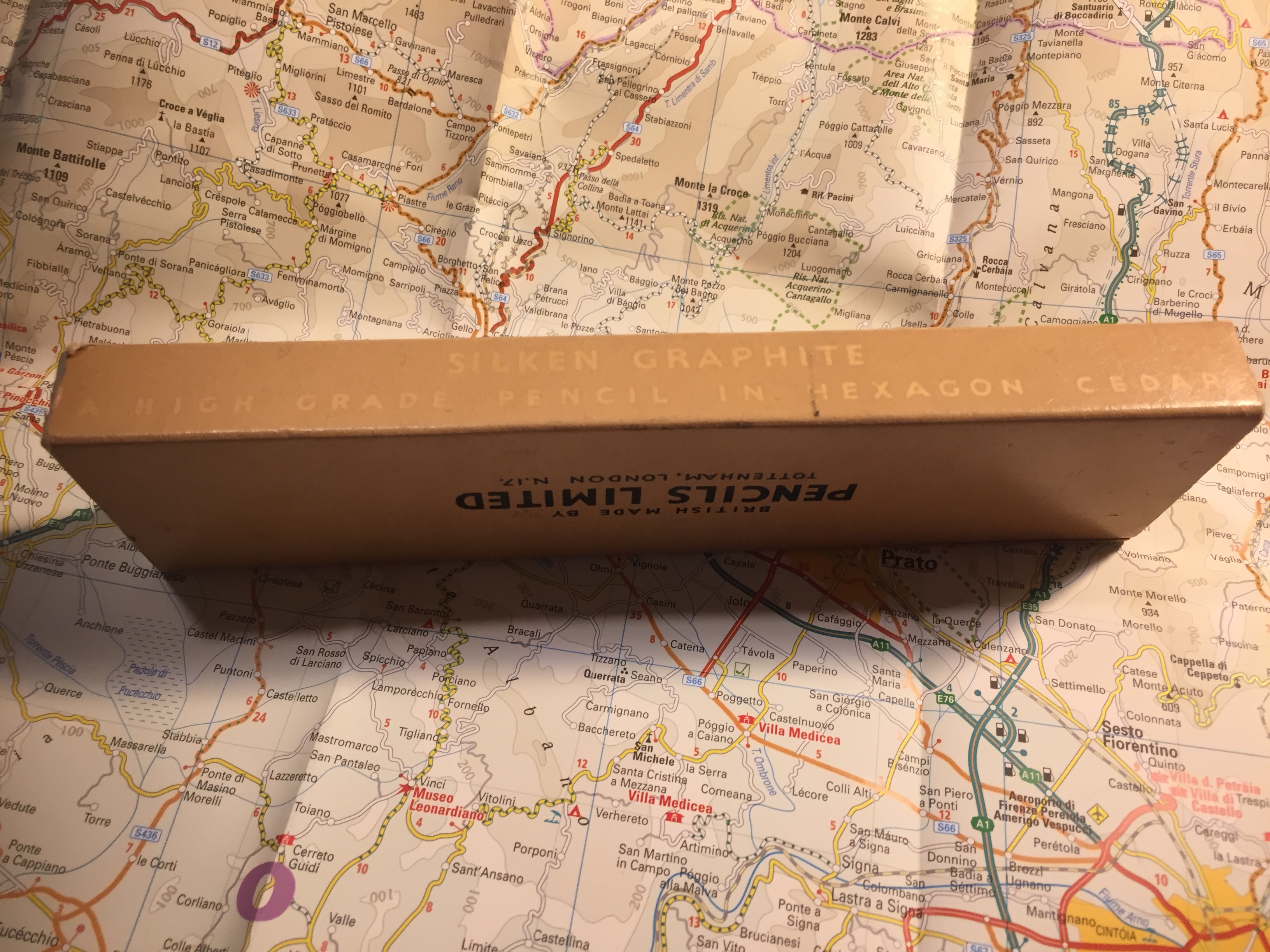
Just look at this design:
Who doesn’t want “Silken Graphite”? Or “A High Grade Pencil in Hexagon Cedar”? I’ve rarely seen a company take such pride in a pencil, outside of the Japanese market.
British made, from an era where Britain made things — and in London, too!
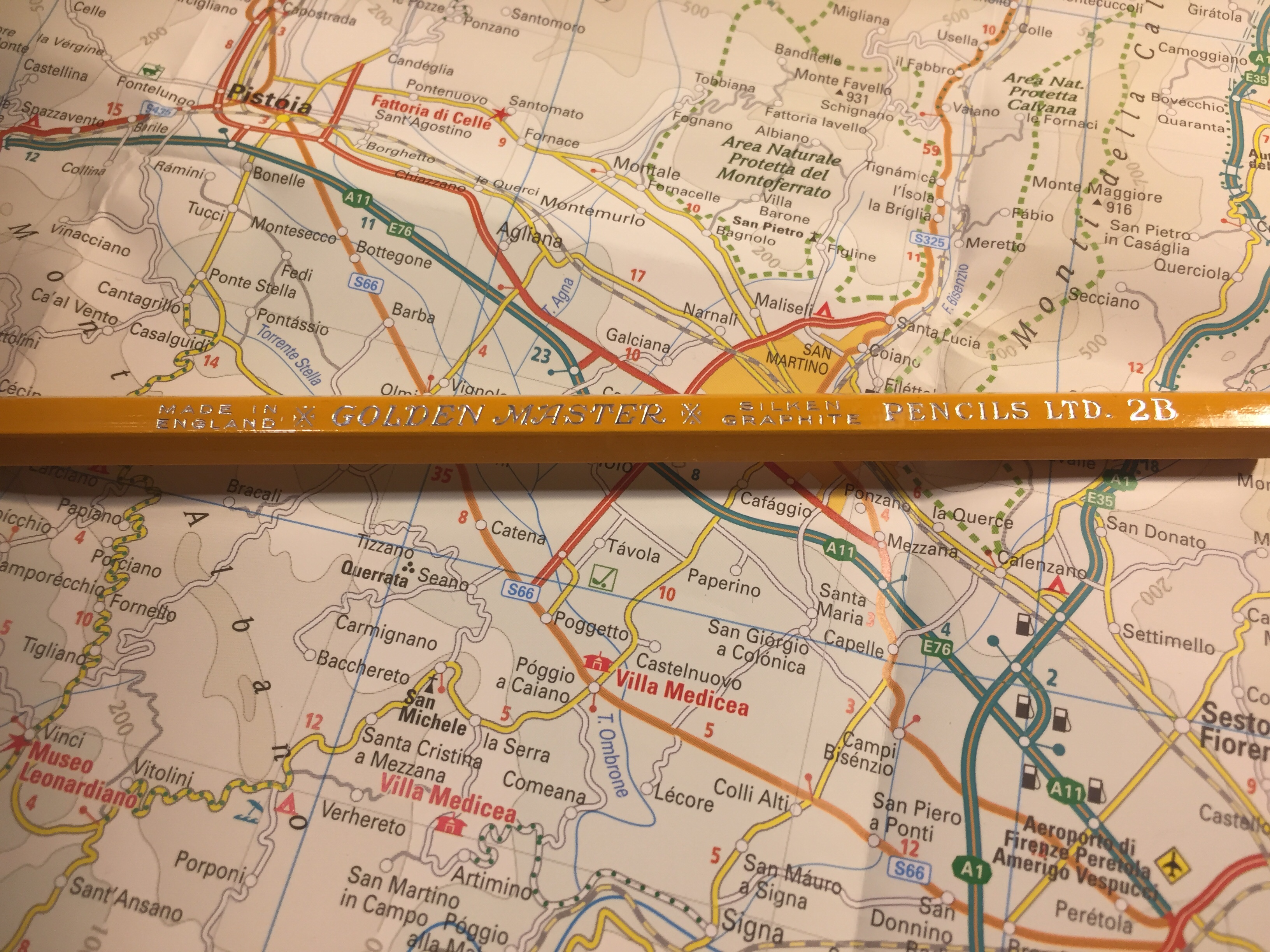
The pencils aren’t really Golden Master HB, but 2B (a bonus from my point of view). They’re labeled as such on the pencil, and strangely enough as two Bs on the box. I’ve never seen 2B pencils labeled that way. I wonder if they printed six Bs for their 6B pencils. I doubt they’d have room on the box.
In any case, the pencils slide out of the box in a sort of cardboard tray that is pretty robust. It works just like an old Eagle Pencil box, and I wish that more modern pencil makers would use this design.
The pencil itself has a good coating of yellow lacquer that has withstood the test of time, and has “Made in England”, “Golden Master”, “Silken Graphite”, “Pencils LTD.” and the grade stamped on it in gold foil.
The hexagonal shape is sharper, has sharper edges, than more modern pencils do. It doesn’t cut into your hand, but you feel it, and I have a feeling that without the lacquer this pencil wouldn’t be as nice to use.
The pencils come unsharpened in the box, and they’re a standard pencil size. As you can see there’s no eraser and no ferrule, but I don’t mind that. I rarely use pencil erasers, but rather keep a block eraser on my desk, or scribble things out if I’m writing.
I drew a journal comic with this pencil. It’s very smooth and holds a point forever, but it’s not a 2B pencil in terms of darkness. It’s closer to a standard B, but there’s a chance that time has done wonky things to make the graphite lighter. It erases well, and every core in the box that I have is perfectly centred. If you can get your hands on these, I recommend giving them a try. They’re great pencils, and I wish that they were still in production today.
Notebooks are meant to be used, and I use many of mine for journaling. Here are a few journaling tips that I’ve found useful over the years:
Don’t constrain yourself to pre-dated or restrictive formats, just pick a not too fancy lined or blank notebook (or dot grid or squared). The notebook just needs to be nice enough and special enough for you to want to crack it open and write in it, but not too nice to be intimidating.
Start with a title and a date. The title is a neat way to get yourself writing, and to help you search through previous entries later on.
Even lined notebooks can be doodled in.
Stick bits and pieces of things into your notebook to make it come to life. Business cards are great for this (restaurants usually make their cards extra interesting and colourful), as are ticket stubs, clothing tags, labels, etc. Write a little something about what you put in, or just let the graphics speak for themselves.
If you just feel like writing a line or a paragraph, then do it and don’t beat yourself up about it.
If you’re having an extra busy day that you want to remember but don’t have time to fully log, bullet points are your friend. You can always go back and flesh them out later if you feel like it.
Write 2-3 things as topics for each day to avoid describing your breakfast and what you did at work. Just document a few things that made the day memorable, special, interesting, fun, unique, or even just a thing or two that are on your mind right now and you want to hash out.
Did you see a TV show or movie you liked? Read a good book or went to a good restaurant? Write about it as a way to relive and capture your good experience.
Be kind to yourself and others. Put cringeworthy things elsewhere, or you won’t want to open that notebook again. I work through pain and loss in my journaling sometimes, but never anger. Obviously your milage may vary on this one, just be careful not to make yourself be afraid to open a pandora box that you created with your own writing.
Journal comic drawn with a Sharpie brush pen, Pilot Hi Tec-C pens, and a Zebra grey mildliner highlighter on a Moleskine Star Wars scroll text limited edition blank notebook.
For the last three years I’ve been making and tracking yearly goals in a Baron Fig Three-Legged Juggler Confidant. I call my new year’s resolutions my yearly goals because unlike resolutions, goals are something concrete and well defined that you continually strive to achieve.
The goals are personal, so I’m not going to share them here, but I am going to go over how I set them up, in the hopes that it might help and inspire those working on their own yearly goals.
Set yourself up for success by picking goals that you:
Actually care about.
Are measurable.
Are achievable even if your year goes horribly wrong. The trick is to set up easily achievable basic goals, and then “bonus” or extended goals that go beyond them in various tiers. So if you aren’t reading at all and you want to read more a good basic goal would be “read 4 books a year”, with extended goals of “read 8 books a year”, “read 12 books a year” and so on.
Are a mix of things that you track all year and one time events ( for example: participate in X number of races, and run X kilometers a month/year).
Aren’t focused on one area only (to avoid boredom and burnout).
I use a paper notebook to track my yearly goals and the “Streaks” app to get my streaks going. The notebook is something I open and update at least once a week and so is constantly on my desk, resting against my laptop. It’s a physical and constant reminder of what I need to do. I can’t emphasize enough how important the physical aspect of putting a check mark or crossing out a box is for this to work.
Be ambitious only with extended goals, or you are going to disappointed and discouraged very quickly. Human beings are terrible at assessing deadlines and the amount of effort required to achieve a goal. Cut your goals by 25-50% at least from what you think you can achieve. Yes, it’ll make them easy, but the point is to create a momentum of action and success, not frustration and failure. If you know you’ve missed all or most of your goals you’ll stop looking at them, and by March 2019 you’ll be done.