2024 Planning Update: The 13 Week Year

Back in January I wrote about trying a new long term planning system that isn’t the Theme System or theme based, and isn’t yearly goal based, but rather is based on breaking the year into four 13 week blocks, each one representing a fully independent quarter.

I’m now in week 11 of the second of these blocks (quarter two, to put it more simply), and I’m starting to plan the next quarter. While working on my plan I thought that it would be useful to document the procedure, talk about my review process, and discuss how I planned the previous quarters, how things went, and what I plan to do differently in the third quarter.

The point of this system is to break the year into more manageable parts. This allows for greater flexibility in planning, time to “recover” from life’s surprises, and time to work on meaningful, long term projects. On the one hand the entire year isn’t a wash when life deals one of its blows, and on the other hand you can allow yourself to express a realistic amount of ambition.

Starting the Third Quarter’s Setup

I use the Leuchtturm Bullet Journal for my planning, and it should last me to the end of the year. After that I’ll switch to a Leuchtturm 120gsm dot grid notebook, as I don’t use any of the Bullet Journal features in my current notebook.

The first bit is a bit mindless, but I prefer to see it as meditative. Each week in my planner gets two pages, and so I leave four empty pages after the last spread of the previous quarter. These four pages will contain my plan for the quarter, broken into various sections. More on how I build that in a later post.

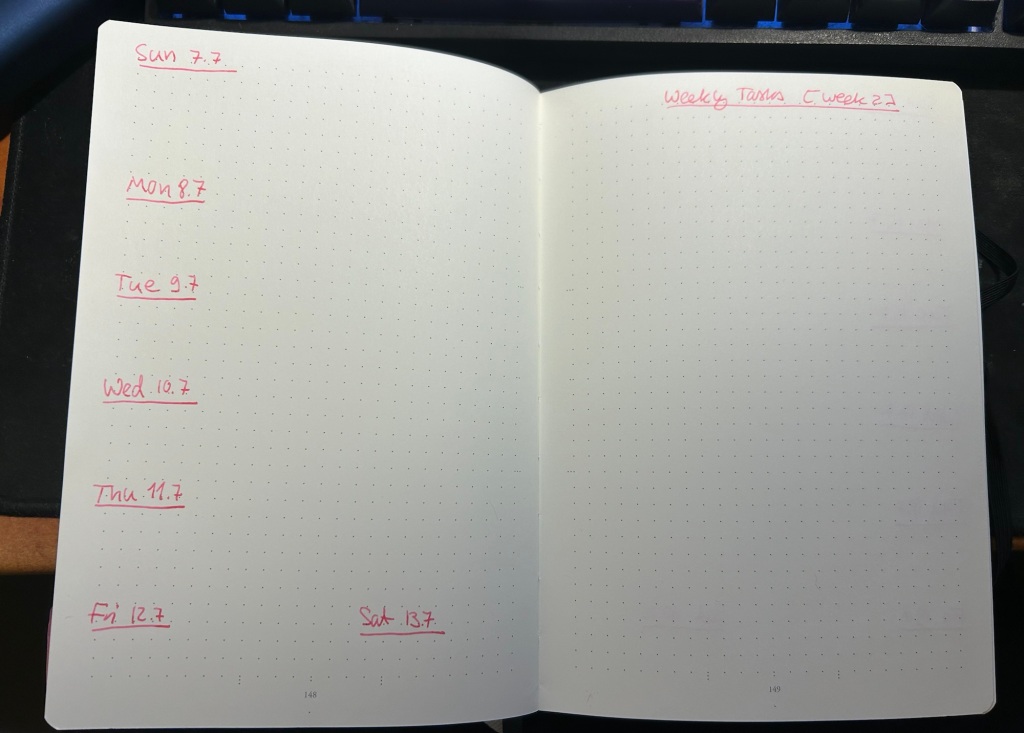
Then I sit down and draw out 13 weekly spreads. On the left side of the spread I write down the days of the week and the dates, and on the right I just put a “Weekly Tasks” title with the number of the week in the quarter in square brackets. I do this in one sitting for the entire quarter, and it takes about 30 minutes because I don’t rush it. This is how the pages look at this point:
This is how it looks when it’s filled and in use:

The left side gets filled with my exercise plan for the week, major appointments, and important things I don’t want to forget.

The right side has my weekly goals, both in the form of various checklists with checkboxes and more general lists. This is where my quarterly goals get put into action – every Friday or Saturday I look at my quarterly goals, and then try to advance as many of them as I can in the week. Things become more quantifiable at this point, though it’s often only in my daily to do lists that they become real, doable tasks. My daily to do list is something that I write the night before on an A5 loose sheet of paper, and recycle once I’m done with it.

Next time I’ll post a bit more about how I create the quarterly plan.

How do you plan your year? How is your planning going now that the year is halfway through?

Sketching with Iron Gall Fountain Pen Ink: Rohrer and Kilngner Ebony

I have recently purchased the Rohrer and Klingner limited edition Ebony iron gall ink, and I’ve filled one of my Lamy Safaris with it. While iron gall fountain pen ink can be corrosive to pens, and it does change colour over time, it does have a pretty nifty trait: it’s waterproof when dry.

So I made this quick sketch with my Lamy Safari extra fine nibbed fountain pen on a Cass Art recycled paper sketchbook:

And then I added some watercolour to the sketches (note that although this isn’t watercolour paper, the paper in this sketchbook does take light watercolour washes):

As expected, it worked pretty well. Note two things about the combination of iron gall ink and watercolour:

1. The ink must be dry before applying the watercolour.

2. As the water causes the paper fibers to expand, your ink lines may “spread” or display soft edges if you apply watercolour over them. You can see this in both sketches. Different paper will lead to different results, of course.

This was a fun little experiment, and a great way to test out this ink a bit more.

Full sketching kit.

Have you ever used iron gall ink with watercolour in your sketches?

Quick sketch: Guided architecture walk

Used a Uniball pin 0.8 fineliner and three Stabilo Boss highlighters in their new colour range on a Cass Art recycled paper sketchbook.

Yes the paper is ivory and the highlighters are weird.

Journaling Series: On Starting a Journal

After finishing my previous journal I just started a new journal, which is both an exciting and daunting prospect whenever it happens. There is so much potential in a new journal – it makes me want to crack it open and fill as many pages as possible in the first sitting. Yet opening that first blank page also makes me freeze in fear of “ruining” a perfectly good notebook with my scrawls.

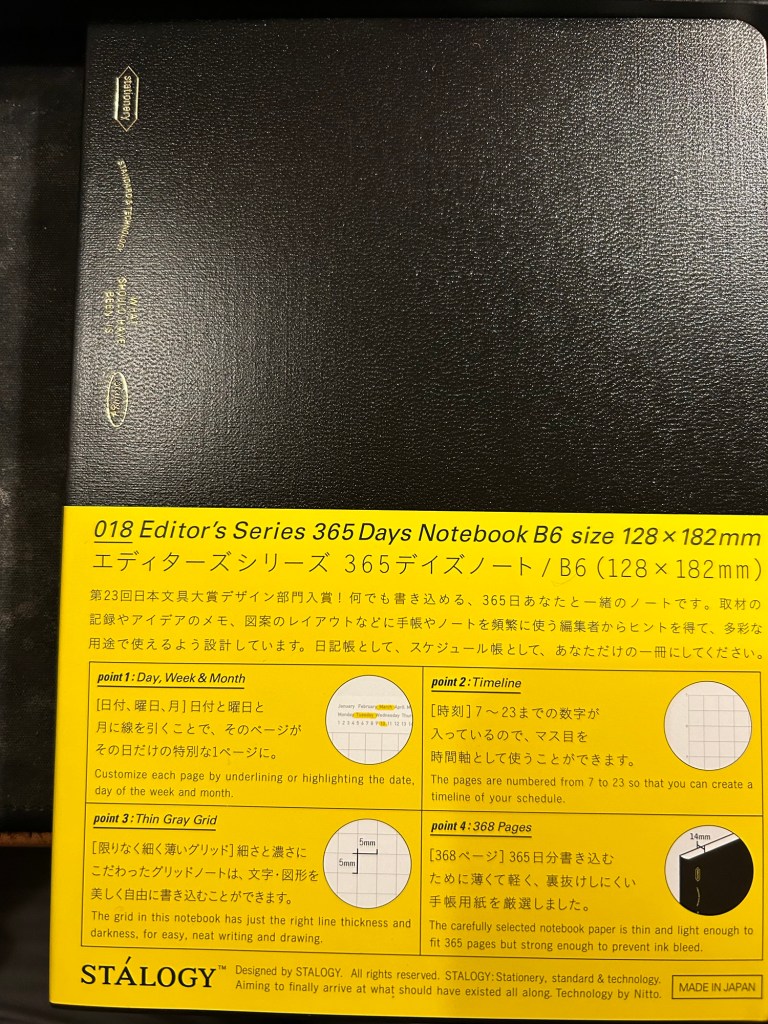
Stalogy 365 Days B6

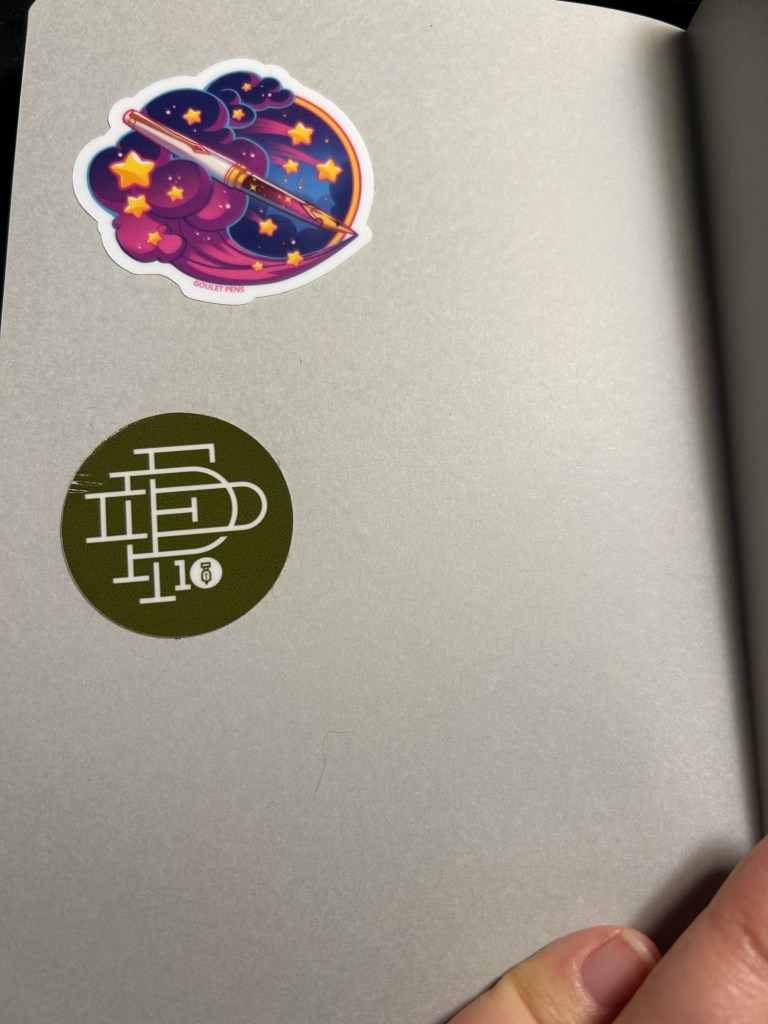
There are many tips on how to overcome that fear, ranging from deliberately destroying the first few pages to using various formulas to inspire you to fill those first pages. What I currently do is just open a new Stalogy 365 Days notebook, turn it upside down (so the header, which I don’t like, is at the bottom) and slap 2-3 stickers on the back endpages. This time I chose a 10th anniversary fountain pen day sticker and a Goulet Pens dream pen sticker to start off, but I usually add a few more stickers as I use the journal.

Stickers on the back

I then turned to the first page and started my first journal entry with the following sentence:

“New journal! My third Stalogy 365.”

After that came my usual daily gratitude list, and so I had most of the first page filled up in no time and had no problem moving on after that.

For those still in search for “new journal” inspiration, here are some pointers:

  • Personalize your new journal in some way. It’s about to hold your innermost thoughts, so you might as well make it your own.
  • Switch formats mercilessly if you find an old journaling format isn’t working for you – page size, ruling, type, etc.
  • Have a starting formula for your journal. If you find it difficult to start journaling each day, then pick a formula that you can use each day – like a daily gratitude list, a quote, notes about the weather, your plans for the day.
  • The first few entries are the hardest, but they’re also only 2-3 days out of the entire life of a journal. It’s worth remembering that and plowing through those days.
  • When in doubt pick a quote from a book or article you’re reading and start a discussion with the author.
  • If you’re really at a loss for starting ideas, use the first page, not the last one, as an ink testing page.

Do you have any new journal rituals or tips? Do you enjoy starting a new journal or find it daunting?

Journaling Series: On Finishing a Journal

As I’m writing this I’m two or three pages away from finishing another journal. It’s not the first journal that I’ve finished, but somehow it’s always a tiny, little momentous occasion. After all from the moment we crack open a new notebook and dare to write on its pristine pages we envision this outcome: a notebook chock full of words, sketches and mementos.

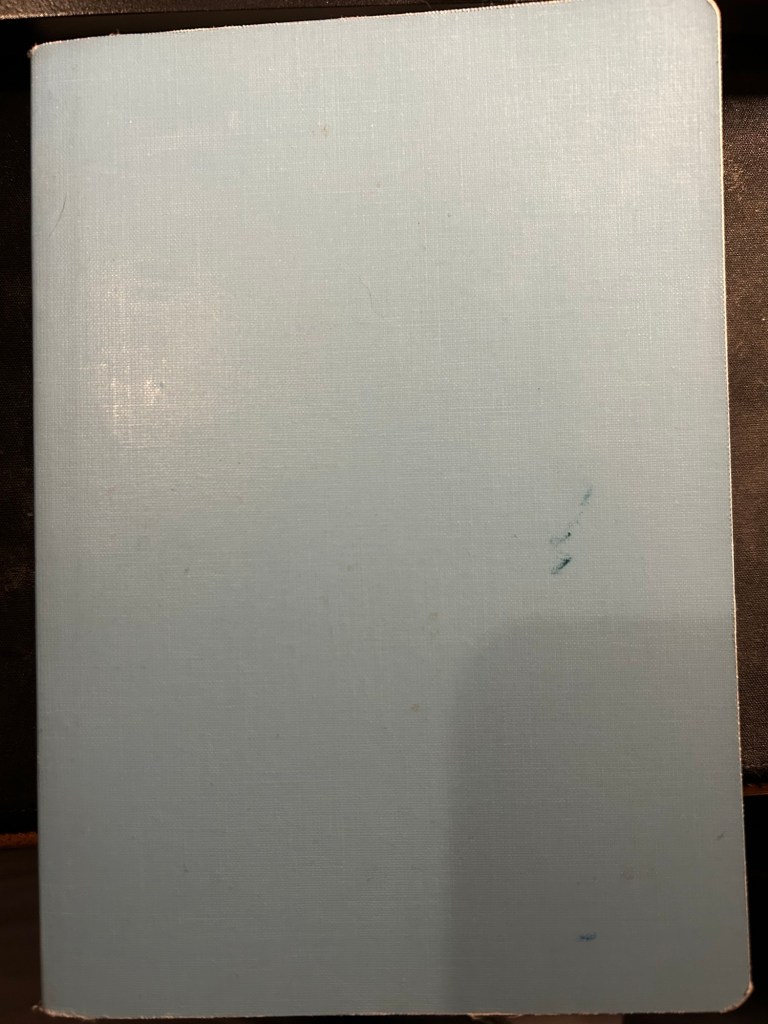
Slightly frayed and ink stained but this Stalogy 365Days B6 notebook has served me well for about 6 months

For me the end of a journal offers a change to review and reflect on its contents. The last few pages aren’t used for normal journaling, but rather are reserved for me to write notes in as I leaf through the completed journal’s pages. What key moments does it hold? What revelations? How can I look back with kindness at moments of weakness or failure, and how can I learn and grow from them? This is not always a pleasant or easy experience, but I have always found it worthwhile.

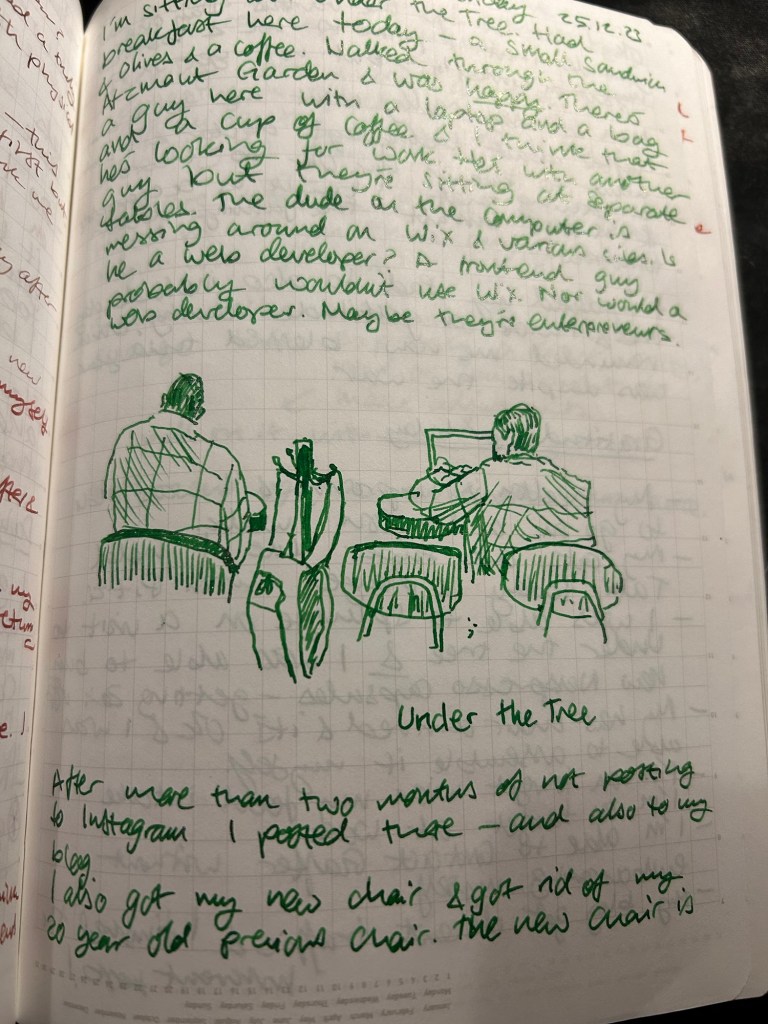
Sample page with a sketch.

This is also a time when I consider whether I need to switch a journal format or not. I’ve been using the Stalogy Editor’s Series 365Days B6 notebook for the past two journals and I’ve been happy with it, so that’s what I’ll continue using for now.

What about you? Do you have any “end of journal” or “end of notebook” habits and rituals?

Journaling in Hospital

  1. I’ve been spending practically every day for the past week or so with my dad in hospital.
  2. There’s this phenomena that when you most need journaling, the it will help you the most, you find yourself least able to do it.
  3. Hospitals are journaling hostile environments. There are no tables to use, there’s constant noise and distractions, there’s zero privacy and you never know when the staff will pop into the room with something. Whether you yourself are hospitalized or you’re there with someone else, there’s very little opportunity to crack open your journal and start writing.
  4. Hospitals are also where weird, interesting, scary and new things happen, so you generally do what to write about them, to process them on paper. Fo instance, today three policemen escorted a prisoner into the heart surgery department. It wasn’t something I ever expected to see, a sort of non-sequitur that took me a minute or two to process.
  5. The solution is to take temporary notes on your phone, put a reminder for an appointment with your journal in the evening or when things quiet down around you.
  6. If you’re the one hospitalized, try to journal two or three times a day, documenting what’s going on, how you’re feeling, what the staff said, who visited you, etc. The best time to journal is during the nursing staff shift changes, because that’s when nobody will bother you.
  7. Journaling is like running – oftentimes it’s really hard to start, but I haven’t regretted a run or a journaling session yet.
At night you can escape to these empty spaces and write

Journaling Series: My Current Journaling Setup

I realized that the last journaling sample that I uploaded is three years old and my setup and journaling format changed considerably, so I decided to post an update.

I currently use a Stalogy 365Days B5 grid notebook in light blue. This is the second such notebook that I’ve used, the previous one being black. Before that I used Moleskines, and it’s quite possible that I’ll return to using Moleskines, but currently I enjoy both the smaller format of the Stalogy B5, and its fountain pen friendly pages. The notebook is thick but the pages are thin, so there’s show through (and sometimes bleed through) on every page. It doesn’t bother me, but if it bothers you then you’ll need to either write on only one side of the page or choose a different notebook.

I exclusively use fountains pens in this notebook, whatever is currently inked, though I prefer fine nibbed pens.

My journaling format has also changed, and it’s now as follows:

  • Gratitude – I tried writing this in the evening but I found that it works better to write this part as early as possible in the morning. Sometimes it’s divided into sections (health, family, work, home, etc), but it’s usually a bulleted list of around 4-5 things. I try to be specific, and I try to remember even the most mundane of things. Especially during tough times it’s super helpful, and it also serves to get me journaling early in the day. Some days I only get this done, but those days are rare.
  • Notes on what happened during the day. I used to try and be a completionist, but that was just a source of frustration and eventually gaps in my journaling practice. Instead I now journal only things that are meaningful, which means that I journal less to record the day and more to reflect on key moments in it. I try to include a story of some kind (like seeing something interesting on the bus drive to work), and a reflection or insight of some sort (for example, my thoughts on someone being fired, or what the news appears to do to people’s mood and patience).
  • I end with something out of Acceptance Commitment Therapy (ACT), which is a note on how I tried to advance each of my chosen values (for me it’s self development, courage, creativity, fitness and friendliness). This helps me manage my PTSD, especially during tough days. I know that I’ll be keeping myself accountable in the evening, so I try to keep them top of mind throughout the day.

I journal in the morning, and usually also once or twice during the day and once in the evening. I’m trying to develop both a shutdown routine and a task switching routine, and use them both as opportunities to journal and reflect.

Apart from these, once a week ever since the beginning of the year I reflect on how well I achieved my goals for the week, and once per month I reflect about the month. At the end of the year I review the entire year, and that’s usually the longest entry in my journal for that year. I tend to write 2-3 pages a day, though some days it’s just one page, and some days it closer to 5-6.

Sometimes I sketch in my journal, but it’s rare, and unlike my Moleskines, I don’t glue things in my Stalogy (so not ticket stubs, tags, stickers, business cards, etc).

Sketch sample on the right, the blotting paper on the left, and the fountain pen I used.

I keep a folded piece of A5 blotting paper in my journal, as the ink takes time to dry in the Stalogy, and without it the whole page becomes a mess.

Journaling Series: Journaling When There Are No Words

The intro post to this series is here, journaling for mental clarity is here, journaling through fear is here. Journaling to clear your mind is here. Journaling to work out choices is here. The 5 year diary is here. Travel journaling is here.

There are times when there are no words, or words are not enough, but you still want to put marks on paper, because pens are a comfort, pencils are a comfort, paper is a comfort, just the sound they make as they meet is a comfort. Beyond doodling mindlessly, copying down a passage from a favourite book or a poem, or just practicing your handwriting or repeatedly writing down a mantra, here are some things you can try doing:

1. Pick an object or a photo and draw it without looking at the paper, and without picking up your pen (blind contour drawing). You need zero artistic skills for this, and the result doesn’t matter, just your focus on your subject and the movement of the pen or pencil on the paper.

2. Pick up a pen and then list 10 things that you see around you in that pen’s colour/the ink’s colour. This is a variant of a stress reducing exercise that I do regularly (find 10 objects in a certain colour in the area around you), and it helps ground you in the moment and take your mind off things. It’s best to choose an unusual colour for this (not black, blue or brown, but pink, purple, yellow, etc) – something that’s a bit more challenging to find. You can also do this with a pencil and then just pick 10 things in/with a certain shape (triangle, zigzag, hexagon, etc).

3. Pick a pencil, a pen and an eraser, and sketch them. It doesn’t have to be accurate, and nobody cares if you don’t get it anywhere near “right”. These are simple objects to sketch (basically rectangles and triangles smooshed together), they are readily available and usually don’t carry too much emotional baggage with them.

4. Put on some music with no lyrics, grab a piece of paper and some pens, and just sketch the piece. Go abstract, vary lines and shapes and colours with the change of tempo, instrument, etc. I love using Oscar Peterson or Thelonious Monk tracks for this, but it’s best to do it with tracks you already know and love.

I’ve been using a combination of all of these lately. Sometimes they help, sometimes they don’t.

Journaling Series: Travel Journaling

The intro post to this series is here, journaling for mental clarity is here, journaling through fear is here. Journaling to clear your mind is here. Journaling to work out choices is here. The 5 year diary is here.

I recently got back from a trip, and later this year I have another trip planned so I thought that I’d dedicate a post to travel journaling.

My travel journaling differs pretty significantly from my normal, daily journaling in a few key ways:

1. I move to digital journaling.

2. I journal to share and not just for myself.

3. I oftentimes backlog journal.

Here’s a breakdown of what I do when it comes to travel journaling and why:

Digital Journaling

While my daily journal is always analog, when I’m traveling I switch to using Day One. There are several reasons for this:

1. The entry point to my travel journaling entries is the photos I take, and journaling makes me take more thoughtful photos. I used photos to capture a moment or tell the story of where I was, when and why. The entries in Day One then expound on that.

2. I compile my daily entries to share them with my family back home. It’s a way for us all to participate in the adventure, in a way.

3. I tend to return to the same places, and it’s easier to search what I liked or didn’t like about a place, or a place name using Day One than it is digging through notebook pages.

4. Writing quick entries on my phone while waiting in line for stuff is both convenient and helps the time go by faster, and my phone is always on me.

A digital photo of analog tools.

Journaling to Share

I normally write only for myself in my journal, but when I travel journal, I write with sharing in mind. While I don’t share my entries to social media or this blog, I do share them with my family.

Backlog Journaling (or Giving Myself a Break)

It’s often the case that I’m too busy to journal as things are happening, or during the day that they occur. In that case I just take pictures, sometimes supplementing them with a note on the list of activities done and places visited. When I have more time (for example on the flight back home) I can backlog these entries – with the added bonus that I get to live through them again.

Journaling Series: 5 Year Diary

The intro post to this series is here, journaling for mental clarity is here, journaling through fear is here. Journaling to clear your mind is here. Journaling to work out choices is here.

I first heard about 5 year diaries a few years ago. The idea is simple enough: 5 year diaries have a page for every day of the year, but the page is divided into 5 sections. Every day for 5 years you write a few lines about your day, and in the end you have a diary that reflects on how you and the world around you have changed over those 5 years. You can see an example of such a diary here. There are also 3 year diaries that work the same.

I journal daily, and have journaled daily for many years (with breaks for a few months here and there), so you’d think that a 5 year diary would have little to no appeal to me: after all, what is the point of summarizing what I already wrote? That was indeed the case for a good long while, until a month ago to be exact. On the 22nd of July I sat down and created a 5 year diary for myself.

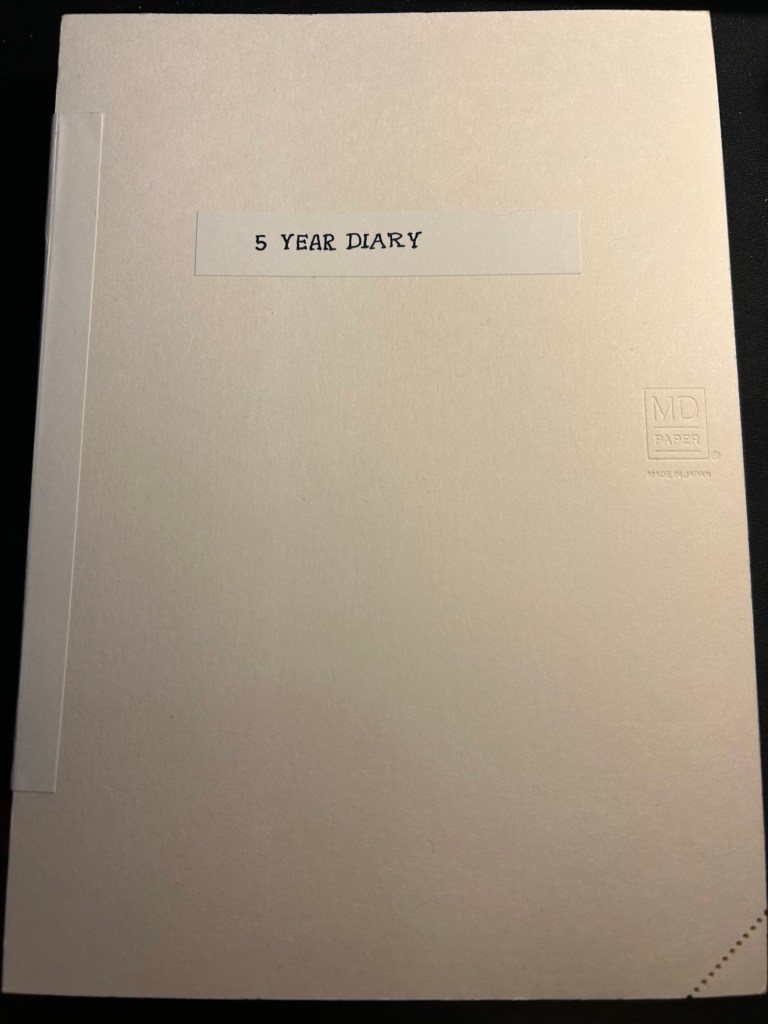
My own, handmade Midori 5 Year Diary

Midori makes beautiful 5 year diaries, but I found the format unappealing. I hate it when something has lines that don’t run all the way to the edge of the page, and I didn’t like the diary’s size and layout. So I took a blank A5 Midori Journal Codex that has one page per day, and created my own 5 year diary. I had purchased the journal on a whim when I was last in Paris, and I hadn’t found any use for it previously. It has 368 pages with no formatting beyond two lines on the bottom of each page that I used to write the day of the month and the month in.

Hand labeled diary.

This isn’t a notebook review blog post. It also isn’t a “you should start a 5 year diary” post, nor is it a “make it don’t buy it” post. It’s a “how I journal” post, and specifically, it’s a “how I journal for self improvement” post. It’s not titled that way because I have another post planned on this topic in the future. This is about a specific technique that I’m trying out now, and which may or may not work for me or for you.

How a page looks

Here’s what’s going on:

Like many cancer patients, I ended up with PTSD. Among other delights, my brain is firmly programmed to think that I don’t have more than a few days to live, so there’s no point in planning ahead. I used to love planning ahead, and I used to be very good at it. I had systems, and notebooks and planners galore. And now I have a brain that simply will not accept the fact that I will be around by the end of next week. It’s irrational, which is why it’s a mental disorder, but it’s also not moving. It started as a very useful coping mechanism, one that allowed me to survive from chemo treatment to chemo treatment, but now it’s refusing to go away, and it’s affecting my quality of life pretty significantly. Nobody likes to live with the constant thought that there is no future to look forward to (and to those curious, no, that’s far from the only delightful affect PTSD has on me. It’s just the one that’s relevant to this post).

So the state of things for the past two years is that planning ahead is like pulling teeth: painful, traumatic, and something that I try to actively avoid. So far I’ve had little to no success dealing with it, and you’d think I’d give up by now but I won’t because I’m stubborn like that. Which brings me to the 5 year diary as a journaling for self improvement practice.

I have an upcoming trip to the US at the end of the month, and I’ve been fighting my brain for the last two months trying to get it to let me plan for this trip. The trip is important and expensive and requires careful pre-planning and my brain has been super obstinate about me not getting to do that. Imagine having a phone call with your bank manager, high-school principal and class bully rolled into one and you’ll get a taste of what’s going on in my head every time I sit down and try to plan ahead. Are you getting heart palpitations? Are you hands sweating? Would you do anything to hang up the phone?

So on the 22nd of July I had enough of that. I took out the Midori notebook and dated 365 pages by hand out of rage. I was going to prove to my brain that I was here to stay, at least for the next 5 years. The idea was to create daily positive feedback, a trail of breadcrumbs that proves that I’m here to stay and I plan on staying alive for a while yet. As I write more than a page a day in my regular journal, I don’t get that positive feedback unless I stop and read back entries, and I rarely have time for that. The page layout of the 5 year diary, coupled with the fact that there is some show-through to the previous page, helps reinforce a constant reminder that hey, I’m not dead yet, and that I’m making good progress to keep staying alive. I wish I had thought of it sooner, so I could show my brain today where I was last year (the first year post chemo), and where I was a year before that (actively getting chemo or dealing with aggressive cancer), but better late than never.

Will it work? Maybe. It’s something that I haven’t tried before. Will this post help anyone else? Maybe. If you’re suffering from depression and anxiety maybe this will help. Maybe this is the way you start a journaling habit – after all, 2-3 lines a day isn’t much to ask, and I sometimes batch entries to 2-3 days at once. In any case I’ll update how the experiment goes as the year progresses, and if this does happen to help you, I’d love to hear about it.