Dip Pens Part 1: Some Basics

It’s been a while since I used my dip pens, and since I had a project in mind for them, I thought I’d document parts of it here.

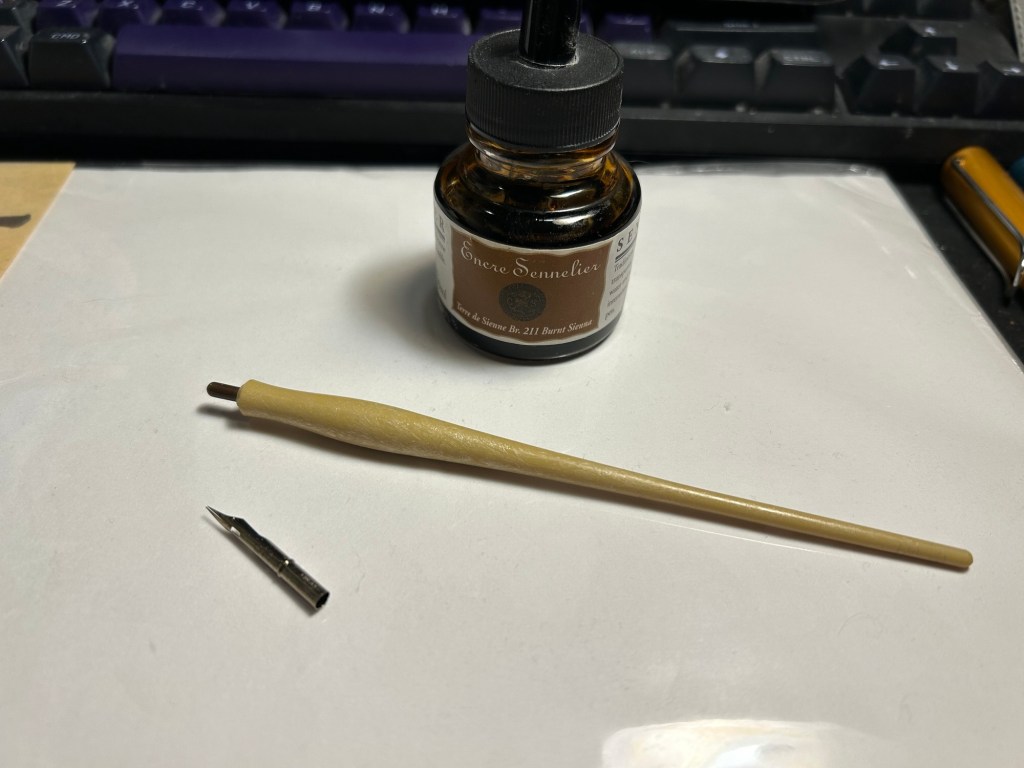
I was looking to draw a map, part of a series of maps for a D&D game. Since I was trying to get a certain look to these maps, I pulled out a mapping nib and a mapping nib holder, and some Sennelier Sepia ink.

The ink is shellac based and meant to be used in dip pens only. If you use it in a fountain pen it will destroy it upon first use. You only need to see how sticky these inks are once to understand that, but most of them helpfully provide warnings on the bottle.

The nib is a Leonardt 801 mapping nib, made in England by the British company Manuscript and purchased, together with the mapping nib holder at Cornelissen & Son in London. They have the largest and best variety of dip nib supplies that I’ve ever seen, and are used by many illustrators and cartoonists. The beauty of dip nibs, however, is that they’re pretty easily and cheaply obtainable. Speedball sells a kit that includes a wide variety of nibs, including a mapping nib, and two holders (a standard one and a mapping one, known as a crow quill).

What’s the deal with a mapping nib? It’s a small, round nib with an end that’s actually a cylinder, and you pop it onto the little peg at the top of the holder. Mapping nibs allow for very thin lines, and yet also a good line variety as the tines are sensitive to pressure.

If you’ve used a fountain pen before and then try to use a dip pen, you’ll likely be surprised by several things. The first is that most dip pen nibs, and mapping nibs in particular, are very sensitive to pressure. The slightest push down will give you more line variation that you’ll get from even the most flexible of flexible fountain pens. The second is that there’s no tipping material. That means more feedback from the page, and that you need to be aware of the directionality of the nib if you don’t want it to snag and spray ink everywhere. This is also why the paper you want to use will be smooth. Smooth surface cartridge paper is your friend.

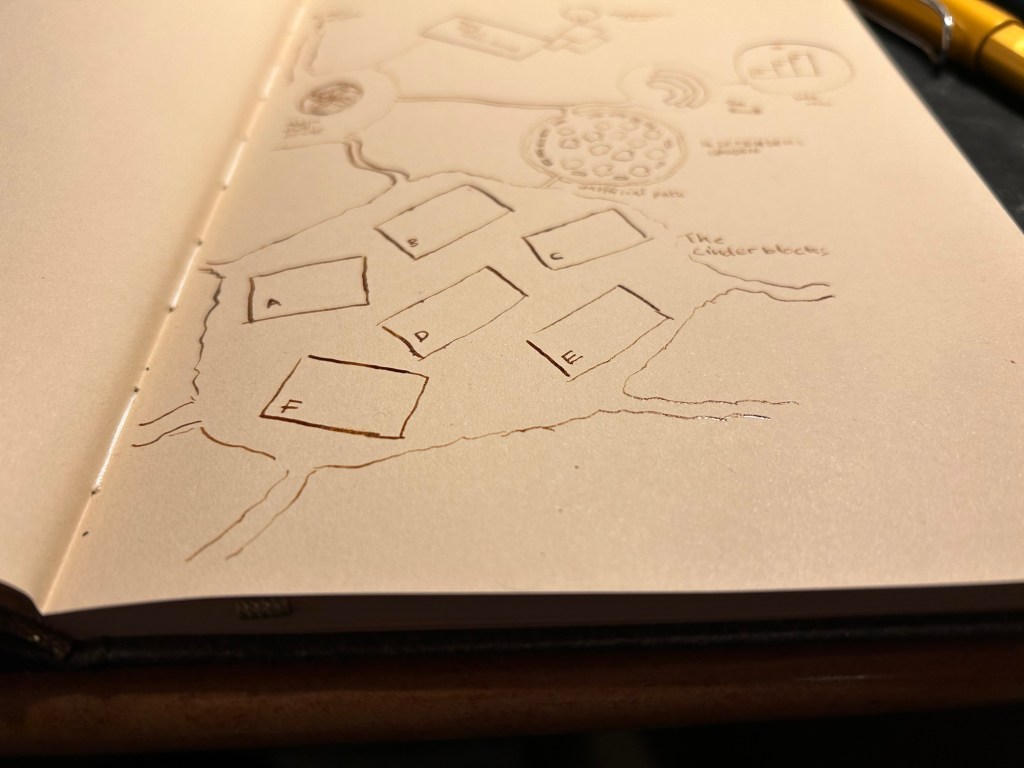
India ink (the shellac based ink used for dip pens) lays on top of the paper and retains a level of gloss and a dimensionality that you just don’t get with fountain pen paper. You can feel the ink lines with your fingers once the ink dries. The ink dries quickly, and is sticky and staining when wet, so beware of nice clothes and wash your hands well once you’re done.

You can see the line variation and shiny properties of the ink.

The nib itself needs to be prepared before you use it for the first time. New nibs are coated in oil and sometimes with wax before being packaged. This prevents them from rusting, and helps them not stick to each other too much as they’re being packaged. If you use a new nib without preparing it, you’ll be disappointed. It will carry little to no ink, and you’ll find yourself dipping the nib again and again. The map above was made with 4-5 dips only, using a new nib, but one that I prepared.

How do you prepare a dip nib? The simplest and safest way (no, don’t take a lighter to it) is as follows: gently clean the nib with water and dish soap (you can use a soft toothbrush if you want, but it doesn’t really require scrubbing) and then put it in cup with boiling water for 1-2 minutes. Then fish the nib out and dry it very, very, very well with a paper towel. You don’t want to air dry the nib at any point or it will rust.

You can see that the ink is raised above the paper and retains its shininess

You can use fountain pen ink with dip pens, but I don’t recommend it. Fountain pen ink is thin and water based, so it doesn’t cling to the nib like India inks. You’ll be dipping a lot more often, and your results won’t be as good. If you plan on using a dip pen to test out fountain pen inks, know that your test will only show the colour properties of the ink but not its flow (wet/dry). Also don’t use a mapping nib for that – mapping nibs are best used for small sketches, maps, things that require very thin lines and some line variation.

When I work with a dipping nib I keep the nib constantly wet with ink (not water!), and immediately when I’m done I either wash the ink from the nib and dry it very well, or I wipe the ink off with a cotton rag if I just plan to take a short break. Ink left to dry on the nib may clog it (particularly with mapping nibs), and soaking a nib in water will cause it to rust.

You may find dip nibs in flea markets for very cheap, usually in a pile in a little box. Check if they aren’t rusted (don’t buy rusted nibs), and then clean them as you would a new nib (water, soap, heat).

I’ll be going over various kinds of India inks and various kinds of nibs in future posts, but in the meanwhile if there’s anything that interests you in dip nibs let me know in the comments.

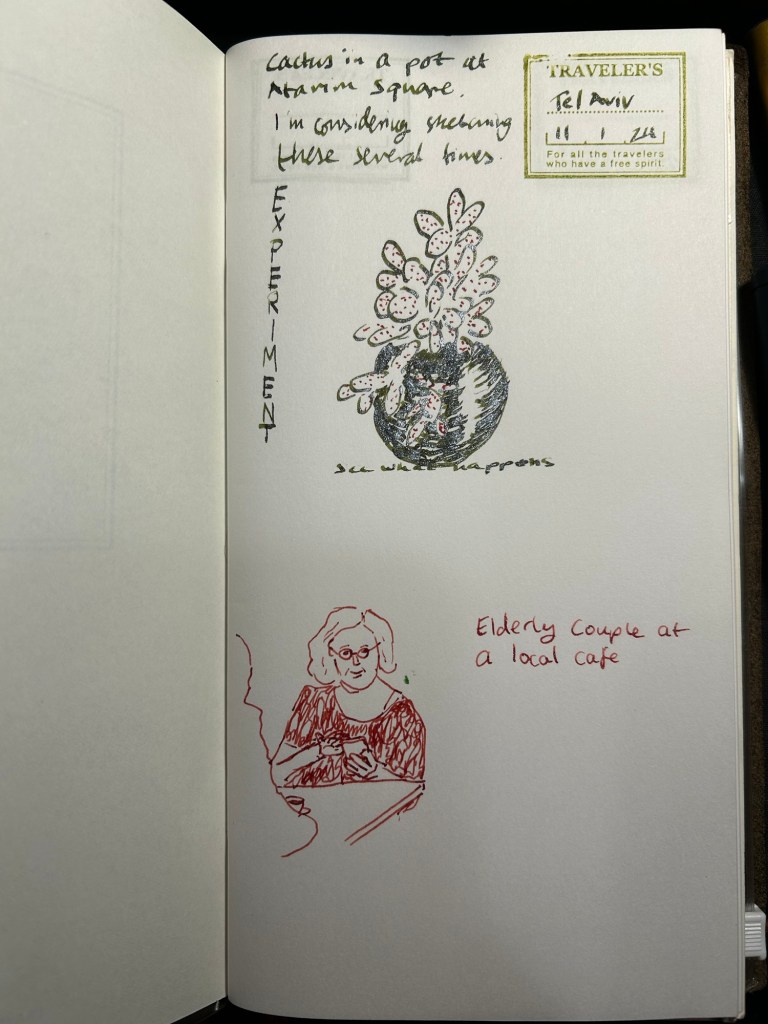
Two Traveler’s Notebook sketches.

I’m still working my way through the Inkvent inks (9 pens left to write dry), and I’m trying to sketch more even on busy weeks. So I dusted off an old Traveler’s Notebook that I set up years ago and didn’t fill, and I started playing with fountain pens.

Planning in 2024: The 12 Week Year

It’s 2024 and this time I’m doing neither yearly goals nor themes. I find themes to be too vague to be useful: they don’t provide enough structure or motivation for my needs. My old yearly goals worked perfectly before I got cancer, but now I can’t commit to a full year of goals (my brain just won’t let me). So I’m trying something new this time: the twelve week year. The idea is to treat each quarter as a new year, with all that entails.

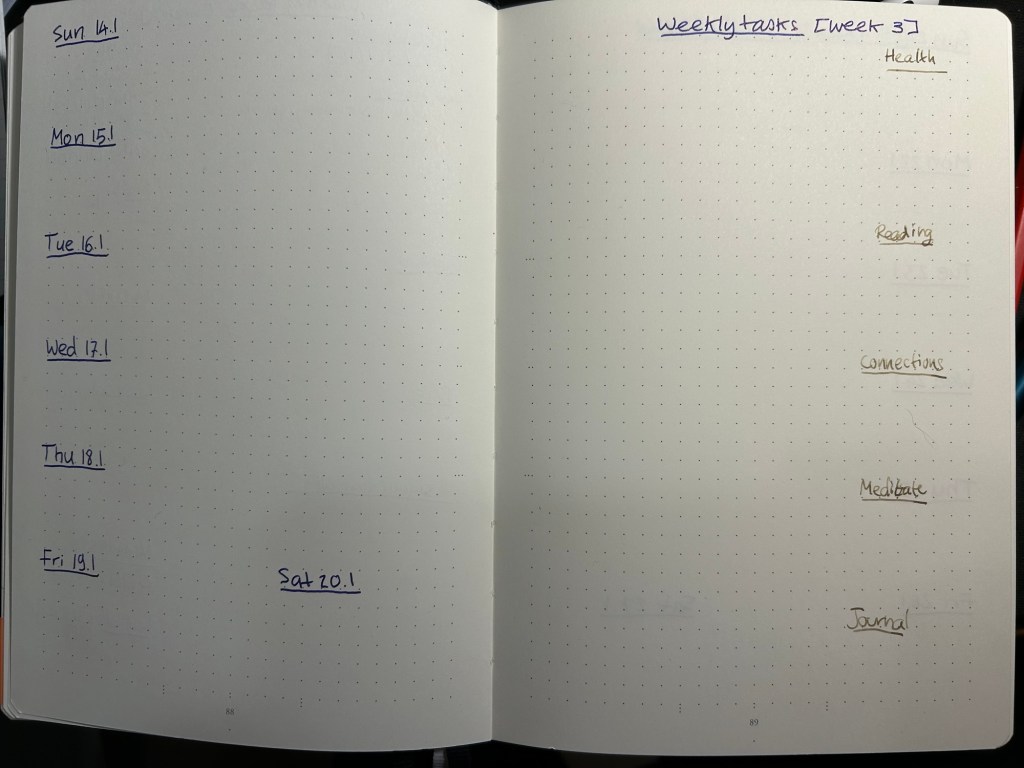
I mapped out the first 13 weeks (from the 31st of December to the 30th of March) in my Leuchtturm1917 Bullet Journal, each week on two pages. On the left are the days of the week and on the right is my set of tasks for the week. The list of tasks is divided into two columns, and each column is divided into categories. The left column is for categories and tasks that vary widely from week to week: blogging, general tasks, various courses and challenges I’m taking. The right column is for my permanent categories that happen every week in the quarter: health, reading, connections, meditation and journaling.

The weekly layout

The health category tracks fitness and health related tasks (on a given week it will have checkboxes for running, swimming and gym sessions for example, as well as reminders to go to the dentist or get my blood pressure checked). The reading category is for where I want to be with my reading in a given week (halfway through book x, 30 pages into book y). Connections is something I added after reading Cal Newport’s Digital Minimalism and it’s been well worth doing: I call or meet up with 2-4 friends every week. Messaging doesn’t count, only phone calls, zoom calls, or physical meetups. If there’s one habit I’d recommend picking up in 2024 it’s this one. Meditate and Journal are just tracking locations for my meditation and journaling sessions.

I then set out goals in various categories for the entire “12 week year”, as if it was a full year. Each of these will be evaluated at the end of the 13 weeks, and a complete new set of goals will be set for next quarter. The goals are all SMART goals: specific, measurable, achievable, relevant and time bound. Unlike themes there’s a possibility of not achieving all my goals, but that’s also something worth learning and carrying on to the next “year”.

So for instance under my health category for the next “year” is to get back to a 5k running base and an 8k long run (I’ve had a break in running for a few weeks due to illness and travel). If at the end of March I’m only at a 7k long run that’s not the end of the world, it just means that I need to take that into account when planning my next 12 weeks.

I then break down the goals into tasks that go into the weekly page. Each week I look at my goals, calculate where I am and where I want to be by the end of the week and fill out the weekly planning page accordingly. I use the calendar side of the page to block out time sensitive things or things that provide useful context (days of the week where I work from home and those where I work from the office, rainy days, holidays, etc).

To be clear: I don’t block the tasks for all the “year” in advance, but rather on a week by week basis. Only the goals for the entire 12 week period are planned in advance. The goals themselves are realistic, and many of them are broken into “base goals” and “stretch goals” much like in Kickstarter. At the last week of the quarter I set aside time to review and “shutdown” the quarter and plan and set up the new one coming up. If I end up not liking the weekly page setup, if there’s a goal that just didn’t work for me, if there’s something new in my life I can easily take it into account without feeling like I’ve “wasted” precious planning time or I’m bailing out on my plans.

So, if you’re unsure on how to plan your year, I suggest just planning the next 12 or 13 weeks. It may just work for you.

Diamine Inkvent 2023 Day 23

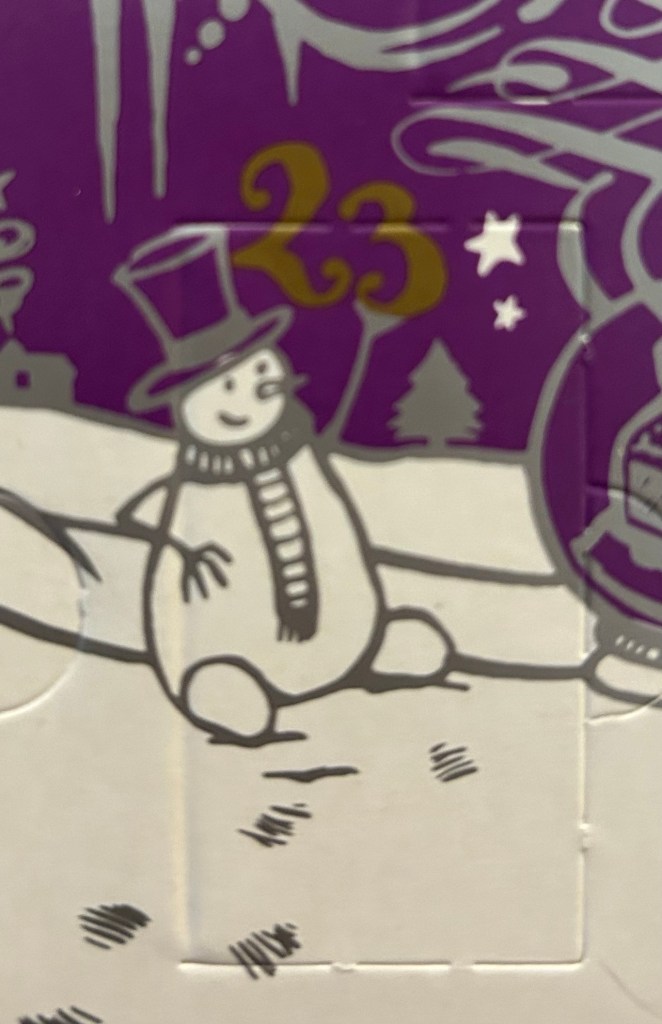
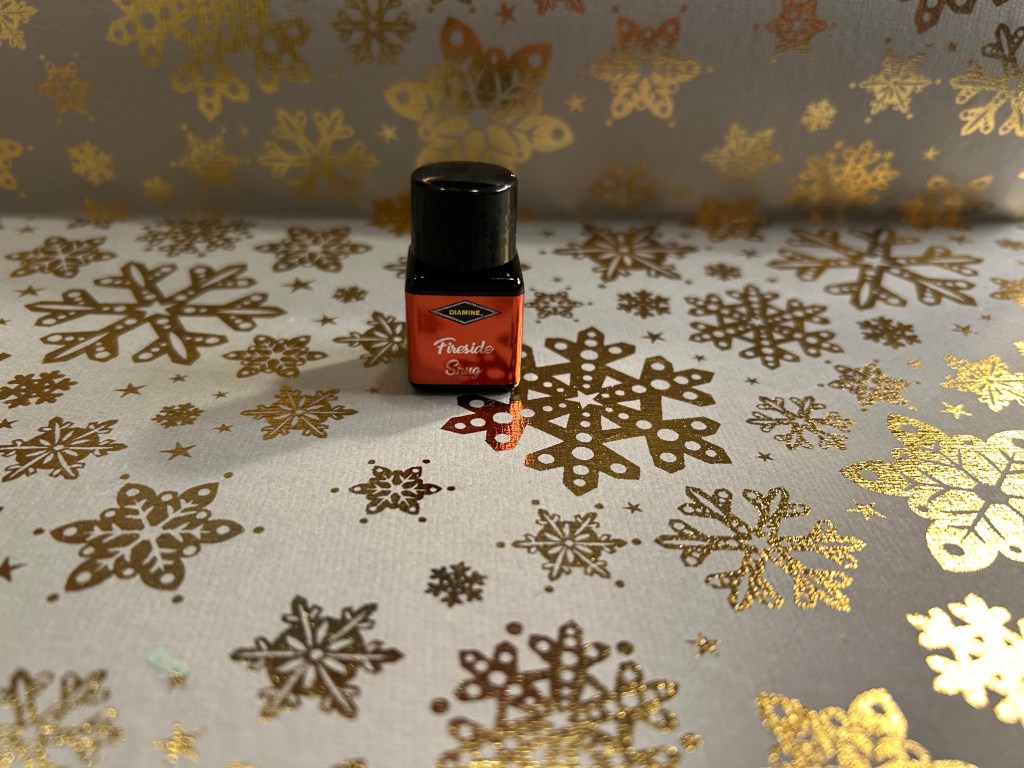
This is the Diamine Inkvent 2023 day 23 door:

Day 23’s ink is Diamine Fireside Snug. It’s a standard ink.

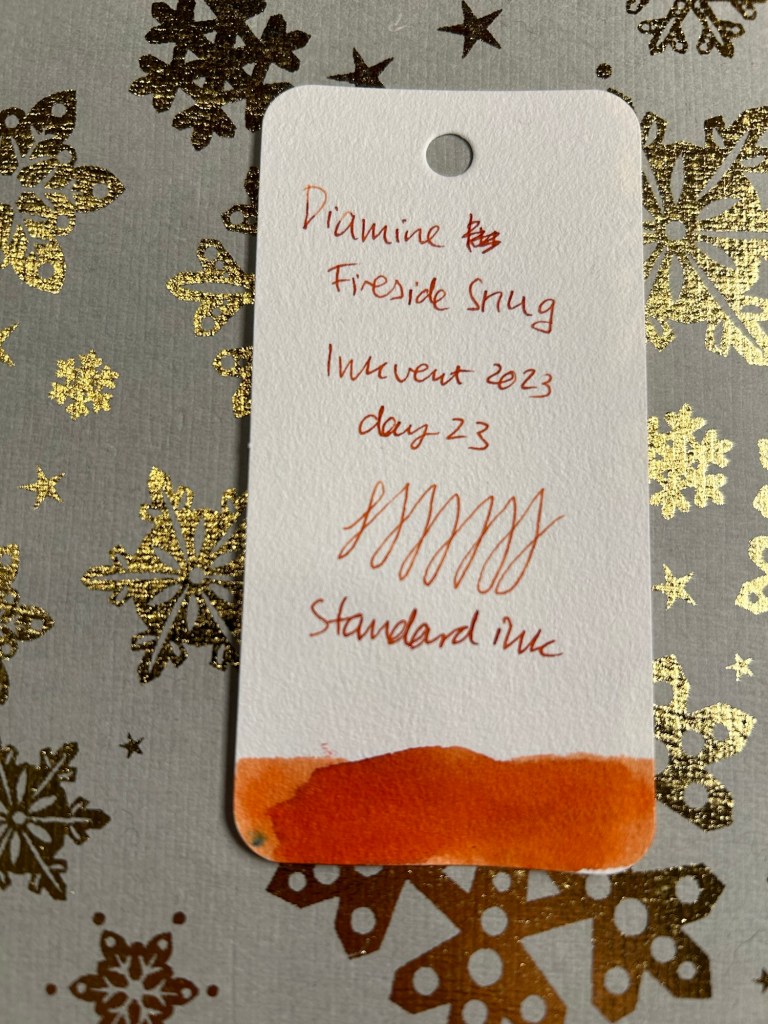
Diamine Fireside Snug is a dark orange standard ink with a lot of great shading. It’s one of the few inks in the Inkvent calendar that would make for a great everyday ink. The dark dot on my swab is due to an ink drop on the Col-O-Ring card that I didn’t notice before swabbing the ink.

Diamine Fireside Snug Col-O-Ring Swab

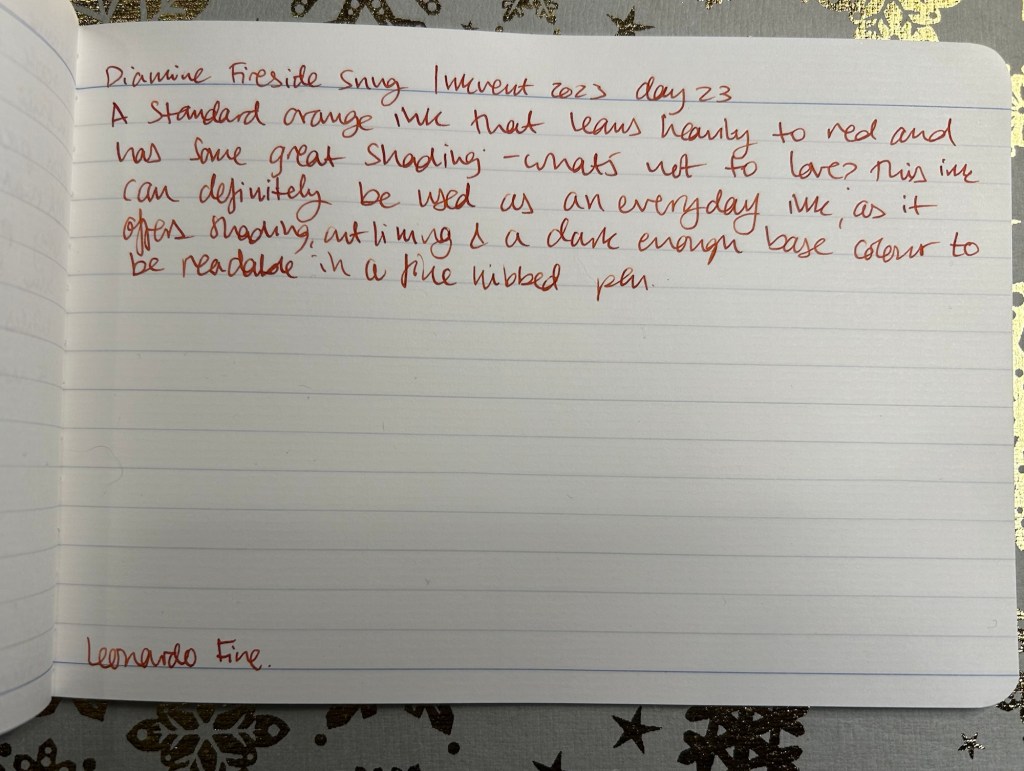
The base ink colour is a reddish orange that is dark enough to be readable even with a fine nibbed pen, and the shading it provides is pretty spectacular. I have very few orange inks in my ink collection, and this one is definitely one that I would add to it.

Diamine Fireside Snug writing sample

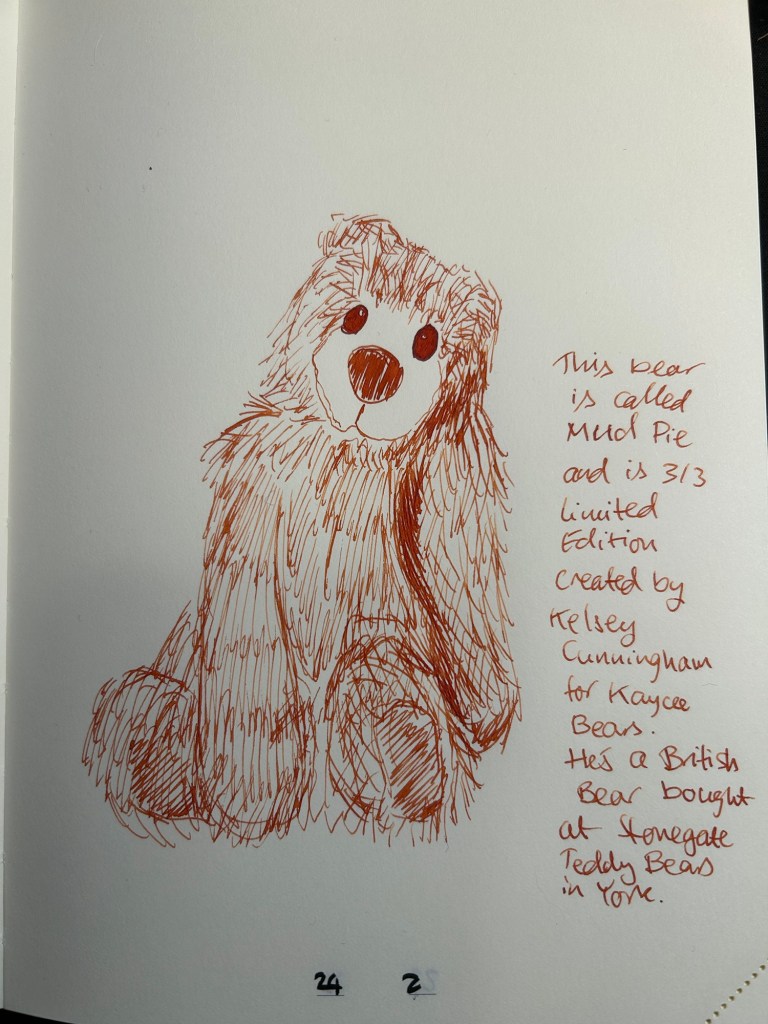
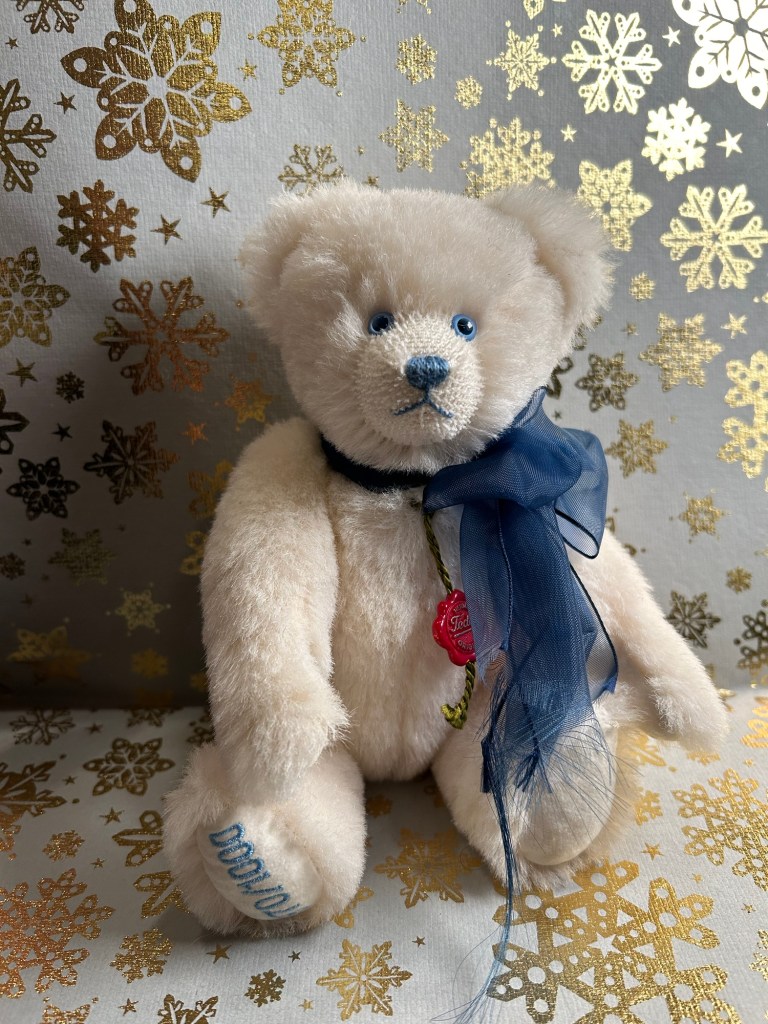
You can see the ink shading in this sketch of Mud Pie the teddy bear. He always appears a bit “squashed” and that’s part of his charm.

The original bear (purchased at Stonegate Teddy Bears in York):

There’s only a handful of standard inks in this year’s Inkvent and they’ve all been solid inks, but Jacaranda and Fireside Snug have been a cut above (I’ve decided that it’s completely unfair to call Diamine Weeping Willow a standard ink, and so I’m putting in into a separate category). If you’re looking for an alternative to Noodler’s Habanero, this is it.

Diamine Inkvent 2023 Day 22

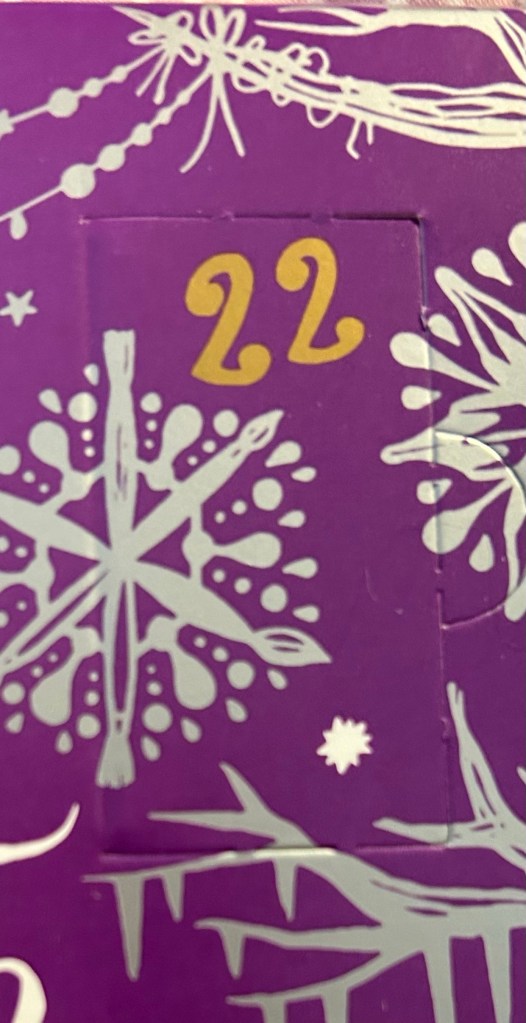
This is the Diamine Inkvent 2023 day 22 door:

Day 22’s ink is Diamine Tinsel. It’s a shimmer ink.

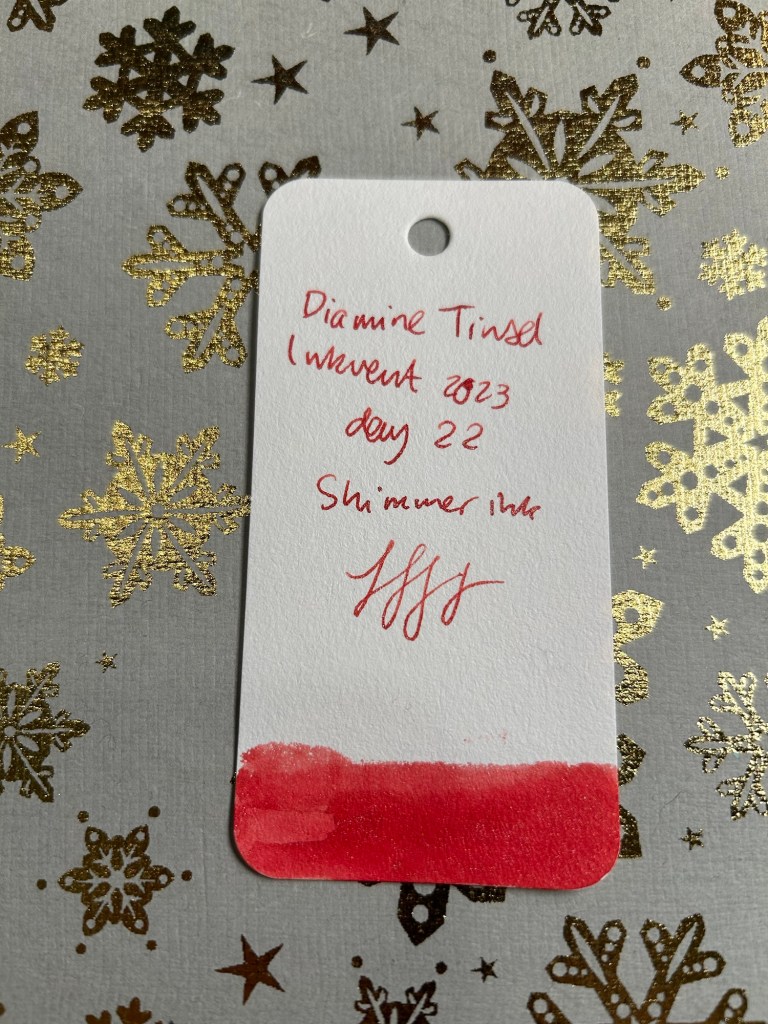
Diamine Tinsel is bright red ink with red shimmer and a lot of shading and it’s gloriously Christmas appropriate.

Diamine Tinsel Col-O-Ring swab

It took 22 days for Diamine to pull out the red Christmas ink but they knocked it out of the park with this one. It dries darker than it writes on the page, with the base ink being a bright red ink with orange shading. The shimmer renders it darker and richer and really makes it something special. In previous Inkvents Diamine leaned too heavily for my taste on the red inks, but this time they picked them carefully and sparingly. While Bah Humbug goes for the dark red theme, Diamine Tinsel is the full on festive bright red with shimmers on top.

Diamine Tinsel writing sample

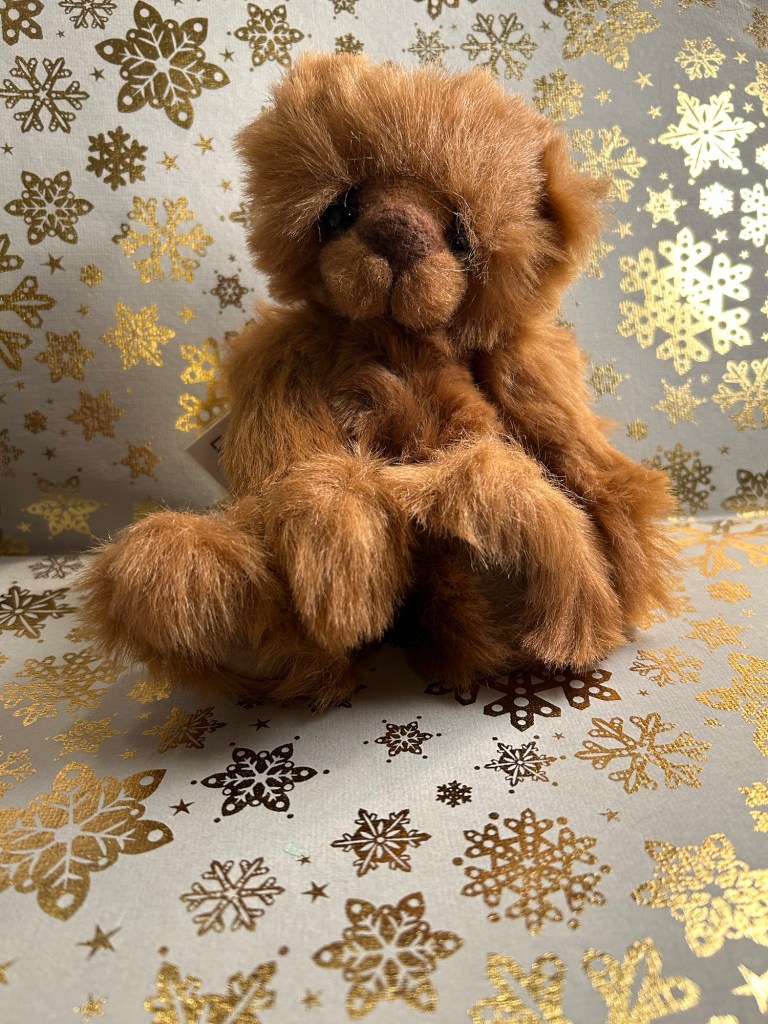
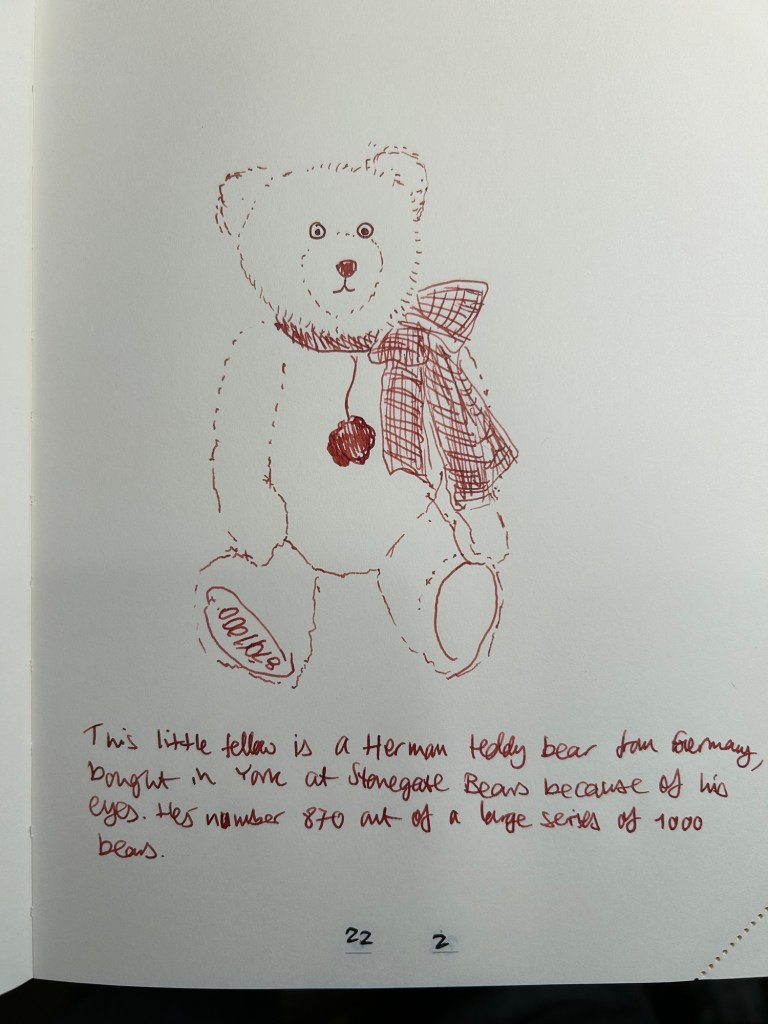
I probably should have sketched today’s bear with blue ink, but Diamine Tinsel it is. The reason I bought him is because of those eyes. I just couldn’t say no to them.

Here’s the original bear (what do you think of his eyes?):

Diamine Tinsel was the festive red ink that this Inkvent calendar needed. Whether you use it to write Christmas cards or letters to Santa, this ink definitely has “Christmas” written all over it.

Quick Update

Happy fountain pen day to all who celebrate. I purchased a Leonardo Momento Zero Nuvola rose gold fine flex nib from Fontoplumo with the hopes that it will arrive at some point in the future (deliveries are still severely delayed).

Unlike past years I’ve started working on my Inkvent reviews now instead of in real time, as a way to make them less stressful. I decided to theme my sketches this year around my teddy bear collection.

My PTSD has been kicking my ass since Tuesday, when I got caught in a crowded shelter (small room, no windows, closed door, large rocket barrage. Couldn’t have been more triggering if I’d designed it). I’m taking some time off daily posting to take care of myself.

Inktober 2023 Day 27

Three rocket attacks today and I’m getting ready for an uneasy night. They’re sending them in large waves so Iron Dome missed a few and there direct hits and more wounded people today.

In better news the stray black kitten that my mom and brother saved is back from her stay at the vet’s (she had to have her tail removed after she was run over by a car). She’s so friendly and fearless the vet thinks that she belonged to someone who threw her out (a common fate with black cats in particular). But now she has a great forever home and she’s having the time of her life:

Adopt, don’t shop.

Inktober 2023 Day 23

No rockets last night and so far no rockets today. Could this be the first quiet day we’ve had in three weeks? The north and south weren’t so lucky, of course.

Went on a short run within running distance of a shelter, and saw some monk parrots and a crow scrounging for treats in the grass. Small moments of normalcy in the madness we are living in now.

A young woman I work with was drafted on the terrible Saturday of the 7th of October and has been on active duty ever since. I sketched her today, to cheer her up. I hope she gets to come back to the office safe and sound and hang the sketch on her office cork-board.

Inktober 2023 Day 7: Pink Antelopes

I wasn’t in the mood to sketch these, but I decided to sketch them anyway. Pelikan Souverän M600 vintage Tortoise Shell brown fine nib with Pilot Iroshizuku Yama Budo.