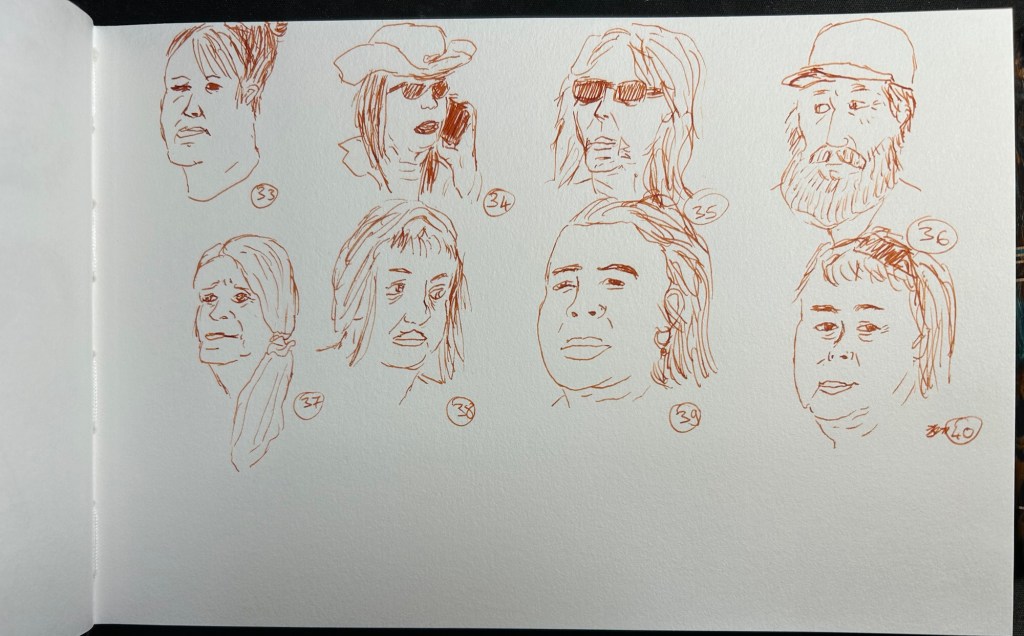
The result is sketches 12 to 40 (yes, I got that many done in a single sitting). The fact that I have much better reference photos made such a huge difference, as I didn’t have to waste time digging through urban landscape photos in search for half decent portraits. Also, the Earthworld photographs feature People with a capital P – frumpy, old, ugly, real and incredibly beautiful to sketch. The great Leonardo Momento Zero Bohemia Twilight fountain pen with its fine nib and Diamine Fireside Snug also added to the fun – I love this pen and ink combo so much I’m likely going to use it for the rest of the 60 sketches.
Number 12 was added to this pageI love 14, 17, 18, 20 and 21I picked up speed with these as I warmed upNumber 36 and 37 really came out well, I think
So, now which one is your favourite? I have too many to choose from.
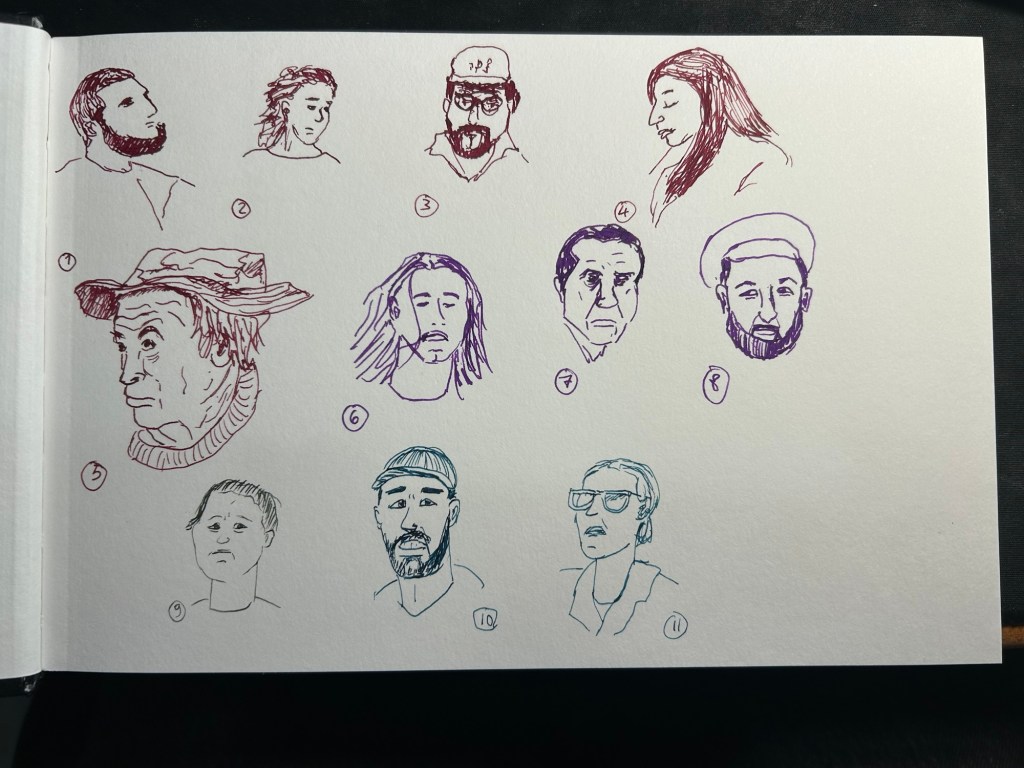
I had a busy day yesterday, so I only got three sketches in and didn’t have time to post them. Numbers 9-11 were what I added, with number 9 being sketched with a vintage Parker Vacumatic filled with Diamine Ash and numbers 10 and 11 being sketched with a Franklin Christoph 45L and Diamine Eau de Nil. I loved the lines that the Parker Vacumatic produced, but it’s an extra fine nibbed fountain pen and it really struggled on the tooth of the Stillman and Birn Alpha. These were the last batch sketched from the Street Photography group on Flickr. I found a better source for photos thanks to a great tip from Tina from the wonderful Fuelled by Clouds and Coffee blog.
I almost didn’t post today as I wasn’t up to sketching and I got only three sketches in, none of them great. But I like it when creators show their failures so I’m doing it myself today: my lack of shoulder mobility coupled with a lack of sleep and the difficulty of the subject made for a bad sketching day.
Parker 51 with Montblanc The Beatles Psychedelic Purple on a Stillman and Birn Alpha. Sketched 6-8 were done today. As usual the goal for me is to get to 100 even if it takes more than a week.
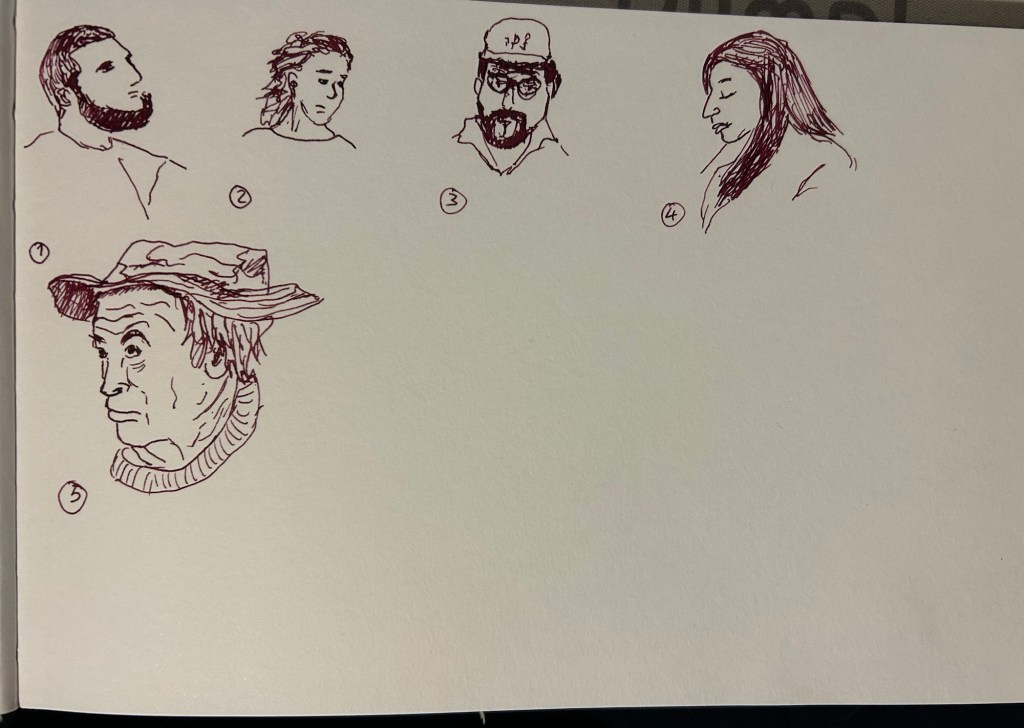
An inauspicious start for this year’s one week 100 people drawing challenge: I hurt my shoulder yesterday and now it’s extremely painful to draw with it. So today’s sketch batch is just five sketches, done with a vintage Radius Comet fountain pen and Diamine Anaranth ink on a hardcover landscape Stillman and Birn Alpha.
These were all sketched from Creative Commons Flickr photos, working for no more than 1-2 minutes per sketch, directly with pen and ink. The expressiveness of this nib has been a lot of fun. Number 5 is my favourite so far, which one is yours?
As I noted earlier, I’ve decided to only post these on my blog this year and not on social media.
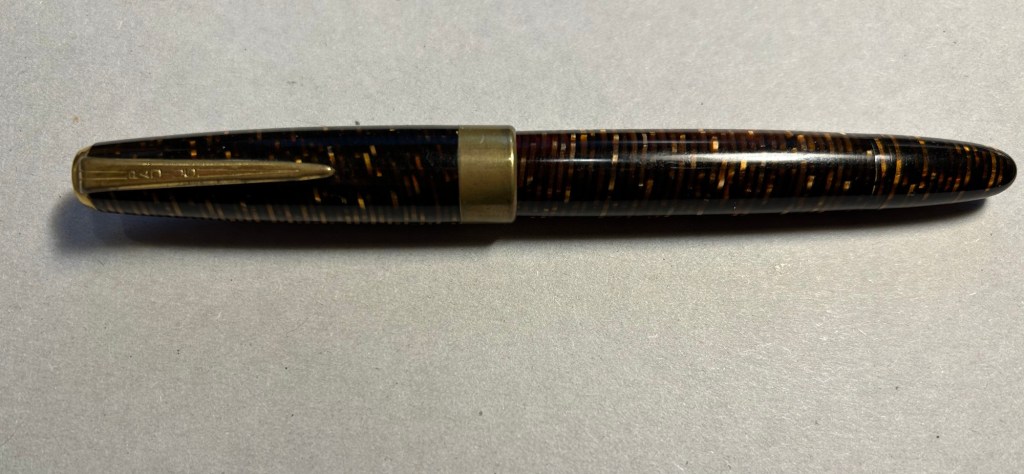
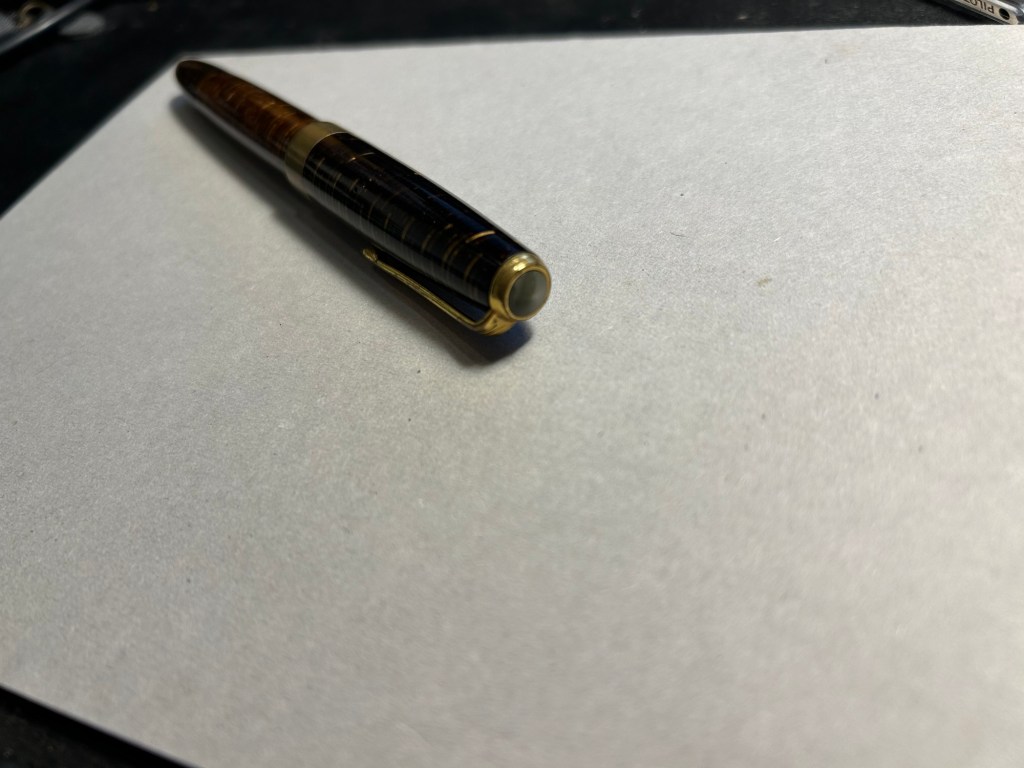
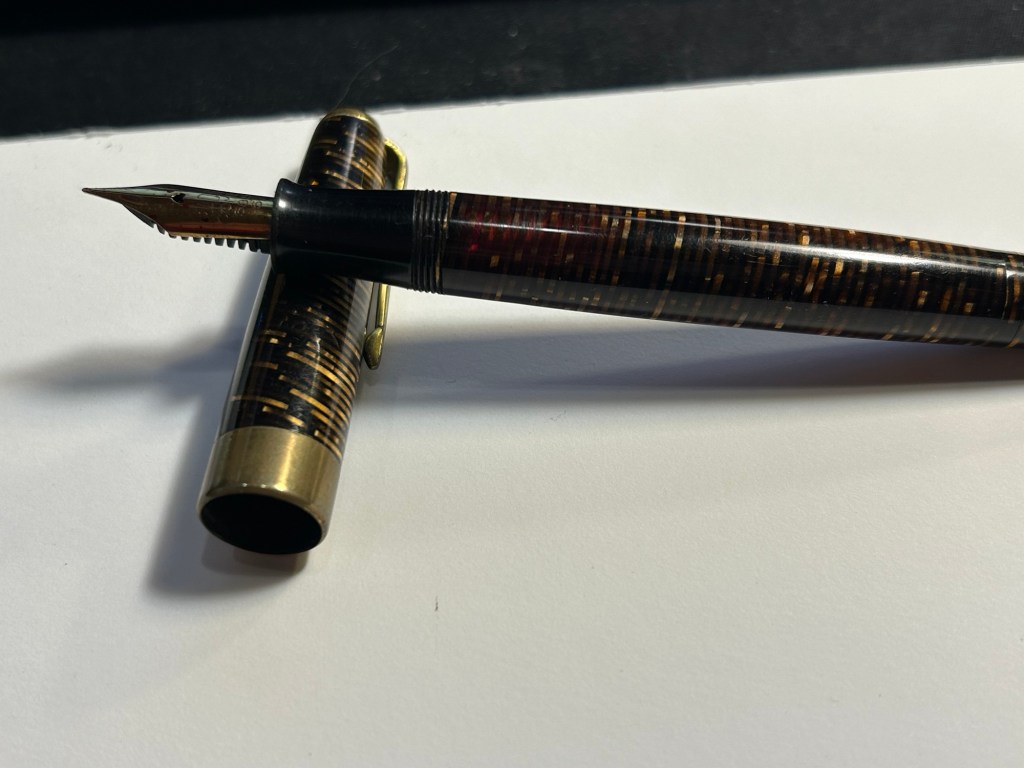
In April 2010 back when I was relatively new to collecting vintage fountain pens, I purchased a vintage Radius Comet on the Fountain Pen Network. The body was brown laminated celluloid, just like Parker striped Vacumatics, and you could see the ink levels through the stripes, just like with a Parker Vacumatic, and it had a jewel on the cap, just like a Parker Vacumatic. It was, however, a piston filler, unlike the Parker Vacumatic, and it had a superflex gold nib, also unlike a Parker Vacumatic. So even though I had never heard of the brand before and there was very little information about them to be found, I took the risk and bought the pen. It cost €120 shipped.
Radius Comet
The pen was obviously user-grade, as there was brassing and tarnishing on the hardware, a lot of micro-scratches on the body, and some ambering in parts of the celluloid. It’s still a good looking pen, though.
The stripes had darkened with time, but some still have their original glow
The design of the clip and the jewel on the end of the cap was clearly influenced by the ultra popular Parker Vacumatic.
The jewel on top, a clear copy of the Parker design.
Even though the celluloid has darkened and ambered with time, you can still clearly see the ink levels through the stripes. As a piston filler it has an impressive ink capacity, which works well with the flex nib, as it can lay down a good amount of ink when fully flexed.
You can see the ink levels through the stripes.
It works perfectly – the filling system is and always was a joy to use, and the nib… Well, the literally don’t make nibs like this any more:
The nib
When you apply no pressure it’s a wonderfully smooth fine nib, but when fully flexed it goes up to broad/double broad territory. The feed keeps up with the ink flow with ease, and I’ve never had a hard start with it, ever.
Writing sample on Midori MD paper with Diamine Amaranth
Leonardo has revived the brand in recent years, and now you can buy a brand new Radius with a cartridge/converter system, resin body and (obviously non-flexible) steel nib for around €150, not including shipping. No modern pen manufacturer is capable of creating a pen like the vintage Radius or any of its contemporaries, neither in body material, nibs or filling systems at the price that they were once made. It’s a question of both volume and lost knowledge and tooling, which means that the vintage and new Radius pens have very little to do with each other beyond having the same brand name.
Buying vintage is always a risk in a way buying modern pens isn’t, but the value for money still cannot be beaten. I might buy a modern Radius at some point in the future (I like their designs and I’m curious about the pens), but I have no doubt that in terms of looks, nib and filling system it won’t be able to hold a candle to its well-worn and well-loved vintage namesake.
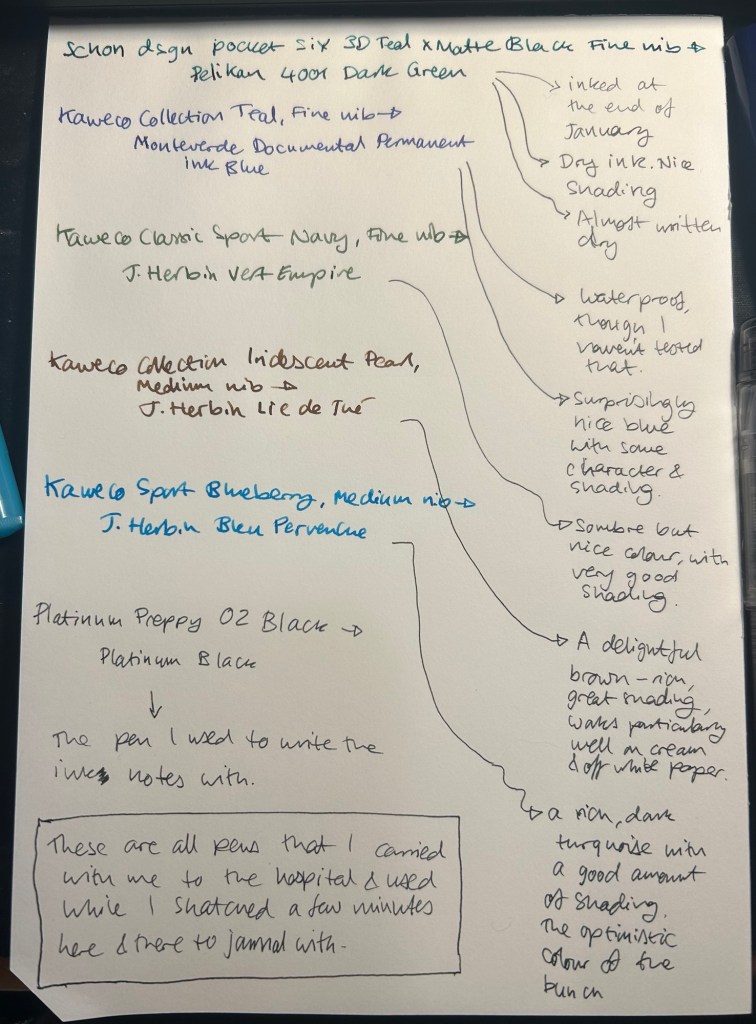
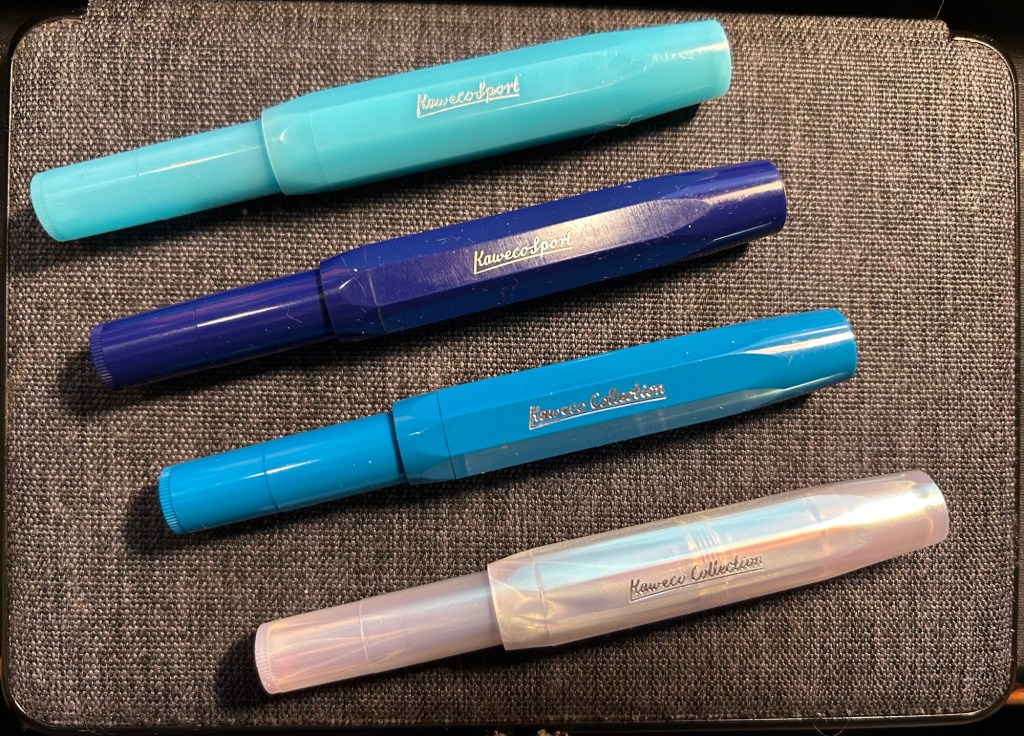
I started the month ready to spend the first half of it in hospital, with my dad. So the fountain pens I chose were all expendable pocketable pens that I was willing to have stolen (apart from the Schon Design Pocket 6 which was a leftover from January and never left my desk). So that meant I inked 4 Kaweco Sport fountain pens using various ink cartridges that I had on hand.
The portable lineup:
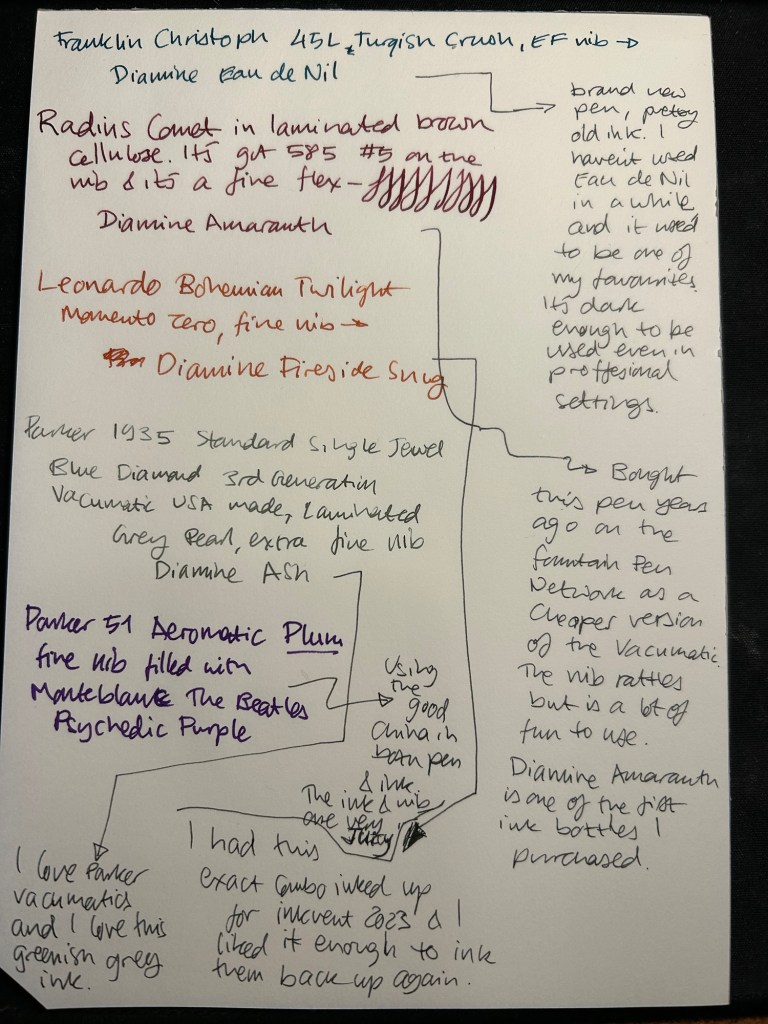
Once my dad got out of hospital and back home, I decided to celebrate by “shopping” from my collection. I inked up a Parker 51 Plum (use the good china!), a Parker Vacumatic, a Franklin Christoph 45L Turqish (spelled like that on their site) Crush that I had purchased but hadn’t inked before, and a vintage Radius Comet (because I heard that the brand was being revived).
The Franklin Christoph EF nib isn’t the best companion to the Eau de Nil as the ink tends to dry in the nib, causing hard start issues. The Radius is a flexible nib of the vintage kind, which means it’s really flexible and not just springy. It also rattles, which makes me not carry it around with me — it stays at home at my desk. The Leonardo is a beautiful pen with a beautiful ink that I refilled immediately — the only Inkvent 2023 ink I did that with. The two vintage Parkers are phenomenal, as usual. The extra fine nib on the vacumatic somehow really well with Diamine Ash, though I was worried at first that the combination would be too light to be readable. The Parker 51 Aeromatic is a treat to use. It’s the rare Plum colour, and it’s got a fantastic nib (as all 51’s have) which pairs very nicely with the Monteblanc The Beatles Psychedelic Purple.
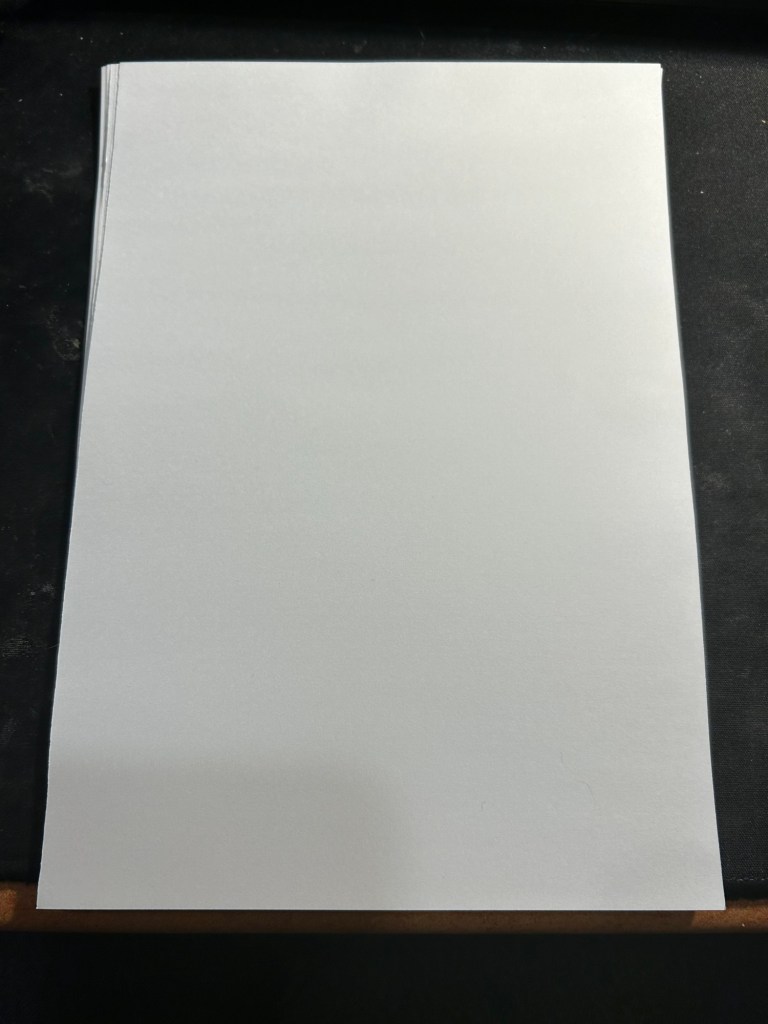
In terms of paper I’ve been using Kokuyo A4 KB paper which I cut to half size (so A5) to manage my daily to do list. The paper is relatively cheap and very fountain pen friendly. I’m also able to use both sides of the page despite there being some show through.
Kokuyo A4 KB paper cut in half to A5 size. This is why standards are great.
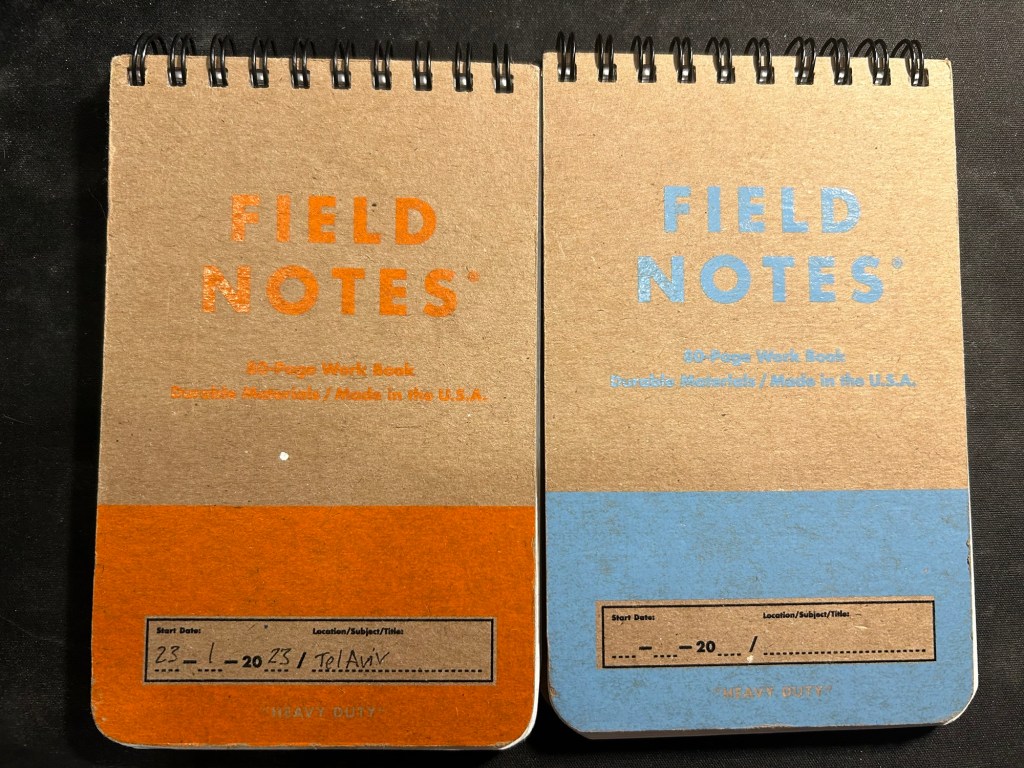
I’ve got a Field Notes Heavy duty on my desk at home and at work, and I just bought a new stock of them. These are where I jot down quick notes, phone call details, doodles during boring meetings. When they’re filled up they get tossed out as nothing in them is permanent — everything important in them moves to somewhere else as I work my way through them.
Field Notes Heavy Duty pocket spiral bound reporter notebooks
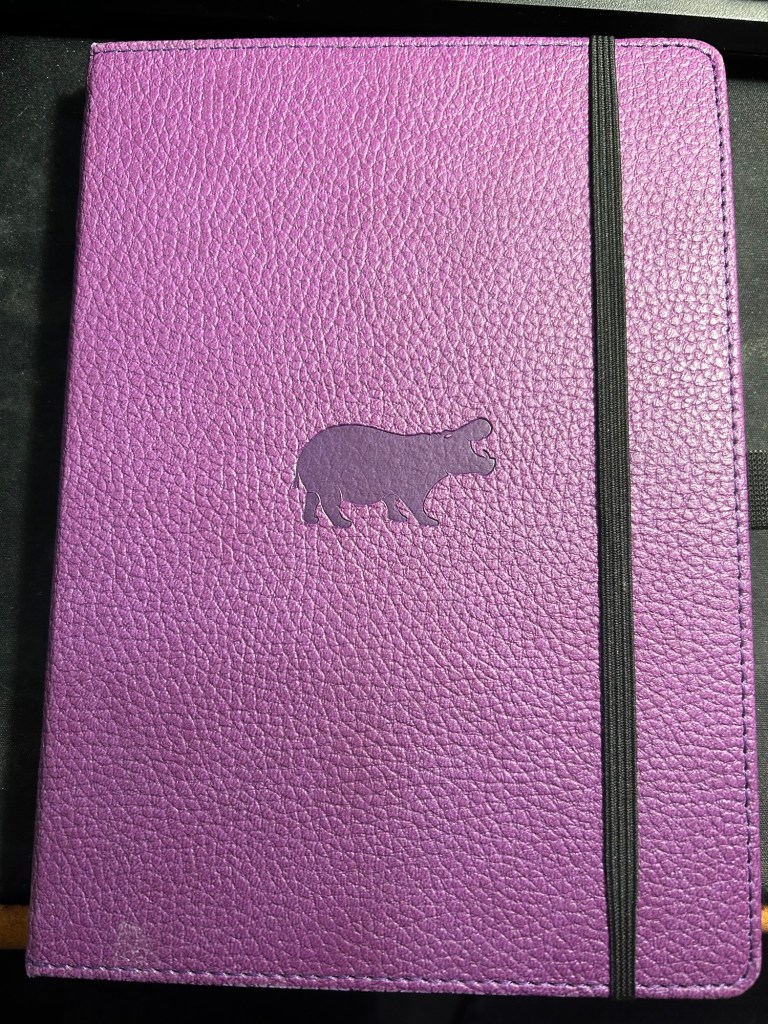
I have finally found a use for my Dingbats notebooks (beyond giving them away as gifts, as I have in the past): this lined purple hippo one is my blog notebook. I discovered that I have a much easier, much quicker time writing blog posts if I first draft them on paper, and this is where I do it in. I’ll likely write a dedicated post to this notebook soon.
Dingbats Puple Hippo A5 lined notebook
Apart from them I still use the notebooks I used last month.
Pencils
I’ve been using the Drehgriffel Nr. 2 as my daily driver. I use pencils extensively to plan, as my plans tend to change, and there’s something about this solid little mechanical pencil that makes me want to use it.
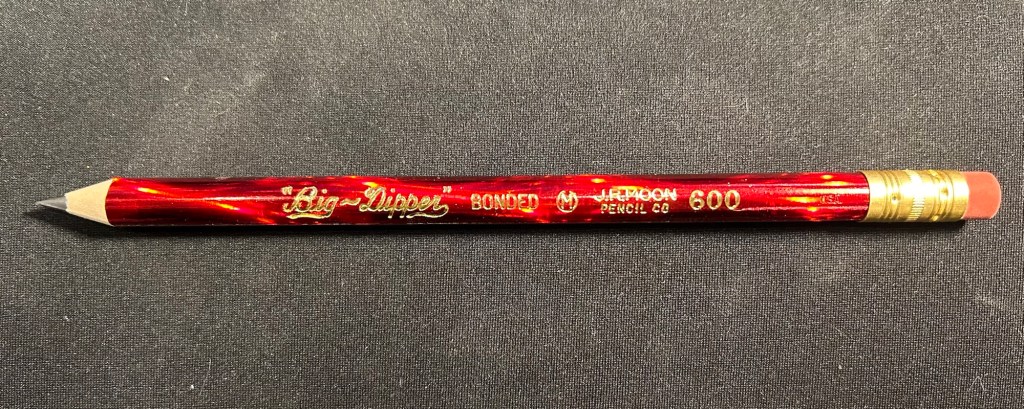
Apart from that I brought two pencils into the rotation, to try to use. One is from my last purchase from the late and great C.W. Pencils Enterprise, and it’s the “Big Dipper” J.R. Moon Pencil Co 600. It’s an oversized pencil, the kind of pencil that kids who are learning to write are expected to use. I’ve been having pretty significant neuropathy in my hands lately and I thought that this would be nice and easy to use, as after all it’s designed for kids just learning to develop their fine motor skills. So far it’s been a disappointment – the eraser and ferrule make it very top heavy, and I’ve been having a hard time manipulating it. I can’t imagine kids using this pencil and having an easy time with it. I like the over the top red foil with gold writing look though, so I haven’t given up on it yet.
Big Dipper J.R. Moon 600
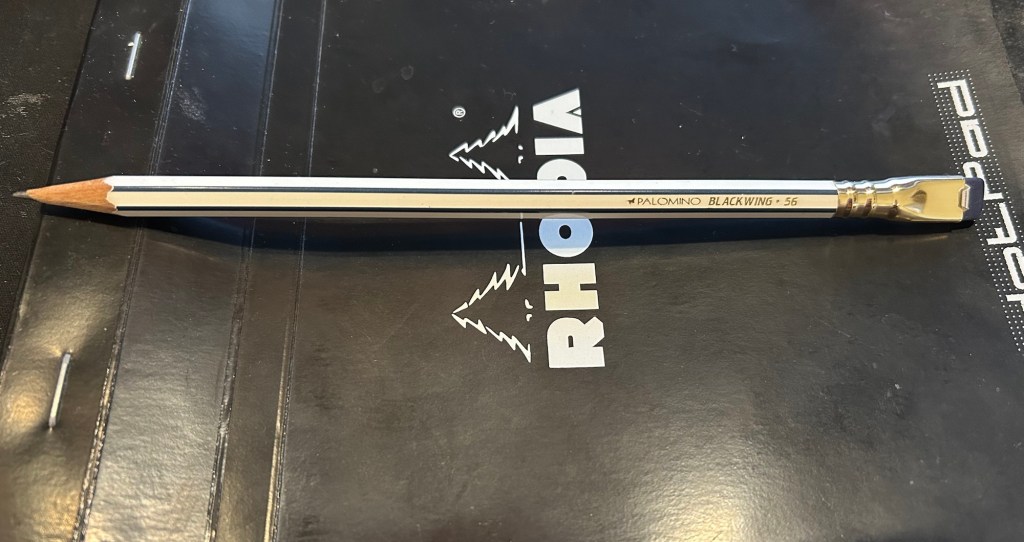
The second pencil is a Blackwing Volumes 56, the baseball themed one. The core is soft and dark, and I’ve been using it for quick and loose sketches. I’m trying to ease into one week 100 people by training myself to work faster than I normally would.
Blackwing Volumes 56
What did you use in February? Any planner changes? Pencil revelations? Pen preferences?
January was a big month in terms of writing pens dry. For the first time ever I managed to write all of the Inkvent pens dry by the end of the month. That’s 12 fountain pens written dry, which is the most I’ve ever written dry in a month. The secret is not filling them more than 50% full, and making sure to journal and note-take consistently.
In terms of paper products I’ve journaled in my Stalogy 365 B5 journal and will be switching to a new journal next month (also a Stalogy 365 B5 because I like the paper and the format). I do have a little quirk with these notebooks – I use them upside down because I don’t like the header with the dates on it, so I flip the notebook around so that it’s at the bottom of the page. That way it doesn’t bother me as much.
Stalogy 365
I’ve also been using a Rhodia A5 dot pad to time block my day, and Kokuyo A4 KB which I cut in half (to get two A5 pieces of paper) and write my daily todo list on. At work I use a Maruman Mnemosyne horizontal A5 notebook (either squared or blank) to brainstorm on, track my tasks, take meeting notes, etc. My weekly plans and long term 12 week year goals are in a Leuchtturm1917 Bullet Journal that stays at home, on my desk. The rest (Stalogy B5 journal, two pieces of daily planning paper, and the Mnemosyne) travel with me when I go to the office.
I have a monthly calendar with some monthly reading, running, gym, swimming and blogging targets on it and I draw that on a Well Appointed Desk “Rebel Plans” notepad.
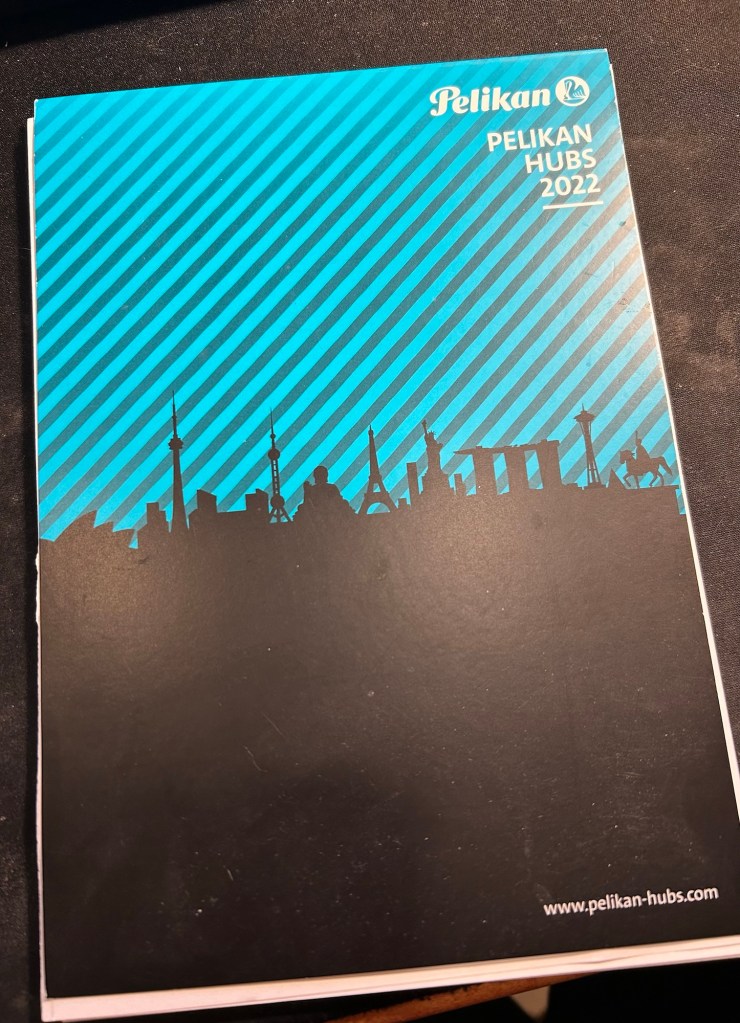
Earlier this month I used the wonderful Pelikan Hubs paper to do my daily planning, and it was amazing (cardstock thick and fountain pen friendly). I was running out of it quickly though, which is why I moved to the Kokuyo.
Pelikan Hubs paper pad
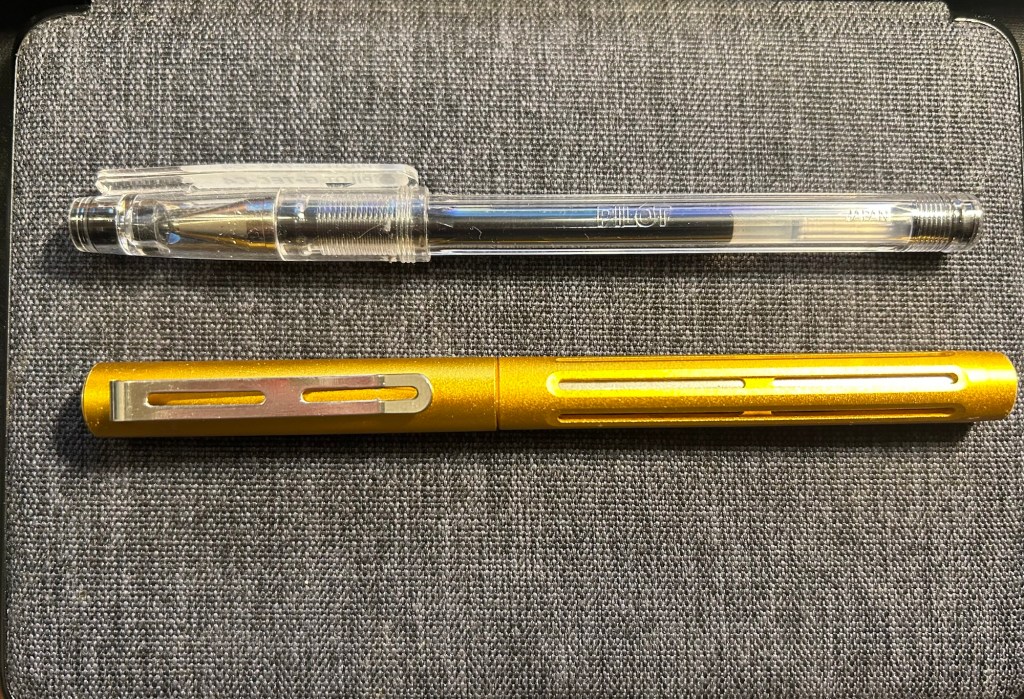
In terms of standard pens I’ve used the Pilot Hi-Tech-C in 0.4, my Spoke Design Spoke Pen in orange crush, and a Pilot Juice Up 04 in orange and light blue. As I will be spending a lot of time at hospitals next month, I will likely be using more standard pens then.
Pilot Hi Tec C and Spoke Design Pen
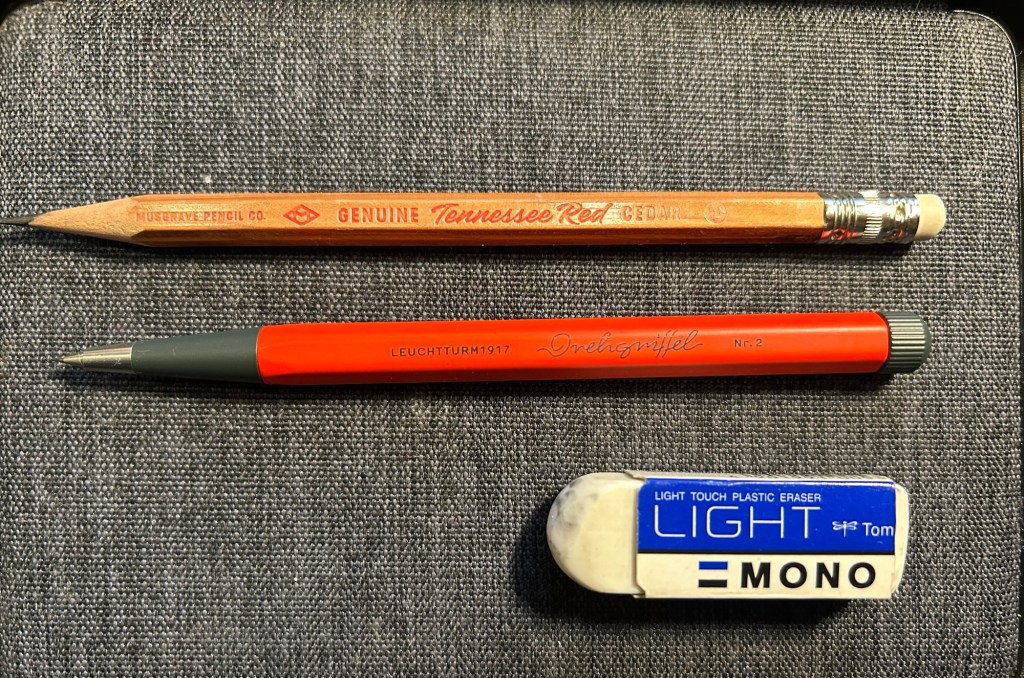
Pencils in use were the Tennessee Red, which is gorgeous and a treat to use, and Leuchtturm1917 Drehgriffel Nr.2 mechanical pencil in red and grey. I have better mechanical pencils that this one, and yet I keep returning to it. Something about the Drehgriffel design is simply appealing to me. You can read my review of it here.
Next month will likely see more use of standard pens and pocket or cheap fountain pens. I will be in the hospital a lot, so that means that my setup will change to reflect that.
Here are the fountain pens I filled for February:
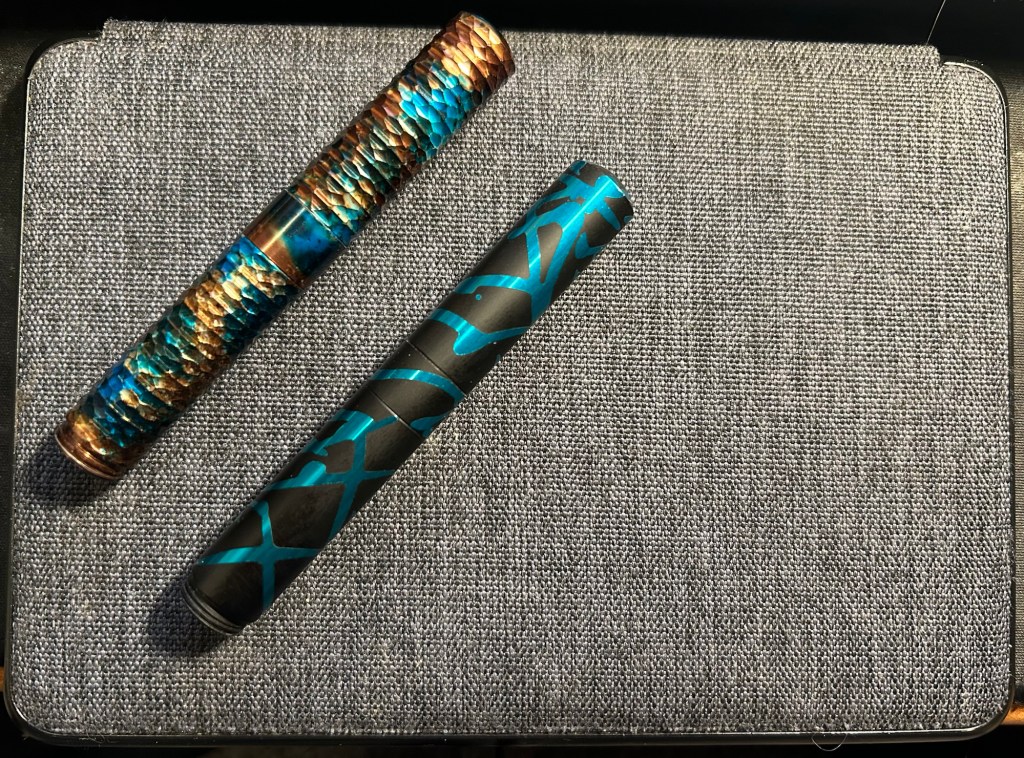
Schon Design Pocket 6 pens.Kaweco Sports.
The new and challenging setting will mean that I’ll likely go back to my trusty Moleskine hardcover and Ti Arto for the duration of my dad’s stay in hospital.
What stationery products have you been using in January?
I realized that the last journaling sample that I uploaded is three years old and my setup and journaling format changed considerably, so I decided to post an update.
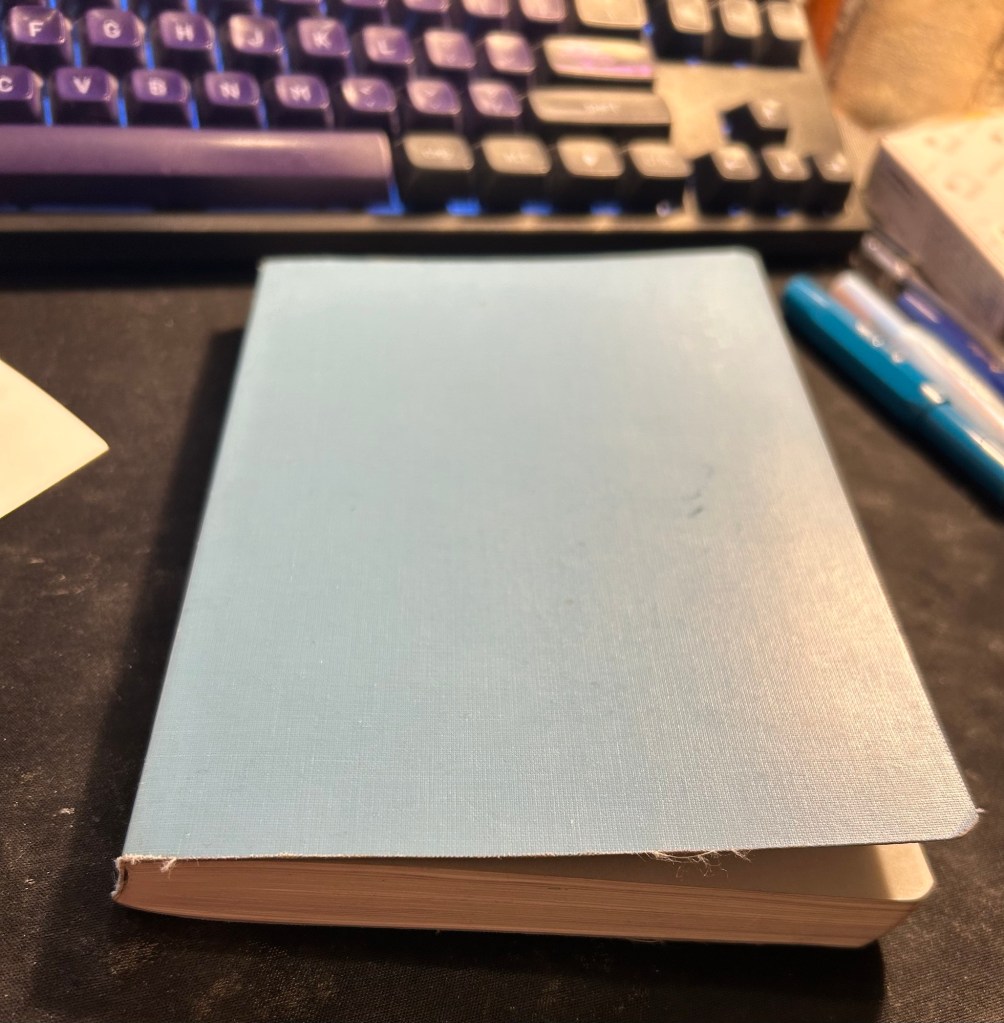
I currently use a Stalogy 365Days B5 grid notebook in light blue. This is the second such notebook that I’ve used, the previous one being black. Before that I used Moleskines, and it’s quite possible that I’ll return to using Moleskines, but currently I enjoy both the smaller format of the Stalogy B5, and its fountain pen friendly pages. The notebook is thick but the pages are thin, so there’s show through (and sometimes bleed through) on every page. It doesn’t bother me, but if it bothers you then you’ll need to either write on only one side of the page or choose a different notebook.
I exclusively use fountains pens in this notebook, whatever is currently inked, though I prefer fine nibbed pens.
My journaling format has also changed, and it’s now as follows:
Gratitude – I tried writing this in the evening but I found that it works better to write this part as early as possible in the morning. Sometimes it’s divided into sections (health, family, work, home, etc), but it’s usually a bulleted list of around 4-5 things. I try to be specific, and I try to remember even the most mundane of things. Especially during tough times it’s super helpful, and it also serves to get me journaling early in the day. Some days I only get this done, but those days are rare.
Notes on what happened during the day. I used to try and be a completionist, but that was just a source of frustration and eventually gaps in my journaling practice. Instead I now journal only things that are meaningful, which means that I journal less to record the day and more to reflect on key moments in it. I try to include a story of some kind (like seeing something interesting on the bus drive to work), and a reflection or insight of some sort (for example, my thoughts on someone being fired, or what the news appears to do to people’s mood and patience).
I end with something out of Acceptance Commitment Therapy (ACT), which is a note on how I tried to advance each of my chosen values (for me it’s self development, courage, creativity, fitness and friendliness). This helps me manage my PTSD, especially during tough days. I know that I’ll be keeping myself accountable in the evening, so I try to keep them top of mind throughout the day.
I journal in the morning, and usually also once or twice during the day and once in the evening. I’m trying to develop both a shutdown routine and a task switching routine, and use them both as opportunities to journal and reflect.
Apart from these, once a week ever since the beginning of the year I reflect on how well I achieved my goals for the week, and once per month I reflect about the month. At the end of the year I review the entire year, and that’s usually the longest entry in my journal for that year. I tend to write 2-3 pages a day, though some days it’s just one page, and some days it closer to 5-6.
Sometimes I sketch in my journal, but it’s rare, and unlike my Moleskines, I don’t glue things in my Stalogy (so not ticket stubs, tags, stickers, business cards, etc).
Sketch sample on the right, the blotting paper on the left, and the fountain pen I used.
I keep a folded piece of A5 blotting paper in my journal, as the ink takes time to dry in the Stalogy, and without it the whole page becomes a mess.
It’s been a while since I used my dip pens, and since I had a project in mind for them, I thought I’d document parts of it here.
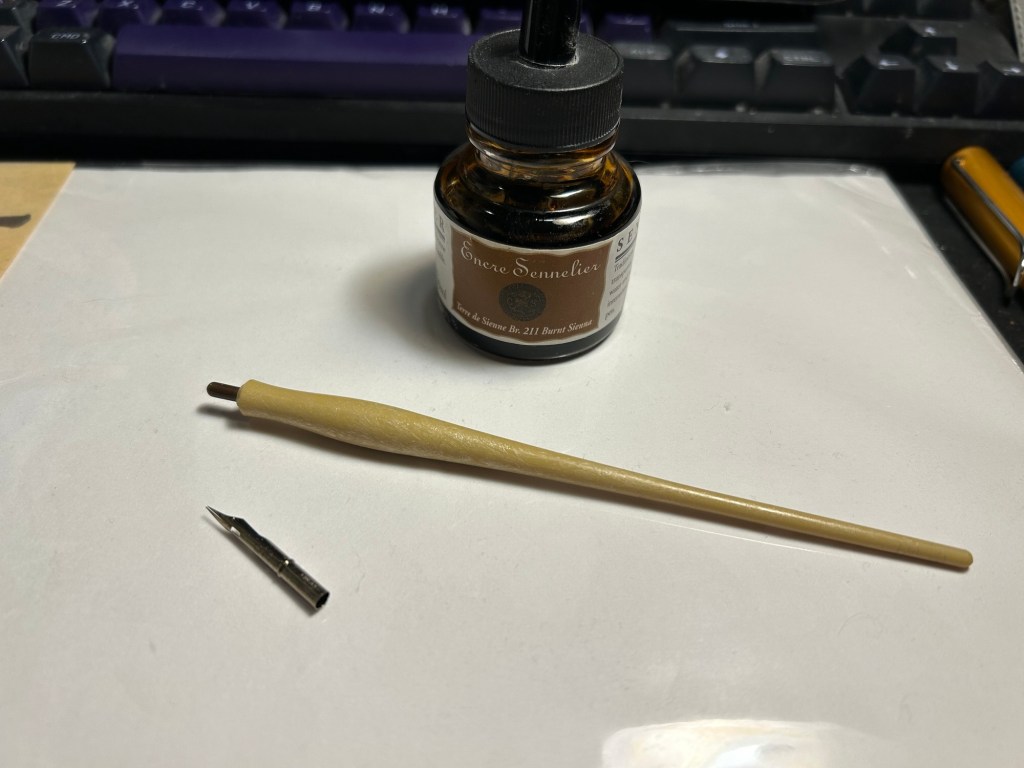
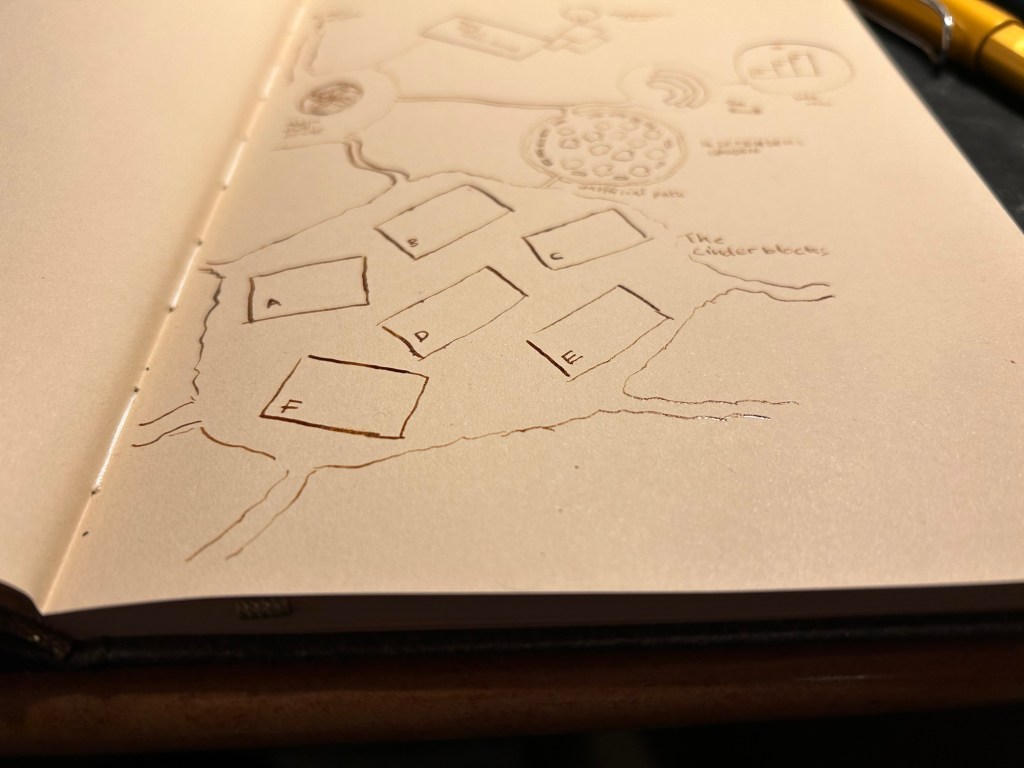
I was looking to draw a map, part of a series of maps for a D&D game. Since I was trying to get a certain look to these maps, I pulled out a mapping nib and a mapping nib holder, and some Sennelier Sepia ink.
The ink is shellac based and meant to be used in dip pens only. If you use it in a fountain pen it will destroy it upon first use. You only need to see how sticky these inks are once to understand that, but most of them helpfully provide warnings on the bottle.
The nib is a Leonardt 801 mapping nib, made in England by the British company Manuscript and purchased, together with the mapping nib holder at Cornelissen & Son in London. They have the largest and best variety of dip nib supplies that I’ve ever seen, and are used by many illustrators and cartoonists. The beauty of dip nibs, however, is that they’re pretty easily and cheaply obtainable. Speedball sells a kit that includes a wide variety of nibs, including a mapping nib, and two holders (a standard one and a mapping one, known as a crow quill).
What’s the deal with a mapping nib? It’s a small, round nib with an end that’s actually a cylinder, and you pop it onto the little peg at the top of the holder. Mapping nibs allow for very thin lines, and yet also a good line variety as the tines are sensitive to pressure.
If you’ve used a fountain pen before and then try to use a dip pen, you’ll likely be surprised by several things. The first is that most dip pen nibs, and mapping nibs in particular, are very sensitive to pressure. The slightest push down will give you more line variation that you’ll get from even the most flexible of flexible fountain pens. The second is that there’s no tipping material. That means more feedback from the page, and that you need to be aware of the directionality of the nib if you don’t want it to snag and spray ink everywhere. This is also why the paper you want to use will be smooth. Smooth surface cartridge paper is your friend.
India ink (the shellac based ink used for dip pens) lays on top of the paper and retains a level of gloss and a dimensionality that you just don’t get with fountain pen paper. You can feel the ink lines with your fingers once the ink dries. The ink dries quickly, and is sticky and staining when wet, so beware of nice clothes and wash your hands well once you’re done.
You can see the line variation and shiny properties of the ink.
The nib itself needs to be prepared before you use it for the first time. New nibs are coated in oil and sometimes with wax before being packaged. This prevents them from rusting, and helps them not stick to each other too much as they’re being packaged. If you use a new nib without preparing it, you’ll be disappointed. It will carry little to no ink, and you’ll find yourself dipping the nib again and again. The map above was made with 4-5 dips only, using a new nib, but one that I prepared.
How do you prepare a dip nib? The simplest and safest way (no, don’t take a lighter to it) is as follows: gently clean the nib with water and dish soap (you can use a soft toothbrush if you want, but it doesn’t really require scrubbing) and then put it in cup with boiling water for 1-2 minutes. Then fish the nib out and dry it very, very, very well with a paper towel. You don’t want to air dry the nib at any point or it will rust.
You can see that the ink is raised above the paper and retains its shininess
You can use fountain pen ink with dip pens, but I don’t recommend it. Fountain pen ink is thin and water based, so it doesn’t cling to the nib like India inks. You’ll be dipping a lot more often, and your results won’t be as good. If you plan on using a dip pen to test out fountain pen inks, know that your test will only show the colour properties of the ink but not its flow (wet/dry). Also don’t use a mapping nib for that – mapping nibs are best used for small sketches, maps, things that require very thin lines and some line variation.
When I work with a dipping nib I keep the nib constantly wet with ink (not water!), and immediately when I’m done I either wash the ink from the nib and dry it very well, or I wipe the ink off with a cotton rag if I just plan to take a short break. Ink left to dry on the nib may clog it (particularly with mapping nibs), and soaking a nib in water will cause it to rust.
You may find dip nibs in flea markets for very cheap, usually in a pile in a little box. Check if they aren’t rusted (don’t buy rusted nibs), and then clean them as you would a new nib (water, soap, heat).
I’ll be going over various kinds of India inks and various kinds of nibs in future posts, but in the meanwhile if there’s anything that interests you in dip nibs let me know in the comments.











 Writing at Large