Strange Palm Trees
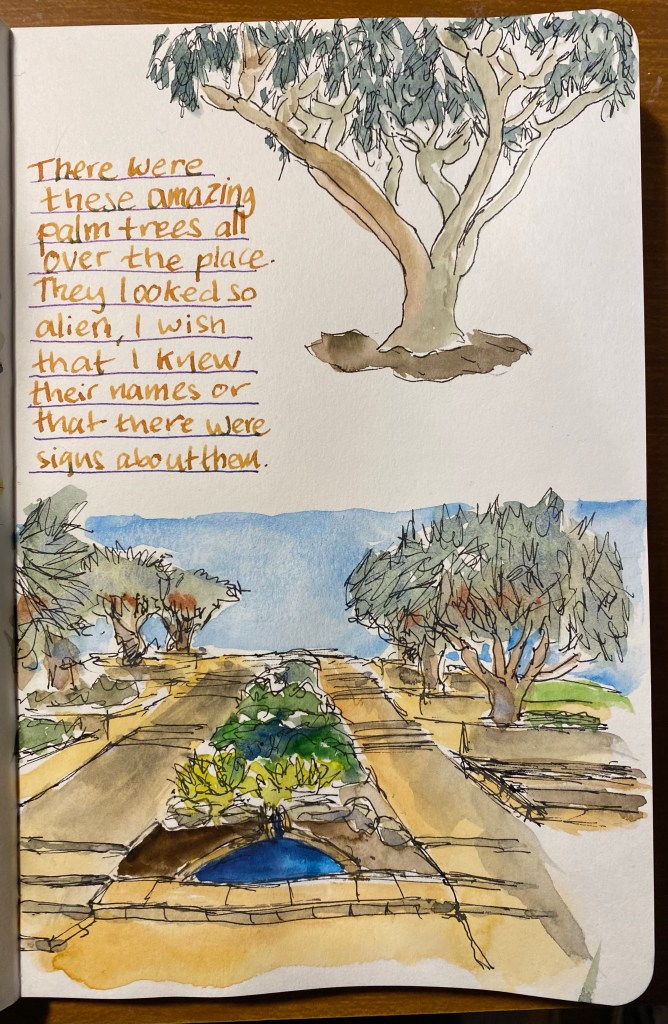
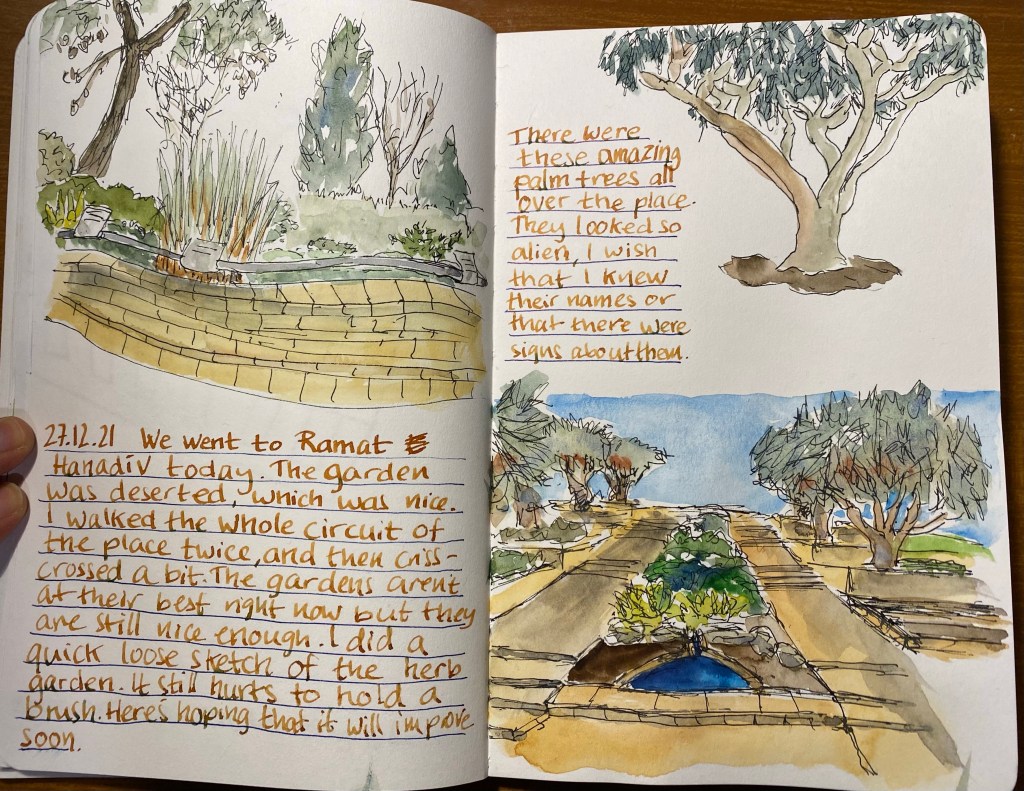
I finished the Ramat Hanadiv spread today, drawing the second page from photos, as I had a few moments when I could sort of feel my hands.
I wish I knew what these palm trees were called. They looked amazing.
A blog about writing, sketching, running and other things
I finished the Ramat Hanadiv spread today, drawing the second page from photos, as I had a few moments when I could sort of feel my hands.
I wish I knew what these palm trees were called. They looked amazing.
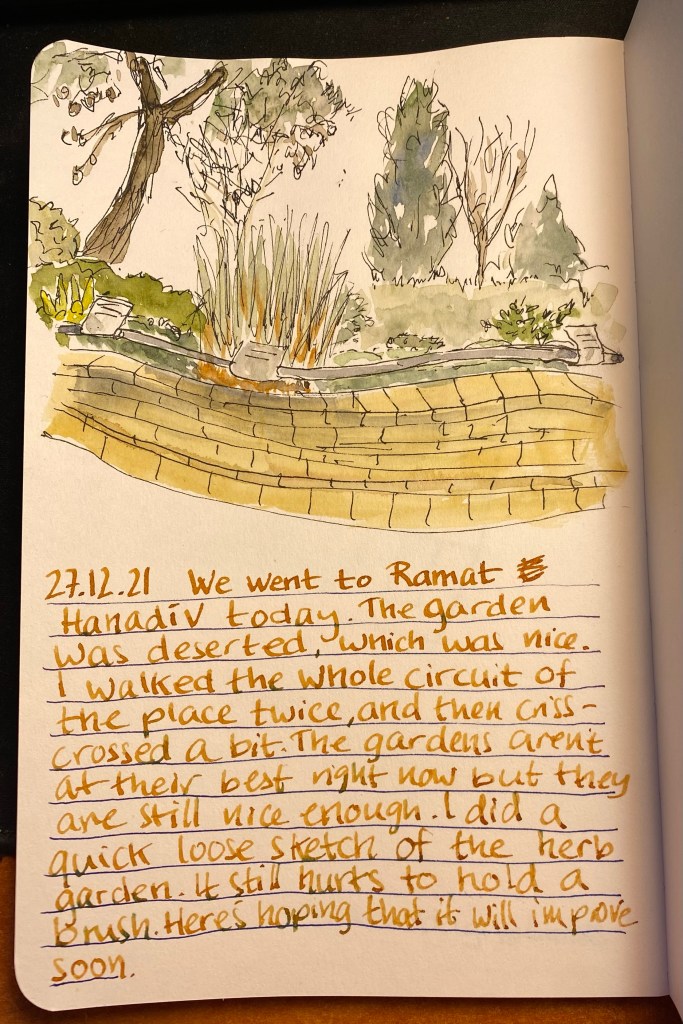
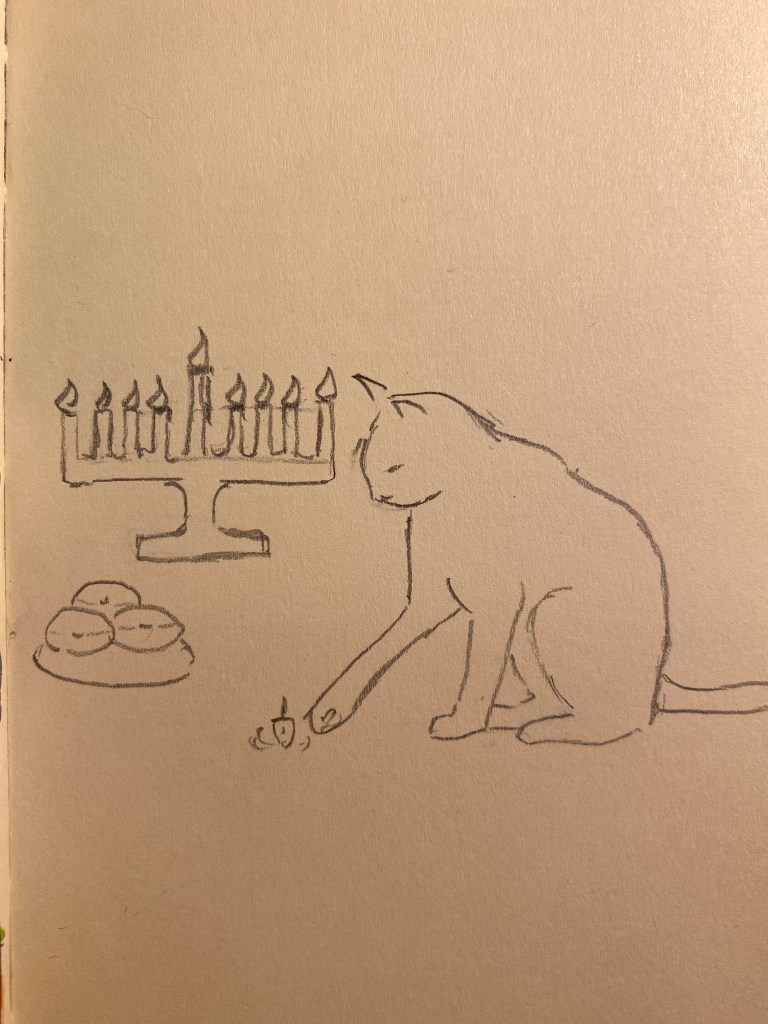
Drew this today and it was super painful to draw. Here’s hoping that things with my hands improve soon because I miss drawing.
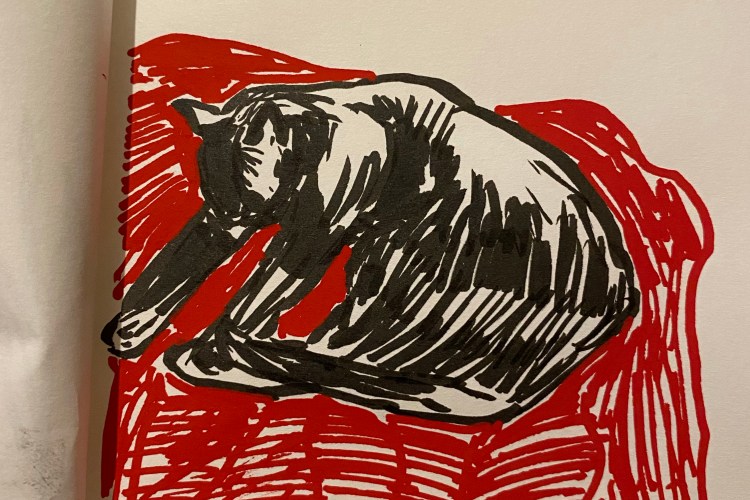
I was planning on posting a review this week, but I had chemo this week and it really took me to town. Two days of practically no sleep (due to steroids) and the terribly hot and dry weather we’ve been having meant that I had to spend more time than I planned letting my body recover from the wallop it received mid-week. As I’m typing this I can barely feel my fingers due to neuropathy (a common side effect of my treatment), which means that typing, writing and drawing have been a challenge.
HOWEVER, I’m still here, still smiling, still picking up my pens and journalling, and even messing around with new art supplies that don’t require the precision and control that my beloved watercolours do.

I’m not sure if I’ll dedicate a review to the Sakura Pigma BB brush pen, but I will say that it’s a super soft, relatively wide brush pen that is very expressive and fun to use for spontaneous sketching. The Marabu Yono, which I got as part of a notebook package from Cult Pens, is a delight. I’ve never used acrylic markers before, and I love using this one. This is definitely opening up a whole world of possibilities for me.
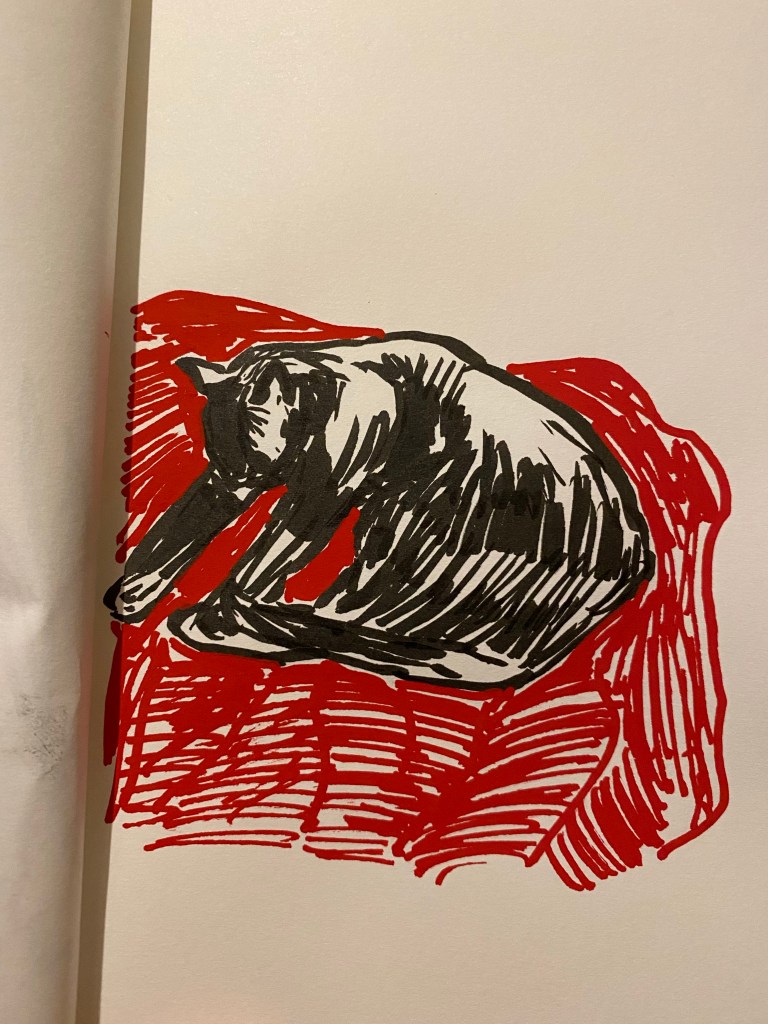
I got Chemo number 9 of 12. Had a scary new side effect of the treatment or the blood thinners I’m on (likely the blood thinners), but I weathered that too. Next week I hope to get back to walking after the few days off I took for recovery (and because of hazardous weather). Also got to see a psychologist that works with cancer patients. Hopefully he’ll help me deal with the anxiety of what lies ahead.
I was planning on reading “Cibola Burn” by James S.A. Corey but Hilary Mantel’s “Bring Up the Bodies” has utterly mesmerised me and I haven’t been able to put it down. The quality of the writing, research and characterisation is evident in every page, and the result is a bewitching narrative – no mean feat considering the fact that very little happens in the book and the ending is well known.
None whatsoever apart from my journal and my three good things, and even they were backlogged for half the week. A combination of sleeplessness and neuropathy (which, if you’re wondering, feels like what your hands feel like after they’ve grown numb and then started to prickle back to life) made writing unattainable for most of the week.
No change from last week because I didn’t write much. I’m about to write my Kanilea dry, after which I’ll probably hold off inking any new pen since I’m gearing up for my new Diamine Inkvent calendar. Like last time, I’m planning on filling 25 pens with 25 inks, and unlike last time I’m planning on writing them all dry.
I’ve been building Lego sets as a form of meditation and relaxation. I’m currently working my way through the Lego Harry Potter’s Collector’s Edition, and will probably finish it next week.
I’m starting to get back to podcast listening. I used to listen to 3-4 hours of podcasts a day, every day. When I learned that I had cancer I stopped listening to podcasts entirely, and I’ve discovered that there are still podcasts that I can’t listen to right now. On my current listening list are: The Pen Addict, Maintenance Phase, and Reconcilable Differences.
I’ve been trying to draw better foliage, which made me want to investigate the various greens I can mix from my current palette. So for the first time I dedicated time and a few sketchbook pages to experiment with green watercolour mixes. I thought that the process would be tedious and boring, but it ended up being very interesting. Mixes that looked like mud on the palette came to life on the page. I discovered a whole host of green hues that I had no idea that I had access to. And once again I fell in love with Schmincke’s Glacier Green.
Note: DS stands for Daniel Smith and Sch for Schmincke. The paper is Stillman and Birn Alpha.


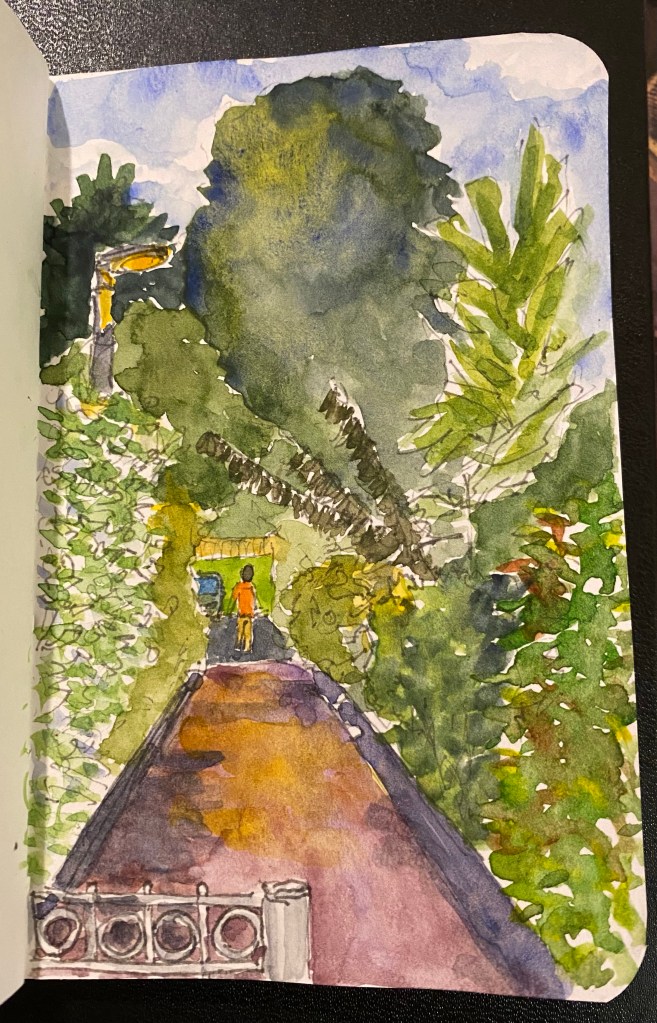
I’m playing with green watercolour mixtures and drawing better foliage, so I took the opportunity to make this quick line sketch during one of my walks. I worked on the watercolours later, and I’m pretty happy with the results.
While I was taking a walk a few days ago I saw this tree branch grow out of a tiny crack in a solid stone wall and I was impressed enough by its tenacity and resilience to draw it. By chance this drawing is on the opposite page of the one I made for my last health update, which seems appropriate.
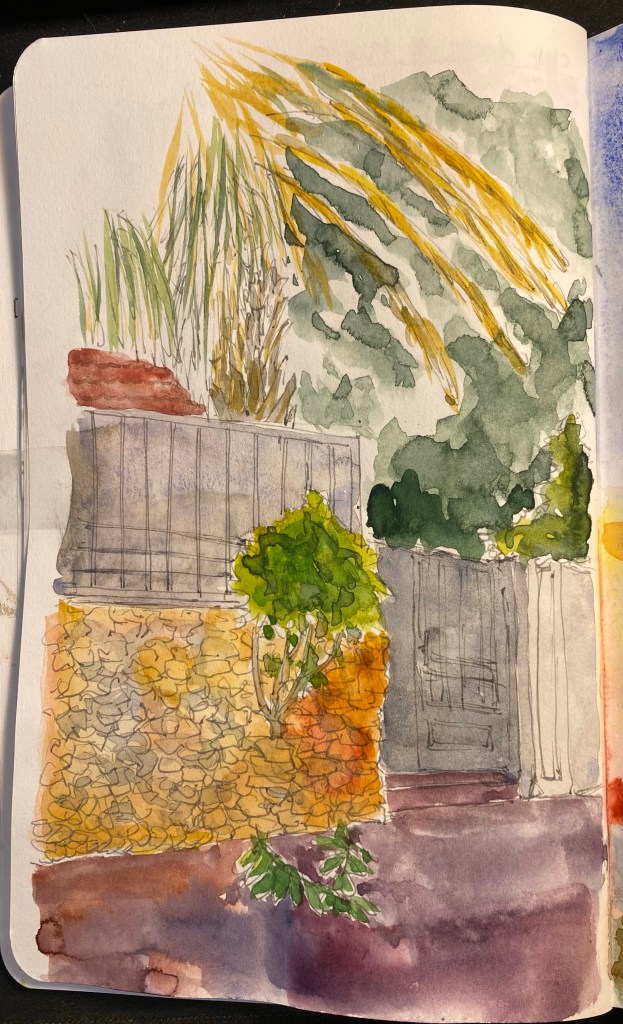
I underwent a PET CT on the 9th of September, and thankfully the results were good. The treatment is working, kicking my cancer’s ass and not just making me feel bad. I went through another round of Chemo on the 12th, my fifth round so far, and the side effects are stronger and taking longer to fade away between sessions. This is to be expected, as the Chemo’s effects are cumulative, but I’ve decided to be like that tree: resilient. I’m making minor adjustments to get me through the post-Chemo days, working out ways to help me ride out the pain and unpleasantness of the worst of the side effects. It’s hard to pick up a pen or brush in the first days after treatment, and I sometimes lose fine motor control. So I’m using larger and lighter pens, and I take photos of things that I want to draw instead of working on location. At home I can take my time while sketching, take breaks, experiment with looser drawing. The drawing above isn’t large or complicated, but it took me two days to complete (one for line work and one for the watercolour).
Resilience. One treatment at a time.
I had a strange Yom Kippur this year, as is to be expected. I decided to commemorate it in my sketchbook, this time using Faber Castel Albrecht Durer watercolour pencils in addition to my usual Schmincke and Daniel Smith watercolour mixture.

Drawn on a Stillman and Birn Alpha. Ink is Iroshizuku Ina Ho (lines), Robert Oster Fire and Ice (heading and text) and Sailor 123 (2021).
It’s been a while since my last update, so I thought that I’d write a new one. On August 24th I had my fourth chemo treatment, and it went rougher than the ones before it in terms of side effects. The worst of the bunch has been my neuropathy, which until now has been not so bad. This time however, both my hands were numb and tingly, and the tips of my fingers actually hurt. It’s been hard typing, holding a pen, drawing. It’s not that I’ve stopped doing these things, it’s just that it’s been a challenge to overcome the pain, to focus more to get my hands moving the way that I want them to. But I haven’t given up, and I’ve managed to type, write with my pens, and even create this drawing:
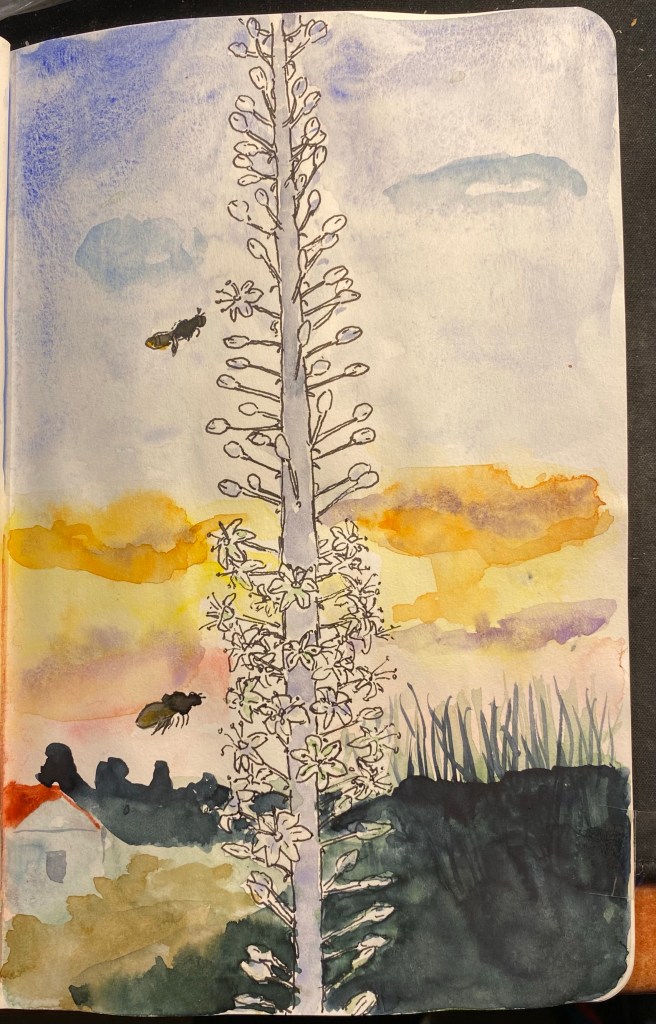
Not bad for someone with semi functioning fingers, right?
My hands have gotten better with time, but they are getting better slowly, and they still haven’t returned to normal. I’ve discovered that lighter fountain pens with bigger barrels are the best in terms of being easy on my hands, and although my handwriting has suffered a bit due to the pain, it is still recognizably my handwriting.
What’s next? On Thursday I have a PET CT which will determine what the rest of my chemo treatment will be, and on Sunday I’ll have the fifth chemo treatment. I’m not looking forward to either of these things, and as the PET CT is approaching my anxiety levels are rising (I really need good results on it). Meanwhile I’m trying to distract myself with work, books and season 2 of “Ted Lasso”. Here’s hoping for good results, and less pain for the Jewish New Year.
There is a local group of illustrators and animators that have set up a delightful new tradition during the pandemic: they meet up every Tuesday morning on Zoom for a sketch/doodle session, where they do quick, loose sketches and doodles just to warm up and experiment. Once a month the morning Tuesday meeting is replaced by a night Monday meeting with a guest artist leading the session with various prompts. Tonight my Urban Sketchers chapter head lead the session, and through her I joined the fun.
As I’m neither an illustrator or an animator, I’m posting everything here as quickly as possible before I see the other artists’ amazing work and lose my nerve.
We started with the suggestion to just doodle while we waited for people to join. I was using a new sketchbook that was very cheap, laid flat and had thick textured paper (good for pencil). I used a Caran d’Ache Fixpencil with a 2B lead, and a Tombow brush pen throughout this one hour session.
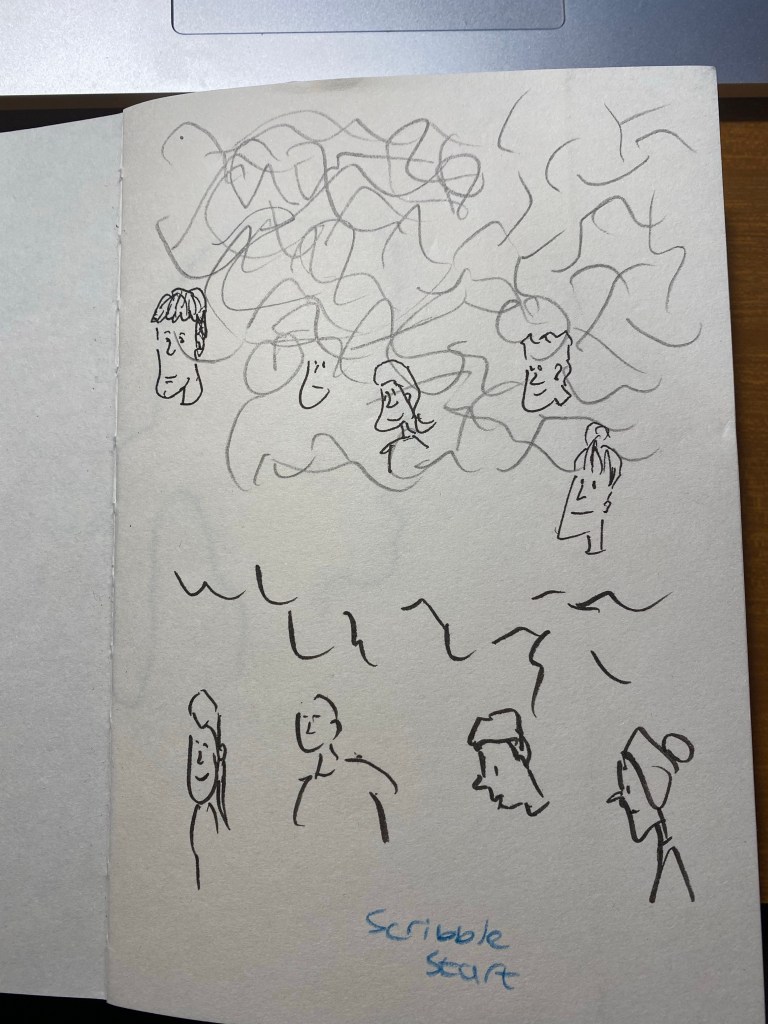
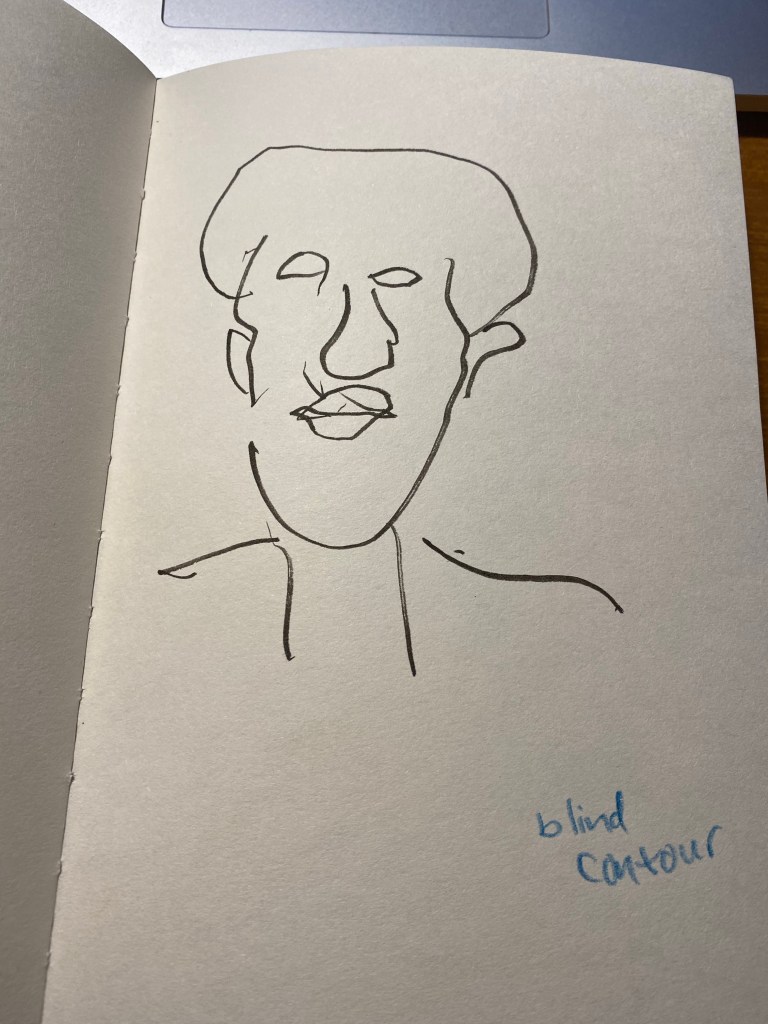
We started with a few blind contours, which I haven’t done for years, and so I kept catching myself automatically glancing down at the page. Definitely something I need to practice to get used to drawing these again. We were using Shutterstock films as our models, so that subject was moving around, some of them quite a lot. The idea was to get used to sketching people in motion, grasping as quickly as possible what captured their character.
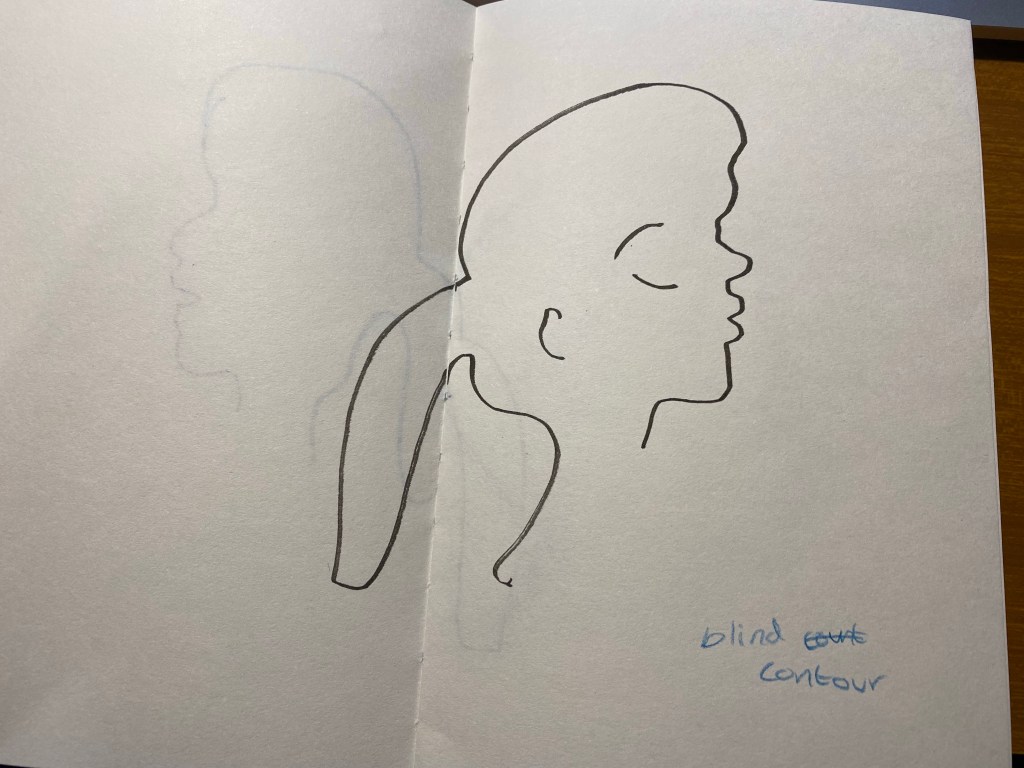
This looks good if you don’t know what the original looked like. I do, however, like the boldness and flow and expressivity of the lines here. Something to recapture in the future.

Then we did an exercise where we had 10 seconds to look at a moving person and try to remember what made them them, and then draw a portrait of them from memory. As Marina suggested, it’s easier if you describe the person to yourself in a few sentences.
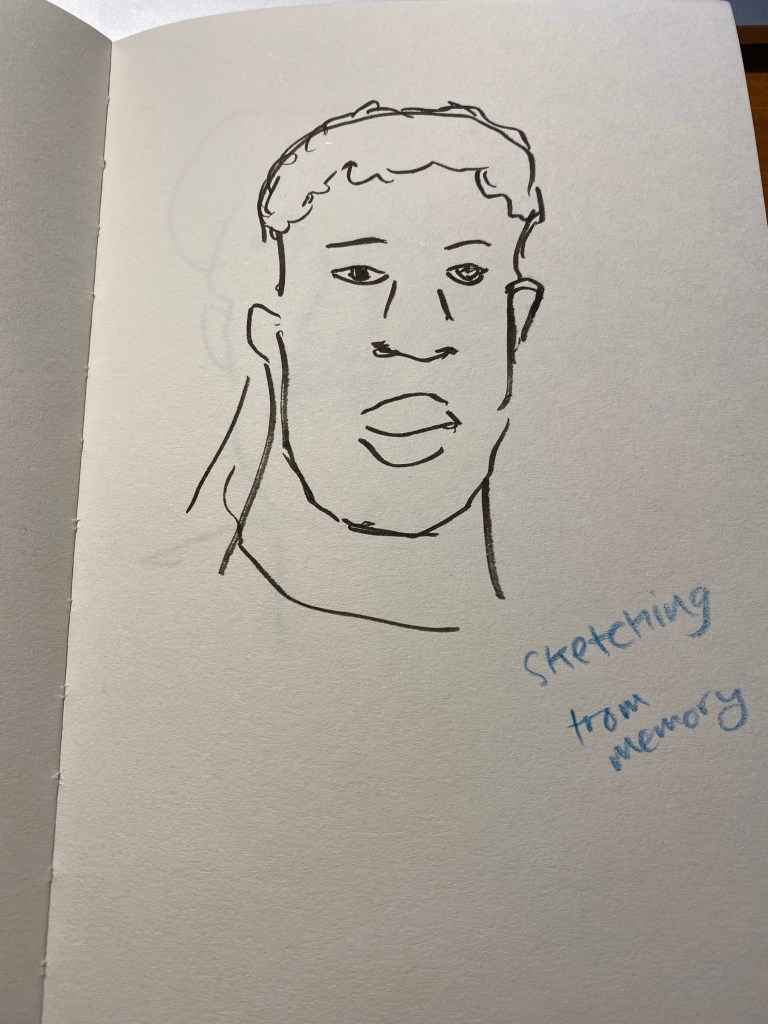
The second subject drawn as a blind contour:
And from memory:
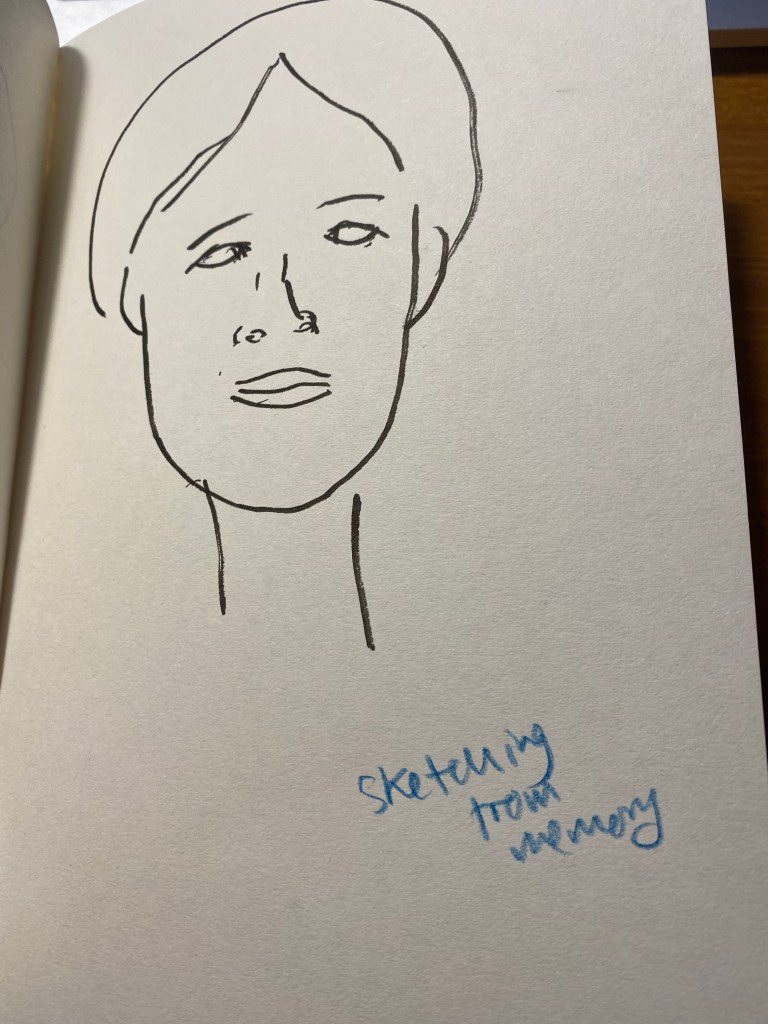
We only had a minute for each portrait, and that was too little for me. It’s a good challenge to practice in the future (working under such short time limits with such complex, moving subjects).
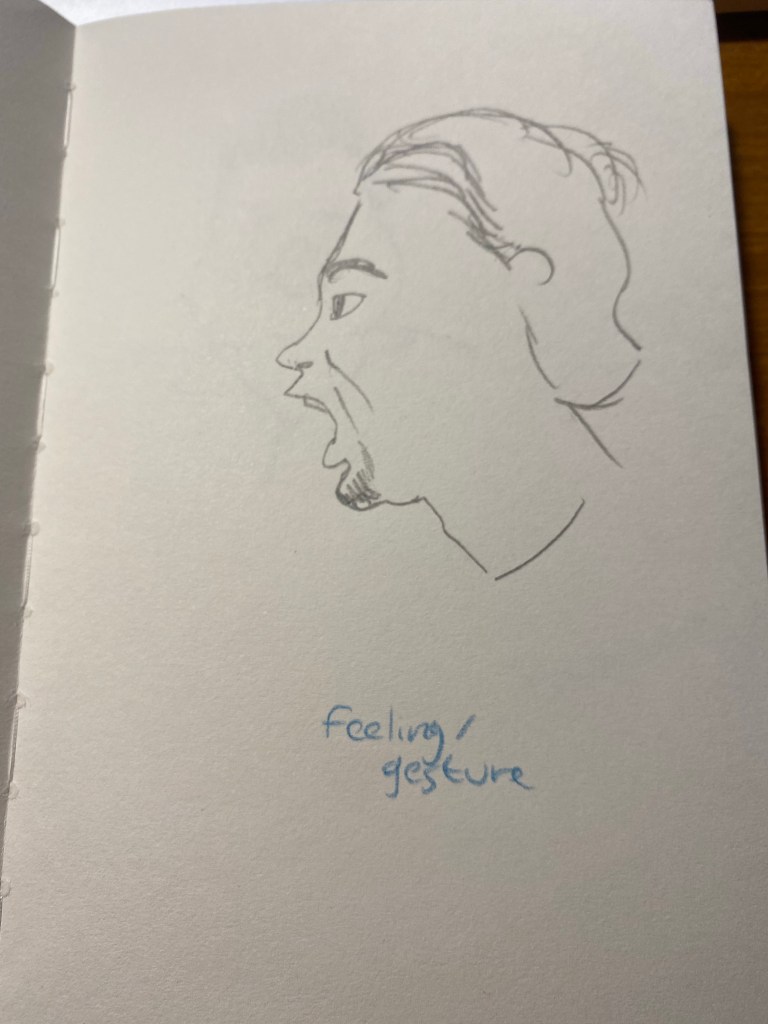
The next exercise was to capture the subjects feelings. Again, a 2 minute time limit would have been more in my wheelhouse.
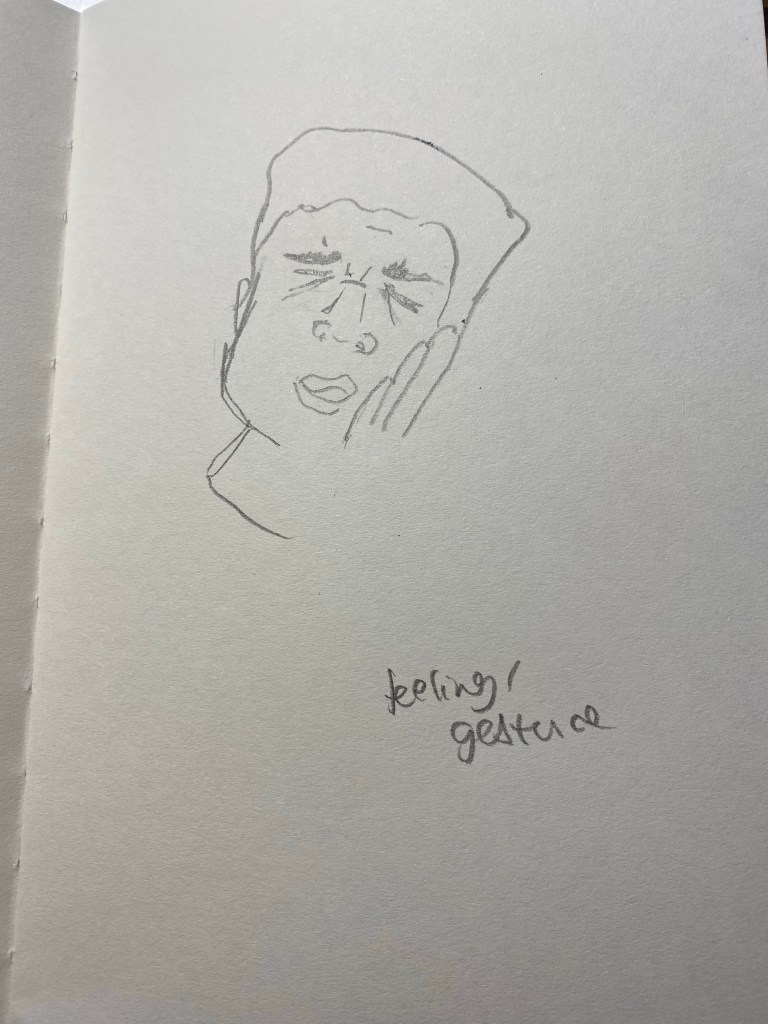
The second subject for this exercise went through every emotion in the book so I couldn’t settle on one.
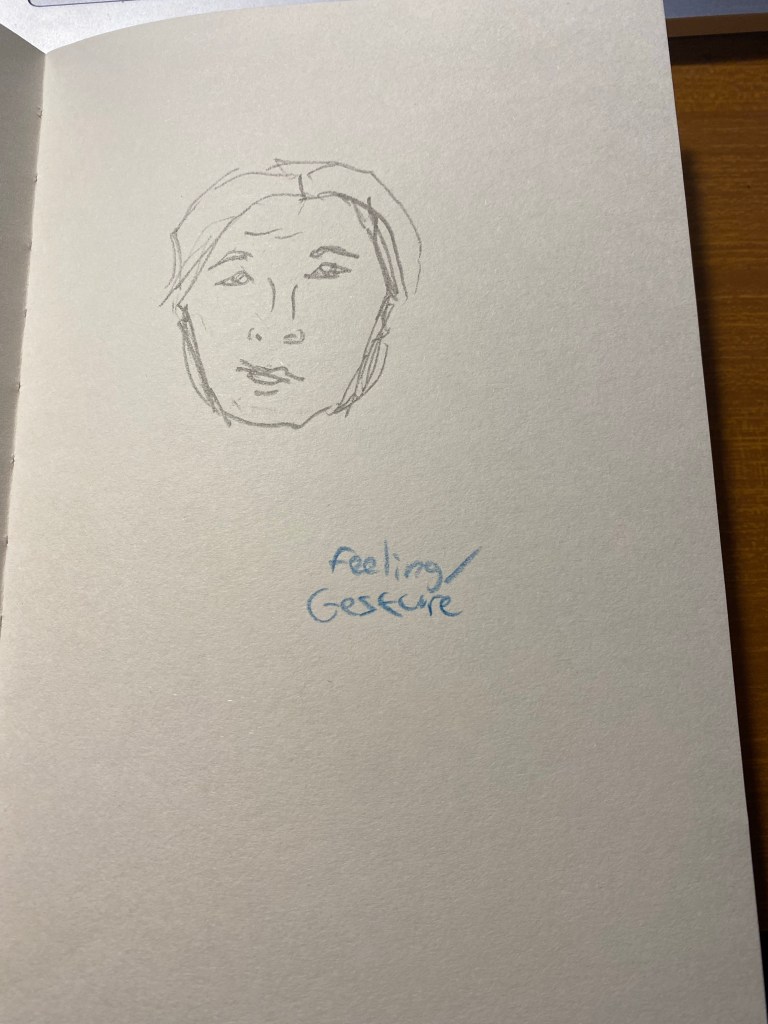
The third was just fun though:
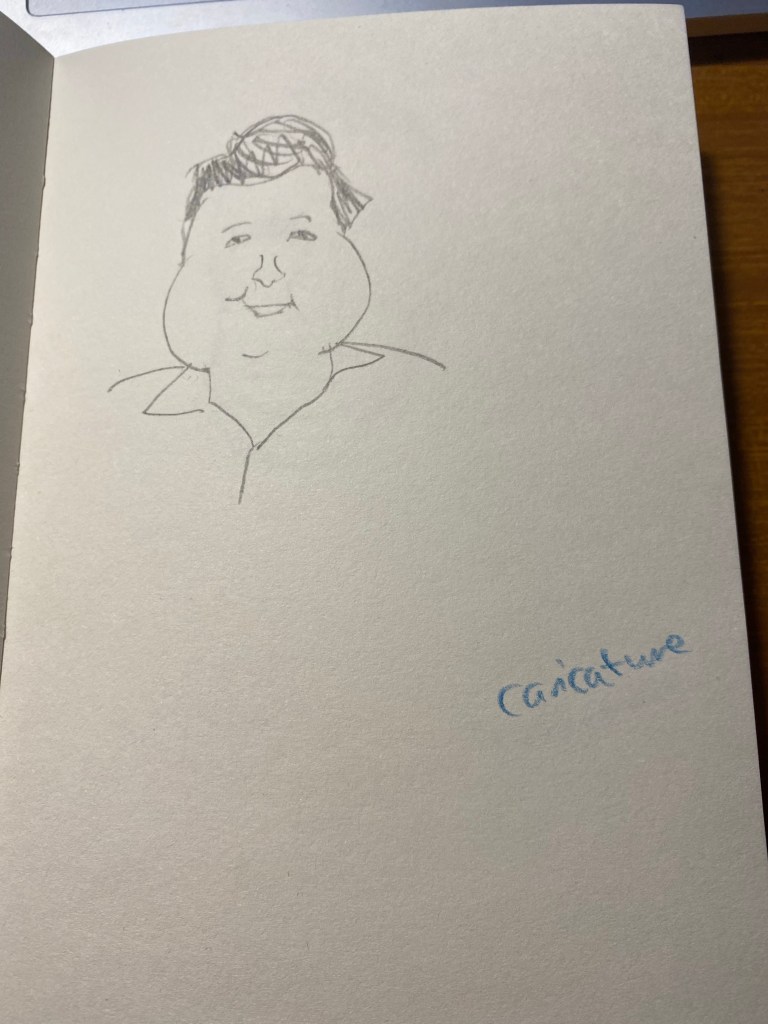
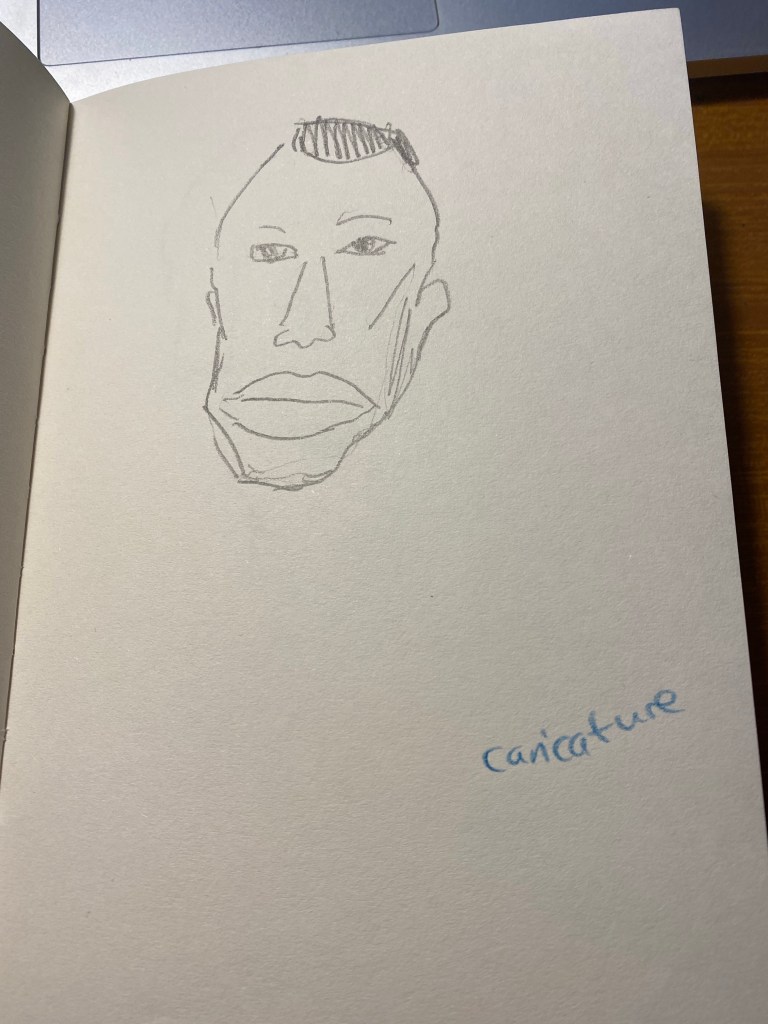
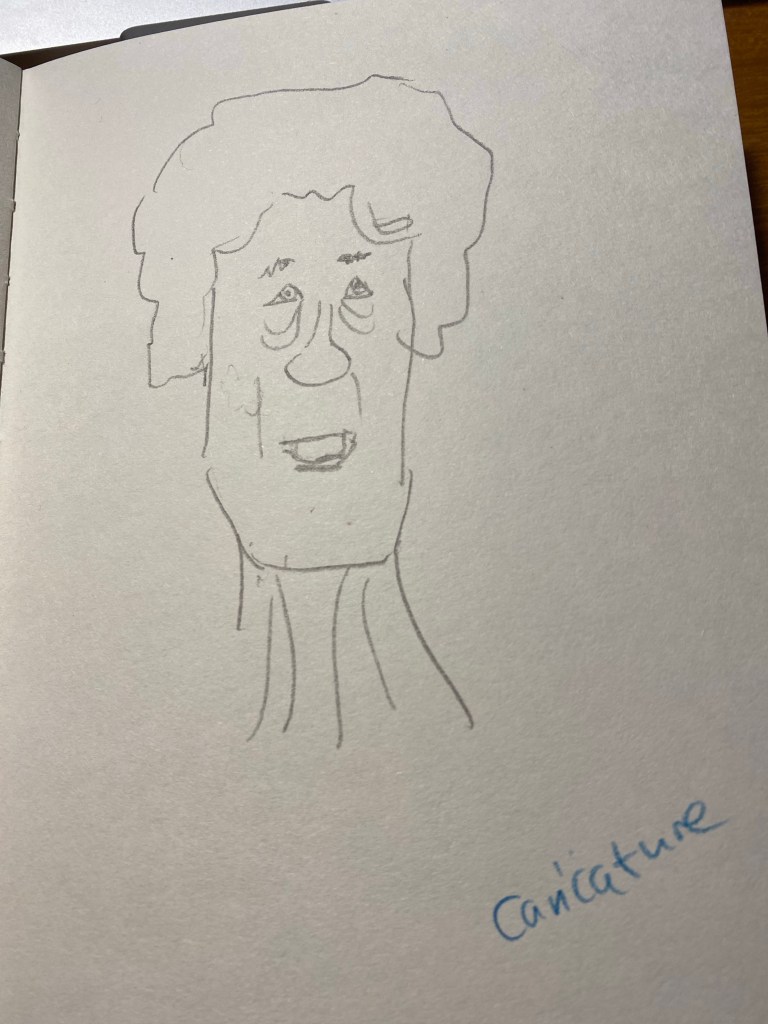
Then we did a caricature exercise, where we tried to draw people as not overly stylized caricatures. We has a minute for each, and I was starting to warm up at this point:
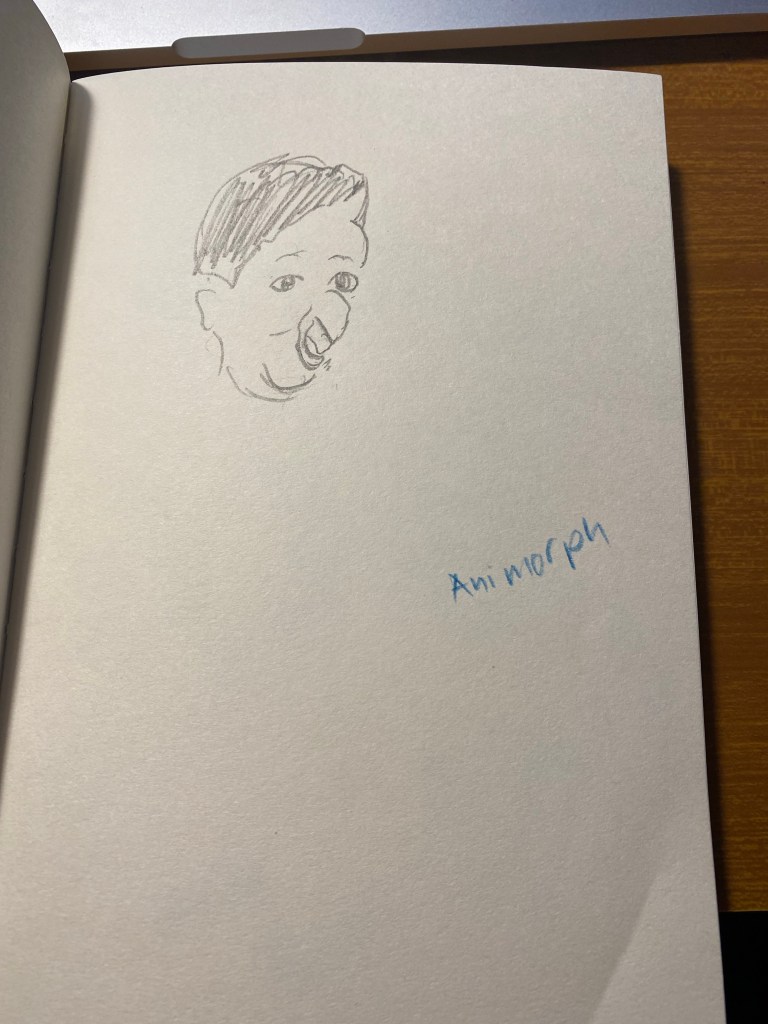
The next exercise was a strange one – to draw a person as if he was morphing into an animal and we caught them in the middle of the morph.
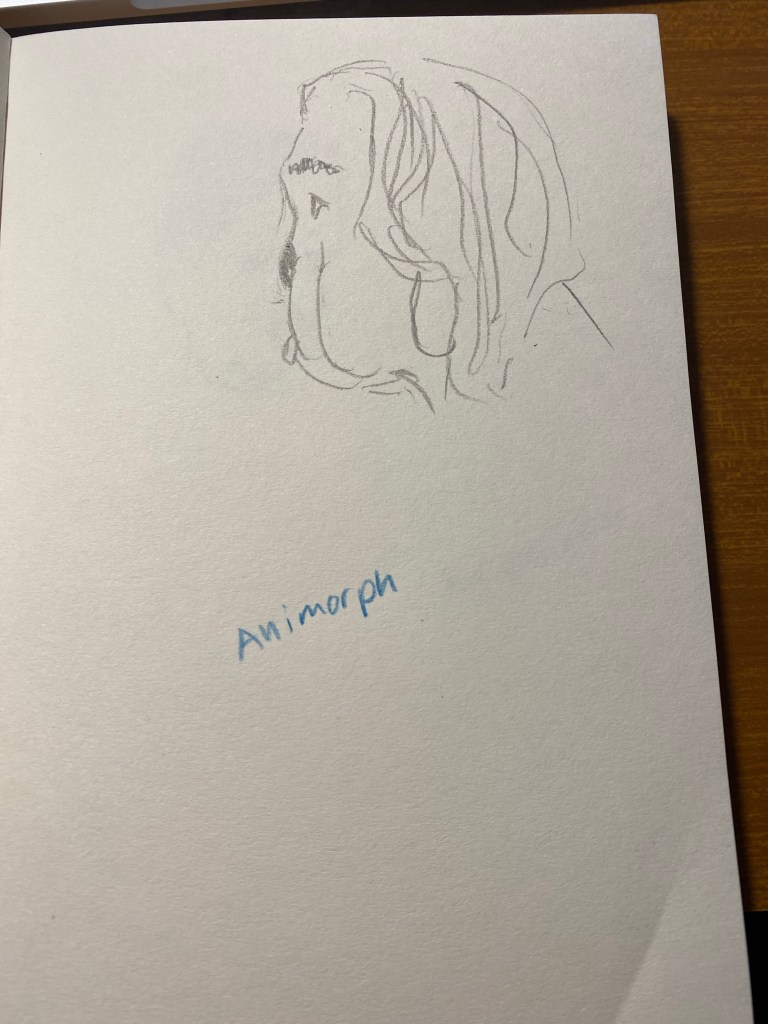
This was fun and very creative:
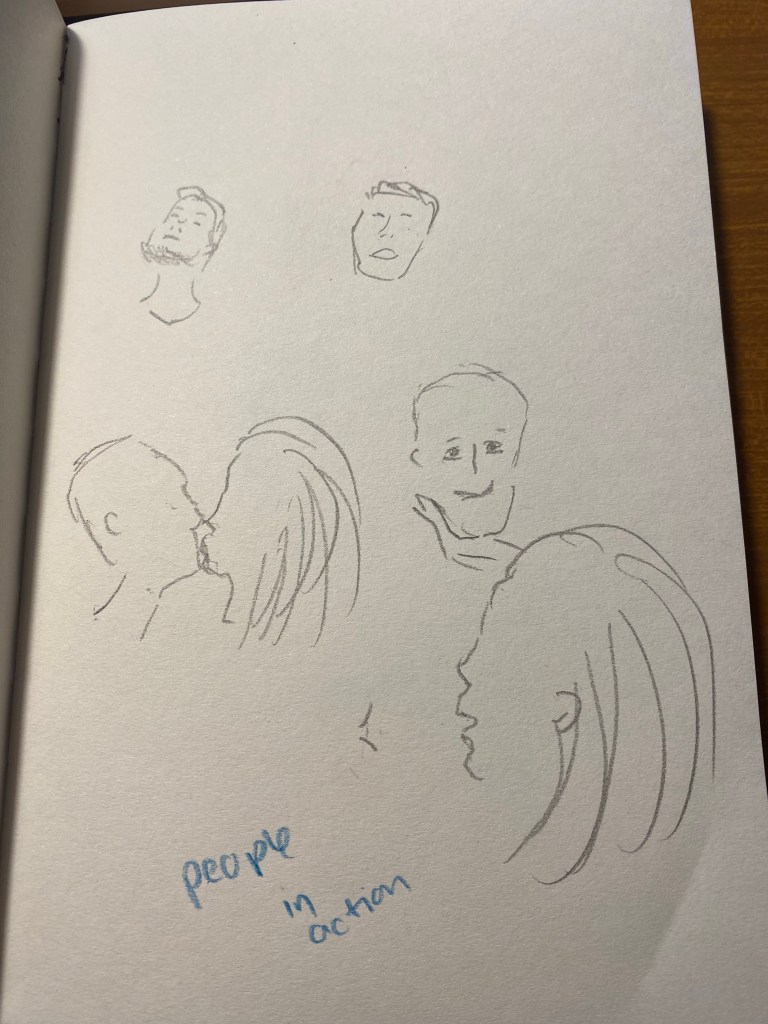
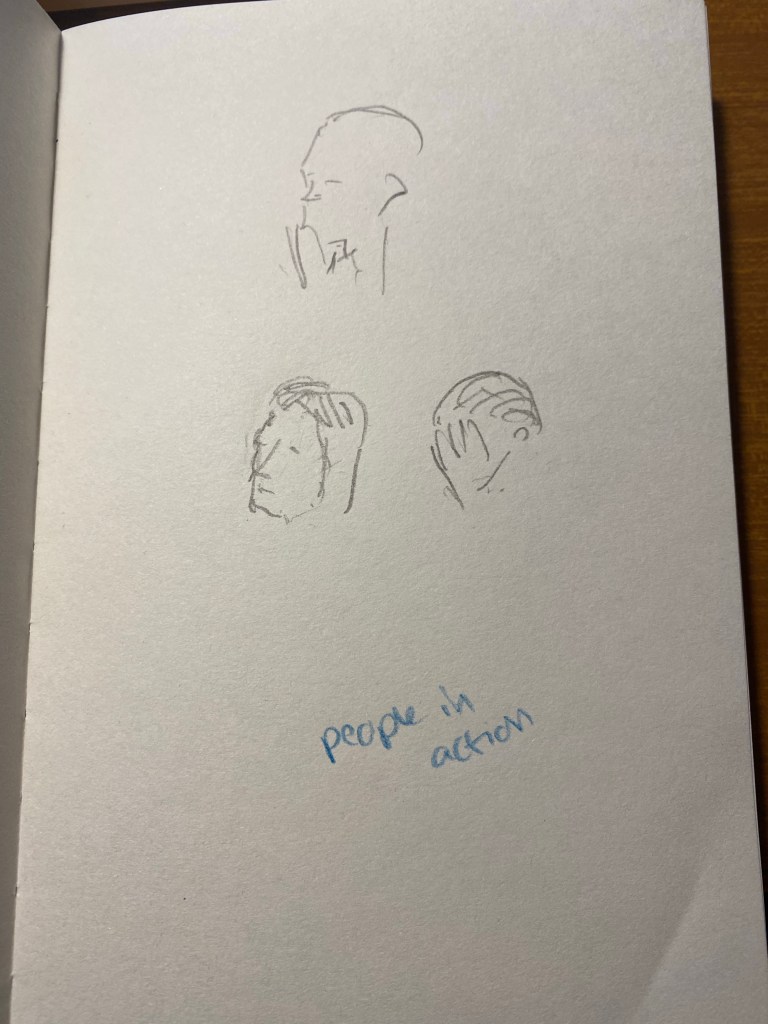
The next one was to draw people in action, in one minute. To capture as many gestures as possible. I guess that the animators had a field day with this one, but I really struggled.
Finally we had 15 minutes to draw each other. I had a lot of fun with this, and the earlier exercises really did help me warm up and loosen up and work faster.
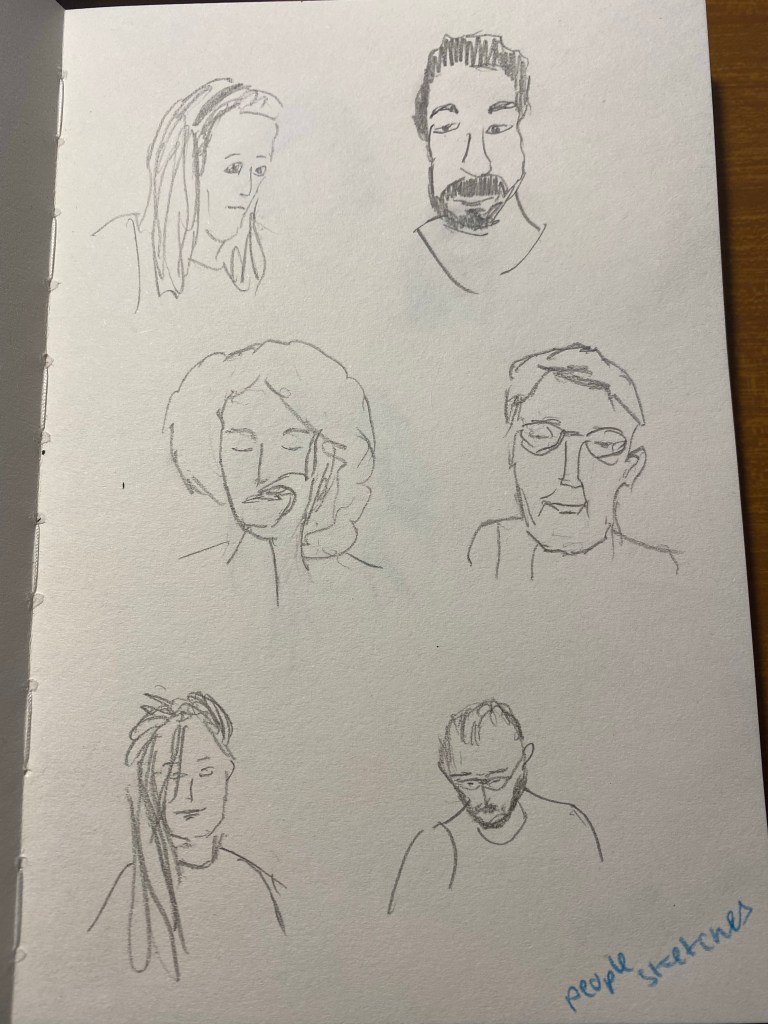
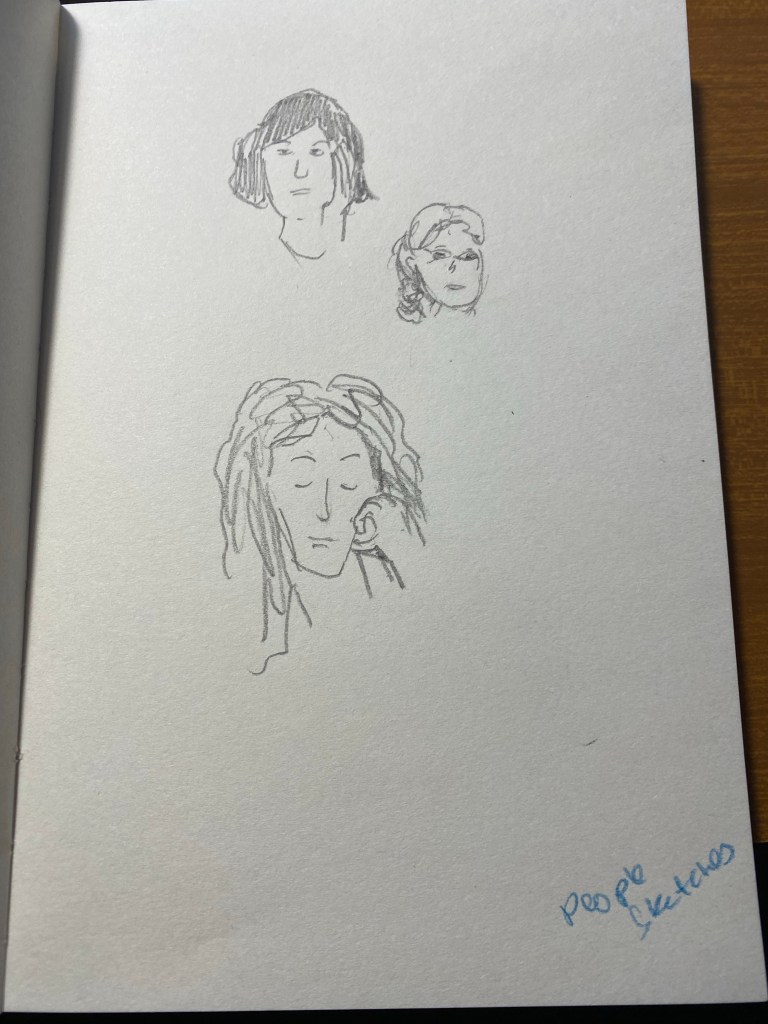
These exercises are definitely something that I’ll try to warm up before drawing portraits, and they’re also just a lot of fun to do. If you have a minute, a pencil and a blank page I recommend that you give them a go.

