Done
Just finished my first draft. 674 words written today.
22 Chapters
119,293 words total.
Exhilarated and exhausted.
A blog about writing, sketching, running and other things
Just finished my first draft. 674 words written today.
22 Chapters
119,293 words total.
Exhilarated and exhausted.
I use a MacBook Pro 15” (late 2013) as my personal computer, and for all of my writing. I was looking into upgrading this year, and found out that there’ nothing for me now in Apple’s lineup.
The iMacs are nice, but they’re too expensive for me (our local reseller sells them at double their price in the US, which isn’t cheap to begin with), and there have been recurring reports of reliability problems with them.
The MacBook adorable is very thin, very light, but too weak and with too small a screen to be my one and only computer. This is the traveling businessman’s choice.
The MacBook Pro lineup is terrible. It’s too expensive, I don’t need or want a touchbar, and none of them have the ports that I need and use: an SD card and a USB 3.0 port. As it is I have to use a USB hub at home, which is terrible (and crashes my Mac’s Wi-Fi reception whenever it’s too close to the back of the laptop), clunky and inconvenient.
The MacBook Air would have been good enough, if Apple would have updated its ridiculous screen.
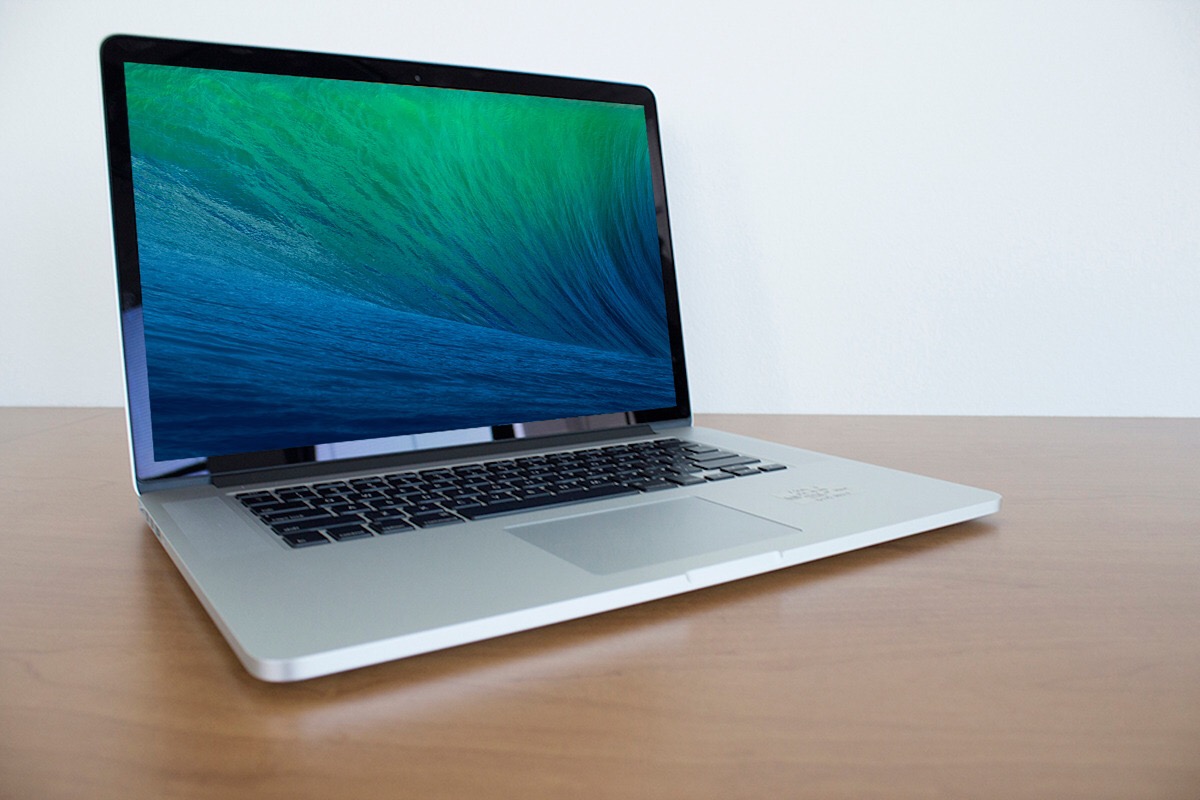
So after a bit of thought, it looks like I get to keep my money for another year or two, with the hopes that either Apple gets its act together when it comes to Macs, or I will be able to do all of my work on the iPad++ Pro 17” or something.

A few great things to read:
What else?
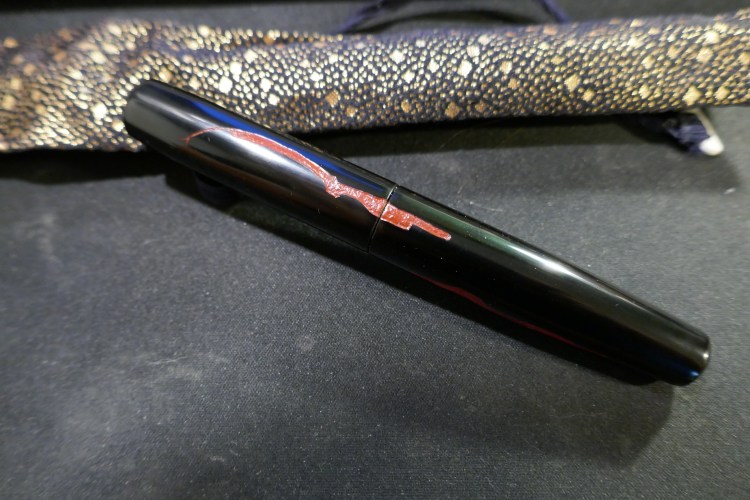
In the recent Pen Addict Podcast, Brad and Myke discussed their top 5 pens, and that made me think about my top 5 pens. Do I even have a top 5? I never actually ranked my pens until now — I just use them.
After a bit of thought, I came up with this list of my favourite five pens. These are all perfect for long writing sessions, but they’re not necessarily the best for begninners, or for showing off your handwriting, so take that into consideration before you purchase any of these:
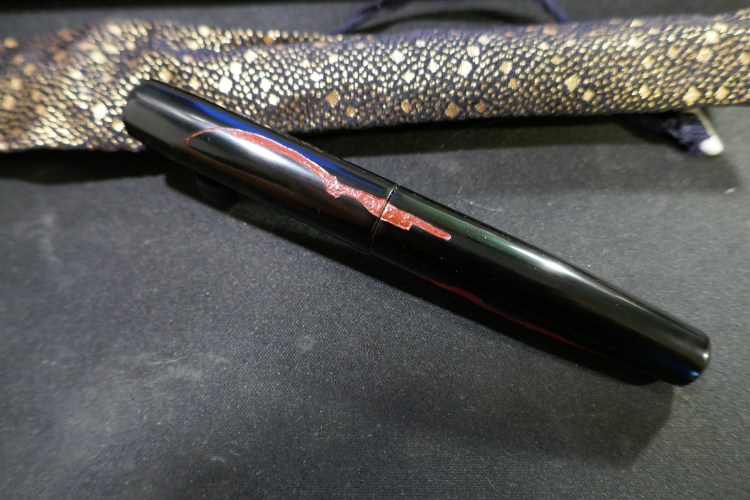
Nakaya Cigar Piccolo Negoro Kise Hon Kataji black/red with elastic flexible medium rhodium nib — that’s quite a mouthful for a relatively small pen. This pen was made to order for me, and I had to wait quite a while and pay quite a bit for it, but it was totally worth it. The nib is a dream, and like no other nib that I own — it’s springy. It isn’t a wet noodle by any stretch, but shows a good amount of line variation, is very comfortable to write with, and is super easy to clean. The most beautiful pen that I own, in a very understated way, it’s the best all-rounder in this list.
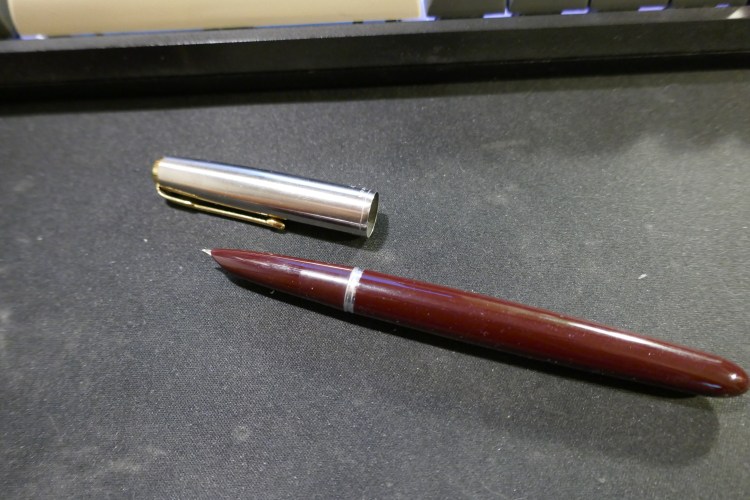
Parker 51 — I have quite a collection of these vintage classics, and I have yet to be disappointed with one. They somehow manage to make my handwriting really good looking, and they are fun to write with (though a bit of a pain to clean). Not the prettiest of pens, but I love their sleek looks, and they are workhorses.

Franklin Cristoff Model 66 Stabilis Antique Glass with a 1.1 stub converted to an eyedropper pen — this pen is gorgeous, comfortable for long term writing, helps show off ink (both because you can see it sloshing around and since it lays down a significant line), and makes even the simplist handwriting look great without going overboard in terms of line thickness. It’s also super simple to clean out (though beware of staining inks), and the nib is a stunner, especially for a steel nib.

Ti Arto with a Uni-ball UMR-85N refill— this has now become my daily journaling pen, and although it isn’t a fountain pen it is comfortable for long writing sessions, mainly because it has a relatively thick barrel and is relatively light for a machined pen. It writes well on all types of paper, including Moleskines, is relatively cheap, and accepts a dizzing array of refills. This is a pen that I don’t mind slipping into my pocket or tossing into my bag — it’s built to last and can take the punishment.

Lamy 2000 Fine — this pen is not without faults, as the little metal prongs that hold the cap in place can get in the way of your grip, and my old 2000 is cracking in several places (ugly-fixed with superglue), but I still love it. The gold nib allows for just enough line variation to make it perfect for both writing and sketching, and the capacity is just fantastic. I’m also a big fan of its understated looks, but if you’re looking for something with more zing, this may not be the pen for you. I also bought another one, in extra-fine (after my old 2000 started cracking), and I have to say that its nib isn’t as good as my old 2K. So I’d recommend it, but only if you’re willing to tune it (either yourself, or take it to a nibsmith), if necessary.
These are my workhorses, and at any given time at least two or three of these are in use. Experimenting with pens in nice, but when you’re working on writing a novel or have a good chunk of writing to do, the snazzy wet noodles and music nibs give way to more dependable choices that are also always a joy to use.
As I’ve built myself a writing plan, I’ve also started tracking my best writing hours. These are the times of day when I find writing easier and more enjoyable. My goal is to make sure, as much as possible, that my best writing hours as spent doing exactly that — writing.
The problem is that tracking is a drag. Luckily, I don’t need to track my writing time down to the minute or even precisely to the hour. Just knowing that mornings are my best writing times, that I can get some writing done in the afternoon, and that I’m practically useless late in the evening, or after a run, or after a full day of meetings at work is enough. It made me get up earlier in the past few days and try to get as much writing as possible done before I go to work.
When you log your word count for the day, take a minute to also note when you wrote most of those words down, and after a week or to you should have a better idea when your golden writing hours are. Then it’s just a question of protecting them as much as you can.
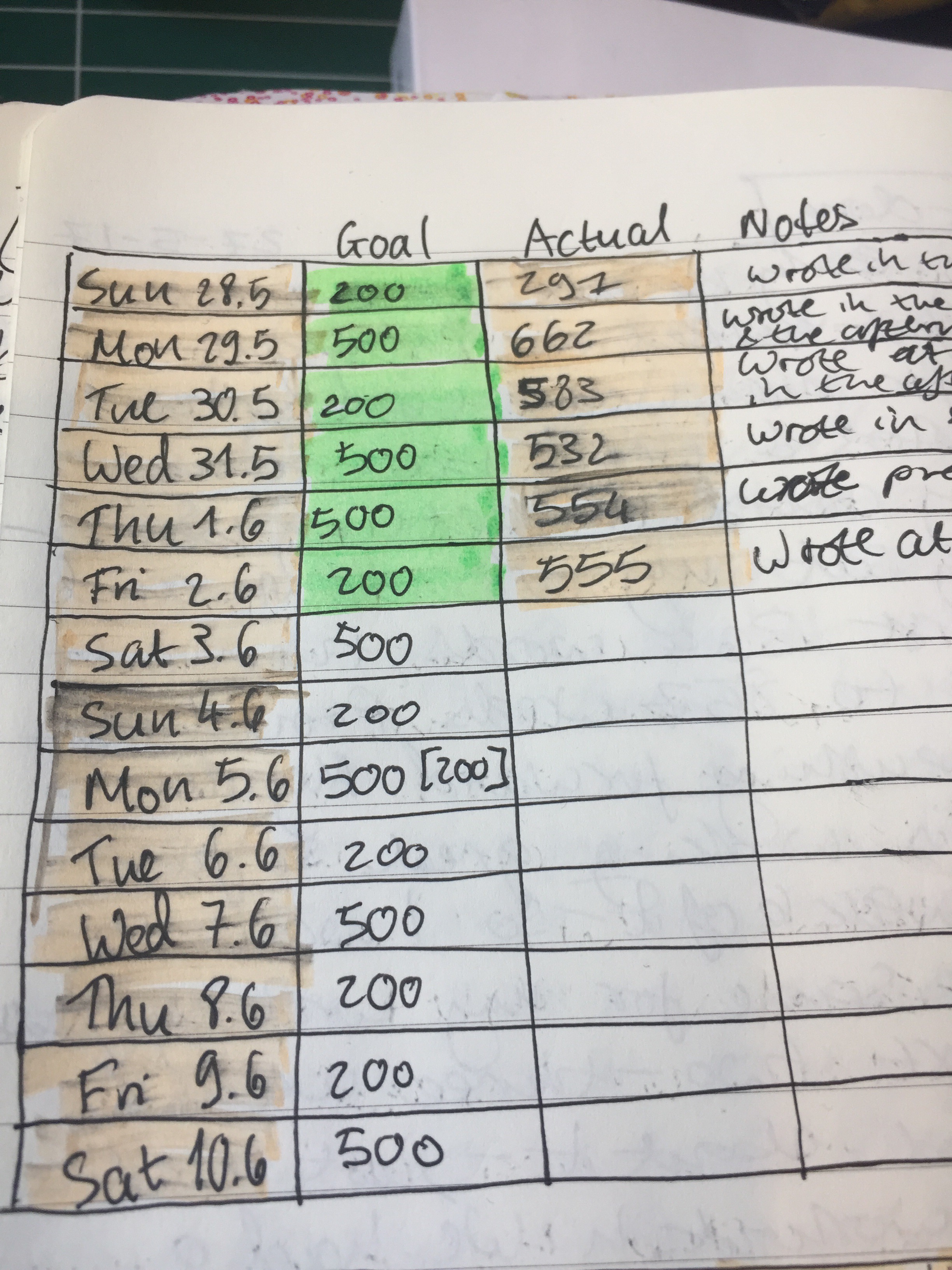
I was in a bit of a writing slump over the past two months or so, and I tried to solve it by trying to get as long a streak as possible of writing every day.
I managed to go three days in a row, and then failed.
Now I’m using a writing plan that I drew up for myself, and I’ve gone 7 days in a row with more words written each day than I planned, and I’ve written more each day than I did during my short-lived streak. Why is that?
Streaks are something that we think helps us move forward, create habits, but I think they only give us the illusion of being helpful. Yes, if you’re on a streak, you really don’t want to break it — especially if it’s a long one. But streaks don’t motivate you to finish your daily goal early, or go beyond the goals. Streaks let you postpone things to the last minute — after all, you only miss your goal when the day has passed. They are inflexible — you set the same goal for each and every day, no matter what.
Plans allow you to do just that — plan your daily goal to accomodate your life. Busy day? Set a smaller goal. You have the day off? Set a more ambitious goal. They also don’t set you back to zero if you fail, and encourage you to try for at least a partial success, because not everything is lost if life happened and you didn’t meet your goal. There’s also less of a pressure with a well made plan to “keep extra words for tomorrow”. If you have something to write, write it.
Just like athletes use training plans and not training streaks to prepare for a race, writers should use writing plans and not streaks to get their daily words in.
Starting to write is like starting to run. Your brain starts playing tricks on you from step one.
“I’m too tired to run”.
“It’s too hot today — it’s dangerous to run outside”.
“My feet hurt, my head hurts, my throat hurts — let’s not go out today”.
“10k? That’s too much. Let’s run less. You can’t possibly do it”.
Sound familiar?
I sat down to write yesterday, and it was difficult, very difficult to start. My mind started wandering, suggesting that I read my twitter feed, or the NYT, or do anything, just anything but write. It’s like that almost every time I sit down and write, and the only way I found to overcome it is to map out reasonable daily goals and force myself to start anyway. Usually when I start writing I can push myself well enough to the finish, sometimes even a bit farther. The same thing happens when I run — the first 2-3k are a pain, but then I get into the rhythm, and start enjoying myself.
There’s never been a run that I’ve regretted.
There’s never been a writing session that I’ve regretted.
I just need to remember that when the tiny little coward in my brain decided to protest.
Every. Single. Time.
The best notebook is the one that you use.
If Moleskine makes the notebooks you want to use, then they are the best. After years of collecting dust, I find myself gravitating back to them more. Maybe it’s because their paper isn’t perfect, and I don’t feel guilty if I just use a simple gel ink pen or a pencil on them, and maybe it’s something about their format that is just right for me right now.
If Leuchtturm, Rhodia, Baron Fig, Midori, Field Notes is what makes you pull out a pen or pencil and fill up those pages, then these are the notebooks for you.
There is no perfect notebook — we live in an imperfect world. Your baseline should be a simple composition notebook, and not a leather-bound, gilt-edged masterpiece that you are too afraid to use.
Just a friendly reminder that a notebook is not worth much if it has empty pages and you have a full mind.
NaNoWriMo, or National Novel Writing Month, begins in November, which means my twitter feed is starting to get choked with related writing-tool-and-advice links. From style guides to plot models that show you exactly how you can write the next Harry Potter book, it seems that you need to become the next Harper Lee is a word counting app or calendar printout, a laptop, and a coffee shop. Take a little step back from all the genuine enthusiasm for writing, and you will see a horde of retailers taking advantage of the event to sell you just the right pen, notebook or laptop bag that will make you a successful author.
So before you click on that can’t be missed writing tips link or head for checkout, a few things you might want to think about:
Tools do count. I know the joy of notebooks nice enough to make you want to use them, but not too nice to make you afraid to use. But remember that tools are only there to facilitate writing — there is no pen or writing app that will do the actual writing for you. Buying stuff will always be easier and more fun than sitting your ass at a table and getting the actual writing done. Writing is and always will be challenging, to everyone.
NaNoWriMo is probably setting you up to fail. 50,000 words in 30 days is more than even professional writers can deal with, and they do it full time and with years of experience. Writing 1,667 words a day, every single days is a herculean task, a feat of writing bravado that will probably result in something far, far, far from publishable, even if complete in time, and yes, even as a draft. Writing requires time stewing with yourself, your plot and your characters. There are no shortcuts, and steaming through the process is a bit like trying to see Rome, Paris and London in 3 days. It may be possible, but you are so busy rushing that you miss a lot.
Word count is just a metric for writing progress — sometimes it goes up, sometimes it goes down. Putting an emphasis on it rather than on your plot, setting or characters is like planning your family vacation for the sole purpose of maxing out your flight miles.
So here is my bit of NaNoWriMo advice: use the enthusiasm and sense of community around NaNoWriMo to get writing, but take a step back from the mayhem for the sake of your story and your peace of mind.
Super busy week at work, which means that I’m doing more overtime than I planned. This translates to less writing time, I’m afraid, but it is still better than nothing. The first sufferer will have to be this blog, because my fiction writing takes precedence over almost everything else these days.
I have finished the basics of my touch typing course and am now simply touch typing, improving my speed, and making sure not to fall into old habits (such as typing with only a few fingers, or glancing every now and then to my keyboard). I have learned to dislike QWERTY, but I’m not yet certain that I want to start learning Colemak at this point.
Anyway, here are a few interesting and useful links that I have gathered over the week:
One Paragraph, Three Drafts – author Diane Chamberlain goes over her (re)writing process using a single paragraph. I find it interesting to watch authors go through their revision process, especially since so few of them are willing to reveal it.
Why Your Attention Span is a Great Excuse for Someone Else’s Failure – a fresh look on some recent eBook (not) reading trends statistics.
Henry Miller’s 11 Commandments of Writing and Daily Creative Routine – short, powerful, succinct words of advice from the author of Tropic of Cancer.
Stephen King on How to Be A Great Writer – this article is this week’s gem. 22 bits of advice from Stephen King on how to become a better writer.
 Writing at Large