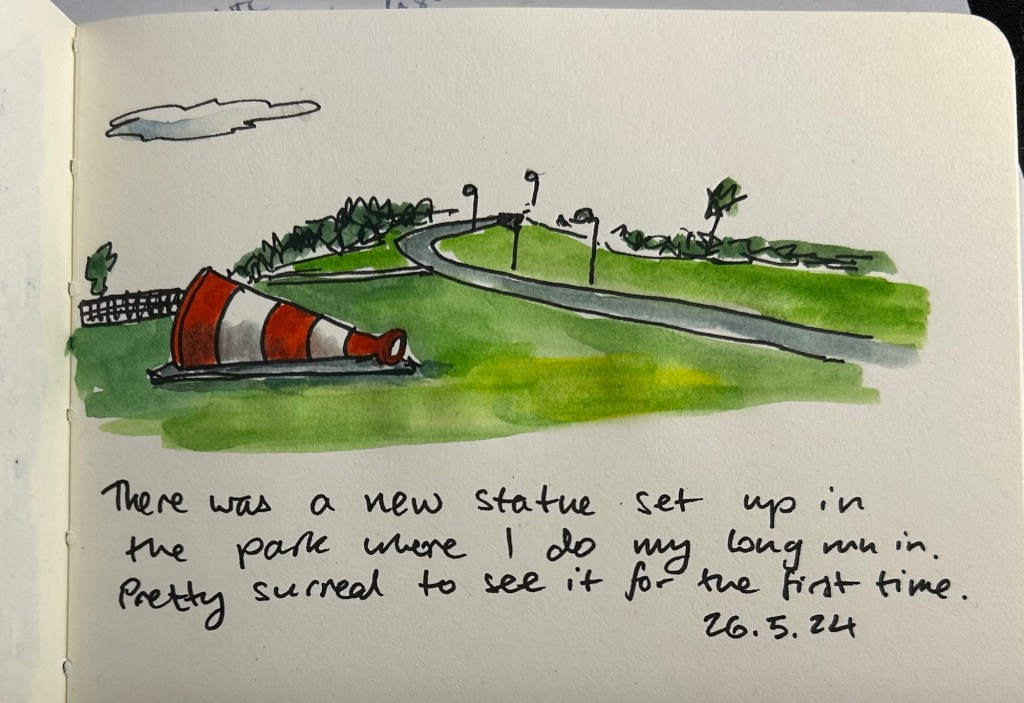
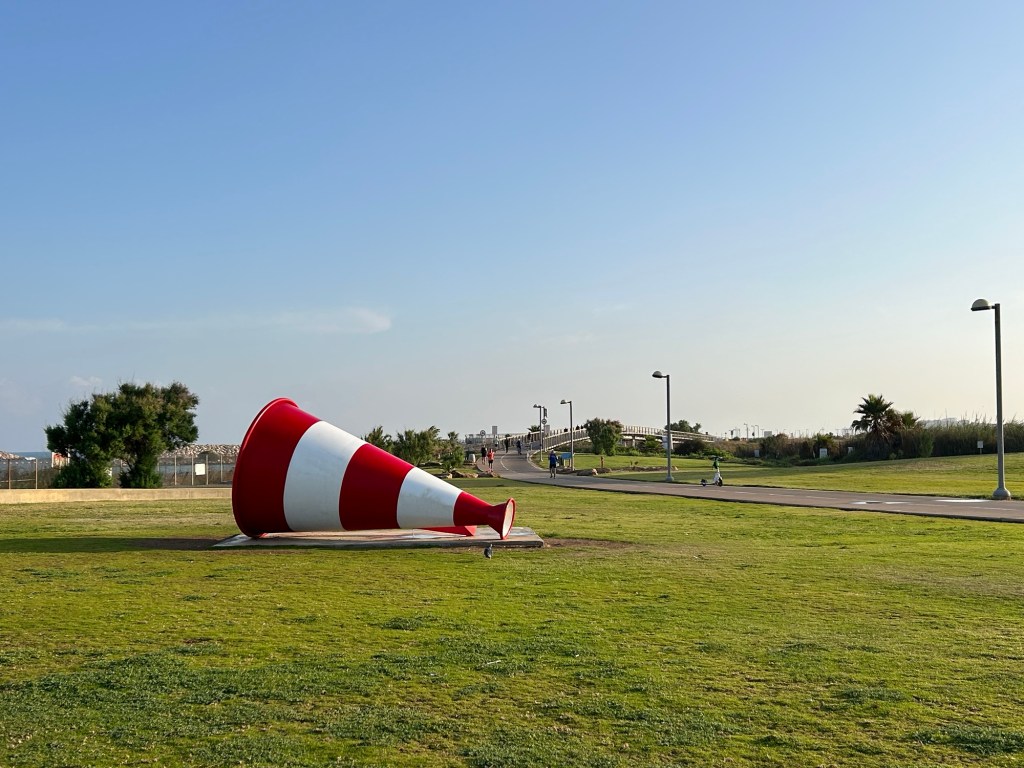
Quick sketch: New sculpture
Am I starting a new sketch journaling habit? Too early to tell. Meanwhile, I’m having fun teaching myself to sketch fast and loose.
A blog about writing, sketching, running and other things
Am I starting a new sketch journaling habit? Too early to tell. Meanwhile, I’m having fun teaching myself to sketch fast and loose.
This time I decided to combine testing out a new (to me) India ink, a new (vintage) nib and watercolours. The ink is US made Higgins Black Magic. The bottle shape is unique, and it’s a plastic bottle, not a glass one like my British made inks. While the very wide base of this bottle does cut down the possibility of you accidentally tipping it over, I don’t like the bottle design. The bottle opening is too narrow and tall, and it’s very easy to get ink on your nib holder and hands this way. The ink itself is less shiny and flows wetter than other India inks that I’ve tried, but that’s not a bad thing.
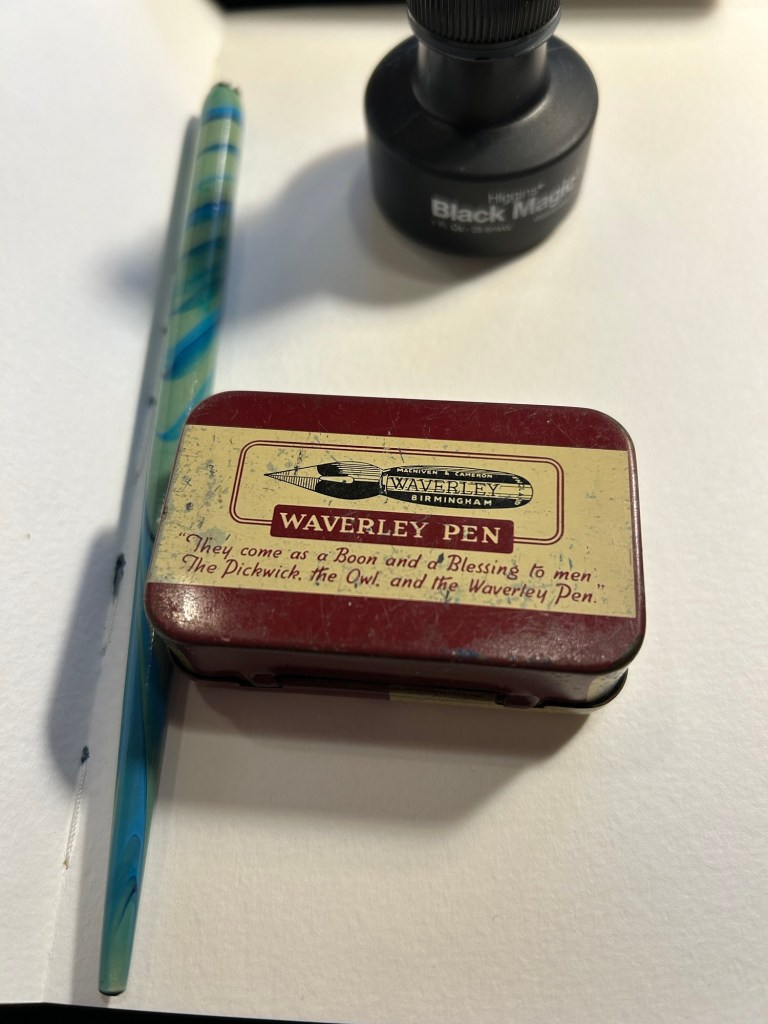
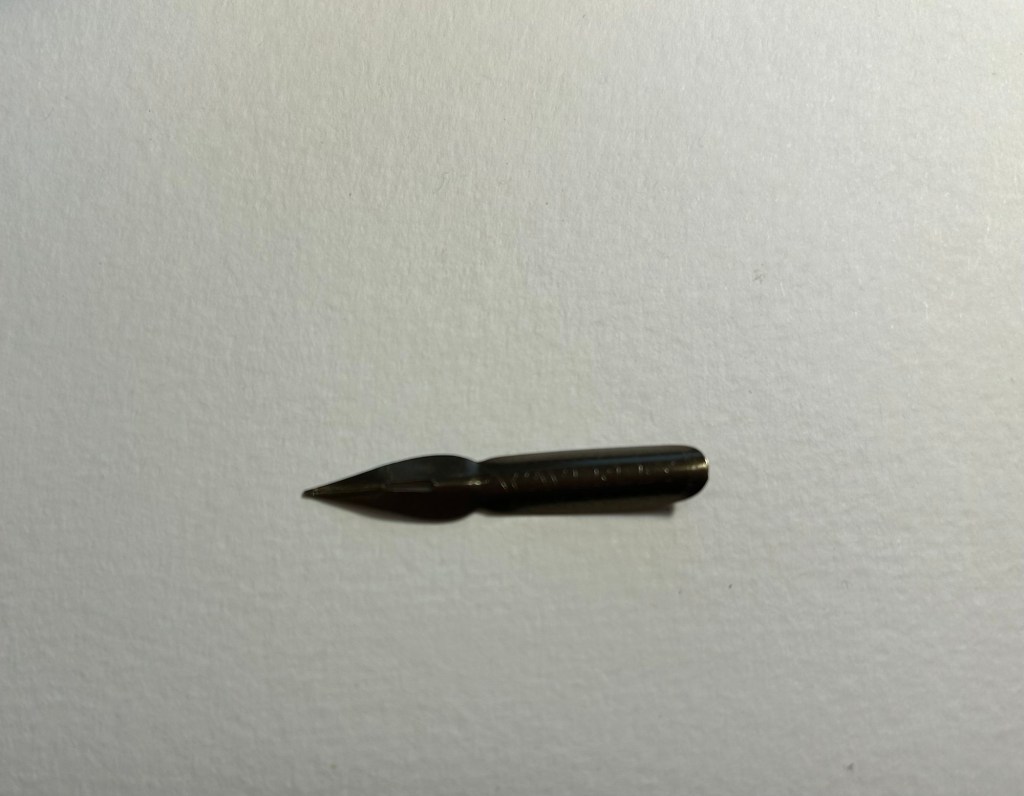
The nibs are Waverley Pen nibs, made in Birmingham (a British steel producing city), and made by Macniven and Camron Ltd.

The tin itself is a delight, with the Waverley Pen advertising doggerel on it (the Pickwick, Own and Waverley were all nibs made by the Macniven & Cameron company). I bought it for a few pounds at Spitalfields market, London, and would have bought the tin even if it was empty:
It’s not empty, but rather filled with dozens of Waverley nibs in excellent condition. I took one out, tested its flexing properties (medium flex), and then primed it as described here. To test a nib for its flexing properties you gently push the tines against your thumbnail (don’t ever do this with fountain pen nibs!).
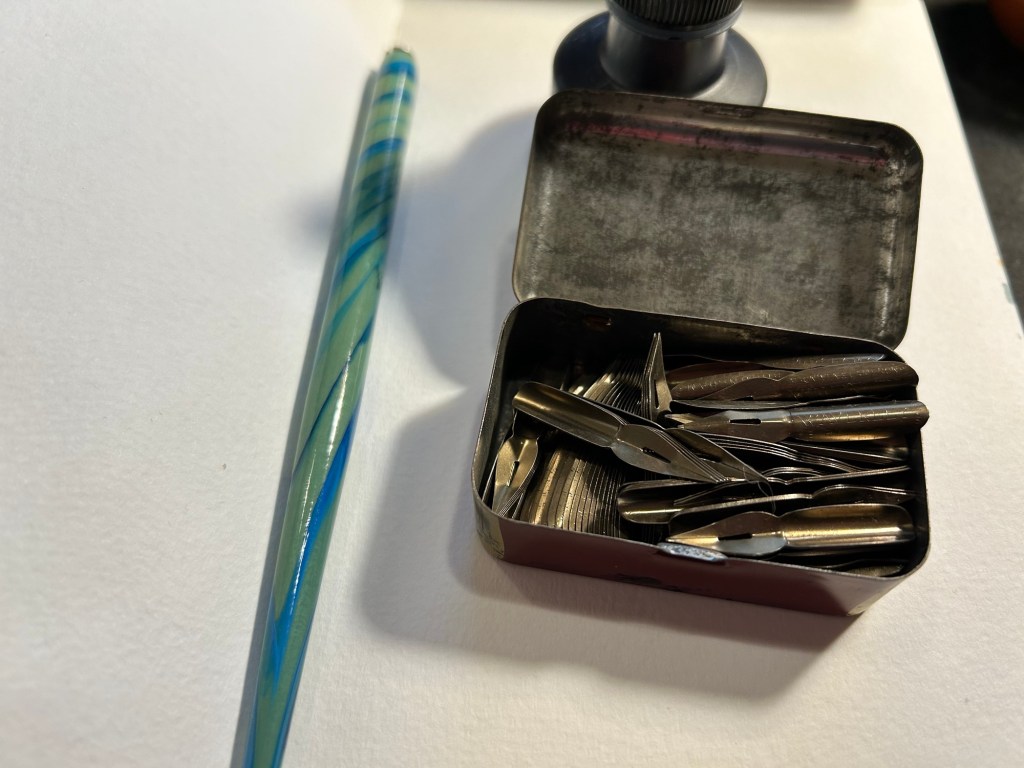
Here’s the nib. It has a bit of kink to it that helps it hold more ink than it otherwise could hold:
I took one dip and tested out how much ink it holds. It’s quite a lot:
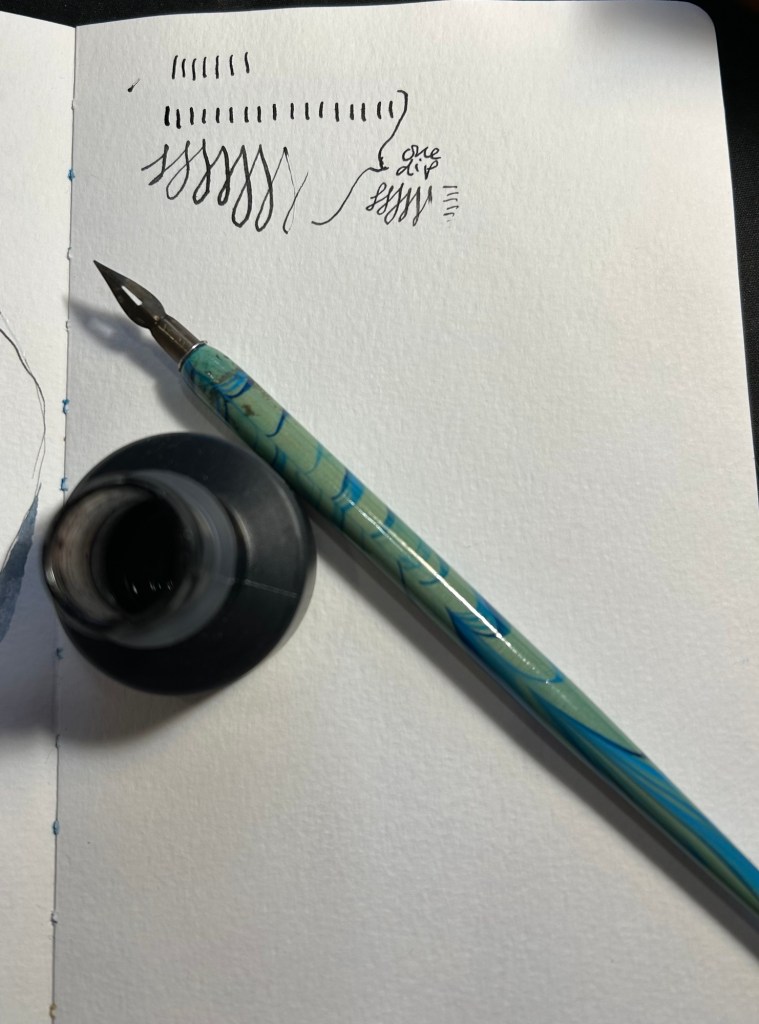
I decided to use it on a Moleskine Watercolour sketchbook. The paper isn’t ideal for dip pens (it’s not smooth and the properties that make it watercolour friendly mean that the ink will spread and feather no matter what), but I wanted to use it with watercolours. As in this case the line sketch wasn’t crucial to me (i.e. it didn’t need to be particularly accurate), I decided to accept some level of feathering and spread for a decent watercolour wash.
Here’s the ink sketch:
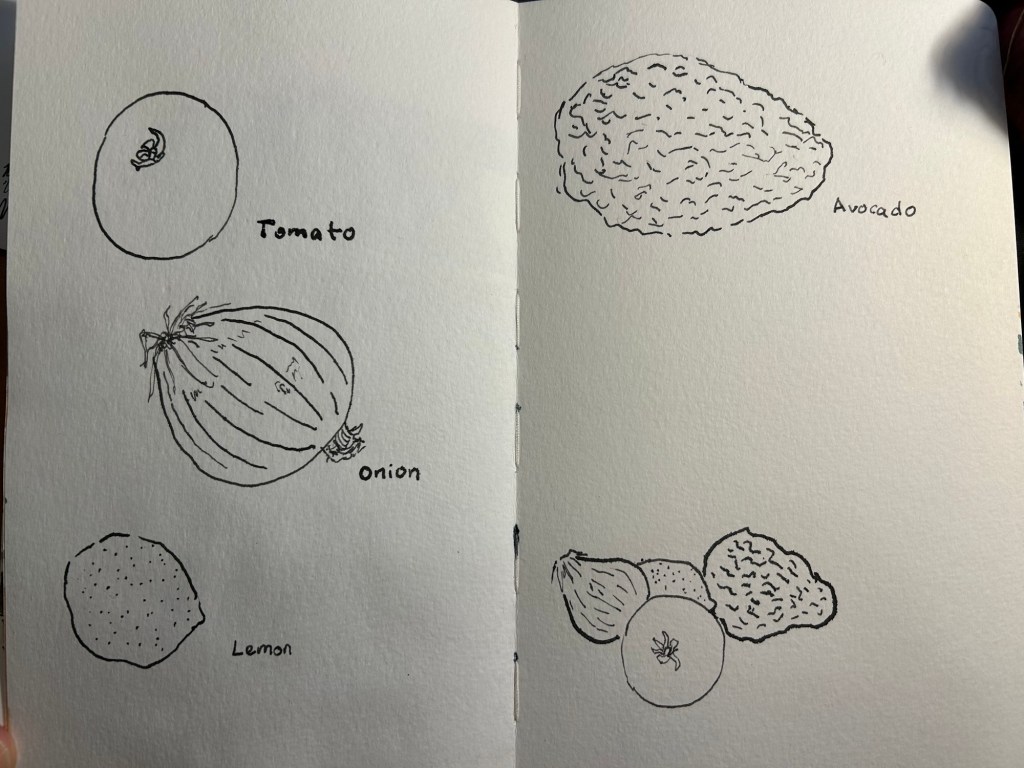
A closeup on the onion sketch shows how much line variation you can get from this kind of nib, just how expressive these nibs are, and some of the feathering and spread that I talked about earlier:

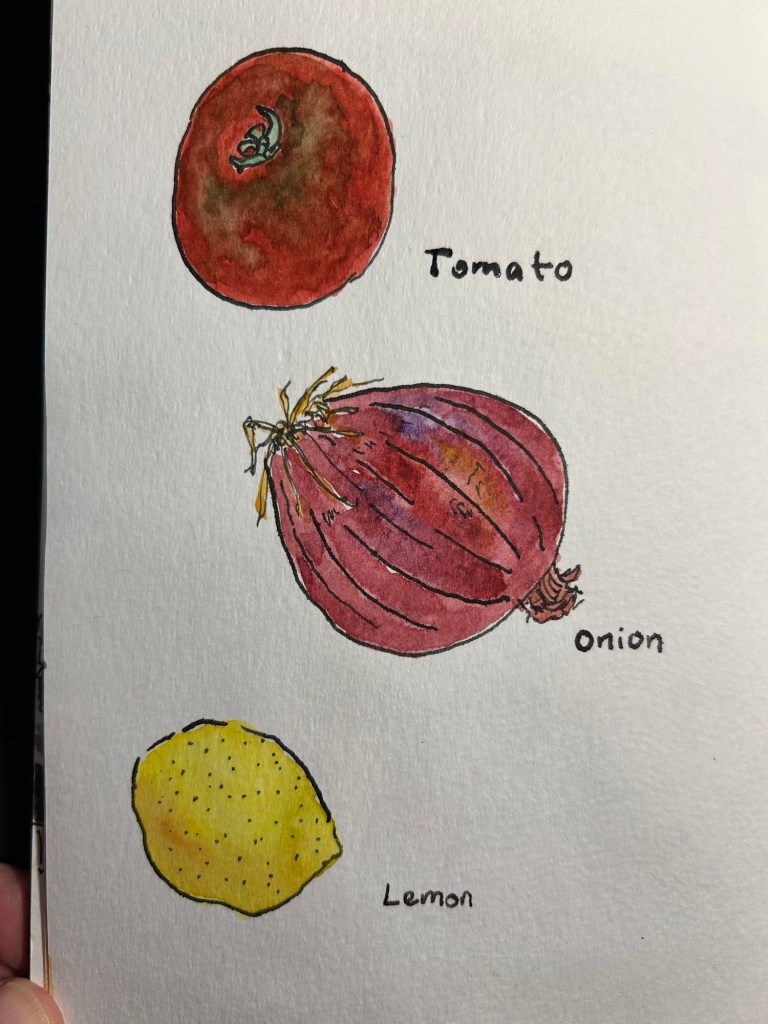
Watercolour brings these sketches to life, and makes the ink compromises worth it:
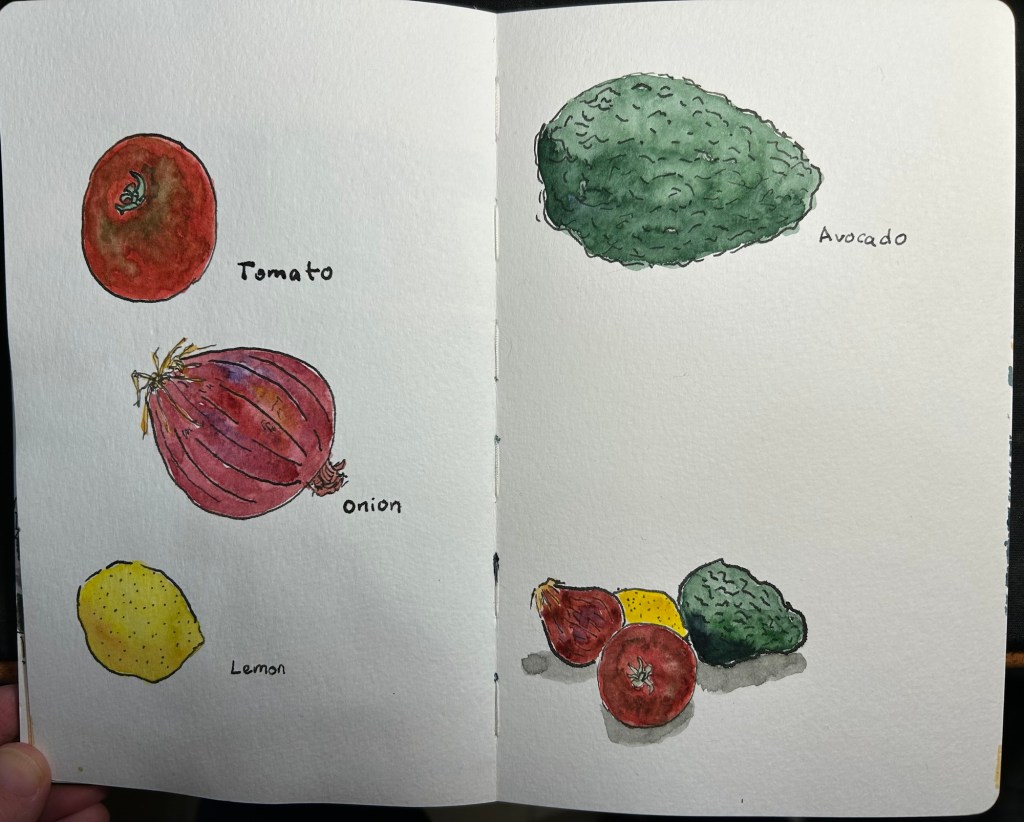
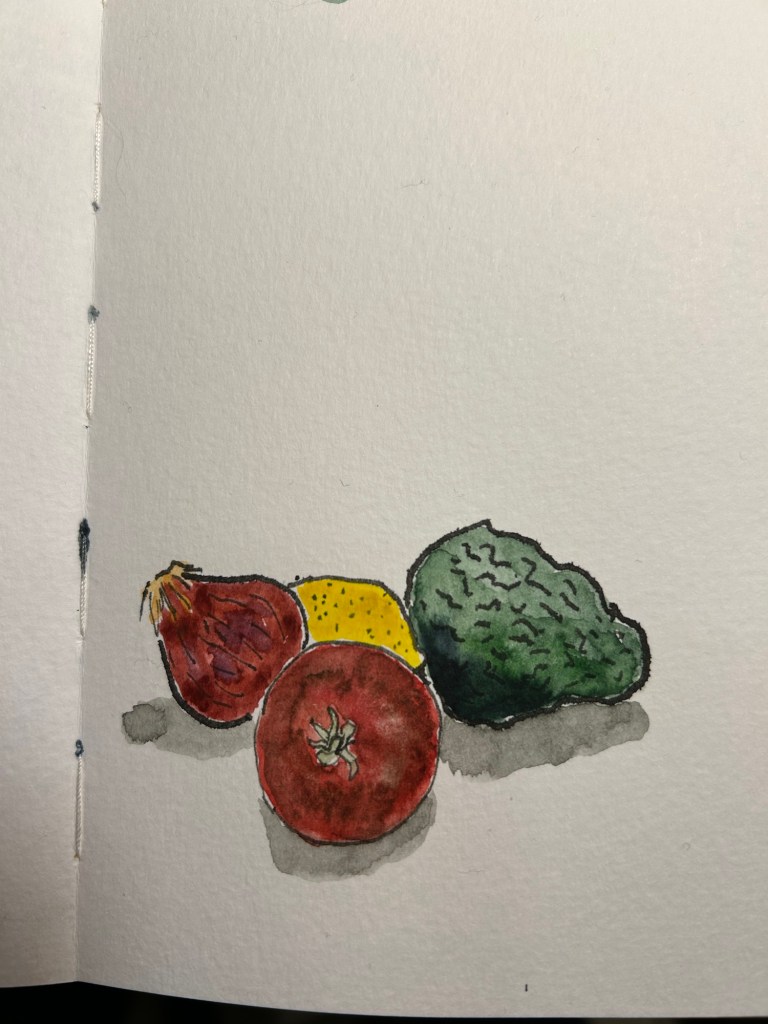
A closeup on the sketches:
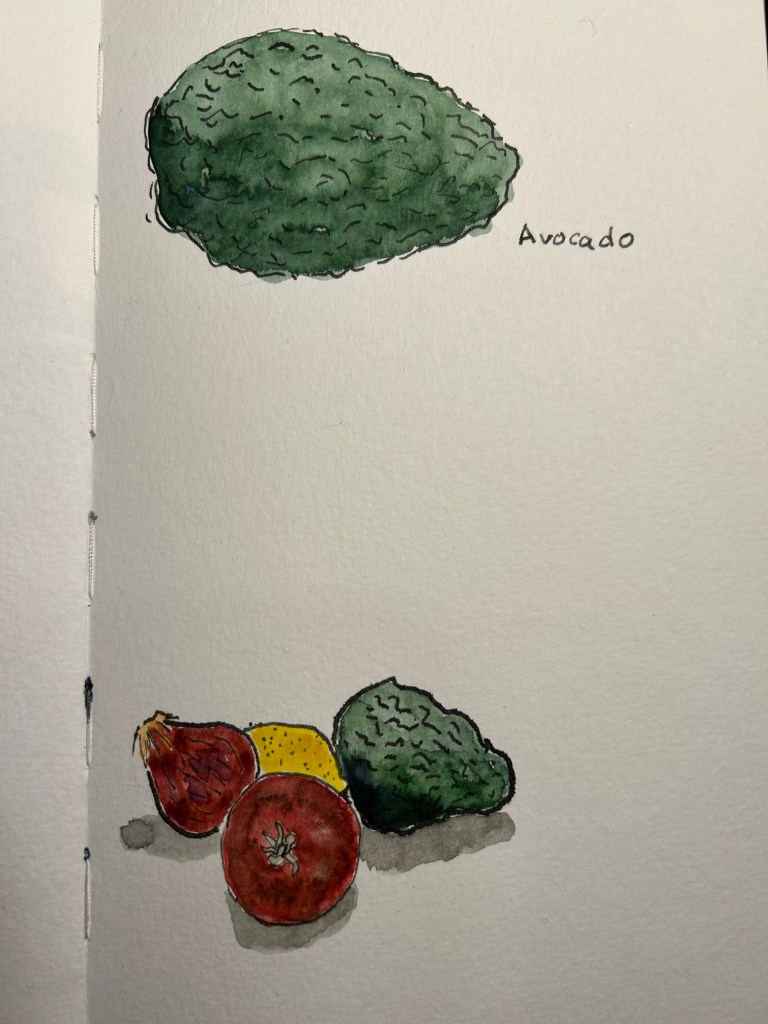
The second page:
The group thumbnail:
There are a few things that you need to remember when combining dip pens and watercolours:
Have you tried combining the two mediums? If so, let me know how it went.
I’m coming on my two year anniversary from the end of my chemo (it’s at the end of next month, so basically on Christmas Eve), and I have a check up with my hemato-oncologist in two days. I sketched this to give her with a box of pralines, a small token of my gratitude for the past two and a half years:
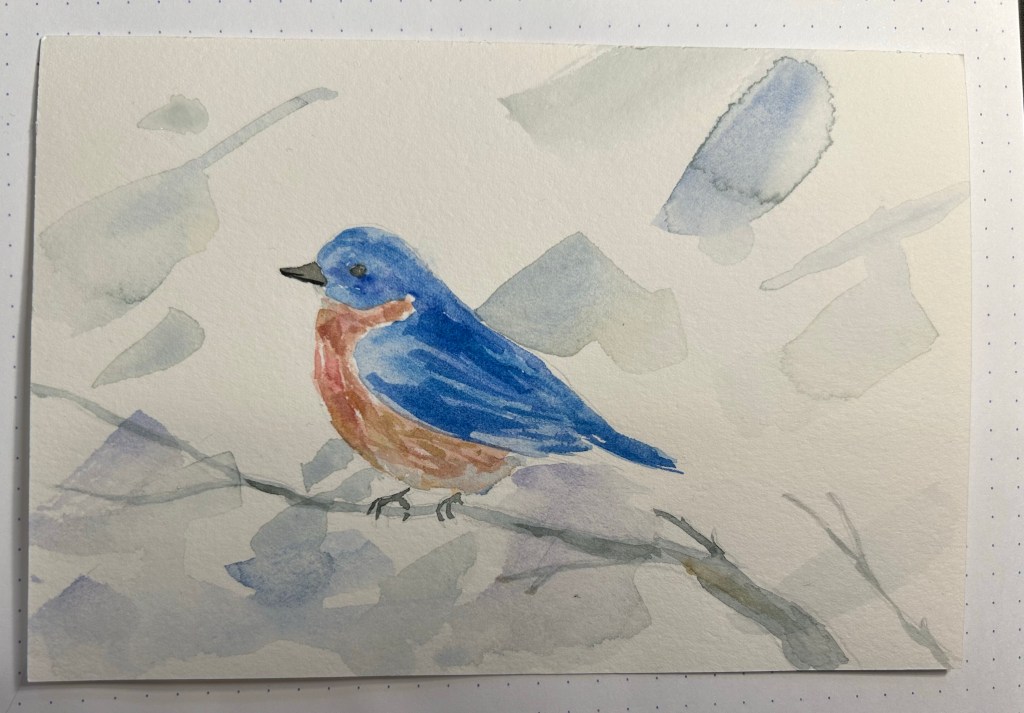
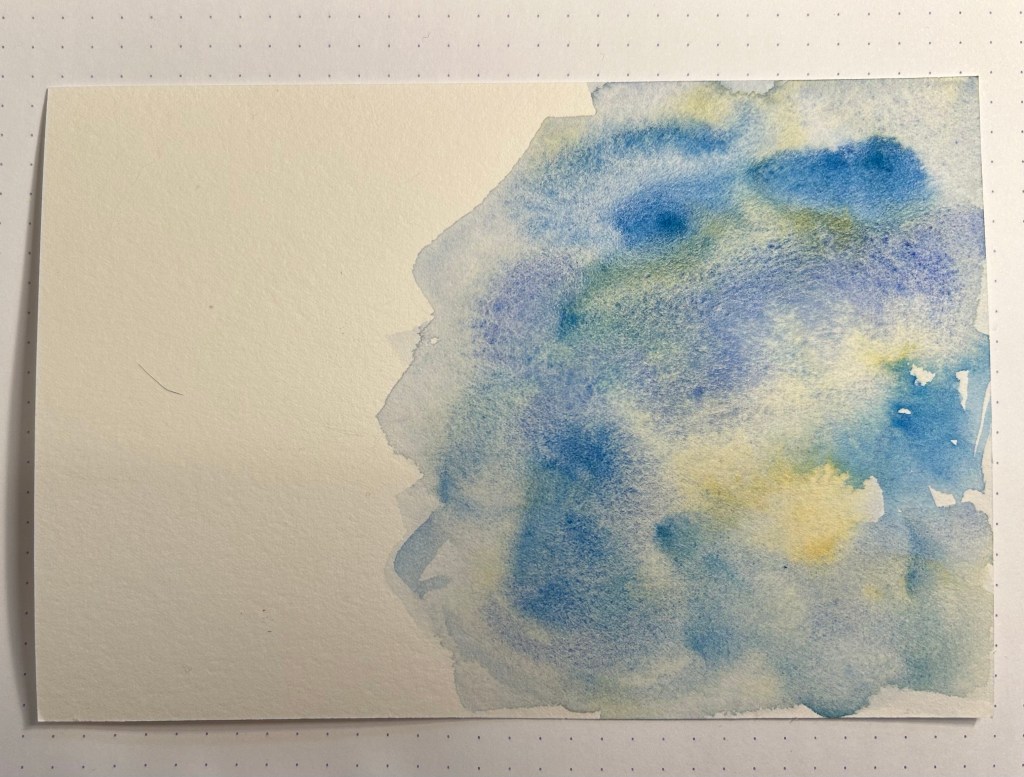
It’s a new kind of paper so it came out a bit more blotchy than I’d like, which made me want to play with it a bit more. I wanted to make another quick card for one of my mom’s doctors, who’s retiring, so I had some pigment fun:
I then used Schmincke’s Aqua Bronze rich gold to add some writing to it. Aqua Bronze is basically a small jar full of glitter powder that you mix with a little bit of water (a very, very small bit of water) on your palette and it turns into metallic watercolour. Unlike other metallic watercolours Aqua Bronze has good coverage and opacity, and it really pops off the page. It’s the very last thing you add to your drawing, after everything else has completely (and I mean completely) dried up. You need very little of the powder and even less water, a cheap plastic palette and a cheap synthetic brush and you’re all set.
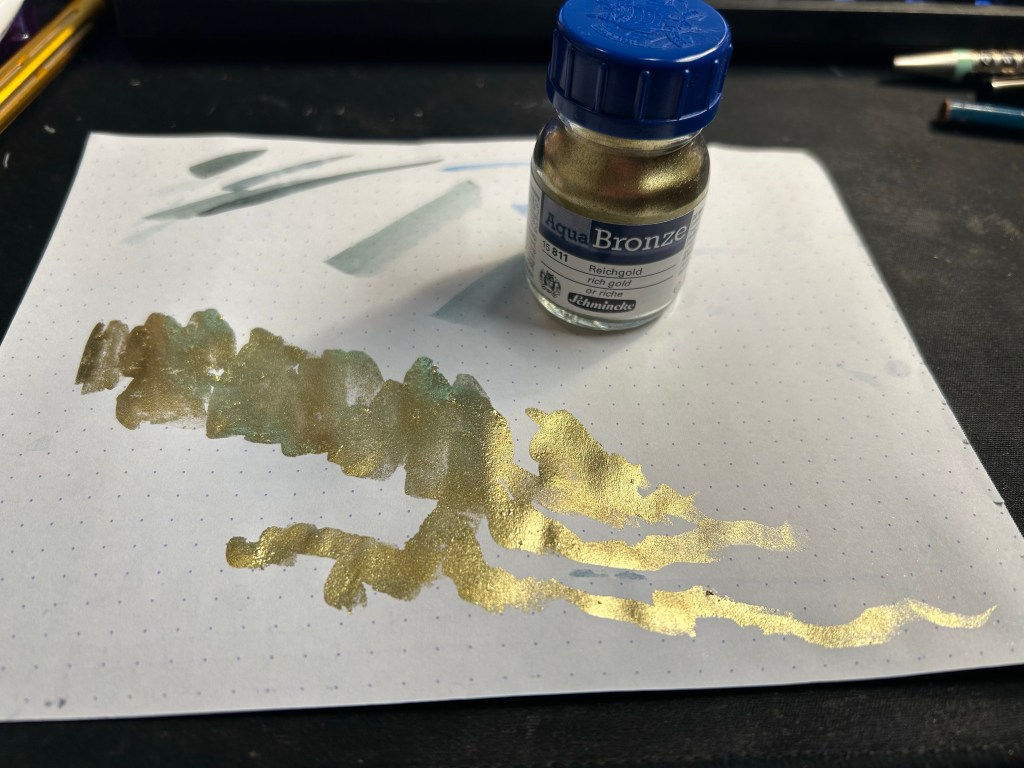
There are several different kinds of metallic hues, and they all work the same. Do remember that you want to use a cheap brush and a palette you don’t care about because this is glitter. You also don’t want to clean the brush in your regular water pot, or to use the same water for another drawing later on. Aqua Bronze sticks to everything, and you can’t ensure that it was completely cleaned out of your tools, so don’t use your best brush or your usual palette for this.
You mix up the powder with a tiny bit of water and a bit of patience (it takes less water and more time than you think) and then apply it to your dry drawing. The paint stays in place but if you brush your fingers on it, they will come out with a fine dusting of glitter. Here’s how it turned out:
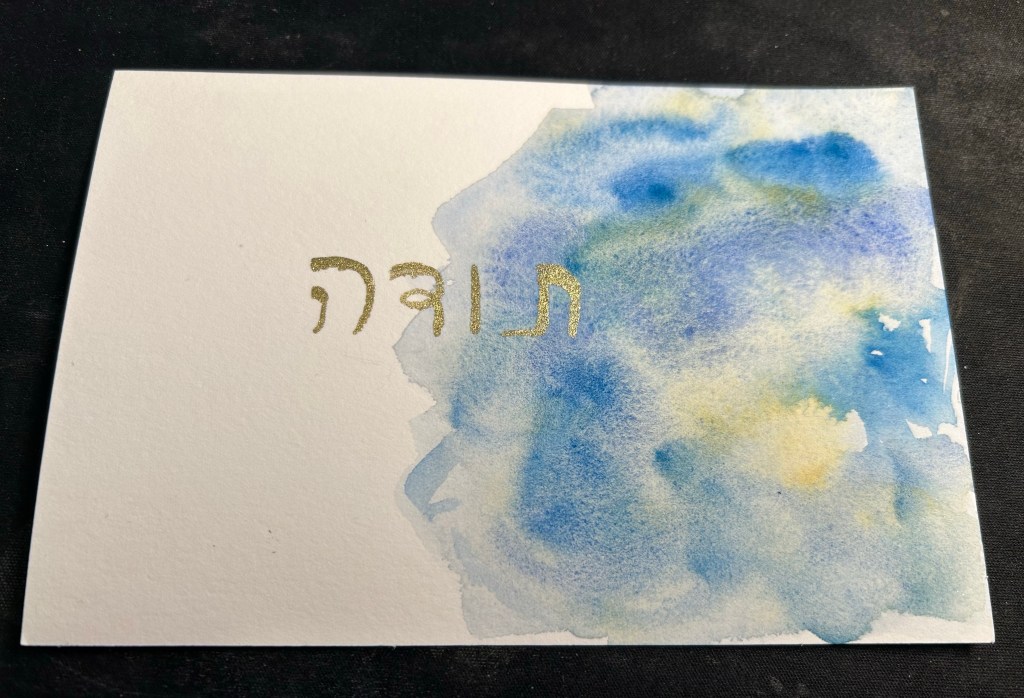
If you want even more opacity, you’re going to have to use a paint marker. In this case I wanted the yellow in the abstract blue rose to be reflected in the thank you written in gold so I wanted the soft edges of the Aqua Bronze.
If you’re thinking about creating watercolour holiday cards and want to add a little bling to them, Aqua Bronze could be an option. I’d select one colour as the jars aren’t cheap, and I’d finish the sketches and then add the glitter highlights in one batch.
If you use watercolours you usually find yourself in one of two camps: those who want as much control of their painting as possible and so hate granulating watercolours, and those who love the magic of granulating pigments, and the unexpected effects they create. For the first few years that I was using watercolours I hated the “cauliflower” and “graininess” of granulating watercolours and so I actively avoided those pigments. Nowadays I have several granulating watercolours on my palette (and two super granulating ones) and I enjoy the watercolour magic and pigment parties that they create.
A few years ago Schmincke started issuing “super granulation” watercolours, which are watercolours with extra pronounced granulation effects and two different pigments in the same paint – something that created a dual colour effect and added tons of texture to any painting they were used in.
I reviewed the first of those paints here, and since then Schmincke have come out with three more series of super granulation paints: Shire, Desert and Volcano. Of the three the Volcano interested me the most as it seemed to fill in a gap that the very blue and green leaning previous sets were missing: warm, red hues. As Schmincke watercolours aren’t cheap, and the full volcano set came out to more than I was willing to pay for just to experiment with, I purchased a trio box of 5ml tubes to try out.

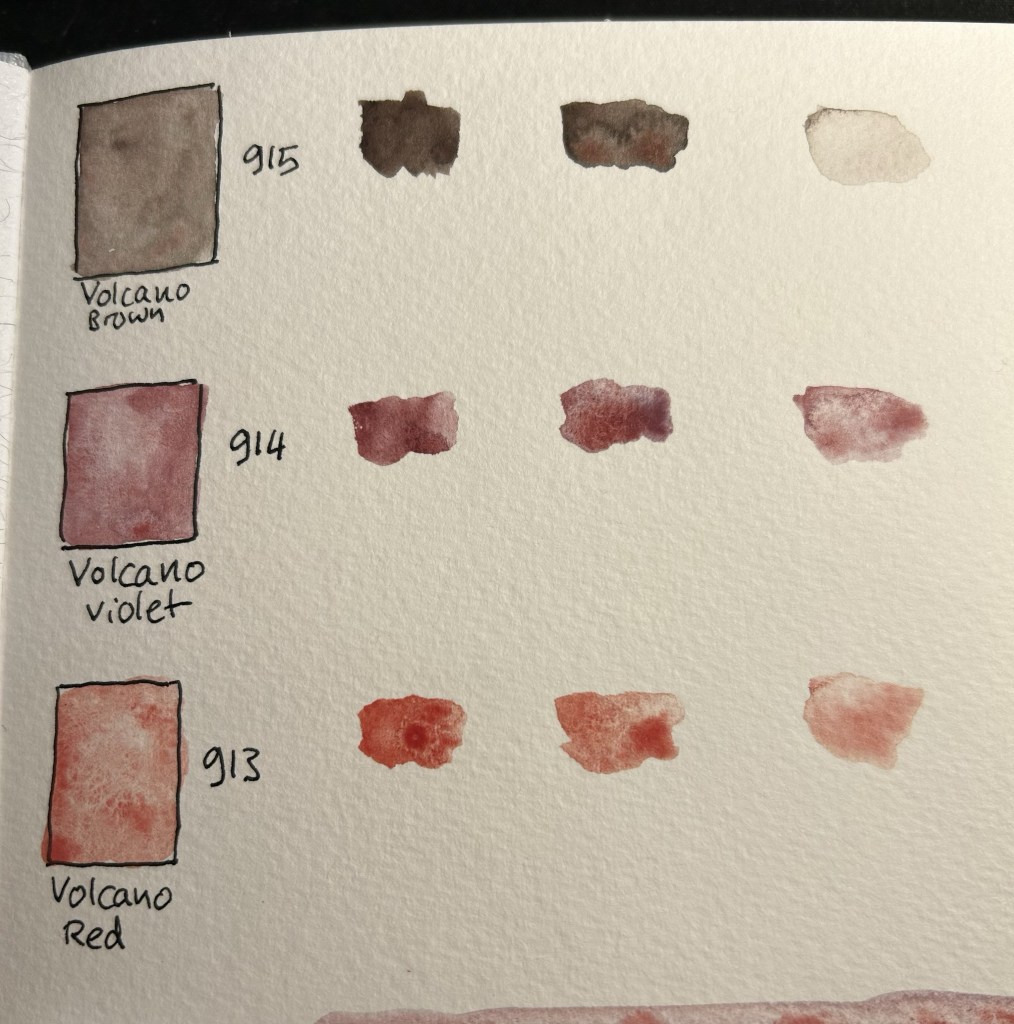
The trio I got contained 913 Volcano Red, 914 Volcano Violet and 915 Volcano Brown. The one that I was most interested in was the volcano red. The one that I ended liking the most is the one that I had the least expectation for: volcano brown.

I filled three half pans with paint and let them dry out for 24 hours (Schmincke watercolours are much easier to pan fill than Daniel Smith as they come out of the tube better and they dry quicker). I then did a colour swab for each, and a paint test with three paint consistencies (honey, milk, tea as Marc Taro Holmes calls them): the first with very little water, the second with more pigment than water and the third with very little pigment. In the case of the volcano brown I overdid the water in the tea swab, so it’s much lighter than the rest.
Volcano red is semi-transparent and semi-staining, volcano violet is semi-opaque and semi-staining, and volcano brown is semi-opaque and staining. The opacity-transparency spectrum in watercolours is important if you mix watercolours, as the more opaque a paint is the less well it mixes and the more chance you’ll get a “muddy” mixture out it. It is also important for layering, as opaque paints will not layer as well as transparent ones. For this reason I use opaque and semi-opaque paints sparingly, and usually only during the final stages of my painting.
Staining is a measure of how easy it is to “lift” the paint off the page with water or by dabbing it off, should you need to. The more staining the paint, the harder it is to lift without leaving a stain behind (this also depends on the paper you use, of course).
Looking at the paints, the volcano brown shows dual brown and red pigments, the volcano violet shows red and purple pigments, and the red shows red and maybe orange pigments, but it’s hard to tell. The volcano brown is the most dramatic and interesting of the three, though the volcano red is by far the most granulating of them.
I tried to create a sketch using only these paints (on 100% cotton watercolour paper) and boy do they show their super granulating properties. while the volcano red by itself isn’t impressive, it does layer spectacularly well on the other two paints, and the volcano brown adds a lot of interest and drama to the painting. Of the three I’m likely to add the volcano brown into the rotation, and perhaps, for certain effects, the volcano red. The violet would come in handy if I was working on portraits maybe, but otherwise it reminds me of potter pink: a pigment that is too washed out to be of any regular use in my palette, and not worth the space when it comes to keeping it around for mixing purposes.

If you’re just building your watercolour palette, these paints are not for you. However, if you have an established palette and a certain style of painting that favours texture and layering, I’d recommend giving at least some of the Schmincke super granulation watercolours a try. They are bound to result in something interesting and unexpected.
Drew this for a colleague about to go on maternity leave. It’s a small watercolour of her parents’ dog:

Drew this using Uni Posca paint markers. It’s a Loth Cat from Star Wars:
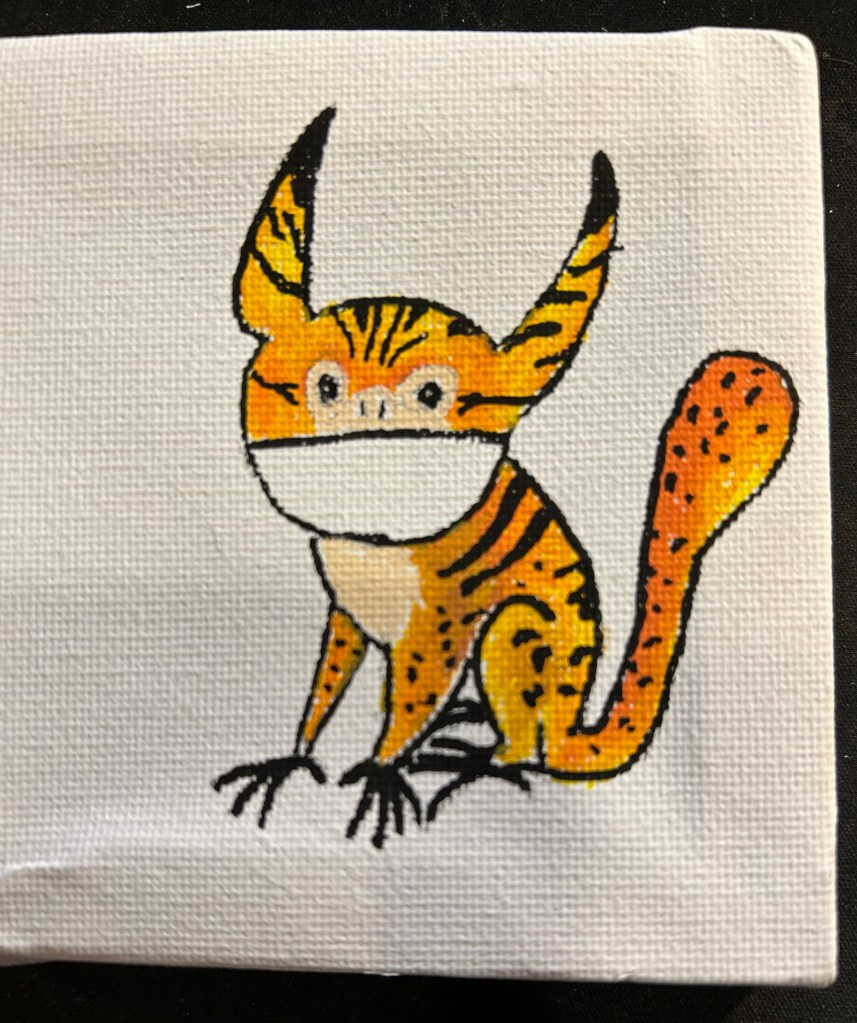
Both will be gifts. Which do you prefer?
This one belongs to a former colleague


I went to a very special Urban Sketchers sketchwalk and drink and draw today. The event celebrated the end of a special sketch swap between a group of sketchers in Barcelona and in Tel Aviv, and there were sketchers there from all over the world (Spain, the Netherlands, Canada, India, etc). We met at Gan Meir in central Tel Aviv for a sketchwalk followed by a drink and draw at the top of Libling house. It was hot, it was humid, and I needed a break by the time I got to the garden, so I went to the nearby Stephan Austrian Bakery for a cold coffee and a Sachertorte, a rare but much needed treat.

A lot of people came in to pick up an ice cream cone, including this little fellow:

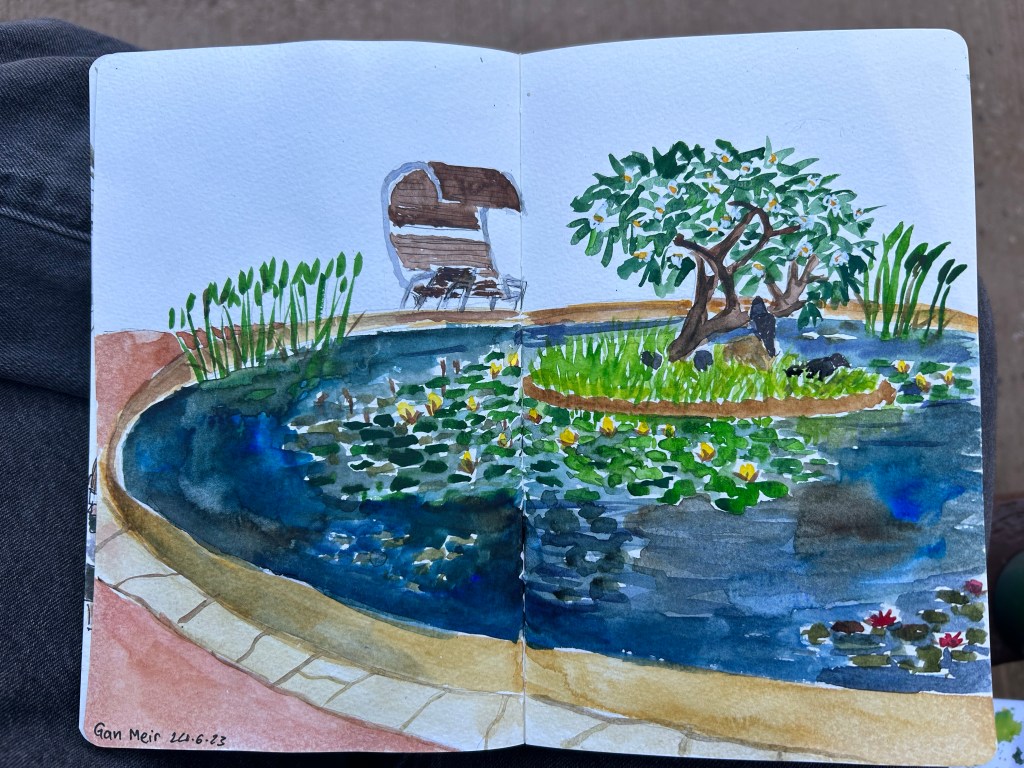
I then went back to the garden and started sketching the waterlily pool:
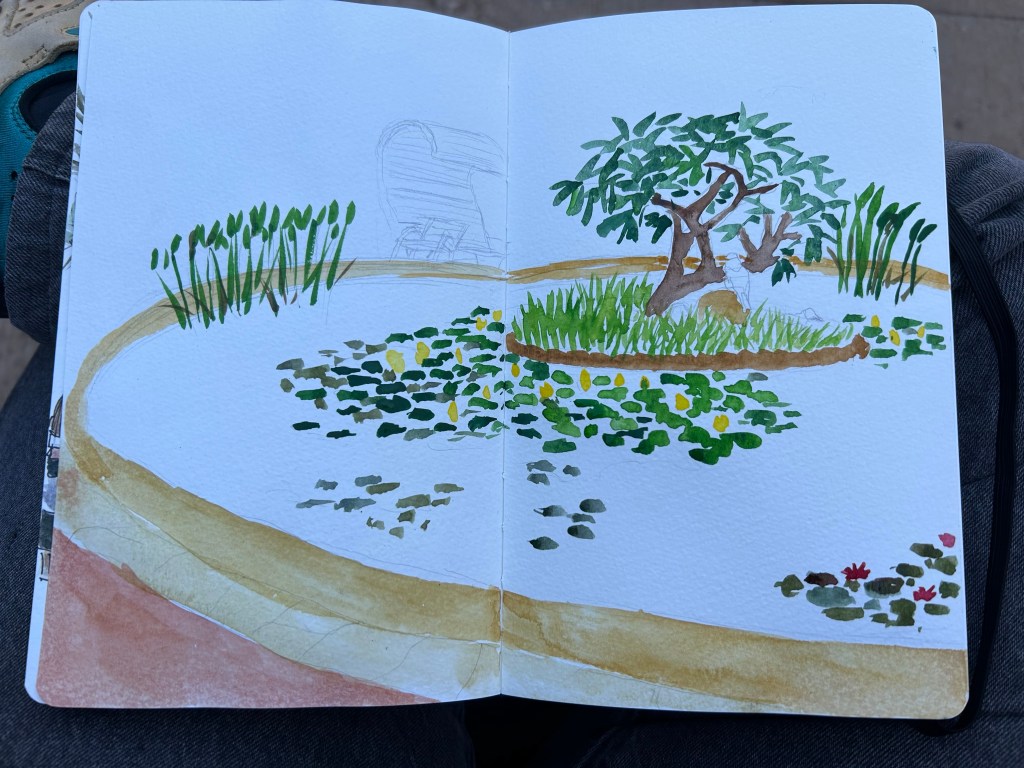
There was a group of ping pong players nearby, and I got hit by balls several times. I was also visited by several curious children. It’s all part of the Urban Sketching charm.
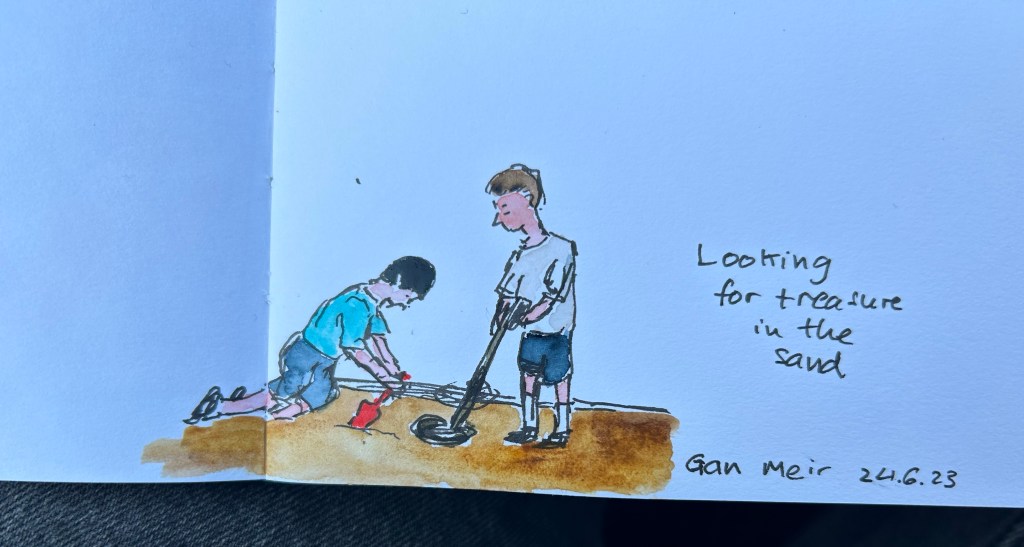
I then saw a group of kids with a metal detector, searching for treasure in the sand, so I sketched them quickly:
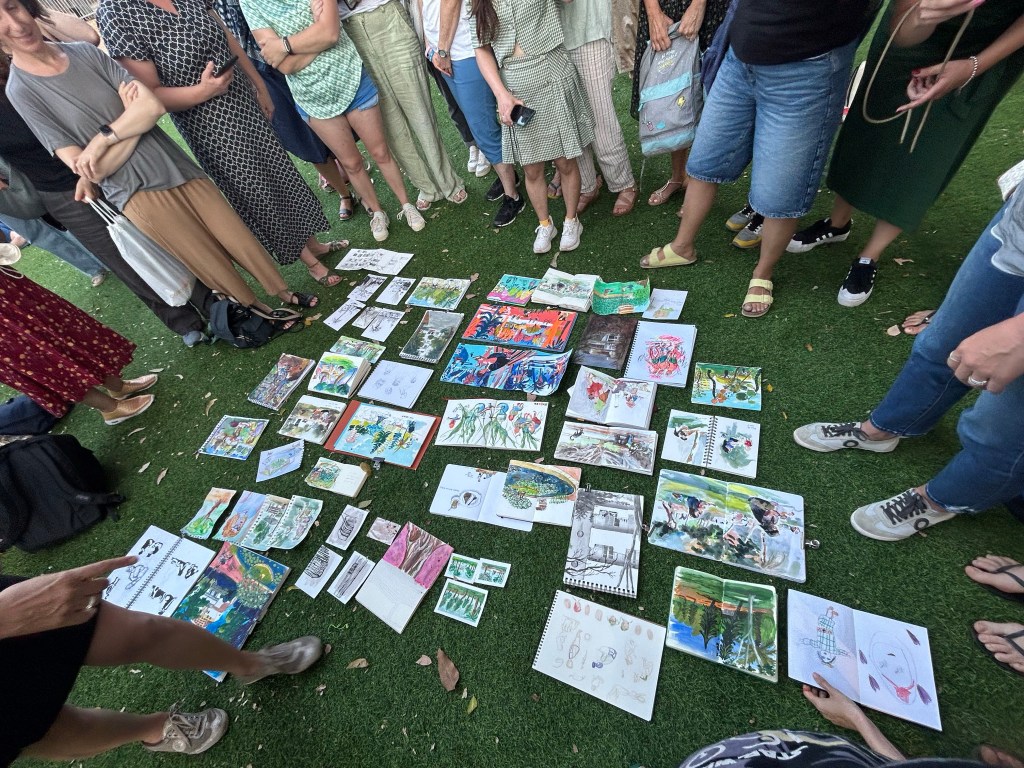
This was our sketchbook throw down, and I loved seeing all the different styles and sketch subjects together,
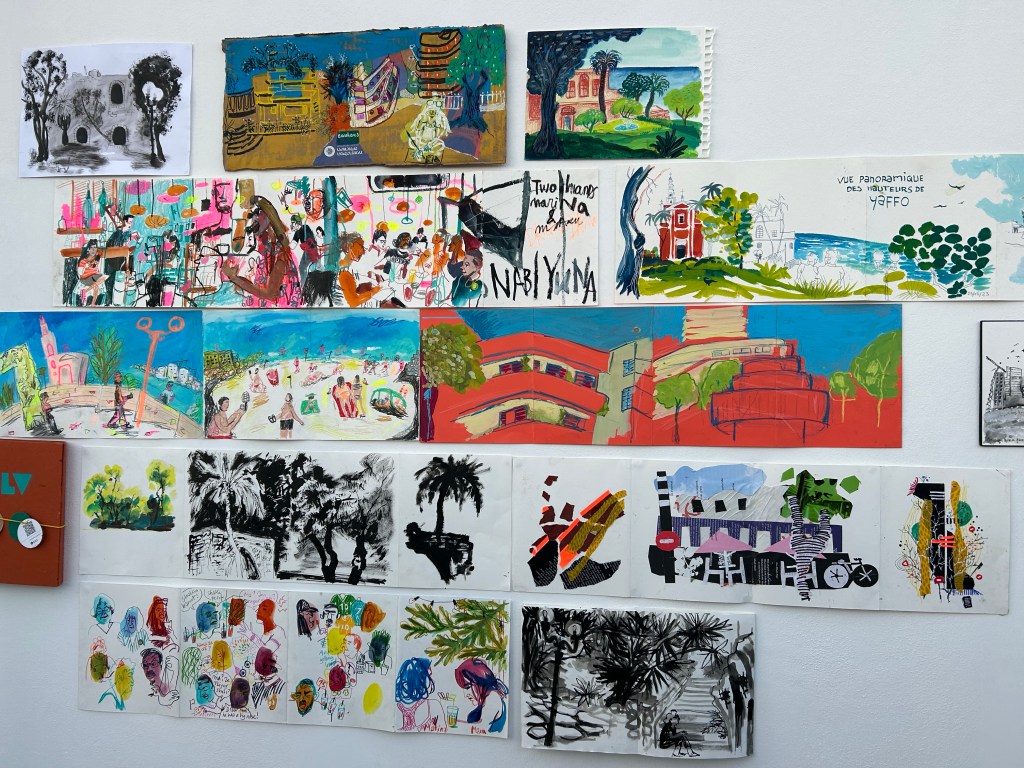
We then went to Leibling House nearby, and there saw some of the sketch swap participants’ work. We had a party on the roof, and I got to talk to sketchers from all over the world, and see so many different sketching styles.
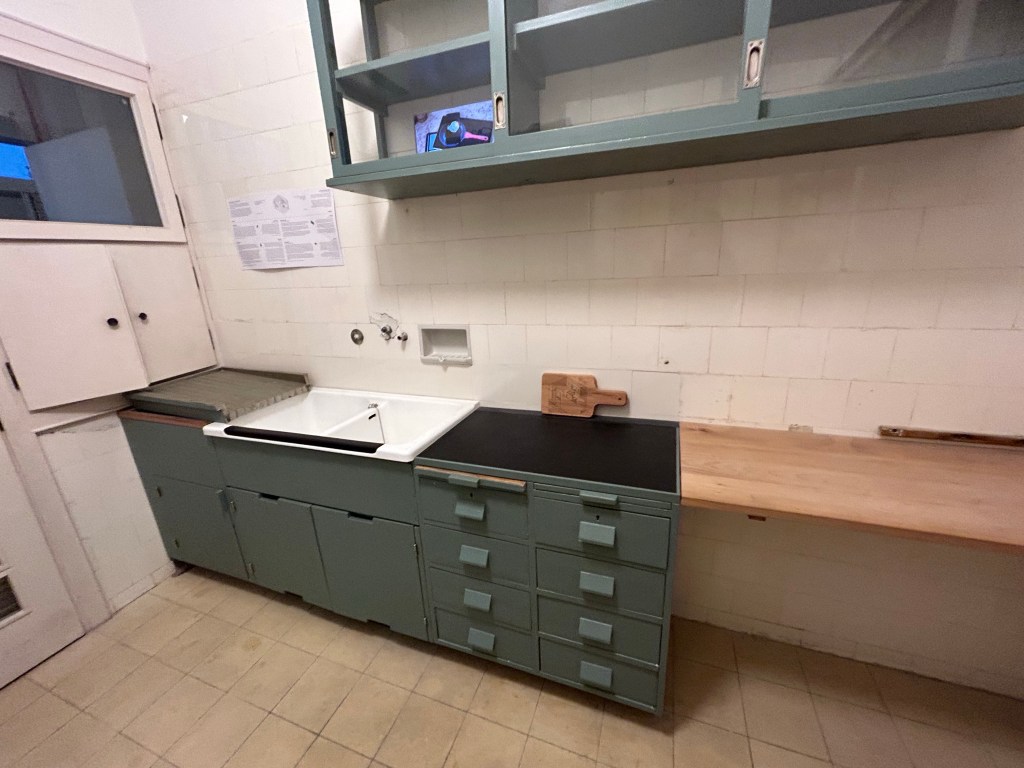
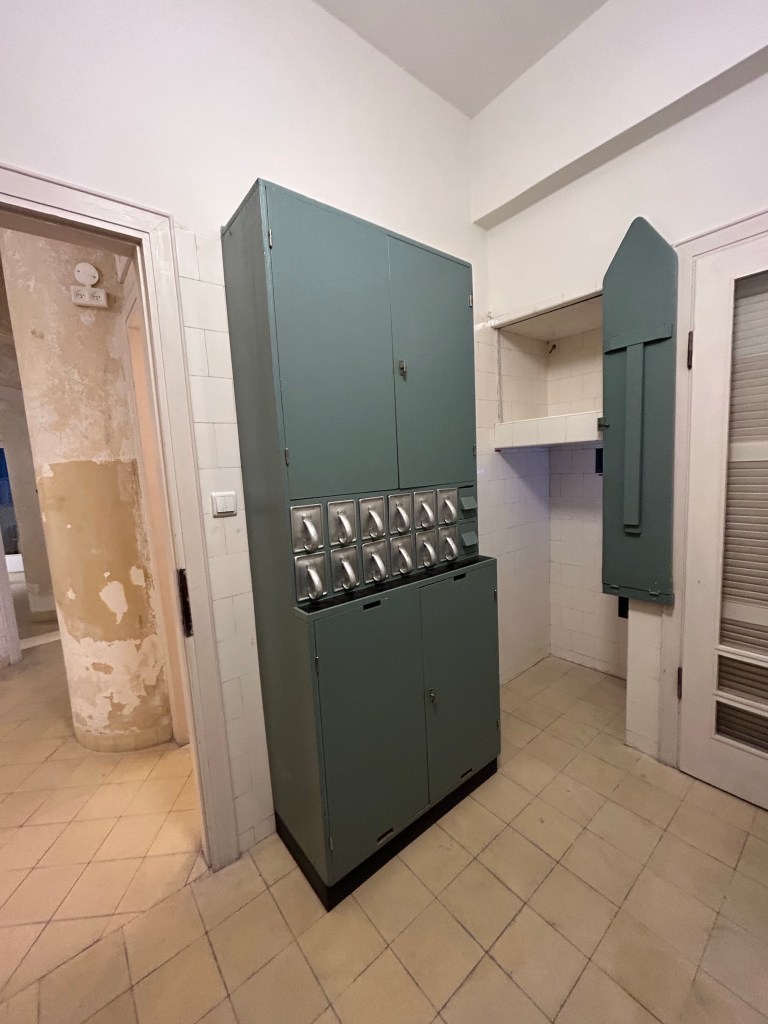
I had to leave early, but I did get to check out Leibling House and see their Frankfurt Kitchen, which is pretty amazing:
What struck me most is how the sketchers from abroad saw and sketched the same tired old local monuments and tourist attractions. Through their work I got to see them with new eyes, and it made me want to visit them and try to sketch them myself. I also got to see Leibling House for the first time, and I plan on returning to it in the future, as it’s a wonderful museum and exhibition space.
So after writing this post about the physical side of building a new watercolour paint box, here is my updated palette. I’m using a new Moleskine Portrait Watercolour Sketchbook as my sketchbook of choice for the watercolour part of Liz Steel’s teacup course (that starts today), and so I used the first page to create an index for my current palette.
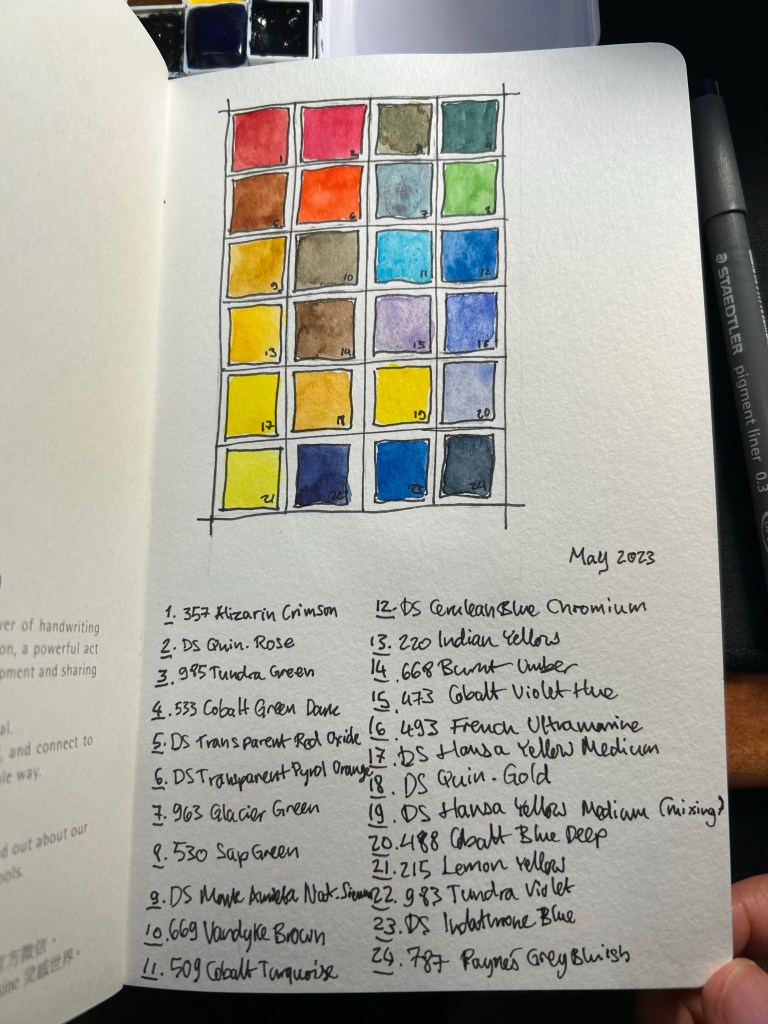
Every watercolourist’s palette is unique and full of choices that reflect their subject matter preference, the place they live in, and various personal idiosyncrasies. Please don’t copy anyones palette as-is (including mine), but rather understand the artist’s choices and tailor your palette choices to your own needs. To this end, I will explain some of the choices behind my paletter.
There are 24 half-pans in my palette, and 23 unique colours. Daniel Smith Hansa Yellow Medium now appears twice in my palette, once for mixing and once for using as an unmixed mid warm yellow. Yellow paints get dirty if you even look at them, and they are difficult to clean after a dab of this or that paint made its way to them. Of the three yellows in my palette I use DS Hansa Yellow Medium the most for mixing, which is why I opted to have a second half-pan of it this time (it’s a new change that I’m trying out).
Of the 23 paints, 15 are Schmincke Horadam and the rest are Daniel Smith. I’m pointing this out so that you feel comfortable mixing between paint manufacturers on your palette. This can be done so long as you are using the same grade of paint in each maker (artist grade, for example).
There are some classic examples of watercolour palette building in this palette and some that are a bit off. There are warm and cold sets of yellow (Hansa Yellow Medium, Lemon Yellow), red (Quin. Rose and Alizarin Crimson) and blue (French Ultramarine and Cobalt Blue deep), and there’s a rather standard set of earth tones (Pyrol Oxide, Monte Amiata Natural Sienna, Van Dyke Brown and Burnt Umber) but there’s some weird stuff too. I’ll be focusing mostly on the weird stuff.
There are three greens in my palette. I sketch mostly landscapes and having premixed greens saves a LOT of time. Of the three greens I use Sap Green the most, either by itself or lightening it with yellow or darkening it with blue. It also has a brightness and vivacity that you cannot obtain by mixing your own green. The two other greens are opaque (which means they don’t mix well), and cover two very common and difficult to mix green shades. Schmincke Tundra green is part of their super-granulating series, and has some pink undertones to it. It also covers a wide variety of olive coloured local plants. The Cobalt Green Dark is a brand new addition to the palette, replacing Schmincke’s forest green. This paint works as an “artificial” green, for things like benches and fences that were painted green, and a greyish-green for the many greyish-green local plants.
Then there are some “magic” paints. Schmincke Glacier Green is on the palette as a cool “glass” and sea blue, and it’s super-granulating and dual pigmented. You can see the pigment party going on with it in my swatch of this colour.
Liz Steel has influenced me to add an orange and a turquoise to the palette. They bring joy to the painting, the turquoise is useful as “glass” and “windows” when I want something brighter than the Glacier Green and the orange paint is much brighter and more alive than any mixed orange that I could ever hope to create. It’s useful to add a splash of colour to a painting, to help focus the eye in a certain area. The two Daniel Smith blues on my paletter are also Liz Steel inspired, and at least one of them may be on its way out due to low use.
Paynes Grey Bluish is one of my most heavily used pigments, as part of sky and sea scenes, denim jeans, as a shadow colour, for asphalt and to darken other mixes. A must have for me.
The two violets on the palette are also personal choices, though the Tundra Violet will likely be replaced with something else in the near future. Purples are very difficult to mix without getting muddy not registering as purple, which is why the Cobalt Violet Hue paint on my palette. The super-granulating Tundra Violet is much less useful, and may find its way out my palette.
I hope this gave you some insight as how to think about the pigment choices that you make for your palette. Again – create your own palette and don’t just force yourself to use a copy of someone else’s
The wonderful Liz Steel is starting a new teacup sketching course, and I decided to enrol to it. I don’t have many teacups, but I do love the ones that I have, and I think that they are interesting objects to sketch. As Liz points out, many teacups and coffee mugs have vivid memories tied to them, and they oftentimes have interesting shapes, colours and patterns. I was also looking for a way to kickstart my sketching again, and as this is a short course (just 4 weeks) I thought that this was a good place to start.
As is customary in Liz’s courses, I created a “pre course” sketch: a teacup sketch to demonstrate where I’m starting from. I started with a pencil sketch and then worked over it with a Staedtler pigment liner only to have the whole thing ruined when I used a new eraser that was too aggressive for the paper. You don’t often get to see failures on display, so I’m attaching the photo of my failed first attempt so that we can all learn from my mistake.
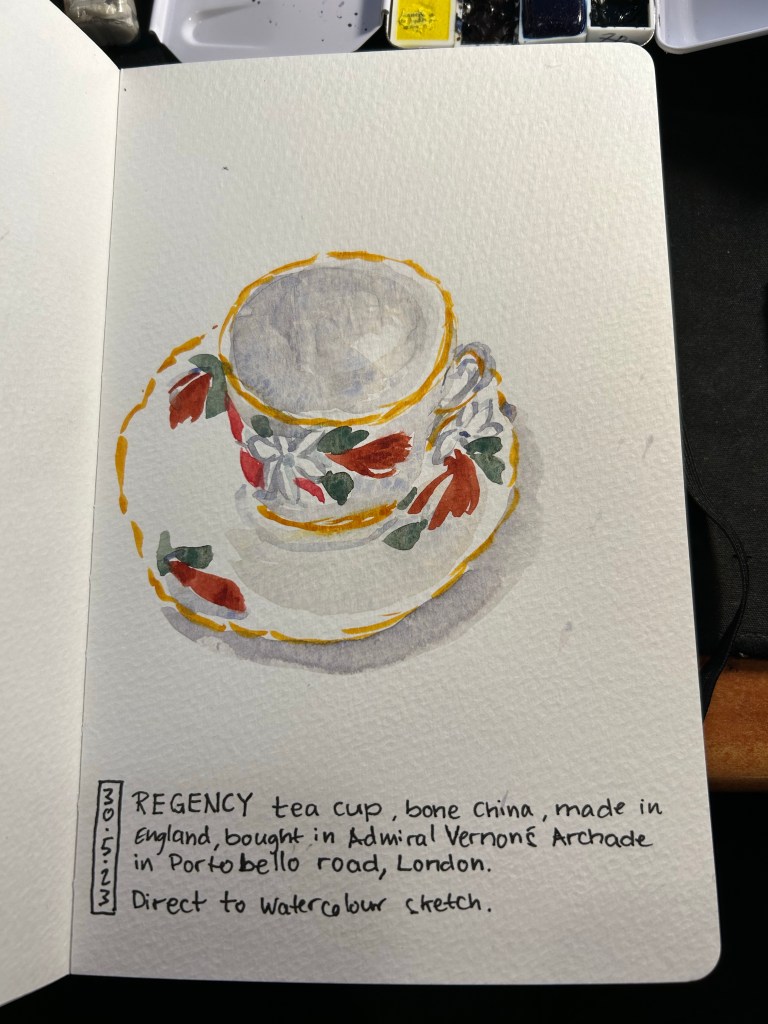
I then decided to risk going directly to watercolour. The teacup I sketched was both complex in terms of shape and pattern, so going this route was not something I would have chosen if not for my initial failure. The result came out better than I expected. It’s far from perfect but it’s not terrible. A start that I can improve upon, at the very least.
Here is my failure sketch. You can see the mess of the paper. But if you don’t experiment and try new things, you don’t know what works and what doesn’t. That eraser is relegated to non-watercolour paper from now on, and it was a lesson worth learning on a sketch of this kind and not on something more precious.

Don’t be afraid to try stuff out. It’s worth it even if the result isn’t what you’d term a success.
I’ve recently misplaced my beloved watercolour paint box and after searching for it for more than two weeks, I gave up and decided to build a new paint box, with the hopes that the old one will show up one day. Good quality watercolour paint boxes and artist grade watercolours aren’t cheap, which is why I put this off for a while, but they do last for a very long time if you invest a little bit in them.
This post won’t be so much about my palette choices but rather more about the physical properties of the box that I use and the paints within it. If you have had a taste of watercolours and decided that you enjoy the medium and would like to create a long lasting field paint set, this post is for you.
For years I used the excellent Windsor Newton Cotman Watercolour Field Box. The box comes with a set of Cotman student grade watercolours that I gifted away (they aren’t worth your time. If there’s something worth investing in when it comes to watercolours it’s the paints. The order is paints -> paper -> brushes), a handy little built in water bottle and water cup, a sponge, and a foldable brush that is mediocre but usuable in a pinch (you’ll probably lose it shortly after buying the box, but that’s ok). The box officially holds 12 half pans, but in reality you can squeeze 14 half pans in with no effort. If you are getting into Urban Sketching this is an excellent set to have, a nifty little workhorse that will last you easily for a few years. For a very compact size you get a surprisingly large set of mixing areas, and while I’d only use the included water bottle as a backup because it holds very little water, it’s good to have around.
The pros of this kit are many: it’s small, light, well designed, cheap, easy to use, and holds a lot for such a small, pocketable package. The cons are why after three Field Boxes I finally switched over to my current setup: the boxes deteriorate and fall apart after 2-3 years of use at most, they are difficult to clean, and it’s difficult to switch out paints if you’re experimenting with your palette.
The build quality in particular has taken a hit in recent years, to the point where I cannibalise old Field Boxes for parts for the new ones. However, even the old boxes didn’t last for more than 3-4 years, because the plastic would deteriorate and the attached mixing flats would drop off, leaving you with very few mixing space in the end.
Enter my current setup, one that I’ve been using for a few years now: the Schmincke 12 half pan metal paint box, filled with 24 half pans.

There are many pocket sized enamelled paint boxes, but after trying several generic ones, I found that Schmincke’s box is worth the extra money. Generic boxes didn’t have such a good mixing area configuration, and they tended to rust off on me. The Schmincke box can take a hell of a beating without the enamel flaking off, and when working with watercolours, as soon as there’s a chip in the enamel, rust will take hold of your box.
The box comes with an insert meant to allow for two rows of six half pans and a compact, foldable brush in the middle. I take that insert out and toss it. That leaves me the whole box for a whopping 24 half pans, or a mix of half pans and full pans. Here I my usual setup, which is about 60% Schmincke and 40% Daniel Smith watercolours. Some of them are paint filled half pans that I purchased, and most of them are half pans that I filled with paint myself. Buying tubes and filling your own pans is cheaper in the long run, particularly for paints that you use often.
Filling your own half pans with paint is very easy, and also exposes interesting properties of the paints that you use. For instance, Van Dyke Brown takes ages to cure, while all my yellow paints cure super fast. I’ll also note that Daniel Smith watercolours loose A LOT of volume after drying up, shrinking at times to almost 50% of their original volume. It always takes 2-3 passes to fill a Daniel Smith half-pan, and with Schmincke one pass is enough. So you can see the ugly crack in my Hansa Yellow Medium, where the paint shrunk to half its size and I filled the other half of the pan again.
On the other hand, Schmincke’s half pan packaging is infuriating. The pans come wrapped in wax paper which often sticks to the paint as you unwrap it (imagine peeling off a sticker and having bits of sticker left behind). You can see this on the Lemon Yellow on the bottom left and on the Cobalt Blue Deep on the second to last row, on the right. After much of a struggle I got the residue off the Cobalt Blue, but I left it to scrape off later from the Lemon Yellow. It is a hassle to remove these bits of leftover paper, and they ruin the paint.

As there’s a bit of a gap left that allows the pans to travel freely in the box, I cut a bit of foam and put it in the box, creating a friction fit for all the pans. Removing a pan and switching it over is a breeze this way – you can always lift out the foam and then easily remove the paint pan.
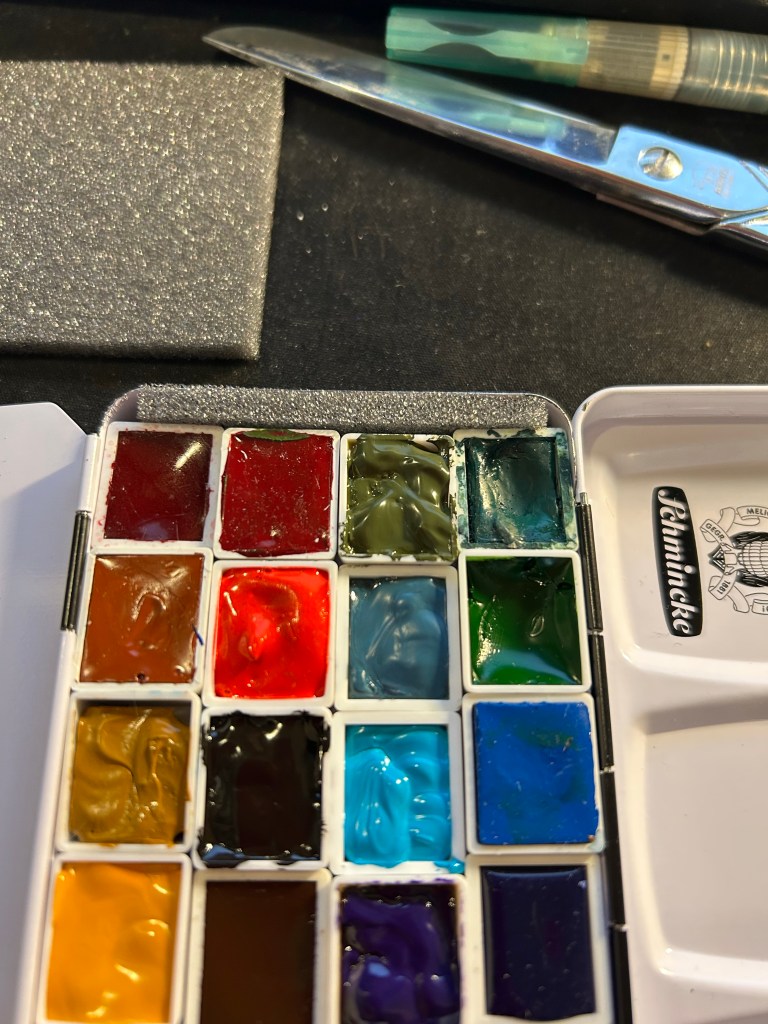
The box has two large mixing areas, one divided into three large wells which I use to mix often use colours or paint for large areas. The second area is divided into six small wells (you can see this all in the first photo of the set) which are good for small mixes. As it’s enamelled metal it’s very easy to clean, and the set is much more robust than the W&N Field Box.
If you like to experiment with your palette (I always have 2-3 paints that I switch out every 3-4 months), and you are looking for an ultra durable compact field set, I highly recommend investing in the Schmincke 12 half-pan box and filling it with whichever paints you choose. Pre-made watercolour sets are always terrible (they include at least 1-2 colours that you will never ever use), and building a set that fits your needs is a crucial step in making your watercolour painting more streamlined and enjoyable.
What watercolour box do you use? Let me know in the comments, as I love hearing from other sketchers about their tool choices.
 Writing at Large