May 2026’s Currently Inked Fountain Pens

It’s been a while since I’ve inked up new fountain pens, and this month’s pen roster is both much larger than usual and has some rarely inked pens and new inks.

The list totals 16 pens, which is the most that I’ve had inked since the Inkvent days. It’s split into three major categories: leftover pens from previous months, pocket pens filled with cartridges, and full sized newly inked pens. The last category has a small sub-category of pens in it – the “use the good china” pens. I’ll explain it when we get there.

Leftover Pens

These pens were inked in the end of February (Kanilea, Lamy 2000) or the end of March (Leonardo).

Kanilea Haleakala Silhoutte – fine nib – Sailor Ink Studio 224. I bought this pen secondhand on the Pen Addict slack channel, and it’s a gorgeous pen that is absolutely not worth its retail price. Am I glad that I got it? Yes. Would I ever purchase a Kanilea pen again? No. There are better pens to be had for much less money. The Sailor Studio ink is also overpriced, but in this case the price difference isn’t such that it would hurt to buy it. 224 and 123 are my favourites of the series, but you can get a similar enough experience for less money with Diamine Earl Grey.

Lamy 2000 – medium nib – Sailor Black – workhorse pen, workhorse ink.

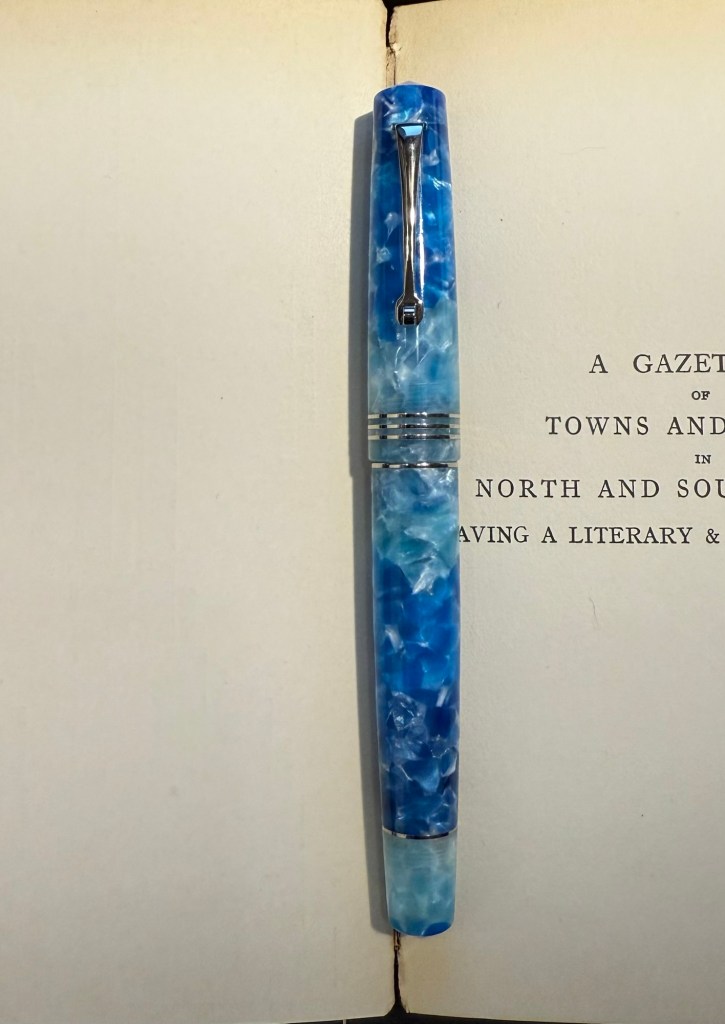
Leonard Officina Italiana Bohemian Twilight Momento Zero – fine nib – Robert Oster Fire and Ice – a gorgeous pen that’s one of my favourites. Robert Oster Fire and Ice is a good teal ink, and this bottle dates from the days that Robert Oster was new to the ink scene and all the rage. It’s a good ink but again, the hype was overblown. It’s taken me a long time, but I’m less and less interested in following the latest pen or ink craze. It has rarely been worth it. That being said Robert Oster makes good inks at decent prices, it’s just that they may be harder to obtain depending on where you live. Don’t feel like you’re missing out if you don’t get to try one of their inks.
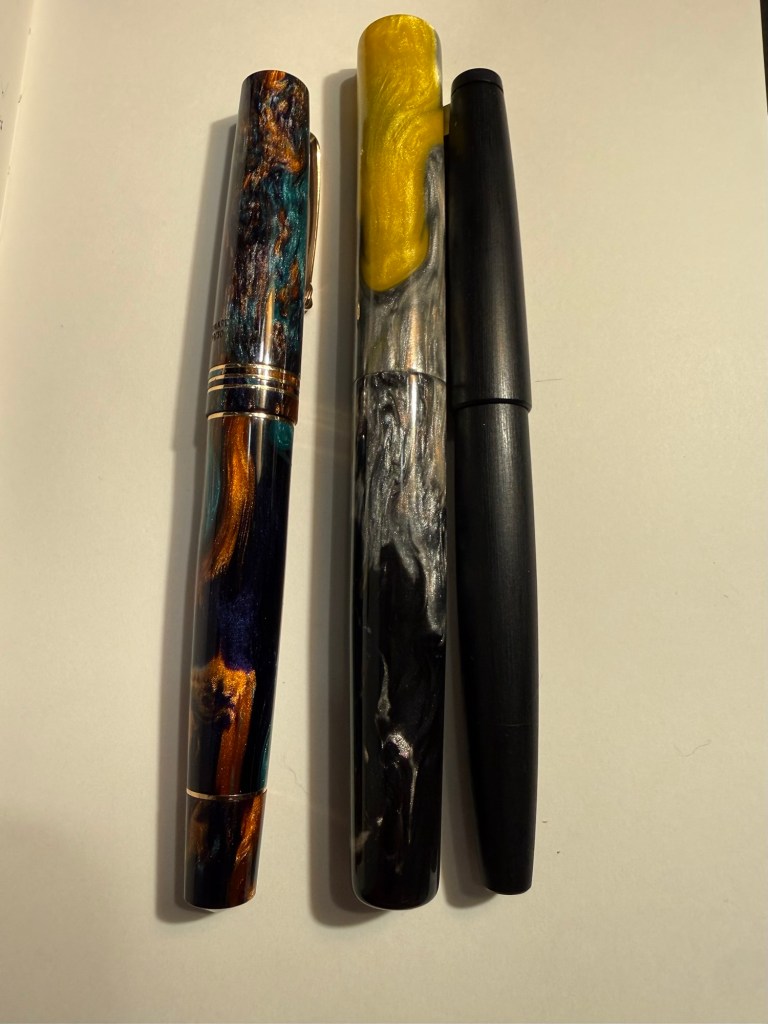
Leftover pens from left to right – Leonardo, Kanilea, Lamy 2000

Pocket Pens

I bought a good amount of ink cartridges when I was in Paris and I wanted to test a few of them out. I don’t usually ink up pocket fountain pens as I find them inconvenient to use (they require posting and unposting every time you use them), so it’s been a while since I’ve used these (with the exception of the Franklin Christoph).
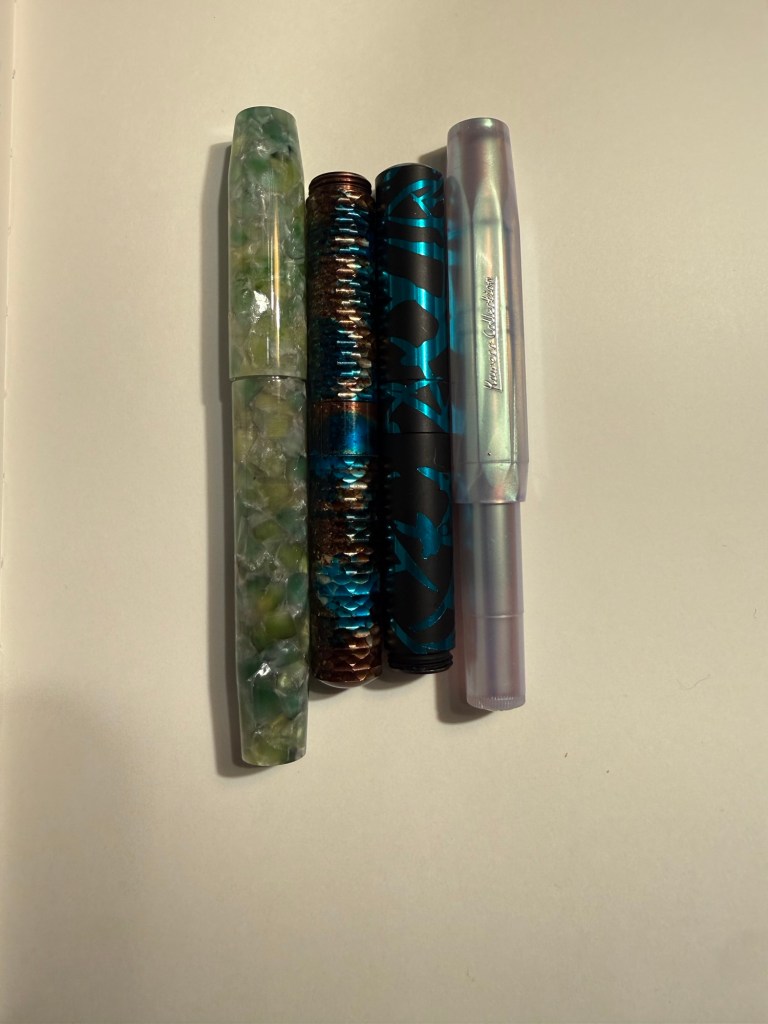
The pocket pens from left to right – Franklin Christoph, Pocket Six Patina, Pocket Six 3D Teal, Kaweco Sport

Schon Design Multi-color Pocket Six w/ Matching Grip, 3D Teal x Matte Black – fine nib – J. Herbin Bleu des profondeurs – my first Schon Design pen (I only have two) and the only one that I bought full price directly from Schon Design. The ink is a relatively new offering from J. Herbin (released in 2018) and wasn’t part of their offering when I started collecting pens and got into J. Herbin inks. It’s a good blue-black with a tiny bit of shading, and it’s a “wet” ink, which means that with more generous or wider nibs it’s likely to feather on the page.

Schon Design Faceted Multi-color Anodized Aluminum “Pocket Six” – Patina – medium nib – J. Herbin Orange Indien – my favourite pocket pen in terms of looks, but still overpriced for me, so I bought this one second hand. This ink is a hard, hard starter, and I’ve had a lot of trouble with it before. I don’t know how it behaves in bottle form, but I really don’t recommend these cartridges as there’s clearly a flow issue with this ink.

Kaweco Collection Sport Iridescent Pearl – medium nib – J. Herbin Rose Cyclamen – a really nice Kaweco Sport with a magenta ink. There’s some nice shading with this ink.

Franklin Christoph 45 Sage – Fine nib – J. Herbin Lierre Sauvage – the most comfortable and ergonomic pocket pen of the four that I have inked. Lierre Sauvage is the perfect green for spring and summer.
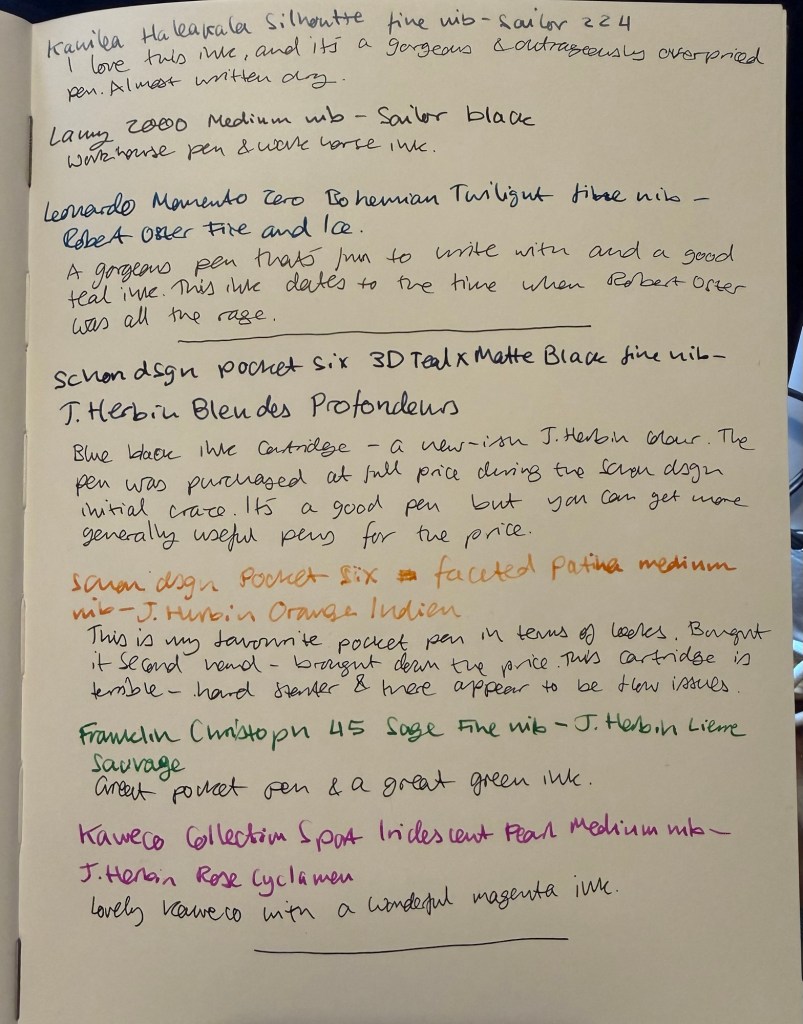
Writing Sample – Leftover pens and pocket pens

Full Sized Newly Inked Pens

I’m dividing this category into two – the “use the good china pens” and just pens that I wanted to use.

Just Pens
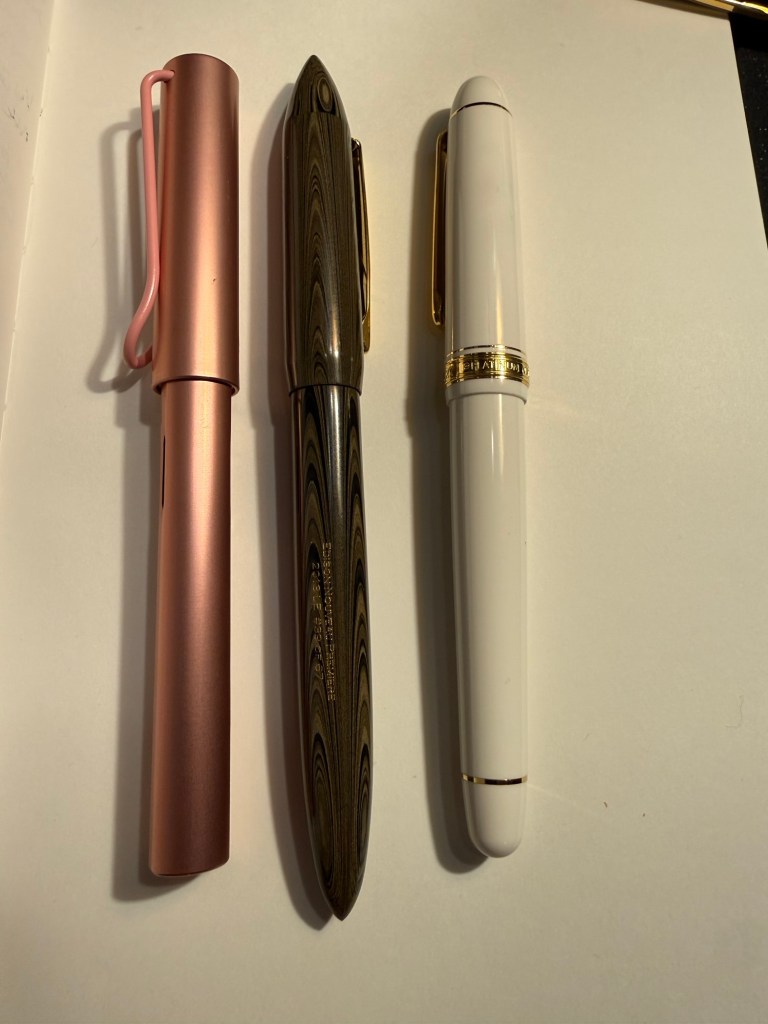
Just pens – from left to right – Lamy AL Star, Edison, Platinum 3776

Edison Nouveau Premiere Macassar Ebonite – 1.5 stub italic – Pilot Iroshizuku Yu-Yake – I had managed to misplace this pen and so for years it hasn’t seen use. It’s a 2013 limited edition Edison pen made in collaboration with Goulet Pens. I love the shape of this pen, and the ebonite feels warm and light and just right in the hand. The nib is wide and generous, and felt suitable for the Iroshizuku Yu-Yake orange ink that I just bought. This combination will be used for titles, highlighting and journaling.

Lamy AL Star Flamingo – fine nib – J. Herbin La Perle des Encres Rouge Amarante – A new Lamy AL Star. Do I need it? No. But I like Lamy pens and they’re solid enough yet not precious enough to be great for ink testing and as workhorses. The J. Herbin is a new ink, and I bought it mostly because it was the last bottle in this hue in the store. I love Diamine Amaranth and I’m curious to see how this ink measures up against it.

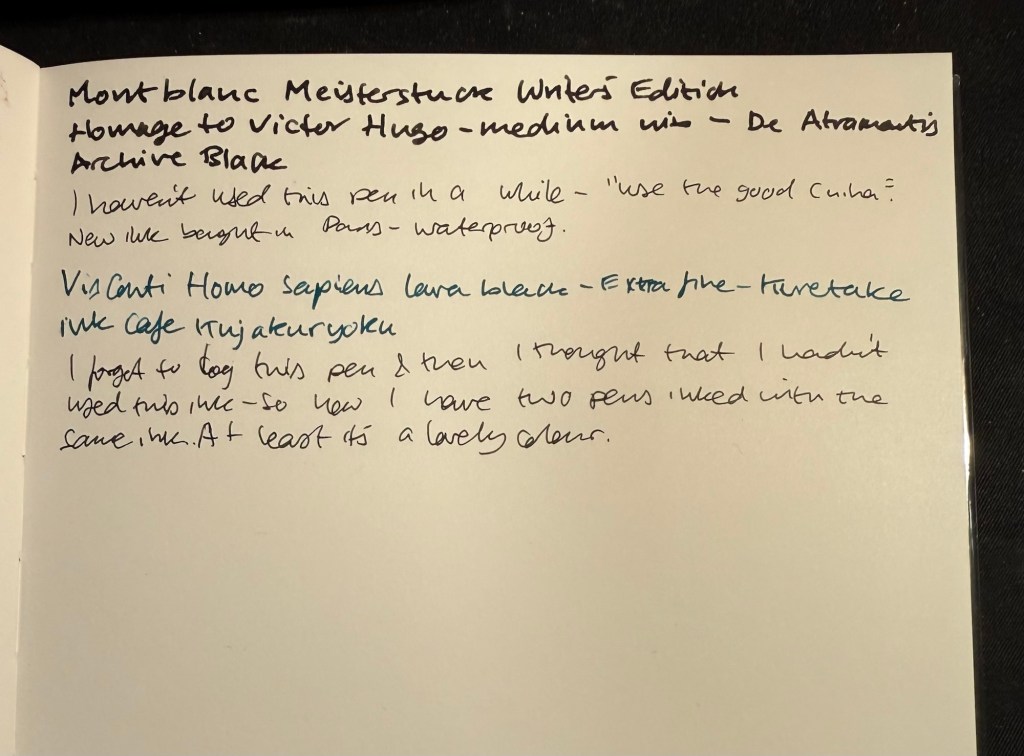
Platinum 3776 White – Ultra Extra Fine nib – Kuretake Ink Cafe Kujakuryoku – I haven’t used this fountain pen in a while. I love the nib but it does provide a lot of feedback when writing – not scratchy, but very close to it. I purchased four Kuretake Ink Cafe inks and wanted to use all of them – but I forgot to log this ink once I filled my Visconti Homo Sapiens. I then decided that I must have forgotten to use it, and so I inked up this pen. The result is two pens with the same ink in rotation at the same time – something that I don’t think I’ve ever done. At least it’s a colour that I love…

Use the Good China Pens
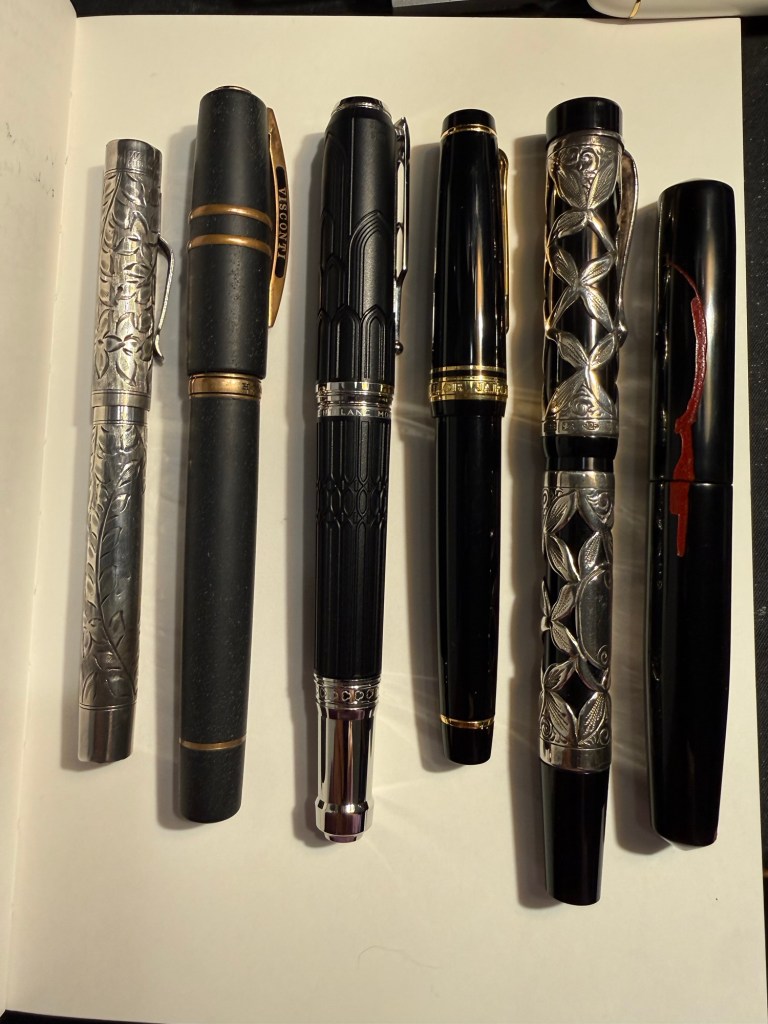
Use the good china pens – from left to right – Wahl Everysharp, Visconti, Sailor Pro Gear, Heny Simpole Jasmine pen, Montblanc, Nakaya

I recently filling in paperwork to get insurance for some of my most expensive pens – which made me realize that I haven’t used most of them in years. So I pulled some of them out and decided to “use the good china” because they’re meant to be used, not admired from afar.

Montblanc Meisterstuck Writers Edition Homage to Victor Hugo – medium nib – De Atramentis Archive Black – this is a relatively new addition to my “expensive pens” collection. I don’t buy limited edition Montblancs, and my other Montblancs are all vintage ones. I purchased this one at a discount on the last week that Mora Stylos in Paris was open, and even though it’s heavy and I don’t love the death mask on it, it commemorates the Notre Dame, and that’s one of my favourite spots in Paris. The ink is a new (to me) waterproof black from De Atramentis. I’m interested in seeing how it works for sketching.

Nakaya Cigar Piccolo Negoro Kise Hon Kataji – elastic flexible fine nib – Kuretake Ink Cafe Kuroganeiro – My one and only Nakaya, ordered from Mora Stylos and it was a whole thing to get it delivered. The price, the effort, and the fact that it was made to order makes it so, so special. It also has one of my favourite nibs – a bouncy flexible fine. The ink is a Kuretake Ink Cafe ink, this one a dark pine green.

Henry Simpole The Jasmine pen – medium nib – Kuretake Ink Cafe Shikon – A pen that is a work of art. I used to visit Henry the Pen Man’s stall every year in Portobello Road, and I always wanted one of his overlay pens. Eventually I purchased this one, and I regret not buying another one when I had the chance. It’s a Conway Stewart button giller with a fantastic gold nib and a wonderful sterling silver overlay designed and made by Henry. The ink is a lovely dark purple, one of the four Kuretake inks that I purchased.

Sailor Professional Gear Sapporo – Naginata Togi Cross Emperor – Kuretake Ink Cafe Ebicha – a nib that has a pen attached to it – that’s the story of this pen. I purchased this pen solely for the Naginata Togi Cross Emperor nib, which is a nib that behaves more like a brush than a standard fountain pen nib. The Ebicha ink is an interesting maroon colour that shows a lot of shading with this nib. It will be interesting using this pen after so many years, as the nib takes some getting used to in terms of writing angles.

Visconti Homo Sapiens – Extra Fine nib – Kuretake Ink Cafe Kujakuryoku – The original Visconti Homo Sapiens, bought at Mora Stylos the year that it was issued and took the pen world by storm. The lava like material, the brass, the nib, the weight – this is a pen with a presence. It will be interesting comparing it to the Platinum 3776 as they are both inked with the same turquoise/teal ink – Kujakuryoku.

Wahl Eversharp (Vintage) Sterling silver floral – fine nib – Waterman Mysterious Blue – I wanted to ink up a vintage pen, and this one is very “bling-y” and sports a truly flexible vintage nib. It’s also a lever filler, which I hate cleaning out, so Waterman Mysterious Blue (i.e. Blue Black) to the rescue. This ink is my benchmark, my desert island ink, the one ink that I can trust in any pen.
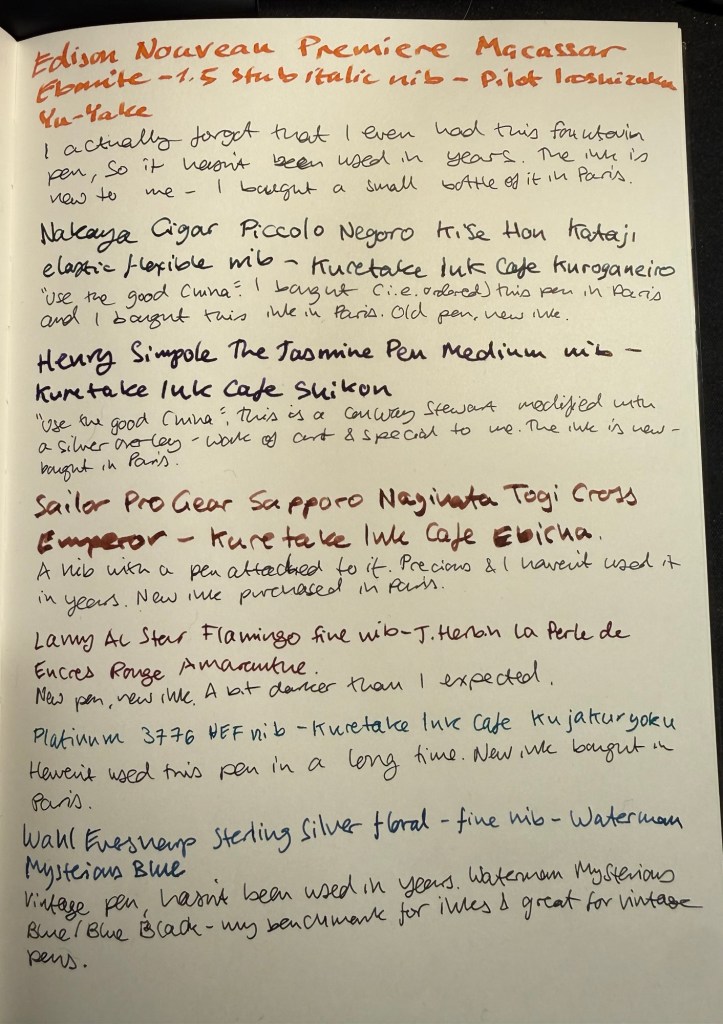
Writing sample – newly inked full-size pens part 1
Writing sample – newly inked full-size pens part 2

This was a long list of pens and a long post – I hope that you enjoyed it, and I hope that you have some nice pens inked up and ready to use.

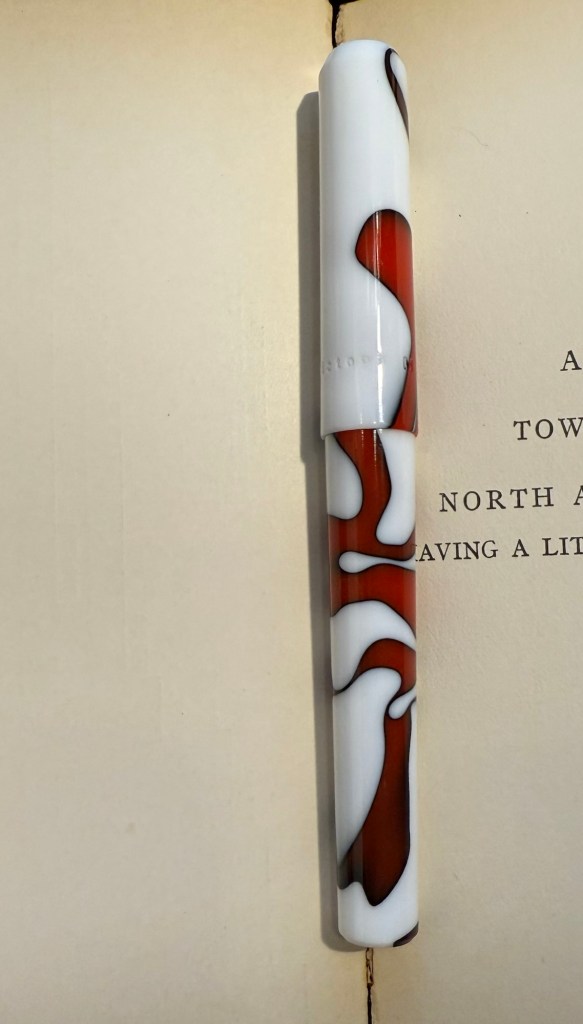
Currently Inked Pens March 2025

Of February’s pen lineup only two pens remain inked, the Parker 51 with Waterman Purple, and the Leonardo Momento Zero Bohemian Twilight with Pilot Iroshizuku Tsuki-yo. As they’re both running low on ink, it’s time for a new pen lineup, with a slightly different theme than last month’s one:

  • All the pens are modern (last time I had more vintage pens than modern ones in rotation) and ones that I haven’t inked in years.
  • All the inks are ones that I haven’t used in years or ever, apart from one that was in the last rotation but I still haven’t figured out so it got another go.
  • The ink colours are much brighter than those that I used in February.

Here’s March’s rotation:

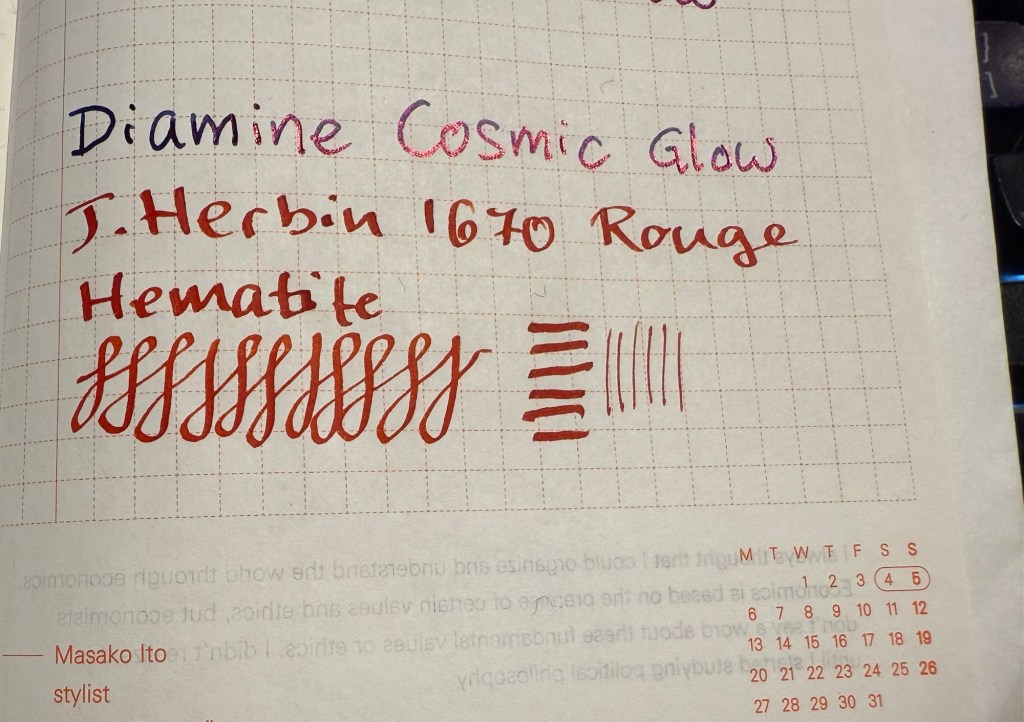
Writing sample on Midori MD Cotton paper

Here’s a bit more about every pen and ink combo:

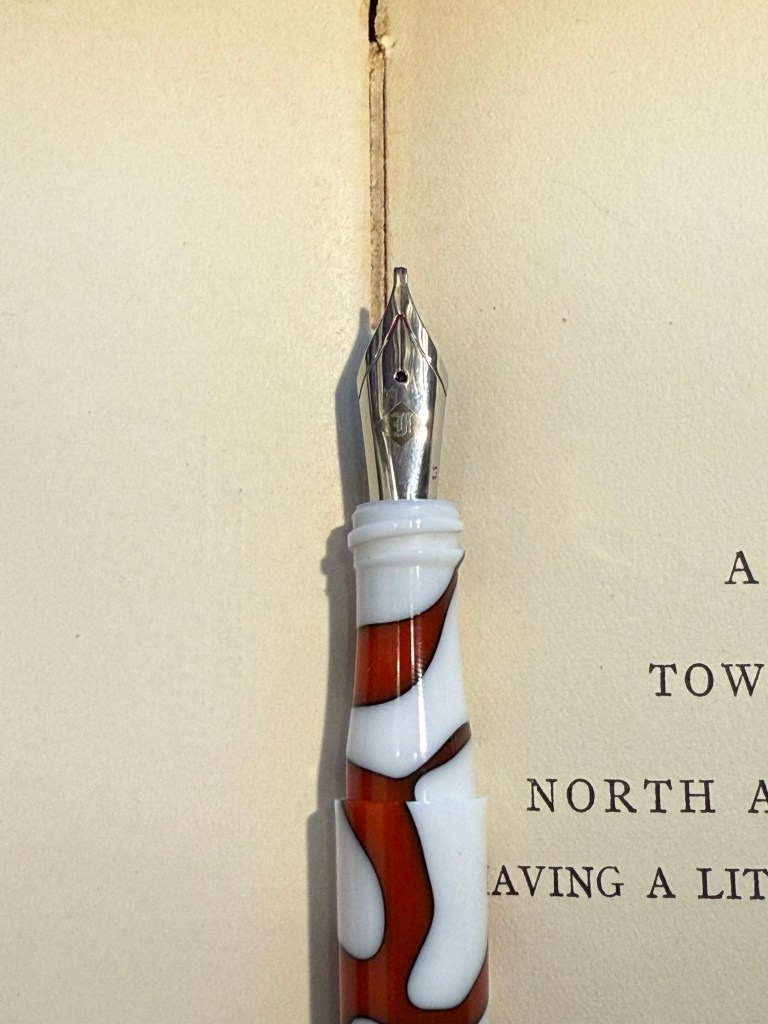
  • Franklin Christoph 03 modified prototype- Red/White/Black motion with a 1.1 HPSteel cursive calligraphy nib. This is a new pen that I bought last year as my chemo anniversary pen (I buy myself a present every year to mark the occasion). I love the unusual resin colour and pattern, and I like FC’s HPSteel 1.1 nibs. They are just wide enough to really show off the ink without becoming a nightmare to use because it takes ages for the ink to dry.
    As nice as the pen is (and it is), the ink is the star in this one in terms of interest: it’s the ORIGINAL J.Herbin 1670 Rouge Hematite, which means that it has NO GLITTER and NO SHEEN. It’s just a deep, bright red with some nice shading and good outlining, but it isn’t full of gold glitter and sheen to the point where you can’t see the base colour. Yes, this is also the bottle that had the problematic crumbly wax cover on the cap, but I really think that I prefer this version to the one they issued later (I have both). I don’t normally use red inks, but this one was perfect for this pen.
The FC 03
The HPSteel 1.1 nib
Original Rouge Hematite compared to Cosmic Glow on original Tomoe River paper. Note the lack of sheen or shimmer.
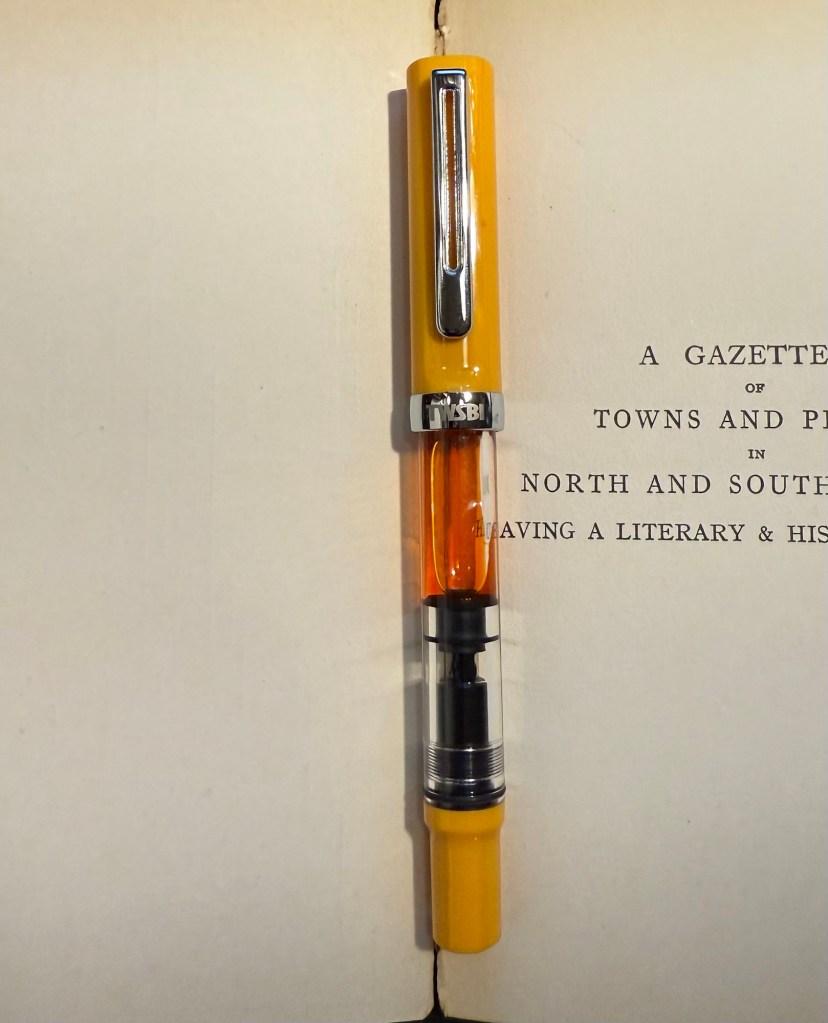
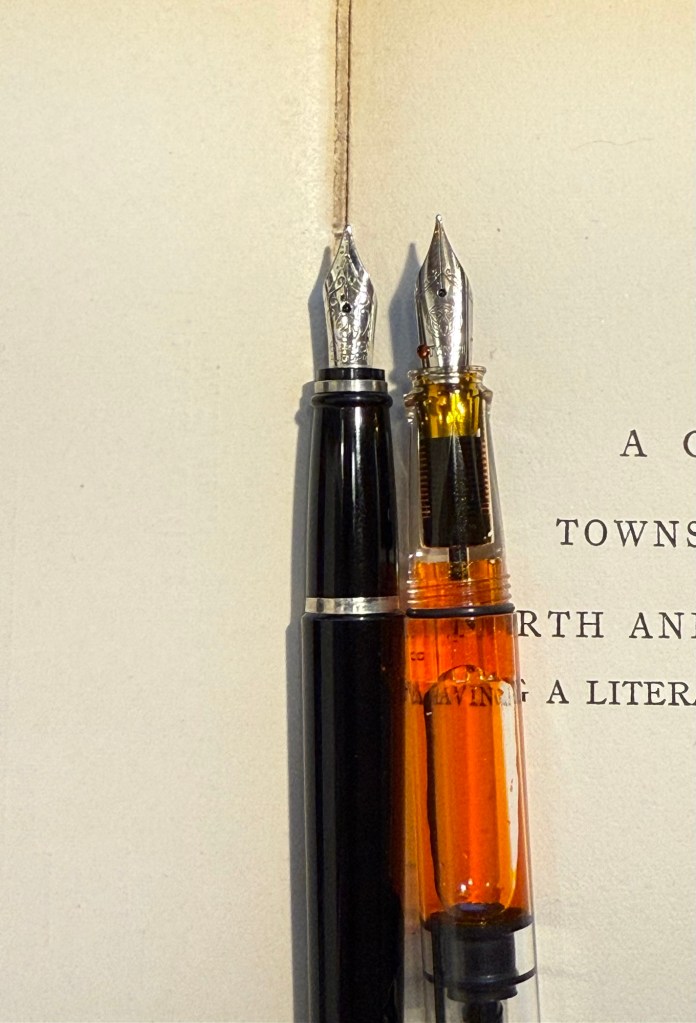
  • TWSBI ECO Saffron fine nib filled with Rohrer & Klingner Helianthus ink. I use yellow inks even less often that I use red inks, but this ink is fairly readable for a yellow ink. It is, however, not going anywhere near a vintage pen as it has a tendency to crust over (as many yellow inks do). I wanted something bright, cheerful and different, and this ink checked all three. The TWSBI ECO is a phenomenal pen for those starting out with bottled fountain pen ink, and I can’t recommend it enough.
TWSBI ECO Saffron
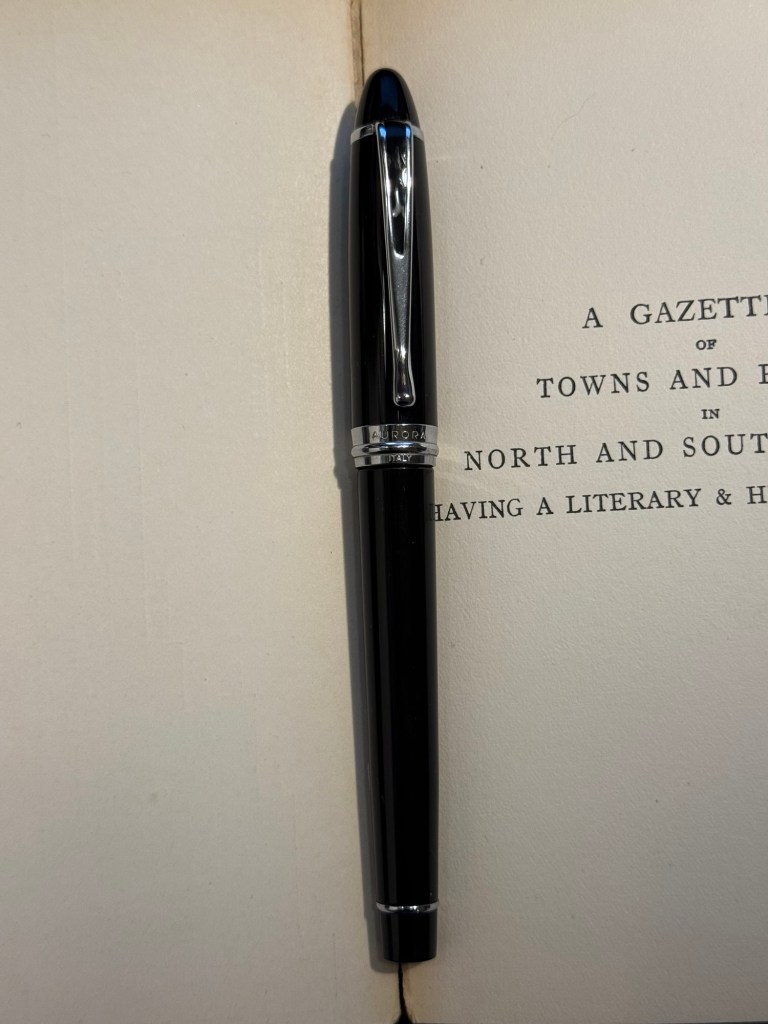
  • Aurora Ipsilon medium nib with Rohrer & Klingner Alt-Goldrün ink. This is my one and only Aurora pen, which I bought years ago in Florence, Italy. Aurora nibs are nice enough, but the pens are priced well above what I believe that they are worth, so I have steered clear of them over the years. The Ipsilon is small pen, but you can’t post it, which is annoying for such a small pen. R&K Alt-Goldrün is a fantastic ink colour – a non standard green with plenty of shading and character – and the only reason I haven’t used it more is because it was tucked away behind two rows of other ink bottles. If you are just starting out with green inks, give Alt-Goldrün a try.
Aurora Ipsilon
The Ipsilon nib looks ridiculously small but it’s just the design of the section that makes it appear that way. Comparison photo to a TWSBI ECO nib.
  • Leonardo Momento Zero Blue Hawaii Fine nib with Diamine Steel Blue ink. I have used this pen fairly recently compared to some of the others in this rotation, but the ink has been one that I actually forgot that I have. I love teal and turquoise inks, and Diamine Steel is a beautiful member of this group. There’s a hint of shading with it, and it just pops off the page so nicely. If you want a different take on “boring blue” inks, I highly recommend it.
Leonardo Momento Zero Hawaii
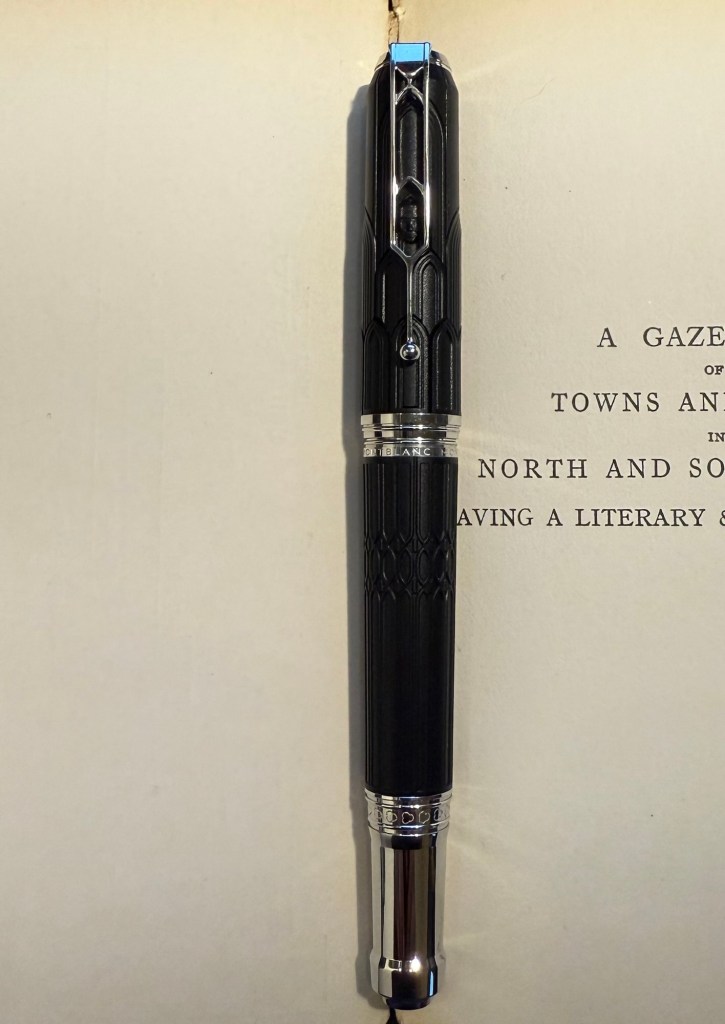
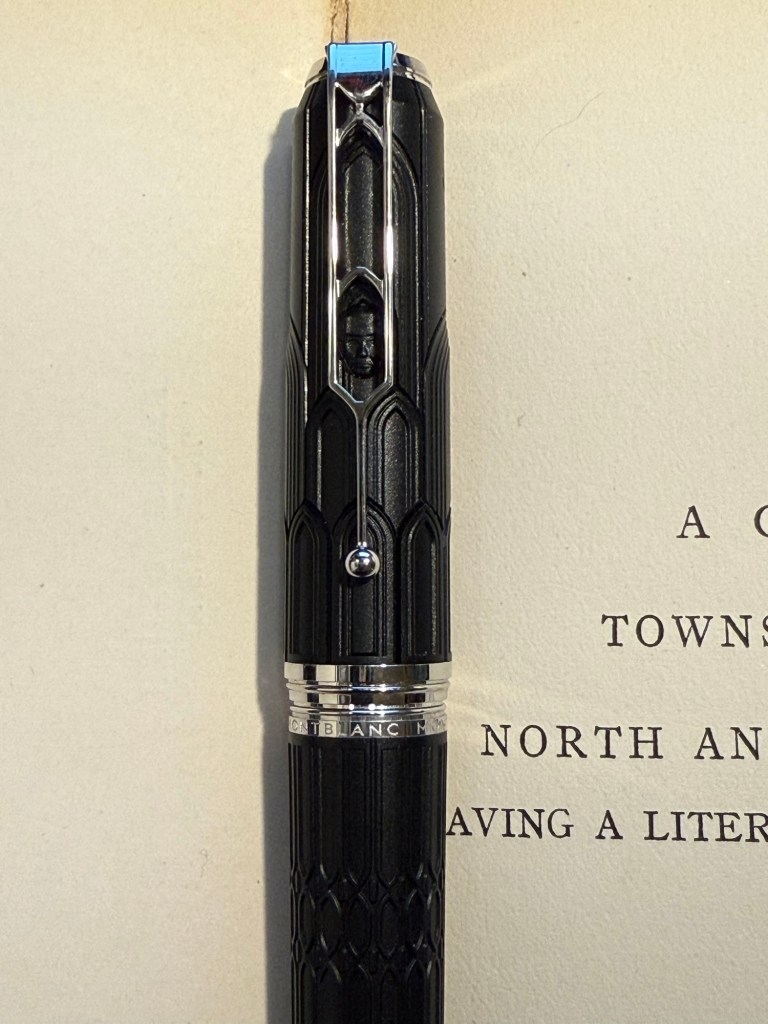
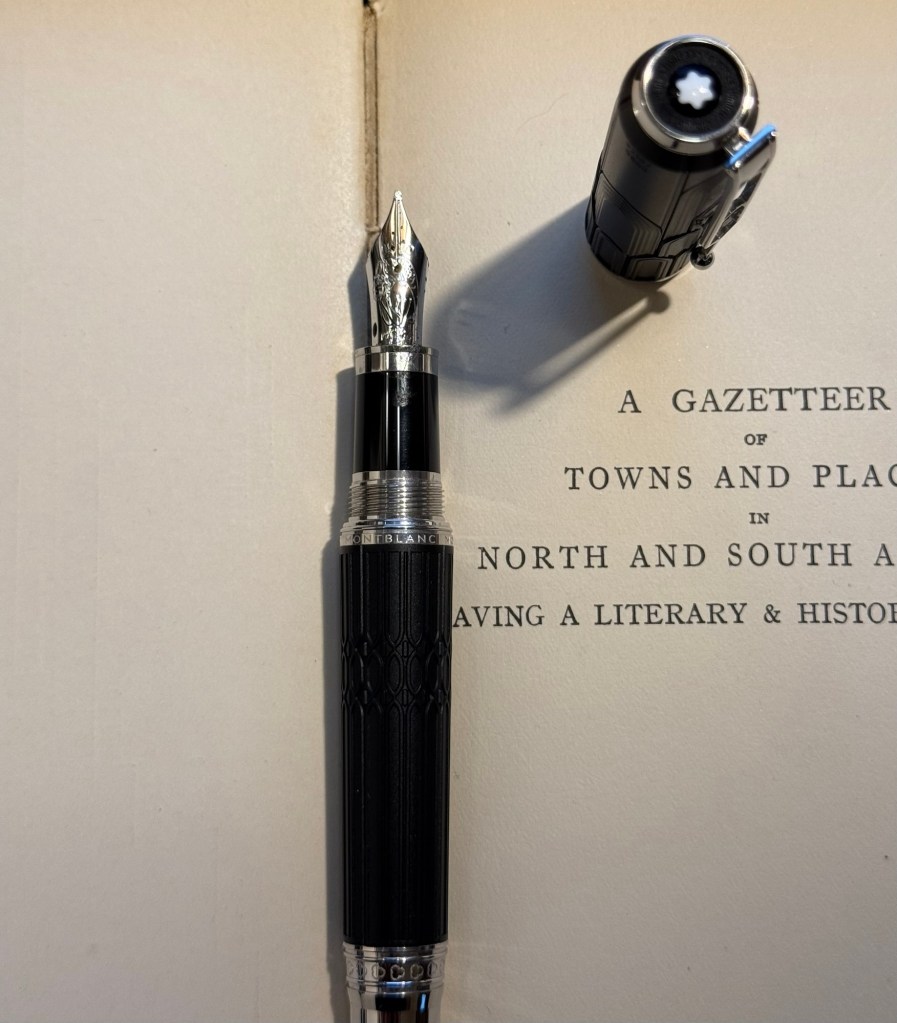
  • Montblanc Writer’s Edition Victor Hugo medium nib with Montblanc Around the World in 80 Days ink. I bought this pen in Mora Stylos in Paris before they closed mainly because I adore the Notre Dame de Paris cathedral and it’s featured on this pen. Hugo has the honour of being the saviour of this extraordinary cathedral, and though I shy away from Montblanc limited editions (talk about overpriced) I thought this one was worth purchasing. The ink was last in rotation, in a vintage Montblanc, last month. I just can’t get over how unrelated it is to the green-gold elephant on the box, and I’m not sure what to make of it. I was expecting it to be more like Alt-Goldrün than like the bluish-grey (Payne’s Grey really) that it is.
The Montblanc Writer’s Edition Victor Hugo
The Victor Hugo death mask on the cap
The nib, which features Victor Hugo
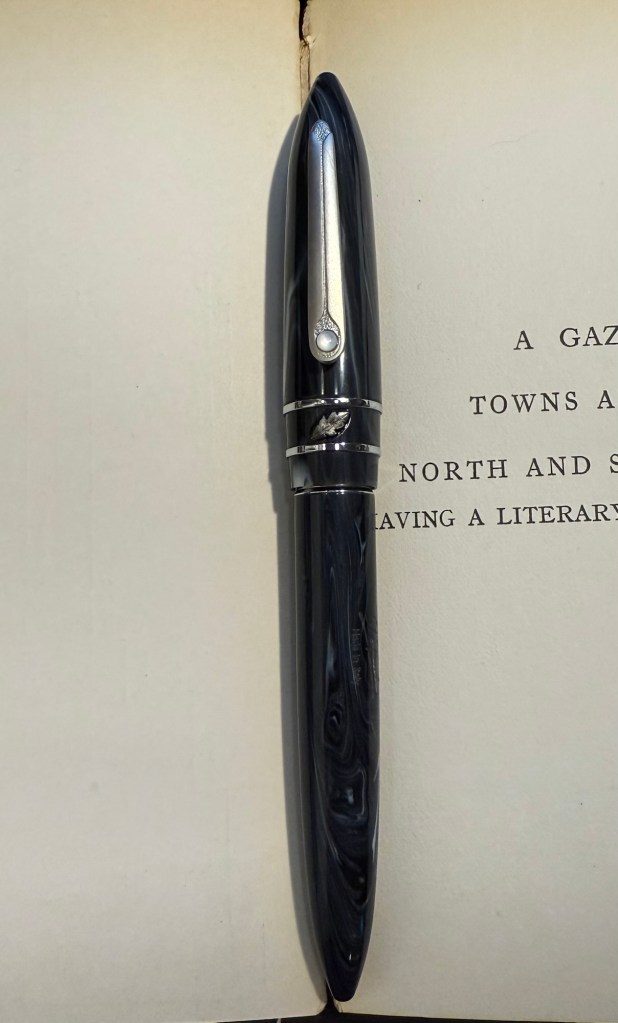
  • Finally, speaking of a pen and ink combo that have gotten “lost” in my collection: the Stipula Model T marbled grey pen was also an Italian purchase, and it has a very peculiar fine “flexy” titanium nib. I would characterize the nib as springy, and as my other titanium nib Stipula does, it squeaks sometimes as you write with it. The ink is one that I bought in 2013 in Fahrney’s pen store in Washington DC. Since then I haven’t opened it and used it, mainly because Fahrney’s Tempest Blue is a blue ink, and I don’t use blue inks often. It shades nicely, but other than that it looks close enough to my benchmark blue, Waterman Florida Blue (now renamed to Waterman Serenity Blue), for me not to bother using it often. Waterman Serenity Blue is a best-in-class blue in my opinion because it’s so well behaved, gentle and easy to clean out of pens that you can safely use it in any pen that you have, particularly vintage ones.
The Stipula Model T. A very sleek design.
The Model T titanium nib.

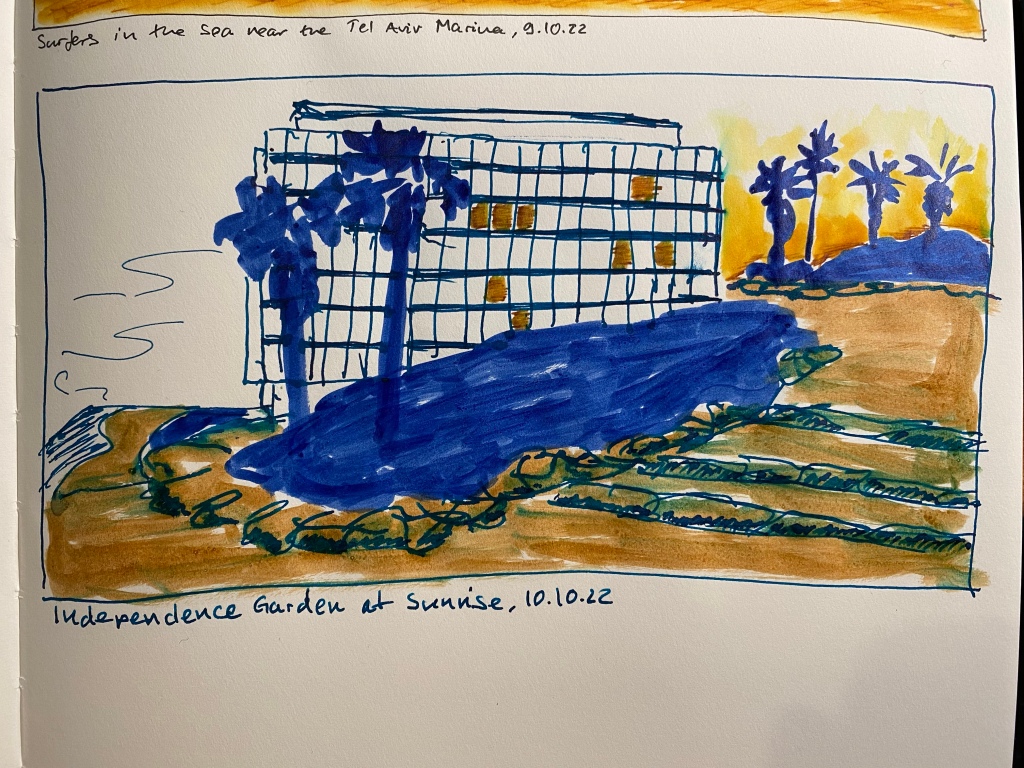
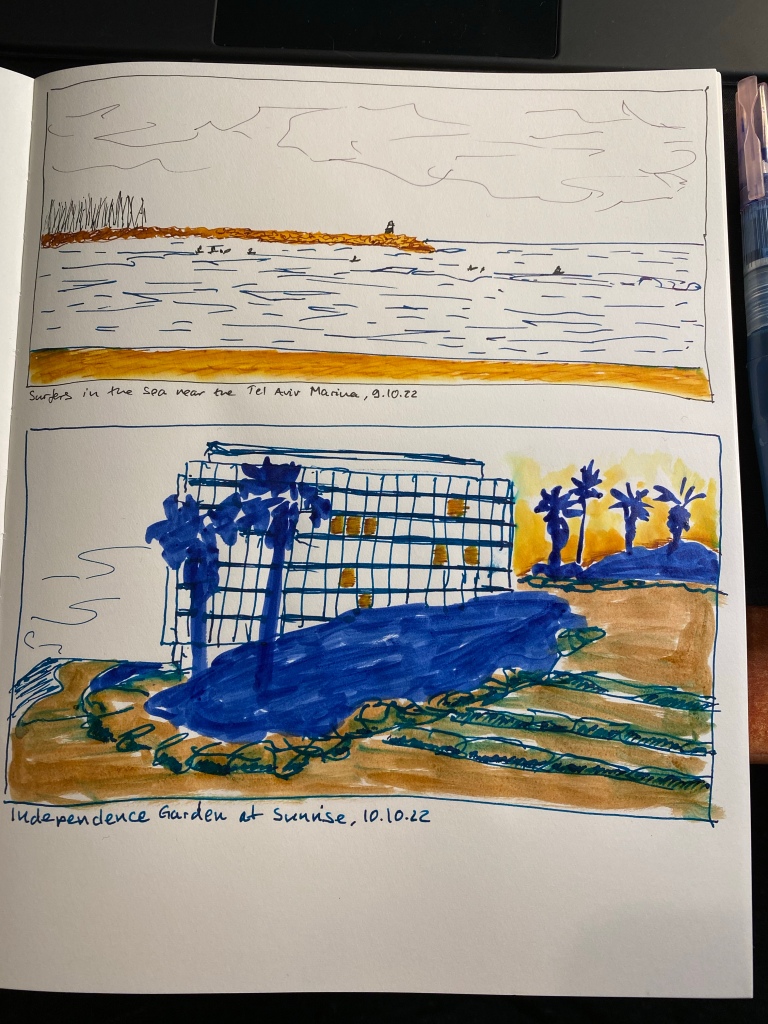
Inktober Day 10: Sunrise of the Independence Garden

Had an unusual start to the day, with an early morning walk before my usual morning run. I’m embracing the spirit of experimentation with these, so this one was sketched using diluted Sennelier shellac based ink (non fountain pen friendly) in waterbrushes, paired with a fine nibbed TWSBI ECO filled with J. Herbin Emerald of Chivor, and a Diplomat Aero with a fine nib filled with Colorverse Golden Record. The Midori MD Cotton paper does not take nicely to any amount of moisture and there was bleed through (and of course see through) to the other side of the page, but in general it held up much better than I expected.

Independence Garden at Sunrise. Playing about with various kinds of inks.

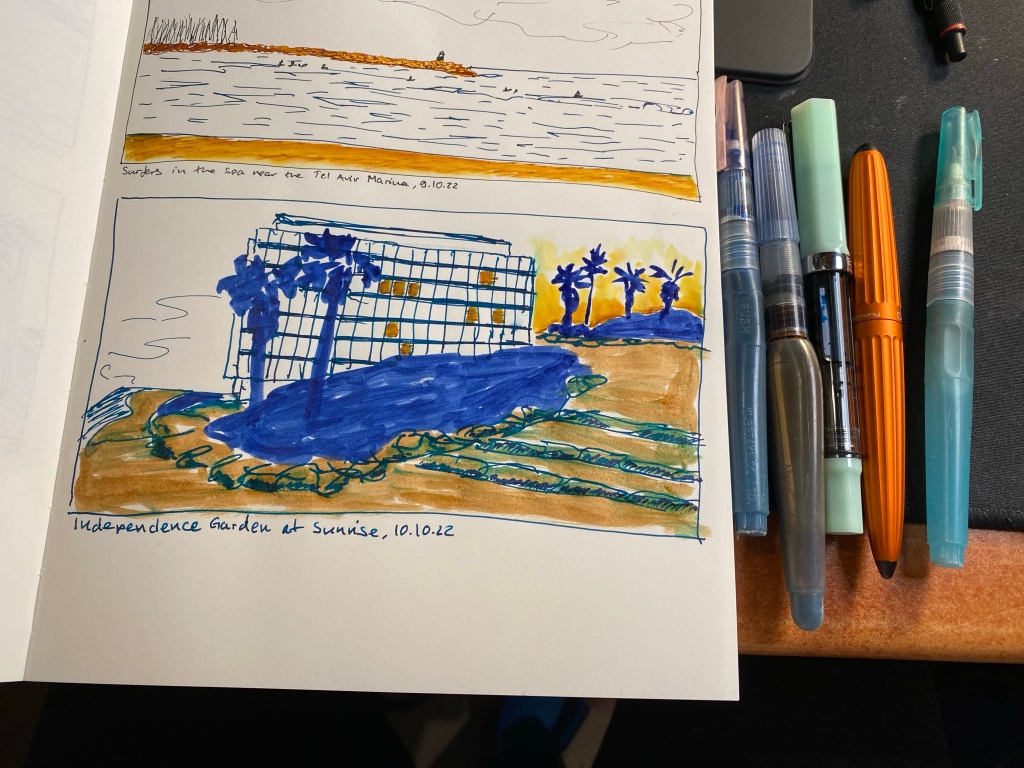
Here are all the tools used for this quick sketch:

From left to right: waterbrush filled with blue in, waterbrush filled with sepia ink, TWSBI ECO, Diplomat Aero and a waterbrush filled with water.

And here’s the complete page:

Sketchbook Design Goals

My sketchbook design course goals, and a drawing of the Phoenix community garden in London.

The first week of Liz Steel’s Sketchbook Design course is underway, and so far I’m having a blast and drawing much more than I used to. I’m also learning a lot not just from Liz, but also from the other participants in the course. One of exercises this week was to create a page with our Sketchbook Design course goals, and here is mine. I also drew the Phoenix Community Garden in London’s West End to accompany my goals. Hopefully I’ll be able to return to it later this year.

Tools used: Stillman & Birn A5 Beta, Lamy Safari pens with J. Herbin Bleu Pervenche and Noodler’s Black, Schmincke watercolours.

TWSBI GO and J Herbin Caroube de Chypre Ink Review

I’ve tried shimmering fountain pen inks (inks with little sparkly bits in them) only once before, when J Herbin first started producing them, and they ruined a Lamy Safari pen and converter with their non-removable sparkle. Over time more and more reviews came out lauding these pretty, shiny inks and saying that they’re completely fountain pen friendly nowadays, yet I kept my distance. No amount of glitter was worth another ruined pen, after all.

Enter the TWSBI GO, which is a a TWSBI nib connected to a toy pen that is so cheap that it practically has “Bay State Blue ready” written on it (I still don’t recommend going anywhere near the stainiest of stainy inks, no matter how gorgeous it is).

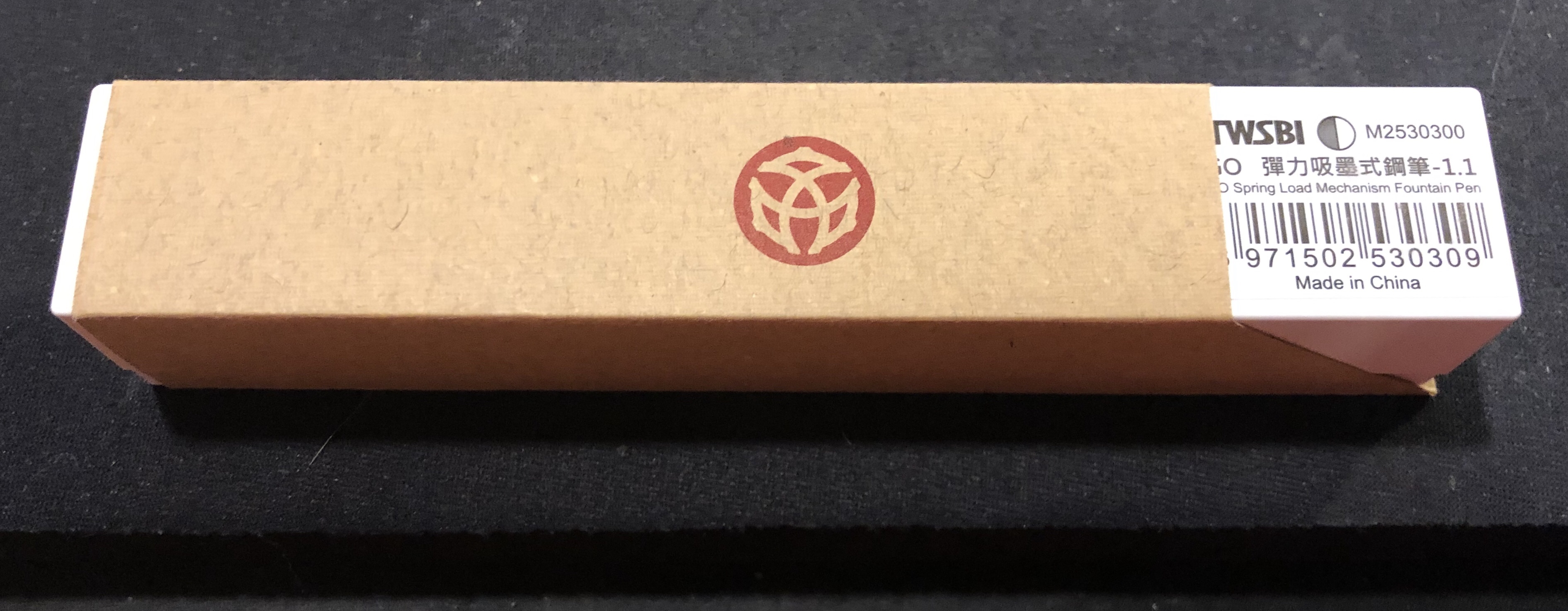
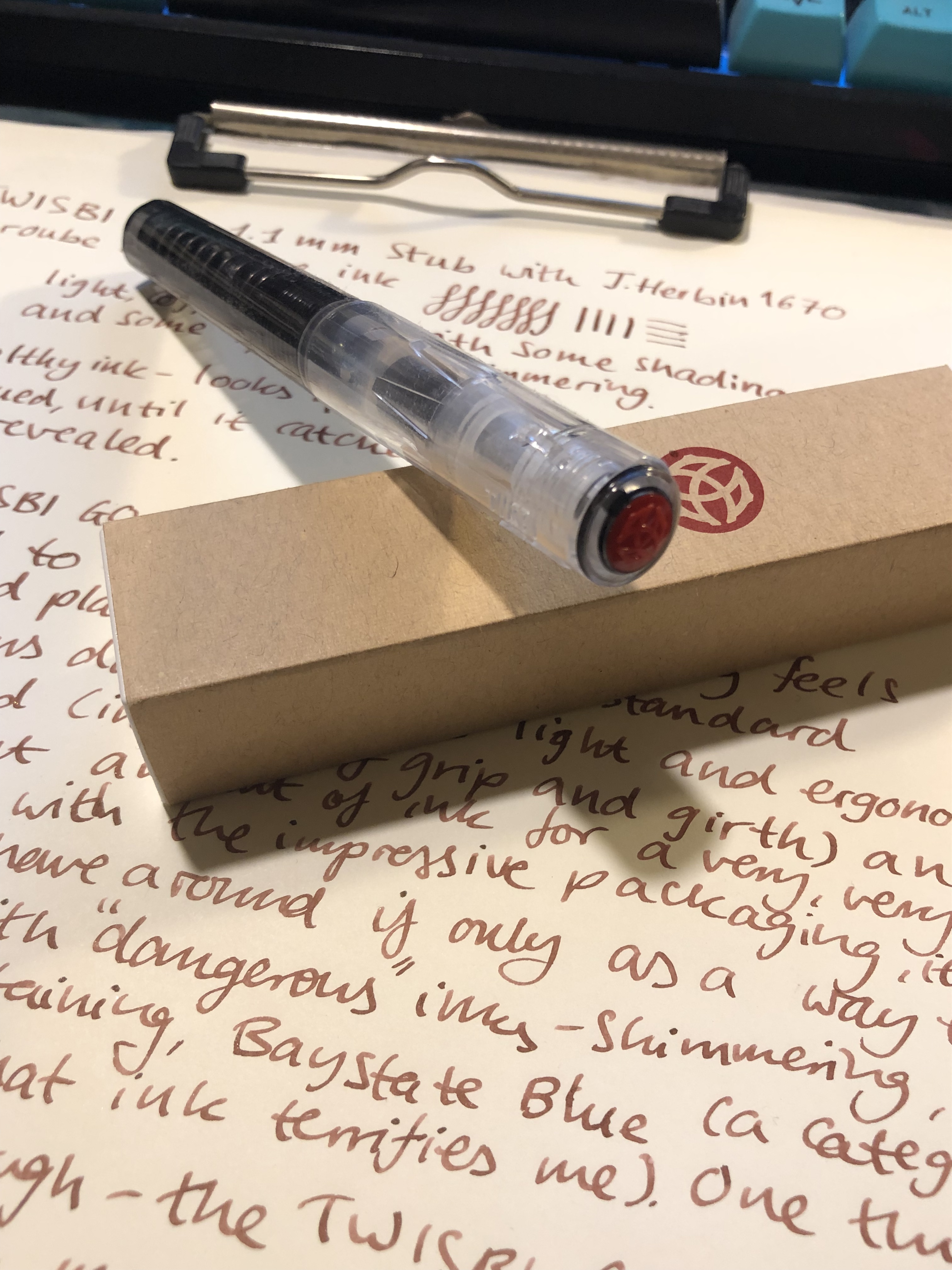
The packaging is bewilderingly good for such a cheap fountain pen. A cardboard sleeve over a plastic box that puts the cardboard Lamy Safari packaging (and price point) to shame.

Cardboard sleeve with TWSBI logo

Solid plastic box for the pen. I’m not a packaging person, but this is disproportionally good for the price.

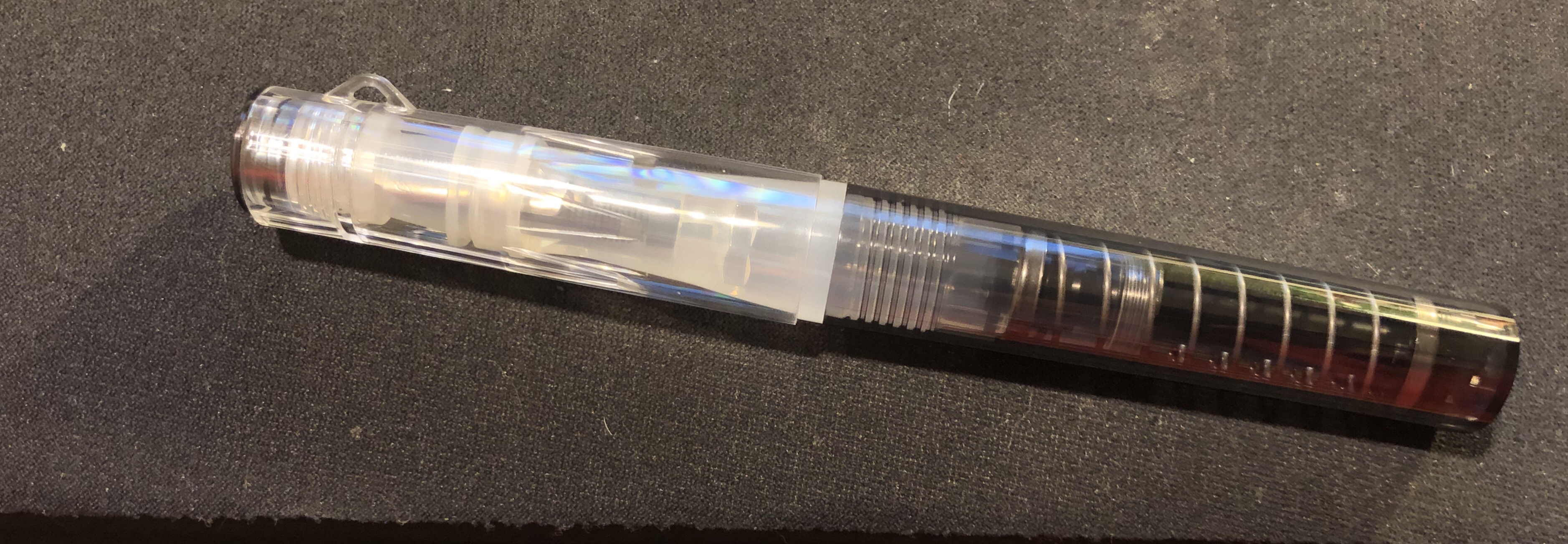
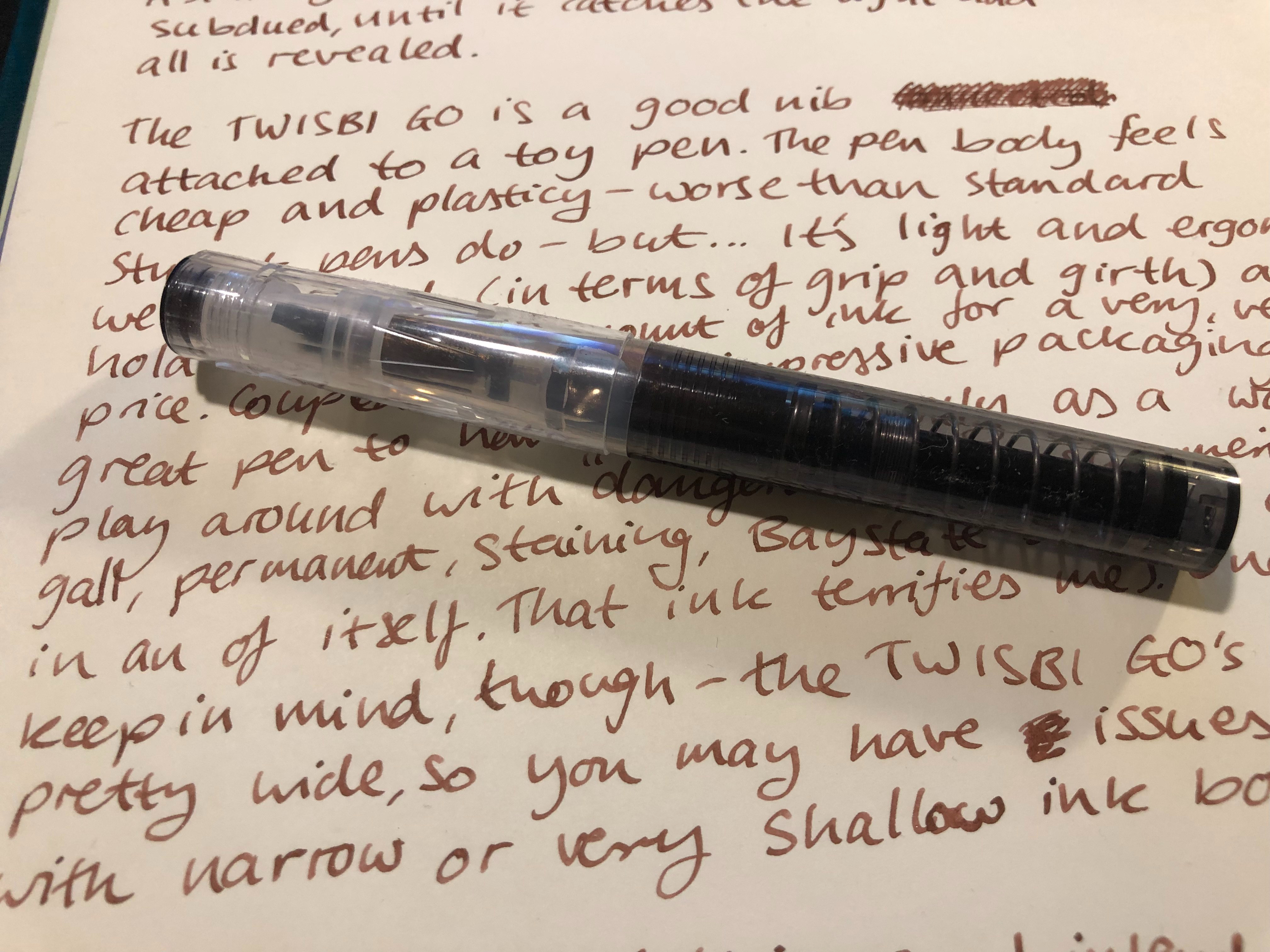
Then you open the box, and laugh. The pen looks and feels like a child’s toy, with its cheap feeling plastic, its light weight and ridiculous spring filling mechanism. It takes the ugly duckling bit a step beyond what even other TWSBI functional but ugly pens, like the ECO, have.

Ugly.

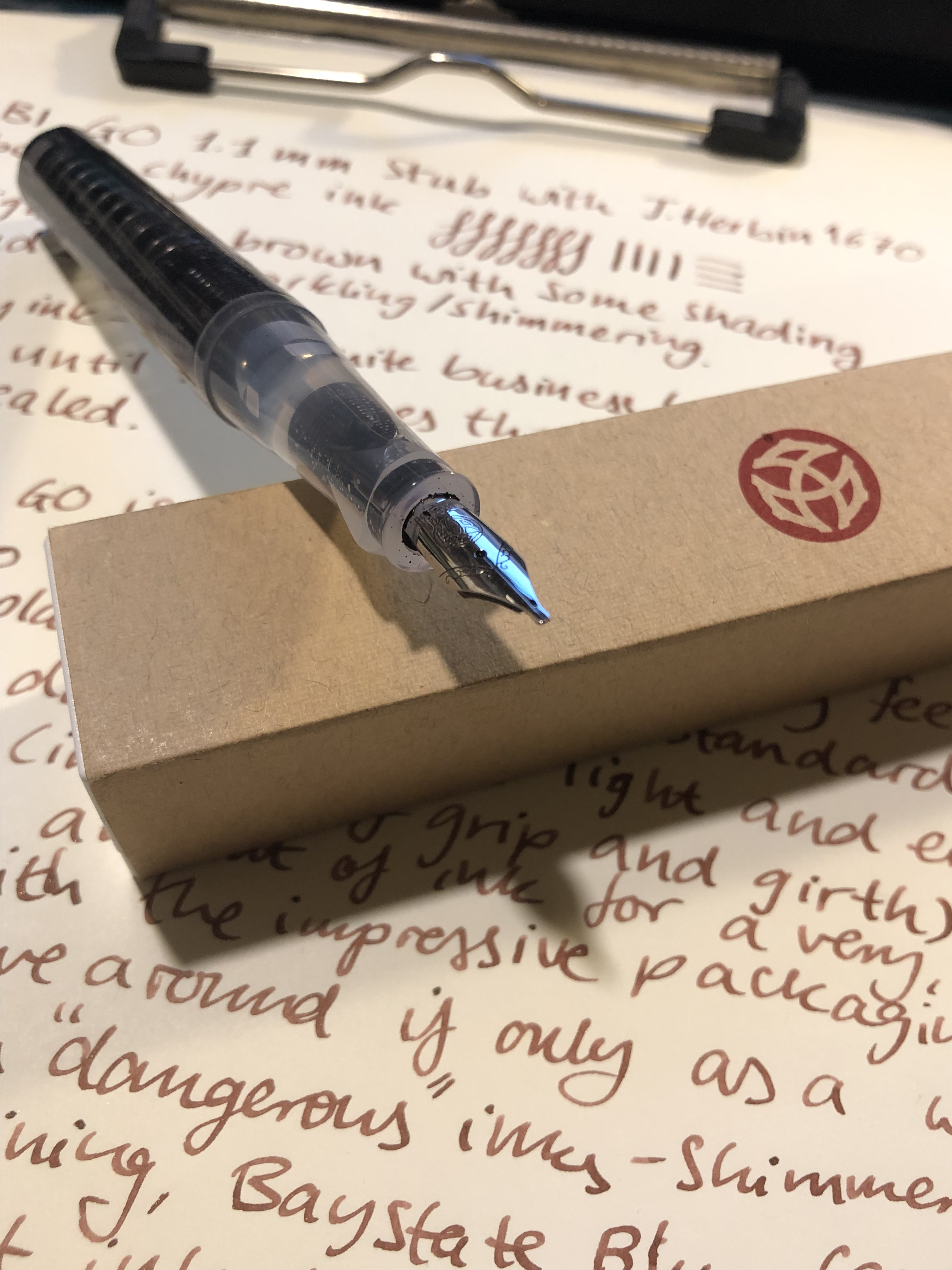
But then you start to write with it, and the silly little body has good ink capacity, is easy to fill, and most importantly, it has a TWSBI nib. TWSBI nibs are phenomenally good for the price, and they come in 1.1 stub sizes, which are super fun to use.

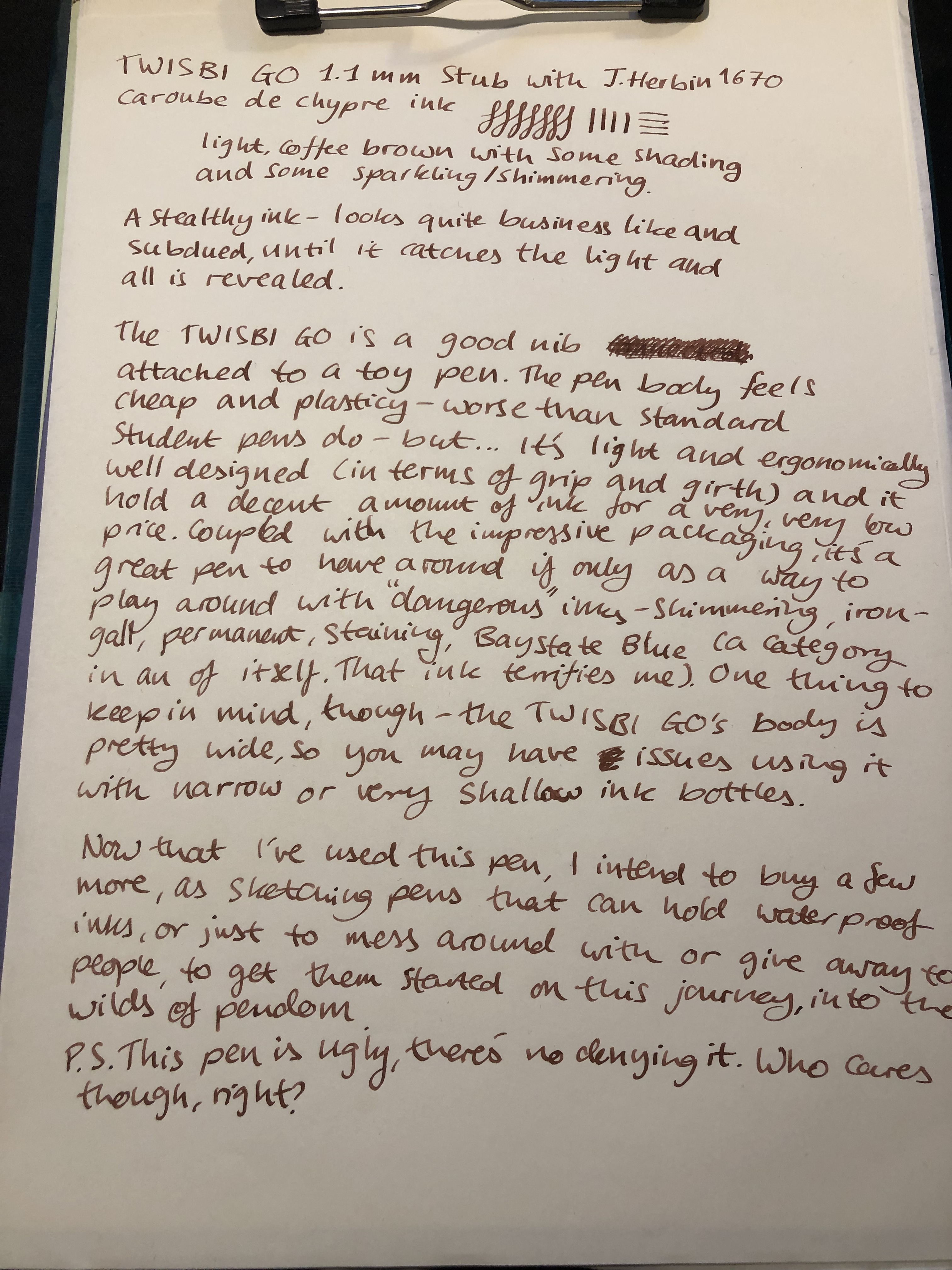
Here’s a writing sample with a TWSBI GO 1.1 stub, which I did late at night when I was pretty tired, and so I spelled TWSBI phonetically, so whoopsie.

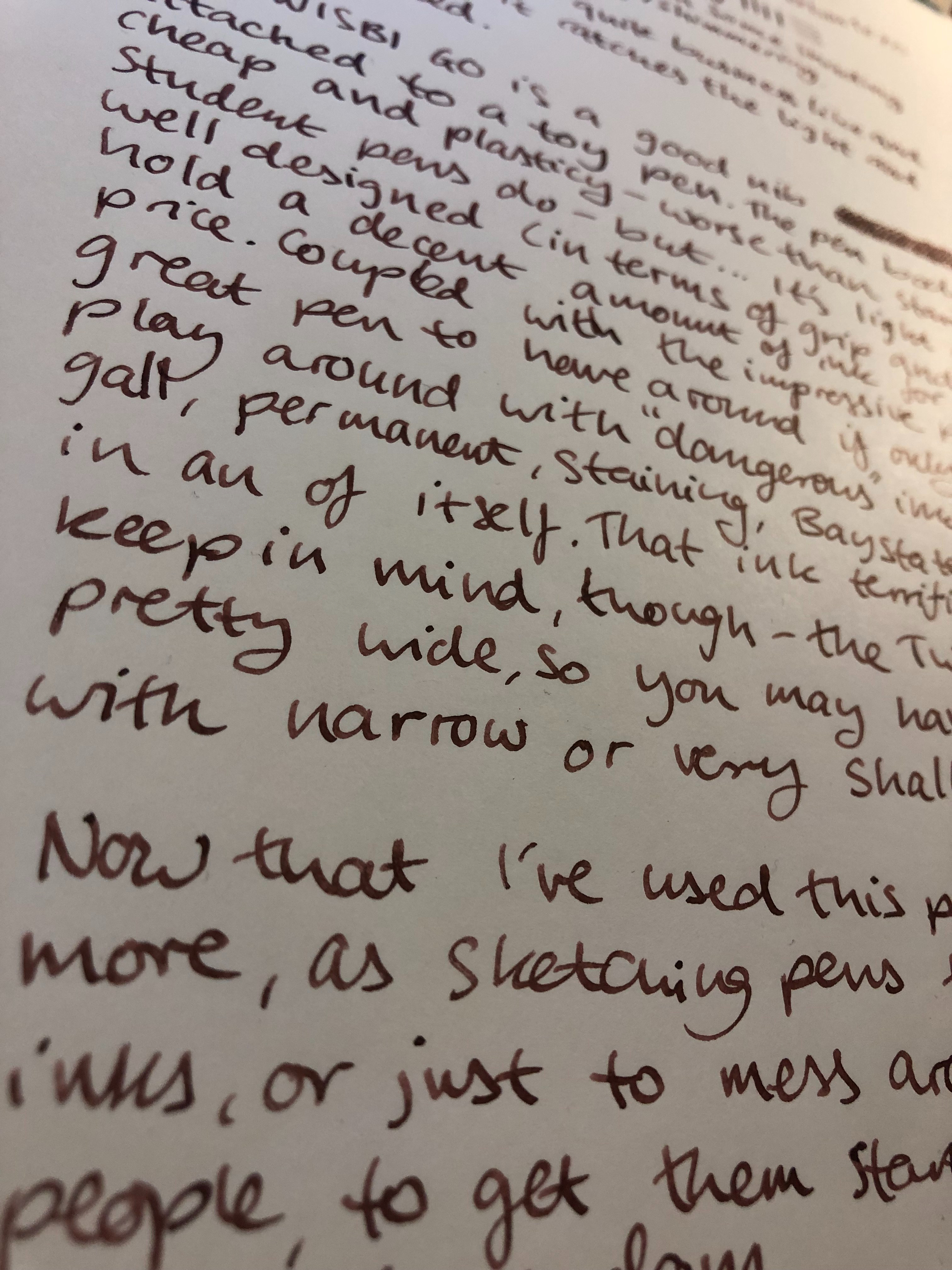
The ink is J Herbin’s Caroube de Chypre, which I had bought but not yet used. It’s a light, coffee brown ink with a medium amount of shading and some gold sparkle that is just-impossible-to-photograph-unless-you-pour-half-a-bottle-of-the-stuff-on-the-page-so-you’re-going-to-have-to-trust-me-on-this-it-is-pretty.

Writing sample.

Can you get away with using this ink in a work setting? I believe you can, since the colour itself is pretty tame and the sparkle isn’t in your face, but just glints in the light in certain angles.

img_5626.jpg
This photographed darker than it appears in reality, but is shows some of the depth of shading that you can expect to see with this ink.

img_5627.jpg
Ugly pen, ugly handwriting, pretty ink.

TWSBI logo on the cap.

The nib, which is the main reason to buy this pen.

Pen grip and pen feed, with ink capacity on display.

The pen itself is a paragon of practicality: super light, super comfortable grip, good ink capacity, excellent nib and feed, easy to use filling mechanism. For less than $20 that’s a tremendous feat on TWSBI’s part and it makes this pen a “no-brainer”. Whether you’re a beginner or a hardened collector, you should have at least one of these in your pen case. It’s a great workhorse, good for experimenting with “dangerous” inks (keep well away from Bay State Blue, yes you, I’m talking to you. I can see what’s in your shopping cart), good as a loaner pen to get more people into the wonderful world of fountain pens, and even good for people experimenting with nib grinds. In the beginner fountain pen category it is uglier than even the platinum preppy, but when it comes to bang for your buck, this pen puts all others to shame.