A Friendly Suggestion for Beginner Vintage Fountain Pen Users
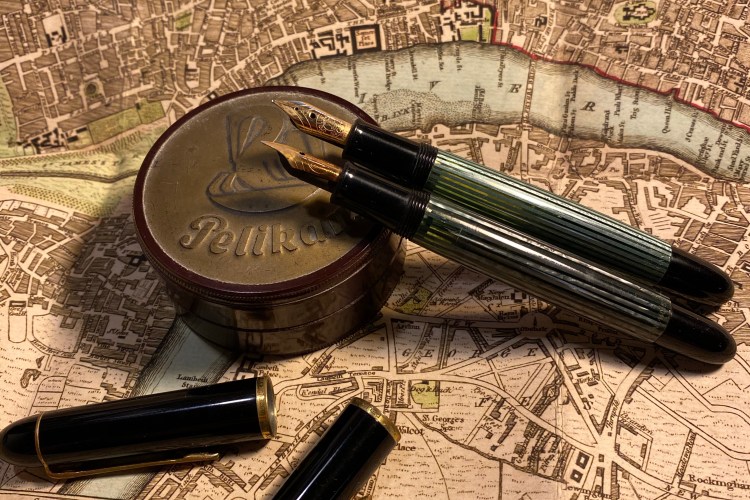
I’ve been catching up on the Pen Addict members-only “Friend of the Show” podcast (highly recommended), and person after person said that they prefer modern pens, and they have a vintage pen, an Esterbrook, which they don’t really use. That people’s first vintage pen is an Esterbrook didn’t surprise me, as it’s a great little pen at a very compelling price, and it can be easily modified to suit your writing style by swapping out the nib. What did surprise me a little is that people aren’t really using the Esterbrooks that they have.

Then again, I own five Esterbrook pens:

Yet I haven’t used them in years. They all have nibs that I carefully selected to fit my writing style perfectly, and still I haven’t used any of them since 2016 or so. And the reason I don’t use them is the reason why I’m going to suggest to people starting out with vintage pens to maybe not pick the Esterbrook as their first vintage pen, ubiquitous and cheap and beautiful as they may be.

They’re lever fillers, every last one of them.
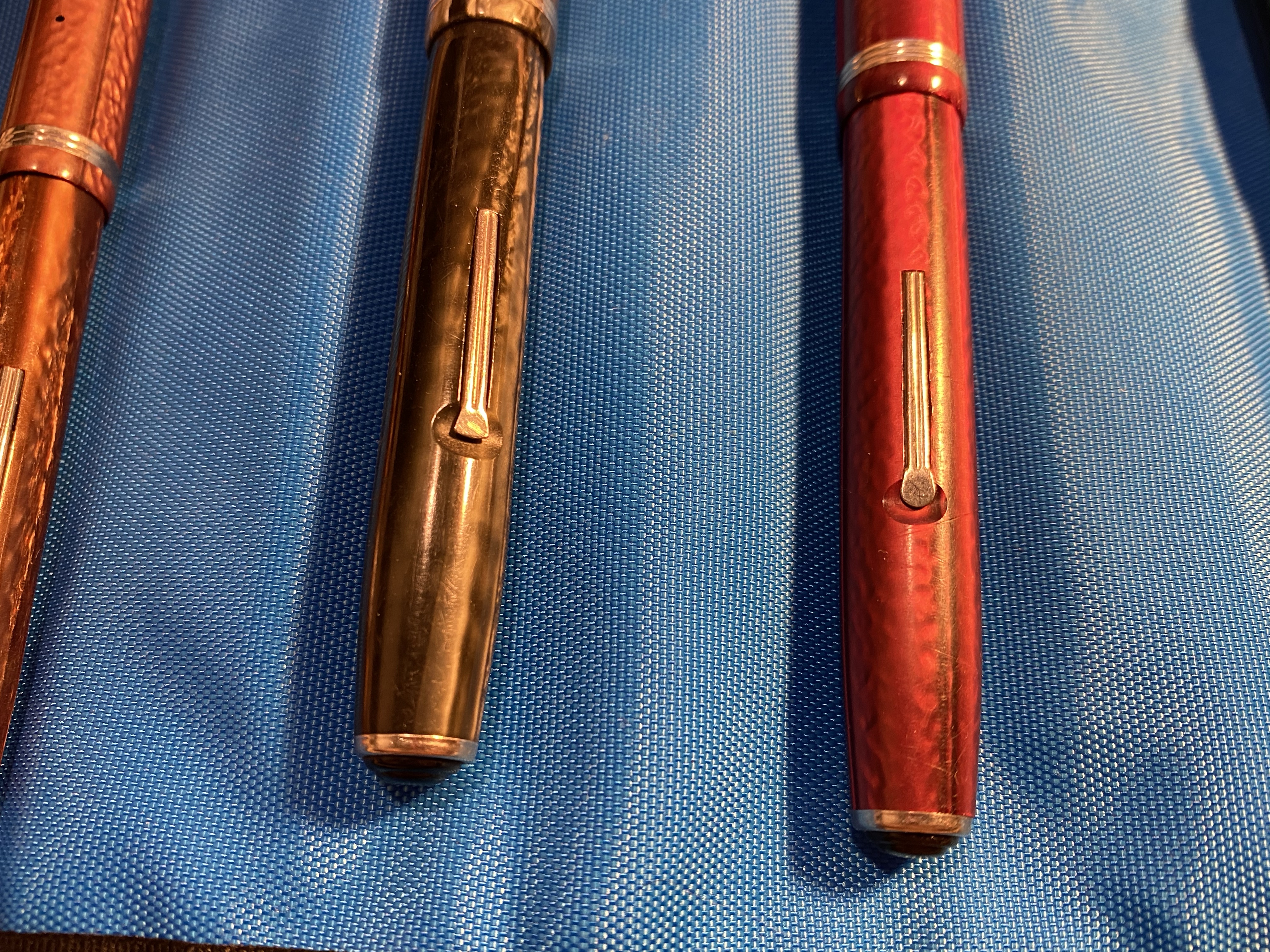
The dreaded lever.

Lever filler mechanisms are very common in vintage pens, because they are so cheap and easy to produce. They’re also fairly easy to mend, and so you’ll find them everywhere on a vintage dealer’s table or on a vintage pen site. They are my second least favourite filling mechanism (hello button fillers, you get first place) because they are not great to use when you’re filling a pen, and they are really not great to use when you’re cleaning it.

The Esterbrook does allow you to bypass the annoying cleaning part in that you can unscrew the nib and clean the pen like that, but you still have to use the lever when you fill the pen, and you still have no earthly idea how much ink is in your pen while you’re writing with it.

So my friendly suggestion would be to delay your first purchase of a vintage fountain pen and buy something a little more expensive (in the $100-$150 range) that is easier to fill and clean. If it turns out that you like vintage fountain pens, then you can start getting used to lever fillers and their quirks.
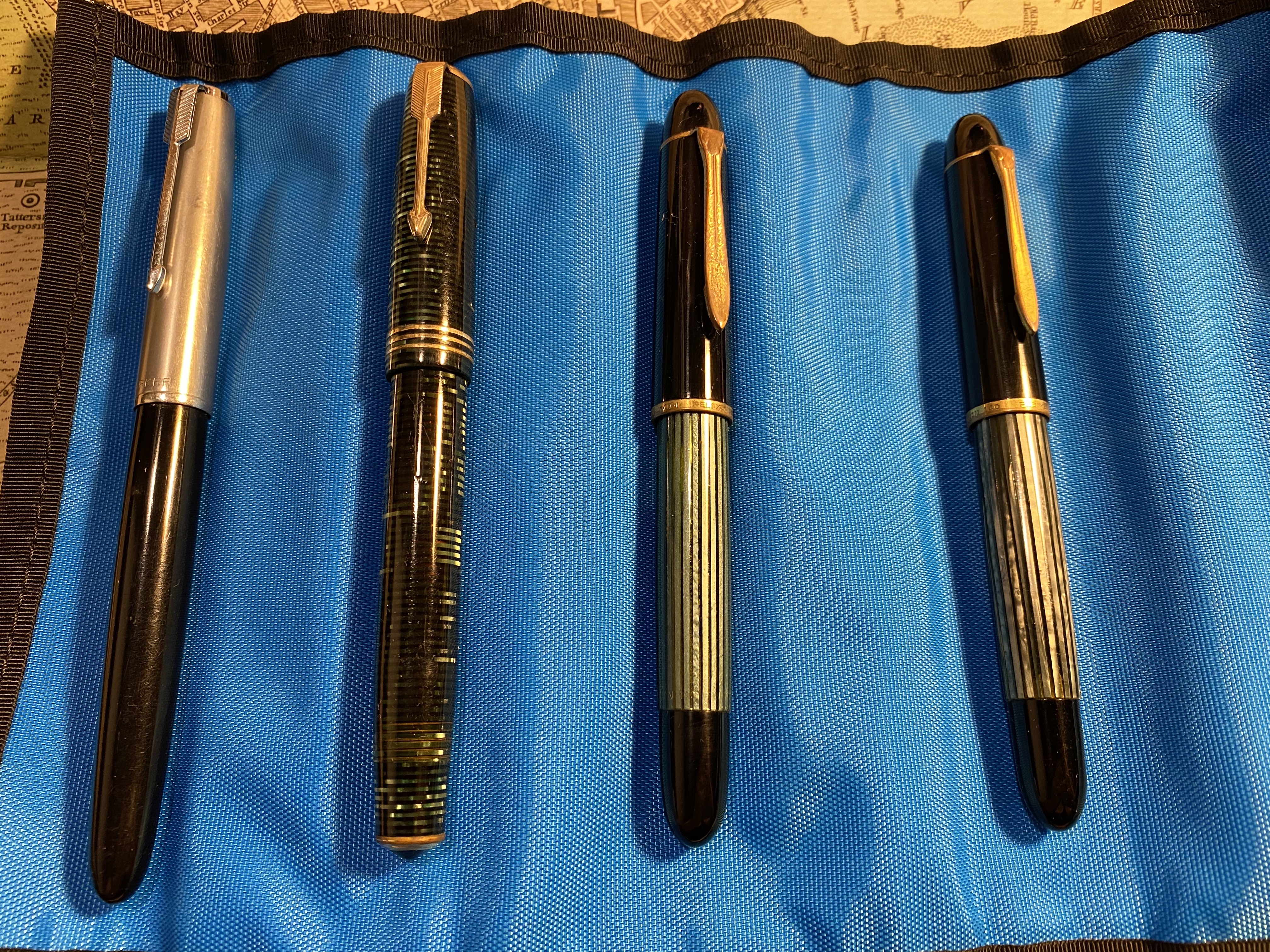
Parker 51, Parker Vacumatic and Pelikan 140

Here are my top three suggestions, in order of most beginner friendly to least beginner friendly (but still friendlier than a lever filler): the Pelikan 140 (a piston filler), the Parker 51 aerometric (an aerometric filler that works like a squeeze converter), and the Parker Vaumatic (a vacumatic filler).

Aerometric, Vacumatic and Piston filing mechanisms.

The Pelikan 140 is a piston filler with a gold nib, and a semi transparent body which allows you to see if you filled the pen properly and how much ink is left. It was made for over a decade and has a wide variety of nibs, so you can quite easily find it, and look for the perfect nib for you, just like with the Esterbrook. It is a more expensive pen, but you can still get a phenomenally good pen (ebonite feed, gold nib which can sometimes have flex, and a large ink capacity) for significantly less than what the same features would cost on a modern pen. The downside is the aesthetics, which can be a little spartan (Pelikan 140s are mostly black with green stripes), and the trim’s tendency for brassing. But brassing adds character, as once a very good vintage pen blog said. These pens are also likely to be more easily obtained in Europe than in the US or Asia.

Pelikan 140

The Parker 51 is still my absolute favourite vintage pen, but that’s not why it’s here. It’s here because the aerometrics (which are also cheaper) sport a filling mechanism that works very much like a modern squeeze converter, albeit permanently attached to the pen, and the filling instructions are etched into the pen, which is very helpful of Parker.

Parker 51

Theoretically you can gauge if there’s ink in the pen using the transparent sack but in most cases the sack will no longer be transparent, and even if it was, its position doesn’t really tell you a lot about the state of the ink in the pen. So it’s relatively easy to fill and clean the pen, but you’re not going to have any indication as to how much ink is in it at any given time.
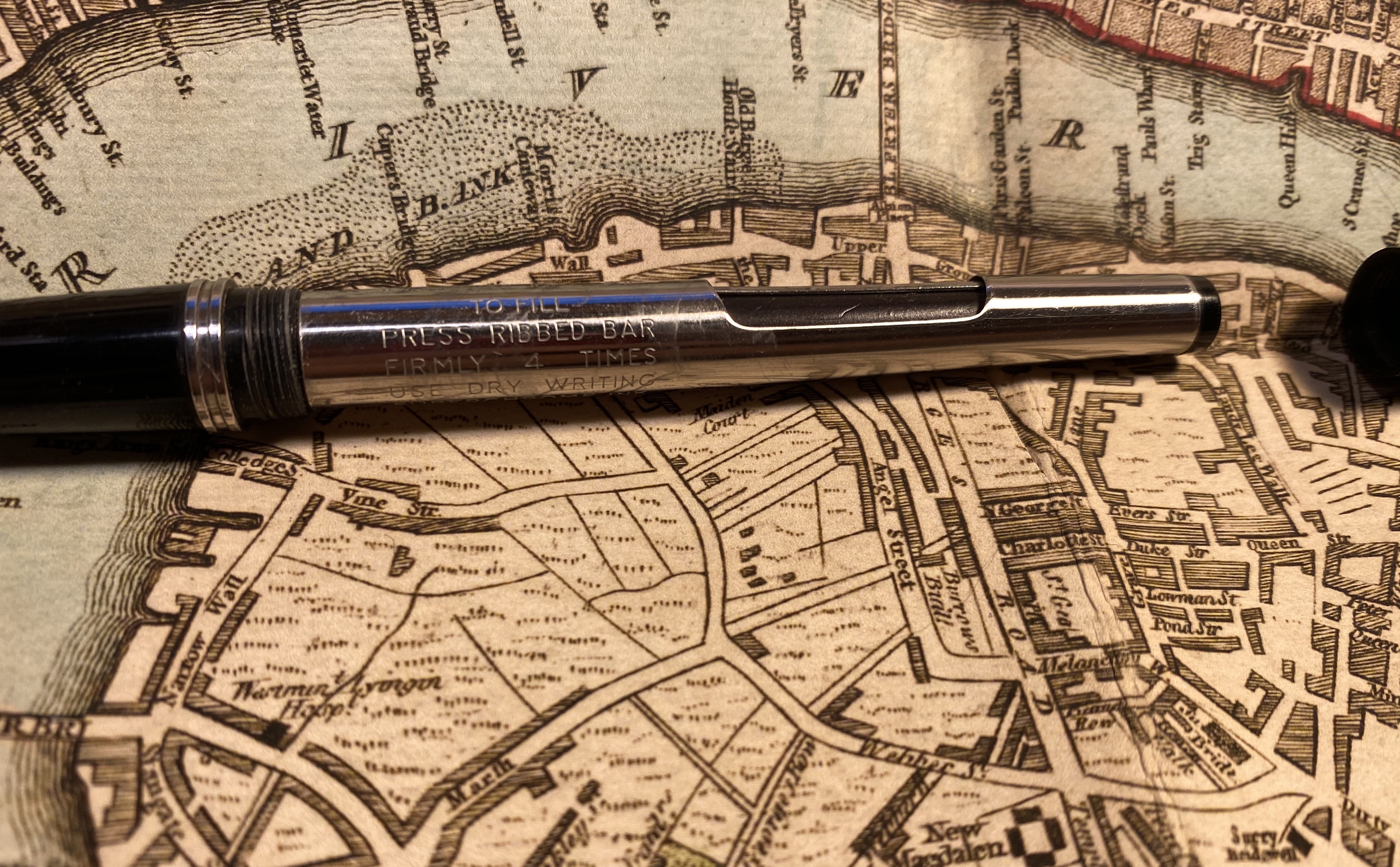
Filling instructions on the pen body.

The Parker Vacumatics are gorgeous pens with great nibs, and the striped Vacumatics let you know what the ink level is unless they are stained beyond belief, in which case I’d wait a bit for a pen in better condition. The Parker Vacumatics I’m recommending are those with a lock down mechanism. Of the three pens they are the most fiddly, and that’s why they’re in third place, but they allow for a relatively large ink capacity, and the option to see the ink levels at all times, so they go on the list. To fill the pen you unscrew the blind cap, give the metal nob on the top a slight turn and push (a bit like opening a child proof pill bottle) and then the metal plunger springs out. You push the plunger a few times to fill the pen, and then you push down the plunger and twist it once it’s down so that it locks back into place. If you’ve ever used a child-proof pill bottle then you’ll be familiar with the push and twist mechanism, and if not have it demonstrated when you buy the pen or find a youtube video that shows you how to do it. It’s not difficult.

This is a more expensive, double jewelled model, but the filling mechanism is generally the same on cheaper vacumatics.

The Parker Vacumatics are not as intuitive to use as a lever filler, but they allow for an ink window which means that you can see if you have ink left or if you’ve filled or cleaned the pen properly pretty easily:

You can see the ink levels through the orange transparent bits between the stripes.

These pens are never going to compete with the Esterbrook pens on price because they have gold nibs and more sophisticated filling mechanisms. They do quite easily compete with modern pens in terms of bang for your buck when it comes to getting things like a piston filler with a flexy double broad gold nib. If you’re buying a vintage fountain pen that you want to have a relatively easy time filling, using and cleaning, and that will give you a unique and oftentimes exceptional writing experience, any one of these three pens ought to do.

And just to set the record straight: I love Esterbrook pens, and there was a time when I used them constantly, and I still heartily recommend them as they are little workhorses of delight. It just occurred to me that perhaps that little lever combined with the opaque body may be off-putting to new users, and so I’m suggesting a few (much more expensive, sometimes harder to obtain) alternatives. With vintage fountain pens purchase patience is required and not FOMO, so it’s worth waiting for a great $100 pen that you’ll use more than buying a $50 one that you won’t.
A Pen Hack, a Field Notes and the Hi-Tech C

I had an issue with my Ti2 Techliner where my favourite gel ink refill (the Uni-ball UMR-85) and basically all gel ink refills dried out and stopped writing a few words after I uncapped the pen. While ballpoint refills like the Jetstream faired better, they also would “fade out” after a few lines, and then, after some coaxing, return to normal. It couldn’t be that the refill was drying out, as after capping the pen, it wrote well enough again for a few words. It was a refill problem, as the same refill wrote perfectly fine in a different pen.

I tried searching for answers and asked around in the Pen Addict slack but got no answers. It was frustrating, since I liked the pen, but couldn’t use it because it wouldn’t work with my preferred refills. I had a feeling that the magnet at the tip of the pen was what was causing the ink flow issue, but it only yesterday did I figure out how to bypass the very thing that was holding the pen together.

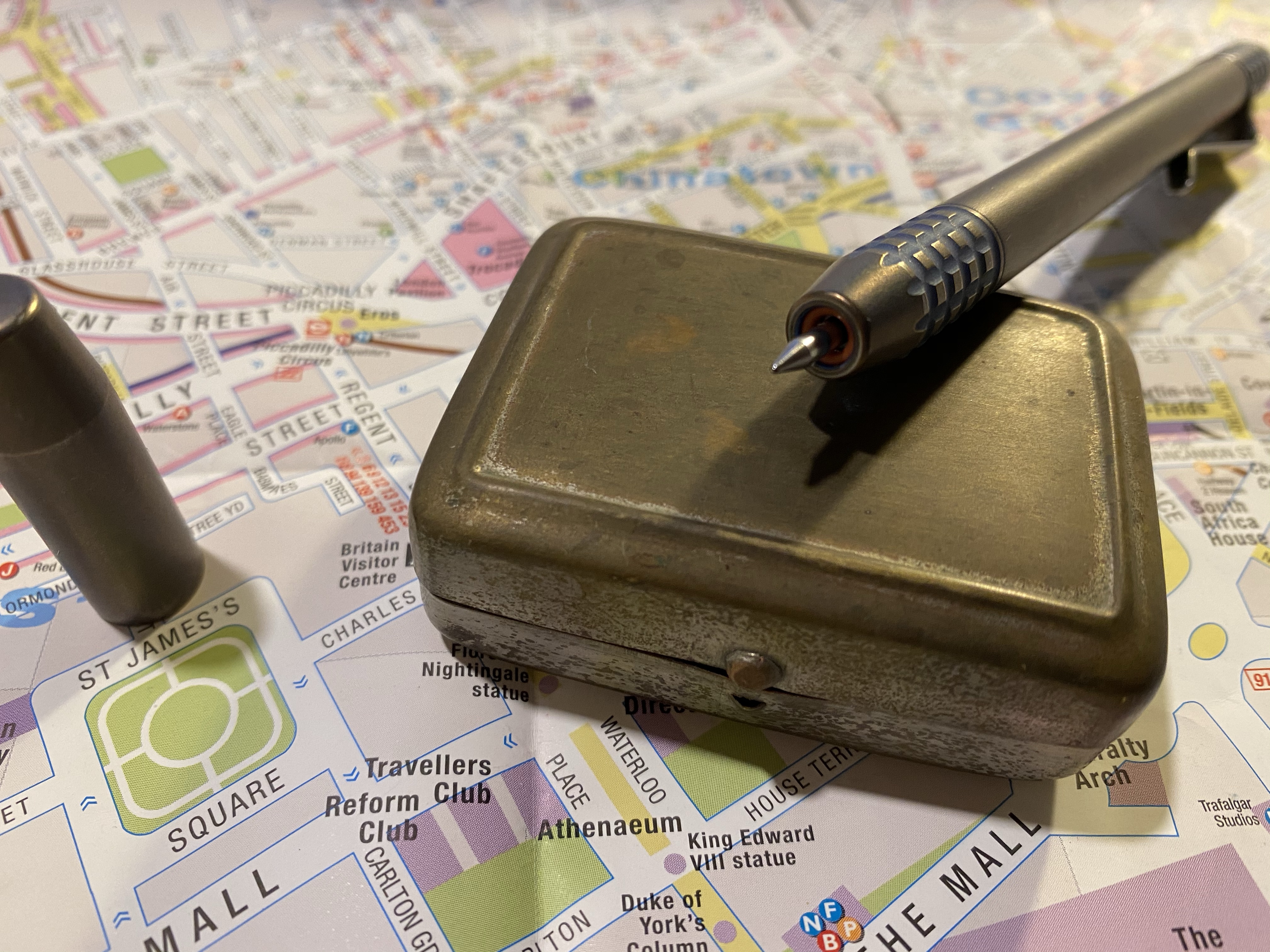
What I did was change the order of the parts in the front section of the pen. The original order was refill, plastic spacer, red o-ring, magnet and then the section screwed over that. What I did was reverse the o-ring and the magnet so now it’s: refill, plastic spacer, magnet, red o-ring, and then the section. The result is kind of pleasing to the eye, and more importantly it fixed the flow problem completely, and now I can actually use this fetching pen.
You can see the red o-ring around the tip of the pen.

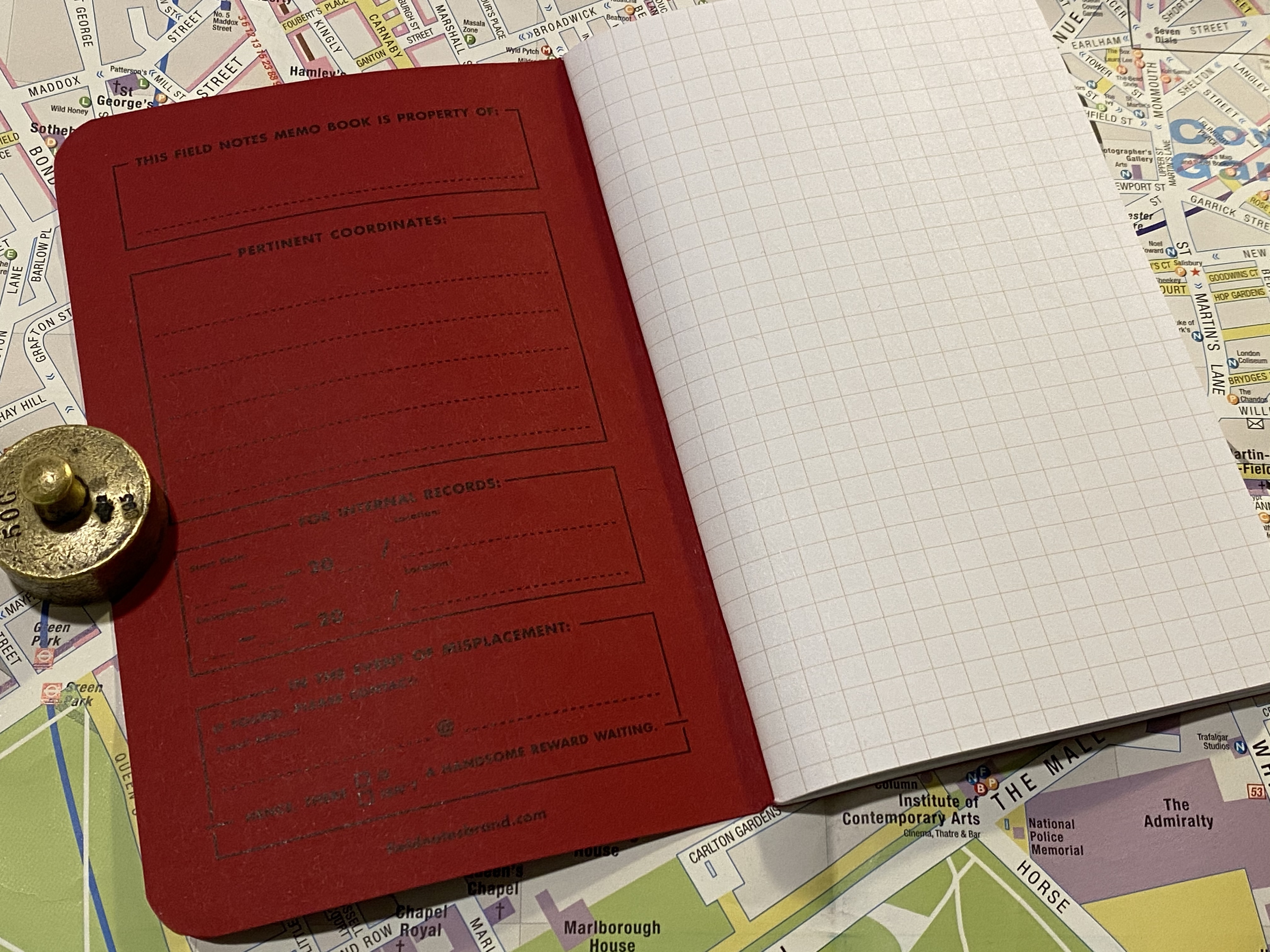
I tend not to review Field Notes because they arrive so late to me (due to postal issues, not Field Notes issues) that it seems irrelevant to review last quarter’s edition when everyone already has the new one at hand. Covid-19 has made the postal problems even worse, and so only now, and after contacting the wonderful Field Notes people and getting a reshipment, have my Vignette notebooks arrived.

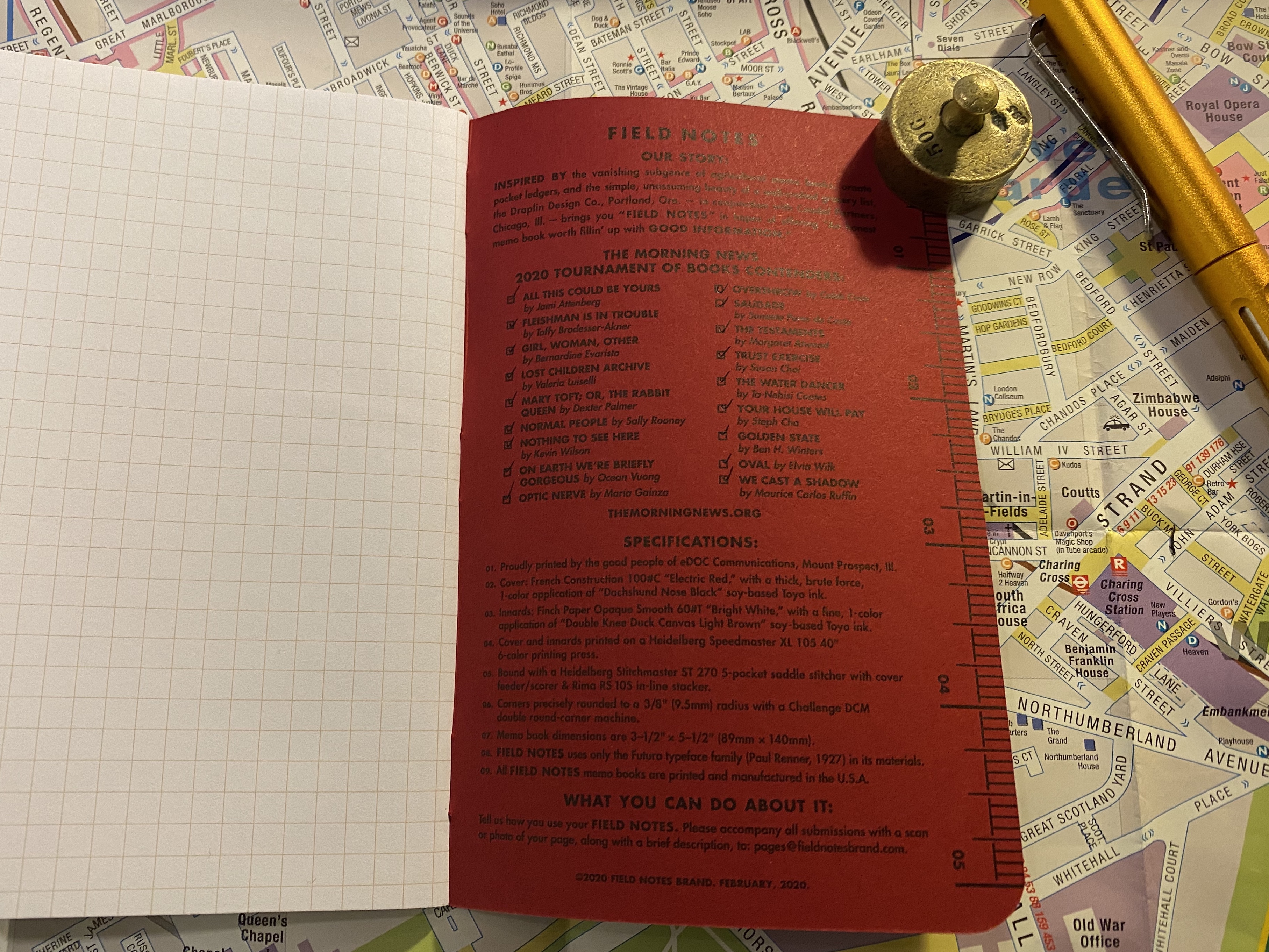
What also arrived were my Field Notes Rooster 2020 notebooks, which are part of Field Notes’ yearly sponsorship of the Morning News and the Tournament of Books. I read all of the books in the Tournament of Books shortlist this year, for the second year in a row. I didn’t post reviews of them all in this site as I didn’t enjoy the last 3-4 books, and I didn’t feel like posting negative review after negative review.

I did, however, love this year’s Field Notes Rooster special edition notebook, and it is by far my favourite Rooster special edition notebook that Field Notes ever issued. It is a squared notebook, and not lined, for the first time ever, and the bold red and black print on the cover is much more striking than their usual craft or cream choices for this series.

Bold, bright colours on the cover.

The fact that these notebooks (sold as singles, with the proceeds going to literacy related charities) arrived so late means that I have a had a few months to think about the Tournament of Books 2020 reading list.

Squared notebook.

I enjoyed the 2019 reading list more, but the 2020 list was overall a good, interesting list of contemporary writing that I for the most part would not have read otherwise. There were a few mediocre books on it, and a few that I really disliked, but as a whole it wasn’t a bad list. I may try reading next year’s list too.

The list. There are 18 books on the list, 4 books that I though weren’t worth reading, of them two were a silly, bloated waste of time and two were infuriatingly bad. There were 7 books that I thought were real gems.

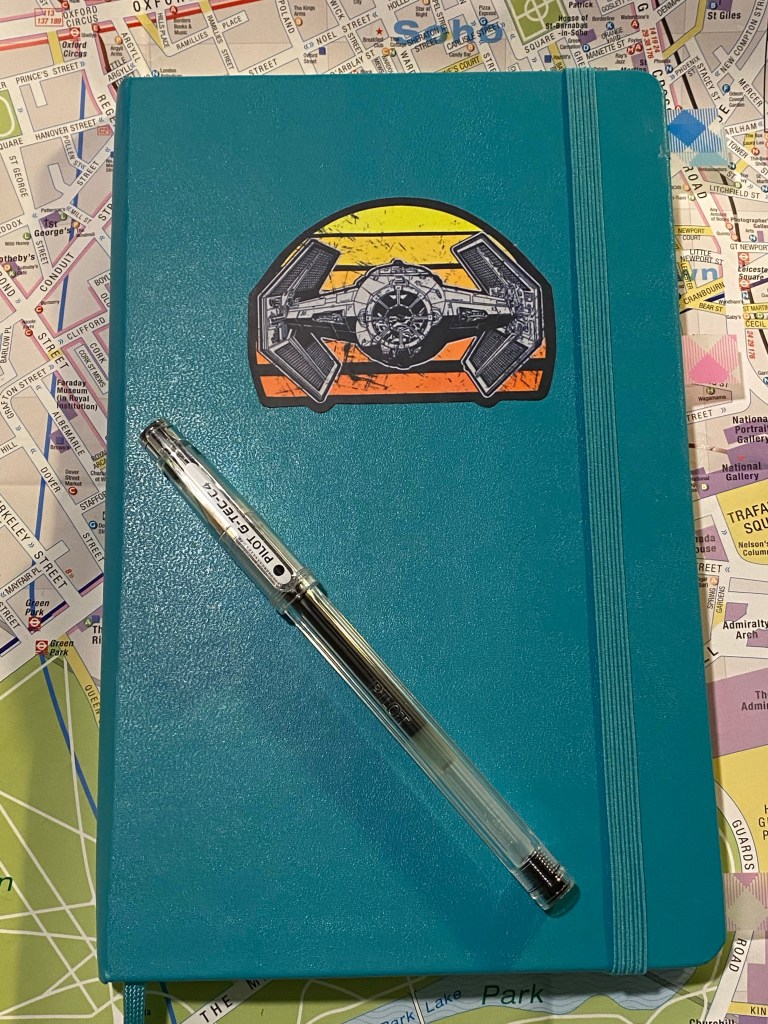
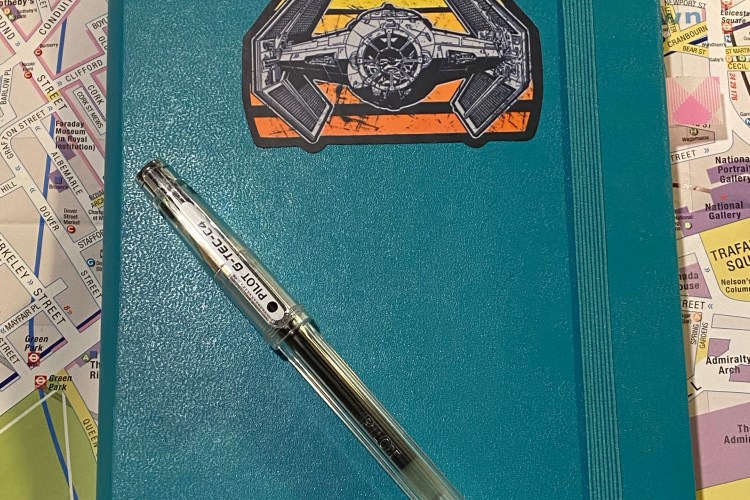
I wrote a few weeks back that I was struggling with my notebook setup, and things have changed since then. I’ve settled on using a blank large Moleskine hardcover in Reef Blue and a Pilot Hi-Tech C 0.4 for a running list of work projects and related notes.

I’ve customized the cover with a Star Wars decal to make it pop and let me easily identify it.

I use the right hand side for a running tasks per project (I still manage major project points in the Things app), and the left hand side for related points, reminders and ideas. Each project has at least one spread, and I drop in pages with ideas and things to remember in between the project pages.

The Pilot Hi-Tec-C (also known as the G-Tec-C4) is not a pen that I would recommend because it’s so very delicate and unreliable, but I used to be a fan years ago, and in a burst of nostalgia (and against my better judgement) I’ve gone back to using these pens. There’s something about the barrel design of this pen, combined with it’s needle tip that makes me enjoy writing with it. Again, I wouldn’t recommend it, as you’ll rarely see a refill through (the tip will bend, or it will become to scratchy to use, or it will dry out and become unusable) and in general the Uni-ball Signo DX are much better 0.4 tipped gel ink pens. But the heart wants what the heart wants, and this is what I prefer for daily work use right now.

Caran D’Ache 849 Nespresso Arpeggio Limited Edition

Hey, look what just arrived in the mail:

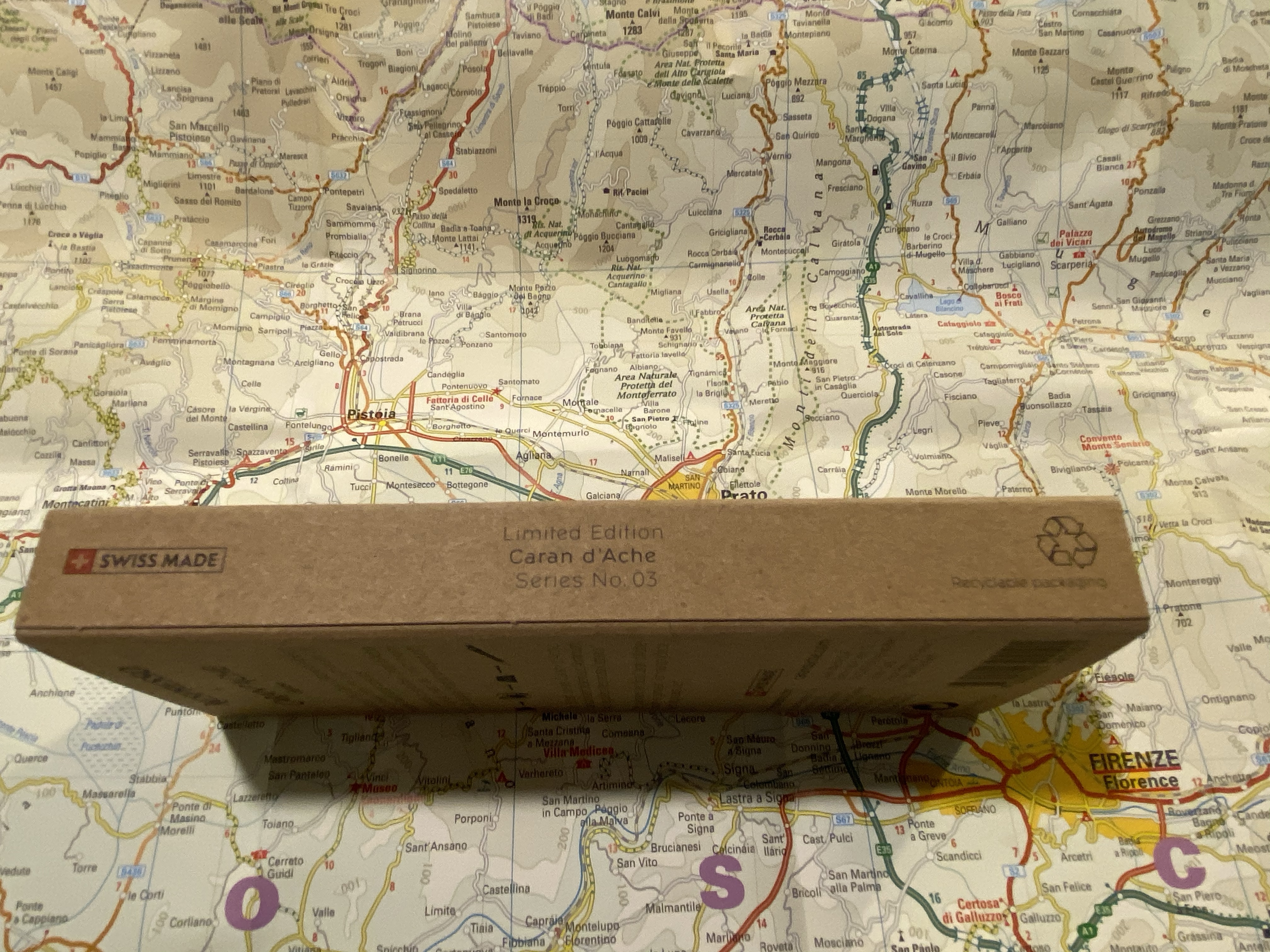
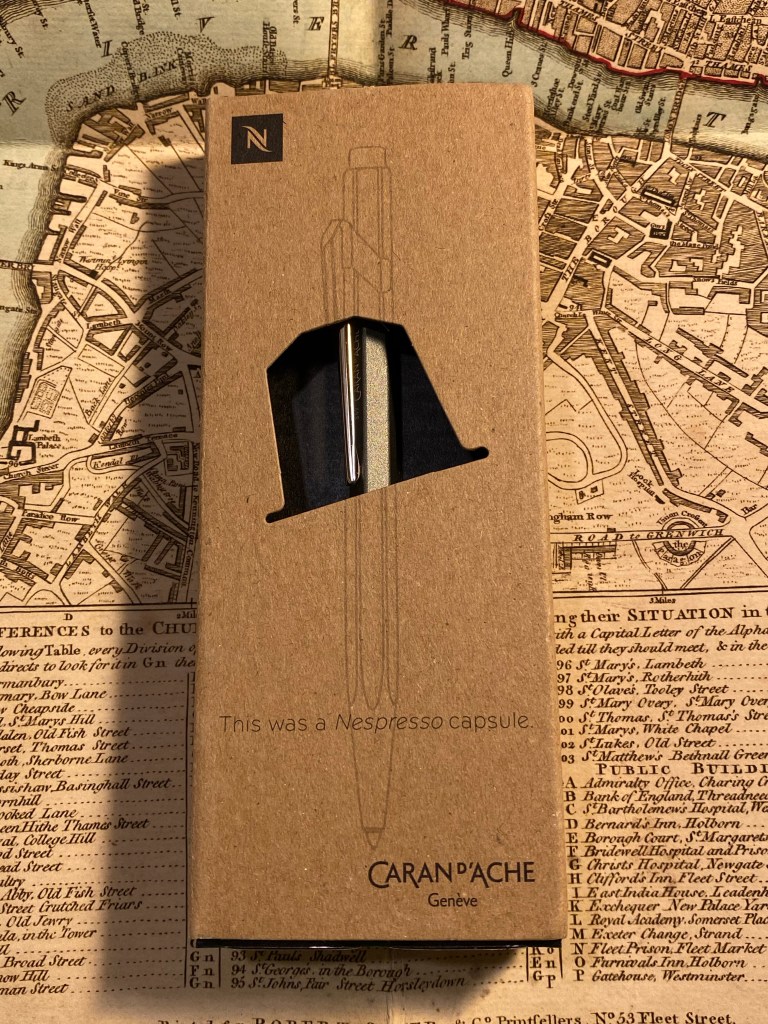
Such great packaging.

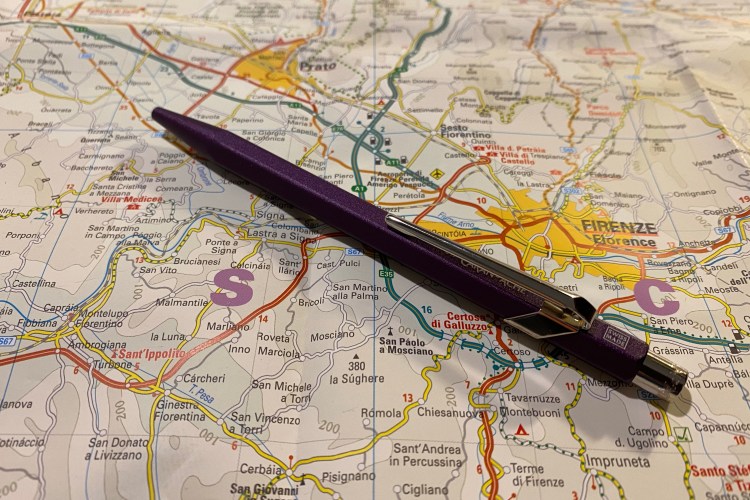
It’s the new Caran d’Ache 849 Nespresso limited edition and this time it’s Arpeggio that was chosen. Arpeggio is not only one of Nespresso’s more popular capsules, it’s also a gorgeous purple, which is a huge plus in my book, and big difference from their previous edition, the India.

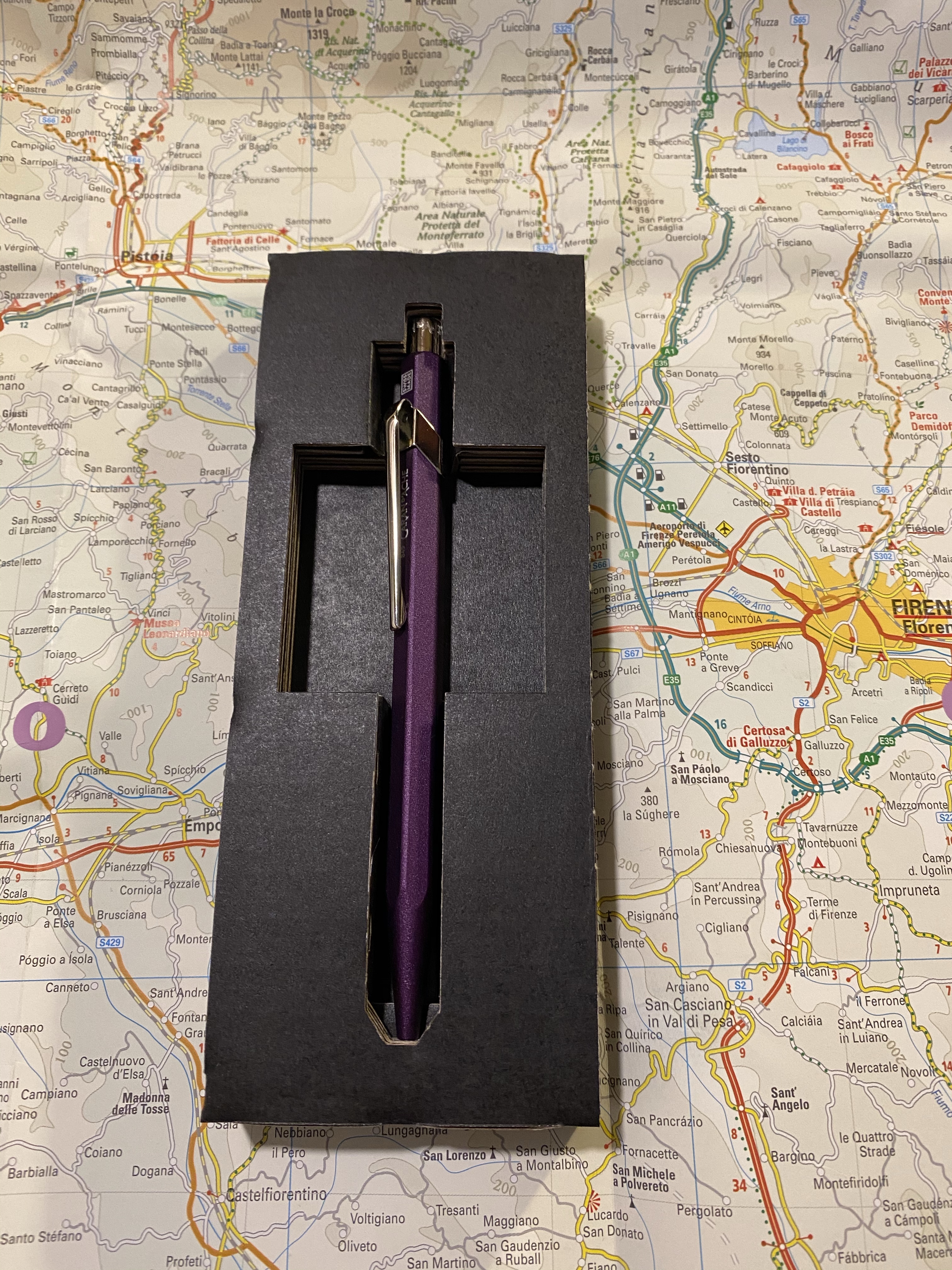
But first, some photos of the phenomenal packaging of this pen:

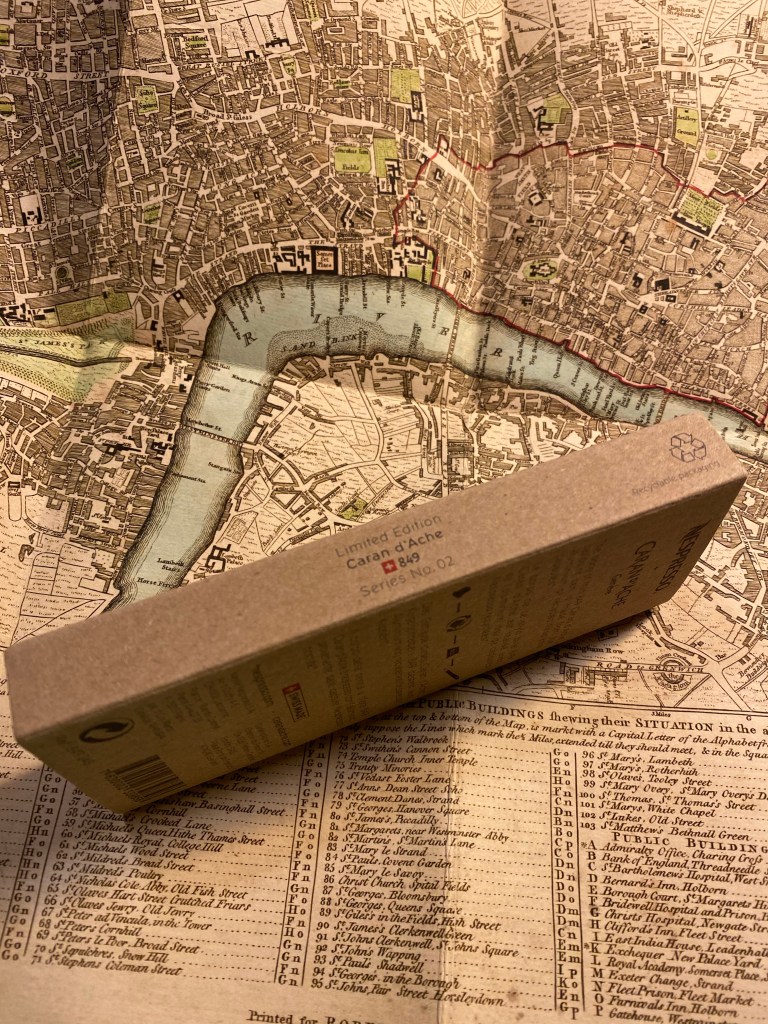
Side view, where you can also see that it’s the 3rd of the series.

The 849 Arpeggio is made out of recycled Nespresso capsules just like its predecessors:

The back of the pen box.

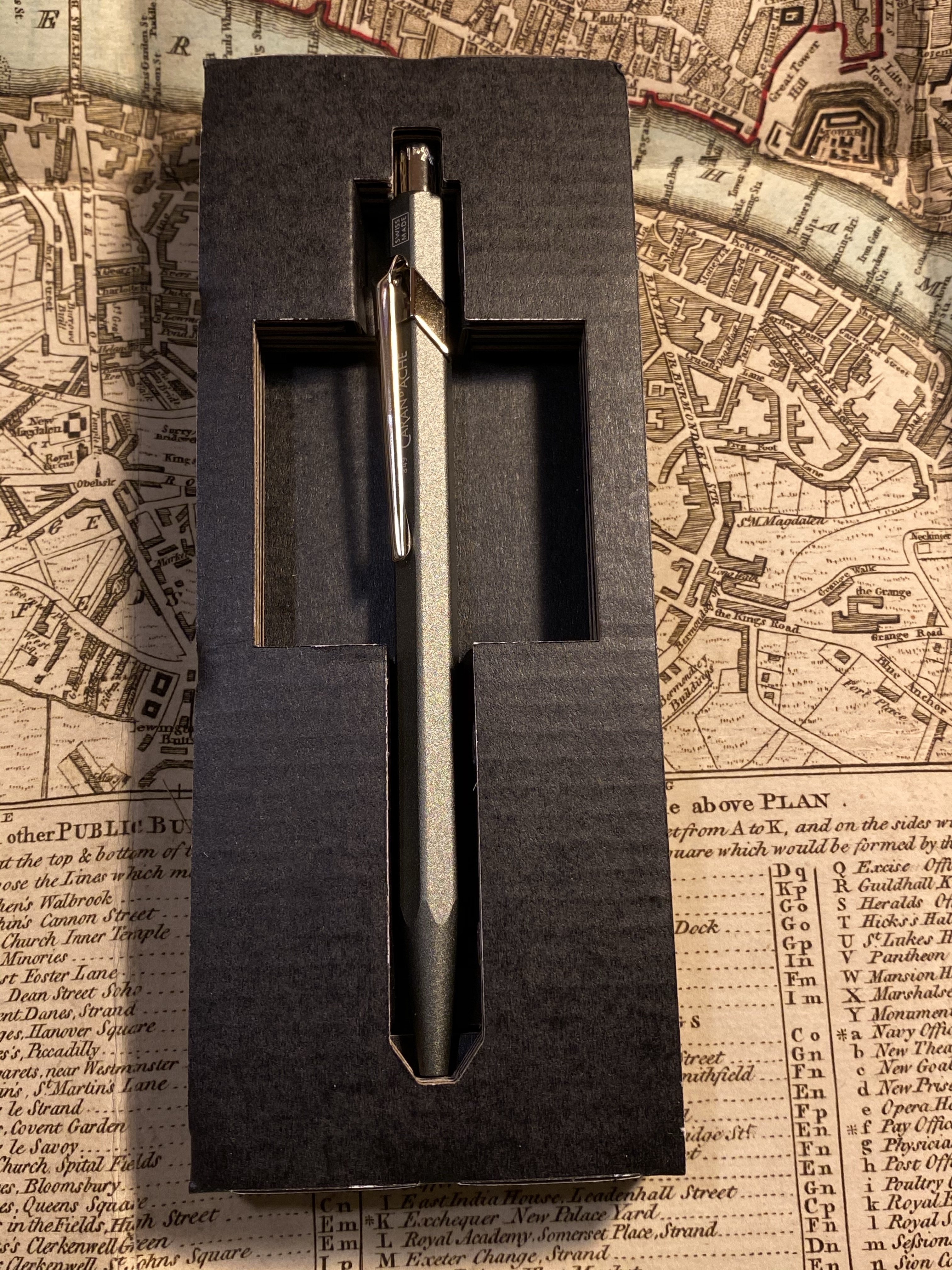
The cardboard cutout the pen comes in still on point: a simple and fitting material designed to perfection to best showcase the pen and its materials.

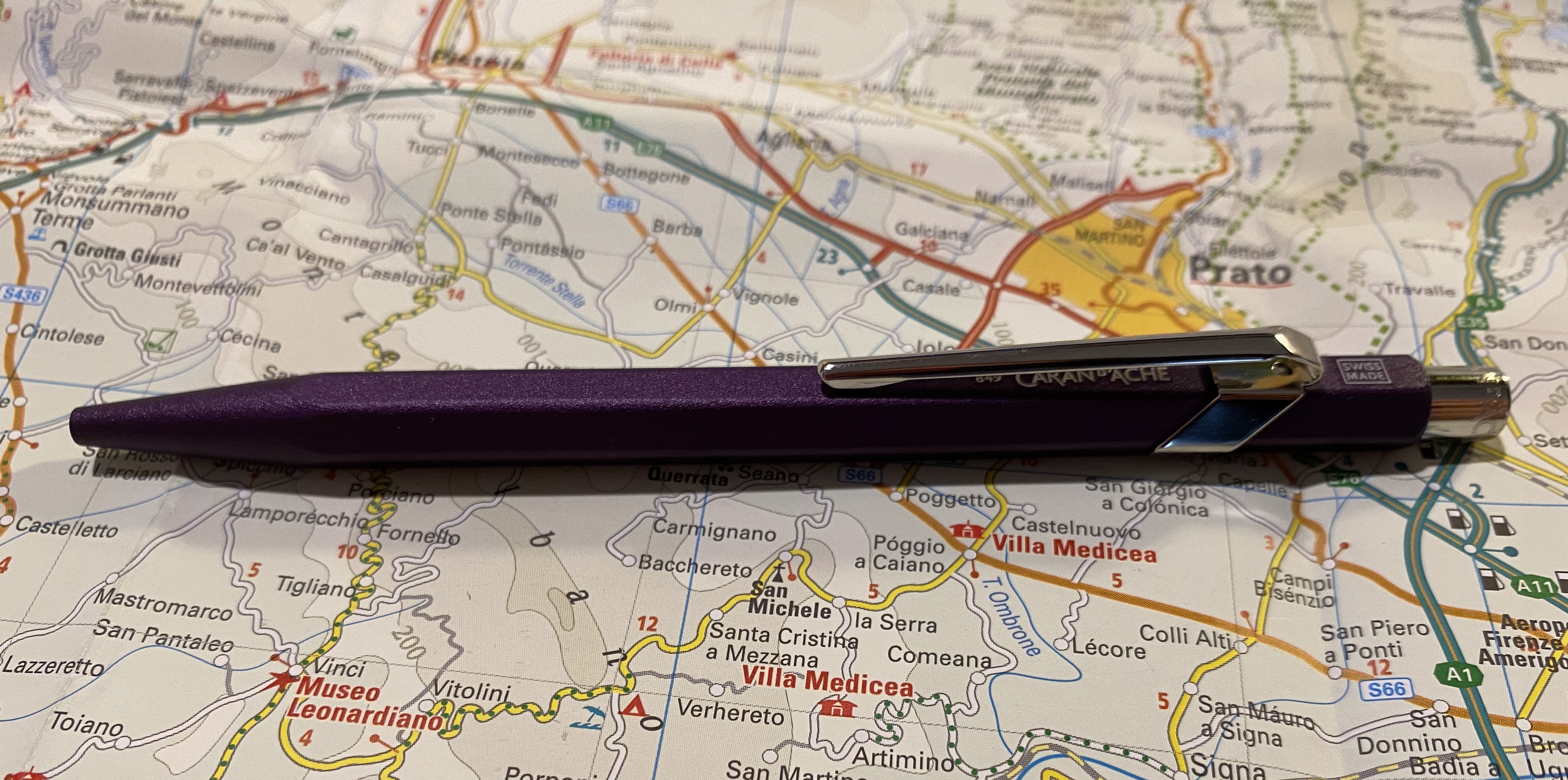
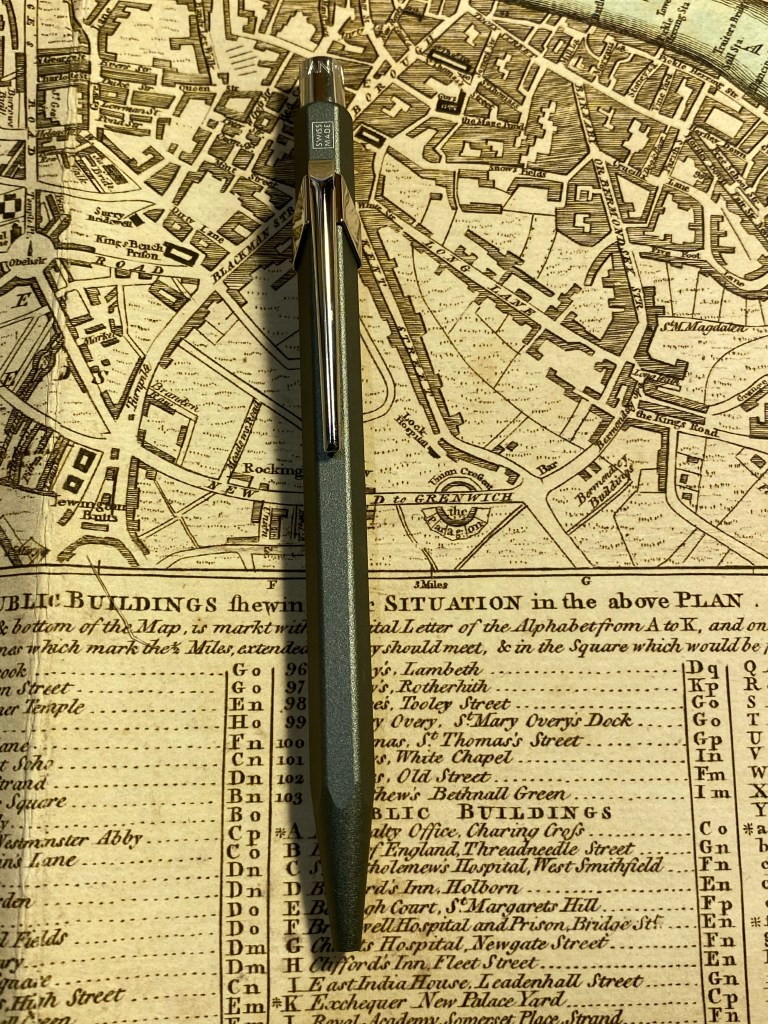
Look at that colour!

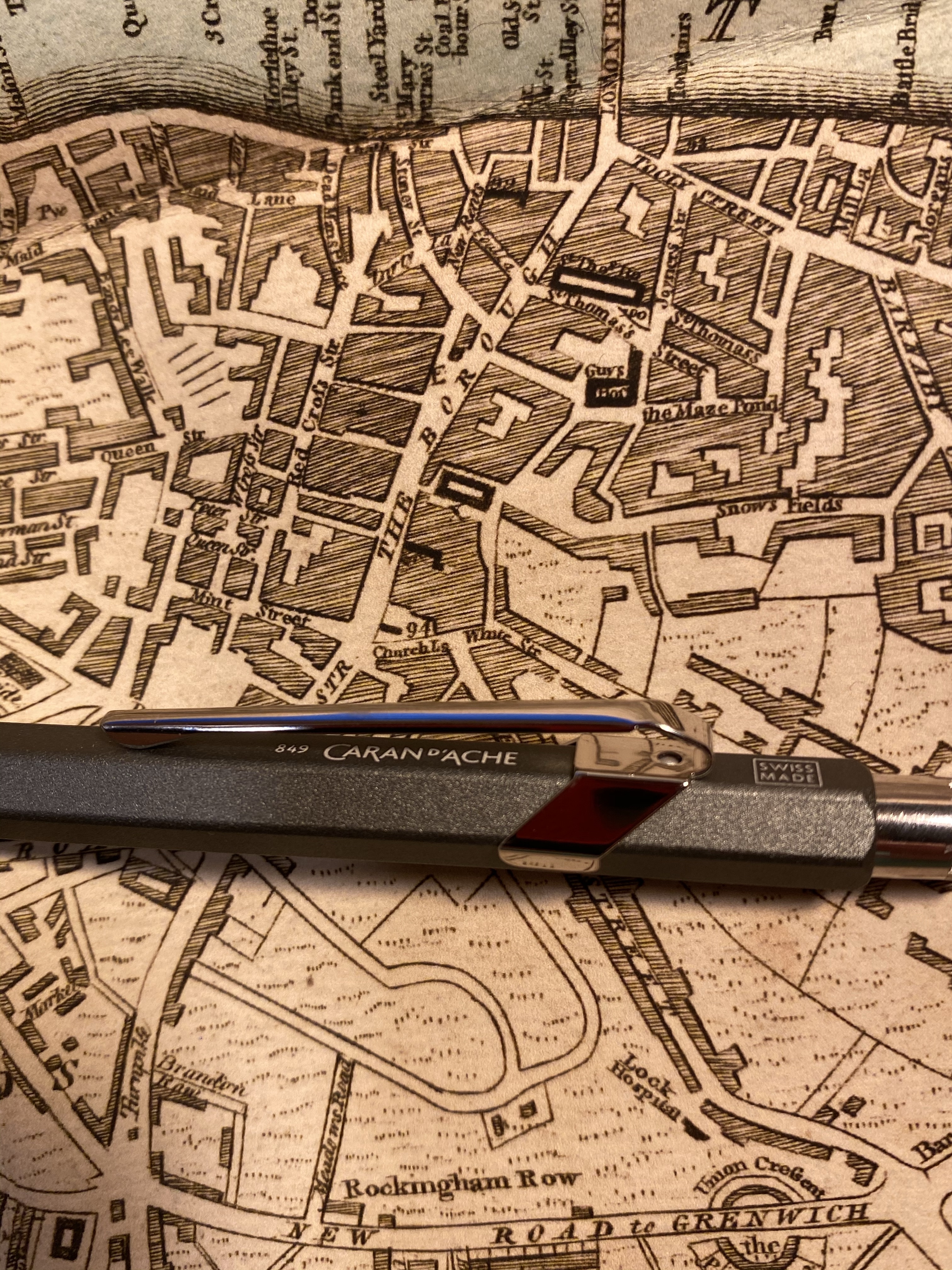
This came out darker than I would have preferred, but you can just about see the Caran d’Ache brand under the clip, and the “Swiss made” on top.

Swiss made.

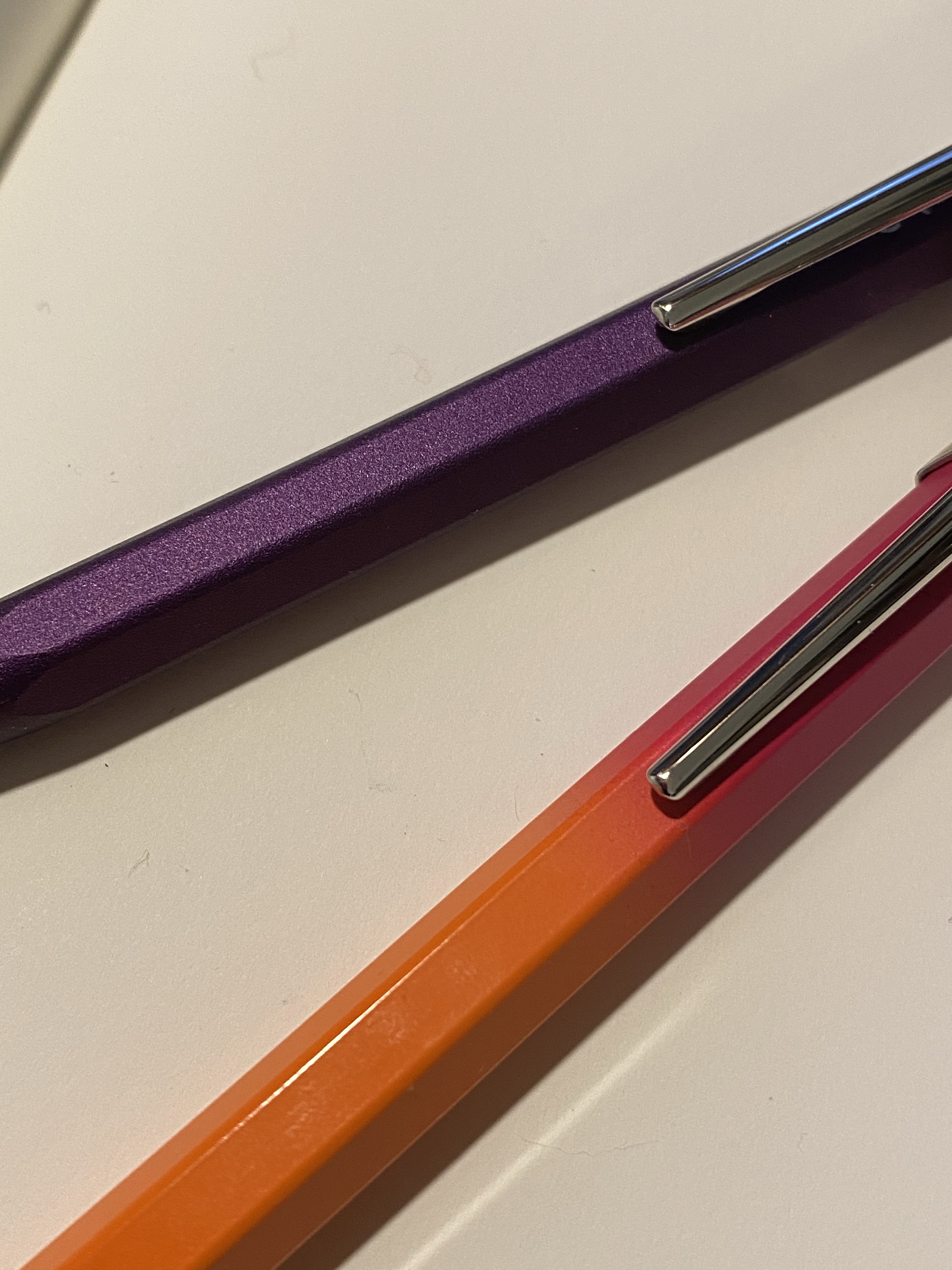
The 849 Arpeggio is a lovely deep purple, and has a great texture to it. The non-smooth surface makes it much easier to grip than many of the other 849 pens. You can see the difference in texture here between the Arpeggio and one of the 849 Tropics pens:

Textured Arpeggio finish vs the glass smooth finish on the Tropics 849

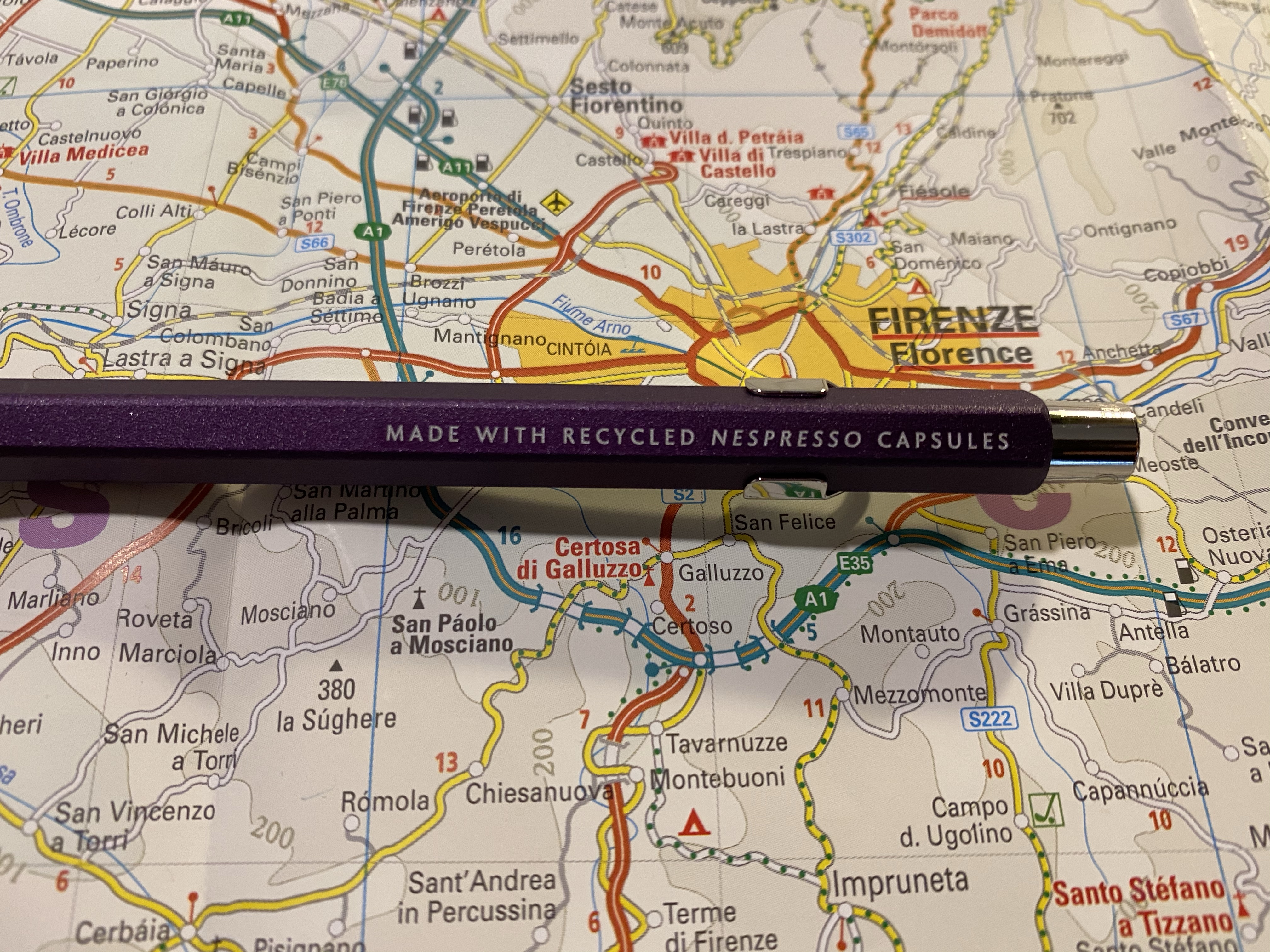
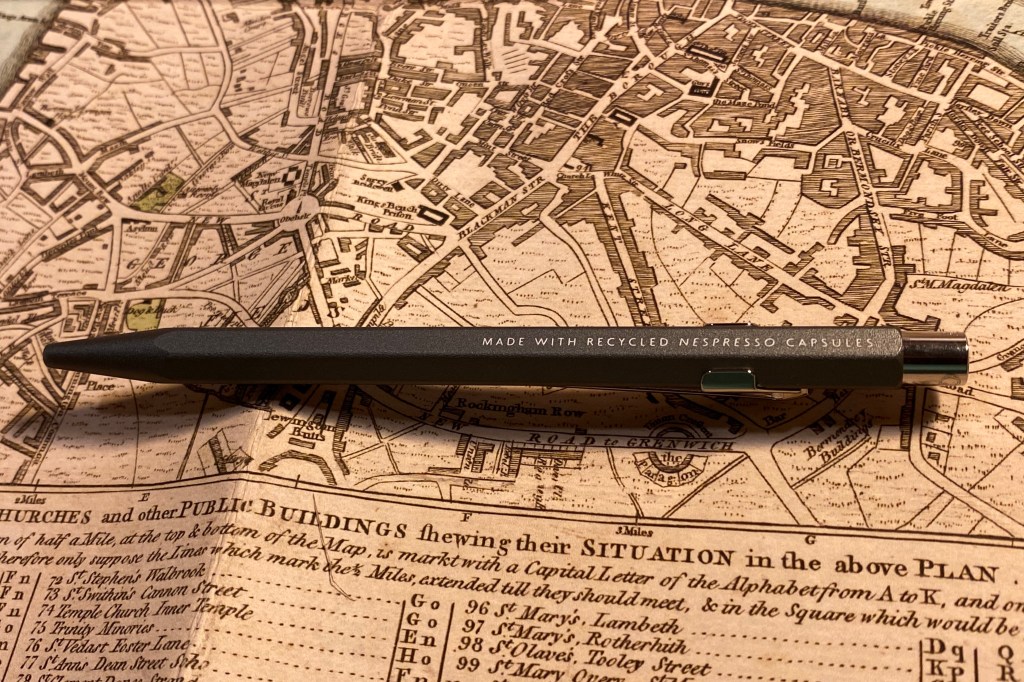
And here’s the by now familiar “made with recycled Nespresso capsules” tagline on the side:

I changed the refill, and since somebody asked, I thought I’d focus on that for a bit. To change the refill you unscrew the clicker on top, and that might take a bit of fiddling, since it’s pretty securely screwed in. It doesn’t take force, just a bit of patience. Then take out the refill and swap it out with the new refill, and don’t forget to put the front spring on, preserving the right direction it was placed in when it came off.

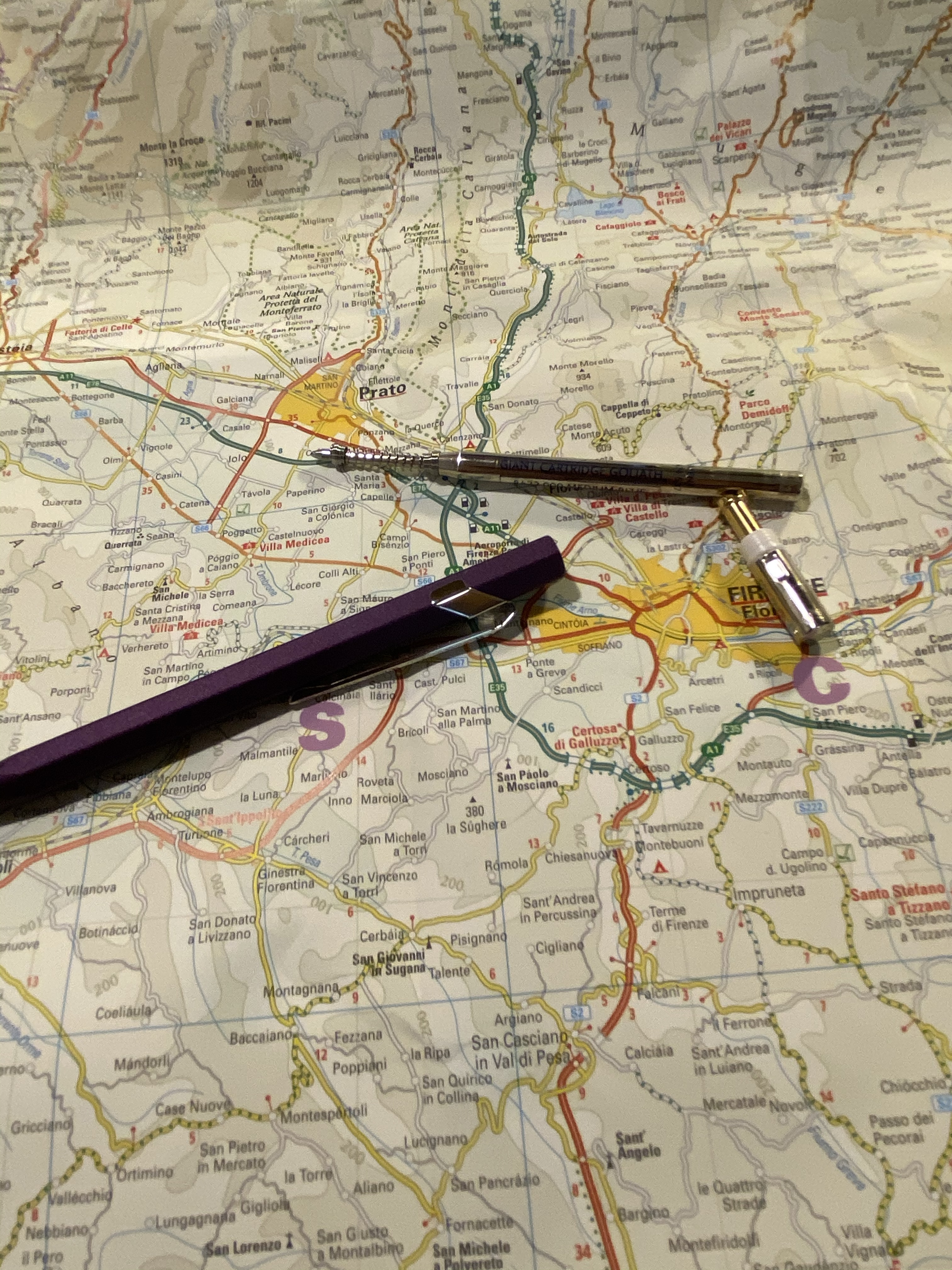
Body, cap and original refill with the spring.

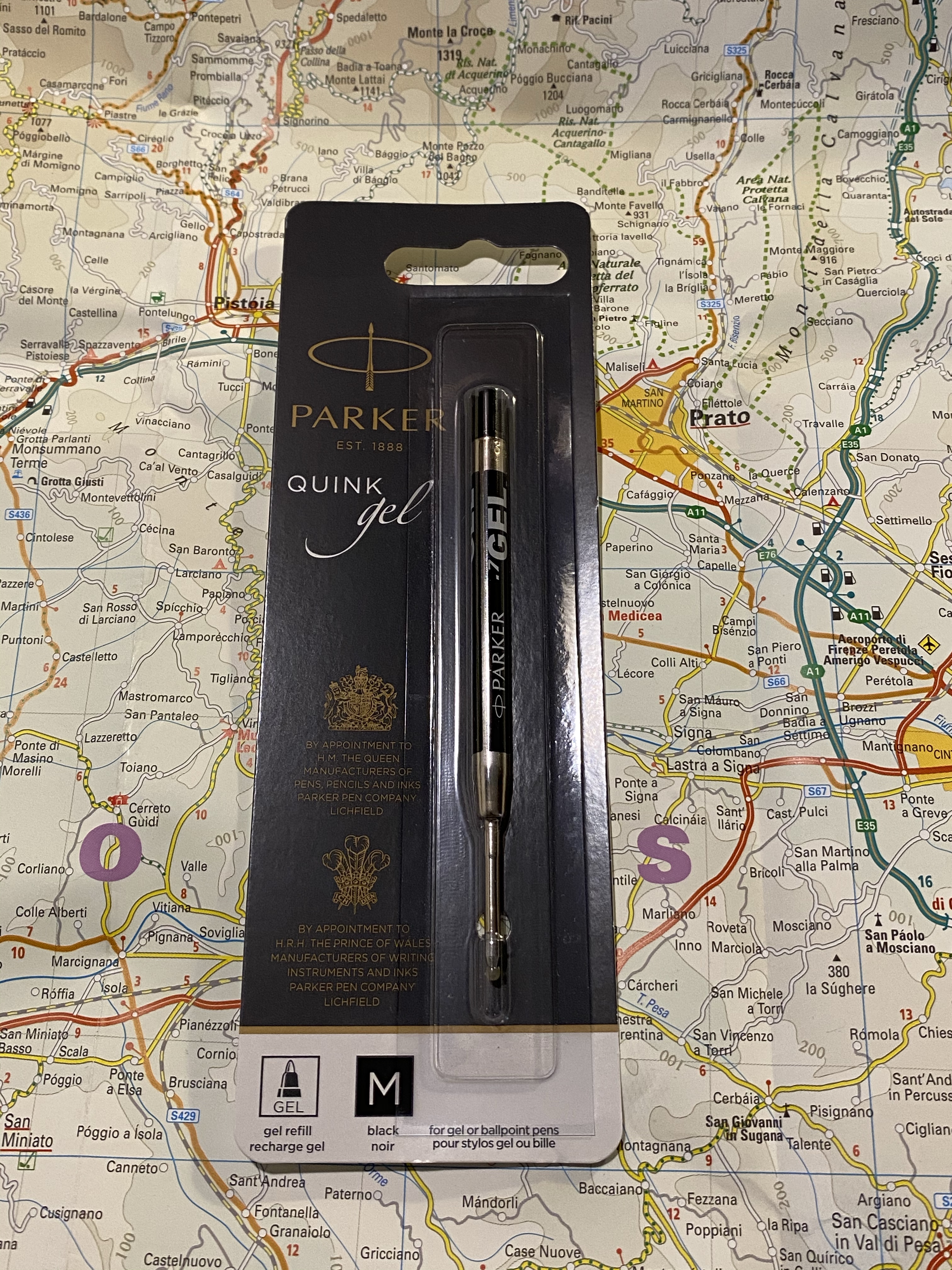
I replaced the original Caran d’Ache Goliath ballpoint refill with the Parker Quink medium gel refill (it’s 0.7 mm). Here it is in the packaging in case you’re looking for it. I bought a pack of these from the excellent, excellent CultPens (I’m not being paid to say this, I just really appreciate them and what they’re doing. If you’re a non-US pen addict in particular I recommend checking them out).

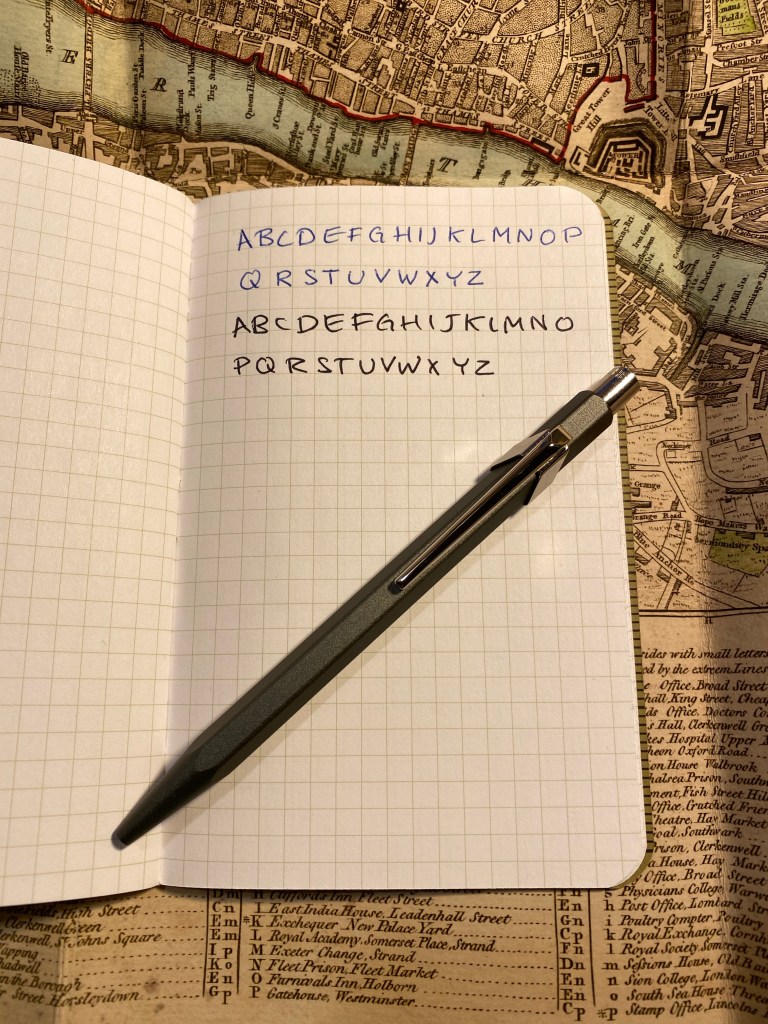
Here’s a writing sample with the Caran d’Ache Goliath ballpoint refill and the Parker Quink gel refill. If you’re a fan of ballpoints, the Goliath refill is excellent. I just happen to not like ballpoints, so I change them to gel refills whenever I can.

The Caran d’Ache 849 Arpeggio is a beautiful pen that would make for a great gift (if you can bear to part with it). I can’t recommend these series of pens enough, and I can’t wait to see what next year’s edition will be. Nespresso’s capsules come in a variety of pretty nifty colours, so I don’t think that Caran d’Ache can really miss with them.

Ti Mini Review

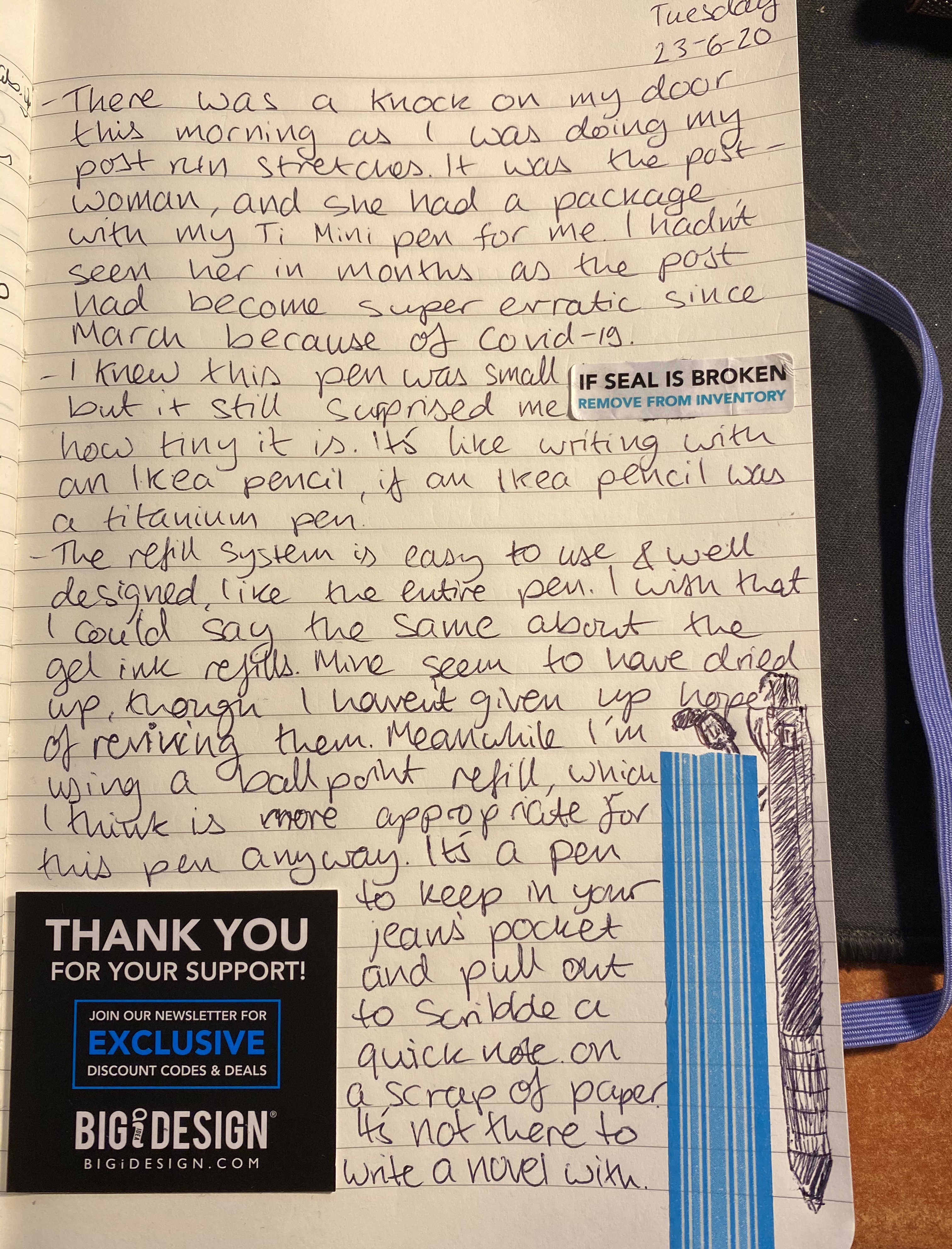
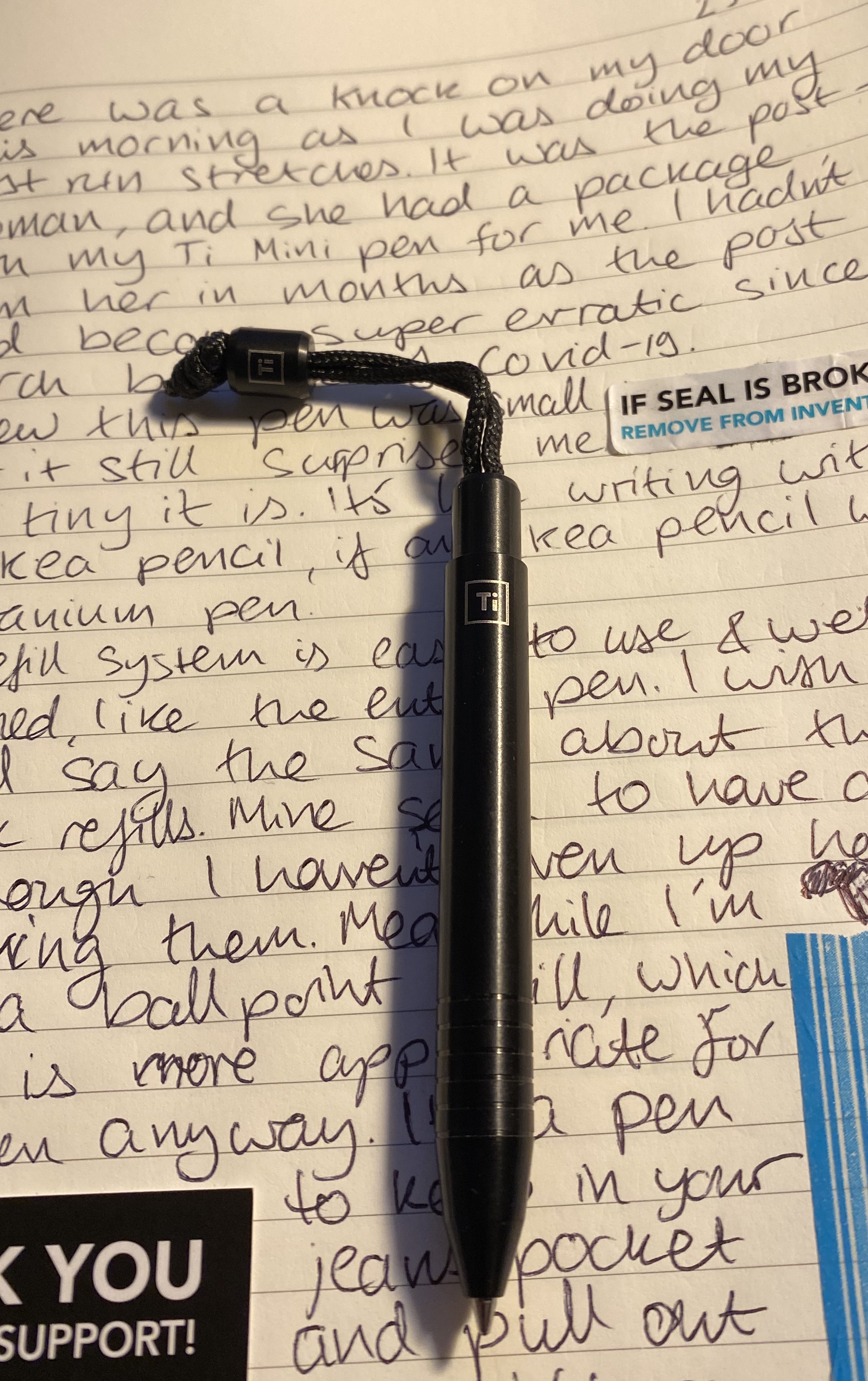
Look what arrived in the mail today! It’s the Big Idea Design Ti Mini, fresh from their latest Kickstarter. I generally love all Big Idea Design pens (except the for the click, which I still enjoy, though it’s not my favourite), but I still hesitated before backing this one. The form factor is so “extreme” that I wasn’t sure that I’d like it or find use for it. A small pocket pen (i.e. a pen that’s small even for a pocket pen), the Ti Mini is a titanium machined pen that uses D1 refills and is basically built for the watch/change pocket of your jeans. It’s the emergency pen you pull out when you need to scribble something on a note, something that you can carry around without even remembering it’s there until you need it.

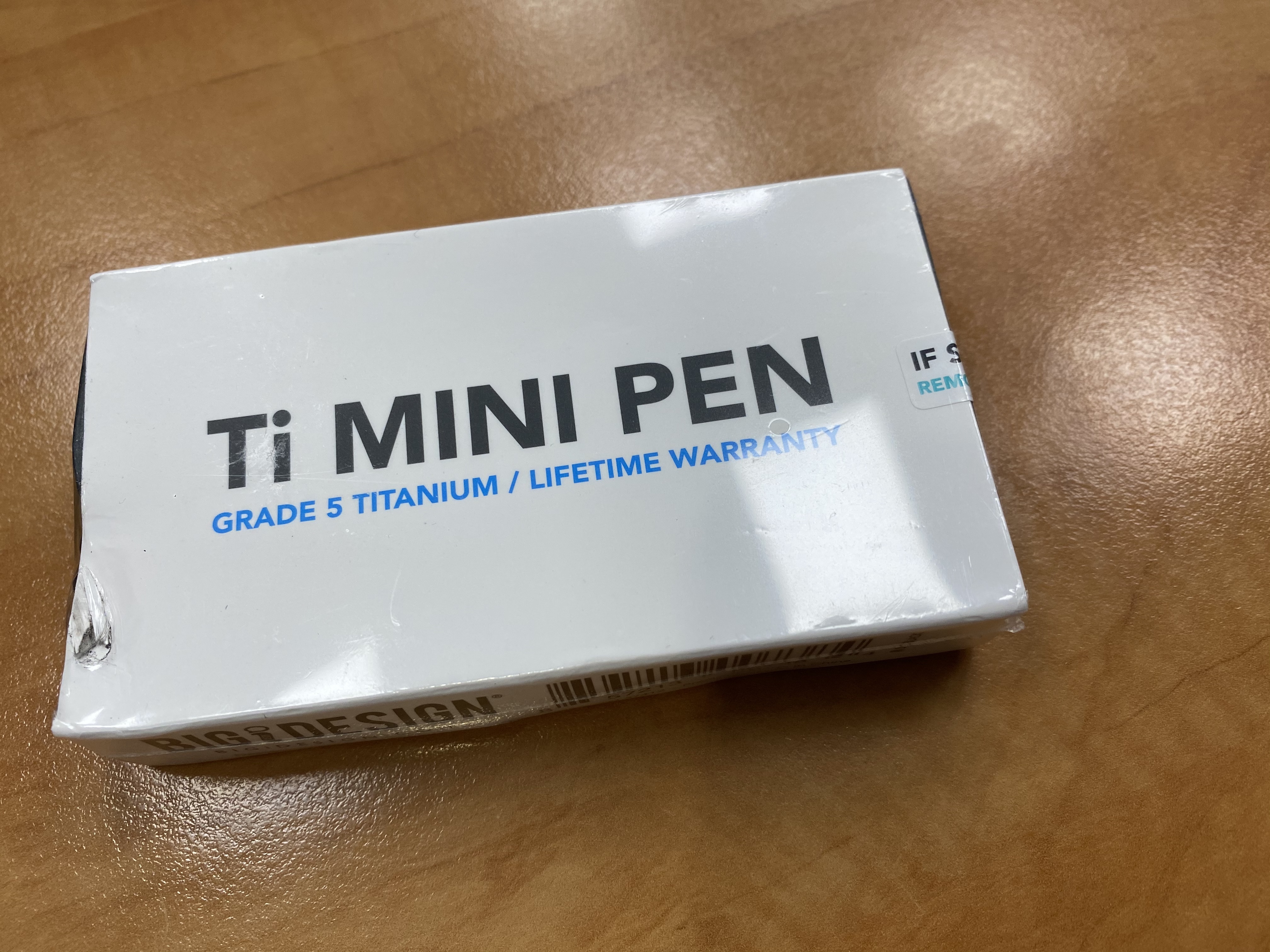
The post was enthusiastic so the package got a bit smashed in transit.

The packaging is standard Big Idea Design: utilitarian, full of useful information, well thought out and designed and with a bit of an Apple vibe to it.

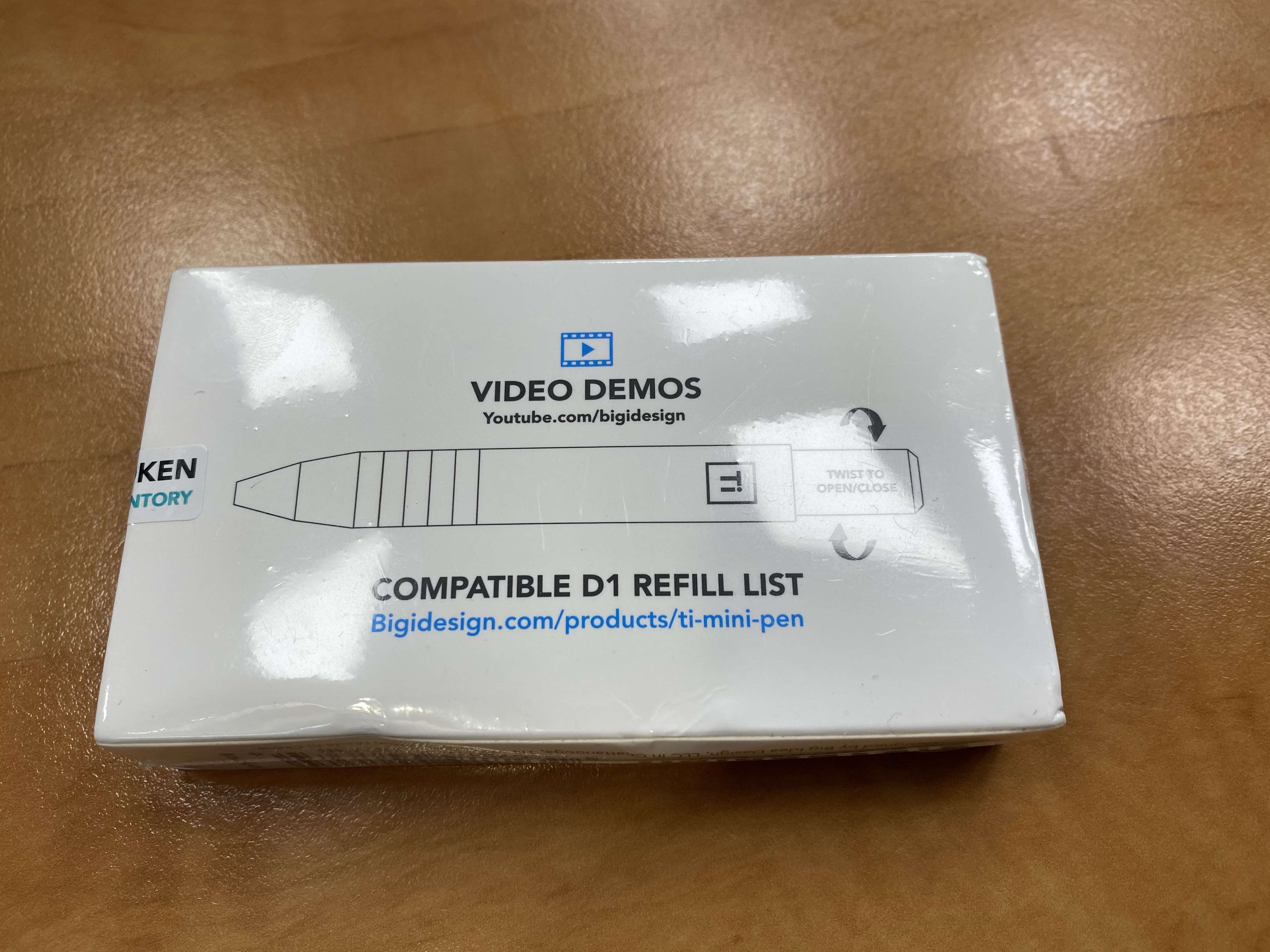
Smashed package, but you get the gist
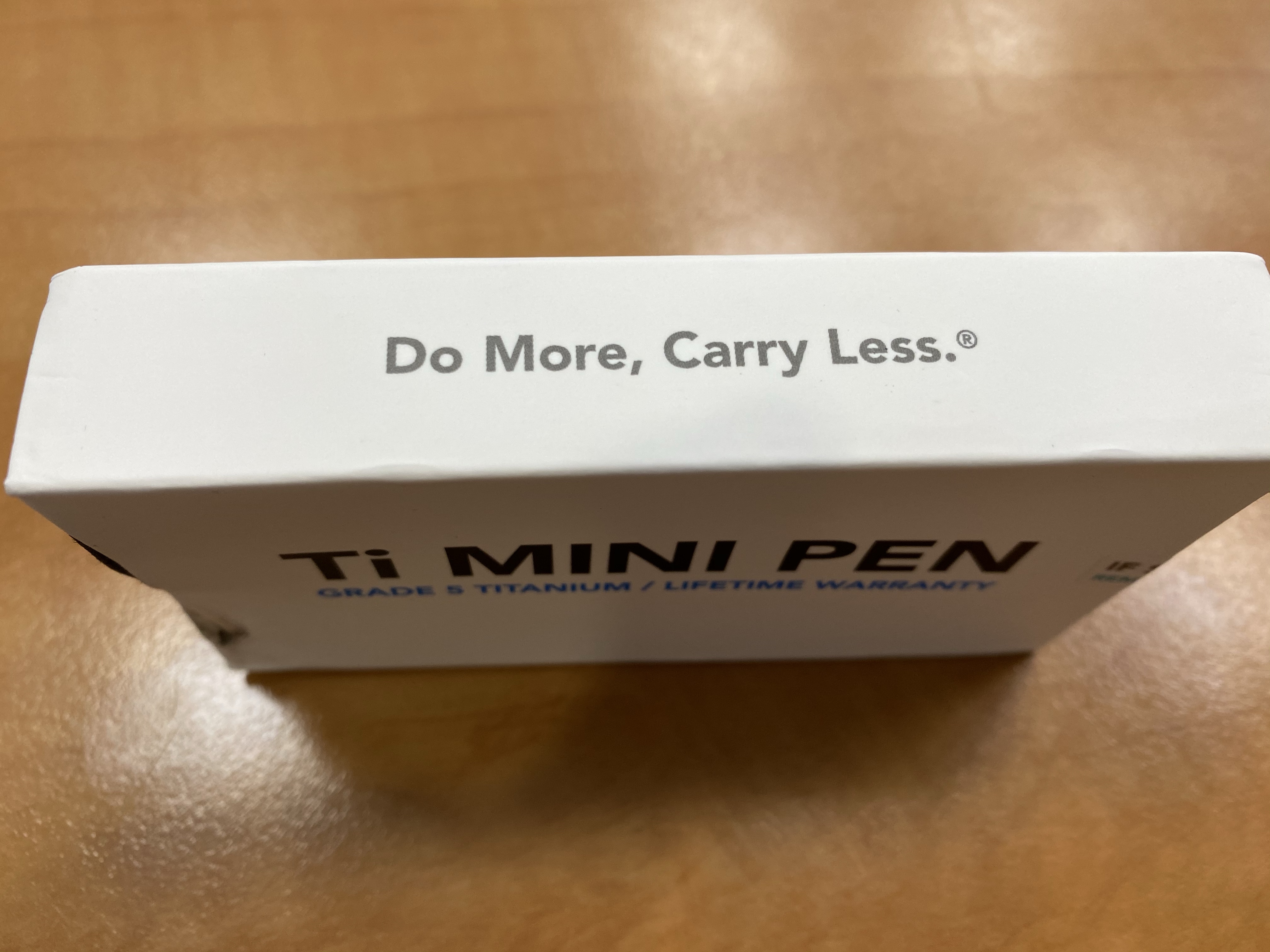
That is just a great tagline
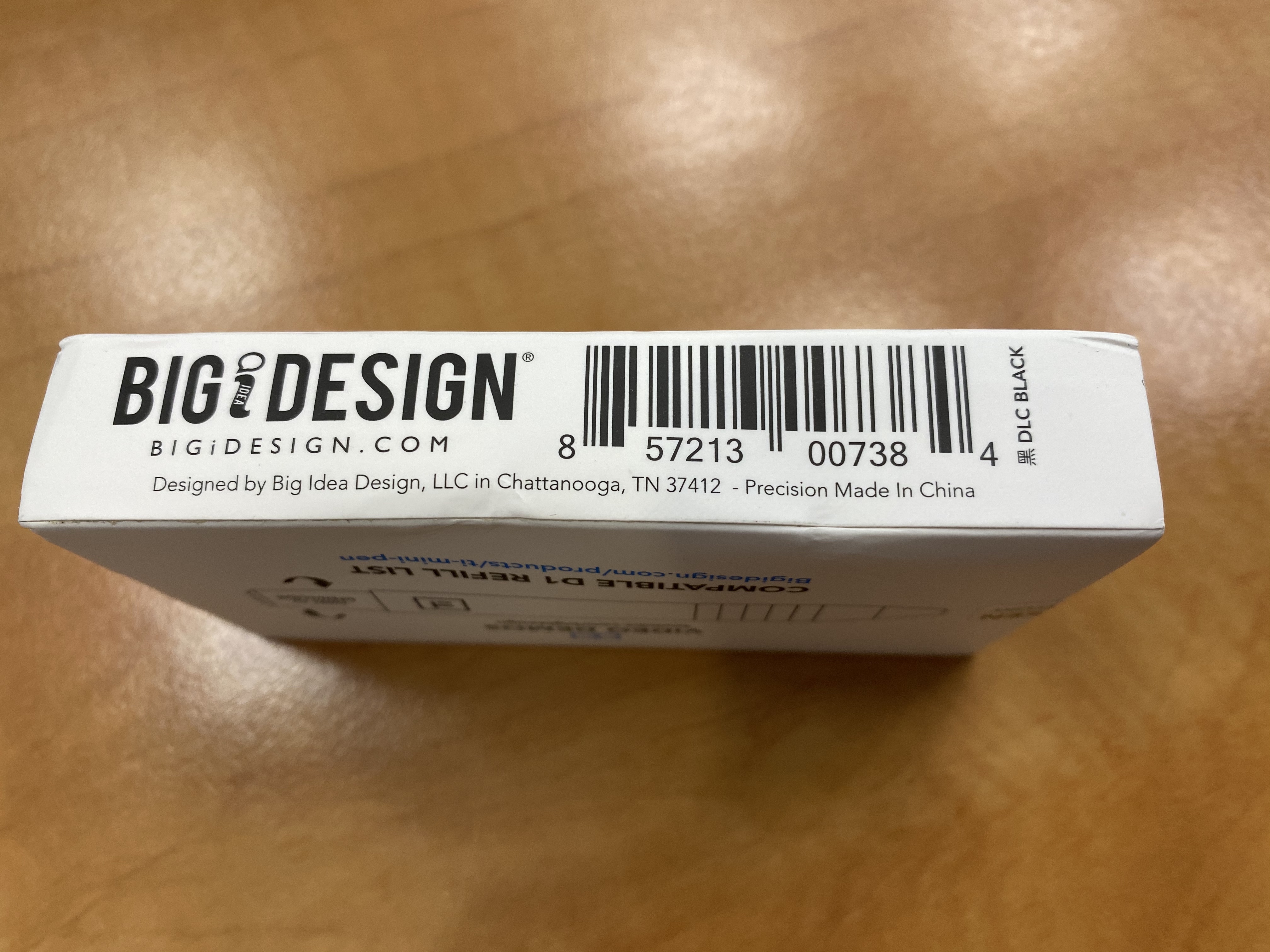
Designed by Big Idea Design, Made in China. Remind you of something?

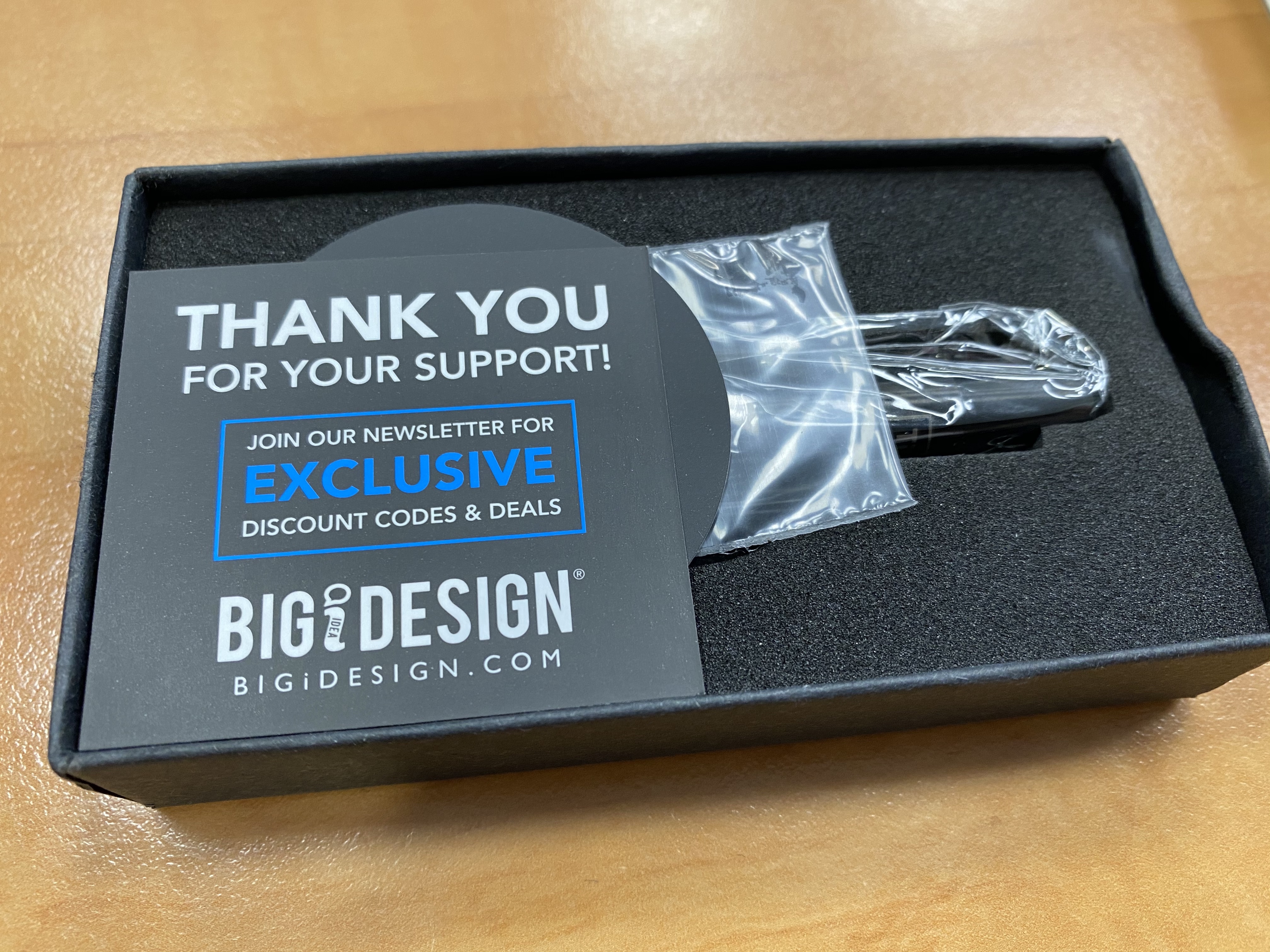
There’s a bit of marketing material when you open the box, but I’m just going to pause and say that I’ve paid a lot more for machined pens that weren’t half as well packed as this, and the reason that my pen survived the rough-handling that my package received is because someone took the time to consider good packaging. And I’m not even someone who usually appreciates packaging (unless it’s particularly good or downright insultingly bad).

Not a scratch on the pen even though the box was smashed in.
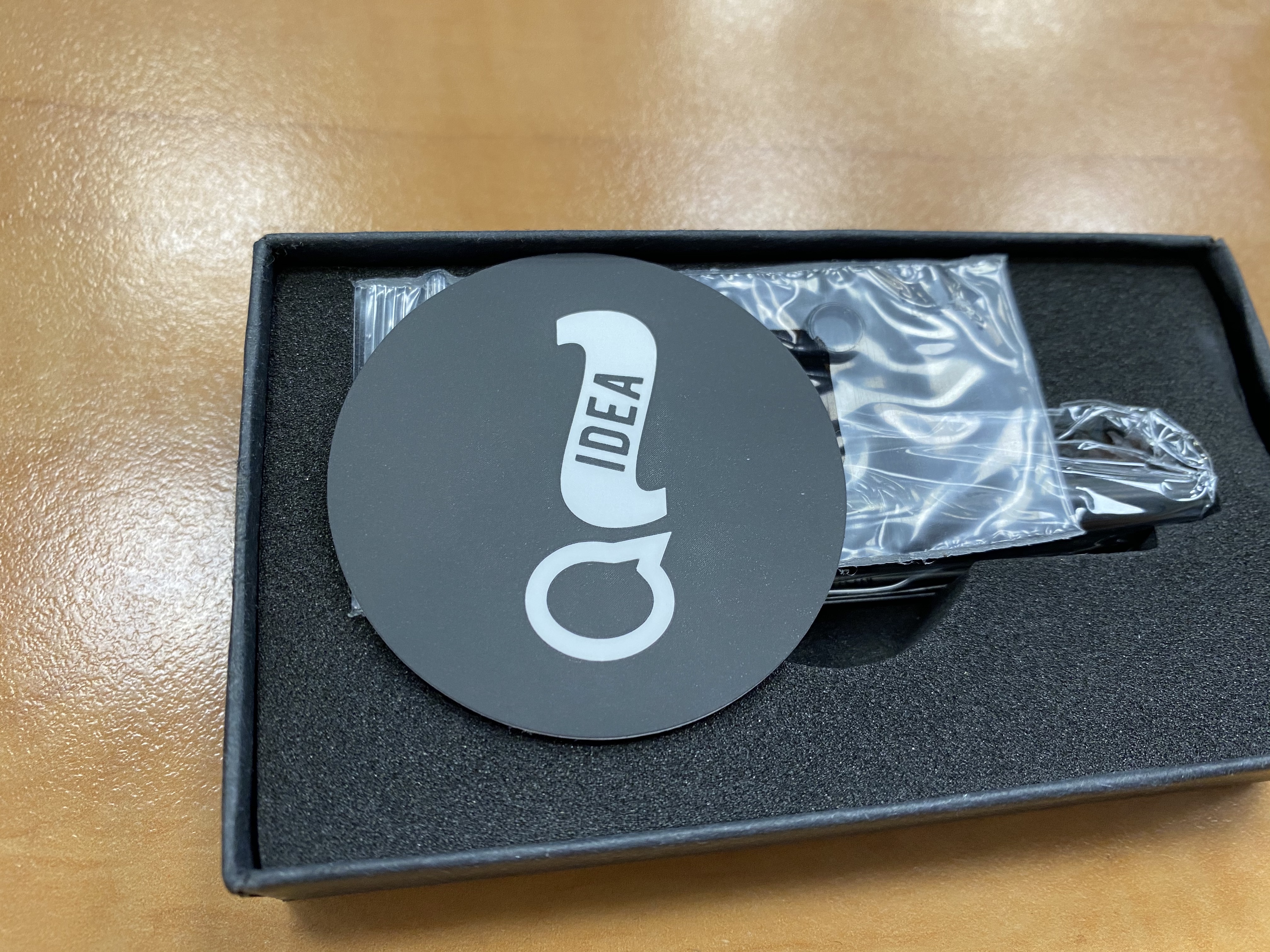
Nice logo sticker to go with the pen.

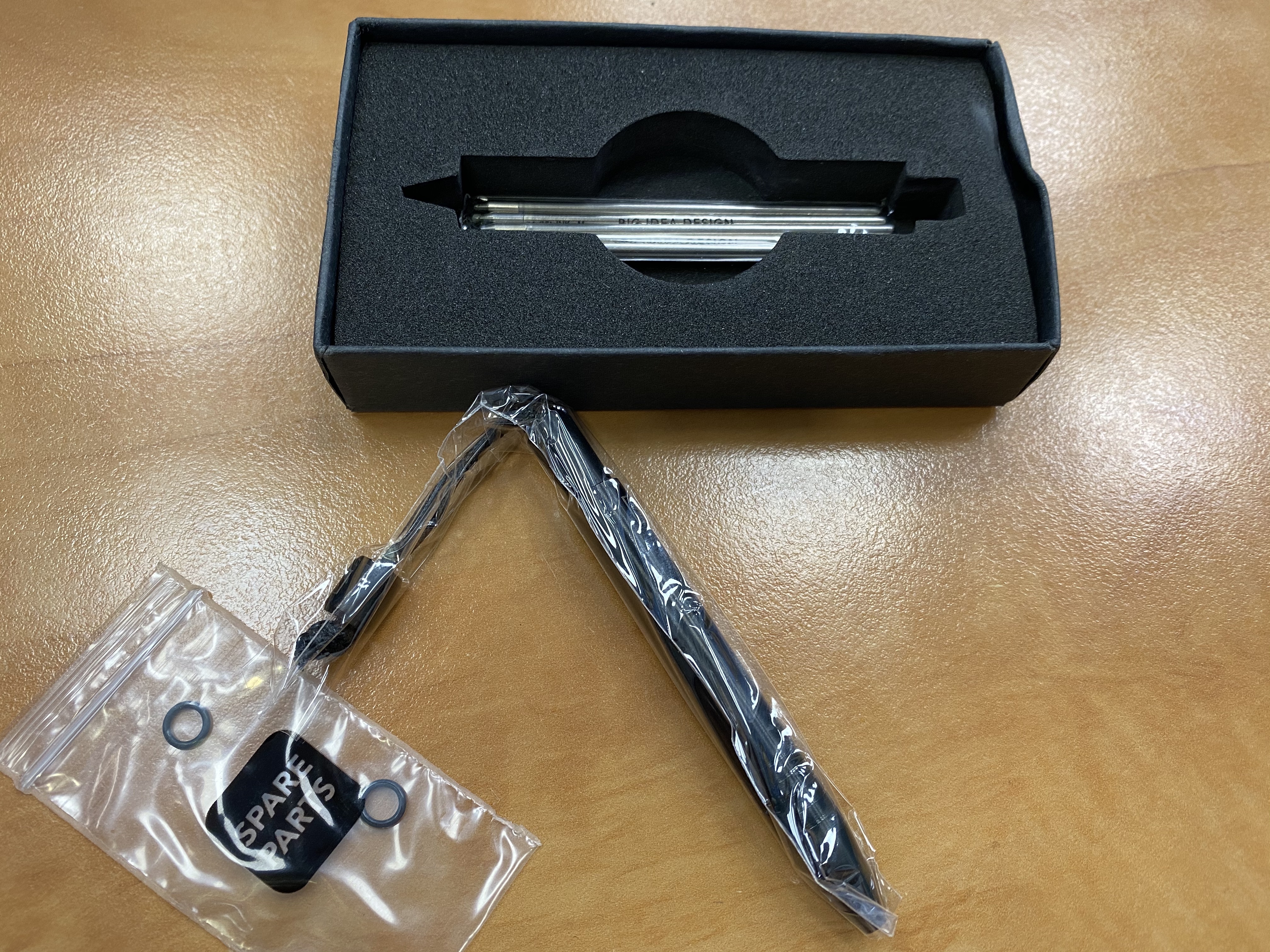
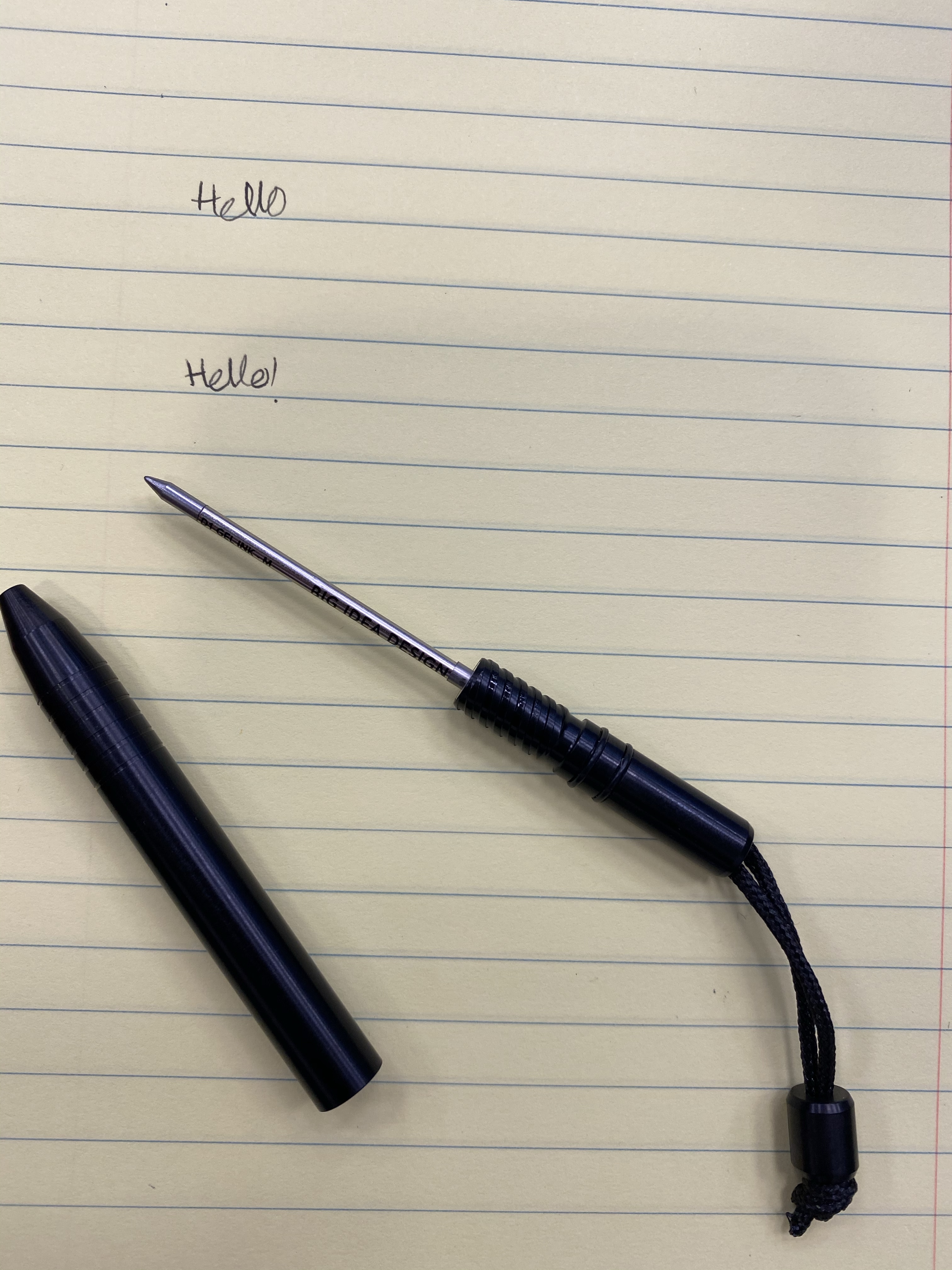
The Ti Mini comes with two spare o-rings and six D1 refills: three gel ink refills (one in the pen, two others in the refill bag), and three ballpoint refills. All refills are Big Idea Design branded, and all of them are medium refills. You have everything you’ll need to write with this pen for months if not for years, right out of the box.

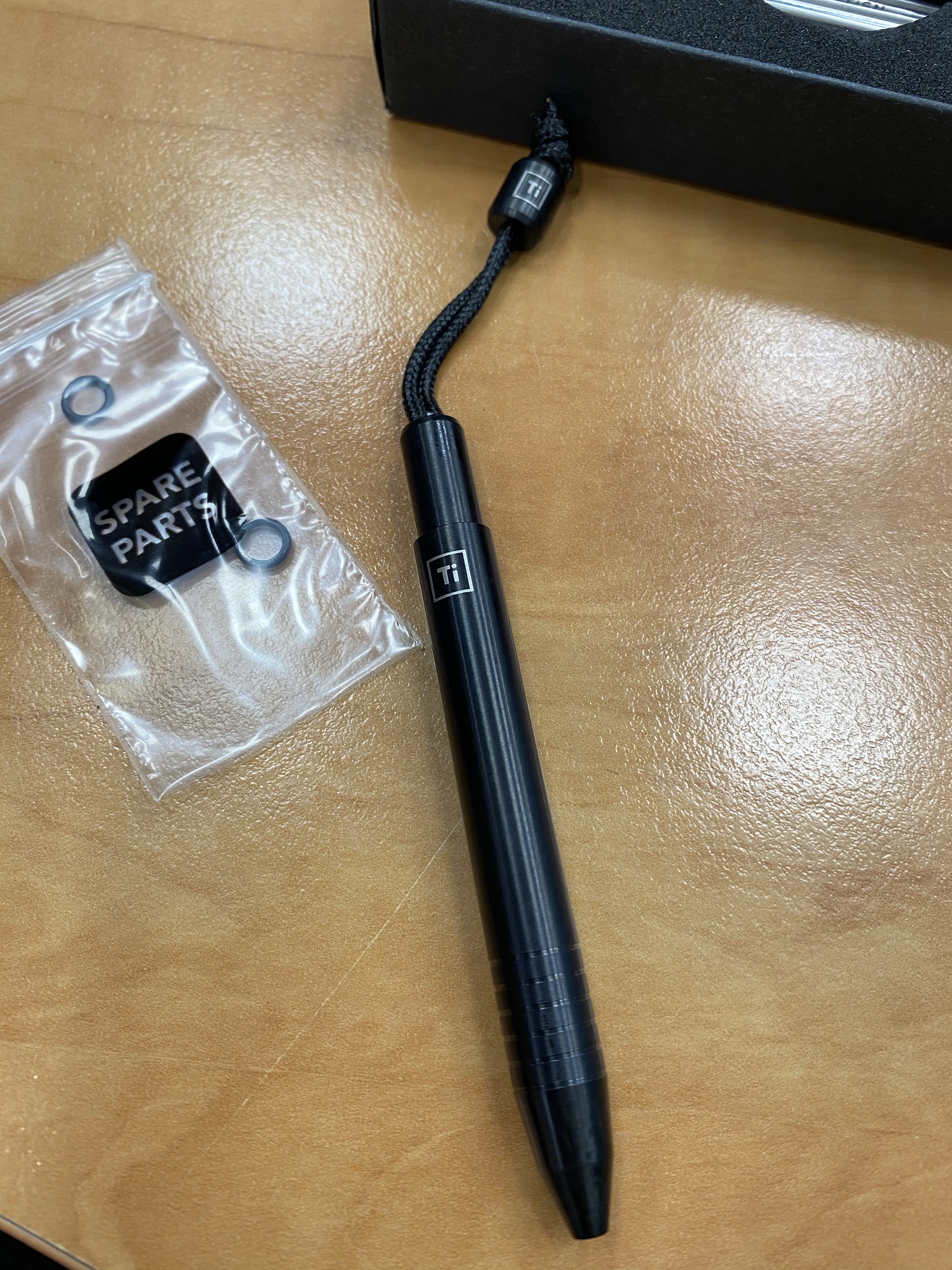
The Ti Mini in DLC Black

The pen has the classic look of any Big Idea Design pen, with an addition of a titanium bead at the end of a lanyard, to make it easy to pull out of your jeans’ change pocket. It’s an extremely well designed pen, built perfectly for its purpose.

The Ti Mini isn’t built for long form writing, but for a few lines and a scribble when you’re on the go it’s perfect. The gel ink refills that came with my pen seem to be duds, which is a shame, and the only strike agains this pen purchase. It’s not too bad though, because if there’s a pen that calls for a ballpoint refill, it’s this one.

Changing refills is a breeze: unscrew the top, and then unscrew the refill, replacing it with another D1 refill by simply screwing the refill in and then screwing the top back on.

If you’re looking for an “emergency” EDC pen, something that’s always there and ready for when you really need it, the Ti Mini is perfect for the job. It also makes for a great gift pen, even though now is not the time when people travel around much (stay at home!). Just be careful not to forget about it and leave it in you jeans when you wash them. The pen will survive, I’m not so sure about the washing machine…

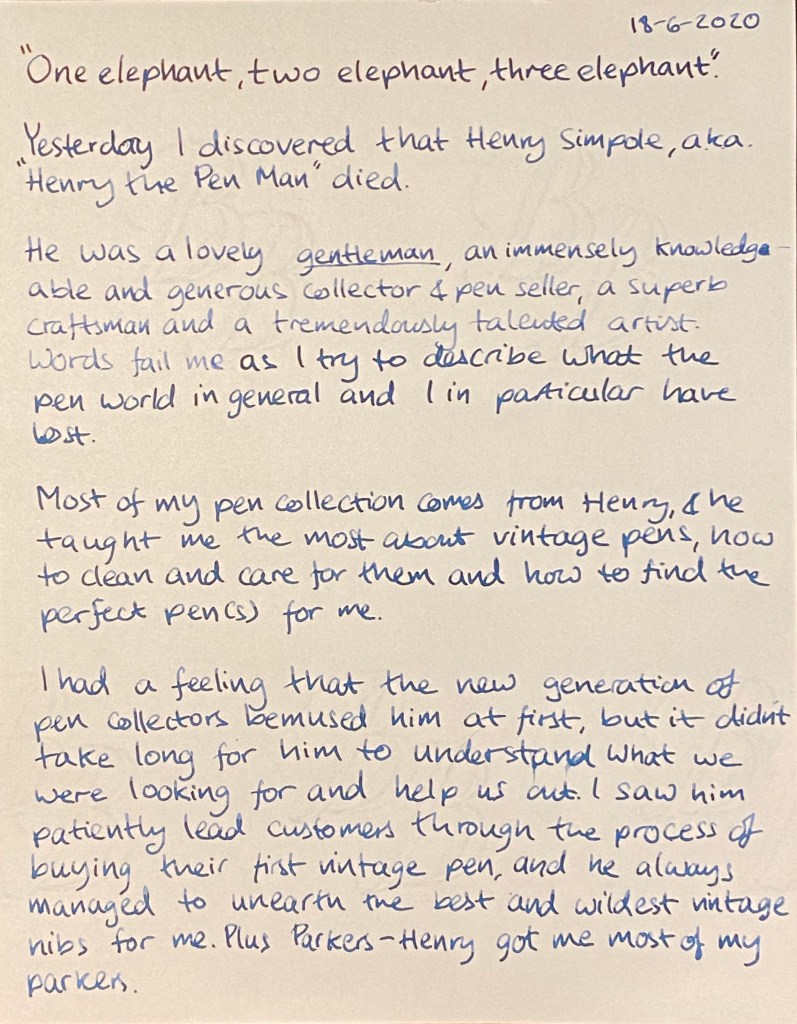
Henry the Pen Man

Find out more about Henry here on his site, and here on the famous “Has anyone heard of Henry Simpole” threads (one and two) on the Fountain Pen Network. Henry’s moniker was Truffle Finder. People are writing kind words and their memories of time spent with Henry here.

This is my favourite Henry story, and if you’re remotely interested in Esterbrook you should give it a read.

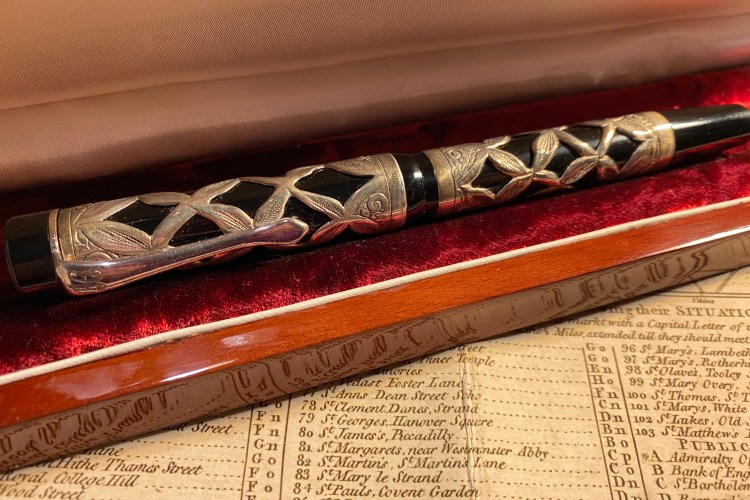
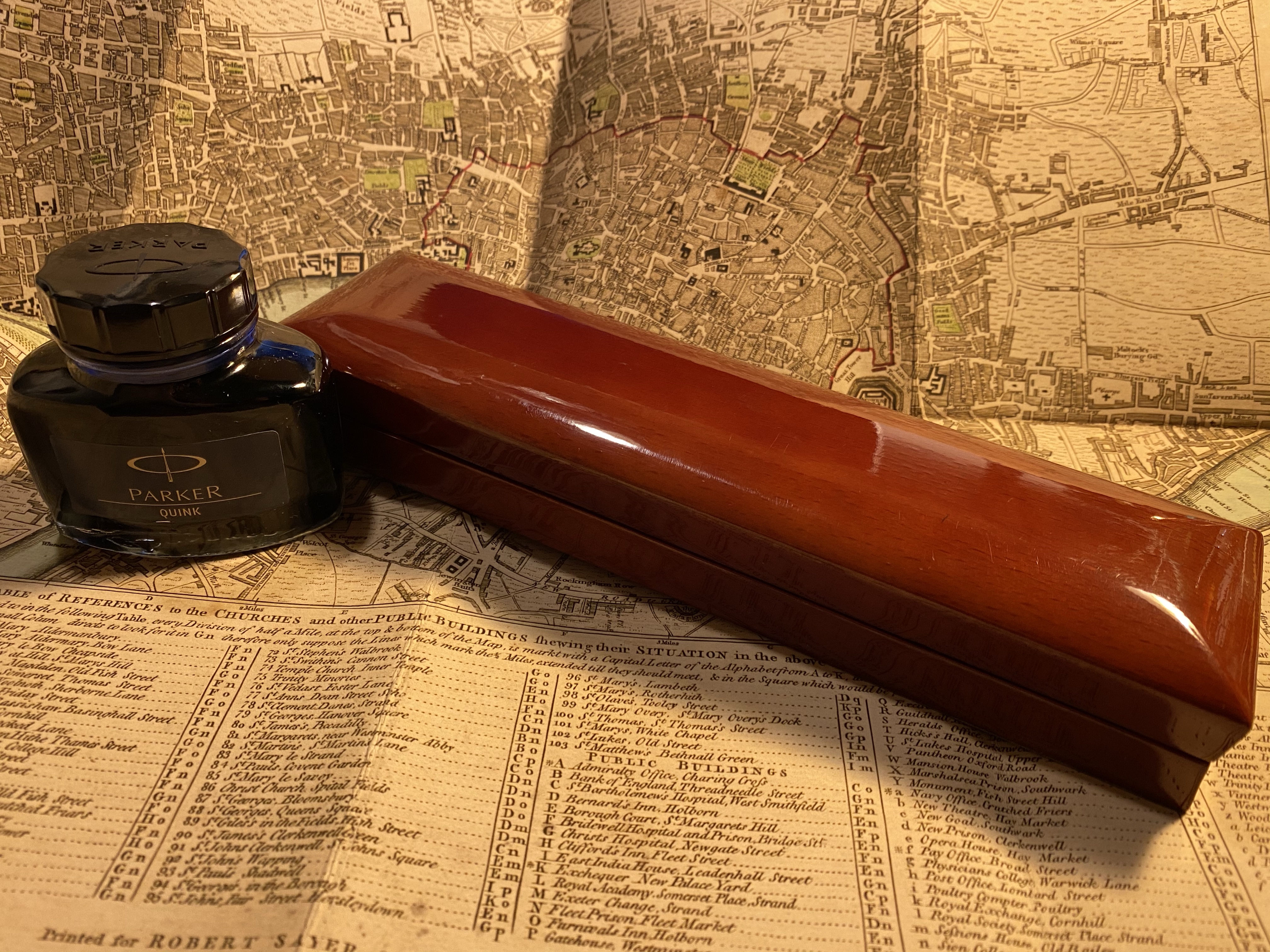
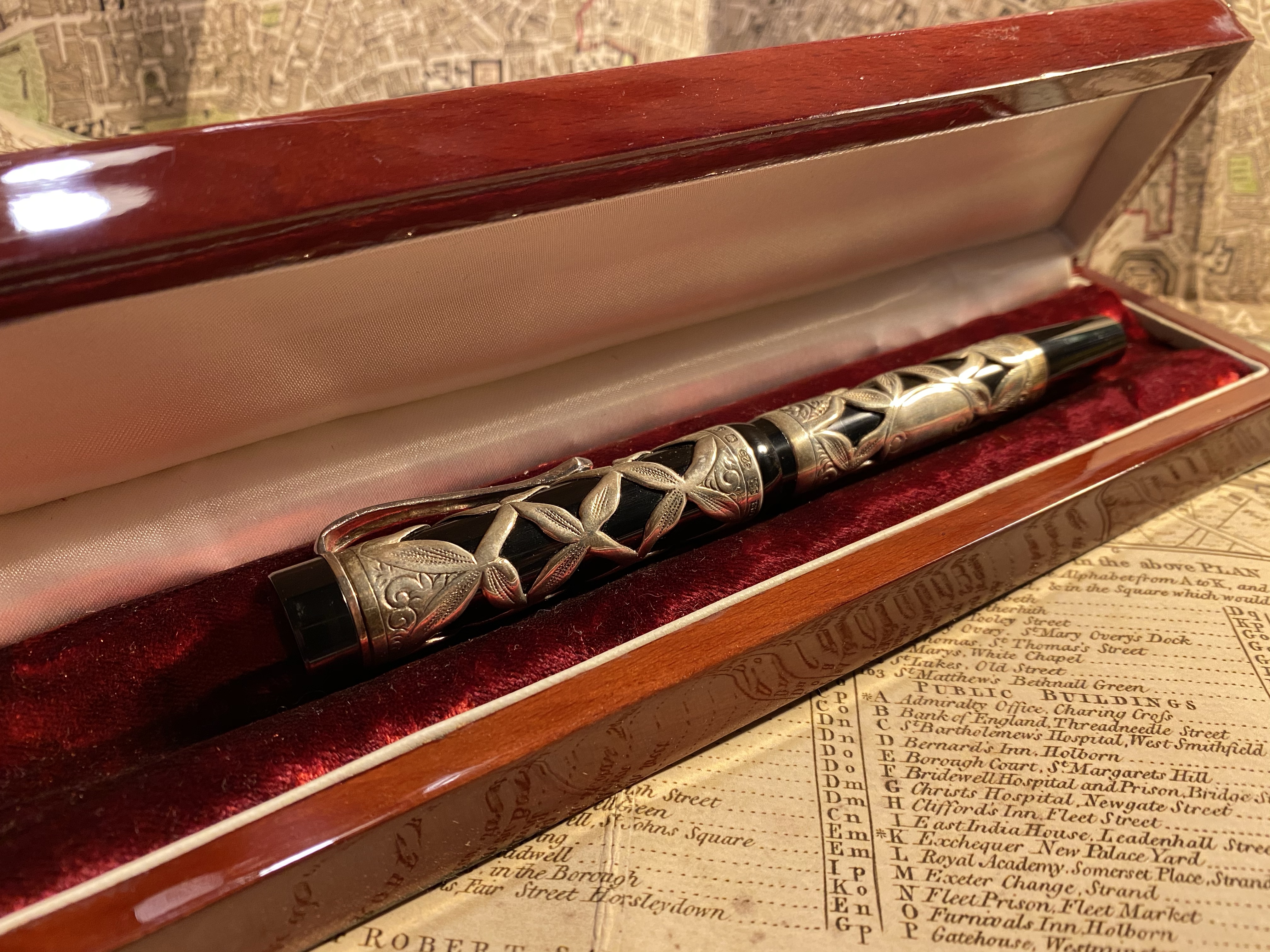
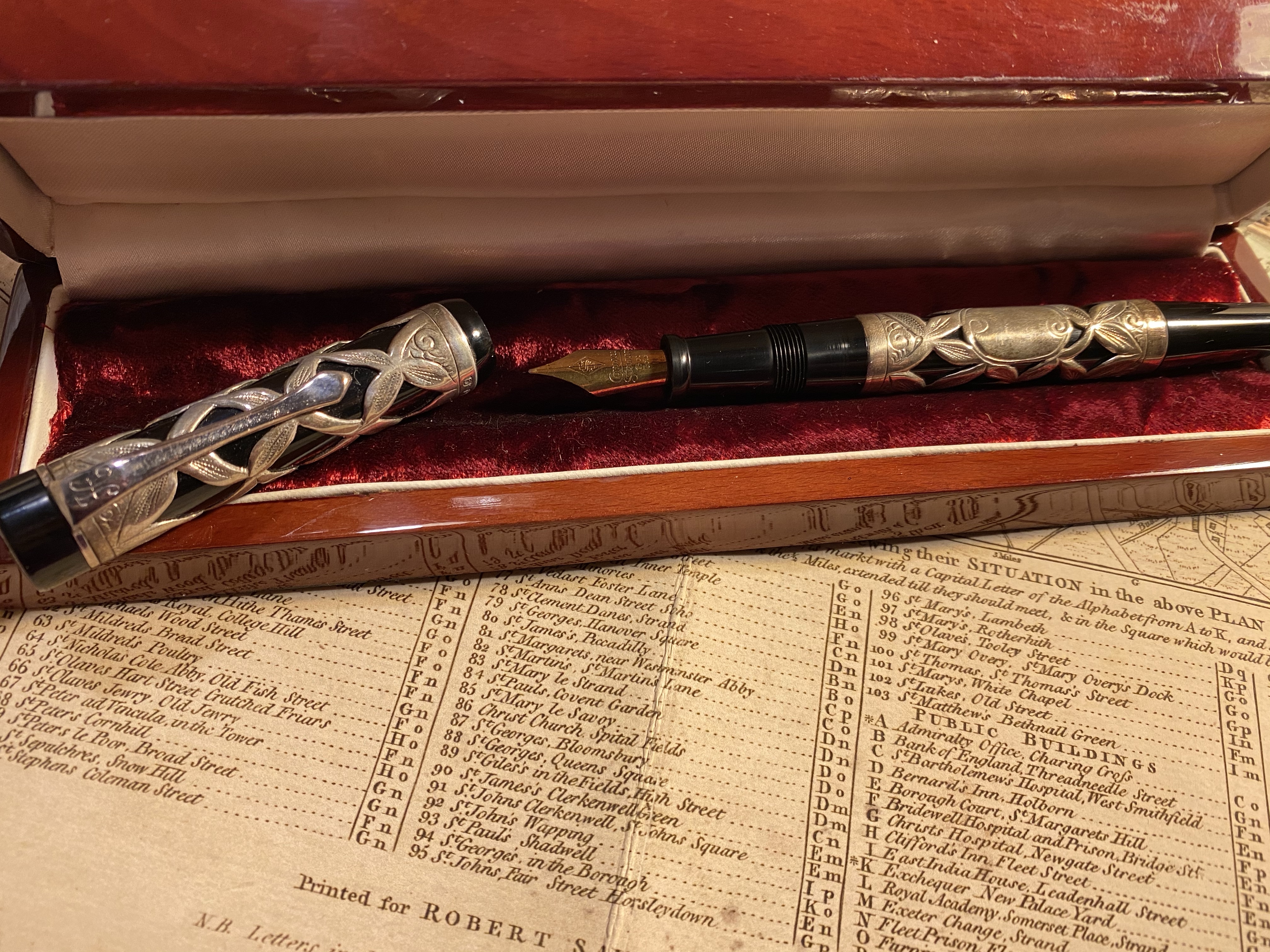
Read here about the Jasmin pen. I’ve attached photos of mine below.

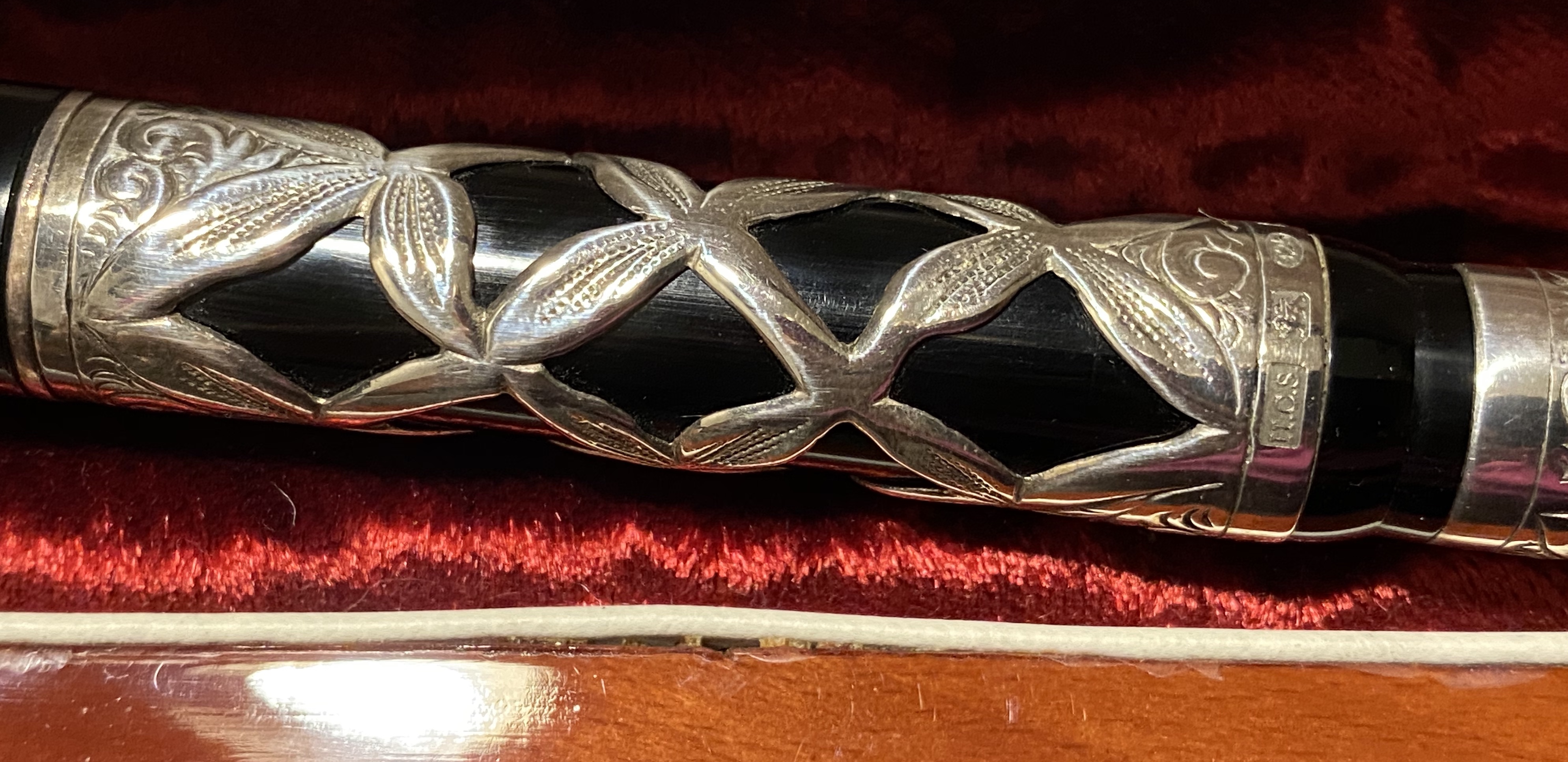
You can see both Henry’s beautiful work and his hallmark here.

Caran d’Ache Nespresso India Green

When Caran d’Ache came out with this year’s limited edition Nespresso capsule 849 pen I breathed out a sigh of relief. I’m not a fan of their India capsules, and their olive green colour doesn’t speak to me, so I thought that it would be an easy pen to skip. Their previous collaboration, the Darkhan, was an excellent pen overall, especially as a gift purchase to the Nespresso or pen lover in your life, and I also loved the capsules and loved their colour.

Well Cult Pens celebrated their 15th anniversary, and I needed some refills, and somehow or other the India 849 found itself in my basket. I thought I would gift it away, but once it arrived I knew that this pen is staying with me.

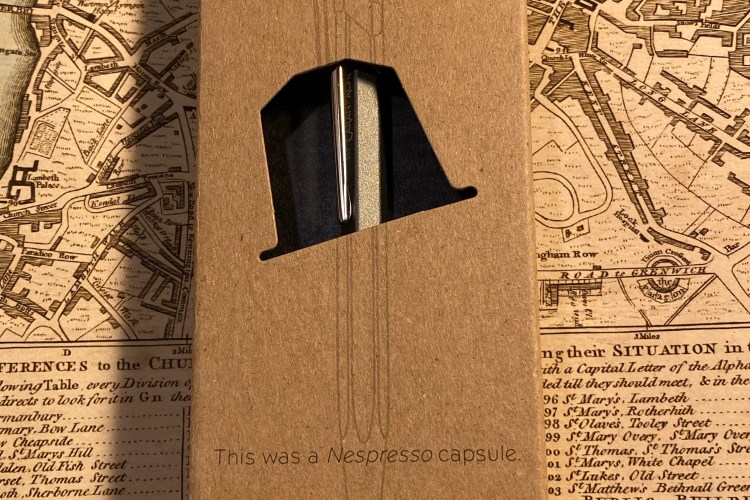
As with the previous edition, the packaging on this pen is genius. It shows off the pen and what it is beautifully, and it’s so well made and well considered. On the front there’s the “This was a Nespresso capsule” label, and a sketch of the pen that fits perfectly with the way the pen is presented in the box (that’s not left to chance. The box is designed so the pen will stay put in semi profile and show off the subtle “Caran d’Ache” logo underneath the clip).

Limited Edition, Caran d’Ache 849, Series No 02.

On the back there’s a short explanation about what makes this pen special:

Inside the pen is securely slotted in its superbly designed cardboard housing, and here you can catch the first glimpse of why I decided to keep this pen: its colour.

This is a beautiful pen that doesn’t photograph well. Its colour is wild, if subtle could be wild. It’s a cool grey with a slightly green hue. I’ve never had a pen like it, and the result is very, very cool.

Unlike most 849’s and just like the Darkhan edition, this pen has writing on it beyond the hidden Caran d’Ache and the “Swiss Made”:

Made with recycled Nespresso capsules.
849 Caran d’Ache and Swiss Made, standard imprints on 849 pens.

The 849 is a ballpoint and has an excellent out of the box Goliath Caran d’Ache refill. I’m not a fan of ballpoints, so I switched my refill out with the 0.7 Parker gel refill in black, and now I can’t put this pen down. This pen weighs more than the featherweight 849, and it has a textured finish. The result is the 849 pen, only better.

The writing on the top of the page is with the original Goliath refill, and below it the writing is with the Parker gel refill.

I highly recommend this pen to anyone who is even slightly interested in the Caran d’Ache 849, as it’s a significant improvement over an already great pen design. It makes for a great gift, and a great pen to carry around with you (just make sure nobody tries to nick it from you). I hope that Caran d’Ache and Nespresso continue this collaboration, and I can’t wait to see which capsule colour they select next.

Kaweco AL Sport Blue Stonewashed Review

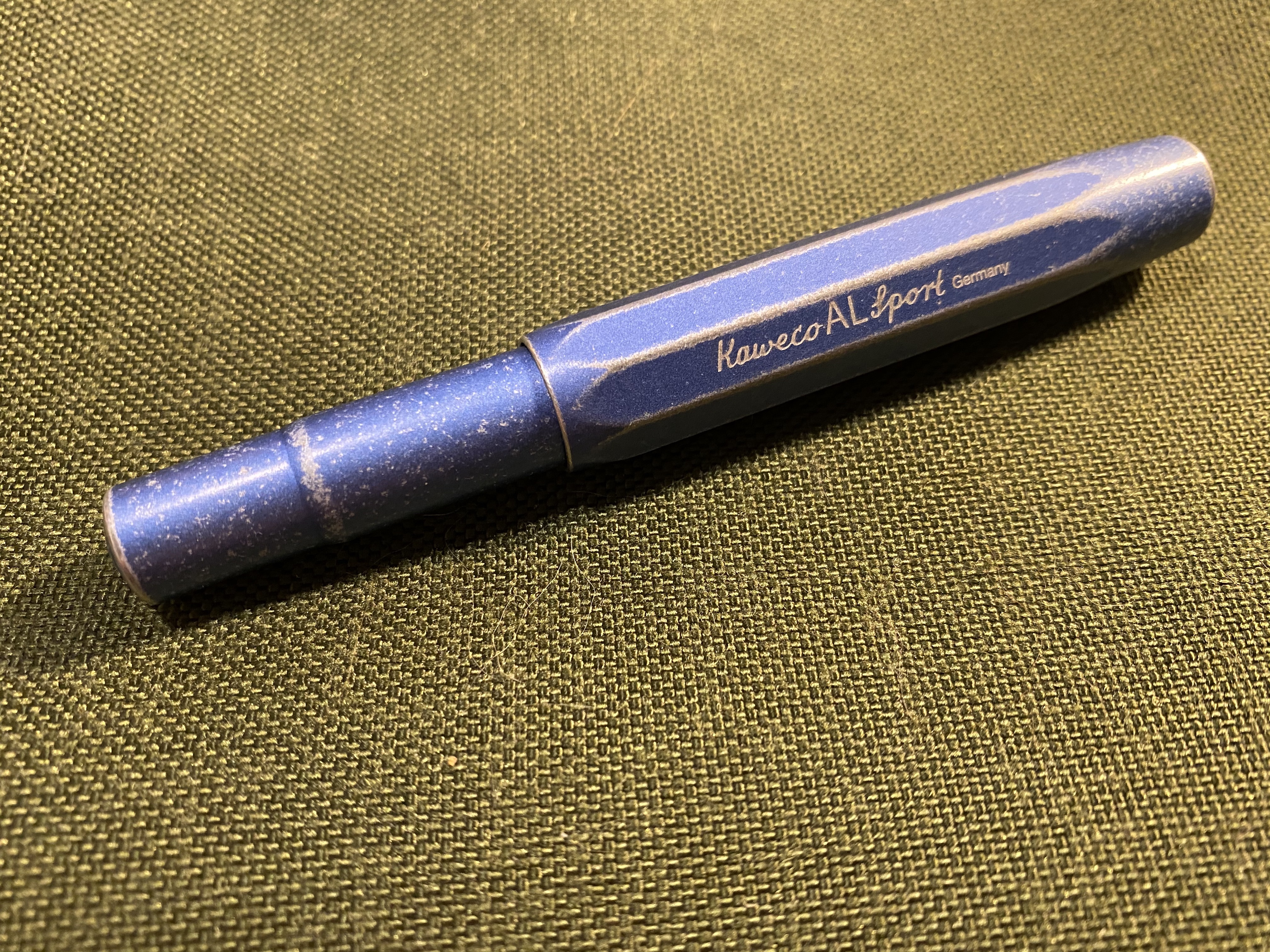
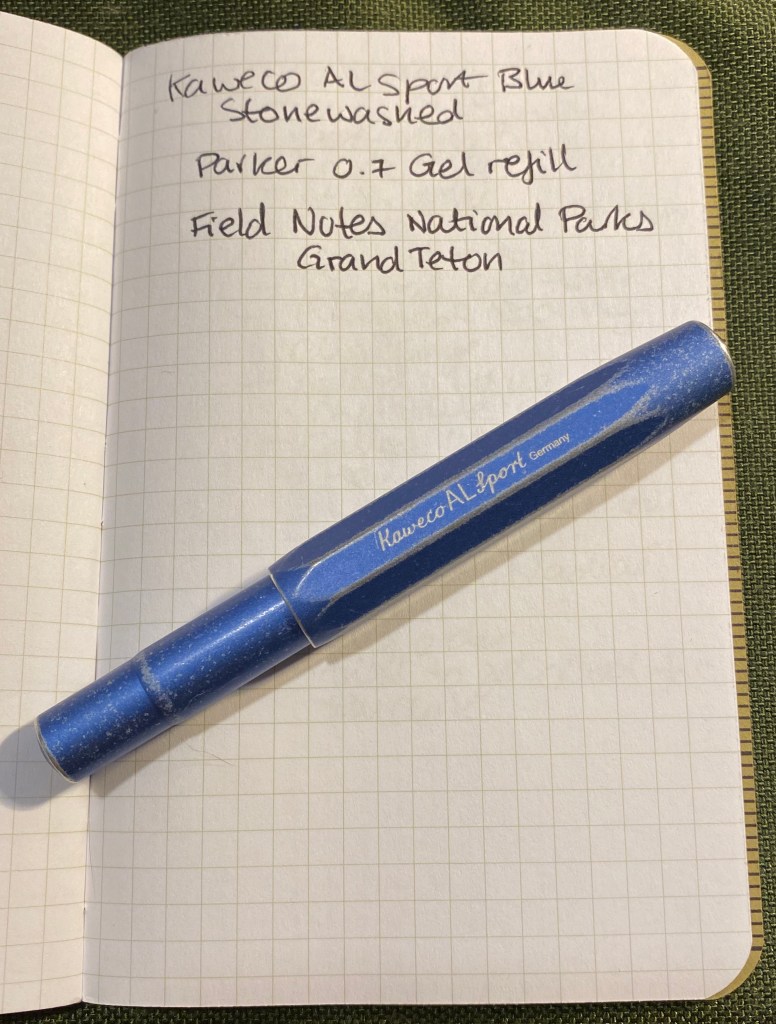
I’m not a fan of pocket pens, mostly because women’s pants usually don’t have room for them. Couple that with my fear of forgetting a pen in my pocket and then putting the pants through the wash, and you can see why I have so few of them. However, in 2014 Kaweco came out with the AL Sport Stonewashed and I just couldn’t resist.

This is such a cool look for a pocket pen.

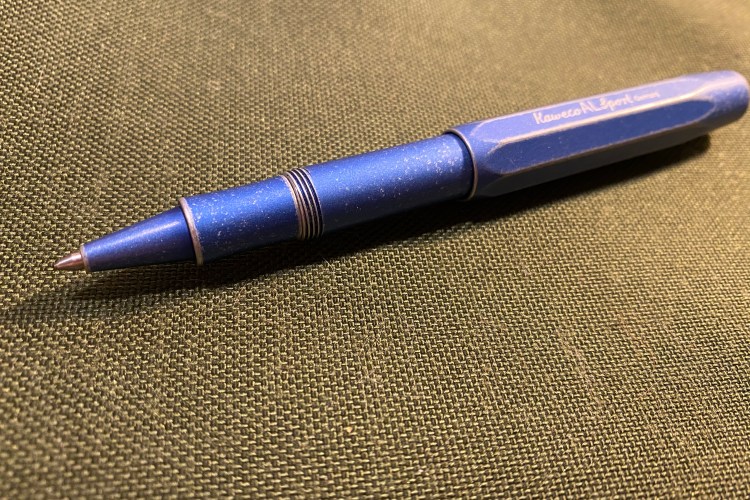
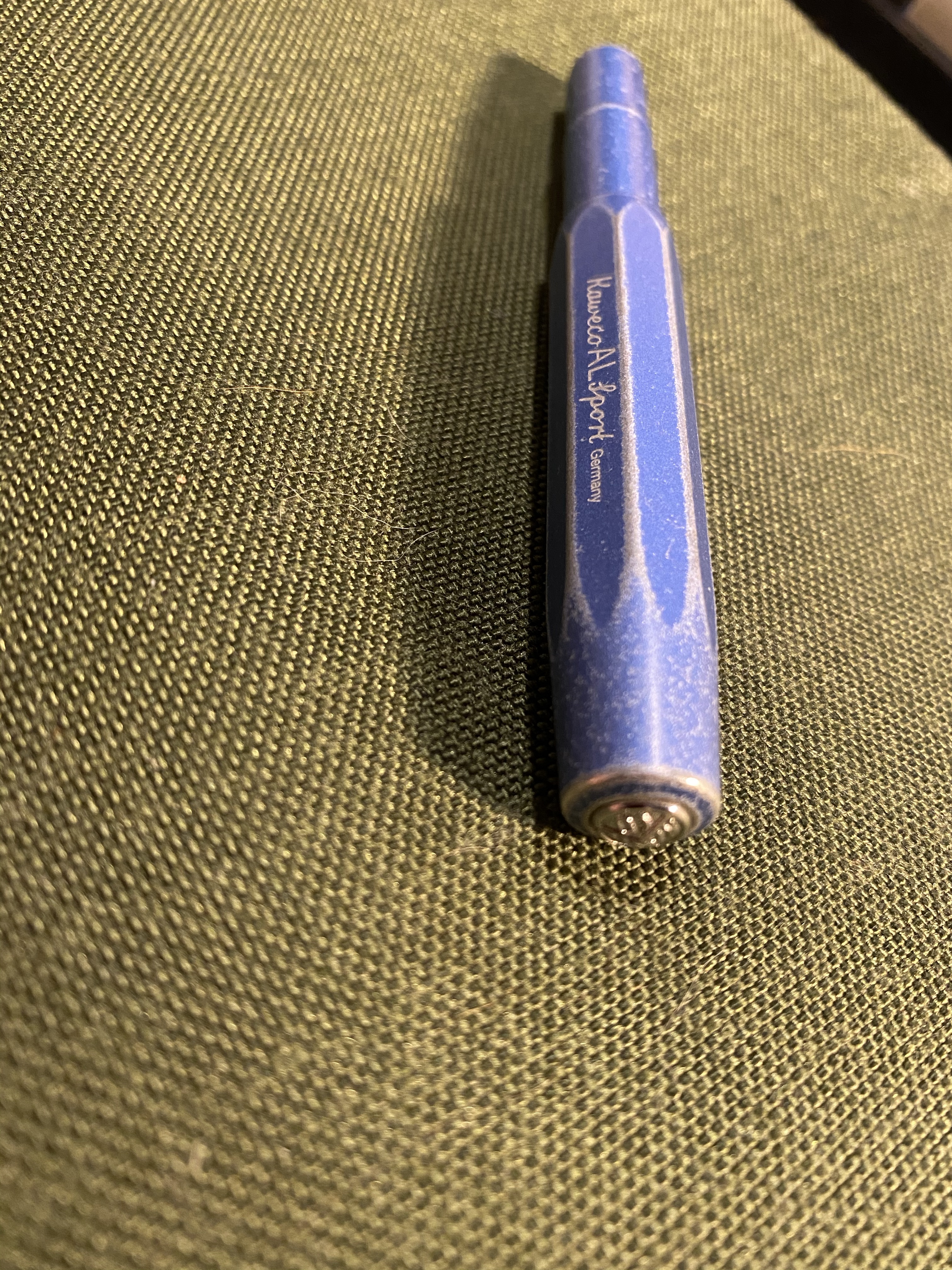
The Kawecon AL Sport Stonewashed is the classic Kaweco Sport pen, in aluminum, stonewashed to give it a worn denim look (especially in the blue version of this pen). The pen really has been worn down, so each pen is unique, and the chips and dings have been smoothed over so it still feels great to write with.

You can see the finish best on the various edges of the pen, and they just work so well with the Kaweco Sport design. This is a pen that’s meant to bash around in your pocket or bag, and the stonewashed finish just highlights that.

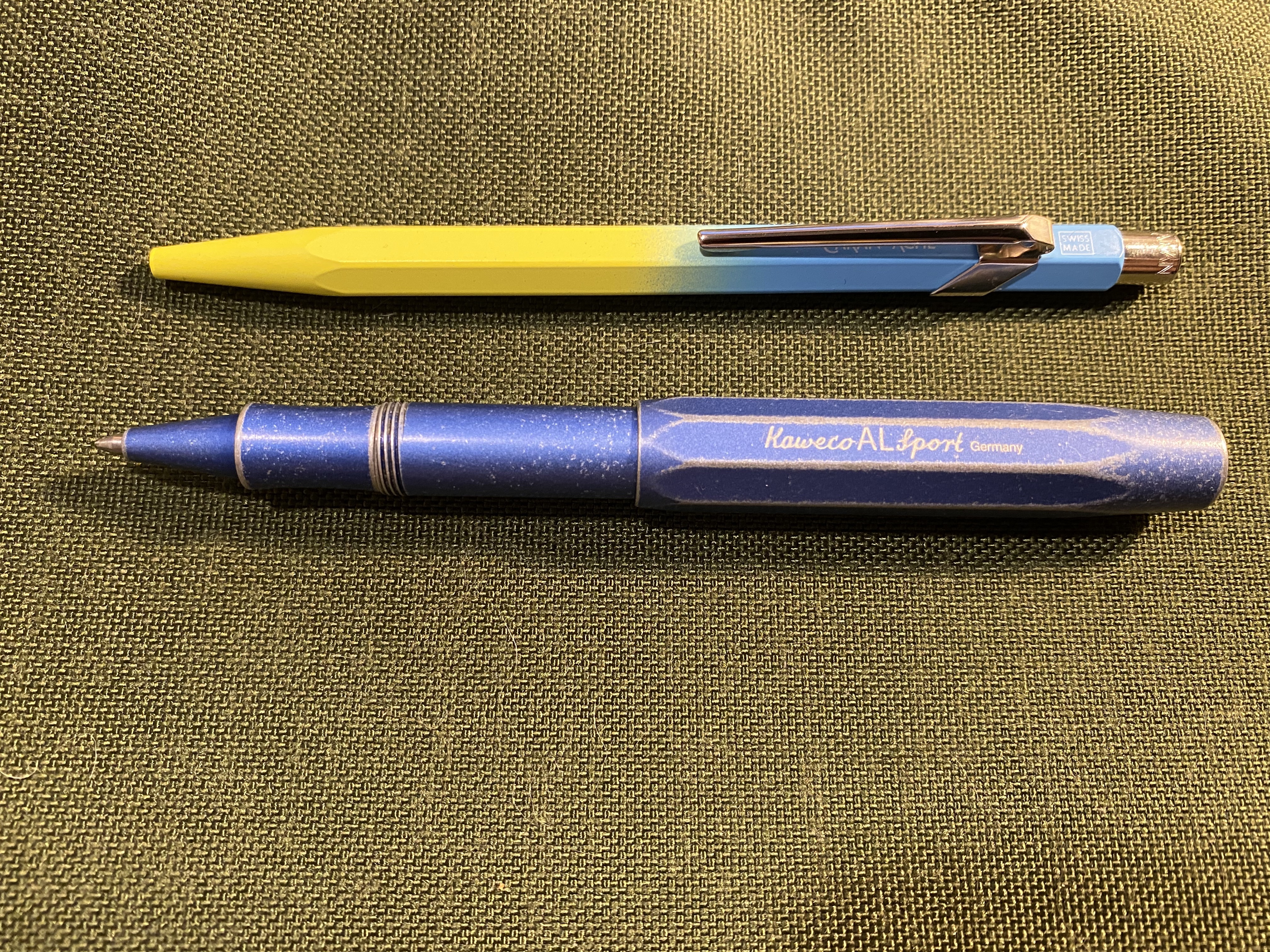
Caran d’Ache 849 Tropical on top, Kaweco AL Sport Stonewashed on the bottom.

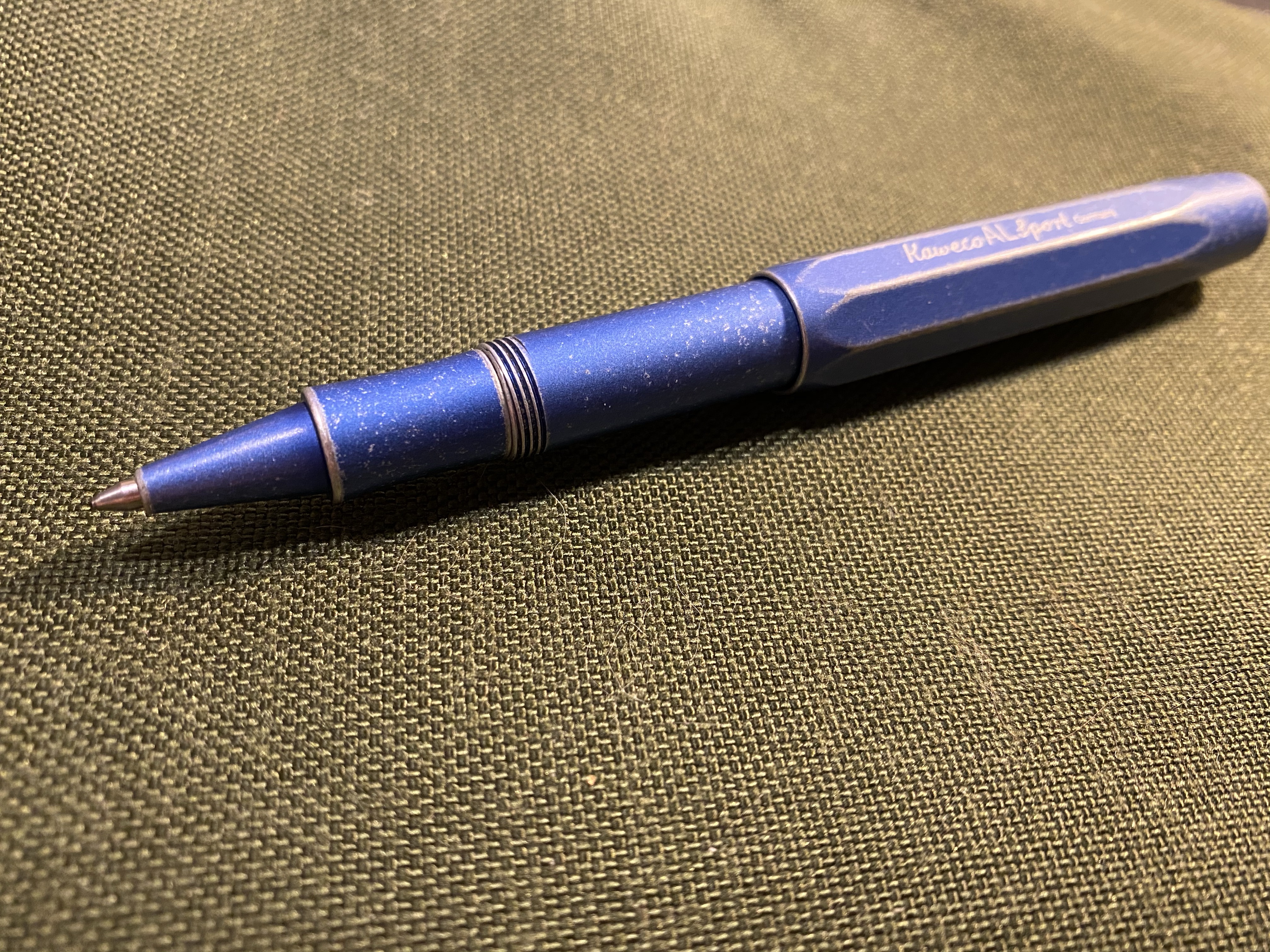
The AL Sport is ridiculously small when uncapped to the point where it’s unusable, but this is a pen that never was designed to be used uncapped.

Capped it becomes a standard length pen with a pretty wide barrel, which makes it surprisingly comfortable to write with even on longer writing sessions.

The only flaw in this pen is the way that the refill tip clicks when you lift it off the page. There’s some play at the tip end, so while it won’t affect your writing style, you will hear it when you write. This is the case with the original refill and the Parker 0.7 gel refill that I replaced it with.

If you can live with that minor annoyance, then the Kaweco AL Sport Stonewashed is a marvellous pen to buy. As someone who uses mechanical keyboards, I like objects that add sound effects to my writing progress, so the little clicks this pen makes only make it more charming to me.

Rotring 600 Levenger Fountain Pen and Rollerball Review

I haven’t bought a fountain pen on eBay in years, but when I decided to celebrate completing a six month intensive DevOps course, I headed out to eBay in search for the Rotring 600 Levenger rollerball. Yes, you read that correctly, I was looking for the Rotring 600 rollerball, not the fountain pen. I love the design of the Rotring 600 Levenger pens, but I thought that there was zero chance that I’ll manage to snag a good quality fountain pen, not to mention a fountain pen and rollerball set, so I decided to focus on the cheaper to obtain rollerball. As it turned out, I landed on an estate sale Rotring 600 set, and managed to get a Rotring 600 Levenger fountain pen and rollerball in great condition for a pretty good price.

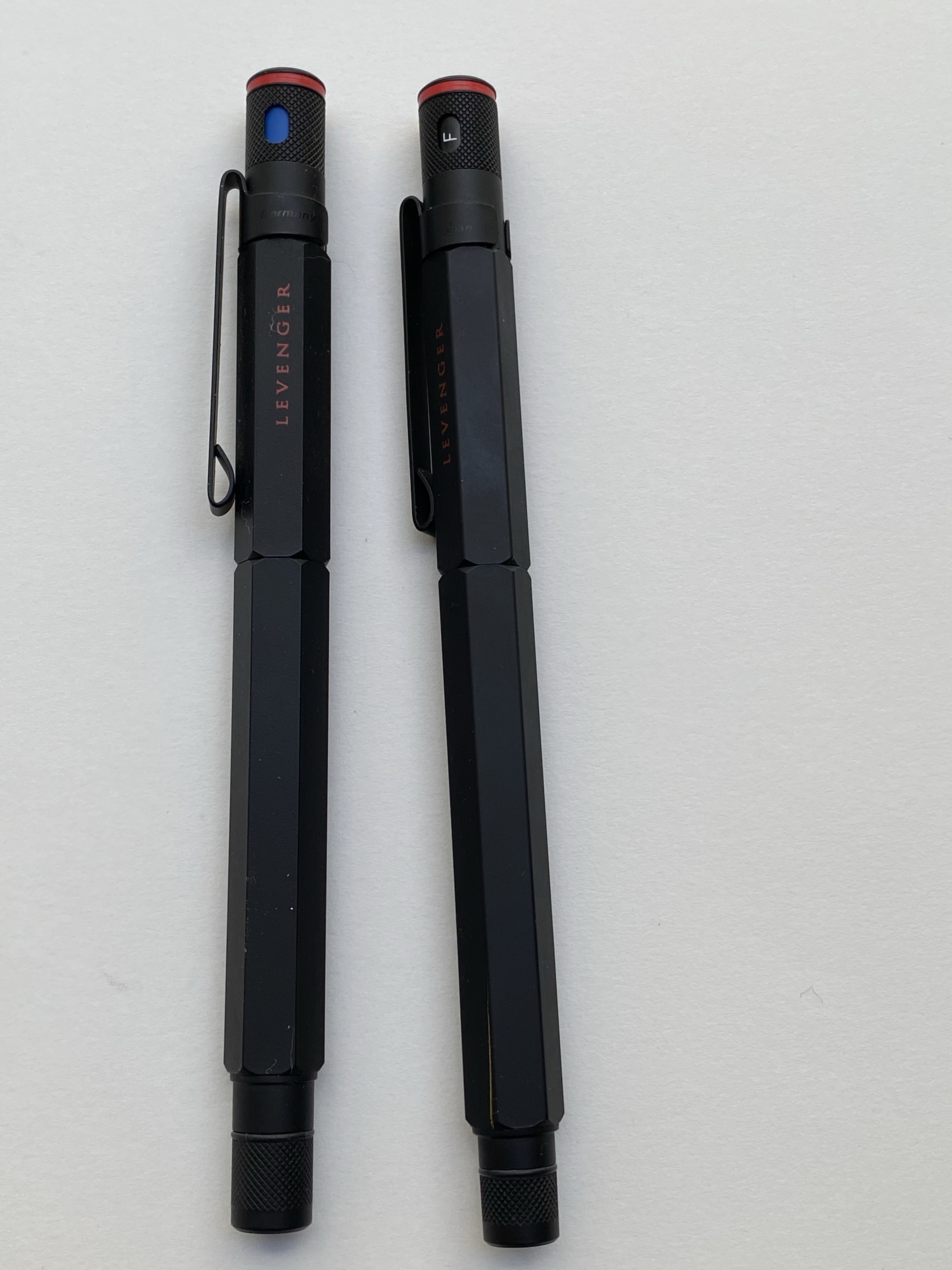
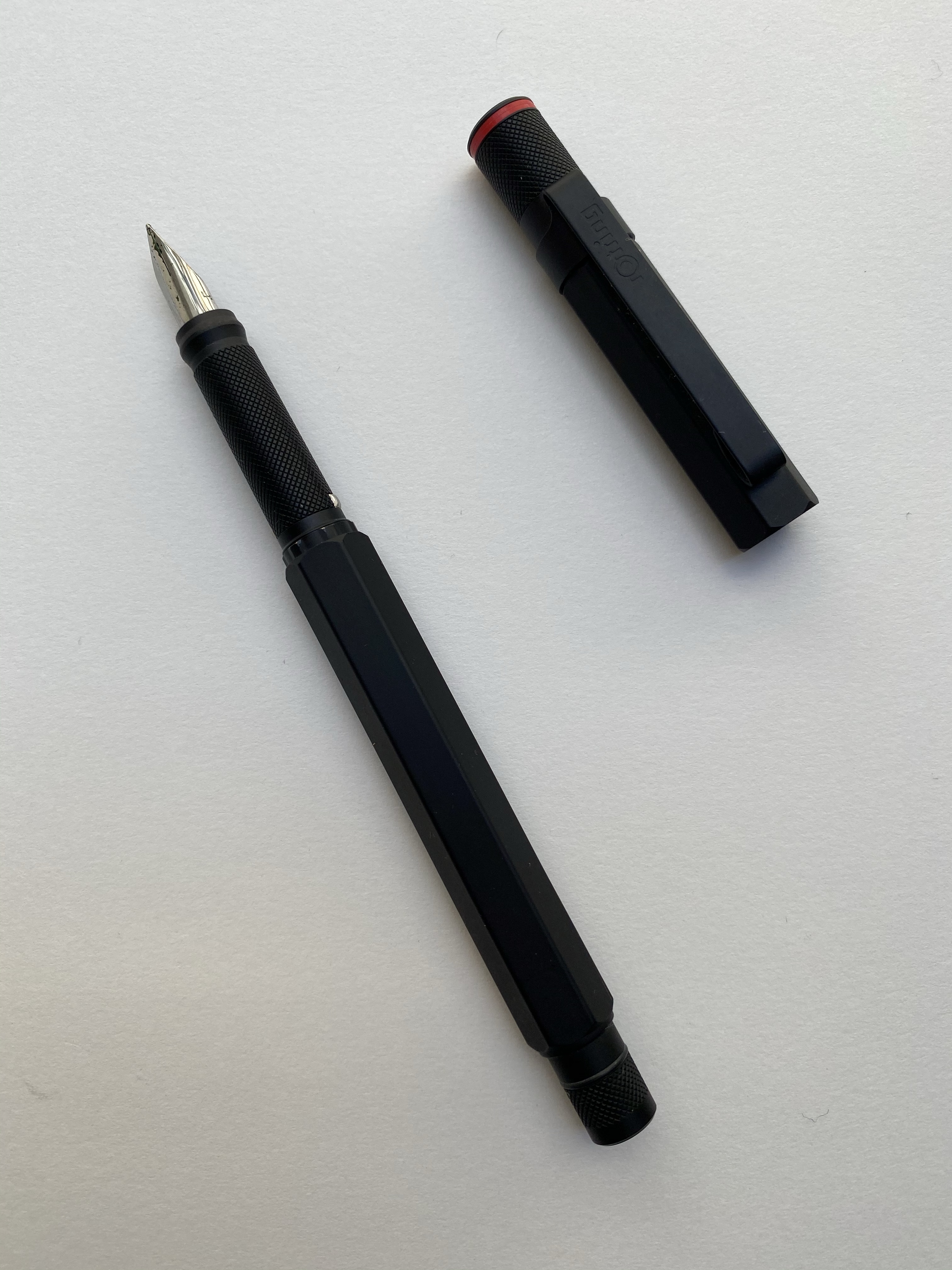
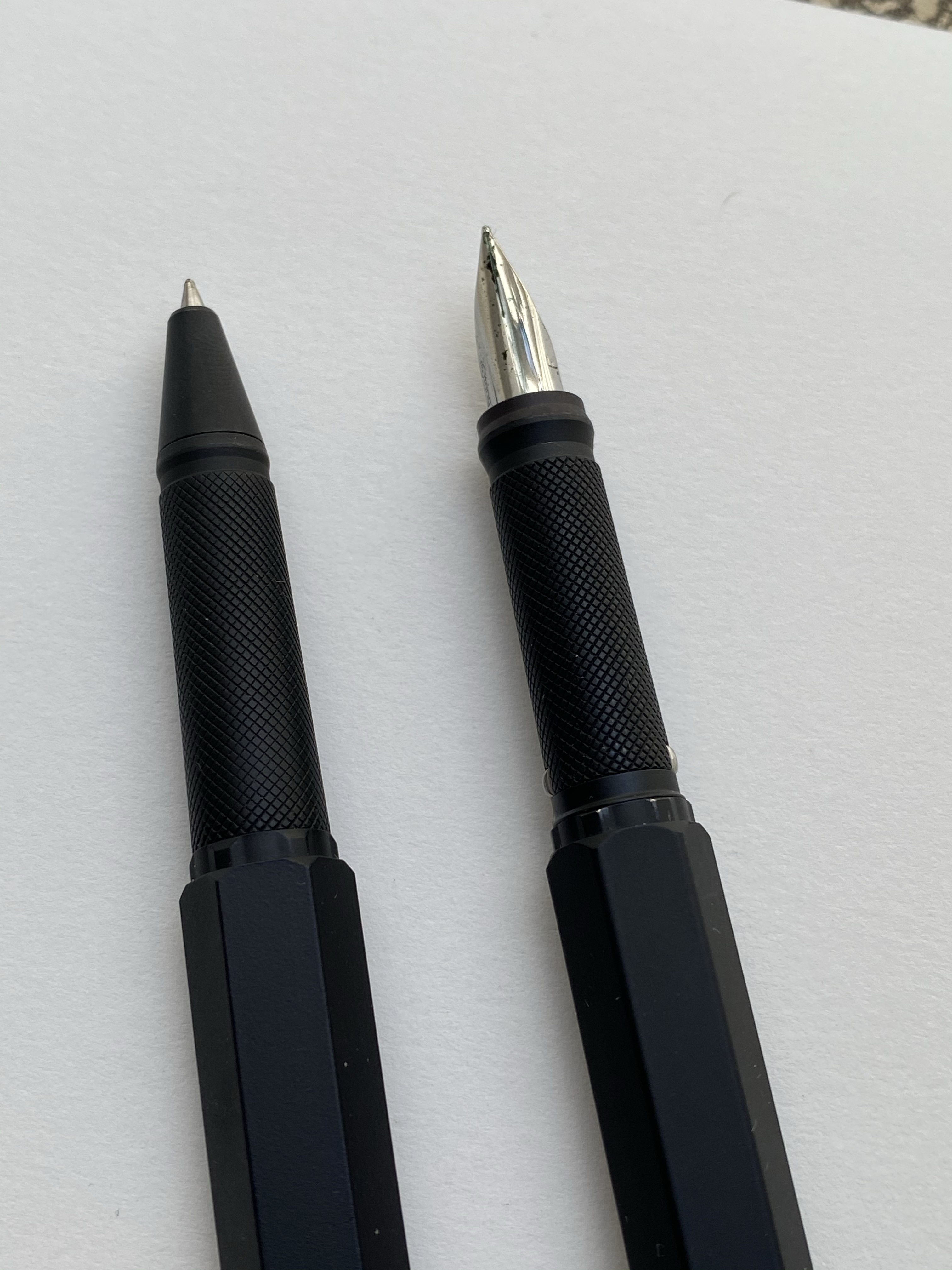
The Rotring 600 Levenger pens aren’t flashy. They both have metal hexagon bodies with knurled ends and the classic Rotring red rings on the cap ends. The cap ends and the grip and the pen finial and round, and the pen body and cap are hexagonal, and somehow the transition between these two shapes is perfect and seamless. Industrial design at its best.

The fountain pen cap snaps into place with the help of the two silver protrusions on the knurled grip section. These protrusions don’t get in the way while writing, no matter how weird your pen grip is, and the section itself is very comfortable to hold. The knurling isn’t as dense as on the Rotring 600 mechanical pencil, and it is smoothed over so it doesn’t dig into your fingers. It provides a secure grip, while giving the pen the traditional Rotring look.

Because of the silver protrusions the pen cap snaps very securely into place. The fountain pen came with no converter, just unbranded short international cartridges, but it was easy enough to take the converter off my Super5 pen and use it here. The nib grade is indicated on the pen cap, which is what you’d expect on a drafting pencil. I like that oh so Rotring touch.

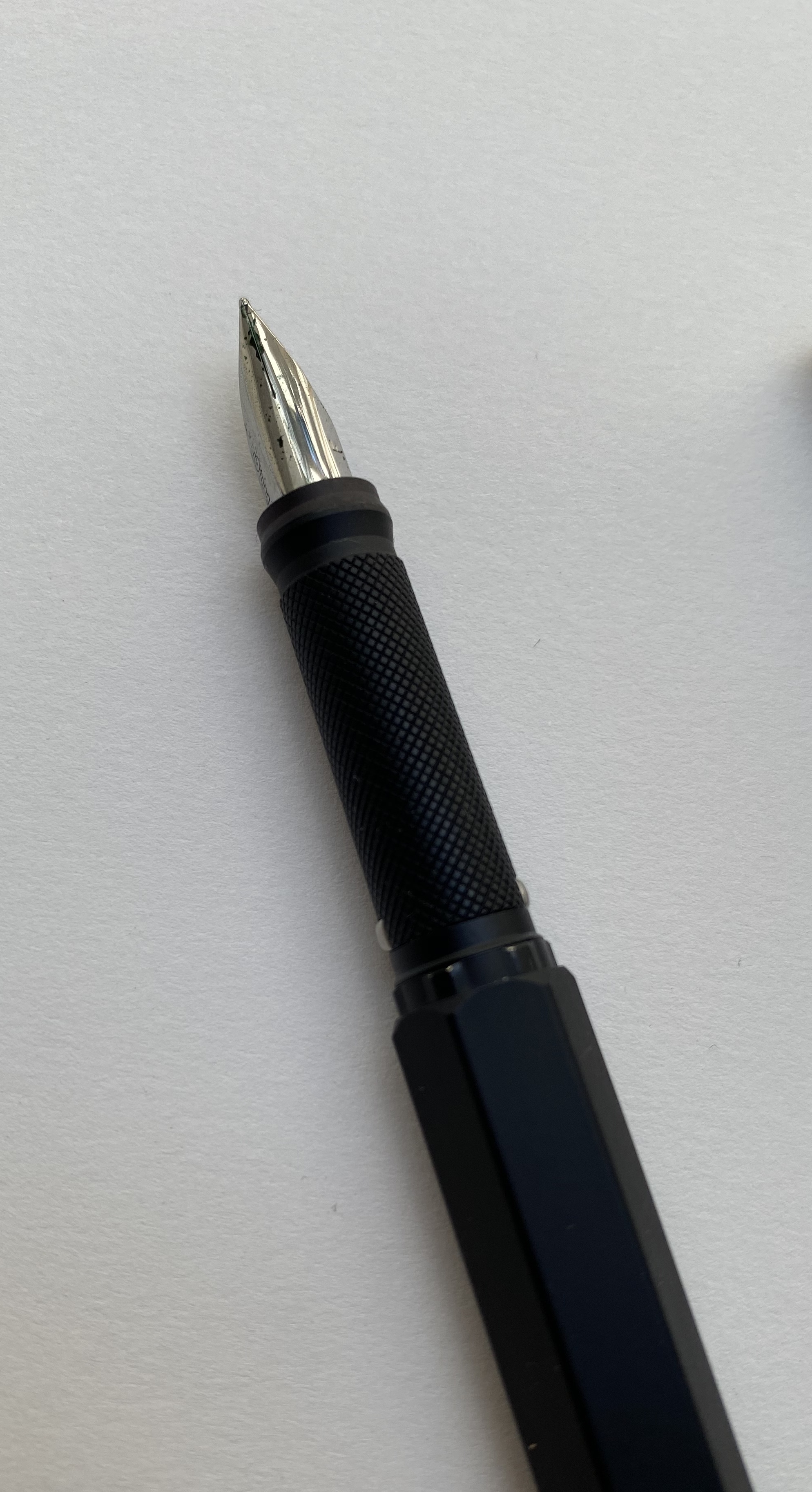
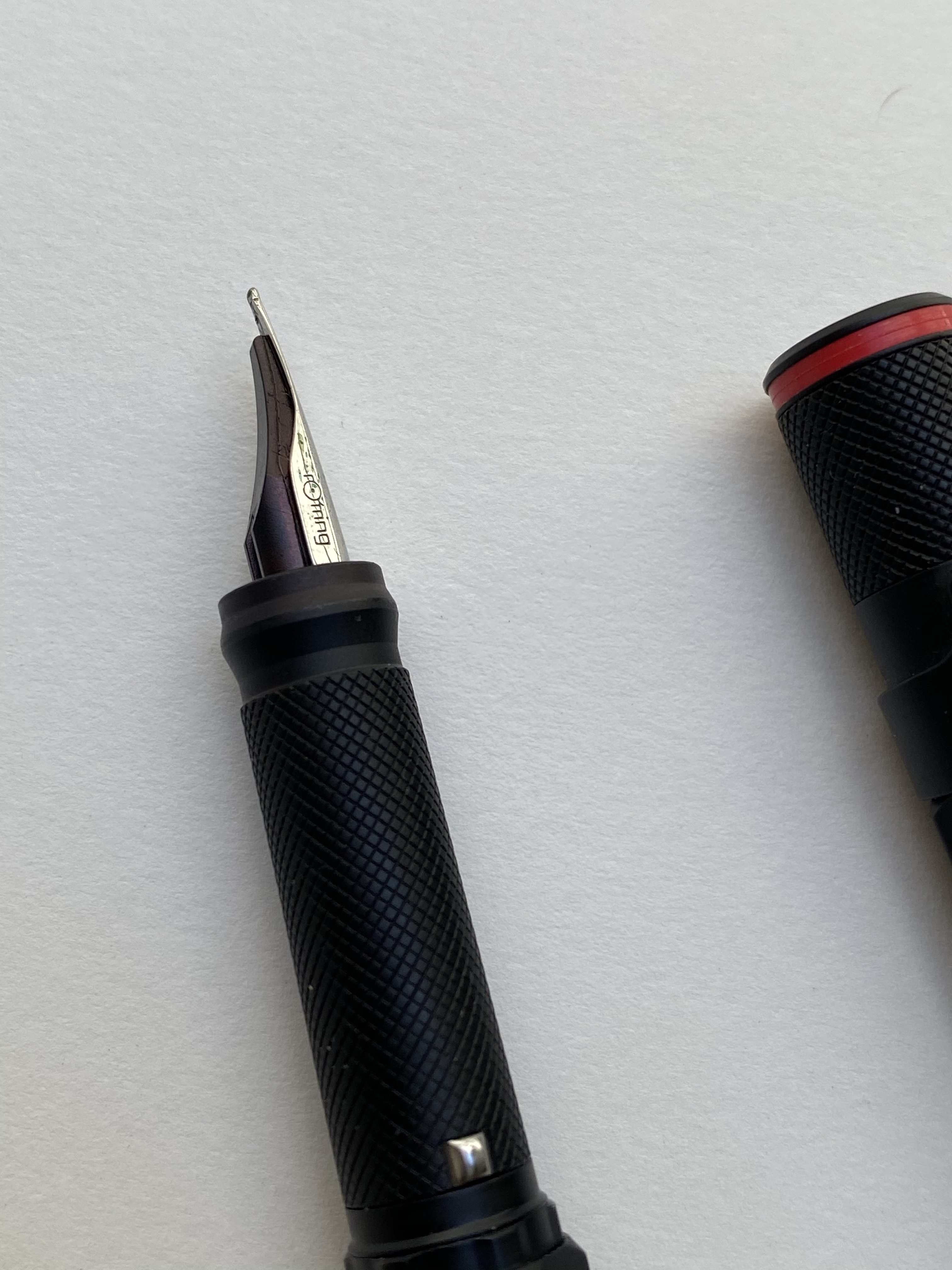
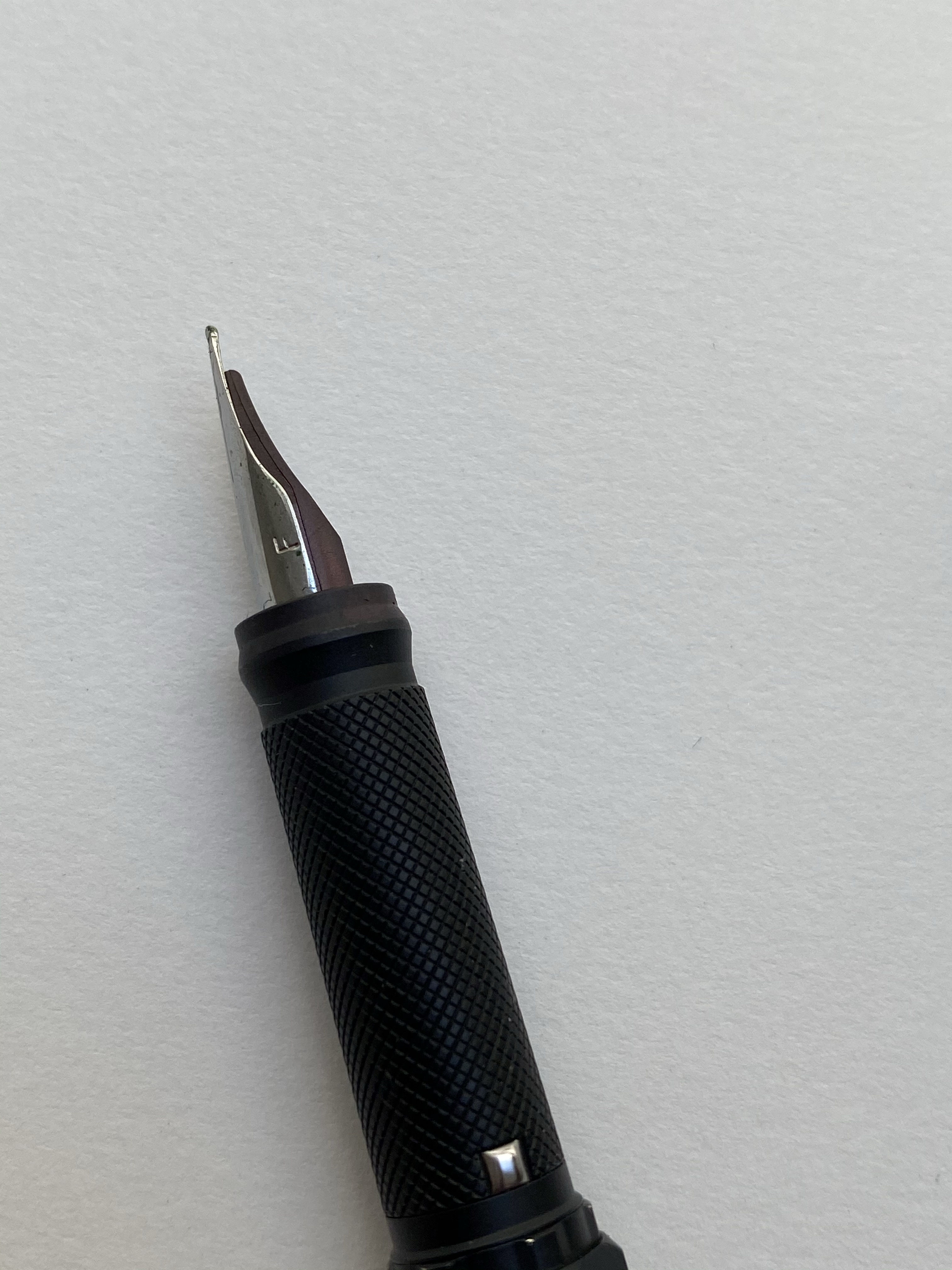
The Rotring 600 fountain pen comes with a steel nib that’s shaped a lot like a Lamy Safari nib. It’s stamped with Rotring’s logo on one side, and the nib grade on the other.

The nib is smooth and a lot of fun to write with, but it’s on the wider (European) side of fine. A 0.7 mm width line. Check out that grip section design:

The rollerball has a blue indicator, presumably for the colour of the ink refill inside. By the time I got it the refill had dried out, and so I replaced it with my favourite refill, the Uni-ball UMR-85N gel ink refill. This is the reason I bought the set and I couldn’t be happier with my purchase. Just look at it:

That’s so sleek and so clever, and I have no idea why they stopped producing them. Side by side you can see that the knurling on the fountain pen is slightly more pronounced. You can hardly feel the difference when in use, but I thought that it’s worth pointing out.

And here is that glorious nib in use, with a quick sketch of the Albert Memorial in London. The ink is Sailor Jentle Ink Epinard, which is a fun ink to sketch with an a green ink dark enough that you can sneak it into office use (not that anyone would notice or care right now).

It’s been a tough time, and a long and challenging six months course, but I couldn’t be happier with my “reward” for finishing it. If you run across a Rotring 600 rollerball or fountain pen at a reasonable price, by all means, buy them. The design on these pens is the kind that belongs in museums it’s so good, and they are a lot of fun to use too.

Rotring, if you’re listening, bring these back!

Retro 51 Blue Acrylic Tornado

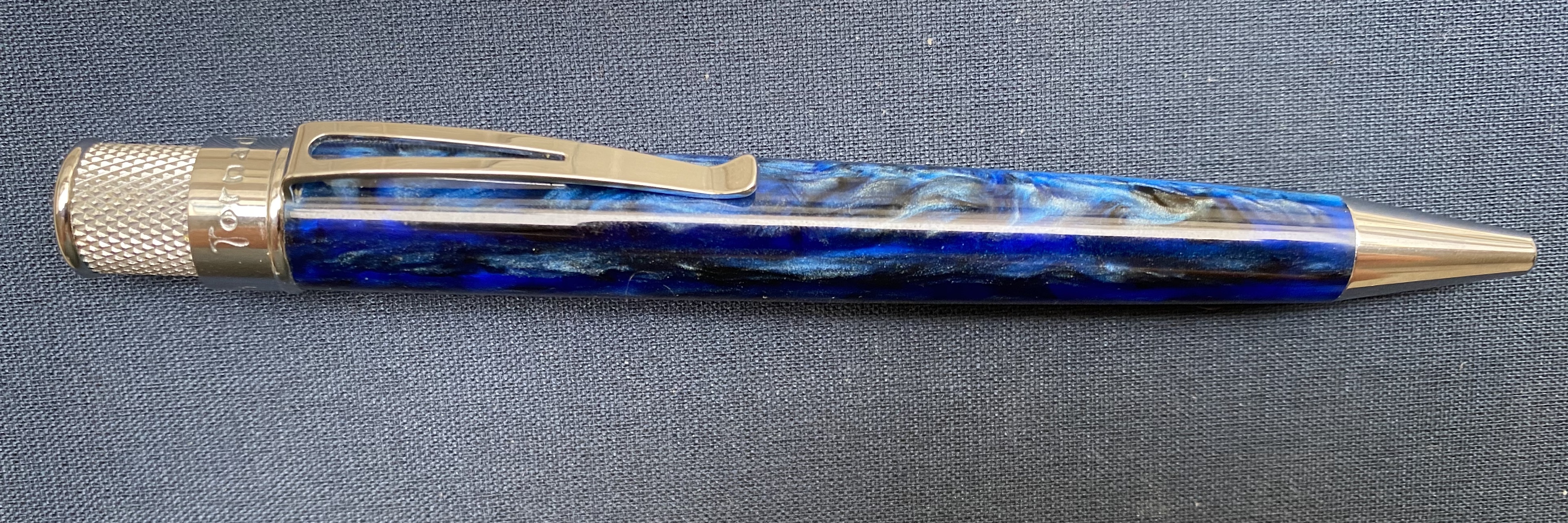
The Retro 51 Blue Acrylic is the last Retro 51 that I have yet to review as part of my Retro 51 challenge (minus the Retro 51 Flower and Retro 51 Coffee which are quarantined in my office). I bought this pen years ago in the Latin Quarter in Paris, in a little store on Boulevard Saint-Michel. The store had a few Retro 51 tornados in their dusty window display, and after some hemming and hawing I went in and asked about the pens. The proprietor had no idea what I wanted to buy from, but after some pointing he brought out his Retro 51 tray. The moment I saw this pen, I knew that I had to have it:

Is it not pretty?

The Retro 51 Blue Acrylic features chatoyant acrylic swirls in blue and navy, and it’s somewhat transparent, which means that you can see glints of the metal refill tube below the material. Like the Pelikan M800 Ocean Swirl there’s a dark side to the material, and a light side.

The dark side of the pen.

The hardware is chrome, and so very bright. This works well with the overall colour scheme. The acrylic body does pick up lint in a way that Retro 51’s metal-bodied pens do not.  I’m not sure this would make for a good pocket carry pen because of that.

Between light and dark.

Weight wise it doesn’t feel significantly lighter than Retro 51’s metal-bodied pens. If that’s you’re draw to this pen, then you’ll be disappointed. But how can you be disappointed in a pen that looks like this?

Look at that!

The finial features a dark navy blue, almost black, disc. I kind of wish that Retro 51 had made the finial out of the swirly acrylic material, but I guess that would have hiked up the price significantly.

The finial/top disc.

I changed out the refill for my favourite Ohto FlashDry refill, mostly because the old refill dried out. I used to use the semi-dried out old Schmidt refill for sketching, as it was pretty perfect for that.

The above drawing was drawn with the Retro 51 Blue Acrylic and the Ohto FlashDry 0.5 gel ink refill, plus some Faber-Castell PITT brush pens. My parents’ cats have ideas about my dad’s laptop that don’t coincide with his.

If you stumble upon one of these Retro 51 Acrylic Tornado pens, snap them up. They’re gorgeous, and life is too short to carry an ugly pen.

Retro 51 Pen Addict

The quarantine distracted me from reviewing the two final Retro 51 pens that I have on hand (the Coffee and Flower edition are regrettable locked away at work), and the first of these two is the original Retro 51 Pen Addict limited edition tornado.

The Pen Addict Retro 51 was the first pen that Brad Dowdy had made for his shop, and it embodies both the Pen Addict aesthetic and the Retro 51 motto: “Life is too short to carry an ugly pen”.

The ding near the tip is my fault. There’s no chip off the pen and you hardly notice it, but it’s still there.

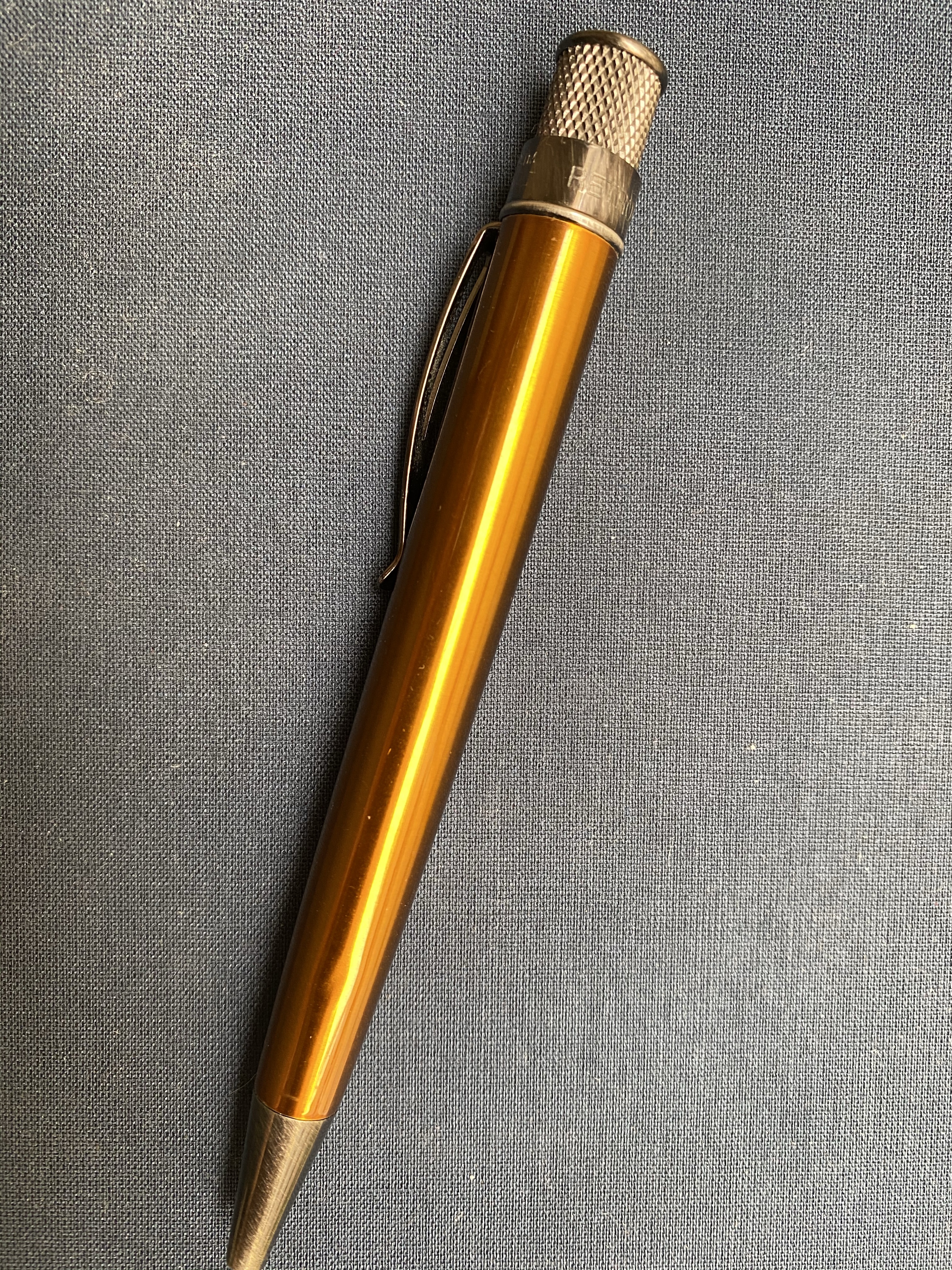
This is not an ugly pen. Orange isn’t my favourite colour, but it totally works on this pen, both because of the specific metallic orange hue used here, and because of the dark hardware. The Pen Addict Retro 51 just glows:


img_4661

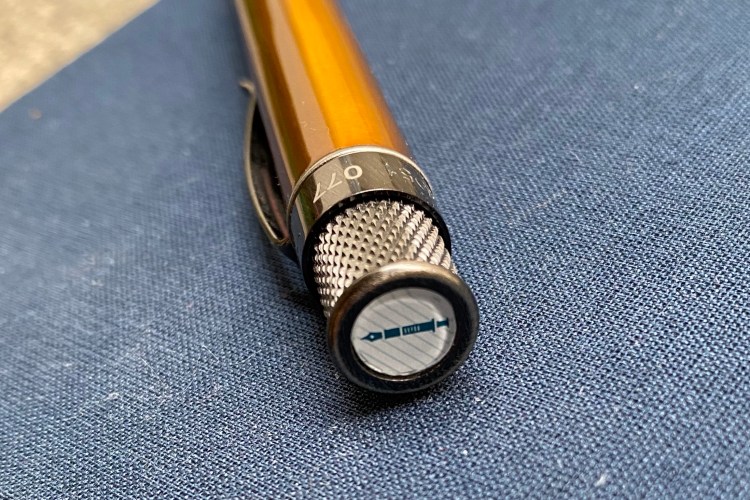
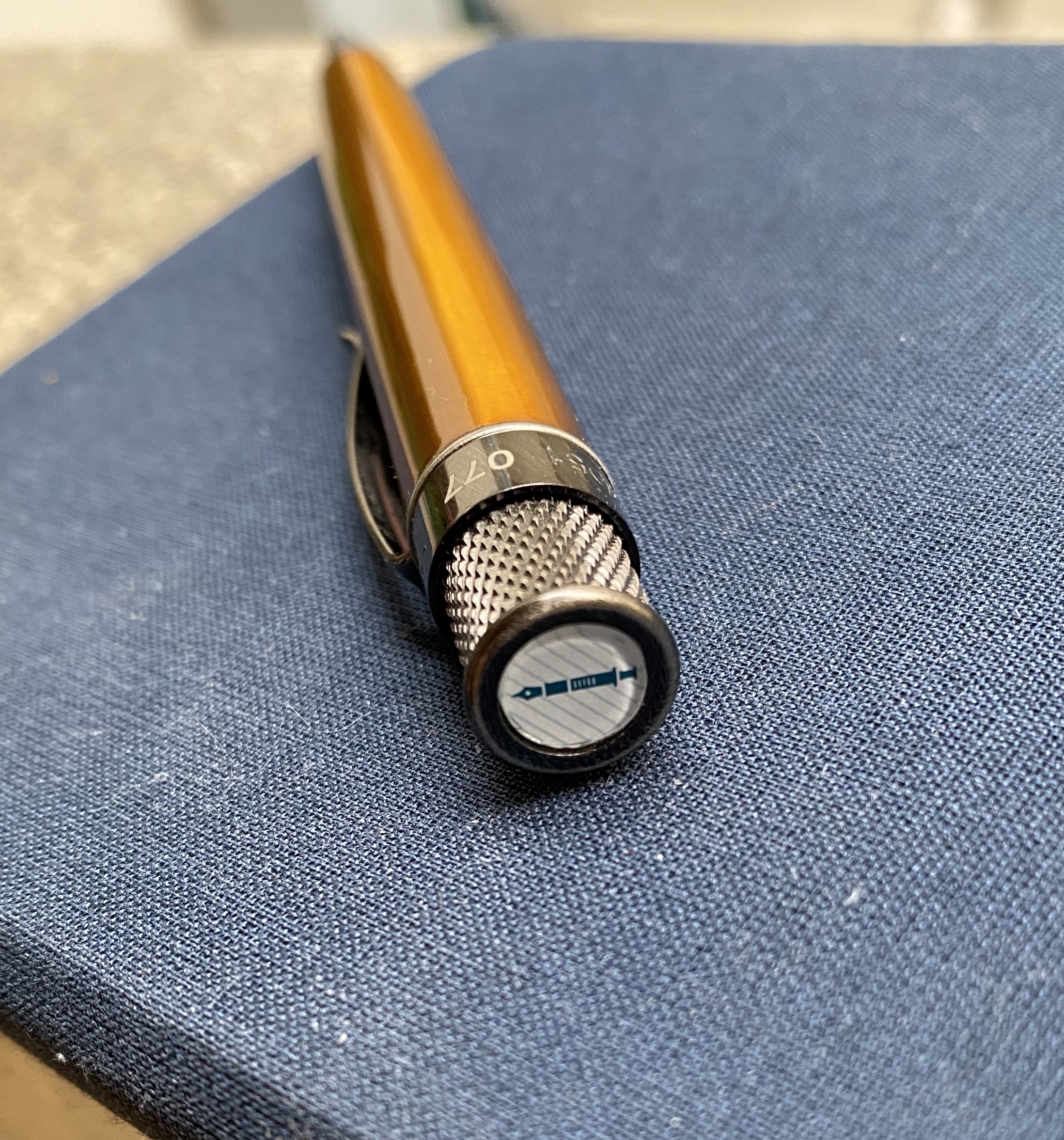
It also is a numbered edition (I have number 77) and has one of the best Retro 51 top discs/finials: the Pen Addict logo.

The Pen Addict logo finial.

This is one of the few Retro 51s that I own that still have the Schmidt refill installed. I’m not a fan of this refill, but there are times when I’m looking for big, bold lines and it just fits the spot. This is the first time I used it for drawing:

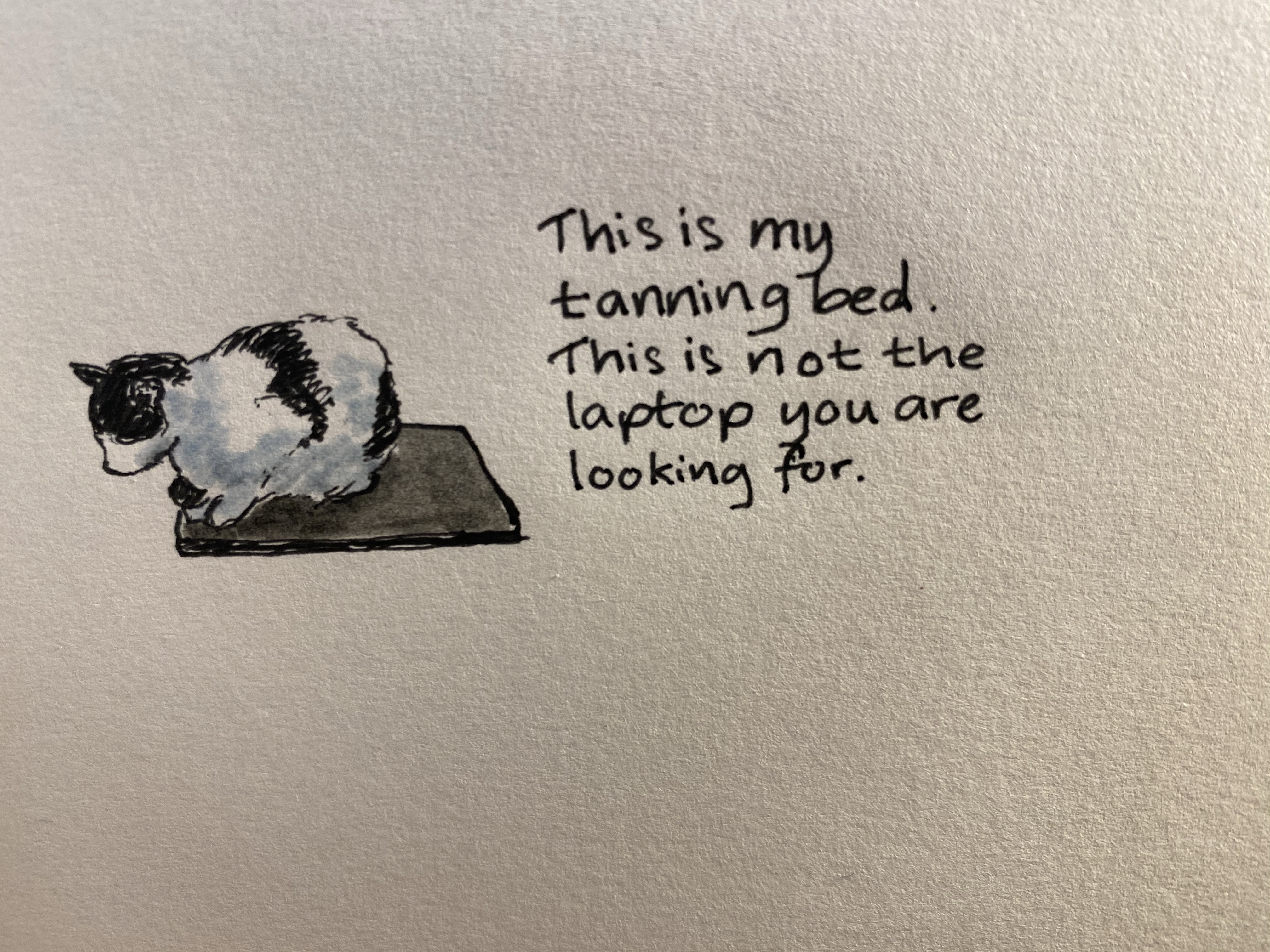
My brother’s cat has opinions.


The Retro 51 Pen Addict original limited edition is still a great, classic Retro 51 tornado design. It’s no longer offered for sale on the Pen Addict shop, but if you find it reasonably priced on the secondary market, it’s totally worth buying.