A handwritten journal is an artifact in a way that an app can never be. It’s tactile, endlessly flexible, there to be used and customized in every way possible. Tear out pages, glue stuff in, doodle, scribble, sketch and write whatever you wish however you wish. There’s no autocorrect, nothing editing or censuring your words. Analogue journalling is about freedom, flow and pure creativity.
This is my last day journaling in this journal, and tomorrow I’ll write up the last page and start a new one for the thoughts of that day.
Every time I finish a journal, I use the last two pages to summarize what that journal contains and means to me. Analogue journals are fantastic, but they do make searching for old entries a bit of a chore. Luckily I don’t find myself looking for an old entry that often, and if I do the last two pages help me narrow it down to the specific journal, and the dates and titles to the specific entry.
I also like taking the last few pages as a chance to reflect on the time the journal covers and how things have changed (and I have changed) as the time has gone by. There’s usually about three months in each journal, sometimes more, so that’s a good chuck of time to look back on: short enough to make it simple to summarize and contextualize, and yet long enough to have some impact and meaning. This journal contains two trips abroad, my decision to move into a new career path, and a pandemic that wrecked havoc on everyone I know (including me, of course). That’s quite a lot, even for a journal that covers a relatively long span of time (almost 6 months).
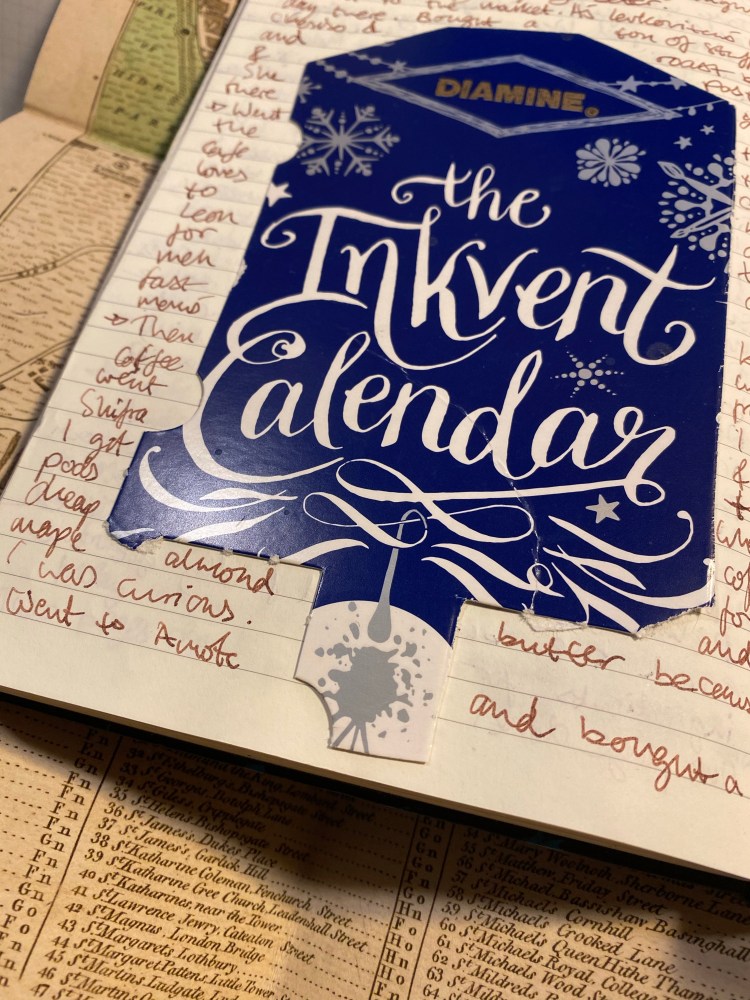
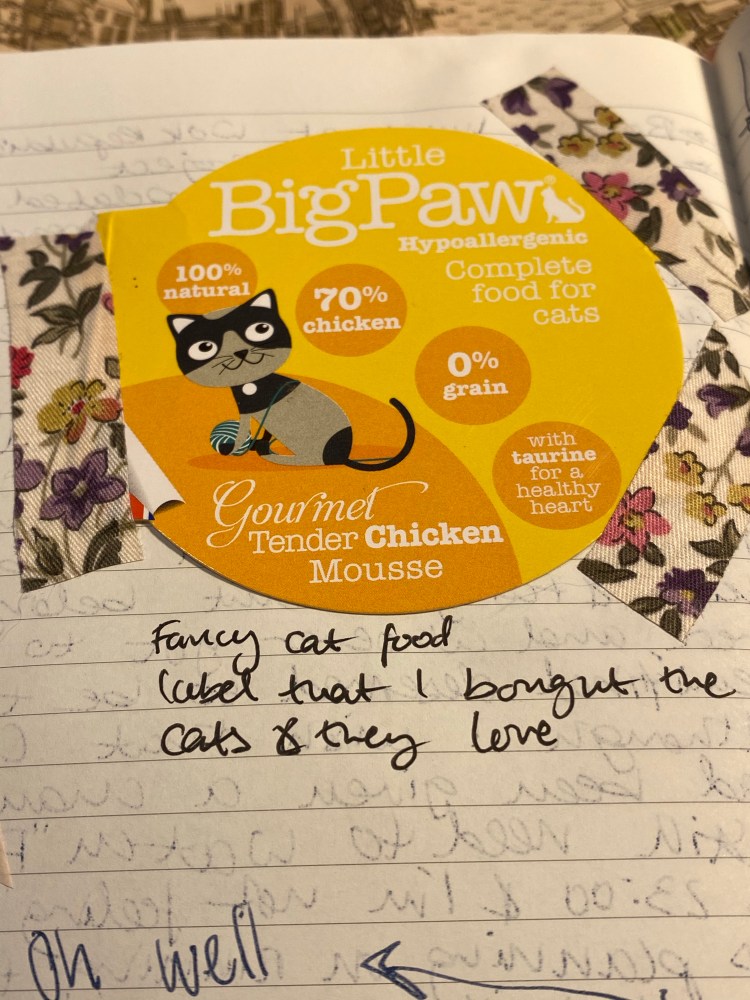
It’s also full of bits and pieces that I stuck in, to make the page come to life. So here’s part of the Diamine Inkvent packaging that I glued in after I opened the last window and before I tossed out the box:
I just ripped out a panel that I liked. This journal is for me, not Instagram, and it can be as messy as I need it to be.
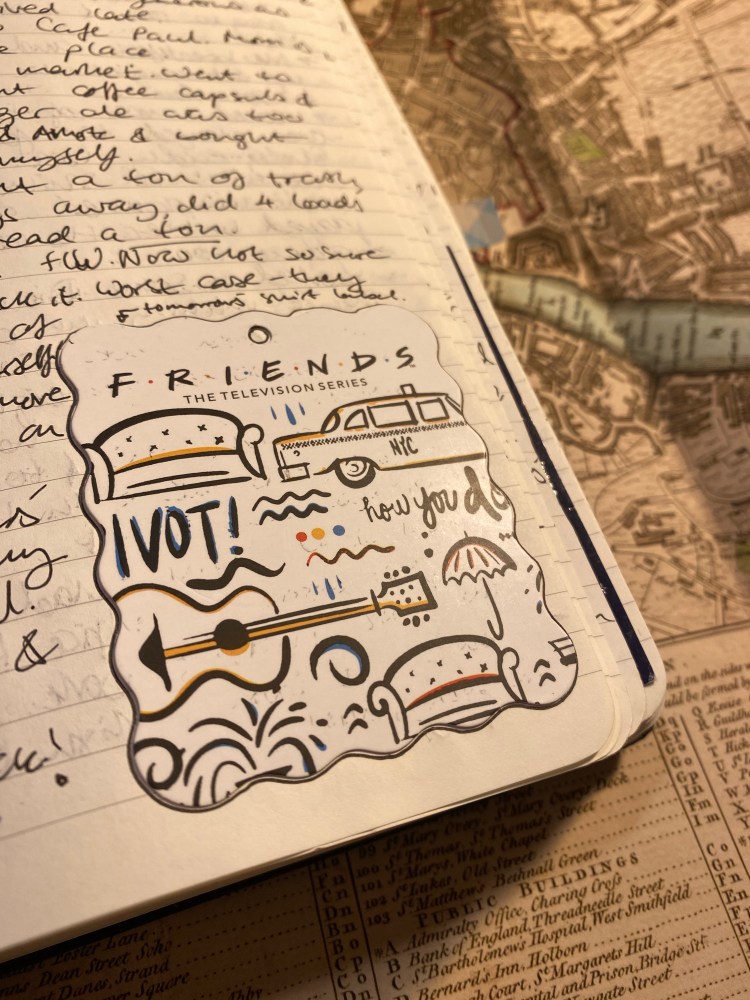
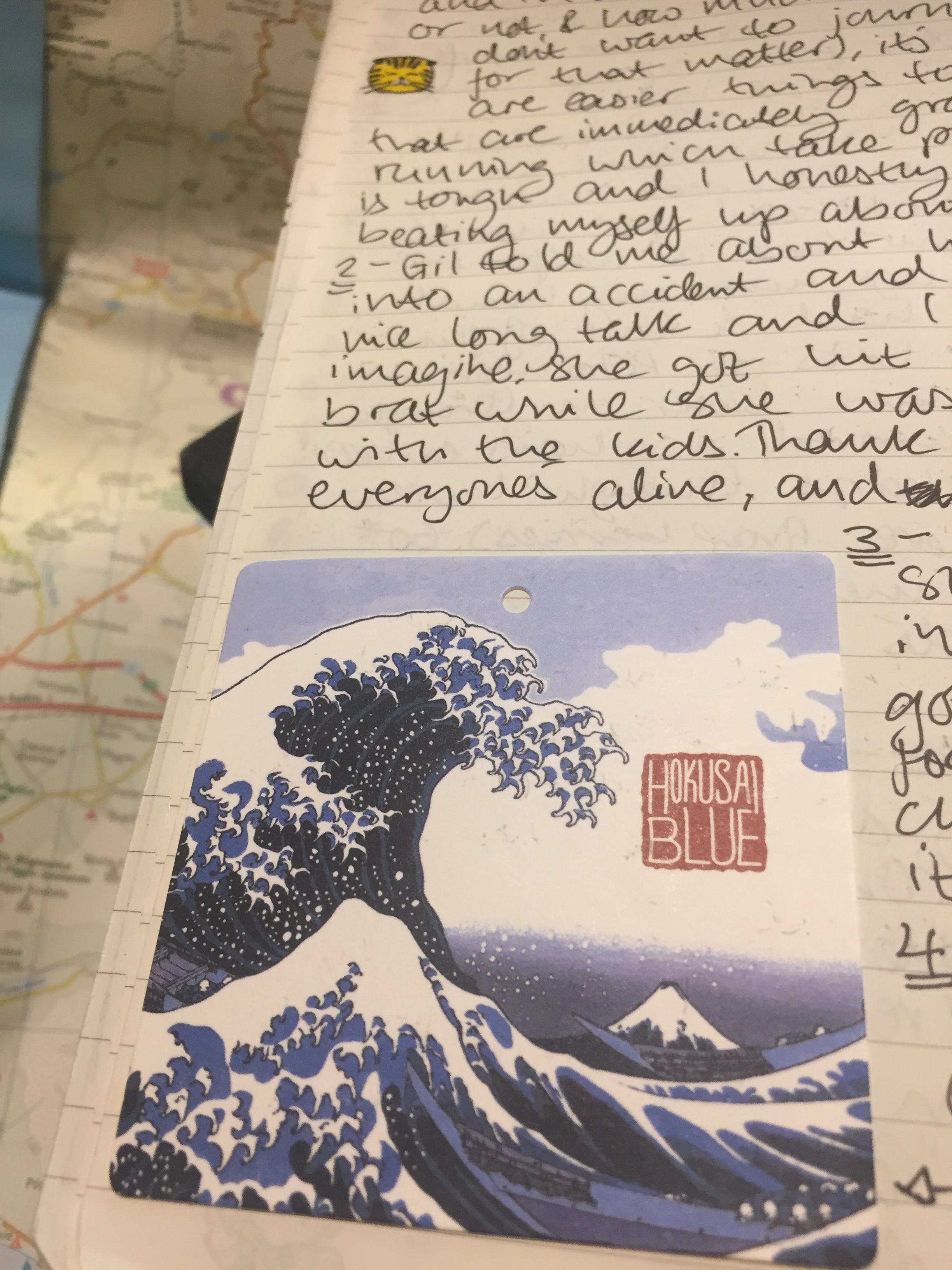
Cool clothing tags also sometimes make it in, especially if it’s from a piece of clothing that I really like:
This tag came of one of my favourite sweatshirts.
I got a lot of Star Wars themedvinyl stickers as a gift near the end of last year and a lot of them ended in my journal:
Even the silliest of things can be used to brighten up a page:
See that bleedthrough? It’s fountain pen bleedthrough. I don’t give a damn. If I wanted to write with a Sharpie in here, I’d write with a Sharpie. Use what makes you feel good.
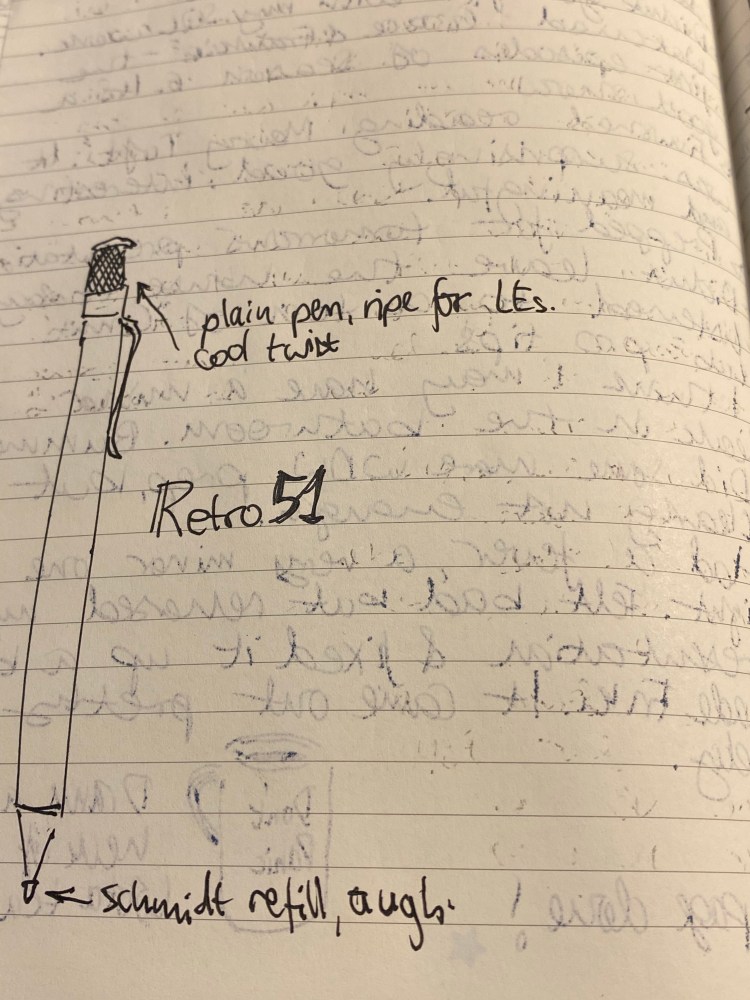
There are little drawings and illustrations everywhere:
Messy, messy handwriting.
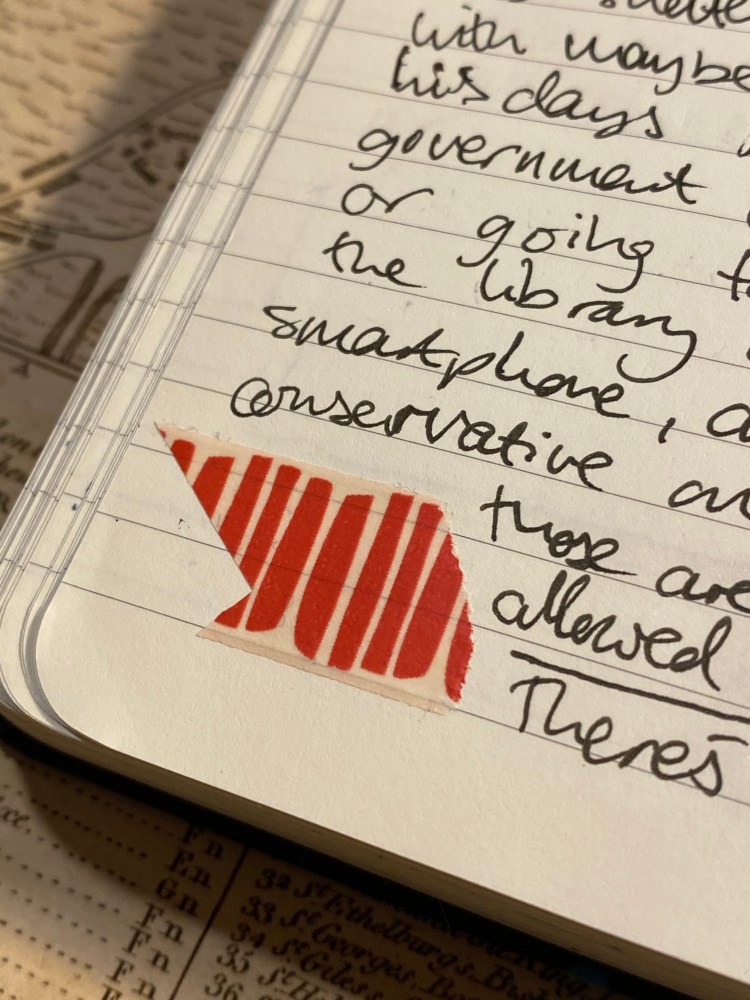
And bits and pieces of washi tape that were leftover from other projects:
The point is, tomorrow I finish another journal, a small analogue memory artifact that is entirely mine. I created it for me and me only, and it was worth every minute I put into it.
If there’s one habit that you can pick up during your time at home these days, pick journaling. You’ll end up getting quite a treasure in the end, and I’d be truly surprised if you won’t enjoy the process.
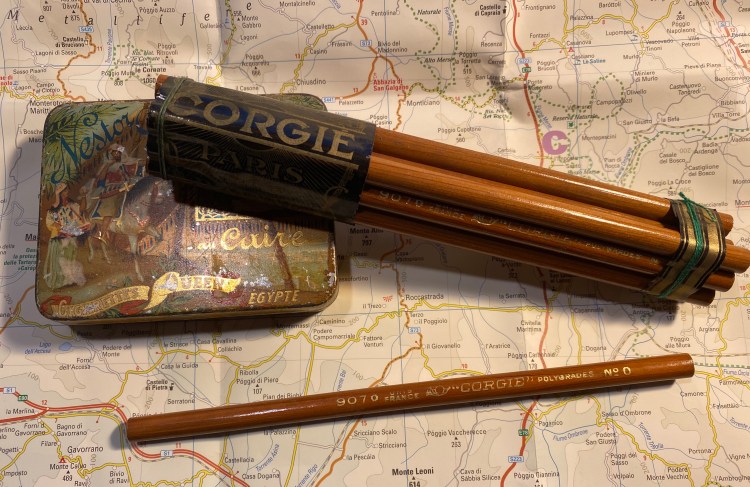
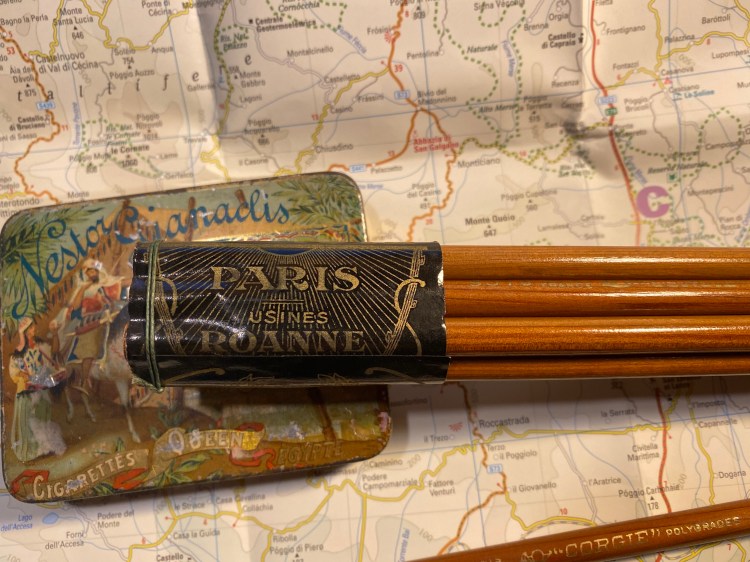
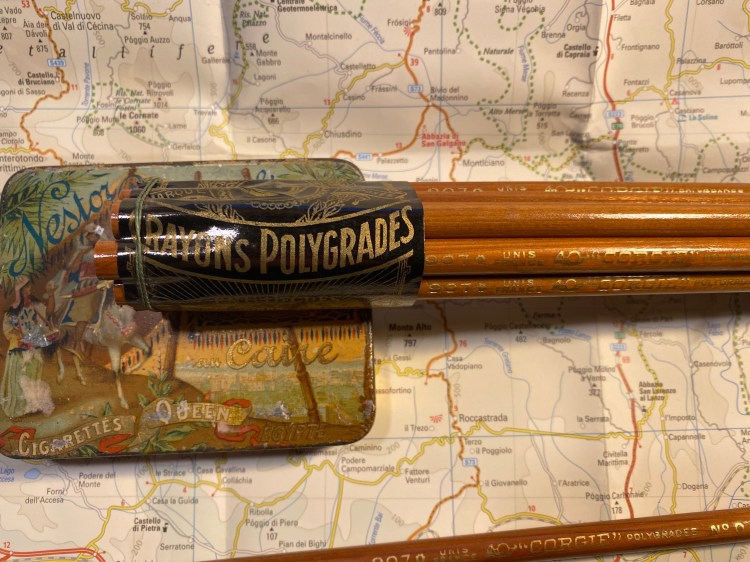
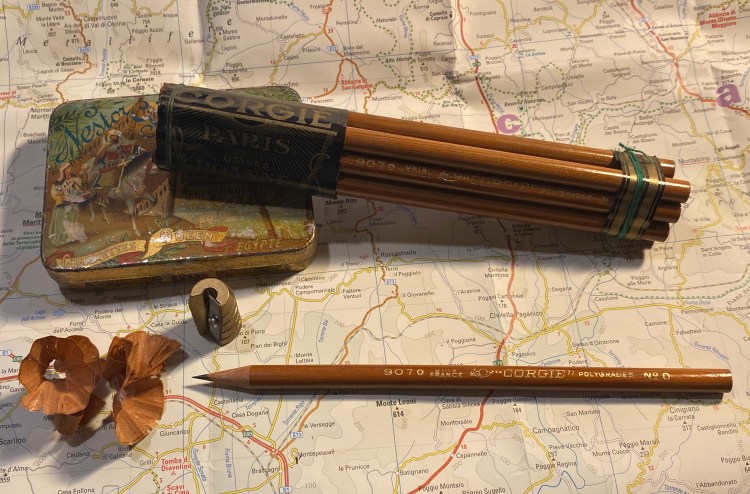
It’s National Pencil Day and I decided to celebrate. Last year I picked up some vintage pencils in a stall in Spitalfields market in London, and they’ve been languishing unloved in their box ever since. The truth is I felt that they were too pretty to sharpen and use, which is both understandable (I mean look at them!) and silly. Pencils are meant to be sharpened, period.
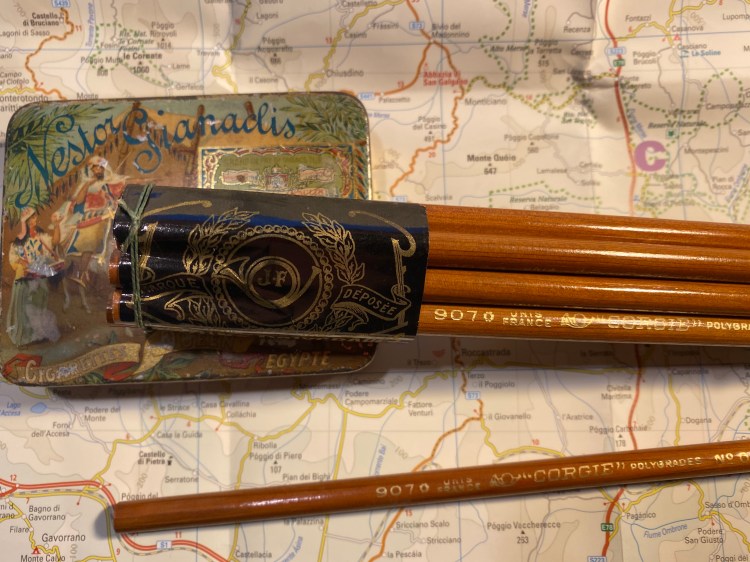
So I broke out the “Corgie” (à Paris) 907 pencils, which are natural pencils coated with a thick layer of lacquer that makes them both shiny and satisfying to hold. The French appear to be more restrained in their choice of imprint fonts, but they go all wild when it comes to the wrappers around the pencils. Behold, creativity let loose:
Stunning, right?
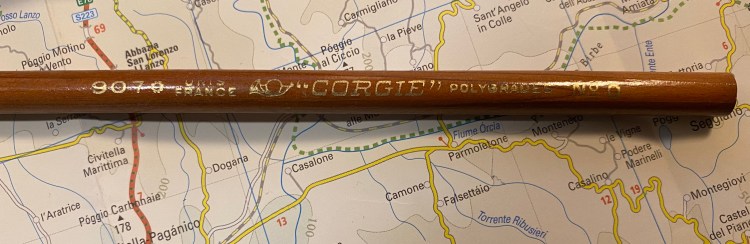
Here’s the imprint (it’s hard to photograph, as the lacquer gets in the way. There are basically two fonts in use, and a very charming bugle logo. The Corgié à Paris factory was active from 1923 to around 1986 (thanks Brand Name Pencils) and if I’d have to venture a guess I think that these are from the ’60s, but it’s really hard to tell.
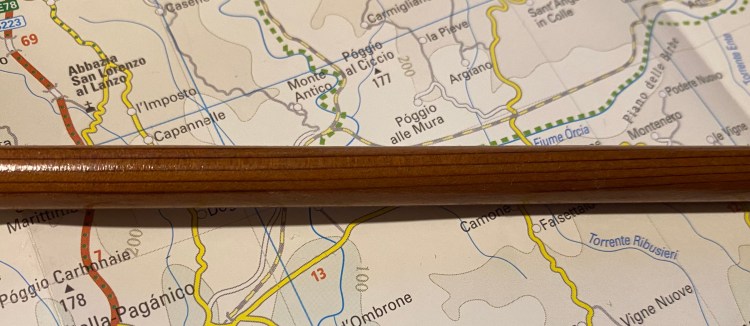
The grain on these pencils is fantastic. Just look at that:
Unlike some vintage pencils whose wood has dried out and become brittle with time, the Corgie 907s sharpen like a charm. They’re not very nice smelling (they just smell old), but there’s nothing to complain too much about.
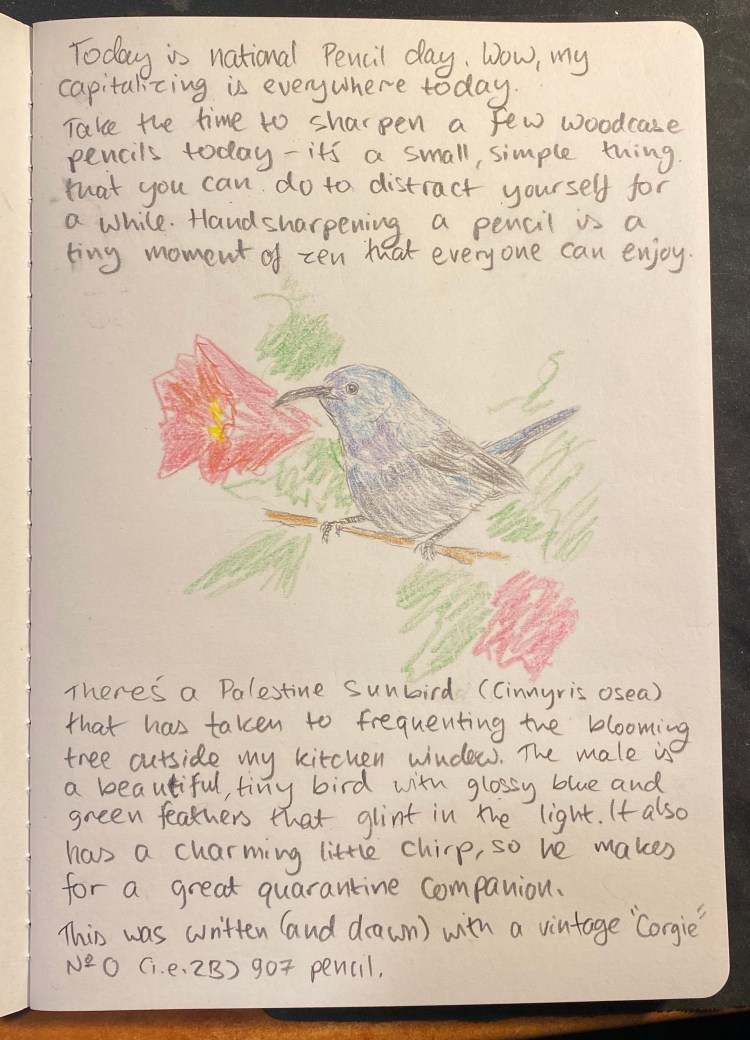
These are No. 0 pencils, which makes them about 2B-4B, depending on the manufacturer. They’re soft and dark, and a joy to draw with, although they don’t hold a tip for very long. The graphite does smudge, but it doesn’t crumble, and there’s a good amount of feedback while using them. Here they are with some Faber-Castell Albrecht Dürer watercolour pencils in use:
I had to sharpen the pencil three times to get through this A5 page. Not great for writing, great for expressive drawing.
Go sharpen a pencil, and have some fun drawing or writing a little something for yourself.
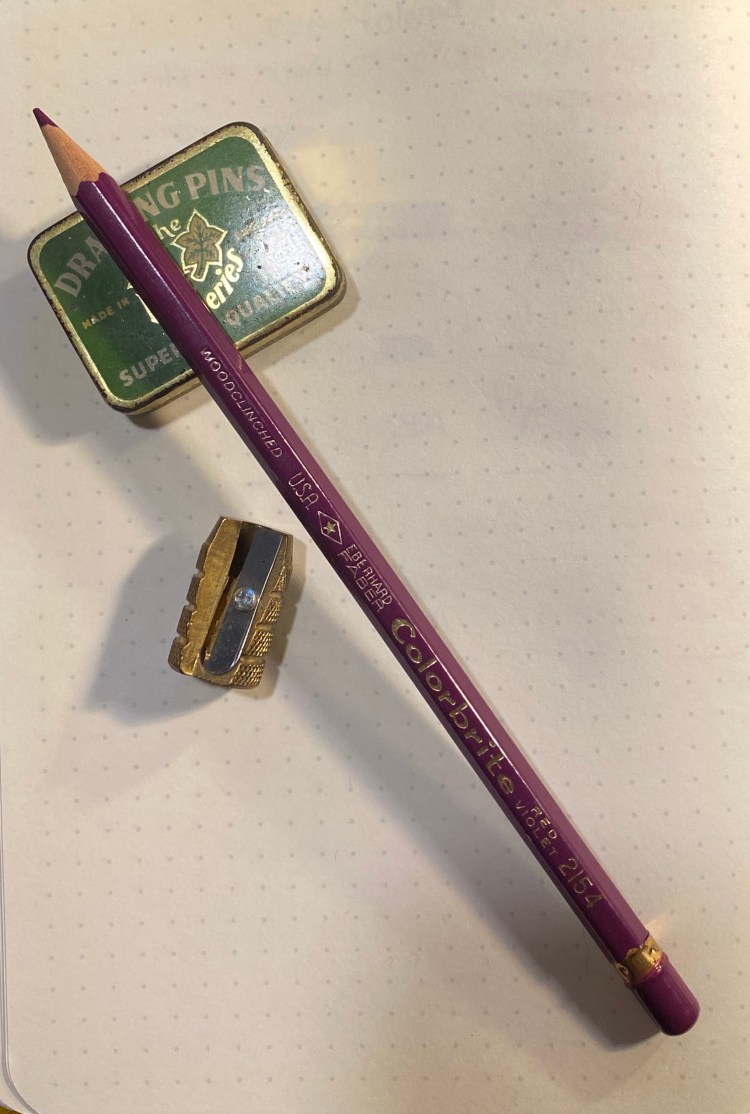
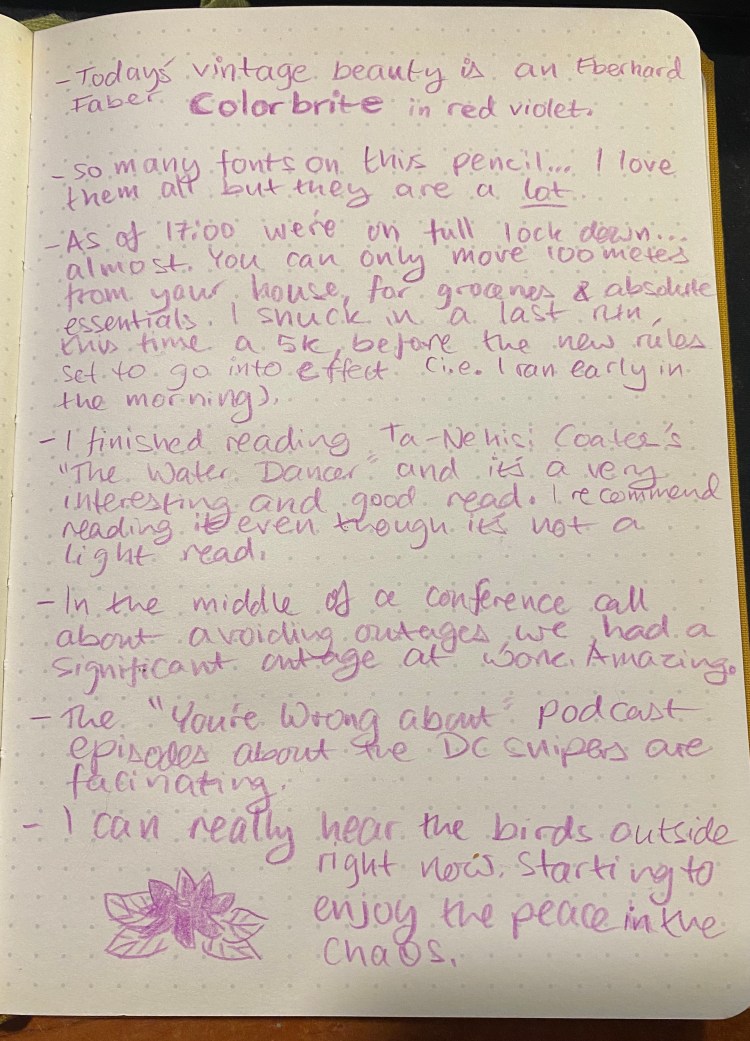
Continuing the theme of “vintage pencils are awesome” today I’m using the Eberhard Faber Colorbrite red violet 2154 (which proudly notes that it’s both “woodclinched” and made in the USA). I counted 5 different fonts on this pencil, not including the 2154.
The fonts are my favourite thing on this pencil, although the end cap is elegant too and the colour is really unique and vibrant.
Go have fun with some pencils and listen to the birds for a while. They sing some hope into these dark times.
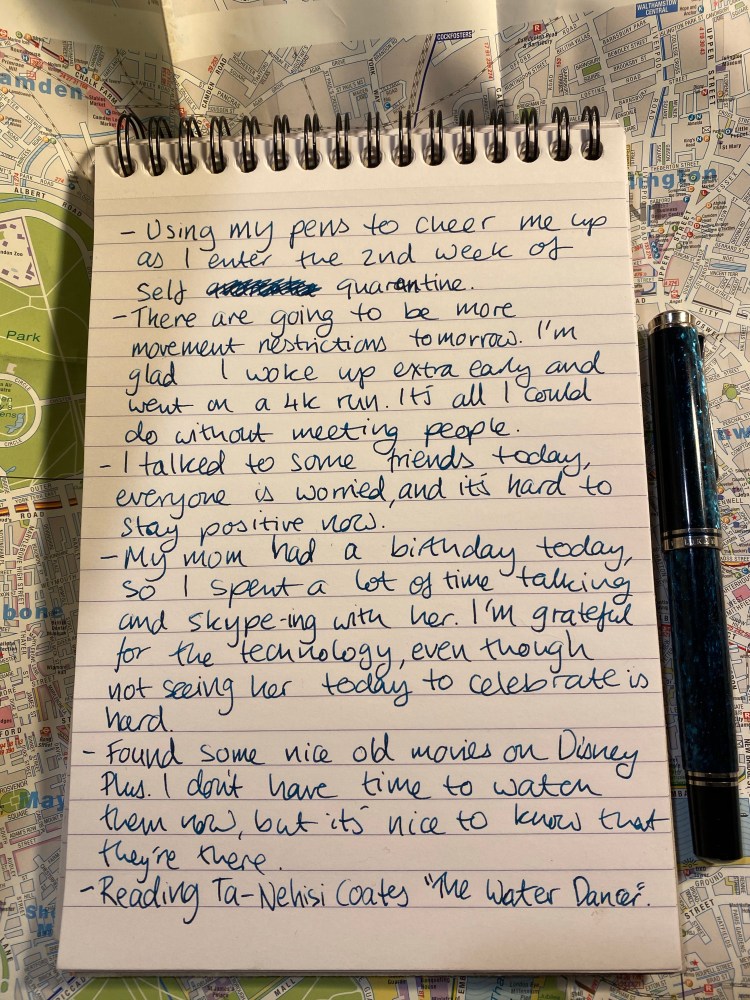
I’m using my pens to cheer me up a little, as we get ready for even more serious movement restrictions, and as the political and economical situation here go haywire. This was written using a Pelikan M805 Ocean Swirl with a fine nib and Sailor Peacock ink. The lighting situation at my desk doesn’t do this ink justice – it’s beautiful.
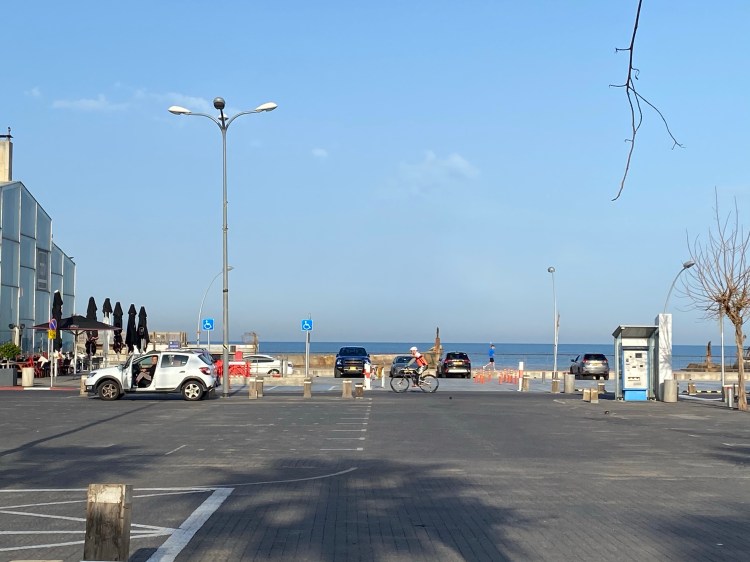
I managed to squeeze in a 4k run this morning. As I avoided people, I couldn’t run further than that, but I’m glad that I did. The weather is perfect for runs right now, and I really miss my running, but today’s run looks to be the last I’ll be able to go on for a while. I usually run along the waterfront, but so does everyone else, so I ran in parallel streets. This is a temporary goodbye to the sea, and I hope that it’s not a long one:
Stay healthy and safe, and look for the little things and little moments to keep you happy.
Near the end of one year and the beginning of another various articles and podcasts about New Year resolutions start popping up. They either give tips on how to make resolutions, debunk resolutions in favour of something else, and almost all of them try to sell you something.
This post is about how I create yearly goals (i.e. resolutions), using things that I already have, in a way that has worked for me since 2015.
I wrote about the way I do “New Years Resolutions” in the past. I call them that because I like the non-business ring of “resolution” over the “business-jargon” sounding goal. My “resolutions” are, however, S.M.A.R.T. goals: specific, measurable, attainable, relevant and time-bound. I manage them using the least used notebook that I had lying around (a Baron Fig Confidant), and whichever pen I have at hand. They aren’t made for instagram, rather I use my plain ugly handwriting, and what marking are on the page are there because they’re useful. Over the past five years I’ve attained about 90% of what I set out to achieve, with even an annus horribilis like 2018 not putting me too much off track. My goals are tiered, much like Kickstarter stretch goals, with most goals having a fairly easily attainable first tier, just in case life decides to kick me in a tender place.
I’m going to go over this year’s goals, and last year’s goals (apart from a few that I’ve censored for privacy’s sake). I know that February is usually the month when people give up on their resolutions. I hope that this post will help and inspire people to give yearly goals or resolutions a chance.
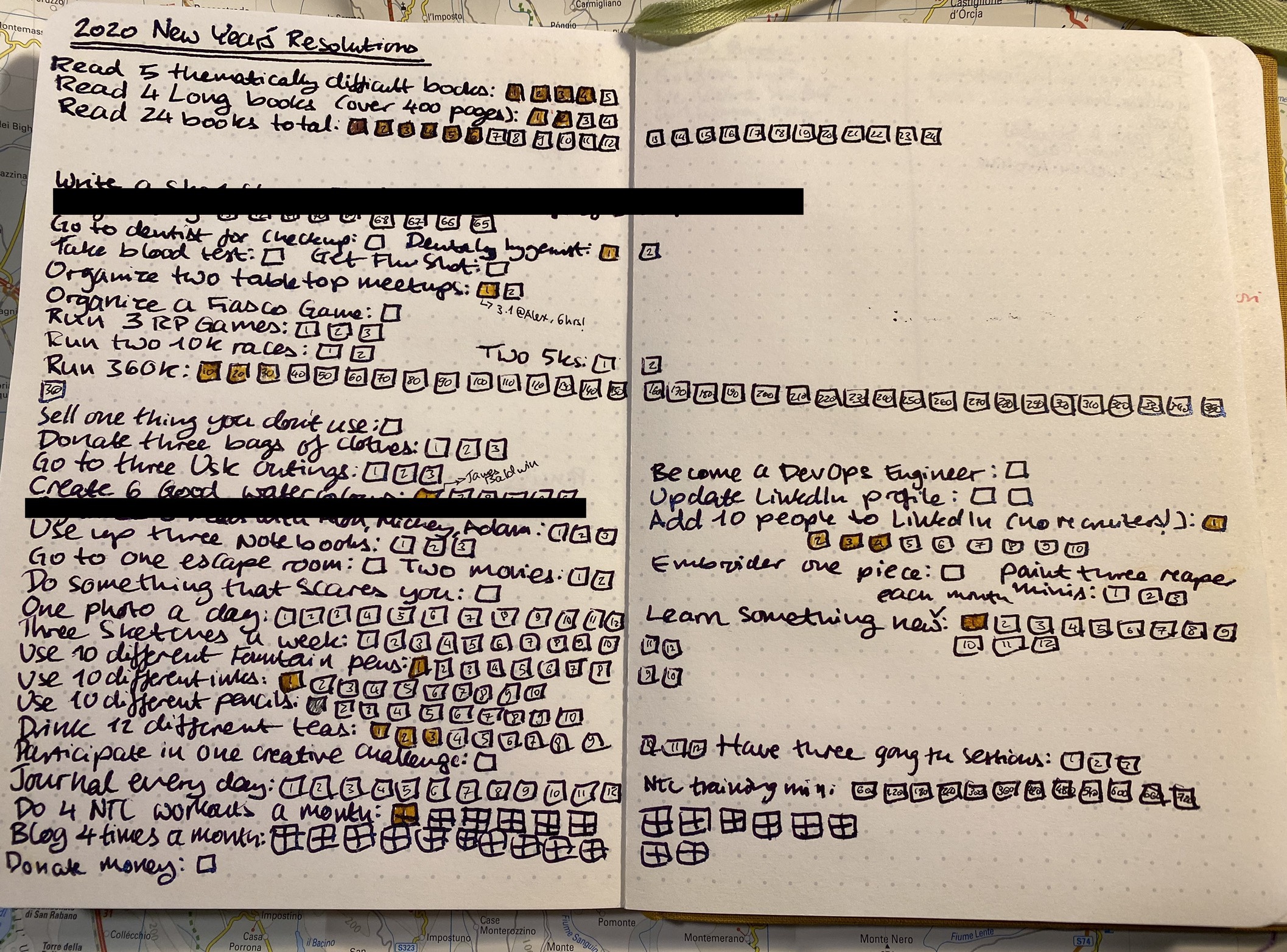
My 2020 resolutions
Above you can see my 2020 resolutions. A lot of them are things that appear in almost every year. The professional goals are all new (I didn’t manage my professional goals with my personal goals until this year, and even now only a small part of my professional goals are here).
Every goal at this point only has the basic, first tier goals set beside it. The first three goals for example, all reading related, will eventually have stretch goals. They’re interesting to note here because back in 2016 I only had one reading goal: read 24 books. Once I got back into the habit of reading, I started to challenge myself with longer and more challenging books. These are all my base reading goals. I usually stretch them to around 50 books a year.
Why don’t I start with 50 books then? Because the point of these goals is to build myself up for success. The basic goals are the “even if I have a horrible year I should be able to reach these” goals. They are there to remind me that there’s a tomorrow, and something I can and should do about that tomorrow, even if a family member is hospitalized (or worse). The stretch goals are then built in small increments, reaching to my my final goal for the year.
Why don’t I write my stretch goals down from the start? Because the point is to keep myself focused on the next small step. That’s why things are broken down to the smallest increment that makes sense: one book, 10k, one month.
There’s a reason for each goal on this spread. I won’t go into each one specifically, but they all fall into the following general categories:
Read more.
Write more (my writing goals are censored, because if I publish them, I won’t do them. I know myself well enough by now).
Use the stuff I own.
Challenge myself to get out of my comfort zone.
Social goals (partly censored).
Health goals (running, cross-training, bloodwork, dentist visits).
Professional goals (partial list).
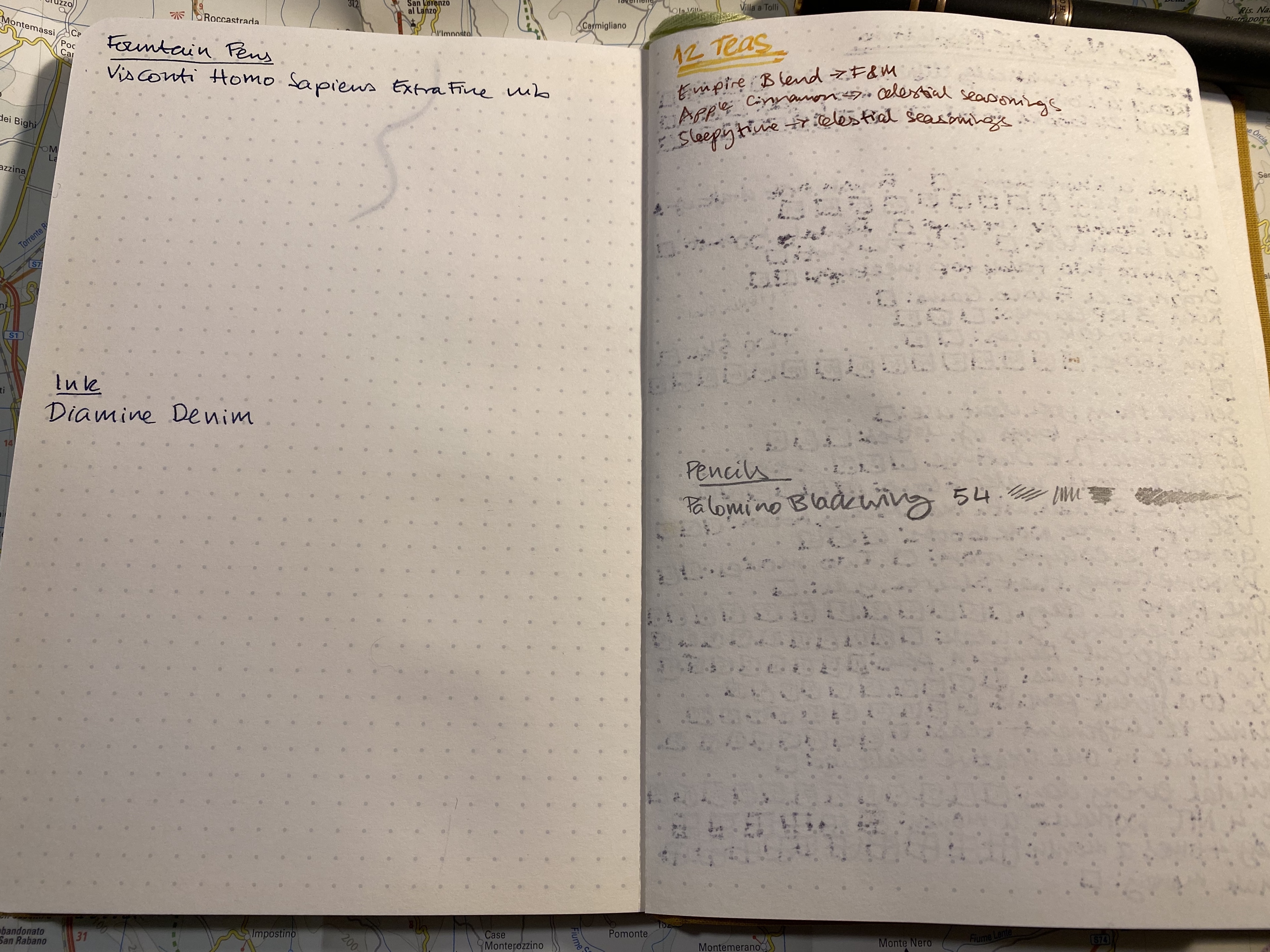
Everything has to fit in on a two page spread, or I lose track of things. That’s why I spill over to other pages in the same notebook to track some of the details of my goals:
Tracking page for fountain pens, ink, tea and pencils.
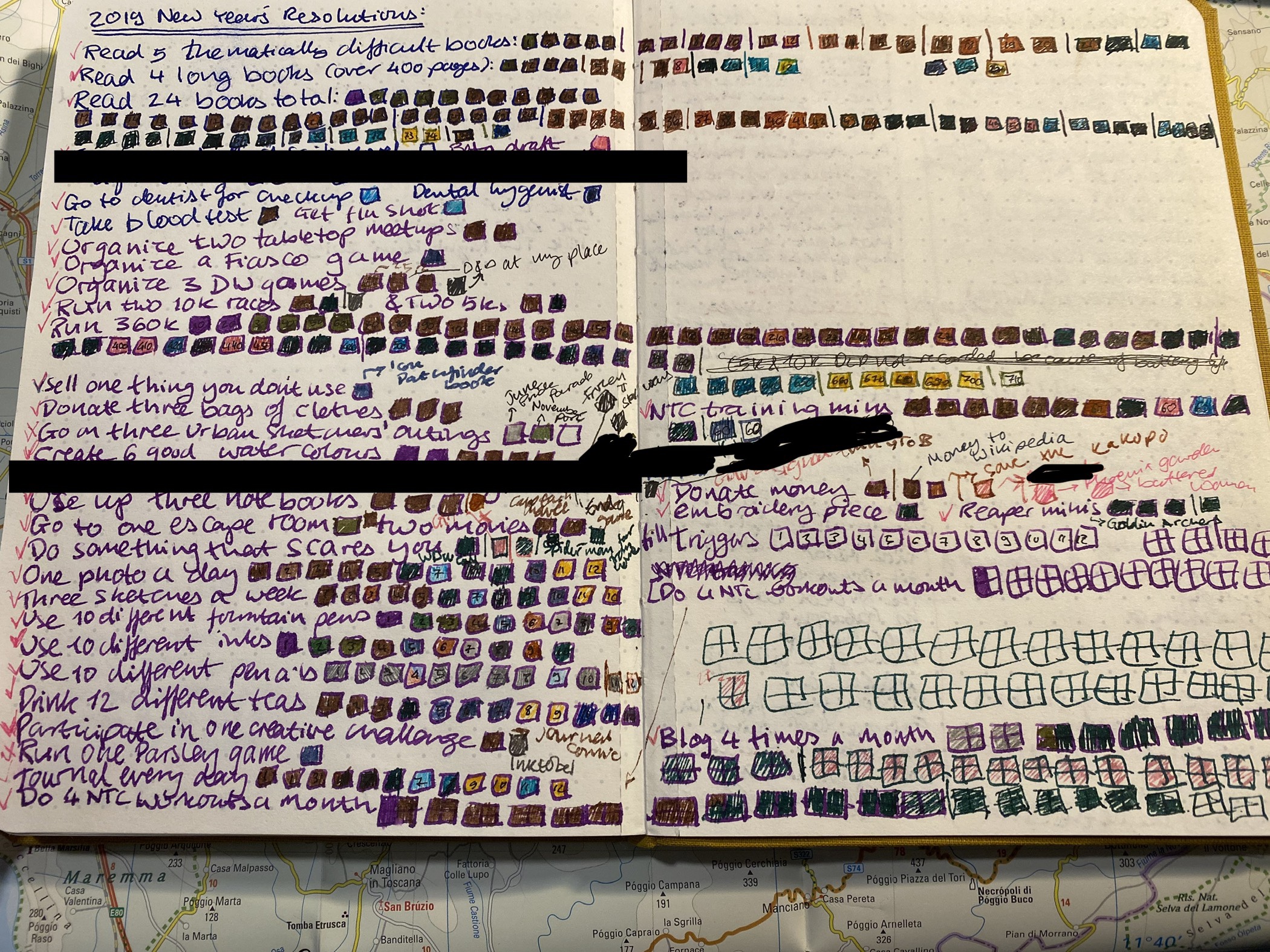
Here are my 2019 resolutions. A pink check mark means that the basic goal is finished. You can see the increments things grow by (my stretch goals):
2019 resolutions
You may have noticed that the “fill triggers” goal isn’t filled up at all. This is the “relevant” part of the S.M.A.R.T. goals. I used the trigger system from Marshal Goldsmith’s “Triggers” book for a few months in 2018, and I decided at the beginning of 2019 to not continue with it. It was a conscious decision, and so I just ignored that goal.
Here are my 2019 “spill” pages, just to get an idea of how the whole thing works together:
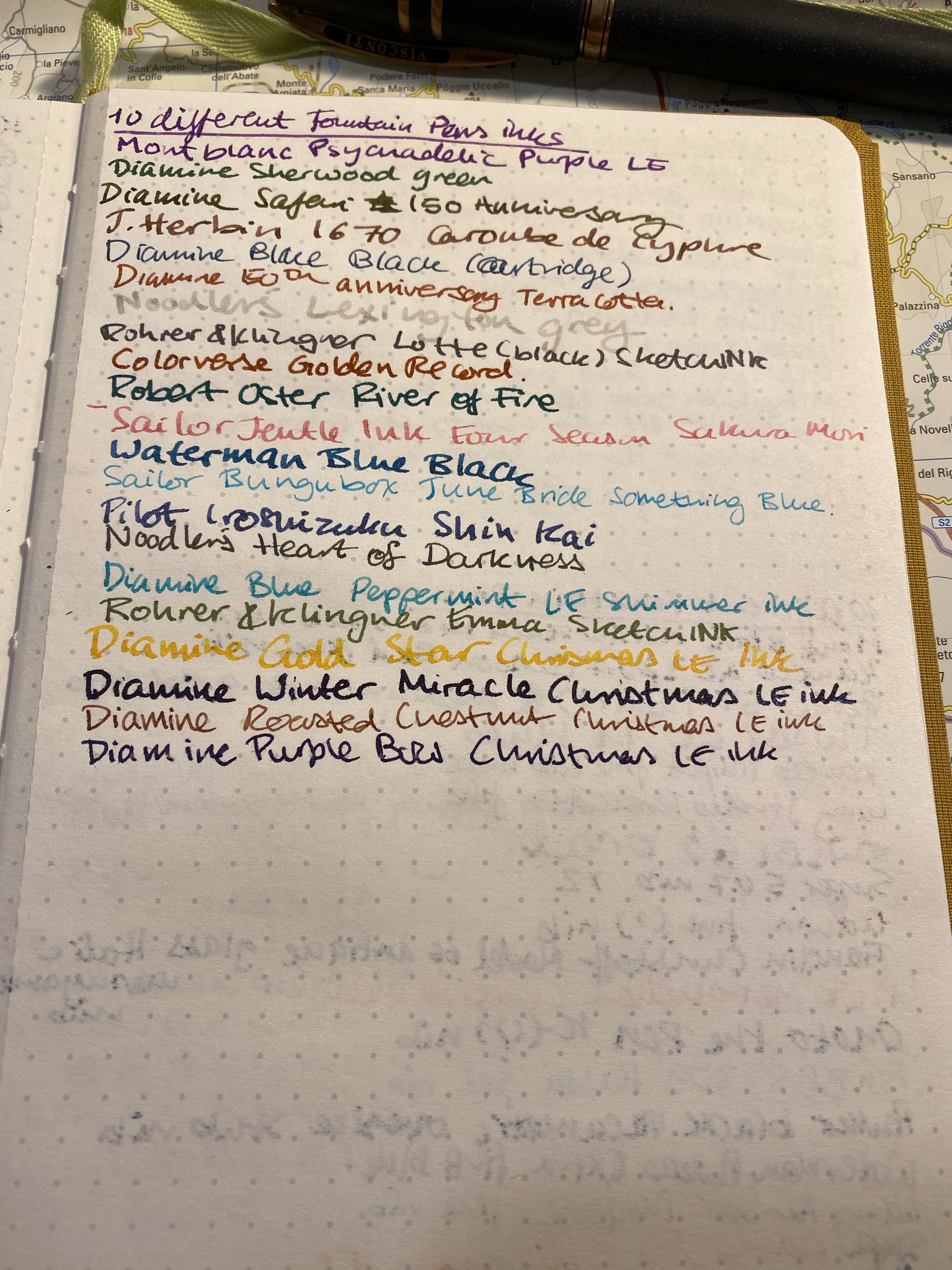
10 different fountain pen inks. Can you see where the stretch goal is marked?
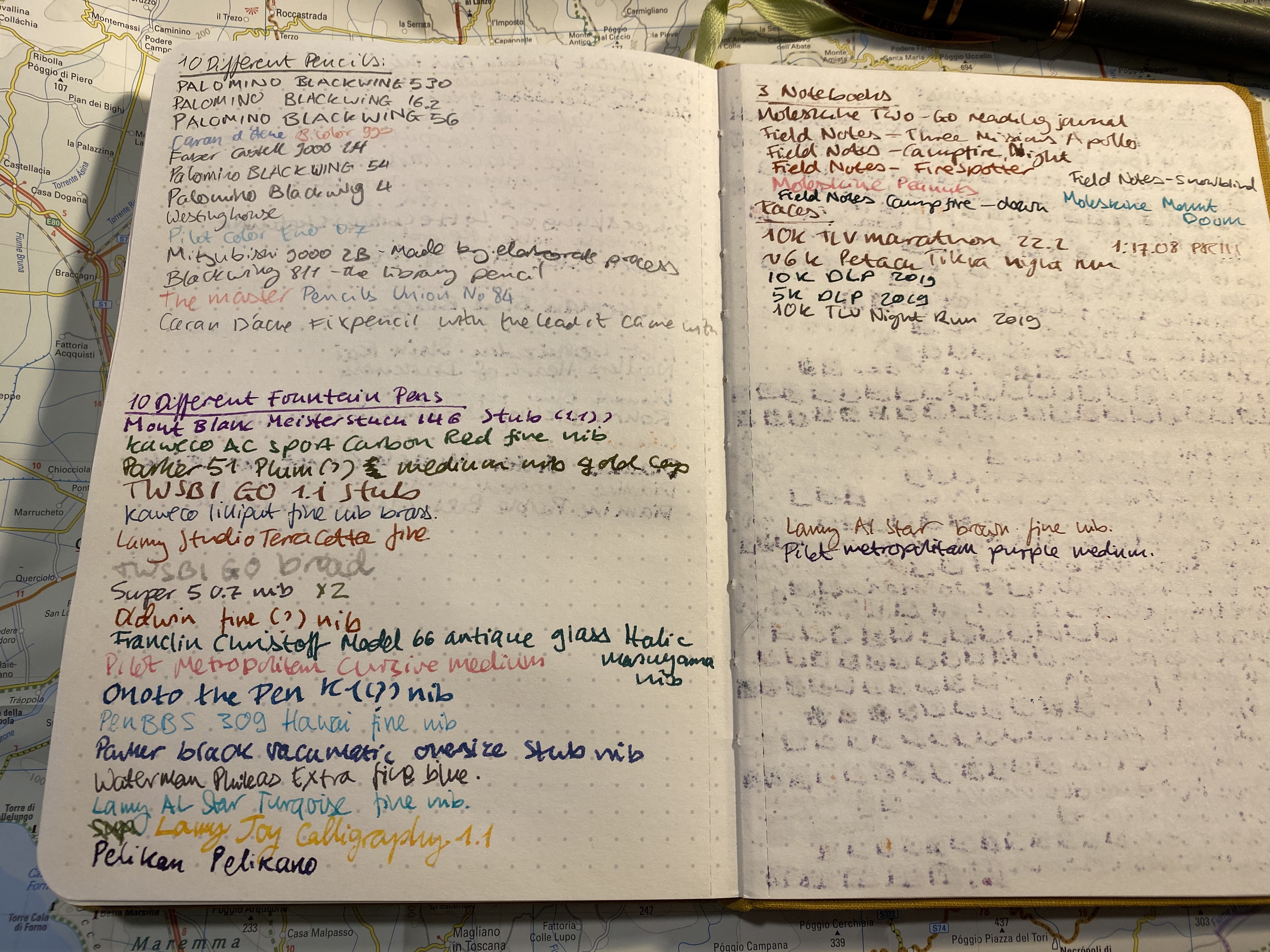
Here are pencils, fountain pens, notebooks and races tracking:
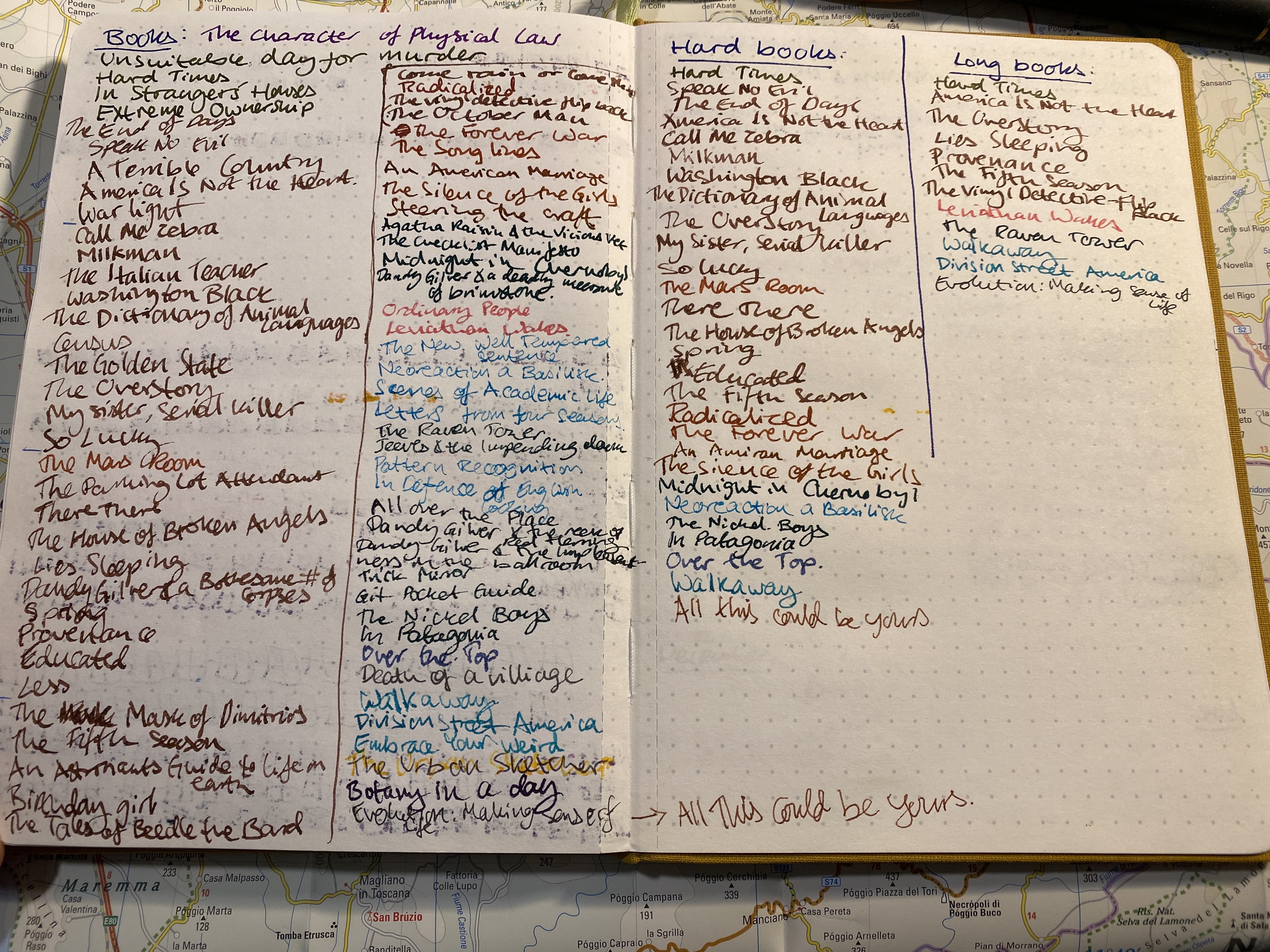
And my largest tracking list, books:
The Baron Fig Confidant that holds this list has a bright cover and sits right in front of me, on my desk, at all times. I set up my goals that at every day or two I crack the notebook open and update the lists. Once there, I scan everything and check if there’s something that I can do to get it done. The point is to have this list on the top of my mind as much as possible, or else I’ll just forget about it, or it becomes something that I avoid checking out.
This is a system that supports me every day, giving my goals and aspirations much needed structure. I hope that this will help you build a personal system of this kind for yourself.
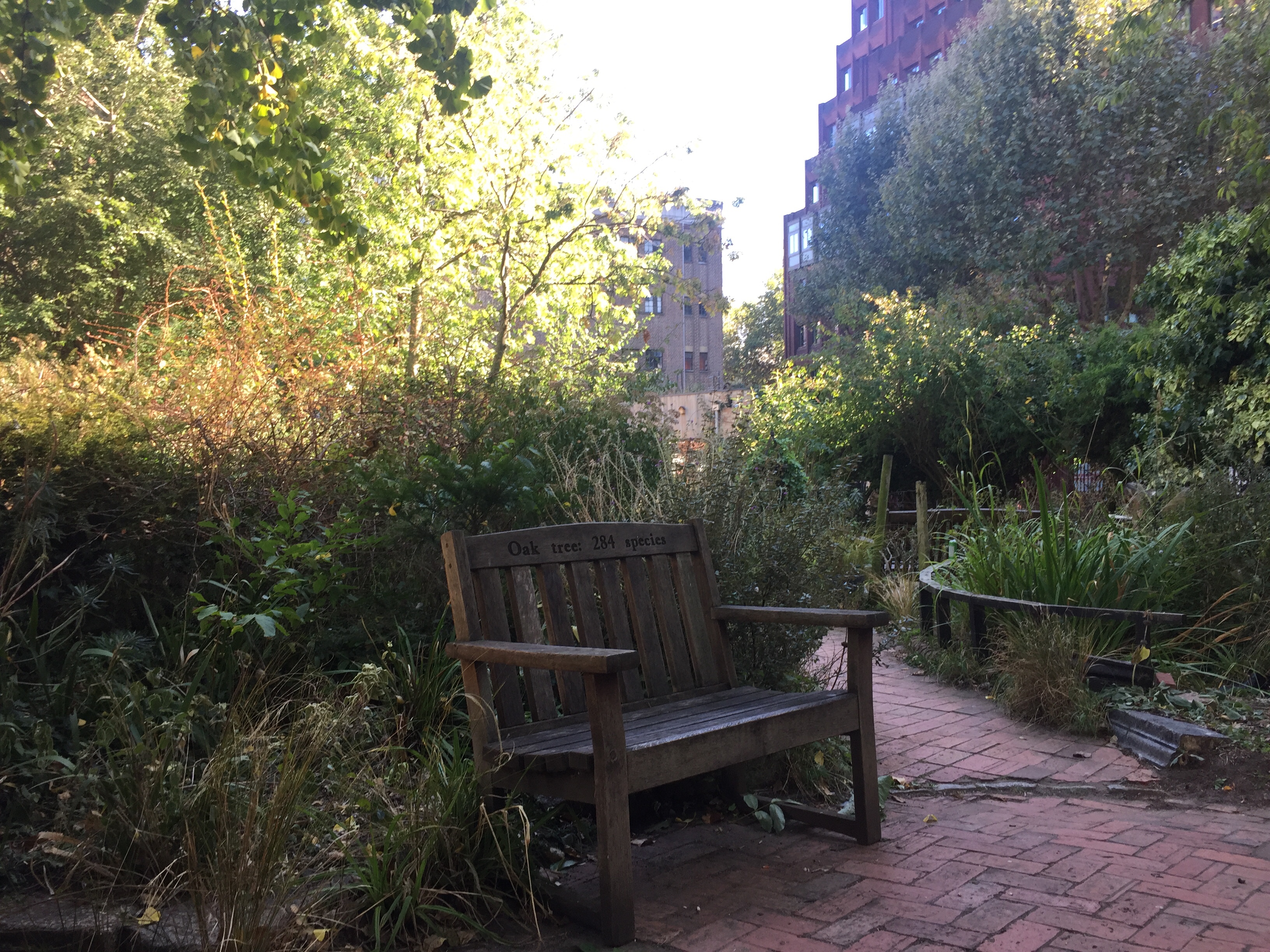
On the last Friday of my recent trip to London I stumbled upon the most magical place in West End (Harry Potter play included): The Phoenix Garden.
I’ve never felt more like Mary from “The Secret Garden” in my life: right behind the Phoenix theatre, in the last place you’d ever expect, is a beautiful community garden. At first I thought it was a private garden, one of the many gardens around central London that are accessible only to residents or others lucky enough to have their keys. I was taking a shortcut from Charing Cross Road to Shaftesbury Avenue when I saw the wall around the place, and inside glimpses of the planting. I was about to pass by when I noticed that there was someone sitting with their carry on luggage on a bench.
“That’s not right for a keyed garden,” I thought to myself, and went to investigate. I met a duo of lovely ladies at the entrance, volunteers that told me a little about the place and told me to go exploring. It was love at first sight.
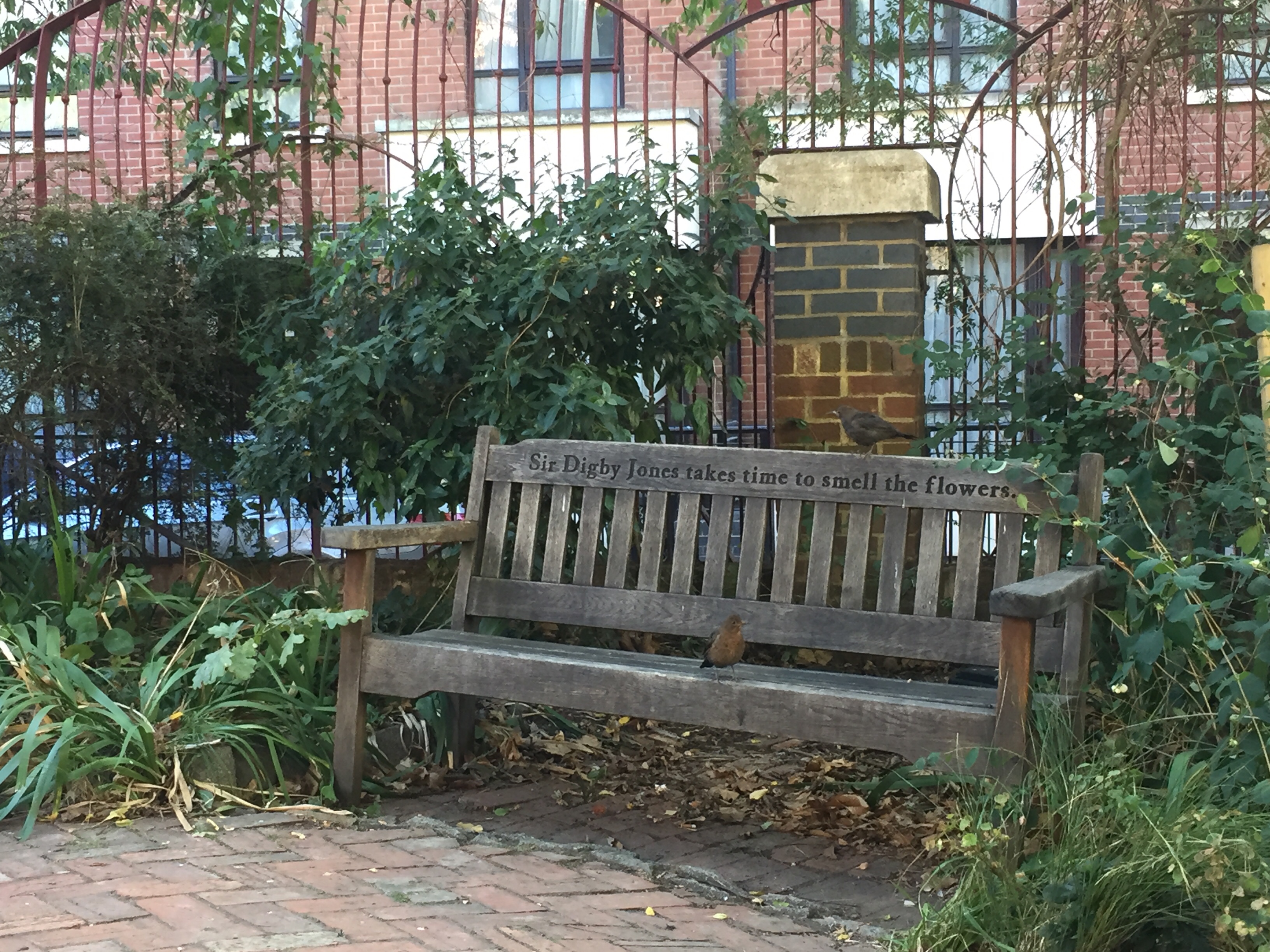
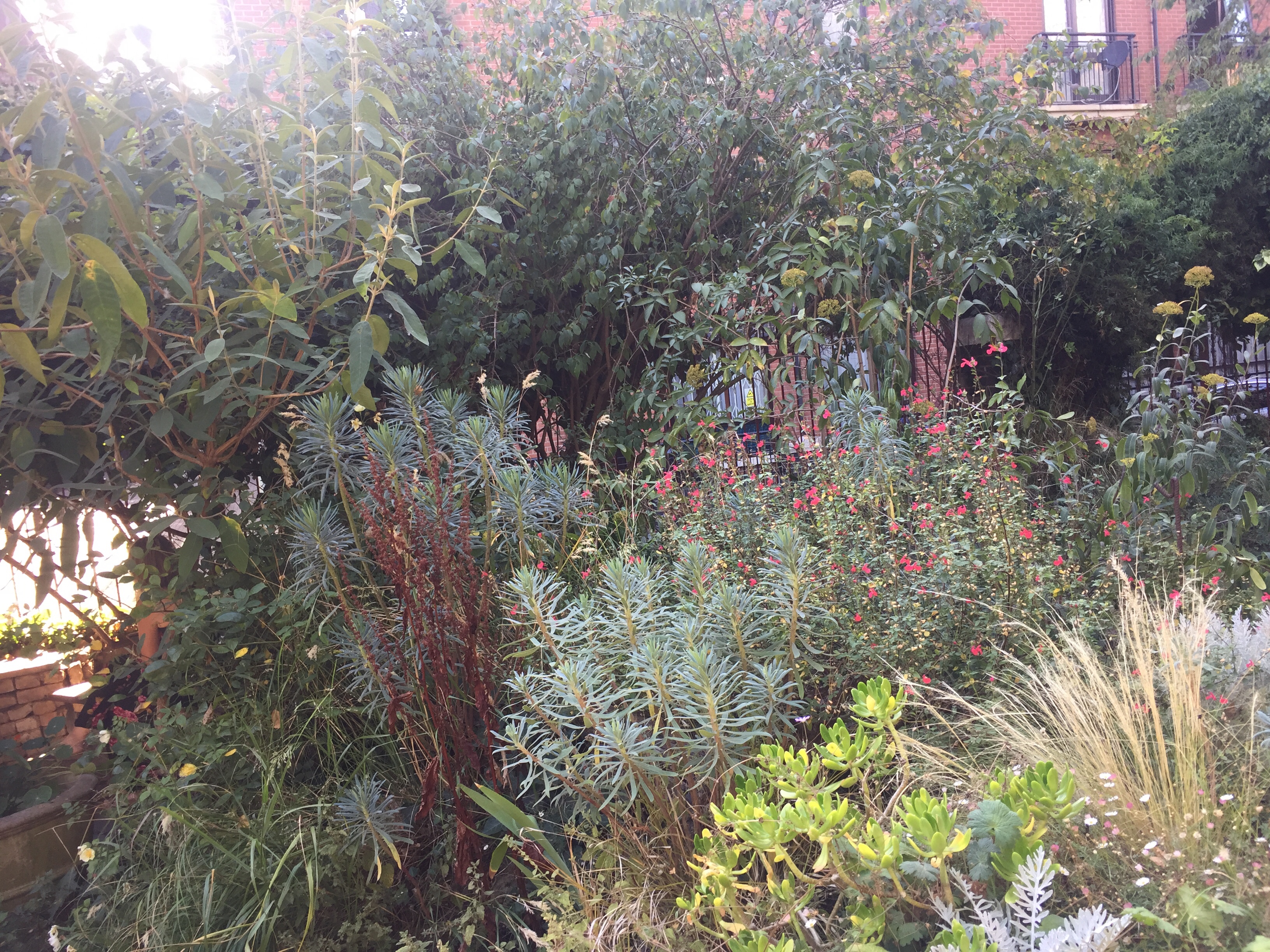
The Phoenix Garden is a community garden, run by volunteers and funded by charitable donations (I donated and I urge you to both visit them and donate to them). It was founded on a parking lot, which itself was founded on a WWII bomb site, so talk about challenging growing conditions! Rubble, rubble everywhere and not a bit of earth. It’s also a very small plot, only 1/3 of an acre, which gets very little rainfall. The volunteers managed to create a sustainable green oasis that feels much larger than it is, requires no watering, and is a haven to wildlife. Sitting there, a minute from the bustling Charing Cross Road and you’ll encounter birds, squirrels, bees, and even frogs within moments of sitting on one of the garden benches.
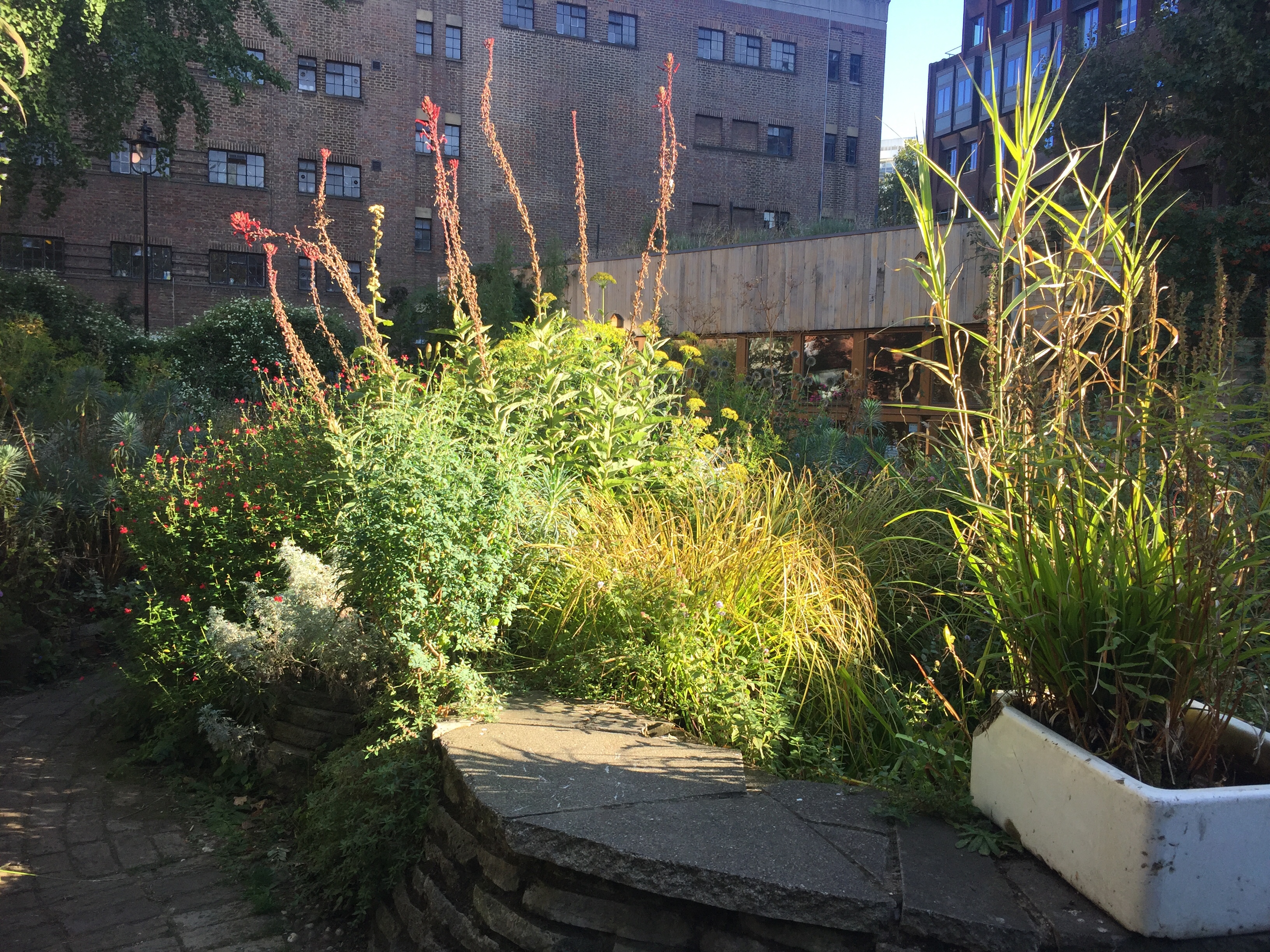
The garden feels larger because it has been cleverly planned: there are winding paths, tall plants that screen you from the rest of the garden and provide privacy, little hills and deep valleys. It’s a miracle of planting and construction.
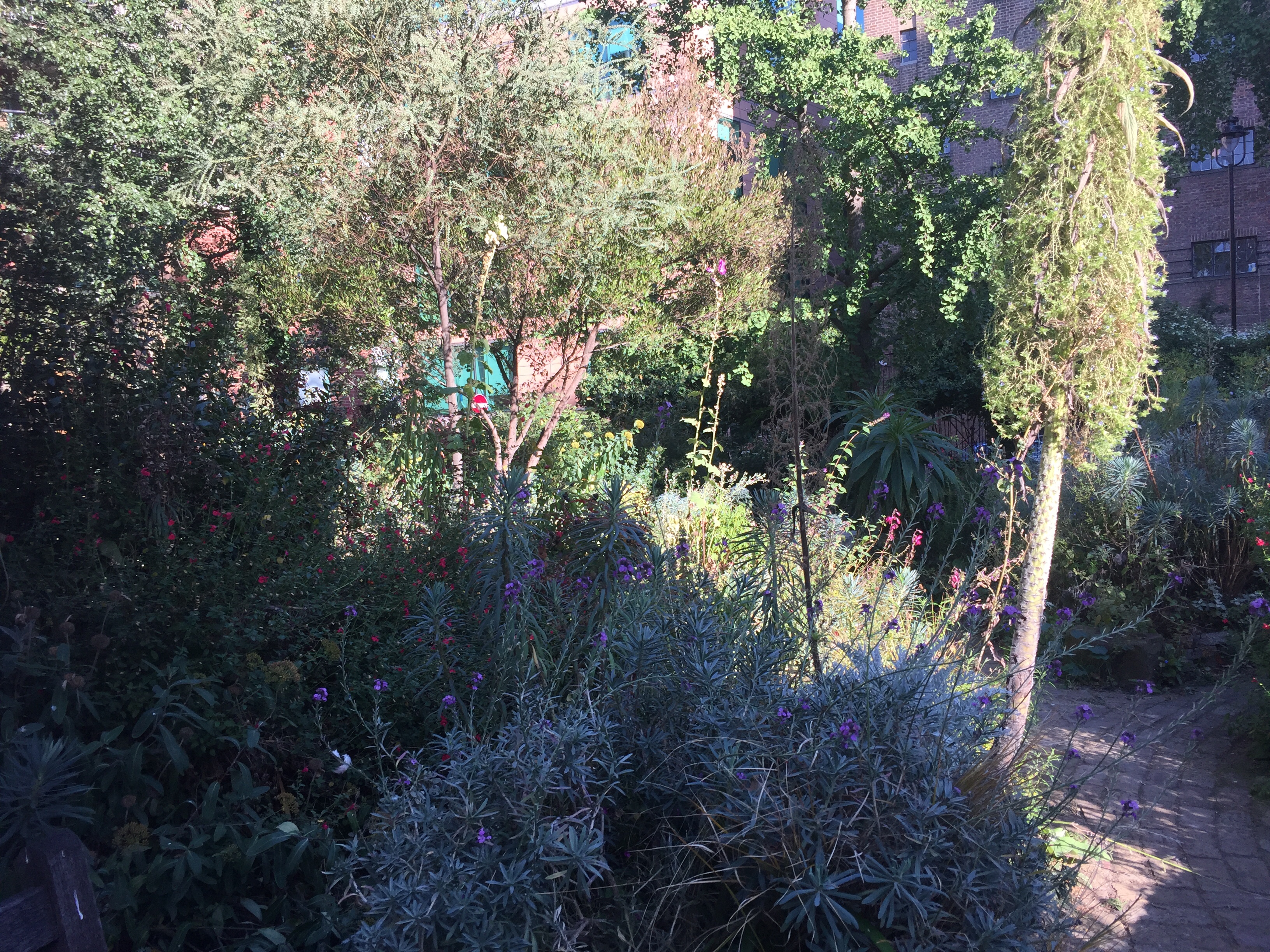
The planting is quite varied and suitable for dry and relatively warm conditions (a bonus of being a city garden), so there’s a lot to look at beyond the wildlife.
It’s also a wonderful place to just sit in and decompress and unwind. You can’t help but smile looking around you, taking it all in. Take some time off your next West End visit and go say hello to its secret garden.
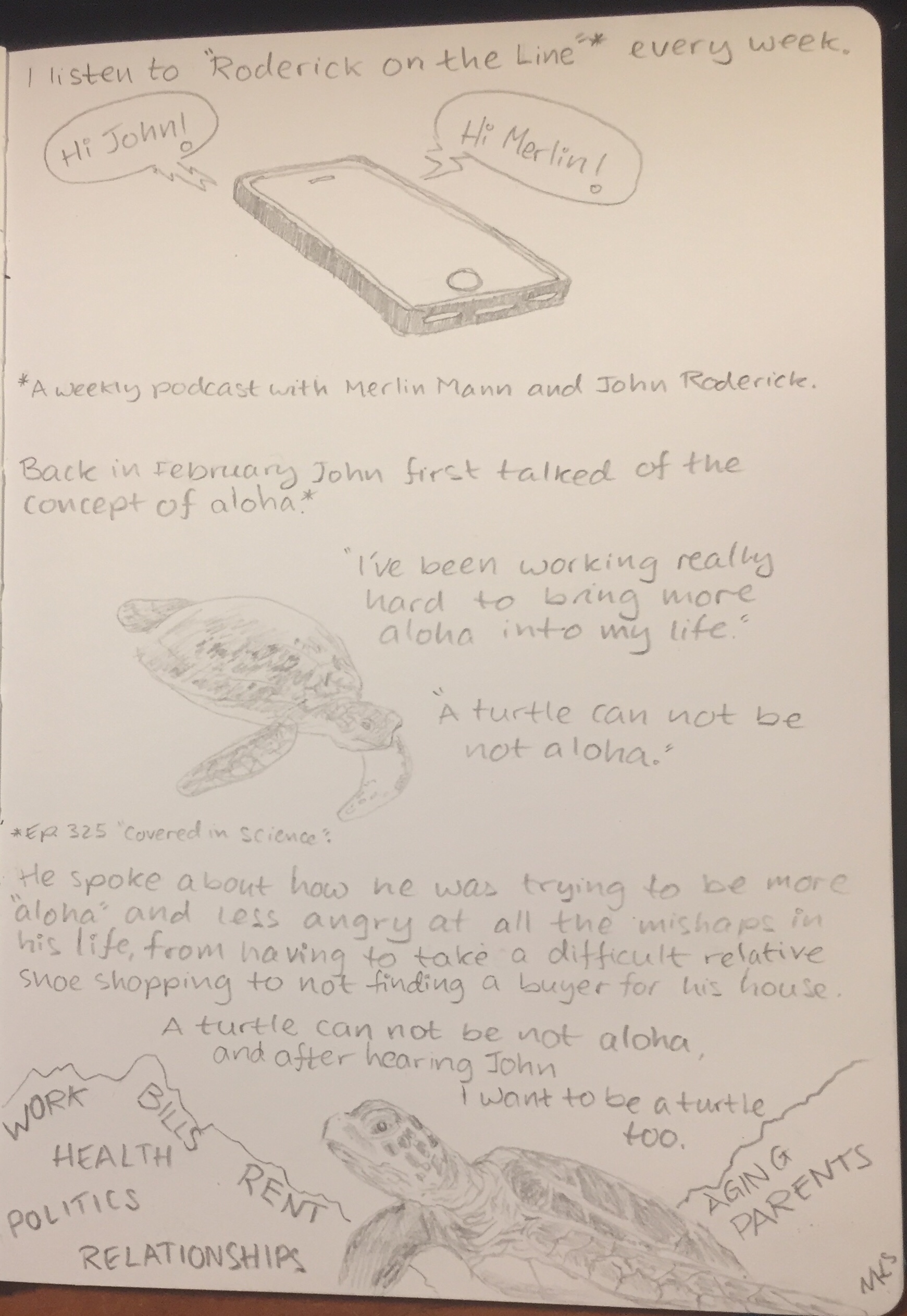
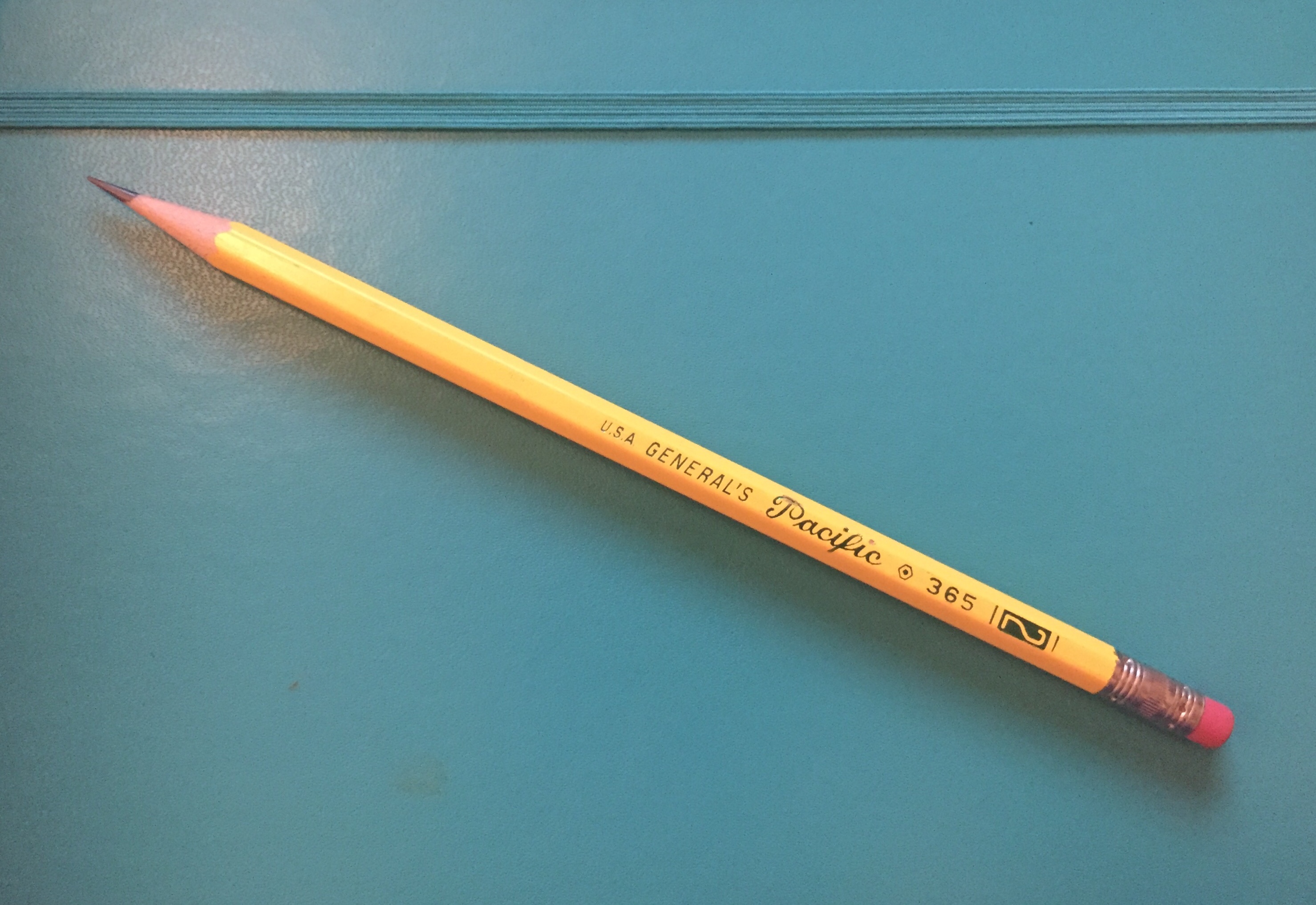
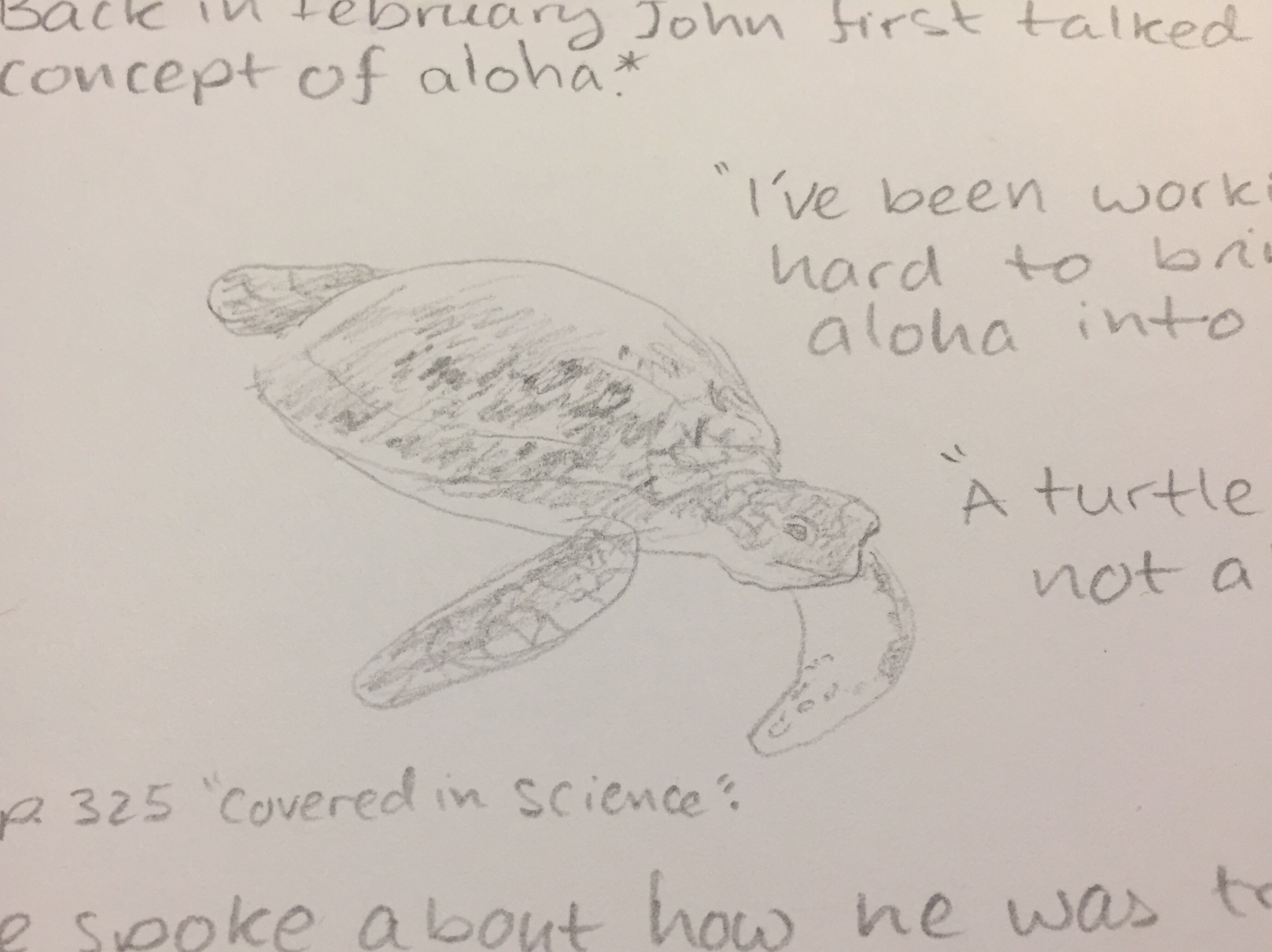
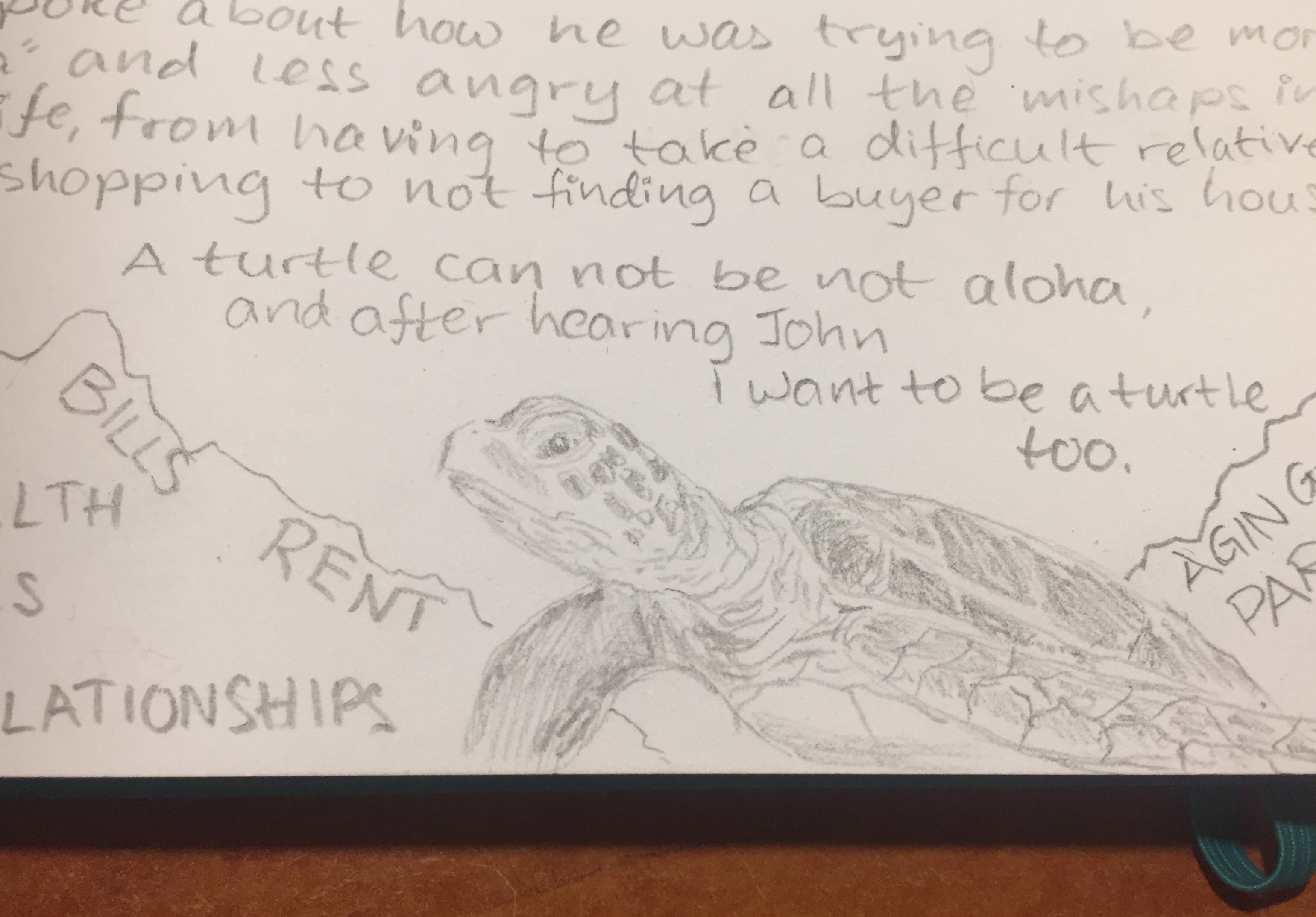
I have too many pencils which I don’t take the time to use. Inspired by this episode of the Pen Addict podcast I decided to literally do a random draw: I randomly drew a pencil from the pile, and then I randomly drew something with it. Today’s pencil: the General’s Pacific 365 #2.
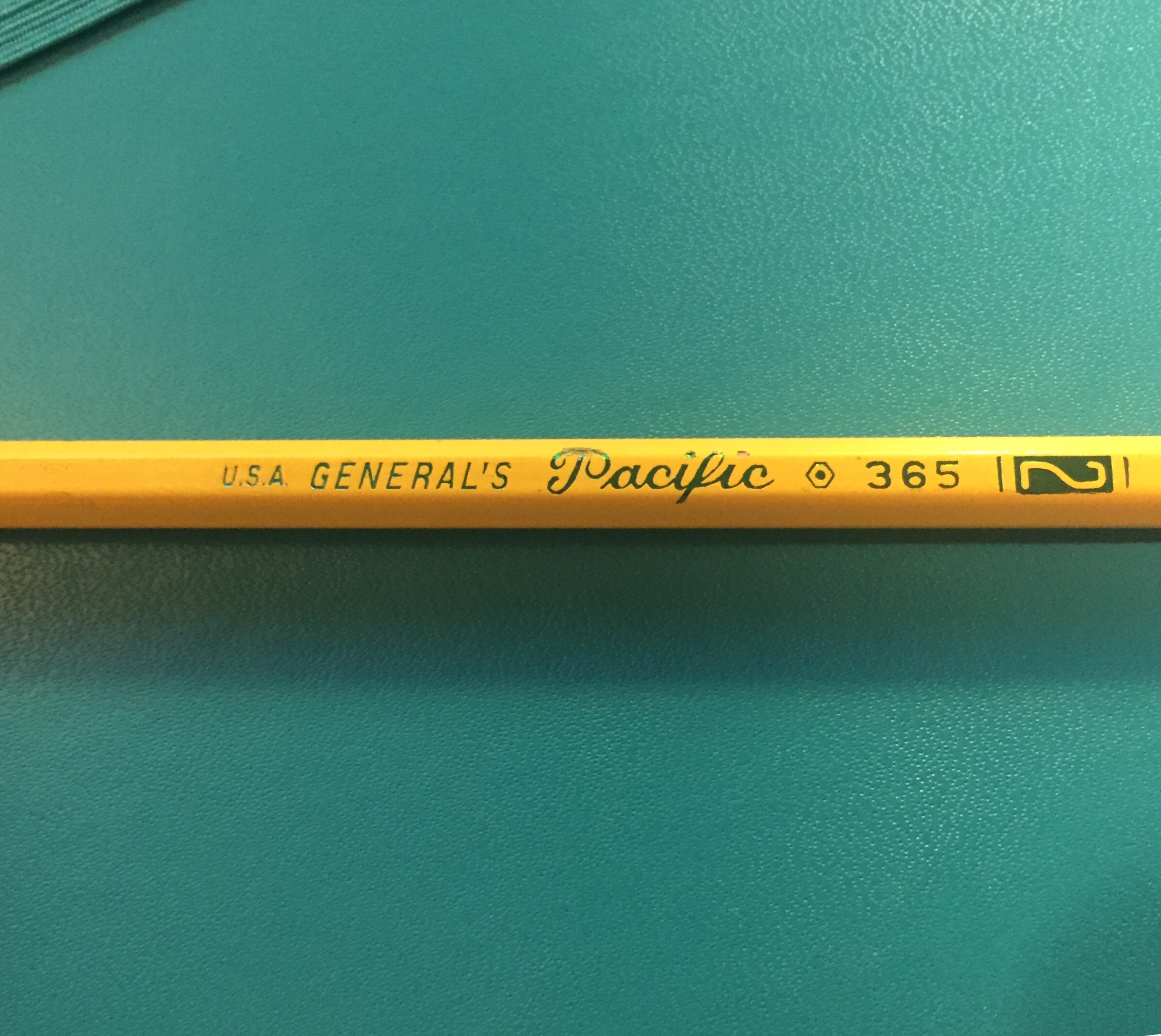
It’s a classic looking #2 (or HB) pencil, with for some reason three or four fonts on the barrel, depending how you count the numerals. It’s made in the USA, out of California incense cedar, and has a little red thing on the top that looks like an eraser, but trust me, I wouldn’t try to use it as one.
Why so many fonts?
The green foil imprint quality is not great, with the “Pacific” imprint chipping the pencil’s coating. The coating itself is pretty thinly layered, but the core is perfectly centred and sharpens like a charm.
You can see the available shades that the General’s Pacific is capable of producing in the closeup of the sea turtle above. If you’re looking for a #2 writing pencil that could do for a quick sketch in a pinch, the Pacific ought to do the job. It doesn’t smudge and holds a point very well.
I erased a word between the “S” and the “LATIONSHIPS” on the left side of the closeup above. It erased out pretty well, even though the writing was dark and done with some pressure.
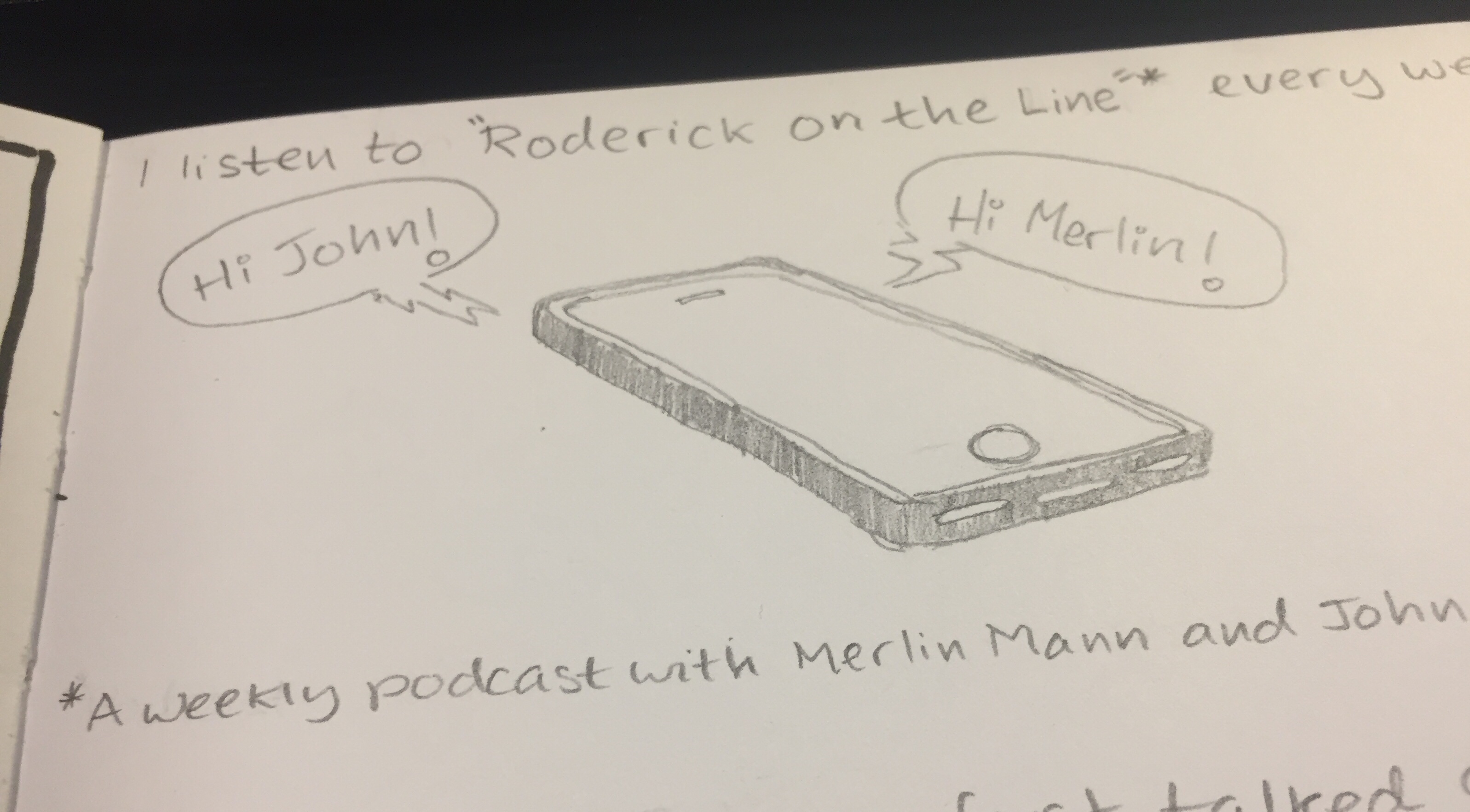
The phone above shows you the maximum darkness I was able to produce with the General’s Pacific. It’s not bad, considering that this is clearly not a pencil made for drawing, but one made primarily for writing.
If you’re buying from CW Pencils and are looking to add a workhorse cedar pencil with a fondness for fonts to your order, the General’s Pacific is a pretty good choice.
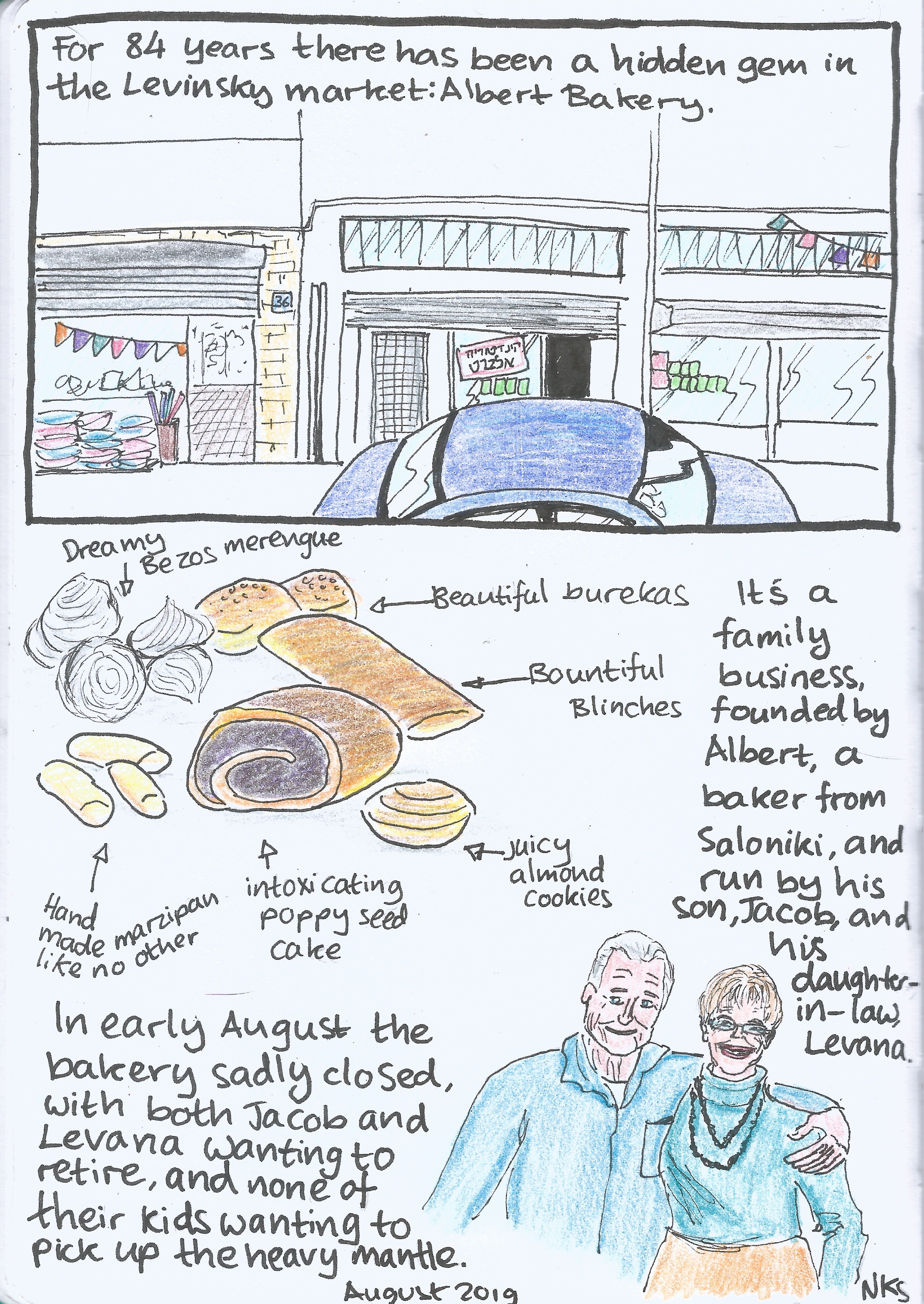
Leuchtturm1917 sketchbook, Kuretake Zig Mangaka pens, Deleter Neopiko-Line-3 pens, Caran d’Ache Pablo coloured pencils, Faber Castell Albrecht Dürer coloured pencils.
This week I celebrated two years of daily journaling. While I’ve been keeping journals for years, until the last two years I’ve only done so sporadically. Journaling was something that I did only when things got really rough, to keep myself going, or when I was travelling, to preserve the memories of my trip. I used pocket notebooks for my sporadic journals, as it was more important for me to capture things than to reflect on them. It was a utilitarian process, not an enjoyable one. I knew that once I decided to really start a journaling habit, that would have to change.
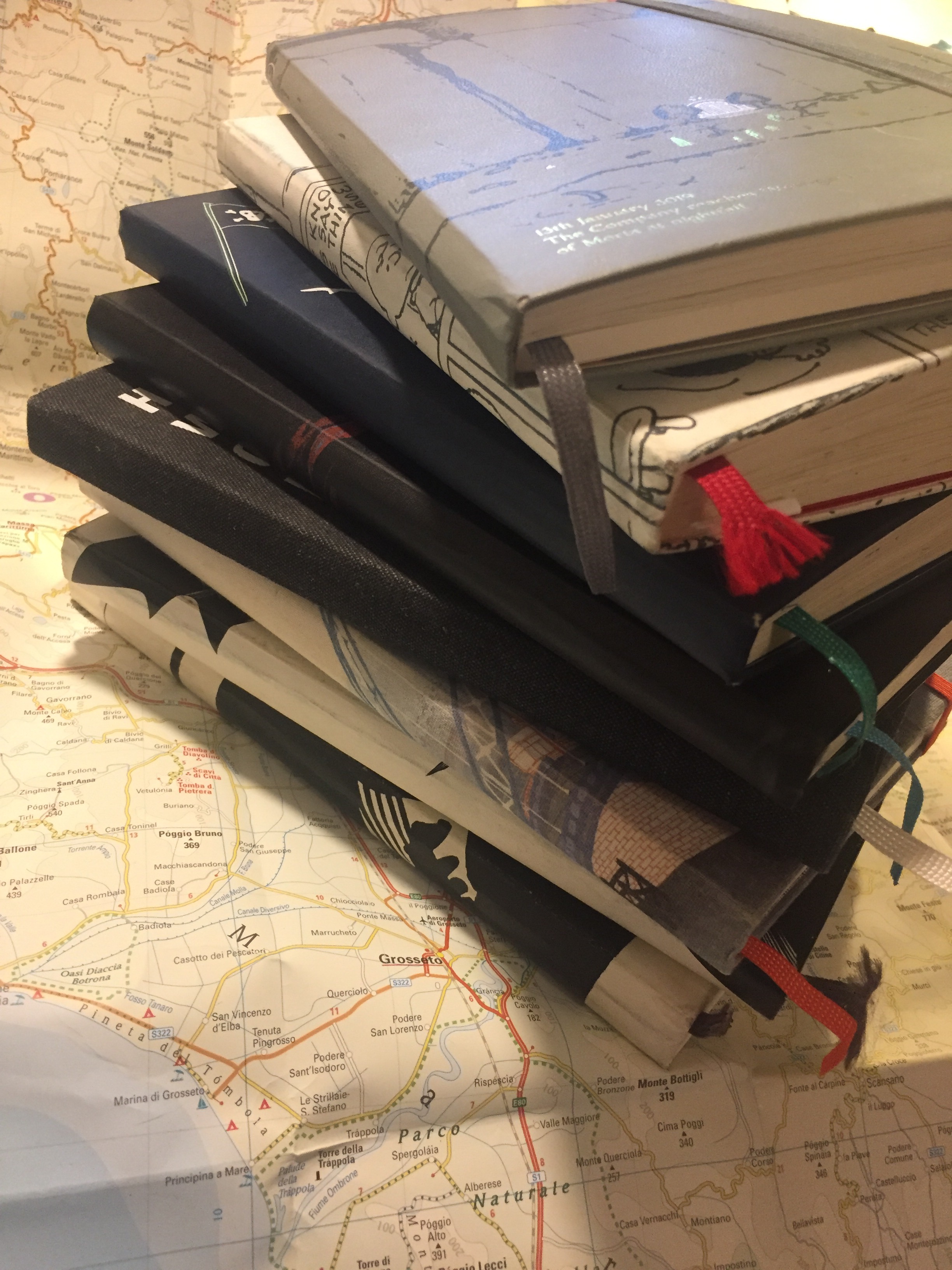
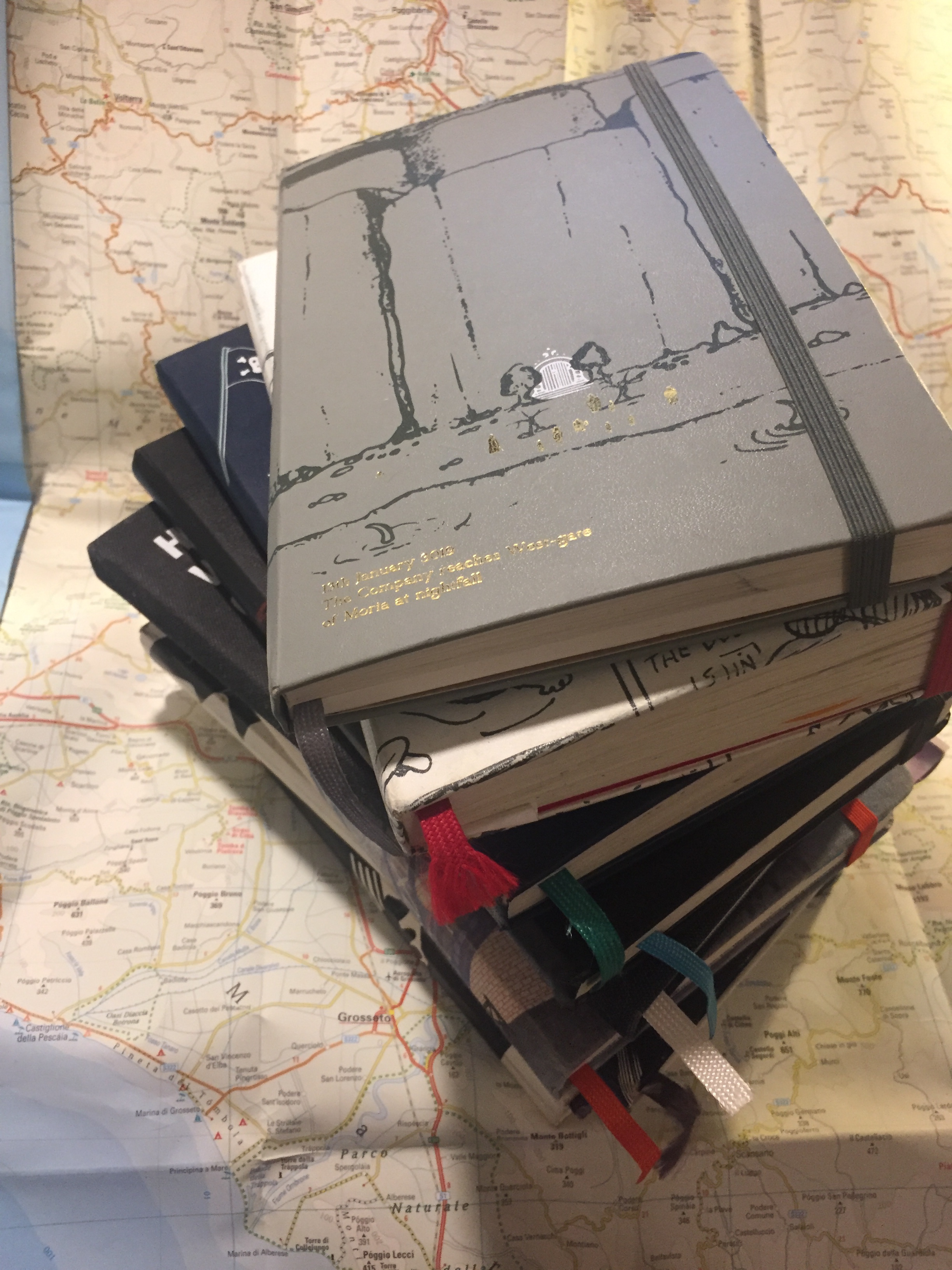
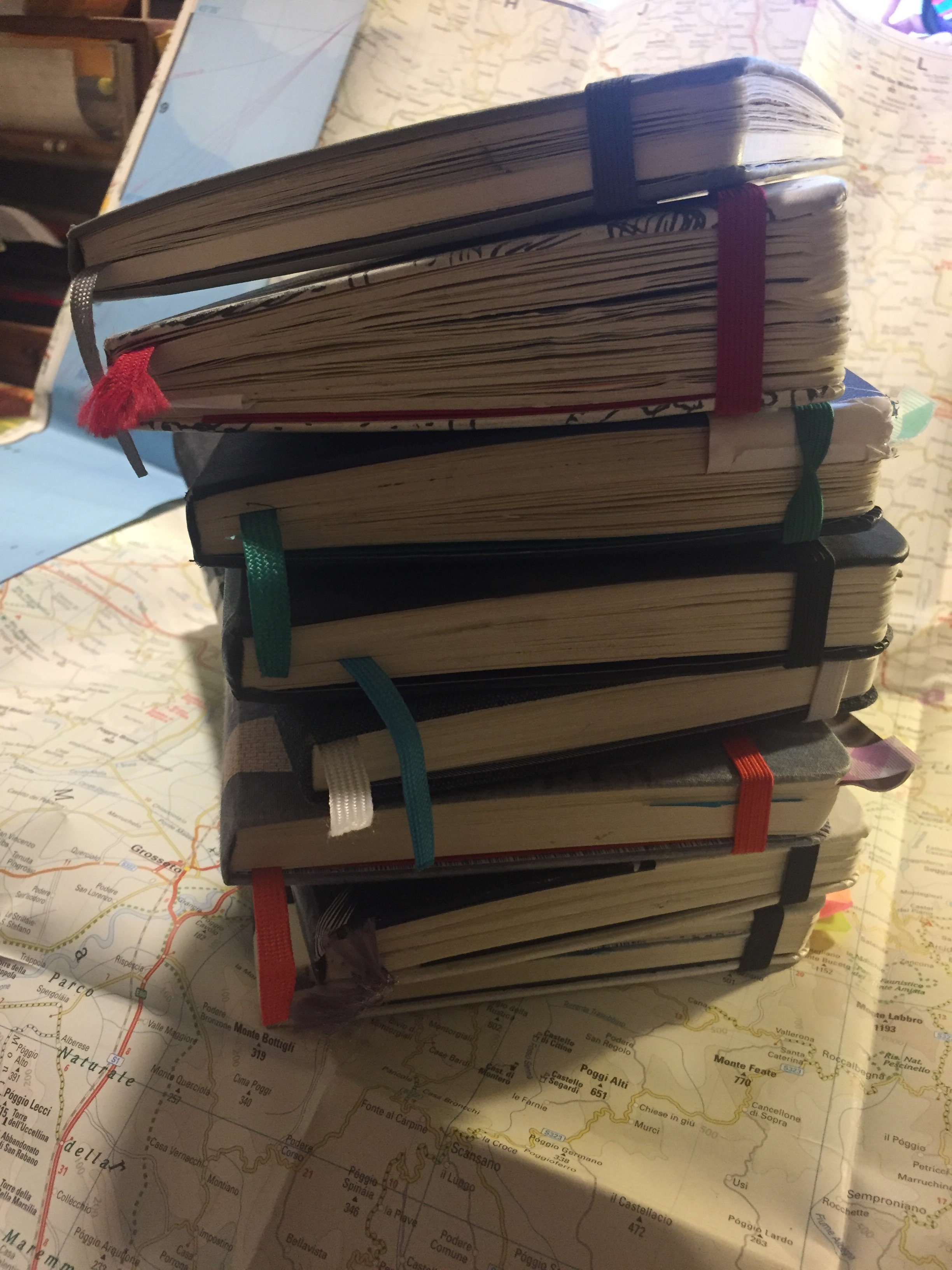
These are all the journals which I’ve used during the past two years.
So the first thing I did was pick a notebook that I knew I’d want to use, and use daily. The only rules were that it had to make me happy, and that it had to be large enough for me to be able to actually write in it, not just jot things down. I wasn’t looking for the best notebook with the best paper in the best format (I don’t think that exists, actually, but for us stationery geeks the search is always on), just a good enough notebook for me.
My notebooks of choice.
I also decided very early on that I couldn’t use a fountain pen for this, because I wanted a pen that I could write with even not under the most ideal circumstances. I was also planning for both the notebook and the pen to bash around freely in my bag. These were going to be used and look used.
Can you see how bloated these notebooks are? Moleskine makes them sturdy enough to take a beating.
I chose Moleskine large ruled hardcover notebooks as my notebook of choice, and the uni-ball Signo RT 0.5 gel ink pen as my pen/refill (UMR-85N) of choice. I wanted a sturdy lined notebook that I’d enjoy using and looking at once it was done, and after years of neglecting the Moleskine for other notebooks I came back to it because of some of their limited edition designs. I knew that I was going to use the uni-ball Signo RT 0.5 as my pen or refill of choice (inside a BigiDesign Ti Arto or Ti Arto EDC), so I didn’t need fountain pen friendly paper. I had decided to pick up the steady journaling habit by starting with a travel journal, which I already had some experience with, and then carrying on from there. On the first evening of a trip to London I happened to walk by the Moleskine store in Covent Garden, and I decided to go in and check out what they had. There was a beautifully designed Batman limited edition notebook in exactly the kind of format I was looking for, and it was only available for sale at the Moleskine stores. I bought it, unwrapped and stamped it with the Moleskine Covent Garden stamps, and I haven’t looked back.
That pen and notebook combo has hardly changed over the years. What has changed is the format I use to journal, and the amount of daily journaling I do. When I started out I was used to only jotting a few lines down here and there when I journaled, so I knew I couldn’t expect to write 4-5 pages per day right from day one. Starting with just a paragraph to half a page a day, I pretty quickly moved to one page per day of just writing.
Then I saw a Neistat Brothers video on Youtube and realized that I could use my journal as a visual capturing device as well, and anything could go in it, so long as it made me remember a moment or a place.
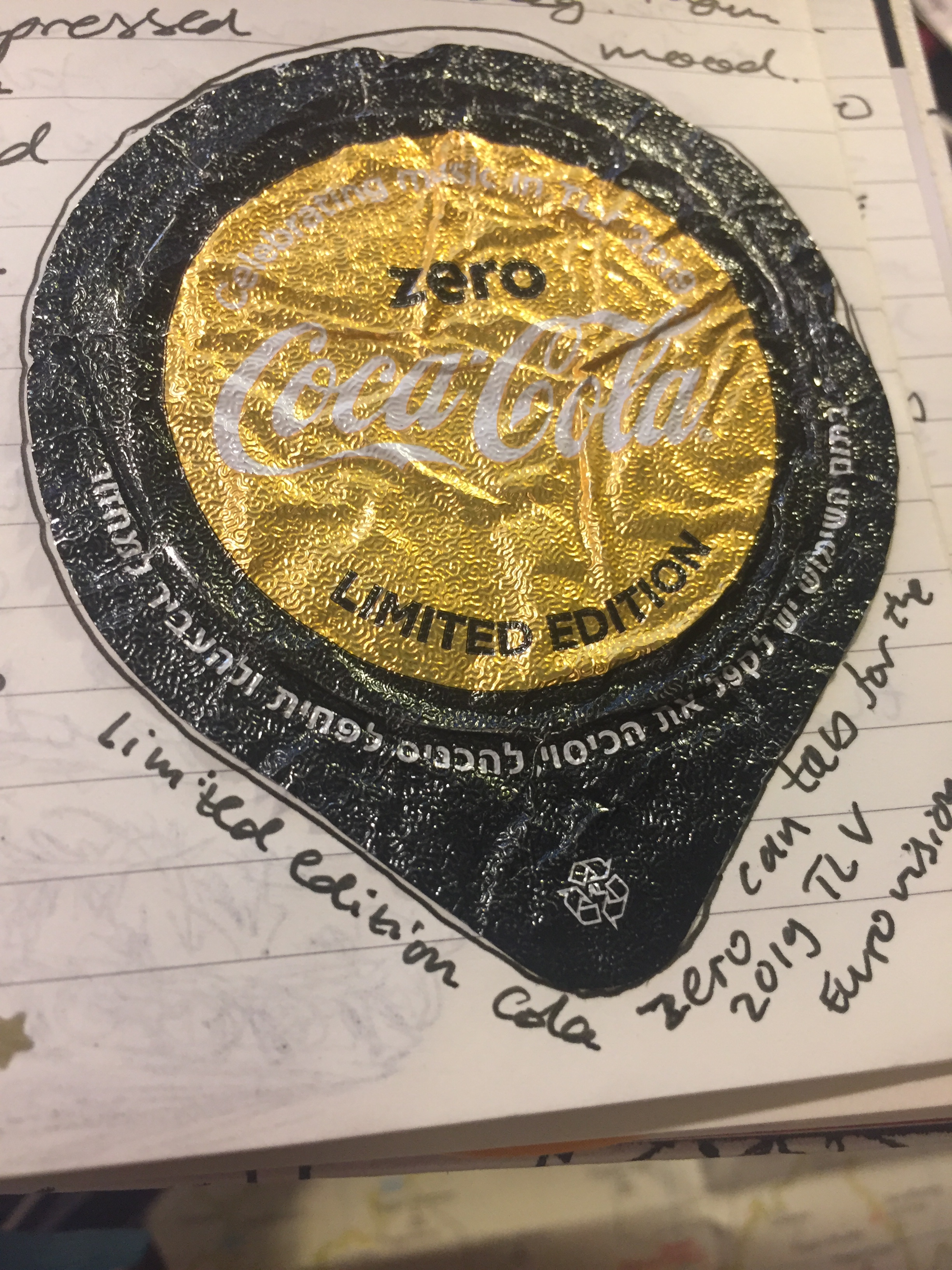
Limited Edition Cola Zero tab created for the 2019 Eurovision song contest in Tel Aviv. I don’t even drink Cola Zero, but this little piece of metal is still totally evocative to me.
That’s when the notebooks really started to get bloated. From clothing labels to business cards and ticket stubs, if I can put glue on it and it’s visually appealing or evocative, it goes in. I almost always also write a little note for future me, to remind myself what I’m looking at and why it’s there. That change really made these notebooks a kind of personal artifact for me, and I can’t say how precious they’ve all become.
A bit of cat themed washi tape and a Uniqlo shirt label. Sometimes things go in because I find them visually appealing or they make me smile.
At a certain point I started getting ambitious, moving from writing one page a day to two pages, then four pages, then six. That’s when I had to take a step back and make sure that I wasn’t burning out on journaling for all the wrong reasons. I enjoy writing and I enjoy journaling, but I’m also trying to write fiction, and my journal can’t become something that consumes that, an excuse for not writing. It’s also easy to get carried away and want to finish the notebook as fast as possible just so you can open a fresh one, or brag (even if it’s only to yourself) that you’ve finished a notebook. Nowadays I write one or two pages a day for most days, moving up to more pages only if I really have something special to write about.
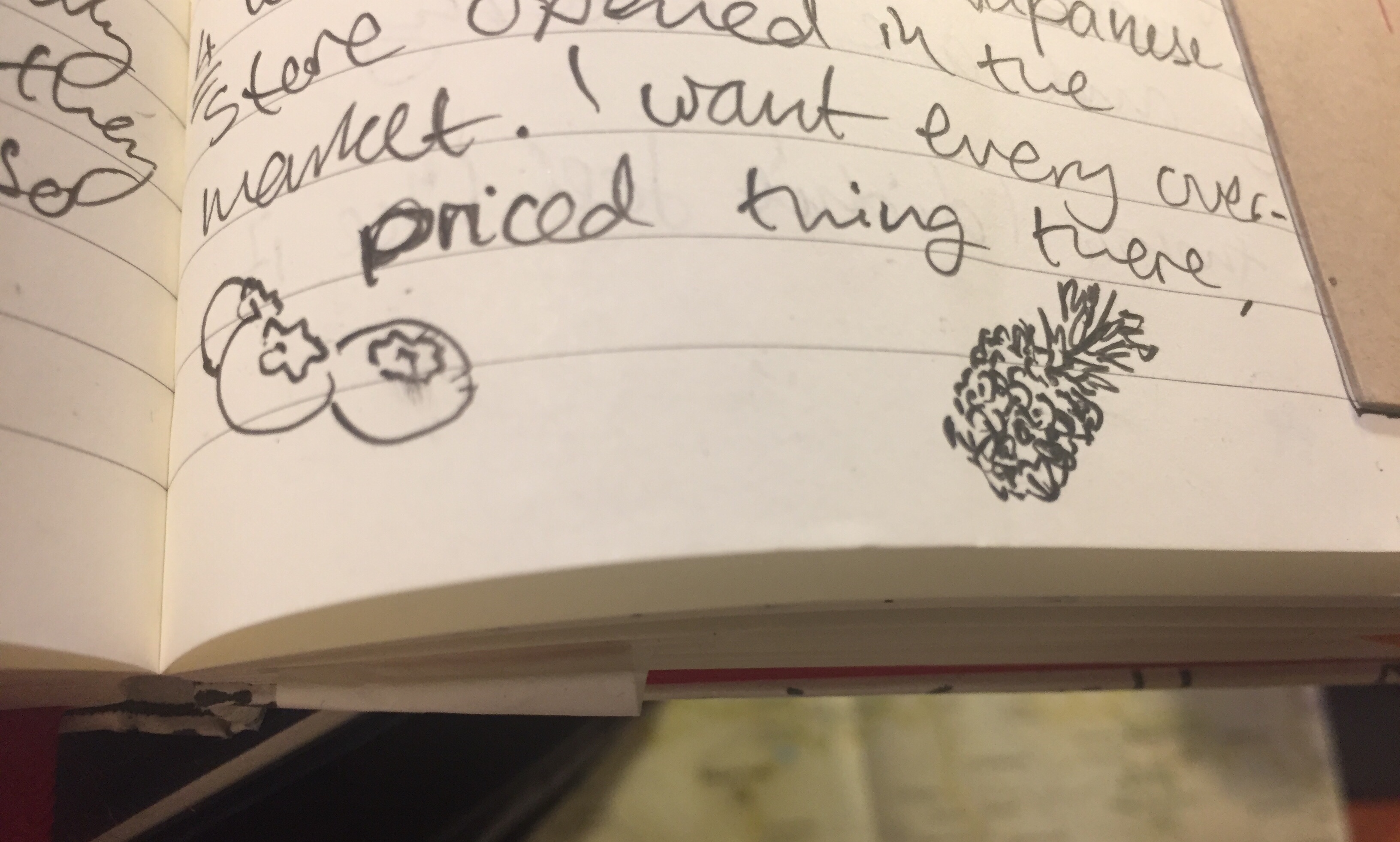
Doodling seasonal fruit in the margins.
Life also happens, and oftentimes it’s scary and ugly, a black hole that threatens to consume all that is good in your life, including journaling. My mom got unexpectedly and very seriously ill last year, and we’ve been struggling with her disease ever since. When she was in hospital I couldn’t bring myself to journal. I backlogged those (thankfully few) dark days, and I realized that I would have to accept that as much as journaling is important to me, family comes first, so backlogging is going to have to become acceptable. I try to backlog as little as possible, but some days just demand that.
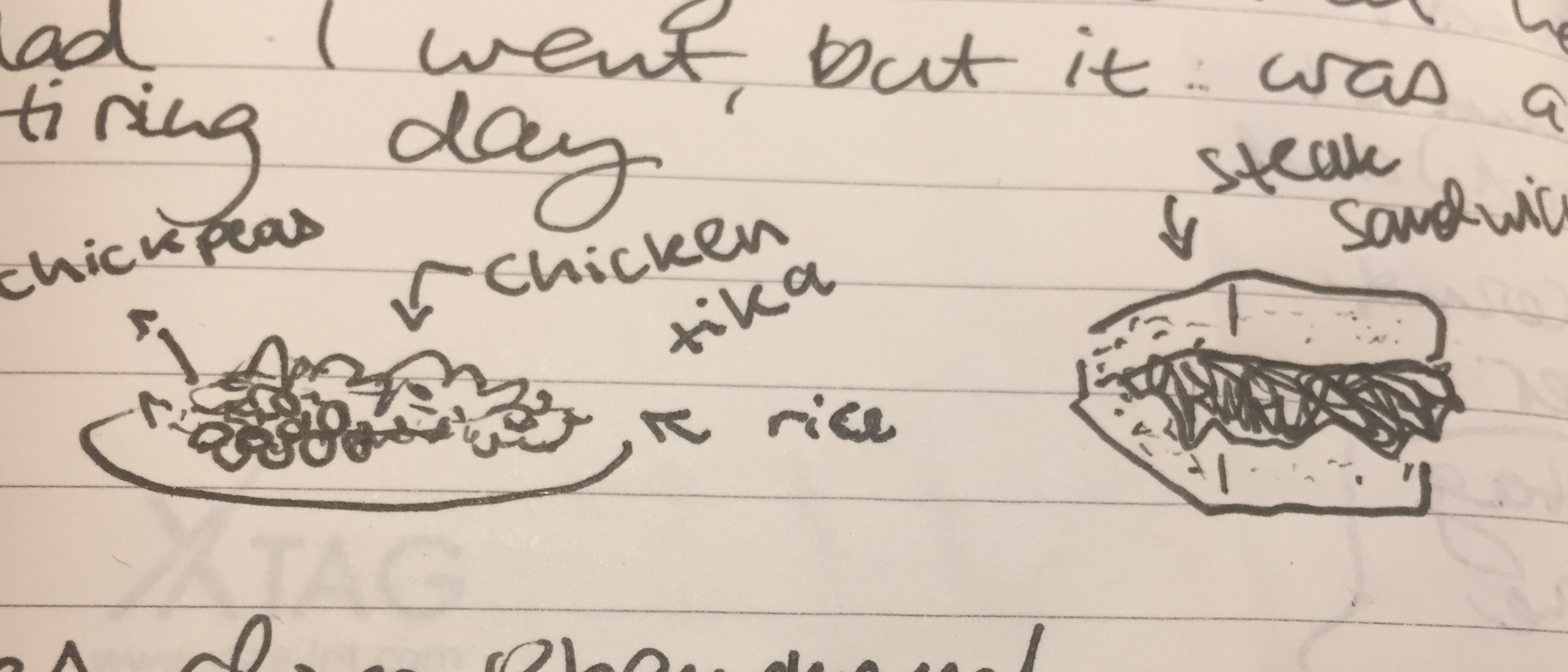
If I want to remember a good meal I’ll sometimes draw it.
I also draw a little in my notebook, tiny thumbnails of things that I want to remember later, or that I just feel like drawing. These are usually food doodles, as I don’t really like to photograph my food.
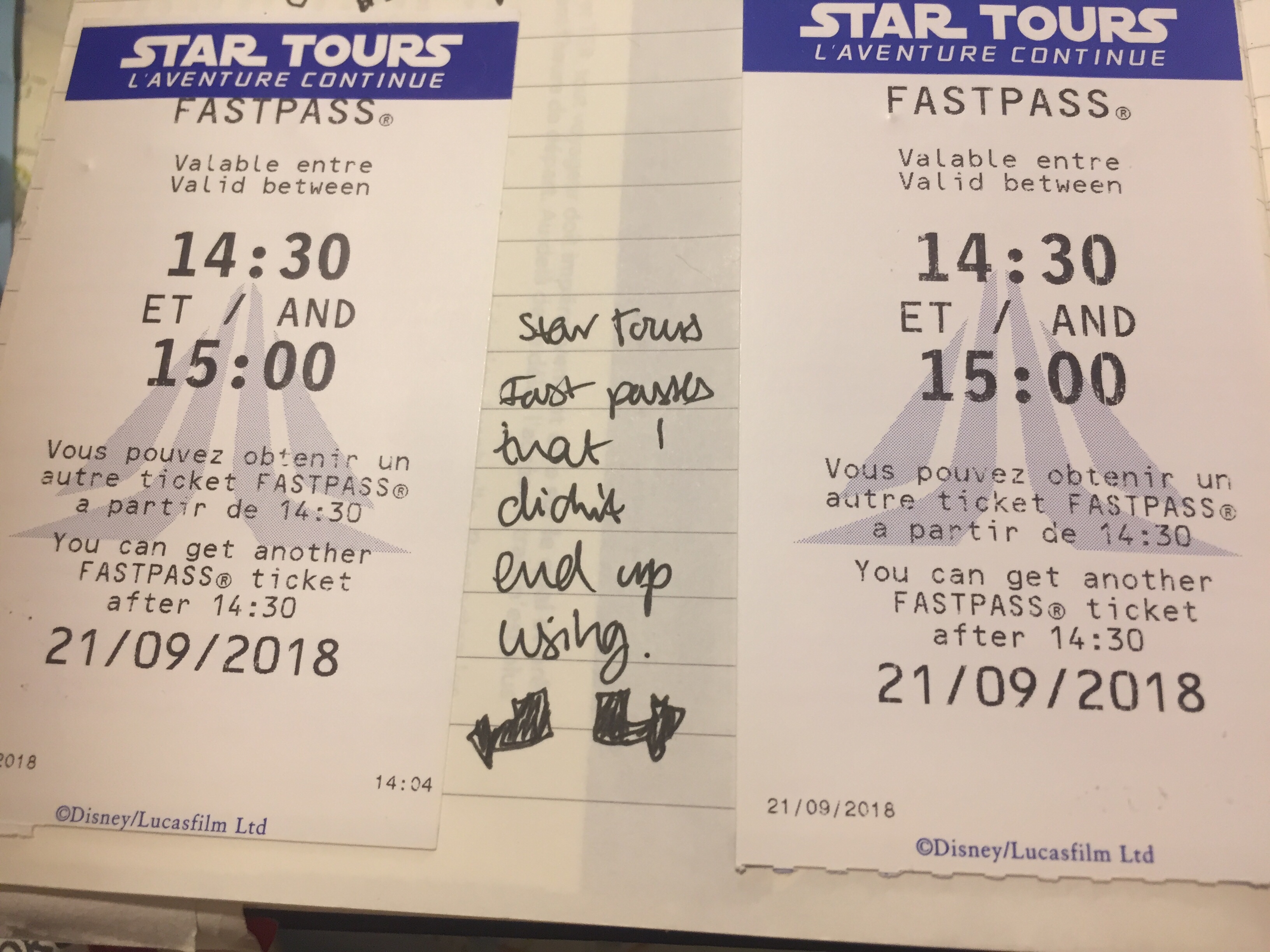
I still use my journal in trips, and ticket stubs and bit and bobs like these make it more interesting.
If you’re looking for some journaling tips, I wrote two posts on that subject here and here. If there’s one thing I can leave you with it’s that if you want to journal, you need to figure out a way to it make it work for you, and be ready to adapt as your life changes over time. There is no perfect journaling system, or perfect journaling notebook, there’s only what works for you.



 Writing at Large