New Year’s Resolutions

For the last three years I’ve been making and tracking yearly goals in a Baron Fig Three-Legged Juggler Confidant. I call my new year’s resolutions my yearly goals because unlike resolutions, goals are something concrete and well defined that you continually strive to achieve.

The goals are personal, so I’m not going to share them here, but I am going to go over how I set them up, in the hopes that it might help and inspire those working on their own yearly goals.

  • Set yourself up for success by picking goals that you:
        1. Actually care about.
        1. Are measurable.
        1. Are achievable even if your year goes horribly wrong. The trick is to set up easily achievable basic goals, and then “bonus” or extended goals that go beyond them in various tiers. So if you aren’t reading at all and you want to read more a good basic goal would be “read 4 books a year”, with extended goals of “read 8 books a year”, “read 12 books a year” and so on.
        1. Are a mix of things that you track all year and one time events ( for example: participate in X number of races, and run X kilometers a month/year).
        1. Aren’t focused on one area only (to avoid boredom and burnout).
  • I use a paper notebook to track my yearly goals and the “Streaks” app to get my streaks going. The notebook is something I open and update at least once a week and so is constantly on my desk, resting against my laptop. It’s a physical and constant reminder of what I need to do. I can’t emphasize enough how important the physical aspect of putting a check mark or crossing out a box is for this to work.
  • Be ambitious only with extended goals, or you are going to disappointed and discouraged very quickly. Human beings are terrible at assessing deadlines and the amount of effort required to achieve a goal. Cut your goals by 25-50% at least from what you think you can achieve. Yes, it’ll make them easy, but the point is to create a momentum of action and success, not frustration and failure. If you know you’ve missed all or most of your goals you’ll stop looking at them, and by March 2019 you’ll be done.
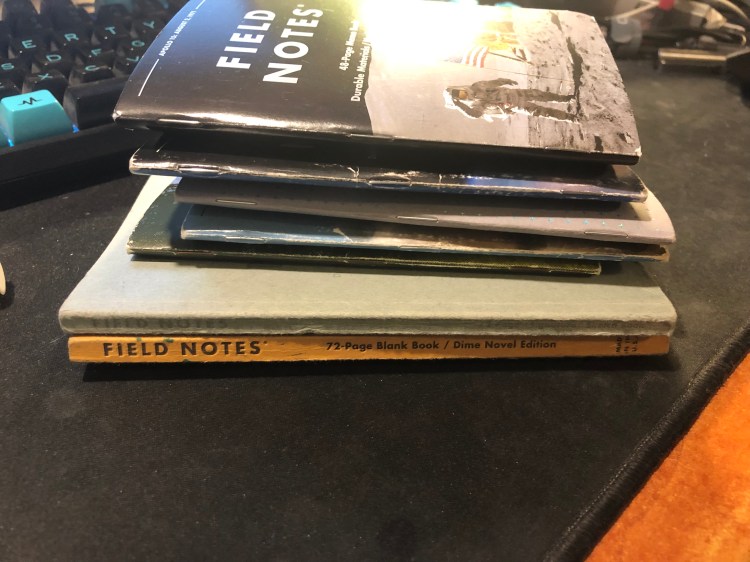
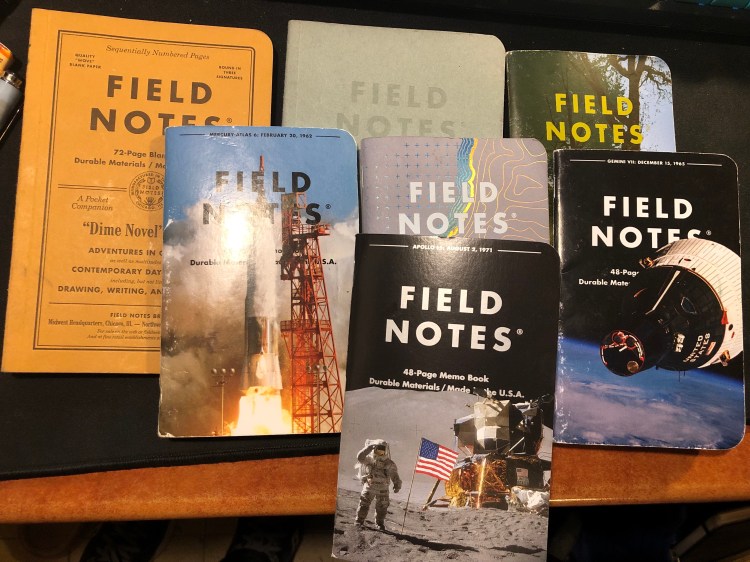
This Year’s Field Notes

This year’s filled up Field Notes notebooks all piled up:

And spread out:

I use them mostly for to do lists, quick capture and tracking of various short term goals. The Signature Sketchbook is full of doodles, inktober drawings and rough sketches. My favourite by far has been “Dime Novel”. My least favourite has been surprisingly “Costal”. The cover and design are gorgeous but the reticle grid is just too dark to make it enjoyable to use.

My Reading Journal, or How I Taught Myself To Enjoy Reading Again

Ironically enough, by the time I finished with my MA in English Literature a few years ago I had “lost” the habit of reading. From someone who used to read at every available (and not so available) moment I had turned into a non-reader almost entirely. This bothered me so I set up to rectify it by “gamifying” reading until I had tricked myself back into the habit again.

Field Notes had just come out with their Arts and Sciences, the perfect format for my plans. The idea wasn’t only to create a journal where I would log my thoughts on each book as I read it, but create a little set of “achievements” that I could unlock for each book as I read it. For each quarter of the book I read, I got an achievement, a little logo that symbolized the book which I drew on a separate page. The accumulation of those silly little symbols was enough to push me forward as I learned to enjoy reading again. I kept that up for three Field Notes Arts books and then when I ran out of them, I simplified the format and moved to the Moleskine Two-Go, which had just come out. The Field Notes Arts notebook wasn’t fountain pen friendly so I used a Karas Kustoms Render K, a Blackwing pencil and the Caran d’Ache Bicolor 999 double sided coloured pencil.

On the first year that I tried using this system (from March 2016) I got from not reading any new books (just my old familiar favourites) to reading almost 20 new books. On the second year (2017) I got up to 42 books. This year to date I’m at 58 books, and I’ll probably read 60-61 books by the end of the year. I no longer need to spend time drawing little “achievement badges” as my reading habit is back here to stay. I do, however, still keep a book journal even though I’ve started using Goodreads since 2017. It’s a satisfying way to keep track of my reading and organize my thoughts on the books that I’ve read.

You can check out the format of the entries for fiction and non-fiction below. The unlined left side of the spread (verso) is where I do a little doodle that reminds me of something central in the book, and explain the star rating that I gave the book in each category. I really recommend that if you choose to create your own analog reading journal, you create your format yourself. Mine has changed over time, particularly for non-fiction, and it works with my reading goals for the year.

This is the index, which is useful for reference later on and is a good way to check my reading progress throughout the year.

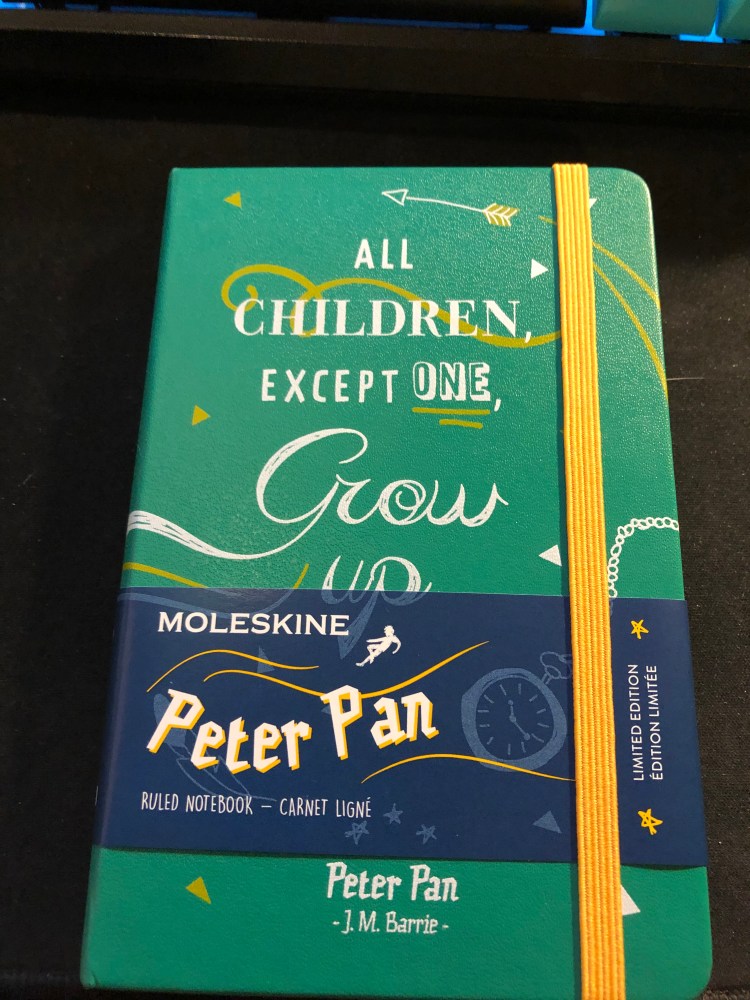
“Triggers” Daily Questions and a Moleskine Pocket Peter Pan Limited Edition review: All Children, Except One, Grow Up.

Ever since I’ve read the book “Triggers” by Marshall Goldsmith about six months ago I’ve been searching for ways to track the progress of my Daily Questions (“Did I do my best to…”). I tried using my journal for several months, then used a Google Sheet for two months, and in both cases something was missing. The Google Sheet was great for statistics and tracking, but not as satisfying and meaningful as writing my daily scores down (and I didn’t really find the statistics useful). The journal was much better, but as my goals changed it was time consuming to create a new table each time, and I needed a way to for me to justify my daily scores.

Enter tracking system number three: a Moleskine pocket Peter Pan limited edition notebook and an index card. Let’s start with the notebook:

The Peter Pan Moleskine limited editions showcase some of Moleskine’s best design work in recent years. Both the colourful covers, the drawing and the lettering evoke the spirit of Peter Pan without resorting to Disney-esque tropes. They’re naive without being childish, colourful without being brash, and the quotes on the covers are brilliantly selected.

Inside the covers are more illustrations in the same vein and even the famous “In case of loss” is set in a hand lettering like font. The palate of the entire Peter Pan line is limited (navy, orangey-yellow, green and white) but it never feels that way.

The back cover. Again, extra points for aligning the design so well with the back pocket. It almost seems like they’re flying into it:

This edition comes with stickers that are a lot of fun and well drawn in a naive style:

And the B-Side of the sleeve instructs you on how to build paper planes and also uses quotes from the books or that reference the book:

So that’s the review of the notebook itself. I highly recommend all of the Moleskine Peter Pan notebooks — they rank alongside the Denim and some of the Harry Potter limited edition notebooks as my favourites of recent years. I didn’t buy it specifically to try to use it as a Triggers Daily Questions tracker, but it was languishing in my “to use” pile and a used notebook is better than an unused notebook, so I decided to give it a spin.

The idea of writing down my Daily Questions each time was what made me stop using my journal for this purpose in the first place, so I decided to write them down once on an index card (which I would slip in the notebook’s back pocket), and then number each question, and date the card. Every day I would write down a score for each daily question, and a very short justification for the score. The justification is short to make it easy to write them down (if it’s a hassle I’ll have a hard time sticking with it), and that’s why I chose the pocket notebook (it’s also light and easy to carry around). When I feel like I need to change the questions up, I’ll create a new index card, put an end date on the old index card and archive it in the notebook’s back pocket. Every day will be dated in the notebook, and I use the appropriate index card if I really want to reference that particular day in the future. This may seem a little clunky for reference purposes, but as I learned over time, I don’t really go back to reference my past answers, so that’s not a meaningful setback.

I’ll check in a few months and document how it goes, but judging by my previous experience, this looks like a pretty good setup for now.

Quick update

  • I’ve started reading my 54th (!) book of the year, John Scalzi’s “The Collapsing Empire”. I’m not skim trading anything, it’s just that my newly acquired Kindle Paperwhite allows me to fill more empty time with reading.
  • Adding more strength workouts to my training schedule has made me appreciate yoga more.
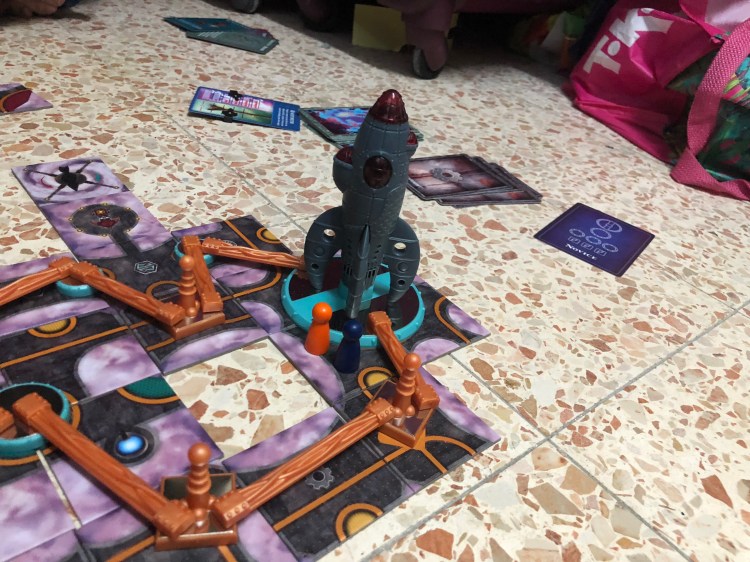
  • I’ve played Matt Leacock’s “Forbidden Sky” cooperative board game and it is fantastic. I’ll post a review once I’ve run through it a few more times.

  • It’s still not raining here, which is worrying.
  • I’ve been back to writing every day, even if some days it’s only 200 words.

Keep at it, don’t let them get you down, you’re awesome! Swing for the fences.

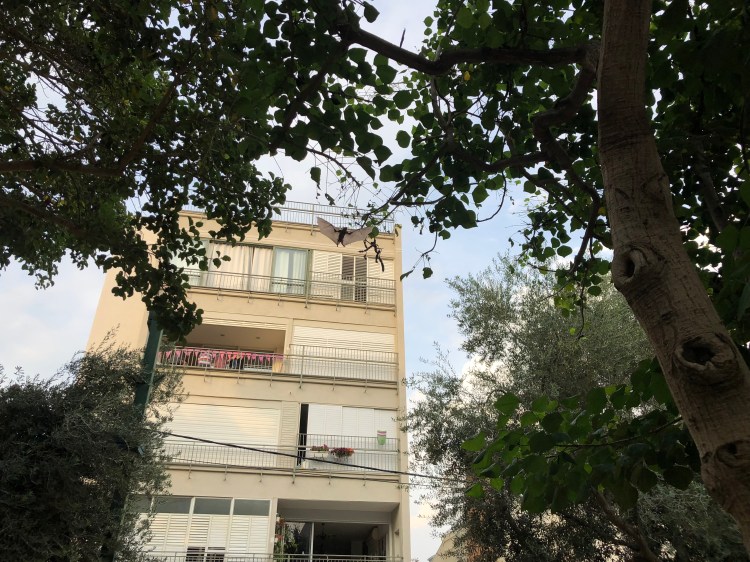
Bats in Flight

If you ever wanted to see a bat in flight, this is for you.