Book Review: Orbital: A Novel – Samantha Harvey
This book won the Booker award, the 2024 Booker award, and for the life of me I don’t know why.
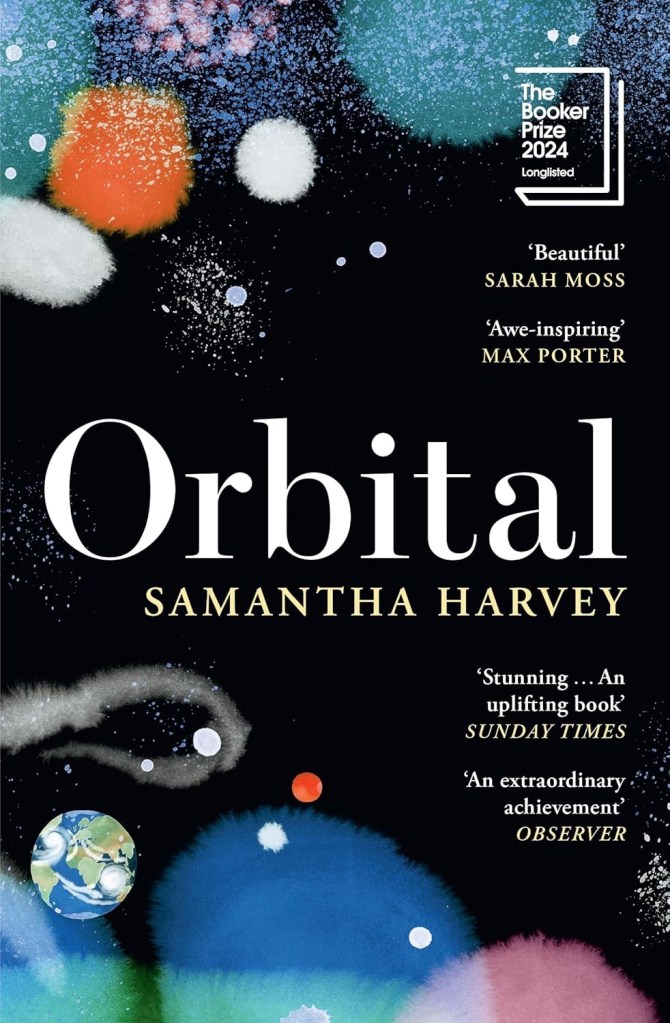
Though the book’s subtitle is “a novel”, at 137 pages Orbital is basically a novella. Mostly it’s a book about nothing, involving six people that you are guaranteed to not care much about, set in the International Space Station. Garnish the whole thing with a mountain of purple prose, and that’s Orbital for you.
Could Harvey have come up with a more interesting premise involving the International Space Station (ISS)? Of course she could. What if Orbital would have been set during the pandemic, with astronauts basically stranded up there, worried about their families and friends, worried about their resupply or how to get back home (see also the eight day space mission that will last for nine months). What if one of the astronauts that was meant to return from orbit refused to return? (It happened in the past). There’s no end to the interesting dramatic situations that being in orbit in the ISS offers. Harvey will have none of that.
The astronauts themselves are a dull lot, that you learn very little about. There’s a religious guy with a postcard that’s supposed to be profound but isn’t; there’s an Italian guy that went scuba diving on his honey moon; there’s a Japanese woman who’s mother dies of old age (spoiler: that’s the drama in the novel); there’s a woman that’s possibly Irish, possibly British that has a peculiar non-relationship with her husband, but don’t worry we don’t get to explore that. And there are two Russian guys. That’s the extent of the characters in Orbital, and that’s how well you get to know them or care about them.
The novella takes place during 16 orbits of the ISS around earth, and there’s a giant typhoon that takes place during a few of these orbits. There’s a weird “white saviour” bit, but without the “saviour” part of it with the Italian astronaut and a poor fisherman’s family that he met during his honeymoon and we’re to believe they kept in close touch with for years until the story takes place. Don’t worry – Harvey doesn’t want drama anywhere near her work, so there is none even at this point.
What there is a lot of is self-involved, bloated purple prose about the beauty and fragility of our planet, space and humanity. None of it is earned, none of it is attached to the narrative, all of it could have been cut out – but then there would be no Orbital.
I rarely review books that I dislike, and I should have given up on Orbital a quarter of the way through, like I originally wanted, but I didn’t. So let this be a warning to you: not all Booker award winners are worth reading.


















 Writing at Large