London: A Trip to a City Emerging From a Pandemic

I was in London for the past two weeks, and it was a strange and unique experience. Until Covid-19 I used to visit London once a year, every year. Once the travel restrictions changed so that I didn’t have to quarantine on the way there or on the way back, I decided to book a trip. It ended up being a good but somewhat bittersweet trip, with a lot of interesting new caveats and restrictions that I had to take into account.
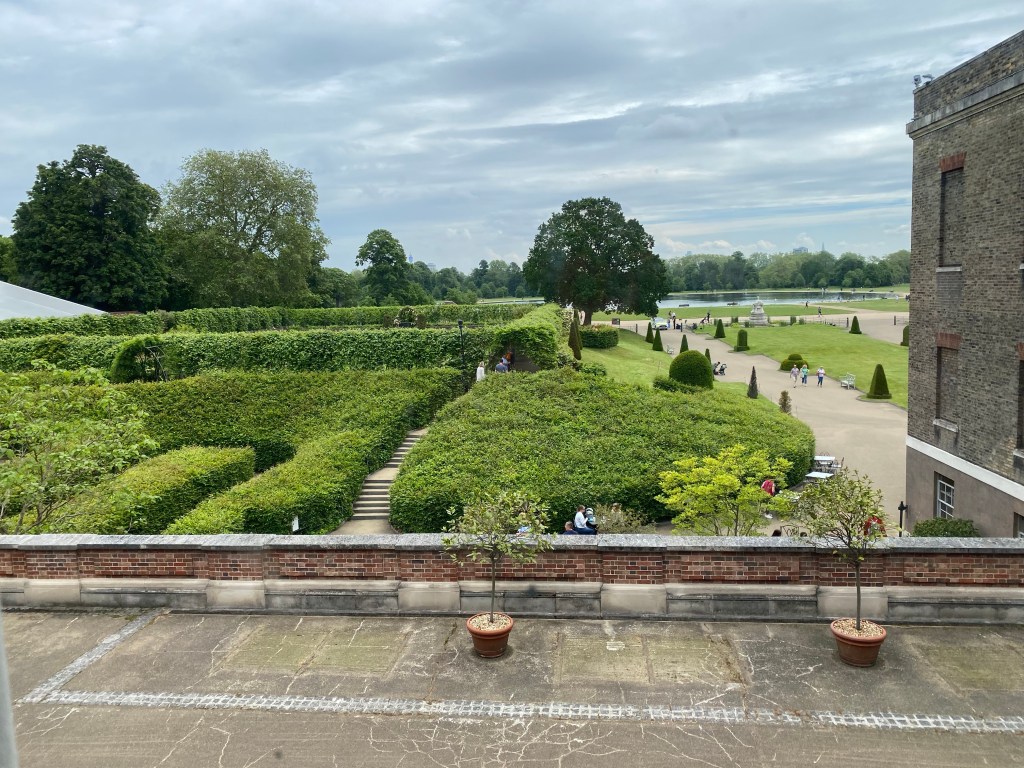
Kensington Gardens on a sunny Sunday with very few people outside.
  • I was travelling to London from a Green List country. That meant taking a Covid test 72 hours before the flight, filling a Locator Form, and taking a Covid test within 2 days of arrival. On the way back I had to take a Covid test 72 hours before my flight back, as well as another test upon arrival. These were all PCR tests in my case, which were uncomfortable to take (first time I took a Covid test) but not painful. They were expensive, and dealing with them did add an added layer of hassle to the trip. In London I bought a test package from Randox, using the British Airways code to bring the price down (it was still much, much more expensive than local tests here – 60 GBP per test after a 50% discount), and dropped the test at a clinic near the British Museum. I would have said that the experience was smooth, except one of the kits that I ordered had a test tube that wasn’t sealed properly, which meant that all the preserving liquid inside leaked. I got a replacement from Randox, but it was a hassle to get them on the phone and get my test kit replaced.
  • London is not for the spontaneous at the moment. You have to book every museum visit in advance. There are fewer musical and theatre tickets on sale as social distancing requirements are still in effect, and there are less show on, which means you need to book well in advance and there is no lining up for day-of tickets. Exhibitions are also at limited capacity, which means that for the popular ones at the V&A, for instance, you will have to book more than a month in advance. Concerts are the same deal, and many churches no longer offer concerts due to social distancing requirements. If you want to see or hear anything, you’re going to have to plan it out to the minute well before your trip.
  • Places are closed or have closed down. I expected that to some extent, as this was case here as well, but I was taken by surprise by the amount of closures, considering just how much support (relatively) the UK government provided to citizens during the lockdowns. Antique markets seem to have taken most of the brunt, with Portobello being a gutted (many arcades are half or three quarters shuttered), Spitalfields reverted mostly to crafts and food, and Greenwich losing one of its markets. A lot of stores in the most expensive and touristy parts of town (Covent Garden, Oxford/Regent Street) are closed and papered over with posters etc so you won’t notice as much. Some have moved to places with lower rents, most have shut down.
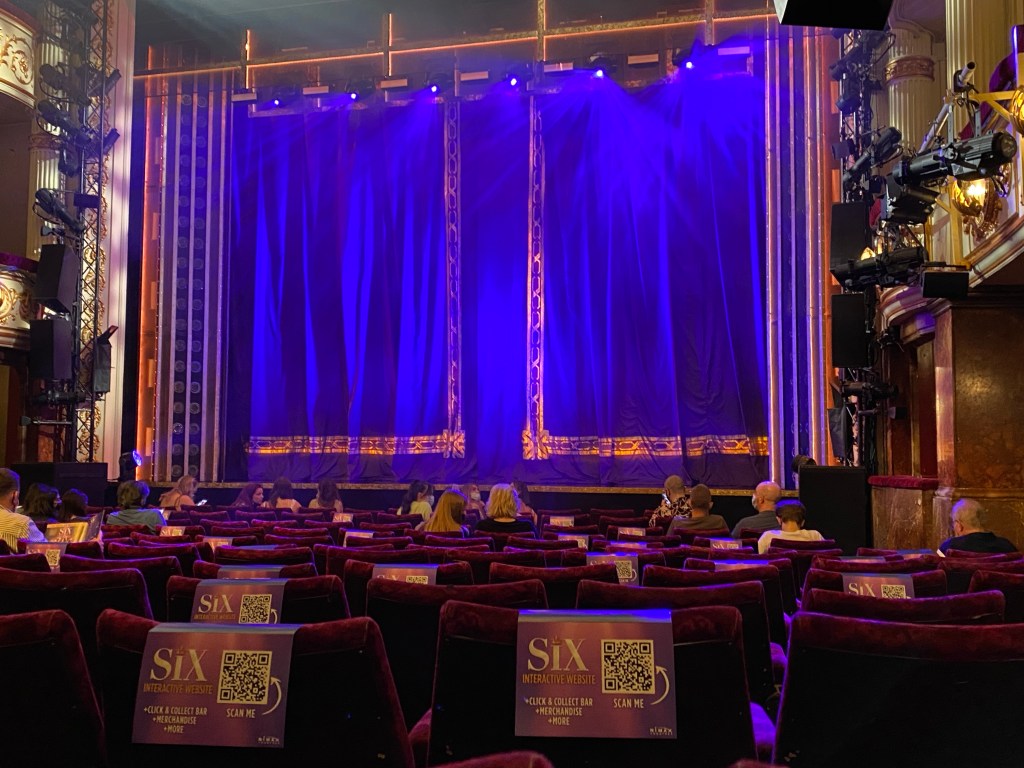
Socially distanced performance of Six: The Musical. Chairs with the cardboard sign remained empty. About half the chairs in the picture are marked with signs.
Socially distanced performance of Six: The Musical. Chairs with the cardboard sign remained empty.
  • There are upsides to visiting London now: there are much fewer tourists, which means much fewer lines to things, accommodation prices are lower, and as long as you book a ticket in advance, museums and attractions are emptier. There’s no shortage of cabs after a show, and you usual can find a place to sit in any restaurant you want to.
  • A lot of places have moved to contactless payment only (i.e. no cash), and restaurants are among the most aggressive of the bunch in terms of movement to no cash payment. In many places you will order your meal via an app or a website, and in almost everywhere you’ll be required to scan in via the NHS covid tracker app, or provide your personal details for tracking purposes. If that’s something you feel uncomfortable with, I understand, but do know that you are in one of the most surveilled cities in the world when you’re in London, so maybe it’s not the city for you.
  • Masks and disinfectants everywhere. Not much else to say about that.
  • Museums and larger stores have designated entrances and exits now, which means that you can’t go in through any door that you want.
Trafalgar Square deserted.
  • London is still London though: there are a lot of interesting things to see and do, especially if you plan ahead. We saw the refurbished wings of the National Gallery (they take you through one of three set tours across the gallery, or you can do more than one tour. It’s not a guided tour – just a path that they want patrons to follow). It’s well worth the visit. We saw the Alice exhibition in V&A and it was wonderful, and the Fantastic Beasts exhibition the Natural History Museum, and it was nice, especially for children (very interactive).
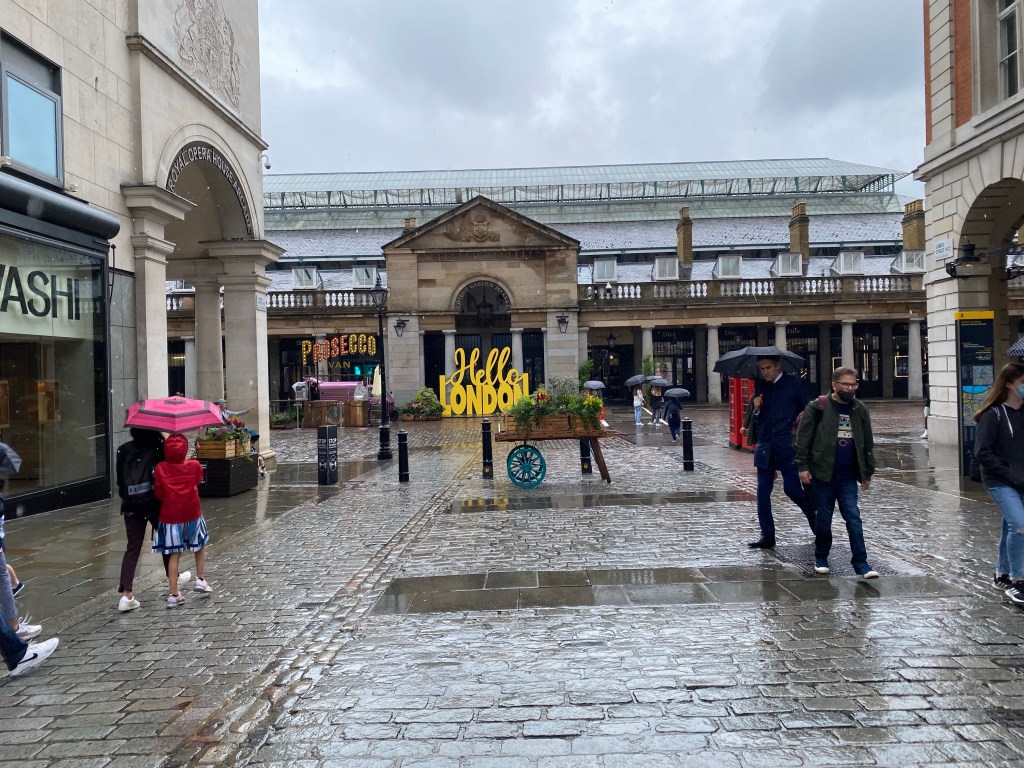
Covent Garden. very few people outside.
Covent Garden. I have never seen it so empty before.
  • We also heard a jazz concert in St Martin in the Fields, heard Handel’s Messiah at the Royal Albert Hall, and even managed to see Princess Diana’s dress at Kensington Palace. All in all it was a good, if peculiar trip.
Fantastic Beasts

The Herb Garden, Greenwich, London

My brush got frazzled on the way which made it tough to use. I fixed it later that night with some hot water.

London is weird right now, with Covid-19 measures still in effect and very few tourists around. A lot of places are closed or have closed down. I still love the city, though.

Karas Kustoms Bolt V2

I am a huge fan of Karas Kustoms machined pens, and I have their Render K, Ink, EDK, and Retrakt but I only recently purchased a Bolt v2. Why? For one thing, I was waiting for an interesting colour combination to come along. For another, I have the Bolt v1 one and have found it practically unusable, so I was hesitant to give the v2 a try. But then Karas Kustoms created a bluish-grey and orange Bolt v2, and the colour combination made me decide to give the Bolt a second chance.

I’m glad that I did.

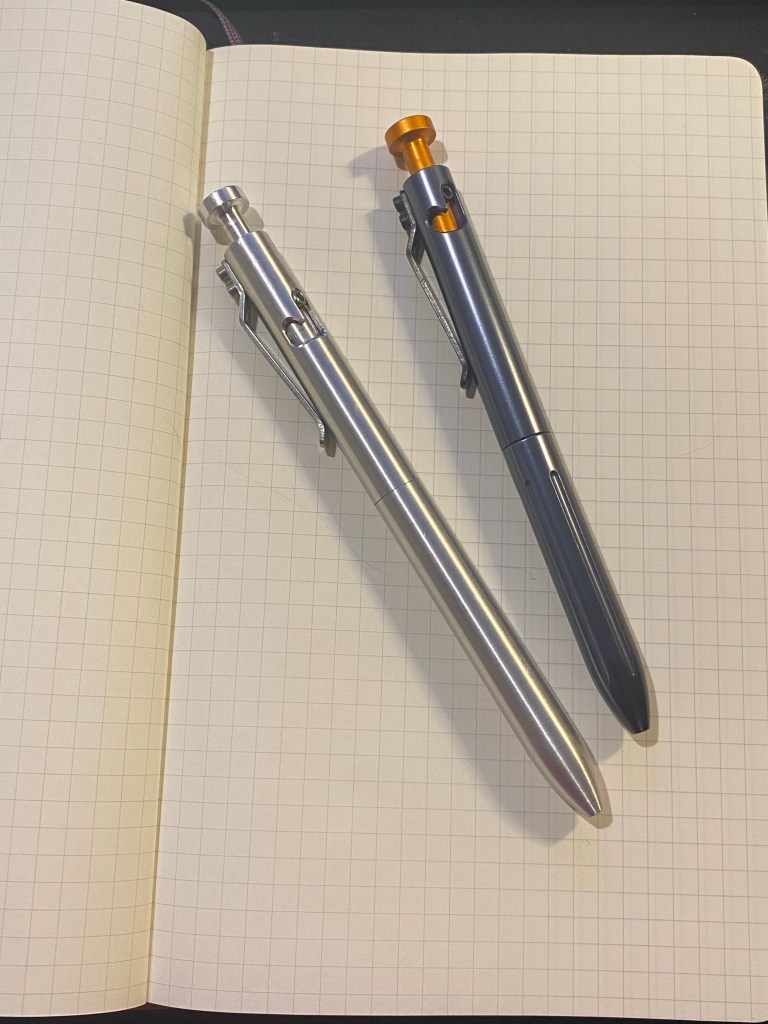
Bolt v1 on the left, Bolt v2 on the right.

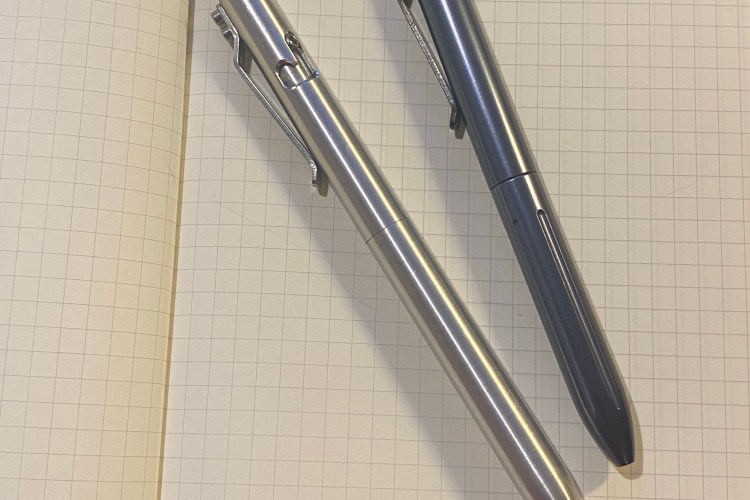
The Bolt v2 that I bought has a bluish-grey and orange anodization and fluted grooves in the grip. My Bolt v1 is raw aluminium, has no grooves in the grip section, and as you can see, is very, very long. This is the main reason that I couldn’t use the Bolt v1, as I have small hands and the pen is about 15cm long, which makes it unwieldy. The Bolt v2 is about 2cm shorter, and so about standard size of a pen.

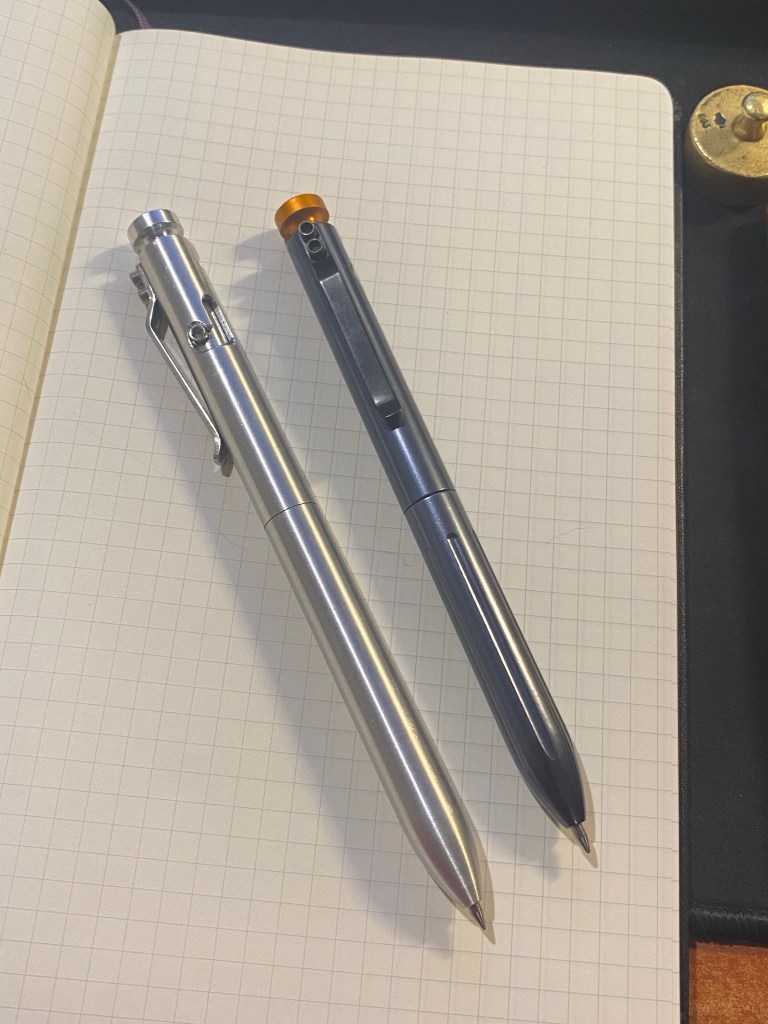
Bolt v1 on the left, Bolt v2 on the right, refills extended.

The v1 and v2 Bolt have a similar design, but the Bolt v1 is a much more impressive pen, even with no anodization. Every time I pulled it out, people asked what it was, and said that it looked like a surgical tool. The Bolt v2 is more practical, and while it’s an attractive pen, it (so far) hasn’t been one to draw too much attention to itself. That may be a good thing, because someone did make an attempt to steal my Bolt v1 when I brought it to the office, which is why I stopped bringing it with me.

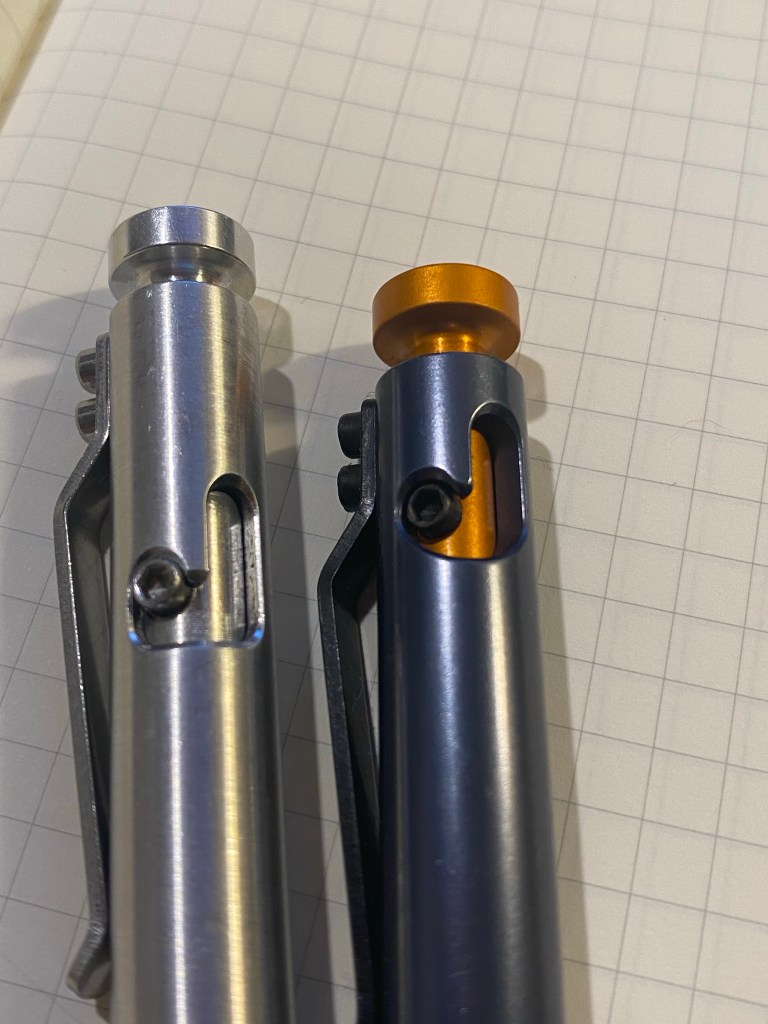
Bolt v1 mechanism on the left, Bolt v2 on the right.

The bolt mechanism on the v1 and v2 are very similar, but the v2’s mechanism has been streamlined and rounded (see the bottom of the cutout) which means that it’s much easier to engage than the v1. It makes the v2 much nicer to use, and as an added bonus, it turns the pen into a great fidget tool.

Bolt v1 on the left, Bolt v2 on the right.

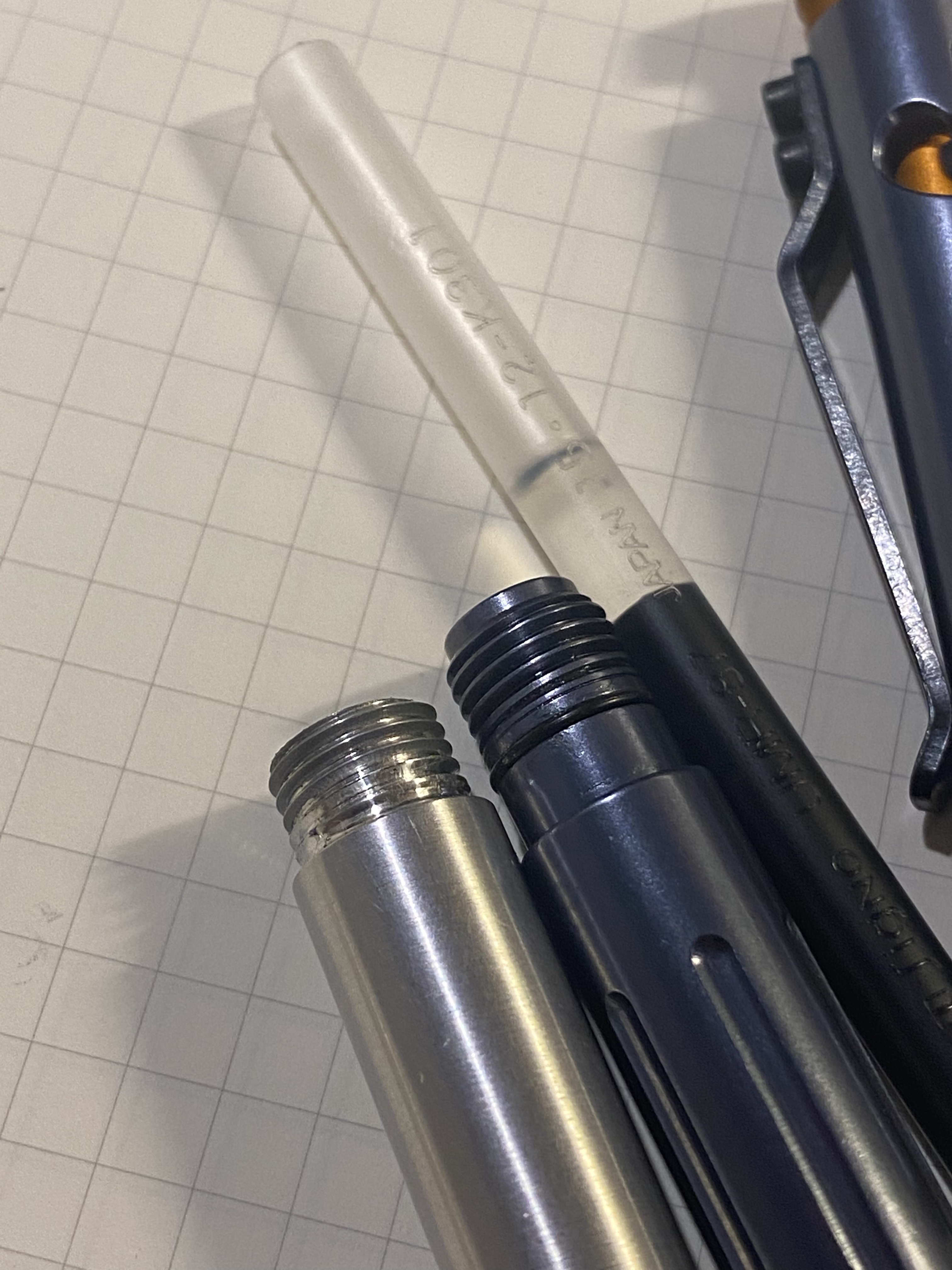
I know that the seam between the grip and the body of the Bolt v1 looks tighter and better fitting than the Bolt v2’s but those looks are misleading. Like the rest of Karas Kustoms v1 pens, the threads that connect the pen grip and pen body were the weakest point on the pen. The threads kept unscrewing themselves, at times while I was writing with the pen. It’s no wonder that they have been redesigned from scratch in the v2, as you can see below:

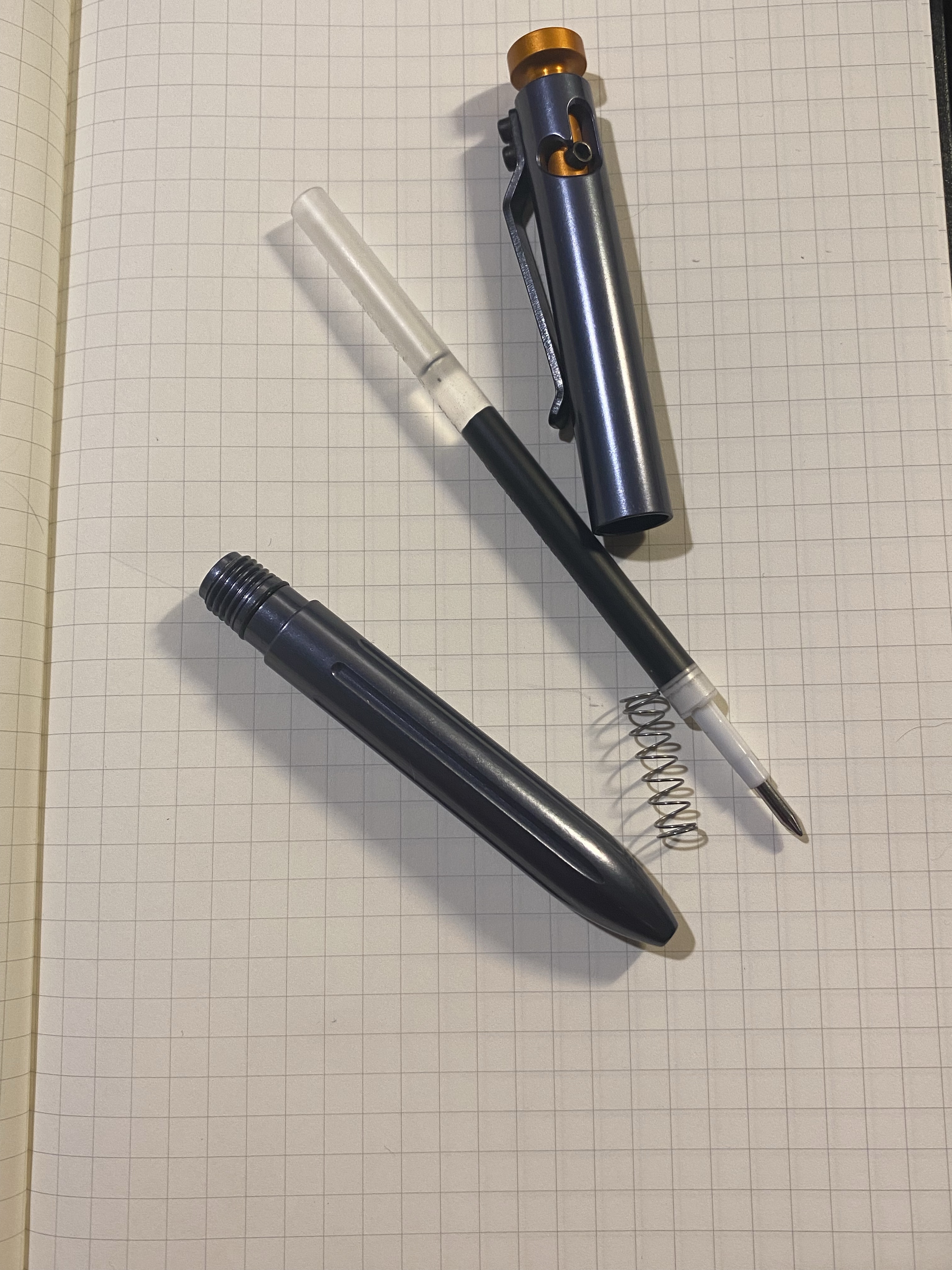
Bolt v2 parts.

The threads start in a shoulder, are much tighter, and there’s an added o-ring at the bottom. All these together prevent the pen from unscrewing itself unless you deliberately want to unscrew it.

Bolt v1 threads on the left, Bolt v2 on the right.

If you have an interest in machined pens, and specifically in bolt action machined pens, then a Karas Kustoms Bolt v2 should be high up on your list. It’s been my daily pen for a few weeks, and I don’t see it leaving my rotation any time soon. I would recommend checking out Karas’s special projects, since the colourways there are often more striking than in their regular line.

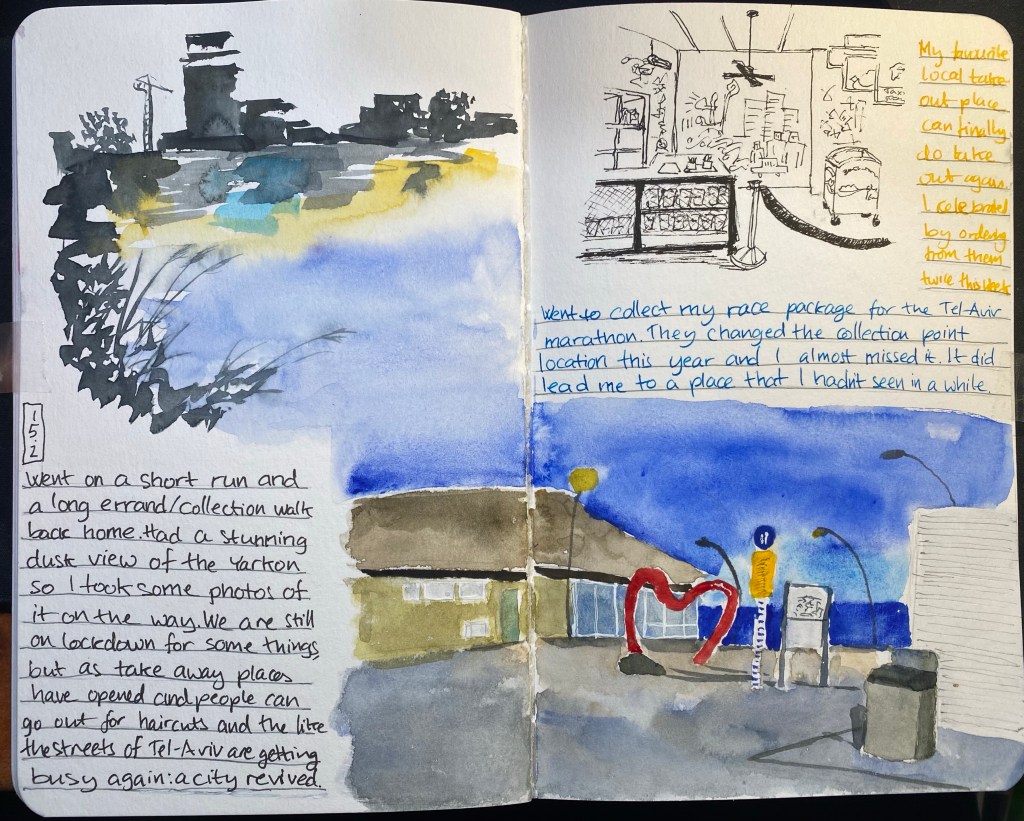
Night Run

I really like how the two watercolours on this page “melt” together, and in general this is one of my favourite sketchbook spreads created as part of the Sketchbook Design course.

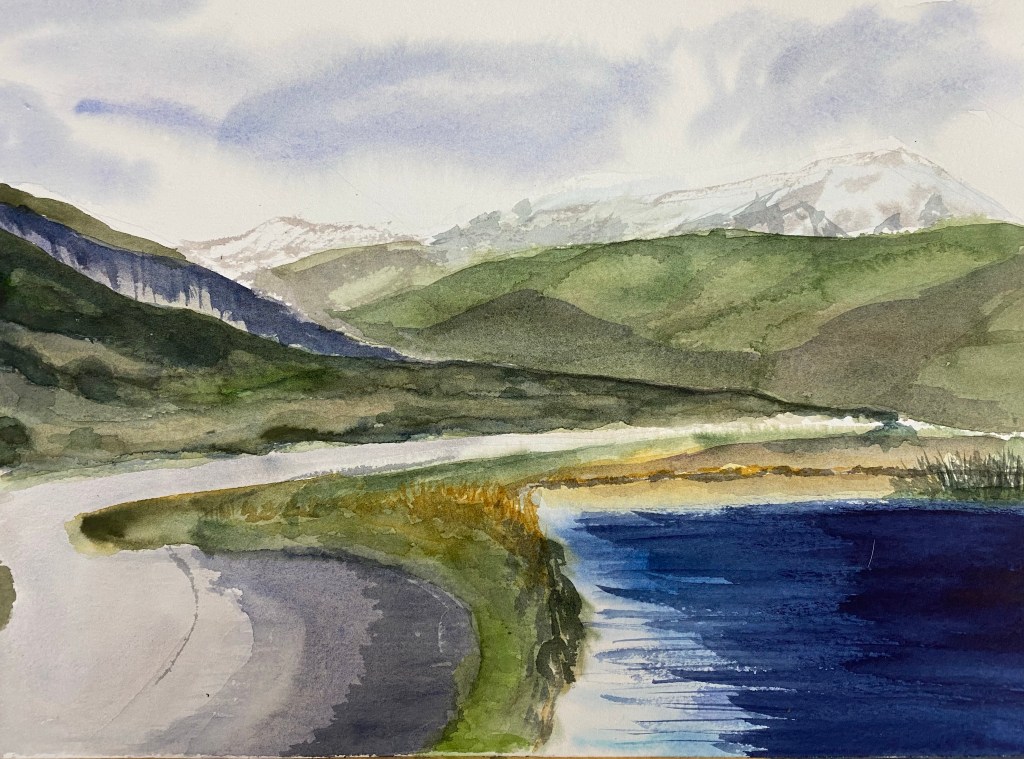
Rob Roy Track, New Zealand

Rob Roy Track, New Zealand

First “serious” watercolour in a while, and another test for my new palette.

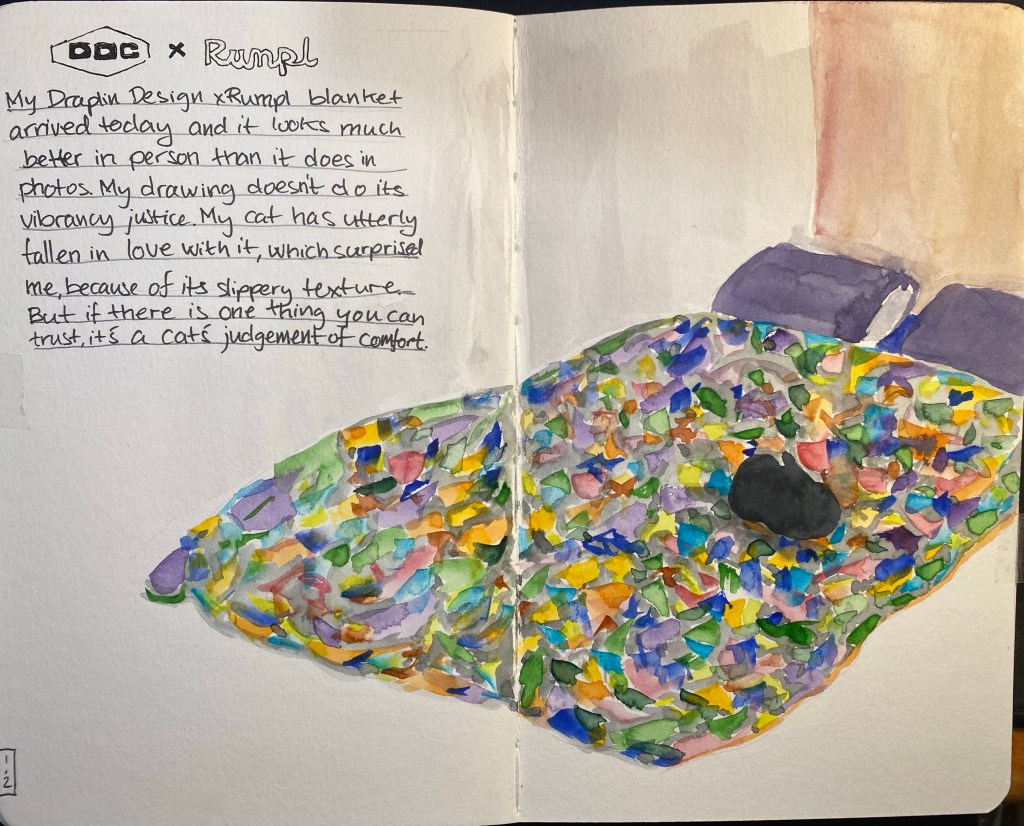
DDC Rumpl

Another page out of my sketchbook. I’ve had the DDC Rumpl blanket for over two months and it’s become a house favourite. The only thing I regret is buying only one.

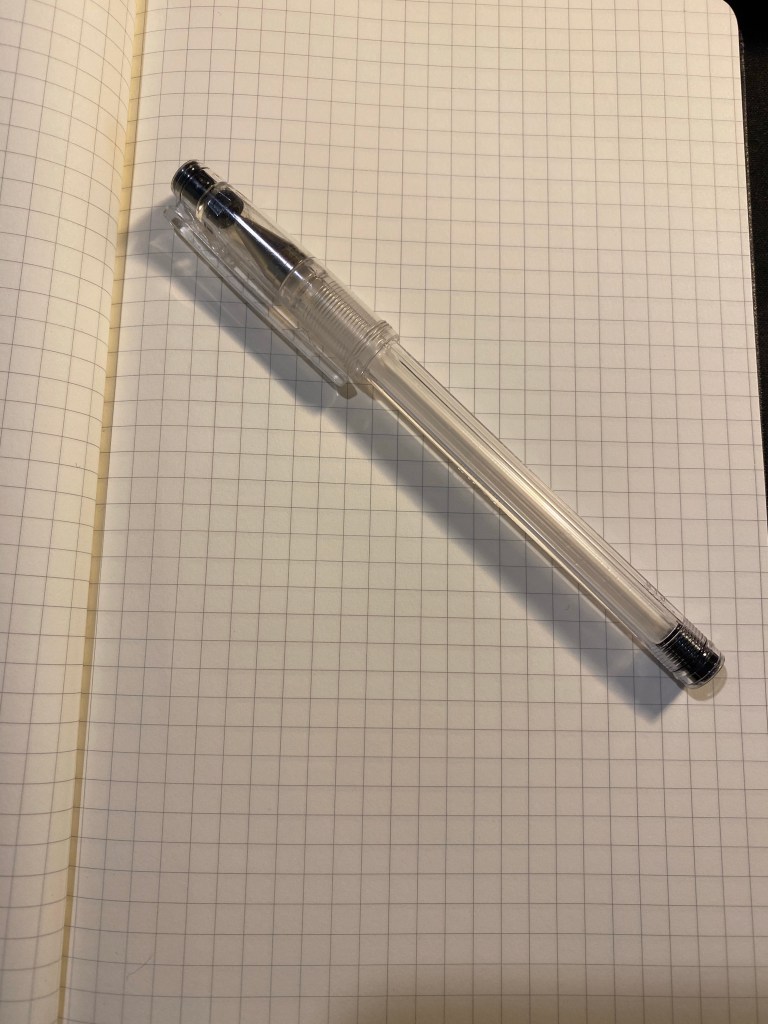
Finished a Pilot-Hi-Tech-C Refill

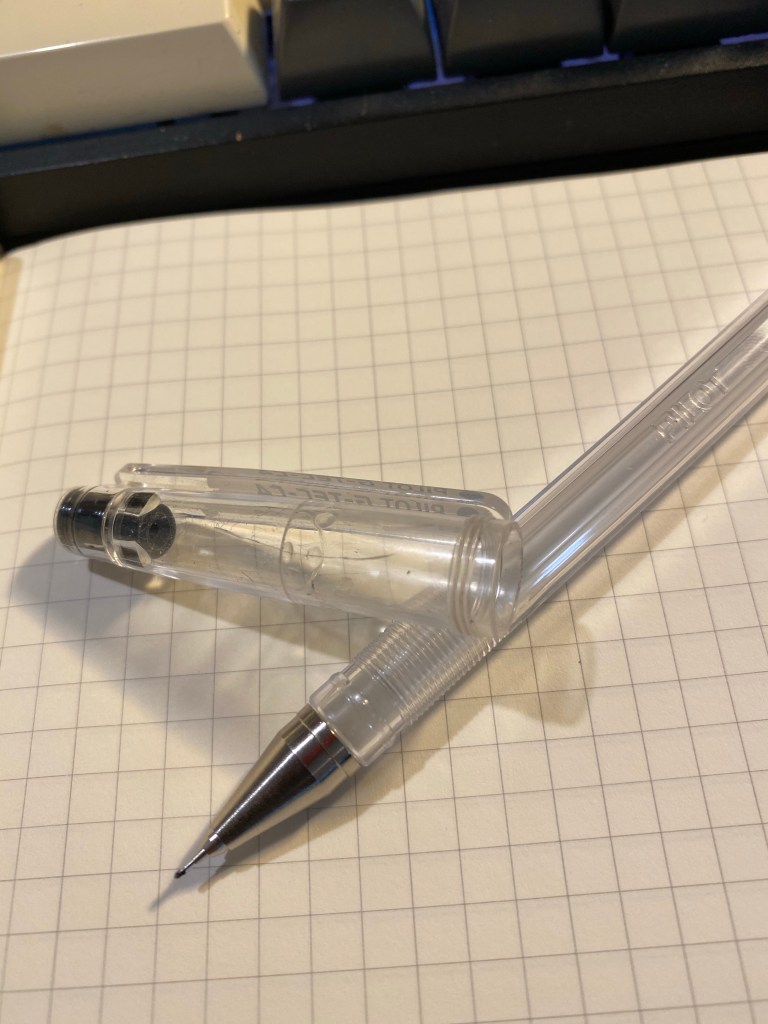
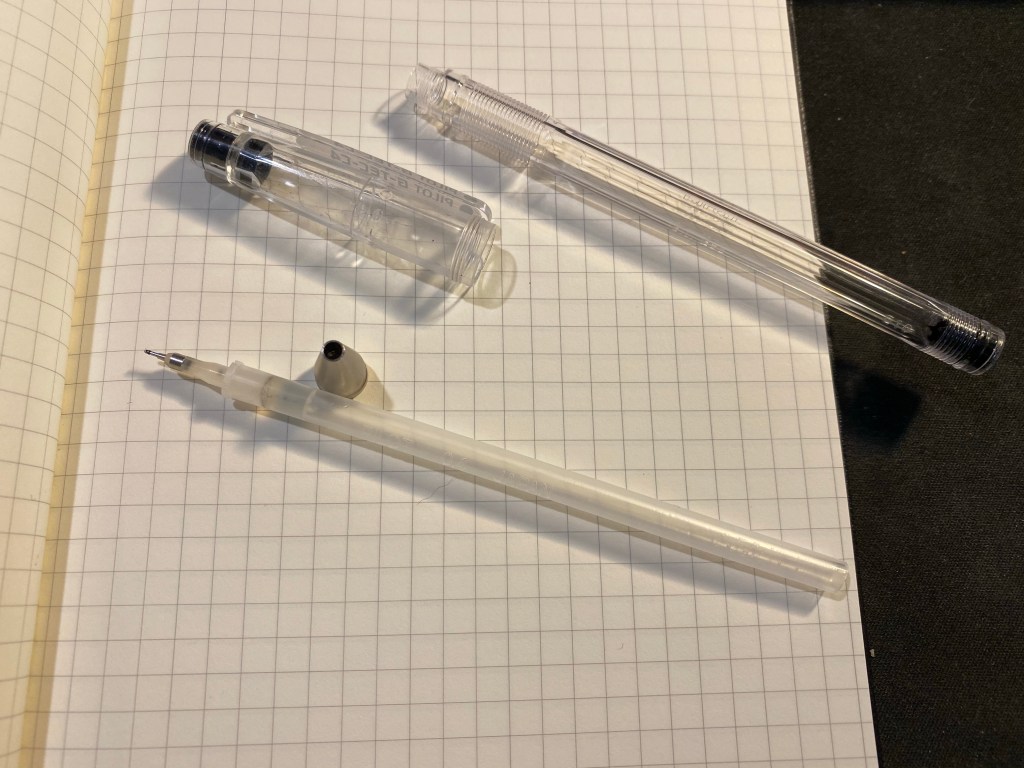
For the first time ever I managed to write a Pilot High-Tech-C (also known as G-Tech-C) refill dry. The tip didn’t bend to death because someone breathed on it wrong, the refill didn’t have strange bubbles that meant that it just decided not to write any more, and the ball in the tip didn’t break off (thus rendering the pen into a particularly terrible rapidograph). This feels like an achievement and I am going to celebrate — by picking up a brand new High-Tech-C of course.

Empty pen refill.
Just a single crack on the cap from a fall early on, that’s all the damage this pen took.
Empty refill. Didn’t believe that it could be done.

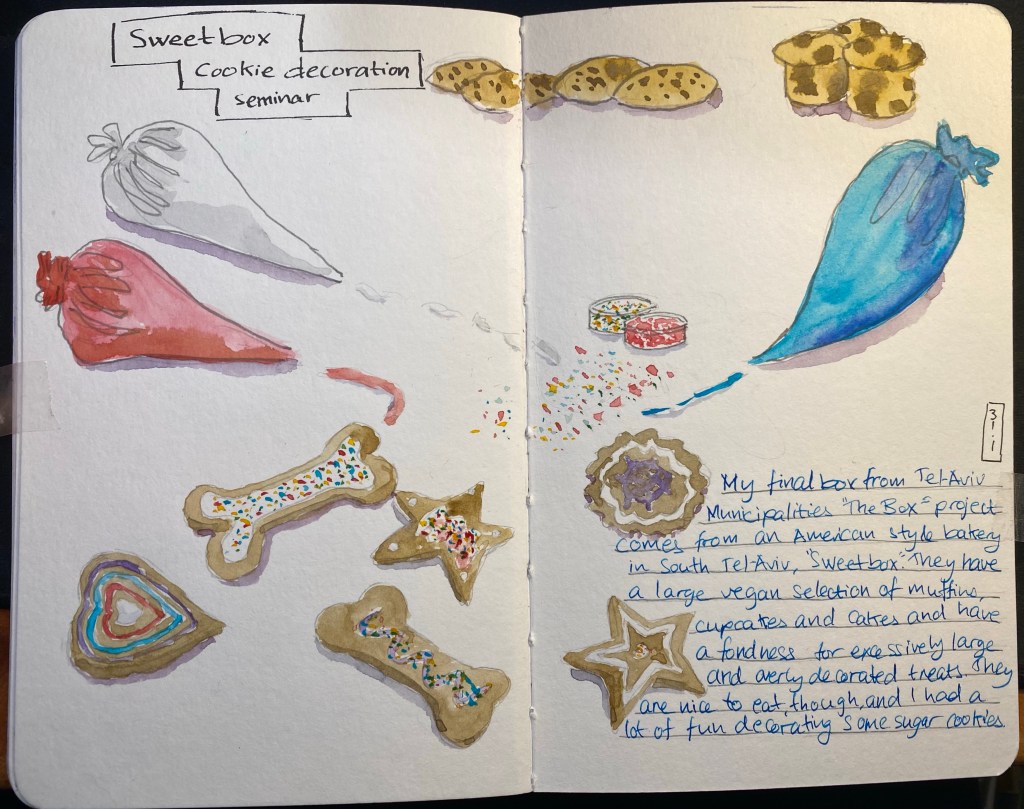
Sweet Box

Catching up on some more sketchbook pages from my Sketchbook Design course as I’m working on giving my palette the largest overhaul it’s had since I started painting with watercolours. This page was inspired by the final box I got from the Tel Aviv muncipality’s “The Box” project, created to support local businesses during the lockdown.

Sketching Tools: Nock Co Sinclair and Tallulah

As I’ve recently overhauled my sketching tools and have grown to like my new setup, I’ve decided to document my current sketching kit, as a reference to myself and others.

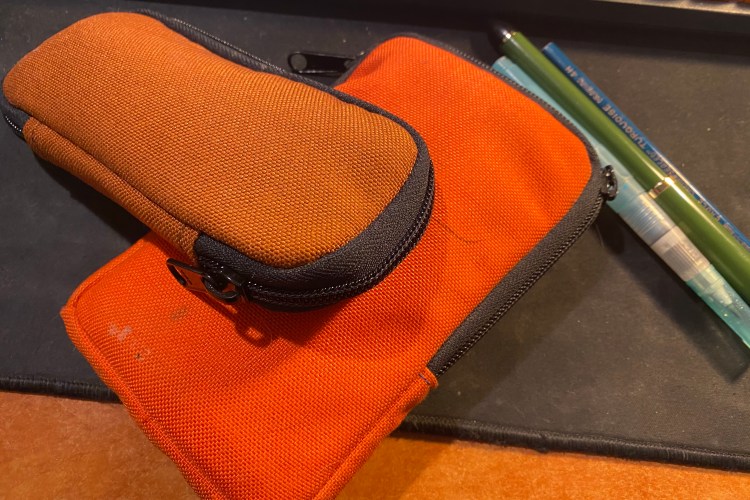
Sinclair on top, Tallulah on the bottom.

First up are my pen and pencil cases, the Nock Co Sinclair and Tallulah. I used to use the Sinclair as my main sketching case because:

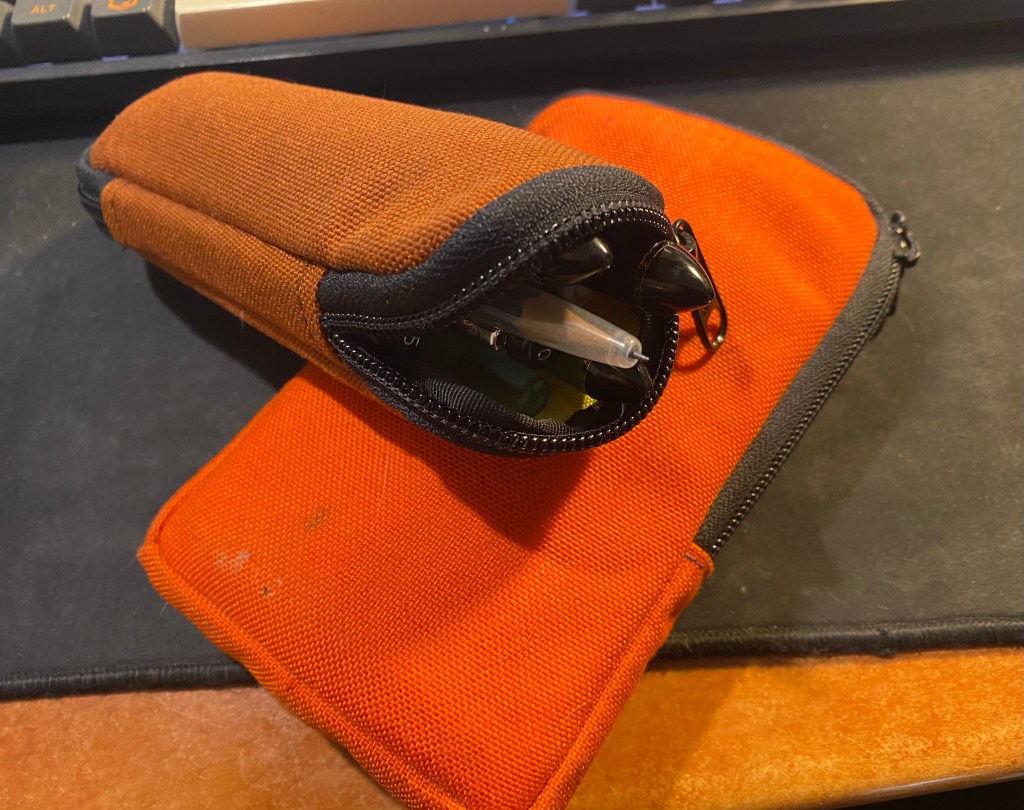
  1. It can hold much, much more than three pens. Much more. Mine had four Staedtler Fineliners, two or three Japanese brush pens, a white gel ink pen, five Faber Castell Pitt brush pens, a mechanical pencil, an eraser, a woodcase pencil, a sharpener, a waterbrush, and a folded paper towel square.
  2. It has two zippers, which means that you can sneak in extra large pens, like the Sailor Fude ones, or full length pencils, and still zip the case around them.
Partially full Sinclair.

The Sinclair is no longer my main case and I now use it to store a more extensive selection of sketching tools (mostly Faber Castell Pitt brush pens). The reason is that it can hold so many pens that I was tempted to fill it to the brim and bring all those pens with me. As I decided that to gain speed I needed to pair down my sketching tools and expand my watercolour palette, I replaced the Sinclair with the much slimmer Tallulah.

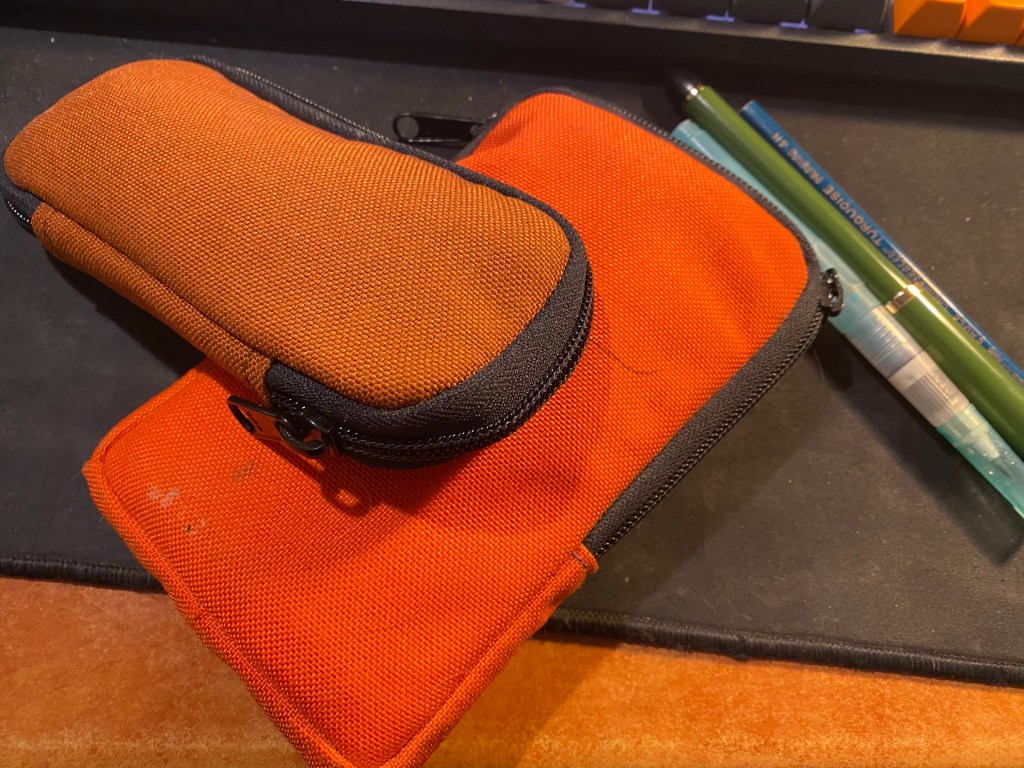
Tallulah ready to work, on top. Sinclair on the bottom.

The Tallulah is marketed as a two pen case. Oh, Brad. I have four Staedtler Fineliners, a Uni-ball Signo Broad white gel ink pen, a woodcased pencil, three (!) Sailor Fude fountain pens and a waterbrush. If the Tallulah had two zippers instead of one I could have closed the case. As it is, I keep it open and propped up in my sketching bag, as sort of a pen organizer. If I need the Tallulah to close, I can pare down my pens to one or two Sailor Fude pens, lose the waterbrush (if I keep two Sailor Fude’s in my kit), and replace the woodcased pencil with a mechanical one, or lose the pencil entirely as I generally work directly in pen and watercolour these days.

See, I can close it if I need to.

The Tallulah is so slim and light that it really works with my low profile sketch kit. It’s actually the anchor around which I built my new kit, with the other two being the Stillman and Birn Alpha sketchbook that I’m using, and my Schmincke watercolour tin.

If you are an artist looking for a storage solution for your pens and pencils, I highly recommend giving the Nock Co Sinclair and Tallulah a try. They are handsome workhorses that can take a beating (especially the zippers) and can hold many more pens than you would normally imagine.

Silvine Memo Book Review

I bought this notebook in 2019, when I was last in London. Silvine is a well known UK notebook brand, and ever since I read about them in Roald Dahl’s work I have been looking to try them out.

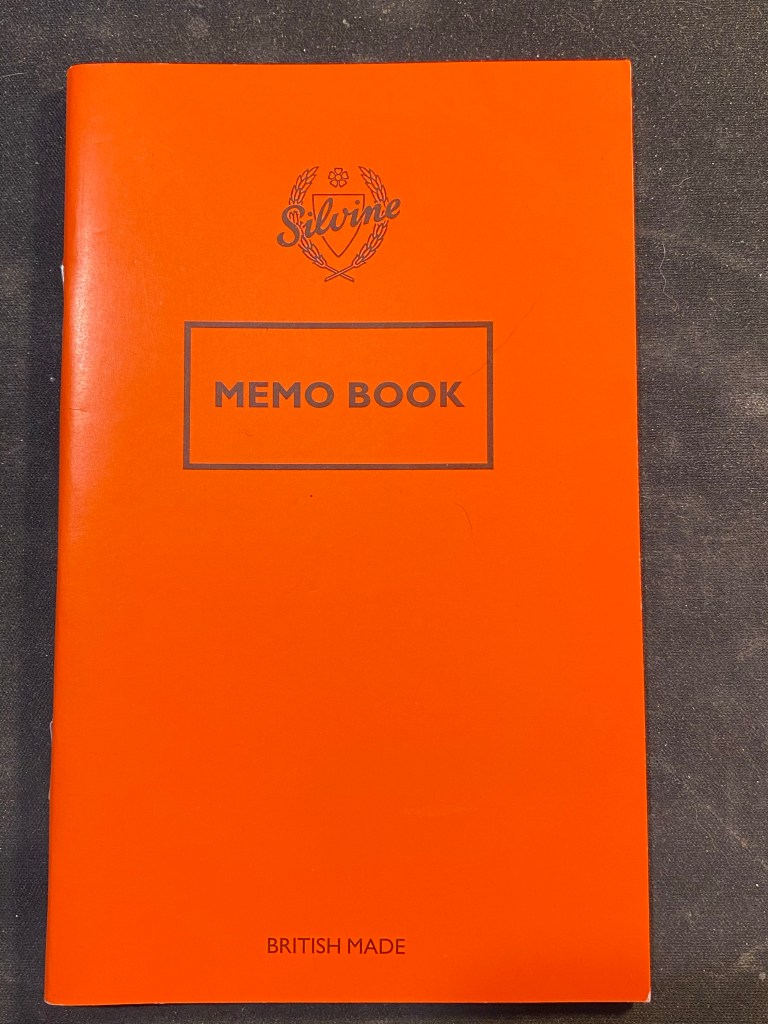
Front cover.

The Silvine Memo Book is a 159x95mm feint ruled staple bound notebook with zero frills. The cover is made of construction paper, thinner than the standard Field Notes one. The corners aren’t rounded, and there’s no printing on the inside of the cover. The front cover is a big believer in the “says what it does on the tin” school of thought: it’s a British made memo book by Silvine.

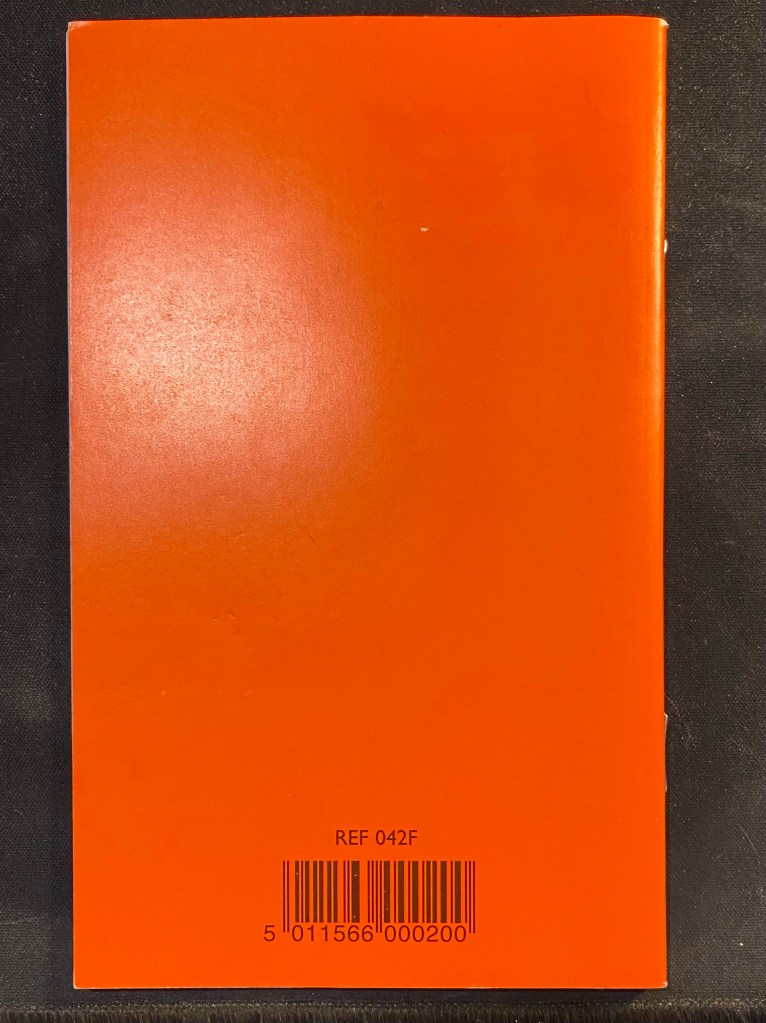
Back cover.

The back cover has an ugly barcode and ref printed on it, and it really would have looked better with that barcode printed on the inside. Then again, this notebook is not about looks.

Inside cover and ruling.

The grey ruling is 7mm wide, with margins left on the top and bottom of the page. It’s a bit wide for the format, but I’m guessing that they took their standard ruling and applied it indiscriminately to all their notebooks. The paper is where the Silvine Memo Book surprisingly shines.

Paper test.

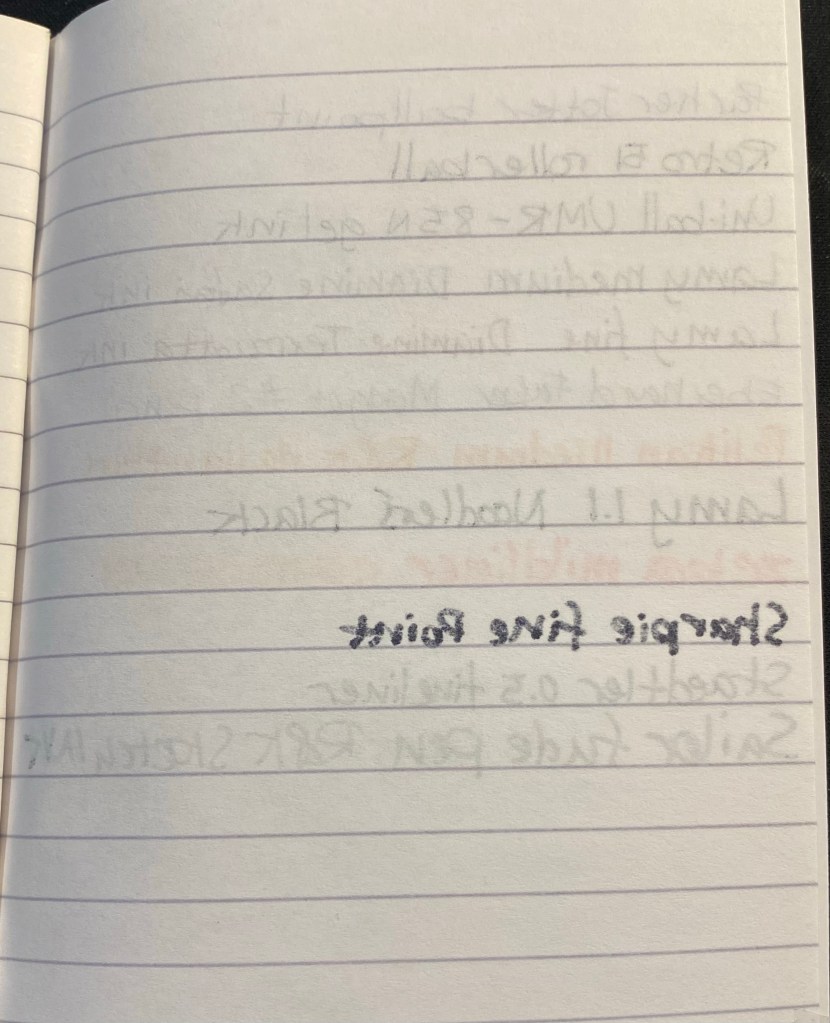
The paper is smooth and coated, which means long drying times (though still shorter than Rhodia or Moleskine paper), but it’s also fountain pen friendly. The ink doesn’t feather or spread, and while there is some ghosting, unless you use stub nibs with dark inks the other side of the paper will still be usable. Very juicy nibs cause a small amount of bleed through, and the Sharpie, as usual is a mess, but otherwise Silvine have created a paper that can handle pretty well everything you throw at it.

Ghosting and bleed through test.

The format of this notebook means that its place is on a desk, where you can use it to jot down a quick note with whatever is lying around. It’s not built for pocket carry (in terms of size or construction), and I would have liked the ruling to be 6mm or even 5 mm at this size, but as it is I don’t regret buying the Silvine Memo Book, if only for nostalgic value. It reminds me of Dahl’s short stories, and I like that it’s doing its own thing and not trying to be a Field Notes clone. If you’re in the UK, I’d have one or two of these lying around, just for the paper inside.