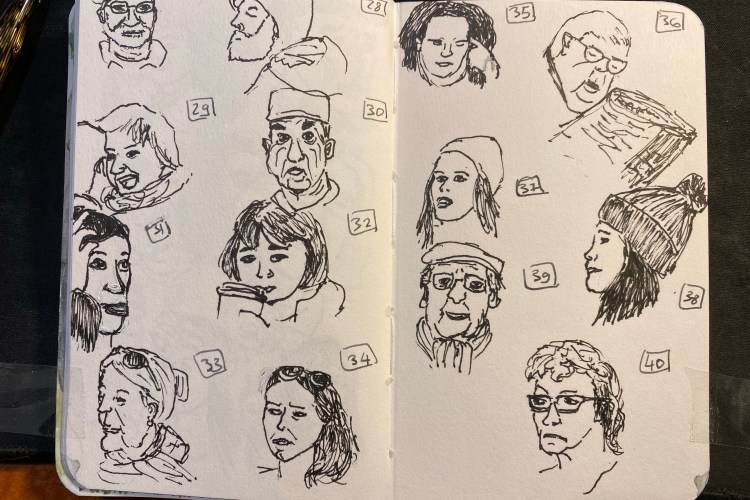
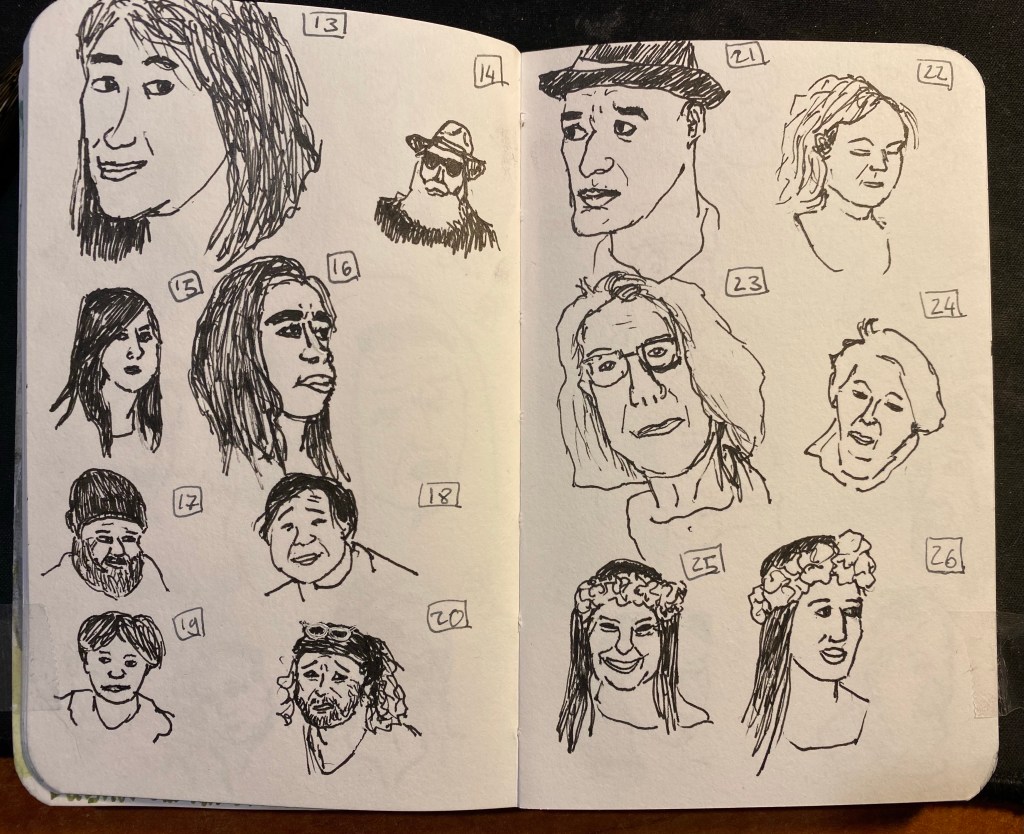
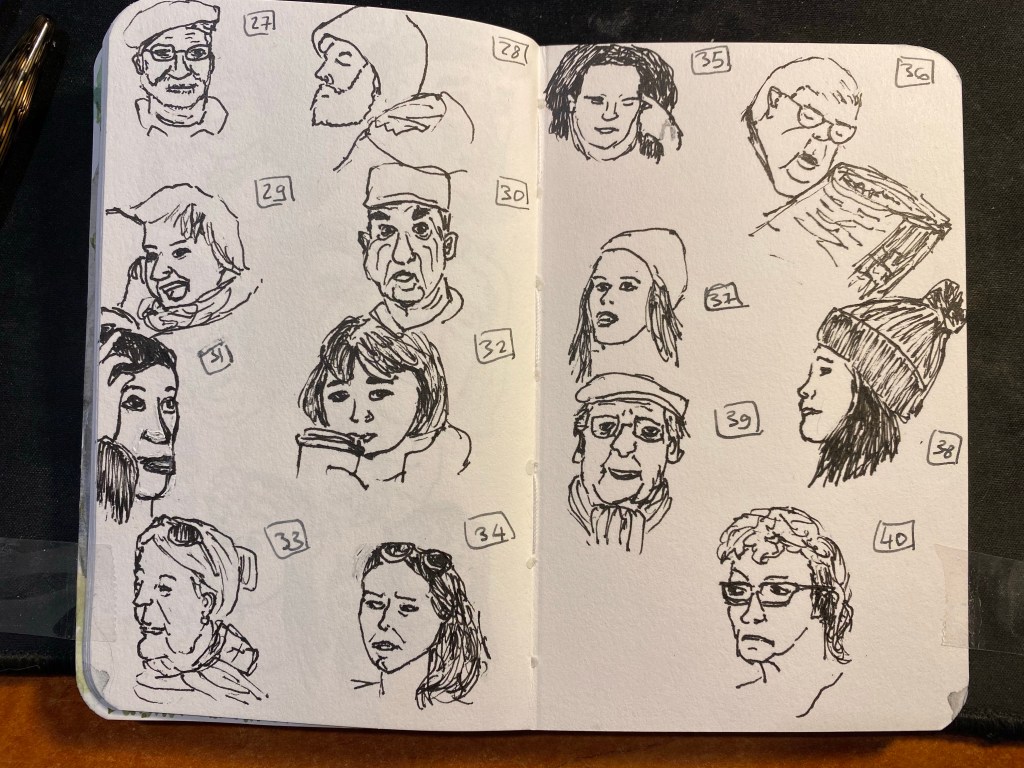
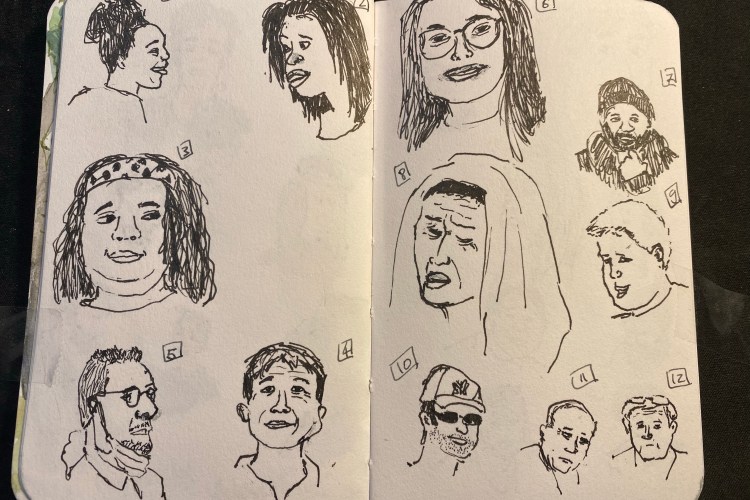
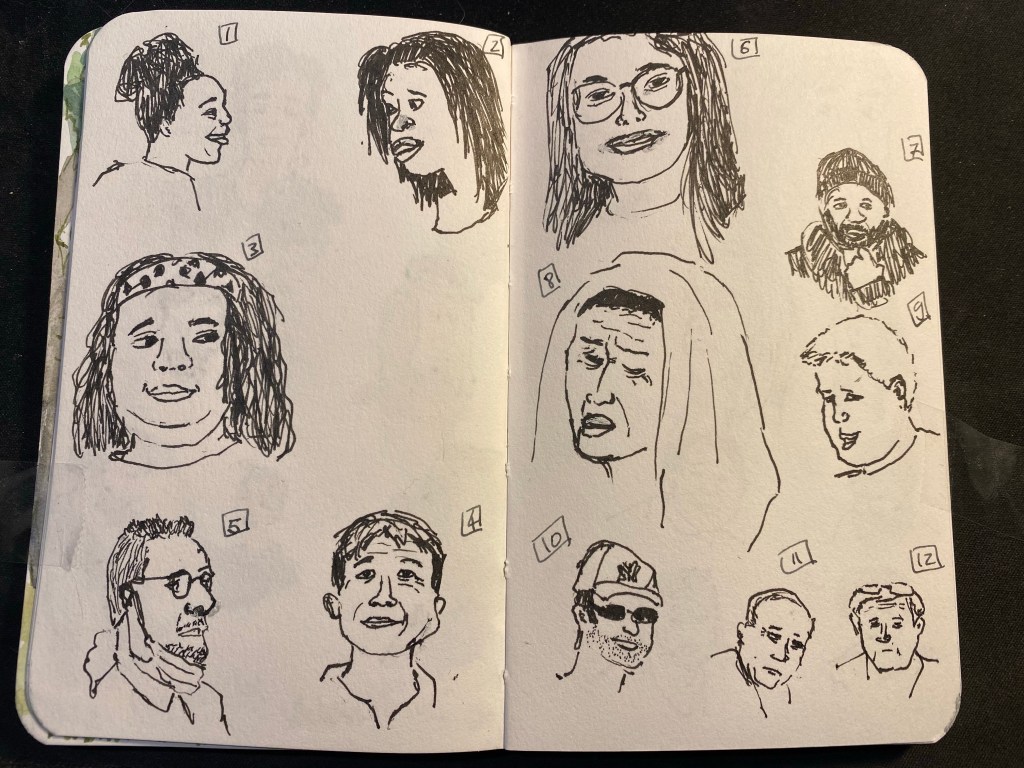
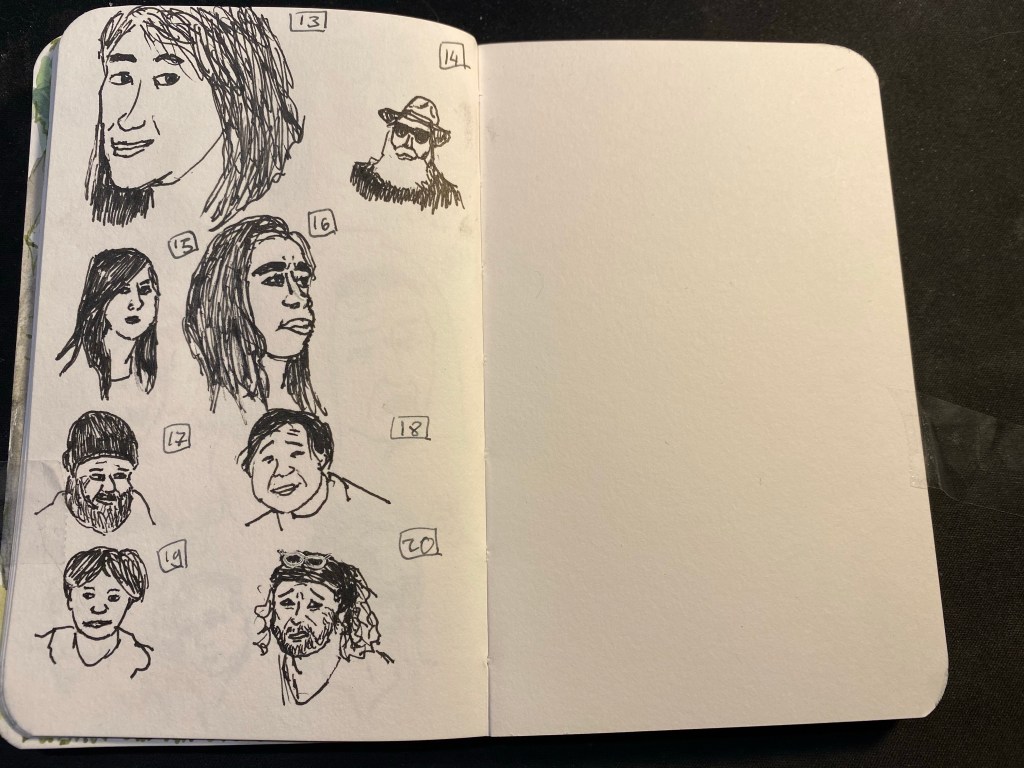
Day two of the One Week 100 People challenge and today was more challenging than yesterday, mainly because I started late and had trouble finding decent photographs. Photographers apparently love photographing blurry people, masked people, people with their backs to them, other photographers (while they are taking photographs and their face is half covered by the camera), or people from a large distance. Some of them also love photoshopping their subjects to death, so I’m now able to find a half decent subject only every five or six photographs. Thankfully the pool is huge and varied, with people in all ages and from all over the world, so while things are slowing down a bit, I’m still grateful for the the opportunity to enjoy the work published in this wonderful group. Even if I can’t use all of the photos there, I am thoroughly enjoying perusing through all of them.
I’m doing the One Week 100 People challenge again this year (I skipped it last year but I have done it before). It’s a challenge that I find difficult but very rewarding, and this year perhaps more so than in the past. I’ve decided to work from Flickr photos, to challenge myself to draw every clear face that I see in the photo pool that I’m using, to work fast and directly in pen and ink. I’m also not hiding behind watercolour at the moment, but we’ll see for how long my resolve holds. These all took a minute or two each, and were drawn with a TWSBI Vac 700 with an EF nib and Platinum Carbon ink on a Stillman and Birn pocket softcover Alpha. There’s some feathering and spread with this ink, which I’m not enjoying, so I may switch to Staedtler Pigment Liner pens later this week.
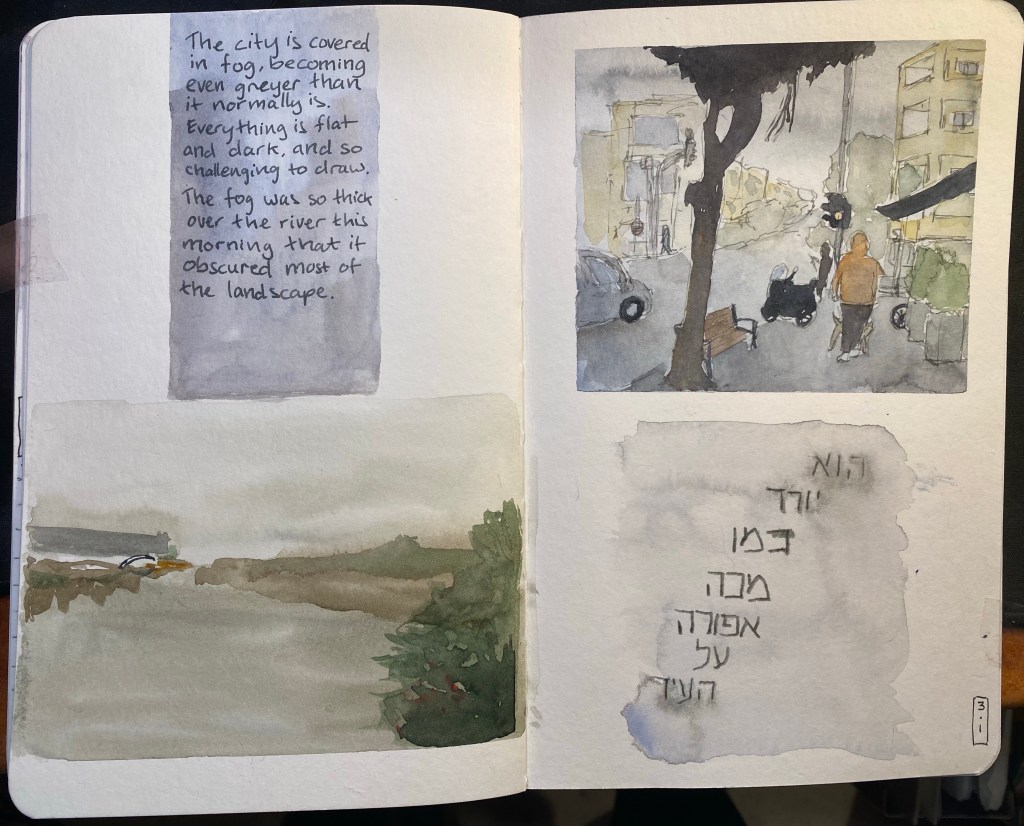
In early January we had a bout of very foggy days and I took photos of various city scenes in the lockdown and the fog thinking that I’d later draw them. I thought that drawing fog in watercolour would be pretty straightforward, because what is easier than just drawing wet on wet and letting the watercolour do its thing? But after looking more closely at the photos I realized that fog isn’t just grey sky melting into the landscape, it’s also a muting of colours, a flattening of the landscape, the lack of shadow. In the end I drew two small landscapes, one urban and one of the park, and although they were challenging I enjoyed drawing them enough to want to have the same experience with the text. The grey writing in Hebrew in the bottom right corner is a line out of a well known rock song that embodies a lot of the spirit of Tel Aviv. It was written using Diamine Silver Fox on a semi-wet background, to facilitate ink spread.
These drawing also showcase a shift I have made in my palette and my mixing over the past few weeks. Once things settle down I’ll probably post about my new palette.
I created this page as part of Liz Steel‘s excellent Sketchbook Design course. I remember drawing it while listening to a live Q&A with the Mischief Theatre improvisors on Instagram. I got back to building Legos after more than 20 years because I saw how much joy Adam Savage took in building Legos and I decided that I wanted some of that childhood joy back too.
I discovered that legos have become much more sophisticated these days, especially the Ideas and Architecture sets, and that building Legos puts me into a zen like mood that beats anything I’ve been able to achieve with meditation so far. My mind becomes calm and focused on the step that I’m on and I can utterly forget about my problems for a few hours. If I didn’t have budget and space limitations I would be knee-deep in the giant Millennium Falcon set as we speak.
Today I discovered that a local Lego guru is collecting money to buy sets for kids that are going to spend Passover in the Oncology departments of various local children’s hospitals. For years he’s been purchasing sets for kids, teenagers and young adults that are hospitalized for long periods of time, at first entirely from his own pocket, and now with the help of donations as well.
If you can, treat yourself and someone you care for to something like a Lego set, or a nice pen, or a cool notebook or just a half hour of listening to them talk about whatever they want to. I think we could all use a little kindness pick me up right now.
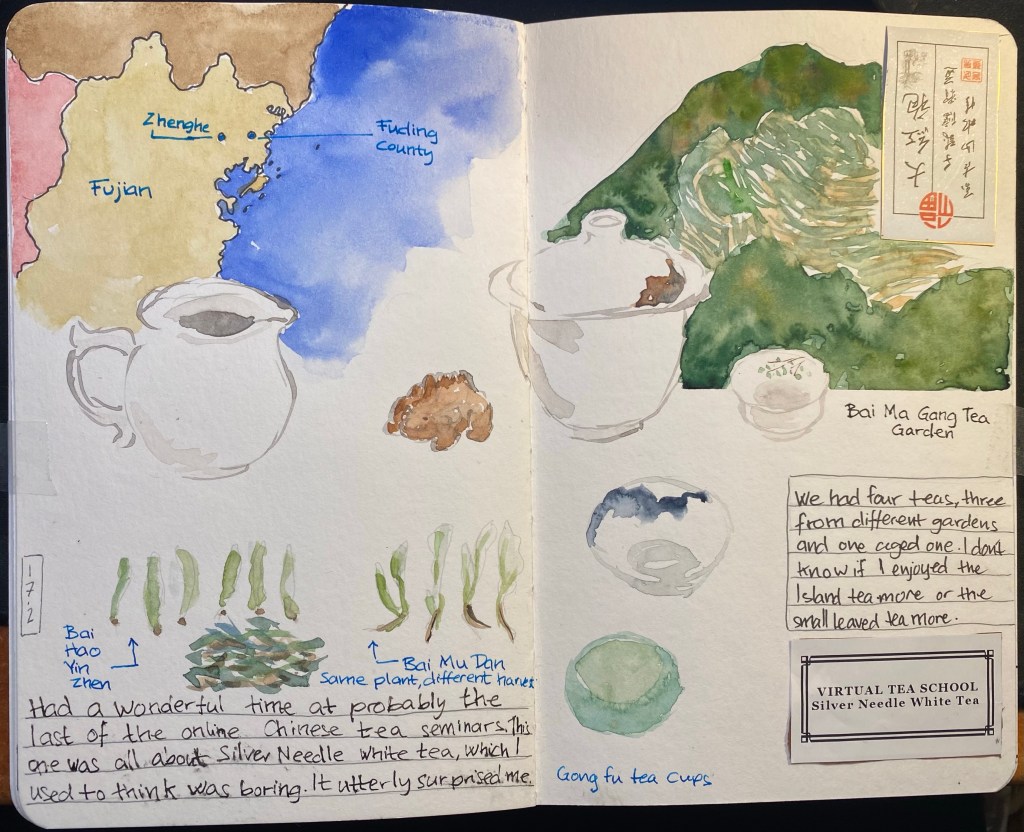
I drew this spread as part of Liz Steel‘s Sketching Now Sketchbook Design course, and it records my experiences from the final virtual tea seminar session that I had with Juyan from The Chinese Tea Company. I took all of the seminars that she offers, and I can see that she’s running a few of them again later this month and next month. I highly, highly recommend them (I’m not affiliated or paid to say this in any way, I’m just a happy longtime customer of her wonderful shop). Whether you are just starting out in Chinese tea or you’re well versed in Gong fu tea brewing, you’ll learn a lot about tea and tea tasting in her seminars, and have a lot of fun along the way. You get four tea samples that you drink while your in the seminar (and there’s enough left over for another brewing post seminar too), Juyan gives a presentation about the tea, the grower and the growing region, as well as tips on how to assess the leaves, brew them and taste them. The seminars are small and intimate, and are a wonderful way to spend an evening. If you’re starting out the Fundamentals of Oolongs and Green Tea Exploration (currently sold out) are phenomenal, the Wu Yi Rock tea seminar is a must – a gateway into understanding a complicated and elusive tea (as is the Phoenix Oolong seminar, if she gives it again). The Puer tea masterclass (also sold out) is just that, and a great way to get familiar with an easily misunderstood class of teas, and the Silver Needle White Tea seminar will take you by surprise. Until this seminar I thought that white tea in general and Silver Needle in particular is boring, but it’s anything but that.
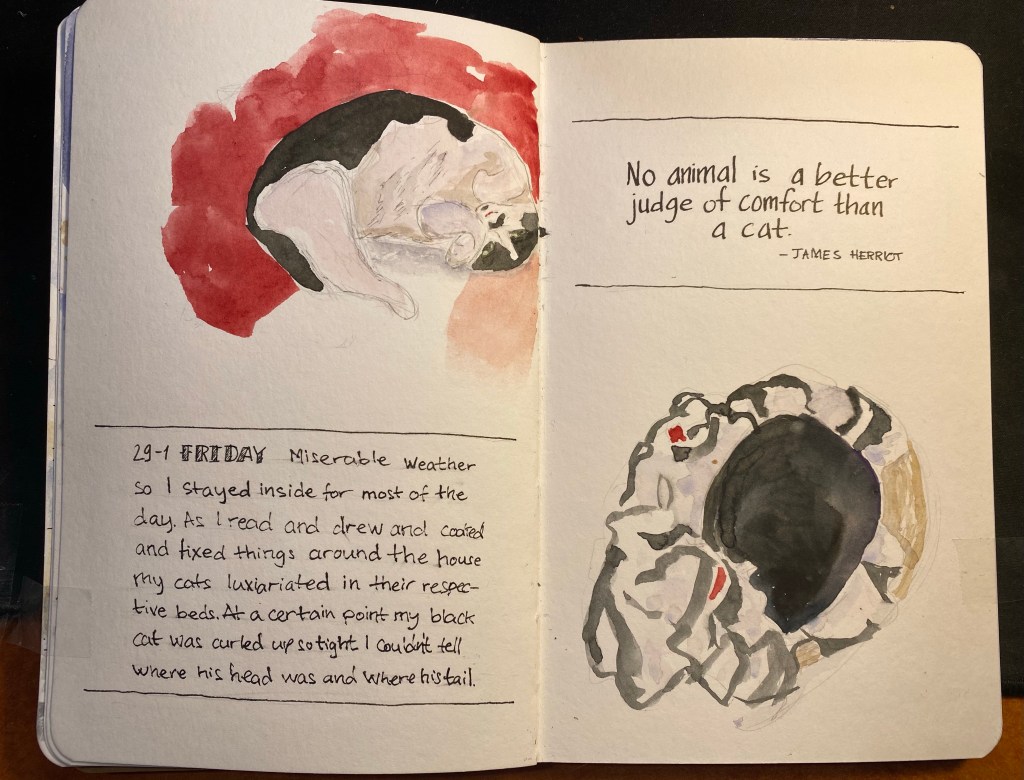
Another spread from my sketchbook, also created as part of the Sketchbook Design course. I still need to find a way of drawing my black cat without him turning into a dark blob on the page.
When Covid-19 hit last year and I started working from home my old task management system completely disintegrated. It was a combination of trying to find a new work/life/health balance, coupled with starting a new job that really made me aware that my old running daily work checklist and home checklist were no longer going to work. I was also keenly aware that I could no longer do any long term planning, and yet that I had to find a way to plan ahead somehow, or I’d accomplish none of my long term goals. After trying several systems with little to no success, it took until January 2021 for me to find a system that worked for me. In the hopes that this may help someone build out their own system, here is a glimpse into mine.
The system is built into two separate Moleskine Large Hardcover Squared notebooks. This was my notebook of choice for my previous system, and it has served me well. I don’t use fountain pens for my planning, just fine gel pens, and I don’t mind the ghosting, as I find that it’s more pronounced in photos than it is when I actually use the page. One notebook is my weekly planner, and I reference it about once or twice a day. The other notebook is my daily task list, and I reference and update it all the time. Why two notebooks and not one notebook with both a weekly plan and daily pages? I tried that and the need to constantly flip between pages with no ability to see my weekly plan before me as I create my daily task lists was too much for me to deal with. I don’t have a dearth of notebooks and I do have dearth of time and attention, so two notebooks it is.
Here’s a weekly notebook spread:
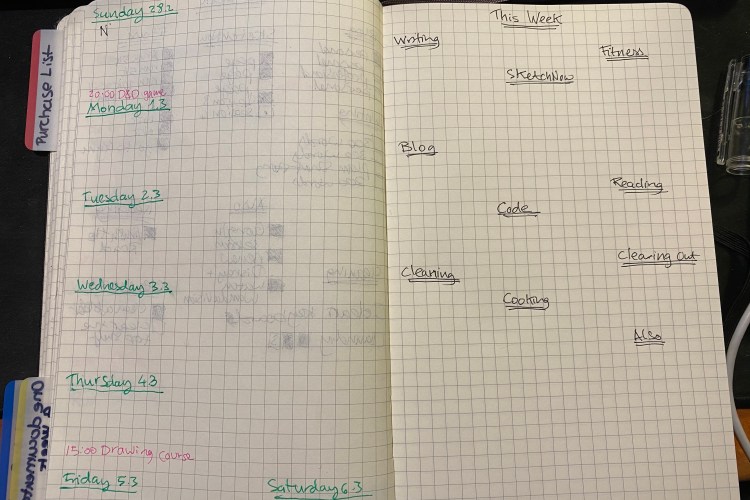
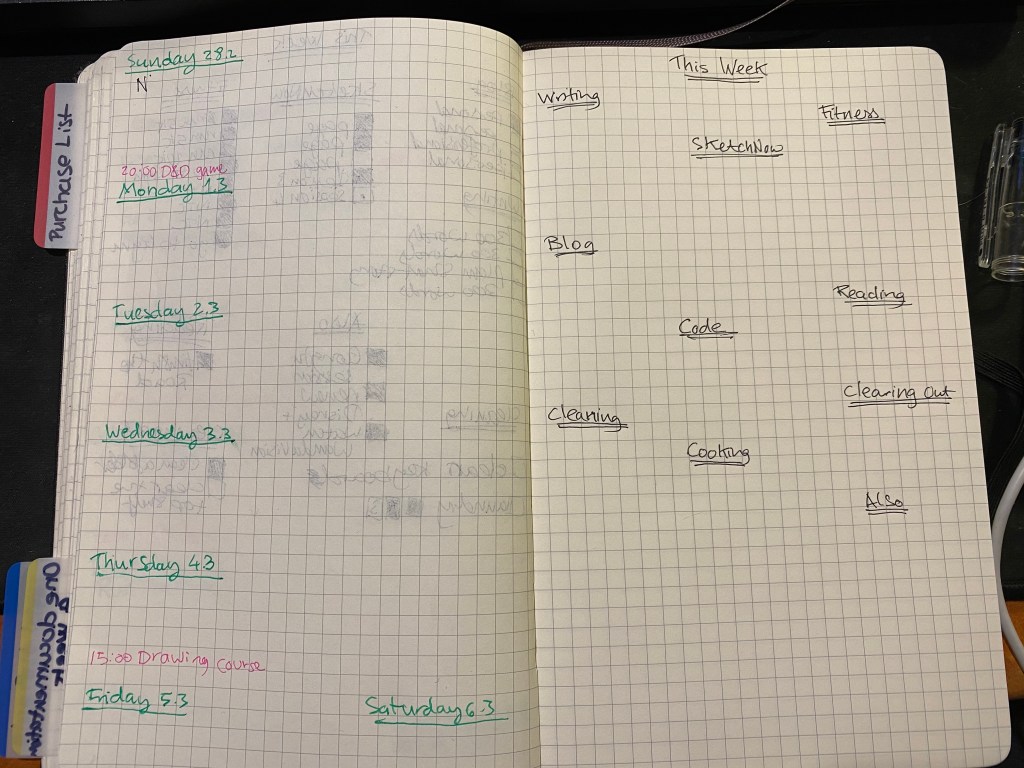
Weekly notebook spread, before filling.
Each spread in my weekly notebook is divided between my weekly schedule/plan on the the left hand side of the spread, and a weekly goal list on the right hand side. This is a sample of the following week’s spread before I start really filling it. On the left hand side I fill in the days of the week and the dates. I put in appointments and things that I need to take into account while doing my planning, but this page isn’t a replacement for my Fantastical calendar. I still want and heavily use a digital calendar with reminders, but this notebook page is crucial for my ability to see and plan ahead. I plan and think better on paper, and so if I have a D&D game on a certain day, I know that I need to schedule time to prep for it. This is also where I plan my weekly training: when I run, when I go to the gym and when I rest. I also use it to plan ahead things that I need to be aware of for my mother’s various doctor’s appointments, from reminders, to various forms that need to be filled, blood tests scheduled etc.
The right side of the page is the most important part of each spread, as it is where I plan out what I want to get done each week. My yearly goals are broken down and mapped out week by week here. I break the goals down by title, and then write down 2-3 related goals under each one (except the fitness goal which gets more). Some goal groups are consistent – fitness, reading, writing, blog, cleaning. Other goal groups change depending on the week and my focus. The “Also” goal group is for miscellany, such as watching a weekly episode of a show that I don’t want spoiled, or renewing/cancelling subscriptions.
The daily notebook is much simpler, and is merely an evolution of my old task system, adapted to working from home:
Daily task list, in the afternoon of the day it was created.
On the left side of every work day there is a professional task list, with work related things that I want to do that day. On the right side of the page is the personal task list, with stuff that I want to do before and after work. On weekends the two sides of the page simply both list out personal tasks. This system is clear, simple to use, flexible and doesn’t require a lot of “meta” effort to set up or maintain.
If you’re struggling with time management lately, take some time to create a system that works for you and doesn’t overwhelm you. I highly recommend not using a planner but rather creating your own schedule, since it saves you from the disappointment and stress of empty planner pages. It also allows you to add specific pages to your setup as the need arises. For instance, as global shipping and our local post office have gone haywire since Covid, I dedicated a spread in my weekly notebook to tracking various shipments. When I need to go to the post office to collect a package I note it down in my schedule, and so it was easy for me to use a different page on the same notebook to track the status of each package.
Let me know if this was helpful, and if you’ve also been forced to revamp your planning over the past year.
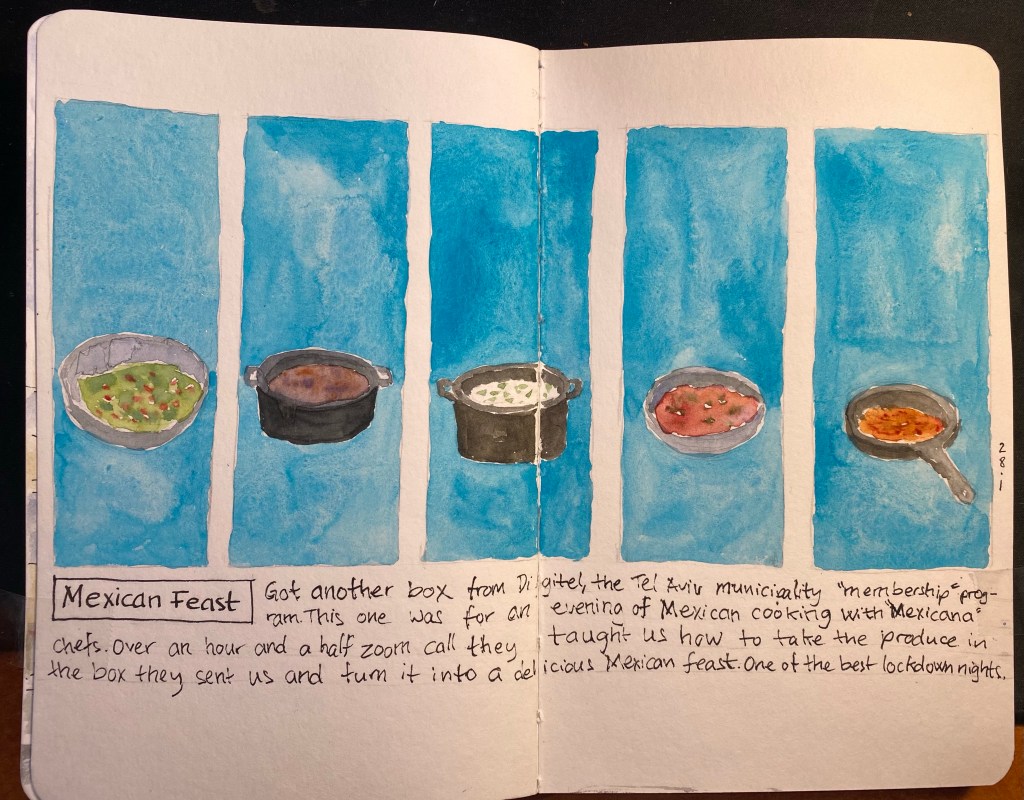
This is the first time I’ve used colour blocks to design a page in this way, with vertical drawings and horizontal text. This page was created as a contained composition for Liz Steel’s Sketchbook Design course (highly recommended, especially if you have a basic handle on drawing and sketching already). I normally would have just done an overlapped jumble of all the things that we cooked that evening, to convey a bit of the chaos of cooking so much in just an hour and a half, but I forced myself to think of a way of creating some of that night’s feeling using a contained composition. The vibrant turquoise was what brought this page to life for me: a joyful colour that connects me with what I learned about Mexico during that evening, and the happiness of cooking my way through a small part of the wonderful Mexican cuisine.
BTW – I just noticed that Jenny Mason from The Finer Point also took the Sketchbook Design course. I love the vibrant spreads that she’s created. Go check them out.
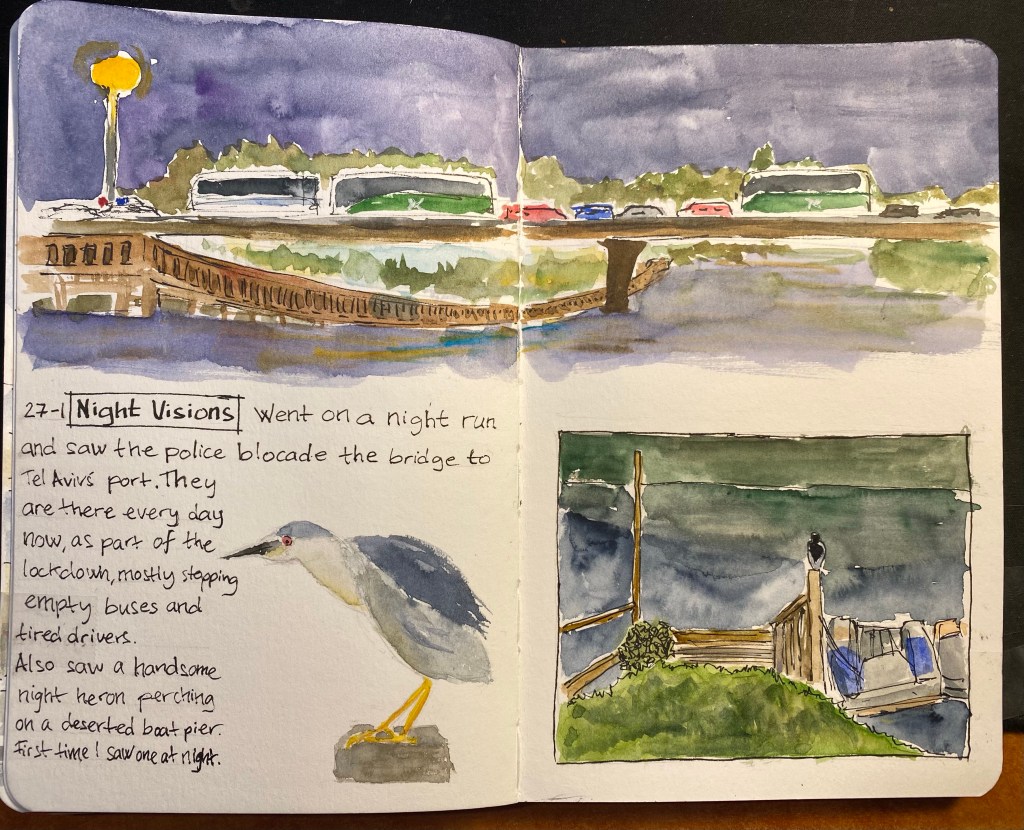
I’m still working to clear my backlog, as life is starting to get back to normal. This spread was part of the Sketchbook Design course assignment focusing on contained compositions. I find drawing night scenes in watercolour particularly difficult and so I tend to avoid them. However, I couldn’t pass on the chance to draw the night heron I saw at night, and so this spread emerged.
I’ve had a rough two weeks, with my mom going through surgery to remove tumours during a Covid lockdown and other stuff crumbling at the same time. Starting to get back to my my routine again, which means posting here, working on a review and working on another short story.
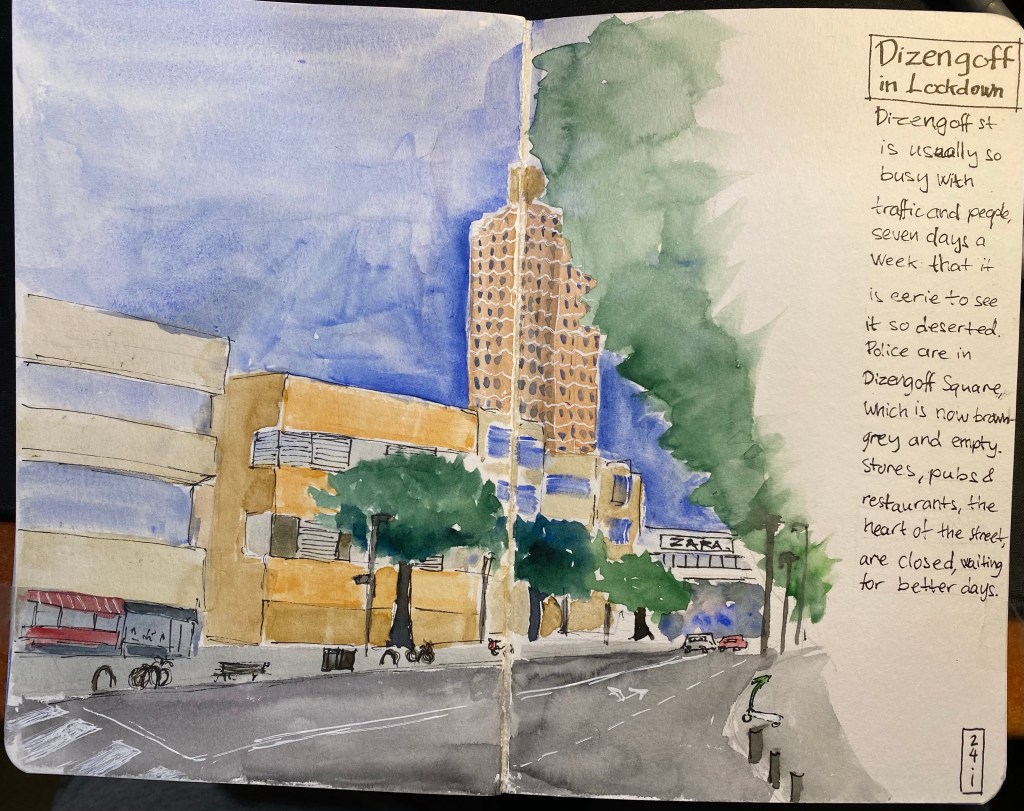
This page shows a deserted Dizengoff street, which I haven’t seen since the first lockdown, last spring.


 Writing at Large