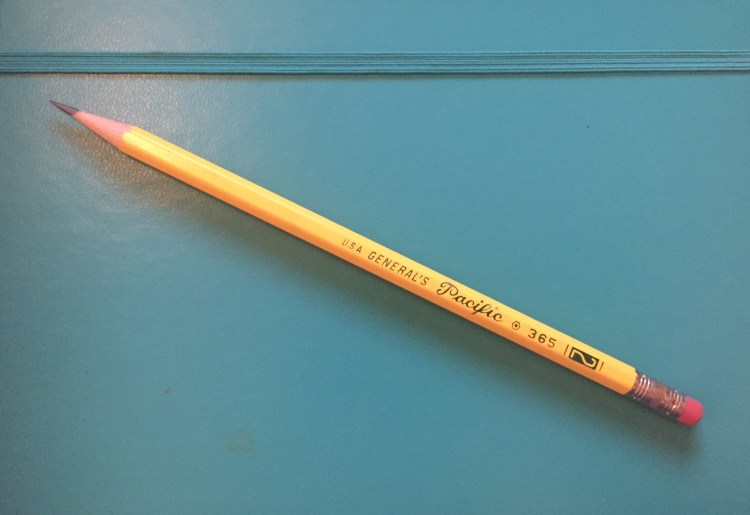
I have too many pencils which I don’t take the time to use. Inspired by this episode of the Pen Addict podcast I decided to literally do a random draw: I randomly drew a pencil from the pile, and then I randomly drew something with it. Today’s pencil: the General’s Pacific 365 #2.
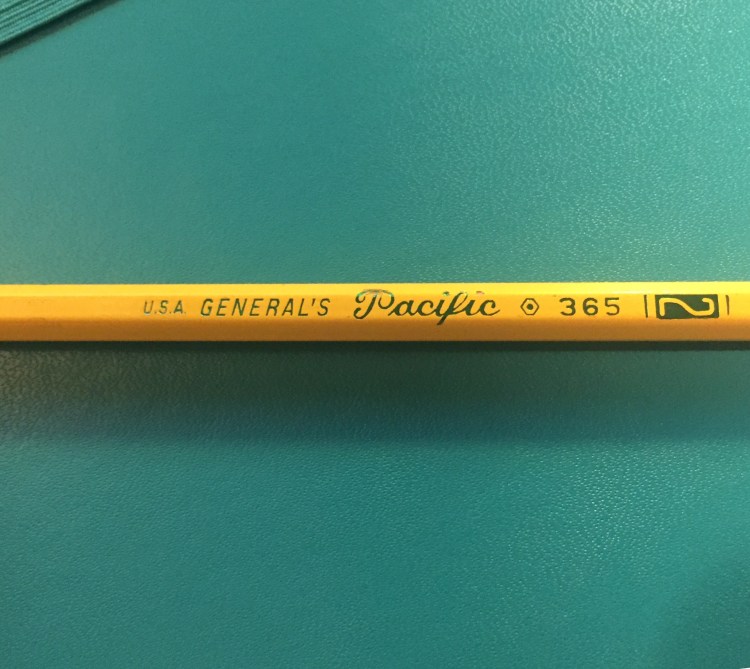
It’s a classic looking #2 (or HB) pencil, with for some reason three or four fonts on the barrel, depending how you count the numerals. It’s made in the USA, out of California incense cedar, and has a little red thing on the top that looks like an eraser, but trust me, I wouldn’t try to use it as one.
Why so many fonts?
The green foil imprint quality is not great, with the “Pacific” imprint chipping the pencil’s coating. The coating itself is pretty thinly layered, but the core is perfectly centred and sharpens like a charm.
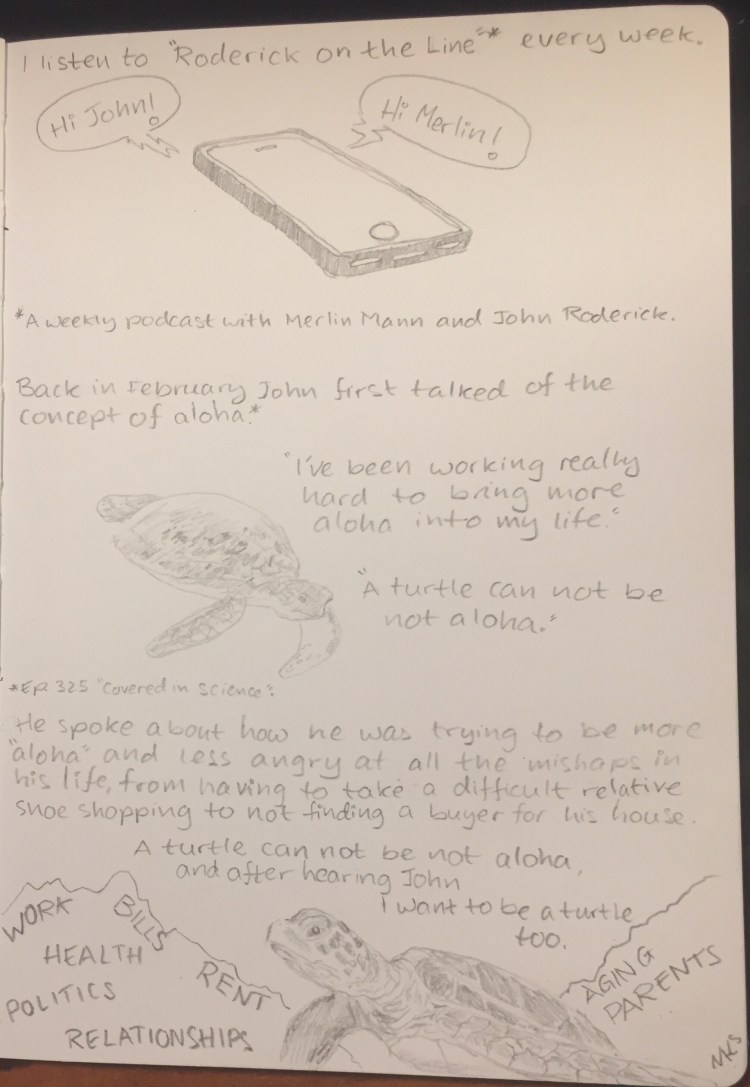
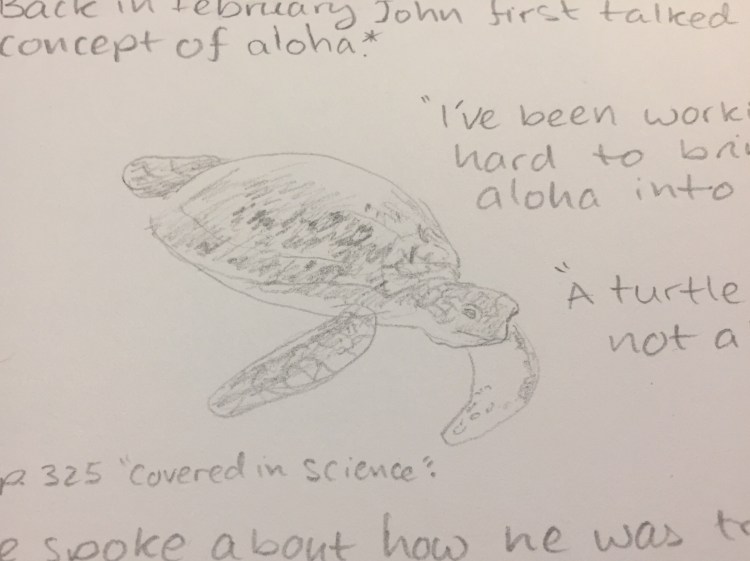
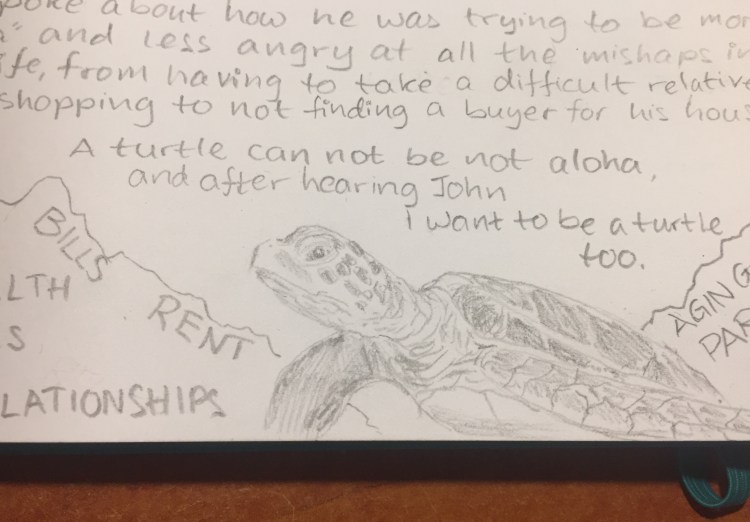
You can see the available shades that the General’s Pacific is capable of producing in the closeup of the sea turtle above. If you’re looking for a #2 writing pencil that could do for a quick sketch in a pinch, the Pacific ought to do the job. It doesn’t smudge and holds a point very well.
I erased a word between the “S” and the “LATIONSHIPS” on the left side of the closeup above. It erased out pretty well, even though the writing was dark and done with some pressure.
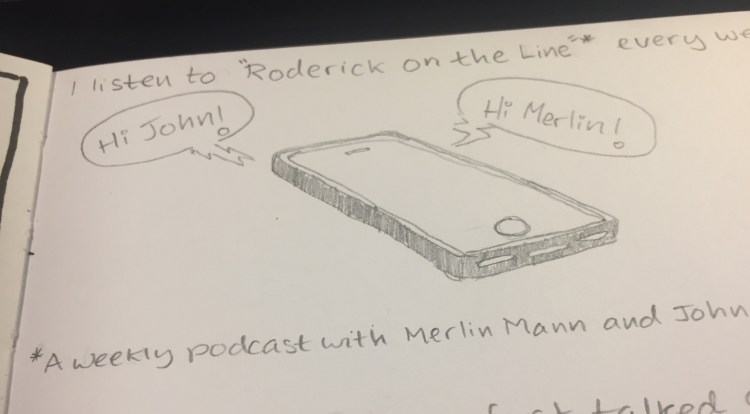
The phone above shows you the maximum darkness I was able to produce with the General’s Pacific. It’s not bad, considering that this is clearly not a pencil made for drawing, but one made primarily for writing.
If you’re buying from CW Pencils and are looking to add a workhorse cedar pencil with a fondness for fonts to your order, the General’s Pacific is a pretty good choice.
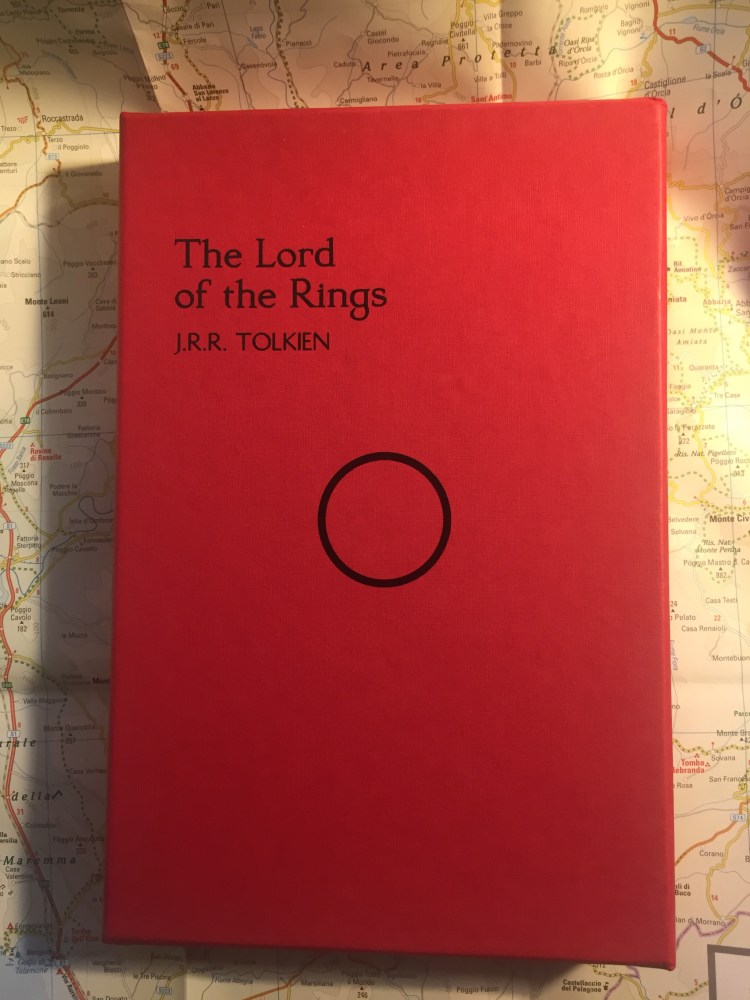
Say hello to the limited edition, numbered Lord of the Rings Moleskine box:
Bold and beautiful, right? This box is new to the 2019 edition of the LotR limited edition Moleksines (reviewed here and here), not to be confused with the more muted LotR limited edition notebooks that Moleskine published back in 2012.
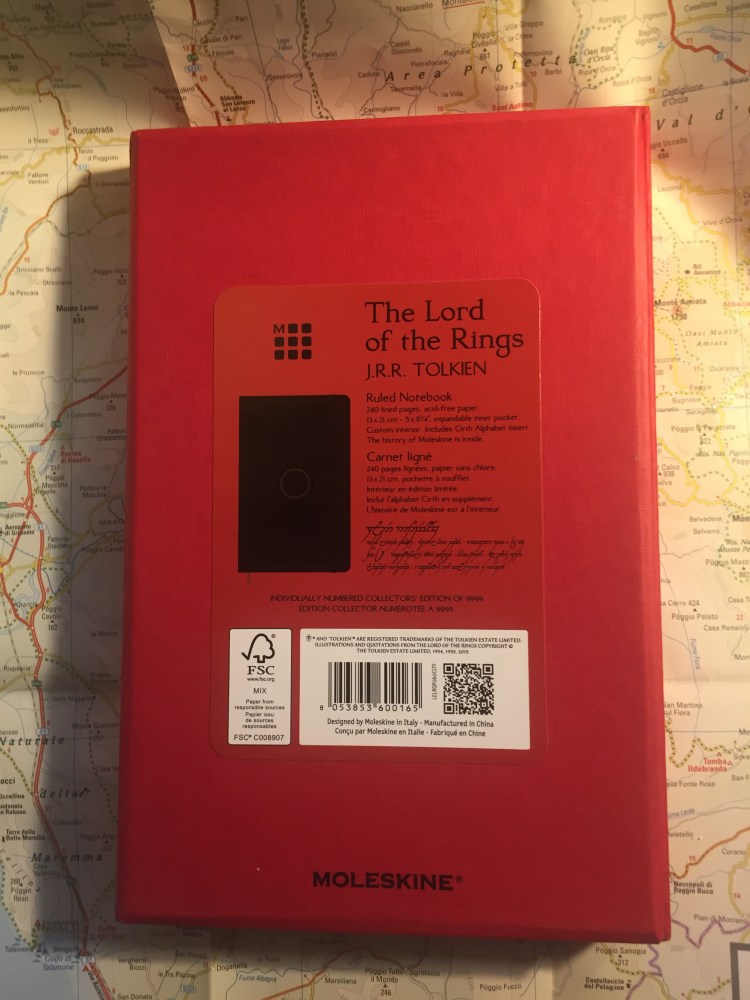
This limited edition box is numbered, like all limited edition Moleskine boxes, and there are 9999 boxes available worldwide. For me this edition is all about the typography and the homage to Tolkien’s illustrations. Notice the fonts used on the front and back of the box, and the fact that the notebook’s details are printed in English, French and Tengwar, an Elven alphabet that Tolkien invented.
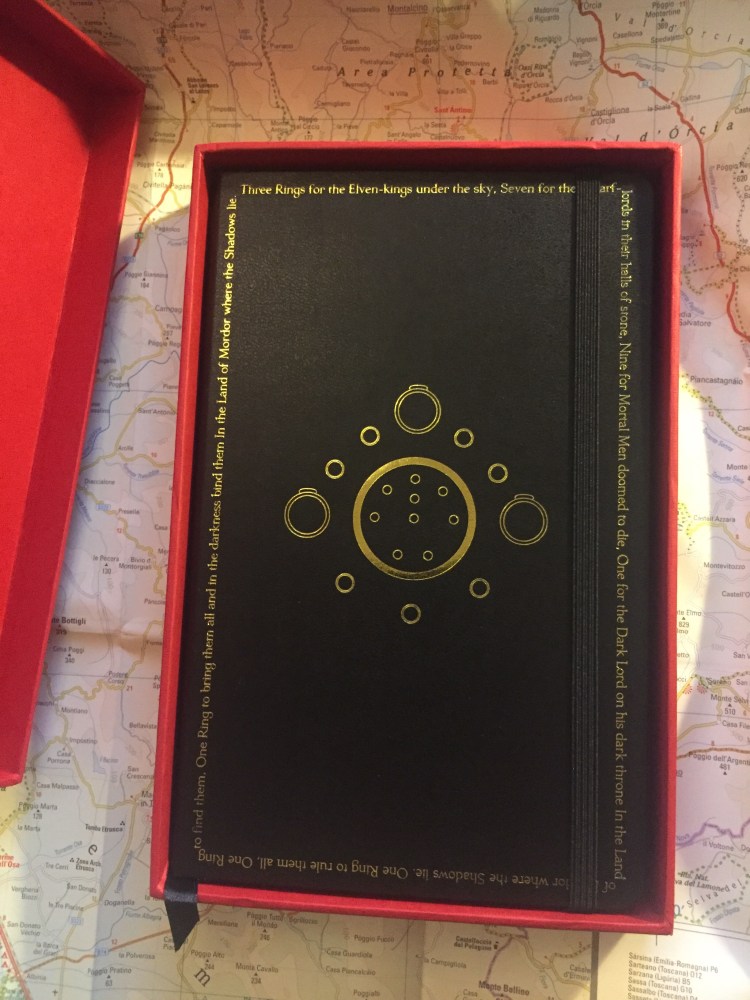
You open the box, and are met with this:
The contrast is impressive, and the combination of red, black and gold is striking.
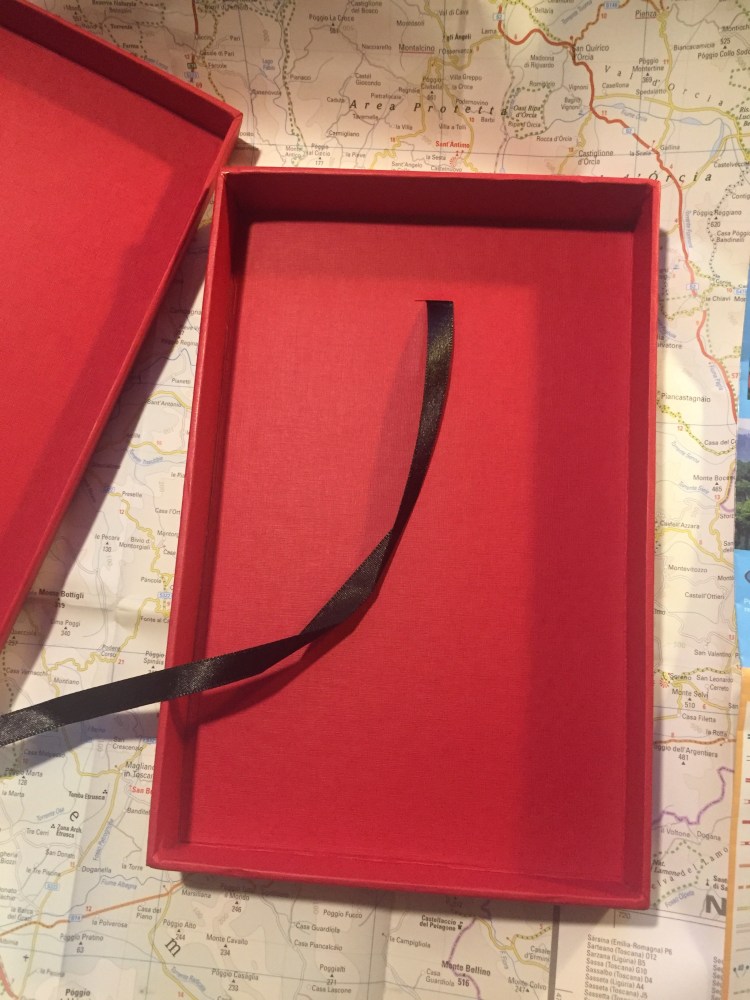
The box itself is a well made cardboard box that can be used to store the notebook, or appropriated to store pens, pencils, pocket notebooks, etc. There’s a black satin ribbon attached so that you can easily pull the notebook out. Very elegant.
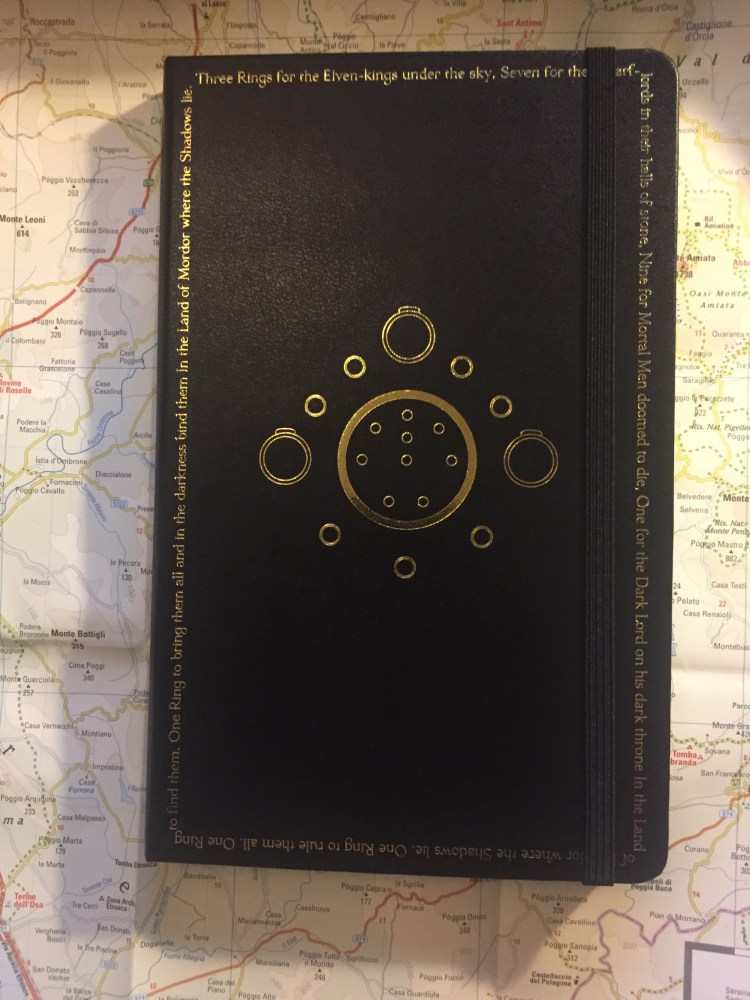
Now comes the notebook, the main event. It’s a large ruled Molkesine, with the famous “One ring to rule them all” poem embossed in gold all around the margins, and Tolkien’s illustration of all the rings embossed in gold in the centre.
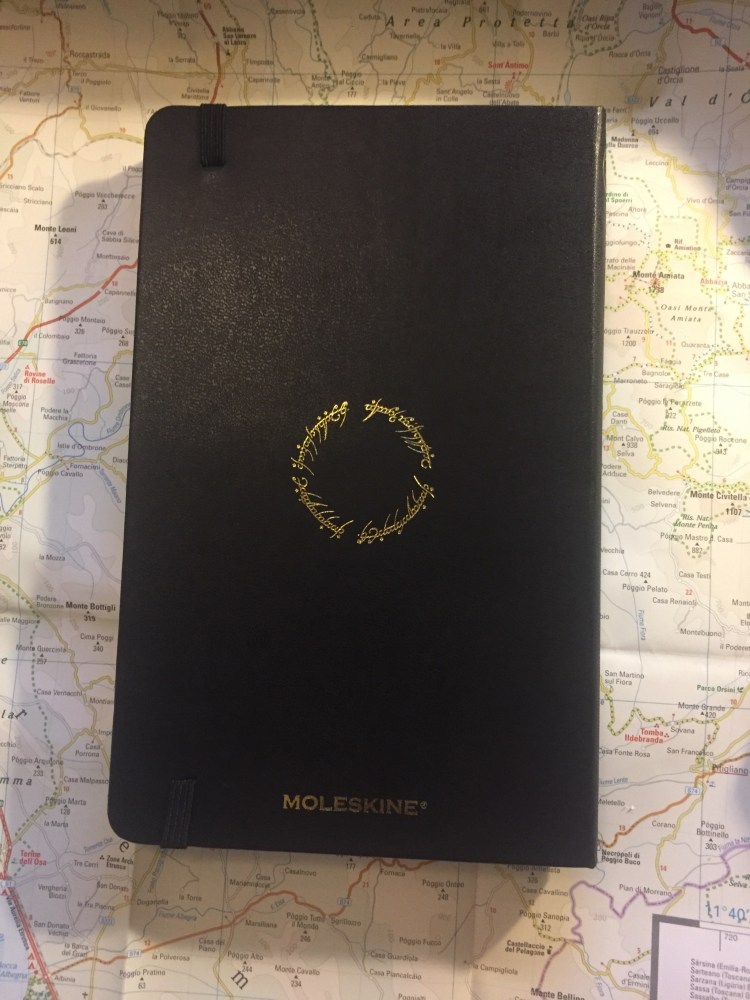
On the back the inscription on the One Ring appears, embossed in gold:
One Ring to rule them all, One Ring to find them, One Ring to bring them all and in the darkness bind them
Again, a dramatic edition that is still elegant and understated.
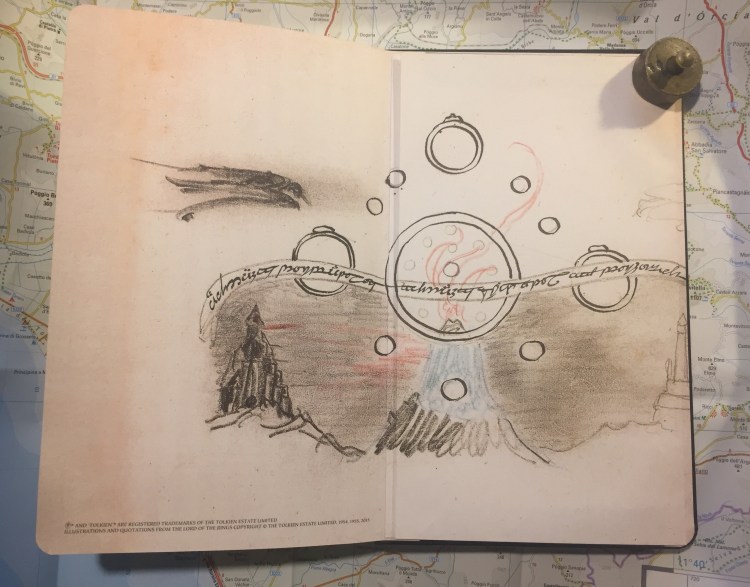
Inside is where all the fun is. The front endpaper shows a Tolkien illustration of Sauron presumably reaching over the Mountains of Shadow, ready to take over Middle Earth. It looks like this illustration inspired the red and black colour theme of this edition.
On the back is Tolkien’s illustration of the rings over Mount Doom with Barad-dûr in the background, and again the “One Ring to rule them all, One Ring to find them,/One Ring to bring them all and in the darkness bind them” inscription.
The illustration is aligned with the back pocket, and runs into the pocket itself.
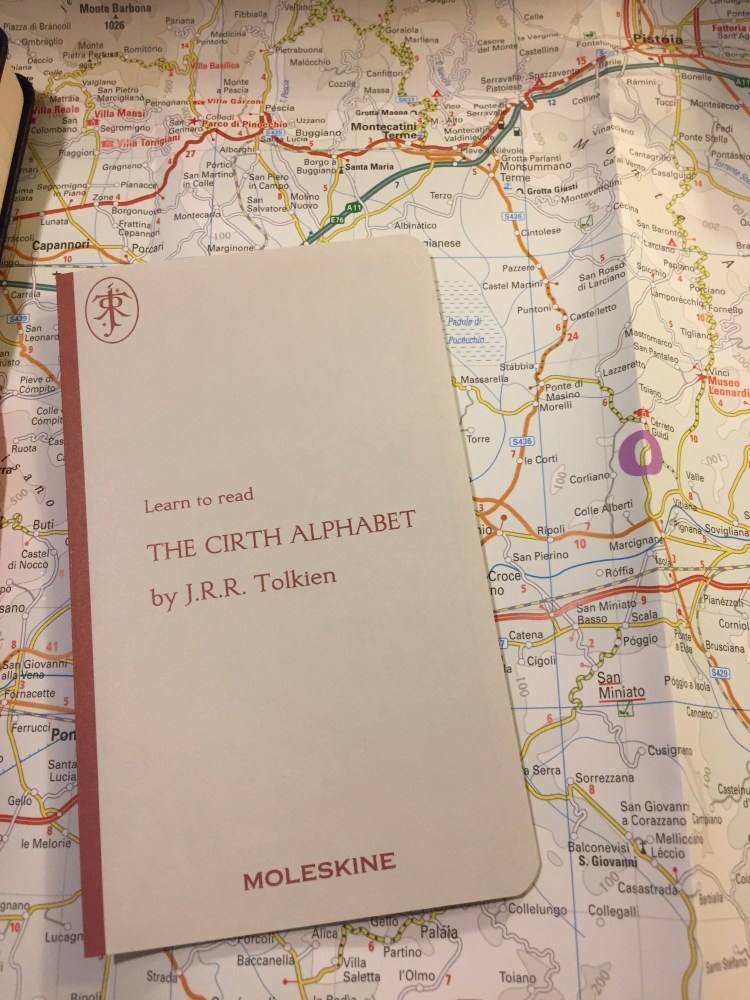
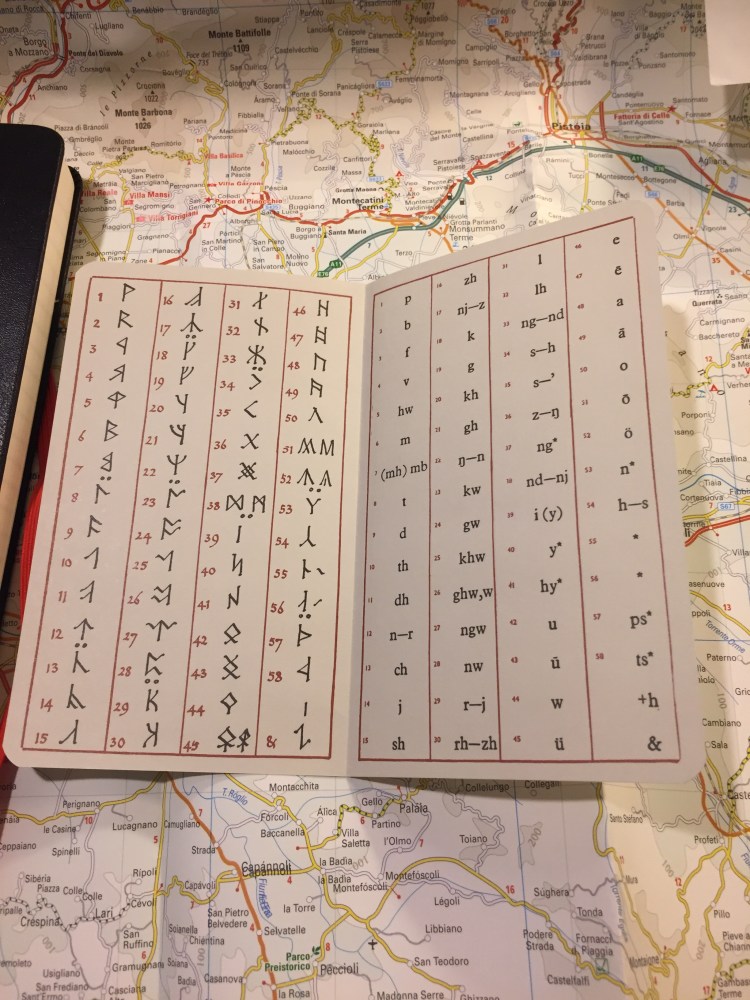
The add-on is the Cirth alphabet, as it is for all the notebooks in this series:
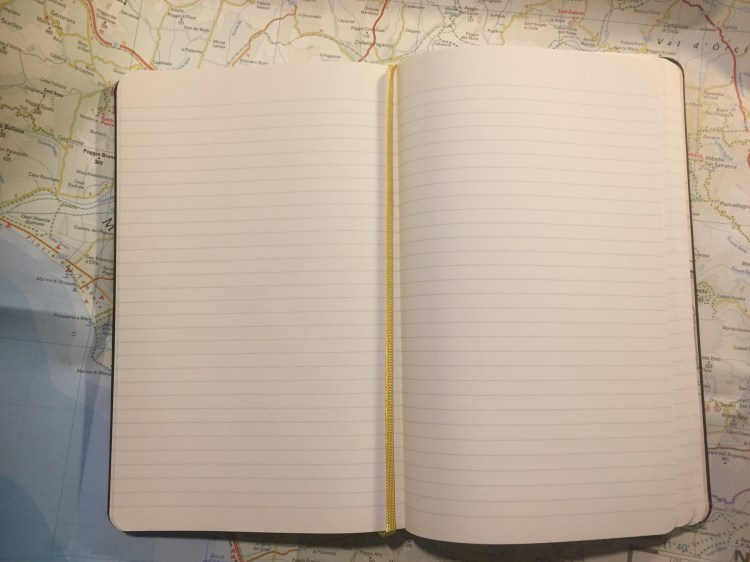
Which brings us to the one minor thing I don’t like about this edition: the colour of the ribbon bookmark. It’s a light yellow that glitters in the light because of the material its made of, and it’s clearly meant to evoke the One Ring. That’s a lovely idea, but I think that it fails on execution. The bookmark looks pale and vapid compared to everything else about the notebook, almost disappearing into the page. A red bookmark would have probably been better, since a gold one would probably come out tacky.
The 2019 Lord of the Ring Moleskine limited edition notebooks are very well designed. They pay beautiful homage to Tolkien’s illustration and work, and the limited edition box is no different. These are much better than their 2012 counterparts, and make great gifts for the LotR fan in your life.
As usual, these are well made, robust notebooks that can handle a beating with aplomb, but they aren’t, nor are they meant to be, fountain pen friendly. I use gel ink pens or ballpoints in mine, and recommend that you do too.
Leuchtturm1917 sketchbook, Kuretake Zig Mangaka pens, Deleter Neopiko-Line-3 pens, Caran d’Ache Pablo coloured pencils, Faber Castell Albrecht Dürer coloured pencils.
This week I celebrated two years of daily journaling. While I’ve been keeping journals for years, until the last two years I’ve only done so sporadically. Journaling was something that I did only when things got really rough, to keep myself going, or when I was travelling, to preserve the memories of my trip. I used pocket notebooks for my sporadic journals, as it was more important for me to capture things than to reflect on them. It was a utilitarian process, not an enjoyable one. I knew that once I decided to really start a journaling habit, that would have to change.
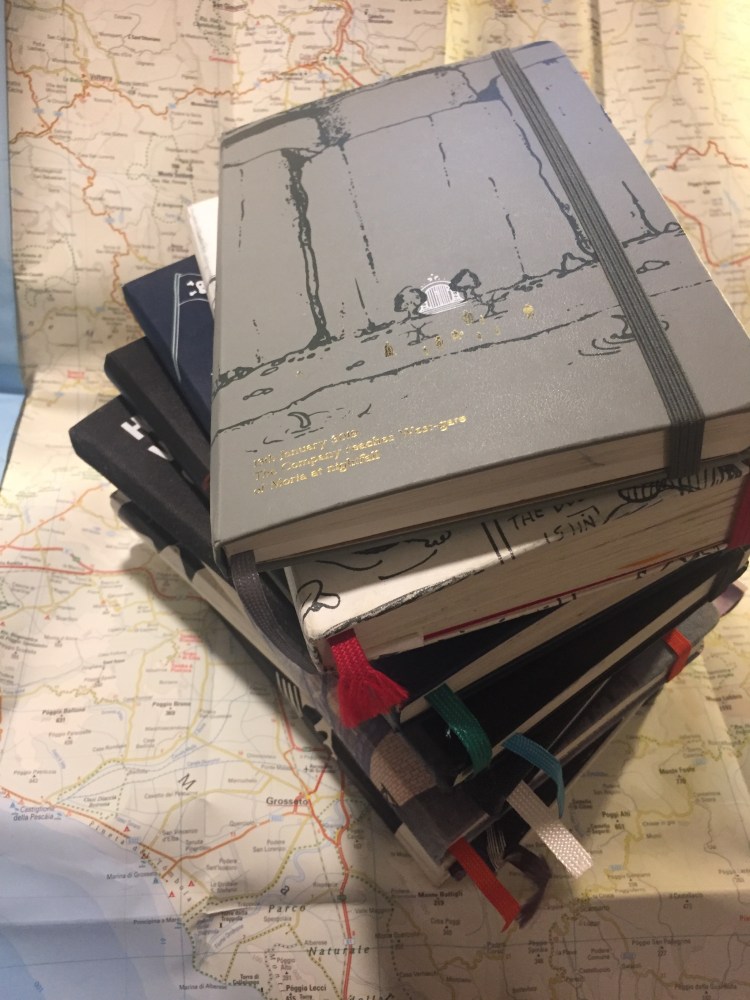
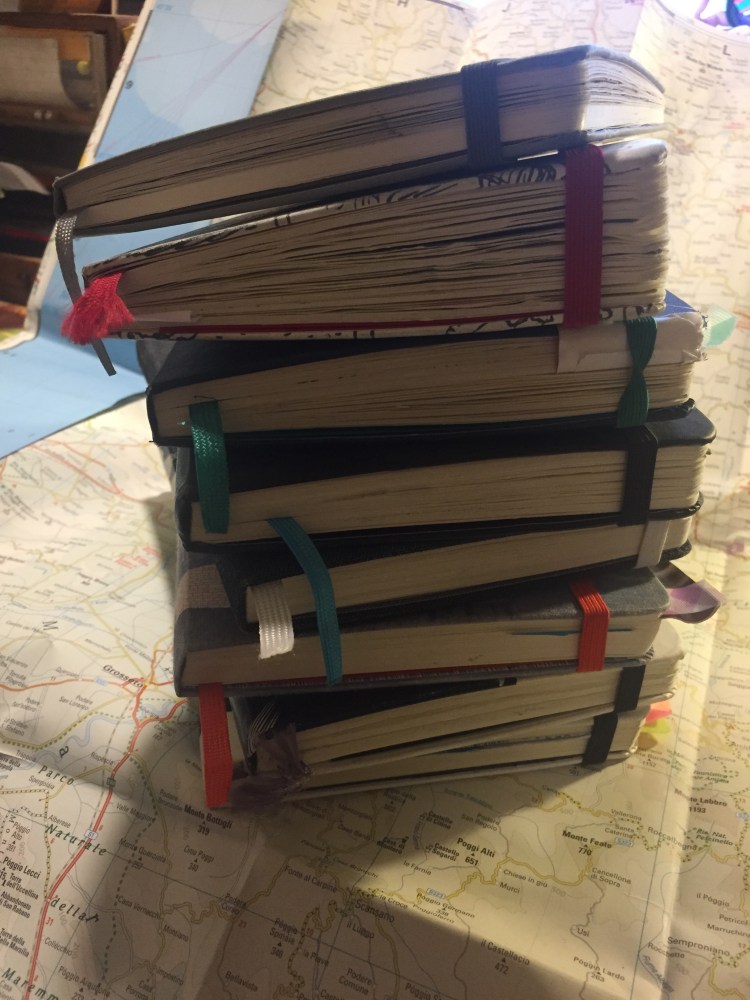
These are all the journals which I’ve used during the past two years.
So the first thing I did was pick a notebook that I knew I’d want to use, and use daily. The only rules were that it had to make me happy, and that it had to be large enough for me to be able to actually write in it, not just jot things down. I wasn’t looking for the best notebook with the best paper in the best format (I don’t think that exists, actually, but for us stationery geeks the search is always on), just a good enough notebook for me.
My notebooks of choice.
I also decided very early on that I couldn’t use a fountain pen for this, because I wanted a pen that I could write with even not under the most ideal circumstances. I was also planning for both the notebook and the pen to bash around freely in my bag. These were going to be used and look used.
Can you see how bloated these notebooks are? Moleskine makes them sturdy enough to take a beating.
I chose Moleskine large ruled hardcover notebooks as my notebook of choice, and the uni-ball Signo RT 0.5 gel ink pen as my pen/refill (UMR-85N) of choice. I wanted a sturdy lined notebook that I’d enjoy using and looking at once it was done, and after years of neglecting the Moleskine for other notebooks I came back to it because of some of their limited edition designs. I knew that I was going to use the uni-ball Signo RT 0.5 as my pen or refill of choice (inside a BigiDesign Ti Arto or Ti Arto EDC), so I didn’t need fountain pen friendly paper. I had decided to pick up the steady journaling habit by starting with a travel journal, which I already had some experience with, and then carrying on from there. On the first evening of a trip to London I happened to walk by the Moleskine store in Covent Garden, and I decided to go in and check out what they had. There was a beautifully designed Batman limited edition notebook in exactly the kind of format I was looking for, and it was only available for sale at the Moleskine stores. I bought it, unwrapped and stamped it with the Moleskine Covent Garden stamps, and I haven’t looked back.
That pen and notebook combo has hardly changed over the years. What has changed is the format I use to journal, and the amount of daily journaling I do. When I started out I was used to only jotting a few lines down here and there when I journaled, so I knew I couldn’t expect to write 4-5 pages per day right from day one. Starting with just a paragraph to half a page a day, I pretty quickly moved to one page per day of just writing.
Then I saw a Neistat Brothers video on Youtube and realized that I could use my journal as a visual capturing device as well, and anything could go in it, so long as it made me remember a moment or a place.
Limited Edition Cola Zero tab created for the 2019 Eurovision song contest in Tel Aviv. I don’t even drink Cola Zero, but this little piece of metal is still totally evocative to me.
That’s when the notebooks really started to get bloated. From clothing labels to business cards and ticket stubs, if I can put glue on it and it’s visually appealing or evocative, it goes in. I almost always also write a little note for future me, to remind myself what I’m looking at and why it’s there. That change really made these notebooks a kind of personal artifact for me, and I can’t say how precious they’ve all become.
A bit of cat themed washi tape and a Uniqlo shirt label. Sometimes things go in because I find them visually appealing or they make me smile.
At a certain point I started getting ambitious, moving from writing one page a day to two pages, then four pages, then six. That’s when I had to take a step back and make sure that I wasn’t burning out on journaling for all the wrong reasons. I enjoy writing and I enjoy journaling, but I’m also trying to write fiction, and my journal can’t become something that consumes that, an excuse for not writing. It’s also easy to get carried away and want to finish the notebook as fast as possible just so you can open a fresh one, or brag (even if it’s only to yourself) that you’ve finished a notebook. Nowadays I write one or two pages a day for most days, moving up to more pages only if I really have something special to write about.
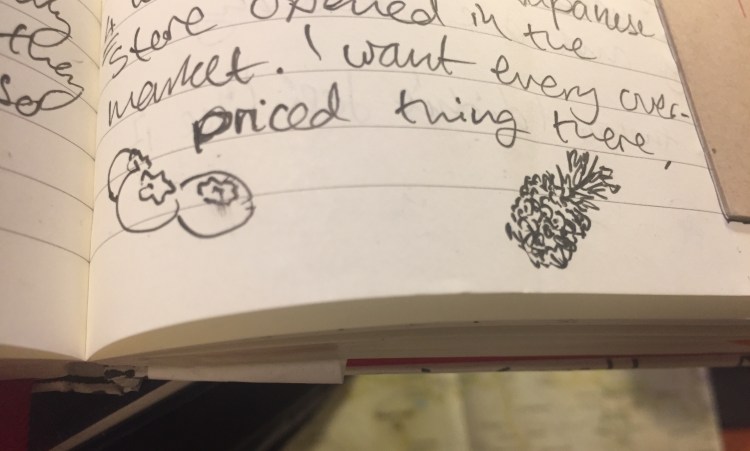
Doodling seasonal fruit in the margins.
Life also happens, and oftentimes it’s scary and ugly, a black hole that threatens to consume all that is good in your life, including journaling. My mom got unexpectedly and very seriously ill last year, and we’ve been struggling with her disease ever since. When she was in hospital I couldn’t bring myself to journal. I backlogged those (thankfully few) dark days, and I realized that I would have to accept that as much as journaling is important to me, family comes first, so backlogging is going to have to become acceptable. I try to backlog as little as possible, but some days just demand that.
If I want to remember a good meal I’ll sometimes draw it.
I also draw a little in my notebook, tiny thumbnails of things that I want to remember later, or that I just feel like drawing. These are usually food doodles, as I don’t really like to photograph my food.
I still use my journal in trips, and ticket stubs and bit and bobs like these make it more interesting.
If you’re looking for some journaling tips, I wrote two posts on that subject here and here. If there’s one thing I can leave you with it’s that if you want to journal, you need to figure out a way to it make it work for you, and be ready to adapt as your life changes over time. There is no perfect journaling system, or perfect journaling notebook, there’s only what works for you.
I’ve been on a fountain pen purchasing hiatus for a while, as I’ve been trying to use what I have rather than buying more pens that will see little or no use. Also, money is a thing, and this hobby can get really expensive really quickly.
So when reviews of the PenBBS pens started coming out I largely ignored them, even though they were generally very positive. That changed when I saw the PenBBS Hawaii: here was a chance to get a pen with a Kanilea Pen Company kind of vibe, but at a price that I can afford. To be honest, despite the reviews, at this price point ($39) I thought that I’d get a cheap, plasticky feeling pen that wouldn’t really be a piston filler.
I was wrong.
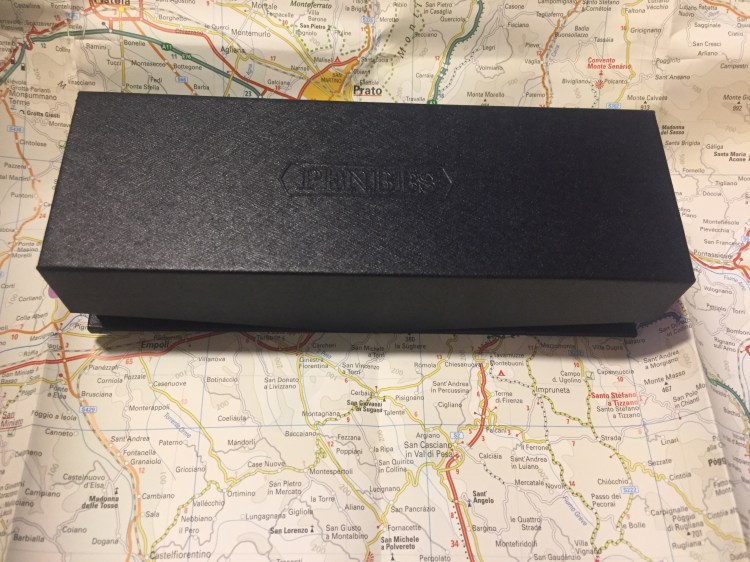
This is what arrived in the mail:
Then I took this out of the sleeve:
I don’t usually care much about packaging, but this is worth noting. Even if the packing would have just been a sturdy cardboard box inside a sleeve it would have been mind-blowing for this price. But it’s so much more than that.
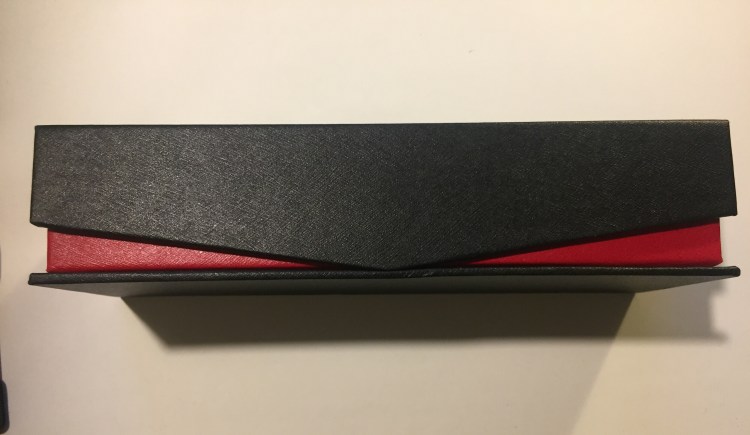
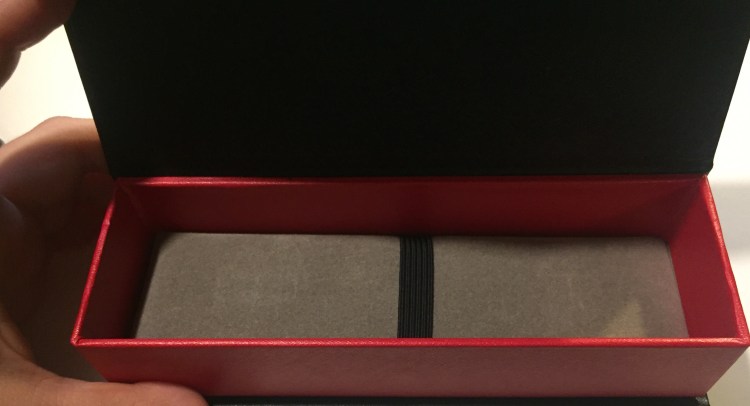
That black box is designed like the boxes high end Pelikans come in (including a cushioned interior). It’s designed. There’s texture to it, a logo and the edges are rounded up so you can see the red colour underneath. The box even comes with magnetic closure. It’s well-made enough and good-looking enough to be used as a display box.
But that’s not enough for PenBBS. You paid $39 remember? You’re going to get so much more than your money’s worth. The pen comes in a beautifully made sleeve. Somebody bothered to make a sleeve (a lined and sewn sleeve, not a cheap felt glued one, mind you), and then took the time and effort to make it a display piece: something that you’d proudly carry around with you.
But the pen is the thing, right? As amazing as the packaging is, we’re here for the writing experience, not the unboxing one. So here it is, the PenBBS 309 Hawaii:
Isn’t it pretty? The pen is semi-translucent, with a lot of depth and chatoyance. It’s also pearlescent in places, as you can see in the tip or near the section. I filled it with Sailor Bungubox June Bride Something Blue ink and you can see some of the colour coming through the body (and a slight smear of ink in the cap, where I didn’t clean it properly after filling before capping it).
The only thing that I don’t quite like about the pen design is the super wide metal band on the cap. It has “PenBBS” and “309” engraved on it, but it cheapens the pen because of its width, not because of the branding.
The nib looks great, with some thoughtful scrolling engraved on it, as well as the nib width (fine. It only comes in fine). The pen is quite standard in its width and weight, and very comfortable to use in long writing sessions. The section looks sleek, but is much less so than the Lamy Studio, and the lip on the edge prevent your fingers from accidentally hitting the nib and getting inky.
The fine steel nib offers a tiny bit of line variation as you tilt in (not the flex kind of line variation that appears as you apply pressure on the nib). It’s smooth but does provide feedback, and depending on how you hold it, you may feel more or less of that slight feedback as you write. I enjoyed writing with it, and because it’s a light acrylic pen, its comfortable for really long writing sessions.
Because its a fine nibbed pen I thought that I’d try it on my current journalling Moleskine. To my surprise this pen and ink combo worked fine on that paper. There are a few dots of show through here and there, but nothing that bothers me. Again, YMMV, and this LotR Moria Moleskine isn’t advertised as having fountain pen friendly paper, but I’ve been enjoying journaling with my PenBBS on it.
The PenBBS 309 is a piston filler, which for this price is unconscionable, especially considering that the piston mechanism works smoothly (and without squeaking) out of the box. The Pelikan piston fillers do feel better than the PenBBS one, but they come at a much higher price.
Whether you’re just starting with fountain pens or you have a sizeable collection already, the PenBBS 309 is well worth purchasing and trying out. I look forward to trying other PenBBS pens after this one, and I love that companies like PenBBS allow people to have a great fountain pen experience at such an affordable price.
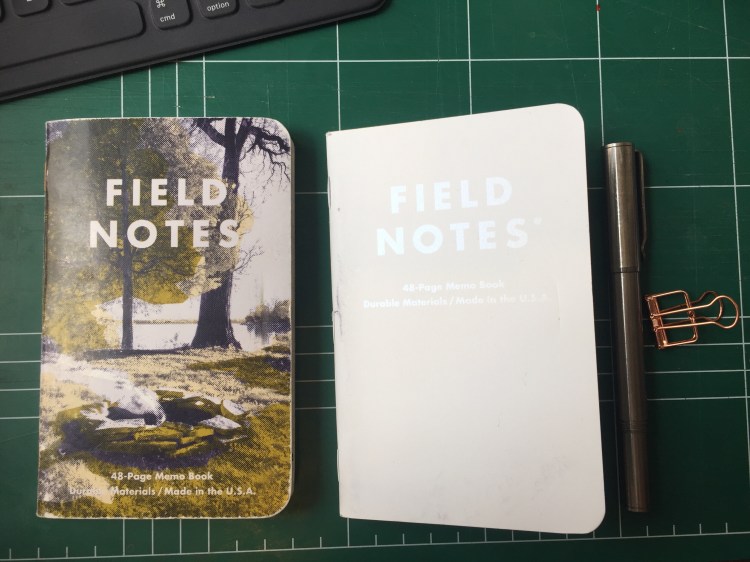
Out: Campfire Dawn. This is one of the editions that I learned to love the more I used it: it just wears out so well.
In: Snowblind. Somewhat ironically this edition shows itself off best in the summer. It’s going to get dinged up and grimy, but that’s just what happens to used notebooks, especially ones with light coloured covers.
Since there’s a good chance that people reading this post, about buying your first vintage fountain pen, will want to purchase a Parker 51, I thought I’d write a separate post with a few extra tips on how to get a good, working Parker 51 at a decent price.
So, one of these pens costs upwards of $400 and the other can be purchased for closer to $40. Which is which?
This is one of the dilemmas facing a new Parker 51 buyer: you’ve heard that this is a great vintage pen, but you can’t make heads or tails of its market value. How do you know what to buy and that you aren’t being ripped off?
Here are a few things worth knowing, if you want to buy a Parker 51 that you actually intend to use. If you’re looking to buy a pen to collect, this is not the guide for you. I’m assuming that you want a good, writing pen that will last you for years and won’t break the bank.
Check if the pen is a vacumatic or an aerometric Parker 51. You can either ask the seller, or take a quick glance at the pen body. If there’s a visible seam near the end of the pen, its a vacumatic. You want an aerometric, because they’re cheaper, easier to use and clean, and generally have less issues requiring repair than their earlier counterparts. Aerometric Parker 51 have a filling system that looks like a modern squeeze converter: a sack covered in a metal sleeve. The sack is transparent when the pen is brand new, but 95% of the time you’ll see sacks that are discoloured to a black, opaque state. That doesn’t affect the workings of the pen, but the more transparent the sack is the higher the pen’s price will be. You don’t need a pen with a clear sack to enjoy your 51. Just press the sack to check that it’s still supple (it usually will be. The sacks aren’t rubber so they don’t crumble with age), and remember: you’ll need 4-5 presses to fill the pen properly.
Most of the value of a Parker 51 pen lies in the cap. I know, that sounds weird, but since the body has no markings (usually), there’s really note much else that can differentiate between one Parker 51 and another (we’ll get to the colours later, I promise). Gold, gold-filled, coin silver and sterling silver caps will make the price of the pen skyrocket. Telling the gold apart from the Lustraloy (regular) caps is easy, but don’t worry, you won’t get any silver capped 51 for less than $150, so that’s how you can tell even if you don’t want to ask the dealer. But by all means, ask the dealer. Sterling silver caps are stamped, as are the gold ones. The gold filled caps are merely marked as gold filled, and if your heart is set on them they aren’t wildly expensive usually (they actually cost less than a modern Edison or Franklin Christoph pen, so long as you’re going for an aerometric in a common colour).
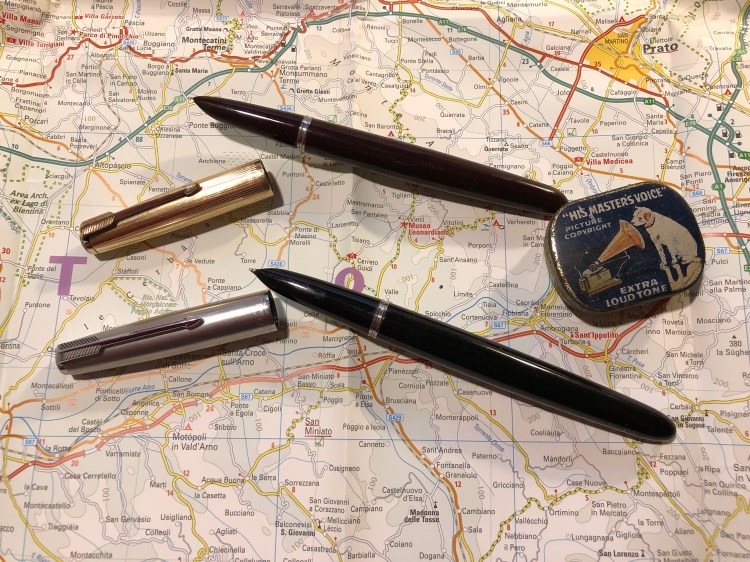
Caps that are even slightly dinged or nicked, visibly scratched or have lost the frosted lustre in their Lustraloy also seriously devalue the price of the pen. A brand new Lustraloy cap has a frosted finish and shiny bands on the top and bottom. The pen in the middle of this photo is NOS, and you can see that it looks different than its well worn neighbour to the right (the black pen). Gold filled and gold caps are usually dinged in some way if they were used, and this is the case of the demi Parker below (the grey one). Needless to say, the state of the cap doesn’t affect the writing experience with the pen, so you can get 51s for a song if you’re willing to go with a common coloured pen with a Lustraloy cap that’s seen some wear. It doesn’t even have to be dinged – just the existence of significant micro-scratches is enough.
In order of rarity the common Parker 51 colours are: Black, Navy Blue, Grey, Burgundy, Teal. None of these colours are rare, and none of them should raise the price of the pen.
If the pen is NOS or stickered and sold as almost NOS, walk away. That significantly raises the price for a pen that’s meant to be looked at, not used.
All Parker 51s use a slip cap mechanism. That means that oftentimes a well used pen will have scratches, abrasions and visible scuffing on the section (the part of the pen above the band, near the nib). That also devalues the pen, but like other cosmetic flaws it does nothing to affect its writing capability.
So what does affect the Parker 51’s writing capability? The tipping material. The thing you absolutely must check before buying a Parker 51 that you intend to write with is how much tipping material it has left. This may be a little tricky, because in finer 51 nibs you may not see how much tipping material there is on first glance. The trick is to look at the pen nib not from the side, but from below. Look at this 51 pen nib for example. Without a loupe it’s difficult to see from the side how much tipping material is left on it:
Hard to tell if there’s a lot of tipping material left there or not.
The answer is to flip the pen and look at the flip side of the nib. The tipping material looks like a shiny dot on the tip of the nib. If there’s no shiny dot and you just see the gold nib, the tipping material is gone. You’ll also feel it immediately when writing, as the pen will drag over the paper instead of floating on it, and may even be scratchy. Parker 51 nibs don’t get misaligned very often, so a scratchy nib usually means the tipping material is gone.
A medium Parker 51 nib with plenty of tipping material left
A fine Parker 51 tip with some tipping material left. This should still last for years of use.
Parker 51 pens have gold nibs, unless they’re Parker 51 Specials, in which case they have steel nibs, shiny caps and a black jewel on top. I personally am not a fan of the 51 Special, but if you are, they’re usually an inexpensive way to get into your first vintage fountain pen.
There are two lengths of pen body, the full size Parker 51 and the shorter Parker 51 demi. I don’t recommend buying the demi because they’re too small for even my tiny hands to use with comfort (without posting), and they tend to cost more because there were less of them made.
As usual, personalization of any kind on the pen body or cap makes the price of the pen severely drop.
Bottom line: you can get a phenomenal gold nibbed pen in a beautiful Jetson design for less than $100 if you know what not to pay for. Now can you tell which pen is the Plum?
I just listened to the latest Pen Addict Podcast, where a listener asked for tips on buying their first vintage fountain pen. I have well over 100 vintage fountain pens, and I’ve been buying vintage fountain pens since the early 2000s, so I decided to take the time and write a guide to buying your first vintage fountain pens (for the sake of this guide vintage fountain pens are those made before the ’70s).
First, set a budget. Vintage pens are no different than modern pens in this respect, but somehow vintage fountain pen buying guides tend to skip this step. You can get great vintage fountain pens for under $50 and well over $500. Pick a number you’re comfortable with, and stick to it, no matter what.
Decide why do you want a vintage pen:
Flex – You’re looking to add line variation to your writing or drawing. Apart from dip pens, vintage fountain pens are the cheapest way to get that desirable flex. No modern fountain pen, despite any manufacturer promises, offers the line variation of a vintage flex fountain pen, and the premium you pay for a bit of springiness in modern nibs is painfully high. Vintage fountain pens also offer flex “combos,” such as italic flex, needlepoint flex, etc. And if you’re considering the Noodler’s fountain pen lineup, I recommend going dip pen instead. They require less fiddling and are more reliable.
Gold/Specialty Nib – You want to get into gold nibs as cheaply as possible, or you want non-standard nib configurations (a fountain pen that works on carbon copy paper, perchance?). You can get fantastic gold and crazy nibs on vintage fountain pens for much, much less than certain manufacturers ask for a generic steel nib pen with a colourful plastic body.
Looks – You can find a vintage fountain pen that utterly matches your style, whether it’s an understated elegant pen, a stunning showstopper one, or an out of this world wacky wildcard pen. Did I mention also that these lookers will likely cost you much less than any modern equivalent?
History – You’re looking for something with a past, with a story. It can be something that’s passed down the family, a treasured pen found in an estate sale and begging to be researched, or a bold attempt by a brazen small company to create something completely new.
Quirkiness – Things were wild in the heyday of the fountain pen, and you want a piece of that. Retractable and adjustable nibs, crazy filling mechanisms, pens made out of strange materials: works of genius and madness that call out to you.
Collectable Value – This is the first thing people think about when they hear about vintage fountain pens, and there’s a reason it’s the last on my list. If this is what interests you, I highly recommend walking away before you even start. This isn’t a money making venture. There are no great deals or finds to be made. All the good ones have been taken long before you, and are now passing from hand to hand, available only to people in the know. If you get into vintage pens for another reason and then decide you want to collect a few of the same kind, maybe nab one that’s a bit hard to get – fine. Otherwise, you’re getting into a losing game.
Ugly no name lever filler with phenomenal gold wet noodle nib and feed, in utter user-grade condition. Bought for $30.
Your next move depends on what you chose in the last step:
Flex – Get thee to a vendor. Writing samples on the internet are lovely, and they’re a great way to shop for inks. Vintage flex needs to be held in hand and tested. Go to a pen show or a vendor and specifically ask for pens with a flex nib. Then ask to dip them, and try writing with them. Be very gentle at first, until you figure out how the nib works. The magic of vintage flex isn’t so much the nibs themselves, it’s the feeds. A good vintage wet noodle can keep the ink flow going even when you’re writing in giant poster letters. A modern pen’s feed will give up and you’ll end up with railroading. Things to remember:
A vintage flex nib may look wonky (dropping, slightly wavy). Ignore that – the test is in the writing. If the vendor won’t allow you to dip test, say thank you politely and walk away.
You’re interested in the nib, not the pen. Ask if the filling mechanism works (99% of the time vintage flex are lever fillers), and check the body for cracks. That’s it. It can be a black chased hard rubber (BCHR) Waterman brown with discolouration, brassing, and 3 different personalizations, it shouldn’t matter. You’re there for the nib, and the uglier the pen, the cheaper it’s likely to be. Vendors used to not even repair these ugly ducklings until recently, when the interest in vintage flex spiked and people figured out that you can get a wet noodle for $30.
The maker doesn’t matter. Waterman made great vintage flex nibs, but people know that, so you’re going to pay a premium for it. Some of my best flex nib pens are from no-name small manufacturers, and I got them all for a song. Waterman is great, just don’t get locked in to looking only at them. Test the nib and let it speak to you.
If you want to be extra sure that the pen works, ask the vendor to fill the pen for you once you’ve completed the purchase but before you’ve left the table. Just don’t forget to empty the pen out if you’re going on an airplane later on.
Never touch a pen, especially not a flex nib pen, without talking to the vendor first.
Ugly no name Italian pen with personalization, bought for the phenomenal flex italic nib. Bought for £25
Gold/Speciality Nib – Much of what applies to flex nibs applies to these types of nibs. Unlike with flex nibs, online shopping for vintage gold/specialty nib pens is an option, but going to to a pen show or a vendor and try them out is still the best and safest approach. Don’t buy for the pen’s looks or condition (beyond checking that it works and there are no visible cracks), but for how it feels to write with this nib. Things to remember:
Great vintage pens with gold nibs are very common. If the price for a pen is high, you’re not paying for the nib, you’re paying for something else. Walk away.
If you just want your first gold vintage fountain pen, I recommend the Parker 51. You can get a great one for well under $100 (often under $50 if the body’s been personalized), so long as you aren’t fixated on one of the rare colours or an early year. Focus on aeromatics, in Black, Navy Grey, Burgundy, Forest Green, Midnight Blue, Teal Blue with a lustraloy cap. You pay a premium for special colours, caps in gold and sterling silver, red band vacumatic filling systems, and the cap condition. If the cap is dinged or lost its frosting, or if the pen is personalized, you can get it for a song. The Parker 51 nibs are PHENOMENAL. There’s absolutely nothing like them, and they make your writing look great. This is a large part of their appeal. The nibs aren’t graded, and most of them are in the fine-to-medium range. Just make sure there’s plenty of tipping material when you buy the pen (try out the pen and feel if it’s scratchy/look at the tip/ask to see a close up of it when buying online). The Parker51 website and the Parker forum on the Fountain Pen Network are a great place to learn more about these pens.
Speciality nibs are harder to find, so focus on two companies: Esterbrook or Pelikan. Both made great pens with a wide variety of interesting nibs, and both can be had relatively cheaply. These pens were also built like tanks, so they’re very likely to be in great working condition when you buy them, just be sure to ask. If you’re in Europe, Pelikans will be cheaper for you to acquire, and if you’re in the US Esterbrook is your friend. These are also pens that you can buy online relatively safely. Start with the Fountain Pen Network Esterbrook/Pelikan forums (FPN is still the #1 resource for vintage fountain pens), Esterbrook.net or the Pelikan’s Perch to educate yourself and purchase pens. I’ve purchased great vintage Pelikans from Berlin Collectibles, but again, I’d recommend trying the pen in person before going to the online shopping route. Esterbrook is going to be significantly cheaper than Pelikan, and you can buy one pen body (I recommend the J) and several nib units. But Pelikan has phenomenal OB, OBBB, OBBBBB… nibs that Esterbrook just never made.
Esterbrook J double jewel (i.e. super common) with a 9556 nib. Bought for $16.5Pelikan 140 with a flexible OM gold nib. Piston filler, bought for 120 euros.
Looks – this is probably the hardest one to give recommendations for, except go to a pen show and look around to see what catches your eye, but there is one thing worth noting. If there’s a particular design you like but it’s beyond your budget, look for “knock offs” made in the same era. Smaller makers made great pens “inspired” by more expensive ones made by the big manufacturers. You can get a Parker Vacumatic Golden Web look alike for $50-$80, gold nib and all, and only you’ll know that it’s a lever filler made by a no-name Italian maker and not the real deal (don’t sell it as such, though).
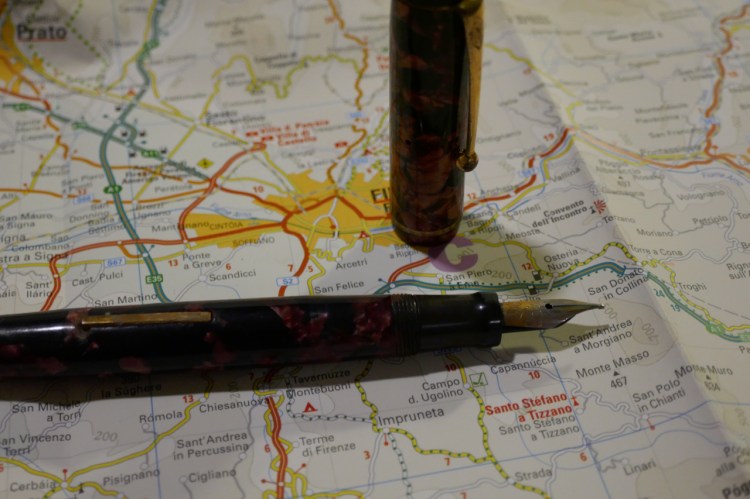
Waterman, bought for the crazy look and the superflex nib. Notice how the nib looks dented.
History – tell friends and family that you’re into fountain pens, and you’ll likely be inundated with old pens that they’ve found in the back of desk drawers. Most of them will be ruined, but you may get grandpa’s Parker 51, or grandma’s Esterbrook nurse pen, you never know. If it’s something from the family, I recommend investing in having it professionally repaired and restored if the history aspect interests you. Otherwise, this category of purchase requires dedicated research. I’d check the Fountain Pen Network, and go on from there. If you like to know that your pen had a past, skip stickered pens and go for personalized ones and you’ll also save a lot of money.
Quirkiness – this is the most fun category. Go to a pen show or vendor and ask if they’ve got anything strange. A pen with a weird body design/colour. A pen with a strange filling mechanism. Something wild engineering attempt to make the pen leak proof. The prices here can vary a lot, depending on whether the pen works or not, and if you plan on restoring one of these and they have a strange nib or filling mechanism take into account that it will add a lot to the price, and not every restorer will take the job. I wouldn’t start with one of those.
Collectable Value– don’t. If you really, really want to, go to the relevant Fountain Pen Network forum and check what everybody’s wild about. Don’t go by what eBay sellers call “rare,” and remember that not everything that’s rare is desirable.
One of these is a user grade black Parker 51, and the other is a plum Parker 51. Would you pay well over 4 times the price of one for the other?
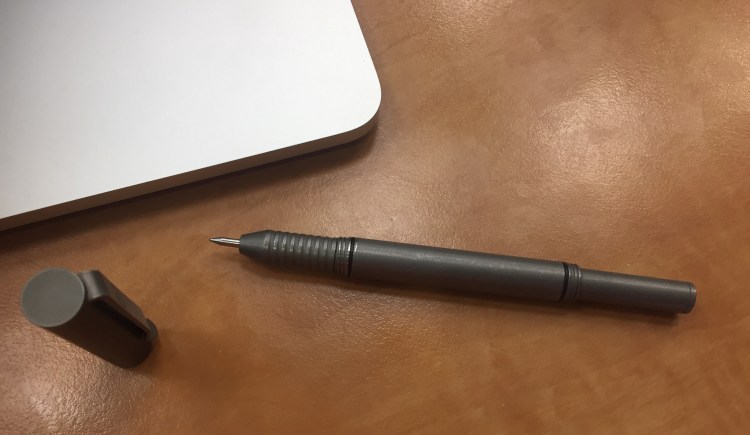
While the original Ti Arto is my favourite machined pen, the newer Ti Arto EDC comes in at a close second. Like its older BIGiDESIGN brother, the Ti Arto EDC is a machined titanium pen which can accept hundreds of different refills with no need for hacks or spacers and with no tip wiggle. Unlike the Ti Arto it comes in three different finishes, accepts many more refills, and can be adjusted in length.
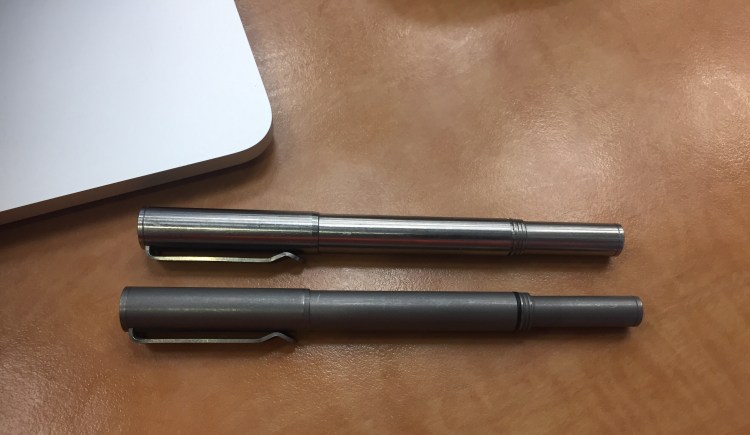
The Ti Arto EDC looks a lot like a slightly slimmer version of the Ti Arto, with a bigger step down in the end section, and almost no gap between the section and the body.
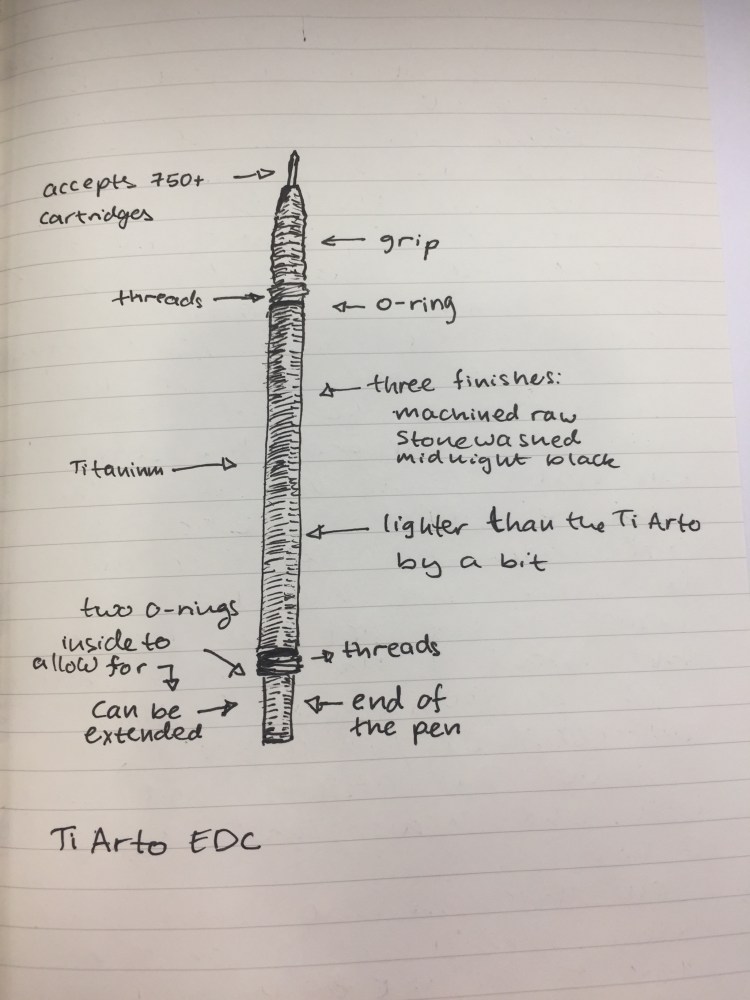
Those looks are a little deceiving, because this the Ti Arto EDC has a completely different build. The end of the pen can be extended or retracted, unlike the Ti Arto, where it is static. In the Ti Arto EDC the end of the pen is also what you unscrew to change refills, unlike the Ti Arto, where the grip unscrews. If you assume that they’re the same, as on a cursory glance it looks like the Ti Arto EDC’s grip section unscrews (and it really, really doesn’t).
The body of the Ti Arto EDC is slightly slimmer, and the entire pen is slightly lighter than the Ti Arto. It comes in a machined raw finish (like the Ti Arto), in a stonewashed finish (which you can see in the pictures) and in a midnight black finish (which you can see on my Ti Click EDC). Of the three, the stonewashed finish has the best grip and feel, and it also shows wear and tear the best.
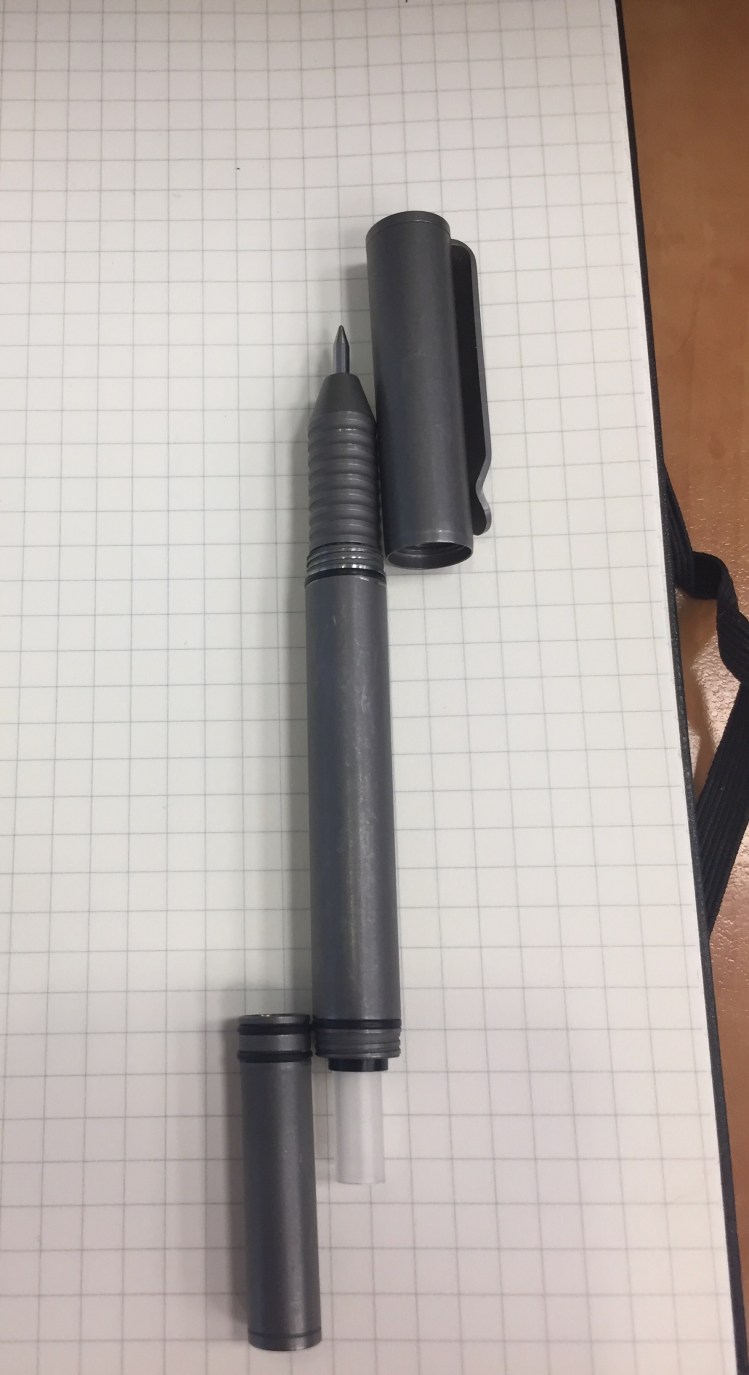
The trick with the extendable end section is where the cleverness of this pen lies, and that’s what allows you to use more refill types in this pen, and to extend or compress this pen’s length (to the limits of the refill size). The two o-rings make the end section action super smooth, and the same dual thread design allows you to cap and post this pen super securely. Nothing on this pen is going anywhere without your permission.
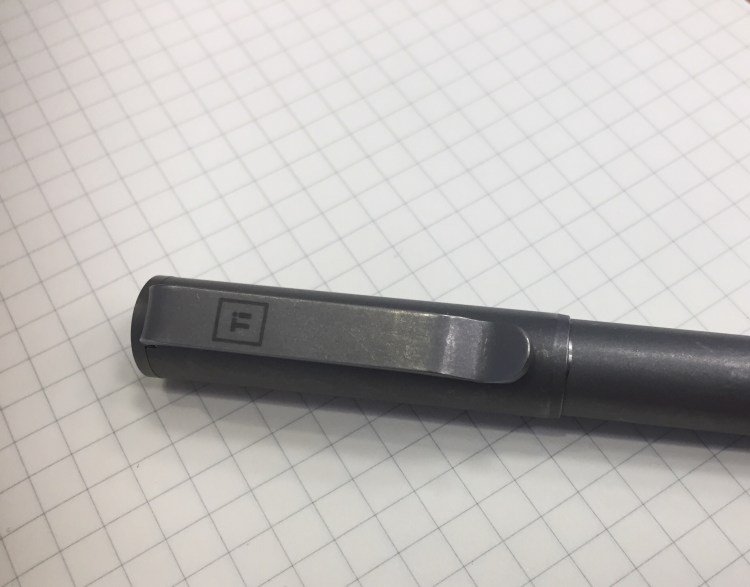
The Ti logo, elegant and understated, is the only branding on this pen. You can see how substantial the clip is and how the pen wear in the photo above. It’s like an old pair of jeans, so the stonewashed name for this finish is totally appropriate.
Fully extended, the Ti Arto EDC is the same length of the Ti Arto. However, depending on the refill you use, this pen can get pretty tiny.
I use the Uni-ball UMR-85N refill in this pen, and this is as far as it will contract. If you use a Parker or Schmidt refill the end section can be screwed in almost all the way. However, even partially extended the Ti Arto EDC is a more pocketable pen than its predecessor.
So why do I prefer the Ti Arto more? For longer writing sessions the Ti Arto’s wider girth makes it more comfortable to use than the Ti Arto EDC, although the difference is minor. The Ti Arto is also slightly less ungainly than the Ti Arto EDC, having a more streamlined design, with no step down. I don’t mind the Ti Arto’s gap between the grip and the pen body, and I don’t need a pen that accepts more refills than the Ti Arto. As you may have noticed by now, the choice between the Arto and the Arto EDC is likely going be one of personal taste and preference. Either pen is an excellent choice for a machined pen, an EDC pen, or a titanium pen.












 Writing at Large