Phoenix Garden Take 2
I finished the spread that I started here, drawing another view of the Phoenix Garden in London’s West End.
A blog about writing, sketching, running and other things
I finished the spread that I started here, drawing another view of the Phoenix Garden in London’s West End.
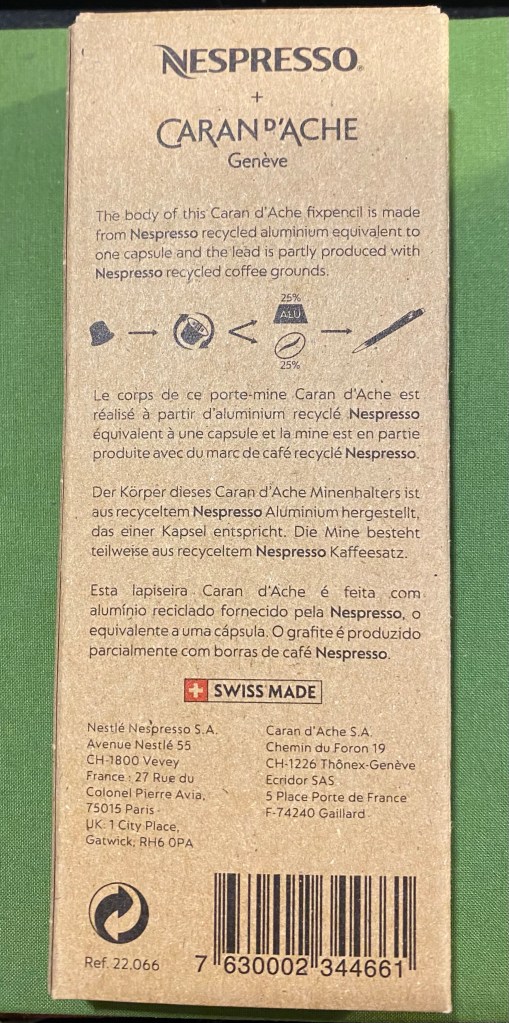
Caran d’Ache’s Fixpencil is their legendary clutch pencil offering. While the classic Fixpencil has a plastic body, the Fixpencil 22 is made of aluminum, giving it both an added weight and a more luxurious finish. The Nespresso Fixpencil 22 is also made of aluminum, hence the 22 in the name, but it’s aluminum body is partially made from a recycled Nespresso capsule, and it comes with a lead that’s partially produced from recycled coffee grounds. Just like the previous Caran d’Ache x Nespresso 849 pens, this brand collaboration is all about recycling with class.

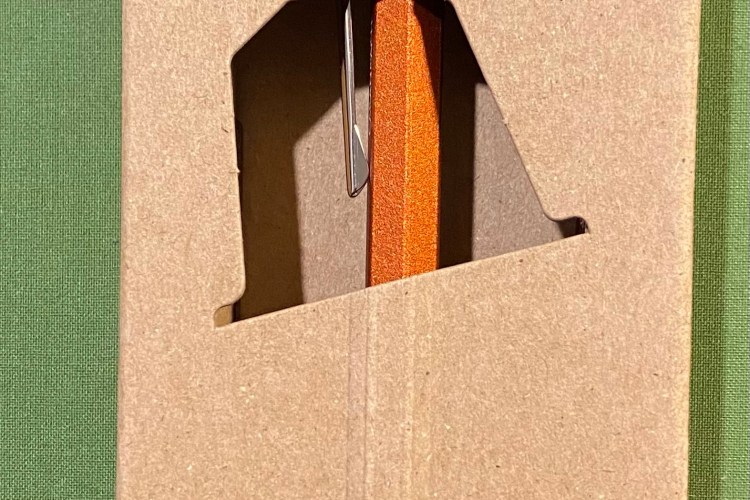
The box that the Nespresso Fixpencil arrives in is similar to its 849 counterparts: it’s made of 100% recycled cardboard and there’s a Nespresso capsule shaped cutout in the box that shows off the colour and texture of the Fixpencil. Clever embossing and tasteful design and branding make this a superb gift to give to someone who enjoys using pencils (with a caveat that I’ll get to later). The box is the most recycled thing about the product (being 100% recycled), but at least Caran d’Ache is honest and transparent about the quantity of recycled materials inside the fixpencil and lead: 25% of each, respectively. So there is a fair bit of “greenwashing” going on here.
The clever design of the box continues once you open it. It really shows off the beauty of the Fixpencil design and just how vibrant and warm the orange “ochre” colour is. It glows. You can also see the subtle texture the Fixpencil has.
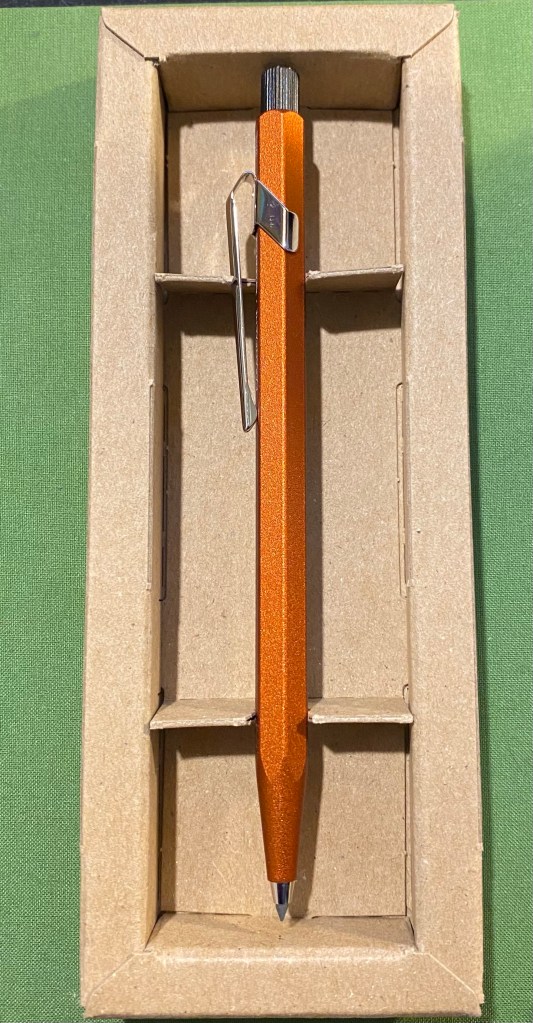
Here is my first, albeit minor, quibble with this product: it’s not ochre. It’s reddish orange. It’s mandarin. It’s anything but the yellowish brown that ochre brings to mind. I have no idea why it was so poorly named.
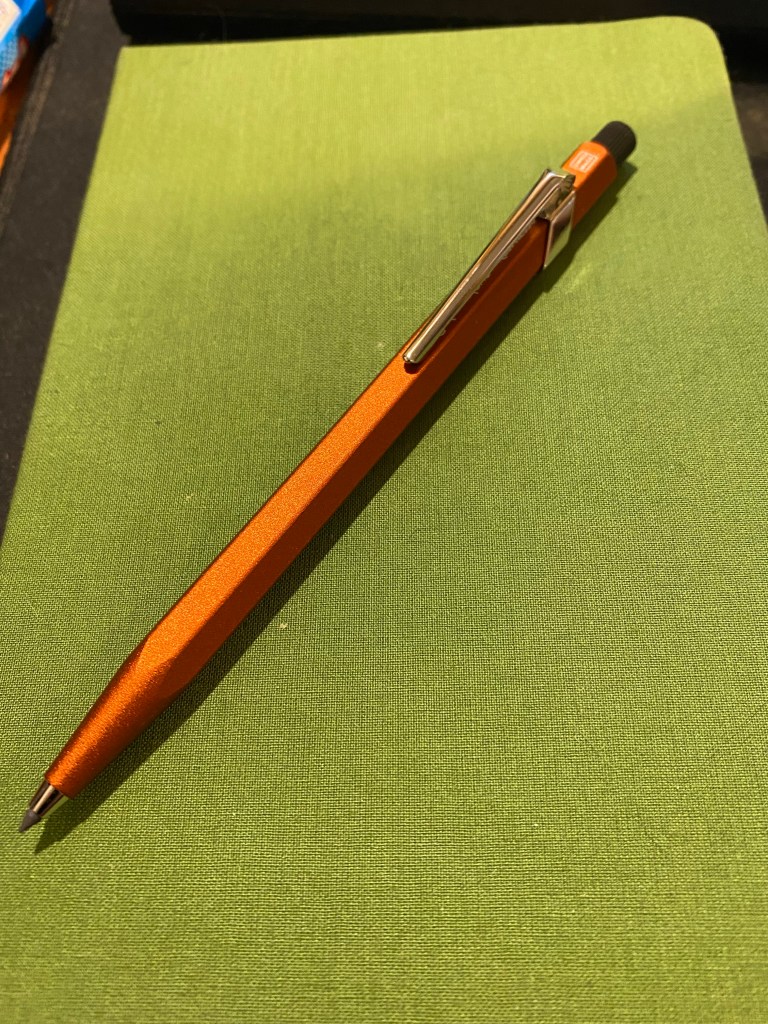
Caran d’Ache 849s and Fixpencils normally have very little branding on them. The Caran d’Ache brand is tucked discreetly under the clip and generally all that you see is the “Swiss made” with a white border around it just above the clip. The Nespresso collaborations are different in that Caran d’Ache adds an additional imprint to the pen/pencil: “A Recycling Story is in Your Hands”.

Of course the normal logos are where they usually are, with the addition of the Nespresso logo to the Caran d’Ache logo under the clip.
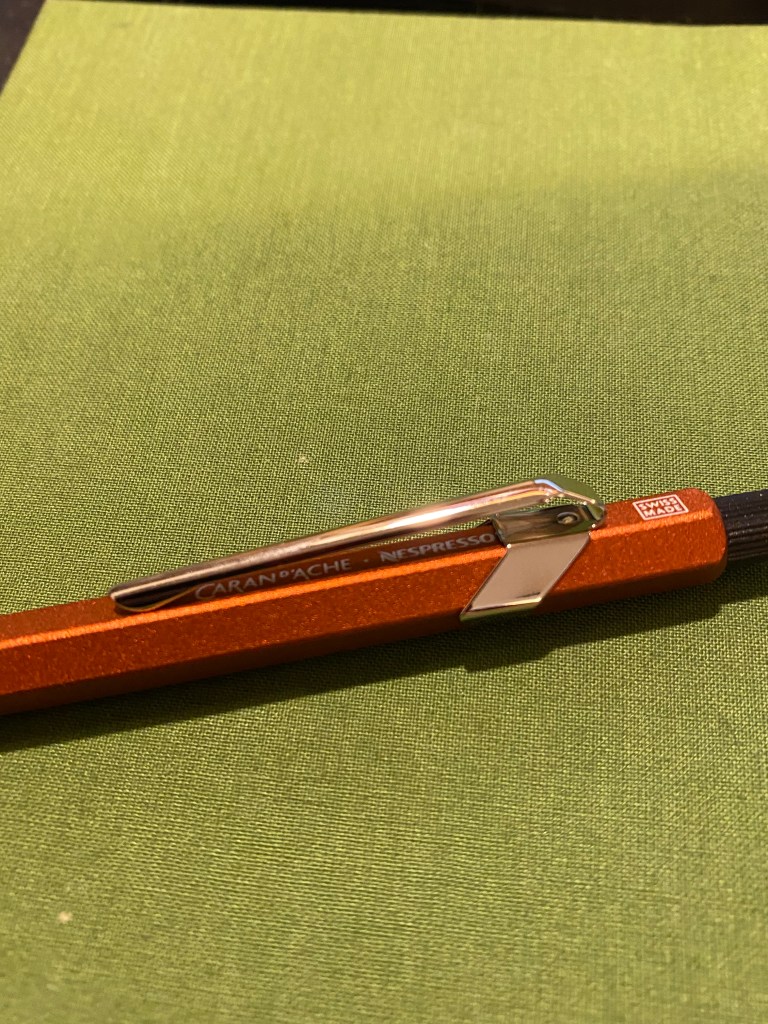
The Fixpencil is a joy to use because of its form factor, which is just like the 849, and the wonderful finish on the pencil body, which adds subtle texture that makes the Fixpencil fun and easy to hold.
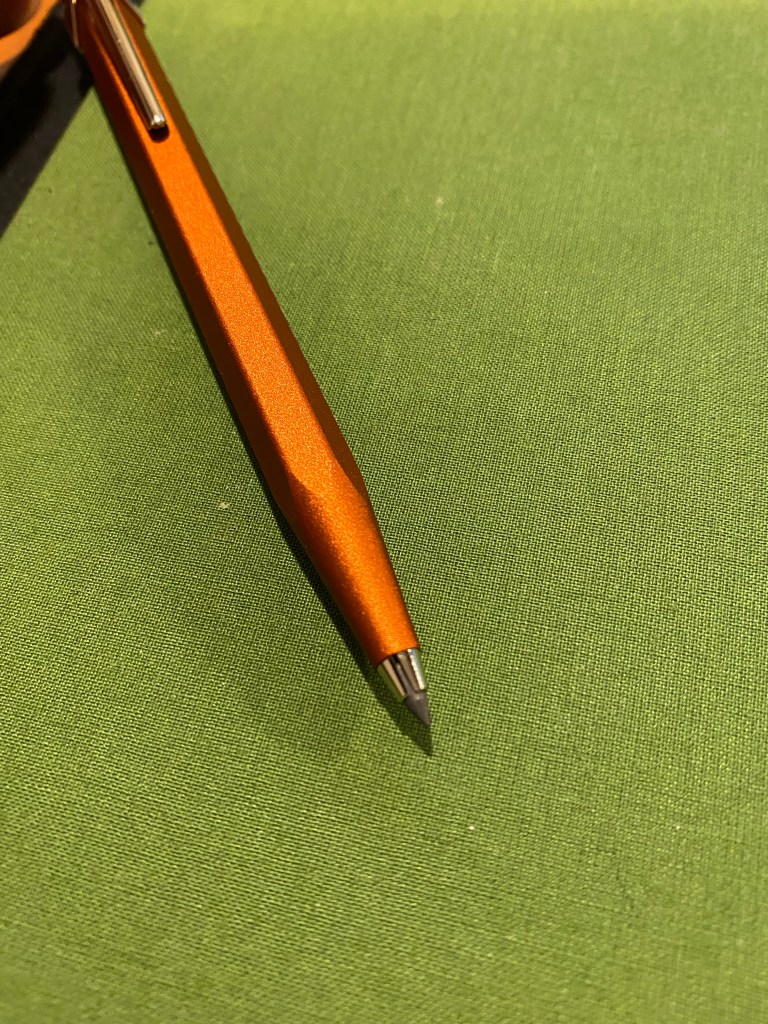
And now we come to the worst part of this collaboration: the pencil lead. The Nespresso Fixpencil doesn’t come with the normal fabulous Caran d’Ache pencil leads. Instead it comes with a pencil lead that has 25% coffee grounds in it and is supposedly a B grade lead. It’s terrible. The lead is scratchy, so light that it writes like an F or even an H grade lead, and hard to erase. After testing in on my standard pencil testing Baron Fig notebook, I threw it out and replaced it with a standard 2B lead from my regular stash. Not recycled, but actually usable.
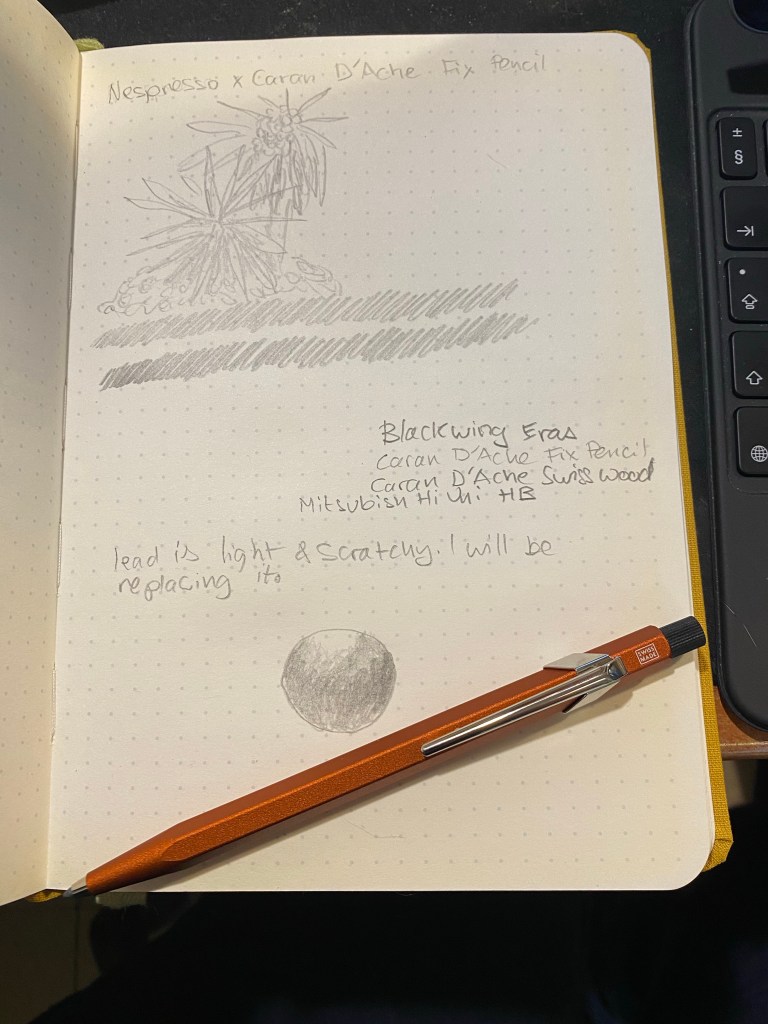
Here’s a close up where you can see in the word “scratchy” where the lead actually dug into the paper.
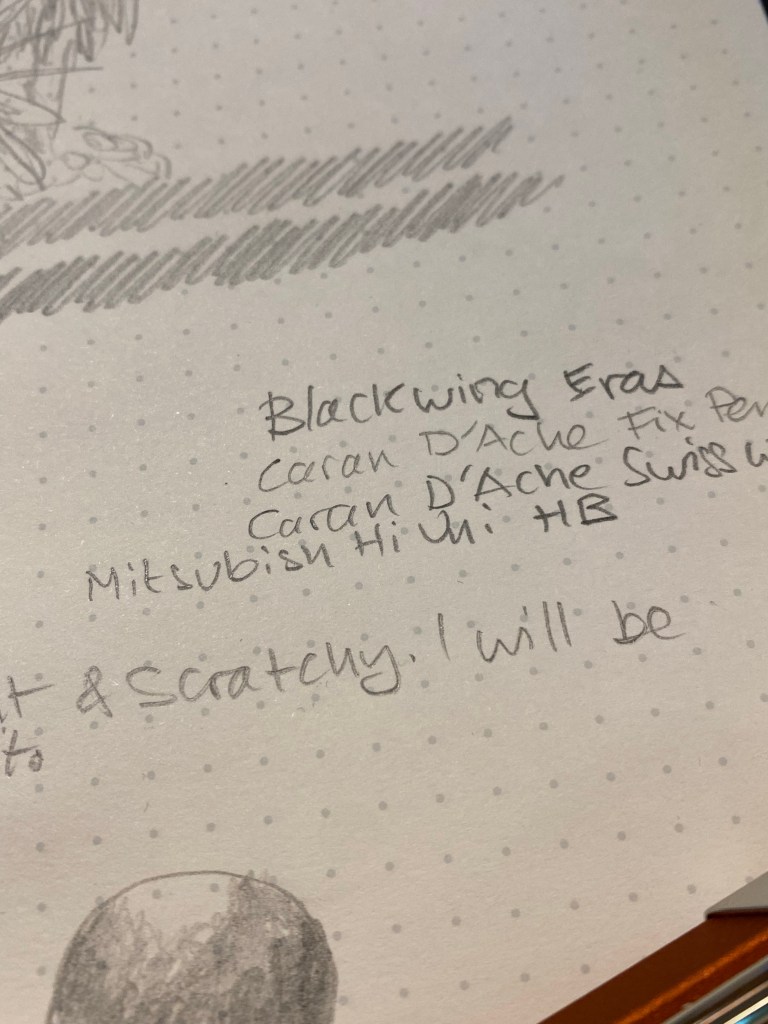
The Caran d’Ache Nespresso Fixpencil is a joy to use and will make for a fabulous gift once you pair it with a box of good quality B or 2B pencil leads. It’s a beautiful take on an already great product that I just wish also included the normal Caran d’Ache lead lineup.
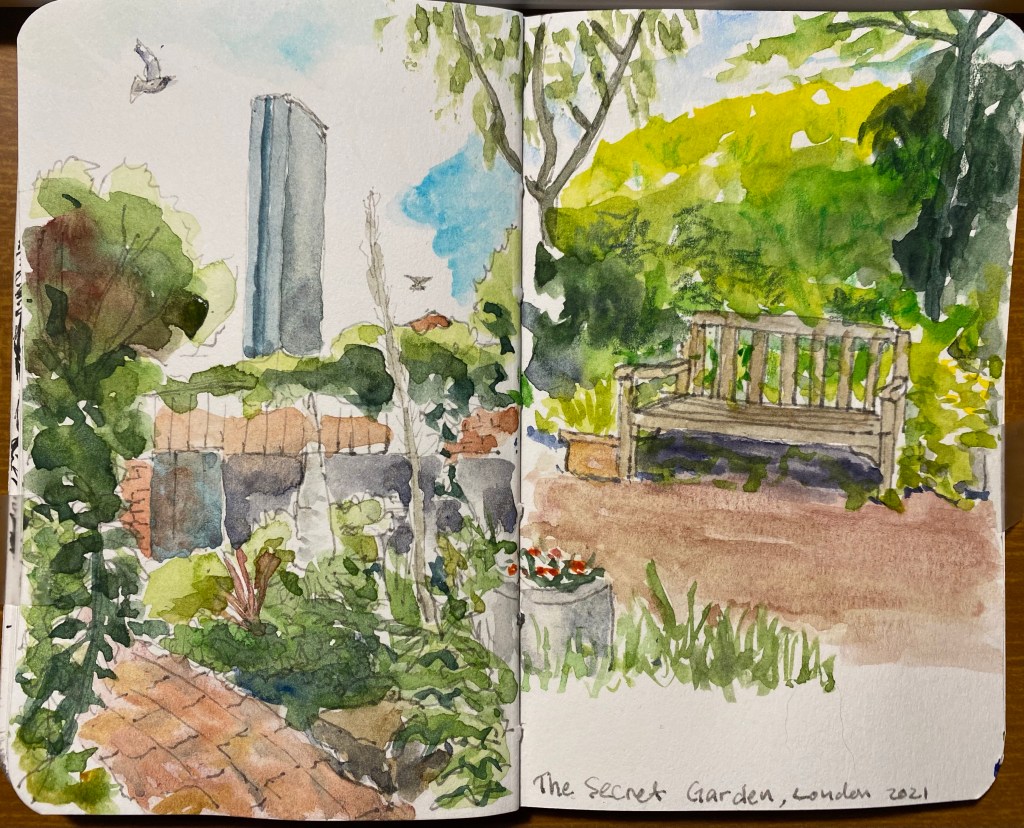
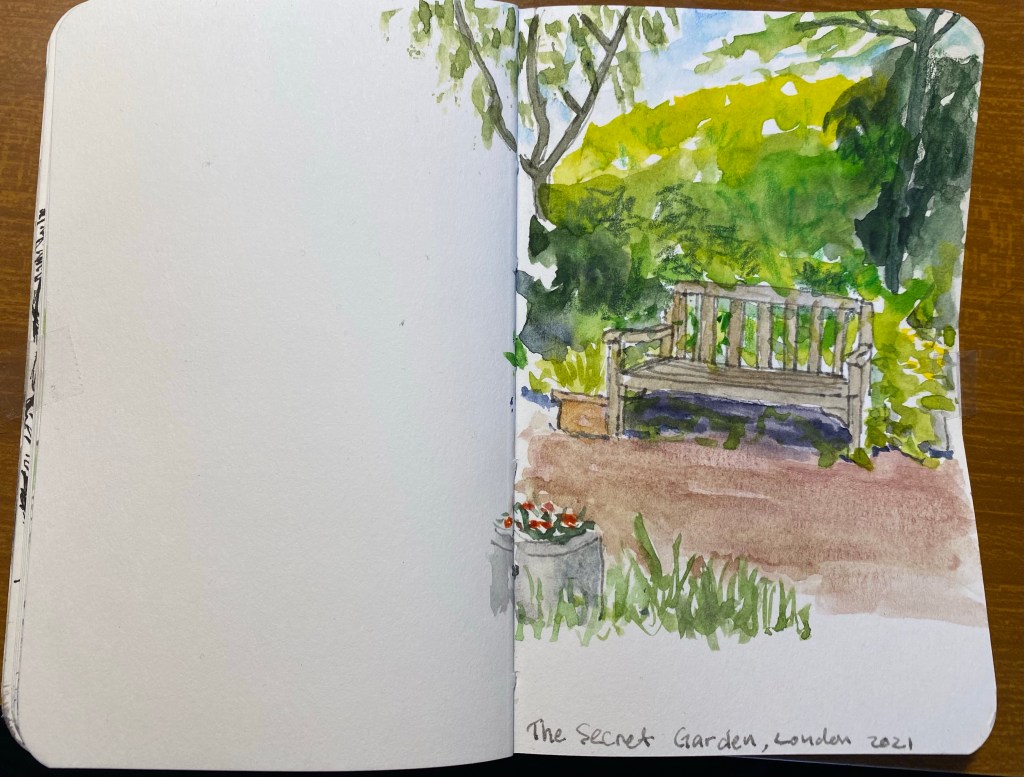
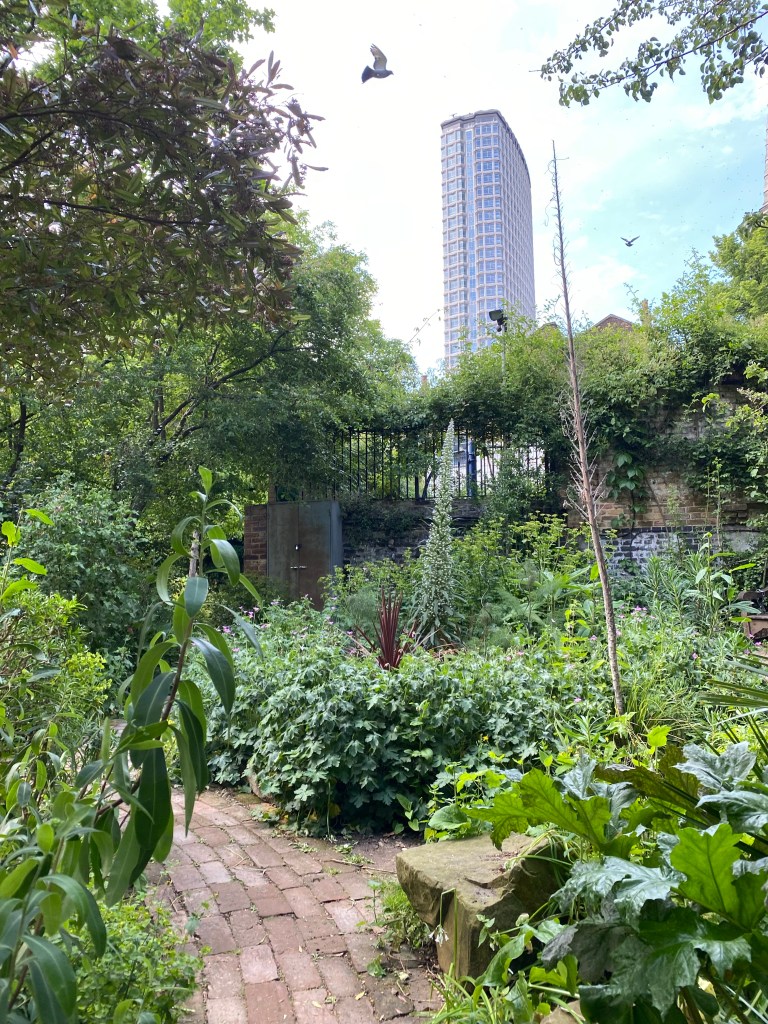
In the middle of London’s West End there’s a beautiful secret garden, the Phoenix Garden. Ever since I accidentally discovered it, it has been my number one favourite place in London. There’s something about the green and the peaceful quiet in the middle of one of London’s busiest areas that is mesmerizing. During the rough parts of my latest hospitalizations I shut my eyes and transported myself to my favourite bench there.
So I decided to create a very quick sketch of one of the benches there, and try to work on my plant textures. This is clearly something that I still need to work on, but it’s good to know where I started.
Here’s a photo of this magical place:
When I visited London in June Greenwich ended up being one of the biggest disappointments of the trip. The place was hard hit by the pandemic, and everything that made it so special to me seemed to have been wiped out because of it. There was no vintage and antique market next to the movie theatre. There were no grandmas selling baked goods for charity in the movie theatre foyer. Nauticalia, the maritime themed shop on zero longitude, had shut down. A good third of the stores around the Greenwich Market were permanently closed, and there was a general dismal aura around the place. The Maritime Museum required pre-booking an entrance, and so not many people visited it. Greenwich is a place that needs tourists to thrive, and with a pandemic and pandemic restrictions it felt deflated, a shadow of its former, sparkling self.
What still is vibrant and lovely is the place itself, and to remind myself of its potential and of my potential to visit it again someday in better times I created a quick sketch of the road leading to the Cutty Sark.
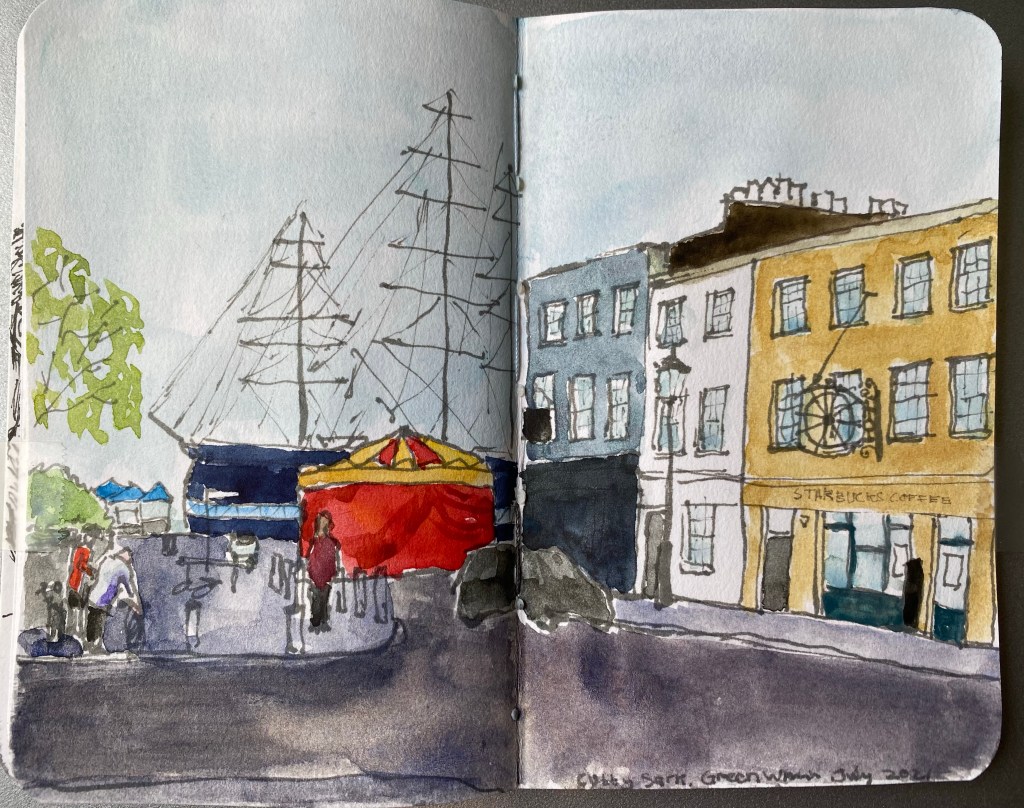
Schminke and Daniel Smith watercolours, Noodler’s Lexington Grey ink, Stillman and Birn Pocket Alpha.

My brush got frazzled on the way which made it tough to use. I fixed it later that night with some hot water.
London is weird right now, with Covid-19 measures still in effect and very few tourists around. A lot of places are closed or have closed down. I still love the city, though.
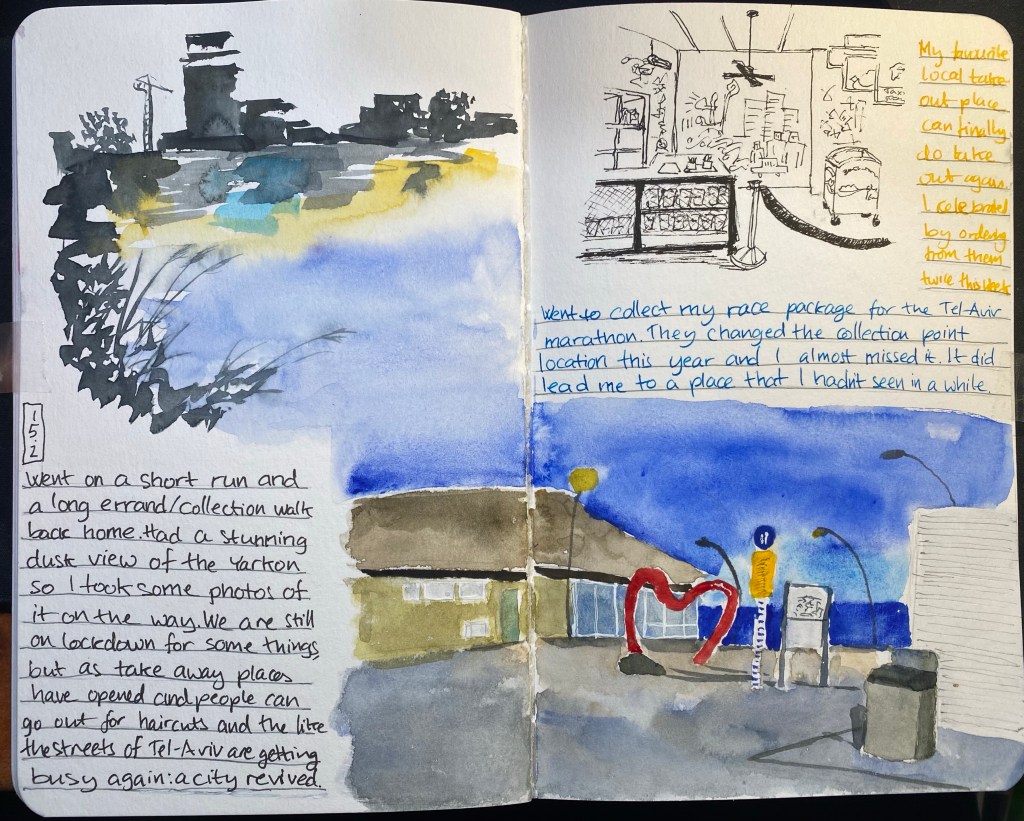
I really like how the two watercolours on this page “melt” together, and in general this is one of my favourite sketchbook spreads created as part of the Sketchbook Design course.
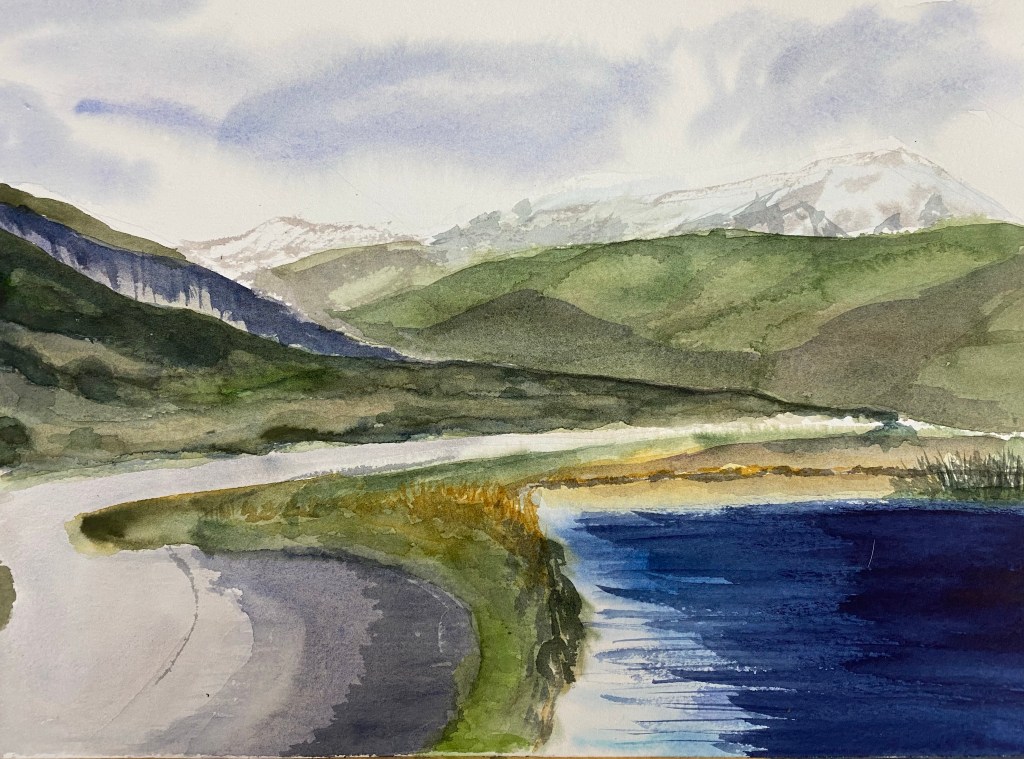
First “serious” watercolour in a while, and another test for my new palette.
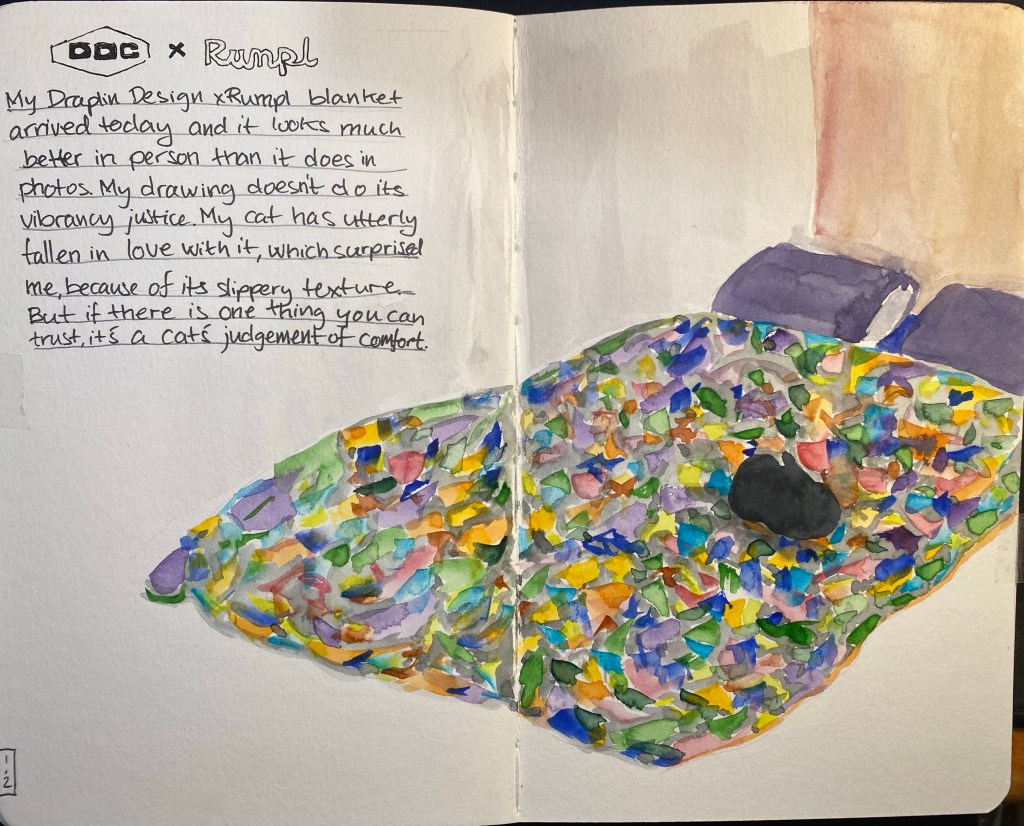
Another page out of my sketchbook. I’ve had the DDC Rumpl blanket for over two months and it’s become a house favourite. The only thing I regret is buying only one.
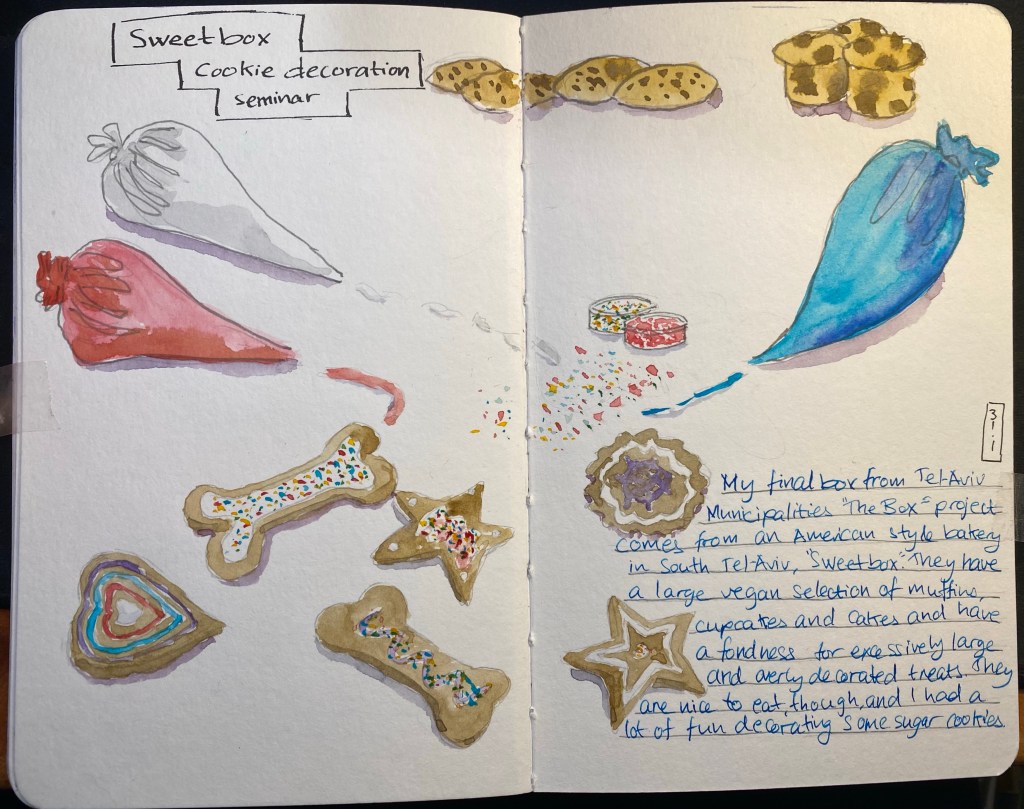
Catching up on some more sketchbook pages from my Sketchbook Design course as I’m working on giving my palette the largest overhaul it’s had since I started painting with watercolours. This page was inspired by the final box I got from the Tel Aviv muncipality’s “The Box” project, created to support local businesses during the lockdown.
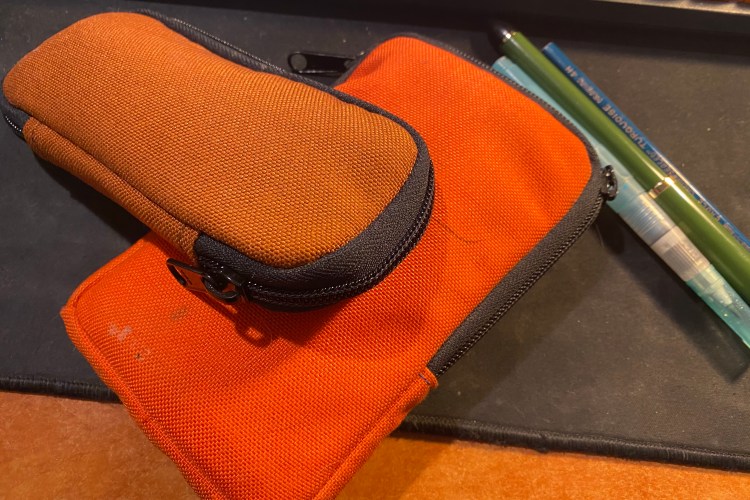
As I’ve recently overhauled my sketching tools and have grown to like my new setup, I’ve decided to document my current sketching kit, as a reference to myself and others.

First up are my pen and pencil cases, the Nock Co Sinclair and Tallulah. I used to use the Sinclair as my main sketching case because:

The Sinclair is no longer my main case and I now use it to store a more extensive selection of sketching tools (mostly Faber Castell Pitt brush pens). The reason is that it can hold so many pens that I was tempted to fill it to the brim and bring all those pens with me. As I decided that to gain speed I needed to pair down my sketching tools and expand my watercolour palette, I replaced the Sinclair with the much slimmer Tallulah.
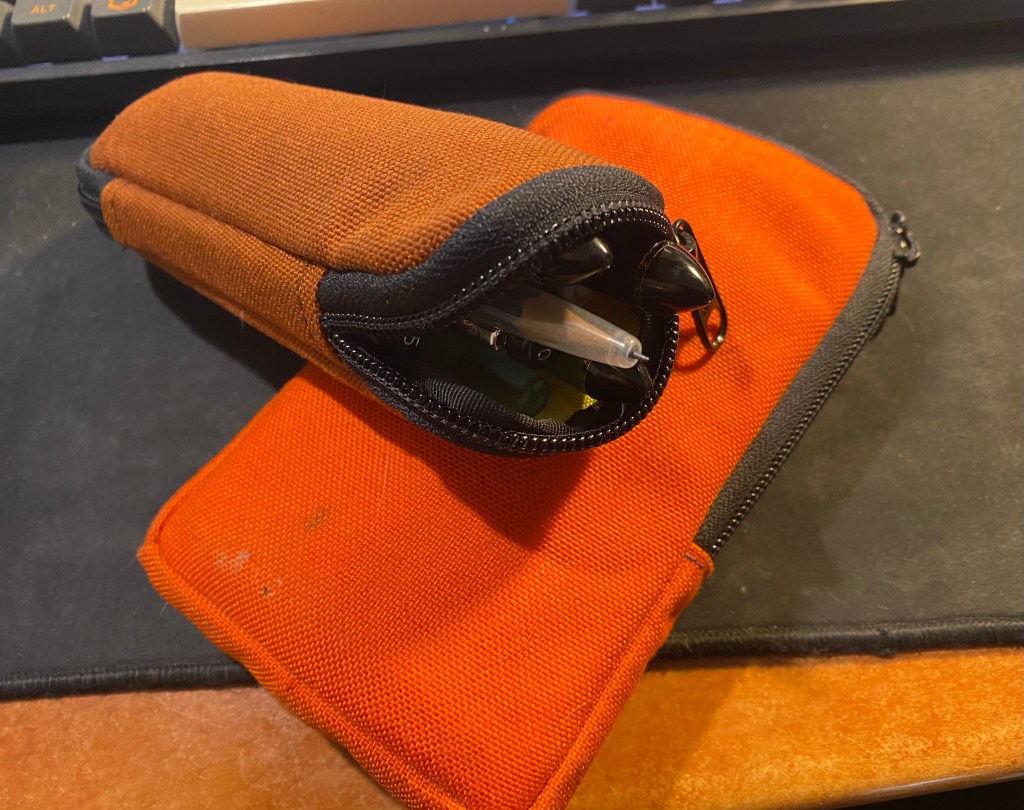
The Tallulah is marketed as a two pen case. Oh, Brad. I have four Staedtler Fineliners, a Uni-ball Signo Broad white gel ink pen, a woodcased pencil, three (!) Sailor Fude fountain pens and a waterbrush. If the Tallulah had two zippers instead of one I could have closed the case. As it is, I keep it open and propped up in my sketching bag, as sort of a pen organizer. If I need the Tallulah to close, I can pare down my pens to one or two Sailor Fude pens, lose the waterbrush (if I keep two Sailor Fude’s in my kit), and replace the woodcased pencil with a mechanical one, or lose the pencil entirely as I generally work directly in pen and watercolour these days.
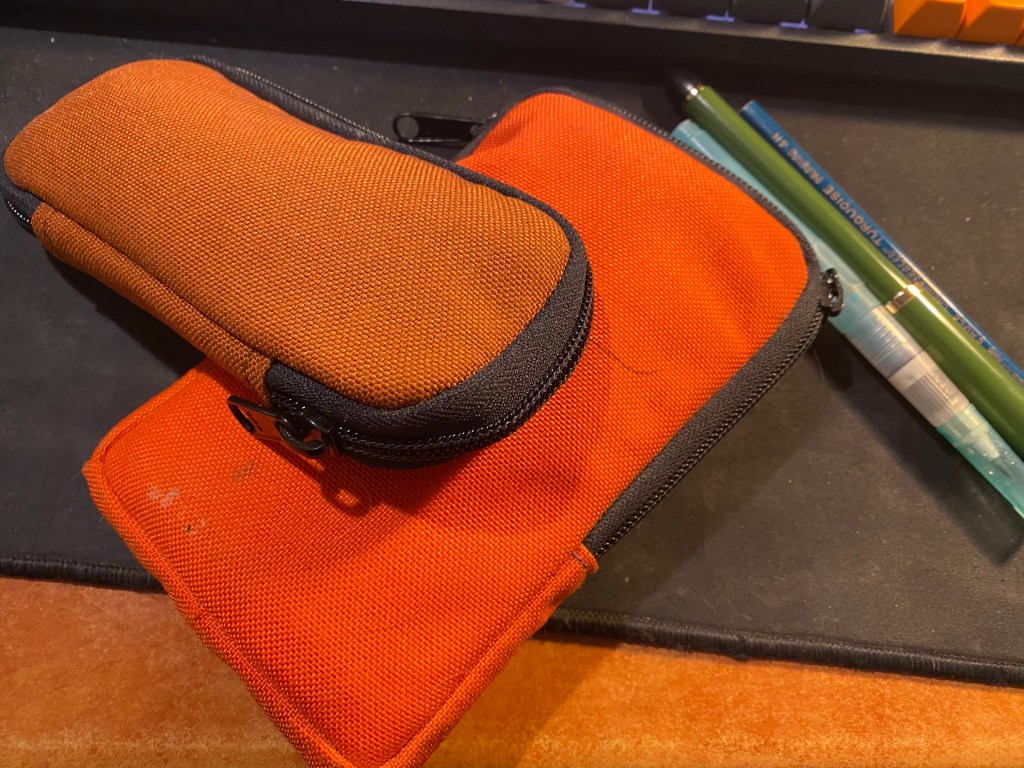
The Tallulah is so slim and light that it really works with my low profile sketch kit. It’s actually the anchor around which I built my new kit, with the other two being the Stillman and Birn Alpha sketchbook that I’m using, and my Schmincke watercolour tin.
If you are an artist looking for a storage solution for your pens and pencils, I highly recommend giving the Nock Co Sinclair and Tallulah a try. They are handsome workhorses that can take a beating (especially the zippers) and can hold many more pens than you would normally imagine.
 Writing at Large