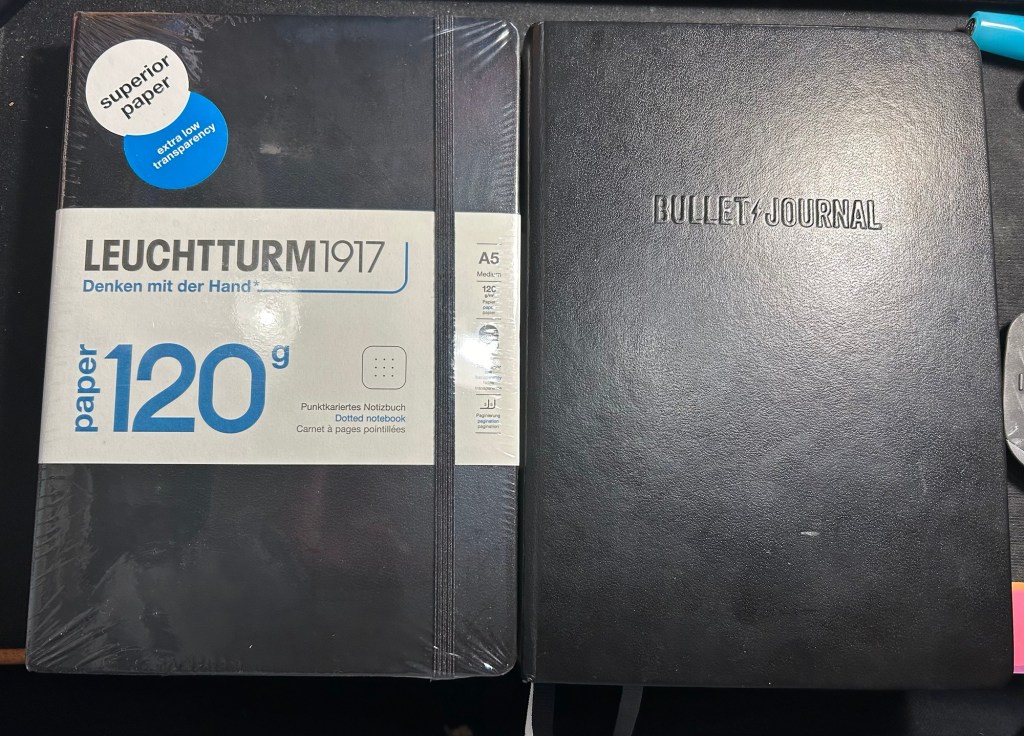
Leuchtturm1917 A5 dot grid comparison: standard, 120 gsm, Bullet Journal

A few months ago I started using the Leuchtturm1917 Bullet Journal – at first as it was intended, but very quickly it turned into a general weekly and quarterly planner for me. As I neared the halfway mark of the notebook I decided to purchase a replacement, but instead of buying another Bullet Journal I purchased a 120gsm dot grid Leuchtturm A5 notebook. The paper was the same in both notebooks, and as I didn’t use any of the Bullet Journal features and the 120gsm notebooks are slightly cheaper, I thought that it would be a good replacement.

While I was still waiting for my 120gsm notebook to arrive, I happened to find a light grey standard (or 80gsm) dot grid A5 Leuchtturm notebook at a local store at a decent price. I purchased it and decided to compare the three notebooks.

The Bullet Journal is the most expensive of the three, but also comes with the most “stuff”. There’s a booklet that explains how to bullet journal, stickers for bullet journaling, a specially formatted front endpaper, a key for bullet journaling, three ribbon bookmarks instead of two, and several pages with dedicated bullet journal appropriate titles (intentions, index, future log). It has the fewest colour options (just three) and features Bullet Journal branding on the front cover and the spine.

The original- Bullet Journal

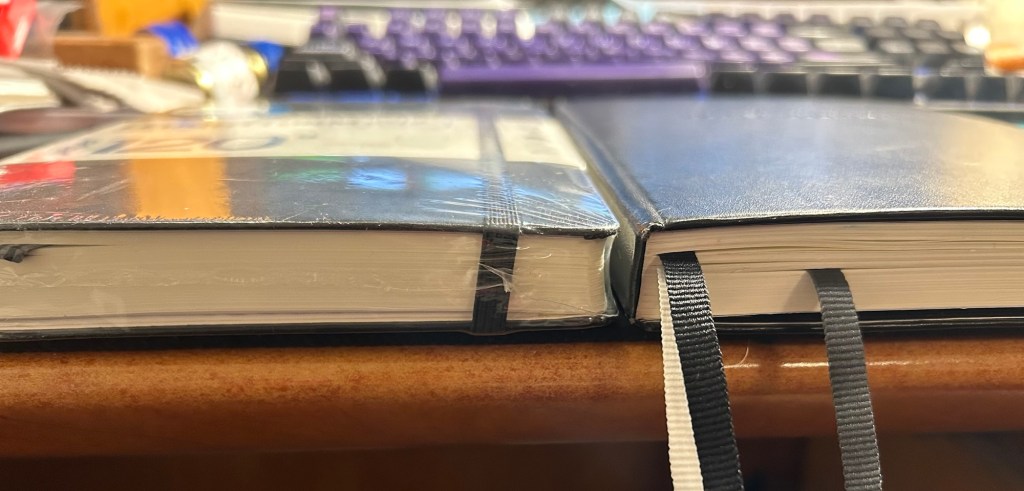
The Leuchtturm 120g notebook has a few more colour options, and is basically a stripped down Bullet Journal edition. In terms of thickness the two notebooks are the same (i.e. very thick notebooks, about twice the thickness of a Moleskine), but the 120g notebook has just two ribbon bookmarks (instead of three), no special endpapers, stickers (beyond the regular ones that come with each Leuchtturm notebook), titled pages, key or booklet. It’s cheaper than the Bullet Journal and has the same paper that the Bullet Journal has.

120gsm on the left, Bullet Journal on the right

Same thickness and form factor:

120gsm on the left, Bullet Journal on the right

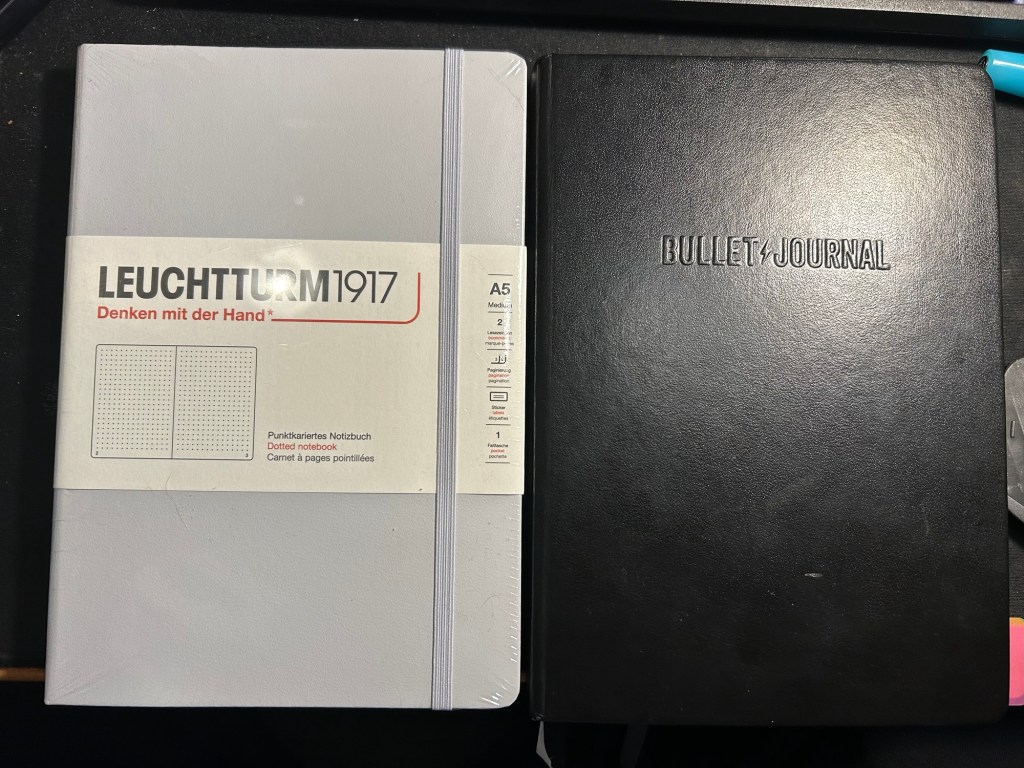
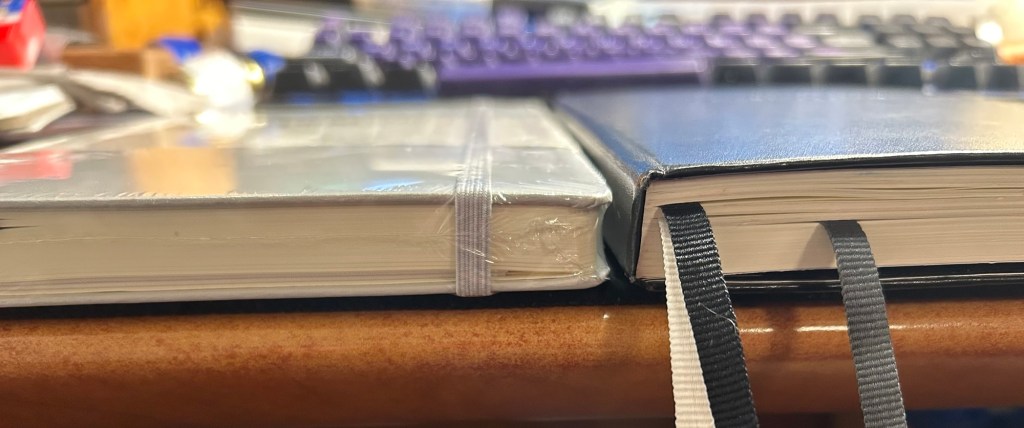
The regular Leuchttuem dot grid (which I’ll refer to as the standard from now on) is 20% thinner than the other two, features 80gsm paper and not 120gsm and like the 120g has two ribbon bookmarks, label stickers for the notebook, and a pocket on the back. It’s also a bit lighter than the two other notebooks.

Standard on the left, Bullet Journal on the right

Where the standard notebook wins in a knockout is page count. The standard has 251 pages, the 120gsm has 203 pages and the Bullet Journal has 205 pages, but several of those pages feature dedicated Bullet Journal titles (Index, Future Log, etc).

Standard on the left, Bullet Journal on the right

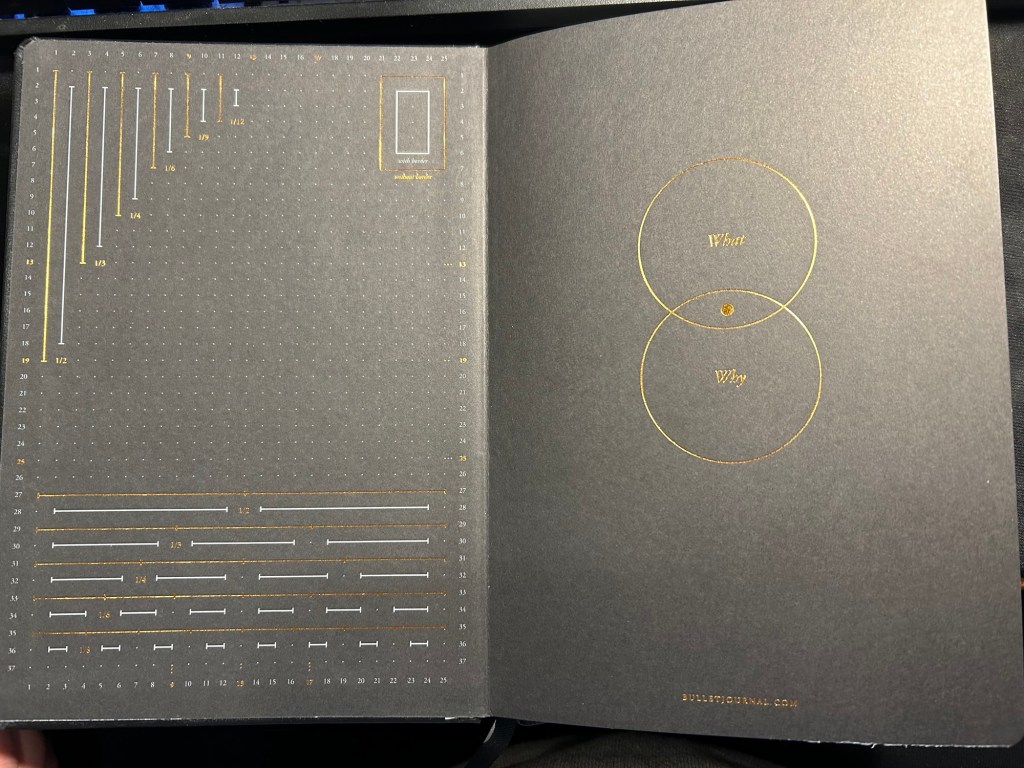
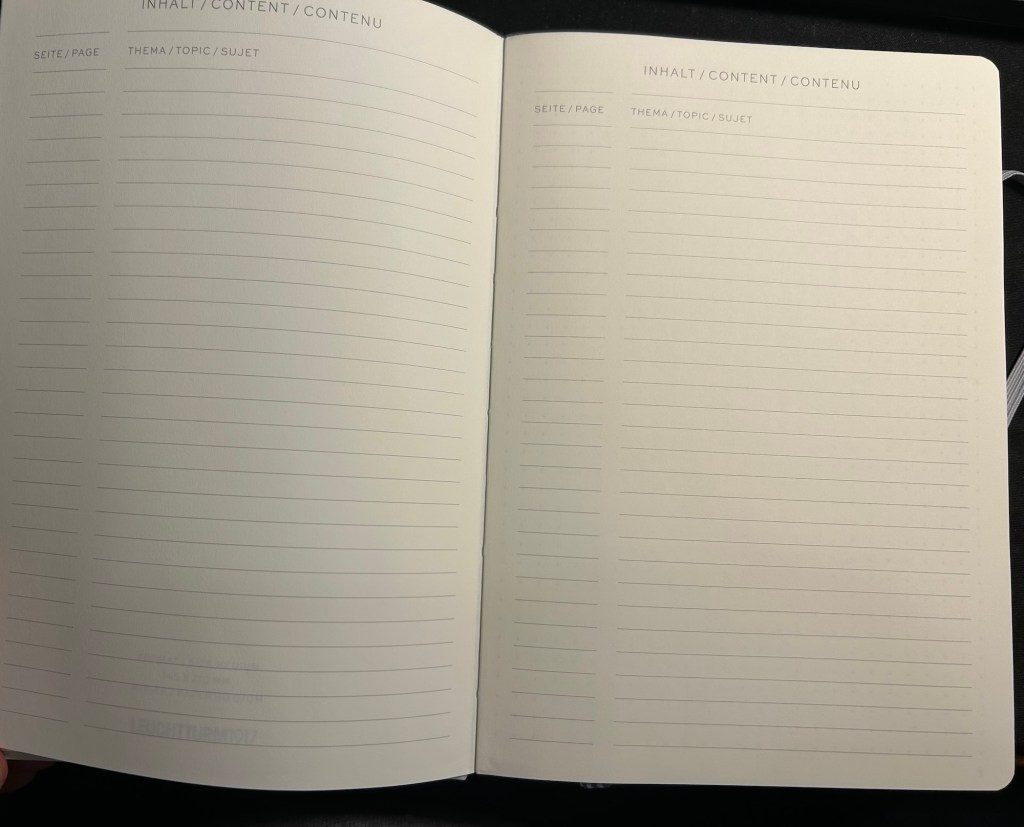
All three notebooks open flat, feature an off white paper, and the last 20 pages are perforated so you can tear them out. The standard and 120gsm contain two lined table of content pages, which the Bullet Journal does not. The Bullet Journal is also the only one to contain special divisions on the paper, which are notated on the front endpaper:

Bullet Journal front endpaper

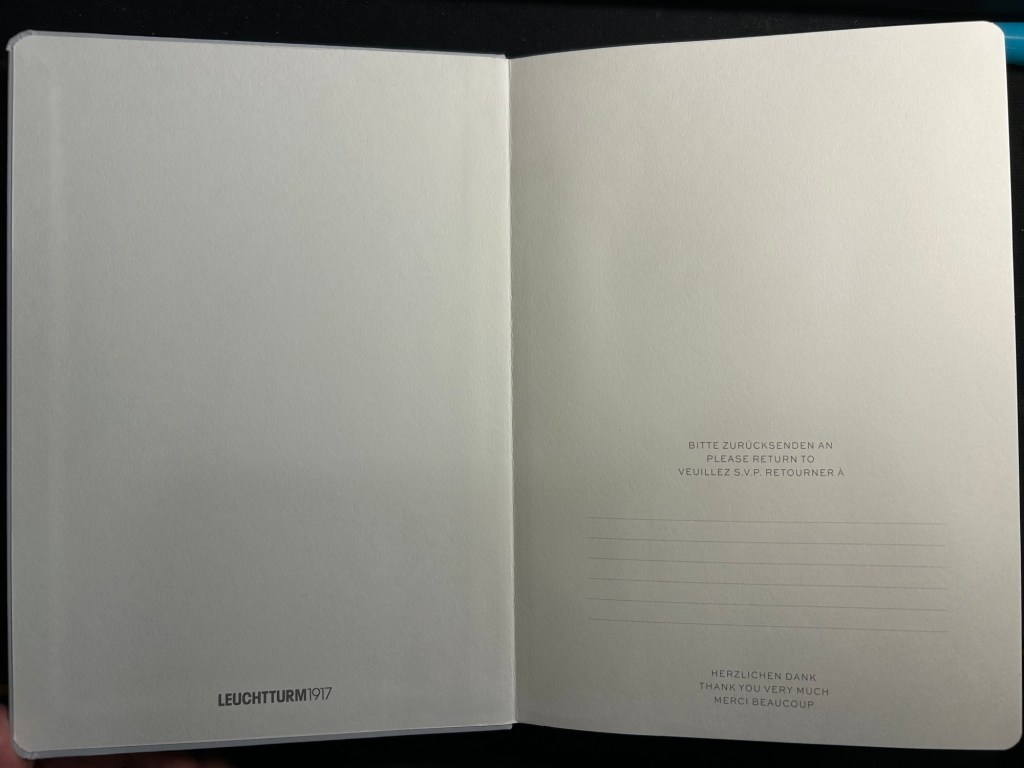
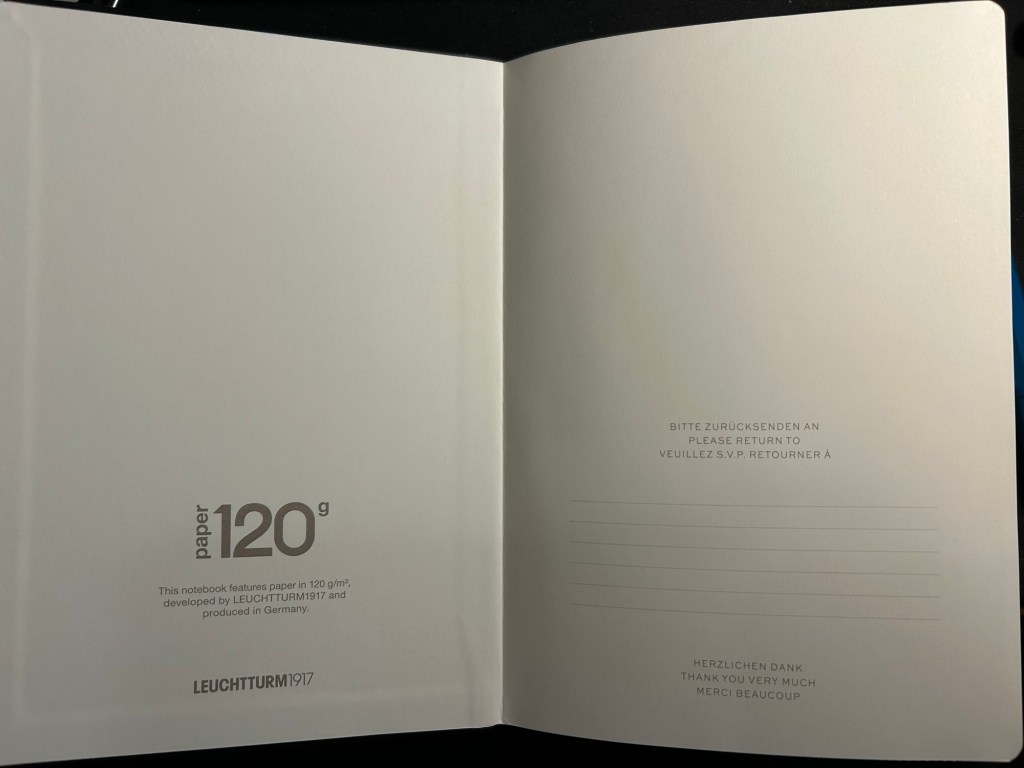
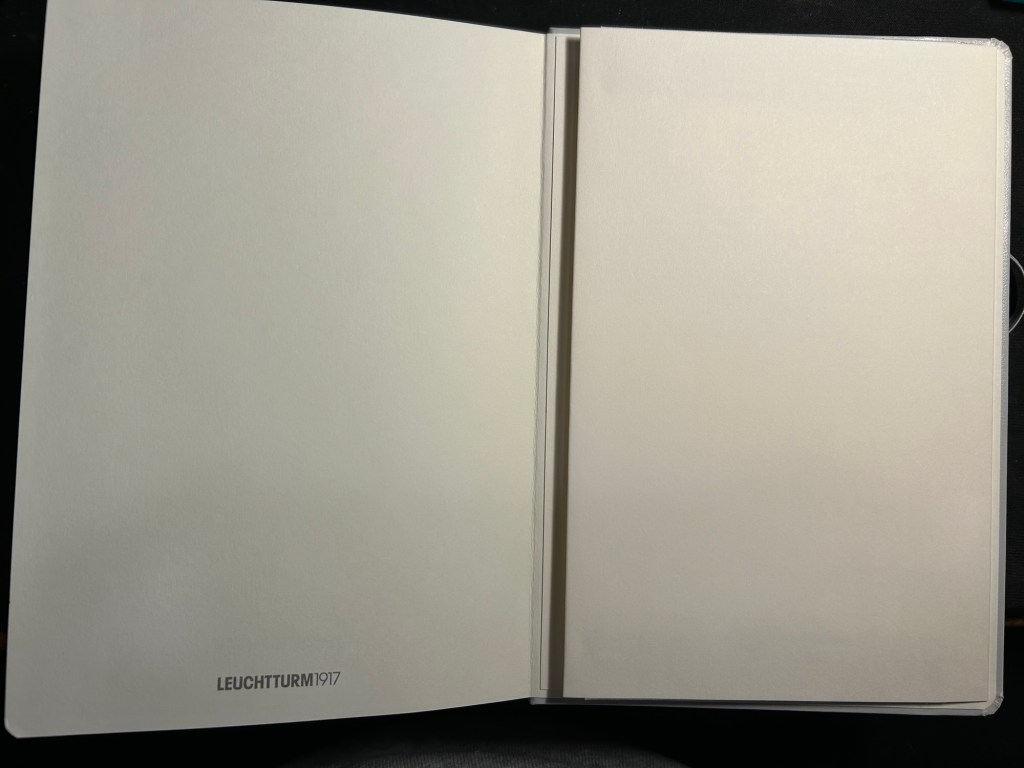
The front endpaper on the standard and the 120gsm look very similar, but the 120gsm has a bit of additional branding:

Standard front endpaper
120gsm front endpaper

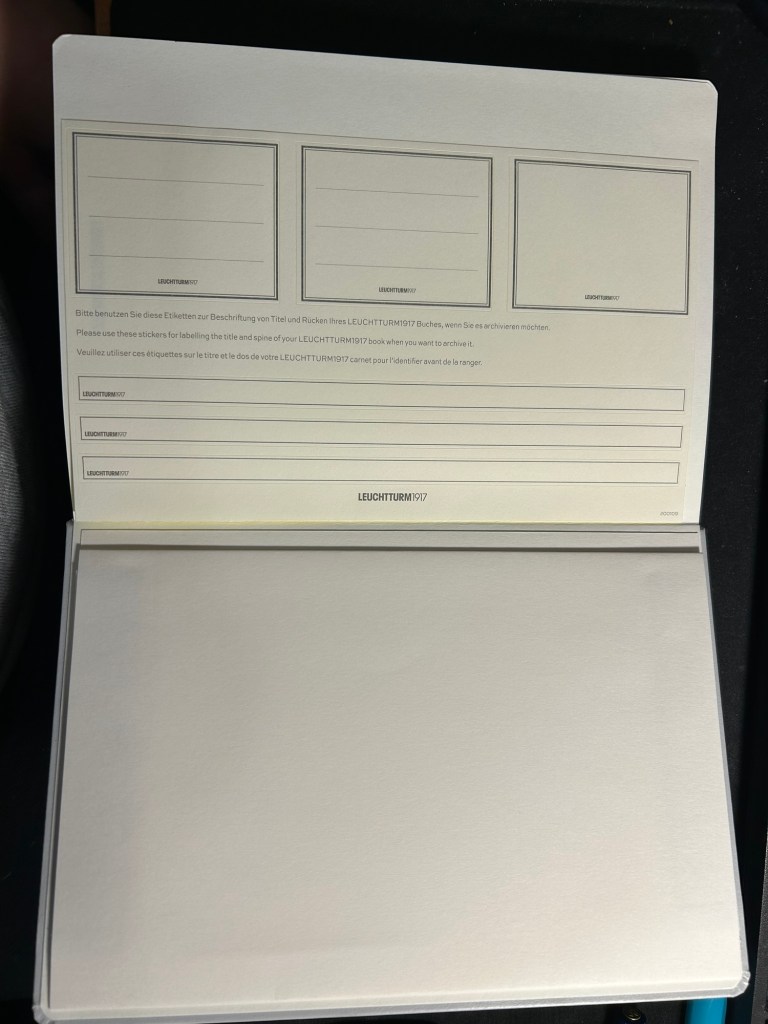
The stickers on the standard and 120gsm are the same, and are meant to be used on the cover and spine, to label the notebook:

Stickers in the Standard and 120gsm

The pockets on all three notebooks look and function pretty much the same.

Back endpapers and pocket in the Standard and 120gsm

The table of contents pages on the standard and 120gsm is useful if you use your notebook for project management or meeting notes, for instance, and want to be able to quickly reference a certain page. The pages are already numbered, so it’s just a matter of building the reference pages in a way that makes sense to you. This doesn’t exist in the Bullet Journal because Leuchtturm is assuming that you’ll be using the official Bullet Journal way of referencing and finding pages.

What Leuchtturm confusingly calls Bookmarks – two index pages in the Standard and 120gsm

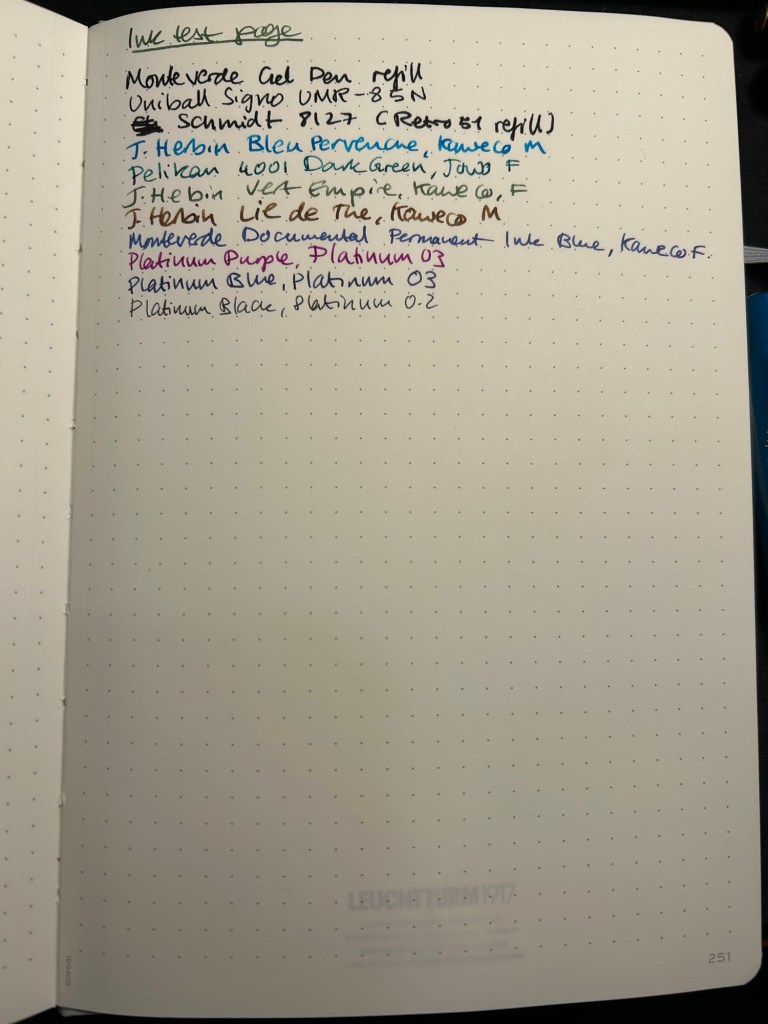
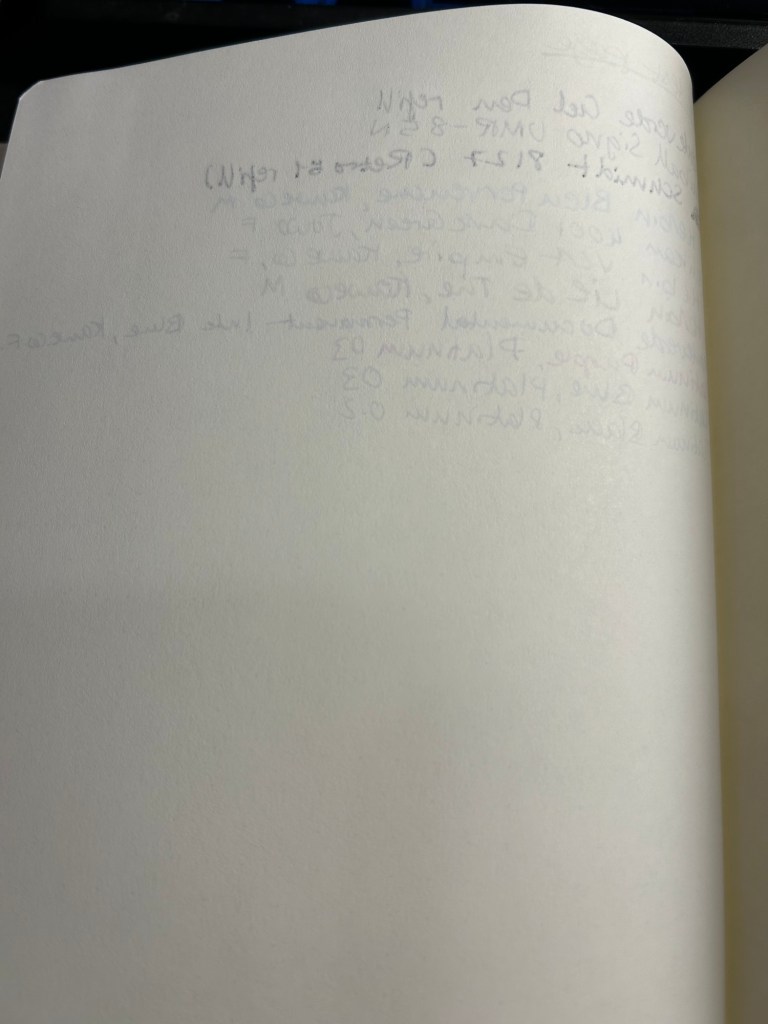
Now for the paper. The dot grid is the same on all three, but the paper in the standard is by far the inferior of the three. The page is practically transparent (you can see the Leuchtturm1917 logo on the back pocket on the bottom of the page) and you will have show through with all kinds of inks, pens and nib sizes, and bleed through with most pens and inks (including wider gel ink pens!):

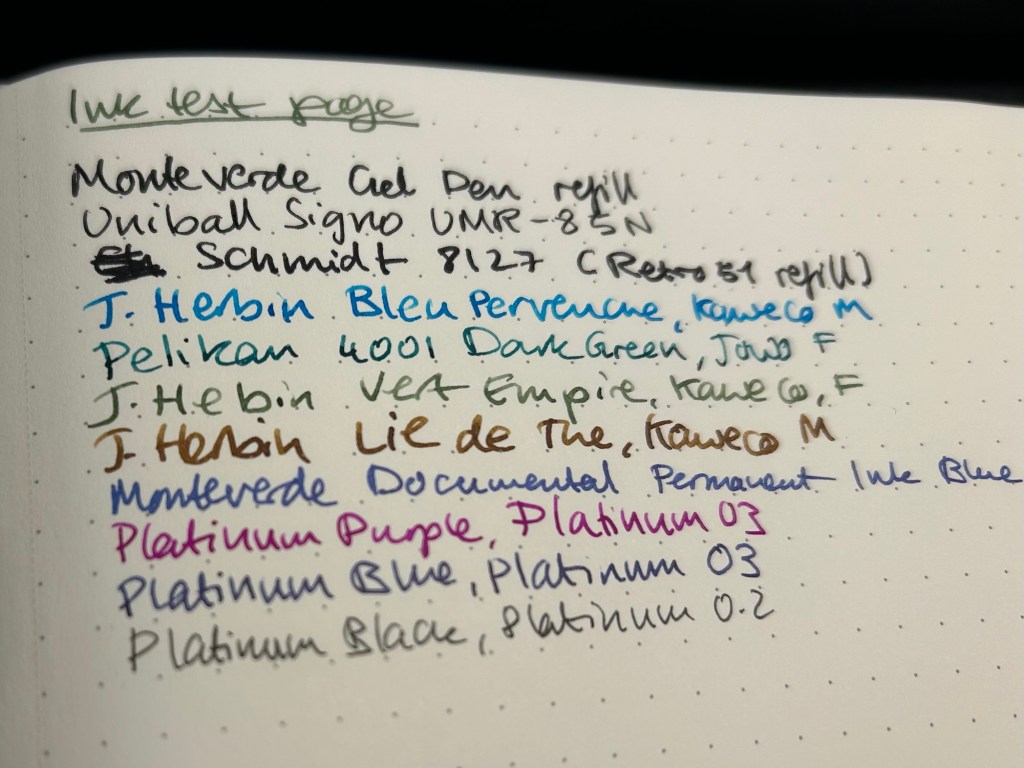
Ink test page for the Standard

This is a notebook that you either need to use with a very specific kind of pen, or be willing to write on only one side of the page (therefore giving up on the price and page number advantage of the notebook):

Show through and bleed through on the Standard. Even the gel inks faired poorly.

Here’s a close up of the way the ink behaved. This is fountain pen friendly paper in terms of it not spreading or feathering, but the bleed through and show through will limit you to fine and extra fine nibs and less saturated inks:

No feathering, some spread with the Retro 51 refill

The 120gsm paper on both the Bullet Journal and the 120gsm notebook fair much better:

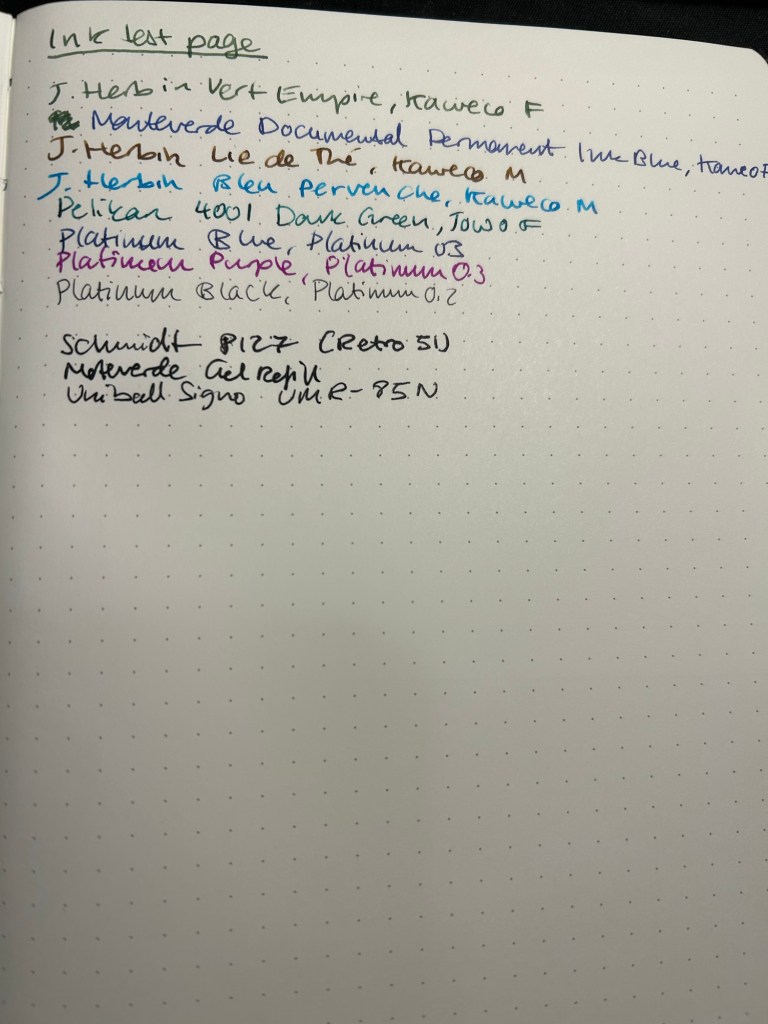
Ink test page on the 120gsm

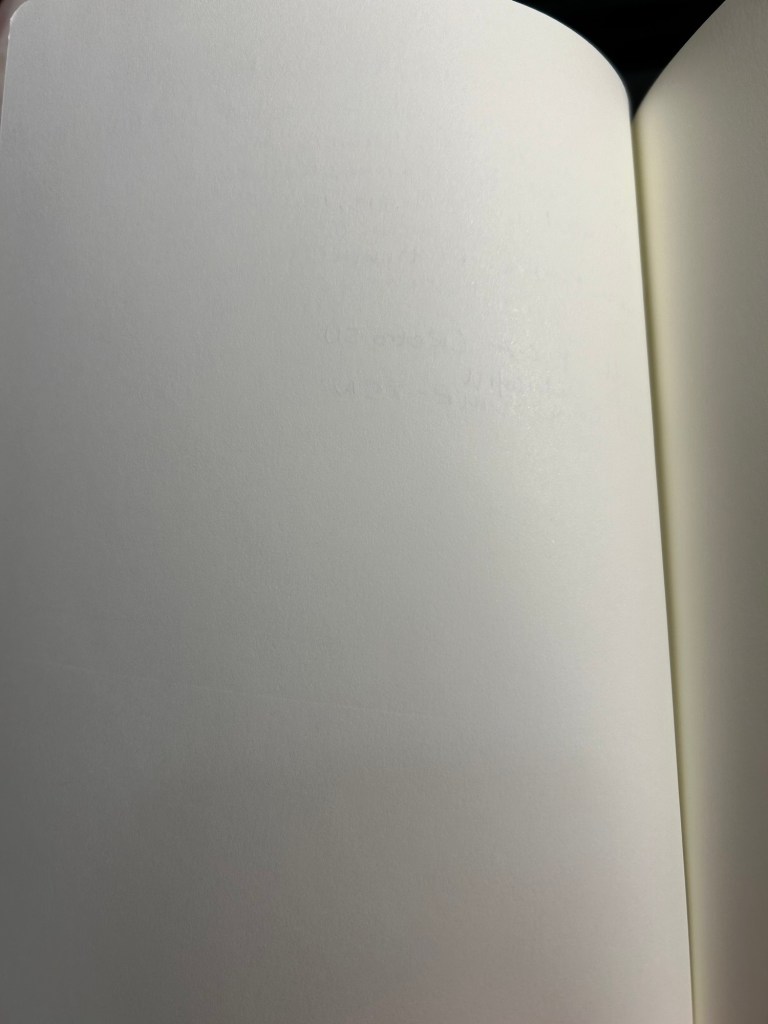
You can definitely use both sides of the page with this notebook, and feel free to toss every kind of nib width and ink at it — I haven’t found one that it can’t handle.

Back of the 120gsm (Bullet Journal was the same)

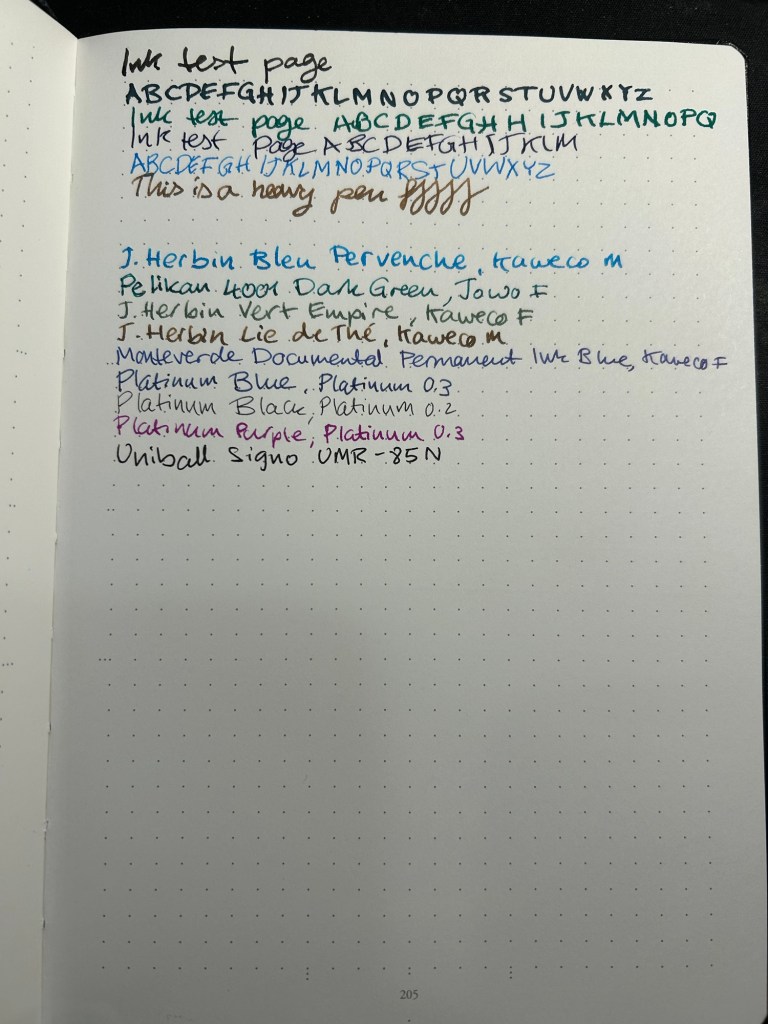
I’ve been using the Bullet Journal for a while now and I have had no problems using even broad and flexible nibs on it, with wet inks. Inks take time to dry on it, but they don’t bleed through.

Ink test page with example of wet and wide nibs on the Bullet Journal

The paper in all three journals is off white. That may bother you. Here’s the page with a sample of a white page next to it:

Paper colour sample – Leuchtturm vs white paper

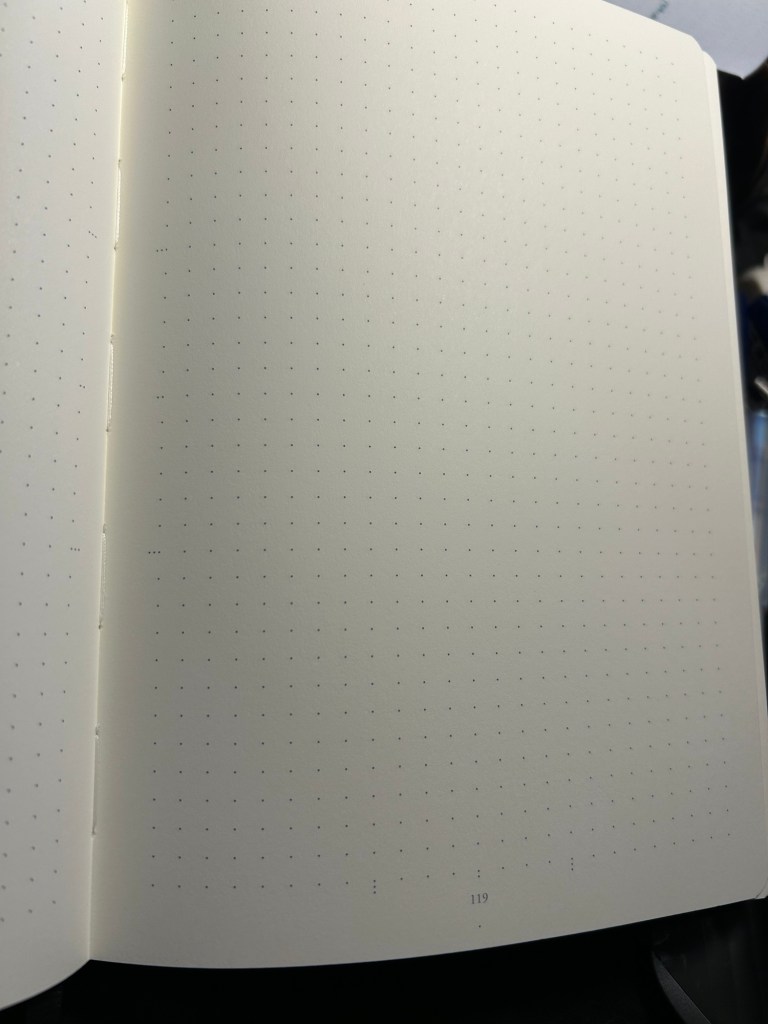
At the bottom and the left side of the page you can see the special Bullet Journal divisions, meant to help you create various BuJo formats of things. They’re very unobtrusive, so you can easily ignore them if you don’t need them:

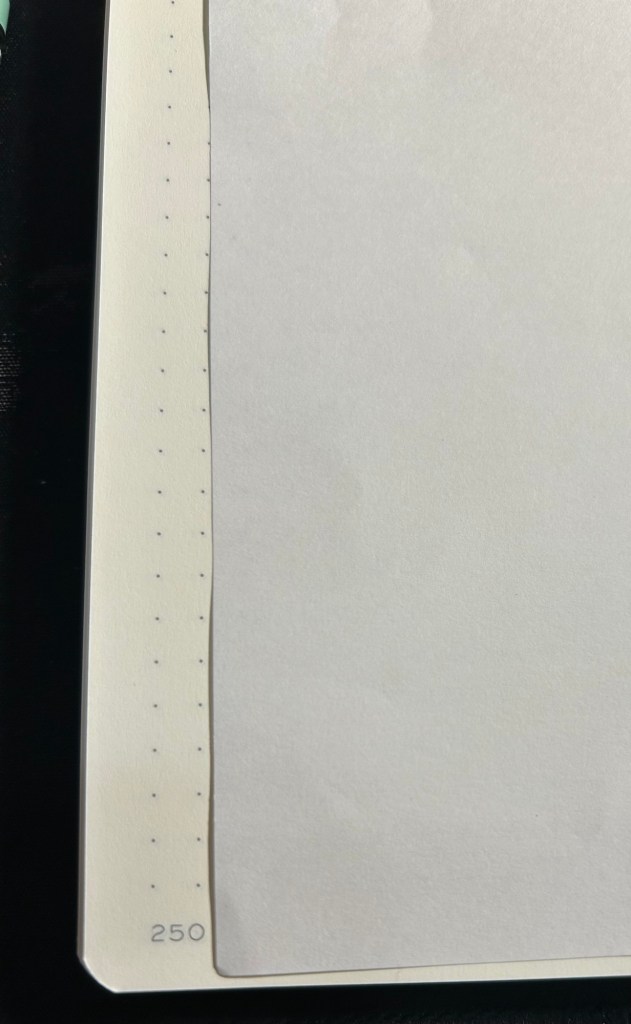
Bullet Journal markings on the bottom and on the left margin

So, basically:

Standard — cheapest one, thinnest and lightest with the most pages. Works only if you use fine gel ink pens or fine and extra-fine nibs with unsaturated or light coloured inks. If you write with a heavy hand, or prefer to use ballpoints this paper will likely note work for you, as you’ll carve your way through several pages without really intending to. If you’re willing and able to work around its limitations, it’s worth getting. It’s also more widely available and comes with a much larger range of cover colours than the other two.

120gsm – when in doubt, get this notebook. It’s got the best paper for the least amount of money of the three. If two ribbon bookmarks aren’t enough for you, it’s likely that you’ll need more than three anyway — get post it tabs. If you don’t have to have the Bullet Journal addons and formatting, save a few bucks and get this notebook. You’ll also have a few more cover colour options.

Bullet Journal — get this if you want to use the Bullet Journal method or you want to try it. If you end up deciding not to use the method, you’re still left with a great notebook, and you can buy the 120gsm next time.

I hope this helps clarify things a bit. Personally I’m currently using the Bullet Journal as a regular notebook (my quarterly planning, weekly planner and long term lists are in it) after failing to find value in the Bullet Journal system, and the standard notebook for work projects. The 120gsm will replace the Bullet Journal once I’ve filled it.

Leuchtturm1917 Drehgriffle Nr. 2 Mechanical Pencil Review

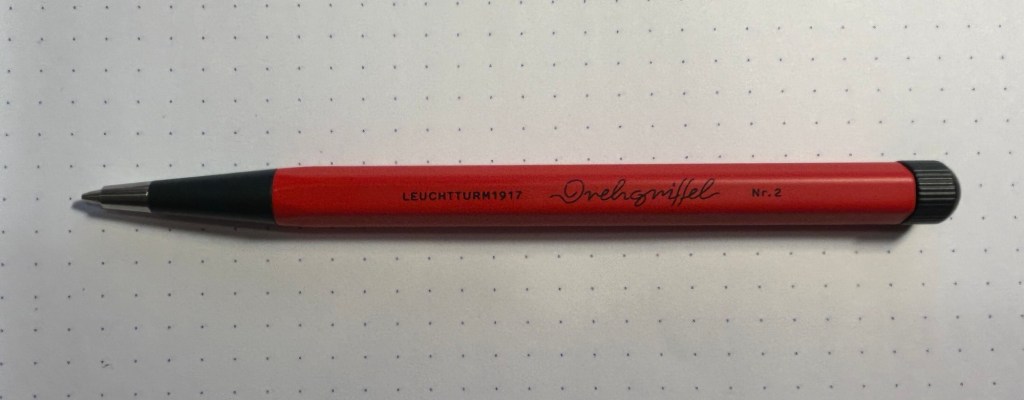
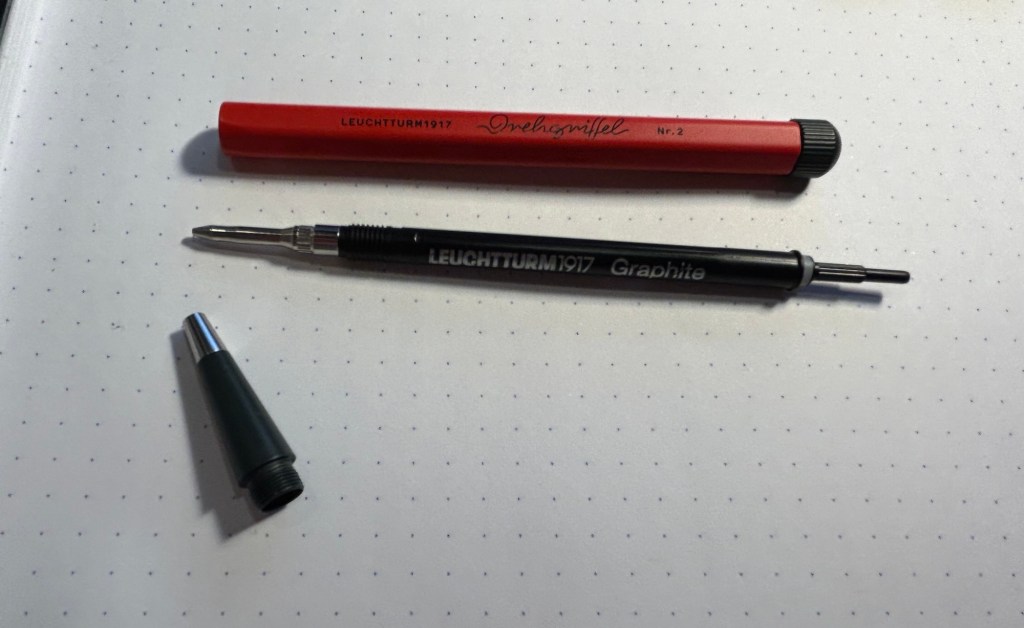
The Leuchtturm1917 Drehgriffel Nr.1 is a charming little pen that comes with either a gel refill or a ballpoint refill. The Drehgriffel Nr. 2 is its pencil counterpart: a short but hefty mechanical pencil with a twist mechanism that comes in a variety of colours. My pencil is a bright red and dark grey one, and it has quickly become my most used pencil by far.

Small but mighty, the Drehgriffel Nr. 2

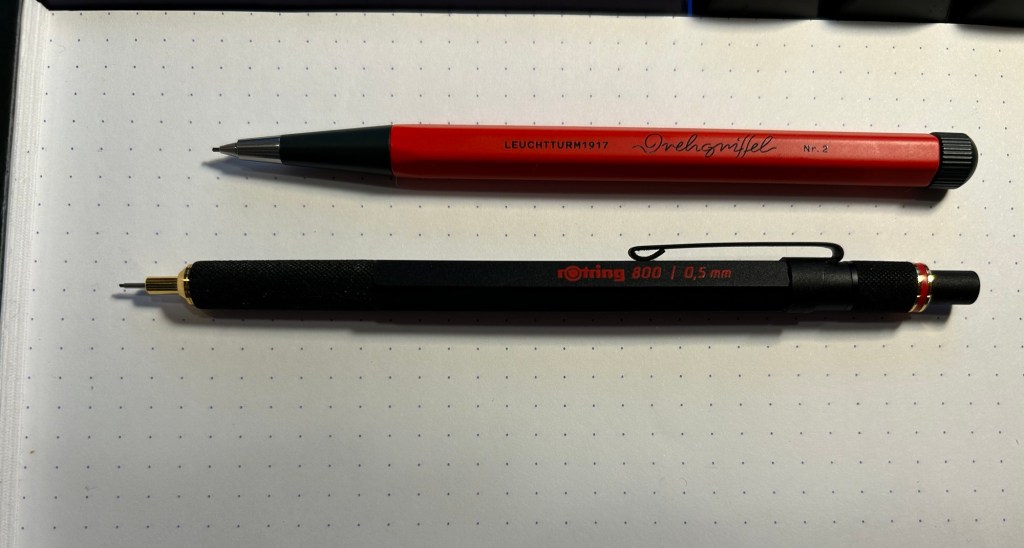
The pencil is shorter than other mechanical pencils, but as it’s an aluminium bodied pencil with a steel tip it has some weight and heft to it. It’s lighter than the Rotring 800, and the weight is balanced towards the tip so it’s very comfortable to use.

Drehgriffel Nr. 2 on top, Rotring 800 on the bottom

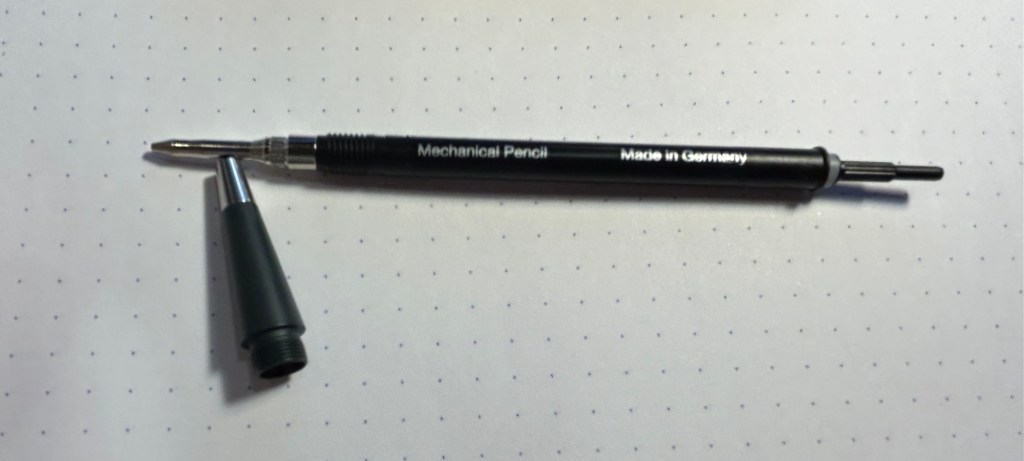
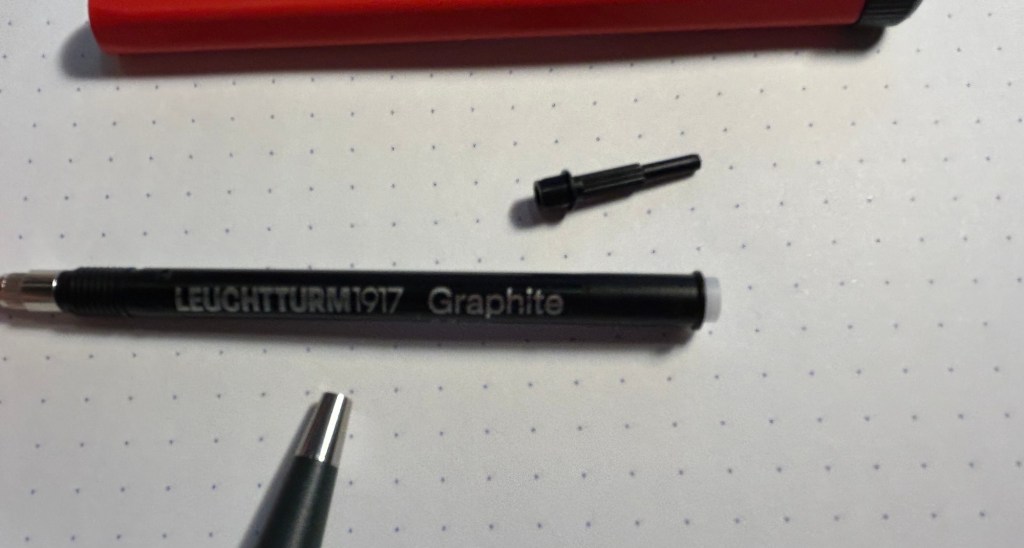
The pencil mechanism is proprietary to Leuchtturm, and it’s a pretty unique affair. You give the nob on the top a quarter twist and then you hear a satisfying click and the lead advances. The pencil mechanism looks like a gel ink or ballpoint refill, but the little pole on the top pulls out and you can add more pencil leads to the pencil that way. You get to the mechanism through unscrewing the front cone tip of the pencil.

The Drehgriffel Nr. 2 and its mechanism

Here’s a closeup of the mechanism (my camera had issues focusing on the lettering):

Here you can see where the leads go in:

The Drehgriffel Nr. 2 is a 0.7 mechanical pencil and it comes with HB leads inside. It’s a great pencil with a classic, sleek design, and a very solid and unique mechanism. The size is plus as it makes it ideal for everyday carry, and it doesn’t have the silly little eraser that certain mechanical pencils have and is always terrible. The only minus to this design is that to add more leads to it you basically have to take the pencil apart. That’s no big chore, but the end bit (the little pole thing) is very small and would be easy to misplace. I’d suggest doing the refilling in batches of a few leads at a time, and being careful to not lose sight of the mechanism end bit.

Otherwise this is an excellent mechanical pencil, a solid and handsome little workhorse that’s a joy to use and would make for a great gift even for people who are not great pencil lovers.

My 2023 Year in Reading

I read 35 and two half books in 2023, and for various reasons this year’s reading contains more detective novels than usual. The topics and style range widely, so there’s bound to be something for everyone in this list. So make a nice cup of coffee or tea and sit down for a bit of a long read.

Note: the links are to reviews I wrote in my blog or to Goodreads. No affiliate links whatsoever here.

Fiction

The Murder on the Links, Agatha Christie

The second appearance of Hercule Poirot, Christie’s “little Belgian” detective. Christie weaves a clever plot here, particularly around various character pairings. If you’re looking for a satisfying light read, I recommend picking this book up. Bonus tip for Christie books: they can often be found at your local library or for very cheap at second hand bookshops.

Murder on the Orient Express, Agatha Christie

If there’s one Agatha Christie mystery you need to read, it’s this one. I’ve read this book several times before but return to it when I want to see a master at work. Christie is perfectly polished here, and this book is always a joy to read.

A Gentleman in Moscow, Amor Towles

Delightfully charming, polished and delightful I highly recommend this book for everyone, even if historical fiction isn’t your cup of tea. Towles doesn’t create a realist novel, but rather casts a fairytale that is a joy to read, and yet still reminds you of the time and place it takes place in and the implications of that on all the characters at play. One of the best books I read in 2023 and one that I keep remembering and will likely return to.

Offshore, Penelope Fitzgerald

Offshore won the Booker in 1979, and while it’s a well written novella length novel, it hasn’t stood the test of time. Fitzgerald writes about houseboat dwellers on the Thames, people that are in between land and water, outsiders to London and its society and yet still moored to it. I think that to readers in 80s this book would have resonated more, but somehow it seemed to remain on the surface level, detached and amorphous to me. Not a book I would go out of my way to read.

Drive Your Plow Over the Bones of the Dead, Olga Tokarczuk

Wow. The best book I’ve read this year by a large margin. Tokarczuk is an astoundingly good writer and this is a phenomenal book that I highly recommend. It’s not a light read but it’s a very, very good one.

The Books of Jacob, Olga Tokarczuk

This is one of the two books that I stopped reading halfway through. It’s exceptionally well written and researched but I just couldn’t bring myself to finish it at the time for personal reasons. I do, however, see myself returning to it at some point.

Miss Pettigrew Lives for a Day, Winifred Watson

This book is featherweight and frothy, a little ditty about a middle-aged governess that finds herself in the middle of the flashiest, most debauched group of young people you can imagine. It was written in 1938 so there’s racism and favourable talk about wife abuse here, and I’m not at all sure that this servants’ fairytale is worth it. It’s well written, but loses its charm whenever the naughtiness is coloured by its racism and sexism.

How Steeple Sinderby Wanderers Won the FA Cup, J.L. Carr

I read Carr’s wonderful “A Month in the Country” and I wasn’t disappointed by this fairytale. Yes, it’s about football. No, you don’t need to know a thing about the game. Do read the book’s introduction, though, as it does clarify and highlight a few things worth knowing.

This is Ted Lasso decades before Ted Lasso, but as Carr wrote it there’s also a touch of melancholy to the affair. It’s a charming little thing that will win your heart over much like its bunch of villagers win the coveted FA Cup. Like “A Month in the Country” this little book is an ode and a slice of brilliantly clever comedy. It reminded me of “Dad’s Army”: poking fun at its characters while deeply loving and respecting them, with a mist of nostalgia over it all.

All Systems Red, Martha Wells

For years this has been on my list and highly recommended by several friends and boy were they right. Wells created one of the best written, most distinct voices in fiction (yes, fiction, not just science fiction) in her murderbot. It’s a funny story about a misanthropic android saving a bunch of human scientists, but it’s also a tale about who gets to be human and who doesn’t, how fiction creates humanity, the future of corporations and how people learn to trust each other. Even if you don’t like science-fiction, this is a must read. If you don’t end up loving murderbot in the end, I suggest you check your pulse. They will make you laugh and they will make your heart ache for them, and you’ll want to be a better person to deserve to live in a world where murderbot exists.

Artificial Condition, Martha Wells

The second of the murderbot series, this one introduces ART. Murderbot teams up with a research transport with an attitude and I learn that I am in fact capable of loving this series even more than I did before. Wells deals so well with the themes of friendship, trauma and humanity as well as fiction as a bonding medium between strangers that it’s astounding. Again, even if you’re not a science fiction reader, this book is for you.

Rogue Protocol, Martha Wells

This isn’t as good as the first two murderbot stories, but is still very good and worth reading. The humour is still great, the questions about humanity are still there, as is the commentary about the growing power of corporations.

Exit Strategy, Martha Wells

This is the fourth murderbot story and one that closes the GreyCris arc. Murderbot cares now, how revolting 🙂 Full of humour, action and questions about personhood and friendship. A fitting end for the first arc of Murderbot diaries.

Network Effect, Martha Wells

A new murderbot arc begins, and ART is back. The two of them are superb together, the plot is very well done as are the action sequences. It lacks some of the innovation of the first two murderbots, but that’s to be expected in what is now a pretty well established world. Very enjoyable, funny and deeply touching.

Fugitive Telemetry, Martha Wells

This is another excellent murderbot story, but outside the timeline of the new murderbot arc and after the GreyCris arc was completed. It’s much more a detective novel than previous murderbot stories, and it’s very well done and fun to read.

System Collapse, Martha Wells

The seventh and latest instalment of the murderbot diaries, this story picks up not long after Network Effect finishes. There are some interesting ideas about communication and establishing trust, and some very good writing about trauma. Very well done and worth reading.

Home, Martha Wells

I think this is the best description of post traumatic stress disorder that I’ve read. As someone who suffers from cancer related PTSD this story really hit home. It’s an excellent short story, and it’s not told from murderbot’s point of view, but from Dr. Mensah.

The Well of Ascension, Brandon Sanderson

One of the biggest disappointments of the year. I really liked the first Mystborn novel and I was looking forward to reading the second book in the trilogy. It was not good. The characters were stupid, flat, and annoying. The villains were stereotypical and the twist (which at least brought the pace up in the end) wasn’t worth it. A long, bloated tale that never landed for me and has me wondering whether it’s worth slogging through the third book in the trilogy.

Winter’s Gifts, Ben Aaronovitch

I love Aaronovitch’s Rivers of London but this novella fell flat. The characters didn’t come to life, Henderson was somehow less likeable than she was in her previous appearances and the story didn’t gel. I’d recommend skipping this one unless you’re a completionist or looking for a light read.

Starter Villian, John Scalzi

Scalzi is back in full force here, light, funny and entertaining. If you liked the Kaiju Preservation Society you’ll love Starter Villain. Charlie inherits his uncle’s super villain operation, including secret volcano lair, talking cats and communist dolphins and it’s a delight from start to finish. There’s a plot but it doesn’t really matter: the dialogue, characters and situations make this novel hum. A perfect pick-me-up.

Slow Horses, Mick Herron

I saw the Apple TV series (it’s phenomenally good) and decided to try reading the books it’s based on. The first book, Slow Horses, is almost entirely like the series, though if you pay attention you can see the cracks here and there (particularly in the ending). Not really worth reading as the series is the same, but better.

Dead Lions, Mick Herron

This was the second book in the Slow Horses series that I read, and it will be the last one. The book is far inferior to the series in terms of both plot and dialogue. Watch the series instead.

The Long Game, Ann Leckie

A short story from Ann Leckie with some interesting ideas about society building. It remains a little too abstract, although it is interesting in terms of character and concept.

Translation State, Ann Leckie

A very high concept novel, even more so than her previous work. What makes a place home? What makes being connect with others? What constitutes personhood and free choice? What makes a being, nature or nurture? What takes precedence: the needs of the many or the rights of the few? What makes you belong to a place, group or family? There are some excellent characters here, and some excellent questions raised. The most interesting sci-fi book I read this year, and worth picking up.

Death in Fine Condition, Andrew Cartmel

I liked Cartmel’s Vinyl Detective series, so I was looking forward to reading the Paperback Sleuth. I was disappointed. This book suffered from all the minuses of Cartmel’s previous work (a tendency to overwhelm with tedious details, an infatuation with certain characters, plots that are oftentimes outlandish even for detective novels) with none of the charm. Large swaths of it are regurgitated characters and bits from his previous work, and I don’t see myself returning to this series any time soon).

Lot No. 249, Arthur Conan Doyle

This is a horror story about a resurrected mummy, and it’s competently written but not the genre for me.

Passenger to Frankfurt, Agatha Christie

The second book that I didn’t finish reading, and so bad that it should never have been published. Christie is clearly being taken advantage by her publishers here, as she’s obviously already suffering from dementia at this point. Don’t read it, and hopefully it will go out of print and stop tarnishing a wonderful writer’s reputation.

The Making of Another Major Motion Picture Masterpiece, Tom Hanks

This is lightweight fun, a good read for an airplane ride or a holiday. I’d recommend skipping or skimming the in-character preface as it’s the weakest part of the book by far. There are comic strips involved and in the book itself, so I recommend reading the book so you don’t miss them as they’re very well done. It’s charming, with no real villain and a lot of love for filmmaking and filmmakers.

Non-Fiction

You Just Need to Lose Weight, Aubrey Gordon

Gordon writes a compelling set of essays about anti-fat myths. It’s well written and informative, and regardless of what your thoughts are on the subject, it’s worth a read.

Erebus, Michael Palin

Excellent, excellent, excellent. Palin takes a fascinating topic and renders it to perfection. A Victorian ship designed for war but converted for arctic exploration has two epic voyages: on the first it reaches the farthest south that anyone had reached before, and on the second it vanished as it was searching for the Northwest passage. Multiple attempts were made to find her and her 129 crew members, but for 160 years nobody knew where it was. Until it was found, perfectly preserved, in 2014. The story of the ship, Erebus, its crew, voyages, and the search for it is interesting in and of itself, but Palin really makes it all come to life for the reader.

Your Head is a Houseboat, Campbell Walker

Walker is better known for his YouTube moniker Struthless. This is an illustrated book about reaching mental clarity through journaling. It’s well written, well drawn and well conceived, and if you have any interest in journaling for mental clarity, I highly recommend it.

The Miracle of Mindfulness, Thich Nhat Hanh

A short, beautiful guide to meditation written as a series of letters between master and student. It’s gentle, humorous and kind, and well worth a read, and many rereads.

M Train, Patti Smith

Patti Smith rambles around world drinking coffee. The general theme is dealing with loss, but in hindsight Smith’s writing didn’t leave much of a mark on me, even though I really wanted to like it. It’s like she’s trying to be Joan Didion and failing, because somehow her landscapes and people remain abstract shadows, not really leaving their mark on the reader.

Deep Work, Cal Newport

How to get meaningful work done in an age of constant distraction, especially if you’re a knowledge worker. Some very good ideas here, though it could have been better organised. One of the few productivity books I’d actually recommend.

Digital Minimalism, Cal Newport

How to turn down the signal to noise ratio on your digital devices using a methodical approach that allows you to tailor your technology use to your needs. This could have been a series of blog posts and suffers from the usual self-help book bloat, but there are some very good ideas here that I’ve successfully used. Recommended.

So Good They Can’t Ignore You, Cal Newport

After reading Deep Work and Digital Minimalism, this book was a disappointment. Newport struggles to make his point, it’s overly long and padded with examples that do him little favour. The whole thing should have been a blog post. The basics? Don’t look for a job that fits your passion, find a job that lets you have the lifestyle you want to have (hours, control, impact, etc). Do that by gradually and systematically acquiring skill in something that is rare and valuable. This is done through deliberate practice, like a musician or an athlete.

These Precious Days, Ann Patchett

A well written series of essays about a pretty wide range of topics. It was very well written and enjoyable to read. I recommend it even if you normally don’t read essay collections.

Think Again, Adam Grant

Organisational psychologist Adam Grant talks about how to change your mind. Some interesting ideas here, though as usual with this sort of book Grant doesn’t shy away from cherry picking anecdotes and manipulating data to support his argument. I take all social study research papers and everything based on them with a grain of salt after their replication crisis, but there are some things here that are worth trying out or considering.

Here’s to a 2024 full of good books!

Diamine Inkvent 2023 Summary

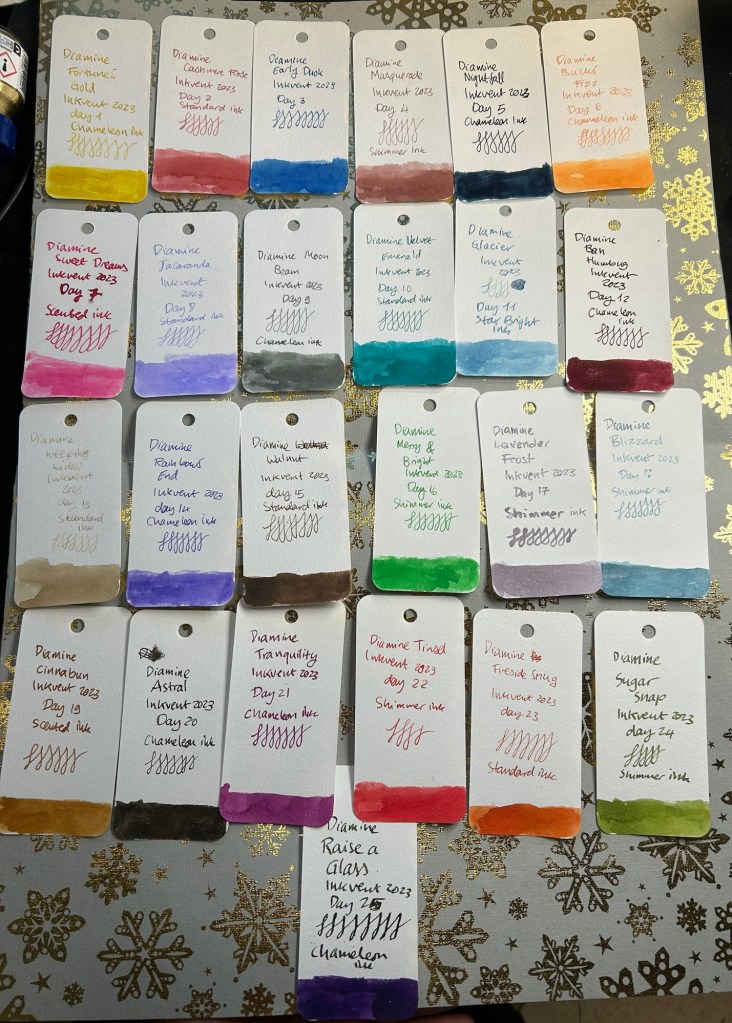
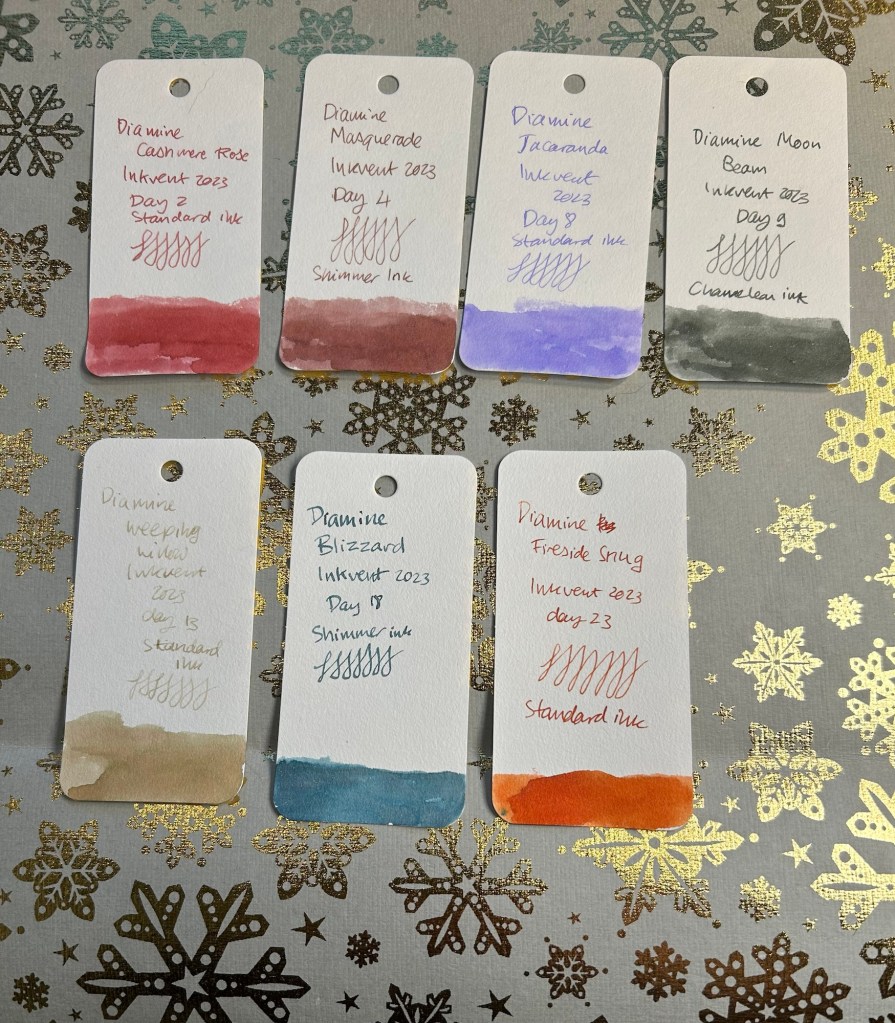
Diamine Inkvent 2023 is over and what an Inkvent it was! This year’s calendar was my favourite by far, mostly because of the break from the usual red-green-gold run of inks, and the very low volume of “filler inks”. This lineup is strong and interesting:

All the Inkvent inks swabs

Grouping the inks by colour family you can see how different this year’s Inkvent is compared to previous ones (2019, 2021, 2022).

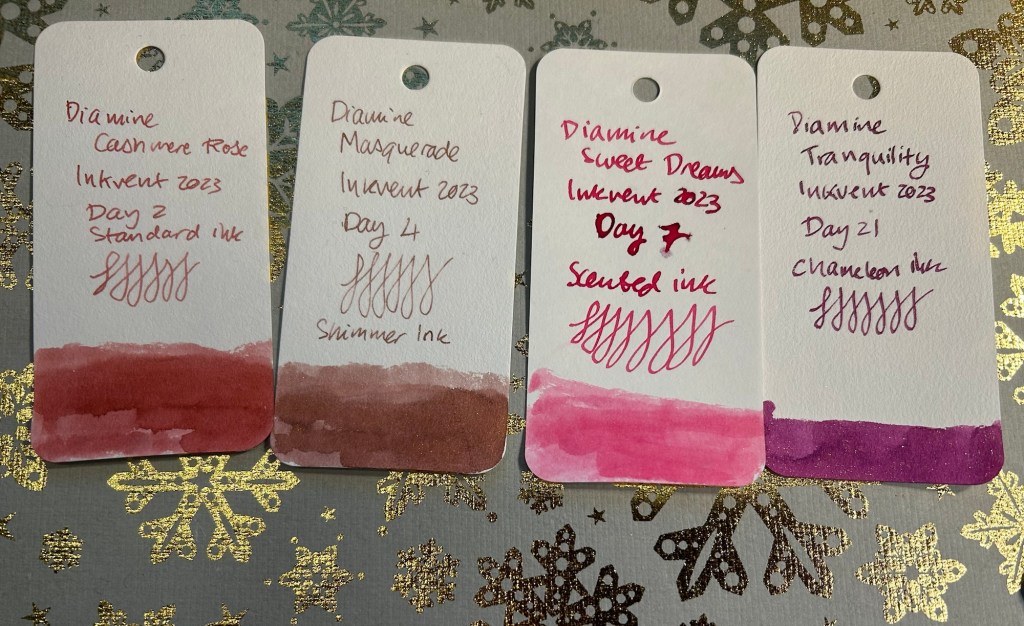
Pinks: I think these are the most pink inks we’ve had in an Inkvent Calendar and I’m all for it. The scented ink was terrible, but as there were only two scented inks out of 25 and only one that was really bad (Sweet Dreams) I’ll give Diamine a pass. Both Cashmere Rose and Masquerade were stand out inks, worth considering full bottles of.

Pinks

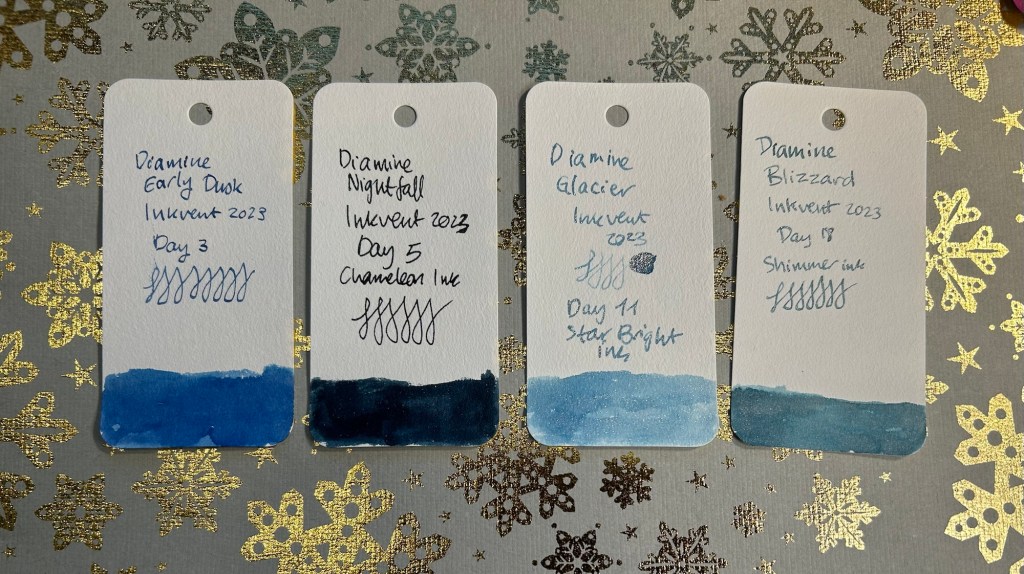
Blues: It was a stand out year for blues, with not a boring ink in the bunch. Glacier brought all-of-the-glitter, all of it, and Early Dusk, Nightfall and Blizzard are all interesting inks even though they are blue (one of the more standard of ink shades).

Blues

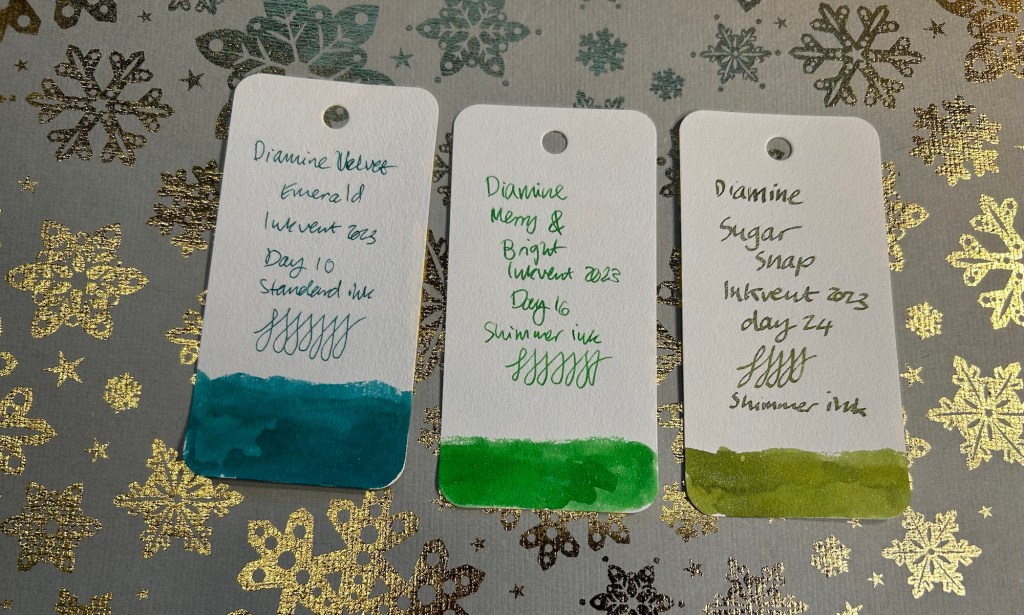
Greens: This Inkvent had only three green inks, with Velvet Emerald more of a teal colour. Of the three Diamine Sugar Snap stands out.

Greens

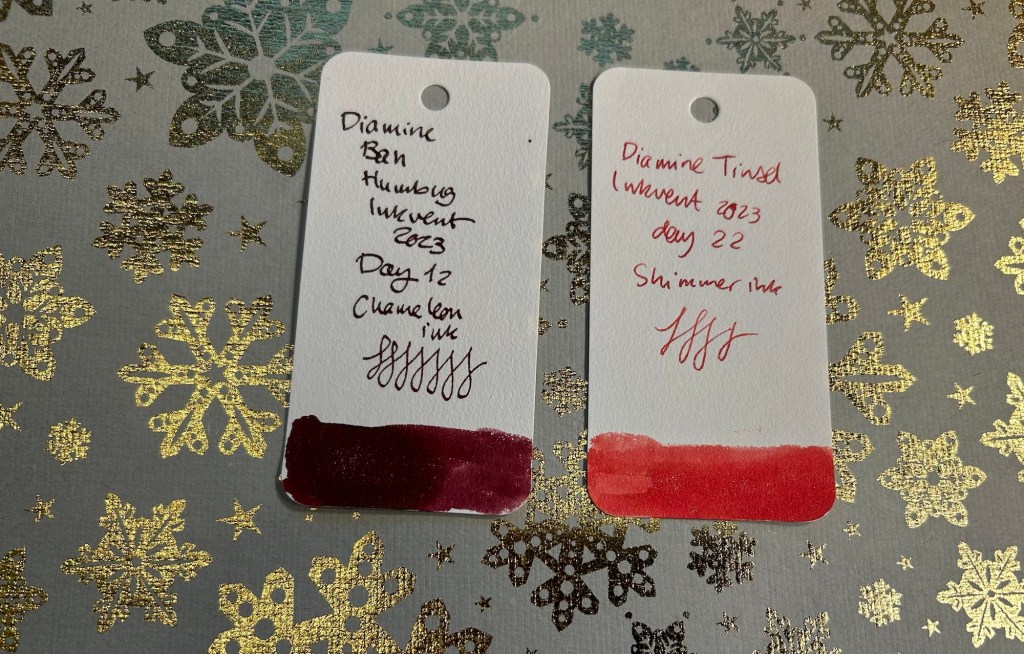
Reds: The first Inkvent calendar to feature just two red inks, but both of them solid choices. Go for Bah Humbug for a darker take or Tinsel of a brighter one. As I don’t really use red inks, the choice to include only two red inks this year was a boon for me.

Reds

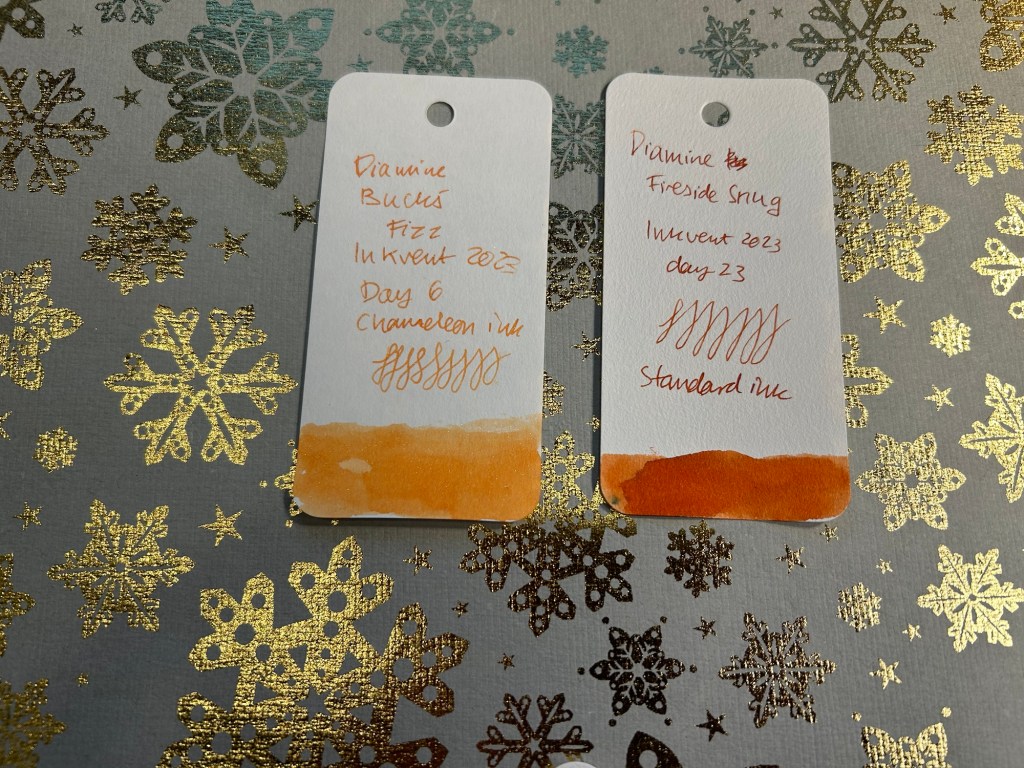
Oranges: two oranges this year, one utterly unusable (Buck’s Fizz) and one wonderful (Fireside Snug).

Oranges

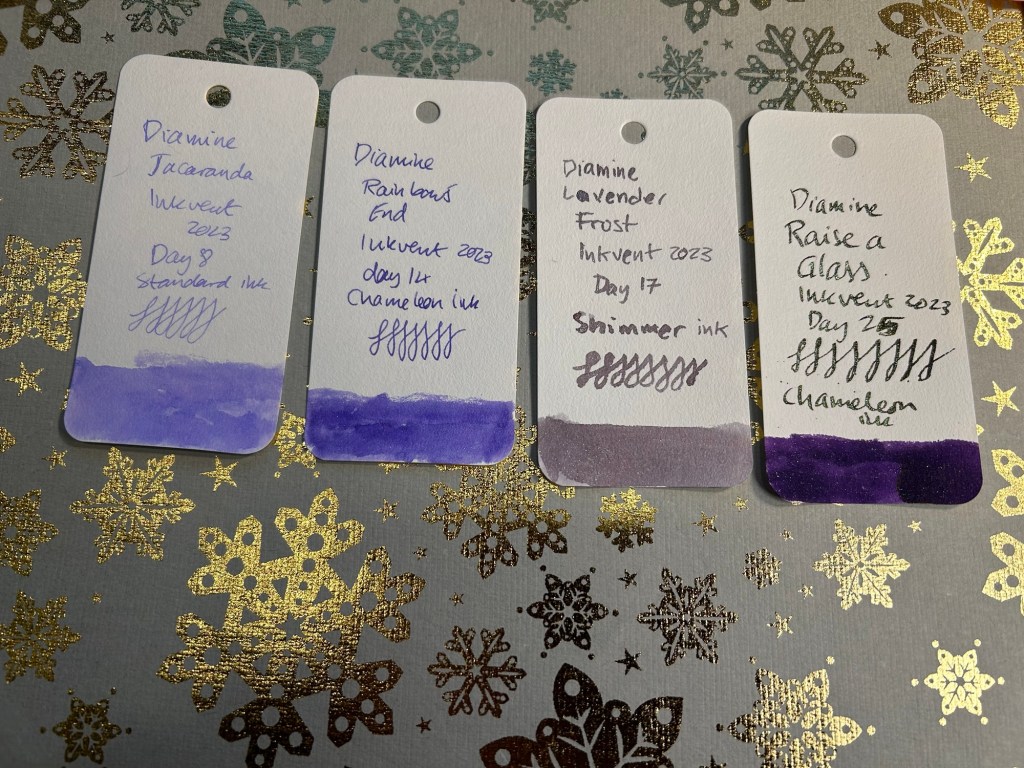
Purples: Who’s surprised that this year the purple Inkvent calendar featured no less than four purple inks? Nobody. All of these are great but Jacaranda is my favourite.

Purples

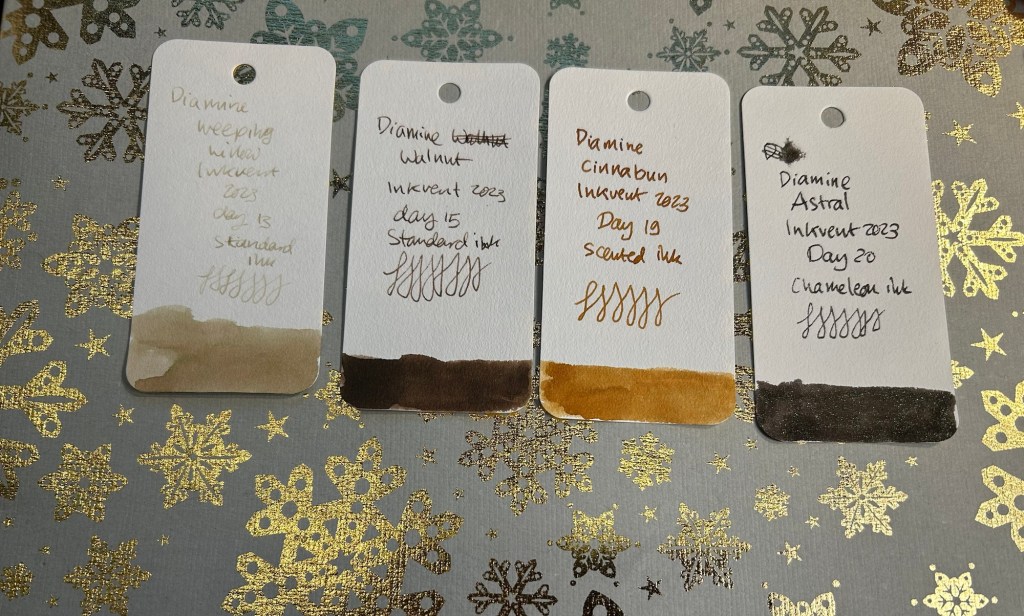
Browns/Earth Tones: There are four of these this year if you include Atral (which is a black/brown ink) and Weeping Willow (which is a duo-chrome ink). Weeping Willow is stunning and the number one ink that I’ll purchase from this year’s Inkvent.

Earth Tones/Browns

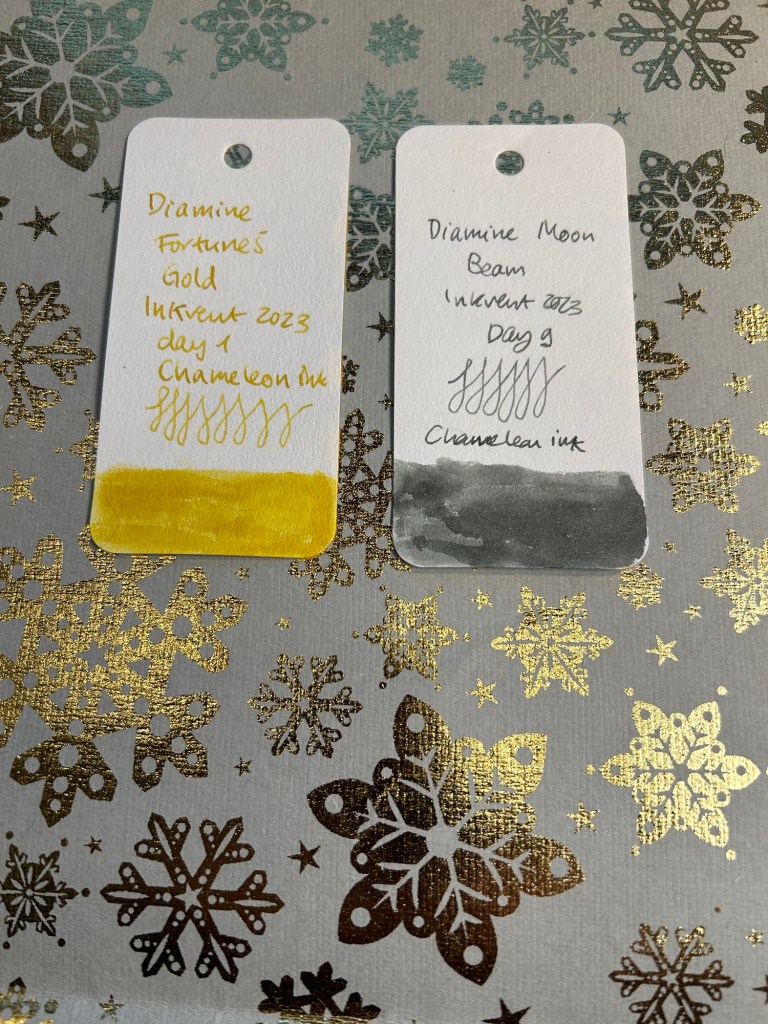
Outliers: the only yellow ink this year is Diamine’s Fortune’s Gold and that’s fortunate as I don’t use yellow inks. Sadly Diamine Moon Beam is the sole grey ink in the lineup, but at least it’s a very pretty one.

Outliers

Which inks are my favourites? These seven:

My favourites

They all have interesting base ink colours and oftentimes something else going on. I have too many inks already so I won’t be buying 7 more bottles to add to the collection, but of the 7 the top three are Weeping Willow, Jacaranda and Fireside Snug, and I may buy bottles of those.

What did you think of this year’s Inkvent? Do you plan on purchasing any of the Inkvent 2023 inks?

If you haven’t purchased the Inkvent 2023 calendar it’s likely that you’ll be able to purchase it at a discount now. It’s a great way to get some cool inks to play around with, particularly if you like shimmer inks but don’t see yourself getting full bottles of them.

De Atramentis Document Ink Green Grey

De Atramentis Document Ink Green Grey is a waterproof fountain pen ink that could have easily been called “Sage Green”. It’s dry and offers a fair amount of shading, is quick drying and would be a good addition to any Urban Sketcher’s kit.

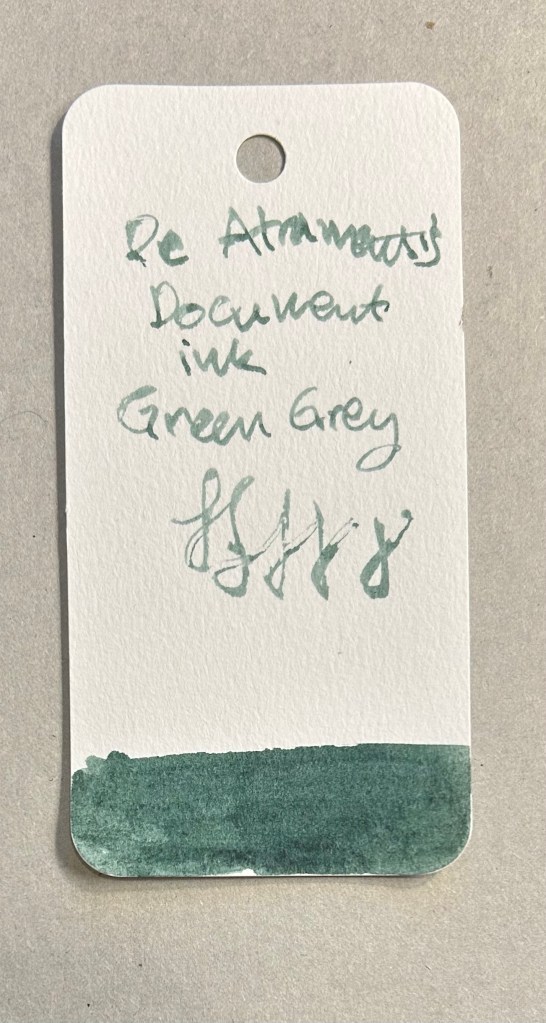
Ink swab on Col-o-Ring

While I think that De Atramentis Document Ink Green Grey is much too light to be useful as a writing ink (see sample below) its subtlety, natural shade and waterproofness makes it very useful when coupled with watercolours.

Writing sample with two different pens on Midori MD cotton paper.

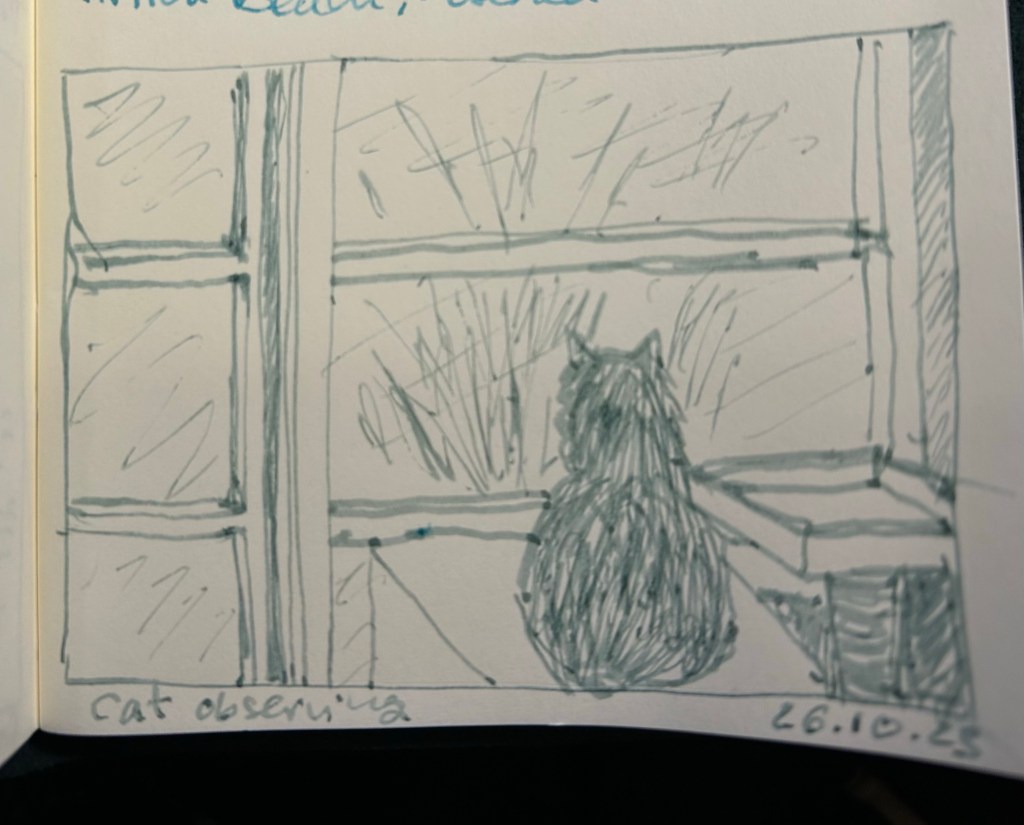
When used by itself, particularly in wider nibs, DA Geen Grey gives sketches a “vintage” feel and a good amount of interest: it both shades and allows for dry brushing effects because it’s so dry. Want a dry brush effect? Just work fast, and the tendency of this ink to skip will suddenly be an advantage:

Dry brush effect
Vintage look to a vintage motorcycle
This shade makes this sketch a bit melancholy, which is what I was looking for.

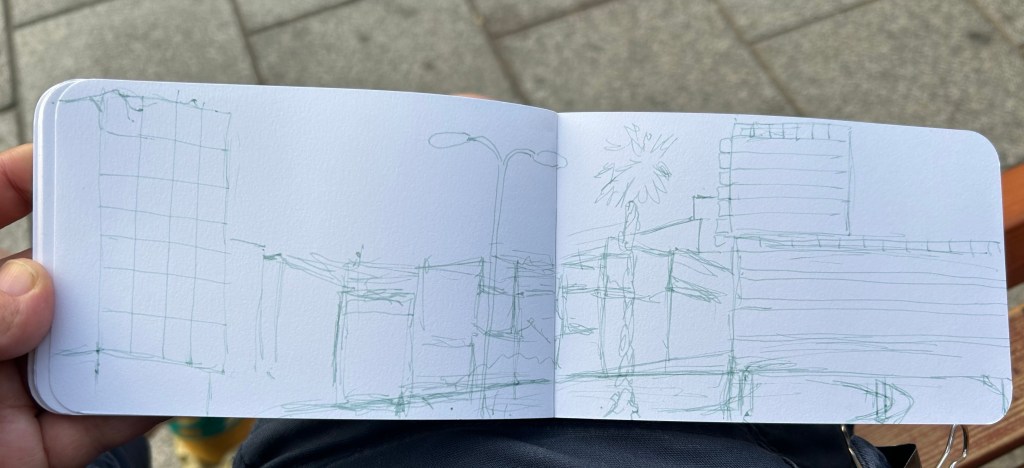
DA Green Grey truly shines as an under-drawing ink for watercolours. You can freely sketch guidelines and work directly in ink with it, and then add watercolour. It’s light enough to fade into the background, while still remaining permanent on the page and providing you with useful references.

Under-drawing/guideline sketch
Ink sketch with a Staedtler pigment liner

Can you even see DA Green Grey lines in this sketch? (you can, from very close by and if you know what you’re looking for)

If you work with watercolours, especially if you’re an urban sketcher, I highly recommend adding De Atramentis Document Ink Green Grey to your kit. It can replace a pencil for the under-sketches of your work, and it doesn’t change the shade of the watercolours, nor does it need to be erased. A pen with this is going to be added to my sketch kit, though I will probably use a fine or medium nibbed fountain pen for this ink and not go any finer because it’s so dry.

Schmincke Super Granulation Volcano Watercolour Trio Review

If you use watercolours you usually find yourself in one of two camps: those who want as much control of their painting as possible and so hate granulating watercolours, and those who love the magic of granulating pigments, and the unexpected effects they create. For the first few years that I was using watercolours I hated the “cauliflower” and “graininess” of granulating watercolours and so I actively avoided those pigments. Nowadays I have several granulating watercolours on my palette (and two super granulating ones) and I enjoy the watercolour magic and pigment parties that they create.

A few years ago Schmincke started issuing “super granulation” watercolours, which are watercolours with extra pronounced granulation effects and two different pigments in the same paint – something that created a dual colour effect and added tons of texture to any painting they were used in.

I reviewed the first of those paints here, and since then Schmincke have come out with three more series of super granulation paints: Shire, Desert and Volcano. Of the three the Volcano interested me the most as it seemed to fill in a gap that the very blue and green leaning previous sets were missing: warm, red hues. As Schmincke watercolours aren’t cheap, and the full volcano set came out to more than I was willing to pay for just to experiment with, I purchased a trio box of 5ml tubes to try out.

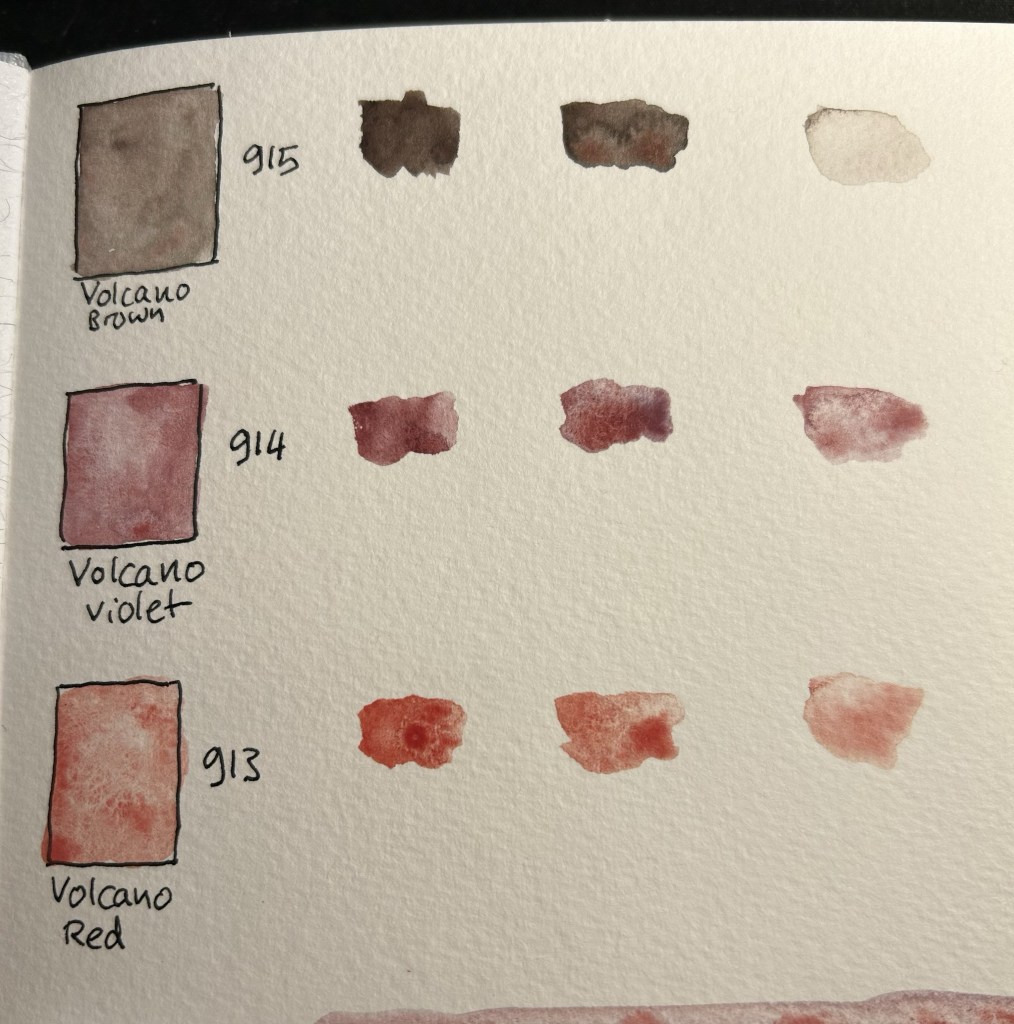
The test page

The trio I got contained 913 Volcano Red, 914 Volcano Violet and 915 Volcano Brown. The one that I was most interested in was the volcano red. The one that I ended liking the most is the one that I had the least expectation for: volcano brown.

Trio Super Granulation Volcano

I filled three half pans with paint and let them dry out for 24 hours (Schmincke watercolours are much easier to pan fill than Daniel Smith as they come out of the tube better and they dry quicker). I then did a colour swab for each, and a paint test with three paint consistencies (honey, milk, tea as Marc Taro Holmes calls them): the first with very little water, the second with more pigment than water and the third with very little pigment. In the case of the volcano brown I overdid the water in the tea swab, so it’s much lighter than the rest.

Volcano red is semi-transparent and semi-staining, volcano violet is semi-opaque and semi-staining, and volcano brown is semi-opaque and staining. The opacity-transparency spectrum in watercolours is important if you mix watercolours, as the more opaque a paint is the less well it mixes and the more chance you’ll get a “muddy” mixture out it. It is also important for layering, as opaque paints will not layer as well as transparent ones. For this reason I use opaque and semi-opaque paints sparingly, and usually only during the final stages of my painting.

Staining is a measure of how easy it is to “lift” the paint off the page with water or by dabbing it off, should you need to. The more staining the paint, the harder it is to lift without leaving a stain behind (this also depends on the paper you use, of course).

Looking at the paints, the volcano brown shows dual brown and red pigments, the volcano violet shows red and purple pigments, and the red shows red and maybe orange pigments, but it’s hard to tell. The volcano brown is the most dramatic and interesting of the three, though the volcano red is by far the most granulating of them.

Paint swabs and honey, milk, tea tests.

I tried to create a sketch using only these paints (on 100% cotton watercolour paper) and boy do they show their super granulating properties. while the volcano red by itself isn’t impressive, it does layer spectacularly well on the other two paints, and the volcano brown adds a lot of interest and drama to the painting. Of the three I’m likely to add the volcano brown into the rotation, and perhaps, for certain effects, the volcano red. The violet would come in handy if I was working on portraits maybe, but otherwise it reminds me of potter pink: a pigment that is too washed out to be of any regular use in my palette, and not worth the space when it comes to keeping it around for mixing purposes.

Volcano sketch

If you’re just building your watercolour palette, these paints are not for you. However, if you have an established palette and a certain style of painting that favours texture and layering, I’d recommend giving at least some of the Schmincke super granulation watercolours a try. They are bound to result in something interesting and unexpected.

Inktober 2023 Day 6: Grey Elephant

I enjoy sketching with grey inks, so I oftentimes have a pen filled with a grey ink of some kind or another. Today’s selection is the Pelikan Souverän M605 Stresemann with a medium nib (which as it’s a gold nibbed Pelikan, verges on the broad) filled with Diamine Silver Fox. Silver Fox is from Diamine’s 150th anniversary collection (one of the original ones they issued), and is a slightly warmish medium grey with fantastic shading.

African elephants are pretty fun to sketch, so I may be tempted to sketch another one of them later this month.

If you’re looking for a grey ink that’s well behaved, offers a lot of shading, is readable even in fine nibs and is slightly on the warmer side of the grey spectrum, then I recommend giving Diamine Silver Fox a try.

Inktober 2023 Day 4: Red Fish

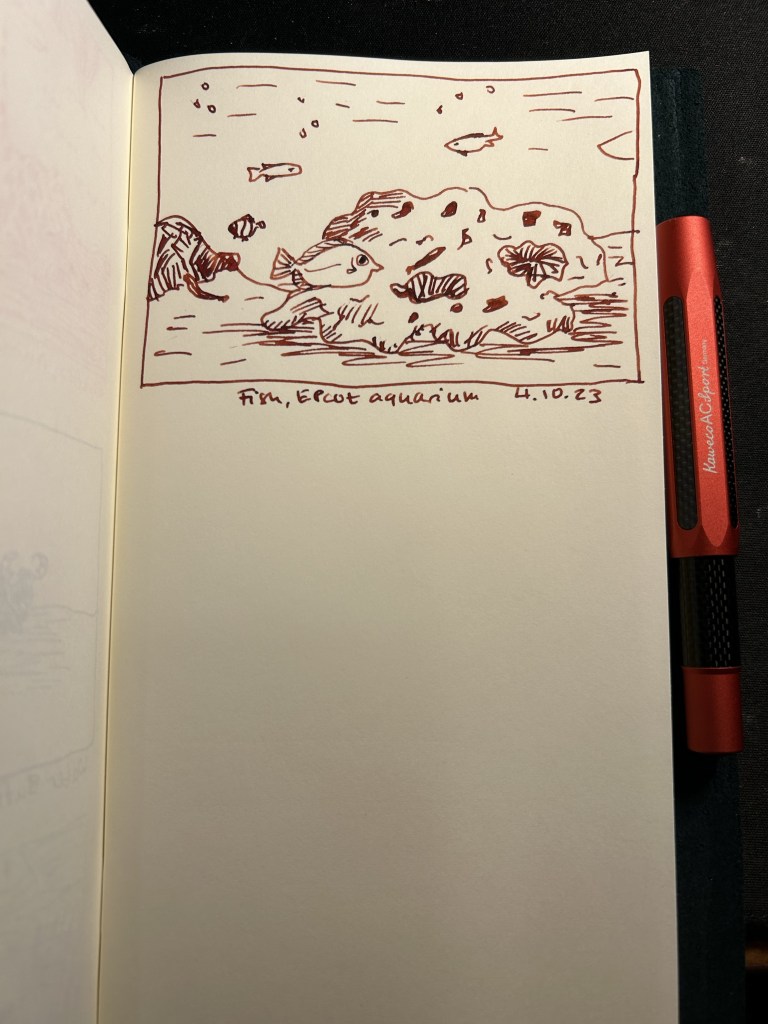
Diamine Monaco Red is a dark red/maroon like colour that has darkened even more in my Kaweco AC Sport Carbon red fountain pen. The fine nib still shows the significant shading this ink has. Google photos brought up this aquarium photo from Epctot’s “The Seas” aquarium so I decided to sketch it even though it was much better suited for watercolours. The fish in the foreground looked so worried that I thought it was worth a try.

I’m not a fan of red inks, but Diamine Monaco Red seems to be dark enough and well behaved enough for me to enjoy it. There’s also something particularly satisfying with crossing to-do list items with red ink: this thing is DONE.

Lamy ColorPlus Coloured Pencils Review

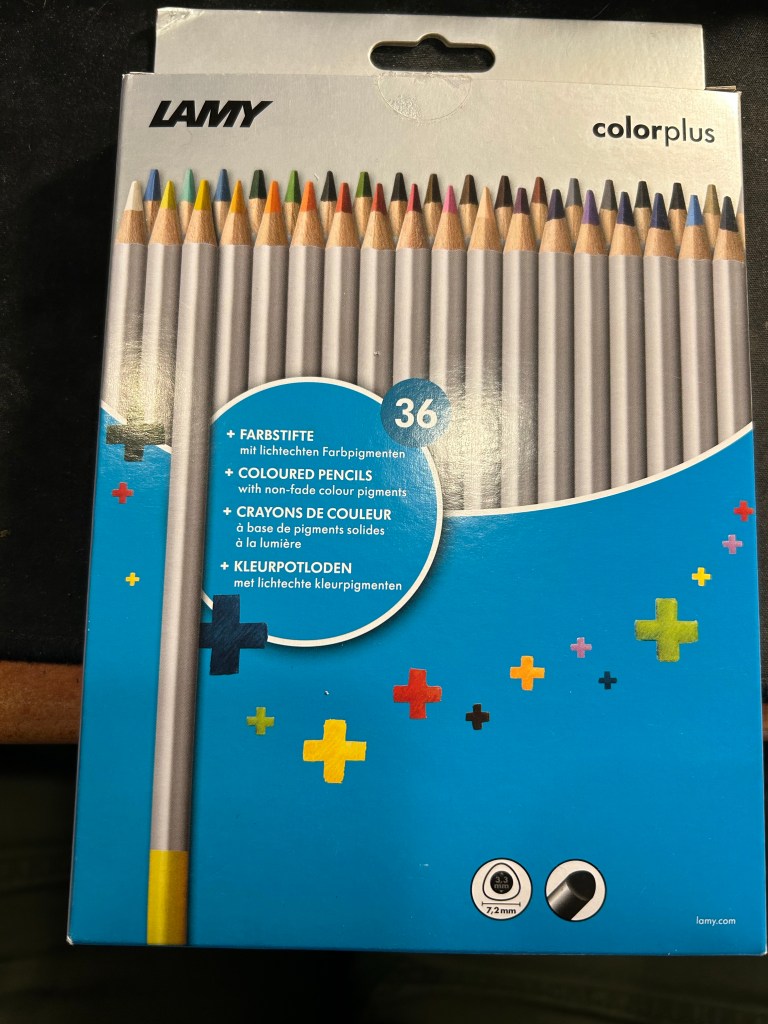
I rarely write reviews that trash products— because I tend not to waste my time and money on products that could potentially be bad. However, I was stuck in Tampa’s airport on a very long connection due to inclement weather and so I browsed their bookstore and found this:

Lamy ColorPlus 36 coloured pencils

Well it says Lamy on the box, so it can’t be bad, right? And it was just $15 for 36 pencils…

This is where the red flags should have popped up, but they didn’t. I bought the pencils.

When I got home and opened the box, my heart sank. The leads were broken on almost all of the pencils. Now the box was in my trolley, well protected from dropping or crushing, so there was really no reason for this amount of damage. I checked the back of the box:

“Highly resistant to breakage” it is not.

The pencils are triangular shaped, which is supposed to make them ergonomic. It makes them more unpleasant to sharpen, as there’s a steep “bump” whenever you turn the pencil to another side.

Triangular pencils

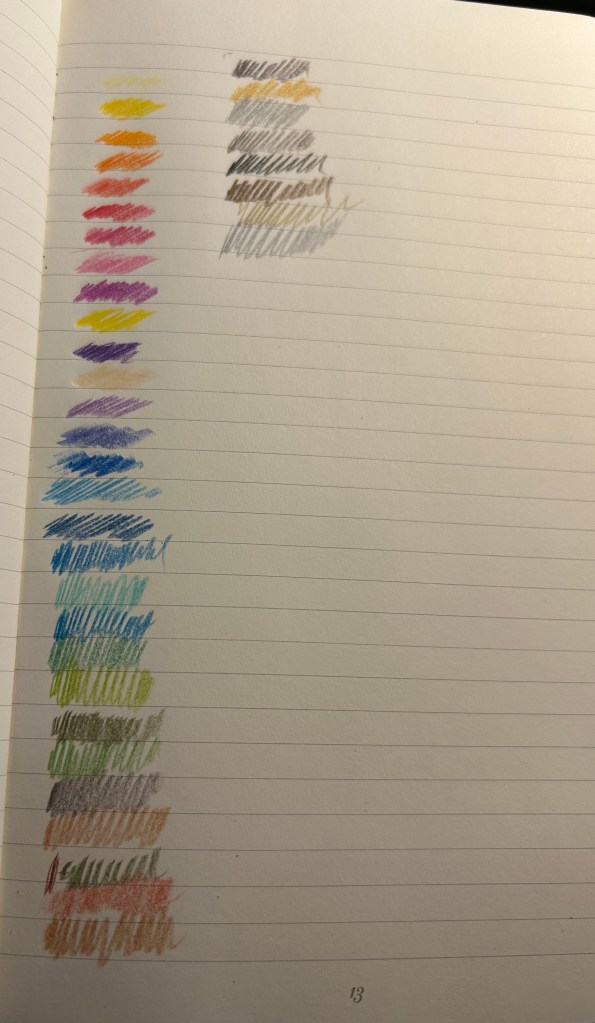
The colour selection is weird — there are a lot of various shades of brown, but no ochre. The browns themselves are nothing like the colours that you’d expect from their labelling. I use the term “labelling” loosely here, because there’s no colour labelling on the pencils, just a dip of colour that is vaguely similar to the actual pencil colour produced.

Pencil samples

The 36 shades chosen are wild – way to many similar brown, not enough greens, too many purples and blues, and of course utterly useless white and the bewildering gold and silver which are neither gold nor silver. Obviously the pencils crumbled while creating these samples so there are some duplicates here.

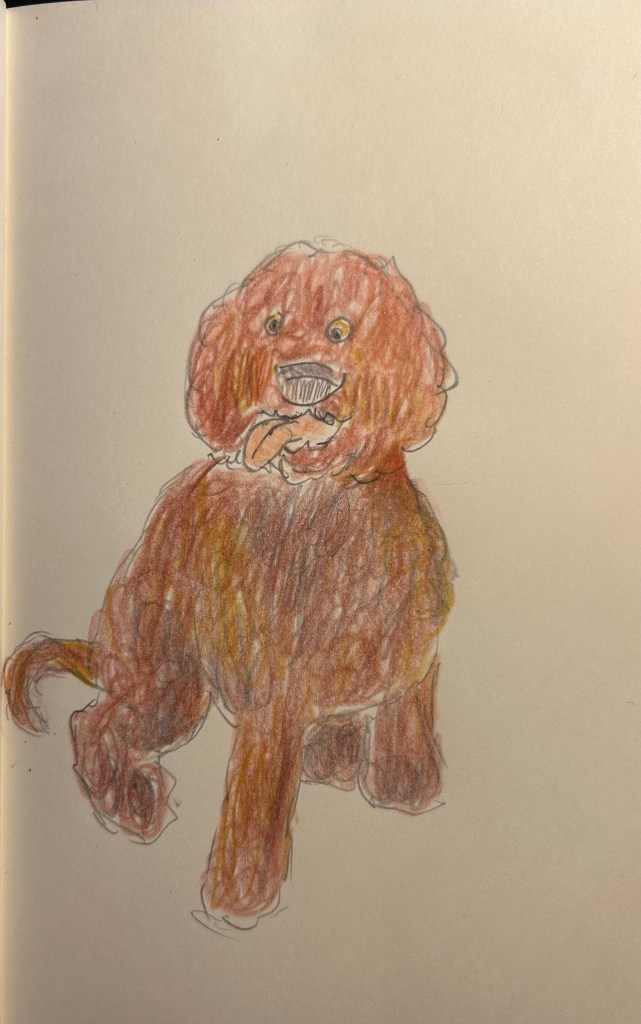
The pencils are very waxy, which means after 2-3 layers maximum the paper will be clogged and subsequent layers won’t be registered. The pencils also crumble easily —- even with very light pressure applied. Creating this sketch with them was nightmarish, as the leads kept crumbling, and I couldn’t get the shades that I wanted to the layering that I was trying to achieve.

Quick dog sketch

I honestly don’t understand why this product exists. It’s too expensive and not robust enough for children’s use, it’s definitely not artist grade (poor pigment, layering and no labelling), and even student grade pencils are properly labelled these days. In any case, save your money to buy better pencils. You deserve them.

A.W. Faber-Castell Vintage Pencil Tin

While most of my fountain pen collection consists of vintage fountain pens, I understand that for many people purchasing vintage fountain pens is too risky. You might get a pen that needs repair, you might misjudge the value of the pen and overpay considerably, you might be buying a fake. As even the cheapest of vintage pens isn’t just a few bucks, making a mistake here could end up being very expensive.

Yet there’s a joy in vintage items, in seeing the craftsmanship, design and care put into them, in learning their history and placing them on a timeline, and in the knowledge that you saved something from the landfill. If you want to experience some of that joy with less of the risk of buying vintage fountain pens, vintage pencils are your friend. Flea markets are full of vintage pencils, pencil tins, pencil sharpeners, leadholders, etc that are usually very cheap to buy, and hold little to no risk.

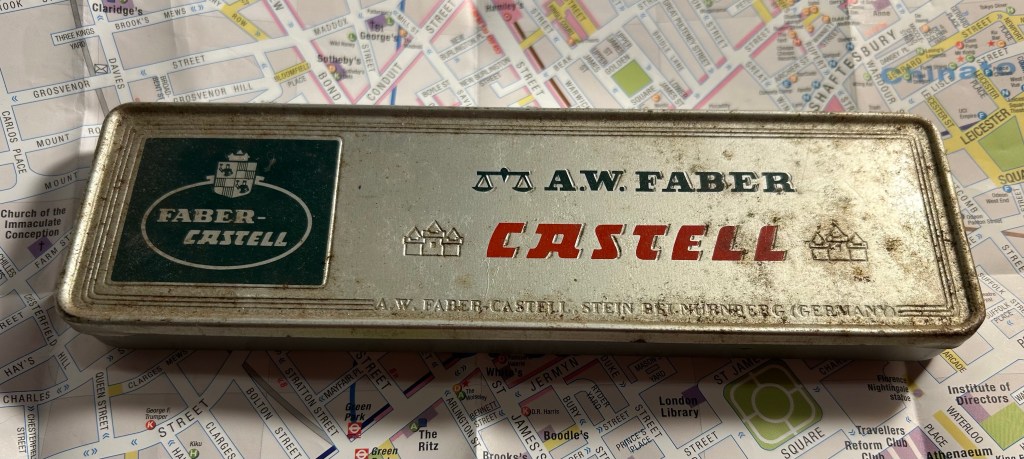
When I was in Spitalfields market, buying vintage books, I saw this tin propped up against a bookshelf in the stall I was purchasing my Arthur Ransome books from. This is how it looked:

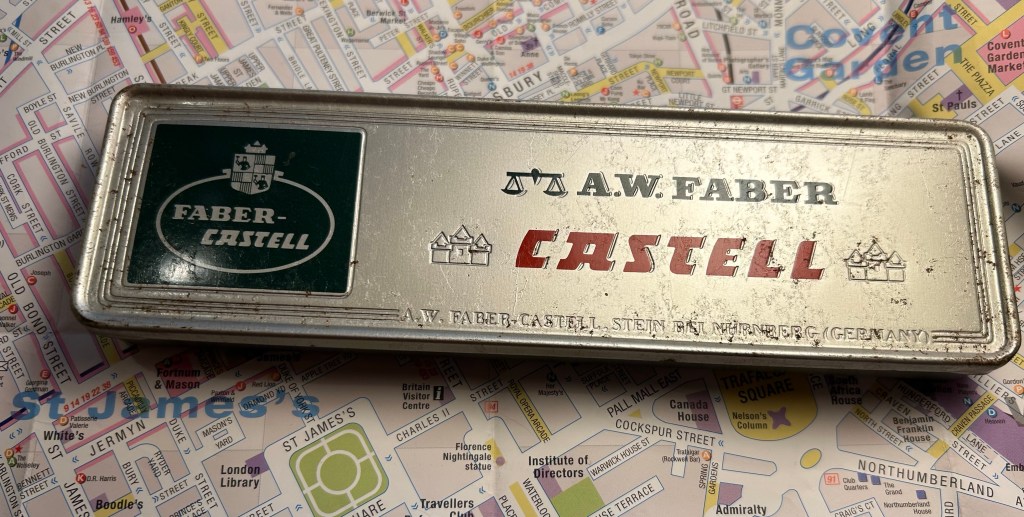
Grimy but not full of rust or beaten up A.W. Faber Castell pencil tin.

It’s an A.W. Faber Castell pencil tin, and after just a few minutes with some wet wipes it already started to look better:

A bit cleaned up.

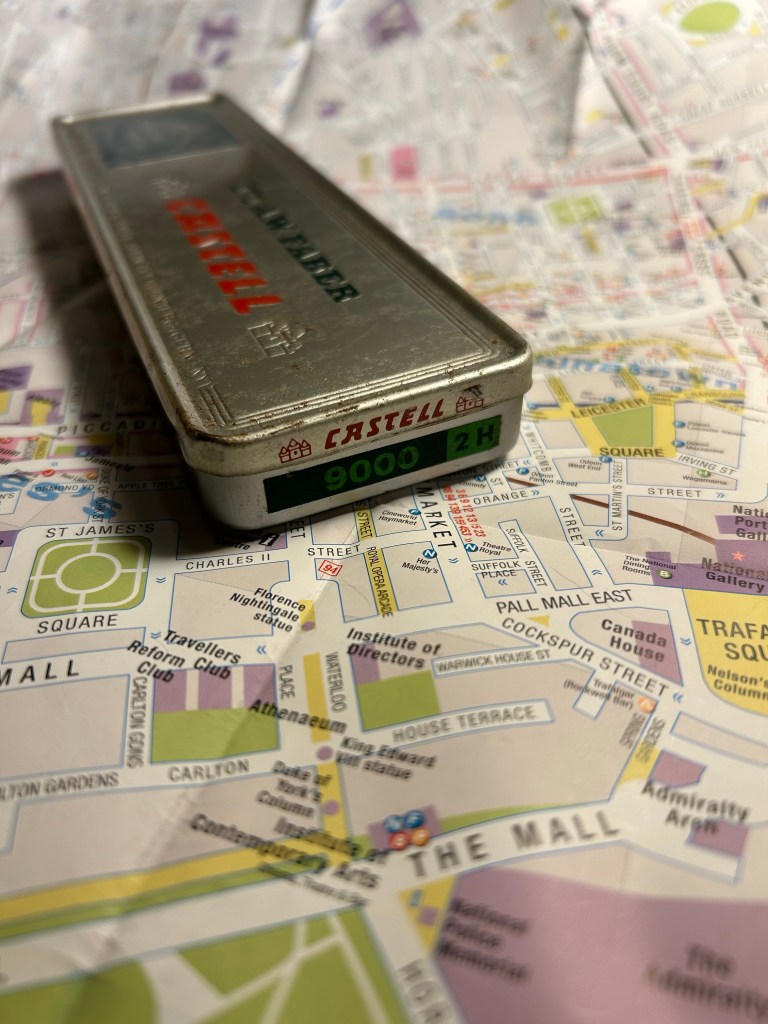
The tin and the pencils inside cost me only a few pounds, and truth be told I would probably have purchased the tin even if it was empty. The design and typography are absolutely delightful:

Castel 9000 2H. I can imagine having a stack of these in different lead grades on a shelf.

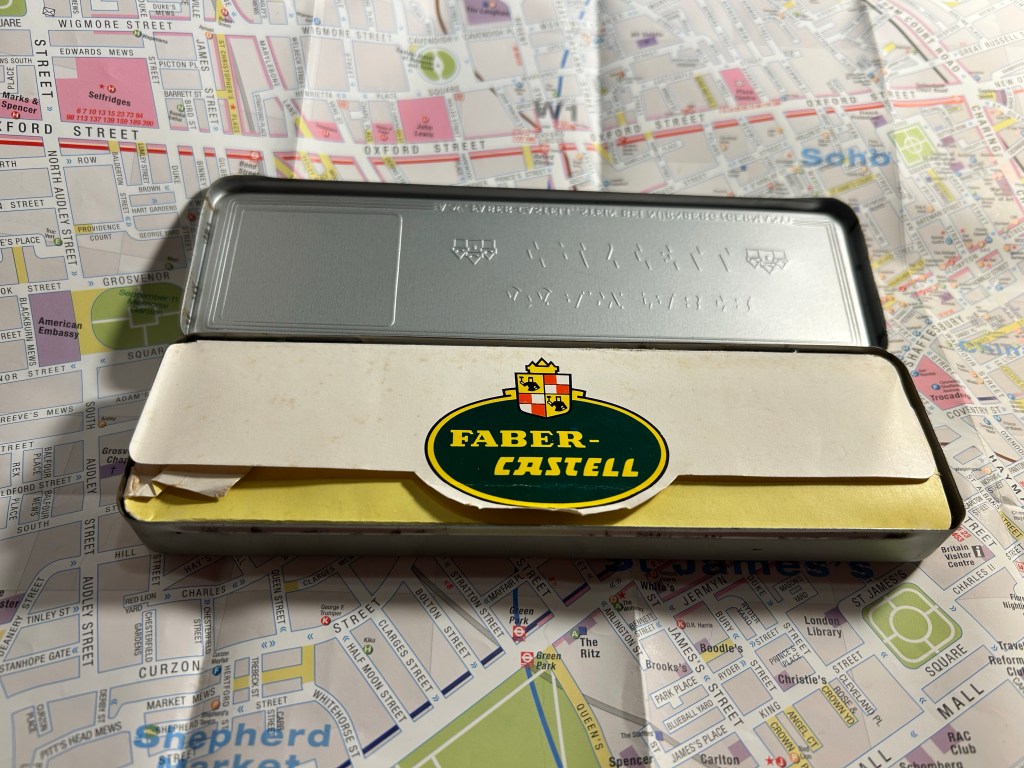
The over packaging continues inside – you wouldn’t want your pencils rattling around in the tin, would you?

Paper insert to protect the pencils inside.

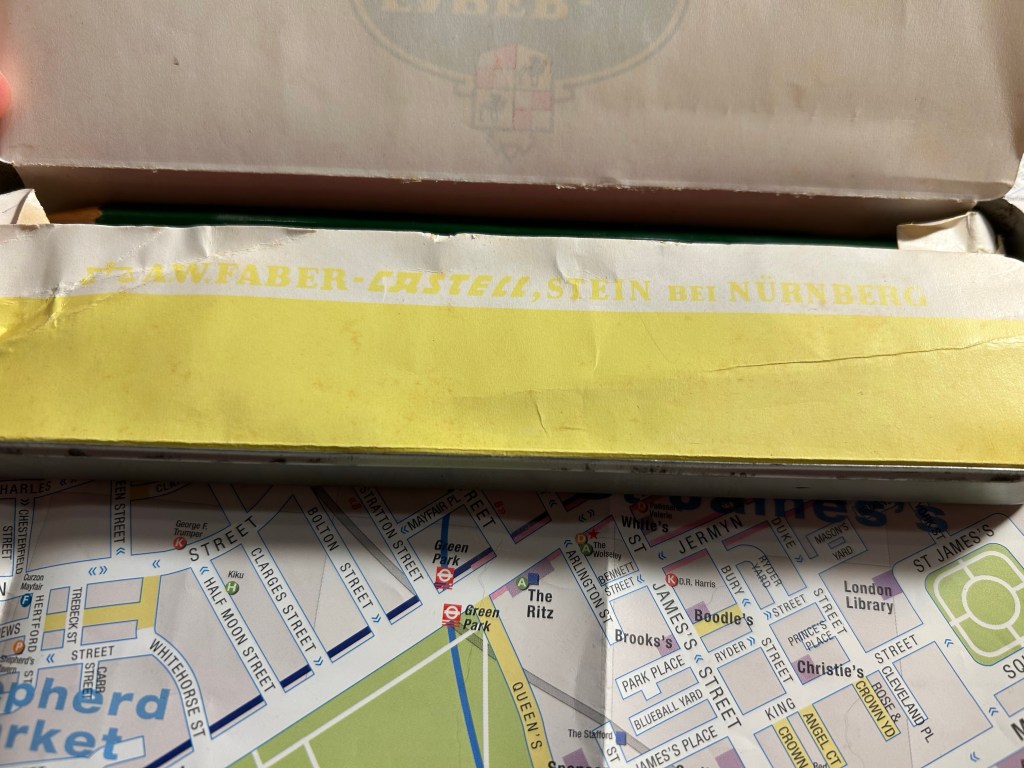
Faber Castell’s factory in Stein proudly represented on the outer tin and here too:

A.W Faber-Casterll, Stein Bei Nürnberg

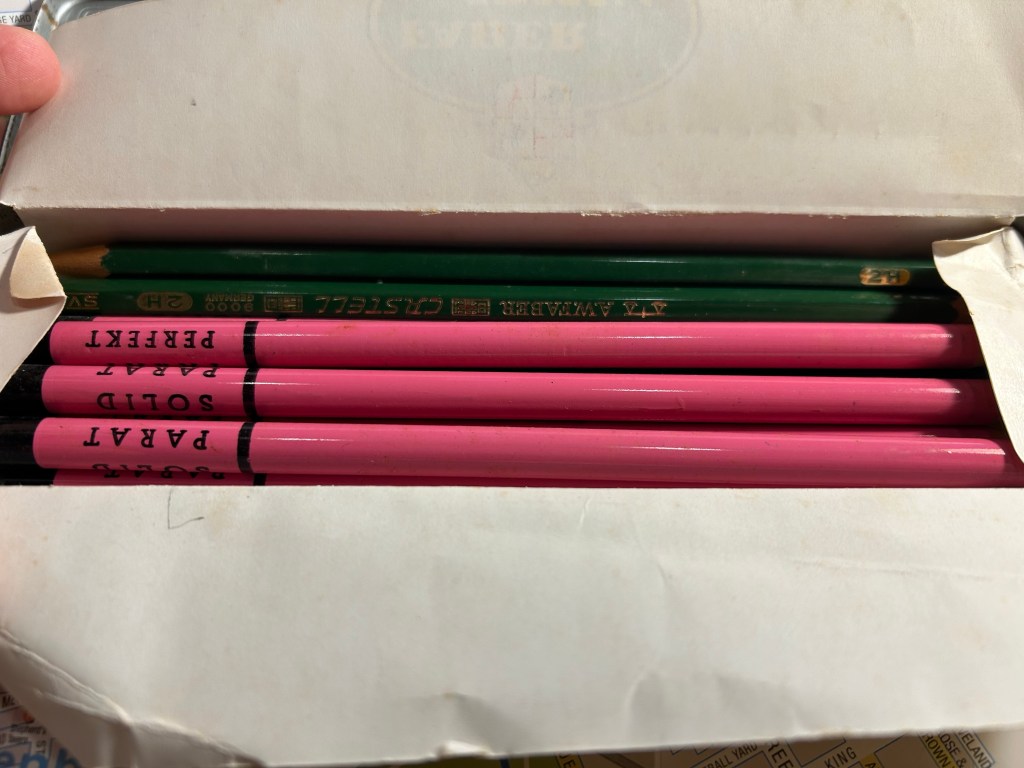
Inside were about half of the original Faber-Castell 9000 2H pencils, and half pink advertising pencils for a thread company that I think no longer exists.

It’s like opening a box of chocolates – you never know what you get

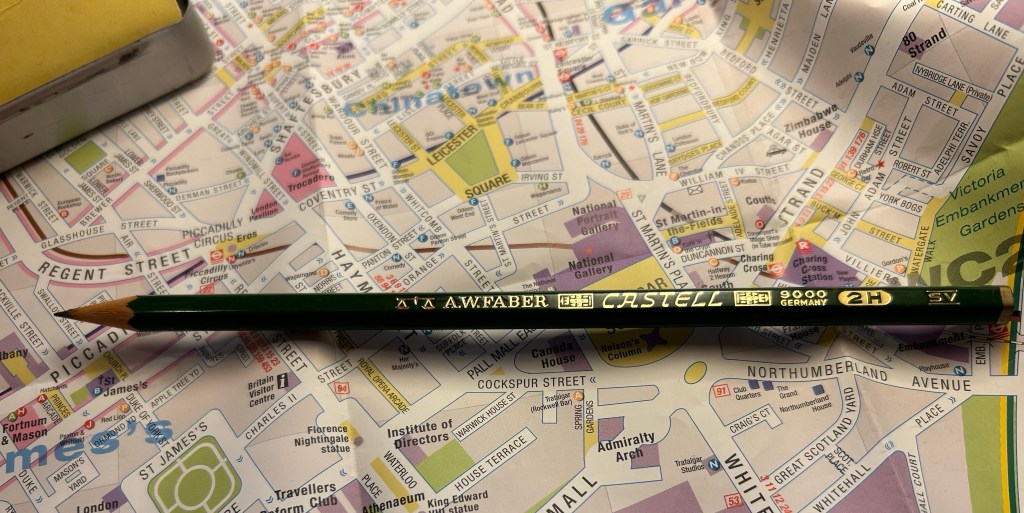
Faber-Castel 9000 are excellent artist pencils, and the vintage ones are just as great as the current ones in production, only they’re usually cheaper and have much better typography and logos on them. Look at this little masterpiece:

Vintage pencils always have a ton of stuff stamped on them. You needed the INFO, right?

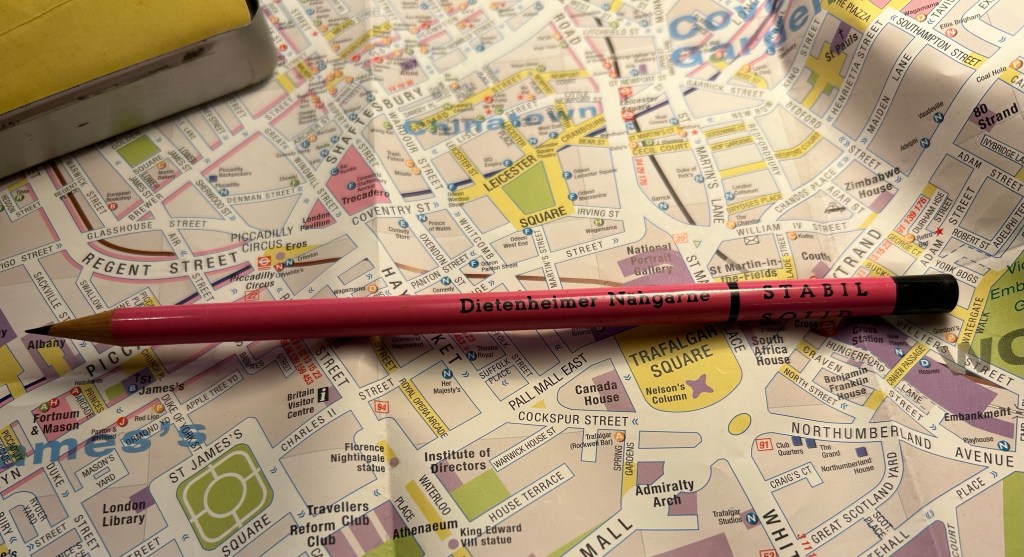
The pink pencils were round advertising pencils, for a German thread making company that seems to no longer exist. They are solid HB pencils, and have an 80s sort of vibe to them.

Advertising pencils.

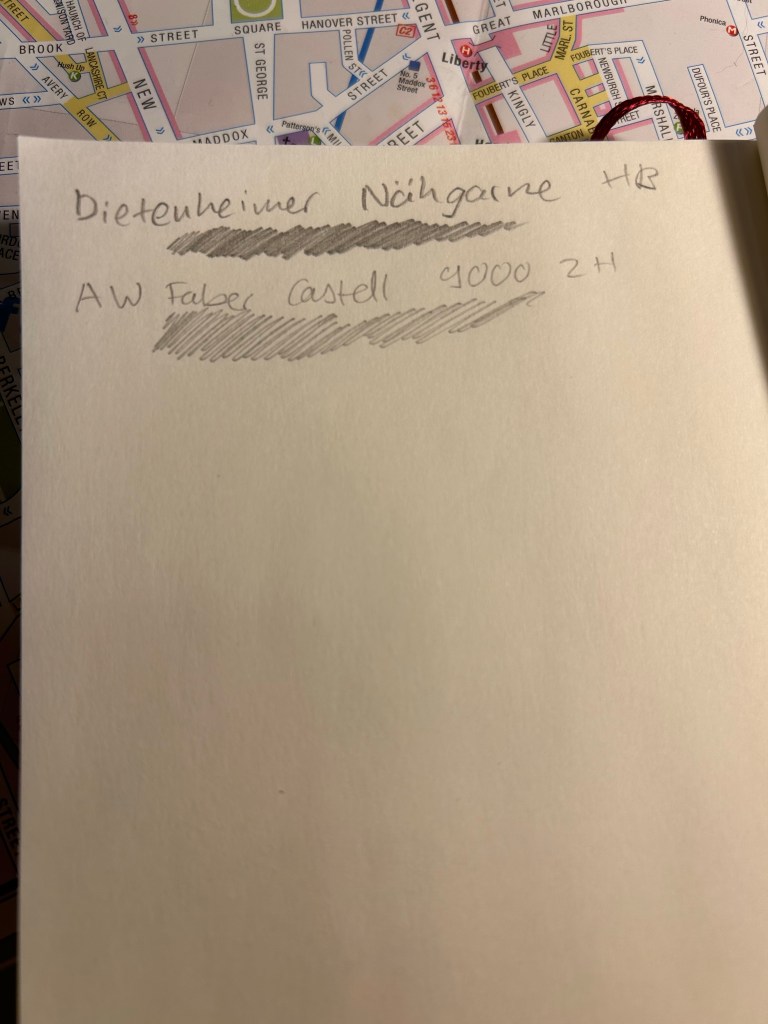
The great joy of vintage pencils is that they of course write just as they used to when they were originally made. If they have erasers they’re going to be unusable (these pencils don’t), and sometimes the wood is a bit brittle and dried out so a bit more care needs to be taken whilst sharpening them (these pencils are in excellent condition), but otherwise time affects pencils very little.

Writing samples

So next time you’re at a flea or antique market, rummage around its hidden corners for some cool old pencils to try out. You never know what you’ll find — I picked up some Sanford Noblots from a giant jar of pencils that way.

P.S. If you’re wondering, 2H pencils are perfect for watercolour under-sketches, as so long as you keep your pressure light, they disappear beneath the paint.