Book Review: Deacon King Kong – James McBride

This novel contains multitudes.

There’s a story of tight-knit community under threat. There’s a love story of a kind rarely portrayed in fiction these days – one deeply mundane, pragmatic, pedestrian, and also deeply tragic, transformative and profound. There’s a Bildungsroman element, a gangster story element, a mystery, a religious element, and even time devoted to plants. There are many stories of friendships, many of them unlikely, and a few stories of rivalries, some of them rivalries to death. There’s a particular story of friendship, through hardship, alcohol, cheese and furnaces, that is alone worth the read. There’s a budding romance between two star-crossed and not young lovers. There are heart breaking moments, and there are laugh out loud funny ones (the funny ones outnumber the heartaches, I promise). There’s a cop story, a feisty grandma story, a story of racial struggle, and a story of medieval religious art.

Read this book. It’s a delight, it’s full of heart and surprises, and it’s one of the most original works of fiction that you’ll get to read. Wonderfully well written, jumping with life, and a joy to experience.

Weekly Update: Motorcycle Sketch

Running

I’m a week away from getting back to a 10k long run, and the running weather has been pretty perfect so far. I ran a 30 minute hilly recovery run today and for the first time ever I ran it without headphones. I normally run with earbuds and listen to podcasts or music, except during races where I leave my earbuds at home for safety reasons (and to get the full race experience). It was relatively early and the trail I was running through was deserted, so it was quite the experience listening just to birds and the sound of my feet and my breath. This is definitely something that I plan on adding to my running routine.

Reading

I’m two thirds into “The New York Trilogy” by Paul Auster and I’m dreading starting the 3rd and final story. The writing is excellent, but it’s like reading through version after version of Bartleby the Scrivener – not something that you particularly want to do. I’ve come so far that I will finish the book at this point, but after reading several Auster books it’s clear to me that while he’s a very good writer, his books are not for me.

Meanwhile I’ve started on “The Comfort Crisis” by Michael Easter, and though it is clear that it suffers from many of the same problems that books of this kind suffer from (cherry picking or hand waving “research” over complex and nuanced topics), there are some interesting ideas within.

Fountain Pens

I’ve decided to sketch more with my Inkvent ink filled fountain pens to try and run them dry more quickly, so here’s a motorcycle sketch done with a Levenger True Writer Cappuccino with a fine nib and Diamine Nutmeg.

Motorcycle Sketch on Midori MD Cotton paper

Have a nice and peaceful week.

Three Habits Worth Keeping

Happy New Year!

This is the time of year when people set resolutions, themes, goals, intentions, words of the year, etc. Ambitions are high, intentions are good, but well before March most of these efforts will be abandoned and forgotten. I’ll be writing about my quarterly plan and my 2025 planner later on, but for now here are three habits that worth keeping in 2025 and in general, and a few tips on how to get into them and persist:

Exercise

Any amount and any kind that you can do is excellent. Let’s repeat that: ANY amount of exercise and ANY kind of exercise is a tremendous win. Start with walking if nothing else speaks to you, but try to make sure it’s a brisk walk and not a shuffle if you can. It doesn’t need to take an hour, and it doesn’t need to be 10,000 steps. Remember, anything you can do is good. Local gyms and community centres usually have classes you can try out if you want to give yoga, pilates, kickboxing or jiujitsu a try.

Running offers the best “bang for your buck” in terms of time and money invested per health and fitness gains, but not everyone can run, and not everyone enjoys running. If you want to give running a start, I recommend using any “couch to 5k” app, and then transitioning to the excellent guided runs and training plans in the free NRC app to keep you going. If you need someone to keep you accountable, either join a group of some sort or find a friend or family member to work out with.

The NTC app offers a huge variety of training options – from yoga to full equipment gym workouts, with some excellent body-weight workouts in between. Swimming is a great low impact way to build up cardio and a bit of strength, and weight-lifting isn’t as intimidating as you think – a pair of dumbbells at home is a great way to start exploring it. Yoga with Adriene is great way to get into yoga if you don’t or can’t take a class and the NTC app seems too intimidating.

Soccer, basketball, baseball and other group sports are great ways to expand your social circle, and tennis, pickleball, badminton are great ways for couples to work out together.

The easiest way of getting into the habit is doing a little something every day, and doing it as soon after you wake up as possible. That way you start the day with a win and some endorphins, which is always a nice way to start your day.

If you think you don’t have time to work out, be honest with yourself and track your time for a day or two. How much time is spent on social media? Binge watching TV? Mindless scrolling? Could you cut some of that out? Could you go to sleep a little earlier and wake up a little earlier so you can have some alone time to exercise and clear your mind?

If you already have a solid exercise routine in place, take the time to diversify it if you can. This goes particularly to us runners: strength train. Swim. Cycle. Do things that aren’t just running, because just running is one of the main causes of such relatively high injury rates amongst runners compared to other athletes.

Reading

Most people don’t read, which is their loss because reading is a superpower. Train your brain off the social media dopamine hamster wheel and teach it how to focus for significant stretches of time by picking up a reading habit. You’re standing in line bored? Open your Kindle app and pick up that detective novel or space opera from where you left off. Replace TikTok, social media and YouTube with books, and make sure that they’re books that you want to read. Don’t go off bestseller lists or influencer recommendations or whatever one this or that award, or is considered a classic. When you’re getting back into reading you need to gradually train your mind to get used to this activity. Start with a book that really interests you (not one that’s impressive), and start with a physical copy because they’re easier to read. Reading will do to your brain what exercise does for all of your body: make you better, stronger, faster, healthier and happier.

If you’re already a reader, then mix things up a bit: if you only read non-fiction, read fiction for a change and vice versa. Try something new, because you may just end up liking it. If you’ve only done light reading so far, pick a challenging book and work your way through it. Treat your brain like a muscle you are training, where you gradually progress to bigger and bigger weights. Challenging books are often the most rewarding, but you probably should start with them.

Journaling

Digital or analog, it doesn’t matter, journaling is worth doing. Gain insight to yourself, unleash your creativity, and let loose to your thoughts in a safe environment. This is the path to self improvement, learning to be kind to yourself, and having a positive mental attitude towards life.

If you’ve never journaled before, start small and simple: pick a notebook that you will enjoy writing in (whatever speaks to you, no matter what other people think), use whatever pen or pencil you fancy, and write 3-5 things you are grateful for each day. Add more sections to your daily journal as you go along: a “story of the day”, an account of what you did or what you consumed and what you thought about it, a nightly summary, etc.

Make it a ritual of sorts: write in your journal every morning and evening, every time you switch between major tasks during the day, or when you feel the need to respond to something (don’t post online, post in your journal instead).

Don’t be intimidated by gorgeous and elaborate works of art in various journaling forums, blogs and on Instagram. These are journals as craft projects, and while they are nice, they aren’t what we’re trying to get to here. It’s OK to add stickers and bits and bobs to your journal, but its purpose shouldn’t be to be photographed and posted. It’s there to work for you, so treat it like a workhorse, not a circus pony. Also, remind yourself that many of these journal photos are there to sell: stickers, washi tape, pens, notebooks, ink, the poster’s journaling course, etc. People rarely show off their “real” journals because if you’re honestly journaling only for yourself, that’s just not something that you’ll want to share.

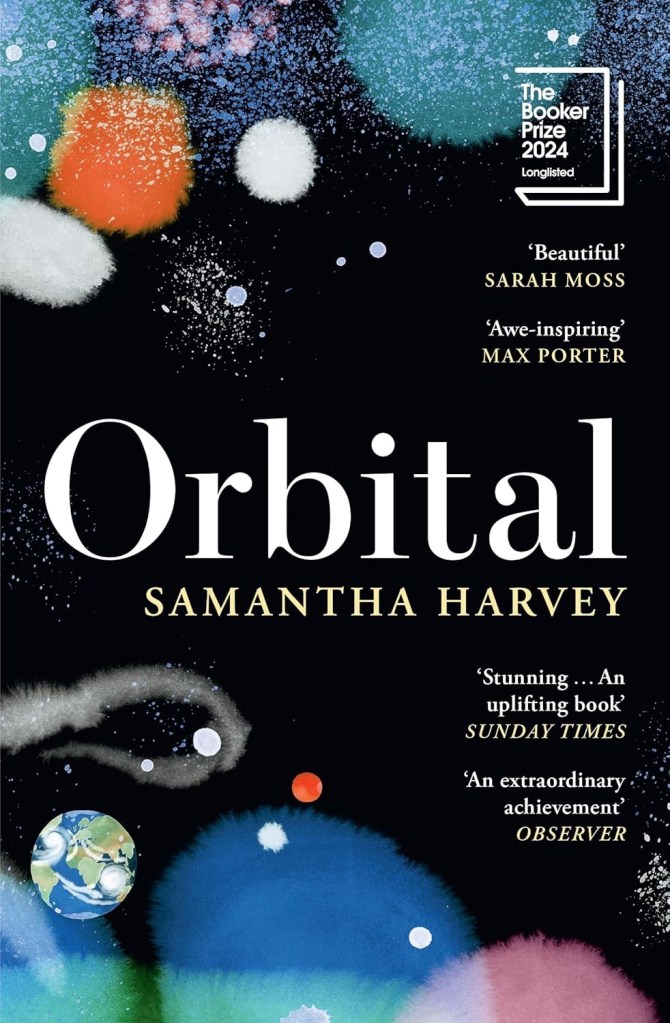
Book Review: Orbital: A Novel – Samantha Harvey

This book won the Booker award, the 2024 Booker award, and for the life of me I don’t know why.

Though the book’s subtitle is “a novel”, at 137 pages Orbital is basically a novella. Mostly it’s a book about nothing, involving six people that you are guaranteed to not care much about, set in the International Space Station. Garnish the whole thing with a mountain of purple prose, and that’s Orbital for you.

Could Harvey have come up with a more interesting premise involving the International Space Station (ISS)? Of course she could. What if Orbital would have been set during the pandemic, with astronauts basically stranded up there, worried about their families and friends, worried about their resupply or how to get back home (see also the eight day space mission that will last for nine months). What if one of the astronauts that was meant to return from orbit refused to return? (It happened in the past). There’s no end to the interesting dramatic situations that being in orbit in the ISS offers. Harvey will have none of that.

The astronauts themselves are a dull lot, that you learn very little about. There’s a religious guy with a postcard that’s supposed to be profound but isn’t; there’s an Italian guy that went scuba diving on his honey moon; there’s a Japanese woman who’s mother dies of old age (spoiler: that’s the drama in the novel); there’s a woman that’s possibly Irish, possibly British that has a peculiar non-relationship with her husband, but don’t worry we don’t get to explore that. And there are two Russian guys. That’s the extent of the characters in Orbital, and that’s how well you get to know them or care about them.

The novella takes place during 16 orbits of the ISS around earth, and there’s a giant typhoon that takes place during a few of these orbits. There’s a weird “white saviour” bit, but without the “saviour” part of it with the Italian astronaut and a poor fisherman’s family that he met during his honeymoon and we’re to believe they kept in close touch with for years until the story takes place. Don’t worry – Harvey doesn’t want drama anywhere near her work, so there is none even at this point.

What there is a lot of is self-involved, bloated purple prose about the beauty and fragility of our planet, space and humanity. None of it is earned, none of it is attached to the narrative, all of it could have been cut out – but then there would be no Orbital.

I rarely review books that I dislike, and I should have given up on Orbital a quarter of the way through, like I originally wanted, but I didn’t. So let this be a warning to you: not all Booker award winners are worth reading.

Weekly Update: Impressionism, Cal Newport and Inkvent End

Inkvent

I’m finally done with reviewing the Diamine Inkvent 2024 Black Edition calendar and it’s been exhausting. I haven’t been able to get a proper buffer for the even this year, which meant that I was chasing every post every day.

On the plus side, it was nice to dust off 25 bears and sketch them. My sketching and my blogging had been in a rut recently and this event kickstarted them, so I am grateful for that. I also got some lovely comments from people, which is always wonderful to read.

Wild sunset today

Cal Newport

The latest episode of Cal Newport’s Deep Questions podcast was excellent, and in the final segment Cal discussed his new approach to making a quarterly plan. It’s worth listening to, but basically his idea of pillars and foundations and focusing on a certain pillar at a time really resonated with me. My next quarter will be focused on craft as a pillar, as I want to earn a professional certification and work towards a deeper understanding and more hands on experience with certain more obscure aspects of my job.

Reading

I finished reading the HBR “Dealing with Difficult People” book, and started reading Paul Auster’s “The New York Trilogy”. So far it’s a very Paul Auster book, for good and for bad.

Impressionism

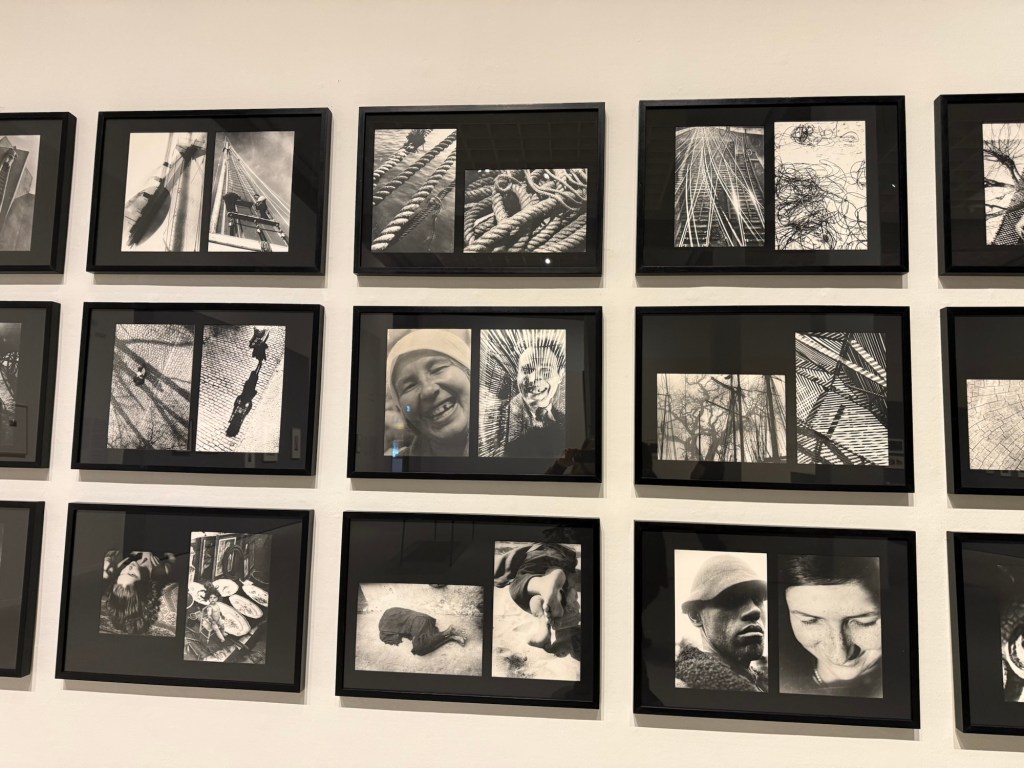
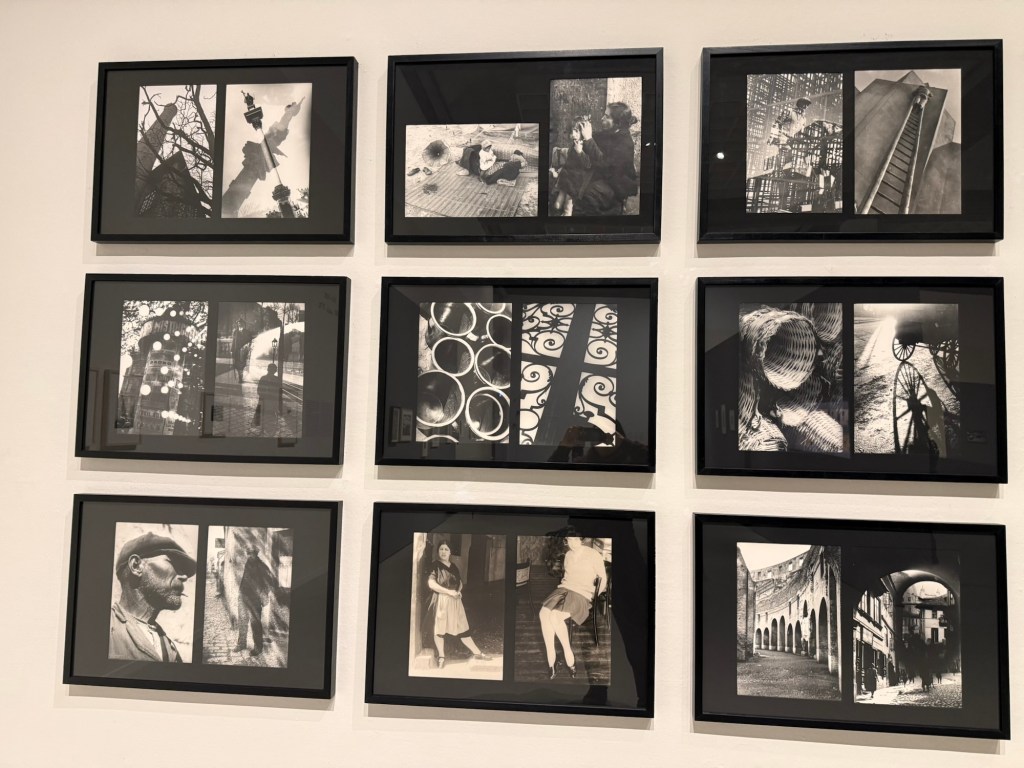
I went to see an Impressionist exhibition, celebrating 150 years to the movement, at the local art museum. The exhibition itself was nice enough, but a bit thin in terms of the artwork on display. There was also a nice print exhibition, and an excellent retrospective exhibition dedicated to Moi Ver. It was wonderful seeing a master photographer at work, and his design work is also worth seeing.

Ci-Contre Moi Ver
Ci-Contre Moi Ver

I went to the museum store later and went a little wild, purchasing a handmade ceramic cup made by a local artist, three postcards (which I wrote on and will give away), and a Leuchtturm1917 A5 dotted notebook that I didn’t need but I wanted anyway. I bought a Leuchtturm notebook the last time I was in that store, and it’s now my work daily driver notebook, so I assume I’ll find use for this notebook soon enough. The paper isn’t perfect, but it’s good enough for me for daily fountain pen use.

Have a great week!

Weekly Update: Catch Up Edition

It’s been a while since I’ve posted a weekly update, but as part of my effort to get back to a regular blogging schedule I want to start posting these.

Here are some cute kittens cuddling together to cheer you up

Reading

I’ve recently finished Ben Aaronovich’s “The Masquerades of Spring” (nice enough, I’m hoping to review it later) and John McPhee’s “Draft No. 4: On the Writing Process” which was fascinating and very well written. Then I started reading “Orbital” by Samantha Harvey. It’s this year’s Booker winner and yet I’m struggling to read it because it’s so dull and lifeless. I’m a quarter of the way through but I may just give up on it in favour of more interesting things on my list.

Running

After participating in a 5k and 10k at Disney World last month, I’ve been struggling to get back to my training plan. The solution, as always, is a combination of patience, perseverance and enrolling to another race. I have a 10k at the end of February and I want to be in good shape for it as the running conditions will likely be less than ideal (i.e. too hot).

Other things

  • At the Gentleman Stationer there’s some very good advice on which stationery items make for bad gift ideas. I will add to this: don’t buy the artist in your life art supplies unless they gave you very specific information on what to get them. Good art supplies are usually not inexpensive and you’re very likely to go wrong if you just try to muddle your way through an art supply store. Either get them a gift card to their favourite art supply store (a brick and mortar one, preferably), or ask them to tell what they want. If you insists on going on this route then sketchbooks from Stillman and Birn (go for the softcover ones and never buy coloured paper), or a set of Faber Castel 9000 sketching pencils will likely be welcome.
  • If you haven’t gone to see the movie “Wicked,” then go and see it. It’s a great adaptation to a very good musical and I promise you’ll enjoy it.
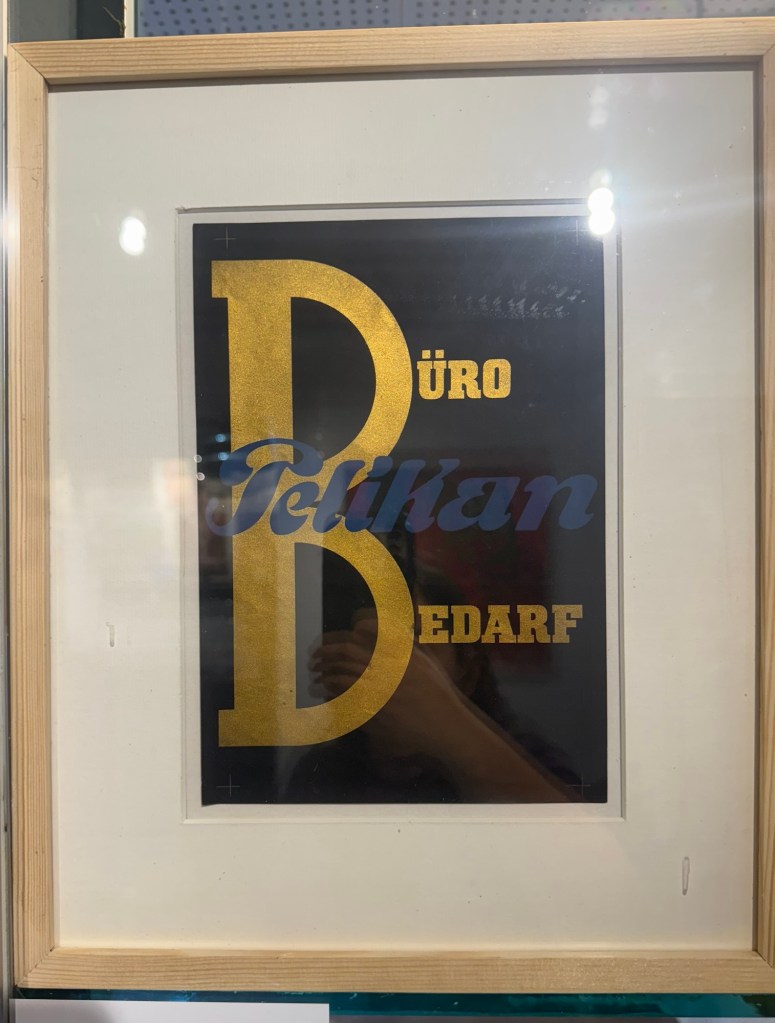
  • I went to a pre-auction exhibition today and got to see this original cover for a pre-war Pelikan catalog created in gauche and bronze powder by El Lissitzky:
Not a great photo for a pretty great design

The sky was melting into the sea this evening:

I hope you have a great week!

March 2024 in Reading

I read four books in March (and started reading Paul Auster’s mammoth of a book 4321). Three of them were very good (Prospero’s Cell, The Sisters Brothers and Blood) and one that was a bit of a disappointment (Slow Productivity) mostly because I was already familiar with the concepts in it. All in all not a bad reading record for the month.

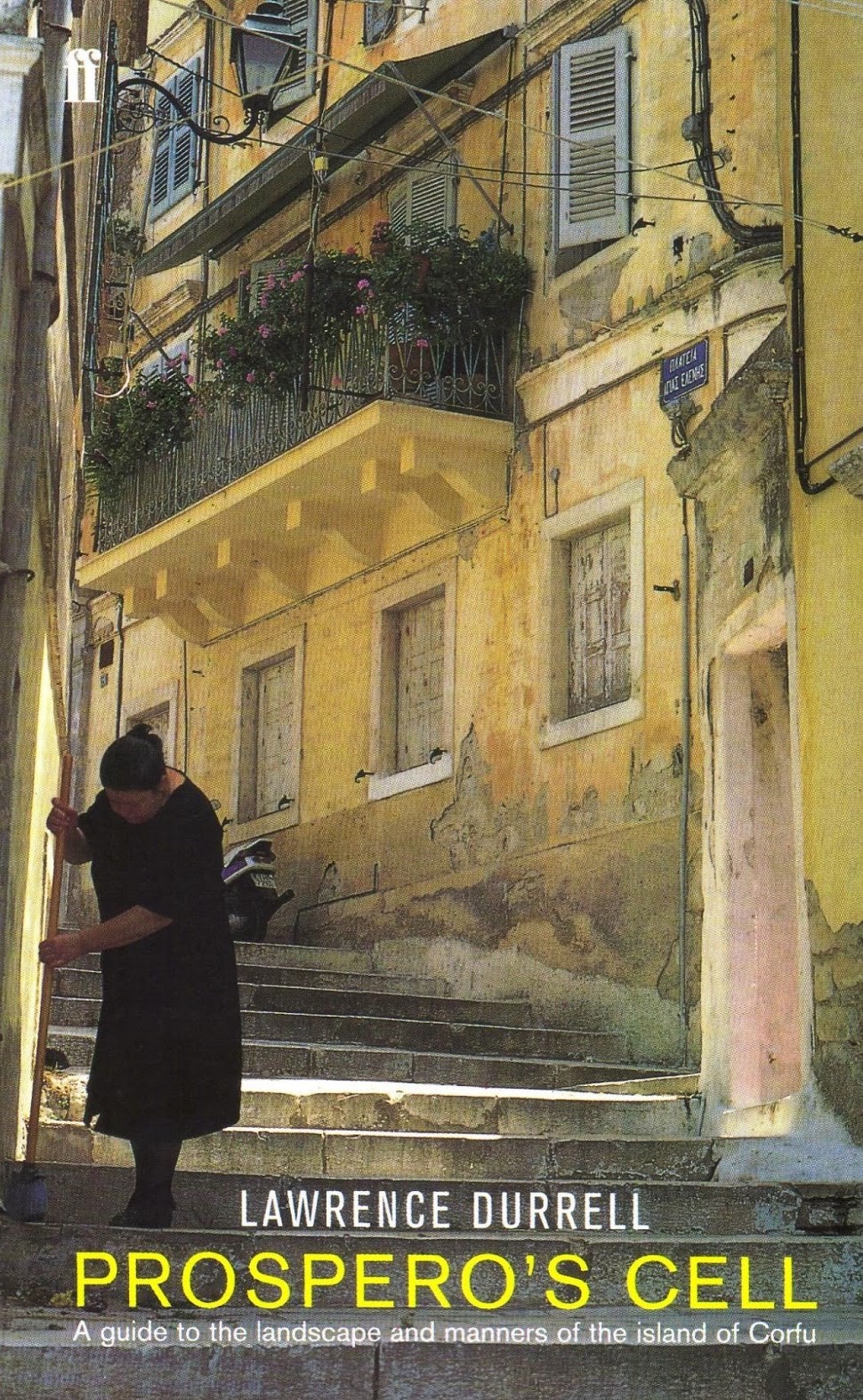
Prospero’s Cell: A Guide to the Landscape and Manners of the Island of Corfu, Lawrence Durrell

This isn’t a guidebook, nor a travel book, nor purely a work of non-fiction. Durrell lived in Corfu for a few years before WWII (his brother, Gerald Durrell wrote several books about their time there, the most famous of which is the wonderful “My Family and Other Animals”. I’ve read that book so many times I know parts of it by heart) with his wife Nancy and a group of artistically minded friends. This book pretends to be a guide to the island only in its title and a few peculiar appendixes in the end. In reality it’s a stylized diary of a year and a half of Durrell’s time there, just before the war broke out. Durrell is a master of description, and for that alone the book is worth the read. It’s a sliver of a book that captures in a pile of amber words a time, a place and a community that now no longer exist. It was written while Durrell was exiled in Alexandria, and you can feel the melancholy and mourning for a golden age that was once his and is now lost.

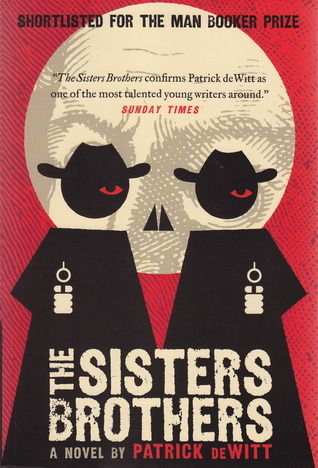
The Sisters Brothers, Patrick deWitt

I’ve had this book for so long on my reading list I managed to buy both a digital and physical copy of it. The design of the paperback is wonderful, by the way, so I recommend getting it if you can (that’s the edition I ended up reading).

Charlie and Eli Sisters are brothers and professional killers in 1851 frontier America. They’ve been sent to California to kill an elusive prospector, Hermann Kermit Warm, at the request of their employer, the enigmatic, powerful and cruel Commodore. The novel is a sort of Noir Don Quixote/Cohen Brothers telling of the story of their trip there and back, from the point of view of Eli Sisters, the younger brother. Eli is a fascinating character, and much of the interest in the story is seeing him grow more self-aware and conscious of his life and choices. The novel manages to be funny and tragic, cruel and heartwarming at the same time. It has a lot to say about agency, morality, violence and the rush for gold vs quality of life, and it goes about it without preaching to the reader.

A truly original novel that is hard to put down, and manages to be both entertaining and illuminating. Well worth the read.

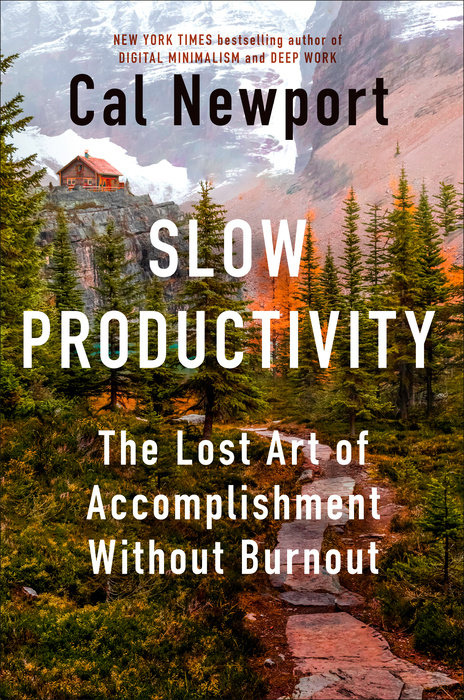
Slow Productivity:The Lost Art of Accomplishment Without Burnout, Cal Newport

I’ve read Newport’s Digital Minimalism and Deep Work, which I liked and utilized to great effect, and his So Good They Can’t Ignore You, which isn’t as good as the others. I also listen to his excellent podcast, Deep Questions, and so I pre-ordered this book the minute he started talking about it.

Herein lies the paradox of this book. If you’re a regular listener of Newport’s podcast there’s very little in this book for you beyond a few anecdotes. Newport has basically workshopped and talked about all the ideas in Slow Productivity for months on his podcast, going into much more depth and implementation specifics than he does in this book.

If you aren’t a listener of his podcast, AND you’re a knowledge worker with some level of control over your schedule and tasks, then Slow Productivity is worth reading. You’ll learn about pseudo-productivity, its origin and its breaking point, and you’ll learn about an alternative framework: slow productivity. “Do fewer things. Work at a natural pace. Obsess over quality”.

Where the book fails and podcast triumphs is in the implementation of these ideas. The book does give you a few ideas to try out, but through a much lengthier discussion in the podcast, plus real-world questions that listeners asked you get a better idea of how this would work in real life.

As I’ve been listening to the podcast for a few months, I already started implementing these ideas at my job (before the book was published). I work on only one project at a time, the rest stays in the backlog. I was told to cut corners and do a mediocre job on my current project in an attempt to rush it, but I deflected that request. Once I presented my initial results, the tune changed – this was high quality work! Totally worth the work and the wait, keep it up!

Bottom line: skip if you’re a podcast listener/viewer, read if you feel overwhelmed at your job and want an introduction to an alternative productivity framework that’s not as frenetic as the normal knowledge worker’s fare.

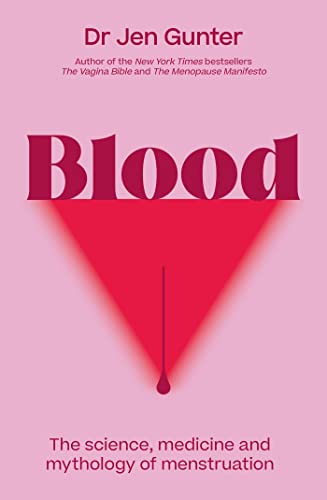
Blood: The Science, Medicine and Mythology of Menstruation, Dr Jen Gunter

Like many other readers that reviewed this book, I wish I had access to it when I started menstruating. Dr Gunter is as usual informative, caring and entertaining at the same time, which is quite an accomplishment. Complex medical processes are explained with great clarity and compassion, and the reader is left with a LOT of very useful information to use when making medical choices or advocating for themselves in medical settings. This and Dr Gunter’s The Menopause Manifesto are must reads and treasure mines of solid, well-researched and vetted medical information in a world full of medical disinformation and misinformation. There are a few pages here that would have saved me months of needless anguish during chemo.

An absolute gem of a book, one to read cover to cover and then reference in times of need.

Have you read anything good or interesting last month?

On Reading Difficult Books

Is there a book that you want to read but scares you? It’s too long, or too technically demanding, or its subject matter is challenging — is there such a book on your virtual or physical bookshelf?

I have several such books waiting to be read. I also make a point to read several such books each year. They’re nearly always worth the effort.

Goodreads and its annual reading challenge make readers favour short, quick reads, skim reading and light reading. This is not by chance, but this isn’t a post about the failures of Goodreads as a platform. This is a post about reading difficult books, and the point is that if you want to challenge yourself you’re going to have to make a concerted effort on your own.

You will have to motivate yourself because reading platforms and book clubs skew towards books that can be read quickly and relatively easily, and we’re being trained daily to shorten our attention span and ruin our capacity to concentrate and think by platforms like TikTok, Instagram and YouTube. To read difficult books is to go against the grain, to retrain your mind to deep, meaningful thought, to long stretches of concentration, to a higher level of empathy. It’s the difference between a fast food burger and an evening with a 3 star Michelin chef showing off his best work. It’s worth it, but it costs more.

If you chose to go on that challenging but worthwhile journey, here are some tips to help you along the way:

  • Build up to it – don’t start with the toughest, longest, scariest book on your list and try to white knuckle your way through. Build up to it by stretching and building up your reading and concentration “muscles” first. If you’re building up to length, for example, fantasy and space opera sci-fi novels are a great way to get there, as they’re usually well paced, relatively easy reads. Historical fiction and family sagas can train you to follow multiple timelines and characters, and short stories utilizing modernist and post-modernist techniques can offer an easier way to encounter them for the first time.
  • Have a light read going simultaneously – this is particularly effective if the book you’re tackling has a difficult subject matter. Have a light, fun read going on at the same time and switch between the two, allowing yourself a break from the difficult topic and time to process it every once in a while.
  • Find a partner for the journey – find a friend, online or in real life, who’s interested in reading the same book as you are, and help each other through it.
  • Find a community – it’s difficult to find a friend interested and able to dedicate time to take the reading journey with you, but it may be possible to find a community of readers going through the book at the same time as you are. It can be through a local bookclub, a virtual bookclub, a reddit community, a Goodreads group, a discord channel – whatever group you can find and suits you. Just make sure you’re comfortable with the group rules in terms of code of conduct and spoilers, and feel free to leave if you encounter toxic behaviour.
  • Create a framework to help you through – ideas for this can include various trackers, reminders, applications like Forest or other Pomodoro like counters that help you focus, little treats or incentives after reaching certain milestones. If I’m reading a particularly long book, I set up a dedicated tracker and a page count I want to hit every day, to make sure that I don’t feel overwhelmed and can visually see my progress. It somehow helps me deal with the goblin in my mind that is screaming that this book is too much for me and I don’t have time for it. Field notes are great for this, especially the squared and reticle grid ones.
  • Start by reading a good chunk – on your first read at least the first chapter or several chapters, so that you get into the flow and tone of the book as soon as possible. I tend to aim for 30-50 pages on the first sitting.
  • Get a physical copy of the book, not a digital one. Paper books are easier and more enjoyable to read than digital ones, as our mind finds them easier to process because of the way we read (oftentimes returning a page or two back to check on something, or flipping to a previous chapter to remind ourselves who that character is or what happened last time). Whenever I’ve tried to read a difficult book on my Kindle, I’ve regretted it (The Alexandria Quartet is the latest example).
  • Feel free to give up, tomorrow – if the book is too much for you, it’s OK to decide that you’re not going to finish it, or you’re going to get back to it at a later date. But before you do that, take one more day to make an effort and read another chunk anyway. Why? Because you may have just reached a particular tough spot, and in a few pages things clear up, or become easier to digest. Also, you may just be having a bad day, or you’re particularly distracted or tired and so the writing becomes more opaque or more of a slog. Give it another day and if it doesn’t improve, move on.
Tracker for Paul Auster’s 4321 on a Field Notes Snowy Evening with a Spoke Design pen.

I’m currently reading Paul Auster’s 4321, which is a challenging read due to its length and its structure. Later on this year I plan to reread James Joyce’s Ulysses (I read it twice cover to cover already, and studied it while taking my degree). I’m considering tracking my rereading here, in case someone wants to follow along. Let me know in the comments if that’s something that may interest you.

February 2024 in Reading

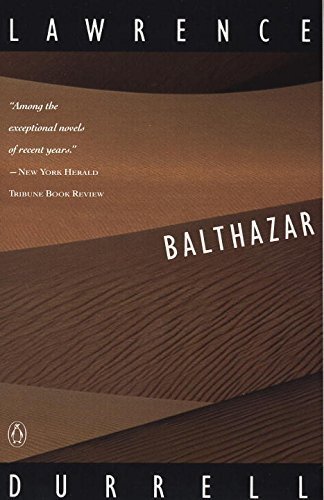
Balthazar, Lawrence Durrell

The second of the Alexandria Quartet this book is much easier to read than the first one, Justine. While it is written from the point of view of the same narrator as Justine was, Balthazar undoes and rewrites significant parts of the previous narrative. This isn’t an accident, but a very deliberate, very well thought out move by Durrell. He’s not merely creating an unreliable narrator, he’s creating a narrator that doesn’t see the full extent of the reality he’s living in, and then has a trusted friend come in and fill in the gaps, correct him, reveal truths he had no way of knowing. As Balthazar’s insights force the narrator to reflect again on what happened in Alexandria at the time, more memories begin to surface and so a few new characters join us (chief among them the enigmatic Mountolive) and a few others get revealed in surprising ways. Nessim becomes fleshed out and more human and relatable as we see him with his brother and mother at the family estate. Scobie shows hidden parts of himself that make him tragically human, and not just a comic relief. Justine too becomes less of a fable and more of an actual person, and Clea gets a bit more depth (though she’s still something of a mythical creature here). Nessim’s brother Narouz and his mother Leila are fantastic characters in and of themselves, and the narrative comes to life with their addition and with the fact that we get some distance from the overly cerebral and neurotic narrator. Balthazar brings high romance to the story, an air of a Victor Hugo novel at times, and so this book flows more easily, is much kinder in its demands from the reader than Justine was.

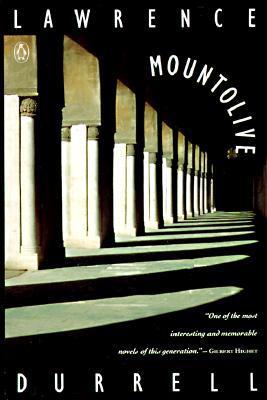
Mountolive, Lawrence Durrell

The third novel in the Alexandria Quartet and the one I was most looking forward to reading. While Justine set the basic story and introduced the main characters, and Balthazar gave new depth, perspective and meaning to their actions, Mountolive overturns them both by giving the characters motives and political context.

Without spoiling the novel, Mountolive introduces David Mountolive, the new British Ambassador to Egypt and Leila’s former lover. Leila is Nessim and Narouz’s mother, and she and her family become the heart of the story, with Darley (the narrator and protagonist of the previous two novels) barely appearing in Mountolive. The narrator changes, pace changes, the love story changes, even the genre changes in this novel compared to the other two, and Durrell has done a magnificent job with this switch. You don’t see it coming, but once he starts revealing what really took place you see that he’s very quietly laid all the groundwork for it there.

Mountolive himself is a fantastic character, and Narouz… I tip my hat to Durrell for creating a larger than life character that could be at home in a Victor Hugo novel and yet is completely believable.

It’s worth reading Justine and Balthazar just to read Mountolive, and no, you can’t skip them just to read this.

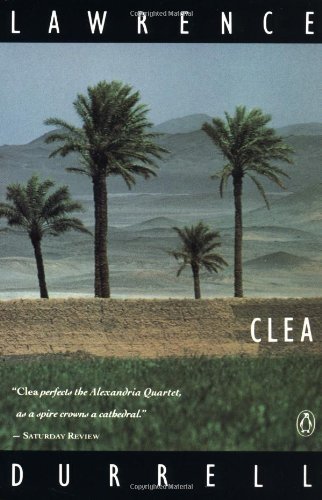
Clea, Lawrence Durrell

The fourth and final book of the Alexandria Quartet Clea takes place a few years after the events in the first three books (which happen simultaneously), during and immediately after WWII. It’s the final layer of a multi-layered narrative, one that reveals more about the characters, allows them to mature, evolve, create new ties and explore old ones. Scobie gains a deserved mythical status, Darley grows up, Clea becomes more human and less of an angel in the shape of a woman, and Justine, Nessim and even Narouz get their final say. Above all this is a farewell to Alexandria, which is arguably the main character in this quartet. The city looms large over the life and events of these novels, providing much more than a setting. Durrell is a master at evoking the spirit of place, and here he is at the heights of his powers, writing what is likely one of the most nuanced, multi-layered, tormented and transcendent boy-meets-girl stories ever written.

The Alexandria Quartet

The Alexandria Quartet as a whole is a difficult and demanding set of novels to read – it makes demands on the reader, and some of the content is hard for both contemporary and current audiences. Yet Durrell isn’t creating a picture postcard of a city, or of his characters. They both have teeth and a significant underbelly and have no problem showing either one. Characters you like show mean, petty and intolerant streaks, and the city is both magnificently charming and a seat of horrors beyond description at the same time.

When it comes to reading demanding books, the question always is “was it worth it”? In the case of The Alexandria Quartet it most certainly is. The dizzying narrative of Justine, that gives to credence to the linear narrative, is overturned by Balthazar, which adds order, depth, insight to it, and a multitude of various contexts. Mountolive adds political and social context and depth over what Balthazar provided, and another set of love stories, this time ones coloured by tragedy. Then Clea breathes time over the trilogy, allowing characters to mature, evolve, reinvent themselves. The artist lost in Mountolive inspires a wedding and two artists found in Clea, and Justine finds her true calling once again.

My only regret with this quartet is that I read it on a kindle. These books require paging backwards and forwards (especially Justine), and they need deep reading not fast reading. I have several more of Durrell’s books that I plan on reading, and all of them are in print format. He is a writer to savour, not to rush through.

How I Use My Notebooks: My Kindle Unread Book List

One of the things that I set up in my Leuchtturm1917 Bullet Journal is a list of the unread books on my Kindle. It’s supremely easy to buy books on a Kindle, as the whole system is set up a way to make book purchasing as fast and frictionless as possible.

This is a problem for me.

I love books, I adore reading, and I have pretty large group of friends that love reading too. This means that I’m inundated with great recommendations that run the gamut from light hearted fantasy and sci-fi to contemporary and classic literary fiction, with a whole host of fiction and non-fiction books in the middle (I don’t read horror and I don’t read romances and I rarely read poetry but that’s about the only limits I have in terms of my reading tastes). I get several such book recommendations a month, and with my initial impulse to rush out and buy them, and with the ease of purchasing books on a Kindle, things could get out of hand very quickly. This was one of the reasons why for years I was so resistant to buying a Kindle.

You see, it’s very easy to lose track of just how many unread books you have on your device. Even if you sort by unread books, you just don’t get a real feel for how many of them are actually waiting to be read. There’s no bookshelf groaning with the weight of unread books, and I was feeling the lack of that.

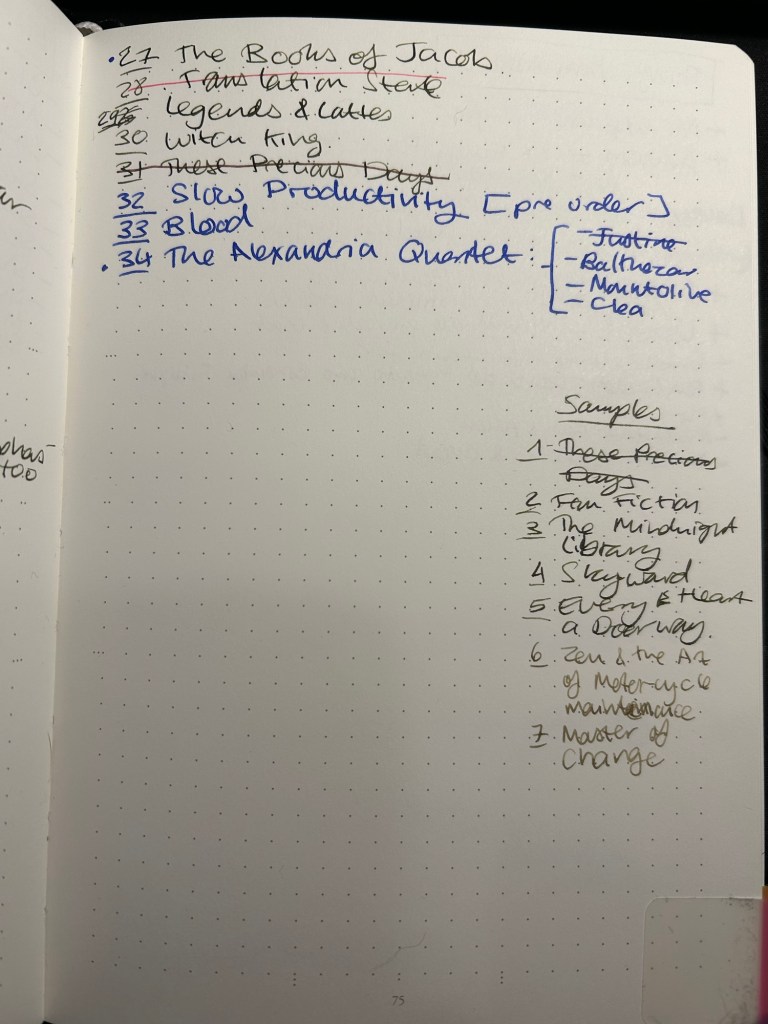
Enter my list of unread books on my Kindle:

It’s a simple numbered list of books that I haven’t read and are on my device. As I read a book, I cross it out. As I purchase more books I add them to the end of the list. As I’ve gotten into the habit of downloading samples, I’ve started to write them down too so they don’t get out of hand. It’s super simple, as bare-bones as it can be, and as practical as possible. The point is just to give my brain an idea of the scale of unread books on my device, and it works.

It works.

I’ve stopped compulsively buying books in the fear of “running out of something to read” or “forgetting what I was recommended”. Recommendations go into my GoodReads “Want to Read” list. And my brain can now see that there’s just no chance that I’ll run out of things to read any time soon. If I buy something I have to go over the list and convince myself that what I’m buying deserves precedence over the lovely books waiting patiently in line, some of them for years. I also photograph this list and keep it on my phone for reference, to prevent me from accidentally buying the same book in physical format (unless I purposefully intend to, which is rare).

What about the physical books stacked on shelves, some of them two books deep? I would love to have such a list for them as well, but that task is too daunting for me now. I remember where my books are visually, and moving them all just to catalogue them not only seems like an awful lot of backbreaking work, it will destroy my “memory catalogue of books”. So it seems that my physical books will remain uncatalogued for years to come.

Do you keep a list of all the books you own but haven’t read yet? Do you just keep a list of the books you intend to read next? Do you track your physical books in some way?