Currently Inked Fountain Pens – Pelikan Hubs Edition

Tomorrow is the Pelikan Hubs 2025 event, and to prepare I have inked up a whole flock of Pelikan fountain pens.

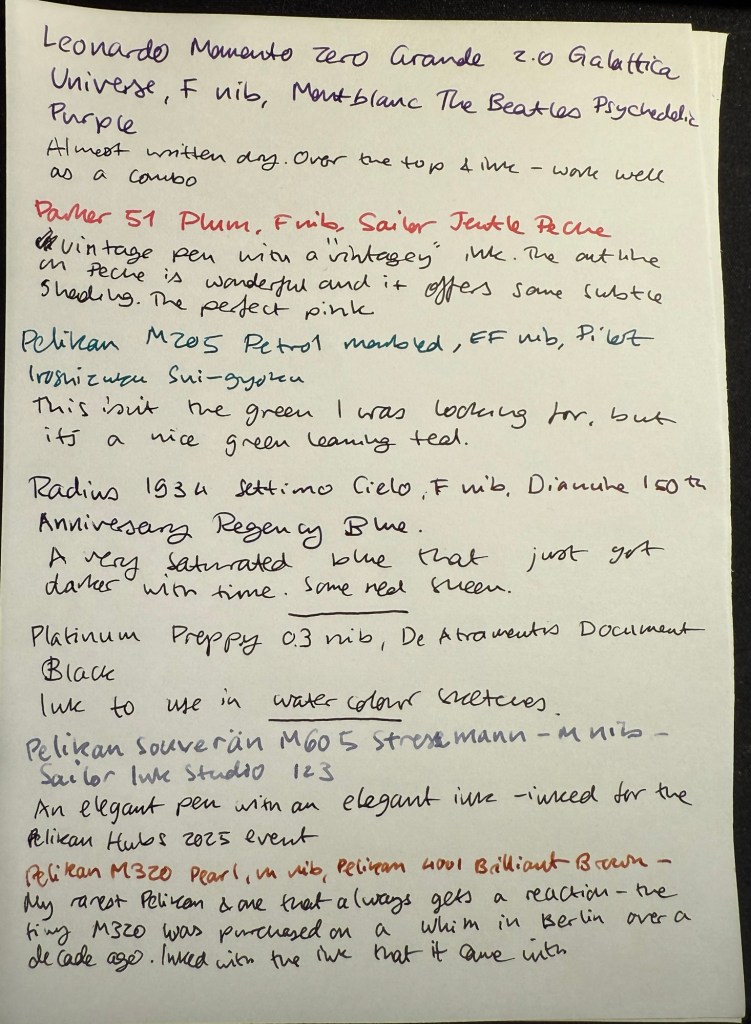
Here’s my current lineup of fountain pens and ink:
Currently inked part 1

The top four have been inked way back in the beginning of August, but because of my travel schedule I’ve yet to write all of them dry. You can read about the Radius 1934 and the Pelikan M205 here as well.

Leonardo Momento Zero Grande 2.0 Galattica Universe – F nib – Montblanc The Beatles Psychedelic Purple – great pen and ink combination. I wrote this pen dry just after writing the sample above.

Parker 51 Plum – F nib – Sailor Jentle Peche – all vintage Parker 51 fountain pens are fabulous and this one is no different. The plum colour is very rare, but I decided to “use the good China”. The ink is a long discontinued Sailor Jentle Peche, a beautiful pink with great shading and outlining. Sailor used to make fantastic inks at great prices – in terrible bottles. It was a struggle to fill this pen, even with their internal ink reservoir dingus.

Pelikan M205 Petrol Marbled – EF nib – Pilot Iroshizuku Sui-gyoku – I was hoping that Sui-gyoku would be the green ink that I was looking for, but it’s more of a teal than a green. The Pelikan M2xx series is a solid workhorse kind of pen, and I highly recommend it.

Radius 1934 Settimo Cielo – F nib – Diamine 150th Anniversary Regency Blue – the ink has grown darker with time, to the point where it’s almost black. This isn’t surprising as it was a very saturated dark blue ink to begin with, and it’s had some time in the pen. I will likely write this pen dry today or tomorrow. The new Radius pens by Leonardo feel very much like Leonardo Momento Zeroes but with a slightly different design. That’s not a bad thing – they are gorgeous pens, and for now they’re slightly cheaper than the Momento Zeroes.

Last week I inked up a new Platinum Preppy 03 nib with De Atramentis Document Ink Black as part of a post that I am working on. It’s the first time I’ve used a Preppy with a converter and not the Platinum cartridge it comes with – and it works well.

Pelikan Flock – currently inked part 2

I inked these pens today for the Pelikan Hubs event tomorrow:

Pelikan M605 Stresemann – M nib – Sailor Ink Studio 123 – a classic and elegant pen and ink combination. The Sailor 123 is really that good, and the generous medium nib shows off its dual shading properties.

Pelikan M320 Pearl – M nib – Pelikan 4001 Brilliant Brown  – my rarest Pelikan, always a crowd pleaser at the hubs. This tiny pen came with a tiny brilliant brown bottle and so far I’ve filled it only with that. I bought it about a decade ago in Berlin on a whim, and I’m so glad that I did.

Pelikan M800 Blue O Blue – F nib – KWZ Exclusive for epiora.pl Błękit Warty Poznania  – this pen was a very expensive birthday gift and my first M800 Pelikan. I bought it at a local pen store that no longer exists. The ink is even more special – it’s my first KWZ ink, gifted to me from the store that it was exclusively made for. I had purchase my M600 Glauco Cambon there just before they were closing for the day on the last day of the USK Symposium in Poznan. The name means Poznan Warta Blue – and it’s tied to the unique blue of the city and the Warta river. It’s a gorgeous blue and it reminds of Poznan, the store, the lovely seller and the nice symposium volunteers that saw me in the store and helped me out with my purchase.

Pelikan M400 White Tortoise – M nib – Sailor Ink Studio 767 – This is the green I was looking for! I purchased this ink last month at Choosing Keeping in London, and it’s the perfect bright and cheerful green that I was looking for, with some great shading to boot. The Pelikan Tortoise pens are gorgeous, and this one is a particularly nice one.

Pelikan M805 Ocean Swirl – F nib – Montblanc Maya Blue – I have been priced out of Montblanc inks (there’s only so much I’m willing to pay for ink) but this ink was heavily discounted at the Montblanc boutique in Heathrow. It’s a lovely bright turquoise with great shading, and it works well coupled with this pen.

Pelikan M600 Art Collection Glauco Cambon – F nib – Pilot Iroshizuku Ajisai – this is the pen that I purchased at Epiora in Poznan, and while I saw it online and loved the concept, I never thought that I’d buy it because of the price. Seeing it in person changed my mind because no photos can do this pen justice – the pattern on it glows! It’s beyond vibrant, and the pen body itself feels different than other Pelikans – heavier and cooler to the touch. The ink is also a Choosing Keeping purchase, and I love the colour very much.

Currently inked part 3

Pelikan M620 Place De La Concorde – M nib – Sailor Ink Studio 162 – this is one of my rarer Pelikans, one that I bought a year or two after the series had been complete and no longer for sale. If ever there was a series of pens that I wish that I owned it was the Pelikan M620 City series, and for years I searched for an Athens pen before giving up – it was just too expensive.

The Pelikans left to right – Place de la Concorde, Glauco Cambon, Ocean Swirl, White Tortoise, Blue O Blue, Pearl

Apart from my inked Pelikans, I’m also taking three uninked Pelikans with me – one to fill with the ink that we’ll be getting, and the others just to share.
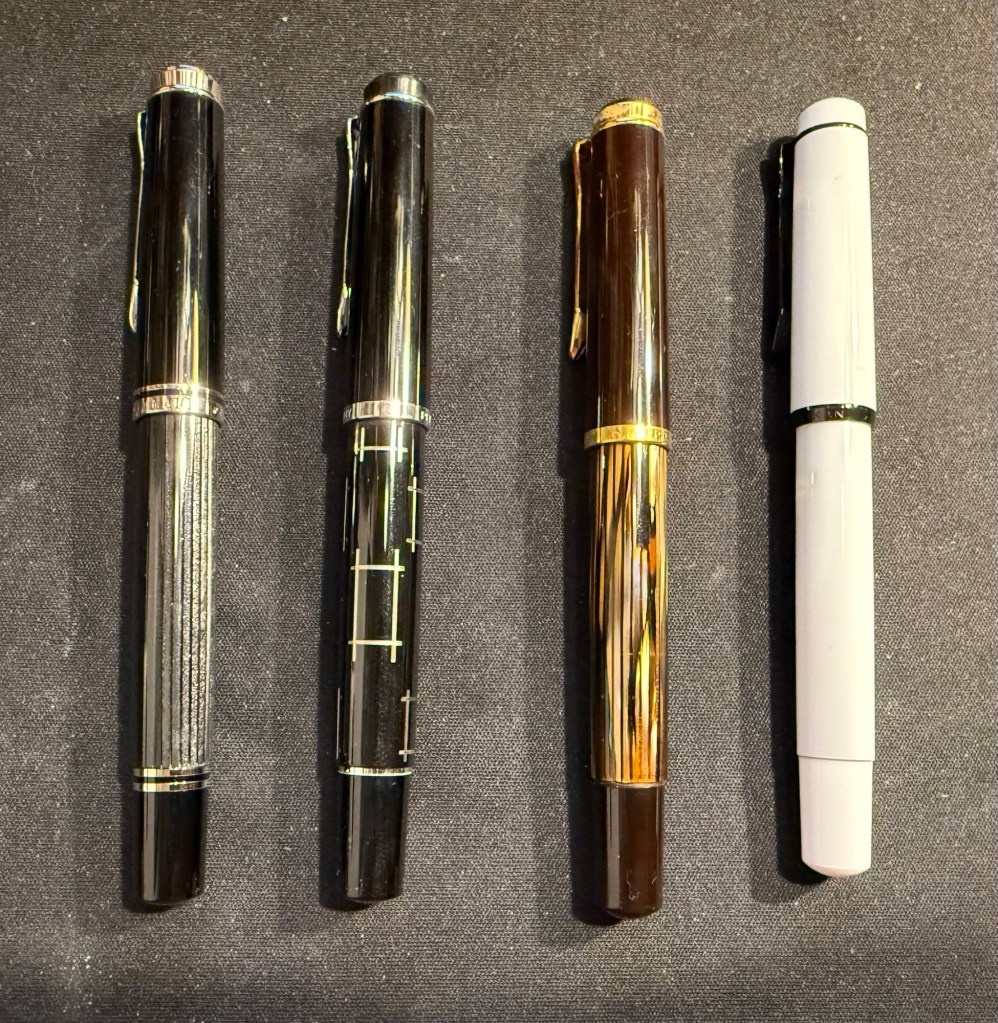
Pelikan Flock – left to right – Stresemann, M215 Rectangle (uninked), vintage M400 Tortoise (uninked), Stormtrooper (uninked)
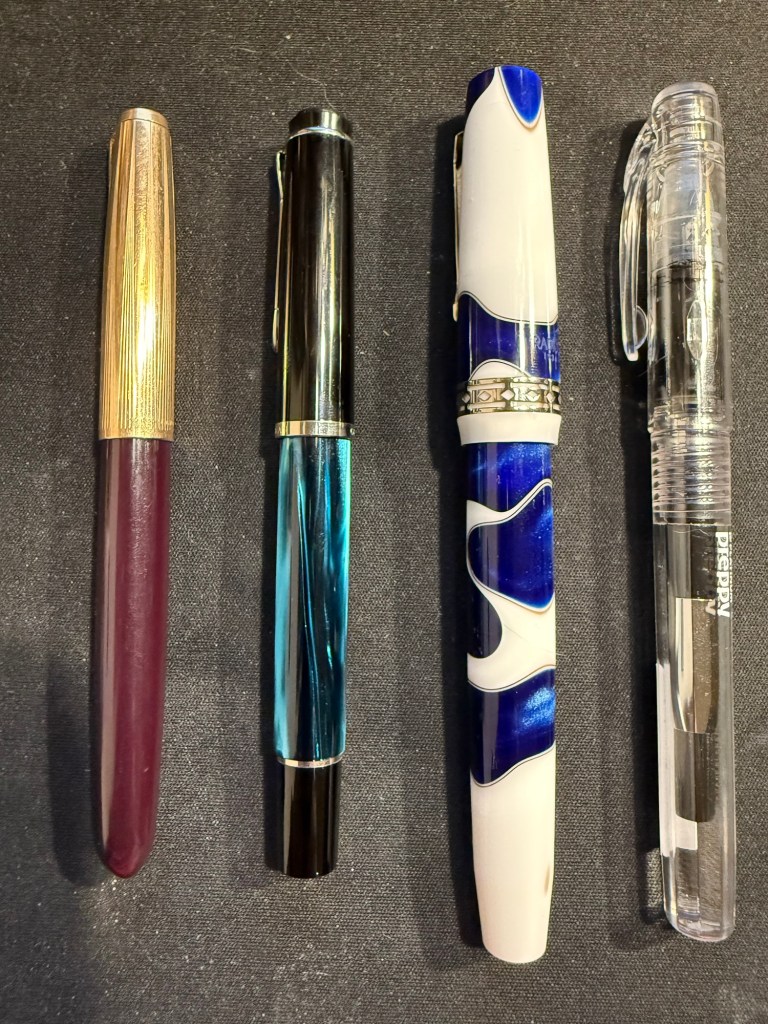
Left to right: Parker 61 Plum, M205 Petrol Marbled, Radius 1934 Settimo Cielo, Platinum Preppy

Are you going to a Pelikan Hub? If so, what pens did you bring with you?
Radius Settimo Cielo Blu, Diamine 150 Regency Blue, Diamine Forever Raven, Pilot Iroshizuku Sui gyoku

I just received a package from Fontoplumo and I immediately added the pen and inks it contained into rotation. While I already have a good amount of pens inked up, I really wanted to give the Radius 1934 Settimo Cielo Blu a try as soon as I got it. Not only is it a gorgeous looking pen, but I was also curious to see how it compares both the the vintage Radius fountain pen that I own and to my Leonardo fountain pens, as they are also the makers of the Radius.

Apart from the Radius the package contained two inks that I was interested in using as soon as possible, so I inked up a Pelikan M200 Petrol with Pilot Iroshizuku Sui gyoku and a Lamy AL Star with Diamine Forever Raven. The Radius got inked up withe Diamine 150 years Anniversary Regency Blue, a rich royal blue with moderate red sheen that fits the blue swirls on the pen body.

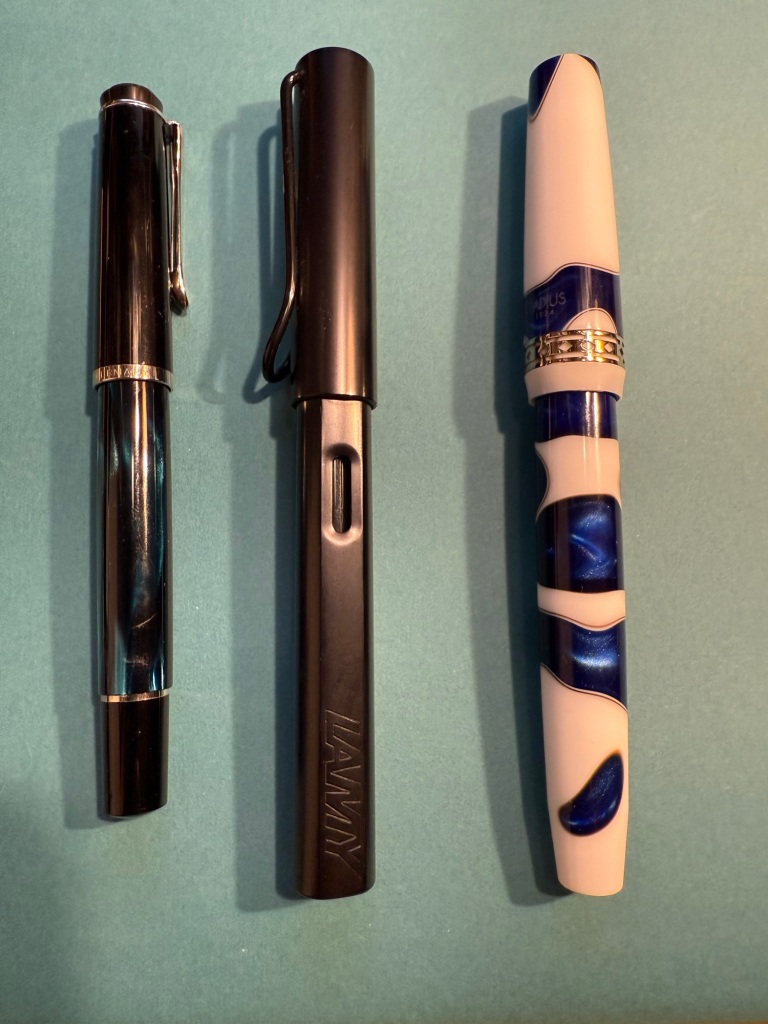
From left to right: Pelikan M200 Petrol, Lamy AL Star Black, Radius Settimo Celio Blu

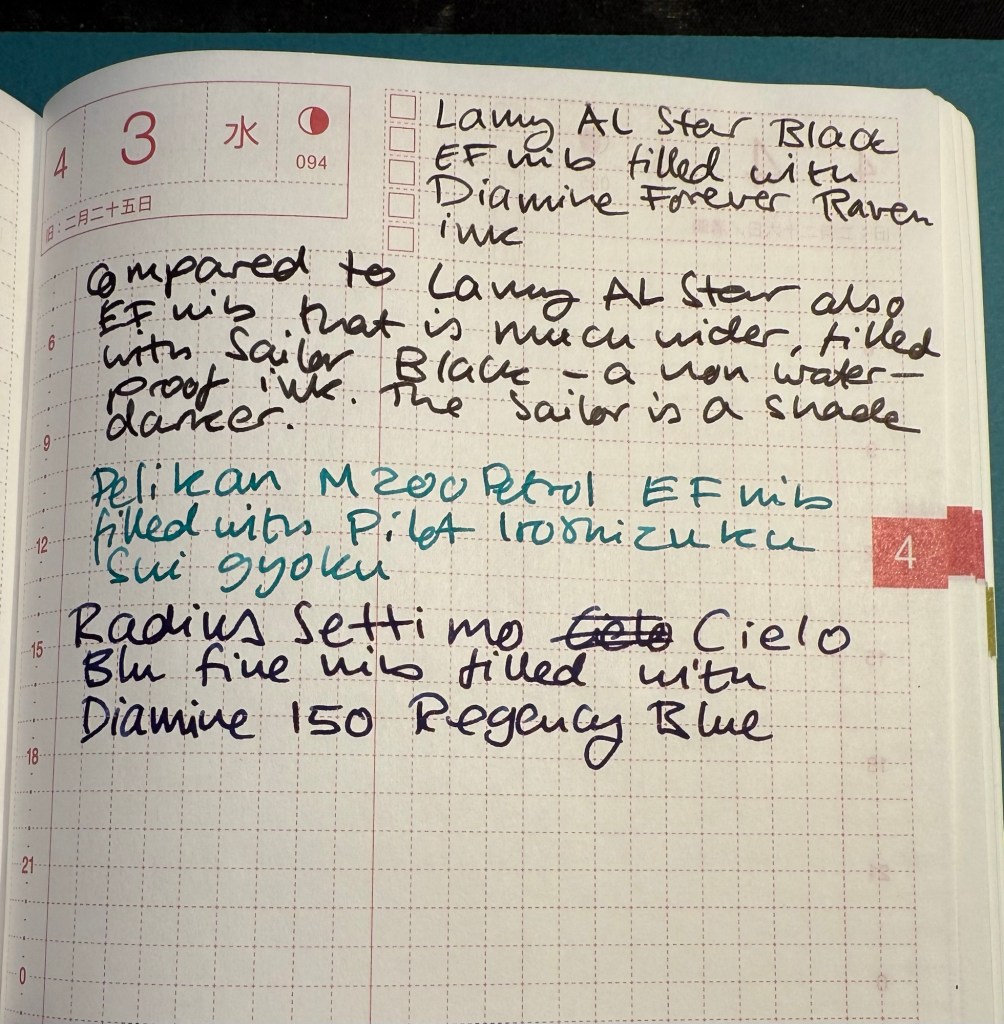
Comparing the Diamine Forever Raven to Sailor Black reveals that the Sailor is slightly darker than the Raven, but both are dark enough to count as proper black inks (and not dark grey or brown). They both have a bit of shading, but the Raven interests me as a waterproof ink, so I’ll be testing it with some watercolour sketches later on.

Writing sample

The Pilot Iroshizuku Sui gyoku isn’t what I expected. I was hoping for a more prominently green ink, but Sui gyoku is more of a turquoise than a green. I like turquoise inks so that won’t be a problem, but it means that I’m still on the lookout for an interesting, bright, readable green. The shading on this ink is delightful.

Diamine 150 Anniversary Regency Blue is a rich royal blue with some red sheen. It’s very saturated, especially in the Radius nib.

Gorgeous blue swirls on the Radius

The Radius interested me not so much as a revival of the old Italian brand since the original Radius was a minor pen manufacturer, and I wasn’t blown away by the vintage Radius that I own. It seemed to me that the old Radius brand was busy making local copies of what Parker was doing at the time, which is understandable. However, Radius as a sub-brand of Leonardo is interesting since Leonardo have been hiking their prices lately but the Radius remains more affordable and offers resins and pen bodies that are just as attractive as what Leonardo has to offer.

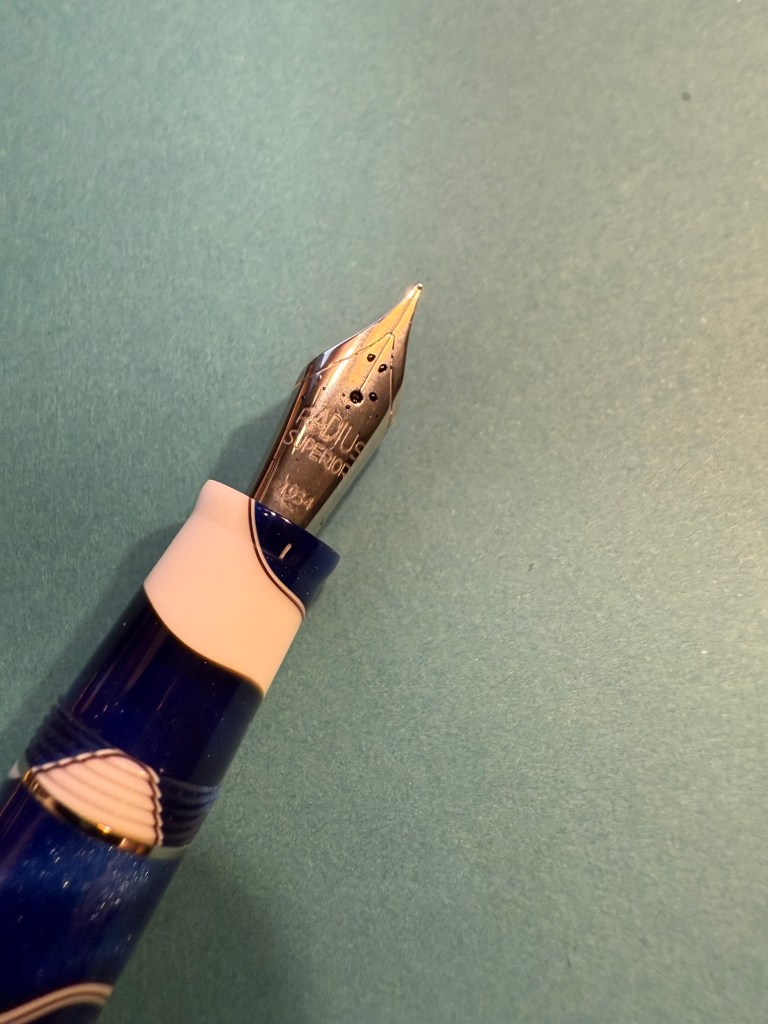
Radius imprint on the nib

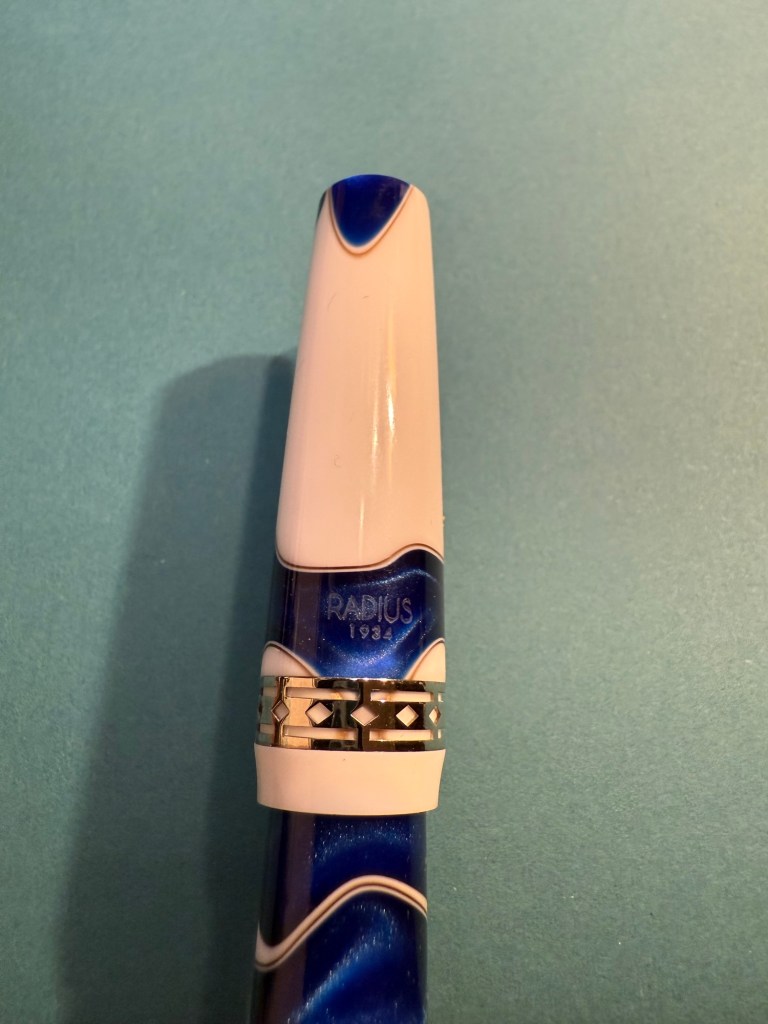
I love both the blue, white and brown swirly resin of this pen and the art deco-ish band. It’s a big wide pen, like the Leonardo pens and Viscontis, but light and comfortable to use.

Radius branding and band

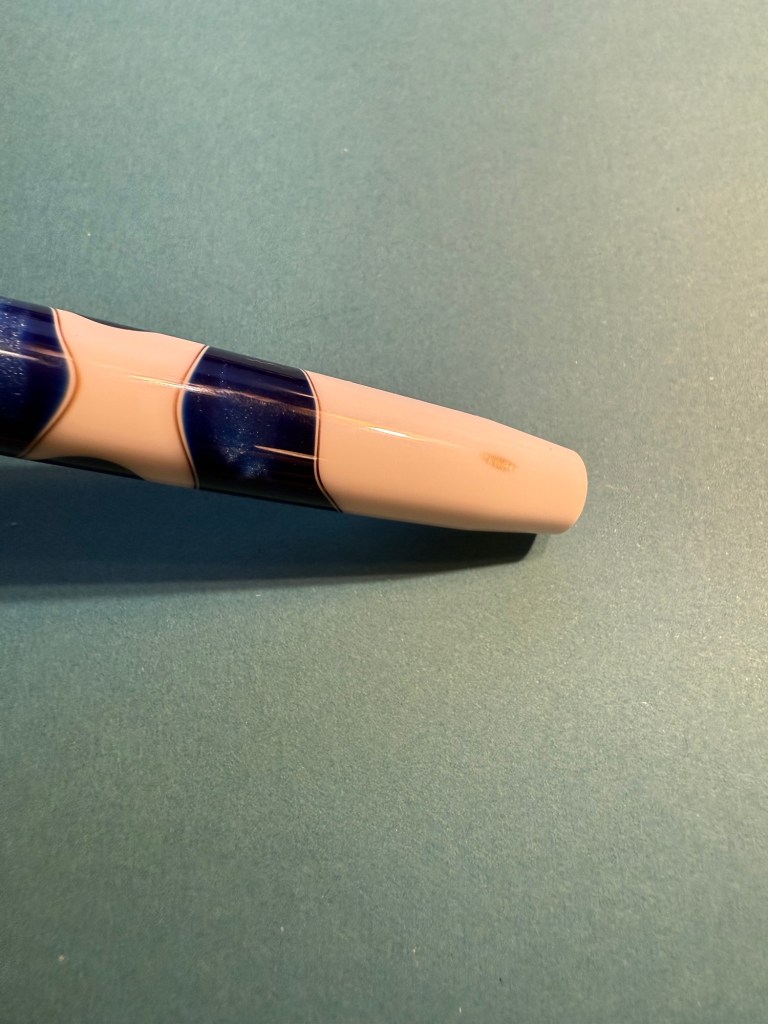
One tiny minus with my pen is that as the bottom part of the body tapers down, a smudge of brown resin was left, making it look like there’s permanent dirt on the pen body. Not ideal, but it’s something I can live with.

The smudge

Here’s a writing sample of all three inks on Col-O-Ring cards.

Ink samples

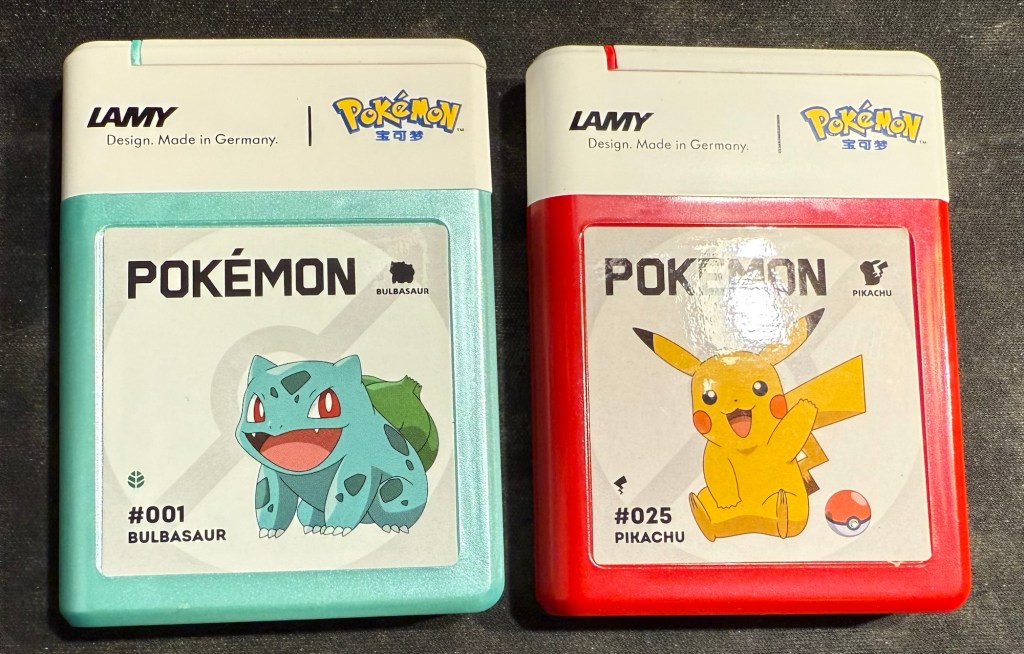
And as a silly little treat I also bought two cartridge boxes of Lamy Pokemon ink cartridges. They are filled with regular black Lamy ink cartridges, which I knew, but is still disappointing – a teal and a red would have been better.

Vintage Radius Comet Fountain Pen Review

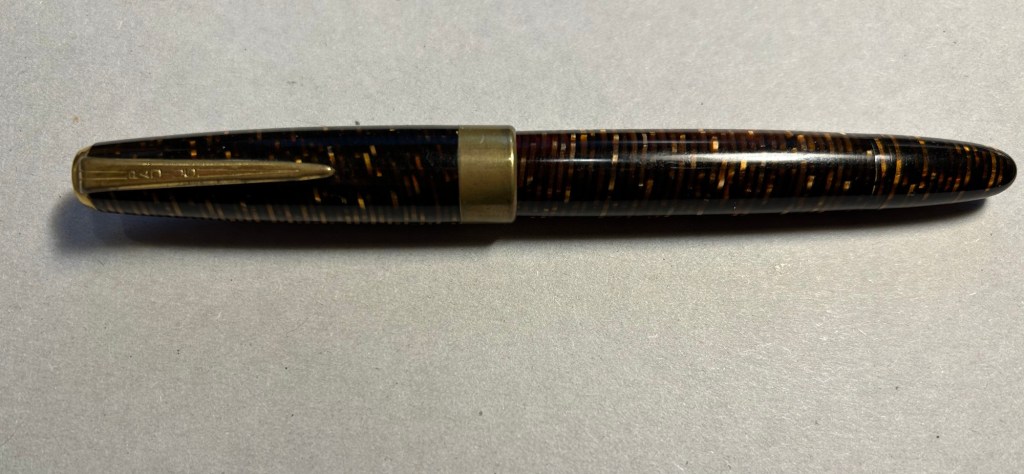
In April 2010 back when I was relatively new to collecting vintage fountain pens, I purchased a vintage Radius Comet on the Fountain Pen Network. The body was brown laminated celluloid, just like Parker striped Vacumatics, and you could see the ink levels through the stripes, just like with a Parker Vacumatic, and it had a jewel on the cap, just like a Parker Vacumatic. It was, however, a piston filler, unlike the Parker Vacumatic, and it had a superflex gold nib, also unlike a Parker Vacumatic. So even though I had never heard of the brand before and there was very little information about them to be found, I took the risk and bought the pen. It cost €120 shipped.

Radius Comet

The pen was obviously user-grade, as there was brassing and tarnishing on the hardware, a lot of micro-scratches on the body, and some ambering in parts of the celluloid. It’s still a good looking pen, though.

The stripes had darkened with time, but some still have their original glow

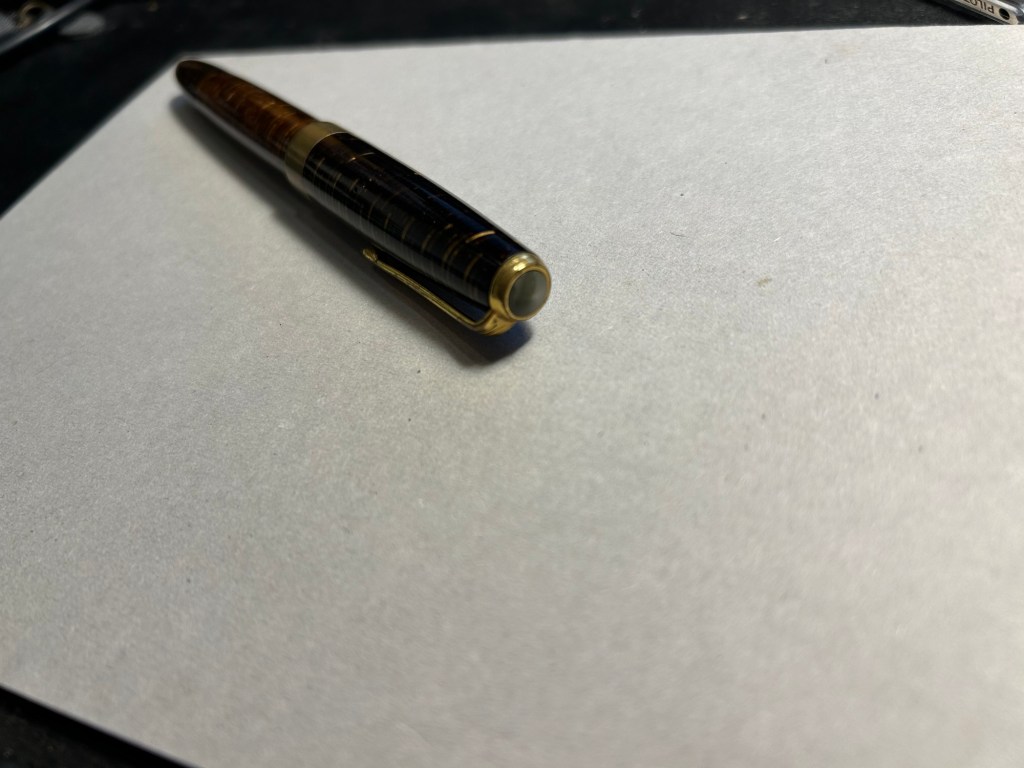
The design of the clip and the jewel on the end of the cap was clearly influenced by the ultra popular Parker Vacumatic.

The jewel on top, a clear copy of the Parker design.

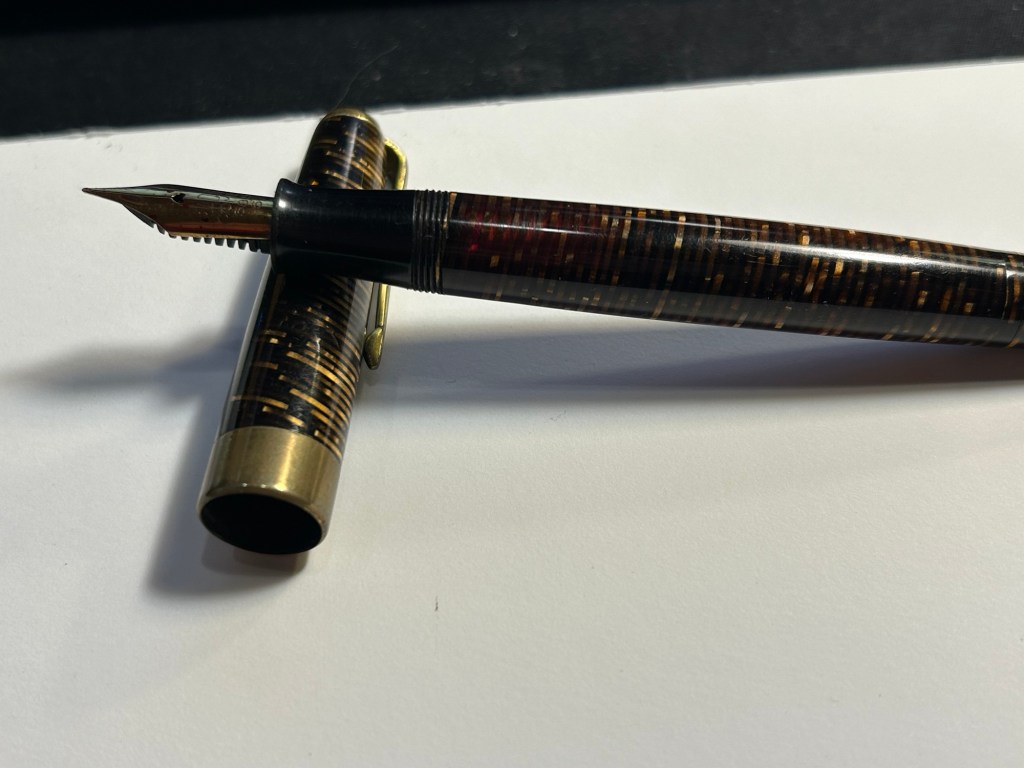
Even though the celluloid has darkened and ambered with time, you can still clearly see the ink levels through the stripes. As a piston filler it has an impressive ink capacity, which works well with the flex nib, as it can lay down a good amount of ink when fully flexed.

You can see the ink levels through the stripes.

It works perfectly – the filling system is and always was a joy to use, and the nib… Well, the literally don’t make nibs like this any more:

The nib

When you apply no pressure it’s a wonderfully smooth fine nib, but when fully flexed it goes up to broad/double broad territory. The feed keeps up with the ink flow with ease, and I’ve never had a hard start with it, ever.

Writing sample on Midori MD paper with Diamine Amaranth

Leonardo has revived the brand in recent years, and now you can buy a brand new Radius with a cartridge/converter system, resin body and (obviously non-flexible) steel nib for around €150, not including shipping. No modern pen manufacturer is capable of creating a pen like the vintage Radius or any of its contemporaries, neither in body material, nibs or filling systems at the price that they were once made. It’s a question of both volume and lost knowledge and tooling, which means that the vintage and new Radius pens have very little to do with each other beyond having the same brand name.

Buying vintage is always a risk in a way buying modern pens isn’t, but the value for money still cannot be beaten. I might buy a modern Radius at some point in the future (I like their designs and I’m curious about the pens), but I have no doubt that in terms of looks, nib and filling system it won’t be able to hold a candle to its well-worn and well-loved vintage namesake.