My 2026 Q1 Planning and Moving to a New Planner
On setting up my 2026 personal planner and planning the year’s first quarter.
Read More...A blog about writing, sketching, running and other things
On setting up my 2026 personal planner and planning the year’s first quarter.
Read More...A few months ago I published an overview of my new weekly review format. I had been successfully using it for a few months at the time, and I have since continued to use it until about a month ago. Since then I’ve tweaked it a bit to streamline things and speed up the review process. If you found my previous review format a bit confusing or elaborate, you might want to try my new one.
The new review format consists of four questions that I answer at the end of every week before I build next week’s plan. I write down my answers in my regular journal (currently the Stalogy 365 B6) using last week’s plan as a reference. Here are the new questions:
You’ll note that I removed the “people of the week” section. I just found it redundant, as these three questions generally cover it.
As usual, I’d love to hear more about your weekly review formats, and if you found this helpful.
I previously discussed how I plan my quarter, my week and my days, but there’s another side to planning: reviewing. The goal isn’t to set out a plan, then attempt to follow it and disregard any successes or failures in the process, but rather to take the time to figure out what tweaks and changes need to take place for your plan to work better for you. And remember – the plan works for you, you don’t work for the plan.
I’ve tried various review formats over the years, some were more successful than others, but here’s what I’ve come to realize: the weekly review is more crucial to the success of a quarterly plan (a 13 week year) than a quarterly review. I still perform a review of the previous quarter before planning the next one, but the weekly review is where the keys to happiness lie.
After a good amount of trials and errors, here’s the weekly review format that I’ve been using over the past few months and that has been working:

I write this review on Friday or Saturday in my regular journal, longhand. I then check if my weekly plan needs to change due to it. It takes me about 30 minutes, because I spend time thinking about it. Focusing on the wins and positive people in my life, working to continue with the successes and mitigate the failures, and looking with clear eyes and a level head to the challenges ahead helps make me happy. That’s the point of these reviews, and that’s why I do them.
Do you do a weekly review? What format do you use?
It’s the beginning of January, and usually at this point people’s resolutions are starting to unravel. For years I used to do yearly goals but over 2024 I moved to using a 13 week year, or quarterly planning model. It affords me more flexibility and seasonality in my planning, and it’s a good, low stakes way to start long term planning and goal setting if you’ve never done it before.
There are those that say that you should go on a retreat to plan your year or quarter, and I’m sure that’s nice if you can afford to do it but unfortunately I can’t. What I do instead is take some time in the weekend before the end of a quarter to plan the next quarter, and this is the process I go through, step-by-step.
I start my planning on a piece of scrap paper, sitting with my calendar, and start mapping out what big block of “stuff” I have next quarter. In particular I take Travel into account at this point. If I have a trip planned, then it means that I will have less time for non-trip related stuff this quarter, and I need to realize that I have less than 13 weeks to work on the rest of my goals. So if I have a week long trip, I calculate that I have only 11 weeks to work on the rest of my stuff. Why 11 and not 12? Because there’s time that will go to trip related stuff before and after I return, and it takes time after a trip to get back into routine.
Once that’s done and I realize how much actual time I have to achieve any goals, I divide my plan into Large Categories.These are areas I want to work on throughout the next quarter, and they generally stay the same from quarter to quarter.
The different categories I work on are the backbone of my plan, the basis of the quarter which I flesh out with detail during my planning session. For me these currently are (not in order of importance): Health and Fitness, Reading, Conversations, Mental Health, Creative Projects, Productivity, Professional Development, Blog, Decluttering, Money.
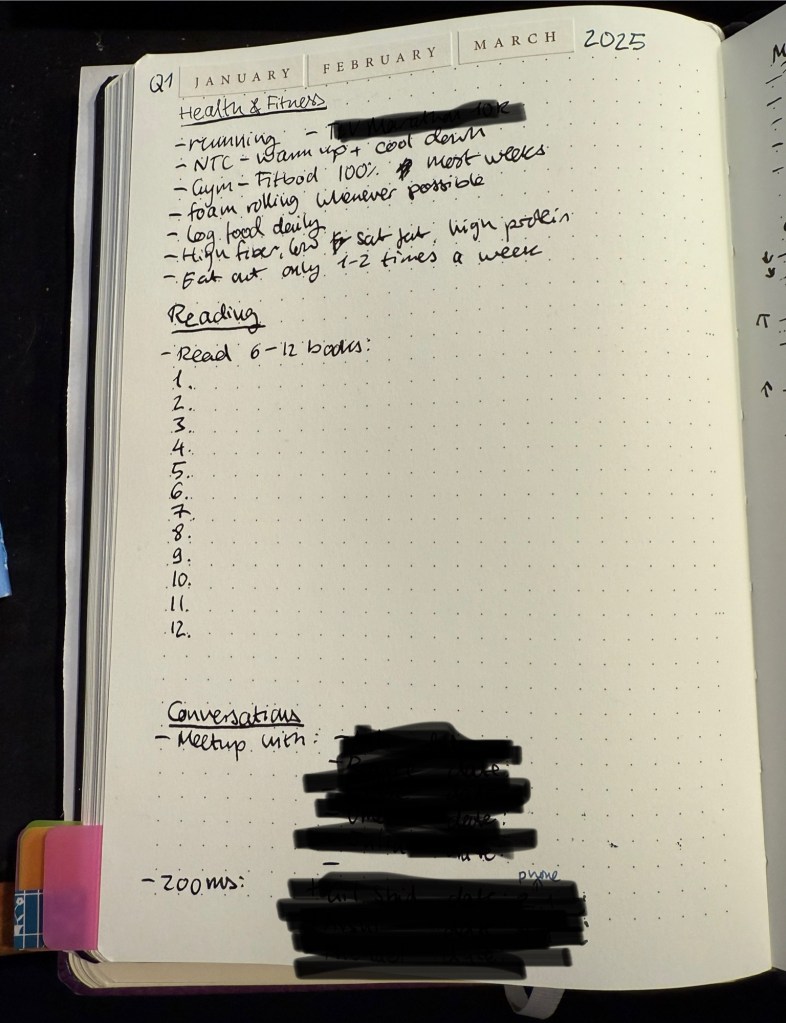
I set individual goals for each category, all of them measurable, and this is the plan that I reference at least once a week, usually two or three times.
Wherever possible I set up the Streaks App and/or a tracker for the goals in my weekly plan. This makes sure that 60-70% of my goals are set on “auto pilot” and are included in every weekly and daily plan. I address the rest of my goals either when I plan my week, or not at all.
Wait, what?
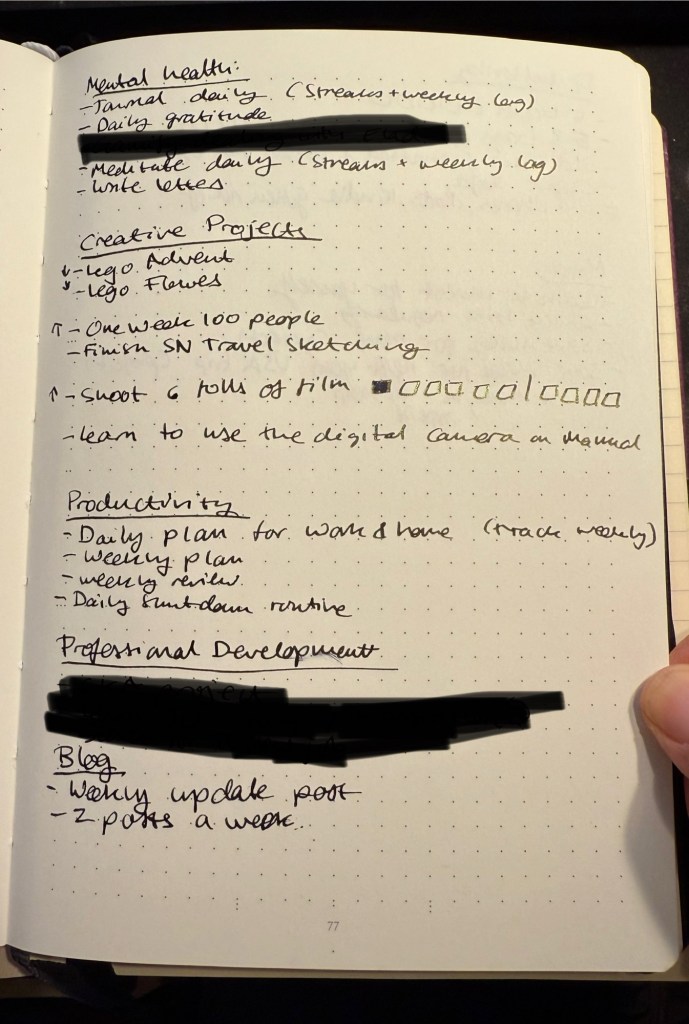
I deliberately include goals that I know that I will have to stretch or significantly stretch to get to every quarter. Why? Because I view these goals not just as a plan, but as a call to action, a bit of a challenge. A good quarter is one where I got to 80% of my goals. I great quarter is one where I got to 90% of my goals, and if I ever get to 100% of my goals, then I’ve likely not been ambitious or creative enough when setting them.
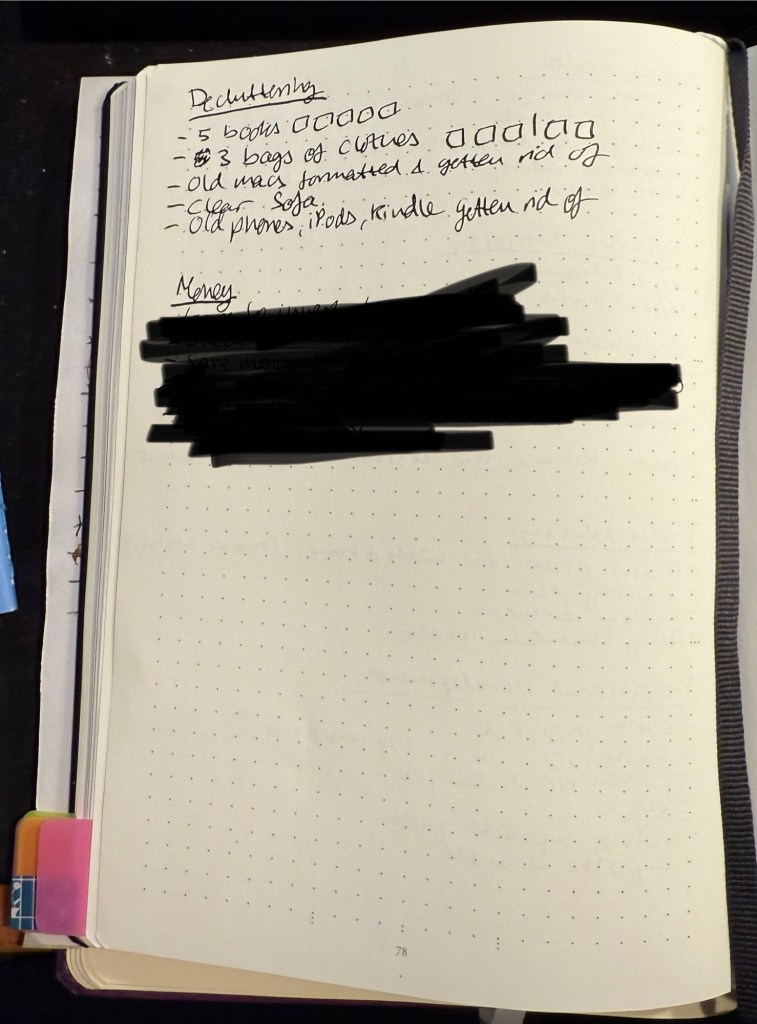
Life tends to throw us curveballs, and so I leave wiggle room in my plan (there are goals that I mark ahead of time as less important, and entire categories that I’m willing to neglect if things get to that), and room to recreate the plan from scratch if the need arises. The plan works for me, it’s a tool that I use, it’s not something that I have to tie myself in knots over. I refuse to beat myself up for missing a goal, because if I missed a goal it just means that:
In this case I expect myself to rethink my goals and what I want to achieve, and replan them.
A bit about my current categories and how I planned out each one:
Since I’ve been working with most of these categories for a long time and since many of them are repeatable, much of my planning is just reviewing and copying over last quarter’s plan. The rest of the plan is things that I put a bit of effort into researching before I commit to, sometimes drafting them a few times before settling on my final quarterly goals.
I hope this inspires you to create your own quarterly plan. Let me know if it does and if there’s anything else you want to know about my planning setup.
This is the second post on this topic. For an explanation on the 13 week year read this post.
As life tends to constantly throw curveballs at me, planning ahead in short bursts has proven to be invaluable. During the previous quarter my dad went through an unexpected open-heart surgery and I realized that I’d have to find a new apartment in the not so distant future. If I had planned ahead for an entire year (goals/themes, the system is immaterial), I would have had to scrap all my plans on February. As it was, I made a few minor adjustments, and finished not so far from where I originally planned.
Just before this 13 week/quarter started I got some bad news about my cat. That’s going to affect my plans, which I made before I realized that he was likely dealing with cancer. That’s OK – my plans are short term enough to allow me to easily change them, and I’ve already built plenty of wiggle room into the plans that I made. Unlike themes, which I find to be to vague to be useful, or yearly plans, which are too long term to be practical in my circumstances, 13 week planning allows for just enough time to make meaningful progress in the key areas of my life whilst being short enough to allow me to quickly pivot if necessary.
This is my third round with 13 week planning, and I’m getting progressively better at it. Here’s what I do that’s been working so far:
My planning is done on paper, and then I use Fantastical (a calendar app) and Streaks on my phone to help me keep daily track of things. I look at my weekly plan almost every day, and I track things there as well. On a weekly basis I review my progress and decide what to focus on next week. If it’s a busy week I’ll select only a few relatively easy goals, for example. The point is to build a plan that is detailed enough to cover the most important areas in your life well, and yet allows for flexibility.

Have you found this helpful? What tools do you use to achieve your goals?
Back in January I wrote about trying a new long term planning system that isn’t the Theme System or theme based, and isn’t yearly goal based, but rather is based on breaking the year into four 13 week blocks, each one representing a fully independent quarter.
I’m now in week 11 of the second of these blocks (quarter two, to put it more simply), and I’m starting to plan the next quarter. While working on my plan I thought that it would be useful to document the procedure, talk about my review process, and discuss how I planned the previous quarters, how things went, and what I plan to do differently in the third quarter.
The point of this system is to break the year into more manageable parts. This allows for greater flexibility in planning, time to “recover” from life’s surprises, and time to work on meaningful, long term projects. On the one hand the entire year isn’t a wash when life deals one of its blows, and on the other hand you can allow yourself to express a realistic amount of ambition.
I use the Leuchtturm Bullet Journal for my planning, and it should last me to the end of the year. After that I’ll switch to a Leuchtturm 120gsm dot grid notebook, as I don’t use any of the Bullet Journal features in my current notebook.
The first bit is a bit mindless, but I prefer to see it as meditative. Each week in my planner gets two pages, and so I leave four empty pages after the last spread of the previous quarter. These four pages will contain my plan for the quarter, broken into various sections. More on how I build that in a later post.
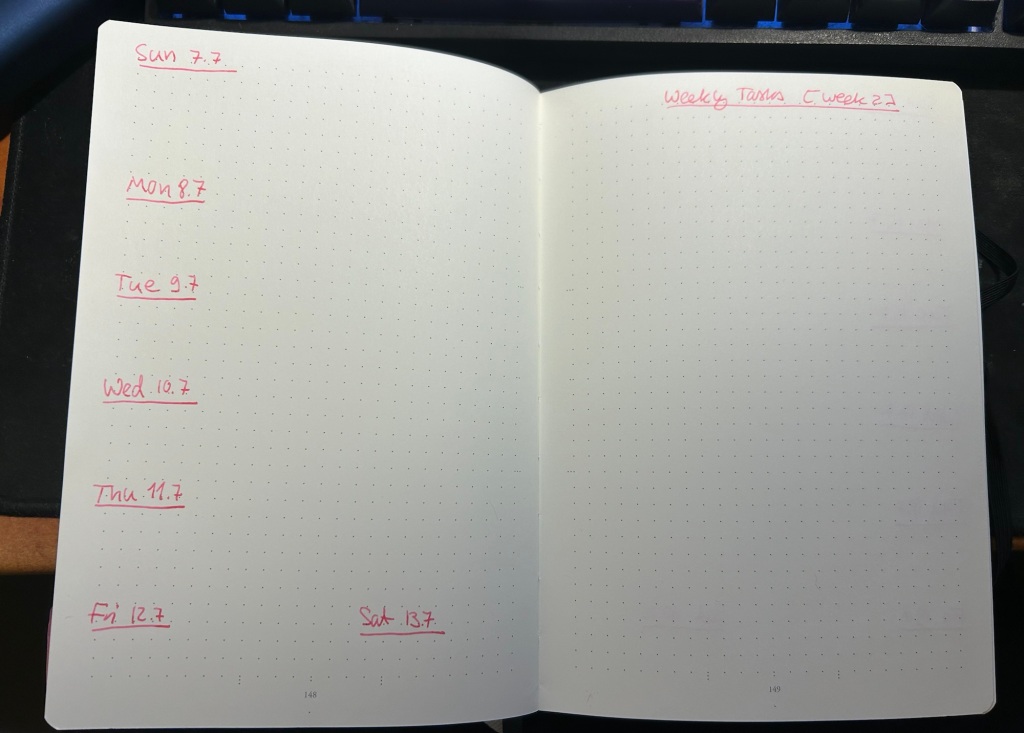
Then I sit down and draw out 13 weekly spreads. On the left side of the spread I write down the days of the week and the dates, and on the right I just put a “Weekly Tasks” title with the number of the week in the quarter in square brackets. I do this in one sitting for the entire quarter, and it takes about 30 minutes because I don’t rush it. This is how the pages look at this point:
This is how it looks when it’s filled and in use:

The left side gets filled with my exercise plan for the week, major appointments, and important things I don’t want to forget.
The right side has my weekly goals, both in the form of various checklists with checkboxes and more general lists. This is where my quarterly goals get put into action – every Friday or Saturday I look at my quarterly goals, and then try to advance as many of them as I can in the week. Things become more quantifiable at this point, though it’s often only in my daily to do lists that they become real, doable tasks. My daily to do list is something that I write the night before on an A5 loose sheet of paper, and recycle once I’m done with it.
Next time I’ll post a bit more about how I create the quarterly plan.
How do you plan your year? How is your planning going now that the year is halfway through?
This is probably going to be the hardest post to write in this series, and so I’ve been postponing it.
I got into Getting Things Done around 2005, when it was really starting to gain momentum with tech workers online. I first heard about it via PvP Online’s creator, Scott Kurtz. Yes, I found a productivity and planning system via one of the first webcomic creators. The internet is funny that way.

If you have no idea what GTD is, then I suggest starting here. It’s a 15 minute guide to David Allen’s all-encompassing planning and productivity system. If it resonates with you, then the GTD book is pretty good for a book in the productivity genre. Books in this genre tend to be repetitive, padded with anecdotes, and oftentimes poorly written. The GTD book is readable, and while it contains the inevitable productivity guru anecdotes, there aren’t very many of them.
There are a few things to note about GTD that set it apart from other productivity systems, and make knowing about it worthwhile:
The last bullet is what earned GTD a place in this blog post series.
I love GTD. I’ve been using it in various form for almost two decades. I have the book and have read it twice, and I have a good grasp of the major players in the GTD cinematic universe. I know the system well enough to be comfortable to get rid of its mannerisms and streamline it to my own needs. I can see its influences in Jira, in BuJo, in Omnifocus and other to do apps. And it’s very powerful dark side is that it really invites you to tweak and tinker with it. You are tempted to make your system a little bit sleeker, better, more efficient, better suited for your needs, to the point where you suddenly find yourself spending more time and care on the system than the tasks that it is supposed to help you manage. So while GTD taught me how to define and manage my tasks, it also taught me to be constantly aware of how much time I’m spending on my task management systems.
So if you are worried about being carried away by GTD’s siren call to tweak, tweak, tweak, here are some basic ideas from the system that I think are worth taking with you or thinking about no matter what:
In the early 2010s Filofax was all the rage (much like Plotter is now), and I was swept with the trend. I started by purchasing the Personal Urban, then quickly expanded to Pocket, Personal and A5 Filofaxes of various kinds (Urban, Malden, Classic, Cuban, Graphic, Bond, Finchley and more).
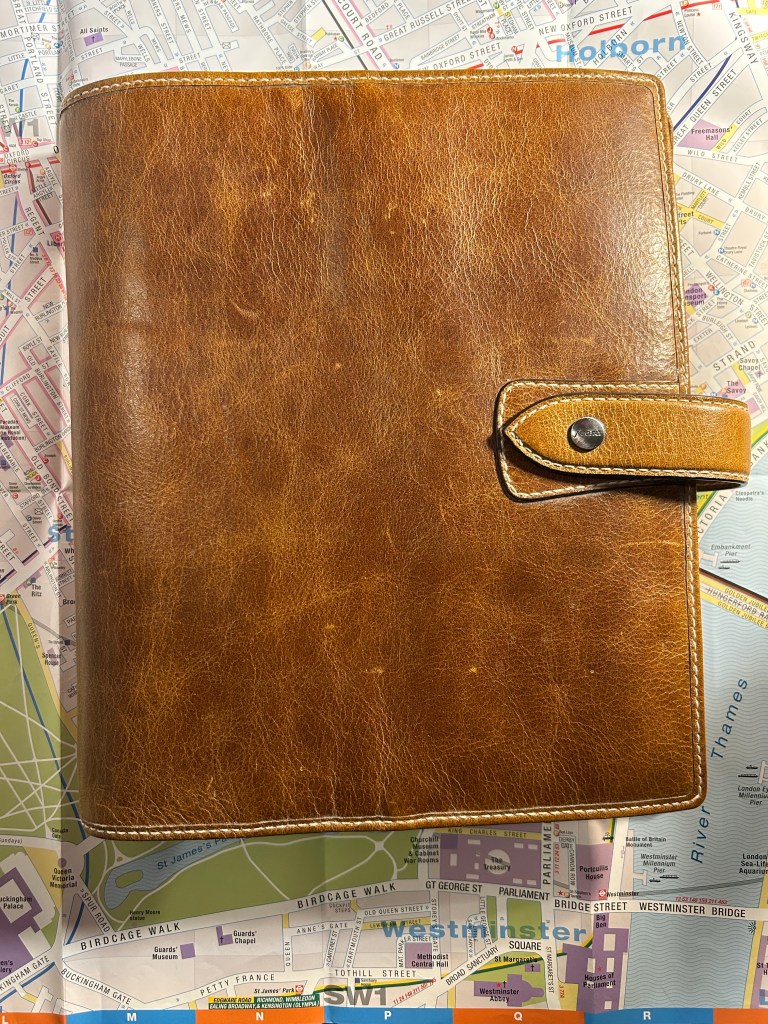
What drew me (and others) to them is the infinite customizability and the fact that these were gorgeous, well-made objects made by a brand with a history and good track record. Online communities that shared photos of spreads and setups started to grow around the brand, and unlike Moleskine and Moleskinerie, the company left them to their own devices. Some of them exist to this day (like the delightful Philofaxy). The parallels with today’s boju and Plotter communities are pretty clear.

The promise of bujo (bullet journalling) and the Plotter are also the promise of the Filofax: build a planner/notebook hybrid system that matches your exact needs like a glove. Filofaxes are a joy to hold in your hand: they are beautiful, tactile objects that feel good and are exquisitely well made.
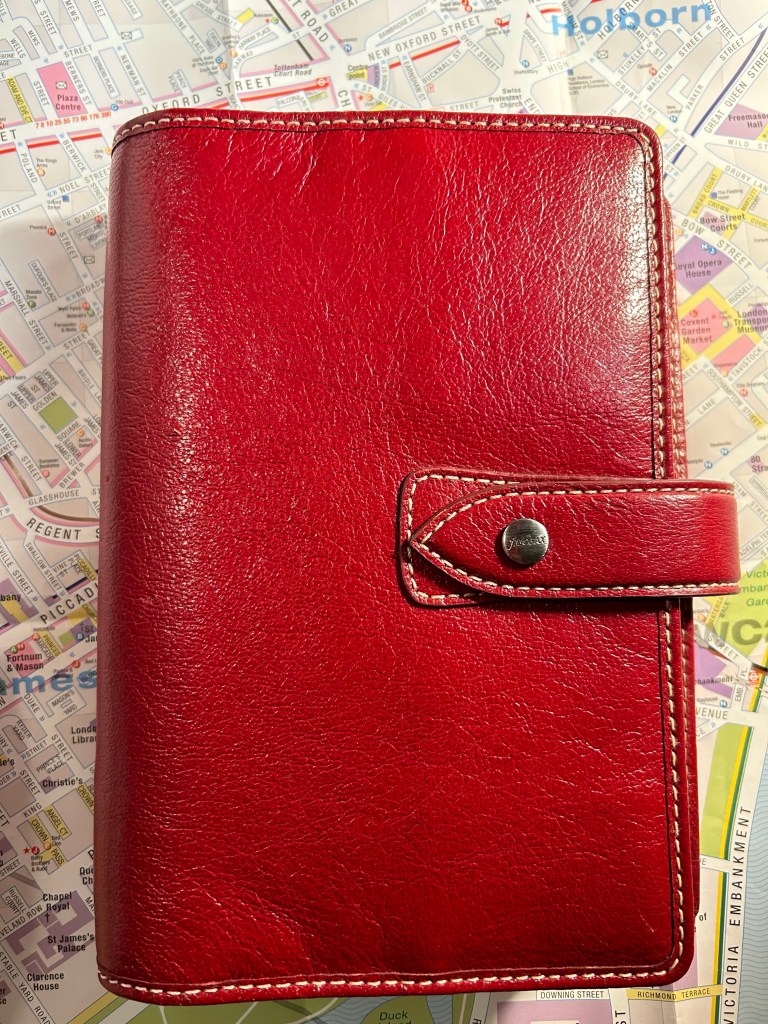
They weren’t cheap, but if you waited patiently or were willing to buy second hand you could get some really great deals, and they lasted forever. The refills, much like Plotter ones, were the real expense. Yes, you could buy a specialized hole punch for them and create your own refills, but most people just bought them from Filofax themselves or from Filofax compatible sellers. Which refills you bought depended mostly on the purpose of the Filofax in question, and I had ones that had no planner inserts at all, only lined or blank refills and tabs.
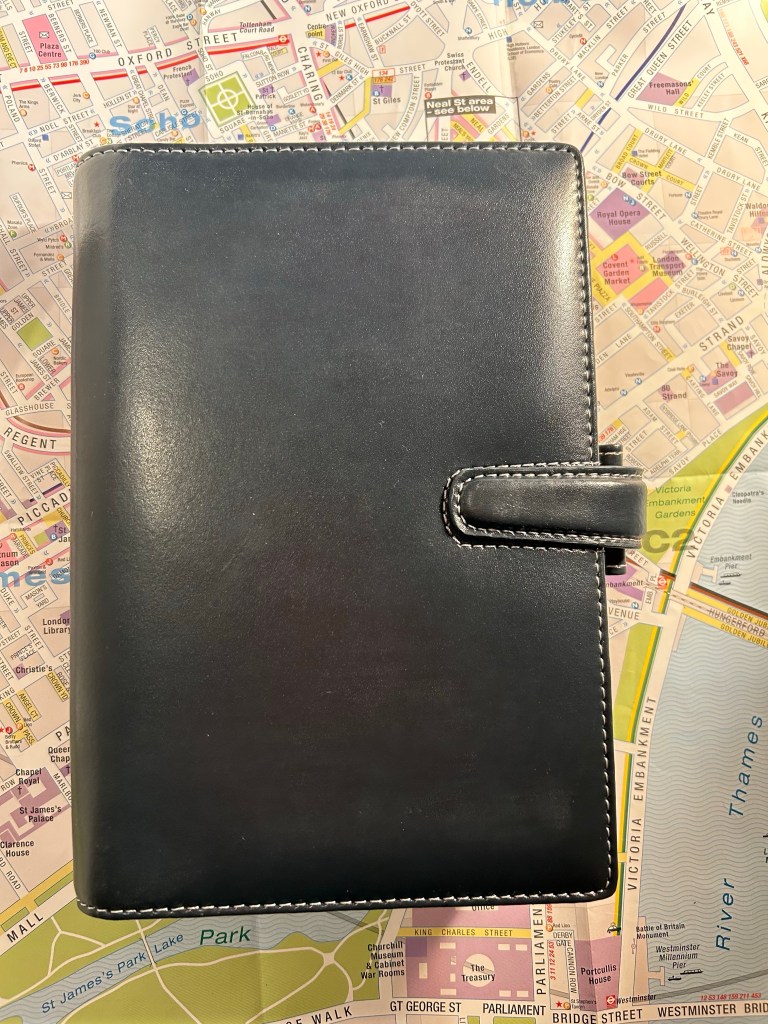
The olive Personal Urban Filofax below was my first Filofax and my workhorse. I used it heavily from 2011-2013, and it was a heady nostalgia ride to dust it off and open it up again. It is very well made – fabric, pleather and ring mechanism are in perfect condition even after intense use and then years of storage. It is also a relic of a person that I lost when I went through cancer treatments, and I confess that reading over some pages made me want to cry. The things I worried about…
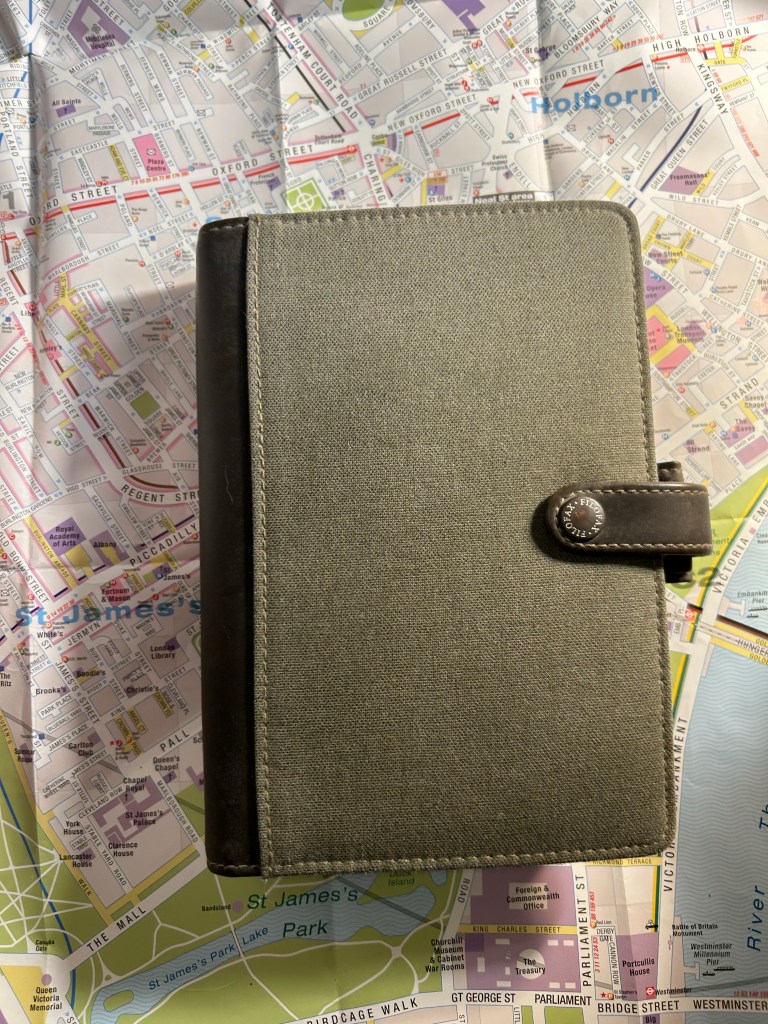
Do you want to see how much I was into Filofaxes? I even had a page in my Filofax where I planned my Filofax usage:
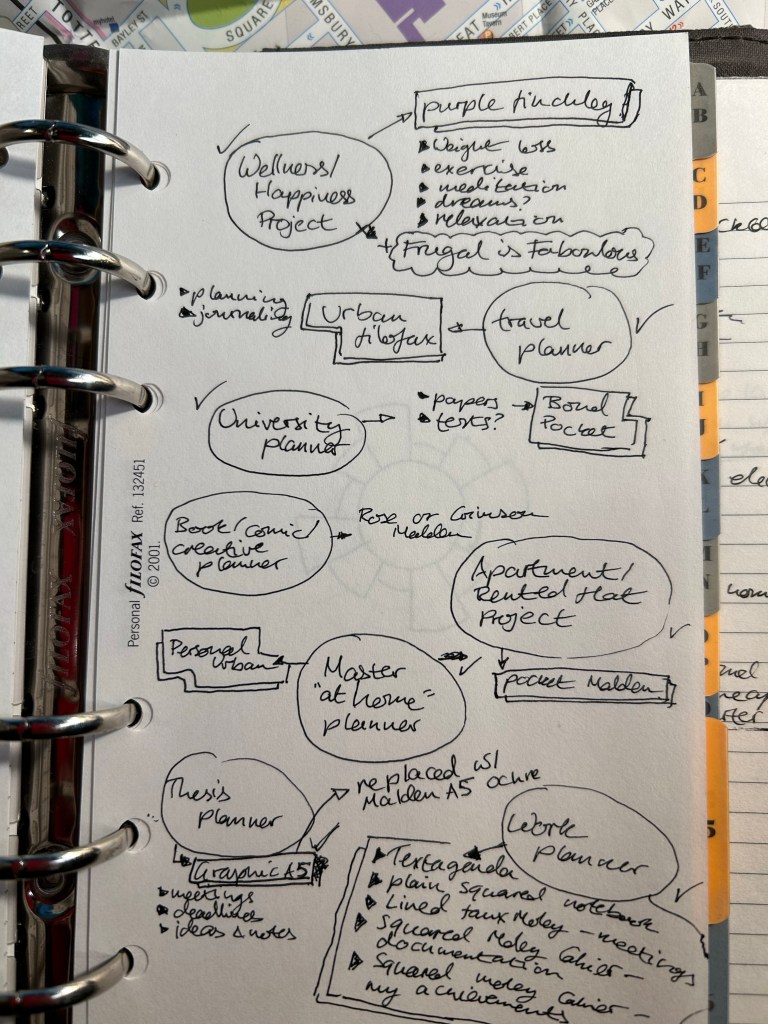
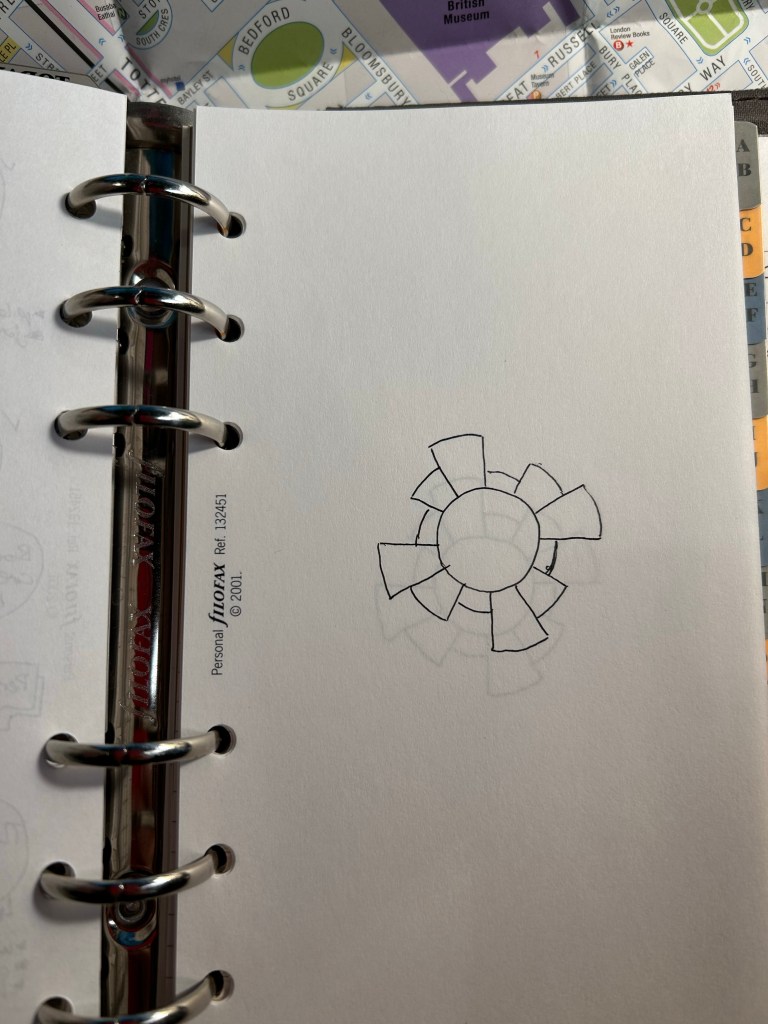
Some of the Filofax inserts were fountain pen friendly, but I didn’t use fountain pens with my Filofaxes at all. I used Pilot Hi-Tech-C Coleto multipens with them, and I spent a good amount of money on their refills (which would either get air bubbles and stop writing, break, or just simply run out much too quickly). I even combined my love for Filofax with my love for the Chronodex system for a while:
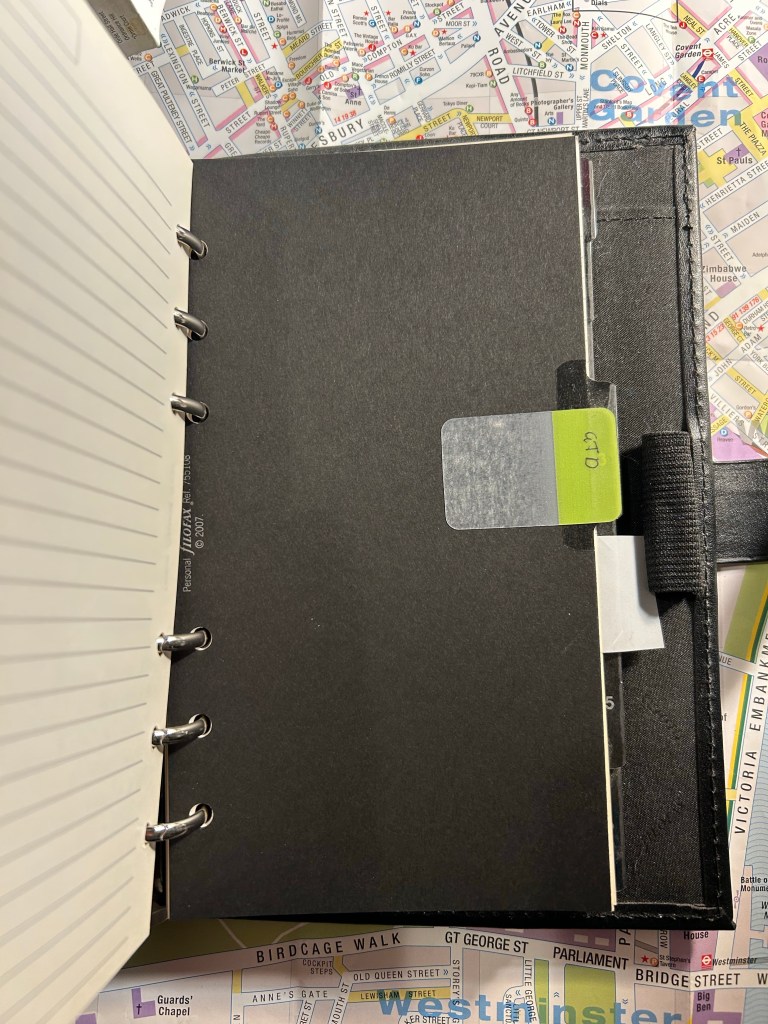
So why did I stop using my Filofaxes completely? The system was well made, full of promise, and could double as a notebook and triple as a wallet, so what went wrong?
It was a combination of things that made me put all my Filofaxes into boxes for storage:
So why get into ring based systems like Filofax and Plotter? If you want one physical planner system that will function in more than one way at the same time, will allow you to customize it fully to your needs, and can be carried over from one year to the next, then these systems may be worth a try for you. I used my Filofaxes heavily during a very busy time in my life because I was able to set them up for all my needs, and particularly GTD (I’ll post about that system later on in this series).If you can work around the rings and can afford the system and the refills, the Filofax is a very well made object that may be able to help you fulfill your goals. It helped me apartment hunt, work on my degree, kickstart my running, and be a better manager at a busy and difficult time at work. I will forever have a soft spot for my Filofaxes, which is why I’ve never attempted to sell them.
Do I regret my Filofax obsession? No. Do I regret that I stopped using my Filofax planners? Also no. They were exactly what I needed at the time until they weren’t, and I believe that in the end a planning system needs to work for you, and not you for it. Something to remember whenever you are considering making a change in this area.
It was obvious that I’d discuss daily planners after I addressed weekly planners, right?
This format, in combination with some of the planning tactics that I’ll talk about in later posts, has been the one that I used the most over the years. Daily planners usually have a page per day, oftentimes with hourly notations on the side. Less commonly they have a page for planning and across from it a page for notes. Sometimes the page is divided into sections for various meeting notes, todos, etc. Daily planners tend to be the thickest of planners, unless they split the year somehow, or only cover part of it (academic year planners, for example).

I’ve used the daily format the most because it allows for the most room to think and plan in, and the main reason I plan on paper is for the space it allows me to sit with a pen in hand and a blank (lined/squared) page and plan the direction, location and movement of my tasks like a general ordering troops around in the army. Push this one until tomorrow or early next week, this one gets a little marker for lower priority, and this one for higher, etc. The marking methods that I use have changed a bit over the years, but the format that I prefer largely hasn’t. I can oftentimes plan two days on a page, but it makes things feel cramped. I’m giving that format a try now (two days per page), and I’m likely going to revert back to my beloved page per day format soon. Ideas need space to breath, and when tasks get cramped I tend to miss a few of them. They just run on into each other in a condensed wall of text.
Like with weekly planners, daily planners have obvious inherent downsides. They’re thick and heavy. Unless you’re making them yourself (which is what I’ve been doing for years), you’ll be made to feel bad with every day you skip in them. They also don’t allow to easily see the bigger picture: having all the space that the weekly planners lack, they pay for that with the inability of letting you get a feel for your week in a glance. You remain mired in the day to day, and need to purposefully remember to look ahead to see what’s coming tomorrow, the day after, next week.
This is the reason that for years I’ve kept two notebooks that I turned into planners, a daily one (which was much more heavily used) and a weekly one (which I referenced once or twice a week). This combination worked the best for me until I got sick and it crumbled. Perhaps it will work for me again.
As part of my struggles with planning, I’ve been reviewing the various planning systems I’ve used over the years and how they have changed. One of the most persistent of these has been the Weekly Planner.
Weekly planners generally take the form of a week on two pages, with the left page used for the actual weekly planner part and the right page used for notes. I’ve used Moleskine pocket weekly planners, I’ve used tiny weekly planners from Word Notebooks for two years (2016 and 2017), and I’ve used a large squared Moleskine notebook that I turned into a weekly planner myself. The format appeals to me, which is why I’ve had some form of a weekly planner with me for well over a decade.

The pluses of the weekly format seem obvious: you can get an overview of your week at a glance without too much clutter. You can easily tell when you can block out time for things, and what is your general availability for the week. You can tell if it’s a “heavy” week or a “light” one and plan your projects accordingly, and you can schedule pre-work and prep for upcoming events. It’s the ultimate planner’s planning format.
The minuses are that you don’t have enough space to plan out the individual days, which usually necessitates a secondary planning system, and that if you live in a country that starts the week on Sunday and not on Monday (like I happen to), your choices in this category are few and hard to come by.
Yet if this format is so compelling, why did I stop keeping a dedicated weekly planner late last year?
The answer is that I wasn’t referencing it enough to justify lugging another notebook around. It was great to get a sense of the week to come as I was planning for it on Friday or Saturday, but once I finished the planning, I would reference it again maybe once or twice a week. That was just not good enough.
My solution for now is to use one of the “Stay on Target” notepads from The Well Appointed Desk‘s Etsy store to create a small weekly plan on one piece of paper that I can see at all times (I keep the pad propped up at my desk). It just has one or two major events for each day tops, and it helps me keep track of my long term goals on a weekly basis (running, blogging, sketching, reading, gym and NTC sessions, meditation sessions, vitamins and fountain pens written dry). Here’s a censored example of next week’s plan:

Like the rest of my planning, it’s messy, not Instagram ready and not festooned with calligraphy, but it’s mine and it’s useful. My handwriting these cold days is beyond appalling, but as I can barely feel my hands even as I laboriously type this out, it’s the best that I can do under the circumstances, and I understand what I’m writing so that’s good enough.
And that is the main takeaway from this entire series (there are a few more posts to come): find what works for you, and don’t create a system that makes you work for it.
 Writing at Large