Set in 1958 this tightly plotted, precise and polished mystery/detective story is very set in its time. Tokyo Express by Seichō Matsumoto, translated from Japanese by Jesse Kirkwood, is a masterwork of minimalist craftsmanship. No detail is extraneous. No scene could be cut. The setting starts as a thriller more than a murder mystery, but turns into a murder mystery a few chapters in.
This is a novel of timetables and alibis, politics and very realistic oftentimes tedious and frustrating detective work. While “Tokyo Express” has a general air of melancholy about it, it shows more empathy to its detectives than to its murder victims. The result feels a bit like a Japanese take on noir fiction, with a more minimalist take on the genre. It’s not that you dislike the victims (as is common in Golden Age detective novels), it’s that you are kept at the same distance from them as the detectives have.
This is also not the “amateur sleuth saves the day in the face of stupid detectives” type of novel. The detectives are thorough, thoughtful, methodical, not easily fooled. They use no flashy techniques, no DNA, no modern day CSI methods. It’s the old fashioned repeated, grey work of questioning people, trying to get timetables sorted out, working in small steps that the reader is always privy too (no Sherlock Holmes-like jumps made by omitting key points in the narrative).
There is nothing flashy in “Tokyo Express”. There is superb craftsmanship and a very noir novel that is well set in its time and place. I enjoyed reading it and I particularly liked the addition of maps and timetables to the book. Even if detective novels aren’t your usual fare, I’d give “Tokyo Express” a read, as it’s not the usual “whodunnit” fare.
When I started reading “4321” Paul Auster was still alive. By the time I finished it he had passed away. That does add an element of difficulty when discussing a work that is far from perfect – one feels that it’s somehow rude to point out the flaws in a recently deceased author’s works.
Nevertheless, here’s my review:
“4321” is doorstop of a book, a massive tome that demands quite a lot of time but not a lot of effort to read. Auster is good writer and he is very capable of writing very readable books. At no point during “4321” will you feel that the writing drags or that you’re struggling to understand what’s going on. In his telling and retelling of Archie Ferguson’s life in all four variations of it, Auster very adeptly makes sure that you don’t lose sight of the plot and get confused wondering which version of Archie are you tracking now.
That’s the highlight of this book, and it may also be its downfall. “4321” is Auster in his most polished, most controlled, and most repetitive. It’s all the previous themes that you’ve met in previous Auster novels, coupled with Auster’s own biography and his love for certain types of characters and relationships. It’s like watching Kenneth Branagh’s “Hamlet” – a work of supreme technical difficulty and accomplishment, polished to a mirror-like quality, and reflecting only the creator himself. Somehow after more than 900 pages you realize that there’s no there there.
The most interesting characters are the ones that Auster glosses over, slotting them into their role in Archie’s narrative (his mother Rose is perhaps the most glaring example of this), and the characters he does care about are… uninteresting. Archie, through his 4 turns in life, never evolves. He’s always a detached, not very interesting young man that looks at the events of the century from the sidelines. His friends also never evolve, and while his path to becoming a writer might be fascinating to Auster, it wasn’t very interesting to me. It was too neat, too clean, too uncomplicated. The whole thing was rather bloodless, the rank opposite of Doctorow’s “Ragtime,” which is a messy but punchy and lively affair.
You spend over 900 pages of uncomplicated, almost light reading, and get to… not a lot really. There’s nothing here that hasn’t been written about elsewhere and much better about love, life, creation and the creative mind. What you do get is to view the supreme craftsmanship of a very good storyteller. Maybe that’s enough. For me it wasn’t.
Is there a book that you want to read but scares you? It’s too long, or too technically demanding, or its subject matter is challenging — is there such a book on your virtual or physical bookshelf?
I have several such books waiting to be read. I also make a point to read several such books each year. They’re nearly always worth the effort.
Goodreads and its annual reading challenge make readers favour short, quick reads, skim reading and light reading. This is not by chance, but this isn’t a post about the failures of Goodreads as a platform. This is a post about reading difficult books, and the point is that if you want to challenge yourself you’re going to have to make a concerted effort on your own.
You will have to motivate yourself because reading platforms and book clubs skew towards books that can be read quickly and relatively easily, and we’re being trained daily to shorten our attention span and ruin our capacity to concentrate and think by platforms like TikTok, Instagram and YouTube. To read difficult books is to go against the grain, to retrain your mind to deep, meaningful thought, to long stretches of concentration, to a higher level of empathy. It’s the difference between a fast food burger and an evening with a 3 star Michelin chef showing off his best work. It’s worth it, but it costs more.
If you chose to go on that challenging but worthwhile journey, here are some tips to help you along the way:
Build up to it – don’t start with the toughest, longest, scariest book on your list and try to white knuckle your way through. Build up to it by stretching and building up your reading and concentration “muscles” first. If you’re building up to length, for example, fantasy and space opera sci-fi novels are a great way to get there, as they’re usually well paced, relatively easy reads. Historical fiction and family sagas can train you to follow multiple timelines and characters, and short stories utilizing modernist and post-modernist techniques can offer an easier way to encounter them for the first time.
Have a light read going simultaneously – this is particularly effective if the book you’re tackling has a difficult subject matter. Have a light, fun read going on at the same time and switch between the two, allowing yourself a break from the difficult topic and time to process it every once in a while.
Find a partner for the journey – find a friend, online or in real life, who’s interested in reading the same book as you are, and help each other through it.
Find a community – it’s difficult to find a friend interested and able to dedicate time to take the reading journey with you, but it may be possible to find a community of readers going through the book at the same time as you are. It can be through a local bookclub, a virtual bookclub, a reddit community, a Goodreads group, a discord channel – whatever group you can find and suits you. Just make sure you’re comfortable with the group rules in terms of code of conduct and spoilers, and feel free to leave if you encounter toxic behaviour.
Create a framework to help you through – ideas for this can include various trackers, reminders, applications like Forest or other Pomodoro like counters that help you focus, little treats or incentives after reaching certain milestones. If I’m reading a particularly long book, I set up a dedicated tracker and a page count I want to hit every day, to make sure that I don’t feel overwhelmed and can visually see my progress. It somehow helps me deal with the goblin in my mind that is screaming that this book is too much for me and I don’t have time for it. Field notes are great for this, especially the squared and reticle grid ones.
Start by reading a good chunk – on your first read at least the first chapter or several chapters, so that you get into the flow and tone of the book as soon as possible. I tend to aim for 30-50 pages on the first sitting.
Get a physical copy of the book, not a digital one. Paper books are easier and more enjoyable to read than digital ones, as our mind finds them easier to process because of the way we read (oftentimes returning a page or two back to check on something, or flipping to a previous chapter to remind ourselves who that character is or what happened last time). Whenever I’ve tried to read a difficult book on my Kindle, I’ve regretted it (The Alexandria Quartet is the latest example).
Feel free to give up, tomorrow – if the book is too much for you, it’s OK to decide that you’re not going to finish it, or you’re going to get back to it at a later date. But before you do that, take one more day to make an effort and read another chunk anyway. Why? Because you may have just reached a particular tough spot, and in a few pages things clear up, or become easier to digest. Also, you may just be having a bad day, or you’re particularly distracted or tired and so the writing becomes more opaque or more of a slog. Give it another day and if it doesn’t improve, move on.
Tracker for Paul Auster’s 4321 on a Field Notes Snowy Evening with a Spoke Design pen.
I’m currently reading Paul Auster’s 4321, which is a challenging read due to its length and its structure. Later on this year I plan to reread James Joyce’s Ulysses (I read it twice cover to cover already, and studied it while taking my degree). I’m considering tracking my rereading here, in case someone wants to follow along. Let me know in the comments if that’s something that may interest you.
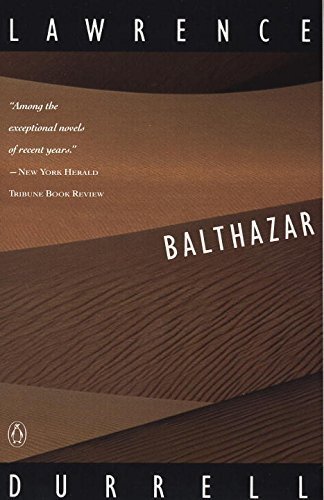
The second of the Alexandria Quartet this book is much easier to read than the first one, Justine. While it is written from the point of view of the same narrator as Justine was, Balthazar undoes and rewrites significant parts of the previous narrative. This isn’t an accident, but a very deliberate, very well thought out move by Durrell. He’s not merely creating an unreliable narrator, he’s creating a narrator that doesn’t see the full extent of the reality he’s living in, and then has a trusted friend come in and fill in the gaps, correct him, reveal truths he had no way of knowing. As Balthazar’s insights force the narrator to reflect again on what happened in Alexandria at the time, more memories begin to surface and so a few new characters join us (chief among them the enigmatic Mountolive) and a few others get revealed in surprising ways. Nessim becomes fleshed out and more human and relatable as we see him with his brother and mother at the family estate. Scobie shows hidden parts of himself that make him tragically human, and not just a comic relief. Justine too becomes less of a fable and more of an actual person, and Clea gets a bit more depth (though she’s still something of a mythical creature here). Nessim’s brother Narouz and his mother Leila are fantastic characters in and of themselves, and the narrative comes to life with their addition and with the fact that we get some distance from the overly cerebral and neurotic narrator. Balthazar brings high romance to the story, an air of a Victor Hugo novel at times, and so this book flows more easily, is much kinder in its demands from the reader than Justine was.
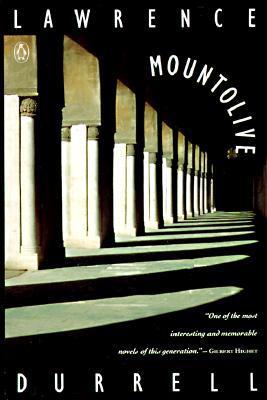
Mountolive, Lawrence Durrell
The third novel in the Alexandria Quartet and the one I was most looking forward to reading. While Justine set the basic story and introduced the main characters, and Balthazar gave new depth, perspective and meaning to their actions, Mountolive overturns them both by giving the characters motives and political context.
Without spoiling the novel, Mountolive introduces David Mountolive, the new British Ambassador to Egypt and Leila’s former lover. Leila is Nessim and Narouz’s mother, and she and her family become the heart of the story, with Darley (the narrator and protagonist of the previous two novels) barely appearing in Mountolive. The narrator changes, pace changes, the love story changes, even the genre changes in this novel compared to the other two, and Durrell has done a magnificent job with this switch. You don’t see it coming, but once he starts revealing what really took place you see that he’s very quietly laid all the groundwork for it there.
Mountolive himself is a fantastic character, and Narouz… I tip my hat to Durrell for creating a larger than life character that could be at home in a Victor Hugo novel and yet is completely believable.
It’s worth reading Justine and Balthazar just to read Mountolive, and no, you can’t skip them just to read this.
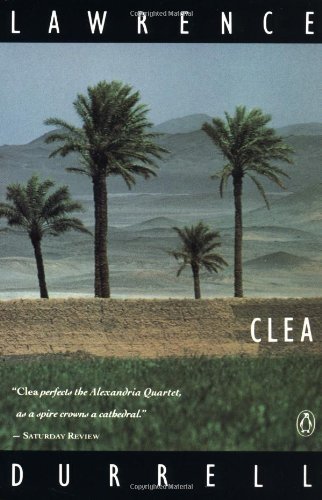
Clea, Lawrence Durrell
The fourth and final book of the Alexandria Quartet Clea takes place a few years after the events in the first three books (which happen simultaneously), during and immediately after WWII. It’s the final layer of a multi-layered narrative, one that reveals more about the characters, allows them to mature, evolve, create new ties and explore old ones. Scobie gains a deserved mythical status, Darley grows up, Clea becomes more human and less of an angel in the shape of a woman, and Justine, Nessim and even Narouz get their final say. Above all this is a farewell to Alexandria, which is arguably the main character in this quartet. The city looms large over the life and events of these novels, providing much more than a setting. Durrell is a master at evoking the spirit of place, and here he is at the heights of his powers, writing what is likely one of the most nuanced, multi-layered, tormented and transcendent boy-meets-girl stories ever written.
The Alexandria Quartet
The Alexandria Quartet as a whole is a difficult and demanding set of novels to read – it makes demands on the reader, and some of the content is hard for both contemporary and current audiences. Yet Durrell isn’t creating a picture postcard of a city, or of his characters. They both have teeth and a significant underbelly and have no problem showing either one. Characters you like show mean, petty and intolerant streaks, and the city is both magnificently charming and a seat of horrors beyond description at the same time.
When it comes to reading demanding books, the question always is “was it worth it”? In the case of The Alexandria Quartet it most certainly is. The dizzying narrative of Justine, that gives to credence to the linear narrative, is overturned by Balthazar, which adds order, depth, insight to it, and a multitude of various contexts. Mountolive adds political and social context and depth over what Balthazar provided, and another set of love stories, this time ones coloured by tragedy. Then Clea breathes time over the trilogy, allowing characters to mature, evolve, reinvent themselves. The artist lost in Mountolive inspires a wedding and two artists found in Clea, and Justine finds her true calling once again.
My only regret with this quartet is that I read it on a kindle. These books require paging backwards and forwards (especially Justine), and they need deep reading not fast reading. I have several more of Durrell’s books that I plan on reading, and all of them are in print format. He is a writer to savour, not to rush through.
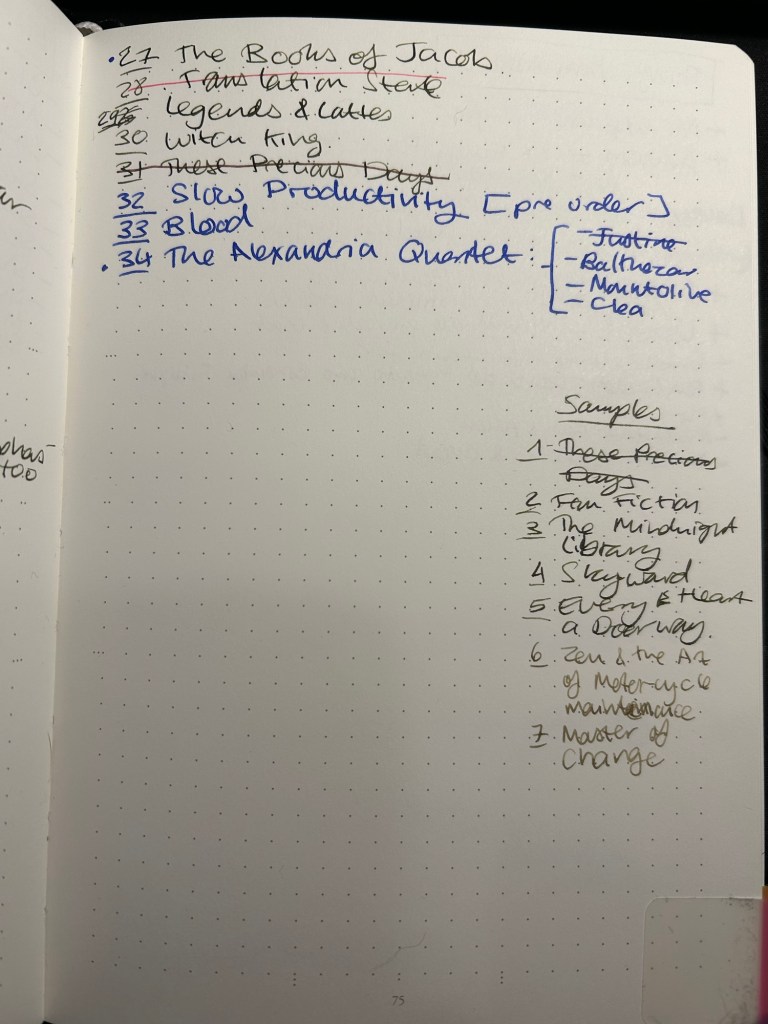
One of the things that I set up in my Leuchtturm1917 Bullet Journal is a list of the unread books on my Kindle. It’s supremely easy to buy books on a Kindle, as the whole system is set up a way to make book purchasing as fast and frictionless as possible.
This is a problem for me.
I love books, I adore reading, and I have pretty large group of friends that love reading too. This means that I’m inundated with great recommendations that run the gamut from light hearted fantasy and sci-fi to contemporary and classic literary fiction, with a whole host of fiction and non-fiction books in the middle (I don’t read horror and I don’t read romances and I rarely read poetry but that’s about the only limits I have in terms of my reading tastes). I get several such book recommendations a month, and with my initial impulse to rush out and buy them, and with the ease of purchasing books on a Kindle, things could get out of hand very quickly. This was one of the reasons why for years I was so resistant to buying a Kindle.
You see, it’s very easy to lose track of just how many unread books you have on your device. Even if you sort by unread books, you just don’t get a real feel for how many of them are actually waiting to be read. There’s no bookshelf groaning with the weight of unread books, and I was feeling the lack of that.
Enter my list of unread books on my Kindle:
It’s a simple numbered list of books that I haven’t read and are on my device. As I read a book, I cross it out. As I purchase more books I add them to the end of the list. As I’ve gotten into the habit of downloading samples, I’ve started to write them down too so they don’t get out of hand. It’s super simple, as bare-bones as it can be, and as practical as possible. The point is just to give my brain an idea of the scale of unread books on my device, and it works.
It works.
I’ve stopped compulsively buying books in the fear of “running out of something to read” or “forgetting what I was recommended”. Recommendations go into my GoodReads “Want to Read” list. And my brain can now see that there’s just no chance that I’ll run out of things to read any time soon. If I buy something I have to go over the list and convince myself that what I’m buying deserves precedence over the lovely books waiting patiently in line, some of them for years. I also photograph this list and keep it on my phone for reference, to prevent me from accidentally buying the same book in physical format (unless I purposefully intend to, which is rare).
What about the physical books stacked on shelves, some of them two books deep? I would love to have such a list for them as well, but that task is too daunting for me now. I remember where my books are visually, and moving them all just to catalogue them not only seems like an awful lot of backbreaking work, it will destroy my “memory catalogue of books”. So it seems that my physical books will remain uncatalogued for years to come.
Do you keep a list of all the books you own but haven’t read yet? Do you just keep a list of the books you intend to read next? Do you track your physical books in some way?
I decided to try and create monthly reading reviews of what I read instead of individual reviews or a giant yearly reading list post. Here’s what I read this January:
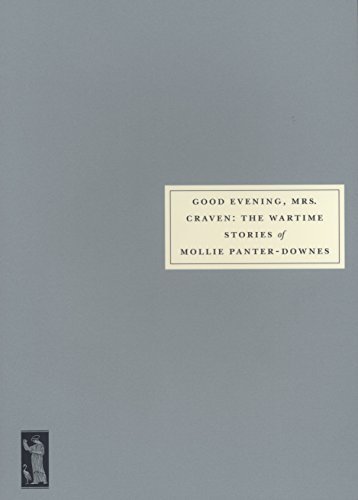
Good Evening, Mrs. Craven: The Wartime Stories of Mollie Panter-Downes, by Mollie Panter-Downes
A collection of very well written realistic short stories mostly about British women during WWII. Mollie Panter-Downes was a prolific and long time contributor to the New Yorker, and wrote both fiction and non fiction pieces for the magazine. This collection is bookended by two of her “Letter from London” non-fiction pieces, one from the beginning of WWII and one from the end. In between are 21 gems of short stories, all very realistic, all showing aspects of the war rarely discussed. Panter-Downes shows the great upheaval in British society at the time, both in the role of women and in the class system. She is sympathetic to her characters with all their flaws and foibles, and you grow to love them over their brief appearances. There are hints of dry humour, wonderful characterization, and an exploration of character that is both tied to Britain during WWII, and yet still universal. Highly recommended, even if you’re not a fan of short stories or historical fiction.
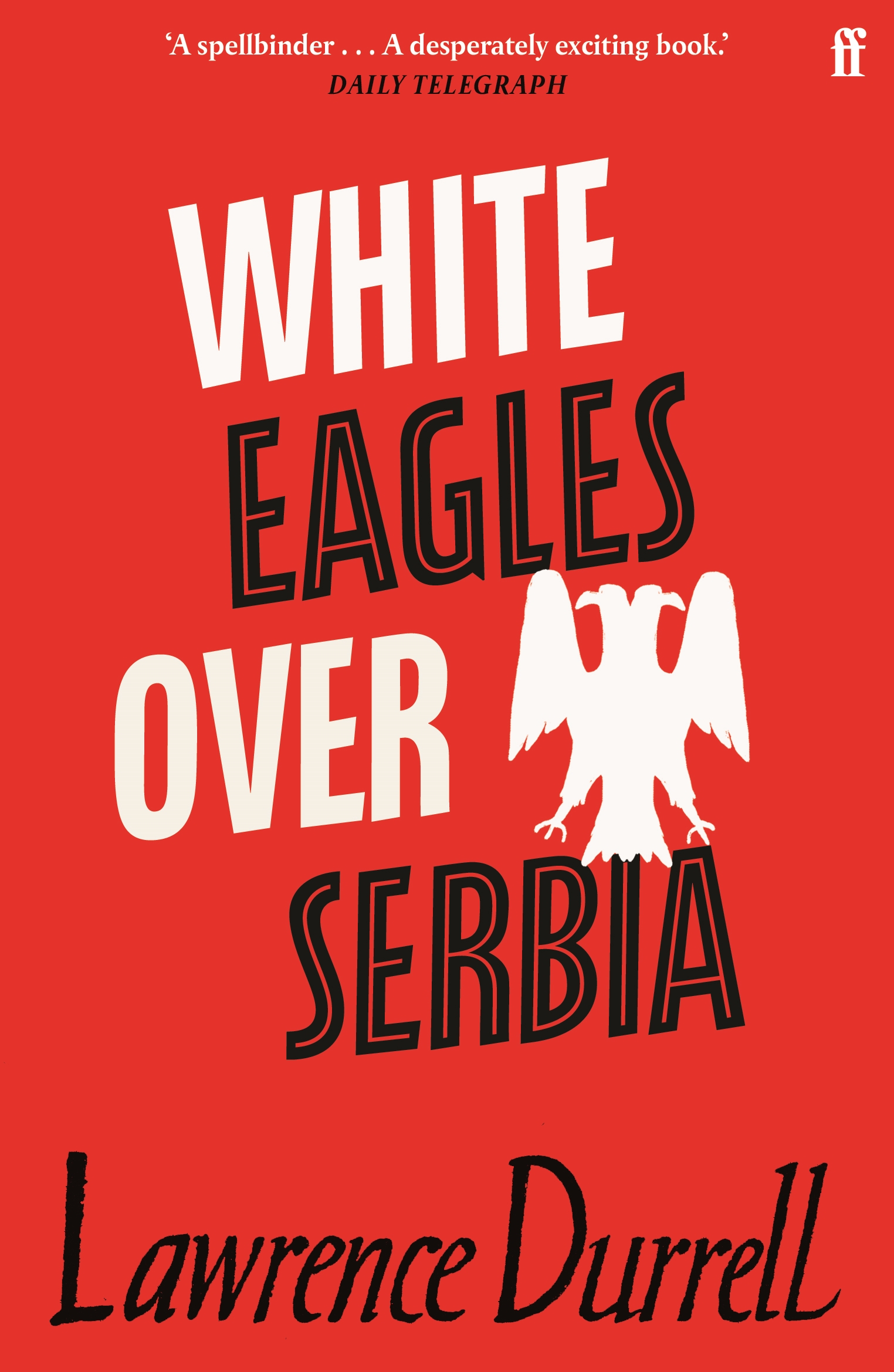
White Eagles Over Serbia, Laurence Durrell
Laurence Durrell started his career as a writer writing poetry, and it shows. The descriptions of landscape and character here are stunning. Never have I read a spy thriller that is written like a Literature with a capital L on the one hand, yet is still supremely entertaining and exciting to read – and very realistic.
Durrell is an excellent writer, and White Eagles is based on his experiences working for the British Foreign Office. The book is not flashy, it’s not high stakes, and it reads like something that could actually happen. The main character, Methuen, is a reluctant, tired hero spurred to action by his love of fishing more than his love of danger and intrigue. The descriptions read like poetry, and the characters are all individual gems – none of them are perfect, none of them are heroic, they are real people in very real situations. I wish there was a series of Methuen books (there isn’t), and I recommend this even to those who normally don’t read Cold War era spy thrillers.
Ragtime, E.L. Doctorow
Set in the New York area at the turn of the 20th century to the syncopated beats of ragtime, Ragtime is a tour de force of modern writing. The first part of the book is slightly overwhelming, as Doctorow takes us with lightening speed and fast cuts through many luminaries of New York city during the early 20th century, and intersperses them with the story of a wealthy WASP family, a Jewish immigrant family and a black family to be. The cuts remind me of a Wes Anderson movie, and it takes a while to realize that the narrator is actually creating a ragtime with his description of the events: the emphasis on seeming minutiae is deliberate, and the juxtaposition of things that don’t go together is purposeful. You feel like all the books you’ve read so far have been horse drawn in comparison to this piece, and suddenly you’re speeding your way on a model-T.
Very original, not an easy read, but highly recommended.
Note: the narrator speaks in the voice of a reporter from that era, and hence there’s a lot of the N-word (and worse) in this book.
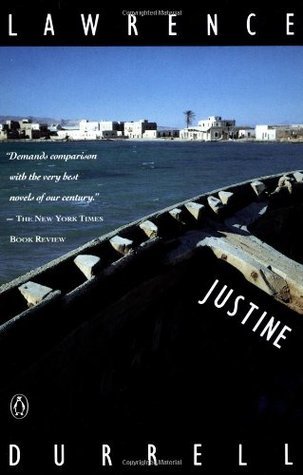
Justine, Lawrence Durrell
The first of Durrell’s Alexandria Quartet of novels.
Some books are easy to review, but this one isn’t. I’ll try to do it justice, but reading Justine was an experience difficult to summarize in words.
The good – the writing is exquisite. Durrell is a phenomenally good writer, and he’s at his best when bringing Alexandria to life. Alexandria itself appears to be the main character here, and it’s a fascinating portrait of the city during the ’30s. Durrell is doing interesting things with narrative structure here, and while it makes following along difficult at the start, the narrative builds up in layers over time. You aren’t viewing the story of the four lovers chronologically, but rather through the reminiscences of the narrator, as things come to his mind and gain importance. Thus you survey the scene several times from different angles, through the growing understanding of the narrator. It’s a fascinating narrative structure, and it adds nuance and interest to the story, and fits well with Durrell’s evocation of Alexandria.
The bad – the characters aren’t quite there. They remain ghosts of themselves, mythical creatures, never becoming palpably real. The only exception is Scobie, a character that seems to have been created as a caricature of sorts, a comic relief, and yet is the most fully realized character in the novel. My guess is that as we are returning to the same characters from different points of view in the following novels of the quartet, that this issue may be resolved.
The ugly – whether these are Durrell’s views or his narrator’s views, Justine is rife with misogyny, homophobia and whiffs of racism and antisemitism. The novel was written in the ’50s and its views on homosexuals were likely advanced for the time, but they’re still terrible. There’s also depictions of child prostitution, prostitution, and mentions of slavery that seem perfectly fine with the narrator and the people around him.
Justine is a difficult book to read, both for the narrative structure, which is disorienting at first, and the way it jars on modern sensibilities. It is well written and intriguing enough for me to give the rest of the Alexandria Quartet a chance.
A Modern Detective, Edgar Allan Poe
This is a mini collection of two short detective stories featuring C. Auguste Dupin, the first fictional detective.
Poe is pretty talkative here, and his detective, Dupin, is a long-winded, charmless, cerebral Sherlock Holmes type. The cases discussed are interesting, and the second story in this collection was inspired by a real unsolved murder case. The characters, though, lack charisma, mystery or charm, and the reader is left wondering why they ended up spending time with them.
The detecting techniques are more primitive than those portrayed by Conan Doyle, and they are magnificently padded with paragraph upon paragraph of Poe delighting at his protagonist’s cleverness. A full third of the first story is skippable without missing a beat, and the second one fares much the same. What Poe does do well is evoke an atmosphere of gothic horror around both cases. What he utterly fails to understand (but Agatha Christie knew so well) is that the heart and interest of a detective story is the characters in it, not so much the analytical prowess of the detective at large. Holmes, Marpel, Poirot, and Father Brown are all first and foremost compelling characters. Dupin has not earned his place among them, and is remembered merely for being the first, not (as Poe would have you think) for being the best.
Dull, overly wordy, not worth reading, despite its historical importance.
That’s it for January 2024. What interesting books did you read this month?
“M Train” by Patti Smith is a book about drinking black coffee in various cafe’s around the world, and watching serial crime dramas. That’s a factual if somewhat facetious review of “M Train,” and if that premise appeals to you, then by all means, I highly recommend this book.
But wait, there’s more to “M Train” than that. Smith wrote a book about loss and dealing with loss, memory, and the crushing passage of time. The prose is beautiful: if Joan Didion would have used more drugs I imagine that this is exactly how she would sound like. There are vivid and impactful descriptions of places and objects, interspersed with a dream sequences, symbolic moments and sentimentality. Smith does fall short when it comes to bringing other people to life, something Didion excelled at. The other people in “M Train” remain fleeting shadows, insubstantial vignettes of themselves.
And this is what I felt detracts from the book: despite all the loss described in it, it lacked substance. The most vivid things about it are the dream sequences and the internal monologues, which makes the book a bit of a featherweight. Somehow in the end you are left with the feeling that all you have read was a book about Patti Smith drinking black coffee and watching crime series.
“Drive Your Plow Over the Bones of the Dead” by Olga Tokarczuk (the Nobel prize in literature winner) is an astounding novel.
Imagine an Agatha Christie like murder mystery (and that already is high praise, because Christie knew how to spin a murder mystery plot like few other writers do). Now set it in a “Fargo” like setting, including the hostile weather, the small town, the eccentric people, and the quirky, pragmatic and deeply insightful main character (if this is ever made into a movie, Frances McDormand would make a perfect Mrs. Duszejko). Now cast it all in fantastic prose, tie it to Blake, to Eastern European history, to morality plays and religious texts, and finally, to the ultimate revenge narrative, “The Count of Monte Cristo”. Mrs. Duszejko isn’t a brooding sailor exposing the cruelty, corruption and foibles of upper-class French society, but she most definitely is woman in her 60s doing the same for the chauvinistic, cruel, corrupt, hunting neighbours around her.
Tokarczuk created a Character (with a big, bold, capital “C”) like no other. Mrs. Duszejko is the heart, the essence, the meaning and the end of “Drive Your Plow”. She is our way into the story, she maps out our way through it, and she judges us in the end. How we feel about her after the final page says more about us than it says about her. She is a character both full of contradictions and yet an integrated, believable whole at the same time. She is an engineer and a teacher, with a solid STEM background, that is also an astrology believer and practitioner. She is a non-religious person that constantly talks about God, a recluse that keeps making friends, a cynic that somehow manages to see good in people at their worst moments. She’s rational and pragmatic, and also deeply emotional and oftentimes impulsive. She’s powerful and fit, and a frail invalid. And she’s completely, utterly, with every molecule of her being, a real and believable human being. She’s a more believable person than I am, astrology and all.
The way that Tokarczuk ties the men’s treatment of Mrs. Duszejko (and other women) to the way they treat animals is masterful. “Drive Your Plow” could have been a parable, an allegory, a morality play, and yet it performs all that and so much more without driving the reader away. Like “Fargo,” it could have been a meaningless farce in less adept hands, and yet it manages to deal with issues that we have learned to be cynical about (the value of life, particularly as deemed valuable or useless by important men) with great earnestness and sensitivity.
There is much of Agatha Christie in the construction of the plot (particularly “And Then There Were None” and “Murder on the Orient Express”). There is much of Blake in the morality and moral outlook of certain characters. There is much of Dumas in the social observations tied to the revenge plot, and there are many post modern writers that are echoed in Mrs. Duszejko’s first person narrative. The result, however, is entirely unique, entirely Tokarczuk’s own, and well worth reading even if you have never enjoyed any of the authors echoed in the narrative. “Drive Your Plow Over the Bones of the Dead” is a modern masterpiece, and one that is deeply moving and thought provoking at the same time.
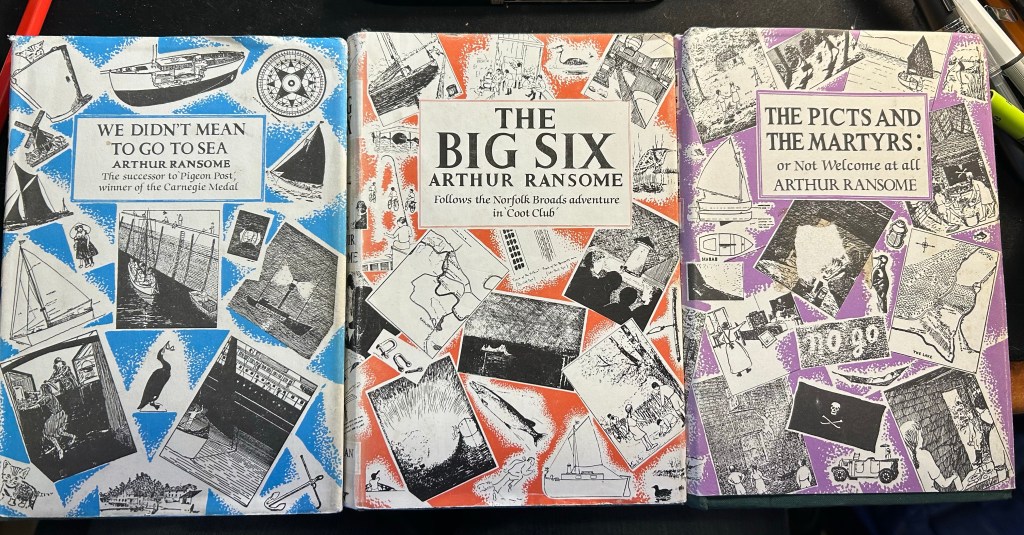
While I’ve really cut down on physical book purchases, especially while I’m abroad, I always end up buying a few books, and this last trip was no different. On Thursdays there’s a decent antique market in Spitalfields (it also includes several food carts and a good selection of vintage clothes stalls, plus it’s a few minutes away from Brick Lane), and I oftentimes find interesting things there. I’ll likely write a separate post about my haul there, but I did get three Arthur Ransome Swallows and Amazons series books: We Didn’t Mean to go to Sea”, “The Big Six” and “The Picts and the Martyrs”. They’re hardbacks in decent condition, with the dust jackets and the original Ransome illustrations, and I’m very glad that I found them half hidden in a comics and book stall. Ransome is an excellent British children’s book author, and if you liked the Famous Five and the Secret Seven or Kipling’s children’s book writing you’ll likely enjoy Ransome’s work.
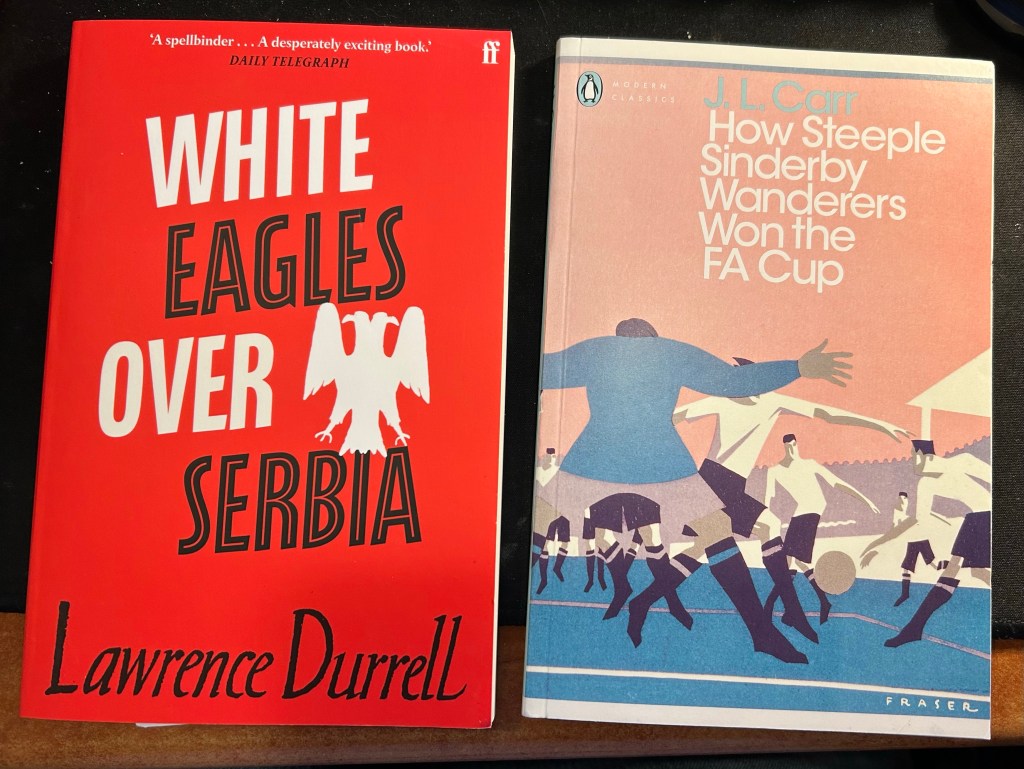
The other two books are paperbacks that I bought at Waterstone’s Piccadilly while waiting for a friend (I’m not to be trusted in bookstores). I’ve been wanting to read something by Lawrence Durrell for a long time and “White Eagles Over Serbia” seems like a good place to start. J.L. Carr is a superb writer, and although I’m not sold on “How Steeple Sinderby Wanderers Won the FA Cup”‘s subject matter, “A Month in the Country” was good enough for me to want to give this a try.
I still have April’s book backlog to finish reading, but these two books are next on my list.
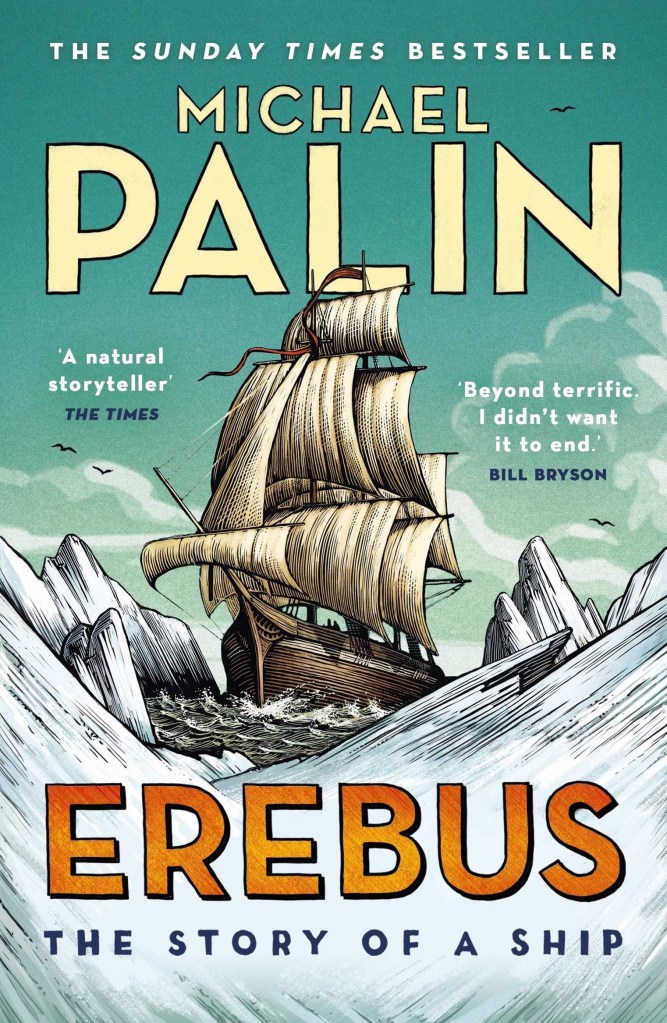
I enjoy reading Michael Palin’s (he of Monty Python fame) travel books. Palin is a good travel writer, combining keen observations of humanity, nature and location with a good sense of history and a sprinkling of oftentimes self-depreciative humour. “Erebus: The Story of a Ship” differs from his other travel writings in that it mostly isn’t his travels that are narrated, but those of the Erebus and its sister ship, Terror. These two former bomb ships spent the mid 19th century exploring the antarctic and then the arctic, with great success and to great acclaim. And then they disappeared for 160 years.
Palin starts the story with the crew, and the crew are at the heart of his tale. He could have focused on the tenacious people trying to piece together the story of the ship over the decades. He could have focused on Erebus’s last voyage and the long and oftentimes disastrous search attempts after it. But he chose to bring the ship to life through its crew, the era it was built in, and the state of the world around it. He masterfully weaves charming anecdotes of the ship’s daily life together with serious discussions of corporal punishment, racism, colonialism and the ecological damage mindlessly wrought by the Victorians. You get to hear about astoundingly brave and talented men doing the impossible, and about how ego and rigid thinking could be the downfall of their peers.
Palin traces the story of the Erebus from before it was built, through the story of its would be captain and crew and their Arctic exploits. He then goes through its creation, to its early days as a bomb ship with nothing to bomb, to its early retirement, and then its resurrection as an Antarctic explorer. He is sympathetic to its crew even as he pokes fun at some of them, and he always does his best to bring the daily life on the ship alive to the reader. There are a few well selected photos, prints and some excellent maps in this book, and they go well with Palin’s narration.
He also traces part of the Erebus’s journey himself, either by recalling past visits to certain key locations, or by actually travelling to remote places around the globe in the wake of this ship. He doesn’t sugarcoat its demise, the hardship its crew suffered, or the mistakes that they and their peers made.
“Erebus” was found in 2014 and “Terror” in 2016. They appear larger than life in many bits of literature, music and art, and it is worth learning their story. What Palin does in this book is not merely tell it as it was, but bring it vividly to life, and tie it inexorably to our lives right now.
P.S. I bought this book at the National Maritime Museum at Greenwich, which is very apt, as a branch of the museum appears in this book, and the museum helped Palin with the research for it. If you haven’t visited this wonderful museum, I highly recommend it.





 Writing at Large