Ghosts of Planners Past: Filofax

In the early 2010s Filofax was all the rage (much like Plotter is now), and I was swept with the trend. I started by purchasing the Personal Urban, then quickly expanded to Pocket, Personal and A5 Filofaxes of various kinds (Urban, Malden, Classic, Cuban, Graphic, Bond, Finchley and more).
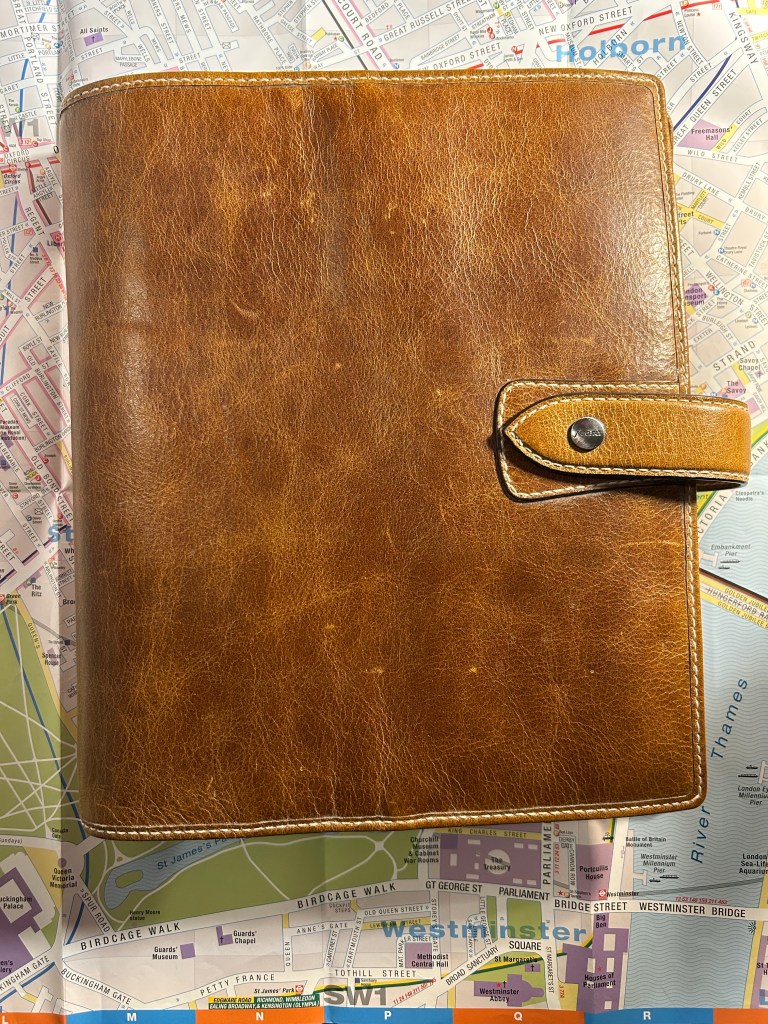
A5 Malden, one of my more well used Filofaxes

What drew me (and others) to them is the infinite customizability and the fact that these were gorgeous, well-made objects made by a brand with a history and good track record. Online communities that shared photos of spreads and setups started to grow around the brand, and unlike Moleskine and Moleskinerie, the company left them to their own devices. Some of them exist to this day (like the delightful Philofaxy). The parallels with today’s boju and Plotter communities are pretty clear.
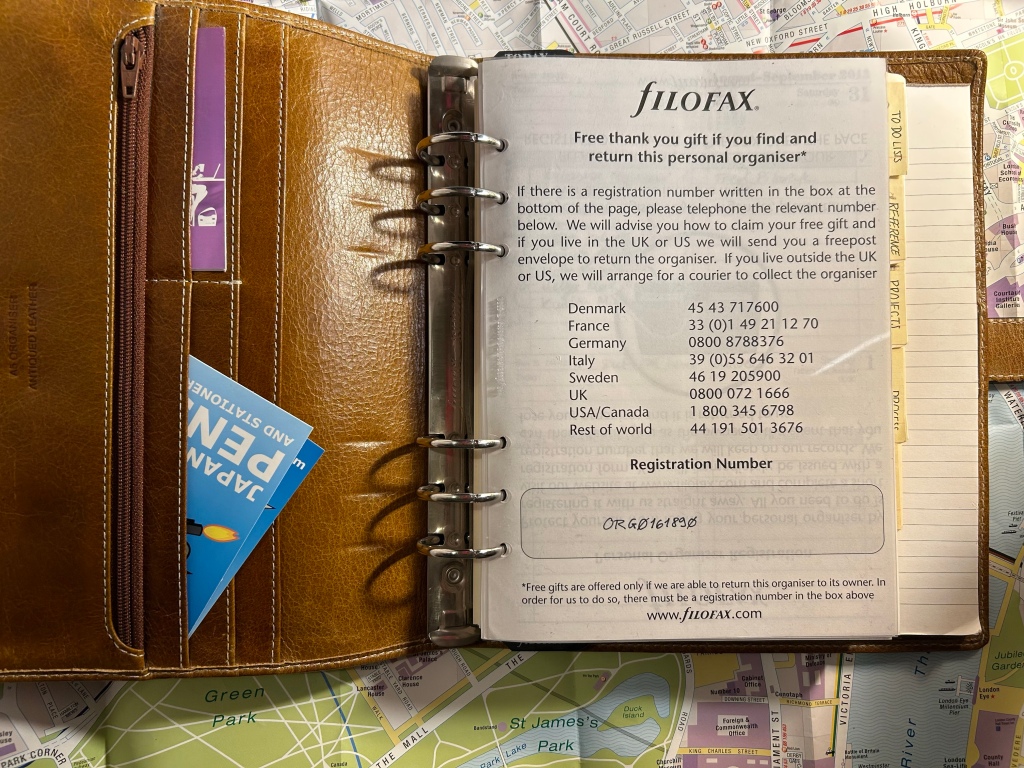
I invested in this Filofax, creating hand made labels for the tabs, setting it up just right.

The promise of bujo (bullet journalling) and the Plotter are also the promise of the Filofax: build a planner/notebook hybrid system that matches your exact needs like a glove. Filofaxes are a joy to hold in your hand: they are beautiful, tactile objects that feel good and are exquisitely well made.
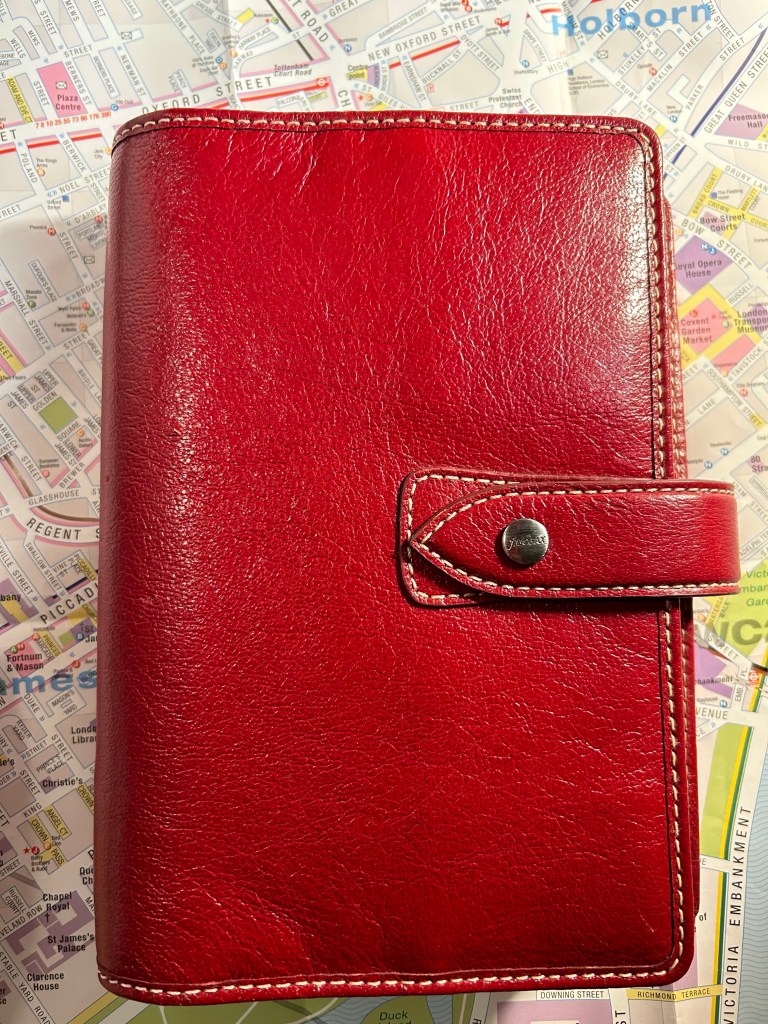
Look how pretty this red Personal Malden is. You can almost feel the buttery leather through the screen.

They weren’t cheap, but if you waited patiently or were willing to buy second hand you could get some really great deals, and they lasted forever. The refills, much like Plotter ones, were the real expense. Yes, you could buy a specialized hole punch for them and create your own refills, but most people just bought them from Filofax themselves or from Filofax compatible sellers. Which refills you bought depended mostly on the purpose of the Filofax in question, and I had ones that had no planner inserts at all, only lined or blank refills and tabs.
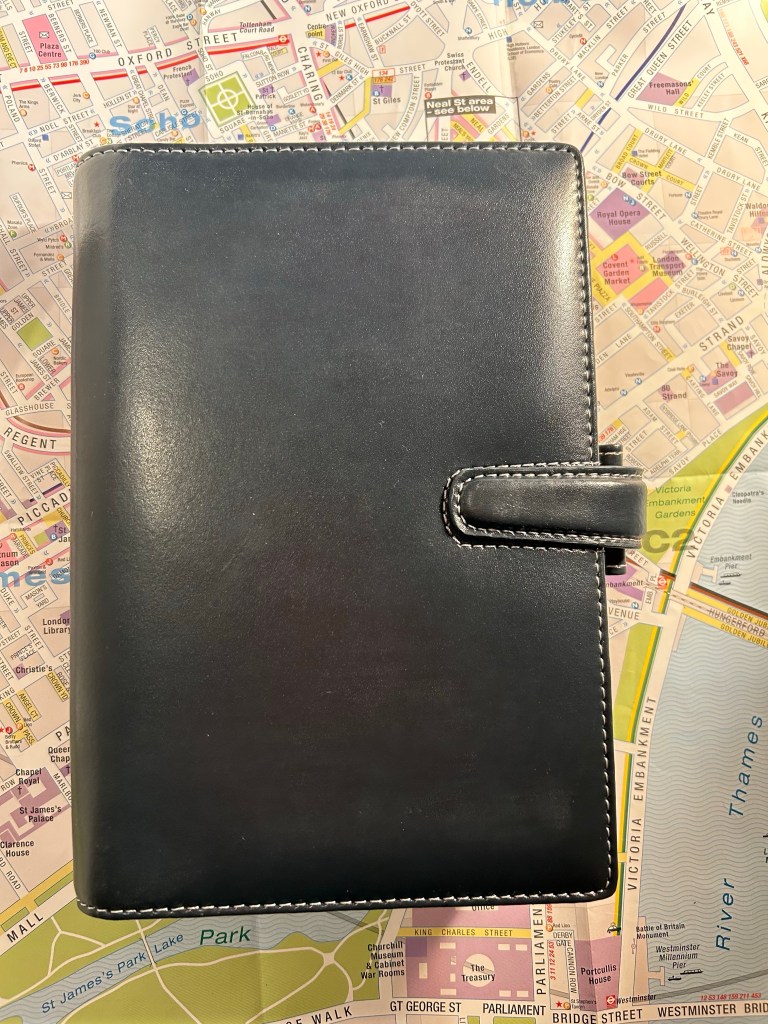
Personal Cuban, which has a rich leather cover that I was so afraid to muss it never left the house.

The olive Personal Urban Filofax below was my first Filofax and my workhorse. I used it heavily from 2011-2013, and it was a heady nostalgia ride to dust it off and open it up again. It is very well made – fabric, pleather and ring mechanism are in perfect condition even after intense use and then years of storage. It is also a relic of a person that I lost when I went through cancer treatments, and I confess that reading over some pages made me want to cry. The things I worried about…
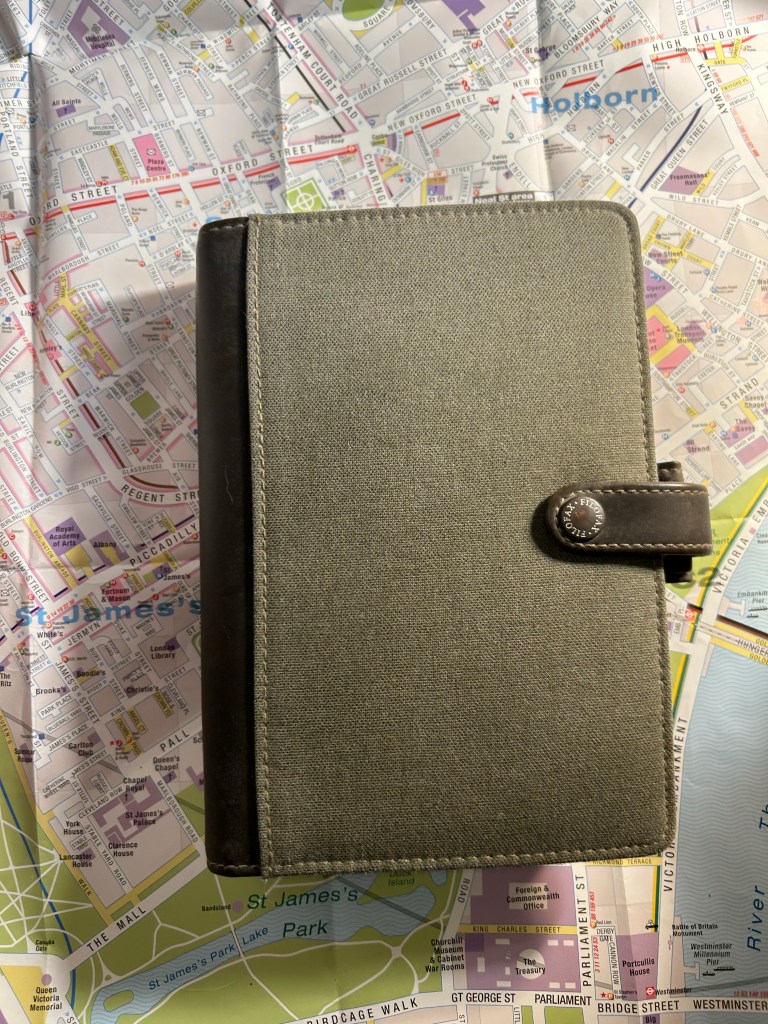
Personal Urban Filofax, my first and most used one.

Do you want to see how much I was into Filofaxes? I even had a page in my Filofax where I planned my Filofax usage:
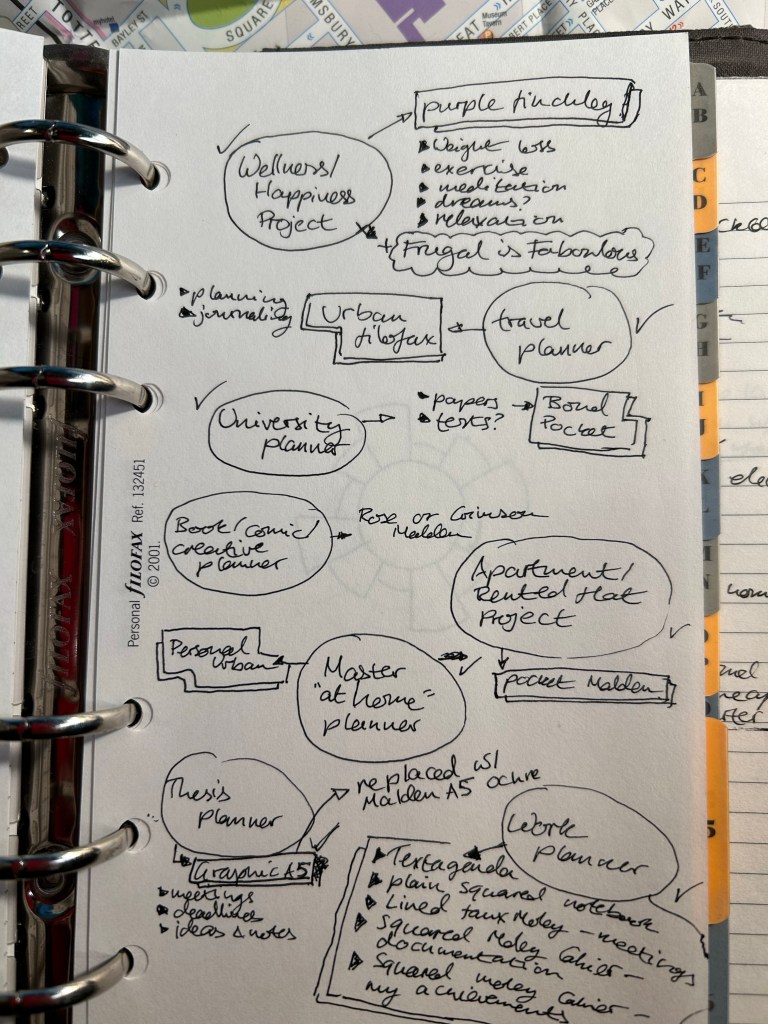
So much cringe, but I choose to be kind to my old, naive self.

Some of the Filofax inserts were fountain pen friendly, but I didn’t use fountain pens with my Filofaxes at all. I used Pilot Hi-Tech-C Coleto multipens with them, and I spent a good amount of money on their refills (which would either get air bubbles and stop writing, break, or just simply run out much too quickly). I even combined my love for Filofax with my love for the Chronodex system for a while:
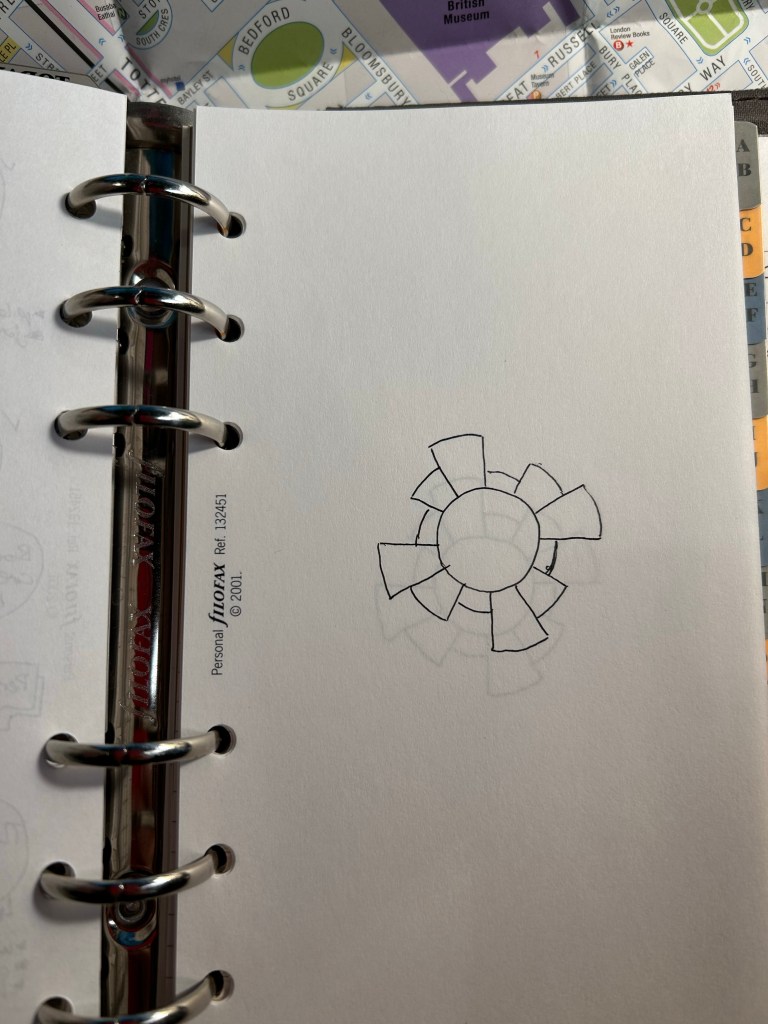
Pages in my Filofax that I planned to use for Chronodex entries.

So why did I stop using my Filofaxes completely? The system was well made, full of promise, and could double as a notebook and triple as a wallet, so what went wrong?

It was a combination of things that made me put all my Filofaxes into boxes for storage:

  • The stores in London closed down (first the Neal street one, then the one off Regent street), and it became harder to find Filofax refills in stationery shops in London (they never were available locally).
  • The refills weren’t cheap, and with the price of shipping added and the price of using the pens that worked best with them, it just became prohibitively expensive to use the system, particularly if you had more than one Filofax running.
  • The rings get in the way of writing. It’s a thing with all these systems, and whoever tells you that the rings don’t get in the way isn’t being candid. And no, you won’t be taking the refills out to write on them and then filing them back in, it’s just too inconvenient.
  • Filofaxes are bulky and heavy, particularly when full (and they collapse when they aren’t filled). It’s a hassle to carry them around, even if you are using them as a wallet (they a aren’t great at being wallets).
  • As with other planning systems – finding refills that have the week start on Sunday (because that’s when it starts here) was nearly impossible.
Hints of posts to come.

So why get into ring based systems like Filofax and Plotter? If you want one physical planner system that will function in more than one way at the same time, will allow you to customize it fully to your needs, and can be carried over from one year to the next, then these systems may be worth a try for you. I used my Filofaxes heavily during a very busy time in my life because I was able to set them up for all my needs, and particularly GTD (I’ll post about that system later on in this series).If you can work around the rings and can afford the system and the refills, the Filofax is a very well made object that may be able to help you fulfill your goals. It helped me apartment hunt, work on my degree, kickstart my running, and be a better manager at a busy and difficult time at work. I will forever have a soft spot for my Filofaxes, which is why I’ve never attempted to sell them.

Do I regret my Filofax obsession? No. Do I regret that I stopped using my Filofax planners? Also no. They were exactly what I needed at the time until they weren’t, and I believe that in the end a planning system needs to work for you, and not you for it. Something to remember whenever you are considering making a change in this area.
Weekly Update: Out Sick

I’ve had a cold this week, which is to show just how well masks and isolation work as it’s the first cold I’ve had in years. I haven’t missed it.

After a rainy week and then a sick week, my running has been suffering and the first race of the year is in two week’s time! I went back to running today, and planned to ease in with a 3k run that ended up being a 5.5k fast run because I was enjoying myself so much. It’s cold outside, but it isn’t raining, and that makes it perfect running weather.

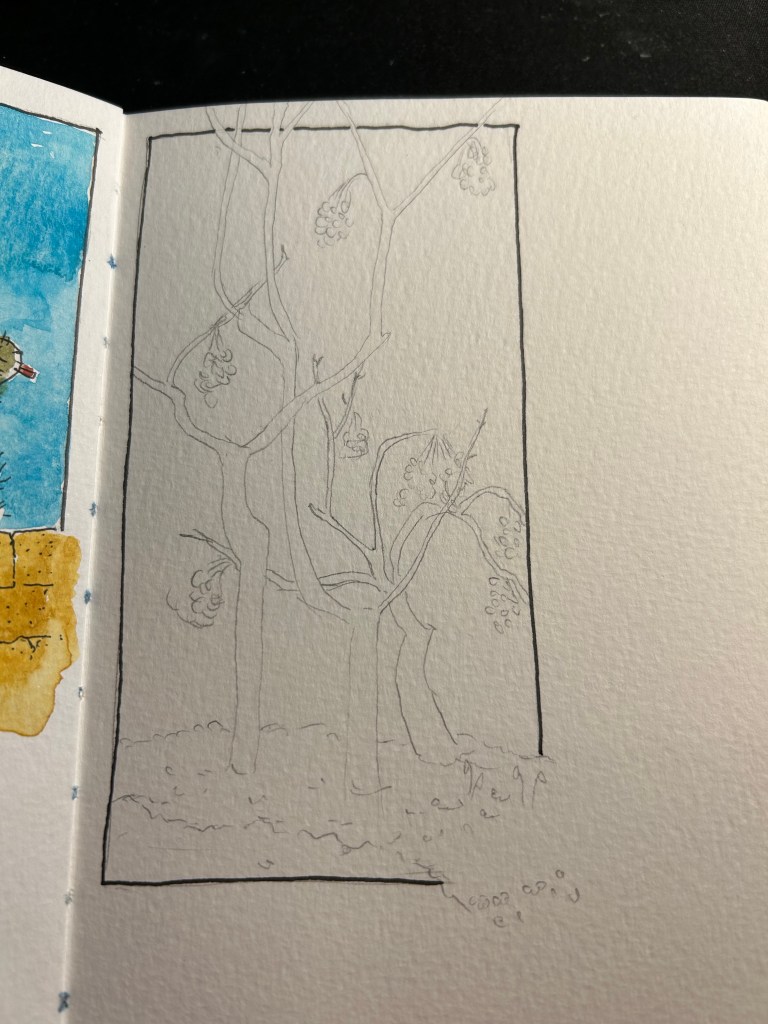
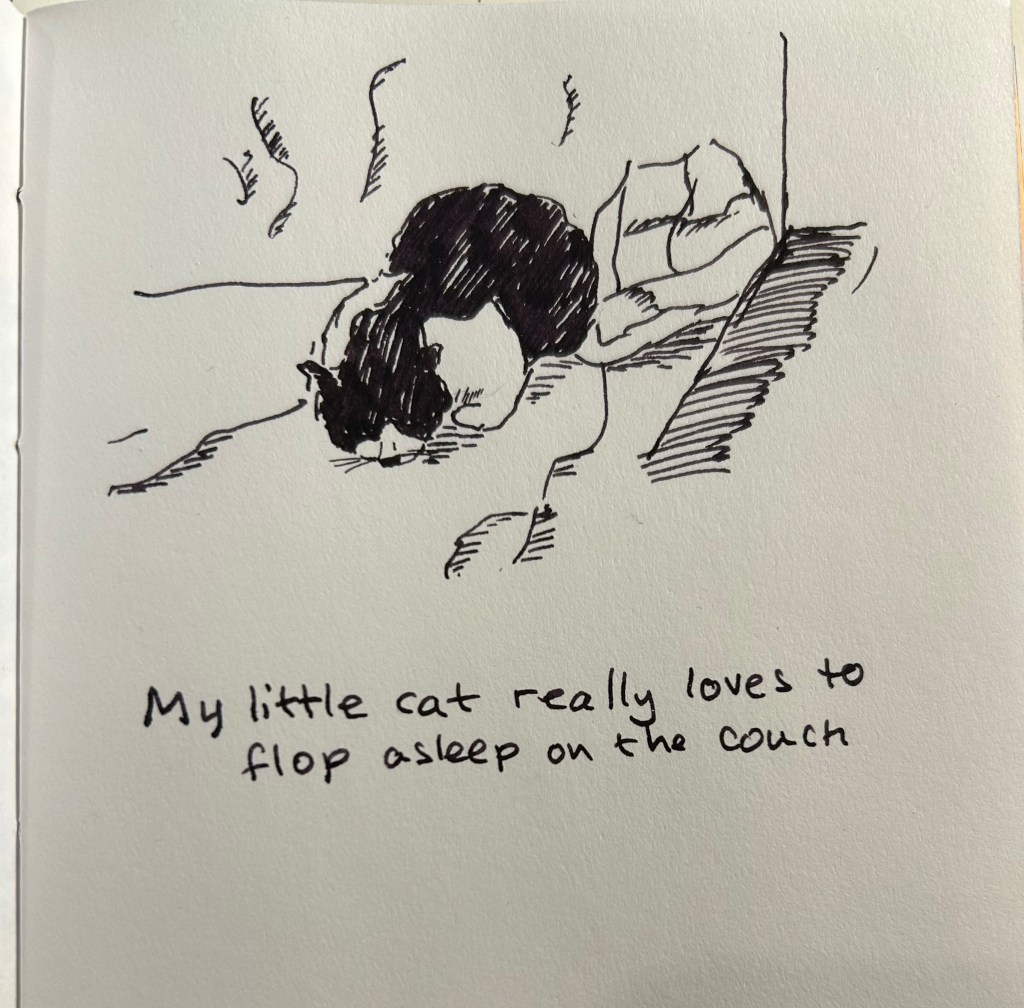
After three days of being cooped inside, I went outside to draw yesterday, and I tried a new kind of composition, which I kind of like:

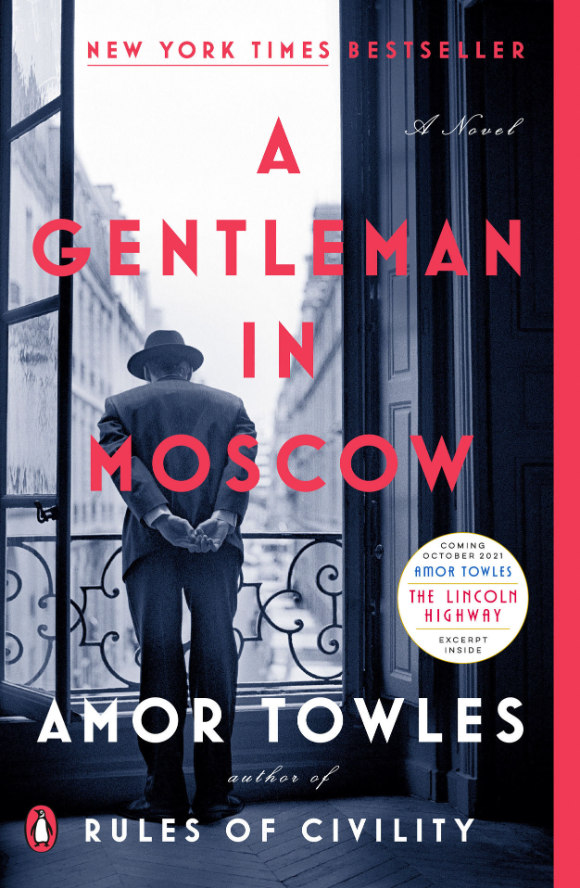
I finished reading “A Gentleman in Moscow,” and thoroughly enjoyed it. I’m focusing on finishing “Erebus” by Michael Palin next before working my way through my kindle backlog and the stack of physical books that I want to read this year.

I’ve written my Lamy Studio Terracotta limited edition filled with Diamine Yule Log dry, and I’m now using a Lamy Safari Charcoal with Diamine Deck the Halls and a Lamy AL Star Charged Green with Diamine Alpine mostly, as they’re the next in line, with a couple of Kaweco sports, to be written dry. I’ve currently got 26(!) pens inked up, and it looks like I’ll be dumping out ink from a few of them, for the sake of my sanity. We’ll see how things go next week.

I’ve been my fountain pens mostly for journalling, on a Stalogy 365 notebook that I’ve started using. Every time my journalling gets into a rut, I switch notebook formats and that generally works to get me journalling again. The Stalogy is smaller than the Moleskine’s that I generally prefer to journal in, but it has fountain pen friendly paper, which is giving me the chance to use my pens. This is not to say that I don’t use fountain pens with my Moleskines (I do. I don’t care that they show through and sometimes bleed, as I have more than enough of them to use just one side of the paper), but that it’s nice to better see the properties of the inks that I use. Drying times aren’t great, and the cover is floppy, which means that I probably won’t be using this format long term. For now it works, as I’ve been journalling regularly, and I can use the Stalogy without looking at the various hour and date notations on the page. They are very feint, and I’ve turned the notebook upside down, so they are completely irrelevant to me.

I’ve been doing a lot of NTC workouts lately, and they’re tough but a lot of fun. If you’re looking for a way to work out more, using the NTC app is a great option. They have a large variety of workouts, workouts that are as long or as short as you need them to be, and workouts that are built for small places and little or no equipment (mostly you’ll just need a mat). It’s all completely free of charge, and has been that way for years. I’ve been using them for over a decade, and the quality and variety has just gone up with time. Even 5-10 minutes of exercise a day is better than nothing, and this is an easy and fun way to get into training.

Have a great and healthy week!

Moleskine Blue Note Limited Edition

This post has been languishing in my drafts since mid September 2022. The photos were taken using my old iPhone 11, and the lighting came out very yellow and vintage-y. I was considering photographing everything again, but then I decided that this somehow works with this Moleskine’s theme.

It’s been a while since I’ve reviewed a Moleskine, but I’ve decided to get back to regular Moleskine reviews since I’ve got so many of them, and I still think that they are masters of design, and make the best quality covers and bindings than anything else in the notebook market. And 90% of Moleskine’s limited editions are their covers.

Back in the heady days of 2015, Moleskine came out with one of their best collaborative limited editions: The Moleskine Blue Note notebooks.

Front Cover

Blue Note are a jazz icon, a record label established in 1939 and instrumental in the development of modern jazz and in album cover graphic design. This collaboration could not be more tailor made for a brand that emphasized graphic design as much as Moleksine do.
The front cover looks like a Blue Note album cover, because it is a Blue Note album cover: midnight blue by Kenny Burrell. It’s a classic Blue Note album with a classic Blue Note design, and it’s no wonder that this is one of the albums that was chosen for this collaboration. The other albums in this series (Art Blakey’s “A Night in Tunisia”, Freddie Hubbard’s “Hub Tones”, Dexter Gordon’s “Go!” and Thelonius Monk’s “Genius of Modern Music Volume 2”) are equally iconic in both sound and album design, although “Midnight Blue” is the most muted of the bunch. As usual in Moleskine limited editions, there were two large notebooks and two pocket notebook designs in this series. I can’t help wishing for more of these, because I think that it’s such a perfect fit between the brands, and because Blue Note album covers are so fantastically well designed.

The inside cover design is the same for all the notebooks in this edition (again, this is something that Moleskine does for all its limited editions), and they feature photos of many of the legendary artists that recorded Blue Note albums (how many do you recognize?). There’s also a note about the album and the famous Blue Note logo on the bottom right side of the page, and Moleskine’s on the left. I’ll note here that Moleskine gave Blue Note’s logo far more prominence on the cover than what it gives its own logo (which is simply debossed on the back).

On the back endpapers there’s a history of the Blue Note label, the famous back pocket, and again Moleksine’s phenomenal printing and assembling capabilities that make the pocket printing completely aligned with the endpaper printing. Pattern matching is hard, and it always surprises me that they get theirs perfect every time.

The sleeves on this edition are excellent. Moleskine in Jazz indeed:

There are four stickers that come with each of the notebooks in this edition, one for each one of the albums in it, and they are perfect. The look exactly like a Blue Note disc, and the details on them are magnificent. Someone really enjoyed their job here, and it tells.

Almost all of Moleskine’s limited editions feature lined paper, but the Blue Note edition was a welcome change: this notebook has blank paper! I’ve been using it, in combination with another notebook, for journalling, and it’s great! As is the case with Moleskine paper, it’s largely for gel ink, ballpoint, pencil and fineliner use, although some combinations of fine nibbed fountain pens and inks work on this paper, and blank paper tends to be the most fountain pen friendly of the bunch.

Doodle that I made in this notebook in September, when I was still struggling to get rid of steroid side effects.

If I could have any say in the matter, I would have loved to see more Moleskine and Blue Note collaborations, and I would have loved to see more blank paper limited edition notebooks. Most Moleskine users still prefer lined paper, which is why almost all of their limited editions have lined paper. But as Moleskine limited editions lately seem to skew to either book themed (Petit Price, Wizard of Oz, Lord of the Rings, Alice in Wonderland), pop-culture themed (Star Wars, various Manga and video game editions, Coke-Cola, Smiley) or designer based, I doubt that we’ll get to see more of these kinds of collaborations.

Book Review: A Gentleman in Moscow, Amor Towles

This book languished on my kindle for a long time, and is one of the ones that I was most looking forward to read as part of my “getting through my kindle backlog” challenge.

It is a first and foremost a charming book, much like the charming gentleman at its heart. It will make you smile more than once or twice, even as it discusses one of the most brutal periods and places in Western History: Russia under the Red Terror and during Stalin’s reign. Towles plays a tricky game here, much like a clever juggler, as he never lets you experience the era’s cruelty at first hand, yet he at the same time never lets you forget it. Even as the count thinks of poetry and the best of human kind, there are asides that remind you what was going on at the same time in the gulags and the collectives, in Ukraine (even then suffering under Russia’s boot), and in the daily lives of Moscovites in bread lines.

If you are looking for realism, this is not the book for you. “A Gentleman in Moscow” has the air of a fairytale to it, an insistence on seeing the good in people, in noticing their nuances and making room for them, in forgiving them for their foibles. It’s an optimistic book and I think we could do we a few more of those in the world.

This is not to say that “A Gentleman in Moscow” lacks sophistication and polish – on the contrary, it may have a little too much of them. Here is my main criticism of this book: it doesn’t trust its reader enough. It isn’t willing to let them pull out their own chair, pour out their own wine. Every point must be made clear, with charm and grace, but with little room for interpretation. The points where you are left to your own thoughts are few and far between, and you are to arrive to them after getting a thorough nudge in the right direction.

All in all though, “A Gentleman in Moscow” is a delightfully charming, accomplished book, with enough sophistication to its narrative to be satisfying without being opaque. It’s an enjoyable book to read, a book that I would gladly recommend, and it reminds me a bit in its overall theme and outlook of “Mrs ‘Arris Goes to Paris” by Paul Gallico (and that’s a compliment, in case you were wondering).

Ghosts of Planners Past: Daily Planners

It was obvious that I’d discuss daily planners after I addressed weekly planners, right?

This format, in combination with some of the planning tactics that I’ll talk about in later posts, has been the one that I used the most over the years. Daily planners usually have a page per day, oftentimes with hourly notations on the side. Less commonly they have a page for planning and across from it a page for notes. Sometimes the page is divided into sections for various meeting notes, todos, etc. Daily planners tend to be the thickest of planners, unless they split the year somehow, or only cover part of it (academic year planners, for example).

This is a very old Filofax daily planner example that I had laying around. I’ll be posting separately about the Filofax system

I’ve used the daily format the most because it allows for the most room to think and plan in, and the main reason I plan on paper is for the space it allows me to sit with a pen in hand and a blank (lined/squared) page and plan the direction, location and movement of my tasks like a general ordering troops around in the army. Push this one until tomorrow or early next week, this one gets a little marker for lower priority, and this one for higher, etc. The marking methods that I use have changed a bit over the years, but the format that I prefer largely hasn’t. I can oftentimes plan two days on a page, but it makes things feel cramped. I’m giving that format a try now (two days per page), and I’m likely going to revert back to my beloved page per day format soon. Ideas need space to breath, and when tasks get cramped I tend to miss a few of them. They just run on into each other in a condensed wall of text.

Like with weekly planners, daily planners have obvious inherent downsides. They’re thick and heavy. Unless you’re making them yourself (which is what I’ve been doing for years), you’ll be made to feel bad with every day you skip in them. They also don’t allow to easily see the bigger picture: having all the space that the weekly planners lack, they pay for that with the inability of letting you get a feel for your week in a glance. You remain mired in the day to day, and need to purposefully remember to look ahead to see what’s coming tomorrow, the day after, next week.

This is the reason that for years I’ve kept two notebooks that I turned into planners, a daily one (which was much more heavily used) and a weekly one (which I referenced once or twice a week). This combination worked the best for me until I got sick and it crumbled. Perhaps it will work for me again.

Book Review: “You Just Need to Lose Weight”: And 19 Other Myths About Fat People, Aubrey Gordon

“‘You Just Need to Lose Weight’: And 19 Other Myths About Fat People” by Aubrey Gordon is a short reference book that discusses 20 common myths and misconceptions about fatness in an attempt to equip the reader with facts, talking points and things to consider when addressing anti-fat bias (aka fatphobia).

As a long time listener and supporter of “Maintenance Phase“, Gordon’s excellent wellness and weight loss debunking podcast with Michael Hobbes (of “You’re Wrong About” fame) very little in this book was new to me. It was a distillation of many of the ideas and topics discussed in the podcast, formed into a book that is specifically meant to be a teaching aid of sorts. It is also much more of a “call to action” book than Gordon’s previous book, “What We Don’t Talk About When We Talk About Fat”.

If you haven’t listened to “Maintenance Phase” I highly recommend it. You can either start with the first episode here, or jump in with one of their best episodes, on Goop. If you are looking to get into Gordon’s writing, I recommend reading “What We Don’t Talk About When We Talk About Fat”. It’s much more of a reading book than a reference book. Once you’ve read that, there’s a good chance that you’ll want to keep a copy of “You Just Need to Lose Weight” around, if only to squelch tiresome Karens who tell people that “you just need to lose weight, it’s for your own good, I’m just concerned about your health”.

On a more personal note, just to highlight why I find this topic personally important (beyond me wanting to be a better, more accepting person in a better, and more accepting world):

My mother was misdiagnosed by a whole phalanx of very good doctors because all they could see is a fat person standing before them. They ignored her blood work, they ignored her biopsy, they ignored her medical history and our family’s rich and varied history with blood cancers. She nearly died because of their insistence that her problem was that she is fat. Well, she is fat, but her problem was that she had two types of blood cancer and one of them was going for her liver. The only two doctors that actually gave her a proper diagnosis were a resident that didn’t even see my mother (she just looked at the actual tests and you know, read them), and a liver doctor who is himself fat.

Bias kills. Learning about it is a moral duty, regardless of whether the bias is tied to race, gender, gender expression, size, age, disability, social class or anything else. It literally kills.