Give yourself a break – it’s a marathon, not a sprint

I’ve had a rough writing week this week and last. For the first time since I started writing I missed a few days of daily writing (four to be exact), and in two other days I didn’t hit my daily 500 words quota. I can try to chalk it up to rough days at work, but if I look at my word log I can see that the truth is it was due to social gatherings with friends or family. For the first time ever I got an insight into the mindset of all those authors who became social recluses 🙂

As the week progressed I started stressing out that I wouldn’t meet the deadline I had set to myself  — finishing another chapter by this Saturday. I also gave myself a hard time for not doubling down on the days that I did write, to make up for all that “wasted” time. This only served to make me write not great stuff (to say the least) earlier this week, and procrastinate when it came time to sit down and write.

Yesterday I sat down and reminded myself that this wasn’t a sprint, but a marathon. There are going to be good weeks and bad, and as long as I didn’t let non-writing days grow into a habit, everything would work out well in the end. I looked at the writing I did earlier this week, and spent my writing session quickly repairing what needed to be repaired for me to move on (no polishing, just necessary fixes). I finished that up today, and it went well enough to motivate me to write non-stop for about an hour after that. Nobody was more surprised than me to look at the screen and realize that I managed to polish off chapter 3 today.

For me these past two weeks were about realizing that I am allowed to have a social life without feeling guilty about it, and that as long as I don’t let my lizard brain take over and push me into a spiral of guilt, paralysis, and then more guilt, then I’ll be just fine.

Ira Glass on Storytelling

Speaking of podcasts, Ira Glass, the talented host/reporter/producer/storyteller of This American Life, did an interview a while back on storytelling.

He talks about the basics of storytelling, what makes a good story a good story, and how you can ruin a good story with bad telling. He also expounds on how he got started in radio storytelling, what are some of the challenges a beginner has to overcome, how to get better at storytelling, how to find your voice, and how to cut yourself some slack when you are starting out.

Well worth your time, the interview can be found here:

An audio only version can be found here:

Ira Glass on Storytelling, Radio and Politics (part 1)

Ira Glass On Anxiety, Fame, and the Early Days of This American Life (part 2)

Podcasts for Writers

I stumbled upon a list of “8 Great Podcasts for Writers” today, and even though the title was clearly click bait, I read it.

Apart from the wonderful “Grammar Girl”, which I highly recommend, I found little on this list that spoke to me. Composed of mostly of podcasts of men talking about horror fiction, I felt decidedly fooled by the misleading article title. These were neither “great” podcasts, nor podcasts for writers.

So although I dislike list blog posts, I thought that I’d create an alternative list. I listen to several hours of podcasts a week, and all of these podcasts worth your time and attention, especially if you are a writer.

This American Life” – often dubbed the 800 pound gorilla of podcasting, this hour long weekly show is the one podcast you should listen to if you have time for only one podcast. This podcast will teach you more about storytelling in one hour than a dozen creative writing books can. If you are a writer, take time to notice the pacing, the choices the reporters make in selecting their recordings, and what the music in the background is doing. There is a lot of time, effort, talent and experience that goes into each and every episode of TAL and just by listening to it and paying attention you can learn a lot about what it means to be a superb storyteller. Also, Ira Glass.

Serial” – if you haven’t heard of the TAL spinoff with Sarah Koenig, you were probably spending the last year or so in a writer’s retreat in the Mohave desert. Imagine a podcast episode of “This American Life” expanded into a serial, and this is the podcast that you’ll get. The story is fascinating, but the way Sarah tells it is what is most worth noticing. She is the best “first person narrator” that you could meet, and listening to her struggle to understand the story she found herself a part of is highly illuminating. If you ever plan on writing a story with a first person narrator (reliable or not — you’ll hear in “Serial” that reality is not that clear cut), this podcast is a must.

99% Invisible” – another podcast that showcases great storytelling, 99% Invisible with Roman Mars is worth listening to for the way it creates mood and tone. Just listen to “There is a Light that Never Goes Out” or to “Three Records from Sundown” to get what I mean.

Here’s the Thing with Alec Baldwin” – Alec Baldwin has intelligent conversations with creators of all kinds — actors, authors, journalists, musicians and more. If you have a bit of spare time, delve into this podcast’s archive. You can learn a lot about creative people’s mindset, work process and failures from these candid and relaxed conversations. Baldwin’s conversation with journalist Gay Talese is a pretty good place to start from.
World Building on the Go

World-building is one of my favourite parts in writing, and one of my favourite pastimes in general. Since I know that I have such a penchant for it that I could spend hours on it, fleshing out every little detail about the world I’m working on, I don’t allow myself that time.

Yes, there are some basic things you need to know about the world your story is taking place in. No, those details do not include creating several languages, a fully fledged mythology, and a comprehensive law system.

Before I started I had a very general idea about the world that my novel takes place in, and I wrote none of it down. As I began writing, I got a better idea of what I need in my world and what major conflicts need to shape it for the theme of my novel to work. Then I sat down and wrote a few key things: a pertinent facts about its history, the names of a few key places, and a general map of where the main things were.

A lot is still blank at this point, and that’s because I chose to keep it that way. As the story evolves, so will the world around it. This way I don’t “burn” useful hours on superfluous trivia, and I am not forced to change  my story because of a geographical or cultural detail that I had committed to months before, when I had yet no idea where the story might take me.

I plan on “world-building on the go”, leaving plenty of blanks as I start, and building my fictional world gradually as I write. I have a feeling that it will be a more organic, more compelling world that will be less troublesome for me to write stories for. What’s more, building a world this way helps make sure that I don’t break off my story on an irrelevant tangent just for the purpose of showcasing a background detail that I want to show off but the reader doesn’t really care for.

Everybody knows that author. Do your readers a favour and don’t be that author.

Writing Resource Thursday

This week has been pretty rough at work, so I missed two (!) writing days and one blogging day. Hopefully I’ll be able to make up for at least one day during this weekend.

While I play catchup with my word count, here are some intereting things to peruse:

Seth Godin wrote a blog post with 19 tips for authors that is unique, insightful, and thought provoking. If there’s one thing I am going to take from it it’s this piece of advice (number 2 in the list):

The best time to start promoting your book is three years before it comes out. Three years to build a reputation, build a permission asset, build a blog, build a following, build credibility and build the connections you’ll need later.

Why your characters are boring is an interesting (with a bit too many unnecessary pictures) post from Ben Schmitt on the importance of giving a character something they want or desire, and making sure that each scene expresses a movement towards fulfilling or attempting to fulfill that yearning.

For a scene to truly be a scene, each character in the scene has to want something. There has to be conflict, an obstacle inhibiting the character from getting what they want, and before the scene ends, one of the characters has to be different as a result of that scene.

Finally, another blog post from Ben Schmitt, this time on Now Novel, with 11 pretty solid tips on how to write even when you don’t want to. While I don’t agree with all of them (number 4 for instance. The best time to write is when you have time to write), the majority of them have worked for me in the past.

Have a great weekend, and keep on writing!

On the Importance of Being Bored

Lately I’ve been letting myself get bored again.

On the bus on the way to work I leave my phone in my bag, and just while the time daydreaming, sneaking glances at my fellow commuters, or staring outside the window.

In waiting rooms and when queuing in line, I leave my phone in my pocket, and just let my mind wander.

If I’m alone in a restaurant and waiting for the menu or the food, I just look around or while the time in thought.

It is extremely difficult, as like many people today I’m very much addicted to my smartphone. We now have an always on entertainment system that ensures that we will never be bored again if we don’t want to. And it is up to us to muster the tremendous willpower to put it aside and allow boredom to seep back in.

I am forcing myself to do that because it is while I have nothing “important” on my mind that stories begin to seed, form and grow there. It is then that I notice curious things around me that can become story ideas, or figure out how to end that scene that I was stuck on. It is then that I also discover glaring plot holes, or something that I may want to use as a red herring or a little tidbit to flesh out one of my characters.

Try letting yourself be bored every once in a while. You never know what interesting idea will creep in to keep you company.

Second Chapter

I finished writing the second chapter of my novel today. It’s also been a month of consistently writing every day, which is a big achievement for a veteran procrastinator like me.

I’ve learned that when I get stuck in my writing or my mind starts to wander into the depths of the internet I need to pull back and do a quick draft of whatever it is I am working on at the moment.

I’ve also learned that when an idea comes to my mind I need to write it down as soon as I can. That means carrying a pocket notebook on whenever possible, but also writing things on scraps of paper or my phone and sorting through them as soon as I get home.

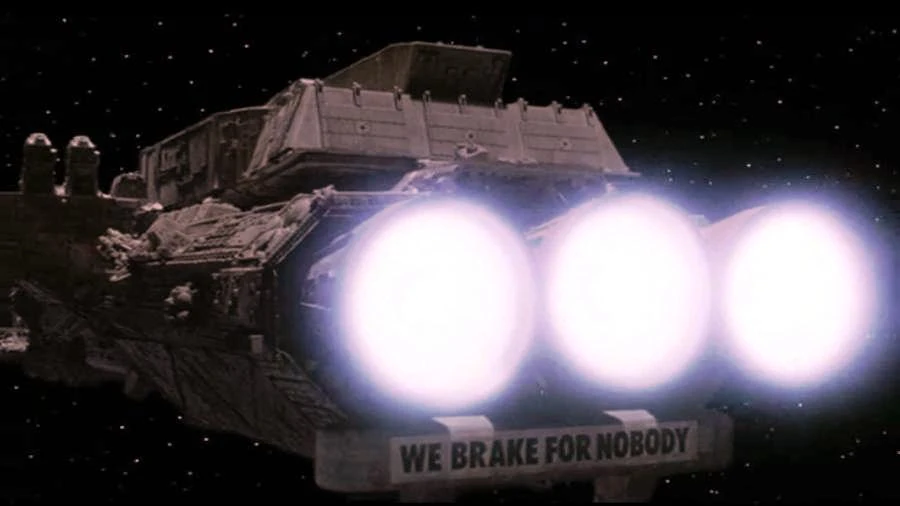
Finally, I’ve learned that I need to “brake for nobody” when I write. No looking up anything, no pausing to find a better word, no contemplating the merits of this name over that one. Get it all out on paper or on your computer, then go back to edit, polish, do the research, and figure out the nuances.

In writing like running, stopping for anything just makes starting back up again ten times as hard.

Finding Story Ideas

Went running in the park today, and saw several things that would make for great story ideas:

  • Blind Paralympic runner running with his seeing mate, she talking him through his run, he smiling like crazy.
  • Haredi family sitting on a bench, surrounded by runners and bicycle riders in tight minimal clothing.
  • Dog owner begging dog to pick up its ball and come home. Dog completely ignores owner.
  • Group of dog owners and dogs getting together for their daily meeting in the park.
  • Woman running in the park, her right hand showing visible severe burn scars from long ago.

Story ideas are everywhere. I just need to remind myself to peel my eyes off the phone and take a good look around me.

Make It Count

Somedays you don’t really feel like working on your novel/story/article/paper, and then while procrastinating online you’ll find this piece of advice: “write something every day. It doesn’t matter what you write, so long as you write”. Write a journal entry, a blog post, a tweet or Facebook status: everything counts.

But does everything count?

If you’ve ever done any writing before you know that there is writing, and then there is “writing”. Writing a journal entry or a blog post doesn’t require the same level of effort that writing a short story, a novel, an essay or article requires. When you tell yourself that they are the same, are you not cheating yourself a little?

Blog posts have value.

Journal entries have value.

But at the end of the day, when you look at the work that you’ve done, do you count them when you say, “I’ve written X stories, Y articles, and a novel?”

Today’s post is short, because I spent what little writing time I had pounding out 700 words for my novel, instead of 300 words here. I think I made the right choice. I think I made today count.