Narrative Trouble
Just discovered a giant plot hole that I somehow missed on my second draft. Now back to pen and paper to try to figure it out. At least I can use pens and ink and paper that I love…
A blog about writing, sketching, running and other things
Just discovered a giant plot hole that I somehow missed on my second draft. Now back to pen and paper to try to figure it out. At least I can use pens and ink and paper that I love…
Yesterday I finished a Moleskine Limited Edition “This is London” notebook. It took me a little less than 2 months to fill its 240 pages.
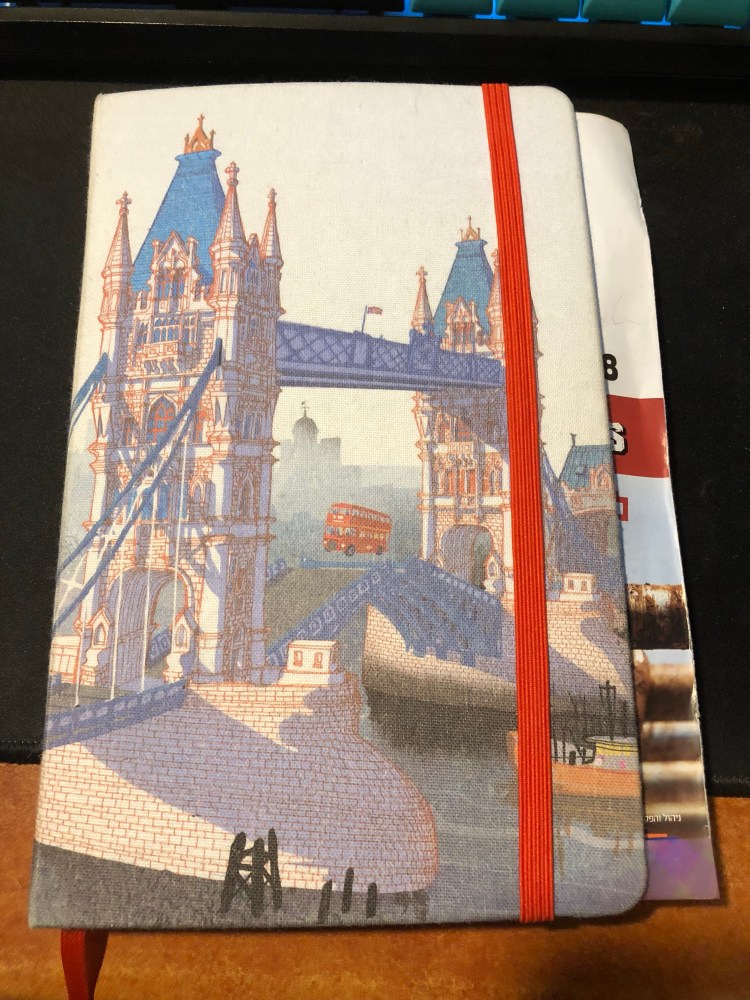
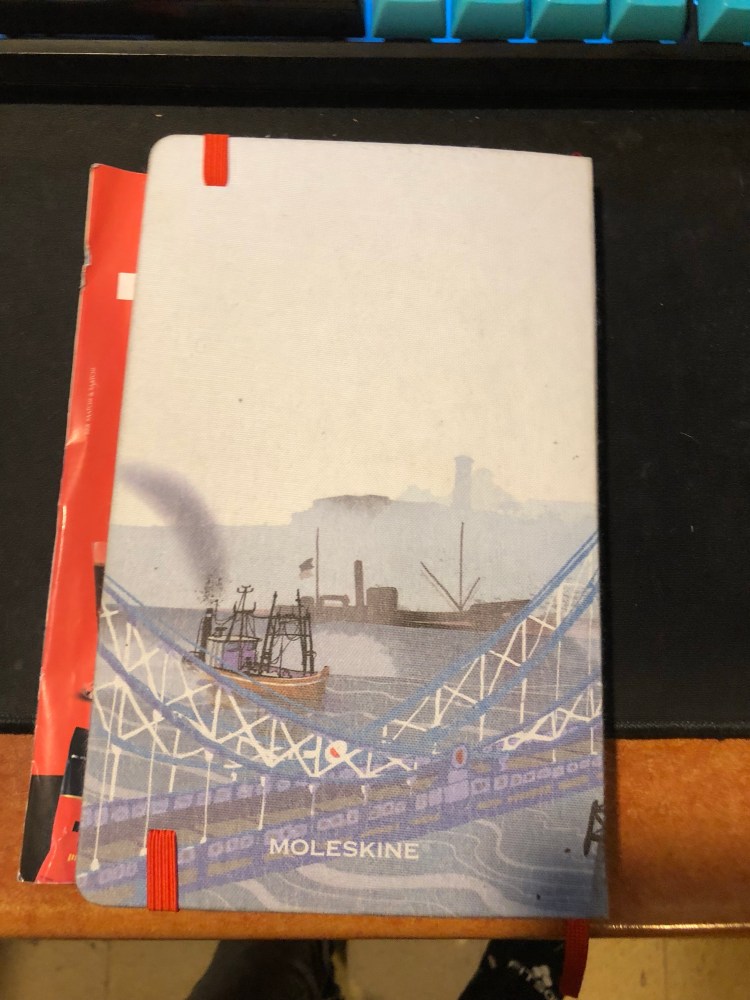
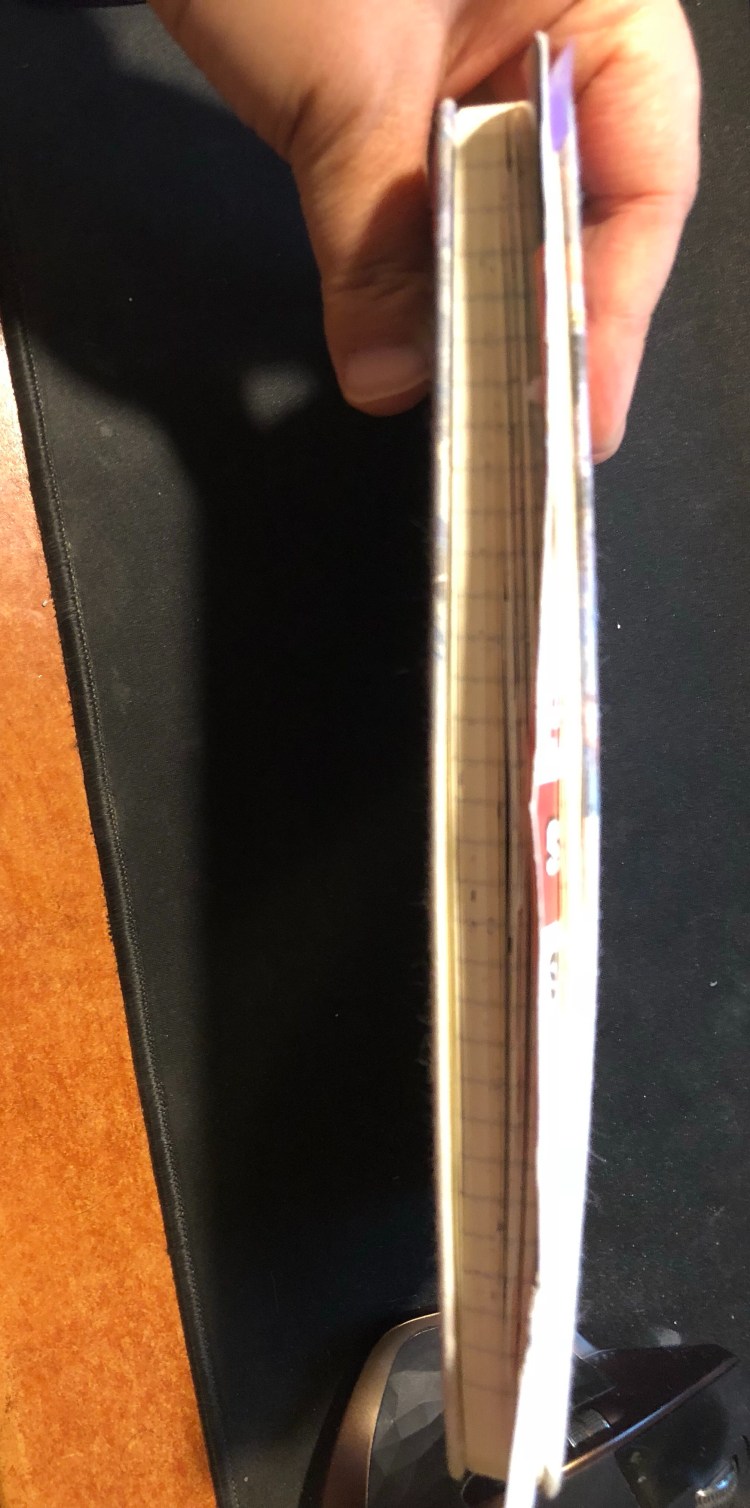
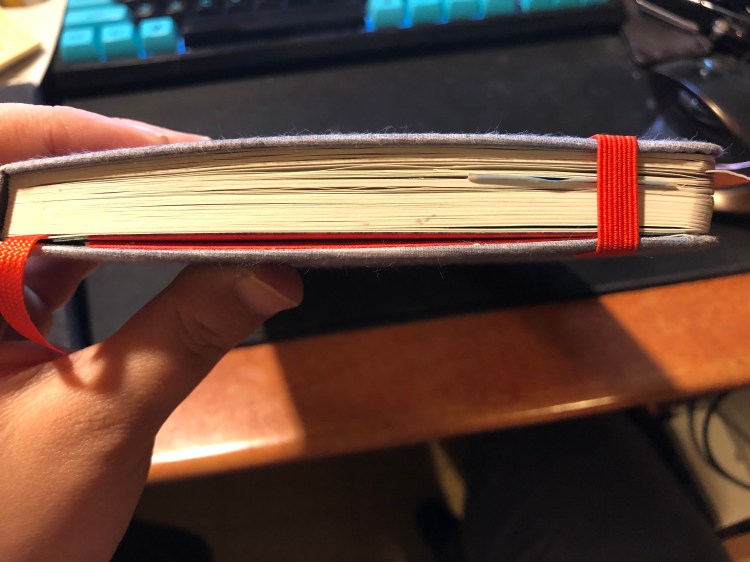
My journal is a personal, private thing that I create for myself, both to log each an every day and to process things — from various frustrations to purchasing decisions. It’s a brain outside my brain and it can take a lot more than my brain can oftentimes handle.
This is my second journaling notebook filled for 2018. My first was a Moleskine Limited Edition Denim “Hand Wash Only”. It took me a little over two months to fill (I started in the end of 2017). The Denim Moleskines are probably my favourites ever, which is why I have four more lined up on my shelves. The texture of the cover and the design is just stunning.
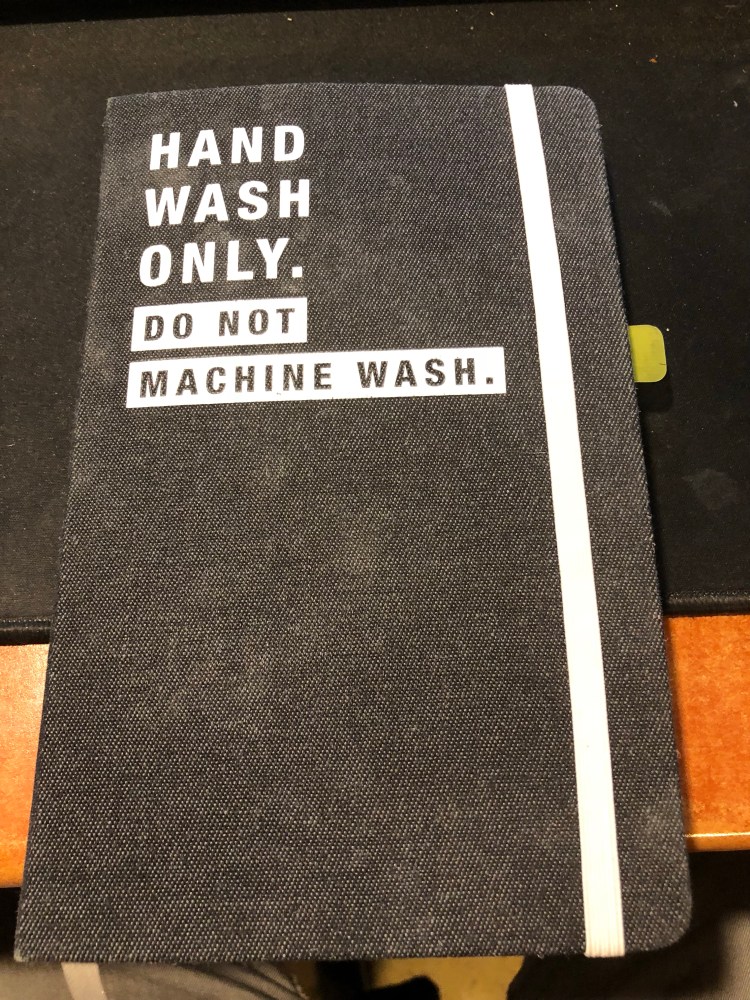
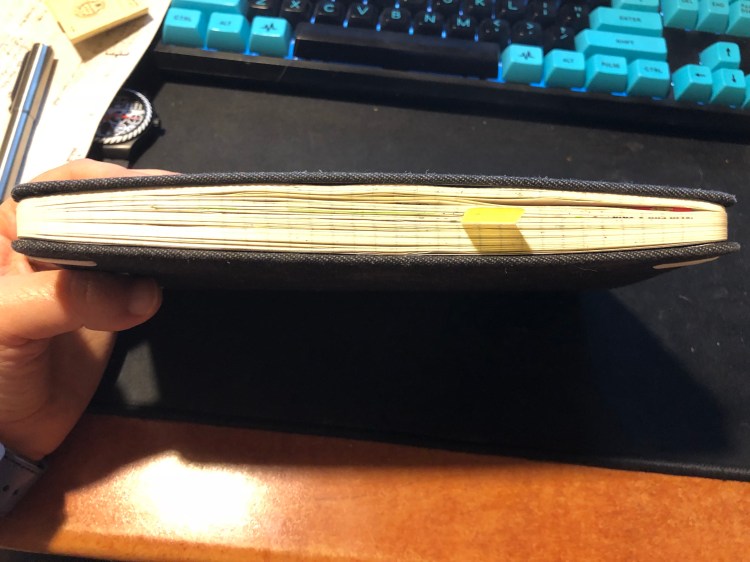


And here they are stacked:
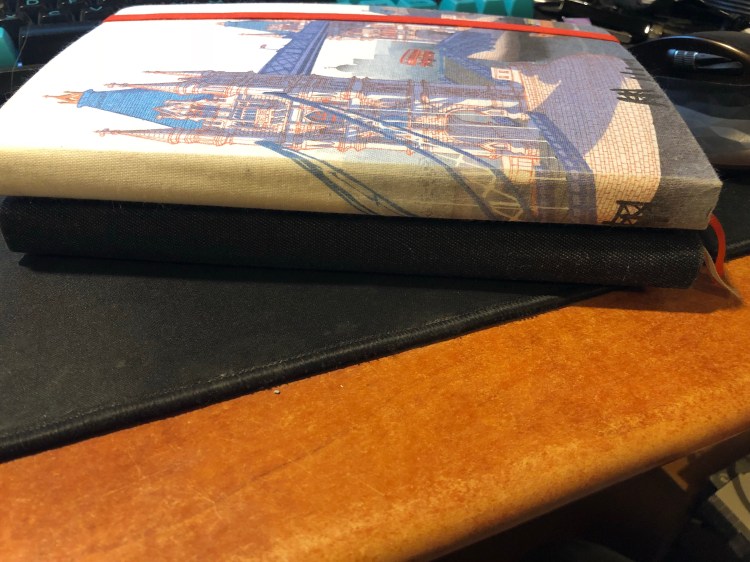
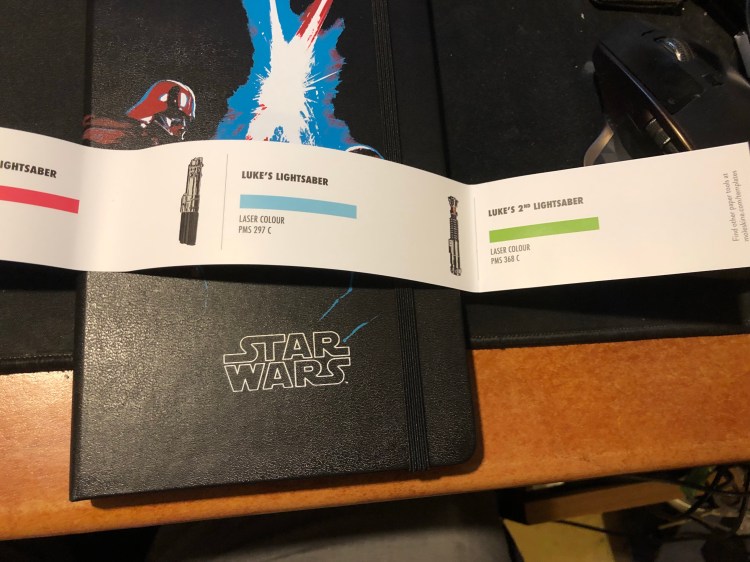
I wasn’t sure which Moleskine to use next, so I listed them all and just rolled a dice to see. The Star Wars “Lightsaber Duel” came up, and it’s a lovely edition as well. Here they are old and new:

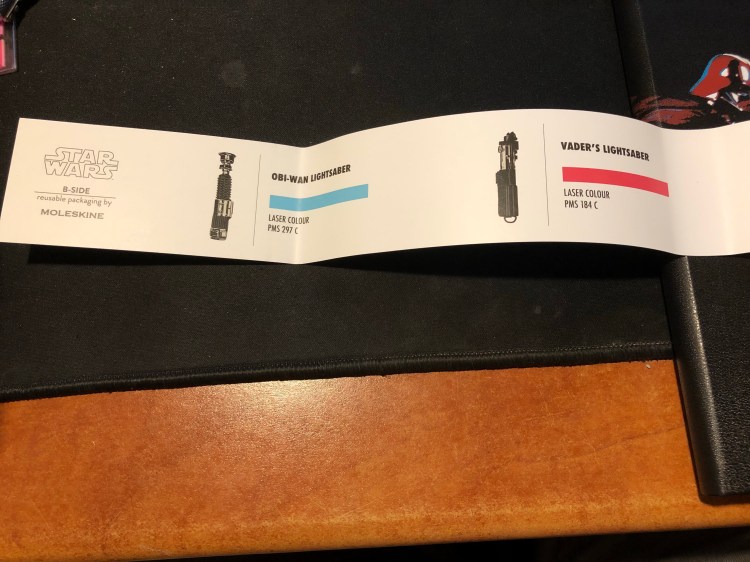
I love Moleskine’s new use of the flip side of their wrapping bands. The “This is London” band had lovely illustrations and instructions on how to make tea (this was an exclusive edition for Moleskine London stores). The Star Wars Lightsaber Duel has illustrations and the Pantone colours of the various lightsabers used in the original Star Wars trilogy.
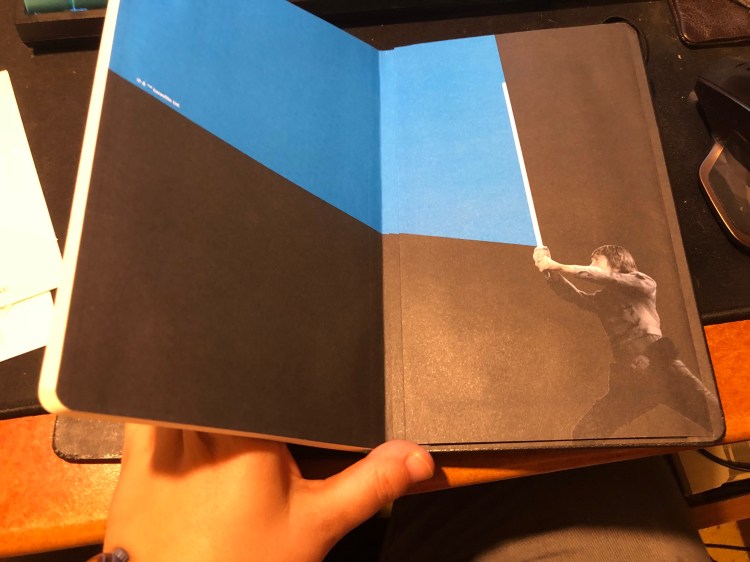
Look at those endpapers!

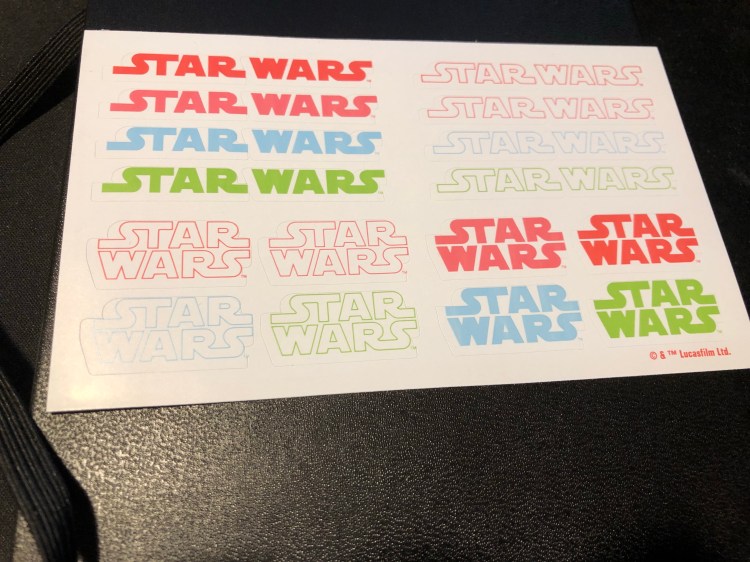
And of course Star Wars stickers. One can never have too many Star Wars stickers.
I use a Ti Arto pen with a Uni-ball Signo UMR-85 gel refill, and I fill four pages a day every day. When I started out I filled a half-page, page a day and gradually worked up as I started to get more out of the journaling experience. I write for myself only, I glue various bits and pieces inside my journal (business cards, cool wrappers or fliers, stickers), and sketch in it sometimes, even though it’s lined and not my main sketchbook by far. I use it to plan things, from my running goals to my writing goals, but I don’t try to make it bullet journal/Instagram pretty. It’s a working journal, and it’s first and foremost meant to be a tool, not a museum piece.
I use Moleskines because I enjoy using them and because for some reason beyond me these are the only notebooks that I’ve managed to consistently journal in. I tried Baron Fig, Rhodia Webnotebooks, Leuchtturm, Exacompta, Field Notes, and others and I haven’t been able to stick with them, even though some of them allow me to use my beloved fountain pens. There is just something about these notebooks that makes it a joy for me to use them (and at least when it comes to the LE lined versions, Moleskine has improved its paper stock). I pick up the regular black notebooks for work, but I love a lot of their stunning LE designs, so I splurge on those for my journaling needs.
Which brings me to the bottom line:
Use the notebook that you enjoy using, without giving a damn what other people say, so that you can journal for yourself.
That’s really all there is to it.
After two weeks of not writing and three weeks of not training or running (due to illness), it is hard to get back in the saddle. What was once a breeze is now a pain — staring at that blank page or lacing up is now a terrifying ordeal. The easiest thing to do is cut myself some slack and not write, not train, not run… and feel like a failure.
So I put a timer on for my writing, and forced myself to just work on it for 15 minutes. Timers are a godsend for this. They always help me get over the hardest part of writing, which is starting.
As for the training, it helped that Streaks was nagging me about it, but that wouldn’t have been enough of a motivator at this point, since it was so long since I’d trained and I was still not 100% well. So I selected a beginner’s workout in NTC, and told myself that I could take as many breaks as I needed, skip a few of the exercises, and stop if it was too physically punishing. It took a lot of the pressure and guilt off, and I ended up surprising myself by completing almost all of the workout (NTC’s 46min Start Training, I did everything but the burpees, for those interested). It felt great, and gave me the confidence to go out for a 20 minute run today.
Was it my best run? Far from it. It was slow and hard and I had to stop and catch my breath halfway through. But I finished it, and I now know where my new baseline is. There’s only room for improvement from here.
I just finished my second draft of my novel today. Yay!
It took me a lot longer than I thought to edit the middle chapters, mostly because there was a lot of rewriting to do there, and I let that discourage me. I froze. I procrastinated. I did everything but push through.
In the end the solution was pretty simple:
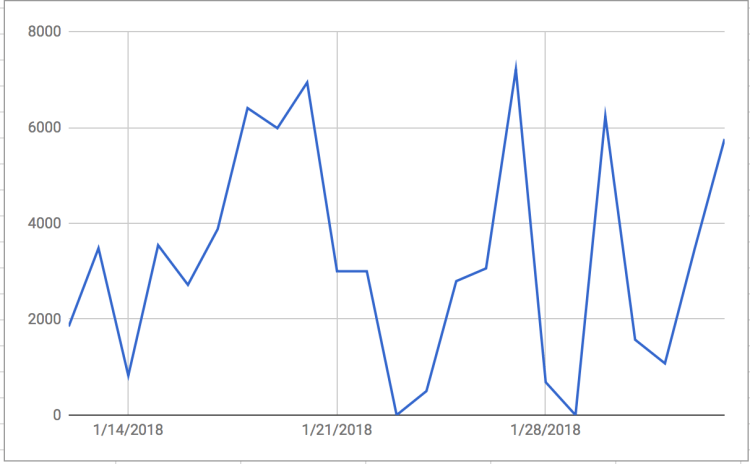
I made a plan and set a goal to finish the edit (about 75,000 words to go through) by the end of February. Instead of having a word count for how much I wrote, I had a word count for how much I edited. Instead of counting up (how many words left to write), I counted down (how many words left to edit).
I cut the larger goal to a word count goal for each day, and almost every day I managed to surpass my 1,200 “words edited” goal. I only missed two days for personal reasons, and I missed my daily goal only four times, on exceptionally busy days.
I tracked my progress in a Google sheet, with the following graph illustrating my progress:
I also managed to cut down my manuscript by 10%, which was another goal for my second draft, and a much more challenging one that I originally thought. It was worth doing, though, as the resulting narrative is better, tighter, and easier to read.
For my next draft I’m going to create a plan from the start, so that hopefully I won’t get bogged down again by my inner demons.
After reading the great “How to Be Miserable” I decided to start keeping a “three good things” journal at my bedside and write in it every night, right before I go to bed.
The idea is to write three good things that happened to you today, and if possible attribute them. It breaks off the habit of always remembering the bad, upsetting or embarrassing parts of your day, and I also found that it helps me (together with regular journaling) clear my mind and fall asleep sooner.
The good things don’t have to be large, sometimes they’re just a nice meal that I shared with someone, or something good that I read or watched, or just a friendly exchange with a friend or someone at work. The thing is, once you start doing it you:
I’ve been using the Field Notes Resolution weekly planner for that, but you might want to use something larger. I just chose the Resolution because it gave me a reason to use the notebook, and it’s small enough that I’m sure that I will have something to write in it every day.
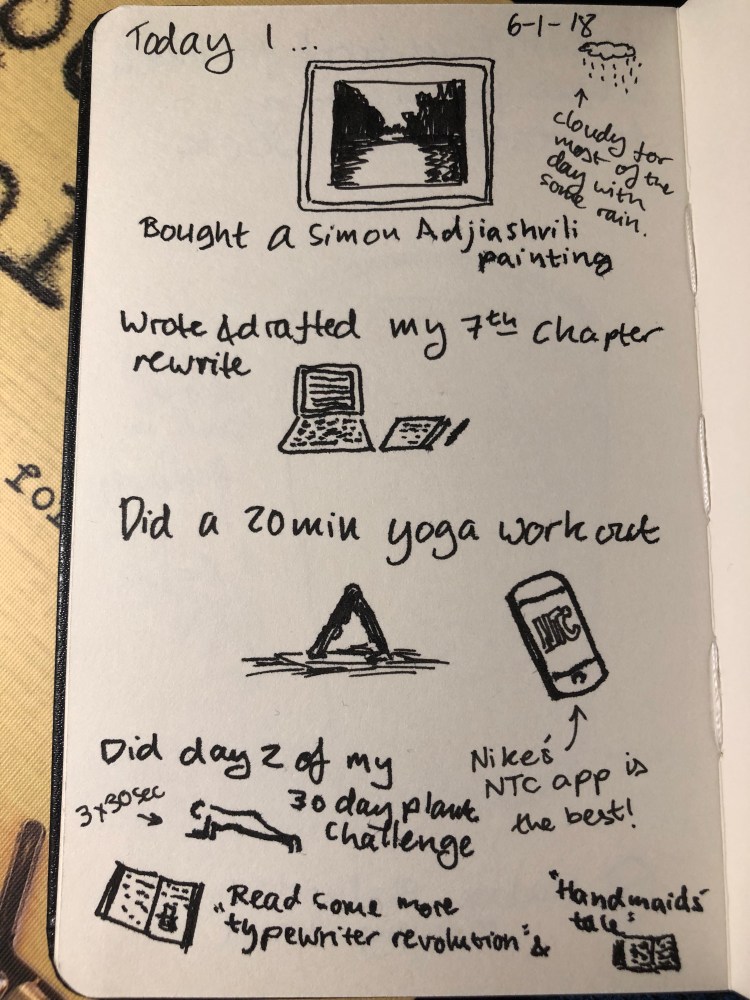
Finished rewriting chapter 7. I rewrote it almost entirely, and I had to go back to chapter 2 first to fix a significant portion of that yet again, but the end result is much better I think, so I’m pretty pleased.
The main thing I learned from this is not to be afraid to go back and rewrite from scratch earlier chapters and scenes that I have already reviewed, if the resulting narrative is tighter and more coherent in the end.
So far I’ve managed to cut almost 9,000 words out, which is good progress, but the longest chapter (chapter 8, at a whopping 12,339 words) is still ahead of me, so I need to hunker down.



I haven’t written pretty much anything (beyond daily journaling) for almost a month and a half. Some of it was traveling — I spent most of November abroad — some of it was just loss of momentum.
Today for the first time in a long while I just sat down and wrote. I started working on a new short story, part of what I hope will be a collection of short stories, and the words just flowed. 646 of them. The story is far from finished, but I have a good foundation for it. And then I sat down and finished rewriting my novel’s second chapter.
Now, I’ve been dragging my feet with this chapter from the moment I realized that I would have to rewrite it after I had seemingly finished editing it. It’s depressing to have to go back and scrap so much of what you have already written, and I was letting that feeling get in the way of my overall progress.
The good news is that I seem to have come up with at least one strategy to get over my editing and rewriting slump and that is to write something fresh. Once I start writing, it’s much easier to get myself editing, and I’m more motivated to push through to the end.
So even though I need to focus on finishing one work, and not jump from one piece to the next, it is sometimes useful to take a break and indulge in working on a new idea, if only to stop languishing on an old one.
 Writing at Large