Big Celebratory Birthday Update Part 4

The final post of this series, you can find part one here, part two here, and part three here. Grab a cup of tea or coffee and settle in – this one is long but there’s a lot going on here that’s worth your time.

32. I have been tracking my memory recall issues (a chemotherapy side effect) using the Tally app, which I’m hesitant to recommend. On the one hand it does work as a quick tracking app for a handful of things, but on the other hand it has a scammy pricing model – a fair price for the first year (and free if you just track up to three things, like I do), but then the subscription jumps to about $5 a month. That may be justified for apps that have a lot of features and utility, but Tally is not one of those apps. Day One, a magnificent journaling app for those who prefer to digitally journal, does much more and costs much less.

33. If you haven’t heard of KT tape and you’re a runner or athlete of any kind (or just injury prone) I highly recommend it (and no, I’m not getting paid for this). It’s a roll of pre-cut elastic fabric tape strips that you use in various configurations and levels of tension to relieve the pain and take some of the load off of injured muscles, tendons or joints. It eases recovery and it’s worth having a roll of it in your house and travelling with a few strips when you go abroad. There are YouTube videos that show you how to apply the tape- just search for the area or injury you want to address and “KT tape” and you’ll find official videos and ones made by physical therapists that will guide you. I recommend going for the Pro or Pro Extreme – they cost a bit more but last longer as their adhesive is stronger so you can keep them on for a few days. The tape leaves no residue and is easy to apply by yourself, although there are areas where another pair of hands does help. If you don’t want to buy the tape online, you can find it at your friendly local running store or in certain sporting goods stores.

34. If you are planning on travelling abroad with older relatives or people with a mobility disability, here are some tips that may help:

  • Ask for special assistance when you book the flights (there’s an option there). It helps with the long distances and long lines in the airport. Arrive early and wait patiently for the assistance – it’s worth it.
  • Book hotels and not Airbnbs. You want a place, preferably a well established chain, that you can rely on in terms of catering for your accessibility needs. I can’t tell you how many times we arrived at an Airbnb only to discover that the promised elevator has been broken for weeks, or the place has stairs to the elevator, stairs in the apartment and a bath instead of the promised shower. You want a hotel and not a boutique one because they’ll have an elevator bank, accessible rooms, and someone you can talk to if you run into issues. Chains are good because if there’s an issue with your room there’s a possibility of being catered in another hotel in the network. Contact the hotel ahead of time in writing and reconfirm your needs – elevator, shower with no lip or step, mini-fridge for medication, etc.
  • Use taxis (or rideshares) and buses, not the metro/underground/subway. There’s less walking involved, there’s less stairs involved, and it’s worth the additional time and money.
  • Check the parks you plan to visit – some have motorized tours for disabled patrons.
  • Talk to the staff at museums and exhibitions, preferably ahead of time. There may be an accessible route in that Dior special exhibition that isn’t advertised (there is), or they may tell you that it’s better to arrive at a certain entrance.
  • Theatres oftentimes have special accommodation and pricing for disabled people and their companions. If it’s not on their official site, email or call them and they will likely be able to help.
  • Don’t pack your days full, but rather plan or returning to the hotel for an afternoon nap before the evening’s activities.
  • Plan ahead as much as possible. You are less flexible in your needs so this is not the time to be spontaneous.
  • I can’t stress this enough: spend time, effort and money when selecting travel insurance. Don’t go for the cheapest option because it’s likely to leave you hanging when you need it. Pay a premium for insurance that pays back upfront and doesn’t have you chasing after it if possible. Take the time to read the small print and talk to them if possible.

35. I have gotten several questions about rucking, so here’s a good article describing what it is and the benefits and risks involved. I will add that you need a good pair of shoes with decent ankle support, you need moisture wicking socks to help avoid blisters (I just use my running socks), and you don’t need to buy a GoRuck bag. In fact I don’t recommend them – they’re heavy, overpriced and don’t provide the back support you want. Instead buy a good hiking day pack (I use the Osprey Manta 24) for about half the price and twice the support. My Osprey Manta comes with a hydration system (2.5 litres, which is a good chunk of the weight in my bag), wide padded straps, load lifters, a great hip belt and sternum strap, plus a mesh that is fantastic for the hot climates I ruck in. Also weigh your bag with useful things – water, food, first aid, extra layers, flashlights, sunscreen, etc. – and not with useless weight plates. Put the heaviest things on top, as close as possible to your shoulder blades and upper back. I use a waterproof Rumpl travel blanket at the bottom of my bag, and 80% of my weight is water. The rest is books, which I don’t mind using as weights as I’m rucking in a city park really close to home. If I was hiking in the great outdoors, I wouldn’t carry anything that wasn’t useful if I somehow got stuck on the way.

36. Do you have to generate QR codes and are tired of the spammy, ad filled sites that provide the service when you Google for it? As Cory Doctorow puts it:

“Just a QR Code” is a new site that generates QR codes, operating entirely in your browser, without transmitting any data to a server or trying to cram ads into your eyeballs. The fact that it runs entirely in-browser means you can save this webpage and work with an offline copy to generate QR codes forever – even if the site goes down:

https://justaqrcode.com/

37. My journal is at that delicious phase where it’s passed the 3/4 full mark but hasn’t reached the “only a handful of pages left” mark. I recommend making it a goal to reach that phase in every notebook you use – it’s the best.

38. These little fans are a lifesaver. I’ve used them on trips, on buses with fault ACs, when I’m outdoors waiting in the sweltering heat, etc. Again, not an affiliate link and this isn’t a paid anything – it’s purely a recommendation of a product that I’ve been using and enjoying for a few years.

39. Journaling Tip #4: Did you have weird, overblown reaction to something or someone recently? Take the time to journal about the experience. Write down what happened (facts only), what was your reaction/feeling (be honest), why it’s surprising under the circumstances and finally why do you think that you reacted the way that you did? Does it reveal something about how you view yourself, your insecurities or fears?

40. Lightening Book Review #7: What We Talk About When We Talk About Love, by Raymond Carver. This is a collection of 17 short stories set in rural American in the 70’s first published in 1981 and it hasn’t aged well. The protagonists drink a LOT, they are violent, sexist, despairing and desperate. It’s like watching a series of car crashes – you become numb to the experience after the third or fourth. Carver can write, and there are a few gems here, but it’s all so very miserable and depressing – like hosting an alcoholic for a week. Their stories may be intriguing, but they’re also all so very terrible and tragic that there’s only so much of it that you can take.

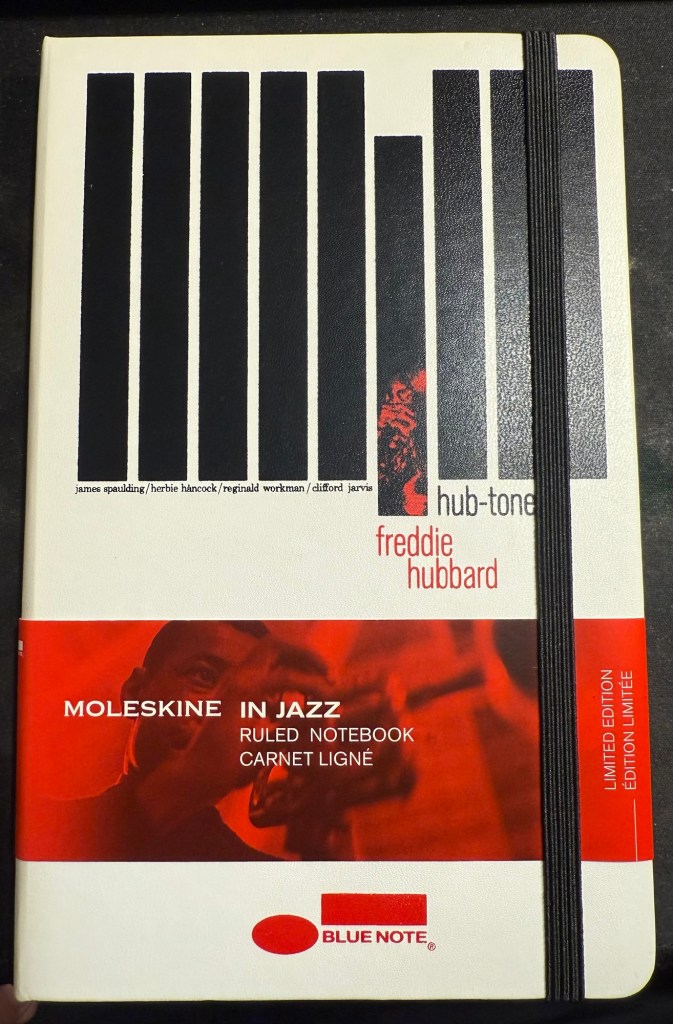
41. I opened a new Moleskine notebook – after not having opened a new one in over a year. This is the one will be used for some writing projects, and it’s one of my favourite limited editions, the Blue Note Hub Tones edition. I’ll maybe post a review of it later, but for now, this is a reminder to use the good china.

Moleskine Blue Note

42. Journaling Tip #5: look at someone close to you, someone you admire for having a skill or approach to life that you don’t have, and write down what you can do over the next few days, week, month to be more like what you like them. That’s what got me to go to more plays, concerts, shows and exhibitions now instead of just waiting until I’m on holiday abroad.

43. Great advice from Adam Savage’s latest Tested livestream – Q-Tip: Quit Taking It Personally. More often than not other people’s behaviour and choices has nothing do with you and everything to do with them.

That’s it – 43 points for 43 years. Have a great week!

View from my rucking session

Big Celebratory Birthday Update Part 3

A smorgasbord of stuff for your delectation to celebrate my birthday. You can read part 1 here and part 2 here. Only one more part after this one…

23. Lightening Book Review #3: The Vinyl Detective – Noise Floor by Andrew Cartmel. This is the the 7th Vinyl Detective book and possibly the weakest so far. Set in the world of 1980s electronic music it’s not about finding a rare vinyl record this time, but rather finding an aging electronic musician. There’s the usual hipster/foodie/audiophile vibes but the plot is air thin, you will immediately know whodunnit in the whodunnit, and there’s a desperate attempt to give this Scooby-Do style adventure an “edginess” using aging threesomes and references to John Fowler’s The Magus. There is the usual boring insistence on describing every turn in every journey the protagonists take, and the characters are even more cartoony than usual. The only truly enjoyable scene is the village fête in the end, and even that is highly unbelievable. Feel free to skip this one, unless you’re looking for a cozy, featherlight read between other books and there’s nothing better lined up.

Scene from today’s run

24. Lightening Book Review #4:The Vinyl Detective – Underscore, by Andrew Cartmel. This is why I still read this series – a cozy and highly imaginative adventure with a likeable cast, in a charming and vivid setting. The crime is stylized, the new characters are vivacious and it reminds me of my favourite book in the series, Victory Disc (book #3). Take a trip back to London in the 60s, with a dash of family drama, a hint of Italian passion thrown in, and of course a sprinkling of good music.

25. Lightening Book Review #5:The Thursday Murder Club, by Richard Osman. While we’re on the topic of cozy mysteries, this one was a treat. Unexpected plot full of twists and turns, a memorable and original cast of characters, a unique setting, humour and heartache, and a it dared to touch on actual issues with substance (aging, sickness and death, religious oppression, capitalism and corruption, and the limitations of the law and its enforcers). A very enjoyable read and not just because Elizabeth is now one of my favourite fictional characters.

26. My Apple Watch Ultra 2 has been acting up lately – it’s almost 2 years old and it’s been losing battery power and struggling to keep track of my laps in the pool. So far a full charge and a restart before every swim have helped, but it’s annoying. A watch at this price level should be able to last for 3 years at least, and yet we’ve somehow been trained to expect to upgrade our watches every year or two at the most, if only because they lose their ability to keep a charge after the first year or so. Originally my watch lasted almost 3 days between charges (and I’m a very active person). Now I have to charge it once a day. I’ve been contemplating moving to a Garmin for my workouts and switching back to an analog watch, but I use some of the Apple Watch capabilities to keep track of my health post treatments, so we’ll see.

27. I have ordered the Moleskine Limited Edition Peanuts notebooks (the yellow lined large hardcover and two sets of the extra large cahier notebooks). There’s something about this collection that I find irresistible, and so they will be part of my birthday gifts this year.

28. There’s something tragic about an unfilled and unfulfilled notebook and I have too many of those lying around. I’m considering what to do with them, especially with those that I’ve started using and have abandoned after a few pages. Let me know in the comments if you have any ideas.

29. Tomorrow I start reading Ulysses having just finished The Obstacle is the Way, the last book that I planned to read in May.

30. Lightening Book Review #6: The Obstacle is the Way by Ryan Holiday. I read the 10th anniversary edition of this book, which has a new introduction and a few additions to it. This is a very digestible intro to stoicism, competently written and researched by a man with a marketing background, but it had the same affect on me that Seth Godin’s books have: it glanced on my brain and left no mark. It was hard to concentrate on this book not because it was challenging but because it was not: it was like eating easily digestible, flavourless popcorn with sprinklings of anecdotal salt at the beginning of each tiny chapter. You are left hungry and unsatisfied at the end, not sure what exactly you consumed.
Philosophy should make you sit up and pay attention, think, stretch your mind and sweat a bit. It was divorced from its gravitas, substance and challenge in this book, and that’s a pity.

31. There’s no greater joy than crumpling yesterday’s to do list and tossing it out.

Big Celebratory Birthday Update Part 1

It’s been a long while since I’ve posted a weekly update, and it’s my birthday week, so to celebrate I decided to write 43 points (split up to several posts to make them more manageable), in no practical order:

  1. After a bit of drama I have managed to enrol to the 2025 Urban Sketchers’ Symposium in Poznan, Poland. I will be posting about my sketchbook and art supplies packing list later on, but do let me know in the comments if you’ll be there.
  2. Rising tariffs and shipping costs have made online pen, ink and paper purchases prohibitively expensive for me. This may not be a bad thing, as it should encourage me to use the large stash of “stuff” that I already have.
  3. I have been gifting people nice notebooks and pens lately, and it’s been a surprisingly heartwarming success. Giving people a notebook that matches their style and needs, coupled with a pen that suites them and an encouragement to start journaling about their lives has been one of the joys of my life in recent months.
  4. Moleskine came out with a cool Peanuts collection of notebooks and Blackwing pencils (plus a backpack and set of pins). It’s refreshing to see them use the XL cahiers for a limited edition, as I don’t think they’ve done that since the Art collection about a decade ago.
  5. Lightening Book Review #1 (I have a huge pile of books to review and not enough time to write a dedicated post for all of them): When the Moon Hits Your Eye, John Scalzi. Scalzi is normally very good at humorous sci-fi, but this book is not one of his successes. It’s an overtly silly, very lightweight book that is not on par with the other books he groups in this loosely thematic trilogy, The Kaiju Preservation Society and Starter Villain. It really suffers from the constant jumping around amongst a giant cast – the plot loses momentum, and you find it hard to connect to any set of characters. While it was not great hardship reading it and it’s a decent light read, feel free to skip this one and wait for the next instalment of his “Old Man’s War” series.
  6. It’s OK to splurge and buy yourself flowers every once in a while, if you enjoy flowers.
  7. I’ve started rucking, which is basically walking at a brisk pace outside with weight on your back. I use an Osprey hiking daypack weighed down mostly with water, but also with a giant cookbook, my journal and kindle, which brings it to around 10kg of weight. I take a break about 15 minutes into my session to sit outside and journal or meditate. If you’re curious, start with a bag that has a waist belt and not too much weight for too long, and skip the $400 overhyped specialized bags and weight plates.
  8. Go see a play (not a musical or comedy) at your local theatre. It’s a great way to open yourself to new ideas and perspectives – especially those that you don’t agree with.
  9. Lightening Book Review #2: Lessons in Chemistry, Bonnie Garmus. I really wanted to like this book, but the combination of graphic, repetitive and unrelenting “period piece” misogyny and sexual assault coupled with a frankly unbelievable, non-relatable and largely unlikable heroine made it impossible. Couple this with an even less believable daughter and dog (though the dog is cute), lots of didactic and condescending lecturing that is so blatantly not period true and can at times be needlessly offensive (was the vegetarian bashing necessary?) and this was a book that I didn’t really enjoy. The cooking show, dog and rowing bits were nice, though.
  10. Marvel’s Thunderbolts*/New Avengerts is a delightful, touching, thrilling and generally great movie. It’s well worth the cinema visit, and I plan to rewatch it once it lands on Disney+.
  11. Please don’t do things just so that you can post about them on social media. That’s no way to live your life. It’s the equivalent of voluntarily turning yourself into one of the Matrix human batteries – for AI training models’ and advertisers' use.
  12. Here’s a recent sketch that I did:
Pen and watercolour sketch

Have a great week and see you in part 2.

Three Habits Worth Keeping

Happy New Year!

This is the time of year when people set resolutions, themes, goals, intentions, words of the year, etc. Ambitions are high, intentions are good, but well before March most of these efforts will be abandoned and forgotten. I’ll be writing about my quarterly plan and my 2025 planner later on, but for now here are three habits that worth keeping in 2025 and in general, and a few tips on how to get into them and persist:

Exercise

Any amount and any kind that you can do is excellent. Let’s repeat that: ANY amount of exercise and ANY kind of exercise is a tremendous win. Start with walking if nothing else speaks to you, but try to make sure it’s a brisk walk and not a shuffle if you can. It doesn’t need to take an hour, and it doesn’t need to be 10,000 steps. Remember, anything you can do is good. Local gyms and community centres usually have classes you can try out if you want to give yoga, pilates, kickboxing or jiujitsu a try.

Running offers the best “bang for your buck” in terms of time and money invested per health and fitness gains, but not everyone can run, and not everyone enjoys running. If you want to give running a start, I recommend using any “couch to 5k” app, and then transitioning to the excellent guided runs and training plans in the free NRC app to keep you going. If you need someone to keep you accountable, either join a group of some sort or find a friend or family member to work out with.

The NTC app offers a huge variety of training options – from yoga to full equipment gym workouts, with some excellent body-weight workouts in between. Swimming is a great low impact way to build up cardio and a bit of strength, and weight-lifting isn’t as intimidating as you think – a pair of dumbbells at home is a great way to start exploring it. Yoga with Adriene is great way to get into yoga if you don’t or can’t take a class and the NTC app seems too intimidating.

Soccer, basketball, baseball and other group sports are great ways to expand your social circle, and tennis, pickleball, badminton are great ways for couples to work out together.

The easiest way of getting into the habit is doing a little something every day, and doing it as soon after you wake up as possible. That way you start the day with a win and some endorphins, which is always a nice way to start your day.

If you think you don’t have time to work out, be honest with yourself and track your time for a day or two. How much time is spent on social media? Binge watching TV? Mindless scrolling? Could you cut some of that out? Could you go to sleep a little earlier and wake up a little earlier so you can have some alone time to exercise and clear your mind?

If you already have a solid exercise routine in place, take the time to diversify it if you can. This goes particularly to us runners: strength train. Swim. Cycle. Do things that aren’t just running, because just running is one of the main causes of such relatively high injury rates amongst runners compared to other athletes.

Reading

Most people don’t read, which is their loss because reading is a superpower. Train your brain off the social media dopamine hamster wheel and teach it how to focus for significant stretches of time by picking up a reading habit. You’re standing in line bored? Open your Kindle app and pick up that detective novel or space opera from where you left off. Replace TikTok, social media and YouTube with books, and make sure that they’re books that you want to read. Don’t go off bestseller lists or influencer recommendations or whatever one this or that award, or is considered a classic. When you’re getting back into reading you need to gradually train your mind to get used to this activity. Start with a book that really interests you (not one that’s impressive), and start with a physical copy because they’re easier to read. Reading will do to your brain what exercise does for all of your body: make you better, stronger, faster, healthier and happier.

If you’re already a reader, then mix things up a bit: if you only read non-fiction, read fiction for a change and vice versa. Try something new, because you may just end up liking it. If you’ve only done light reading so far, pick a challenging book and work your way through it. Treat your brain like a muscle you are training, where you gradually progress to bigger and bigger weights. Challenging books are often the most rewarding, but you probably should start with them.

Journaling

Digital or analog, it doesn’t matter, journaling is worth doing. Gain insight to yourself, unleash your creativity, and let loose to your thoughts in a safe environment. This is the path to self improvement, learning to be kind to yourself, and having a positive mental attitude towards life.

If you’ve never journaled before, start small and simple: pick a notebook that you will enjoy writing in (whatever speaks to you, no matter what other people think), use whatever pen or pencil you fancy, and write 3-5 things you are grateful for each day. Add more sections to your daily journal as you go along: a “story of the day”, an account of what you did or what you consumed and what you thought about it, a nightly summary, etc.

Make it a ritual of sorts: write in your journal every morning and evening, every time you switch between major tasks during the day, or when you feel the need to respond to something (don’t post online, post in your journal instead).

Don’t be intimidated by gorgeous and elaborate works of art in various journaling forums, blogs and on Instagram. These are journals as craft projects, and while they are nice, they aren’t what we’re trying to get to here. It’s OK to add stickers and bits and bobs to your journal, but its purpose shouldn’t be to be photographed and posted. It’s there to work for you, so treat it like a workhorse, not a circus pony. Also, remind yourself that many of these journal photos are there to sell: stickers, washi tape, pens, notebooks, ink, the poster’s journaling course, etc. People rarely show off their “real” journals because if you’re honestly journaling only for yourself, that’s just not something that you’ll want to share.
Book Review: Tokyo Express – Seichō Matsumoto

Set in 1958 this tightly plotted, precise and polished mystery/detective story is very set in its time. Tokyo Express by Seichō Matsumoto, translated from Japanese by Jesse Kirkwood, is a masterwork of minimalist craftsmanship. No detail is extraneous. No scene could be cut. The setting starts as a thriller more than a murder mystery, but turns into a murder mystery a few chapters in.

This is a novel of timetables and alibis, politics and very realistic oftentimes tedious and frustrating detective work. While “Tokyo Express” has a general air of melancholy about it, it shows more empathy to its detectives than to its murder victims. The result feels a bit like a Japanese take on noir fiction, with a more minimalist take on the genre. It’s not that you dislike the victims (as is common in Golden Age detective novels), it’s that you are kept at the same distance from them as the detectives have.

This is also not the “amateur sleuth saves the day in the face of stupid detectives” type of novel. The detectives are thorough, thoughtful, methodical, not easily fooled. They use no flashy techniques, no DNA, no modern day CSI methods. It’s the old fashioned repeated, grey work of questioning people, trying to get timetables sorted out, working in small steps that the reader is always privy too (no Sherlock Holmes-like jumps made by omitting key points in the narrative).

There is nothing flashy in “Tokyo Express”. There is superb craftsmanship and a very noir novel that is well set in its time and place. I enjoyed reading it and I particularly liked the addition of maps and timetables to the book. Even if detective novels aren’t your usual fare, I’d give “Tokyo Express” a read, as it’s not the usual “whodunnit” fare.

March 2024 in Reading

I read four books in March (and started reading Paul Auster’s mammoth of a book 4321). Three of them were very good (Prospero’s Cell, The Sisters Brothers and Blood) and one that was a bit of a disappointment (Slow Productivity) mostly because I was already familiar with the concepts in it. All in all not a bad reading record for the month.

Prospero’s Cell: A Guide to the Landscape and Manners of the Island of Corfu, Lawrence Durrell

This isn’t a guidebook, nor a travel book, nor purely a work of non-fiction. Durrell lived in Corfu for a few years before WWII (his brother, Gerald Durrell wrote several books about their time there, the most famous of which is the wonderful “My Family and Other Animals”. I’ve read that book so many times I know parts of it by heart) with his wife Nancy and a group of artistically minded friends. This book pretends to be a guide to the island only in its title and a few peculiar appendixes in the end. In reality it’s a stylized diary of a year and a half of Durrell’s time there, just before the war broke out. Durrell is a master of description, and for that alone the book is worth the read. It’s a sliver of a book that captures in a pile of amber words a time, a place and a community that now no longer exist. It was written while Durrell was exiled in Alexandria, and you can feel the melancholy and mourning for a golden age that was once his and is now lost.

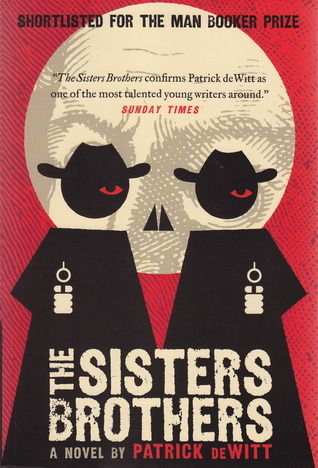
The Sisters Brothers, Patrick deWitt

I’ve had this book for so long on my reading list I managed to buy both a digital and physical copy of it. The design of the paperback is wonderful, by the way, so I recommend getting it if you can (that’s the edition I ended up reading).

Charlie and Eli Sisters are brothers and professional killers in 1851 frontier America. They’ve been sent to California to kill an elusive prospector, Hermann Kermit Warm, at the request of their employer, the enigmatic, powerful and cruel Commodore. The novel is a sort of Noir Don Quixote/Cohen Brothers telling of the story of their trip there and back, from the point of view of Eli Sisters, the younger brother. Eli is a fascinating character, and much of the interest in the story is seeing him grow more self-aware and conscious of his life and choices. The novel manages to be funny and tragic, cruel and heartwarming at the same time. It has a lot to say about agency, morality, violence and the rush for gold vs quality of life, and it goes about it without preaching to the reader.

A truly original novel that is hard to put down, and manages to be both entertaining and illuminating. Well worth the read.

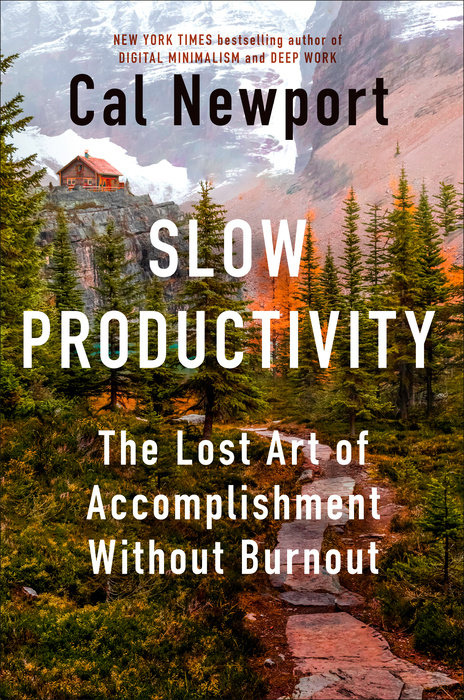
Slow Productivity:The Lost Art of Accomplishment Without Burnout, Cal Newport

I’ve read Newport’s Digital Minimalism and Deep Work, which I liked and utilized to great effect, and his So Good They Can’t Ignore You, which isn’t as good as the others. I also listen to his excellent podcast, Deep Questions, and so I pre-ordered this book the minute he started talking about it.

Herein lies the paradox of this book. If you’re a regular listener of Newport’s podcast there’s very little in this book for you beyond a few anecdotes. Newport has basically workshopped and talked about all the ideas in Slow Productivity for months on his podcast, going into much more depth and implementation specifics than he does in this book.

If you aren’t a listener of his podcast, AND you’re a knowledge worker with some level of control over your schedule and tasks, then Slow Productivity is worth reading. You’ll learn about pseudo-productivity, its origin and its breaking point, and you’ll learn about an alternative framework: slow productivity. “Do fewer things. Work at a natural pace. Obsess over quality”.

Where the book fails and podcast triumphs is in the implementation of these ideas. The book does give you a few ideas to try out, but through a much lengthier discussion in the podcast, plus real-world questions that listeners asked you get a better idea of how this would work in real life.

As I’ve been listening to the podcast for a few months, I already started implementing these ideas at my job (before the book was published). I work on only one project at a time, the rest stays in the backlog. I was told to cut corners and do a mediocre job on my current project in an attempt to rush it, but I deflected that request. Once I presented my initial results, the tune changed – this was high quality work! Totally worth the work and the wait, keep it up!

Bottom line: skip if you’re a podcast listener/viewer, read if you feel overwhelmed at your job and want an introduction to an alternative productivity framework that’s not as frenetic as the normal knowledge worker’s fare.

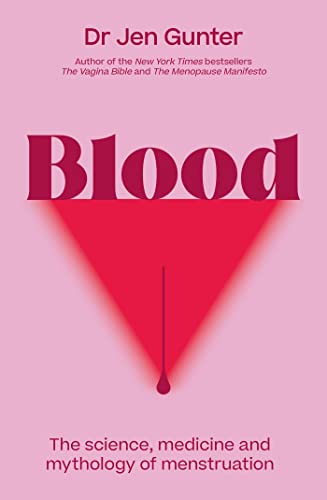
Blood: The Science, Medicine and Mythology of Menstruation, Dr Jen Gunter

Like many other readers that reviewed this book, I wish I had access to it when I started menstruating. Dr Gunter is as usual informative, caring and entertaining at the same time, which is quite an accomplishment. Complex medical processes are explained with great clarity and compassion, and the reader is left with a LOT of very useful information to use when making medical choices or advocating for themselves in medical settings. This and Dr Gunter’s The Menopause Manifesto are must reads and treasure mines of solid, well-researched and vetted medical information in a world full of medical disinformation and misinformation. There are a few pages here that would have saved me months of needless anguish during chemo.

An absolute gem of a book, one to read cover to cover and then reference in times of need.

Have you read anything good or interesting last month?

On Reading Difficult Books

Is there a book that you want to read but scares you? It’s too long, or too technically demanding, or its subject matter is challenging — is there such a book on your virtual or physical bookshelf?

I have several such books waiting to be read. I also make a point to read several such books each year. They’re nearly always worth the effort.

Goodreads and its annual reading challenge make readers favour short, quick reads, skim reading and light reading. This is not by chance, but this isn’t a post about the failures of Goodreads as a platform. This is a post about reading difficult books, and the point is that if you want to challenge yourself you’re going to have to make a concerted effort on your own.

You will have to motivate yourself because reading platforms and book clubs skew towards books that can be read quickly and relatively easily, and we’re being trained daily to shorten our attention span and ruin our capacity to concentrate and think by platforms like TikTok, Instagram and YouTube. To read difficult books is to go against the grain, to retrain your mind to deep, meaningful thought, to long stretches of concentration, to a higher level of empathy. It’s the difference between a fast food burger and an evening with a 3 star Michelin chef showing off his best work. It’s worth it, but it costs more.

If you chose to go on that challenging but worthwhile journey, here are some tips to help you along the way:

  • Build up to it – don’t start with the toughest, longest, scariest book on your list and try to white knuckle your way through. Build up to it by stretching and building up your reading and concentration “muscles” first. If you’re building up to length, for example, fantasy and space opera sci-fi novels are a great way to get there, as they’re usually well paced, relatively easy reads. Historical fiction and family sagas can train you to follow multiple timelines and characters, and short stories utilizing modernist and post-modernist techniques can offer an easier way to encounter them for the first time.
  • Have a light read going simultaneously – this is particularly effective if the book you’re tackling has a difficult subject matter. Have a light, fun read going on at the same time and switch between the two, allowing yourself a break from the difficult topic and time to process it every once in a while.
  • Find a partner for the journey – find a friend, online or in real life, who’s interested in reading the same book as you are, and help each other through it.
  • Find a community – it’s difficult to find a friend interested and able to dedicate time to take the reading journey with you, but it may be possible to find a community of readers going through the book at the same time as you are. It can be through a local bookclub, a virtual bookclub, a reddit community, a Goodreads group, a discord channel – whatever group you can find and suits you. Just make sure you’re comfortable with the group rules in terms of code of conduct and spoilers, and feel free to leave if you encounter toxic behaviour.
  • Create a framework to help you through – ideas for this can include various trackers, reminders, applications like Forest or other Pomodoro like counters that help you focus, little treats or incentives after reaching certain milestones. If I’m reading a particularly long book, I set up a dedicated tracker and a page count I want to hit every day, to make sure that I don’t feel overwhelmed and can visually see my progress. It somehow helps me deal with the goblin in my mind that is screaming that this book is too much for me and I don’t have time for it. Field notes are great for this, especially the squared and reticle grid ones.
  • Start by reading a good chunk – on your first read at least the first chapter or several chapters, so that you get into the flow and tone of the book as soon as possible. I tend to aim for 30-50 pages on the first sitting.
  • Get a physical copy of the book, not a digital one. Paper books are easier and more enjoyable to read than digital ones, as our mind finds them easier to process because of the way we read (oftentimes returning a page or two back to check on something, or flipping to a previous chapter to remind ourselves who that character is or what happened last time). Whenever I’ve tried to read a difficult book on my Kindle, I’ve regretted it (The Alexandria Quartet is the latest example).
  • Feel free to give up, tomorrow – if the book is too much for you, it’s OK to decide that you’re not going to finish it, or you’re going to get back to it at a later date. But before you do that, take one more day to make an effort and read another chunk anyway. Why? Because you may have just reached a particular tough spot, and in a few pages things clear up, or become easier to digest. Also, you may just be having a bad day, or you’re particularly distracted or tired and so the writing becomes more opaque or more of a slog. Give it another day and if it doesn’t improve, move on.
Tracker for Paul Auster’s 4321 on a Field Notes Snowy Evening with a Spoke Design pen.

I’m currently reading Paul Auster’s 4321, which is a challenging read due to its length and its structure. Later on this year I plan to reread James Joyce’s Ulysses (I read it twice cover to cover already, and studied it while taking my degree). I’m considering tracking my rereading here, in case someone wants to follow along. Let me know in the comments if that’s something that may interest you.

February 2024 in Reading

Balthazar, Lawrence Durrell

The second of the Alexandria Quartet this book is much easier to read than the first one, Justine. While it is written from the point of view of the same narrator as Justine was, Balthazar undoes and rewrites significant parts of the previous narrative. This isn’t an accident, but a very deliberate, very well thought out move by Durrell. He’s not merely creating an unreliable narrator, he’s creating a narrator that doesn’t see the full extent of the reality he’s living in, and then has a trusted friend come in and fill in the gaps, correct him, reveal truths he had no way of knowing. As Balthazar’s insights force the narrator to reflect again on what happened in Alexandria at the time, more memories begin to surface and so a few new characters join us (chief among them the enigmatic Mountolive) and a few others get revealed in surprising ways. Nessim becomes fleshed out and more human and relatable as we see him with his brother and mother at the family estate. Scobie shows hidden parts of himself that make him tragically human, and not just a comic relief. Justine too becomes less of a fable and more of an actual person, and Clea gets a bit more depth (though she’s still something of a mythical creature here). Nessim’s brother Narouz and his mother Leila are fantastic characters in and of themselves, and the narrative comes to life with their addition and with the fact that we get some distance from the overly cerebral and neurotic narrator. Balthazar brings high romance to the story, an air of a Victor Hugo novel at times, and so this book flows more easily, is much kinder in its demands from the reader than Justine was.

Mountolive, Lawrence Durrell

The third novel in the Alexandria Quartet and the one I was most looking forward to reading. While Justine set the basic story and introduced the main characters, and Balthazar gave new depth, perspective and meaning to their actions, Mountolive overturns them both by giving the characters motives and political context.

Without spoiling the novel, Mountolive introduces David Mountolive, the new British Ambassador to Egypt and Leila’s former lover. Leila is Nessim and Narouz’s mother, and she and her family become the heart of the story, with Darley (the narrator and protagonist of the previous two novels) barely appearing in Mountolive. The narrator changes, pace changes, the love story changes, even the genre changes in this novel compared to the other two, and Durrell has done a magnificent job with this switch. You don’t see it coming, but once he starts revealing what really took place you see that he’s very quietly laid all the groundwork for it there.

Mountolive himself is a fantastic character, and Narouz… I tip my hat to Durrell for creating a larger than life character that could be at home in a Victor Hugo novel and yet is completely believable.

It’s worth reading Justine and Balthazar just to read Mountolive, and no, you can’t skip them just to read this.

Clea, Lawrence Durrell

The fourth and final book of the Alexandria Quartet Clea takes place a few years after the events in the first three books (which happen simultaneously), during and immediately after WWII. It’s the final layer of a multi-layered narrative, one that reveals more about the characters, allows them to mature, evolve, create new ties and explore old ones. Scobie gains a deserved mythical status, Darley grows up, Clea becomes more human and less of an angel in the shape of a woman, and Justine, Nessim and even Narouz get their final say. Above all this is a farewell to Alexandria, which is arguably the main character in this quartet. The city looms large over the life and events of these novels, providing much more than a setting. Durrell is a master at evoking the spirit of place, and here he is at the heights of his powers, writing what is likely one of the most nuanced, multi-layered, tormented and transcendent boy-meets-girl stories ever written.

The Alexandria Quartet

The Alexandria Quartet as a whole is a difficult and demanding set of novels to read – it makes demands on the reader, and some of the content is hard for both contemporary and current audiences. Yet Durrell isn’t creating a picture postcard of a city, or of his characters. They both have teeth and a significant underbelly and have no problem showing either one. Characters you like show mean, petty and intolerant streaks, and the city is both magnificently charming and a seat of horrors beyond description at the same time.

When it comes to reading demanding books, the question always is “was it worth it”? In the case of The Alexandria Quartet it most certainly is. The dizzying narrative of Justine, that gives to credence to the linear narrative, is overturned by Balthazar, which adds order, depth, insight to it, and a multitude of various contexts. Mountolive adds political and social context and depth over what Balthazar provided, and another set of love stories, this time ones coloured by tragedy. Then Clea breathes time over the trilogy, allowing characters to mature, evolve, reinvent themselves. The artist lost in Mountolive inspires a wedding and two artists found in Clea, and Justine finds her true calling once again.

My only regret with this quartet is that I read it on a kindle. These books require paging backwards and forwards (especially Justine), and they need deep reading not fast reading. I have several more of Durrell’s books that I plan on reading, and all of them are in print format. He is a writer to savour, not to rush through.

How I Use My Notebooks: My Kindle Unread Book List

One of the things that I set up in my Leuchtturm1917 Bullet Journal is a list of the unread books on my Kindle. It’s supremely easy to buy books on a Kindle, as the whole system is set up a way to make book purchasing as fast and frictionless as possible.

This is a problem for me.

I love books, I adore reading, and I have pretty large group of friends that love reading too. This means that I’m inundated with great recommendations that run the gamut from light hearted fantasy and sci-fi to contemporary and classic literary fiction, with a whole host of fiction and non-fiction books in the middle (I don’t read horror and I don’t read romances and I rarely read poetry but that’s about the only limits I have in terms of my reading tastes). I get several such book recommendations a month, and with my initial impulse to rush out and buy them, and with the ease of purchasing books on a Kindle, things could get out of hand very quickly. This was one of the reasons why for years I was so resistant to buying a Kindle.

You see, it’s very easy to lose track of just how many unread books you have on your device. Even if you sort by unread books, you just don’t get a real feel for how many of them are actually waiting to be read. There’s no bookshelf groaning with the weight of unread books, and I was feeling the lack of that.

Enter my list of unread books on my Kindle:

It’s a simple numbered list of books that I haven’t read and are on my device. As I read a book, I cross it out. As I purchase more books I add them to the end of the list. As I’ve gotten into the habit of downloading samples, I’ve started to write them down too so they don’t get out of hand. It’s super simple, as bare-bones as it can be, and as practical as possible. The point is just to give my brain an idea of the scale of unread books on my device, and it works.

It works.

I’ve stopped compulsively buying books in the fear of “running out of something to read” or “forgetting what I was recommended”. Recommendations go into my GoodReads “Want to Read” list. And my brain can now see that there’s just no chance that I’ll run out of things to read any time soon. If I buy something I have to go over the list and convince myself that what I’m buying deserves precedence over the lovely books waiting patiently in line, some of them for years. I also photograph this list and keep it on my phone for reference, to prevent me from accidentally buying the same book in physical format (unless I purposefully intend to, which is rare).

What about the physical books stacked on shelves, some of them two books deep? I would love to have such a list for them as well, but that task is too daunting for me now. I remember where my books are visually, and moving them all just to catalogue them not only seems like an awful lot of backbreaking work, it will destroy my “memory catalogue of books”. So it seems that my physical books will remain uncatalogued for years to come.

Do you keep a list of all the books you own but haven’t read yet? Do you just keep a list of the books you intend to read next? Do you track your physical books in some way?

January 2024 in Reading

I decided to try and create monthly reading reviews of what I read instead of individual reviews or a giant yearly reading list post. Here’s what I read this January:

Good Evening, Mrs. Craven: The Wartime Stories of Mollie Panter-Downes, by Mollie Panter-Downes

A collection of very well written realistic short stories mostly about British women during WWII. Mollie Panter-Downes was a prolific and long time contributor to the New Yorker, and wrote both fiction and non fiction pieces for the magazine. This collection is bookended by two of her “Letter from London” non-fiction pieces, one from the beginning of WWII and one from the end. In between are 21 gems of short stories, all very realistic, all showing aspects of the war rarely discussed. Panter-Downes shows the great upheaval in British society at the time, both in the role of women and in the class system. She is sympathetic to her characters with all their flaws and foibles, and you grow to love them over their brief appearances. There are hints of dry humour, wonderful characterization, and an exploration of character that is both tied to Britain during WWII, and yet still universal. Highly recommended, even if you’re not a fan of short stories or historical fiction.

White Eagles Over Serbia, Laurence Durrell

Laurence Durrell started his career as a writer writing poetry, and it shows. The descriptions of landscape and character here are stunning. Never have I read a spy thriller that is written like a Literature with a capital L on the one hand, yet is still supremely entertaining and exciting to read – and very realistic.

Durrell is an excellent writer, and White Eagles is based on his experiences working for the British Foreign Office. The book is not flashy, it’s not high stakes, and it reads like something that could actually happen. The main character, Methuen, is a reluctant, tired hero spurred to action by his love of fishing more than his love of danger and intrigue. The descriptions read like poetry, and the characters are all individual gems – none of them are perfect, none of them are heroic, they are real people in very real situations. 
I wish there was a series of Methuen books (there isn’t), and I recommend this even to those who normally don’t read Cold War era spy thrillers.

Ragtime, E.L. Doctorow

Set in the New York area at the turn of the 20th century to the syncopated beats of ragtime, Ragtime is a tour de force of modern writing. The first part of the book is slightly overwhelming, as Doctorow takes us with lightening speed and fast cuts through many luminaries of New York city during the early 20th century, and intersperses them with the story of a wealthy WASP family, a Jewish immigrant family and a black family to be. The cuts remind me of a Wes Anderson movie, and it takes a while to realize that the narrator is actually creating a ragtime with his description of the events: the emphasis on seeming minutiae is deliberate, and the juxtaposition of things that don’t go together is purposeful. You feel like all the books you’ve read so far have been horse drawn in comparison to this piece, and suddenly you’re speeding your way on a model-T.

Very original, not an easy read, but highly recommended.

Note: the narrator speaks in the voice of a reporter from that era, and hence there’s a lot of the N-word (and worse) in this book.

Justine, Lawrence Durrell

The first of Durrell’s Alexandria Quartet of novels.

Some books are easy to review, but this one isn’t. I’ll try to do it justice, but reading Justine was an experience difficult to summarize in words.

The good – the writing is exquisite. Durrell is a phenomenally good writer, and he’s at his best when bringing Alexandria to life. Alexandria itself appears to be the main character here, and it’s a fascinating portrait of the city during the ’30s. Durrell is doing interesting things with narrative structure here, and while it makes following along difficult at the start, the narrative builds up in layers over time. You aren’t viewing the story of the four lovers chronologically, but rather through the reminiscences of the narrator, as things come to his mind and gain importance. Thus you survey the scene several times from different angles, through the growing understanding of the narrator. It’s a fascinating narrative structure, and it adds nuance and interest to the story, and fits well with Durrell’s evocation of Alexandria.

The bad – the characters aren’t quite there. They remain ghosts of themselves, mythical creatures, never becoming palpably real. The only exception is Scobie, a character that seems to have been created as a caricature of sorts, a comic relief, and yet is the most fully realized character in the novel. My guess is that as we are returning to the same characters from different points of view in the following novels of the quartet, that this issue may be resolved.

The ugly – whether these are Durrell’s views or his narrator’s views, Justine is rife with misogyny, homophobia and whiffs of racism and antisemitism. The novel was written in the ’50s and its views on homosexuals were likely advanced for the time, but they’re still terrible. There’s also depictions of child prostitution, prostitution, and mentions of slavery that seem perfectly fine with the narrator and the people around him.

Justine is a difficult book to read, both for the narrative structure, which is disorienting at first, and the way it jars on modern sensibilities. It is well written and intriguing enough for me to give the rest of the Alexandria Quartet a chance.

A Modern Detective, Edgar Allan Poe

This is a mini collection of two short detective stories featuring C. Auguste Dupin, the first fictional detective.

Poe is pretty talkative here, and his detective, Dupin, is a long-winded, charmless, cerebral Sherlock Holmes type. The cases discussed are interesting, and the second story in this collection was inspired by a real unsolved murder case. The characters, though, lack charisma, mystery or charm, and the reader is left wondering why they ended up spending time with them.

The detecting techniques are more primitive than those portrayed by Conan Doyle, and they are magnificently padded with paragraph upon paragraph of Poe delighting at his protagonist’s cleverness. A full third of the first story is skippable without missing a beat, and the second one fares much the same. What Poe does do well is evoke an atmosphere of gothic horror around both cases. What he utterly fails to understand (but Agatha Christie knew so well) is that the heart and interest of a detective story is the characters in it, not so much the analytical prowess of the detective at large. Holmes, Marpel, Poirot, and Father Brown are all first and foremost compelling characters. Dupin has not earned his place among them, and is remembered merely for being the first, not (as Poe would have you think) for being the best.

Dull, overly wordy, not worth reading, despite its historical importance.

That’s it for January 2024. What interesting books did you read this month?