Tournament of Books: The Golden State

I finished reading the eleventh Tournament of Books 2019 book, Lydia Kiesling’s “The Golden State“, which is running against Jesse Ball’s “Census” in the fourth round of the competition.

You would be forgiven if you read the premise of “The Golden State” book and thought that you are about to read an “Eat, Pray, Love” kind of book. This is nothing of the sort. Kiesling has written an intensely realistic and touching piece about loneliness, particularly female loneliness.
The heroine of “The Golden State”, Daphne, is a young, neurotic mother to a precocious 2 year old, left alone due to the machinations of the US Immigration system. The daily grind at her unfulfilling job finally makes her snap, and she decides to take her toddler and run back to Altavista, where her late grandparents lived. The narrative follows her through the 10 days of her escape. So far the “Eat, Pray, Love”.
Daphne is a victim of a society that does nothing to help young mothers (except pile guilt and anxiety on them in the form of study after study), especially young mothers who marry outside the tribe. She is caged in a pointless job that is full of daily humiliation, but the money is “good” (not good enough for SF) and the health insurance… She has no friends, no family, nothing of interest in her life except her daughter, who she can’t afford to spend time with. Her husband and his loving family is in Turkey, and apart from skype calls, she has very little chance of seeing them any time soon. No wonder she snaps.
Altavista is no paradise, and isn’t portrayed as such. It’s a semi-deserted place full of angry white people, only a handful of which remember Daphne and her grandparents. She has unknowingly fled to the only place where she could be more lonely than she was back home. So when an old lady who visited Turkey one time befriends her, she can’t help but reach out.
This novel would not work in any place but today’s US. It’s a novel of time, place and character more than plot. Every breathless rush to change diapers or calm a screaming toddler becomes momentous once you realize just how alone Daphne is, just how alone the society she lives in wants her to be.
The novel is interesting, fresh, sharp and well written, and it beautifully breaks down large political ideas to small, everyday encounters.

This book is running against “Census” in the fourth round of the Tournament of Books, and though they have very little in common apart from being stories about single parents and their children out on a trip, it was not hard for me to pick “The Golden State” as a winner. It’s a better book in terms of writing accomplishment, and it has much more heart than “Census”. I highly recommend skipping “Census” entirely, and reading “The Golden State”. It’s a very good piece of contemporary fiction.
How I Use My Notebooks: Running Planner

The thing that you learn very quickly about running is that no matter which Couch to 5k plan you started with, if you want to have any hope of persisting with your running you are going to have to tailor make your own running plan.

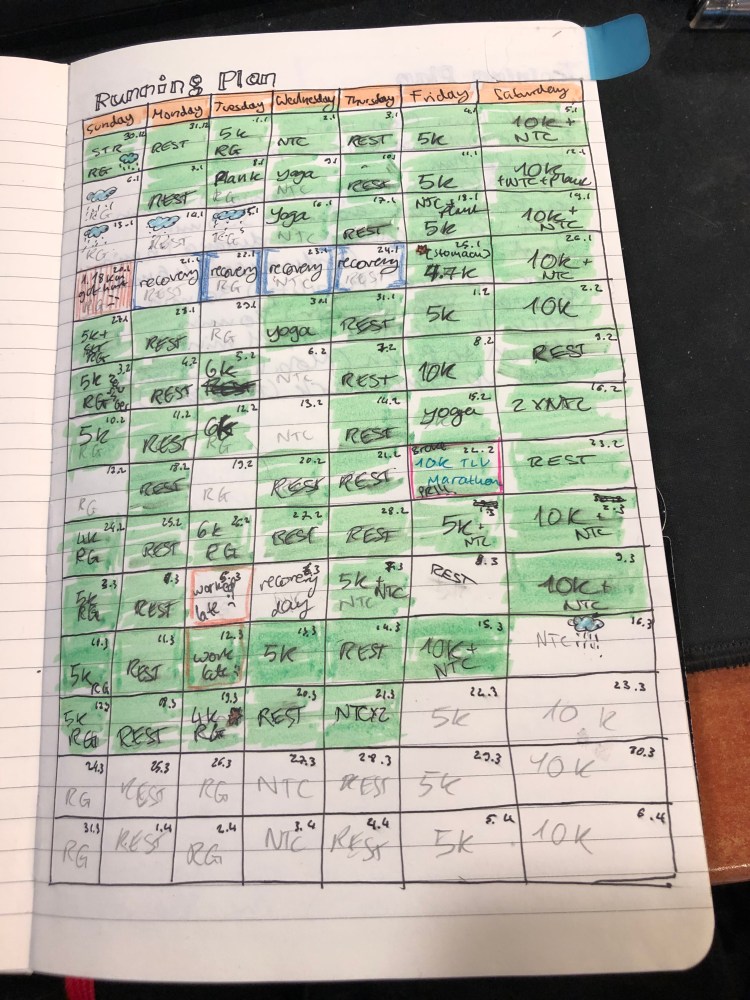
I make a fresh plan every three months or so, and I always create it in my current Moleskine journal. In the spirit of showcasing notebooks in use, that are not created for Instagram, this is my latest running plan:

Things are penciled in with an H pencil, and I ink them in with gel ink pens as they happen. Green highlighted blocks show me where things went according to plan, and other blocks represent where things had to change due to injuries or circumstances.

I’ve been running for 8 years now, and I have around 6 years of running plans in all my previous notebooks, each one looking pretty much the same: messy and functional.

Moleskine Wonder Woman Blue Notebook Review

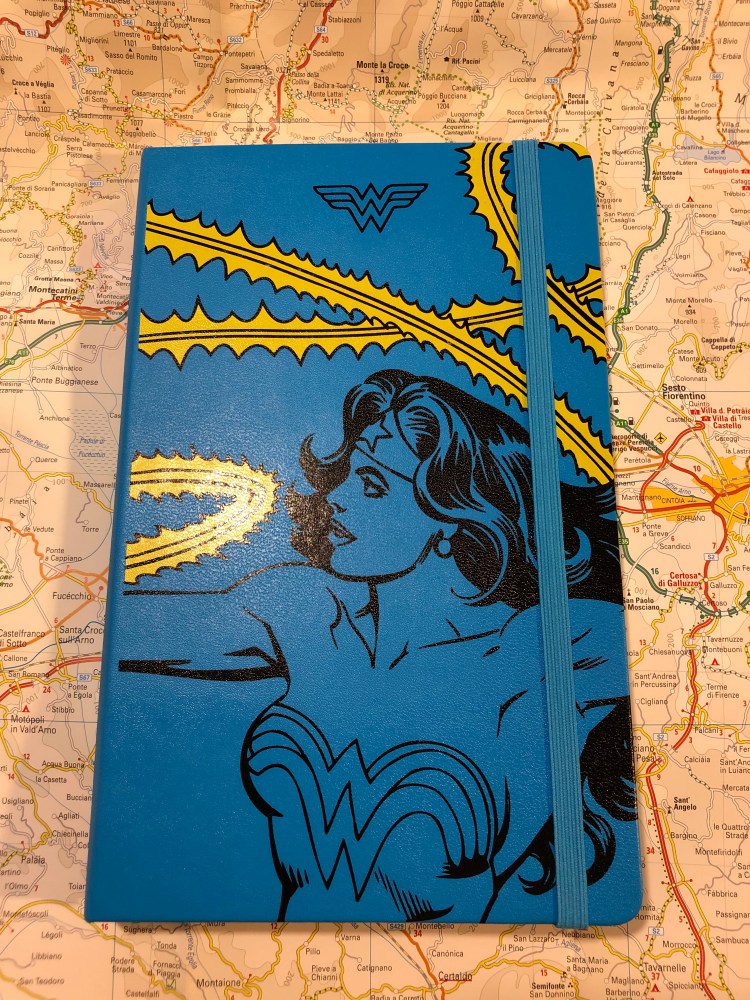
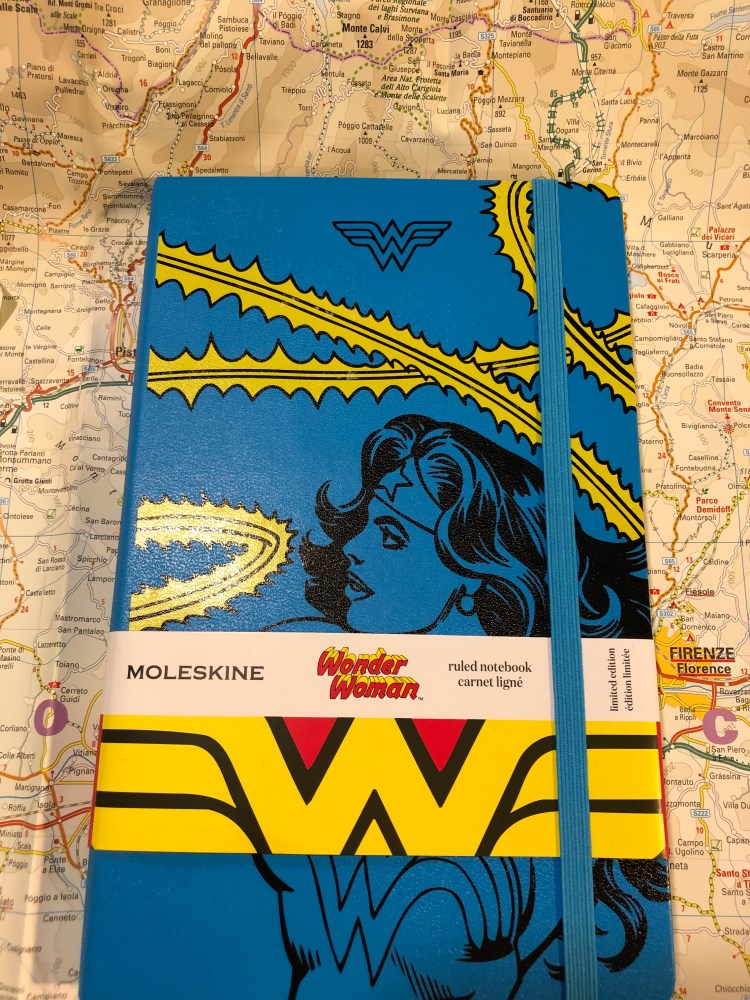
It’s the Moleskine of Truth! No, it’s actually just the Moleskine Wonder Woman Blue limited edition notebook. This is a brand new edition for Spring 2019, and there’s a red one too (expect a review later on).

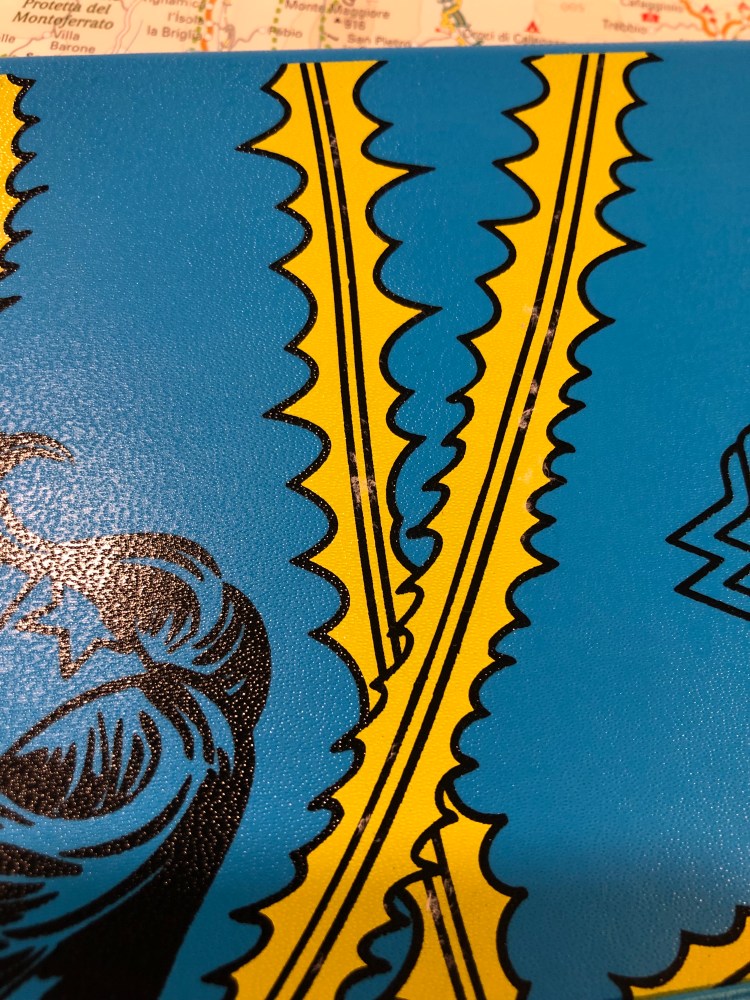
The notebook with the wrapper on makes you think that there will be a red element on the cover, but the print on it is only in black and yellow on the blue background.

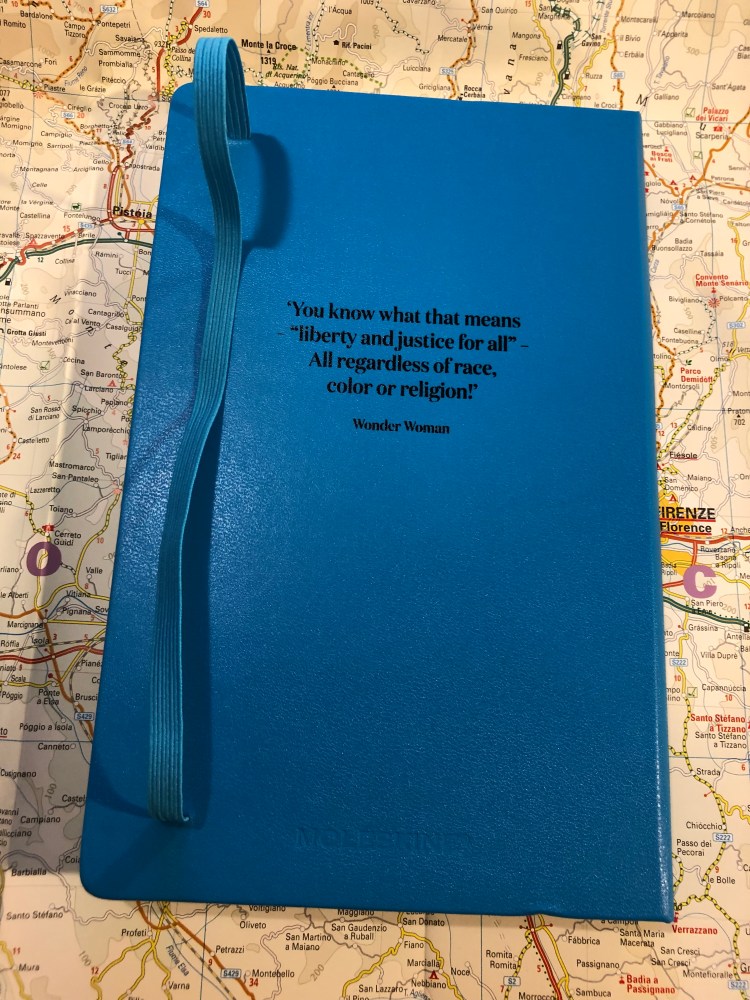
There’s a quote on the back of the notebook (there’s a different one on the red notebook), and it’s lovely. Go, Diana!

Now we come to the biggest issue I had with this notebook: it has some printing quality control issues. If you look closely you can see that on the yellow lasso print there are tiny bits of paper stuck to the cover. It feels as if there was a sticker there and someone removed it with bits left behind. They aren’t sticky and they are very easily removed with a wet wipe, but that’s not something I enjoy dealing with when unwrapping a brand new notebook. It’s only on the yellow parts of the print, so it is probably a leftover of the printing process, but it shouldn’t have slipped through.

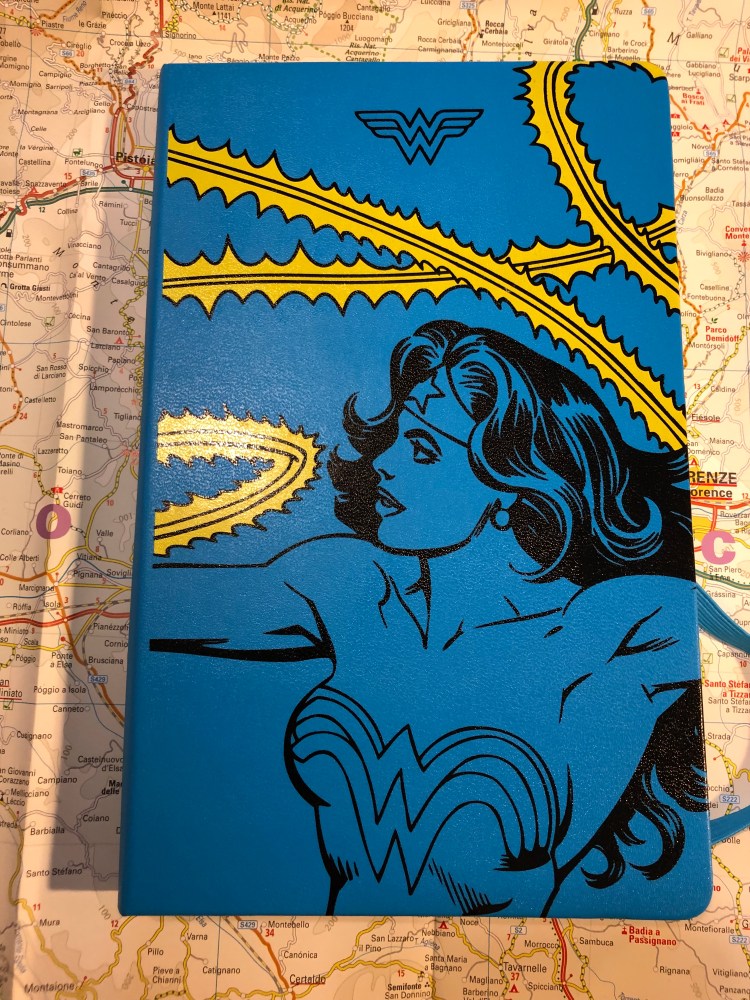
The front cover unwrapped:

I understand the design aesthetic here, but I don’t agree with it. It would have been nicer if it was black, yellow and red and it would have been even nicer if Diana (Wonder Woman) was in full colour. As it is, the lasso is more attention grabbing and vivid than she is, and it’s not the main point. This isn’t the “Lasso of Truth” limited edition notebook, is it?

Here’s the unwrapped back cover, which is a little plain compared to what Moleskine have done for Batman in past limited editions.

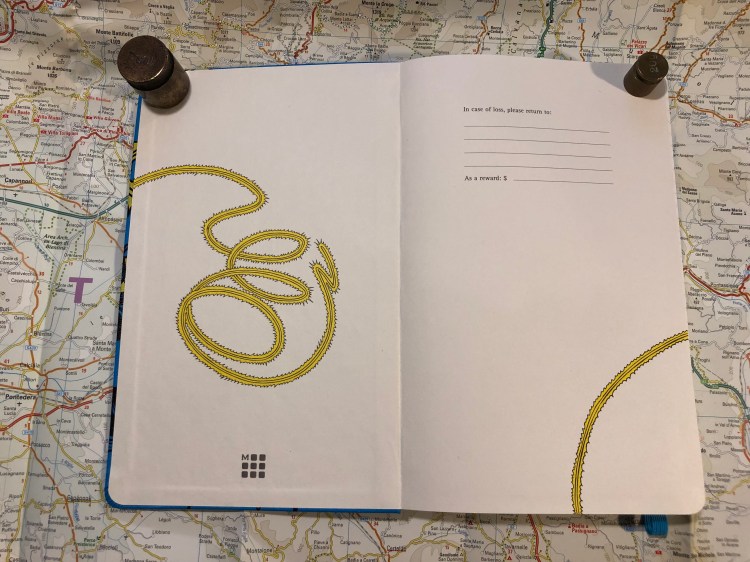
The front end paper plays with the lasso of truth design element, and again, I really wish that Diana was more represented in this edition. Maybe her doing her thing, or even a comic book page. She deserves the same excellent design that Moleskine made for Batman and Star Wars.

This is better! The back end page is where it is. You see Wonder woman using her lasso which… is mysteriously cut out mid back-pocket. What? Why? If only they hadn’t done that, or at least if it would have vanished into the pocket. It just looks weird here. I get that it disappears into the page so that it looks like she’s shutting the notebook’s cover, very clever and comic book-like, but take a step back and just look at the page layout. It’s… not good.

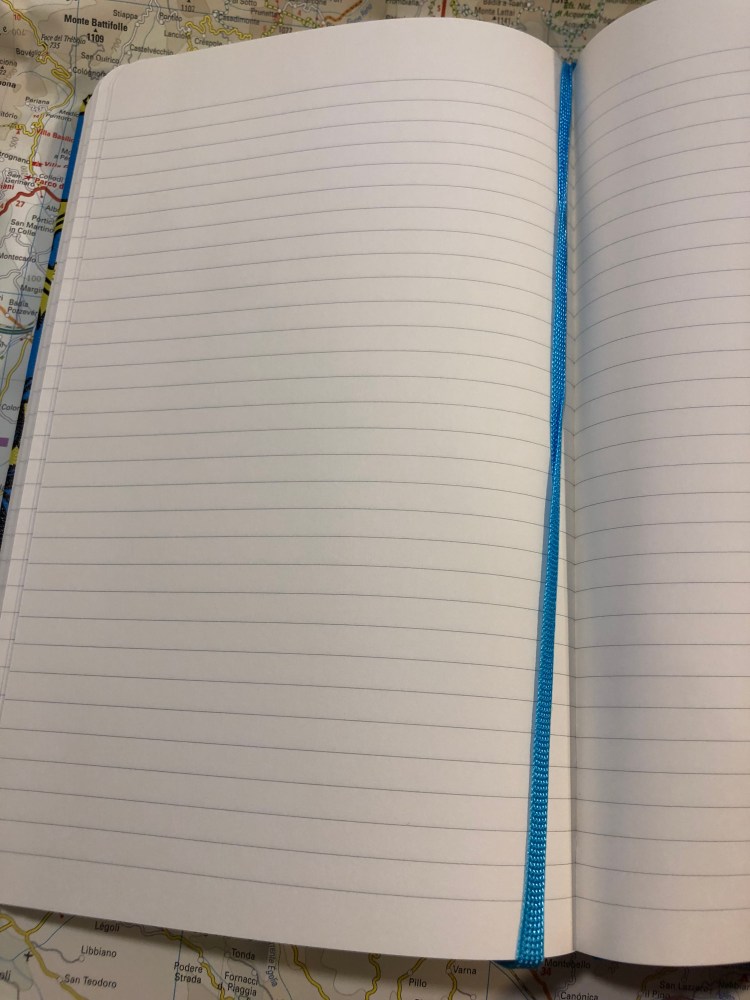
Inside are lined pages and a blue ribbon. The paper is the newer kind, so there’s no weird spidering, it’s good for gel ink pens, ballpoint, pencil, and certain fountain pens and inks (Noodler’s Black works with every fountain pen, all else needs testing, but generally speaking fine and extra fine nibs and inks that aren’t overly saturated or wet will work fine. The paper is thin, so there will be show through).

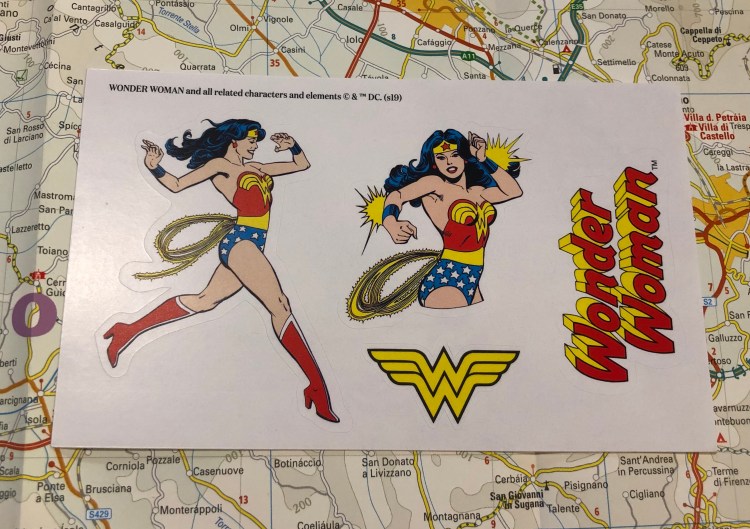
This edition comes with some nice stickers, and it would have been great if they would have been part of the cover or end paper design, but I’m not complaining, you’re complaining!

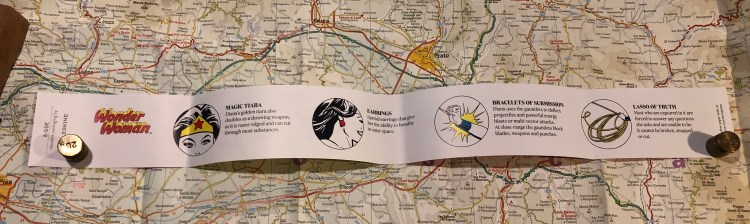
The best thing about this edition is the B-side of the wrapper, which explains what Wonder Woman’s stuff does. Of course the Lasso of Truth is there, it’s the Lasso of Truth edition, didn’t we already go over that?

The Wonder Woman fan in your life is probably going to love this edition, even though Moleksine can and does do better. It’s fun, it’s unusually colourful (most Moleskine limited editions feature black covers. They’re like Ford that way), and it will probably be on deeply discounted sale soon, so stock up then for gifting or as an everyday notebook.

Tournament of Books: Census

A few days ago I finished reading the tenth Tournament of Books 2019 book, Jesse Ball’s “Census“, which is running against Lydia Kiesling’s “The Golden State” in the fourth round of the competition.

Perhaps unfairly, but when I first saw “Census” I thought that it was going to be novel in the vein of Max Porter’s “Grief is a Thing With Feathers”. I blame the the cormorant on its cover and the published blurb about it for putting me in that frame of mind. It was very clear a few pages in that “Census” would not survive that comparison. Then again, so few books could.

“Census” is book with a very moving preface and some very moving photos at the end. In the middle is a featureless wasteland. It is populated by unnamed characters that function in an unnamed, ill defined world that is maybe desolate, where a peculiar census is conducted each year in which people are asked questions by a census taker who then marks them and posts their answers onwards. Nothing in this novel is given edges, well defined. Everything is wishy washy, vague, seen through thick, milky glass. But that preface… so you stick to it, and it helps that the book is short, though it has no plot to speak of and the setting is bleak and bland. The key to this novel is its characters then, and that’s not surprising because after all, you’ve read the preface and that’s what’s keeping you here.

And that’s the biggest frustration, because when Jesse Ball lets himself write good characters then by God the man knows how to write good characters. There’s a tiny vignette of a ex-fossil loving boy that’s so precise, so concise and so convincing that you want to howl that the rest of the novel isn’t like that. That the surgeon-father-protagonist isn’t like that. That the son, the whole reason for this novel, remains a shapeless mass with nothing making him hum – no distinct feature, tic, preference. That the wife is the best defined major character and even she is seen through thick fog. It’s never personal, emotional, realistic or if he’s really going for the absurdist (which is a poor stylistic choice for the subject matter IMHO) then it’s far from fully embracing that even.

What is feels like is that the writer took a subject that was too close to home, too painful, and tried to deal with it while not dealing with it at the same time. The result is a novel that does everything possible to make it difficult for you to feel anything for any of its characters, including empathy. It very easily lets you slip into the “oh this has nothing to do with me” mode, and from there to “none of these characters are likable, hate-able or even interesting, so why should I care” mode.

But then, the preface…

Vintage Faber Castell Sharpener

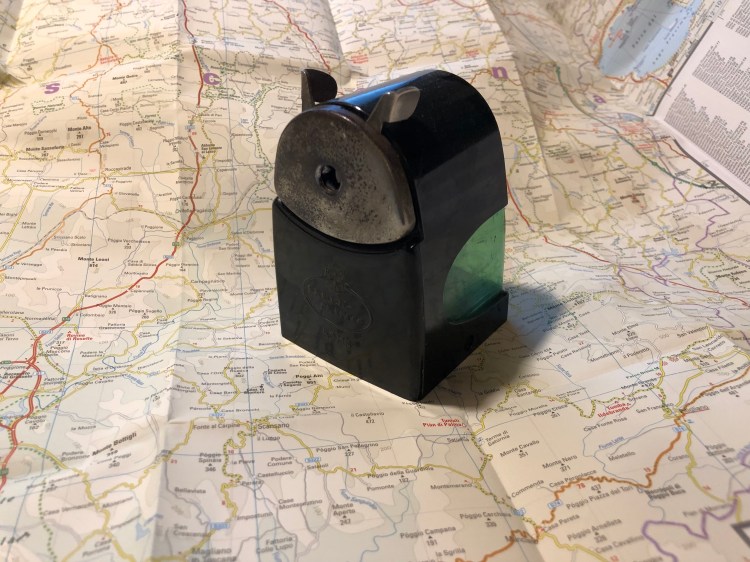
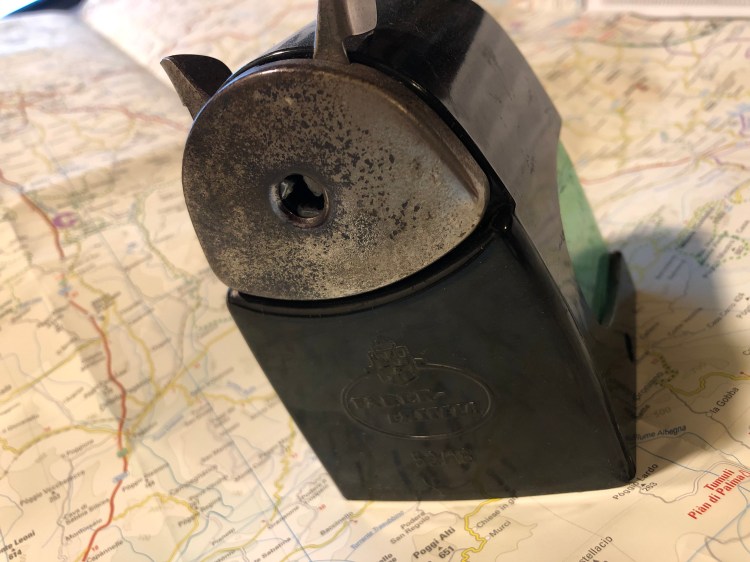
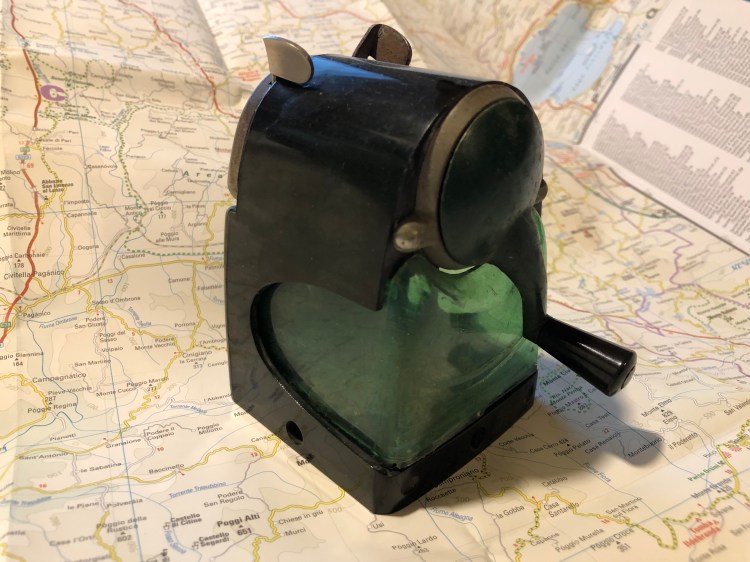
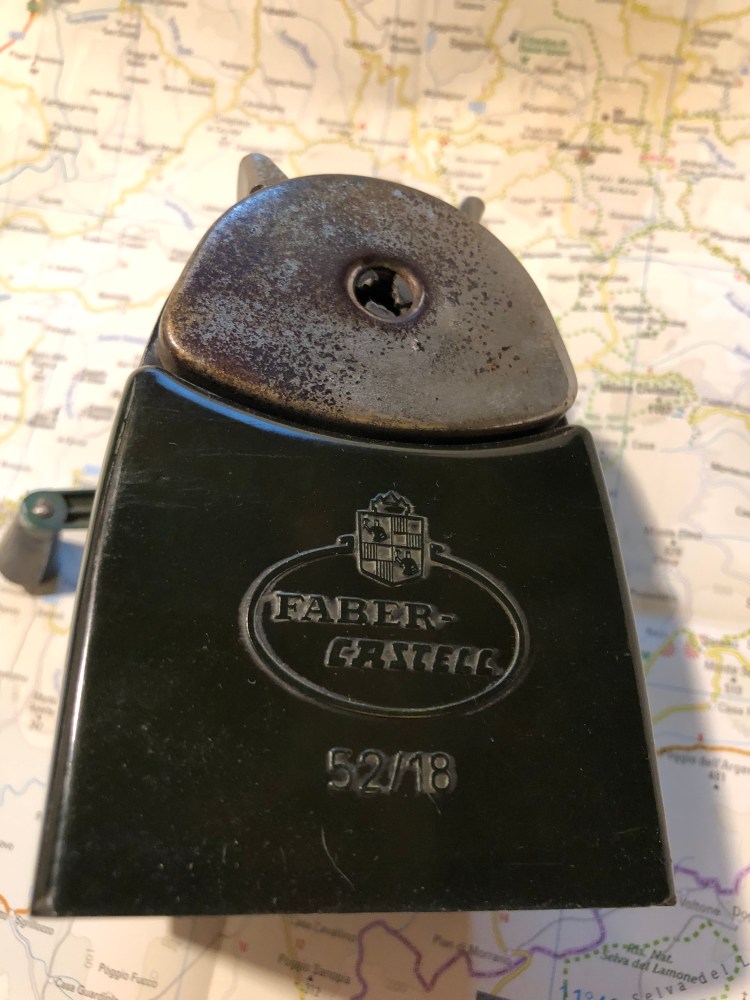
I found this beast in a dusty corner of my favourite vintage shop in Jaffa. It’s far from pristine, but it’s so overbuilt that it still works. The body is Bakelite and somehow still whole, and even the green shavings receptacle isn’t cracked. I haven’t been able to find anything about the Faber Castell 52/18 (except for an eBay listing that says that it’s rare), but I love the design enough to wish that they were still being made today. Something about that green cutout in the black body just works.

This Week’s Long Run: Evening Birds

Saturday was supposed to rain cats and dogs, so I pushed my Saturday morning 10K to a Friday evening one.

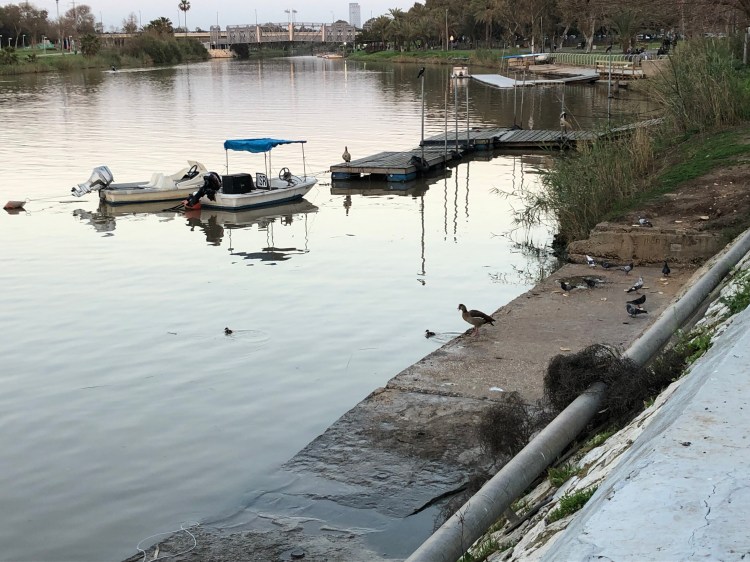
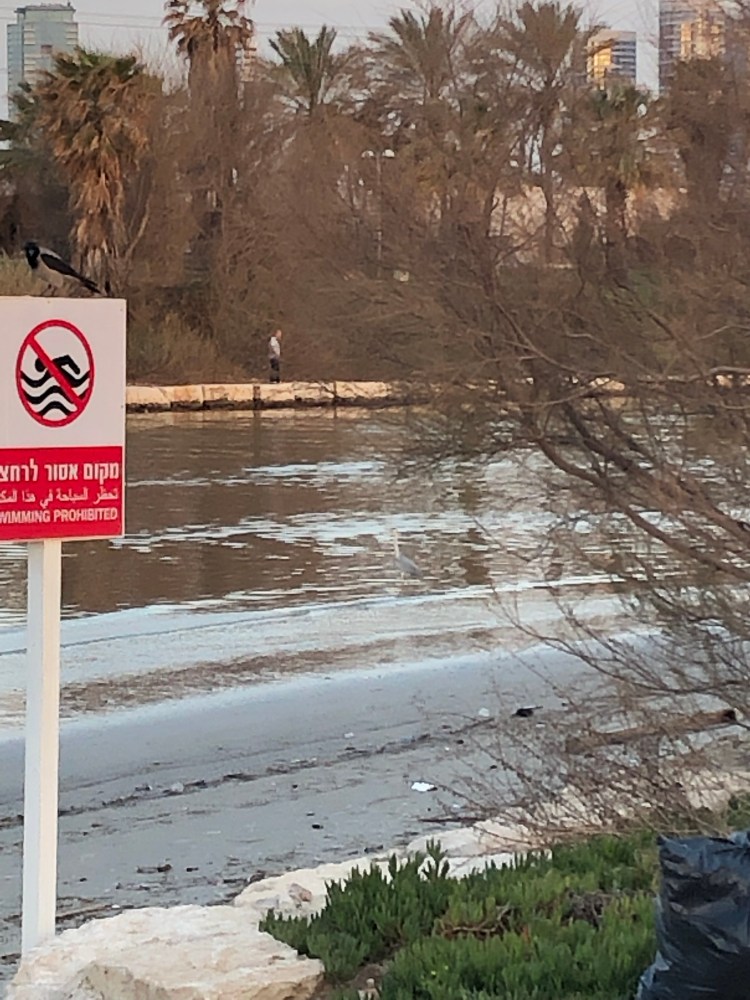
This is a terrible picture of a heron, but that’s what I have I’m afraid.

Momma Egyptian goose keeps an eye on her swimming little ones. Not pictured, the rat that was foraging for food a few meters from them.

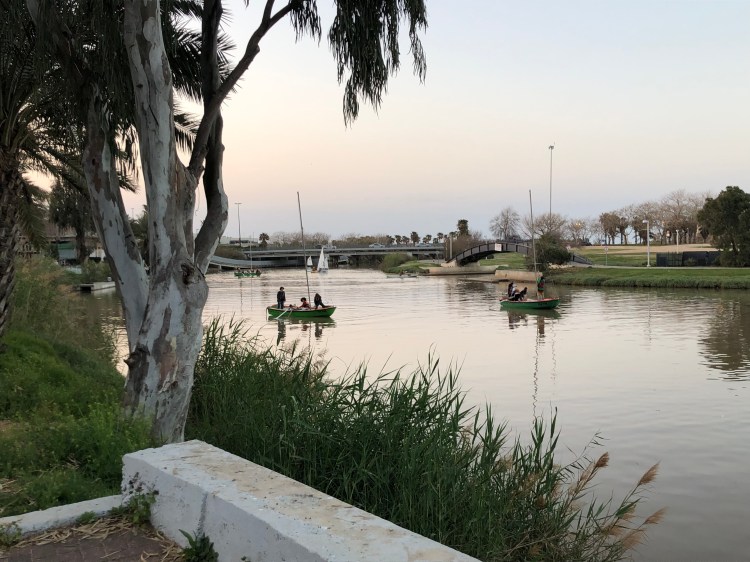
Sea scouts out in their boats:

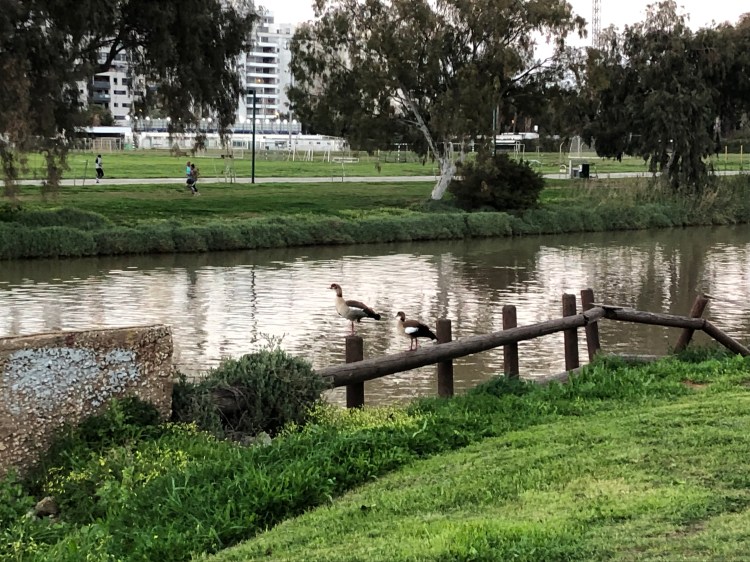
A pair of Egyptian geese watching over the river:

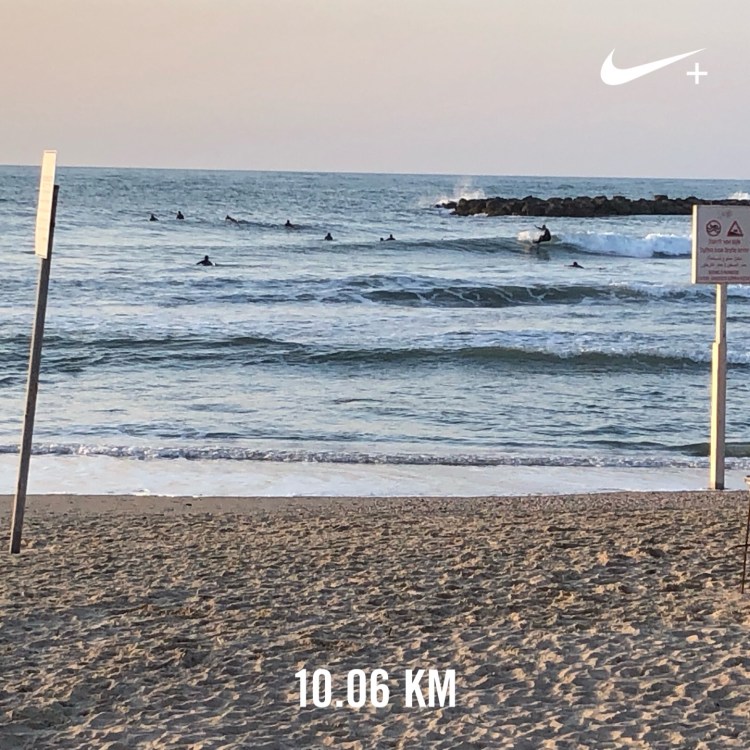
It was very windy, so the surfers were out in force:

Tournament of Books: The Dictionary of Animal Languages

Yesterday I finished reading the ninth Tournament of Books 2019 book, Heidi Sopinka’s “The Dictionary of Animal Languages“, which is running against Esi Edugyan’s “Washington Black” in the third round of the competition.

“The Dictionary of Animal Languages” is a technically difficult novel to read: the language is dense, the plot isn’t linear and at least at first it takes time to figure out who is talking, what’s going on, and in which timeline (one of the several past ones, or the present) you are. It doesn’t help that dialog isn’t delineated with quotation marks and often it isn’t clear who is talking, or whether they are talking or you are in their mind. If it wasn’t for the tournament I would have probably not have bothered with this book after wading through the first 2-3 chapters.

Ivory’s life is complicated and fascinating, but difficult to construct when broken up into non consecutive pieces and portrayed as it is. The characters and settings are very good (vivacious and interesting), and if the story was reconstructed in a more linear fashion it would be “unputdownable”. Sopinka is trying to show Ivory’s life in bursts, not unlike field recordings that you listen to in the lab and try to make sense of, but it really is too much effort for the ending result.

The novel is lyrical and touches on a lot of interesting themes (women’s roles and choices in the worlds of art and science, for example) , but the first third of it moves like thick pudding through a fine sieve. If you get through that, the last half is so much more interesting and rewarding than the first one, although it rushes through some plot points that feel like they shouldn’t be rushed through. There are too many coincidences in the plot (get captured and escape from prison camps much?), there are familial ties that are severed with no explanation or time to mourn (what happened to her brothers? Did Lev really breeze through retelling his brother’s death with not even a moment’s pause?) , and then there is the peculiar animal languages dictionary that is constantly evoked but never really explained to the reader, and you wonder why.

In short, this is a book in need of a more adept writer or a much stricter editor. The bones that are there are interesting enough to merit wading through the first part if you’re interested in contemporary fiction. There’s something there that with time and experience could probably make for a masterpiece some day.
It’s interesting that the Tournament of Books pitched “The Dictionary of Animal Languages” against “Washington Black” as the first has a weak beginning and a strong ending and the last has a strong beginning and a weak ending. Could they have made a perfect collaborative novel together? Jokes aside, Sopkina’s book is a better, if far from perfect, work of fiction, and her novel is lyrical while “Washington Black” only tries really hard to be. “Dictionary”‘s characters are better written and conceived, its plot, once reconstructed, is more compelling, and even its treatment of the animal conservation theme and social pariah/underdog themes are more nuanced and compelling. That is surprising considering the idea behind “Washington Black” seems more powerful and interesting than the one behind “Dictionary”, but Sopinka totally wins in execution against Edugyan.

The Tournament of Books: Washington Black

I recently finished reading the eighth Tournament of Books 2019 book, Esi Edugyan’s “Washington Black“, which is running against Heidi Sopinka’s “The Dictionary of Animal Languages” in the third round of the competition.

This is the only Tournament of Books book that I heard of before the competition. It made quite a splash when it came out last year, a sort of slave/coming of age narrative with steam punk slapped on for flavour. Sounds interesting, right?

The first half of this novel is. The story of Washington’s childhood (if you can call it that) as a slave, Kit’s story, Faith plantation, Barbados and the Wilde family — they’re all vibrant, alive, speaking volumes through history. Washington’s escape, his travels, his survivor’s guilt, they’re all fascinating, complex, well written, until Washington reaches Canada, where everything grinds to a halt. The narrative enters a kind of swampy ennui, characters become cardboard specimens viewed through milky, distorted glass, and the only thing that maintains the earlier vibrancy is the setting. It was as if all the narrative urge was drained out of this novel and Edugyan was working for a word quota. Slash the novel after the point where Christopher steps into the ice storm and you not only lose nothing, you end up with a better narrative. Christopher trapped and Washington free is more interesting than Christopher being a man-child unable to face the world and Washington chasing him to get no answers. And the “love story” between Tanna and Washington feels more like a last minute after thought than a believable, integral part of the tale.

This could have been an excellent novella, instead of an almost good novel that lost narrative steam halfway through. What a shame.