Streaks vs. Plans

I was in a bit of a writing slump over the past two months or so, and I tried to solve it by trying to get as long a streak as possible of writing every day.

I managed to go three days in a row, and then failed.

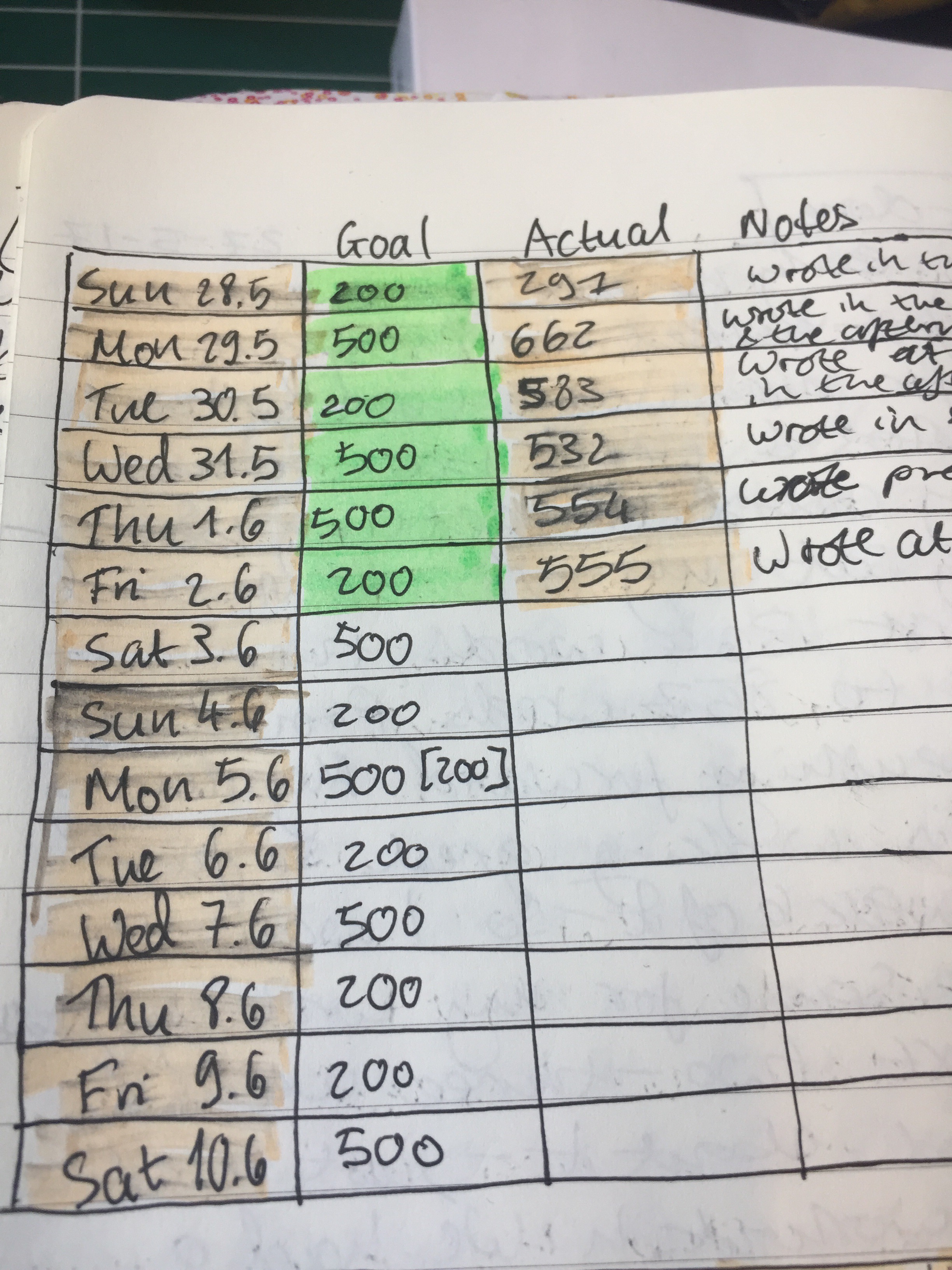
Now I’m using a writing plan that I drew up for myself, and I’ve gone 7 days in a row with more words written each day than I planned, and I’ve written more each day than I did during my short-lived streak. Why is that?

Streaks are something that we think helps us move forward, create habits, but I think they only give us the illusion of being helpful. Yes, if you’re on a streak, you really don’t want to break it — especially if it’s a long one. But streaks don’t motivate you to finish your daily goal early, or go beyond the goals. Streaks let you postpone things to the last minute — after all, you only miss your goal when the day has passed. They are inflexible — you set the same goal for each and every day, no matter what.

Plans allow you to do just that — plan your daily goal to accomodate your life. Busy day? Set a smaller goal. You have the day off? Set a more ambitious goal. They also don’t set you back to zero if you fail, and encourage you to try for at least a partial success, because not everything is lost if life happened and you didn’t meet your goal. There’s also less of a pressure with a well made plan to “keep extra words for tomorrow”. If you have something to write, write it. 

Just like athletes use training plans and not training streaks to prepare for a race, writers should use writing plans and not streaks to get their daily words in. 
This week’s recommendations

Podcast: Download. Jason Snell, with Stephen Hackett as a editor and a rotating pair of guests talk technology in what is the most charming, informative and polished of tech podcasts. Worth listening to if only to hear the “story you might have missed” segment.

Book: World War Z, by Max Brooks. Forget the movie (it has nothing to do with the book), and forget that this book is “about zombies,” because it isn’t really. It’s an “oral history,” very well written and researched, of a plague of the kind that exposes our humanity to the very core — all the good, all the bad, laid bare. A facinating and disturbing read precisely because it is so very realistic.

Tea: Lately it has been nothing but Yorkshire Tea, in dependable teabags, brewed stronger than you would believe possible and taken with milk-and-sugar. My aunt died last week, and at times like this I look for “comfort tea,” simple and soothing in its familiarity.

Also this week: Nasturtiums are hanging in there, despite the hot weather.

IMG_3487

Busy, full day ahead

But at least I got my run in. Felt as if I was running with weights tied to my legs for most of the way, because I haven’t fully recovered from Sunday’s speed workout, but I made it, and I’m glad that I ran. 

Staring at the blank page…

Starting to write is like starting to run. Your brain starts playing tricks on you from step one. 

“I’m too tired to run”.

“It’s too hot today — it’s dangerous to run outside”.

“My feet hurt, my head hurts, my throat hurts — let’s not go out today”.

“10k? That’s too much. Let’s run less. You can’t possibly do it”.

Sound familiar?

I sat down to write yesterday, and it was difficult, very difficult to start. My mind started wandering, suggesting that I read my twitter feed, or the NYT, or do anything, just anything but write. It’s like that almost every time I sit down and write, and the only way I found to overcome it is to map out reasonable daily goals and force myself to start anyway. Usually when I start writing I can push myself well enough to the finish, sometimes even a bit farther. The same thing happens when I run — the first 2-3k are a pain, but then I get into the rhythm, and start enjoying myself. 

There’s never been a run that I’ve regretted.

There’s never been a writing session that I’ve regretted.

I just need to remember that when the tiny little coward in my brain decided to protest. 

Every. Single. Time.

Tabletop Day

Tabletop Day was a huge hit today – we were 9 people gathered in my brother’s apartment, and we played:

  • Sushi Go (twice)
  • Tsuro
  • 7 Wonders
  • Resistance (twice with the regular rules and once with the expansion, which made it much better).
  • Hanabi
  • Sheriff of Nottingham

Not bad for 8 hours, including a lunch break 🙂

I hope that you had a great Tabletop Day. Play more games!

The notebook you use

The best notebook is the one that you use.

If Moleskine makes the notebooks you want to use, then they are the best. After years of collecting dust, I find myself gravitating back to them more. Maybe it’s because their paper isn’t perfect, and I don’t feel guilty if I just use a simple gel ink pen or a pencil on them, and maybe it’s something about their format that is just right for me right now.

If Leuchtturm, Rhodia, Baron Fig, Midori, Field Notes is what makes you pull out a pen or pencil and fill up those pages, then these are the notebooks for you.

There is no perfect notebook — we live in an imperfect world. Your baseline should be a simple composition notebook, and not a leather-bound, gilt-edged masterpiece that you are too afraid to use.

Just a friendly reminder that a notebook is not worth much if it has empty pages and you have a full mind.

This week’s recommendations 

Podcast: Do by Friday. A weekly challenge show by Merlin Mann, Alex Cox, and Max Temkin. It’s funny, it’s insightful, it’s well worth your time. 

Book: A Month in the Country, by J L Carr. This is a 104 page lyrical masterpiece about a WWI veteran hired to restore a medieval mural in a Yorkshire church. A real gem- one of those books that you judge other people by.

Tea: Feng Qing Premium Black Gold Pearls – a “chocolate and malt” Yunnan black tea rolled into large marbles. Sweet, mellow, smooth and a feast for the eyes. Almost too good to share.

And also: if your New Year’s Resolutions aren’t SMART, you are wasting your time, attention, and effort.


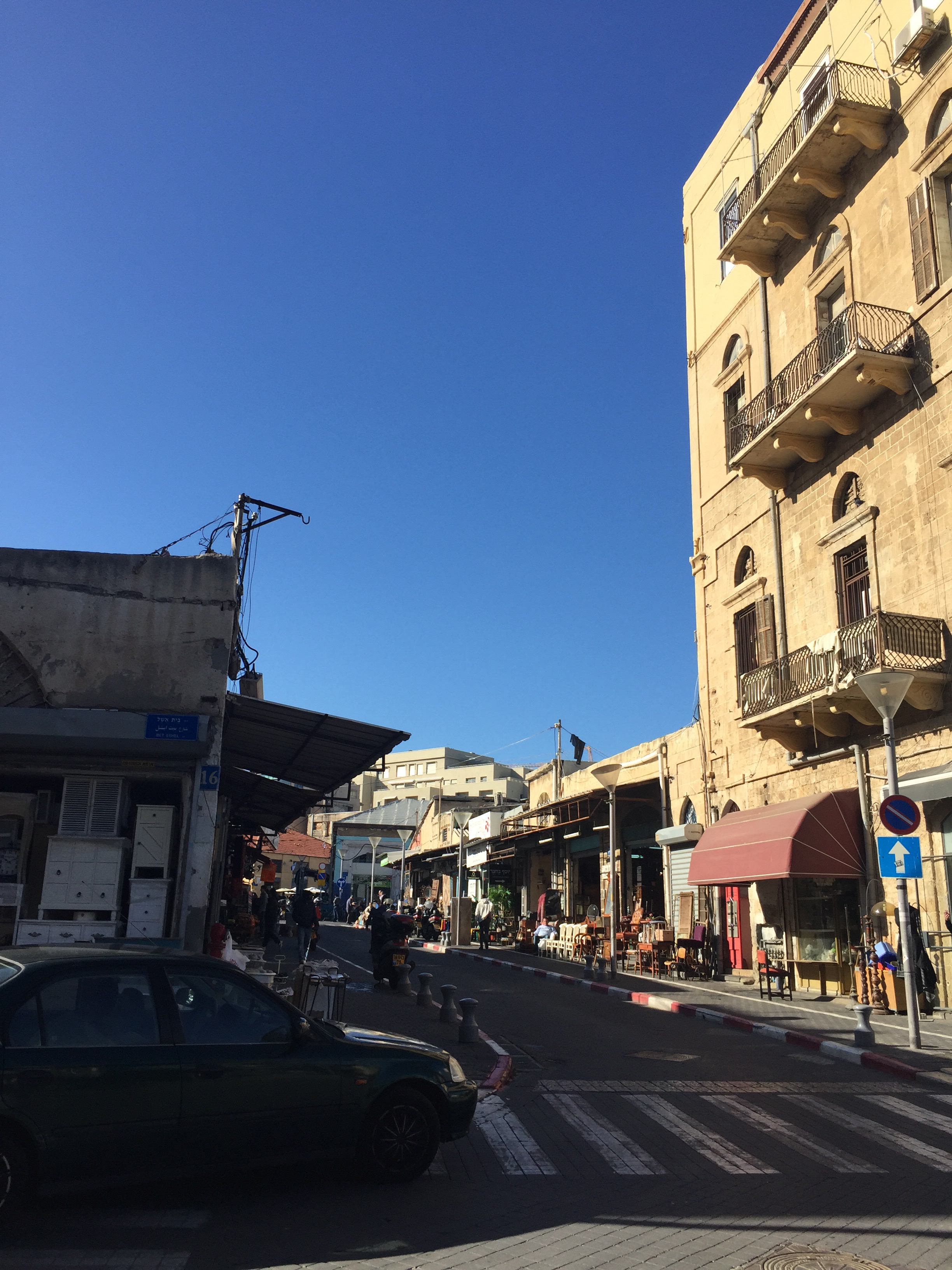
Gratuitous photo of Jaffa on a clear winter’s day.

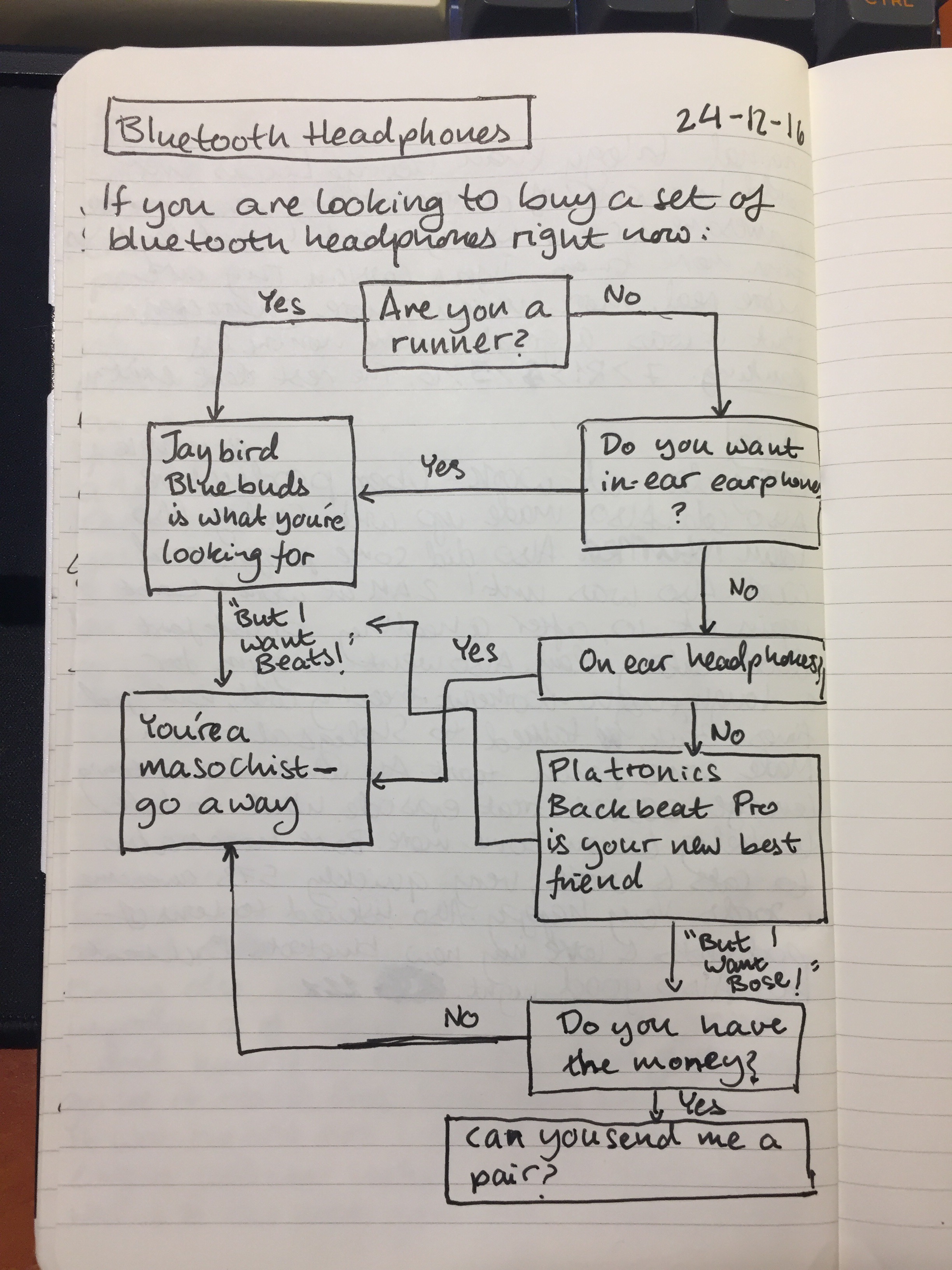
Bluetooth Headphones 


The only reason to buy Apple AirPods is if you feel like regularly fishing them out of dog poop when they drop out while picking after Fluffy. 

Buying

I couldn’t sleep last night for no good reason other than the noise from the neighbouring synagogue and my terrible late night iPhone Twitter habits. The iPhone addiction is on me, but what can you do about French tourists being obnoxiously loud obnoxiously late when they stand outside a synagogue long after closing time, far past midnight? I considered throwing a bucket of water or hefting a shoe at them, but I couldn’t be bothered to get out of bed. Meanwhile, they outshouted the closed windows and air conditioning. Only American tourists get any louder.

I saw an episode of Brooklyn Nine-Nine tonight that hit close to home regarding to my spending habits. Unlike Jake Peralta I am saving money, and I have never even considered buying one massage chair, let alone six, but I can get carried away sometimes buying junk that I don’t need and will never use. There is a collector’s bug that runs in the family that doesn’t help, and FOMO is a real thing when it comes to limited editions of things that I like (mostly pens and stationery), but mostly I just need to learn that buying stuff online is not a good coping mechanism for a bad day at work or a sleepless night. Money spent on experiences, like races and trips and escape rooms with friends, is better spent, period. And maybe more than me needing to learn to just enjoy using what I have, I need to accept that whether it’s headphones or pens or mechanical keyboards, there is no true perfection out there — there is only what there is.

NaNoWriMo

NaNoWriMo, or National Novel Writing Month, begins in November, which means my twitter feed is starting to get choked with related writing-tool-and-advice links. From style guides to plot models that show you exactly how you can write the next Harry Potter book, it seems that you need to become the next Harper Lee is a word counting app or calendar printout, a laptop, and a coffee shop. Take a little step back from all the genuine enthusiasm for writing, and you will see a horde of retailers taking advantage of the event to sell you just the right pen, notebook or laptop bag that will make you a successful author.

So before you click on that can’t be missed writing tips link or head for checkout, a few things you might want to think about:

 Tools do count. I know the joy of notebooks nice enough to make you want to use them, but not too nice to make you afraid to use. But remember that tools are only there to facilitate writing — there is no pen or writing app that will do the actual writing for you. Buying stuff will always be easier and more fun than sitting your ass at a table and getting the actual writing done. Writing is and always will be challenging, to everyone.

NaNoWriMo is probably setting you up to fail. 50,000 words in 30 days is more than even professional writers can deal with, and they do it full time and with years of experience. Writing 1,667 words a day, every single days is a herculean task, a feat of writing bravado that will probably result in something far, far, far from publishable, even if complete in time, and yes, even as a draft. Writing requires time stewing with yourself, your plot and your characters. There are no shortcuts, and steaming through the process is a bit like trying to see Rome, Paris and London in 3 days. It may be possible, but you are so busy rushing that you miss a lot.

Word count is just a metric for writing progress — sometimes it goes up, sometimes it goes down. Putting an emphasis on it rather than on your plot, setting or characters is like planning your family vacation for the sole purpose of maxing out your flight miles.

So here is my bit of NaNoWriMo advice: use the enthusiasm and sense of community around NaNoWriMo to get writing, but take a step back from the mayhem for the sake of your story and your peace of mind.