We have this vision, this ideal of journaling. It’s a ritual, perhaps done while sitting in a comfortable chair in a room with a lot of books and just the right ambience, our leather-bound journal resting on a antique desk, our expensive fountain pen poised to write our thoughts in the perfect handwriting.
There’s nothing wrong with that vision, with wanting that experience. There is joy in writing using a great pen on beautiful paper.
But this isn’t what this post is about. It’s about journaling in a poorly lit bomb shelter with little privacy and the journal balanced precariously on your knees. It’s about the soldiers who journal in the battlefield, writing in the margins of their Bible. It’s about the patient journaling in their hospital bed, using an exercise book and the cheapest pen they could find (because the good stuff gets stolen). It’s about the achingly tired parent scribbling a few words when their child finally drifts to sleep.
Journaling provides an immense and lasting source of comfort to those who regularly practice it. You gain insight, clarity and perspective when you journal. It is most needed when life deals the worst blows, the toughest challenges, yet at precisely those moments the mind balks at the very idea of picking up a pen and writing things down.
Writing doesn’t come naturally to us. It requires effort, it always comes with friction. The very act of writing means that you have, at least momentarily, not merely surviving, but reflecting, planning, detaching yourself from the current turmoil of your life. Writing will never be natural, mindless, effortless – that’s why people pick up their phone and doom-scroll to numb their pain, instead of journal their way through it. Writing means walking into the pain, describing it, facing it, dealing with it. It means that you have to think about what it is you are going through instead of avoiding it.
There is no “life-hack,” no shortcut, no magic pill that will make journaling easy. Anyone who promises you quick and easy ways to journal when you really need to, when life deals your a bad hand, is wasting your time. You will need to force yourself to sit down and write. Techniques like setting a timer, using reminders, chaining habits (journaling right after you perform a habit that is already ingrained, like brushing your teeth) can help, but you will still have to overcome the resistance to writing that you’ll have every single time you sit down and journal. It’s the same kind of resistance that you encounter when you exercise – your mind will find every excuse there is, every alternative activity there is, just to avoid doing what’s good for it. That’s just how it is.
If you’re wondering where to start, how to put into words the overwhelming experience you’re in, I can make a few suggestions:
- Ground yourself. Start by writing the date, what day it is, what time. How much time has passed since whatever is started. Your location. Your physical situation. Stick to dry facts. This should be relatively easy to write down, it will get you started and it will give you a bit of your sense of self back.
- Lists are your friends. They’re easy, they allow you to track things without worrying too much about the connections between items or sentences. If just pouring everything on your mind onto the page seems daunting, lists can help. List actions you did or plan to do. List people you saw that day. List what you ate. It doesn’t matter – anything you write is worth writing down.
- Don’t judge, don’t edit. Nobody cares. Nobody is marking this. Make grammar and spelling mistakes, typos, be mean and vulgar, curse, write sentences that go nowhere. Everything that’s on the page is out of your mind, and everything that’s out of your mind gives you more breathing room. The point of writing is writing, not producing masterpieces for future generations.
- If you can, try to find something funny or interesting or kind that’s happening around you and write it down. A young man trying to impress a group of young women in a bomb shelter by performing card tricks. The two X-Ray technicians that try to make everyone around them laugh by clowning around as they rush from bed to bed in the hospital with their portable X-Ray machine. The young woman who paid for part of the groceries the old lady in front of her in the line couldn’t afford.
- Try to find a few things that you are grateful for even now. The point isn’t to be a Pollyanna, it’s to convince yourself that it is worth trudging on, putting one foot in front of the other. It’s the difference between letting yourself give up on your life, and finding enough strength and light to keep going on. The darker your life is, more important this is.
I don’t normally publish excerpts from my journals, as they are private, but in this case I thought it might be useful to see a few snippets of what journaling under stress looks like.
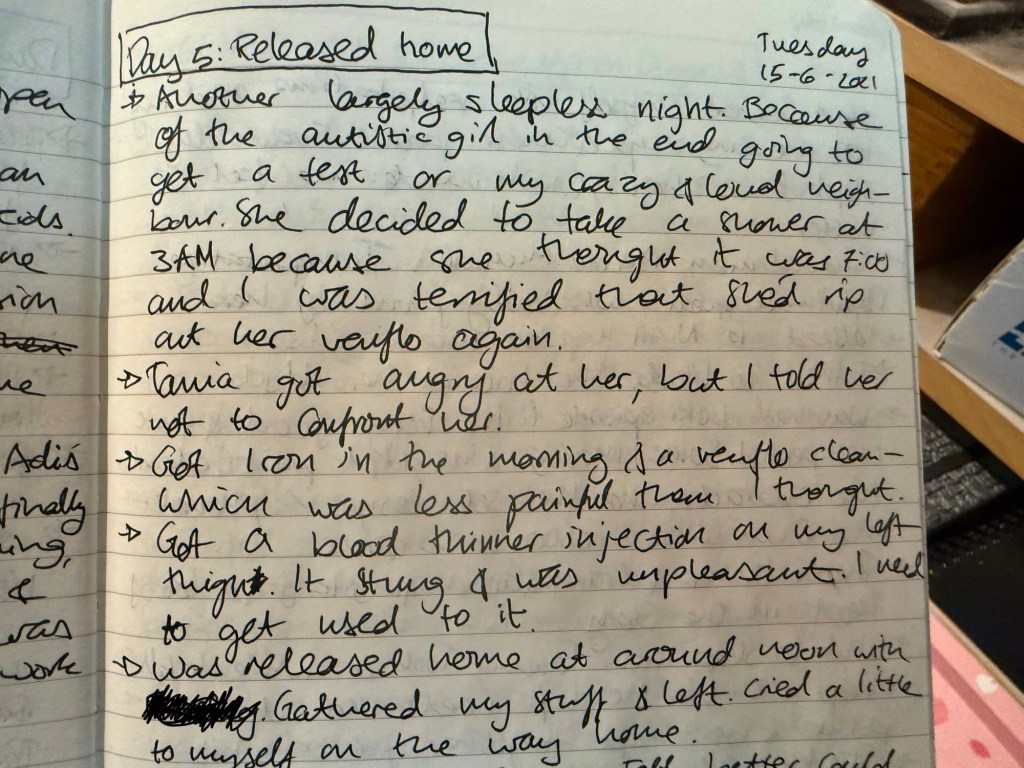
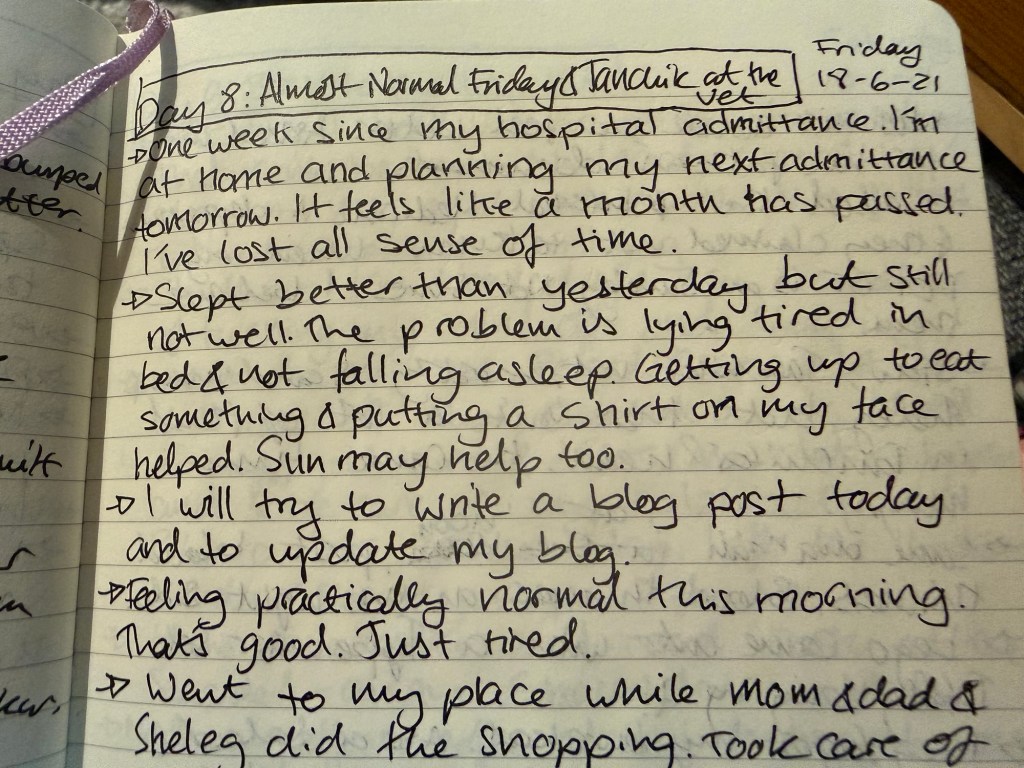
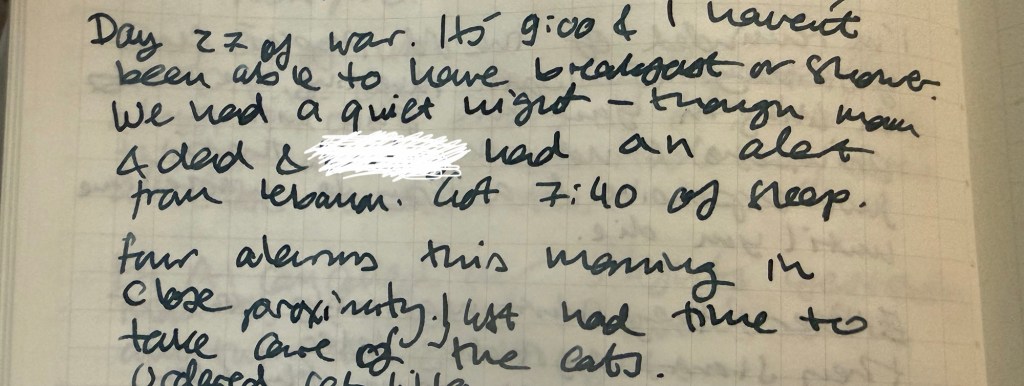
If you happen to be in an extremely stressful situation, I hope this post helps you find a way to journal through the experience. I promise that it’s worth the effort.
 Writing at Large