I’m still editing my novel after getting notes from my beta readers. Most of the notes are super helpful, and it’s good also to go over the book after a while.
I’ve tightened the prose in places, plugged a few plot holes, and clarified a few scenes — which is not something that I expected to do on the third or fourth draft.
Scrivener is life. Thankfully my novel was split to scenes, so it was easy to move things around to restructure the narrative after the feedback I got. It was also easy to split the scenes into new chapters, and take quick snapshot backups of each scene before I edited it.
As usual, the first third of the novel is the part that needed the most editing. I’ll give it another once over once I’ve finished editing the final chapters.
It took me a long time to get into the editing mood, but things are going pretty fast now. I’ve started using a task list in Drafts and it’s proven useful in keeping me organized and motivated, without allowing me to be sucked into productivity pr0n.
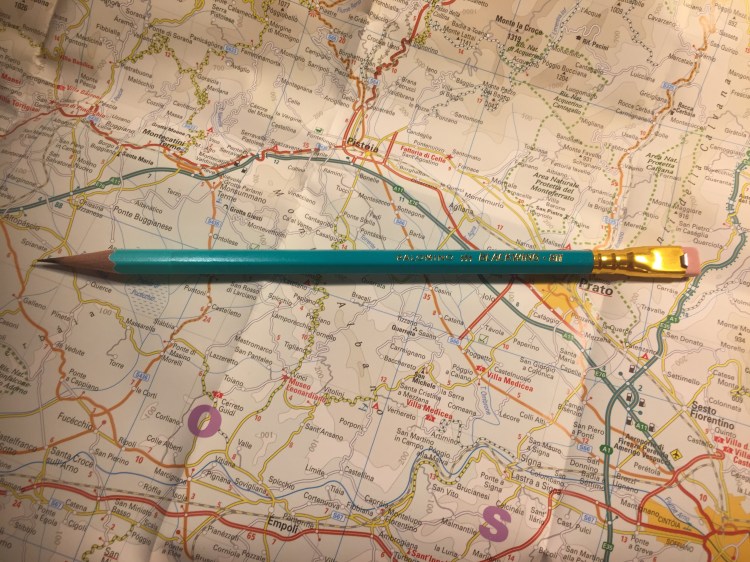
It’s the insane, glow in the dark Blackwing, and I managed to snag a box!
OK, enough with the hype. Plenty of other reviewers have given this limited edition pencil a spin, but my experiences and thoughts about “The Library Pencil” seem to be different enough to warrant a few quick words about the Blackwing 811.
First of all, the pencil is attractive. It’s darker than a banker’s lamp (I have one, so I checked), and the gradient is very well done. This could have looked cheap and tacky but it doesn’t. I would have liked a darker ferrule and I think that the pink eraser is ugly, but even so it’s a pretty attractive pencil.
The lighter part of the gradient disappears for the most part on the first sharpening, so that’s a shame. The coating on the pencil is grippier than the coating on the Blacking 54, 56, 24, 725 and 530 (and lacquered pencils in general), but less grippy and gritty than the coating on the Blacking 4. It has a matte feel.
It’s got a “firm” core, which means it has the Blacking 602. I absolutely hate that Blackwing doesn’t write its firmness on the barrel, or use “standard” hardness ratings, or makes it easy to see what the core grade is on the box or on their site. That’s like buying a fountain pen and not knowing whether you’ll get a fine or a broad. It’s bad enough that manufacturers play fast and loose with pencil grades within the standard 10H-10B range. Having a company invent its own grade and not even have it make sense, and then not even make it visible is a big no-no in my book.
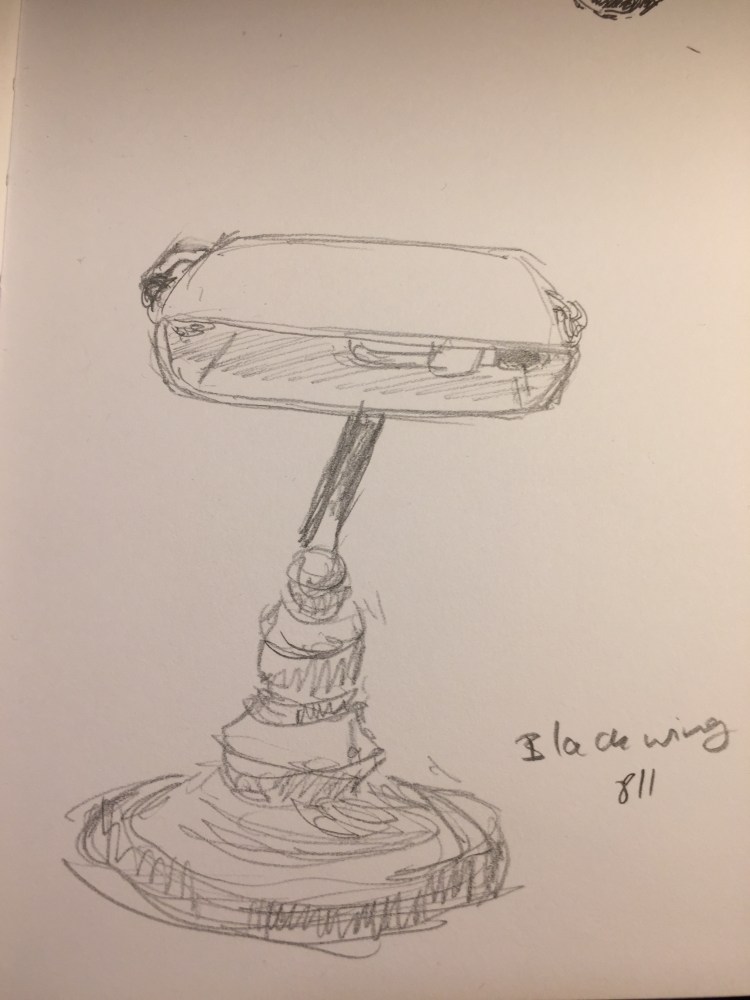
Here’s a sketch of my banker’s lamp (which is a bit wonky after my cat dropped a giant pile of books on it) done with the Blackwing 211. I’d say it’s a B or a 2B, depending on the maker, but in no way is it a pencil that I’d call “firm”. It’s great for quick sketches, but I wouldn’t recommend it for under-drawings.
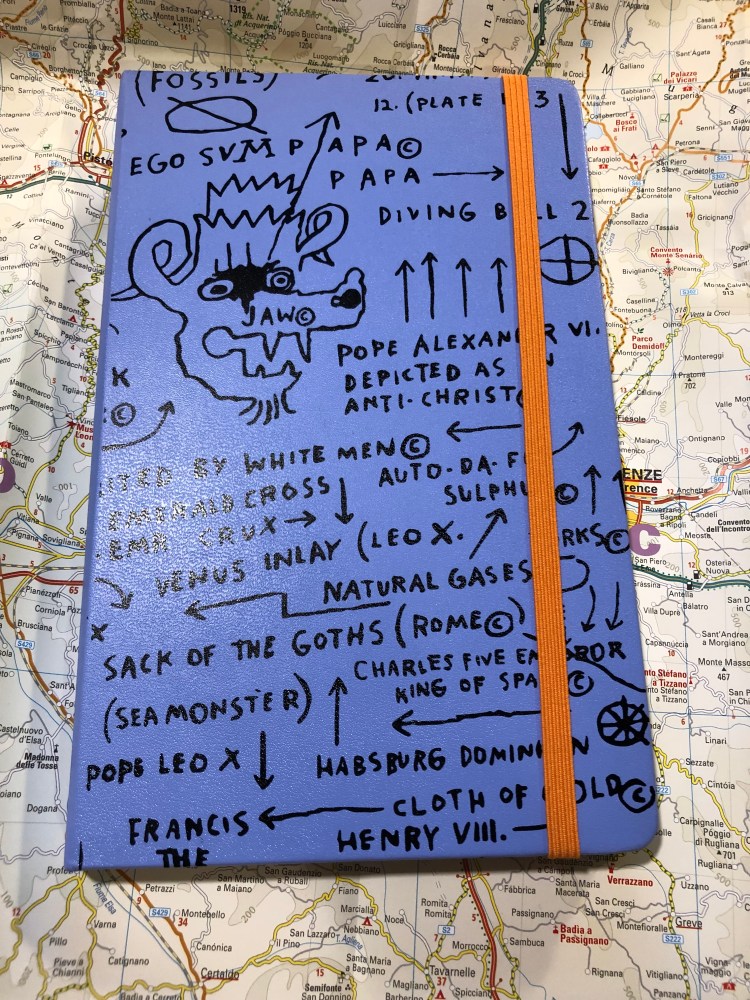
It is rare that I start using a notebook the moment I unwrap it, but the Basquiat Moleskine limited edition had that effect on me even though I originally didn’t plan to buy it.
The colour of the cover is what drew me to this notebook. It’s a purplish blue that contrasts beautifully with the orange elastic closure. I didn’t even pause to take a picture of notebook when it was still wrapped. That periwinkle cover makes Basquiat’s handwriting and art just pop. You can see the character in each line and it really does inspire you to grab a pen and write and draw and doodle.
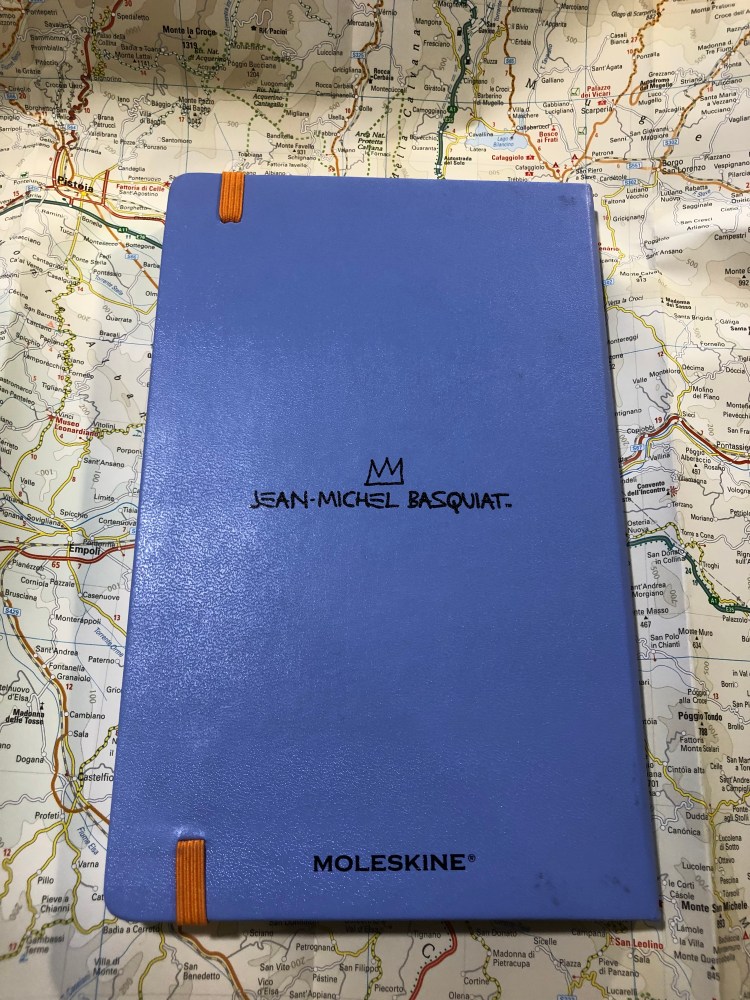
The back cover (a little smudged from my enthusiastic use, but nothing that a wet-wipe can’t remove) is understated, with just the Basquiat signature. I think that I’d prefer the Moleskine logo to just be debossed in, like they did in several other recent editions, but it’s not a dealbreaker for me that it’s boldly there.
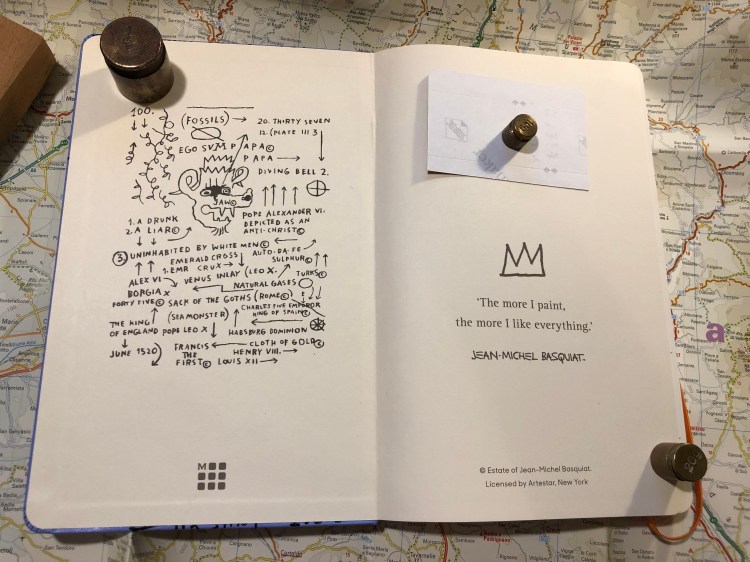
The front endpage echoes the front cover, with the addition of a pretty fitting Basquiat quote. I had already filled in the “In case of loss” details, so I hid them.
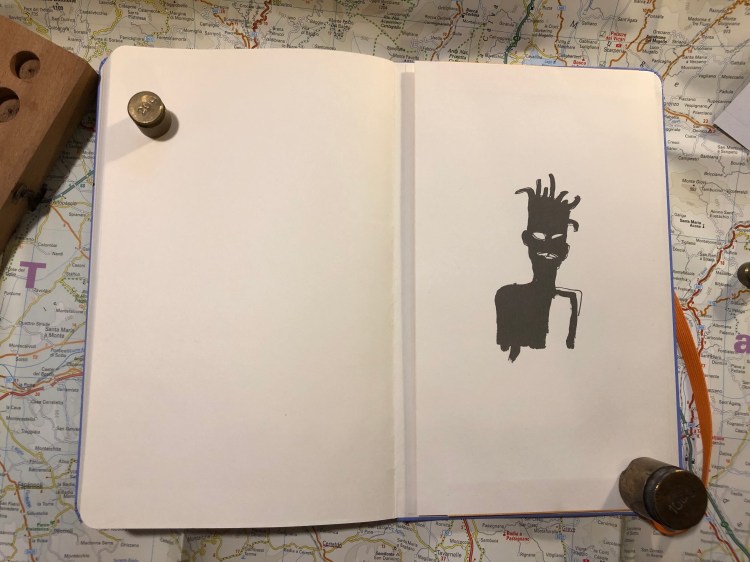
Look at that back endpaper. Is it not well designed? I like that they let the piece “breath”.
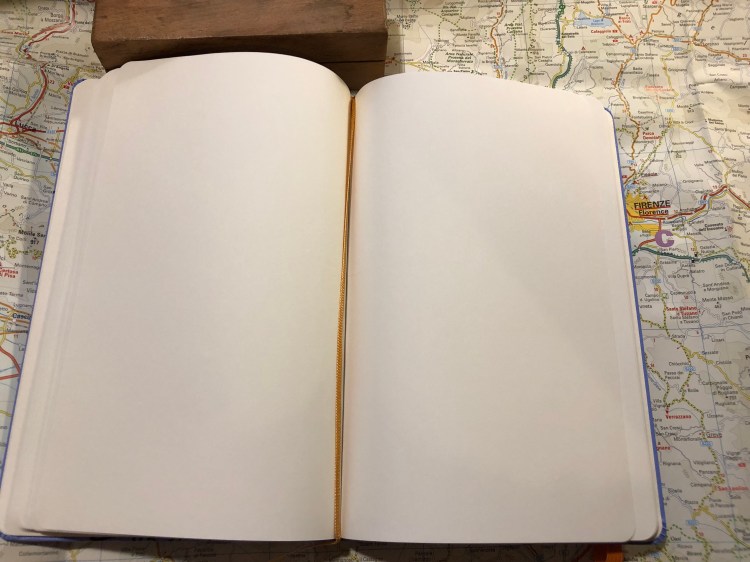
Unlike most Moleskine limited editions that come in lined paper, this notebook comes with blank pages. I like the choice, as it frees you to do whatever you want with the notebook: drawings and words will feel equally welcome here. Also, there’s an orange ribbon bookmark. What’s not to love about that?
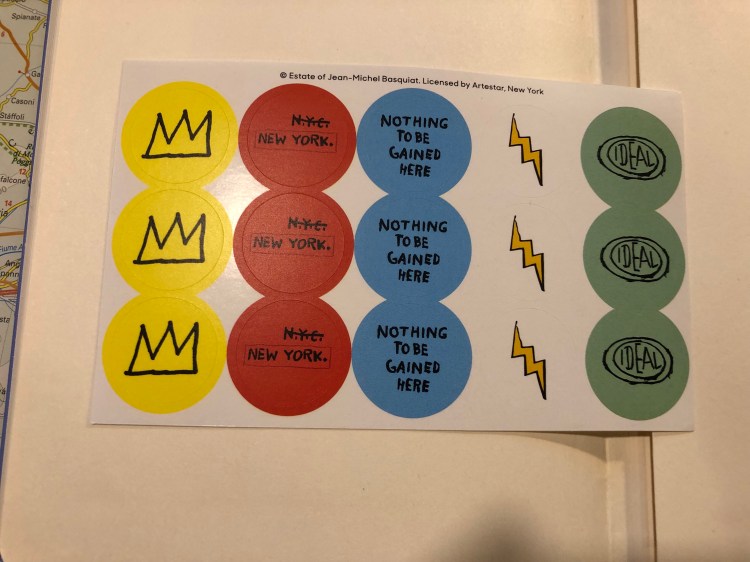
The stickers are a bit of a disappointment in my opinion in terms of colour choice. I would have liked it better if they kept to the orange and periwinkle colour theme. As it is, they clash a bit with the rest of the notebook.
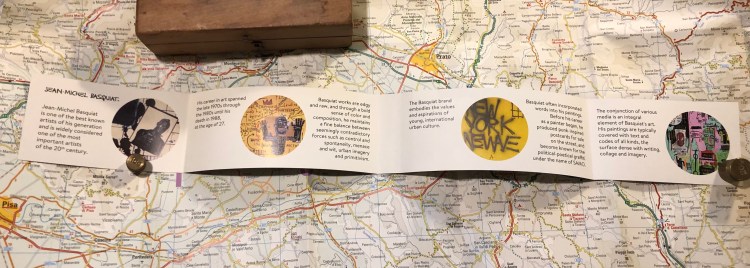
The B-Side of the paper band gives a little background on Basquiat, who he was and how he worked. It’s a nice little add on.
There are times when a notebook just makes you want to start using it, start writing and scribbling in it, start creating. The Basquiat Moleskine did that for me, and it is a fantastic addition to the Moleskine limited edition lineup for the year, and definitely a notebook that I recommend that you try.
Most stationery blog posts focus on reviewing products and less on how people actually use all the paper, pens and inks that they buy. I thought I’d try to write a bit more about how I use my stuff, and not just on how cool is all the stuff I have.
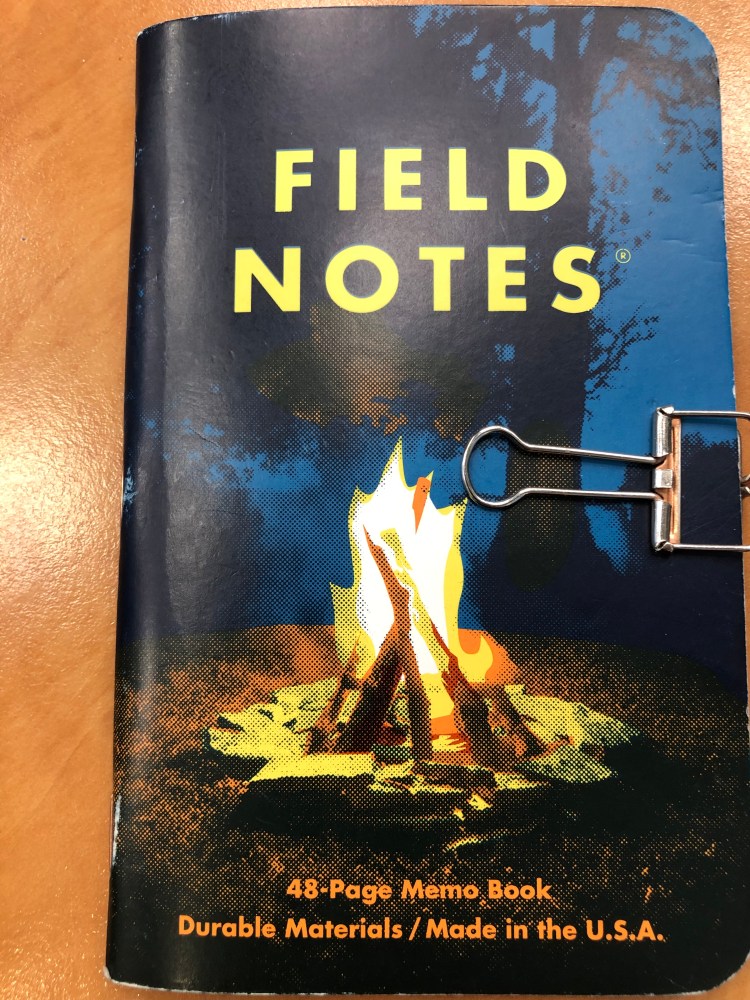
This is my latest Field Notes, the Campfire Night. I use a binder clip to keep it closed as it bashes around in my backpack. Without the clip the pages get crumpled and torn after a few days of use. The clip used to be nice and copper coloured but now is just nice and worn silver.
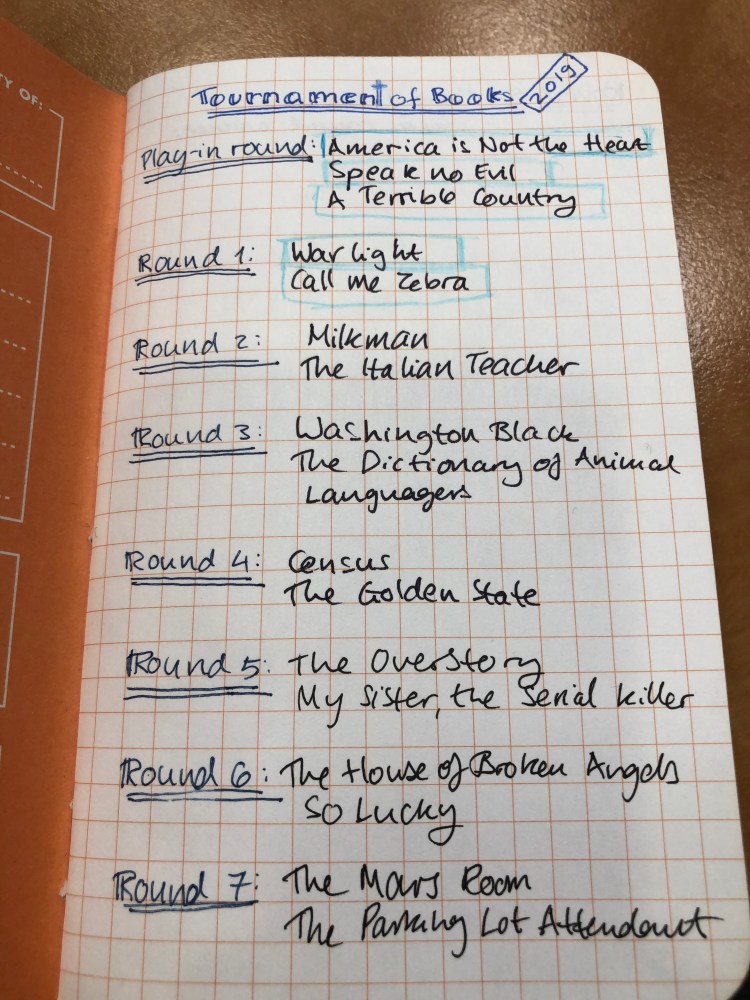
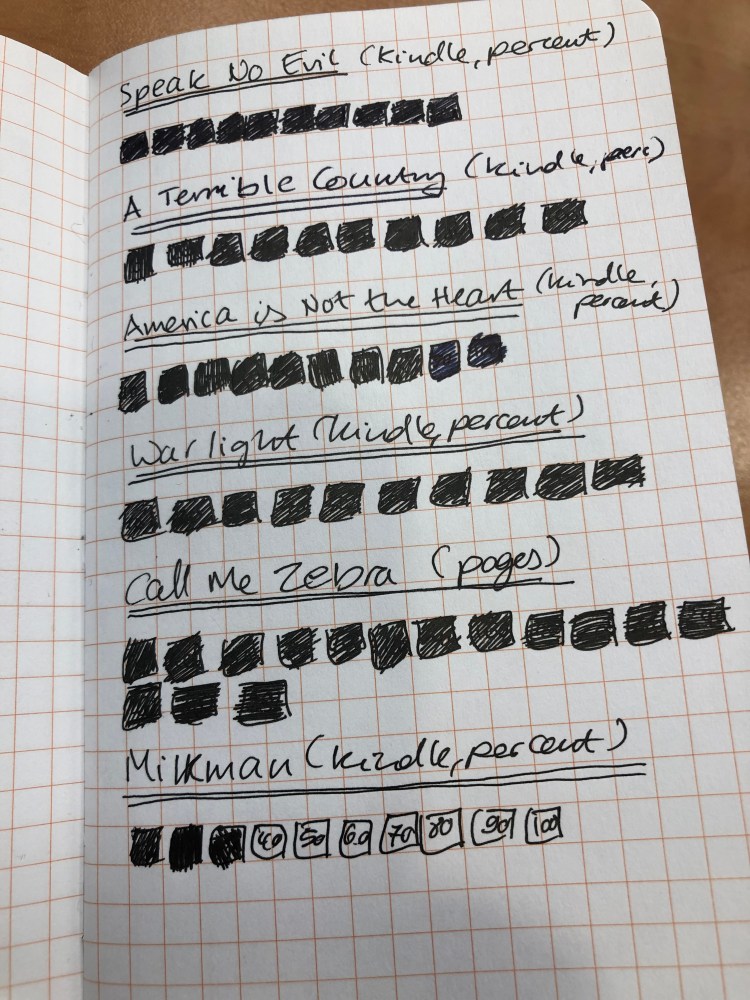
Apart from my day to day to do lists, this notebook currently hosts my Tournament of Books trackers. There’s a list of books that are participating in the contest, divided per round. Those that I’ve read are marked off with blue pencil. This is for my personal use, so you’ll not see any Instagram level calligraphy here. I wasn’t planning to photograph this and blog about it when I created these.
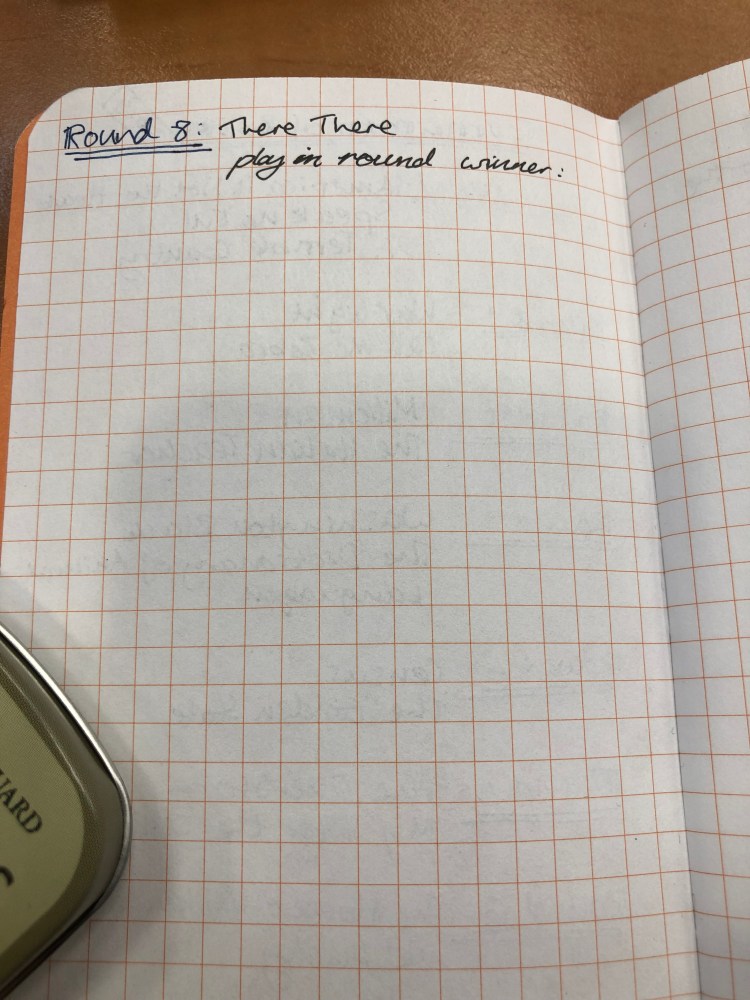
This is where I’m logging who I think should win each round. When the tournament starts I’m going to log who actually won each round on the opposite page.
Since doing this challenge means reading 18 books in a very short period, I’m tracking my reading progress in this notebook as well as in my reading journal, just to make sure that I’m on track (I won’t finish reading these in time, as I’ve started too late, but my goal is to finish reading them all by mid April).
Notebooks are meant to be used, and I use many of mine for journaling. Here are a few journaling tips that I’ve found useful over the years:
Don’t constrain yourself to pre-dated or restrictive formats, just pick a not too fancy lined or blank notebook (or dot grid or squared). The notebook just needs to be nice enough and special enough for you to want to crack it open and write in it, but not too nice to be intimidating.
Start with a title and a date. The title is a neat way to get yourself writing, and to help you search through previous entries later on.
Even lined notebooks can be doodled in.
Stick bits and pieces of things into your notebook to make it come to life. Business cards are great for this (restaurants usually make their cards extra interesting and colourful), as are ticket stubs, clothing tags, labels, etc. Write a little something about what you put in, or just let the graphics speak for themselves.
If you just feel like writing a line or a paragraph, then do it and don’t beat yourself up about it.
If you’re having an extra busy day that you want to remember but don’t have time to fully log, bullet points are your friend. You can always go back and flesh them out later if you feel like it.
Write 2-3 things as topics for each day to avoid describing your breakfast and what you did at work. Just document a few things that made the day memorable, special, interesting, fun, unique, or even just a thing or two that are on your mind right now and you want to hash out.
Did you see a TV show or movie you liked? Read a good book or went to a good restaurant? Write about it as a way to relive and capture your good experience.
Be kind to yourself and others. Put cringeworthy things elsewhere, or you won’t want to open that notebook again. I work through pain and loss in my journaling sometimes, but never anger. Obviously your milage may vary on this one, just be careful not to make yourself be afraid to open a pandora box that you created with your own writing.
Back in the (not so good) old days, Tomoe River Paper was an exotic kind of paper available only in bulk order from Japan, or through various indie creators that advertised mostly on the Fountain Pen Network. The magical paper that made all your inks shine (not literally, this was in the pre-sparkle days of ink, when shading is all we dared dream of in an ink) was very hard to obtain, and very expensive.
It was at that time, in 2013, when I was looking for reasonable priced Tomoe River Paper notebooks that could be shipped to Tel Aviv, that I ran into Paper For Fountain Pens, through the Fountain Pen Network. Since I just received my latest three-pack of notebooks from Jay at PaperForFountainPens.com, I decided that now would be as good a time as any for a review.
The notebooks that I ordered are the larger, 374 pages (187 sheets), ones, which are available only around this time of year. The regular notebooks have 320 pages, but are otherwise identical. Jay uses 52 gsm Tomoe River Paper for the notebooks, which are 4 3/4 x 8 3/8 inch page size; 5 1/4 x 8 1/2 inch cover size.
The notebooks used to be shipped with a paper cover, now they arrived vacuum packed as well, to protect them from the elements, and in a heavy duty box that prevents them from getting damaged by the postal services of the world.
Vacuumed packaging.Paper wrapper.
Tomoe River Paper is much easier to find now and these notebooks aren’t cheap, as you are paying for the binding. The covers are very durable, made from a material that (with the binding) makes the whole notebook look and feel like a vintage hardcover book. It has that solid, over-engineered feel to it, and is very pleasant to use and hold.
The notebook isn’t inconveniently thick, even with the larger page count.
There are no frills to this notebook, just blank end papers, no elastic closure or bookmark, nothing but the paper and the covers. The pages lie flat, and the binding is extremely durable (I page a lot, a lot in my Paper for Fountain Pens notebook and not a page has wavered in my years of using it).
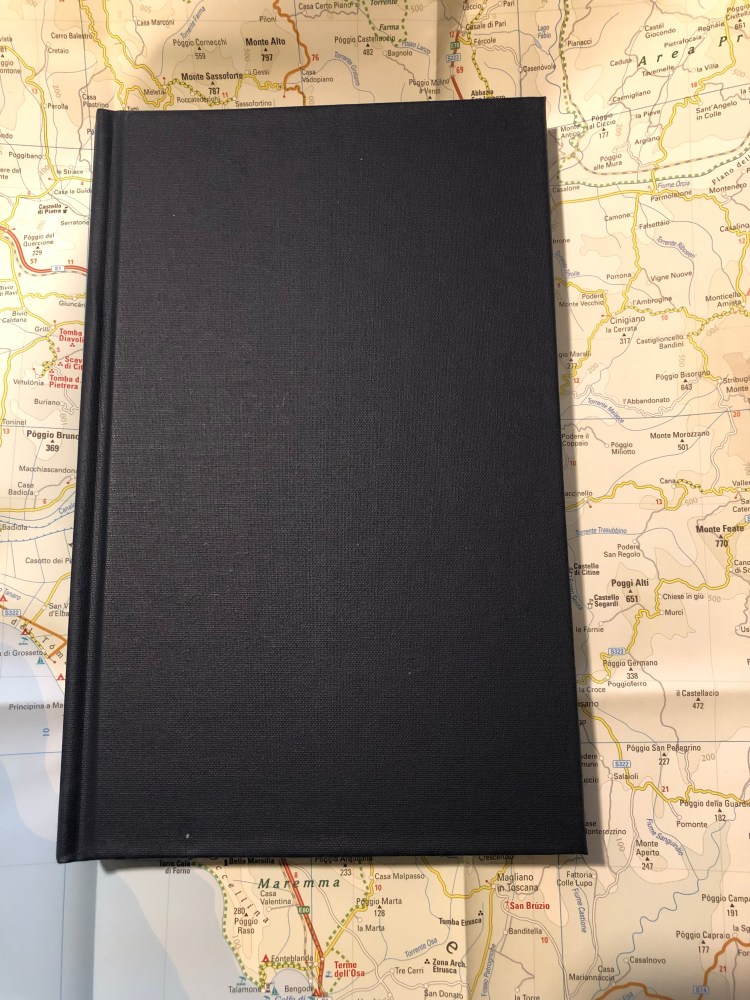
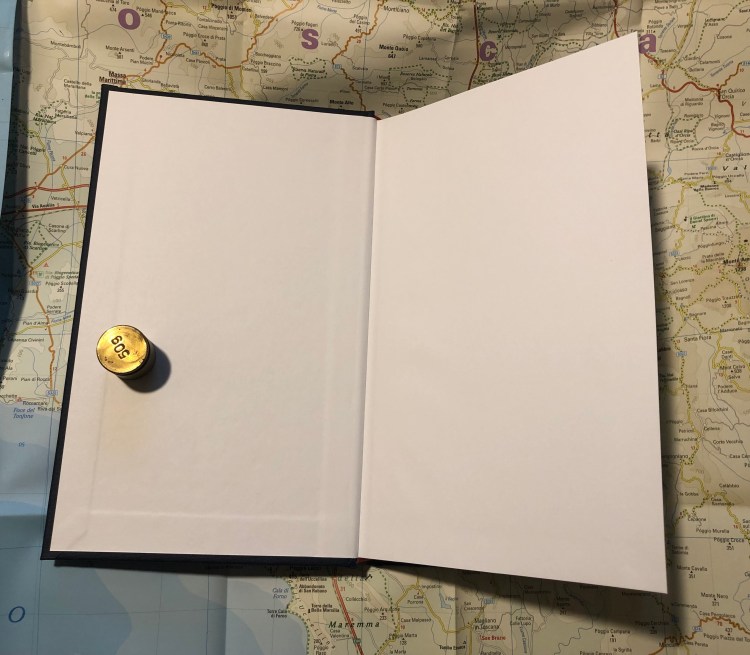
The front endpaper
I’ve used the slimmer version of this notebook as a research notebook for my novel and it has held up well through years of use. I do, however, only keep it on my desk. Travelling with such fragile paper in a notebook with no elastic closure is a recipe for disaster, so if you do intent to use one of these beauties as your everyday carry notebook or journal, I highly recommend placing it in some kind of protective cover that you can zip up.
The back endpaper
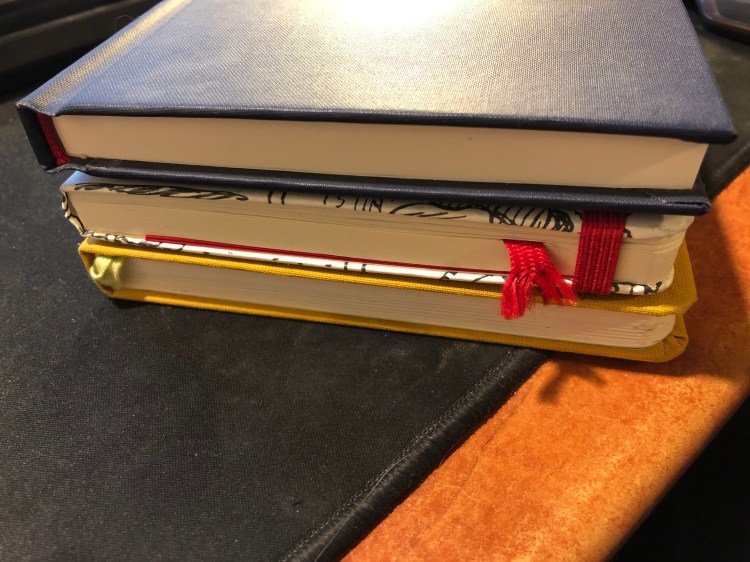
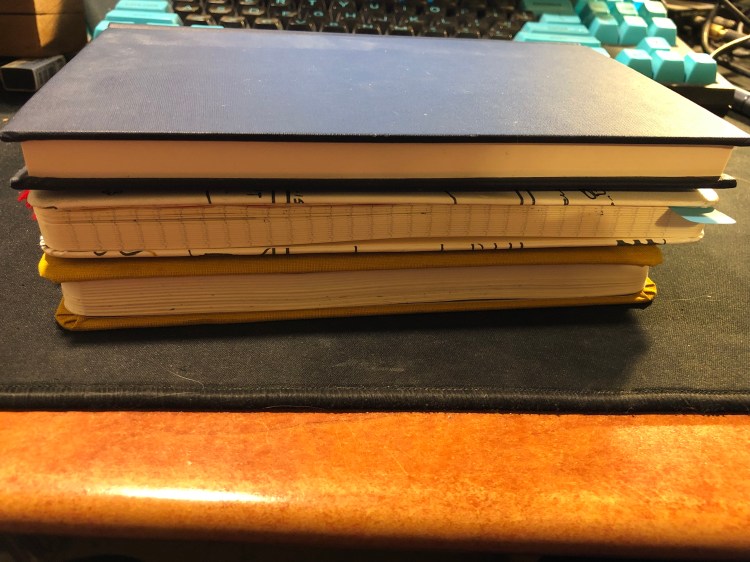
This notebook is slightly thicker than the Baron Fig Confidant and Moleskine large notebook, is about as wide as the Moleskine, but a tad taller.
Paper for Fountain Pens above a Moleskine Large notebook and a Baron Fig Confidant
You can see the difference in sizes with the notebooks stacked up. The Paper for Fountain Pens notebooks have thicker and heavier covers than the Moleskine and Baron Fig ones, but the lightweight paper in them keeps them from being overly heavy to carry around.
Paper for Fountain Pens above a Moleskine Large notebook and a Baron Fig Confidant
All in all I recommend these notebooks, with one caveat: they may intimidate you to a point where you won’t use them. There’s something about their book-like format that makes you feel that you can only write the next Booker prize winning novel in them. Notebooks should be used and not stacked and stared at, so if this one will scare you off, pick a more humble notebook instead. Otherwise, buy a three-pack of these — it’ll come out cheaper (particularly with shipping), and there’s an excellent chance that they’ll become your new favourite.
Here’s a break down of what’s new and changed this season, as well as my take on some of their decisions. Some of these notebooks are already available, others will become available over the next few months. Pour yourself a cup of coffee, open the catalog, and dive in:
Classic Notebooks
Of the seasonal colours, I’m pretty sure Reef Blue and Daisy Pink will do well. It’s nice to see Scarlet Red, Sapphire Blue and Myrtle Green join their regular lineups. In the past black was pretty much their only offering, with an occasional red thrown in, but it looks like regular colour options are here to stay.
I’m curious about their new “medium” size, between the pocket and the large. There’s no sizing info in the catalog for this option and it appears to be available only in the hardcover notebooks. My guess is that it will be in the “Two-Go” size, which I think is a pretty useful size (11.5×18 cm or 4 1/2×7”).
Sad to see that they still haven’t brought back the reporter notebooks in squared paper, and how little love in general squared paper gets from Moleskine.
Great to see the new dotted (dot grid) options. These ought to be popular, and Moleskine didn’t dip their toe in with just pocket and large black hardcover notebooks, but is offering them in all their core colours and in what will likely be their best selling seasonal colour, Reef Blue. As is stands, dotted paper is getting more love than squared paper, which is not surprising. Squared paper is niche outside the stationery blogger/podcaster world.
“Classic notebooks expanded” is a new offering from Moleskine — a large hardcover or softcover notebook that has almost twice as many pages as a regular large Moleskine, with two ribbons instead of one. This may seem a bit unwieldy, but I use a large Moleskine daily planner as a meeting notebook and because of its size it’s still pretty convenient to use. If you plan on using your notebook a lot (as a daily journal for a year perhaps?) this may be a good option to check out.
Non-Standard Cover Material Notebooks
Leather notebooks – these aren’t available everywhere (Barnes and Noble have them), and I haven’t tried them, but they’re still on offering, with or without a box. I’d recommend that you spend your money elsewhere, unless you’re really looking for a corporate executive gift to put the company logo on.
Two-Go notebooks are still on offer, with four colour options (added last year) and in an excellent size, with thicker than usual paper and a surprisingly useful albeit non-standard blank-and-ruled format. If you haven’t given these a try I highly recommend them. They can handle fountain pens pretty well.
Blend notebooks, with their tactile, super fun and durable fabric covers now come in four new colours that promise to blend better in office settings than their current (and still produced) camouflage Blend offering. Black, Green, Blue and Beige are offered in a woven, slightly distressed look with contrasting elastic closure, as usual only in large size and with ruled pages. Definitely worth trying out if you haven’t had a chance to give their fabric covers a spin.
Denim notebooks, which first came out as a super popular and a very well designed limited edition offering, are now part of the regular lineup, sort of. The limited edition notebooks are still more attractive in my opinion, with their white contrasting branding label on the back and their white print on the front, but these notebooks, in Antwerp Blue and Prussian Blue (pocket and large, ruled only) are a great way to get some of that denim feel in your life without trying to get a hold of overpriced LE notebooks on the secondary market. Of the fabric covered notebooks that Moleskine (and Baron Fig) offer these feel the best, and I recommend these over the Blend notebooks for that reason.
I’m not a planner person, so I’m not going to go over Moleskine’s extensive planner collection.
Limited Edition Notebooks
This is where Moleskine excels beyond all current competition, and in my opinion they’re starting this year stronger than they finished last year.
Fall-Winter 2018 limited edition notebooks, Looney Tunes, Super Mario, 007, Astro Boy and Harry Potter are still available, though the very attractive Harry Potter notebooks (especially The Marauders’ Map edition) are starting to be harder to find.
Spring-Summer 2019 limited edition notebooks are Lord of the Rings, Basquiat, Wonder Woman, Bob Dylan and Gundam. Each is designed to appeal to a different demographic, and I think that they really nailed it this time.
This is not the first time that Moleskine is tackling the Lord of the Rings in a limited edition, but this edition is much, much more attractive and well designed than their previous rather lackluster attempt years ago. The covers, endpapers and special insert all seem spectacular, and this is one edition that I’ve already preordered and plan to review. The “geek” edition, this notebook is designed to appeal to the same people that bought the Harry Potter and Alice editions
Basquiat limited edition notebooks are for the hipstery crowd that liked the Kieth Haring limited editions, Dr Seuss editions and probably also enjoyed the Monopoly limited edition, but in an ironic way. These are extra expensive but they’ll probably be popular, considering Basquiat’s success on Uniqlo t-shirts. They’re offered in plain and ruled paper, though I wish Moleskine would have stepped up and offered a sketchbook Basquiat edition. In terms of the boxed set, this one comes with a pen (the regular editions come with stickers), so it’s probably a better deal than the slightly lackluster LotR boxed edition (comes with nothing, will sell like hotcakes, because LotR).
Wonder Woman is the comic book edition, and as usual it is the most colourful one, and where Molskine allowed themselves more creative freedom. Bold red and blue action packed covers that really celebrate the character in drawings and text, what more could you want? Ruled only, comes with stickers.
Bob Dylan limited edition notebooks are aimed at music lovers, as the Beatles, Rolling Stones and Blue Note editions were before them. These are really reminiscent of the Blue Note limited editions, and like other music themed limited editions, are pretty tame, design-wise. If you’re a Dylan lover, you’ll likely love this edition, and it will make for a great gift, especially around father’s day. Is it surprising then that these come out in April? Ruled only, comes with some pretty dull stickers. The numbered boxed edition is the best designed of the bunch in my opinion. These too are relatively expensive limited editions, though of course expect a difference between RRP and what you actually pay online and anywhere but the official Moleskine stores.
Gundam is the anime edition, and as usual is more subdued than the comic book edition, but still pretty colourful. Ruled only, comes with stickers.
Journals
I’ve no idea why Moleskine calls their Cahier and Volant offerings “journals” and not notebooks, but I guess you have to differentiate them somehow.
Cahiers, formerly available only in Kraft Brown and Black have been expanded to include Cranberry Red (a darker shade of red than the Scarlet Red, likely because of printing limitations) and Myrtle Green, but that’s not that new. What’s new is the three new seasonal colours, Brisk Blue (a darker shade of Reef Blue), Kinetic Pink, and Tender Yellow. I’d stay away from the yellow, as it will turn dirty and blah in about a day’s use, but the other colours are solid and fun. Kraft Brown is the most fun to decorate and make your own (with black in second place), but the other colours seem pretty vibrant for cardboard covers.
It is worth saying that of all of Moleskine’s offerings, the Cahiers got the most paper love in recent years, which is a very good thing as the old paper used in these notebooks was garbage. Not acid-free and super thin, it turned yellow and brittle with age very, very quickly. Now the Cahiers use the same paper as the regular notebooks, and they even got some dotted paper love.
Subject Cahiers, a new offering that is geared for academic note-taking (Cornell Notes anyone?), and is offered only in large and extra-large. If I was still working on my degree this would be something that I would probably look into using.
Volants have become more colourful as time has passed, with Moleskine moving them from a light and dark shade of the same colour to complimentary colours instead. They also got stickers to boost, but still only come in plain and ruled paper. They are the only notebook left that Moleskine offer in extra small, which is both not surprising and a bit of a shame.
There’s nothing new in the Pro Collection and I don’t use any of these business focused notebooks (I like to build my own meeting notes formats), and so I won’t go over these.
Art Notebooks
Moleskine’s art collection has gone through a significant overhaul in recent years, all for the better. The sketchbook paper is less pronouncedly ivory coloured, and the paper has less coating on it, which means that it can now take things like light washes, fountain pens, rollerballs, etc without them beading up on it.
The sketchbook also got some love in the form of new colours (Red and Sapphire Blue), which is always nice.
The recently added sketch album (which is a landscape formatted notebook with cahier covers) is now available in Kraft Brown, which is awesome, because they’re so fun to customize.
There’s also a sketch pad, which has less pages and I completely don’t understand. It appears to be a more expensive way to get a sketch album with less pages. Huh?
The ever popular (and justly so) Watercolour Album got recently expanded into a Watercolour Notebook (standard format, as opposed to the landscape album format). Now the Watercolour Notebook has been expanded to include the pocket, A4 and A3 size. This is a must buy for me, and will probably be pretty popular amongst urban sketchers.
The Music Notebook got a surprising new addition, a Music Cahier in extra large. Moleskine is one of the few stationery companies to offer this layout, and good for them for expanding it.
The Japanese Album and Storyboard notebooks are niche products and so unsurprisingly, got no love.
Themed Notebooks
Not much is new in this area. There are no new Passion Journals, no new City Notebooks and not much new with the Voyageur.
What is new is a Travel Kit, that contains the Ocean Blue Voyageur, a pen and a luggage tag. The Voyageur appears to be more popular than the Travel Journal, so I wonder how long before the Travel Journal is phased out.
As for the rest (the non notebook stuff), here my interest wanes, and this post has been long enough as it is. The catalog is 151 pages long, and full of eye candy, so even if you aren’t a Moleskine fan, take a look.
I wrote the first few chapters of my first novel longhand, with fountain pen on loose sheets of A4 tomoe river paper. As I realized that I would have to type everything into Scrivener before I could even start editing, the lazy programmer within me balked. It was fine doing this with quick drafts, but writing an entire novel longhand was not for me.
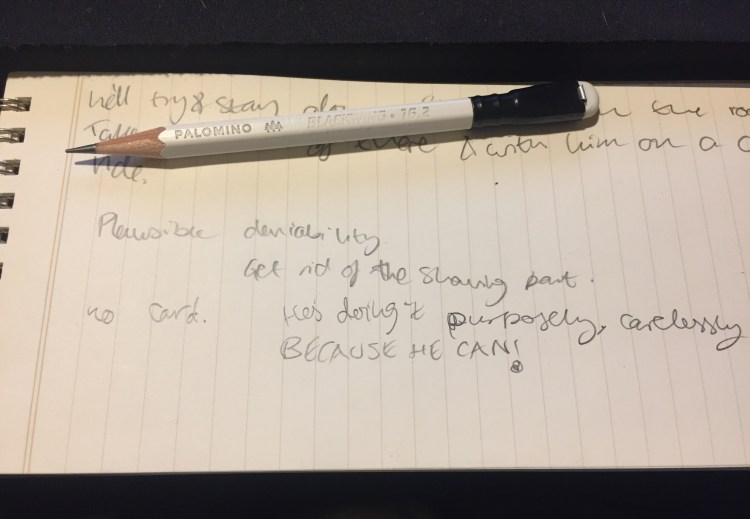
I still use pen, pencil and paper a lot in my writing though. I use a fountain pen (anything that doesn’t have a flex or novelty nib will do — from extra-fine to 1.1mm stubs) and loose sheets of A4 and A5 tomoe river paper to work on my outlines, for quick drafts, to test plot options out, or when I’m really, really stuck in my writing. A Field Notes Byline is constantly under my keyboard, horizontally. Yes, I know that the lines don’t go that way, but I ignore them. The form factor is perfect for that, and the ruling is pale enough for me to easily ignore it. I use a Blackwing 16.2 or 24 with it, to quickly capture any ideas that may come up during my writing, to remind myself where I was going with an idea or what I need to fix a previous place, to brainstorm names, etc. It serves as a scratch pad that allows me to maintain my writing flow and still remember things along the way.
Messy, messy handwriting, because getting things down on paper is more important to me then keeping them pretty.
So, even if you do all your writing using Ulysses or Scrivener (hopefully not Word), I recommend that you incorporate some analogue tools in your process. You’re bound to find them useful, particularly when you’re stuck or you’ve dug yourself into a hole.







 Writing at Large