Paris London 2025 Part 2

In September I traveled to Paris and London. See part 1 of my travelogue here.

I went to see two plays in The Globe theatre in London. The first was a one night only performance of Midsummer Night’s Dream that was a reenactment of how the actors in Shakespeare’s time would have performed a play. The actors didn’t rehearse the play beforehand, and they didn’t have the full text of the play to work with, just their lines and their cues and staging directions. They practiced the dances alone, and they had no idea what their fellow actors would do during the performance. Now this is Midsummer Night’s Dream so all the actors and everyone in the audience knew exactly how the story unfolds, but the lack of rehearsals made this a very live performance.
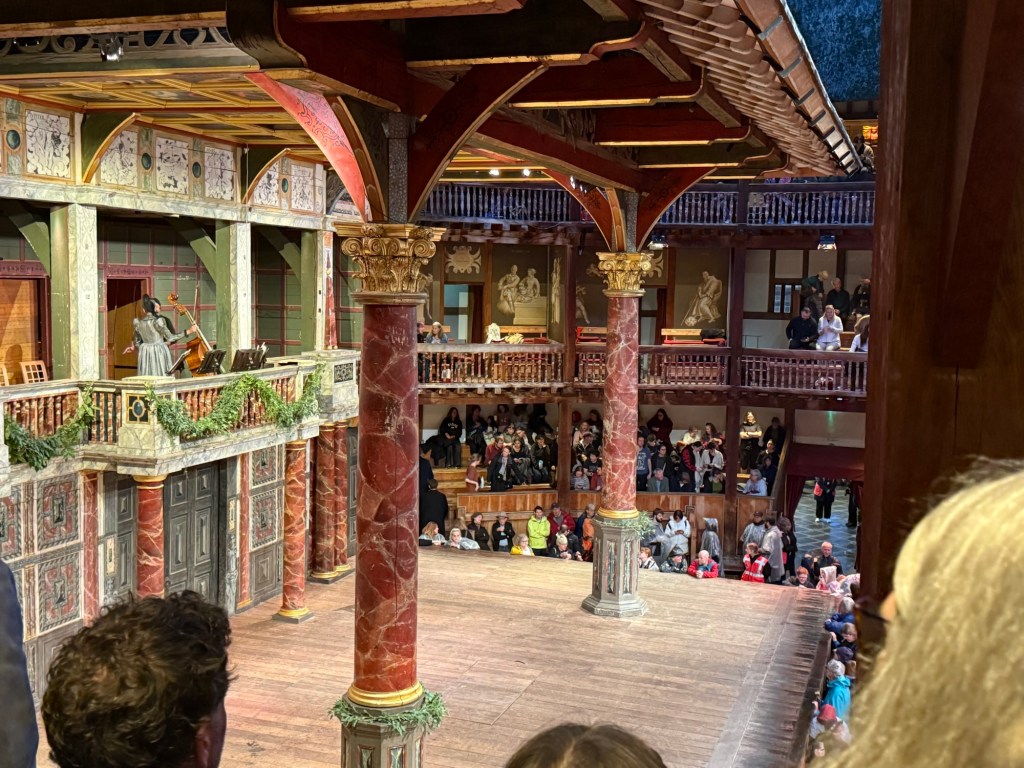
The Globe stage before the show

The play was sold out in minutes and I’m glad that I managed to get tickets at all. It was an amazing experience. As this was a one night performance the stage was the bare Globe stage – nowhere to hide as the audience surrounds the actors practically from all sides. There was a lady on stage in period costume, sitting with the full text and helping actors in the very few times that they fumbled. The energy was beyond description. It was the most electric staging of Shakespeare that I have ever seen. Everybody was “on” all the time because they weren’t entirely sure what would come next.

It was a raw performance – I later saw another, standard Shakespeare play there and it was much more polished because it was clearly rehearsed and performed several times before we saw it. Yet that was what made this performance so special – the actors’ reaction to their fellow actors was genuine and unvarnished. They were having fun, improvising, owning the text in a way they normally never do. The highlight was the play within the play at the end – seeing the actors laugh to the point where they had trouble saying their lines because Bottom was so very, very hilariously over the top was amazing.

The musicians at the Globe.

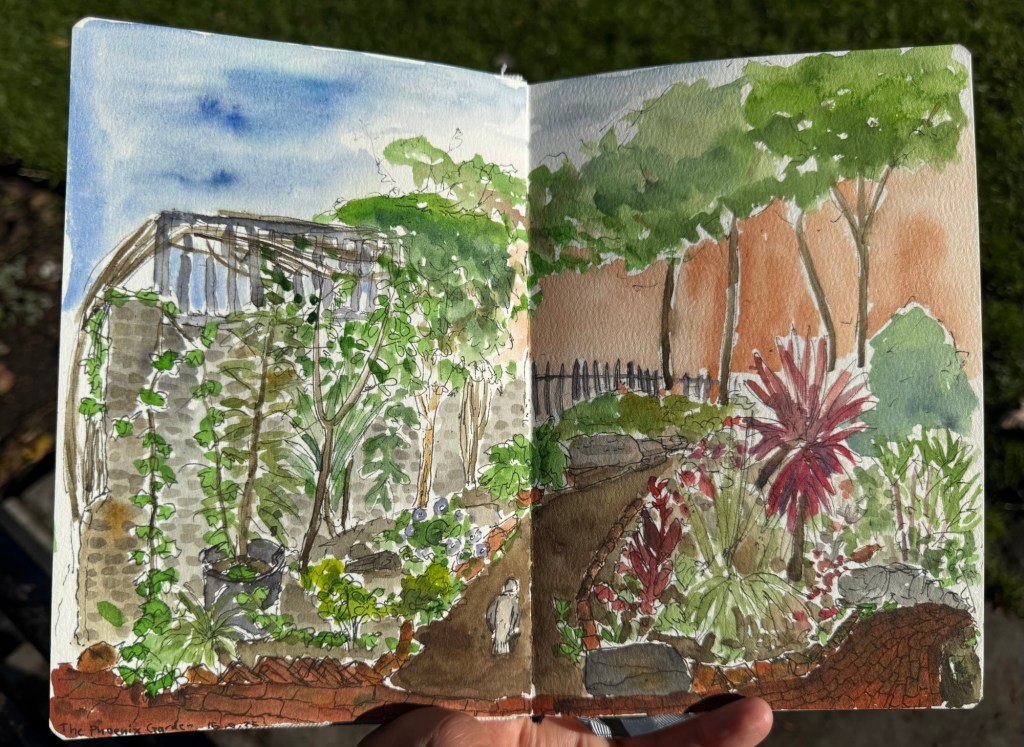
One of my favourite places in London is the Phoenix community garden. I spent a lot of time there, and sketched it several times. This was my first and longest sketch of the garden, done on the wonderful Etchr Lab cold pressed watercolour sketchbook:
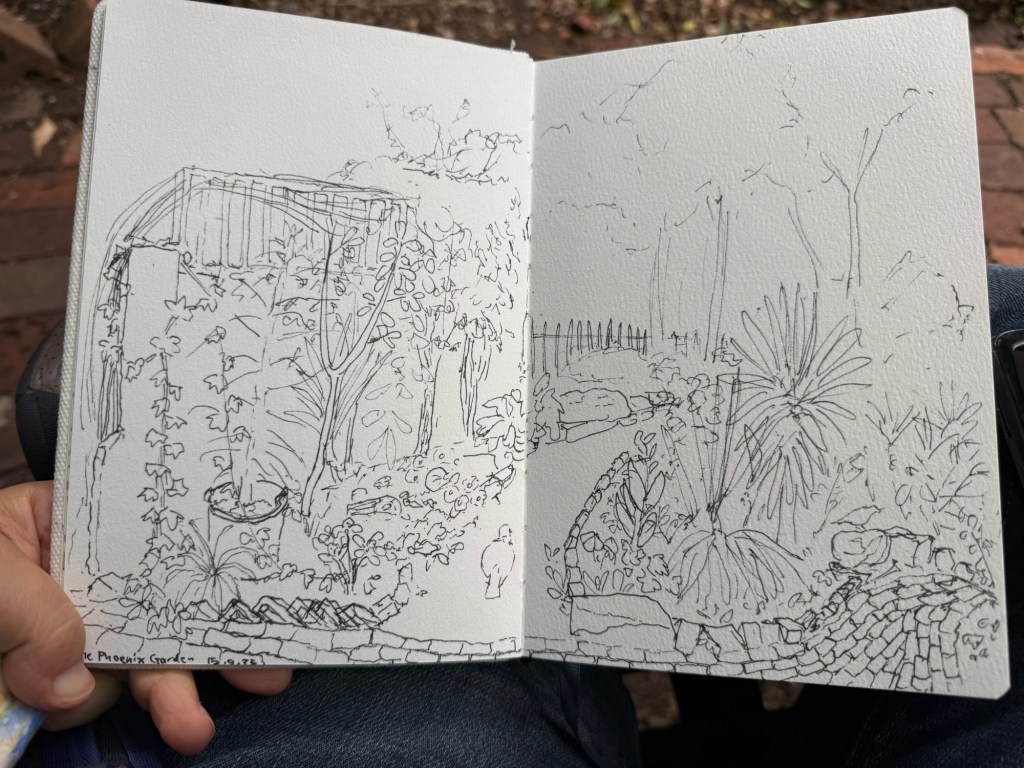
Fineliner sketch – no pencil underdrawing.
Final sketch.

We went to see Disney’s Hercules – a new musical in West End. I wasn’t expecting much as I’m not a fan of the movie, but the musical was one of the best that we saw in the London. The production is stunning, the music is great, the actors were talented – particularly Megara – and the only minus is that Hades was a bit over the top even by the movie standards. They would do better to cut down on the amount of his jokes because they lose their impact otherwise. The Disney merch machine was out in full force that night, and I was one of only a handful that didn’t leave with something from their store.
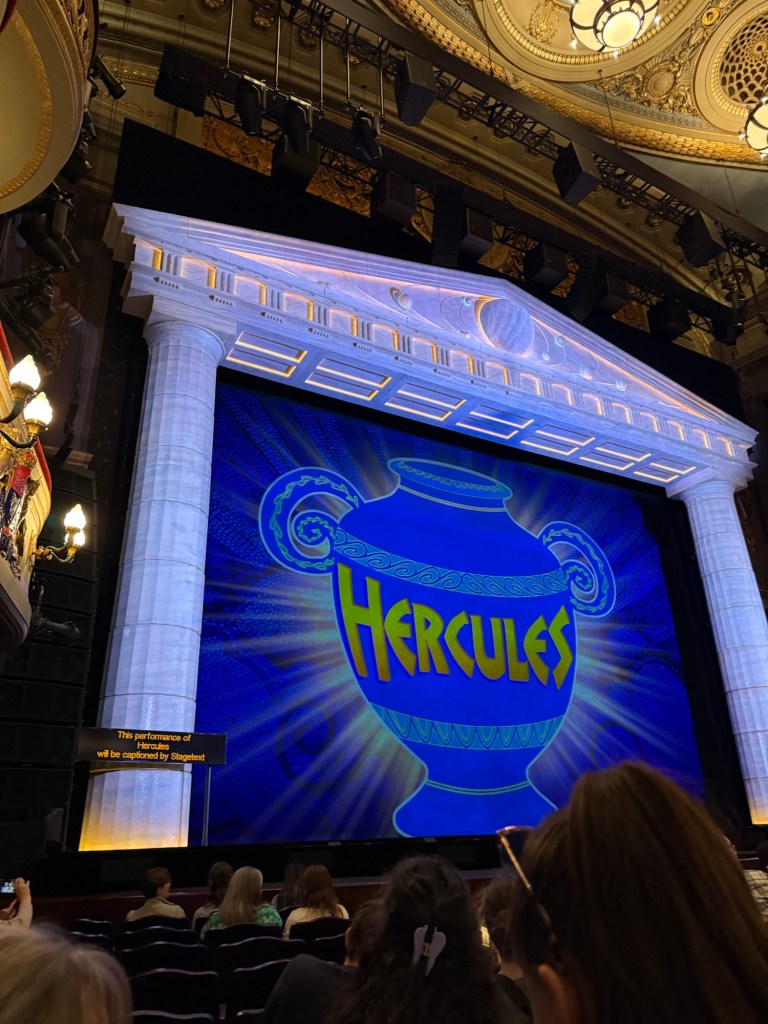
Hercules the Musical

We spent a day in York, and I started it with a sketch of the York Museum grounds, also in my Etchr Labs watercolour sketchbook:
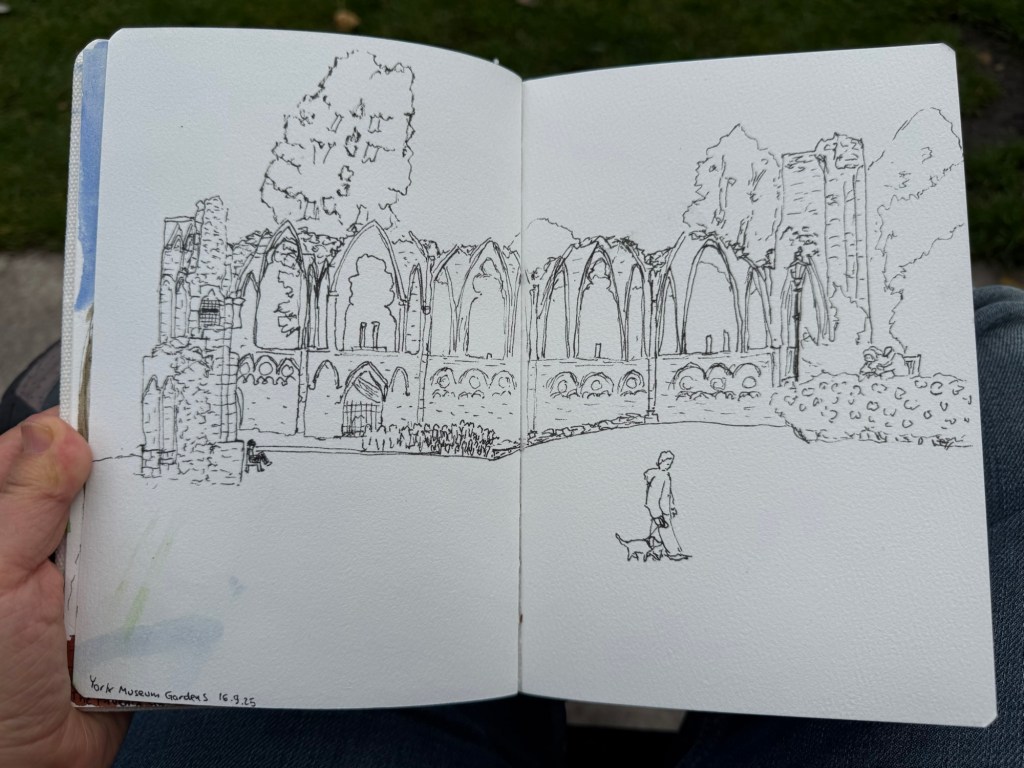
Fineliner sketch
Complete watercolour.

York is full of wonderful bits of history that are just layered freely on each other:
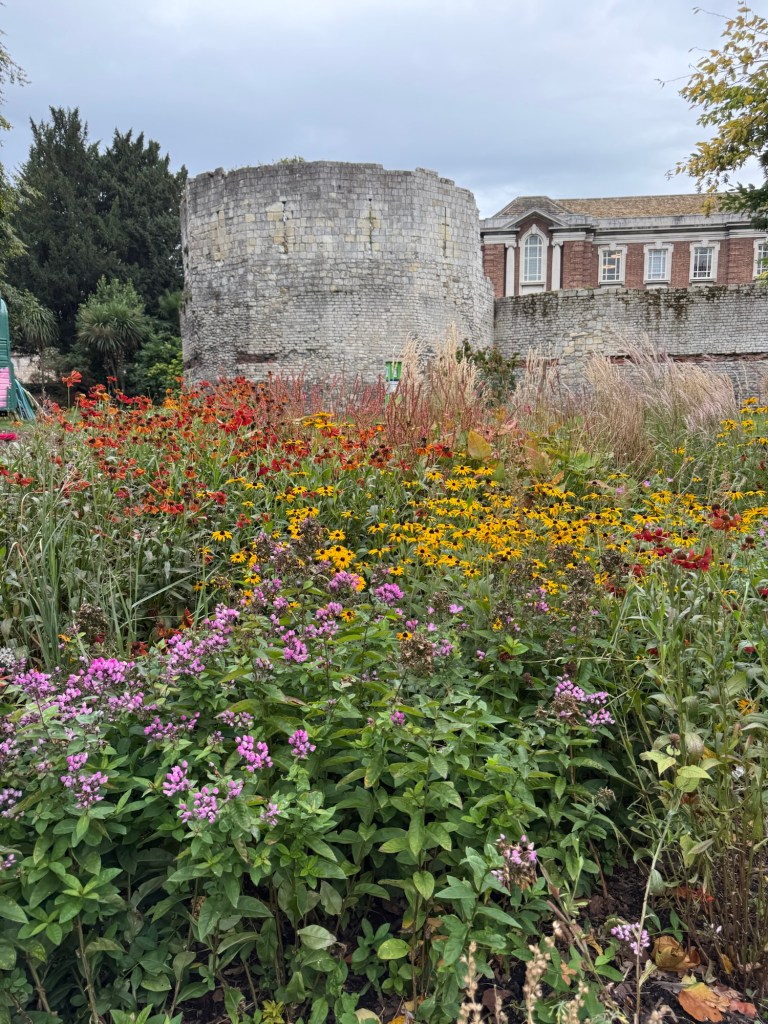
York museum

I did a very quick sketch of this scene later on, on an Exacompta Bristol card:
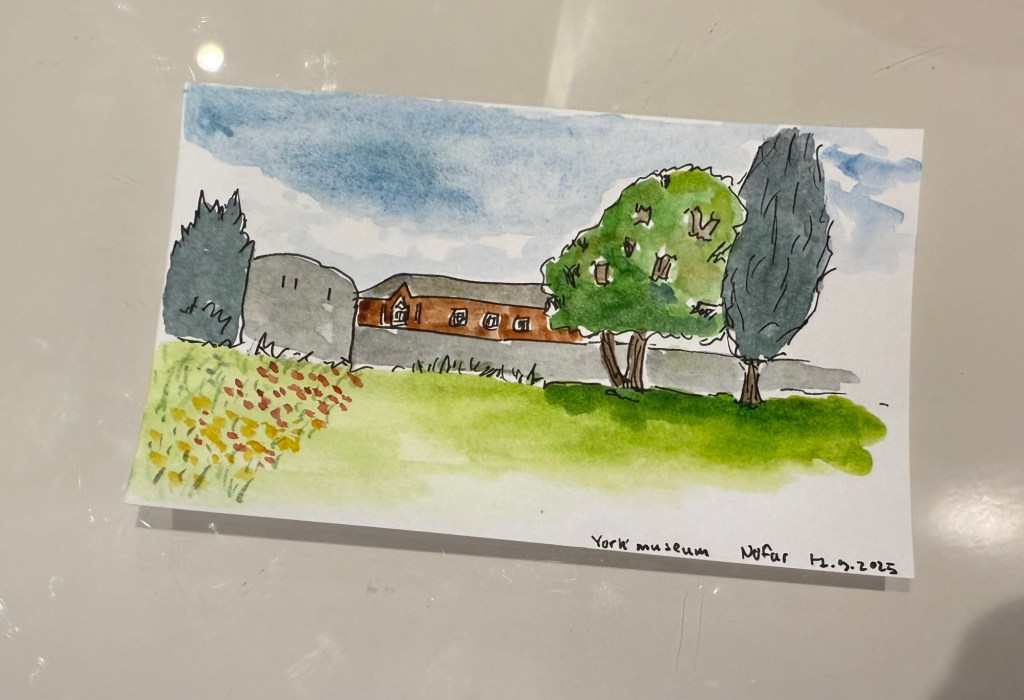
Quick sketch on Brisol card

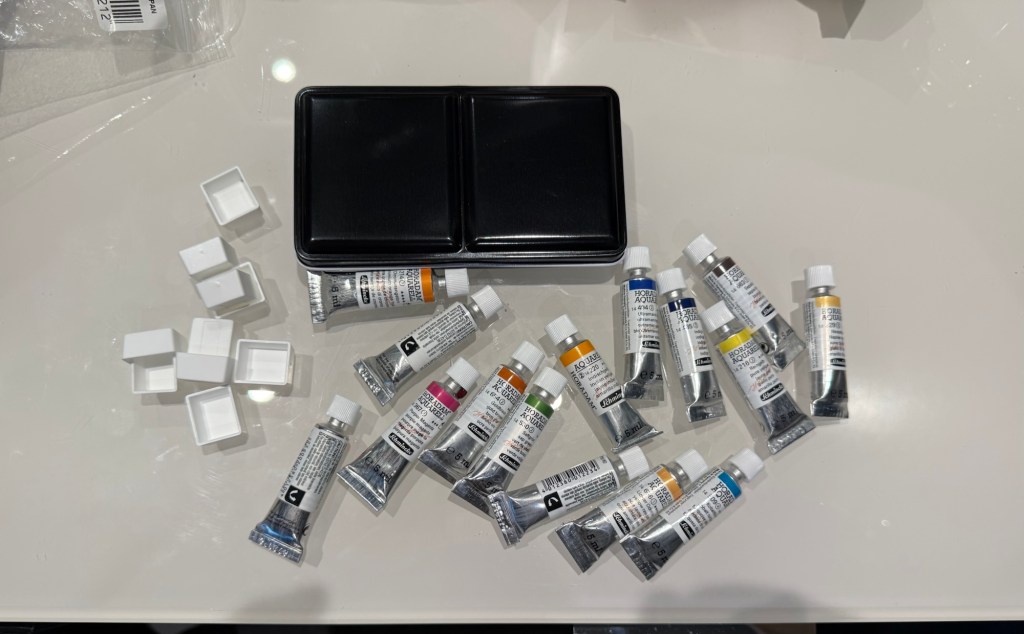
I also bought a decent amount of watercolour paints – enough to build out two new palettes that I want to try.
This post is getting long and photo heavy, so I will be completing this trip journal in two additional posts.

Edit: you can read part 3 here.
Paris London 2025 Trip Part 1

I recently returned from a pretty long trip to Paris and London with my family. I ended up sketching a lot more than I normally do during trips, largely thanks to things that I learned during the Urban Sketchers Symposium in Poznan (more on that in a later post). Here is part 1 of some highlights from my trip.

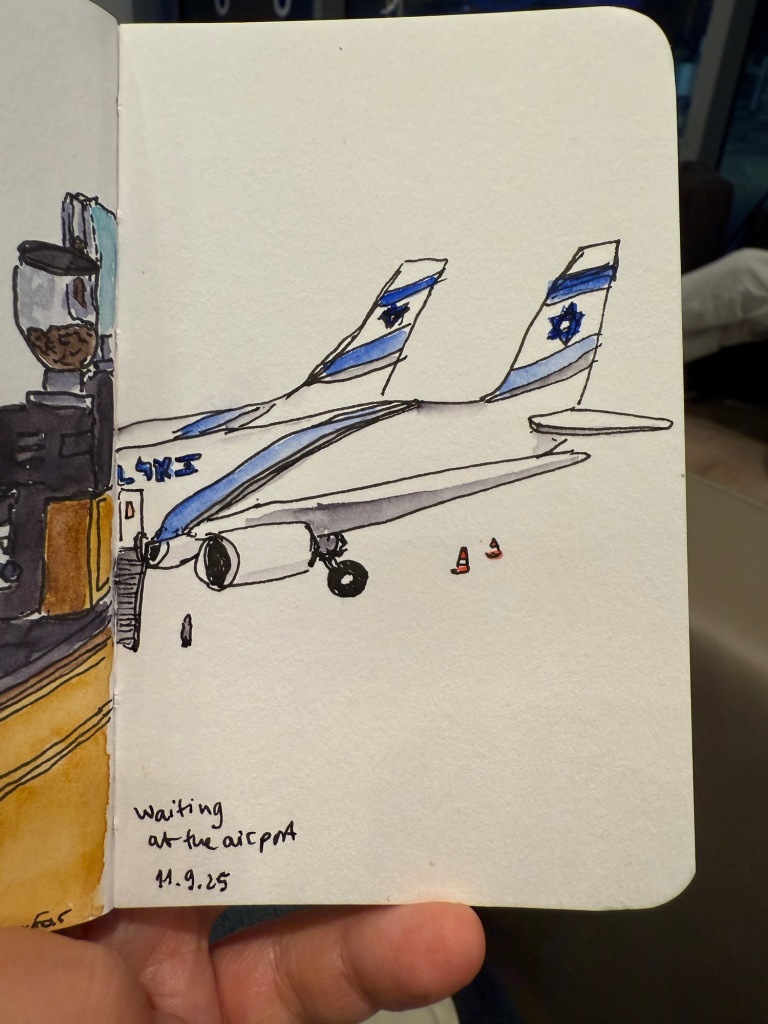
Quick sketch in a Stillman & Birn pocket beta while I was waiting for my flight

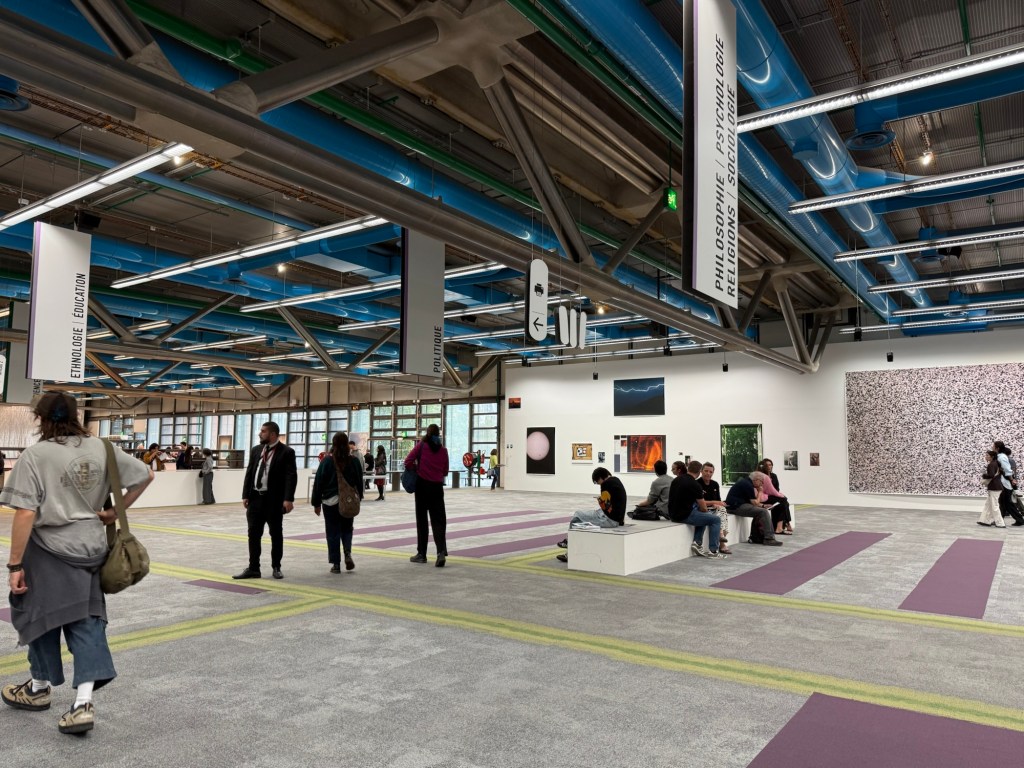
Centre Pompidou, my favourite museum in the world, was closing down until 2030 (!) so I went to pay it a last visit. Already parts of the colourful outside facade have been repainted white, and I’ve never seen the area around the museum so deserted.

The iconic Pompidou facade

The library was the only area still accessible, and it had been turned into a giant project playground for German photographer Wolfgang Tillmans to work with. It was something that only Pompidou could do, and it was breathtaking, thought provoking, fun, interesting, and unique. I wish I could have spent hours there, but at this point in my trip I became badly ill and for the entire Paris leg of the trip I was struggling.

The Pompidou library transformed.

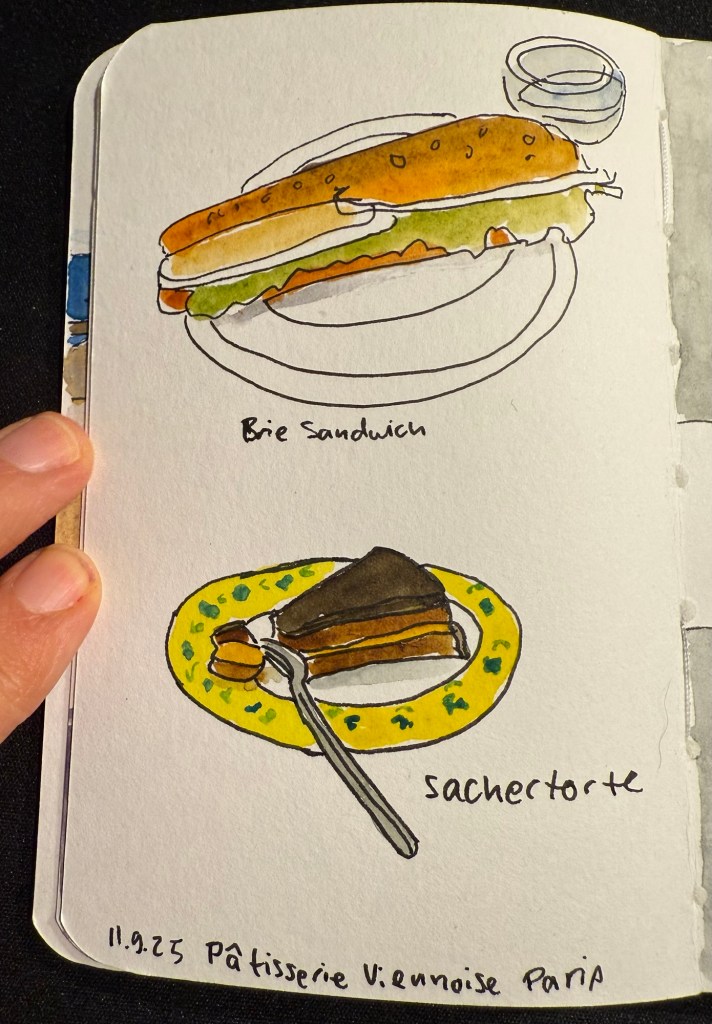
I ended up largely not eating in Paris, but this was my first meal there – in the fantastic Patisserie Viennoise in the Latin Quarter.

Stillman and Birn pocket alpha watercolour sketch

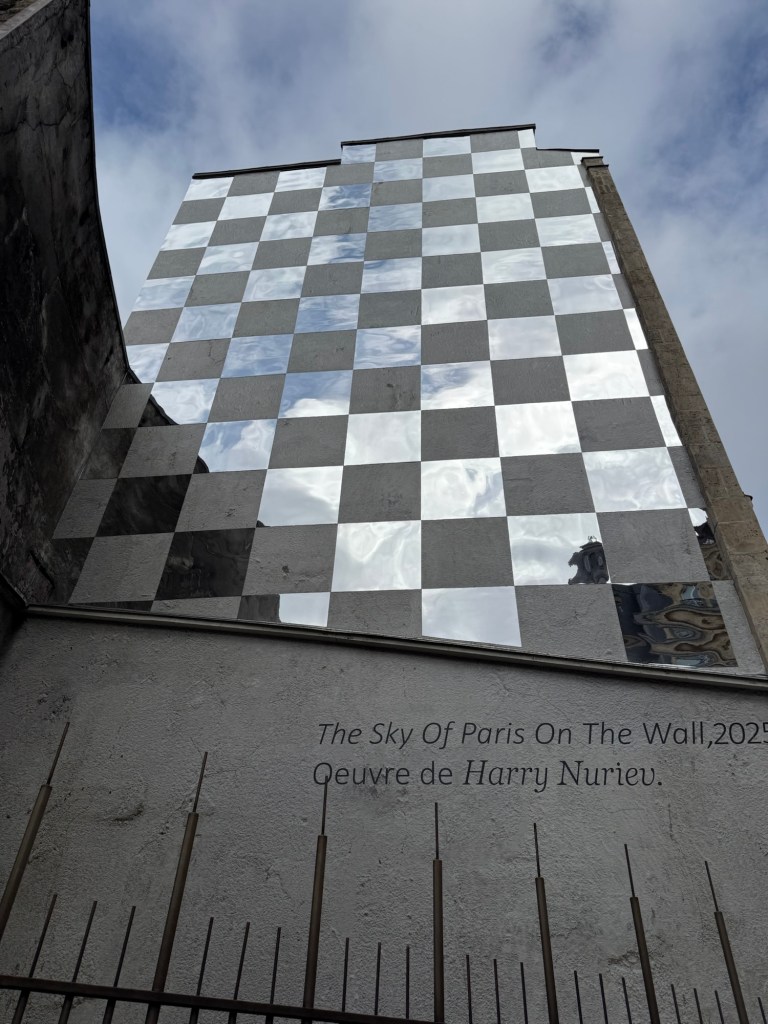
We also went to a new museum, the Bourse de Commerce and I saw this great artwork on the way there:

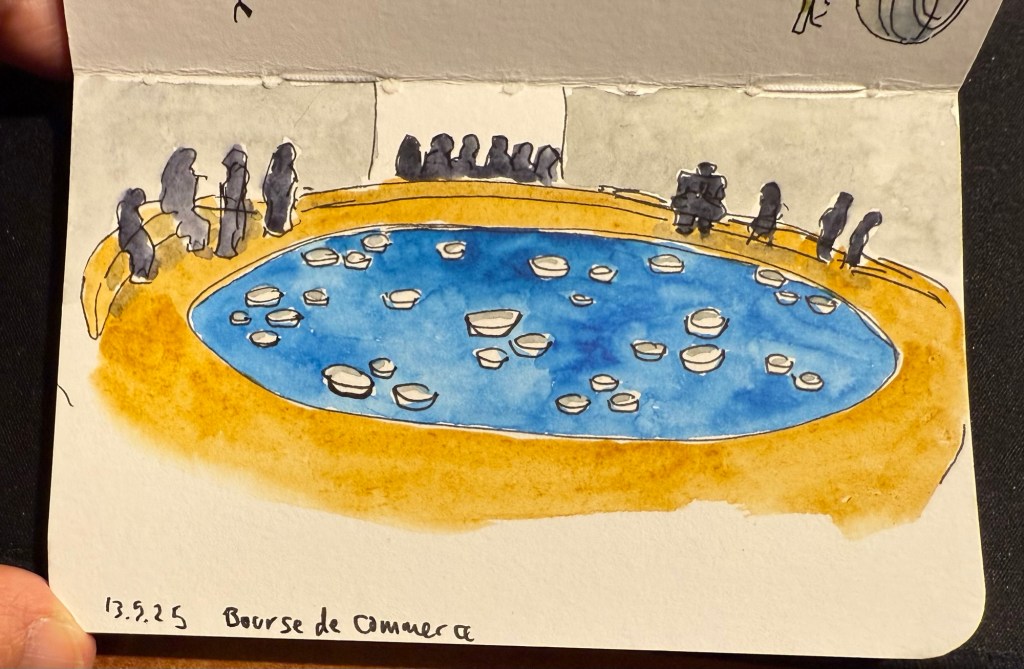
The museum was in between putting up exhibitions, so while a large part of it was closed we managed to view some great and moving art pieces with relatively few crowds and at a discounted price. I did a VERY quick sketch while I was there:

Stillman and Birn pocket alpha watercolour sketch

This is the artwork that I was sketching.

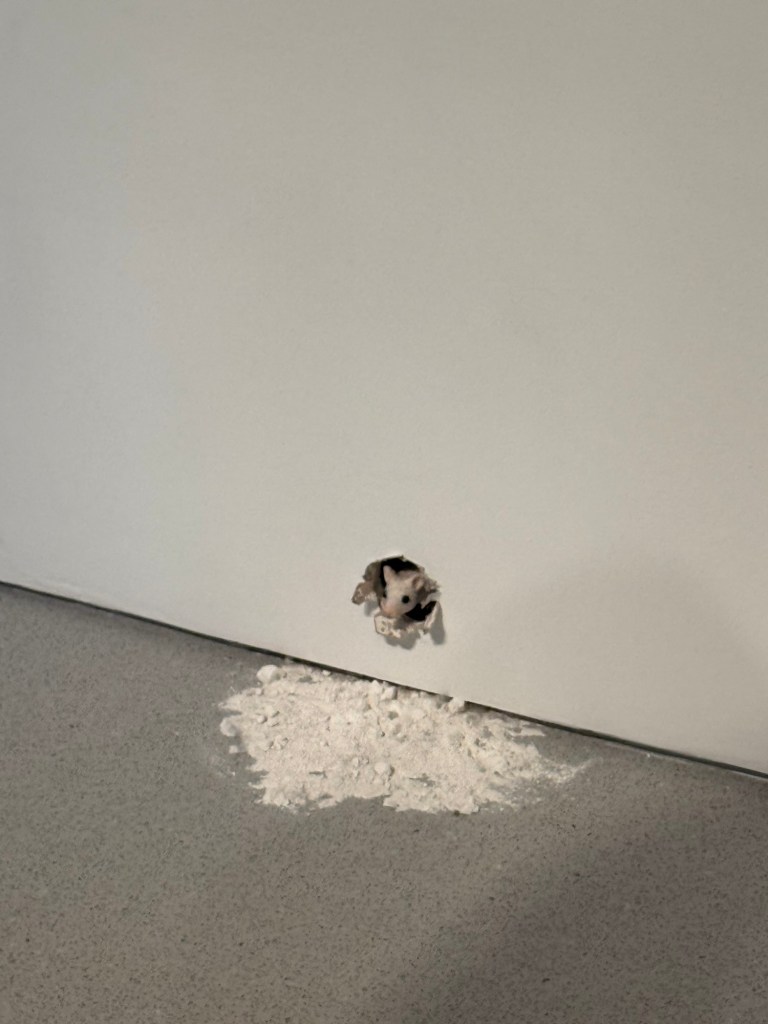
And this little fellow is also part of the art exhibits there:

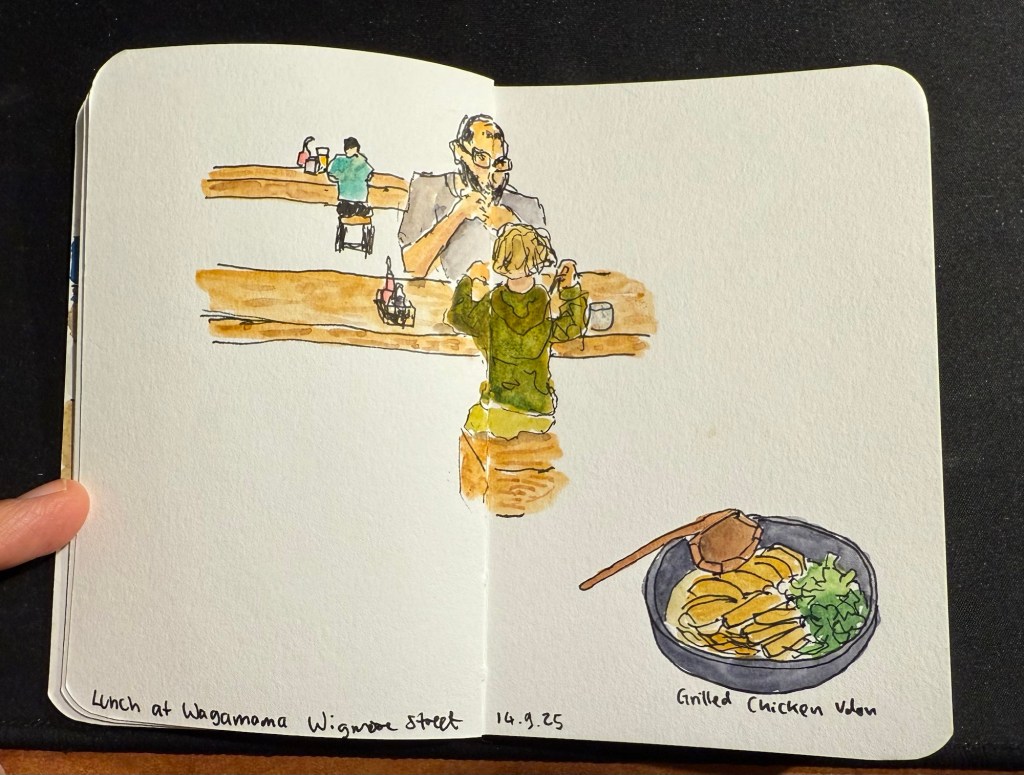
We then took the Eurostar to London. This is where I switched sketchbooks – this sketch of a boy and his father having lunch at a table across from me at Wagamama is the last sketch I created in my Stillman and Birn pocket beta. The beta has decent watercolour paper but it’s not half as good as the paper in my Etchr labs watercolour sketchbook, and the glued in pages make it a struggle to create full page spread sketches, as you can see here:

Last trip sketch in the Stillman and Birn pocket beta.

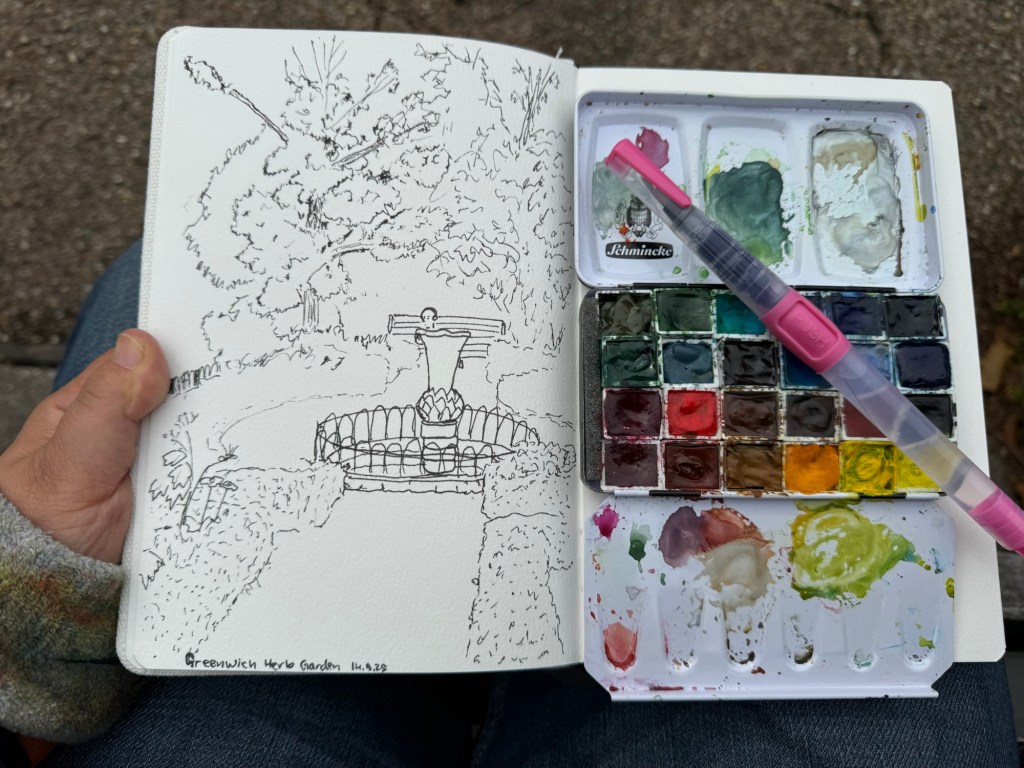
I created my first sketch in an Etchr lab cold pressed watercolour notebook while in the Greenwich Park herb garden and the paper is astonishingly good. Here’s the ink sketch (my tree sketches have gotten so much better thanks to a workshop I took in Poznan):

Etchr lab watercolour sketchbook sketch

And here is the watercolour:

The paper not only makes the colours pop, it actually allowed me ample time and space to work with the washes, adding layers of well blended colours that gave depth and life to the scene. Never have I ever seen the importance of good quality watercolour paper demonstrated so well. I have about half a dozen sketches of this garden throughout the years and this is by far the best one.

That’s it for part 1, I’ll try and upload part 2 later this week.

Edit: part 2 can be found here.

Trying out a Renesans Paint and Brush

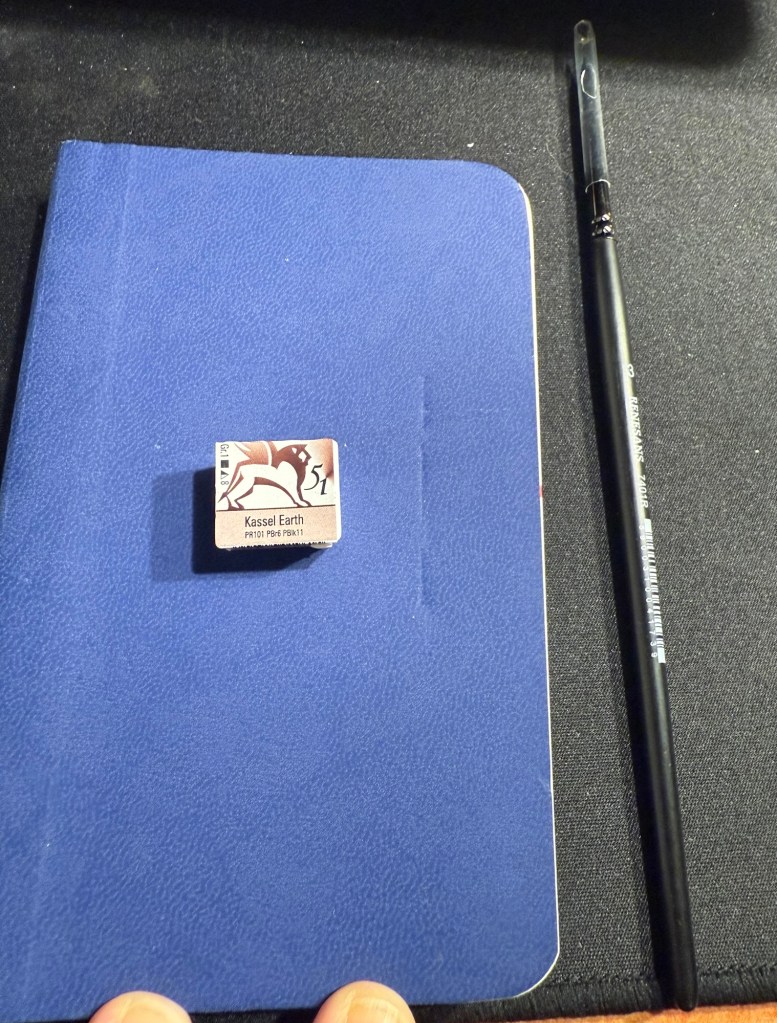
As part of the Urban Sketcher’s 2025 Symposium in Poznan I got a very generous goodie bag filled with art supplies from the Symposium sponsors. One of those sponsors was Renesans, a Polish art supply manufacturer, and they gave us a half pan of Kassel Earth extra fine watercolour and a number 3 synthetic watercolour brush.

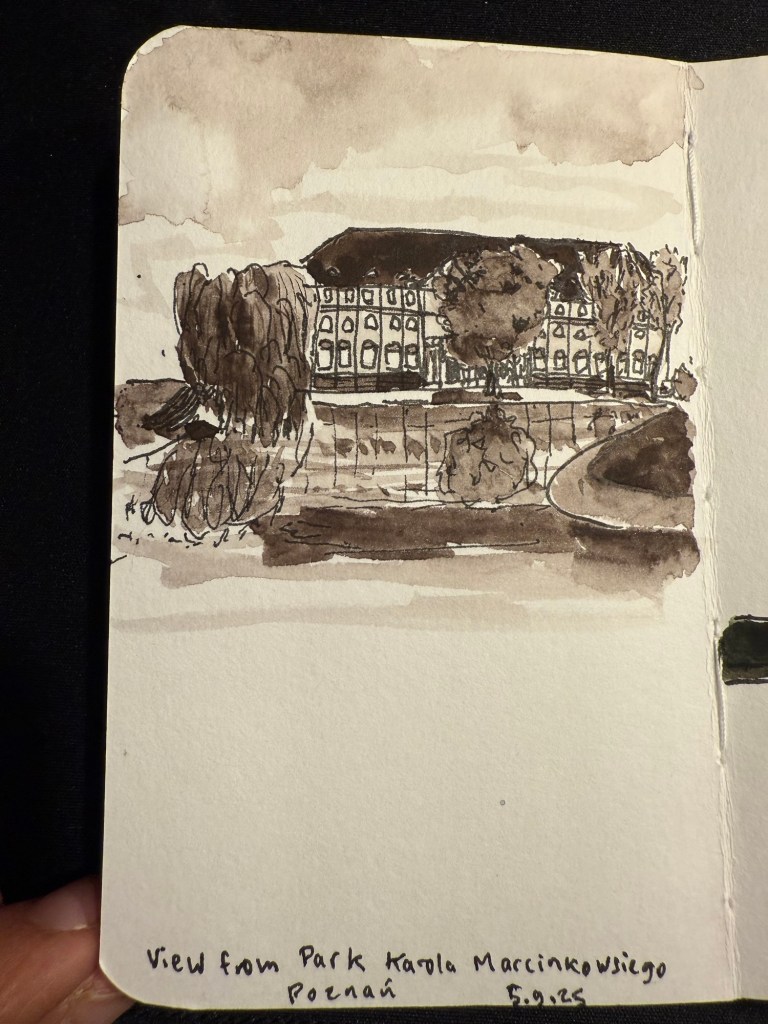
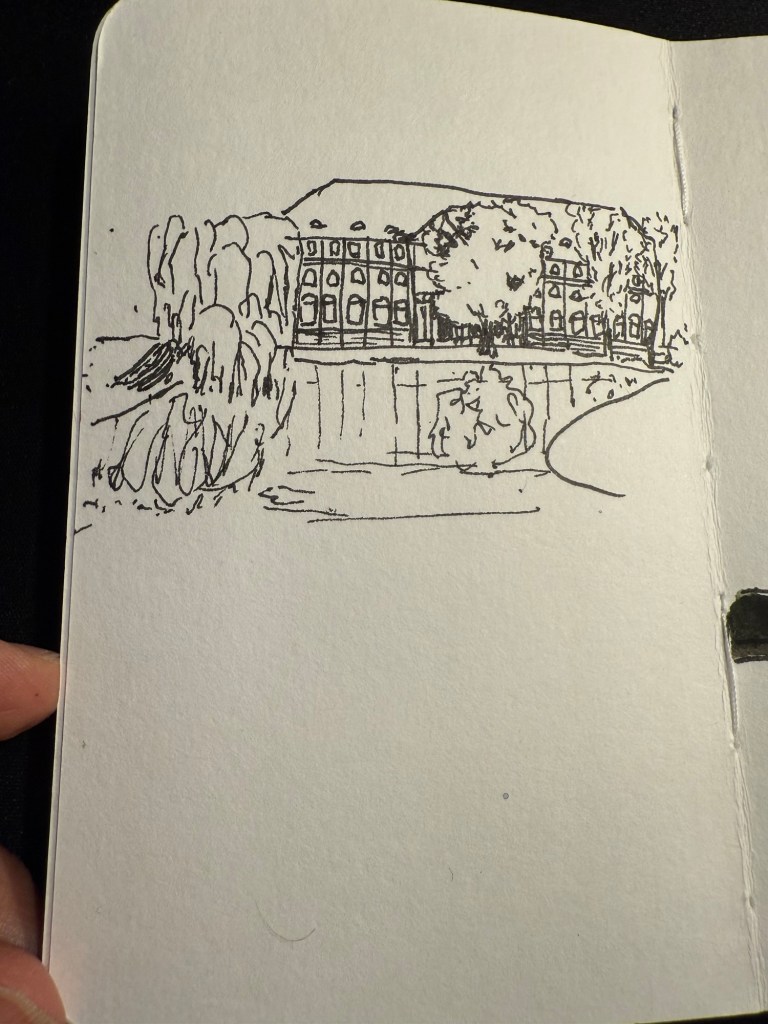
Today I decided to try them out. I used a Stillman and Birn pocket beta, a Staedtler 0.8 pigment liner and only the Kassel Earth watercolour and the Renesans brush. This is the result:

It’s a sketch of a beautiful building across from a pond in a park in Poznan. I drew it from a photo that I took during my morning run through the park. I was planning on returning to the park during the Symposium but I ended up not having time.

This is the sketch:

I used some of what I learned in the symposium to create more realistic trees.

I rarely sketch in monochrome so this sketch was a challenge. It’s about seeing the grades and shades in a scene, and not the colours, and that’s a hard exercise.

This is the paint and brush on the sketchbook:

And this is a swab of the paint. It’s a classic Van Dyke brown, artist grade quality. The brush was surprisingly good, especially for a synthetic brush. It retained quite a lot of water, and it has a good, sharp point.

Though the paint pan has bubbles in it, which isn’t great, I am happy with the quality of the paint and I would consider using Renesans watercolours in the future. The brush is excellent and I am adding it to my rotation. What a wonderful gift to get!

SketchingNow Travel Sketching: Lines

So I just finished the first week of Liz Steel’s SketchingNow Travel Sketching course. I wrote about my material list for this course here and about the beginning of the first week here.

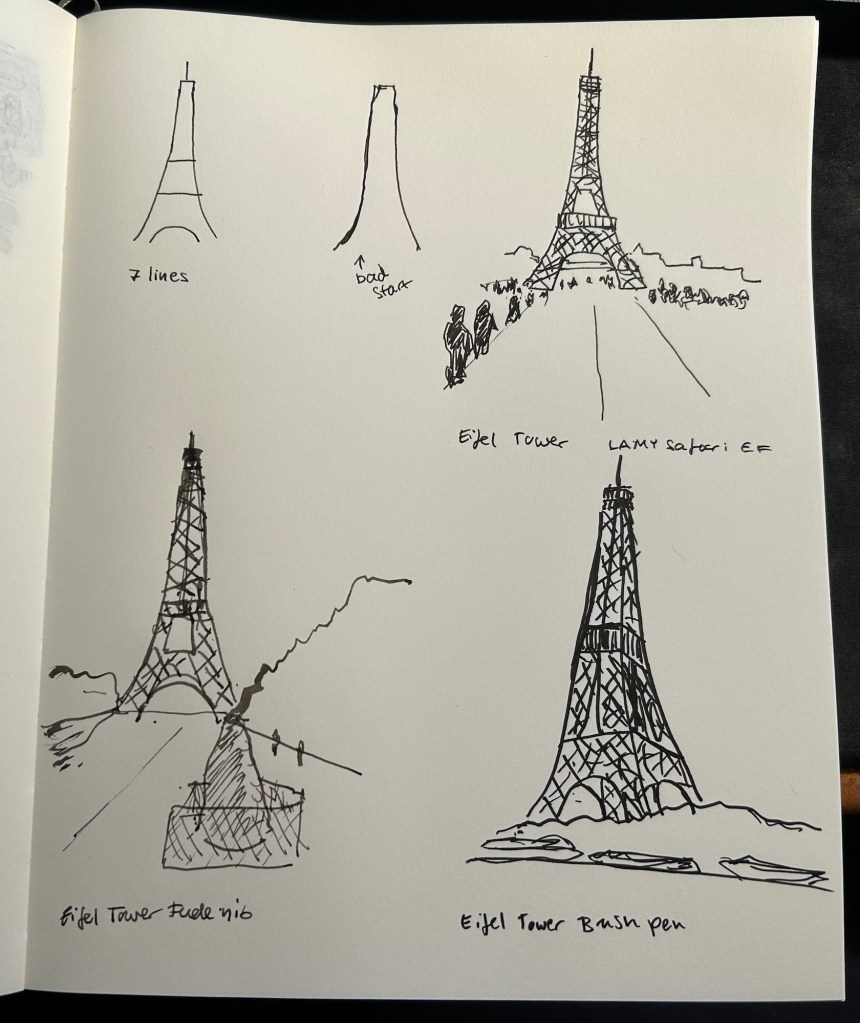
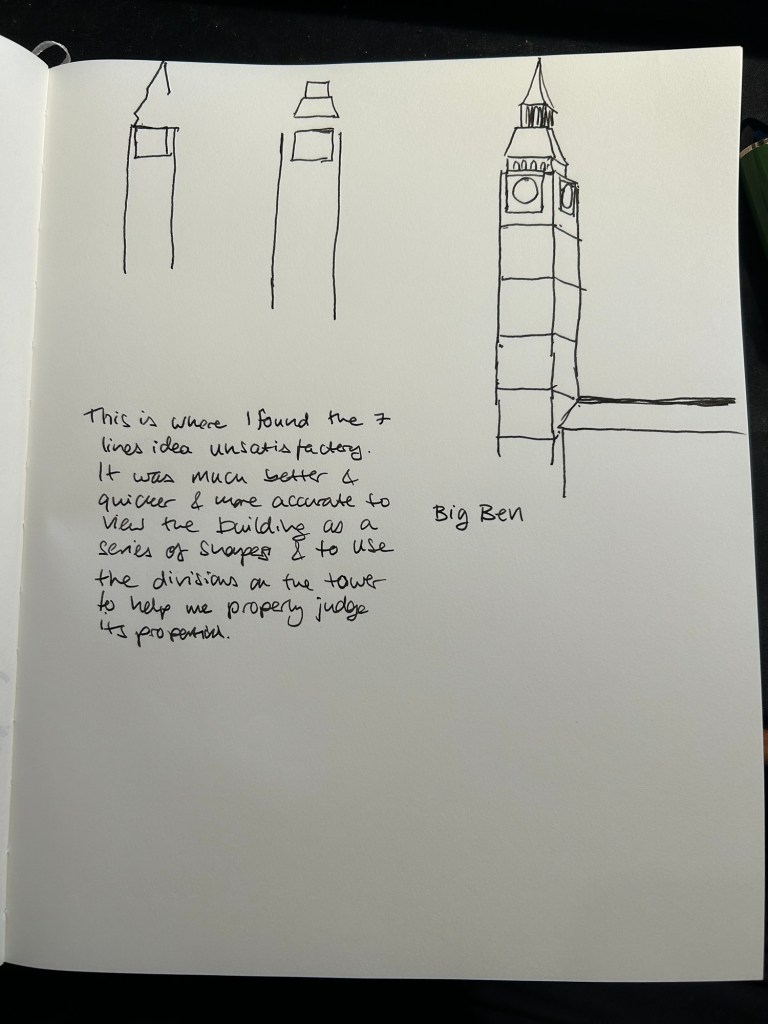
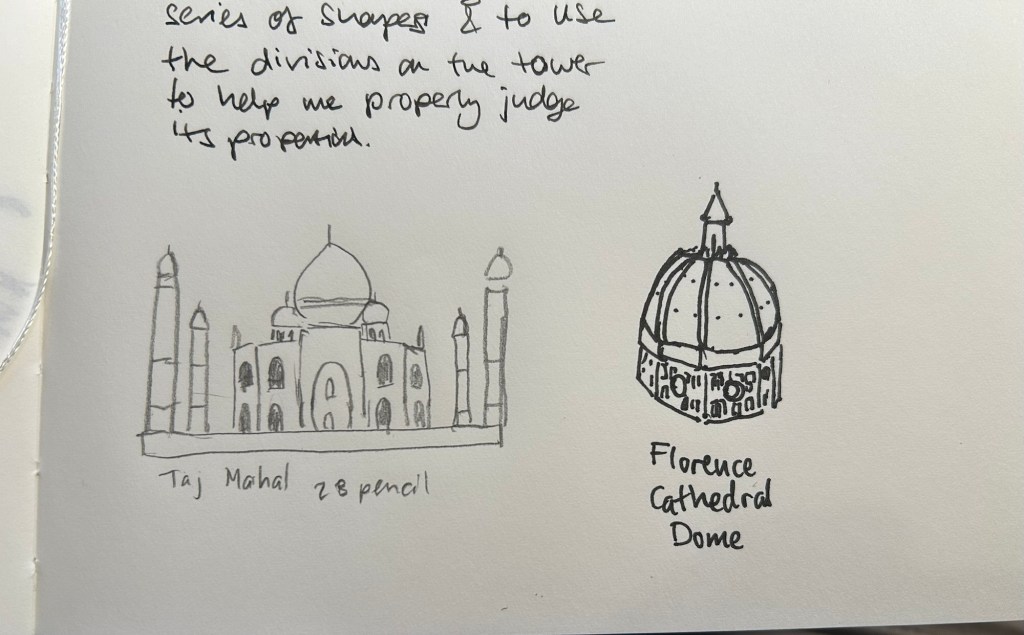
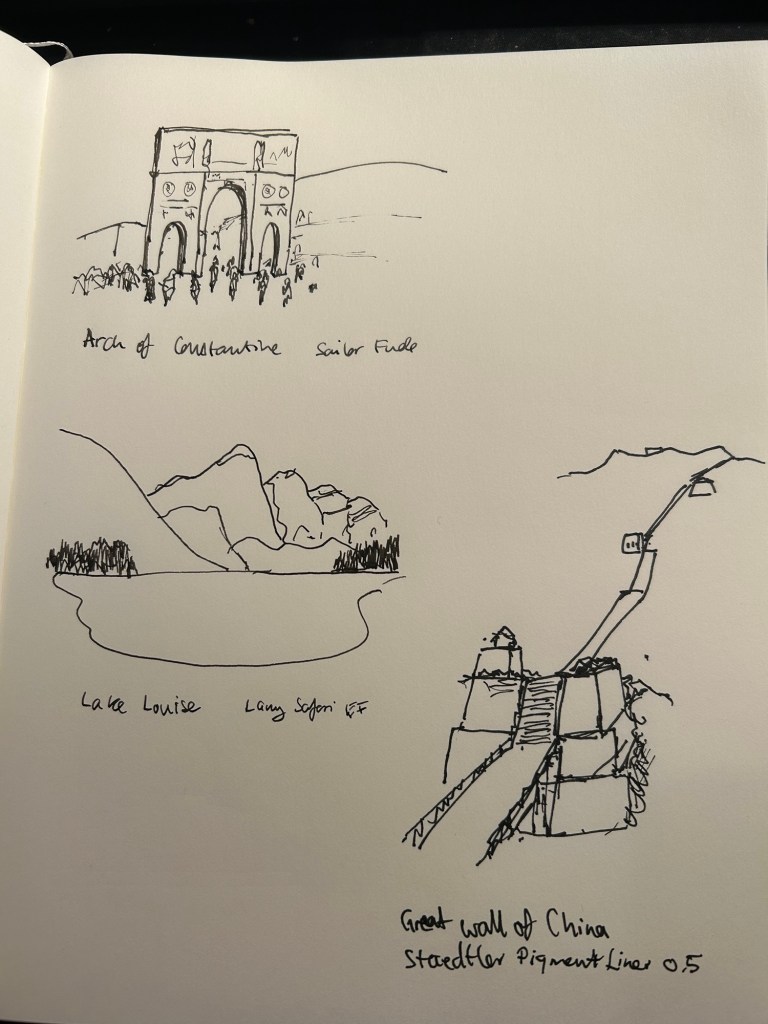
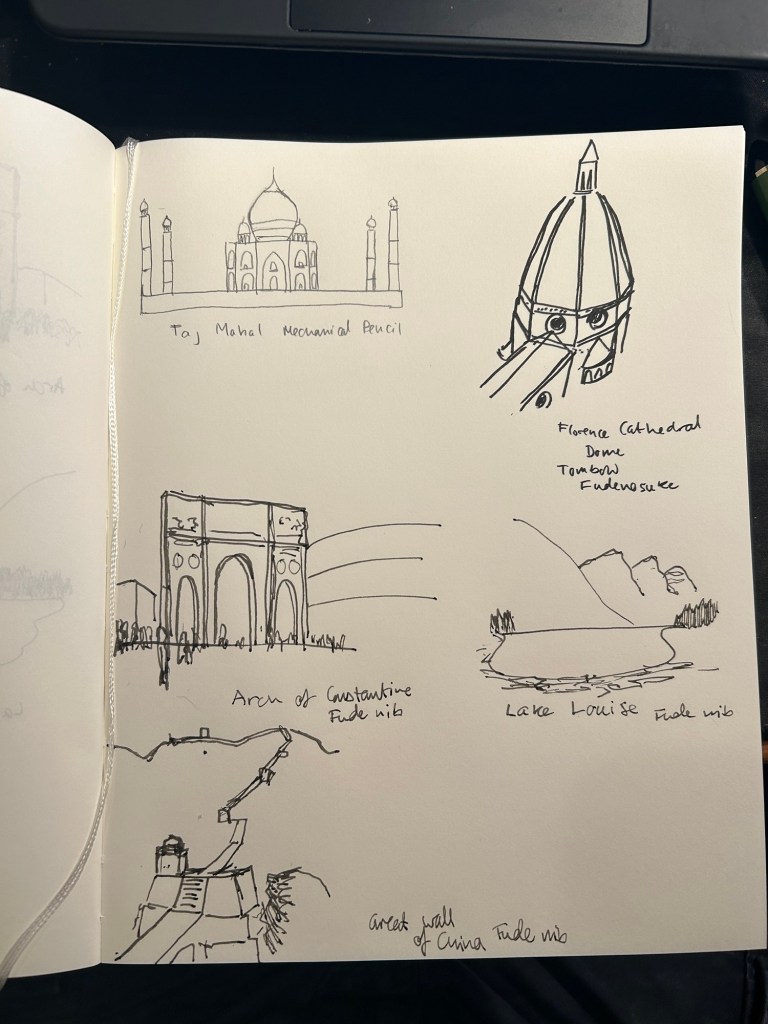
Liz started the week by suggesting that we approach sketching while travelling using a 7 lines principle: sketch the scene in 7 lines, which you can then flesh out to a full sketch. While I managed to do this for the first three Eiffel Tower sketches, I started to struggle once we got to complex buildings like the Big Ben.

This went well – Eiffel Tower with 7 lines as a start.

Here’s my two initial attempts with 7 lines, and then where I moved to my usual approach, which is trying to break a scene down to simple shapes (square, circle, triangle, etc).

Where things went wrong.

I then sketched the next assigned subjects using my own approach:

At which point I realised several things:

  1. I wasn’t really learning anything new this way.
  2. I hadn’t given the new approach enough of a chance before giving up on it.
  3. The 7 lines rule isn’t rigid. It’s an artificial limitation that’s supposed to encourage observation and decision making up front, not to have me counting every pencil or pen mark.

So with that in mind, I made two decisions:

  1. I can use continuous/complex/compound lines as part of the 7 lines. Liz uses them herself, and as they are quick to sketch and require acute observation they remain in the spirit of the rule.
  2. I can use up to 10 lines if I felt that it was necessary to convey perspective or complicated shapes.

Then I went back and sketched the following using this approach:

These came out much better than in the first attempt.

Then I sketched two Melbourne scenes:

The Auction Rooms came out particularly effective- 7 lines allowed me to outline the main interest point of the scene (the roof line), and also to outline a car, so I have a feel for the scale of the buildings.

I then sketched two local scenes. The top left scene was of two little egrets waiting to be fed by the local fishmonger. I got the tree, the egrets, the buildings and with two extra lines, the windows.

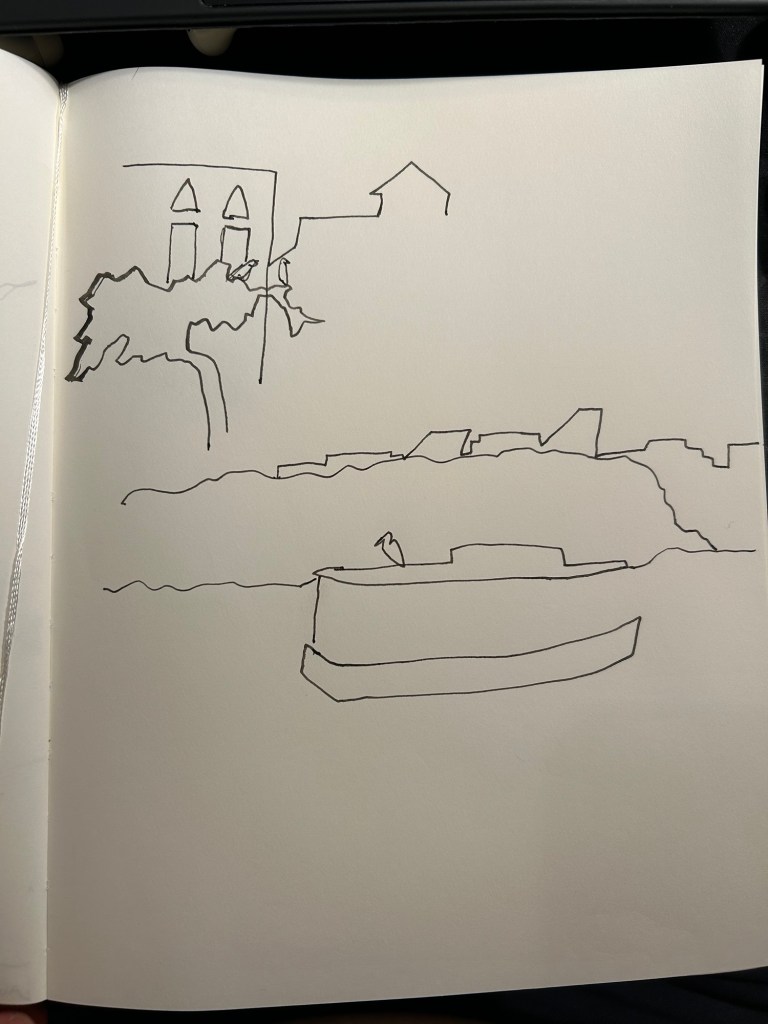
The bottom sketch was of a heron on a boat in the river. I got the river, the boat, the heron, and the buildings behind the tree line. I would have been very comfortable finishing both sketches either on location or from reference photos with this strong starting point.

The final sketch was of a very complicated building in Paris. I added a few more lines just for reference for where the columns are. Like the rest of these sketches it’s not 100% accurate, and there are slightly wonky bits, but I’m looking for speed and to capture the essence of a scene when I’m travel sketching, not for photorealistic reproduction.

I really struggled with the 7 lines idea at first, but then I allowed myself a bit more freedom within this framework and I found it to be very useful and also an easy idea to carry around with me as I look for interesting things to sketch. If I can envision the scene in 7 lines and it looks interesting with just those lines, then it’s likely worth sketching.

Coming up next is shapes, where we start to work with colour. I’m curious to see what the results will be.