Biweekly Routine

Routines and rituals are important, and one of the signs of a craftsperson is their care for the tools they use. This is true for any kind of maker, whether your craft is storytelling or leatherwork. Every two weeks I try to go through this routine, to make sure that the things that I use when I write are there and in order when I sit down to do my writing.

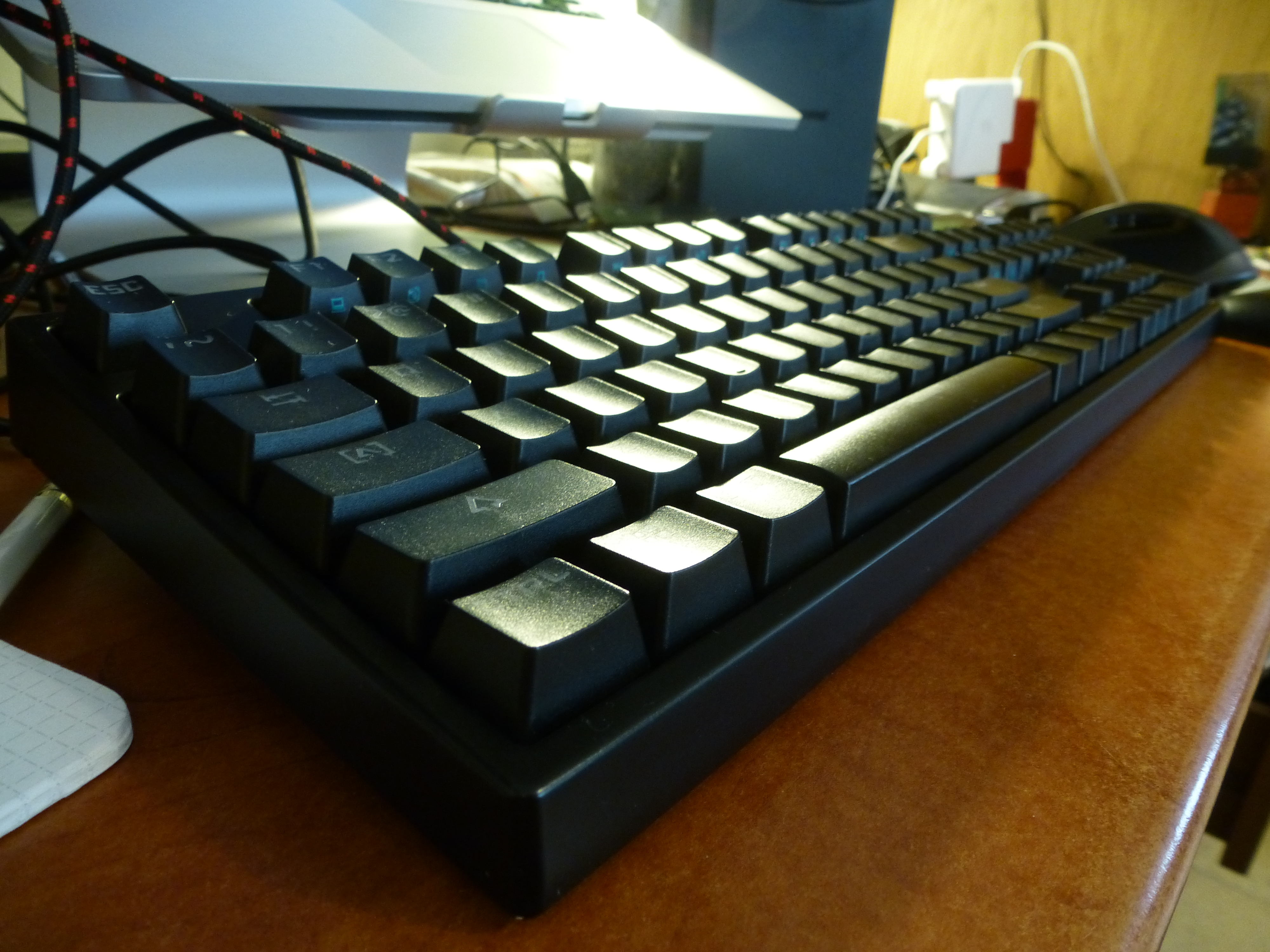
Clean keyboard

P1030059

Some computer keyboards harbour more harmful bacteria than a toilet seat, research has suggested. 

A BBC News report published the findings of a consumer group Which? on keyboard hygiene, and not surprisingly they were shocking.

Since your keyboard is one of your main, if not your main writing tool, taking 10-15 minutes every two weeks to clean it doesn’t seem excessive, yet few writers do so.

Here are the keyboard cleaning guides that I use:

PC World: How to Clean Your Keyboard – simple, informative, easy to follow advice on how to clean your keyboard.

Rispter Guide: Cleaning Keyboards – funny, and with plenty of pictures. Also, much more thorough than the PC world guide, and geared towards mechanical keyboard maintenance.

Check backups

You can read up here on how to backup your work. Once every two weeks go over your backups and check to see that everything is where you expect it to be.

Organize notes

Take a few minutes once every two weeks to go over your notes, file or throw away those that aren’t relevant anymore and make sure that you don’t have any loose notes scribbled on envelopes or post-it notes around the house.

Organize file names

If you for some reason work with Word and not with Scrivener (why?), and keep several versions of your work in different files, take a moment to make sure that your file names haven’t gotten out of hand, and you still know where everything is and what everything is. File names “My novel – old new new version 2” — I’m looking at you.

Check notebooks, pencils, pens

Check your notebooks, pencils, pens (fountain pens or not), to see what needs to be refilled soon, reinforced or replaced.

Update Scrivener project metadata

Take some time to fill in character names and short descriptions, places information, references etc. in your Scrivener project’s Characters, Places or Research folders. This information is important to keep on hand for long projects, and is especially useful to keep bundled together with your writing — mainly for search purposes (“where did I reference X character?”).

Backup, backup, backup

[Note: I use a Mac for all of my writing, so this post is geared towards Mac users. If you have a PC you need to find a replacement for Time Machine or SuperDuper  — Windows Backup does not work well and I haven’t found a good enough replacement — but otherwise the rest of my post is still relevant to you.]

It doesn’t matter what you are writing, whether it’s a paper, article, short story or novel, if you are typing into a computer, you need a backup system.

Start out by investing in an external hard drive, one that isn’t a portable 2.5’’ drive (those are less reliable over time), but a full sized drive from a reputable maker (Western Digital, Seagate, Toshiba, Tanscend, Lacie, etc). Buy the largest HD that you can afford (4-5 TB should have you covered), and make sure that it connects to your computer via USB 3.0.

Then setup Time Machine and/or SuperDuper (if you are on a Mac) to backup your entire hard drive regularly. I scheduled Time Machine to backup my HD once an hour to my external Lacie drive. Over the years I have had a chance to restore my entire computer from it when my cat decided to take a walk all over my keyboard, causing a kernel panic and somehow corrupting my filesystem. This is the backup that you will use when you accidentally spill juice over your laptop, or have a HD crash, etc.

A local backup of your entire computer is great, but it isn’t very useful if your house burned down, if you had a power surge, an earthquake, tornado, etc. That’s what online backup is for, and for this I use Backblaze. For $5 a month you get unlimited, unthrottled online storage, and a nifty and very simple to use piece of software that flushes all of your files to the Backblaze severs. This is not a bootable backup, but a backup of all of your data. It’s for the I-lost-my-house-and-everything-in-it kind of scenario, where you have to buy a new replacement computer, but still want all the data that you had on your old computer. As an added bonus, you can access your Backblaze files from anywhere, so if you just want to checkout a file or two, or flush your photo library between computers, Backblaze can help you with that too.

Dropbox is not a replacement for Backblaze, because it’s not geared towards online backup (not in pricing nor in its interface and options), but it is a good file sharing and syncing service. Use Dropbox coupled with Scrivener’s “Backup” and “Backup to…” to create up to date backups of your current project that you can access and update from anywhere.

Finally, remember — if your backup system relies on you to remember to back something up, the it’s not a backup system. 

How I find Time to Write

I work full time at a hi-tech job, which means that I also put in some overtime, although I carefully selected a workplace that has an 8 hour standard work day, in which work starts relatively early. I also run 2-3 times a week, and spend one afternoon a week drawing. Finding time to write when I was working on my thesis was gruelling, and this was the major reason why I eventually had to give up on it. When I decided that it was time to work on my own (fiction) writing, I knew that I had to do something about my schedule and my habits if I wanted to succeed.

I now write 500 words a day, with 200-400 word blog posts several times a week, and I haven’t quit my day job, or stopped running or drawing. I also haven’t given up on sleep, my family, turned into a social recluse, or completely cut off my leisure time. What I have done is made some small changes to my daily routine, replacing old unproductive habits with new, more productive ones.

1. Unwinding Time

I used to come home from work, and flick on the TV, and just veg out in front of it for an hour, and hour and a half. I was decompressing from work and transitioning into “home mode,” but I certainly didn’t need a full hour or more in front of the TV to do it.

TV has this affect on me, where I can zap around between channels, moving from one to another as soon as a show ends or a commercial break starts. I lose track of time quickly this way, and it is very difficult to tear myself away from it once I have turned it on.

I now don’t allow myself to come home from work and turn on the TV to decompress. I can do other things for the same effect — put a load of laundry in the washing machine, play with my cats, read the newspaper, read a few pages from a book.

The result is that I have now vastly downsized TV from my life, without actually “banning” TV.

2. Get Down to Writing as Soon as You Can

As soon as I’ve cleared my head a little, I sit down to write. No “I’ll just browse this website first,” or “let me just spend an hour or two on twitter”.

3. Eliminate friction

Have Scrivener open on your project at all times, and have it the main window on your computer. It should be the first thing that you see when you open your computer. Have all your notes out and next to your computer. If you write by hand, have your notebook open and a pen or pencil ready next to it.

Eliminating all this little points of friction have stopped me from finding silly excuses to not writing, such as “well I can’t be bothered to find all my notes now,” and from procrastinating on my way to do actual writing (“Oh Tweetbot is open. Let me just have a glimpse at my twitter feed before I open Scrivener. It won’t take more than a minute”. It never takes only a minute).

4. All dead time is writing time

If I have 15 minutes spare, then I can write at least 100-200 words in them, or even an entire blog post. 10 minutes spare is a great time to think about my next scene. If I’m doing housework, then I’m either thinking about my next scene, figuring out what to do with X or Y character, or listening to podcasts. 30 minutes is more than enough to get close to finishing my daily quota, or quick draft my next scene.

If you are waiting for a chunk of a few hours during your “peak productive” time of day, then you have a long wait ahead of you. By the time the stars align and you sit down and write, I have written thousands of words, and more importantly, built up my writing habit muscles.

5. Put a daily word quota on yourself

I started small, with 200 words a day for about two weeks, and then moved to 500 words a day. Use a word log to motivate yourself to persist, keep yourself accountable, and show progress over time. Habits build over weeks, so it is more important to set a goal that you know that you can handle every day, then be overly ambitious and then fall into an anxiety spiral.

6. Sit down and write. Don’t get up until you are done.

No browsing. No texting. No tweeting or catching up on Facebook. I just sit down and plough through my quota until I am done. If I’m in the zone, I keep on going. But until I am finished writing I stop for nobody. Starting back again after you paused for a break is just so much effort that I oftentimes fail to do it. Better to get it done in one go than to stop and start, stop and start. That way you can build momentum.

7. Make it easy to pick up where you left off

Don’t stop mid-sentence, but do stop in a logical place in your writing, and leave yourself a note (or better yet, quick draft) as to where you plan to go to next. Again, this is all about eliminating friction.

The Results

I have cut down my TV time to about 3-4 hours a week, and I have been consistently writing 500 words a day for over a month. Neither my work, family, friends nor my other hobbies have suffered for it. All I did was eliminate friction, remove dead time from my schedule, and teach myself that even 15 minutes of spare time is enough time to write in.

This post took 20 minutes to write, and is almost 1000 words long. What could you have written during that time?
Writing Links

A few interesting writing links for this week:

The Stupid Fast System | Medium

If you’ve only got 30 minutes to write, fine, write for those thirty minutes. If you’ve got a crying baby in the other room, don’t use that as an excuse not to write. (Although you should probably, you know, check on it first.) But make a little effort up front to clear what distractions you can. You want to set yourself up for success.

This article has some pretty solid advice on how to get more writing done with the time that you have. Apart from the “no writing when editing advice” I pretty much agree with everything said here.

On Pencils and Process | WritersDigest.com

Jason Kottke said that people’s love of pencils is “partly childhood nostalgia, partly how a craftsman comes to care for her tools, and partly the tactile experience. It’s also a blend of appreciation for both their aesthetic and functional qualities, and (especially these days, but not only these days), a soupçon of the disruptive passion that comes from willfully embracing what poses as the technologically obsolete.

I use a pencils a lot in my writing – particularly when it comes to places in my narrative where I get “lost for words”. Pencils are my favourite tool for quickly trying out several options, as they are particularly helpful tools for this kind of thinking.

David Vann | Advice to Writers

I write every morning, seven days a week, and the momentum of writing every day is tremendously important to me, because I have no outline or plan and view writing as a transformation by the unconscious. I don’t know what will happen on the page each day, but there’s a shocking amount of pattern and structure that emerges, and I think this can happen only through a daily practice.

There’s a lot that Vann says in this interview that I disagree with, but it is still worth a few minutes of your time, if only for the list of authors that influenced him.

Kill Your Darlings: Five Writers on the Cutting Room Floor | The Millions

Five contemporary authors discussing the most painful thing that they had to cut out of their novels, and more importantly why.

Make three lists | Seth’s Blog

Very brief blog entry from Seth Godin about things to consider before embarking on a new project. Not aimed specifically at writers but certainly relevant to them.

“Type as quickly as you can, and always carry a pencil”

Clive Thompson in a fascinating, short (~10 min) talk about the benefits of writing with pencil  and typing, and when it’s best to use one or the other.

I used to write all my drafts longhand. Now I just quick draft, outline and try out things (i.e. “big thinking”) with a fountain pen or pencil, and type out my actual draft on my computer (using a “clicky” keyboard, which I highly recommend).

World Building on the Go

World-building is one of my favourite parts in writing, and one of my favourite pastimes in general. Since I know that I have such a penchant for it that I could spend hours on it, fleshing out every little detail about the world I’m working on, I don’t allow myself that time.

Yes, there are some basic things you need to know about the world your story is taking place in. No, those details do not include creating several languages, a fully fledged mythology, and a comprehensive law system.

Before I started I had a very general idea about the world that my novel takes place in, and I wrote none of it down. As I began writing, I got a better idea of what I need in my world and what major conflicts need to shape it for the theme of my novel to work. Then I sat down and wrote a few key things: a pertinent facts about its history, the names of a few key places, and a general map of where the main things were.

A lot is still blank at this point, and that’s because I chose to keep it that way. As the story evolves, so will the world around it. This way I don’t “burn” useful hours on superfluous trivia, and I am not forced to change  my story because of a geographical or cultural detail that I had committed to months before, when I had yet no idea where the story might take me.

I plan on “world-building on the go”, leaving plenty of blanks as I start, and building my fictional world gradually as I write. I have a feeling that it will be a more organic, more compelling world that will be less troublesome for me to write stories for. What’s more, building a world this way helps make sure that I don’t break off my story on an irrelevant tangent just for the purpose of showcasing a background detail that I want to show off but the reader doesn’t really care for.

Everybody knows that author. Do your readers a favour and don’t be that author.