Speak No Evil is part of the Tournament of Books 2019 play-in round, which means that it is up against two other books before it can make its way into the initial rounds of the competition. As this is the first book I’ve read in the ToB and it was excellent, I can’t imagine what the rest of the field looks like.
I have never read a book so full of heart, life and joy, that was also tragic. “Speak No Evil” is a timeless tale that is deeply imbedded in our time and is well aware of it. To say that it deals with Issues (capital I) like Homosexuality, Race, Bullying, Policing, Gender and (above and beyond) Friendship would do this gem of a novel injustice. It’s first and foremost a very good book, with beautifully and richly crafted characters moving around in a plot that is inevitable but far from dull or expected. Every person is propelled forward by their past and their character, but is also somehow aware that he or she are actors in the story of their life. An astounding achievement, and a must read.
So it appears that Moleskine has finally hopped on the dot grid bandwagon, releasing several of their classic collection notebooks in dot grid, even going as far as creating dot grid versions of some of their seasonal colours (gasp!). Next thing you know they’ll be releasing limited edition notebooks in squared and dot grid paper, and then where will we be? (Don’t worry, it’s not going to happen).
The classic Moleskine collection consists of their hardcover and softcover notebooks, in pocket, large and extra large. Currently the dot grid is offered in black covers, both in hardcover and softcover, and in underwater blue (such a pretty seasonal colour) and beige in softcover. However, it apparently was enough of a success for them to issue the dot grid option in all their classic collection core colours (black, red, blue sapphire, and myrtle green), and in seasonal reef blue (both hardcover and softcover). These colours will start being available in February-March, so it may be worth waiting a little while before purchasing (although some of the hardcover core colour options already seem available).
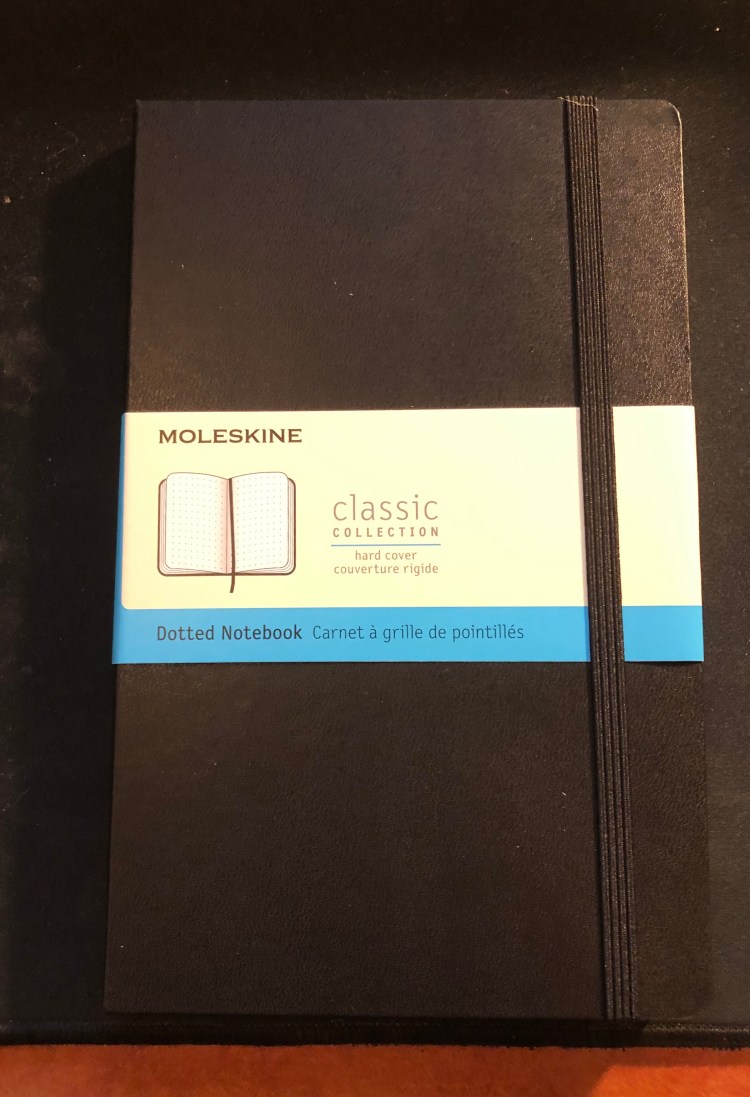
Now to the review. I got the classic large black hardcover notebook, as it’s probably Moleskine’s best selling notebook, and what people have in mind when they say “Molekine”.
Dotted paper gets a new band colour – blue.
First thing’s first, Moleksine have listened to customer feedback and significantly strengthened their notebooks’ elastic bands. They’re a little thicker and wider, and there’s little chance that they’ll turn into the floppy mess that some of their earlier elastic closures turned into after a few months of use.
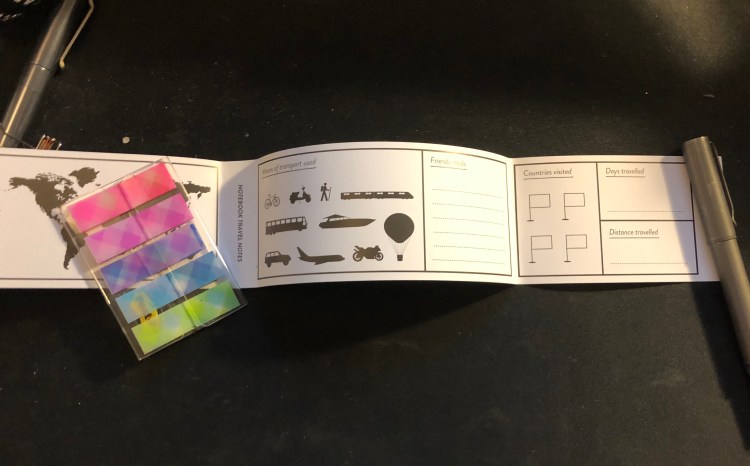
The sleeve also has a B-Side, this one is pretty travel oriented, and I love it because maps!
Phileas Fogg would have been proud.
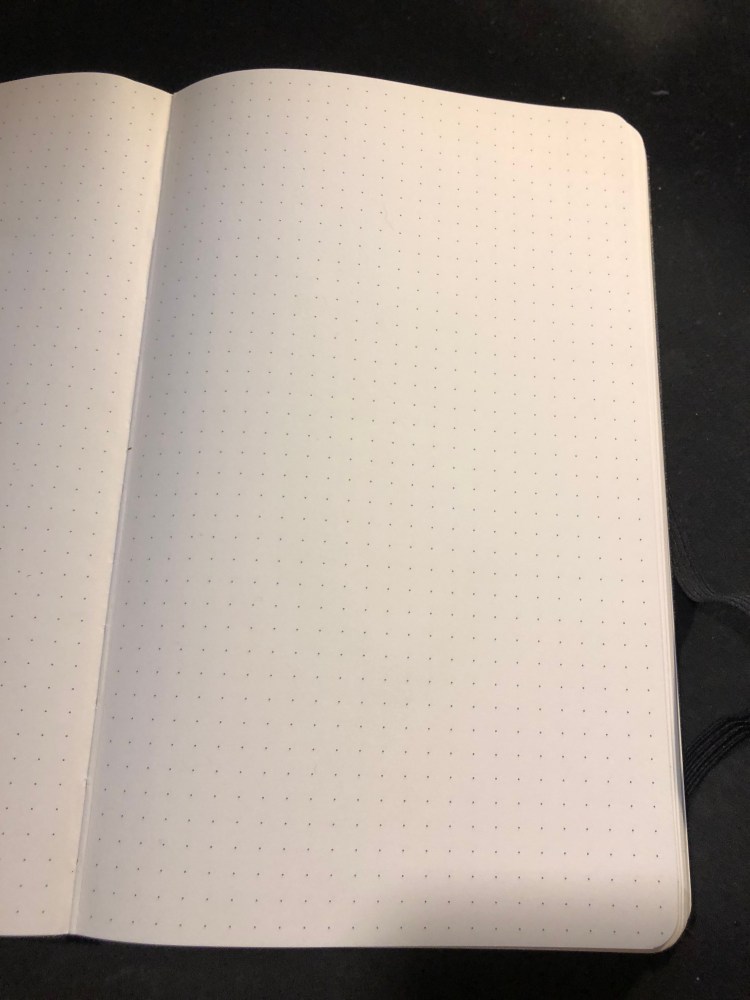
Which brings us to the paper. The dot grid pattern is medium grey, dark enough to be visible, light enough to not be too distracting. It also is very precisely aligned on all pages, if those kind of things bother you.
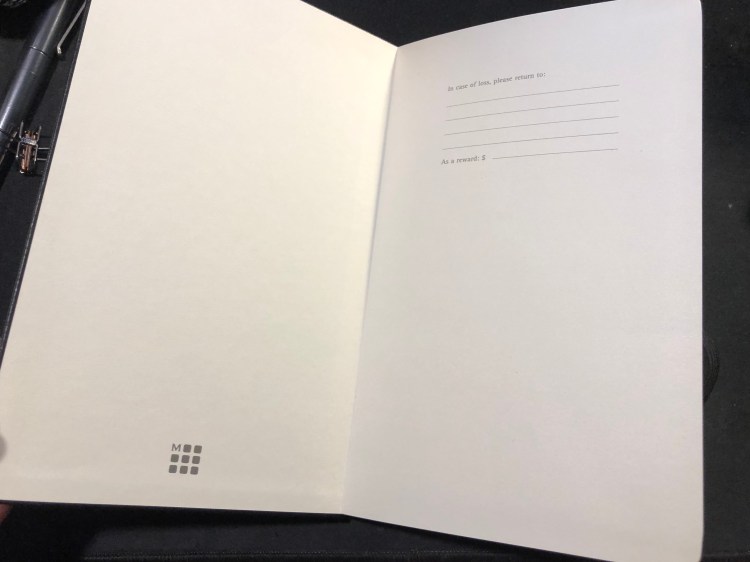
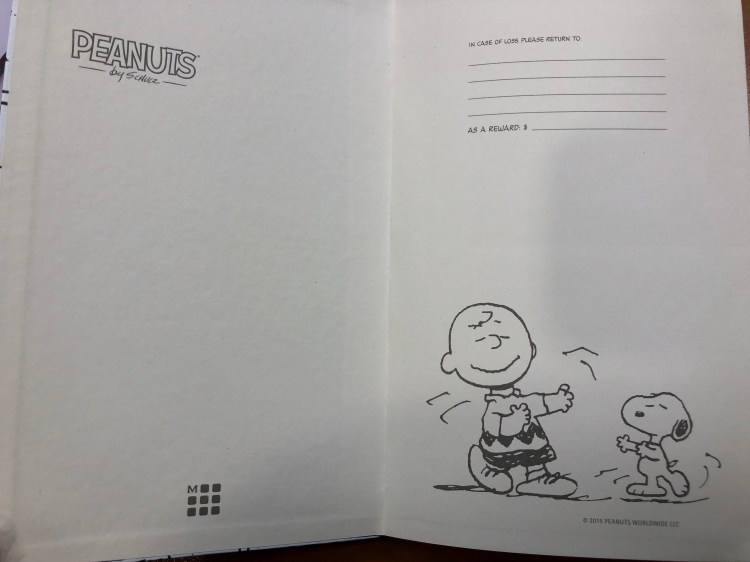
The “In case of loss” endpaper, with the Moleskine logo, a relatively recent addition.
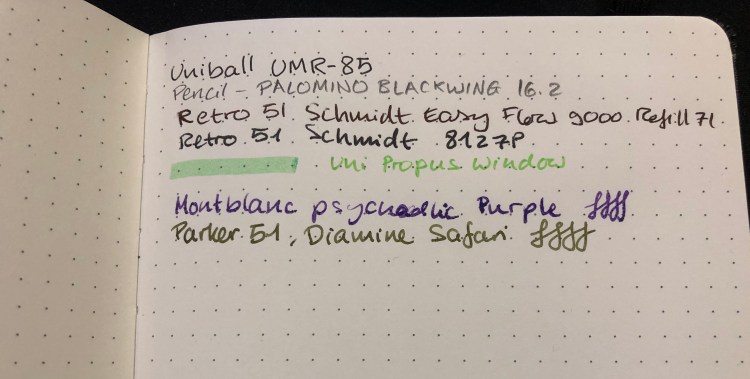
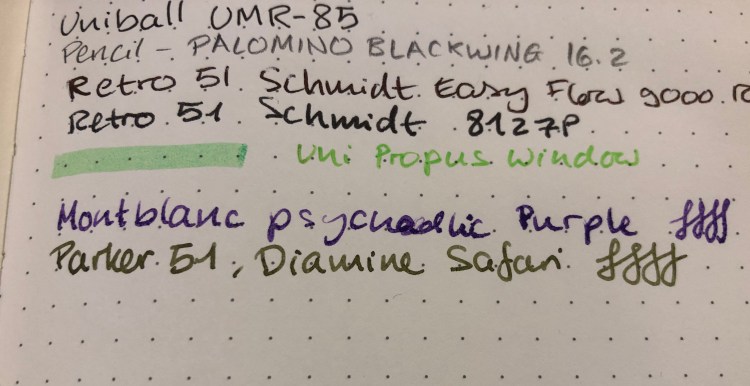
How does the paper perform? Better than you’d expect. Gel, ballpoint and pencil work well with the paper, but even fountain pen inks, including pretty saturated messes like the Montblanc psychedelic purple work pretty well. There’s no more weird spidering, as there used to be and the spreading is minimal (better than Baron Fig, well above average). If you don’t insist on super saturated inks, you’ll be able to enjoy using fountain pens in this notebook.
A closeup of my writing samples. Montblanc purple has behaved this way on Rhodia paper too, so I blame the ink, not the notebook:
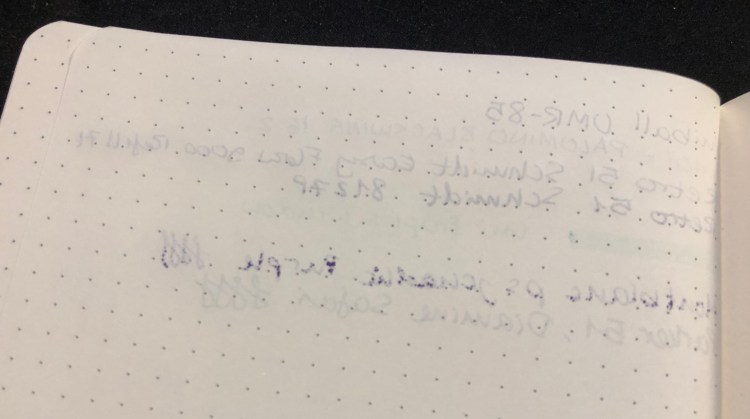
Show through is better than tomoe river paper, but not as good as Rhodia (I’ve had mixed results with Baron Fig, so I’m not using them for comparison here). Again, the only real problem was with the Montblanc ink, which is a problematic ink in general, so I’m not using it for comparison. I’d find this notebook to be usable on both sides of the page, but again, that comes down to preference.
Moleskine seems to be making an effort not only to come up with innovative limited editions, but also to give their regular line-up a bit of a refresh (with new added colours) and boost (with new dotted paper, better quality paper, and a fix for their elastic closure problems). That’s a move in the right direction, and one that I plan to enjoy.
I still need to figure out what’s going on with that Montblanc ink, though…
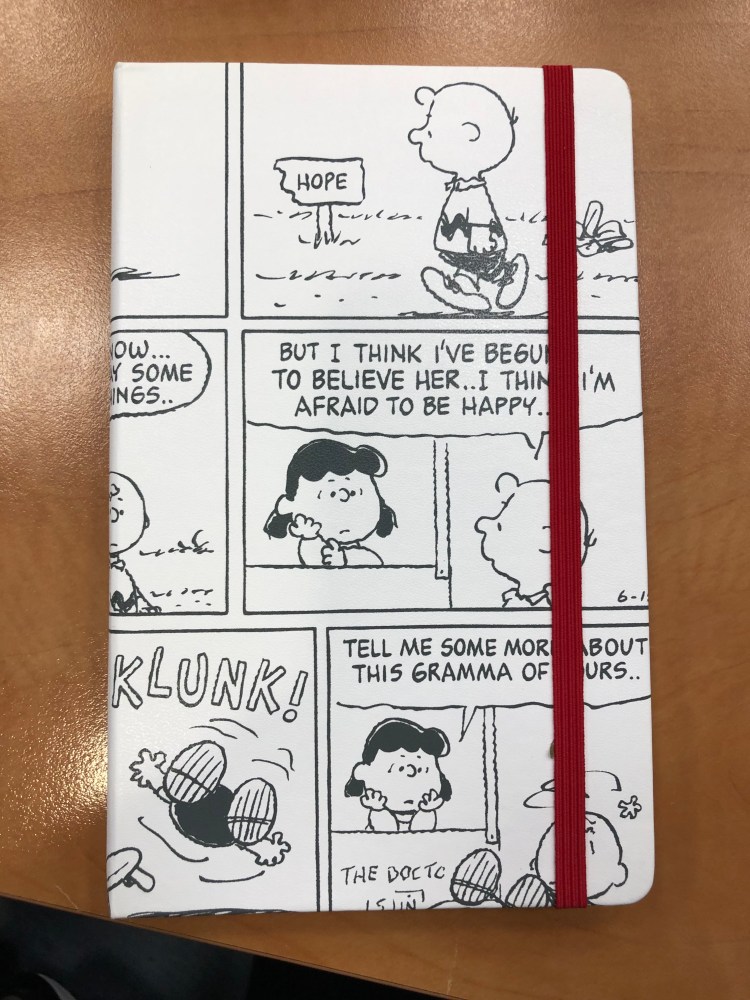
I started a new journal this month, this time a Peanuts limited edition Moleskine. This is one of Moleskine’s best designed limited editions in recent years, because of the simplicity of the design and the limited palate choice (white, black and red). So first up, here are some pretty pictures, and then I’ll get into how I start a new journal.
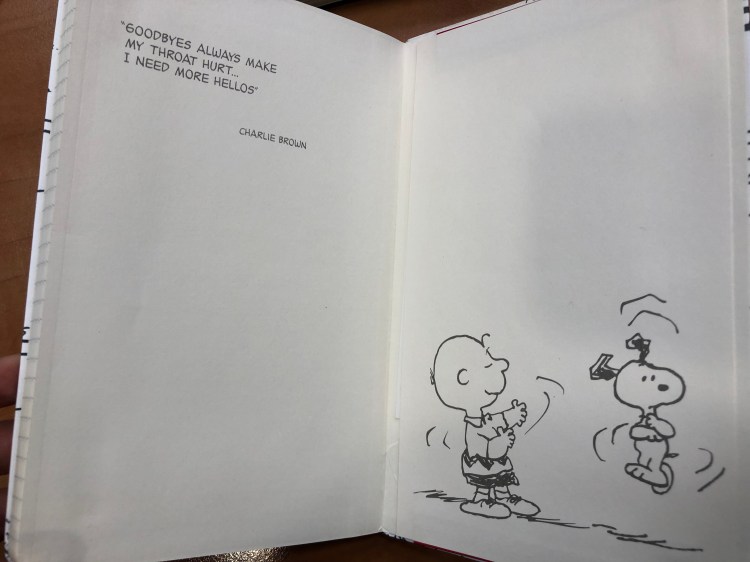
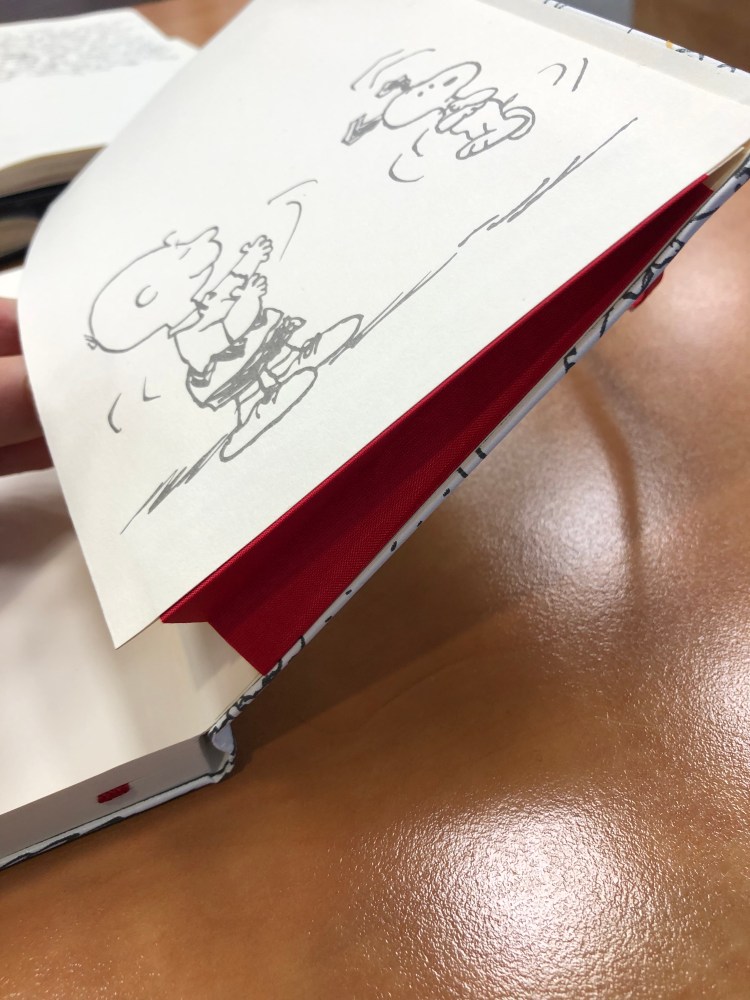
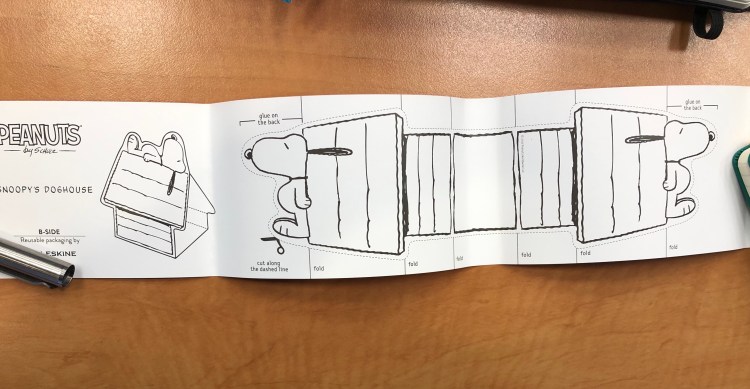
That sleeve looks transparent, but is just perfectly aligned, that’s all. “Are you happy right now?” “I guess so..”Gramma knows best.No ProblemOnly the best end papers in any Moleskine edition to date.The back end paper is a sweet and a little heartbreaking – like the best Peanuts strips.Bonk! Stickers galore.Red detail on the famous back pocket.Build your own Snoopy’s doghouse from the B-Side of the sleeve.
So this is definitely a top 10 edition for me, both because I love Peanuts so much, and because it is such a well-designed notebook.
Now to how I actually start a new journal:
I’ve noticed that the hardest part of journaling for me is when I’m just getting started with a new notebook. Blank pages are scary and discouraging, and at that point I’ve invested so much time and effort in my old notebook that I really don’t feel like moving to a new one. Like Charlie Brown says, “Goodbyes always make my throat hurt… I need more hellos”.
The trick is to get the new journal started well before you actually “move into” it, so that by the time you start using it full-time it’s already an old friend.
Once I get to about 20 pages before the end of my current journal I select a new one, fill in my personal info, and start filling the first few pages with various project ideas/running and training plans/writing plans/home improvement plans. These are specifically things that I know that I’ll need to start updating and referencing before I start using the new journal, so that it’ll start filling up with meaningful content ahead of time. I also use the last pages of the journal to test new pens, jot notes for myself or just for various stamps. By the time I start using it, the notebook isn’t just randomly used or “wrecked”, but meaningfully mine. It’s already working for me, being my outboard brain and eye and heart. And it doesn’t take a lot — I was too preoccupied this time to notice that my old Star Wars Duel notebook was running out, so I started the Peanuts one in a rush, only a few days before I fully moved into it. All it took was a running plan and a list of things that I want to pack up and give to charity for me to easily transition into it, as if I was merely turning another page in my old notebook.
If you have trouble starting new notebooks, give this idea a try, it may help you out.
I managed to journal almost every day in 2018, a tremendous personal achievement considering the chaos that was the latter part of the year for me. I use Moleksine large lined limited edition notebooks for my journals and Ti Arto/Ti Arto EDC/Ti Pocket Pro with Uni-ball Signo 0.5mm refills (UMR-85).
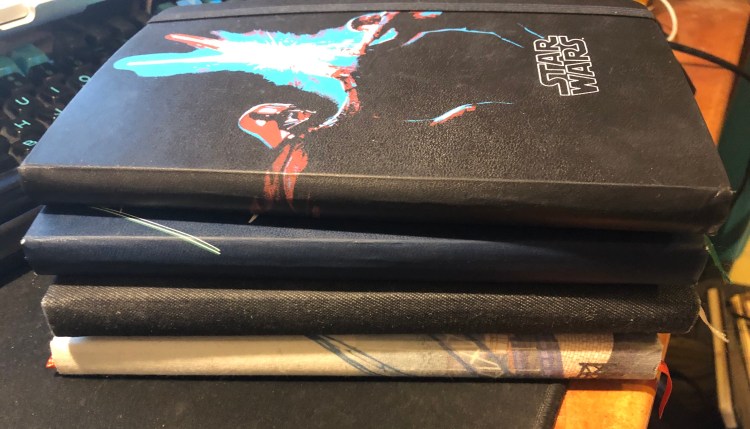
The four notebooks I filled in 2018. I filled five notebooks in 2017.
Why do I use Moleskines when I have better quality notebooks (Rhodia, Tomoe River Paper notebooks, Leuchtterm, Baron Fig)? Because they’re notebooks that I want to use. I love their limited edition notebook designs. I used to use Baron Fig notebooks for my journals but I like the Moleskine format better and since I switched to journaling with gel ink pens instead of fountain pens, Rhodia and Tomoe River Paper notebooks are pointless. Moleskine notebooks were easier to obtain than Leuchtterm notebooks, and Baron Figs were slightly bigger, bulkier and with thicker paper, that I no longer needed.
The point is, garbage paper or not, Moleskine’s make me happy every time I open them, so that’s why I use them.
First two notebooks of 2018. I was journaling a lot more then, so each one contains two months of notes, bits and pieces that I glue in, plans and doodles.
Why don’t I use my fountain pens for journaling? I used to, during the first two months of journaling, and then I switched them out for my beloved UMR-85 and BIGiDESIGN Ti pens. I love my fountain pens, but they are not the best EDC pens, to say the least. A lot of them are expensive, most of them are vintage, and so unlike the Ti pens which I just toss into my bag or carry in my pocket, I baby them. I don’t want them to get damaged, I worry about them leaking after I carry them around in my bag (my consistently ink stained fingers attest to how often that has happened). I can’t use ballpoints (I hate them and they cause me severe RSI flareups), rollerballs like the Retro51 are almost as bad as fountain pens when it comes to leaking and being finicky about paper, so gel pens it is. The Uni-ball UMR-85 is an excellent gel refill, and the Ti pens are fantastic and can take everything you can throw at them, so I that’s what I use.
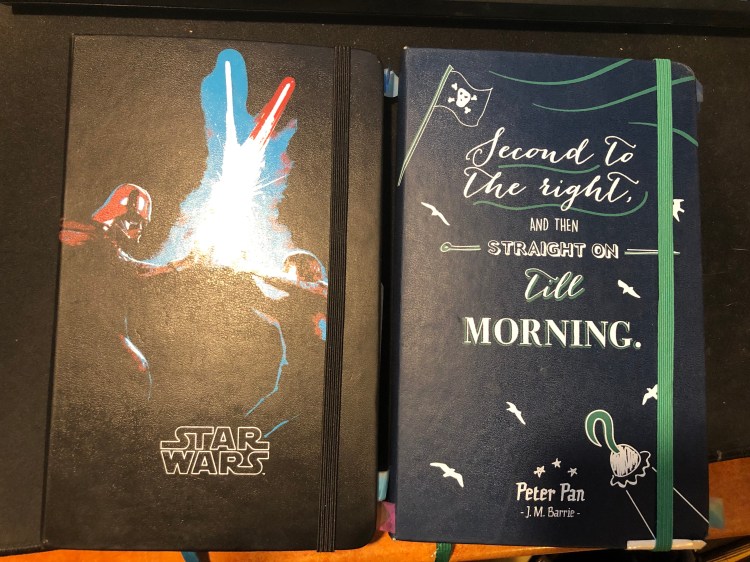
Last two notebooks of 2018. I managed to lose the Star Wars one on a plane, but I got it back, so I finished the year in it.
I’ll make a post about my new journal for 2019 and how I start a new journal probably later this week. My posting schedule is a bit erratic lately, but I’m dealing with serious family health problems these past few months and so this blog has suffered somewhat, I’m afraid.
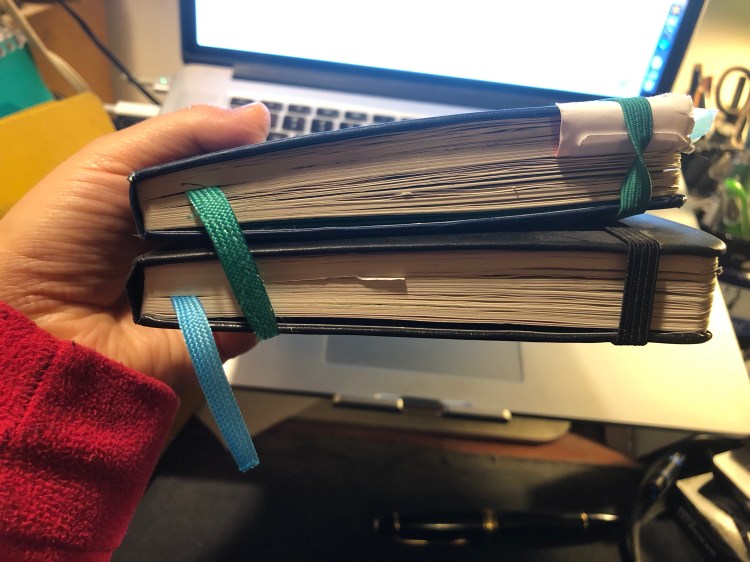
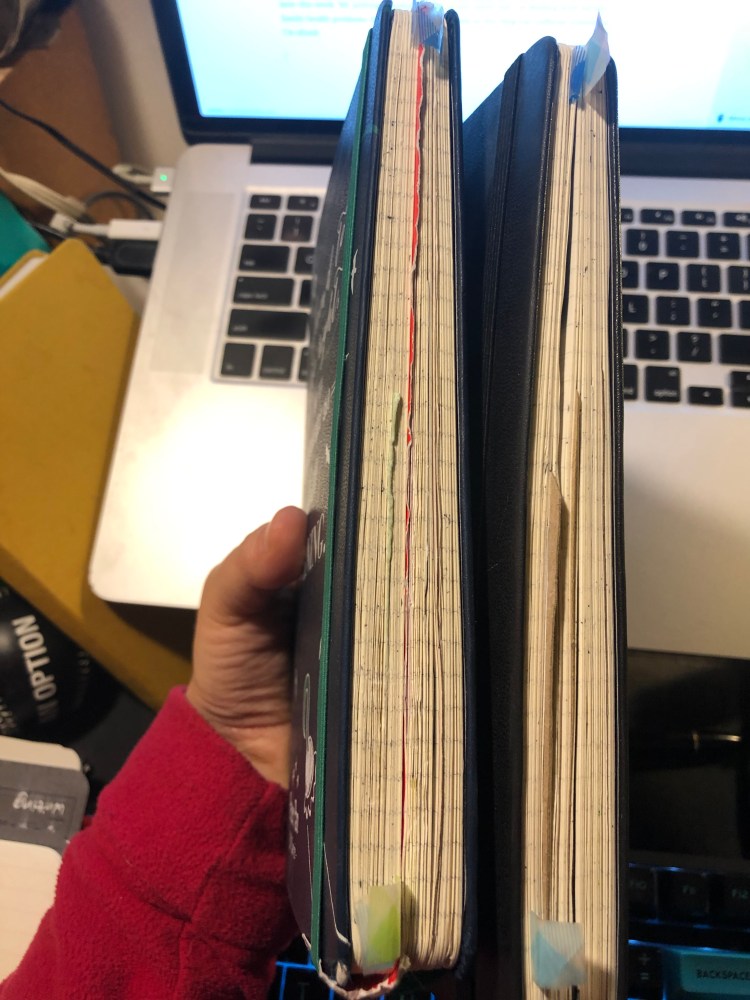
P.S. Say what you will about Moleskines, these notebooks can take a beating, I’ve carried and used these daily for eight months (four months each), and they are bulging and a tiny bit battered at the very edges, but otherwise like brand new.
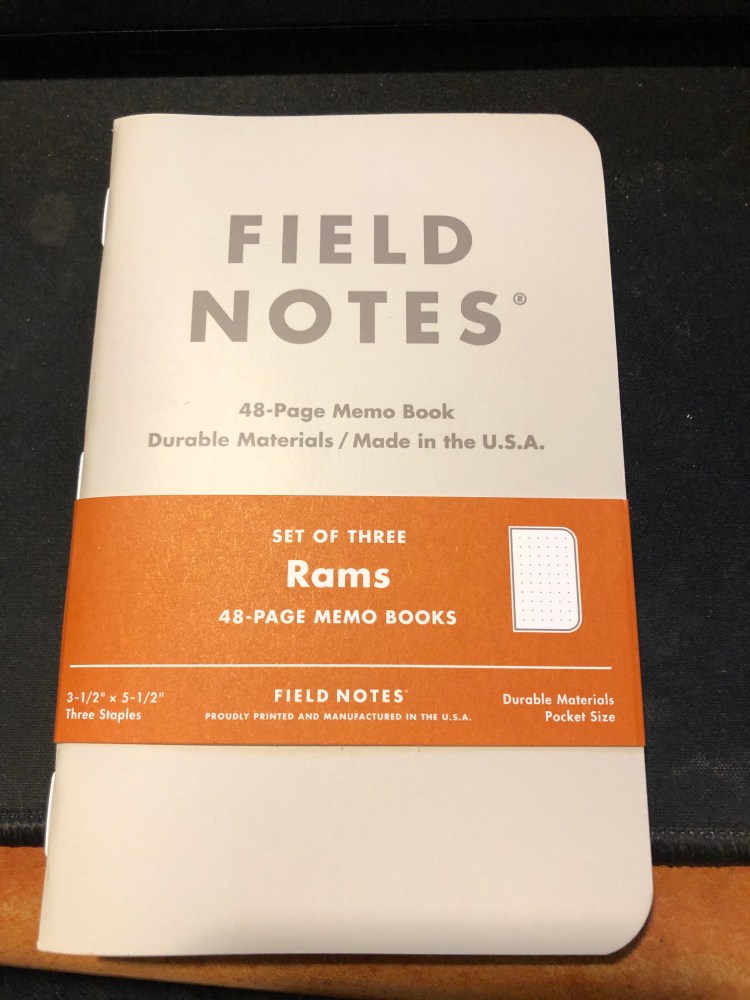
I got these notebooks because I like Field Notes more minimalist designs, and this is most certainly one of them. I’m not a fan of dot grid though, so I’m not sure whether I’ll actually enjoy using it.
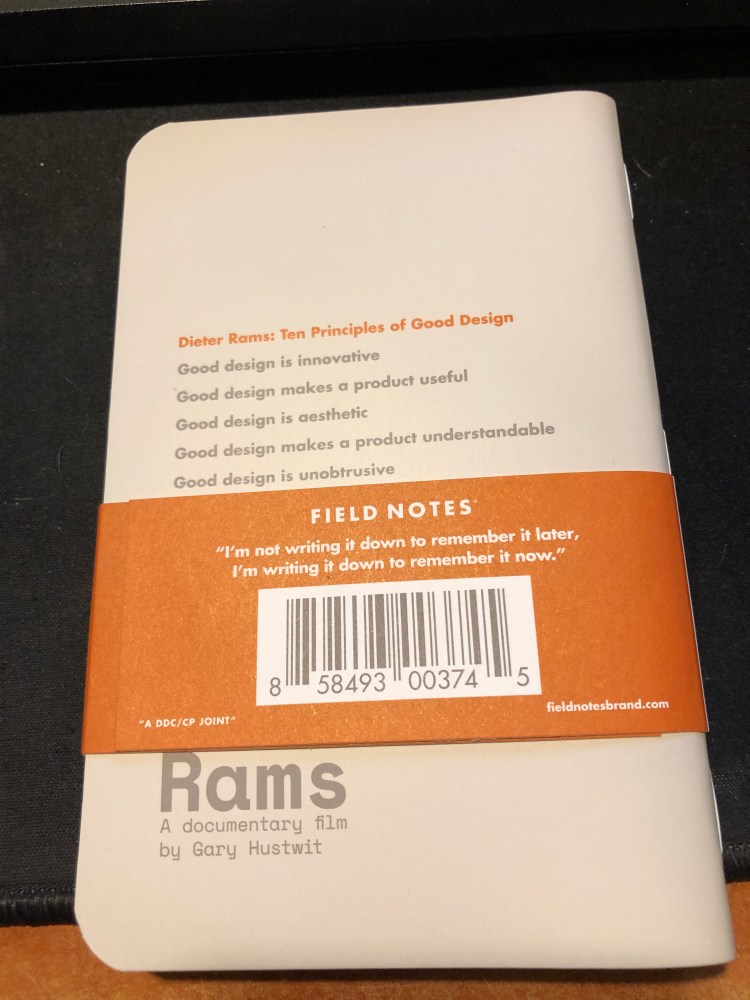
The orange highlights go well with the cream coloured covers and the grey type.
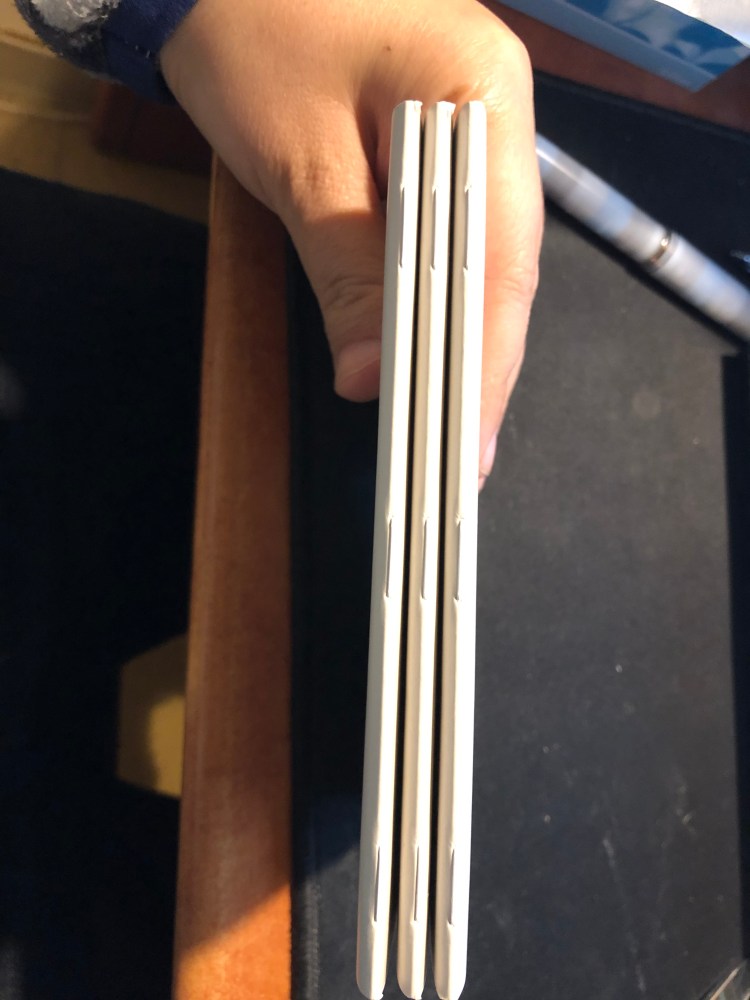
White staples, to complement the covers:
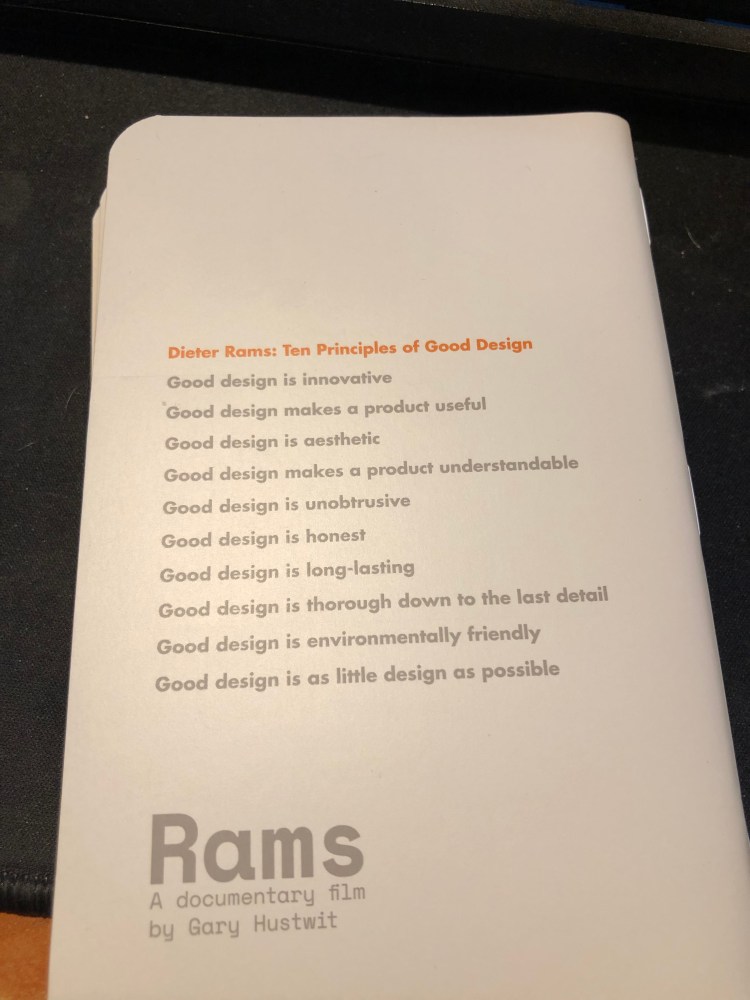
The best part of this notebook, Dieter Rams Ten Principles of Good Design:
Testing the pages a bit:
The reverse side of the page:
The Field Notes Rams edition is a utilitarian notebook that would be perfect with a Lamy 2000, provided that you’d fill the pen with something like Noodler’s Black. As it is, because of the dot grid, I have no idea when and how this edition will get into my rotation. If you prefer dot grid notebooks, this notebook is definitely worth checking out. Otherwise, the more colourful Three Missions or the more interesting Clandestine would probably be a better purchase.
A few more insights into how I got back to reading, beyond using a reading journal, as it has come up in conversations lately (people are gearing up for 2019 resolutions, I guess):
I started with detective novels, easy reads, things that were fun and not too challenging to dig into. M.C. Beaton, P.G. Wodehouse, John Scalzi were my friends. I was trying to rebuild a habit, and so the last thing I needed was to start with books that I would resist reading. My mind had to learn to treat reading as a pleasant pastime and not “homework” anymore, so the more challenging books came in only about a year after I started.
I used streaks to challenge myself to read 10 minutes a day, every day. Why 10 minutes? Because I felt that this was the minimal amount of time required for me to start easing myself out of the choppy, constantly distracted and interrupted reading habits that I had picked up after years of using social media.
I deleted the Facebook and YouTube apps from my phone, and after a great deal more struggle and a few relapses, Twitter. Instead of browsing them when I had a minute or two to spare, I used the Kindle app.
I put reading in my new year’s resolutions (yes, I have been doing those for the last three years, and I’ve been pretty successful in meeting them for the last three years, but that’s a different post). At first it was just for a certain quantity of books (24), and then it was for a certain number of books of each kind — challenging books and long books.
I set up a Goodreads account and started a reading challenge there. As with the resolutions, it’s important to keep the goal not only attainable under normal circumstances, but also attainable when things go horribly wrong with your life. Start lower than you think, and ignore other people’s goals. You’re doing this for yourself. If it’s 5 books, 10 books, 20 or 20, it should be what you can do. I chose 24, because that was 2 books a month, and something that I felt I could get to without resorting to reading only short and simple books.
I cut out TV almost entirely from my life. This wasn’t just about reading, it was about making more time in my day for things that were more important to me, but it definitely helped with my reading. I cancelled my cable subscription and I watch about 2 hours of TV a week.
This has been my journey back into reading. Take from it what you wish, but if I can distill them they’d look like this:
Decide you want to do it. If it’s not coming from you, it won’t happen.
Set up systems of daily reminders and goals. These can be private or public, they can be analog or digital, as long as they help you keep on track.
Make it pleasurable. Start with easy reading in a genre that you enjoy, maybe with a writer that you know, and keep your goals easy and attainable even not on the best of days.
Ironically enough, by the time I finished with my MA in English Literature a few years ago I had “lost” the habit of reading. From someone who used to read at every available (and not so available) moment I had turned into a non-reader almost entirely. This bothered me so I set up to rectify it by “gamifying” reading until I had tricked myself back into the habit again.
Field Notes had just come out with their Arts and Sciences, the perfect format for my plans. The idea wasn’t only to create a journal where I would log my thoughts on each book as I read it, but create a little set of “achievements” that I could unlock for each book as I read it. For each quarter of the book I read, I got an achievement, a little logo that symbolized the book which I drew on a separate page. The accumulation of those silly little symbols was enough to push me forward as I learned to enjoy reading again. I kept that up for three Field Notes Arts books and then when I ran out of them, I simplified the format and moved to the Moleskine Two-Go, which had just come out. The Field Notes Arts notebook wasn’t fountain pen friendly so I used a Karas Kustoms Render K, a Blackwing pencil and the Caran d’Ache Bicolor 999 double sided coloured pencil.
On the first year that I tried using this system (from March 2016) I got from not reading any new books (just my old familiar favourites) to reading almost 20 new books. On the second year (2017) I got up to 42 books. This year to date I’m at 58 books, and I’ll probably read 60-61 books by the end of the year. I no longer need to spend time drawing little “achievement badges” as my reading habit is back here to stay. I do, however, still keep a book journal even though I’ve started using Goodreads since 2017. It’s a satisfying way to keep track of my reading and organize my thoughts on the books that I’ve read.
You can check out the format of the entries for fiction and non-fiction below. The unlined left side of the spread (verso) is where I do a little doodle that reminds me of something central in the book, and explain the star rating that I gave the book in each category. I really recommend that if you choose to create your own analog reading journal, you create your format yourself. Mine has changed over time, particularly for non-fiction, and it works with my reading goals for the year.
This is the index, which is useful for reference later on and is a good way to check my reading progress throughout the year.
I’m not a big planner user, but over the past year I’ve used a weekly planner just to get a better idea of how my week looks like and how to plan ahead accordingly. The slim, minimalist setup of the Moleskine Pocket Weekly planners is perfect for this.
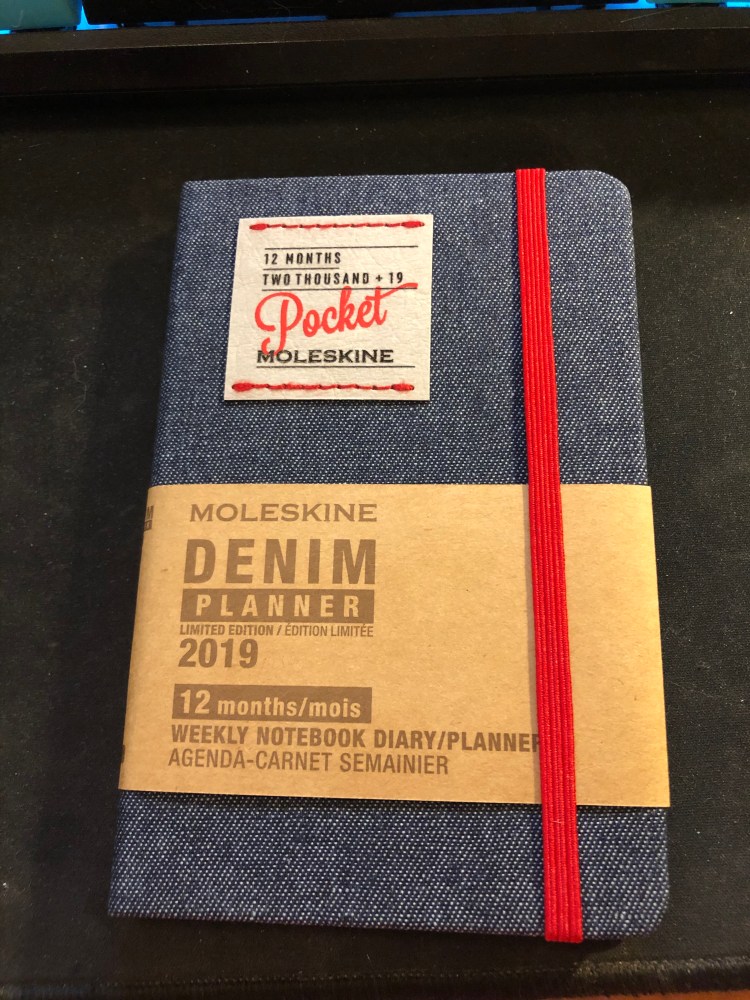
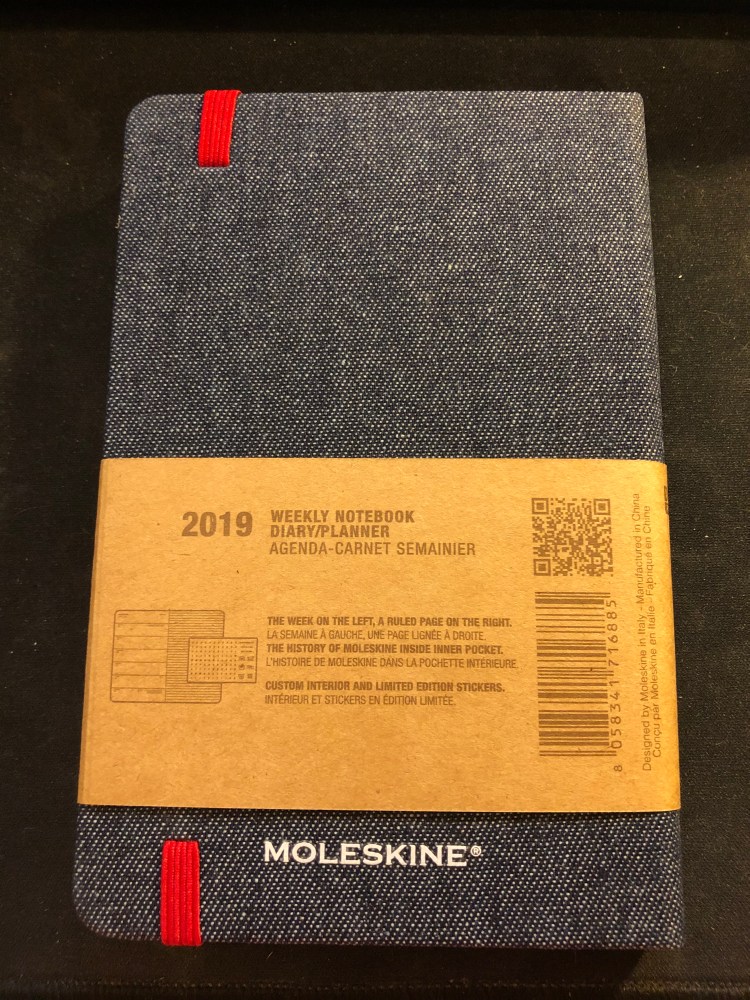
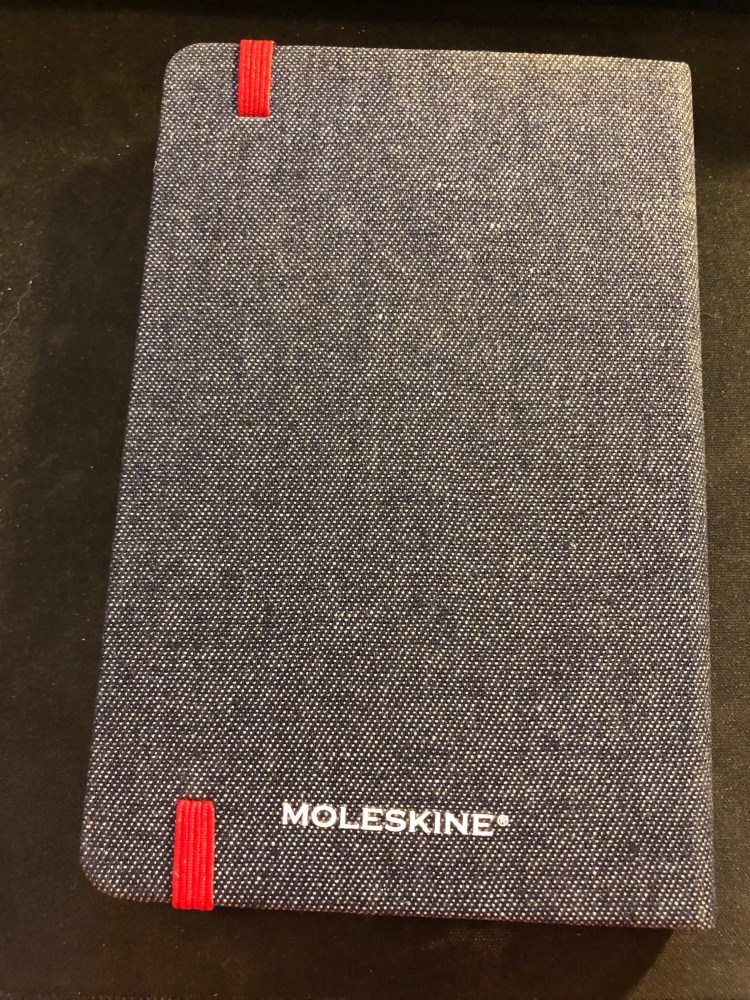
Beyond the regular planner editions, Moleskine offers a wide variety of planners in their various limited edition designs (Harry Potter, Star Wars, Peanuts, Le Petit Prince and more), among them in their Denim collection, which is one of my favourites.
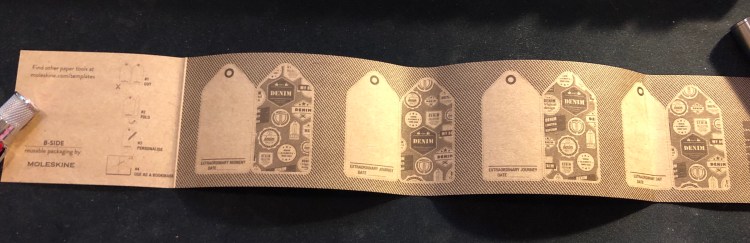
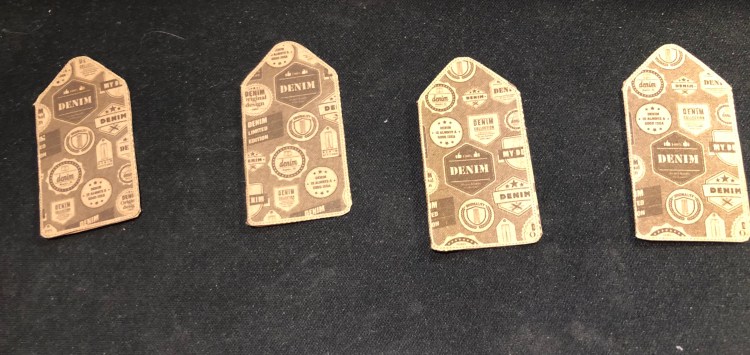
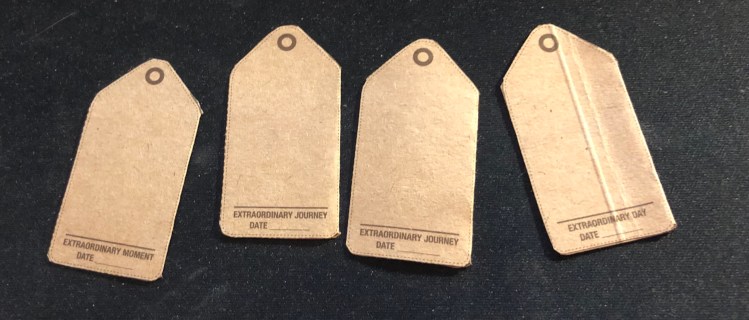
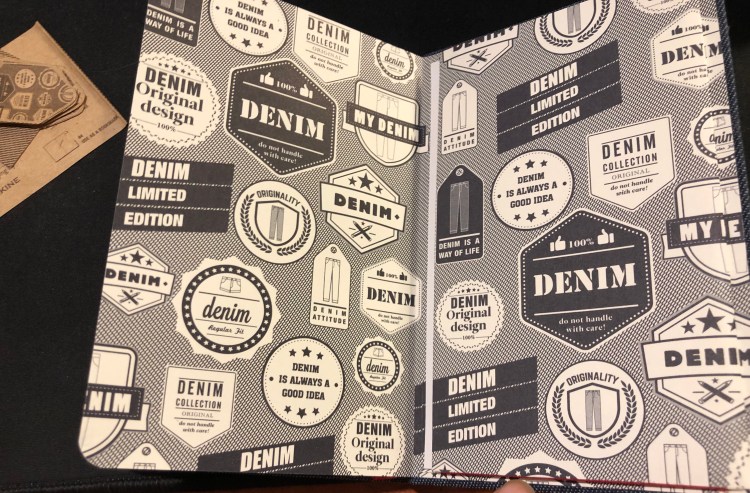
The covers are covered in Denim fabric, with jeans-like labels on them. The craft sleeve around the planner turns with a few minutes of work into bookmarks perfectly sized for the planner:
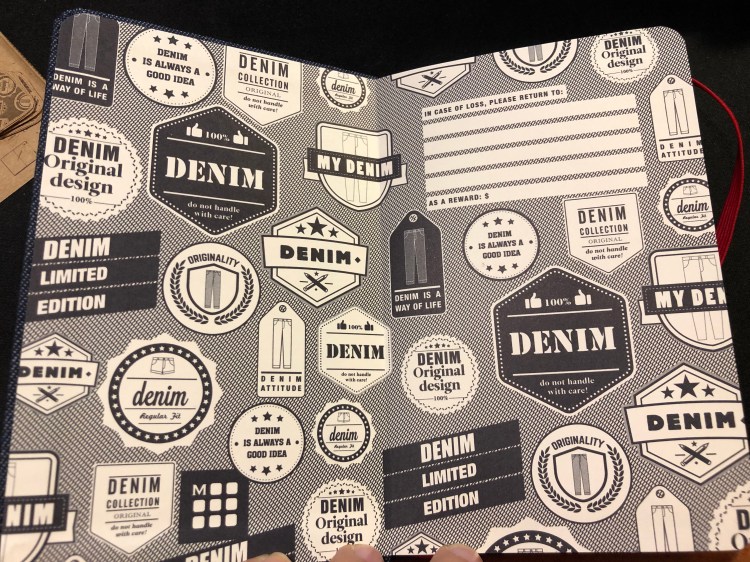
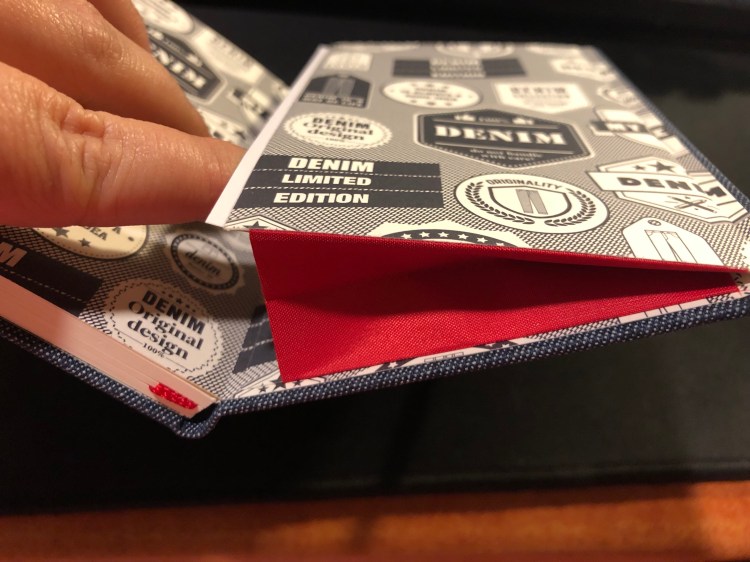
The endpapers are really nicely designed to evoke various denim labels, and the red elastic closure is echoed in the small back pocket:
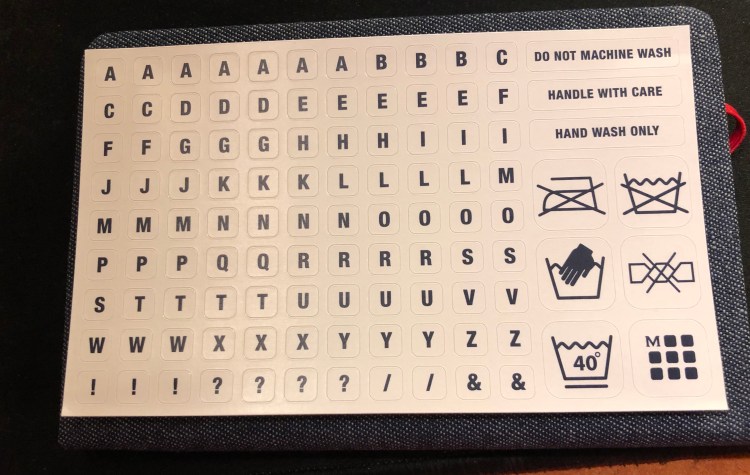
As usual with Moleskine limited editions, it comes with a little something extra in the back pocket, this time stickers:
As for the internals, it’s the same as other Moleskine weekly planners, with a weekly schedule on the left side of the spread and a ruler page on the right, monthly calendars and information pages at the beginning of the planner, and a few general planning pages.
If you’re looking for a pocket weekly planner that’s beautiful, lightweight and not overly structured, I highly recommend this planner.
Podcast:Cortex, with Myke Hurley and CGP Grey. A two guys talking about their work process, their workflows, the tools they use, and their respective businesses in a surprisingly entertaining way. Worth listening to from the beginning, but you can also dive in to the latest episode.
Book: A Horse Walks into a Bar, by David Grossman. Grossman is my favourite Israeli author, and one of my favourite authors in general. A Horse Walks into a Bar just won the Man Booker award, but it is something of a tough read. If that doesn’t appeal to you, try some of his more optimistic books, Someone to Run With (a great YA novel for teenagers and up, and a beautiful love story in and of itself), and the Zig Zag Kid (a magical realism novel that is also suited for practically all ages).
Tea: Yunnan Sourcing’s Imperial Dragon Well Tea From Hangzhou, which is a sweet and refreshing Dragon Well (green) tea that is incredibly affordable for the quality you get. Put a few leaves in a glass tumbler and top-up with hot (but not boiling) water for an all day treat.
And also: Reminding myself not to take old fools to heart. They too shall pass.
Drafting the last chapter of my novel. Writing this chapter is pure indulgence.
runDisney virtual 5k race medals have arrived. Going to earn my first medal today.
My Nock co Lanier briefcase arrived and I’ve started using it. I may do a review after using it for a few days. For now it carries my iPad Pro 9.7”, a Moleskine large notebook, and some loose papers.
Something dreadful is attacking my plants. Investigating…












 Writing at Large