Big Celebratory Birthday Update Part 3

A smorgasbord of stuff for your delectation to celebrate my birthday. You can read part 1 here and part 2 here. Only one more part after this one…

23. Lightening Book Review #3: The Vinyl Detective – Noise Floor by Andrew Cartmel. This is the the 7th Vinyl Detective book and possibly the weakest so far. Set in the world of 1980s electronic music it’s not about finding a rare vinyl record this time, but rather finding an aging electronic musician. There’s the usual hipster/foodie/audiophile vibes but the plot is air thin, you will immediately know whodunnit in the whodunnit, and there’s a desperate attempt to give this Scooby-Do style adventure an “edginess” using aging threesomes and references to John Fowler’s The Magus. There is the usual boring insistence on describing every turn in every journey the protagonists take, and the characters are even more cartoony than usual. The only truly enjoyable scene is the village fête in the end, and even that is highly unbelievable. Feel free to skip this one, unless you’re looking for a cozy, featherlight read between other books and there’s nothing better lined up.

Scene from today’s run

24. Lightening Book Review #4:The Vinyl Detective – Underscore, by Andrew Cartmel. This is why I still read this series – a cozy and highly imaginative adventure with a likeable cast, in a charming and vivid setting. The crime is stylized, the new characters are vivacious and it reminds me of my favourite book in the series, Victory Disc (book #3). Take a trip back to London in the 60s, with a dash of family drama, a hint of Italian passion thrown in, and of course a sprinkling of good music.

25. Lightening Book Review #5:The Thursday Murder Club, by Richard Osman. While we’re on the topic of cozy mysteries, this one was a treat. Unexpected plot full of twists and turns, a memorable and original cast of characters, a unique setting, humour and heartache, and a it dared to touch on actual issues with substance (aging, sickness and death, religious oppression, capitalism and corruption, and the limitations of the law and its enforcers). A very enjoyable read and not just because Elizabeth is now one of my favourite fictional characters.

26. My Apple Watch Ultra 2 has been acting up lately – it’s almost 2 years old and it’s been losing battery power and struggling to keep track of my laps in the pool. So far a full charge and a restart before every swim have helped, but it’s annoying. A watch at this price level should be able to last for 3 years at least, and yet we’ve somehow been trained to expect to upgrade our watches every year or two at the most, if only because they lose their ability to keep a charge after the first year or so. Originally my watch lasted almost 3 days between charges (and I’m a very active person). Now I have to charge it once a day. I’ve been contemplating moving to a Garmin for my workouts and switching back to an analog watch, but I use some of the Apple Watch capabilities to keep track of my health post treatments, so we’ll see.

27. I have ordered the Moleskine Limited Edition Peanuts notebooks (the yellow lined large hardcover and two sets of the extra large cahier notebooks). There’s something about this collection that I find irresistible, and so they will be part of my birthday gifts this year.

28. There’s something tragic about an unfilled and unfulfilled notebook and I have too many of those lying around. I’m considering what to do with them, especially with those that I’ve started using and have abandoned after a few pages. Let me know in the comments if you have any ideas.

29. Tomorrow I start reading Ulysses having just finished The Obstacle is the Way, the last book that I planned to read in May.

30. Lightening Book Review #6: The Obstacle is the Way by Ryan Holiday. I read the 10th anniversary edition of this book, which has a new introduction and a few additions to it. This is a very digestible intro to stoicism, competently written and researched by a man with a marketing background, but it had the same affect on me that Seth Godin’s books have: it glanced on my brain and left no mark. It was hard to concentrate on this book not because it was challenging but because it was not: it was like eating easily digestible, flavourless popcorn with sprinklings of anecdotal salt at the beginning of each tiny chapter. You are left hungry and unsatisfied at the end, not sure what exactly you consumed.
Philosophy should make you sit up and pay attention, think, stretch your mind and sweat a bit. It was divorced from its gravitas, substance and challenge in this book, and that’s a pity.

31. There’s no greater joy than crumpling yesterday’s to do list and tossing it out.

On Reading Difficult Books

Is there a book that you want to read but scares you? It’s too long, or too technically demanding, or its subject matter is challenging — is there such a book on your virtual or physical bookshelf?

I have several such books waiting to be read. I also make a point to read several such books each year. They’re nearly always worth the effort.

Goodreads and its annual reading challenge make readers favour short, quick reads, skim reading and light reading. This is not by chance, but this isn’t a post about the failures of Goodreads as a platform. This is a post about reading difficult books, and the point is that if you want to challenge yourself you’re going to have to make a concerted effort on your own.

You will have to motivate yourself because reading platforms and book clubs skew towards books that can be read quickly and relatively easily, and we’re being trained daily to shorten our attention span and ruin our capacity to concentrate and think by platforms like TikTok, Instagram and YouTube. To read difficult books is to go against the grain, to retrain your mind to deep, meaningful thought, to long stretches of concentration, to a higher level of empathy. It’s the difference between a fast food burger and an evening with a 3 star Michelin chef showing off his best work. It’s worth it, but it costs more.

If you chose to go on that challenging but worthwhile journey, here are some tips to help you along the way:

  • Build up to it – don’t start with the toughest, longest, scariest book on your list and try to white knuckle your way through. Build up to it by stretching and building up your reading and concentration “muscles” first. If you’re building up to length, for example, fantasy and space opera sci-fi novels are a great way to get there, as they’re usually well paced, relatively easy reads. Historical fiction and family sagas can train you to follow multiple timelines and characters, and short stories utilizing modernist and post-modernist techniques can offer an easier way to encounter them for the first time.
  • Have a light read going simultaneously – this is particularly effective if the book you’re tackling has a difficult subject matter. Have a light, fun read going on at the same time and switch between the two, allowing yourself a break from the difficult topic and time to process it every once in a while.
  • Find a partner for the journey – find a friend, online or in real life, who’s interested in reading the same book as you are, and help each other through it.
  • Find a community – it’s difficult to find a friend interested and able to dedicate time to take the reading journey with you, but it may be possible to find a community of readers going through the book at the same time as you are. It can be through a local bookclub, a virtual bookclub, a reddit community, a Goodreads group, a discord channel – whatever group you can find and suits you. Just make sure you’re comfortable with the group rules in terms of code of conduct and spoilers, and feel free to leave if you encounter toxic behaviour.
  • Create a framework to help you through – ideas for this can include various trackers, reminders, applications like Forest or other Pomodoro like counters that help you focus, little treats or incentives after reaching certain milestones. If I’m reading a particularly long book, I set up a dedicated tracker and a page count I want to hit every day, to make sure that I don’t feel overwhelmed and can visually see my progress. It somehow helps me deal with the goblin in my mind that is screaming that this book is too much for me and I don’t have time for it. Field notes are great for this, especially the squared and reticle grid ones.
  • Start by reading a good chunk – on your first read at least the first chapter or several chapters, so that you get into the flow and tone of the book as soon as possible. I tend to aim for 30-50 pages on the first sitting.
  • Get a physical copy of the book, not a digital one. Paper books are easier and more enjoyable to read than digital ones, as our mind finds them easier to process because of the way we read (oftentimes returning a page or two back to check on something, or flipping to a previous chapter to remind ourselves who that character is or what happened last time). Whenever I’ve tried to read a difficult book on my Kindle, I’ve regretted it (The Alexandria Quartet is the latest example).
  • Feel free to give up, tomorrow – if the book is too much for you, it’s OK to decide that you’re not going to finish it, or you’re going to get back to it at a later date. But before you do that, take one more day to make an effort and read another chunk anyway. Why? Because you may have just reached a particular tough spot, and in a few pages things clear up, or become easier to digest. Also, you may just be having a bad day, or you’re particularly distracted or tired and so the writing becomes more opaque or more of a slog. Give it another day and if it doesn’t improve, move on.
Tracker for Paul Auster’s 4321 on a Field Notes Snowy Evening with a Spoke Design pen.

I’m currently reading Paul Auster’s 4321, which is a challenging read due to its length and its structure. Later on this year I plan to reread James Joyce’s Ulysses (I read it twice cover to cover already, and studied it while taking my degree). I’m considering tracking my rereading here, in case someone wants to follow along. Let me know in the comments if that’s something that may interest you.

New Reading Journal

Yesterday I finished my fifth reading journal, and so I thought that it would be a good opportunity to write a post about how I set up my reading journal.

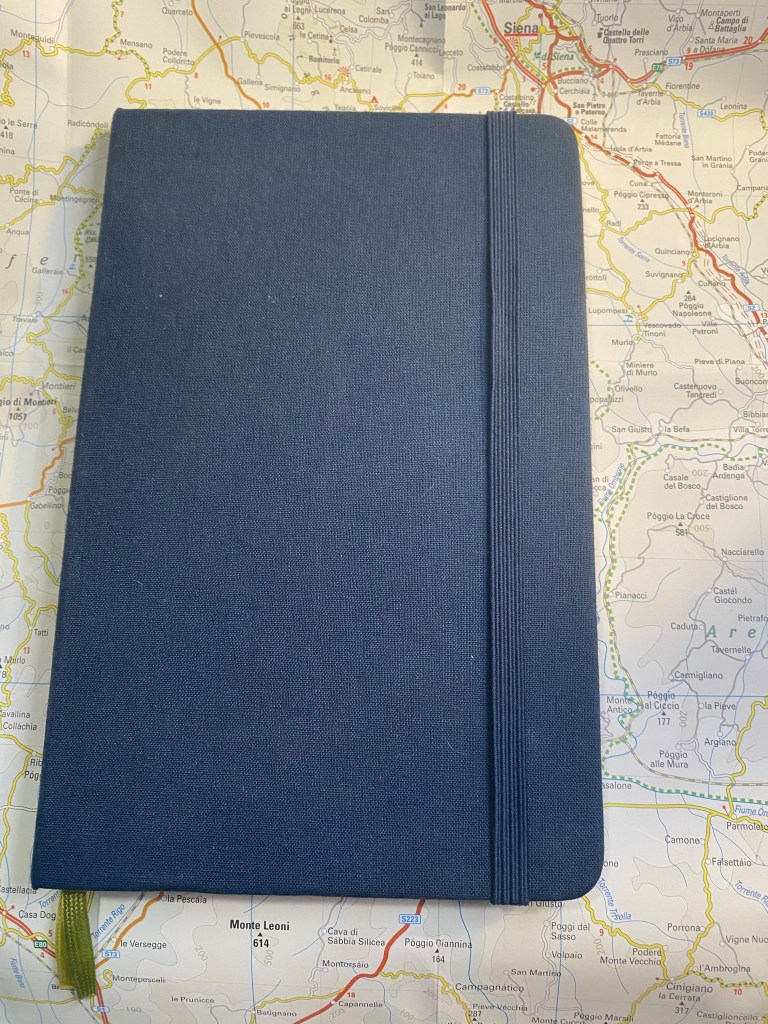
I use my reading journal to keep track of what I read and to encourage me to read more. This is the journal that I’ve just finished, a Moleskine Two-Go:

Moleskine Two-Go. The perfect size and format for my needs.

I used to use a Field Notes Arts and Sciences notebook for my reading journal, but once I got back to reading more it made sense to move to a larger journal. For the past three years I’ve used the Moleskine Two-Go, and I fill one book journal a year (70 books are logged in each notebook).

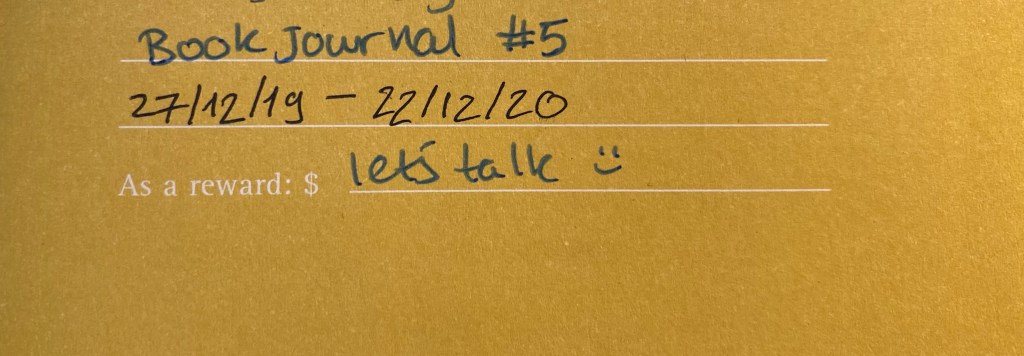
Start and end date for this reading journal.

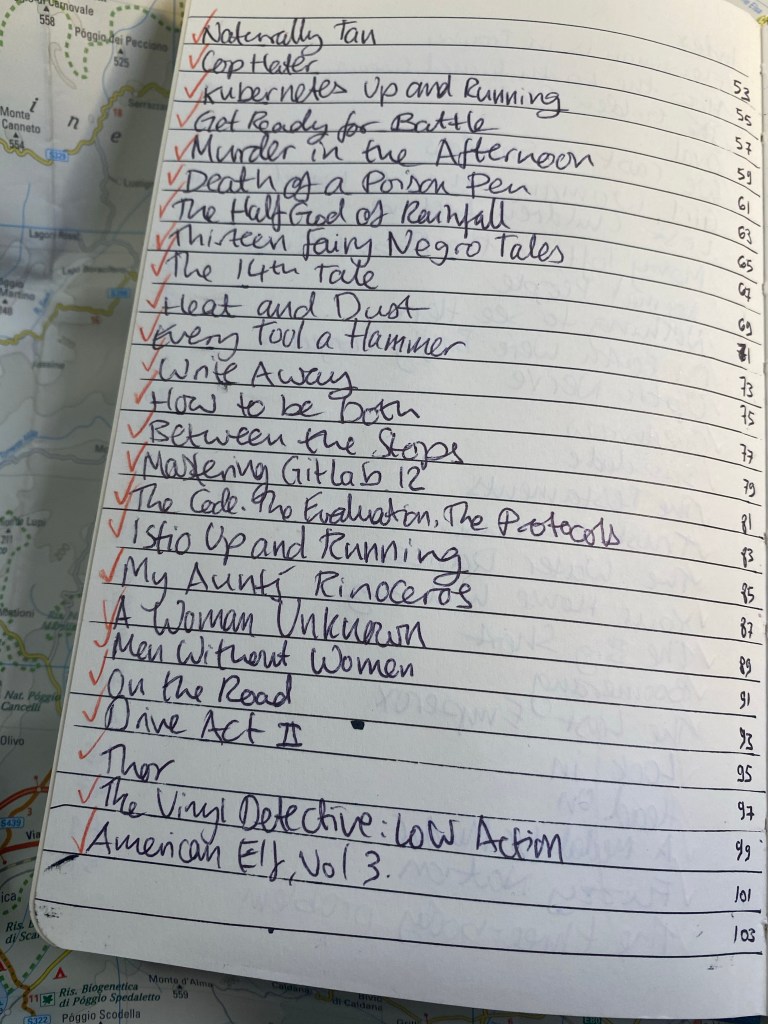
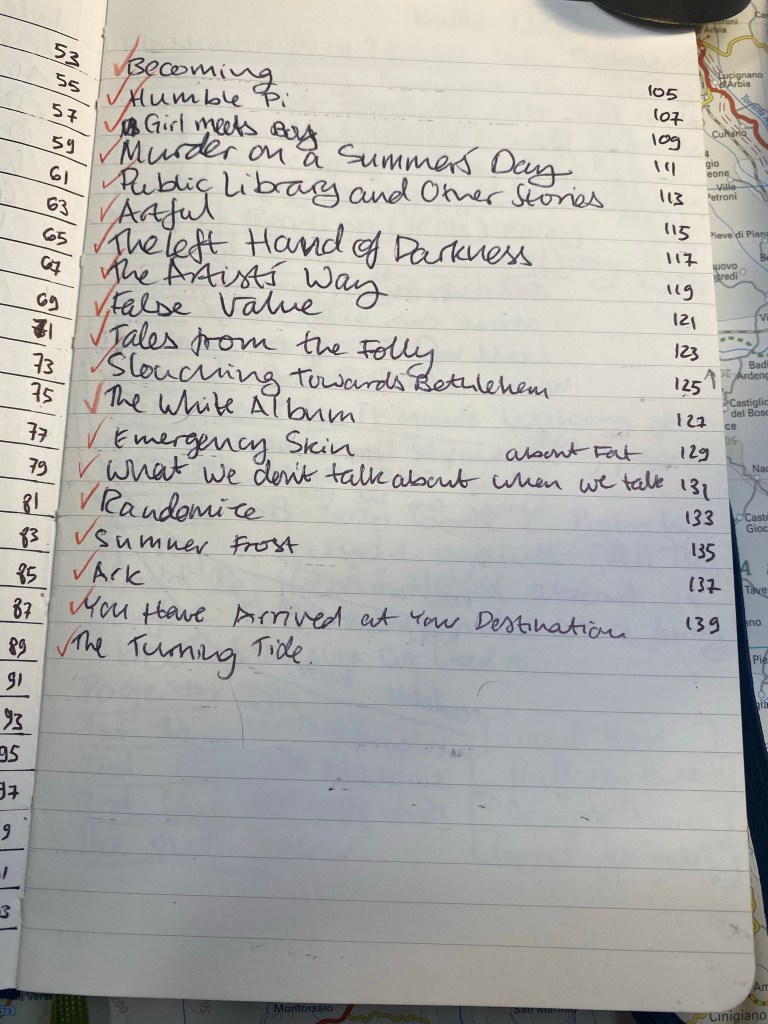
This is the setup in my old reading journal. Three pages of index:

First index page. Red checkmarks for books that I’ve read.

The Moleskine Two-Go comes with pages that are blank on one side and lined on another, which is perfect for my use case, except for the second index page, which I need to rule myself:

Ruled second index page.

I missed a line on the second index page, so the index numbering came out a little wonky. It’s only for me, so I don’t mind.

Off by one error in my index.

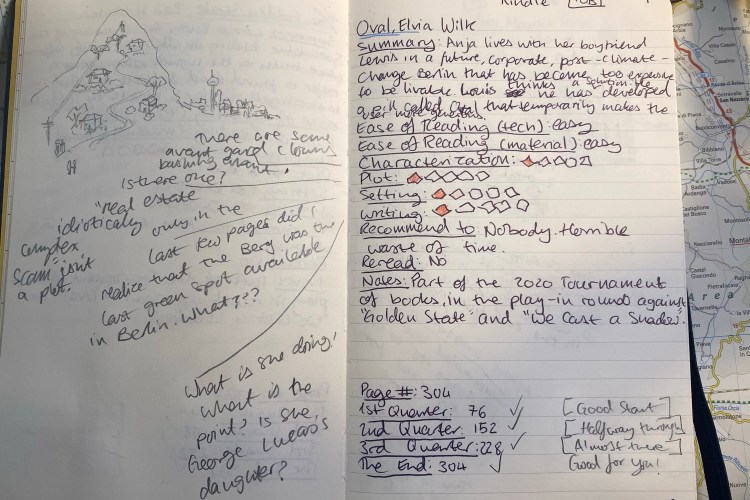
Here’s a sample of a complete page. I talked more about my thoughts behind the design in a previous post, but you can get the gist by looking at this sample. I like drawing something that captures the book for me on the opposite page, which is why I love the Moleskine Two-Go format.

I remember really not liking this book, and this is a reminder of why.

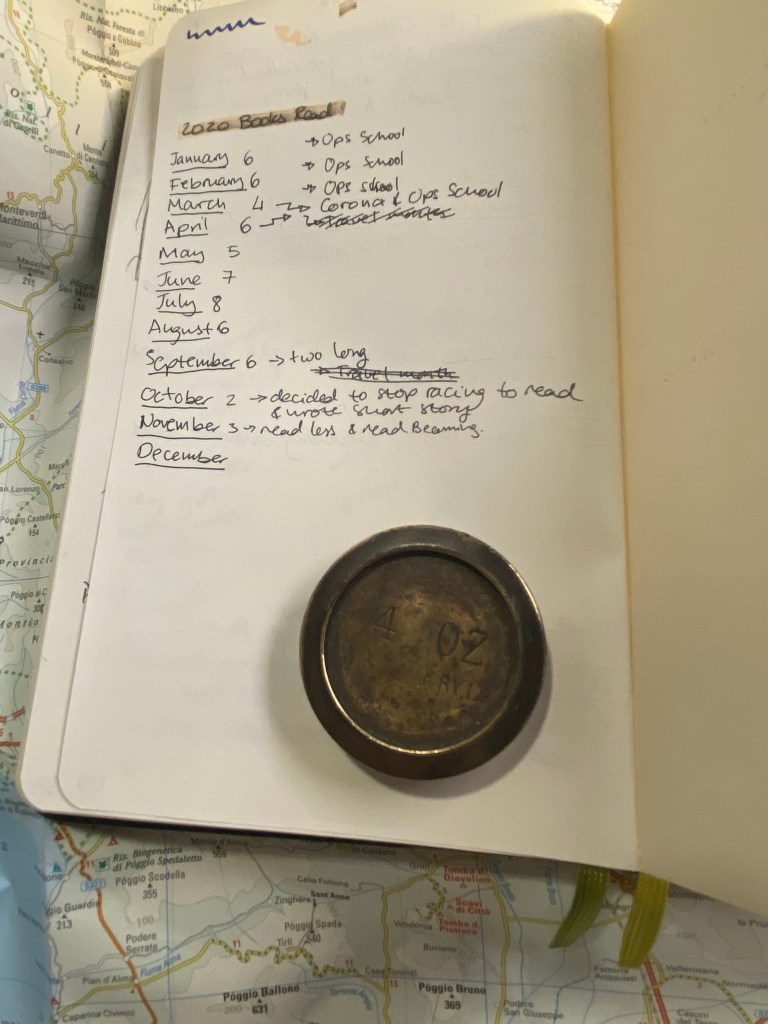
At the very last page of the journal I keep a log of how many books I read that month. It’s ten books so far for December, but the month isn’t done yet so that line isn’t filled.

Number of books per month tracker.

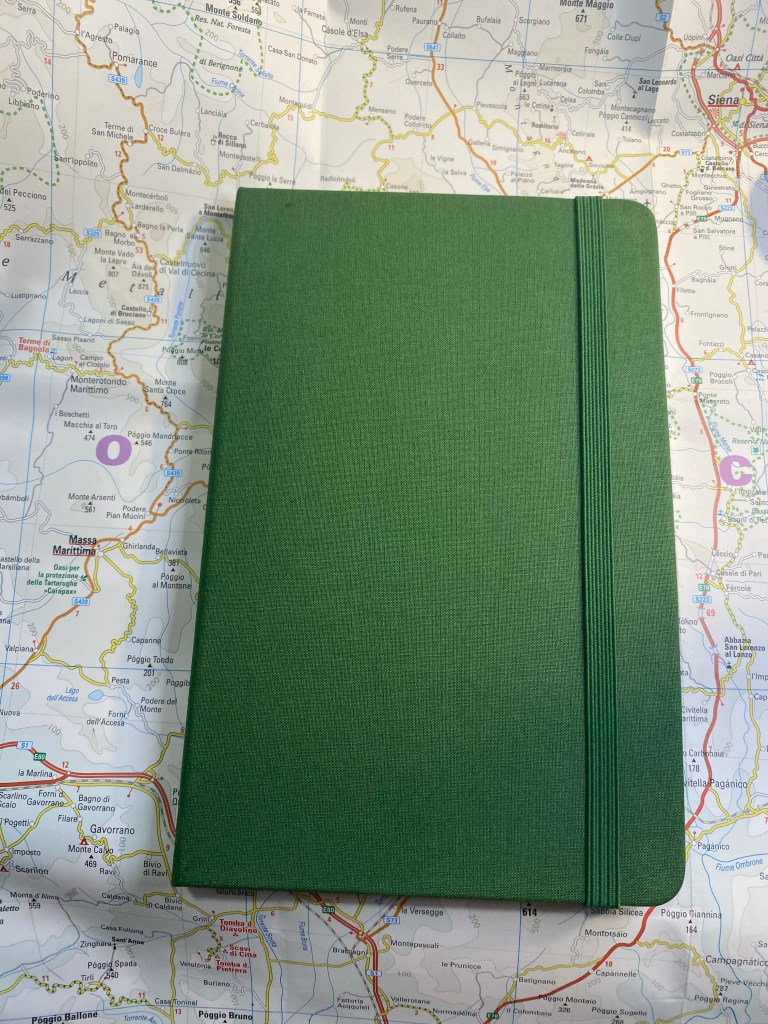
Here is my new reading journal, a Moleskine Two-Go, this time in green (my previous ones were in light grey, dark grey and navy):

Front cover.

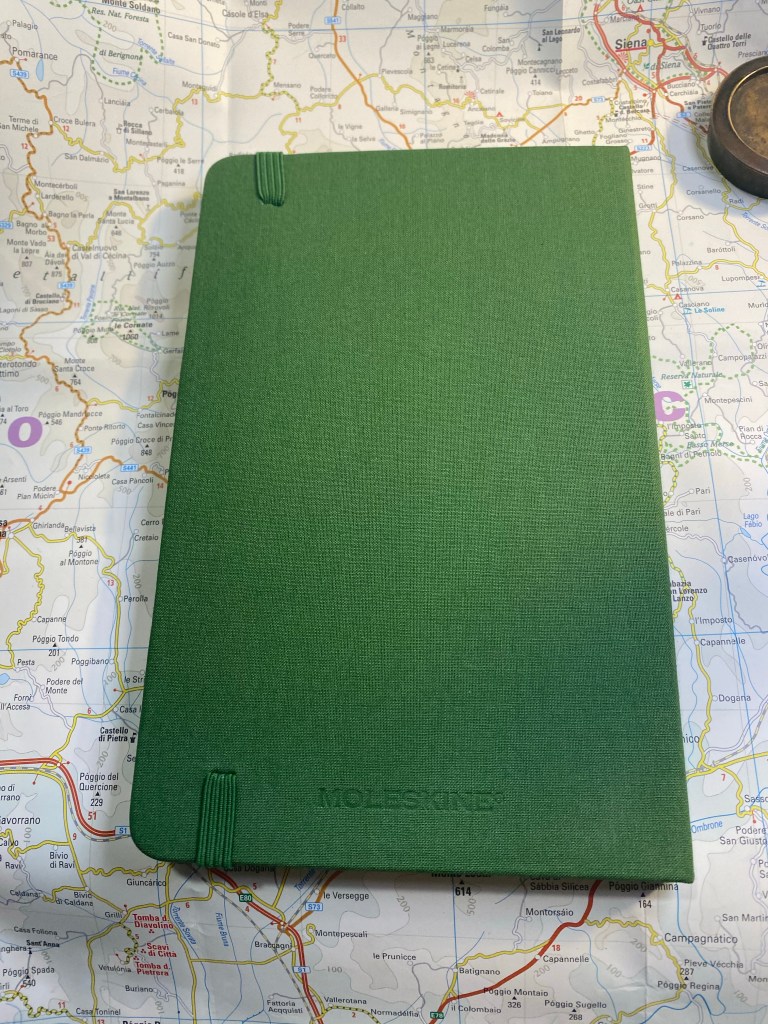
I love the texture of the fabric colours on this, and the shade of green is interesting. The two contrasting bookmarks and the endpapers are grey.

Back cover

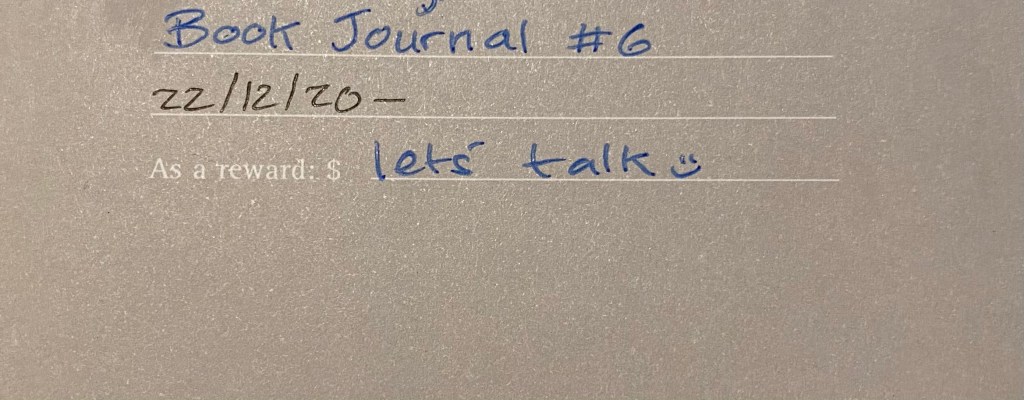
The first page, marking when I started the notebook and which journal number it is. This notebook doesn’t leave my desk yet I still write my name and email in case I misplace it somehow.

Front page

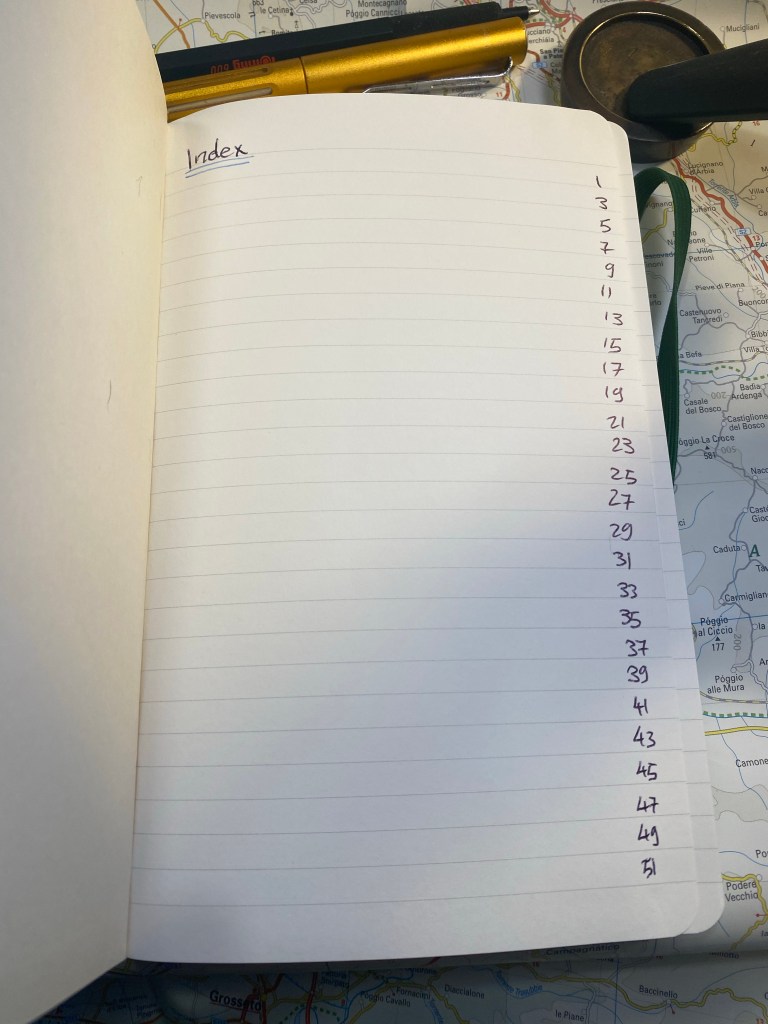
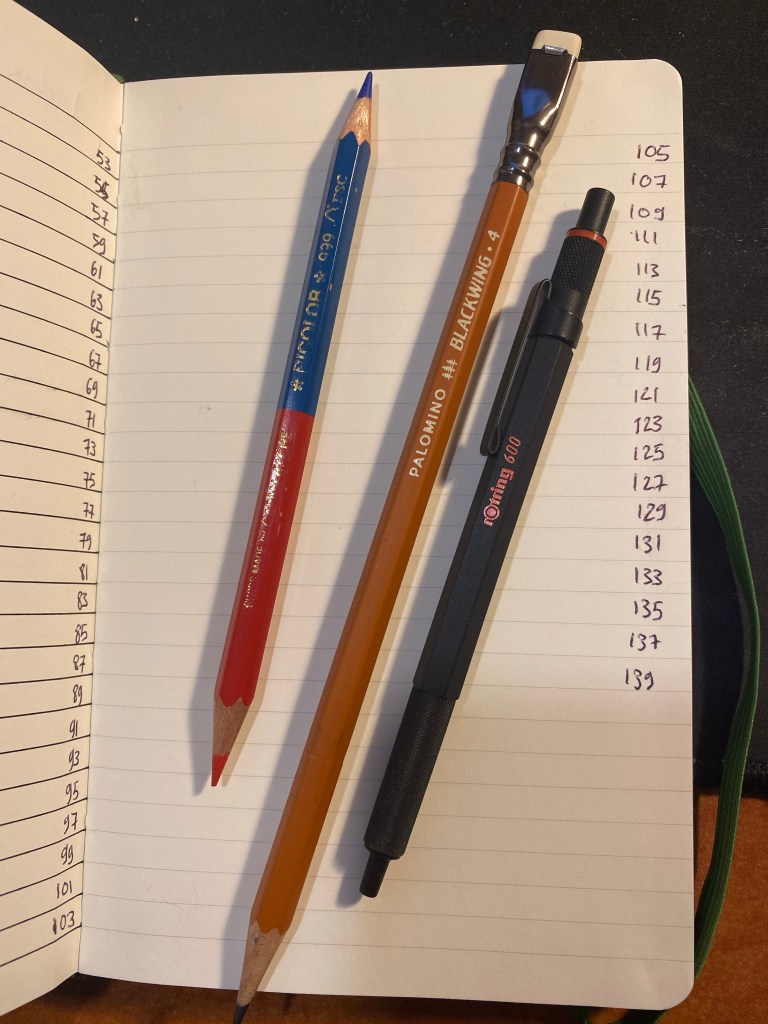
Next comes the index page. Since this is my third Two-Go reading journal I already know to number the pages until 139 (I number odd pages only, since my reviews are on odd pages), which comes out to 70 books.

Index page.

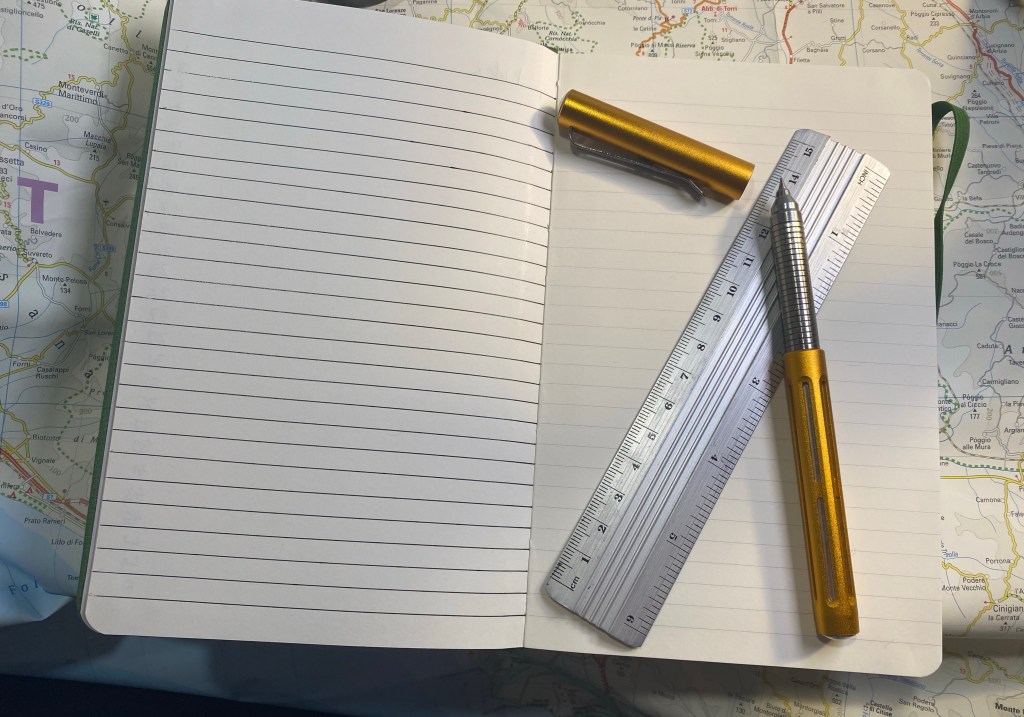
I rule the second page, because I tried just winging it on the first year and it didn’t come out great.

Spoke pen for the win.

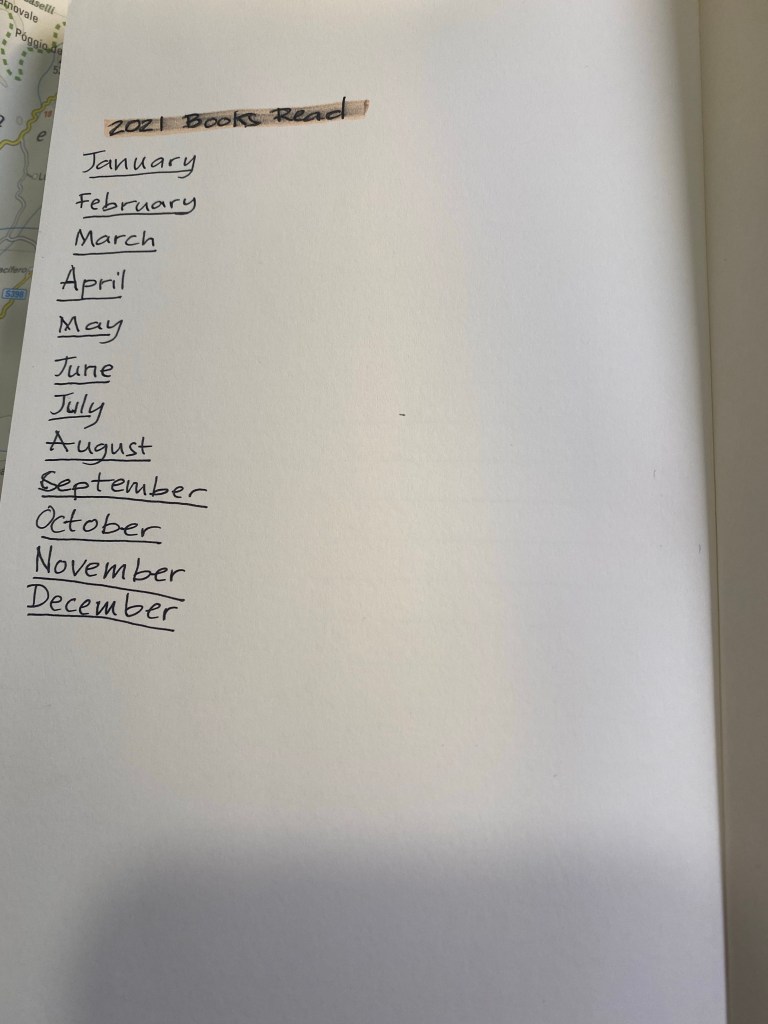
On the last page I create my books per month tracker:

Zebra mildliner highligher smears gel ink, but I still like it.

I number all the pages of the index, but only the first 25 pages of the actual book journal. I will continue numbering pages in batches as I add books to the journal. The great advantage of using a completely unstructured book here is that I can do whatever I want with it, including starting the numbering after the index pages and not on the first notebook page.

These are the pen and pencils that I’ll be using in this journal. The Rotring 600 is a ballpoint, and the only ballpoint that I regularly use. The Caran d’Ache Bicolor has been my companion in these notebooks for several years. I use it to highlight things, and sometimes in my book scene sketches. I used the Blackwing 611 in my previous reading journal, and this time I’ll be using the Blackwing 4.

Caran d’Ache Bicolor, Blackwing 4, Rotring 600 ballpoint.

The first non fiction book in this journal:

The Good War

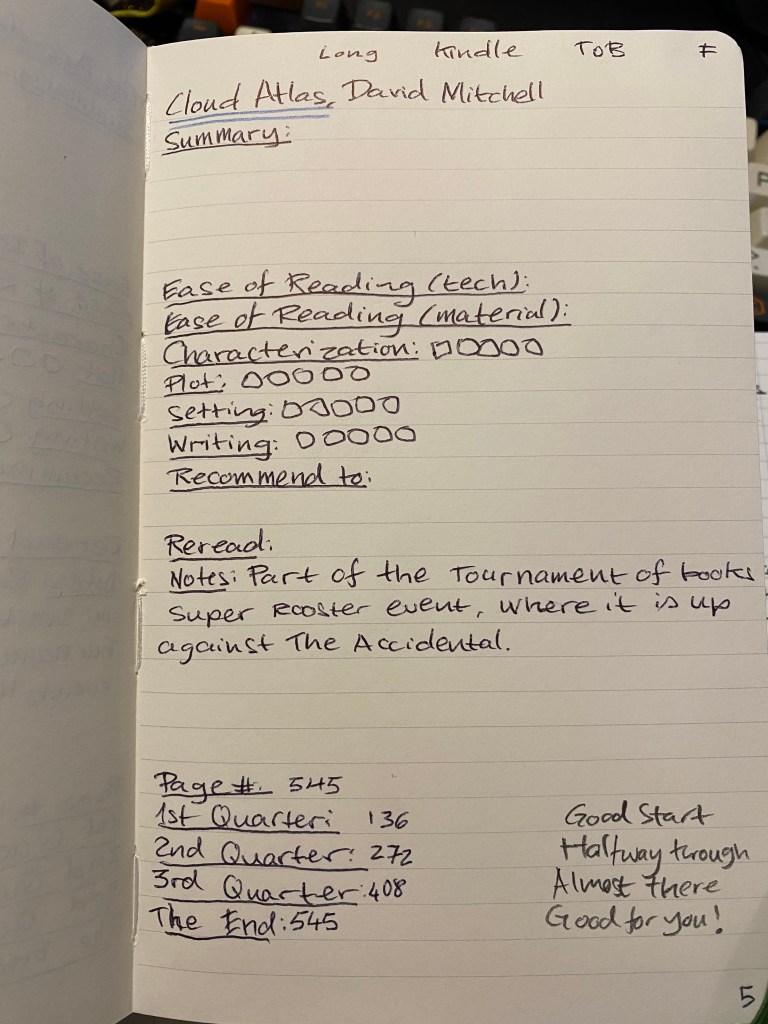
The first fiction book in this journal:

Cloud Atlas. ToB means Tournament of Books.

That’s my new reading journal all set up and ready to go. I hope that this inspires you to keep a reading journal of your own, one that will encourage you to read more and help evoke the memories of reading a specific book.