My 2026 Q1 Planning and Moving to a New Planner
On setting up my 2026 personal planner and planning the year’s first quarter.
Read More...A blog about writing, sketching, running and other things
On setting up my 2026 personal planner and planning the year’s first quarter.
Read More...A hectic week but an interesting one.
I went to see a local production of Singer, a play by Peter Flannery. It was phenomenal but it kept me up at night, which meant that the following morning I headed straight to my local cafe. I sketched the barista but something didn’t work in terms of getting her face right – she turned out sadder than she is. Sketching tired is rough.
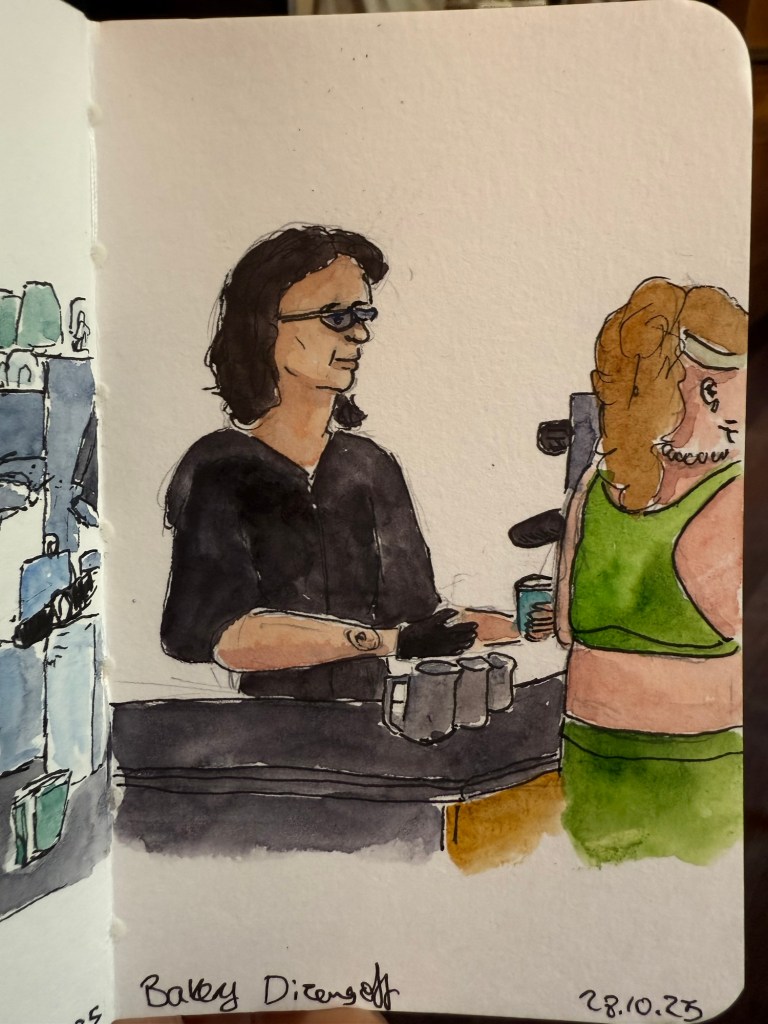
Here’s the rather messy pencil and pen sketch. I can tell just by the line quality that I was very, very tired.

A day later I went to sketch at the nearby park and you can see the difference in the line quality in this sketch:
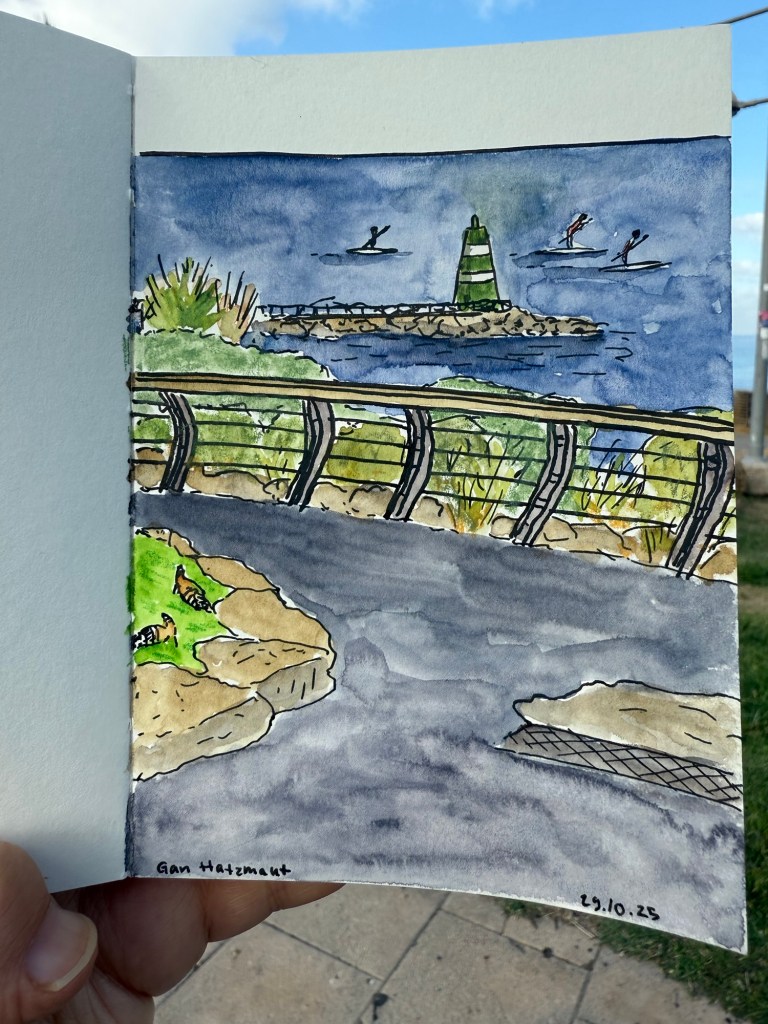
Initial sketch:

Later that week the film photographs that I’d had developed were returned to me. Here are a few of my favourites:
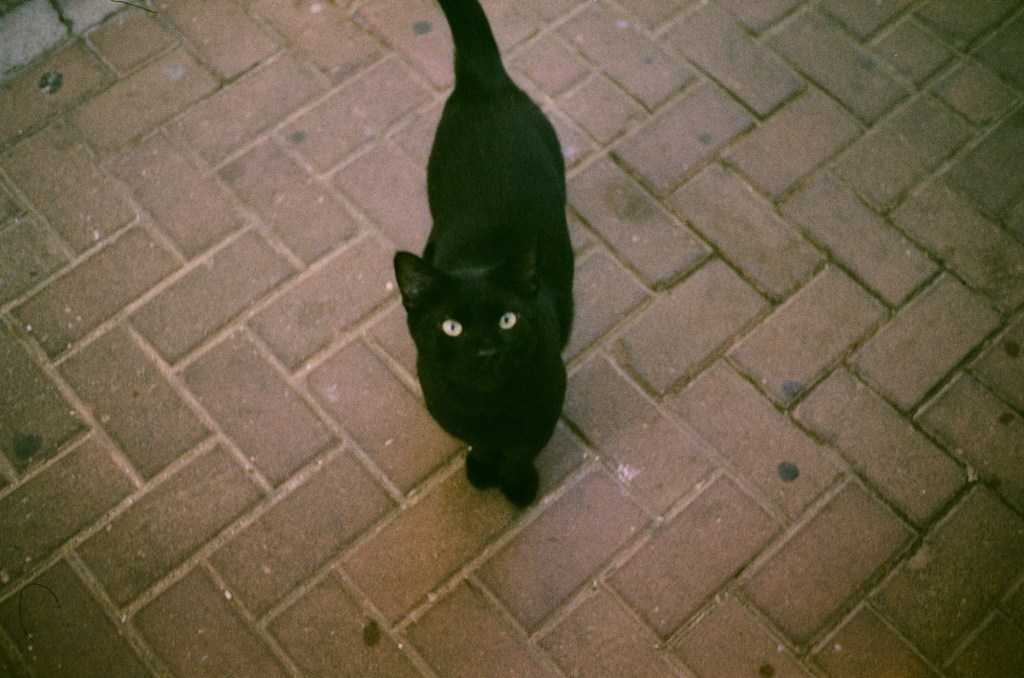
I love the atmosphere that the film gives this simple photo:

All of these photos are unedited. I’ll likely clean them up later on.

There was a fire on the roof of a nearby hotel. I took this photo a day after the fire, and you can see the damage:

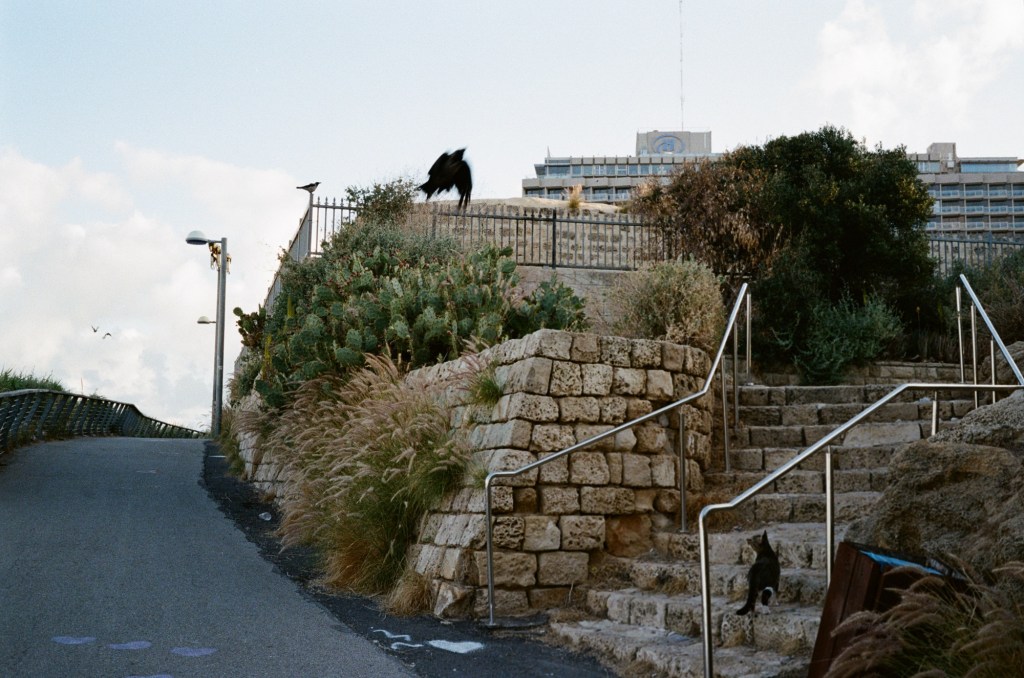
Cat failing to hunt a crow:
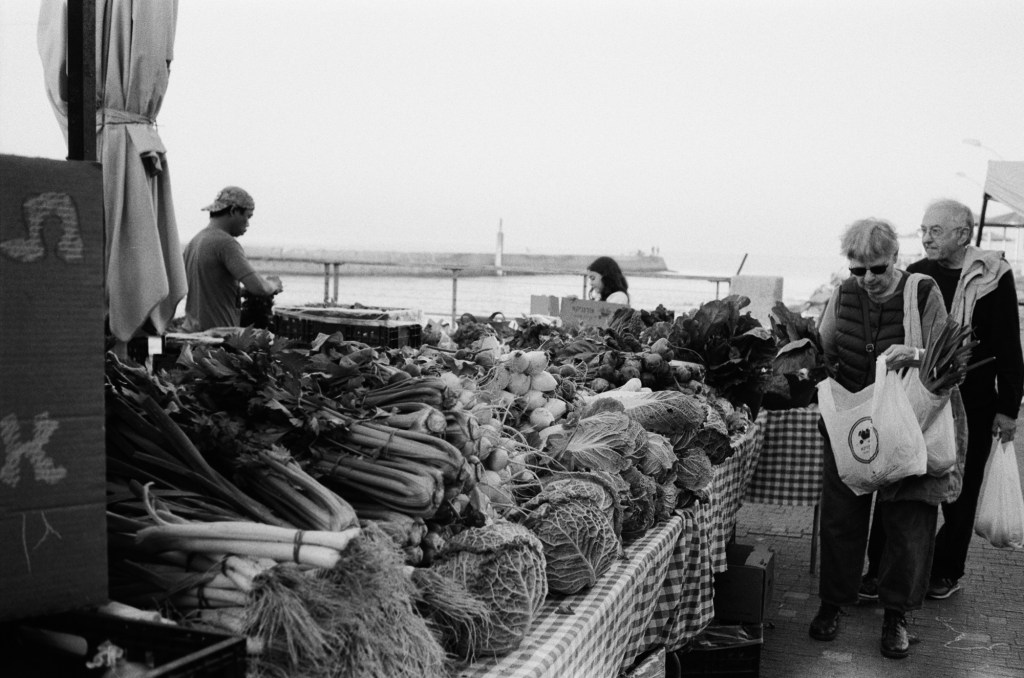
A stall at the local farmer’s market:

A stall at the local farmer’s market. You can see the see in the background.
I was supposed to run at a 10k night race on Wednesday, but I wasn’t feeling too good and I was apprehensive about dealing with the crowds so I ran the distance by myself a few hours before the official race start. It was a good decision as I was really struggling during the first 3k – but I did manage to finish, and finish strong.
I finished reading “Helmet for My Pillow” by Robert Leckie (a powerful narrative, but not as punchy as “With the Old Breed”), read “Death of a Nurse” by M.C. Beaton as a palate cleanser, and I’ve now started “The Shattering Peace”, John Scalzi’s long awaited sequel to his Old Man’s War series.
I’ve been overwhelmed with the responses to my Pelikan Hubs post. Thank you all for your kindness and for the thought and effort you put into your comments. I read them all, I just wasn’t able to respond to all of them this week.
Speaking of the Hubs, all of my pre-hubs inked pens have been written dry, which means that I currently have a 100% Pelikan rotation, plus some Platinum Preppy’s that I use for sketching.
Have a great week!
Is there a book that you want to read but scares you? It’s too long, or too technically demanding, or its subject matter is challenging — is there such a book on your virtual or physical bookshelf?
I have several such books waiting to be read. I also make a point to read several such books each year. They’re nearly always worth the effort.
Goodreads and its annual reading challenge make readers favour short, quick reads, skim reading and light reading. This is not by chance, but this isn’t a post about the failures of Goodreads as a platform. This is a post about reading difficult books, and the point is that if you want to challenge yourself you’re going to have to make a concerted effort on your own.
You will have to motivate yourself because reading platforms and book clubs skew towards books that can be read quickly and relatively easily, and we’re being trained daily to shorten our attention span and ruin our capacity to concentrate and think by platforms like TikTok, Instagram and YouTube. To read difficult books is to go against the grain, to retrain your mind to deep, meaningful thought, to long stretches of concentration, to a higher level of empathy. It’s the difference between a fast food burger and an evening with a 3 star Michelin chef showing off his best work. It’s worth it, but it costs more.
If you chose to go on that challenging but worthwhile journey, here are some tips to help you along the way:

I’m currently reading Paul Auster’s 4321, which is a challenging read due to its length and its structure. Later on this year I plan to reread James Joyce’s Ulysses (I read it twice cover to cover already, and studied it while taking my degree). I’m considering tracking my rereading here, in case someone wants to follow along. Let me know in the comments if that’s something that may interest you.
One of the things that I set up in my Leuchtturm1917 Bullet Journal is a list of the unread books on my Kindle. It’s supremely easy to buy books on a Kindle, as the whole system is set up a way to make book purchasing as fast and frictionless as possible.
This is a problem for me.
I love books, I adore reading, and I have pretty large group of friends that love reading too. This means that I’m inundated with great recommendations that run the gamut from light hearted fantasy and sci-fi to contemporary and classic literary fiction, with a whole host of fiction and non-fiction books in the middle (I don’t read horror and I don’t read romances and I rarely read poetry but that’s about the only limits I have in terms of my reading tastes). I get several such book recommendations a month, and with my initial impulse to rush out and buy them, and with the ease of purchasing books on a Kindle, things could get out of hand very quickly. This was one of the reasons why for years I was so resistant to buying a Kindle.
You see, it’s very easy to lose track of just how many unread books you have on your device. Even if you sort by unread books, you just don’t get a real feel for how many of them are actually waiting to be read. There’s no bookshelf groaning with the weight of unread books, and I was feeling the lack of that.
Enter my list of unread books on my Kindle:

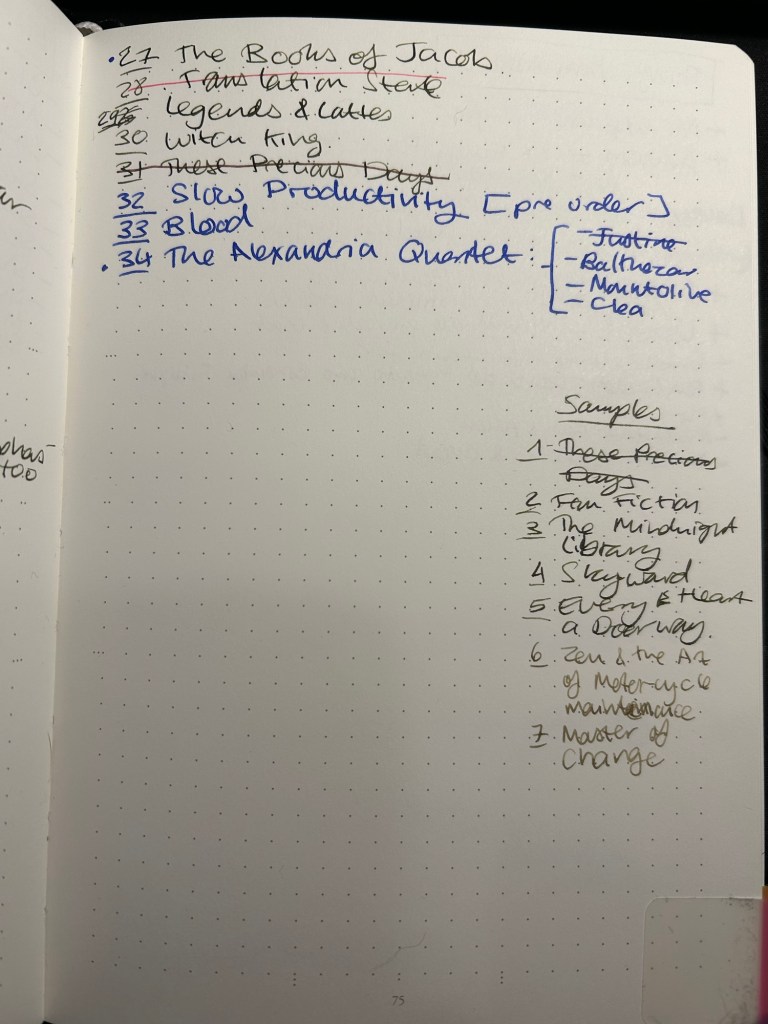
It’s a simple numbered list of books that I haven’t read and are on my device. As I read a book, I cross it out. As I purchase more books I add them to the end of the list. As I’ve gotten into the habit of downloading samples, I’ve started to write them down too so they don’t get out of hand. It’s super simple, as bare-bones as it can be, and as practical as possible. The point is just to give my brain an idea of the scale of unread books on my device, and it works.
It works.
I’ve stopped compulsively buying books in the fear of “running out of something to read” or “forgetting what I was recommended”. Recommendations go into my GoodReads “Want to Read” list. And my brain can now see that there’s just no chance that I’ll run out of things to read any time soon. If I buy something I have to go over the list and convince myself that what I’m buying deserves precedence over the lovely books waiting patiently in line, some of them for years. I also photograph this list and keep it on my phone for reference, to prevent me from accidentally buying the same book in physical format (unless I purposefully intend to, which is rare).
What about the physical books stacked on shelves, some of them two books deep? I would love to have such a list for them as well, but that task is too daunting for me now. I remember where my books are visually, and moving them all just to catalogue them not only seems like an awful lot of backbreaking work, it will destroy my “memory catalogue of books”. So it seems that my physical books will remain uncatalogued for years to come.
Do you keep a list of all the books you own but haven’t read yet? Do you just keep a list of the books you intend to read next? Do you track your physical books in some way?
 Writing at Large