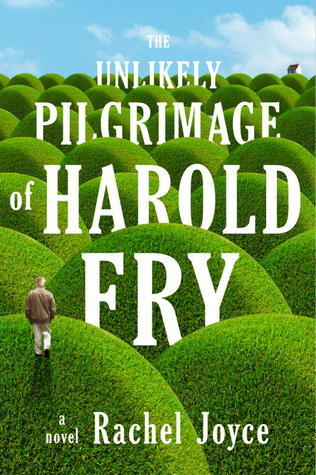
I picked up this book because I was supposed to go see the West End musical based on it and I wanted to know what to expect before I went.
The book is built to be a tear-jerking, moving affair, and it delivers on its promise. Joyce clearly knows the tropes that we expect, and cleverly weaves her narrative in and around them. The things that you are sure to happen to Harold on his way don’t happen, though the narrative is well aware of their possibility. What you’d expect his wife Maureen to do is also something Joyce enjoy subverting. There is something delicious about seeing a capable writer at work.
In any case, the basic plot is that Harold, a recently retired company man who lives in a village in southern England is stuck in his life. His wife Maureen lives in the same house with him, both of them recluses, and spends her days cleaning the house, finding fault with everything Harold says or does (the couple live in separate rooms and have been for years) and complaining about him to their son David. Maureen keeps expecting David to come visit, and Harold seems to have no friends, no hobbies, no prospects, no future.
This all changes when Harold gets a letter from his friend Queenie, a coworker that he hasn’t been in touch with for 20 years. She’s in a hospice, dying from cancer, and the letter is her farewell note to Harold. It moves him deeply, and he decides to write back to her. Instead of just posting the letter, he starts to aimlessly walk from one postbox to another, each time postponing sending the note – until a chance conversation with a woman at a gas station has him setting on an ill conceived pilgrimage to Queenie’s hospice, 450 miles away in the border between England and Scotland. As he meets people on the way he contemplates about his past, and we slowly piece together what happened that brought Harold, Maureen and Queenie to where they are today.
There are moving bits, frustrating bits, and one big, gut-wrenching revelation that makes you want to hug all three characters tightly. But mostly it’s a story about invisible people, people that seem dull but have huge tragedies and love stories and dreams in their lives, a story about connecting with others and about finding redemption through your feet.
Is this book perfect? No. It’s like Harold – a bit frumpy, sometimes dull, but it has a lot of heart in it, good intentions and it’s worth spending an afternoon with, preferably with some hot tea and biscuits.
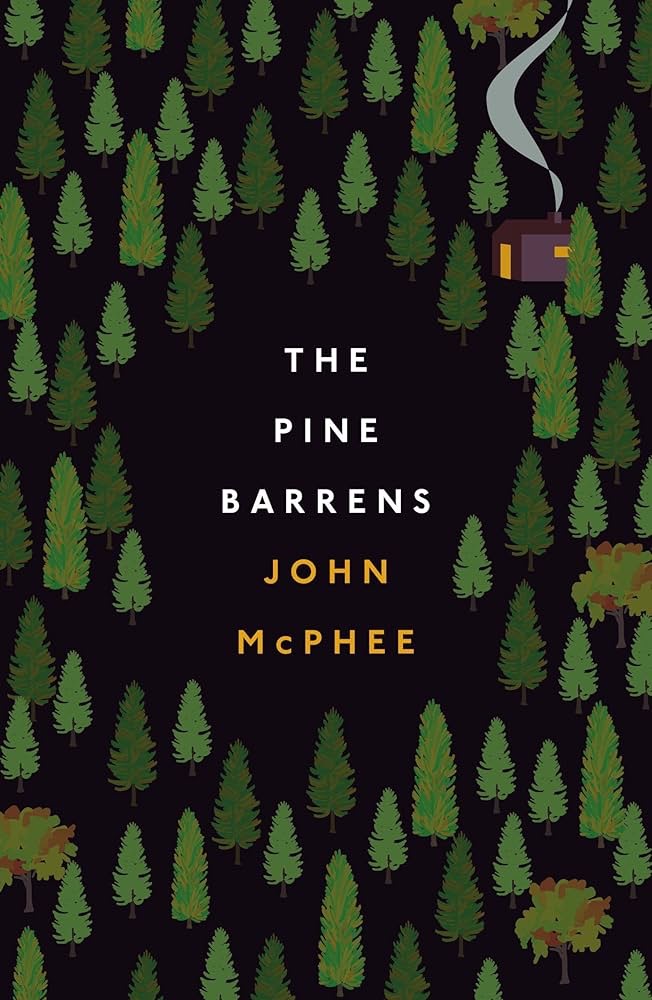
John McPhee is a master creative nonfiction writer. He excels at bringing people and places to life, bringing interest and life into topics that seem at first esoteric or dull (like oranges).
The Pine Barrens is a huge near wilderness sandy pine forest in New Jersey, enclosed by suburban industrial sprawl. A handful of people live there, (“pineys”) many of them living an almost pioneer way of life, steeped in folklore and local traditions. The pine, cedar and oak forest ecosystem is also unique, tempered seasonally by fire, growing on poor sandy soil, with cranberry and blueberry bogs dispersed among them.
McPhee zigzags across the land, painting a portrait of people and places, moving between past and present, science, history, folklore and myth like the master storyteller he is. It’s clear from the elegiac tone of this book that McPhee circa 1967-68 was expecting the place to be gone within a few years. Plans for a monstrous jetport, a sprawling city, industrial estate and housing was in the works, and the ecology, history and spirit of the place was about to be utterly destroyed. McPhee was there to document the Pine Barrens, preserve what he could before they were gone. They are still there, and the development fell through, like most other Pine Barren real-estate bonanzas.
Being McPhee he also shows you the developer’s side of the story, the state’s view of the place, and the darker side of the Pine Barrens and its people.
While I understand McPhee’s deliberate choice to make this a wandering narrative, much like the sandy trails in the forest that people get lost in, I think that The Pine Barrens isn’t the best of his writing precisely because of this structural choice. The resulting charm of the piece doesn’t make for the lack of “oomph” that other McPhee pieces have. Comparing The Pine Barrens with another elegiac book of his, Looking for a Ship, and you see that the ending lacks something. Perhaps a wildfire would have brought home the fragility and resilience of this unique place.
All in all, a recommended book, well worth your time even if it isn’t McPhee’s masterpiece.
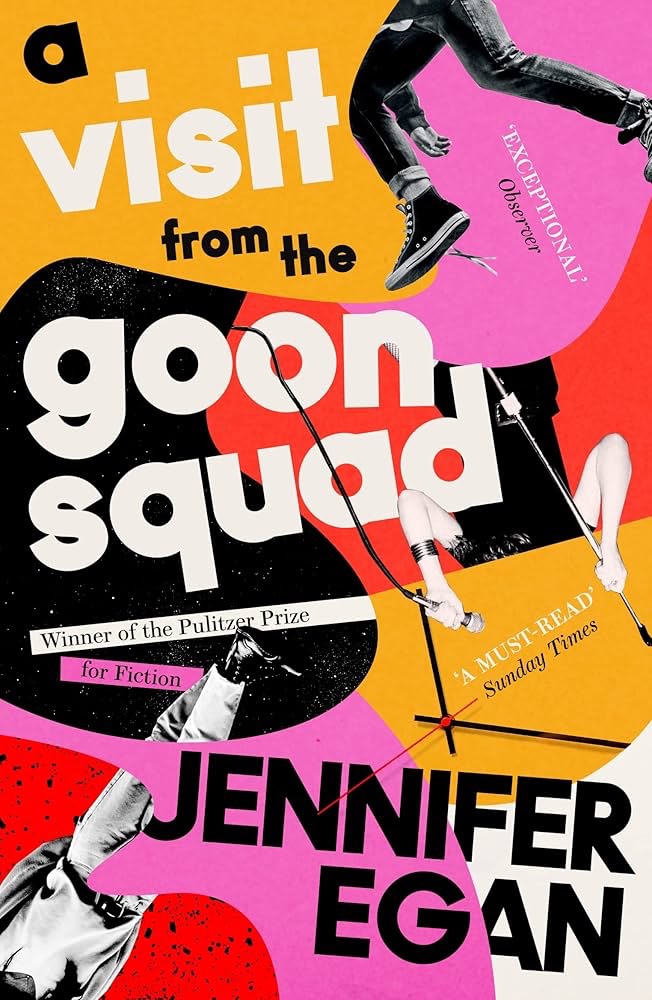
I bought A Visit from the Goon Squad back in 2011, as it was part of that year’s Tournament of Books. It has languished on my Kindle ever since. This year, however, I have decided to read the oldest unread books on my Kindle, and so it was A Visit from the Goon Squad’s turn.
First of all, the book has a dreadful name. It’s trying to be sophisticated, it ends up being uninformative and unappealing. It’s sounds like a book about comedians, or maybe a family saga of some kind, but it’s basically a string of partially connected episodes about people that work or have worked in the music industry.
The post Pulitzer win book cover
I almost gave up on this book as about 50 pages in I found myself not liking any of the characters and finding the narrative dull and bland. Then Rhea appeared, and I found myself pulled into the story. She redeemed the book, and it got better and better as I read along.
A Visit from the Goon Squad is a very readable book, apart from the deliberately dreadful writing of the only writer in the novel, Jules Jones. There’s a character that didn’t redeem himself – the more I saw of him the less I liked.
The book didn’t age well, and will likely age even worse with time. It’s embedded in a certain era – pre smart phones, social media and AI – but it’s not written in a way that will allow it to be timeless. The powerpoint penultimate chapter reads as a dated gimmick, and the last, “futuristic” chapter is truly terrible. It really brings the book down, as even for its time it serves mainly as a window to Egan’s biases and anxieties more than to the true zeitgeist of the time.
Egan’s choice to build the narrative on episodic encounters with loosely connected characters was groundbreaking for the time, and the book won a Pulitzer Prize. In 2019 Bernadine Evaristo will take this concept and do it much, much better with Girl, Woman, Otherthus leaving Egan’s novel in the dust.
While I don’t regret reading A Visit from the Goon Squad I wouldn’t recommend it. It didn’t stand the test of time, there are much better books to read, and it’s attempt to capture the zeitgeist of a time so fleeting it practically didn’t exist (the oughts) isn’t worth the reader’s time. Read Evaristo’s novel instead.
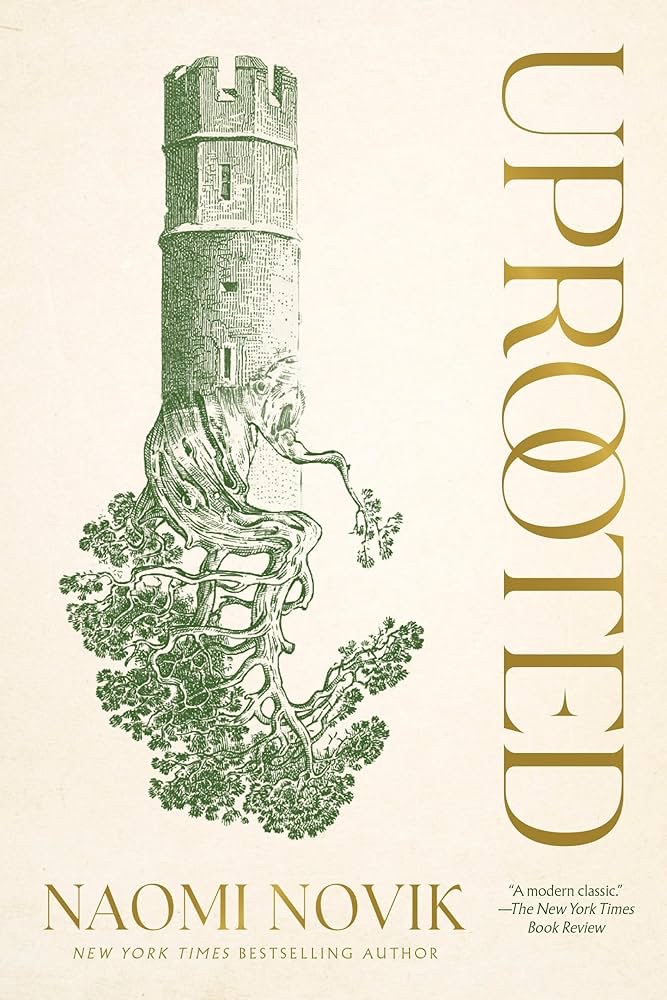
A fairy tale for grown ups, Uprooted by Noami Novik is a beguiling novel about being deeply rooted in a place, and yet also uprooted, a perpetual stranger in your homeland and community.
“Our Dragon doesn’t eat the girls he takes, no matter what stories they tell outside our valley. We hear them sometimes, from travelers passing through. They talk as though we were doing human sacrifice, and he were a real dragon. Of course that’s not true: he may be a wizard and immortal, but he’s still a man, and our fathers would band together and kill him if he wanted to eat one of us every ten years. He protects us against the Wood, and we’re grateful, but not that grateful.” Agnieszka loves her valley home, her quiet village, the forests and the bright shining river. But the corrupted Wood stands on the border, full of malevolent power, and its shadow lies over her life. Her people rely on the cold, driven wizard known only as the Dragon to keep its powers at bay. But he demands a terrible price for his help: one young woman handed over to serve him for ten years, a fate almost as terrible as falling to the Wood.
The next choosing is fast approaching, and Agnieszka is afraid. She knows-everyone knows-that the Dragon will take Kasia: beautiful, graceful, brave Kasia, all the things Agnieszka isn’t, and her dearest friend in the world. And there is no way to save her. But Agnieszka fears the wrong things. For when the Dragon comes, it is not Kasia he will choose.
Like all good fairy tales and myths, Uprooted has a compelling, readable narrative that sweeps you from the first paragraph about “Our Dragon” to the very end (which like good fairy tales also ends with Agnieszka talking about the Dragon). It evokes Polish and Russian folklore, Greek mythology, and classic fairy tales in a Polish medieval setting. You can tell just how much Novik knows and loves the source material she draws on, and how much respect she has for the cultures that wove these stories of magical beings, wizardry and mythic beasts to deal with the dark terrors of their world.
Novik is a magical story teller and Uprooted manages to be both very much part of the fantasy world that she creates, and also a timeless tale about identity, belonging, and love. There is a lot of heart in this adventure, a lot of compassion for the characters within it. Novik manages to create not only a very believable world, but a cast of real, nuanced characters: heroes with flaws, villains that you understand and feel compassion for.
Naomi Novik is a phenomenally good fantasy author, and this book justifiably won awards. If you liked her Scholomance series you will love Uprooted, and I am looking forward to reading more of Novik’s work.
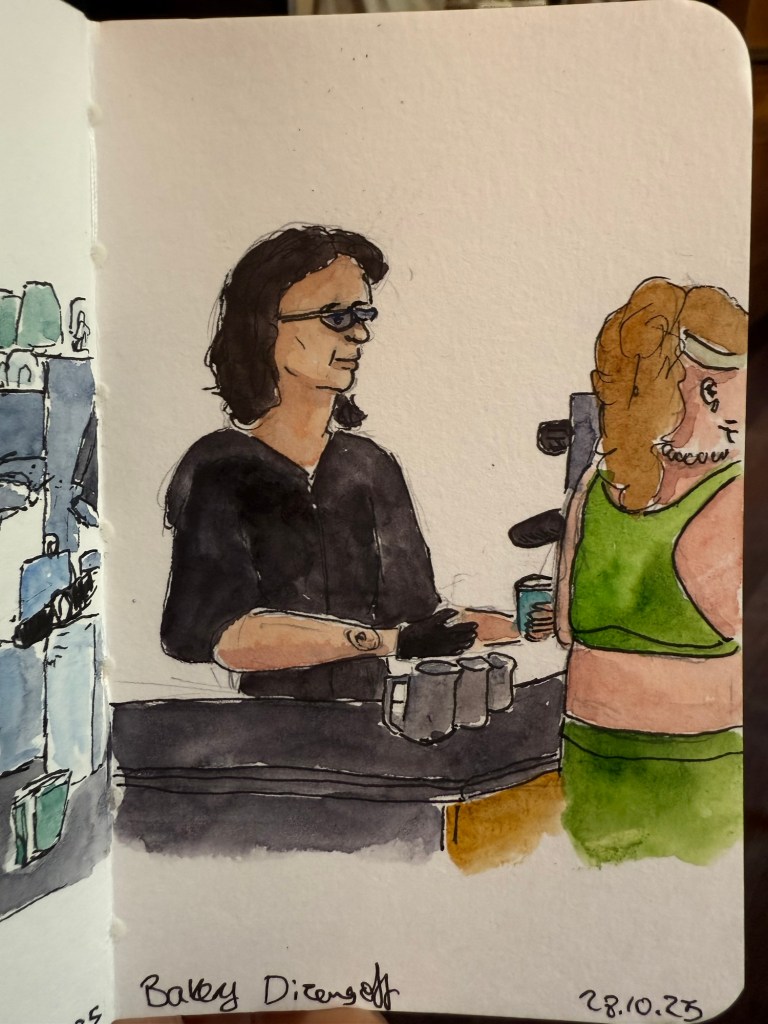
I went to see a local production of Singer, a play by Peter Flannery. It was phenomenal but it kept me up at night, which meant that the following morning I headed straight to my local cafe. I sketched the barista but something didn’t work in terms of getting her face right – she turned out sadder than she is. Sketching tired is rough.
Sketch on Stillman and Birn pocket Beta
Here’s the rather messy pencil and pen sketch. I can tell just by the line quality that I was very, very tired.
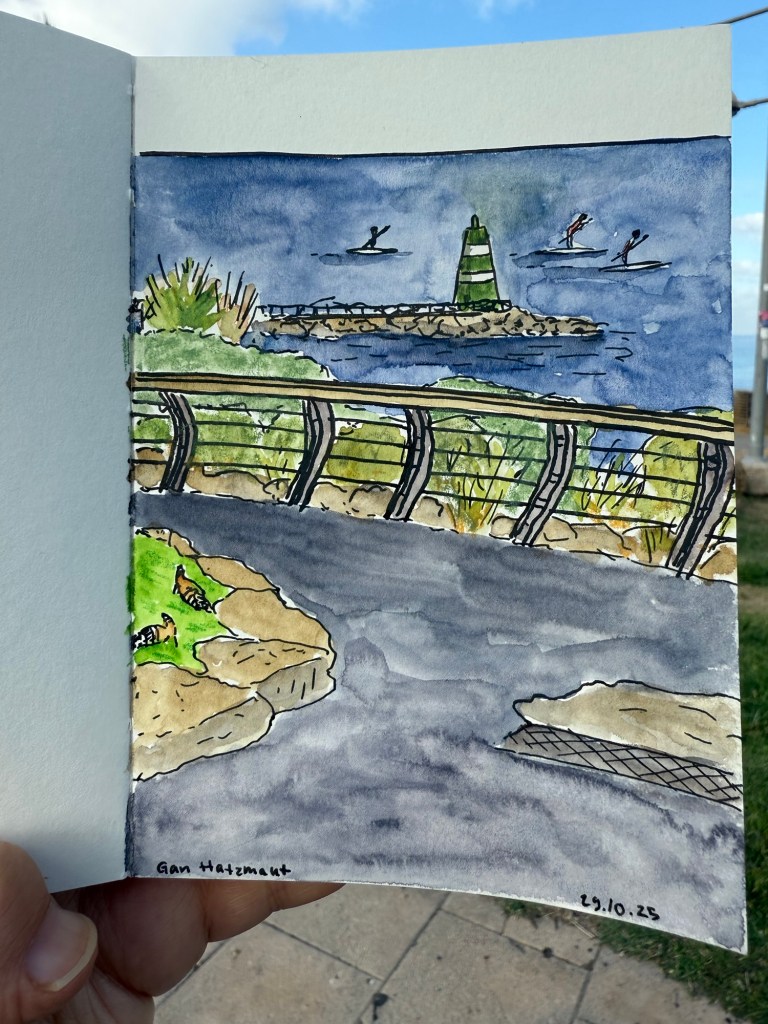
A day later I went to sketch at the nearby park and you can see the difference in the line quality in this sketch:
Sketch on a Pith Kabosu sketchbook
Initial sketch:
Later that week the film photographs that I’d had developed were returned to me. Here are a few of my favourites:
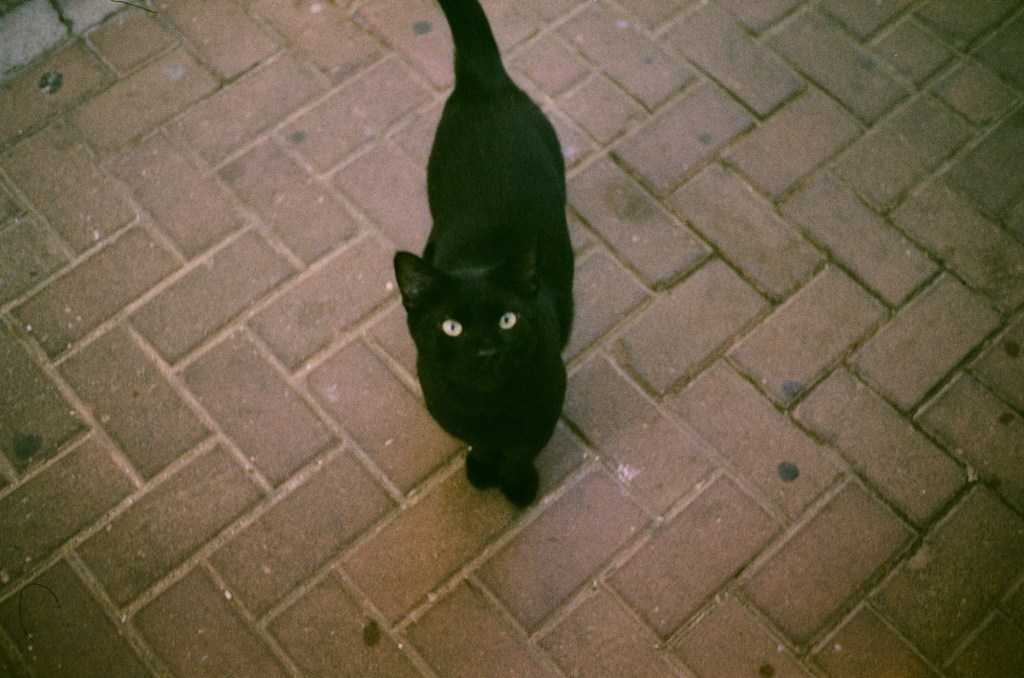
The local community cat that I feed twice a day coming to say hi
I love the atmosphere that the film gives this simple photo:
Ramat Hanadiv rose garden
All of these photos are unedited. I’ll likely clean them up later on.
Bridge over water at a nature reserve near Haifa
There was a fire on the roof of a nearby hotel. I took this photo a day after the fire, and you can see the damage:
Cat failing to hunt a crow:
A stall at the local farmer’s market:
A stall at the local farmer’s market. You can see the see in the background.
I was supposed to run at a 10k night race on Wednesday, but I wasn’t feeling too good and I was apprehensive about dealing with the crowds so I ran the distance by myself a few hours before the official race start. It was a good decision as I was really struggling during the first 3k – but I did manage to finish, and finish strong.
I finished reading “Helmet for My Pillow” by Robert Leckie (a powerful narrative, but not as punchy as “With the Old Breed”), read “Death of a Nurse” by M.C. Beaton as a palate cleanser, and I’ve now started “The Shattering Peace”, John Scalzi’s long awaited sequel to his Old Man’s War series.
I’ve been overwhelmed with the responses to my Pelikan Hubs post. Thank you all for your kindness and for the thought and effort you put into your comments. I read them all, I just wasn’t able to respond to all of them this week.
Speaking of the Hubs, all of my pre-hubs inked pens have been written dry, which means that I currently have a 100% Pelikan rotation, plus some Platinum Preppy’s that I use for sketching.
A smorgasbord of stuff for your delectation to celebrate my birthday. You can read part 1 here and part 2 here. Only one more part after this one…
23. Lightening Book Review #3: The Vinyl Detective – Noise Floor by Andrew Cartmel. This is the the 7th Vinyl Detective book and possibly the weakest so far. Set in the world of 1980s electronic music it’s not about finding a rare vinyl record this time, but rather finding an aging electronic musician. There’s the usual hipster/foodie/audiophile vibes but the plot is air thin, you will immediately know whodunnit in the whodunnit, and there’s a desperate attempt to give this Scooby-Do style adventure an “edginess” using aging threesomes and references to John Fowler’s The Magus. There is the usual boring insistence on describing every turn in every journey the protagonists take, and the characters are even more cartoony than usual. The only truly enjoyable scene is the village fête in the end, and even that is highly unbelievable. Feel free to skip this one, unless you’re looking for a cozy, featherlight read between other books and there’s nothing better lined up.
Scene from today’s run
24. Lightening Book Review #4:The Vinyl Detective – Underscore, by Andrew Cartmel. This is why I still read this series – a cozy and highly imaginative adventure with a likeable cast, in a charming and vivid setting. The crime is stylized, the new characters are vivacious and it reminds me of my favourite book in the series, Victory Disc (book #3). Take a trip back to London in the 60s, with a dash of family drama, a hint of Italian passion thrown in, and of course a sprinkling of good music.
25. Lightening Book Review #5:The Thursday Murder Club, by Richard Osman. While we’re on the topic of cozy mysteries, this one was a treat. Unexpected plot full of twists and turns, a memorable and original cast of characters, a unique setting, humour and heartache, and a it dared to touch on actual issues with substance (aging, sickness and death, religious oppression, capitalism and corruption, and the limitations of the law and its enforcers). A very enjoyable read and not just because Elizabeth is now one of my favourite fictional characters.
26. My Apple Watch Ultra 2 has been acting up lately – it’s almost 2 years old and it’s been losing battery power and struggling to keep track of my laps in the pool. So far a full charge and a restart before every swim have helped, but it’s annoying. A watch at this price level should be able to last for 3 years at least, and yet we’ve somehow been trained to expect to upgrade our watches every year or two at the most, if only because they lose their ability to keep a charge after the first year or so. Originally my watch lasted almost 3 days between charges (and I’m a very active person). Now I have to charge it once a day. I’ve been contemplating moving to a Garmin for my workouts and switching back to an analog watch, but I use some of the Apple Watch capabilities to keep track of my health post treatments, so we’ll see.
27. I have ordered the Moleskine Limited Edition Peanuts notebooks (the yellow lined large hardcover and two sets of the extra large cahier notebooks). There’s something about this collection that I find irresistible, and so they will be part of my birthday gifts this year.
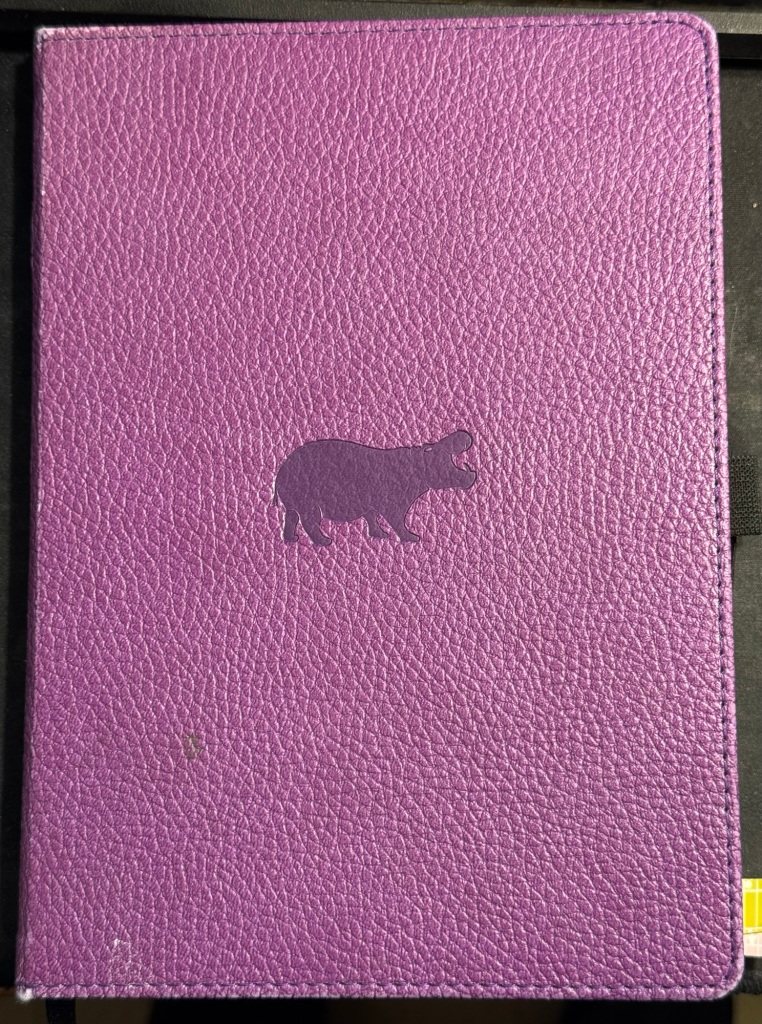
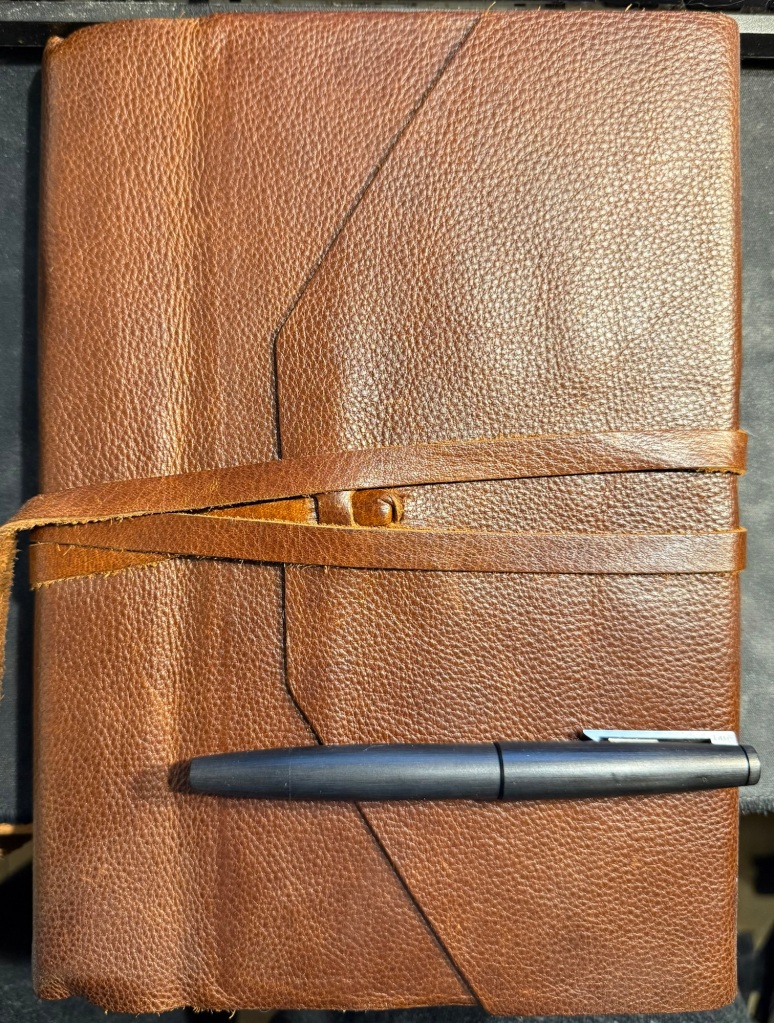
28. There’s something tragic about an unfilled and unfulfilled notebook and I have too many of those lying around. I’m considering what to do with them, especially with those that I’ve started using and have abandoned after a few pages. Let me know in the comments if you have any ideas.
29. Tomorrow I start reading Ulysses having just finished The Obstacle is the Way, the last book that I planned to read in May.
30. Lightening Book Review #6:The Obstacle is the Way by Ryan Holiday. I read the 10th anniversary edition of this book, which has a new introduction and a few additions to it. This is a very digestible intro to stoicism, competently written and researched by a man with a marketing background, but it had the same affect on me that Seth Godin’s books have: it glanced on my brain and left no mark. It was hard to concentrate on this book not because it was challenging but because it was not: it was like eating easily digestible, flavourless popcorn with sprinklings of anecdotal salt at the beginning of each tiny chapter. You are left hungry and unsatisfied at the end, not sure what exactly you consumed. Philosophy should make you sit up and pay attention, think, stretch your mind and sweat a bit. It was divorced from its gravitas, substance and challenge in this book, and that’s a pity.
31. There’s no greater joy than crumpling yesterday’s to do list and tossing it out.
A smorgasbord of stuff for your delectation. You can read part 1 here.
13. Big bold announcement: next month is Bloomsday, and after much hemming and hawing i’ve decided to reread James Joyce’s Ulysses and blog about it as I go along. I’ve read Ulysses three or four times between 2009-2013 but I haven’t touched it since. While I still have some of my notes on this book, my goal isn’t to reconstruct them or to lecture on the topic, but to enjoy a very good book, and see how my memory of it fairs post-chemotherapy (which has affected my memory). Why should you join along? Because Ulysses is a phenomenally good book that is enjoyable to re-read (but very challenging to read for the first time). It’s funny and touching, profound and full of adventure. It’s just built on very well crafted layers of language, meaning and context, and it’s paradoxically a book that is meant to be re-read, not read. Hopefully I will make it a bit easier and less scary to read for the first time for those brave enough to join me.
14. I have been switching my podcast listening queue around lately, which means that I got to listen to this wonderful two part episode of Alie Ward’s “Ologies”: Salugenology (Why humans require hobbies). Guest Julia Hotz talks about the things that we need to be happy as humans, and the conversation is fun to listen to and enlightening. I highly recommend it, and the “Ologies” podcast in general.
15. I’ve stopped buying eBooks from Amazon after they stopped allowing customers to download the books that they purchased (so you basically don’t own the book that you paid for if you buy in from Amazon now). I still use my Kindle Paperwhite, but I’m buying books from Kobo. I buy them DRM free where possible, and if not I use Calibre to strip them of DRM and then this site to transfer them to my Kindle (if they are DRM free you just use the sendtokindle site to upload them to your Kindle). It took me 30 minutes to get the setup working the first time, and it now adds 1-2 minutes tops to every book purchase, which is plus for me. It means that I don’t mindlessly purchase books that I don’t intend to read, and I actually think through each book purchase. I also noticed that the books I’m interested in are priced slightly cheaper on Kobo, which is a nice little bonus.
16. Using yellow ink (Rohrer and Klingner Helianthus) has been a challenge but also an education. Helianthus is readable enough to be used for my daily todo list, but thanks to this ink I’ve been learning to enjoy using a fountain pen for highlighting purposes. It’s more subtle and better behaved than traditional highlighters, and the colour pops on the page without resorting to neon shades.
17.I am thinking about the next inks to put into rotation, which is a bit unusual for me as I normally start with the pens that I want to fill, and then go find inks that go well with them. I want a blue-black for practical reasons, a cheerful green, a pink or orange, and a turquoise or teal. How do you select which pens and inks you use?
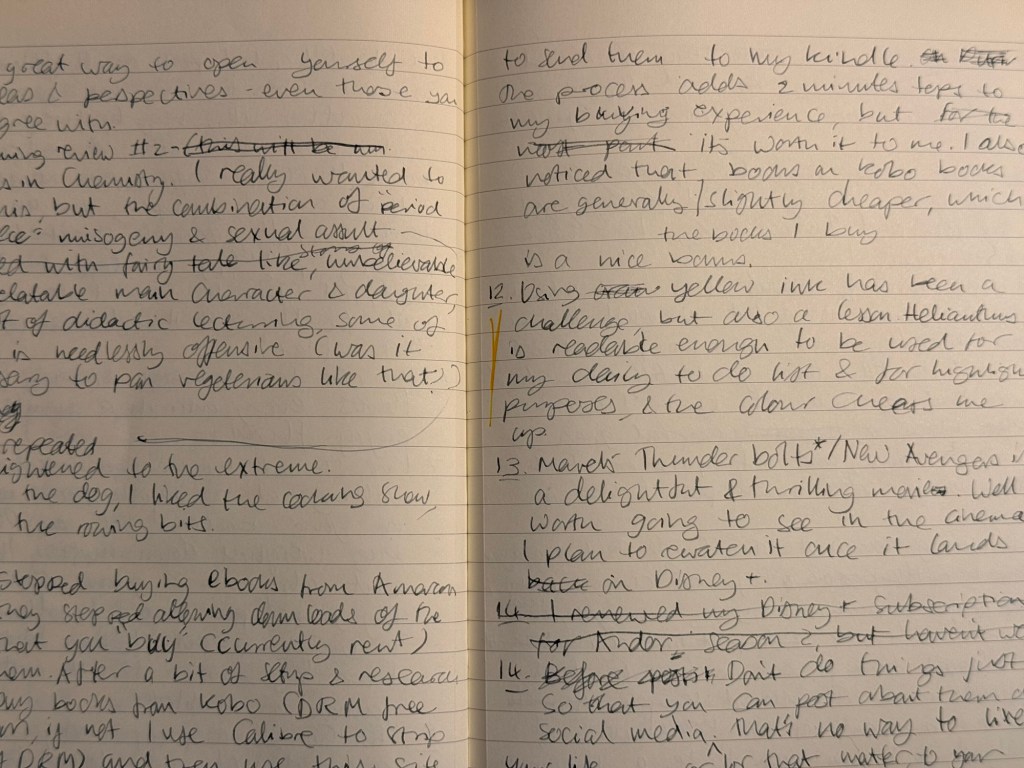
18. A bit of behind the scenes: I draft these posts longhand in a Dingbats notebook and a fountain pen. I think better on paper and it’s a way to use the pens and inks that I have. There are no AI/LLM agents/bots involved in this blog, and that’s the way it will remain. I enjoy writing, I created this blog as a hobby because I enjoy writing, and while I use AI agents as part of my job, I have no intention of letting them take away any part of the creation of this site.
Draft of this post Well worn Dingbats blogging notebook
19. Journaling tip #1: If you’ve been feeling down lately, take the time at the end of each day to review your day and score it. It doesn’t matter what scoring system you choose, but I recommend that you keep it simple and not too granular: -1, 0, +1 or 1, 2, 3, or “great”, “OK”, “meh”, “terrible”. You just want a quick way to know if the day was a good day, an average day, or a bad day. At the end of every day for a week or two think back on what happened throughout the entire day, give it a score, and explain the score in no more than a sentence or two. So for me today was: “OK – was super tired at the start, but I managed to get two naps in and recovered enough to get most of what I planned done”. At the end of the week, when you do your weekly review and plan ahead what you want to stop doing, start doing and keep doing, use these scores as an input for your decisions. Repeat this whenever you feel the need to recalibrate.
20. Journaling tip #2: if you’ve stopped journaling and want to restart, don’t attempt to backlog the days that you missed. Forgive yourself the journaling “debt” and start fresh. This is easier to do if you switch something up in your journaling routine – use a new pen, pencil or ink, a new notebook, or write in a new location.
21. A dear friend and colleague has moved to a new job in a different company. While I’m happy for him and I wish him the best of luck, I already miss working alongside him. This brings me to the following journaling tip:
22. Journaling tip #3: Take a journal, either your usual one or a new one for a special journaling “events” and write down a list of names of people that have inspired or taught you something that you are grateful for, and write down what it is they taught you. Start with those that affected you by their positive actions (kindness, encouragement, setting good examples), and then challenge yourself to journal about those that taught you by being negative presences in your life. Did an office bully teach you to be kind? Did the talentless brown-nose teach you about how much you value your integrity? You can write about both people you personally know and those in the public sphere, and you can return and edit or add on to this list whenever you want. It’s a good reference in troubled times to remind you of who you are, what you stand for, and where you want to be.
Manufactus notebook that I plan on using for journaling tip #3
A few months ago I published an overview of my new weekly review format. I had been successfully using it for a few months at the time, and I have since continued to use it until about a month ago. Since then I’ve tweaked it a bit to streamline things and speed up the review process. If you found my previous review format a bit confusing or elaborate, you might want to try my new one.
The new review format consists of four questions that I answer at the end of every week before I build next week’s plan. I write down my answers in my regular journal (currently the Stalogy 365 B6) using last week’s plan as a reference. Here are the new questions:
What Worked – no change from last time, except that I allow myself to elaborate more and I don’t emphasize the order of the things that I did and that I want to keep doing. I discovered that it doesn’t really matter if something worked because I changed things, remained consistent or stopped doing something, the only thing that really matters is that it worked. Being more loose here allows me to spend more time reflecting positively on the week instead of worrying about writing things in a certain order. An example from the past week – exercise. I got a 10k in, my first speed run since my last race, two gym sessions, two swimming sessions, two rucking sessions and a bunch of walking and NTC pre and post workout stretches. Prioritizing these sessions in my weekly plan, doing them first thing in the morning and setting out workout clothes and gym/pool bags the night before really aided my success.
What Didn’t Work – this changed slightly to not only include things that didn’t work due to planning, priorities, “life” or infrastructure but also things that cause me anxiety or distress that need some rethinking. An example from the past week – I went back to watching YouTube videos as a “self soothing” source of comfort. We live in stressful times and I’m going through a stressful period at work, so it’s clear that I need something to provide this “warm blanket” function. The issue is that I oftentimes use reading as a source of comfort, and I’m currently reading a book that is purposefully designed to induce anxiety in the reader. Note that at this point I’m not focusing on what to do about the things that didn’t work. My point is just to acknowledge them and if relevant name the feelings they induce.
What’s Next – this is the biggest difference from the previous review format. Here I write down what I plan to try and keep or change or observe in the coming week. This feeds directly into my weekly plan, and will help me get the most out of last week’s experiences. So in the case of the examples above, I’m going to keep to an identical general exercise plan in the coming week, and I’m going to add a “comfort book” to my current reading rotation. If anything more long term needs to happen due to these reviews I will just add it to my quarterly plan. The point is not just to blindly follow a plan, but to try things, observe, reflect and change them if needed.
You’ll note that I removed the “people of the week” section. I just found it redundant, as these three questions generally cover it.
As usual, I’d love to hear more about your weekly review formats, and if you found this helpful.
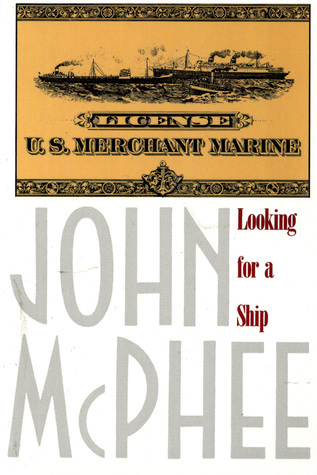
John McPhee is a master writer, and Looking for a Ship is a master narrative. Accompanying second mate Andy Chase during the dying days of the American Merchant Marine in the late ’80s, McPhee crafts a spellbinding tale of ships, sailors and the seas they travel on. There are a stories of bravery and skill, incompetence and foolishness, piracy and prostitutes, bureaucracy and bananas, shipwrecks and storms, and containers full of everything you can imagine and many things you can’t.
Every character is memorably portrayed, and the characters, the people, are all phenomenally interesting. Their struggles and triumphs, little moments of boredom and humanity, are all worth reading about (and nobody describes moustaches like McPhee). These people are masters at their craft, they work extensive and intensive hours, and their jobs are disappearing as they work. McPhee shows the tragedy of this process without eliciting unnecessary pity for the men who work on these ships with pride. He is an observer, but one that makes even the most dull minutiae of the world of the Merchant Marine come to life. Never have container manifests been so interesting.
While Andy Chase is an intriguing character, it is his captain, Paul McHenry Washburn, that shines in this story. Washburn is a man so fascinating, leading a life so rich, that he alone could be the hero of a book series, or even a summer blockbuster.
Looking for a Ship is a treasure of a book, an excellent story about people, craftsmanship, skill, the sea and those that make their living shipping our purchases across it. A highly recommended book for all who read.
Dealing with Difficult People is part of a series of small booklets on the topic of emotional intelligence that the Harvard Business Review published. It’s a collection of essays, each of them short, well-written, and contains useful and practical information on different aspects of dealing with difficult people in workplace settings: colleagues, bosses, reports and even how do you avoid being a difficult person to work with yourself.
The articles in this collection include “To Resolve a Conflict, First Is It Hot or Cold?” by Mark Gerzon; “Taking the Stress Out of Stressful Conversations,” by Holly Weeks; “The Secret to Dealing with Difficult It’s About You,” by Tony Schwartz; “How to Deal with a Mean Colleague,” by Amy Gallo; “How To Deal with a Passive-Aggressive Colleague,” by Amy Gallo; “How to Work with Someone Who’s Always Stressed Out,” by Rebecca Knight; “How to Manage Someone Who Thinks Everything Is Urgent,” by Liz Kislik; and “Do You Hate Your Boss?” by Manfred F. R. Kets de Vries.
The essays are all interesting and make their points well and concisely. Many of them offer relatively realistic scenarios that you can encounter when dealing with a certain type of difficult person, and then walk you through how to best deal with each scenario. Because all the essays are short the ratio of actionable advice to lines of text in the articles is excellent – there’s no padding or fluff here. There is a good range of tools that you can add to your “people wrangling” toolbox, and that’s always a plus.
Where this booklet falls short is precisely in its brevity. Complex scenarios are breezed through, things are solved relatively easily and on the first try. In reality dealing with difficult people in the workplace is a “superpower” that requires a lot of consistent effort and skill. You will never reach a tolerable equilibrium on the first try – indeed there’s a chance that you will never reach it at all. There is no book, let alone a slim booklet, that can teach you all that it takes in one fell swoop. You’ll need to deal with every situation and person as they occur, and what books of this kind can do is provide you with tools and approaches to do that.
If you are dealing with difficult people in the workplace, then this is book is a good place to start from. Just take into account that it’s going to be a long and hard process, and one little book isn’t going to solve all your problems and give you everything you need. Set your expectations accordingly and you won’t be disappointed.










 Writing at Large