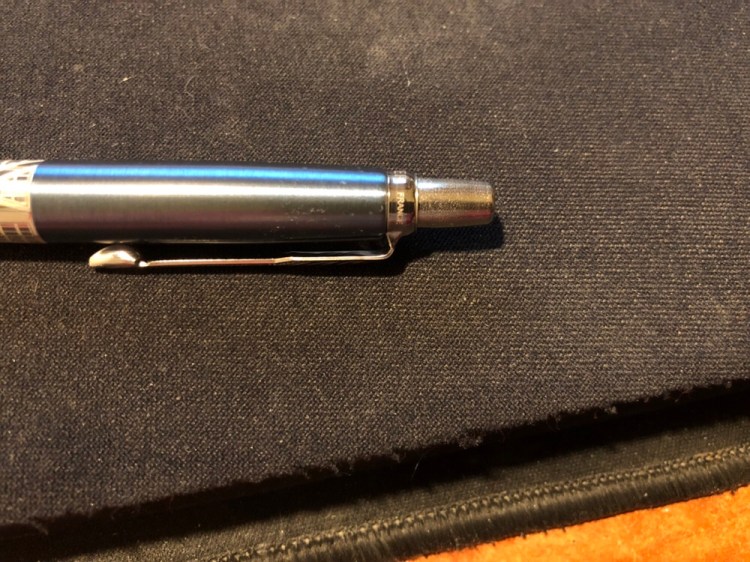
Kaweco Liliput Brass Fountain Pen Review

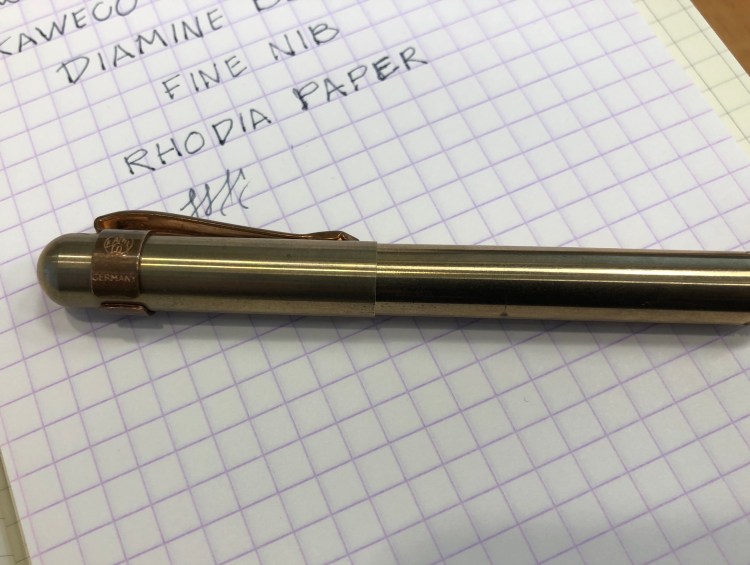
A certain famous young actress, whose work I love, was recently photographed while pensively holding the copper version of this fountain pen, and this summarises this pen perfectly: it’s very, very photogenic.

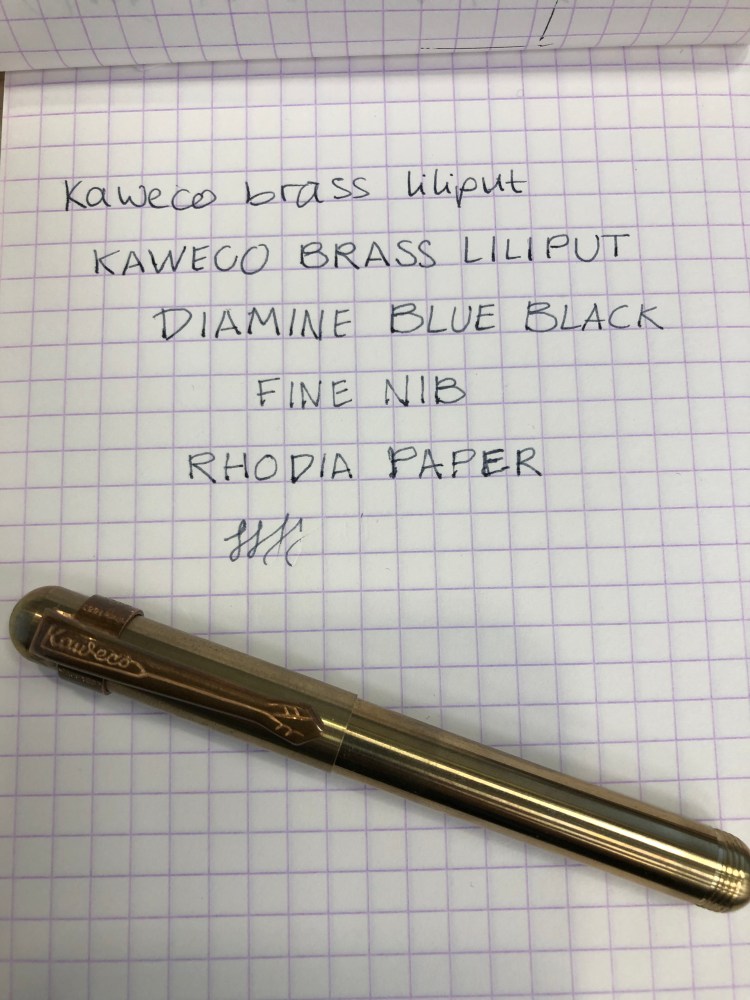
I got this pen at a close out sale in a local art supply store, and the only reason I was tempted to buy it was because it was so shiny and pretty and at bargain price. Even so, I should have left it to languish unloved at that store’s counter. This is not a good pen. It’s not even a usable pen. It’s a lovely prop.

As its name suggests, this pen is tiny. You can’t use it unposted, and even posted it’s far from comfortable to use. I have tiny hands and even for me the Kaweco Liliput, posted, is just a hair breadth above the Steinbeck stage.

How does the pen write? Fine, as long as it writes. This is a fine nibbed pen and it writes like a Japanese fine nib (despite being made in Germany), if the Japanese fine nib that you have in mind has serious flow issues. The nib constantly dries up. I used a Diamine blue black cartridge in it (there’s no really viable converter option for this pen), a good, middle of the road ink, and the Liliput behaved as if I was using the driest ink ever and had left it uncapped for at least 10 minutes before I started writing. I wouldn’t even call it a writing experience, as so little writing went on. Start, stop, shake. Start, stop, shake. Nothing but shaking would get it writing again for another letter or two.

The pen is already starting to show some patina, which is excellent (you buy a brass pen for the patina potential after all). This means that it will only look better with time. If you’re a petite actress trying to look pensive and sophisticated for a photo op, this is wonderful news for you — the Kaweco Liliput Brad’s is the perfect pen for you. Everyone else: spend your money elsewhere.

Ti Click EDC Pen Review

I am a big fan of Big Idea Design’s pens (the Ti Arto is my daily carry pen), and so of course I joined the Kickstarter for the Ti Click EDC Pen. Since I hadn’t tried their black anodised pens before, that’s the finish I opted for. It arrived yesterday, and even though I’ve been using it exclusively all day, I’l be the first to admit that these are only my preliminary thoughts on it. (See updates in the end for more detailed thoughts on this pen).

The packaging, as usual with BIGiDESIGN, is compact and neat. The pen comes with everything you need to fix it, should you need to (I’ve never needed to), and in a pretty nifty box.
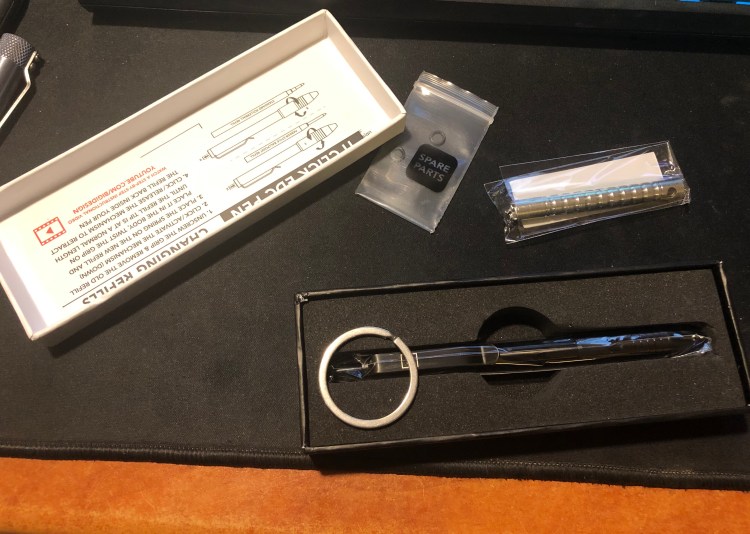
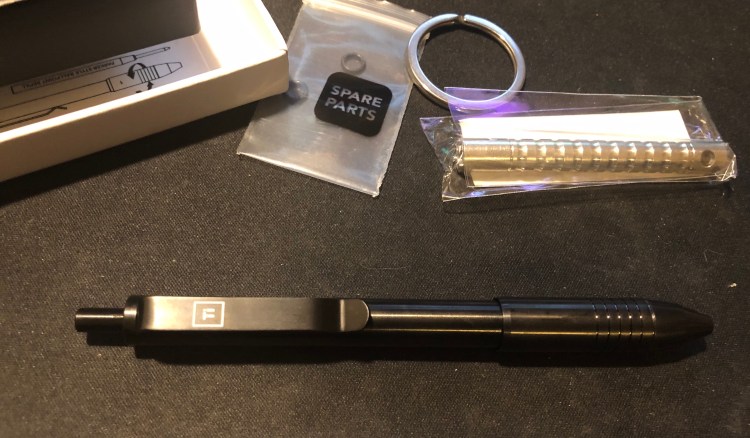
The finish on this pen is shiny and black, but it’s surprisingly not a fingerprint magnet, as I would have imagined:
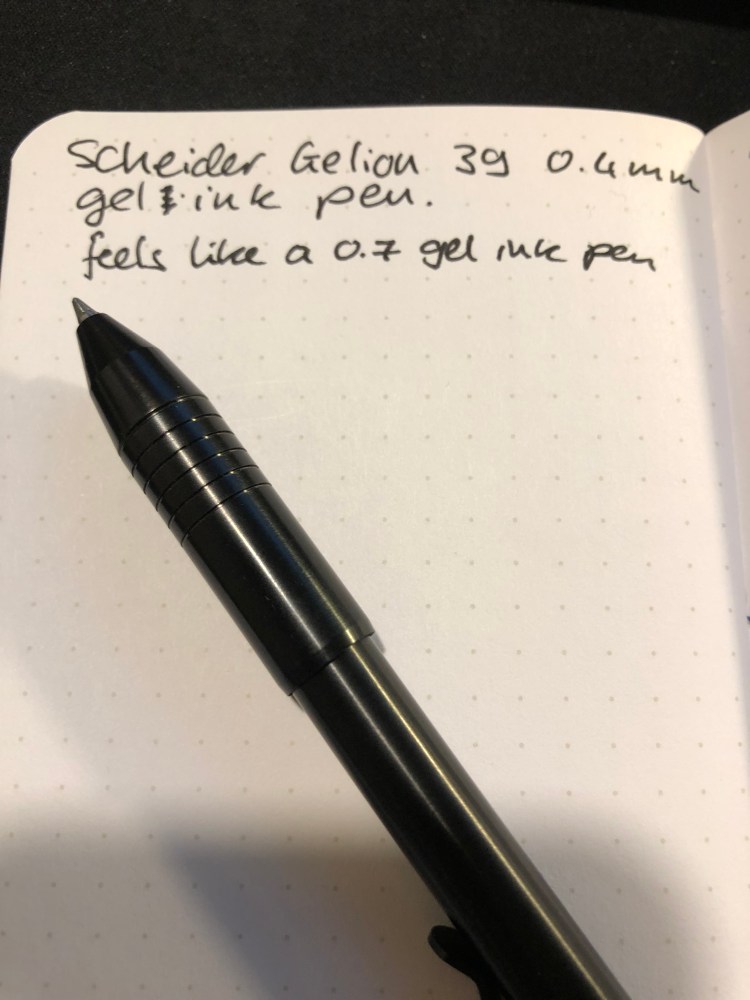
The pen came with a Scheider Gelion 39 0.4 mm gel ink refill. This is a new refill for me, and I can’t say I’m a fan. It’s as wide as a 0.7-0.8 mm refill, and I much prefer the Uni-Ball Signo UMR-85N refill that the BIGiDESIGN pens used to be shipped with (it’s me favourite gel refill).
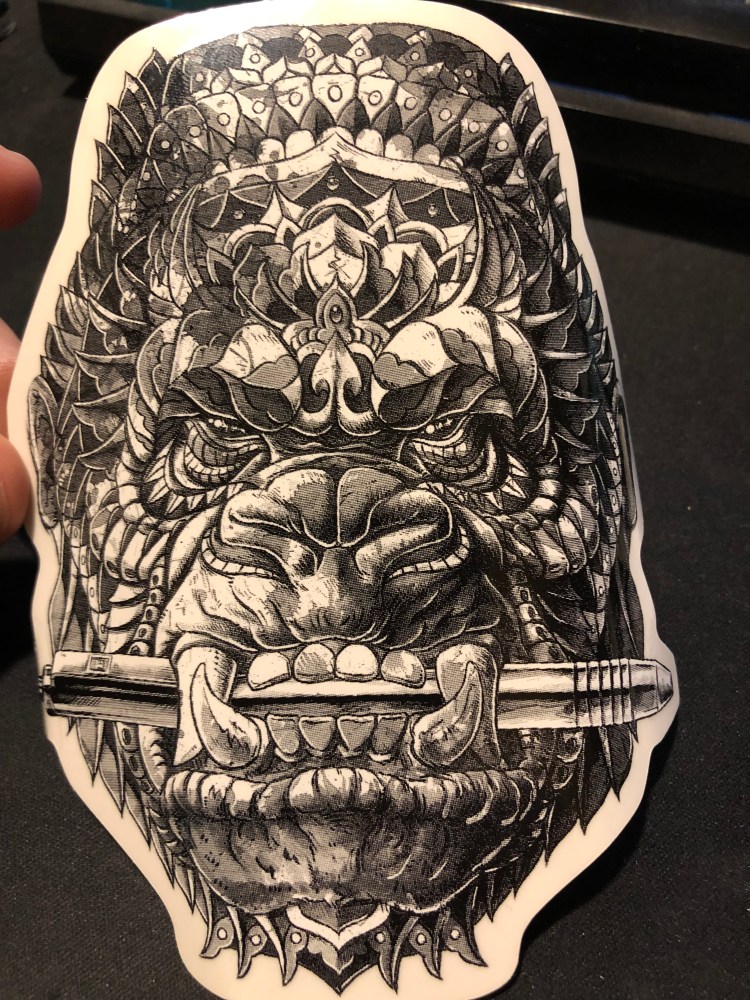
As part of the kickstarter, the pen came with a cool Bioworkz sticker, which you can see below:
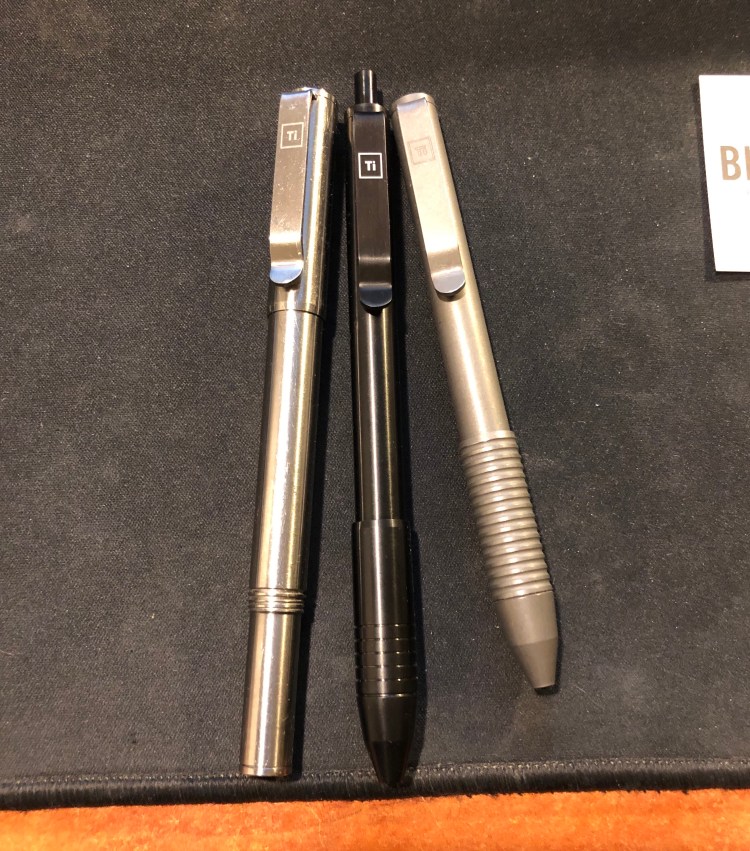
The pen itself is about the length of the Ti Arto, when the Ti Arto is capped, but the grip is much wider, about the size of the Ti Pocket Pro. That’s a bit large for an EDC pen, and it’s definitely not a pocket pen. The grip feels weird at first, but it’s very comfortable and well designed. You can see how the Ti Click EDC compares to the Ti Arto (on the left) and the Ti Pocket Pro (on the right) in the various finish options that the Ti pens come in (machined raw, midnight black, and stonewashed). My machined raw Ti Arto shows scratches much more than my stonewashed Ti Pocket Pro, but I’ve no idea yet how the midnight black finish wears.
This brings me to the only minus that the Ti Click EDC has – the click mechanism. It’s silent (no satisfying click), which will probably turn off those planning on using it as a fidget toy, and it doesn’t always engage properly. It’s especially prone to not engaging after you replace the refill. Make sure that you use the provided instructions to switch refills (and like other BIGiDESIGN pens this one accepts dozens of refills without using any spacers or requiring any special hacks), and take into account that you might have to fiddle with the grip a bit until most clicks work. This is not a minor drawback, as the whole point of the pen is its click mechanism. It should work 100% of the time and feel satisfying, not “soft” as it feels now.

For the price of the Ti Click EDC you could buy a Ti Arto (still their best pen), or a Ti Pocket Pro (if portability is super important to you), have some change for a bunch of refills and get a much better pen. I love supporting BIGiDESIGN and I’m glad that I got to try this pen, but for now it looks like the Ti Arto will continue to reign supreme in my rotation.

Update: After using this pen almost exclusively for a week, I stand by my first impressions. It’s slightly more comfortable to use in long form writing, but the click mechanism is garbage.

Update 2: The BIGiDESIGN guys contacted me and it turns out that you can significantly improve the click mechanism with some silicone grease. Using the clip fixing kit that came with the pen and their simple instructional video on how to use it you can get to the click mechanism, and then apply some silicone grease, which you can buy at Goulet Pens for example. I happened to have grease around, so I had no problem trying this out, and it fixes the problem of the click mechanism not engaging properly.

The click is now solid, but it’s still not much fun to use – there’s no satisfying click or solid feedback once the thing is engaged. You just push past a point, and then the mechanism partially bounces back. It’s a disappointment because most $2-3 pens have more satisfying click mechanisms and even Karas Kustoms EDK pen, which has a similar click mechanism, offers more feedback and an audible click once it’s engaged.

I don’t know how many Ti Click EDC pens were affected by this problem, and I’m glad that I have at least a “mostly OK” click mechanism for my pen now, but I stand by my initial review, that for a pen that advertises its click mechanism so prominently, this is not a great buy. Spend your money on the Ti Arto, it’s a pen worth having, or go for the Ti Pocket Pro if you’re looking for an EDC pen. Those are truly great pens, while the Ti Click EDC is OK to “sort of good” at best.

Kaweco AC Sport Carbon Fountain Pen Review

After reviewing the Moleskine James Bond Carbon it was only natural to review my recently acquired Kaweco AC Sport Carbon fountain pen, so here you have it:

I’m not a huge Kaweco fan, mainly because their practically non existent filling system makes using them something of a pain. Cartridges are sometimes very useful (especially when traveling), but I generally prefer a cartridge based pen to accept converters as well and Kaweco’s Sport converters are a joke. They are difficult to fill and hold less than a drop of ink, and oftentimes come loose, so they’re basically terrible. Kaweco seems to be aware of that because they also make them difficult to obtain. You really have to want the pain to experience it (and believe me, you don’t. Save your money and buy yourself several cups of coffee).

So what possessed me to buy this pen? It’s pretty. There, I said it. That red, that carbon fibre — this pen is basically a Ferrari in pen shape: gorgeous and not very practical.

Look how pretty it is!

The nib is smooth and I was luck enough that it worked well out of the box. I’ve had mixed success with Kaweco nibs, so unless you’re comfortable dealing with baby bottom or flow issues I’d test the pen before buying.

The nib is also pretty handsome, and in this case a Fine, which is closer to a Japanese Medium. I got this pen on a closeout sale in a local art supply store so I lucked out on the nib, since you usually find Medium nibs in non-specialist stores.

I had a bunch of Diamine ink cartridges lying around, so I popped one in and gave it a spin. Here it is with Diamine Woodland Green, a very nice, well behaved ink with some shading:

The pen has a metal body but is not heavy. It can only be used capped (I have tiny hands so trust me when I say this), and despite its pocket size and rugged build, I’d never trust it, or any other fountain pen, in my trouser pocket. That way horror stories of stained pants lie.

Would you enjoy this pen? If you like the aesthetic, and are willing to compromise on ink cartridges, a steel nib and the price, then yes. If you’re looking for a daily workhorse or a practical pen, buy several Pilot Metropolitans, Lamy Safari’s, TWISBI ECOs or even a Lamy AL Star. This is a Ferrari pen — beautiful, frivolous and fun.

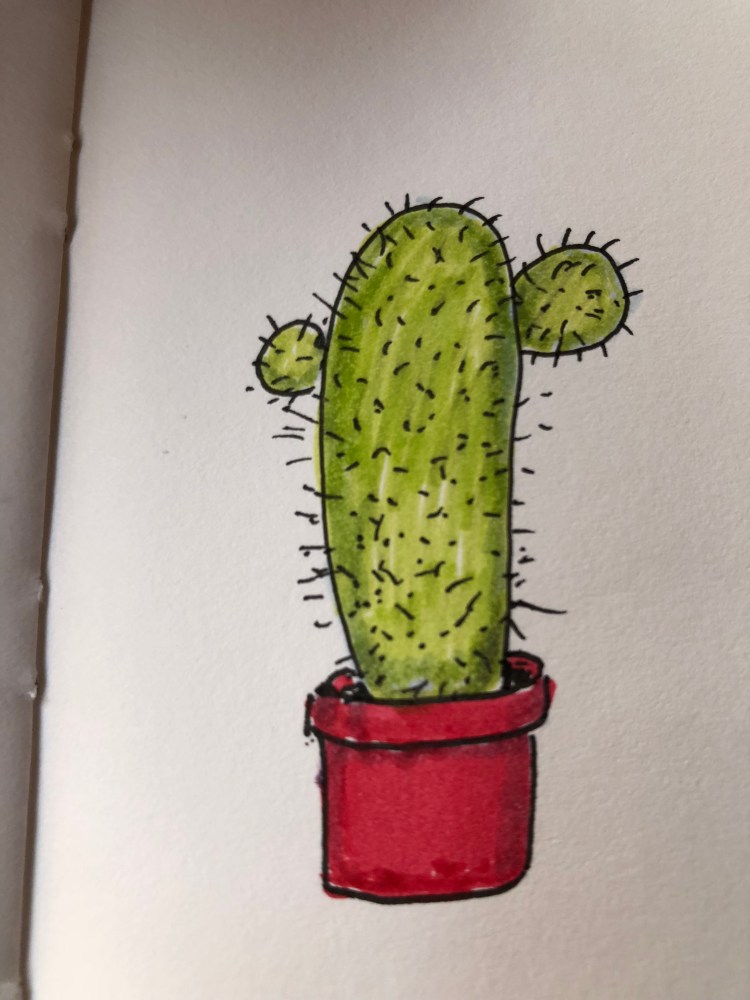
#Inktober 25: Prickly

This was a fun and easy one. Faber Castell Pitt brush pens, Staedtler pigment liner 0.3 and a Field Notes Signature sketchbook.

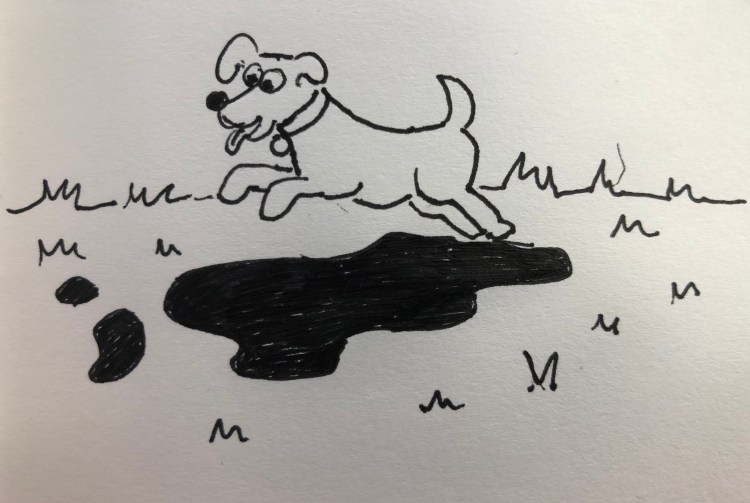
#Inktober 23: Muddy

A quick and cute one. Retro 51 Tornado on a Field Notes Signature sketchbook.

#Inktober 18: Bottle

I made three tries with this boring prompt before I got to this “Alice in Wonderland” inspired one.

Staedtler pigment liner on a Field Notes Signature sketchbook.

Pen Review: Staedler 308 Orange and Purple Pigment Liners

A first look at the new Staedler 308 colour pigment liners. The standard black ones are my fineliner of choice, since their barrel is more comfortable than the Sakura Pigma Micron or the Faber-Castell ones (Copics are overpriced, and I’ve had bad luck with them drying out).

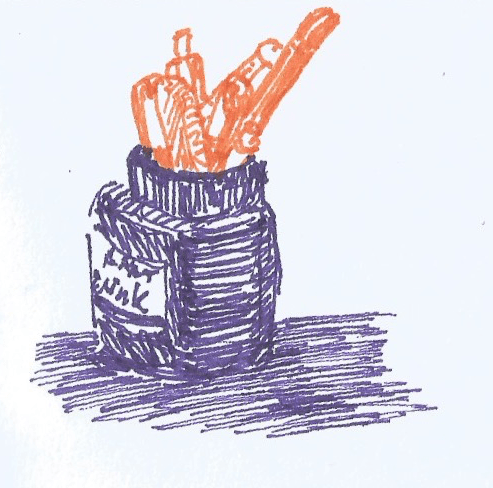
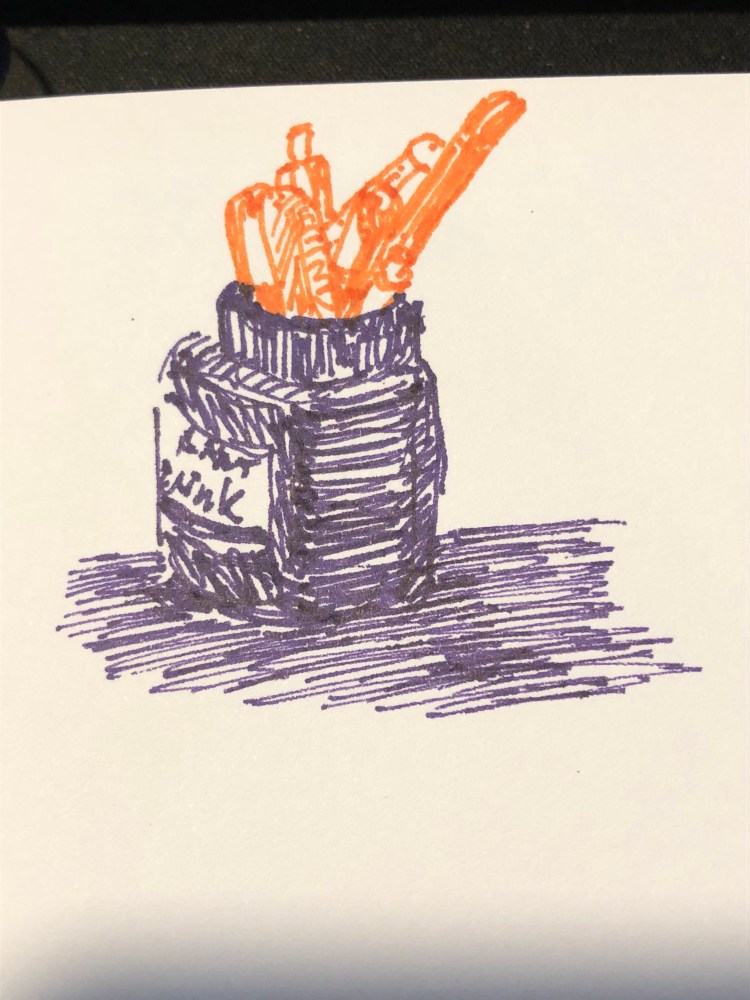
I made a quick sketch of the vintage Parker ink bottle promo pen cup that I got at the local flea market. The ink spread a little, as most ink does on the Lebuchtterm sketchbook. Strangely enough that doesn’t bother me, and I still am a fan of these notebooks. The Staedler pigment liners are a joy to use, and their colours pop off the page:

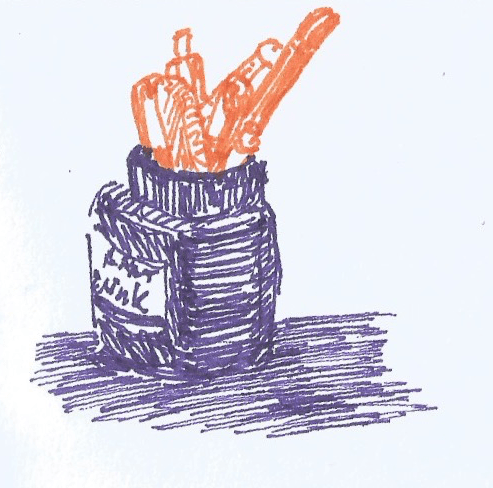
Scanned in, you can see the ink spread, but also how vibrant the colours are.

Bottle of Ink Sketch 1

All in all, I’ll probably pick up a few more of these once I get the chance.

Caran d’Ache 849 Nespresso Pen

I was eying the Caran d’Ache 849 line for a while, wondering whether to try one or not. On the one hand I really liked their design. On the other hand, they’re ballpoint pens, and I have very little use for ballpoint pens. They require pressure to write with, and with my carpal tunnel problems, ballpoint-caused pain is what made me research and get into fountain pens in the first place.

Then I started getting emails about the Caran d’Ache 849 collaboration with Nespresso. From Cult Pen’s website:

In 2015 Nespresso launched its Second Life project, the aim of which is to recycle its aluminium coffee capsules and use them to create other products. Caran d’Ache’s 849 was a perfect candidate! An exclusive alloy using the aluminium from the Nespresso capsules was created in order to meet the 849’s quality requirements, and the ‘Darkhan’ capsule was chosen to lend its dark blue colour to the Nespresso 849 Limited Edition.

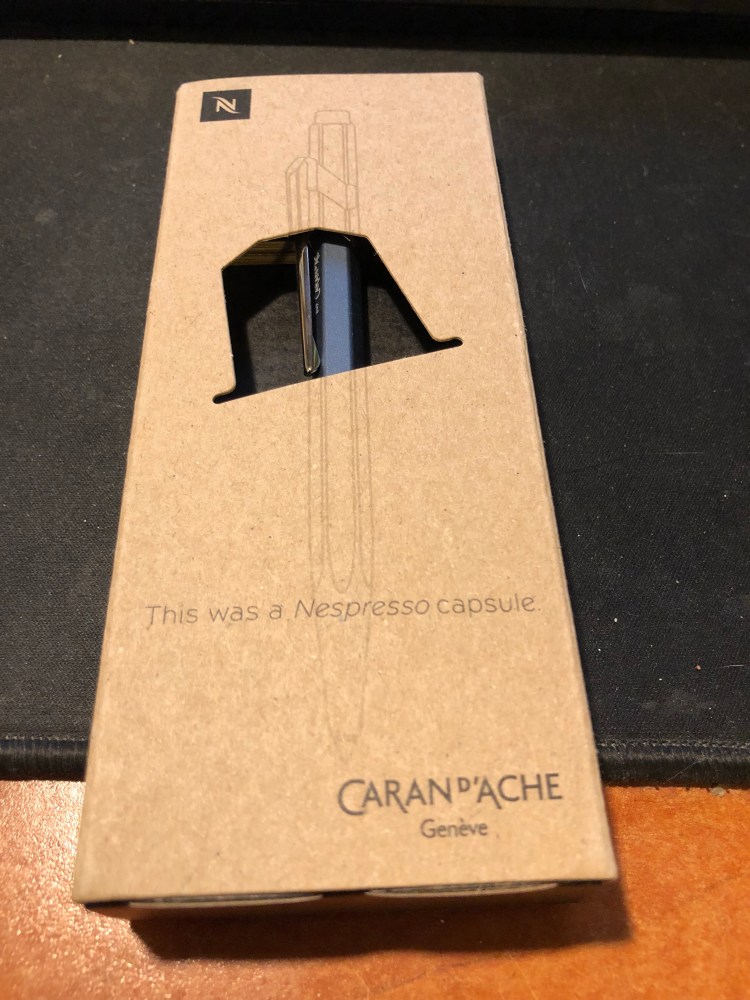
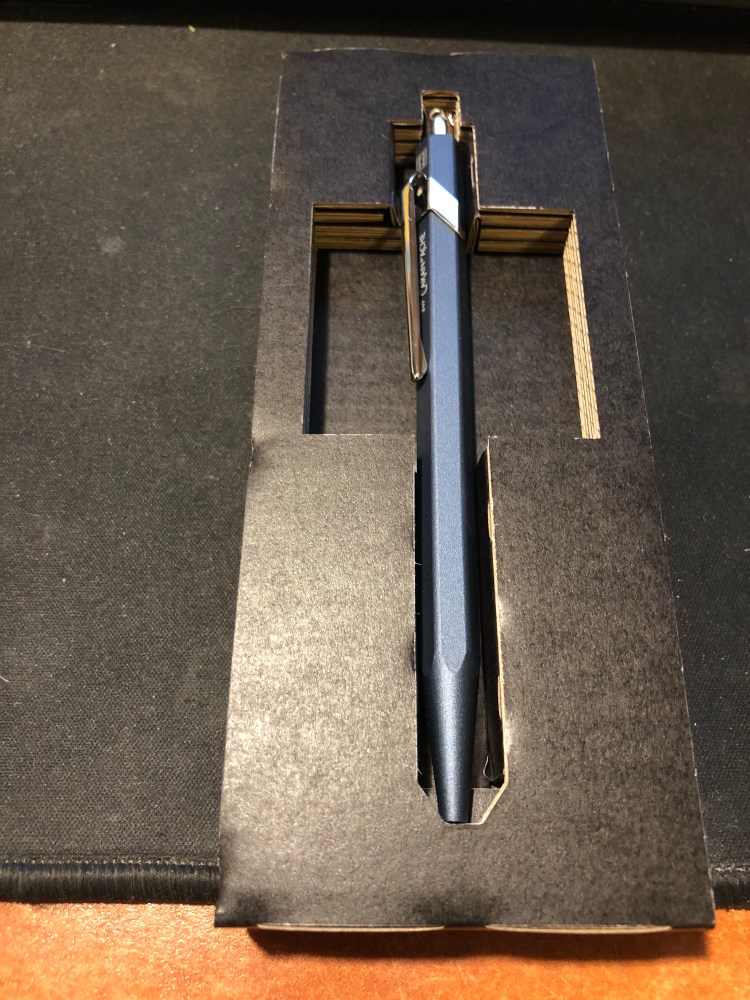
Well that got me hooked. I enjoy Nespresso’s capsules and especially its design, and I was intrigued by the idea of its capsules (which I recycle) ending up in such an iconic pen. A quick order from Cult Pens (who now have free international shipping for orders over £50) later, and this arrived:

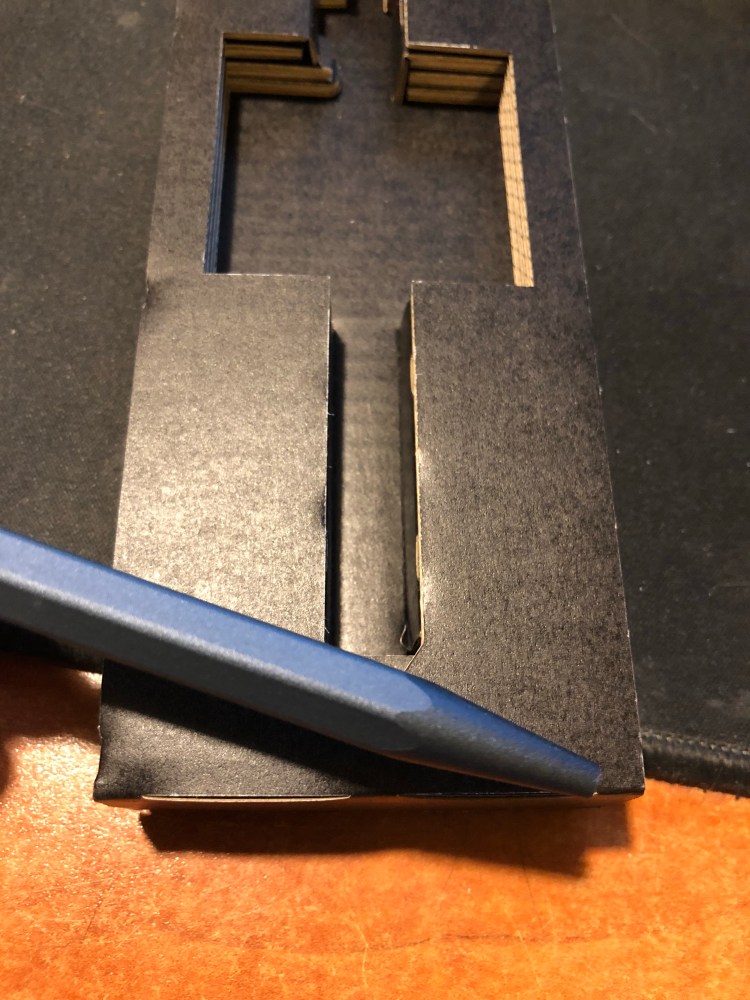
The packaging is recycled, beautiful, and really evokes a Nespresso capsule sleeve:

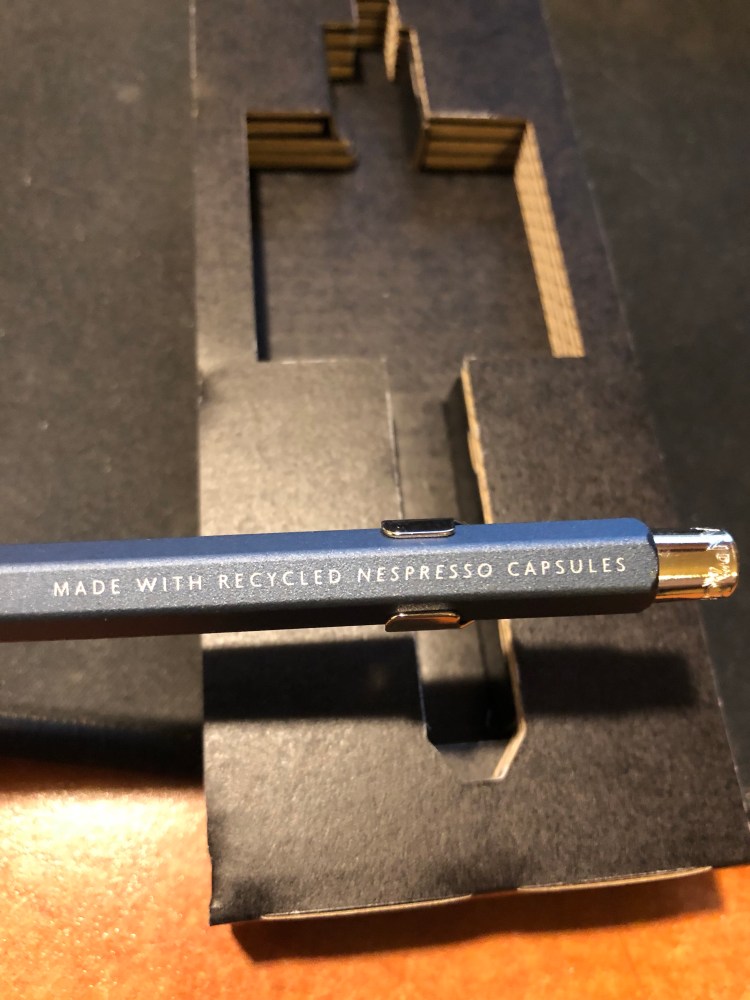
The pen has ” Made with Recycled Nespresso Capsules” screen printed on it as well as all the usual, understated Caran d’Ache branding.

I took advantage of the free shipping to also order an 849 Tropical pen, and unlike that and other, more standard, 849s, this pen has a textured, beaded body. If you have sweaty hands, this is a blessing, of course.

Although it’s a metal-bodied pen it is surprisingly light and very well balanced. Even if you have tiny hands you shouldn’t have any trouble using this pen for long periods of time. The knock is so smooth that it doesn’t click, which I found a bit annoying. I’m used to pen knocks clicking unless they are faulty, and so I found myself constantly pausing to check if the mechanism had fully engaged before I started writing.

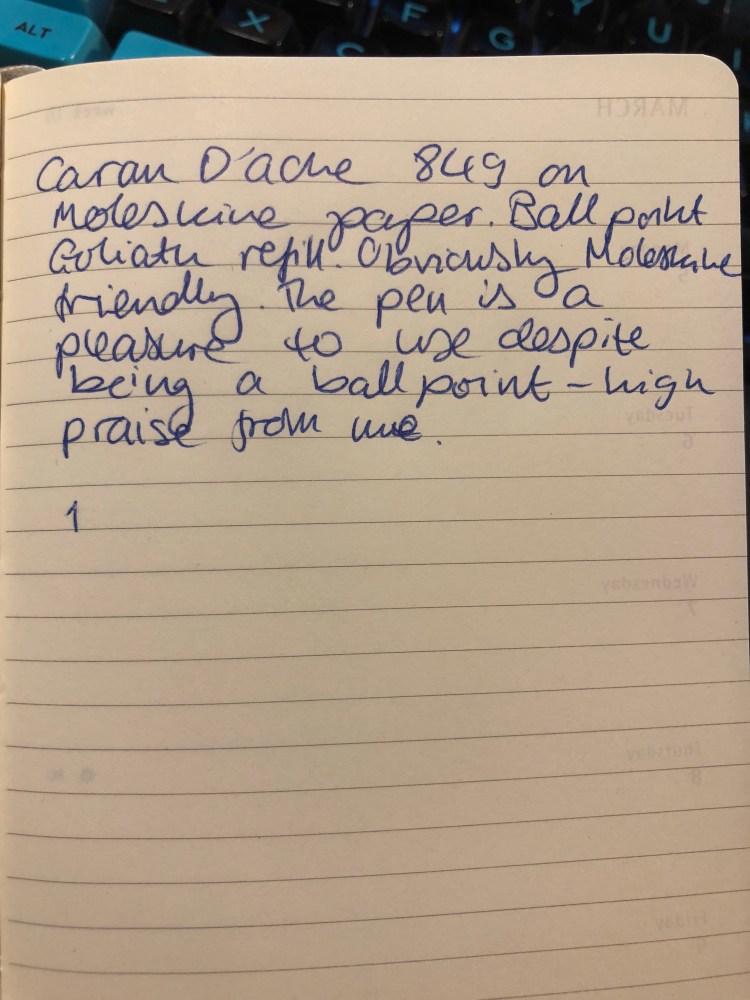
I don’t use ballpoints for writing, especially not for long periods of time, but this pen is obviously built to be a workhorse. Nothing rattles when you write, the refill is smooth, with no blobs of ink and no problems starting. Thin white streaks appear now and then while writing, but that’s to be expected and is hardly noticeable. Unlike many ballpoint refills, the Caran d’Ache Goliath refill that comes with this pen dries almost immediately, even on Moleskine paper, making it friendly for left-handed writers.

All in all a great pen, and a perfect gift for the Nespresso lover in your life.

Narrative Trouble

Just discovered a giant plot hole that I somehow missed on my second draft. Now back to pen and paper to try to figure it out. At least I can use pens and ink and paper that I love…

Review: Parker Jotter London Architecture

Before I got into fountain pens and gel ink pens became available in the market, I used to use ballpoint pens for taking notes, and the Parker Jotter was my favourite. It was the first pen I invested “real money” into when I was still in high school, and I still have that purple pen knocking about somewhere in the house. The refills were always a problem, with blobbing, streaking and hard starts something common to all ballpoints, even the Jotter with its “Quinkflow” refills, but you could shade with the pen, which meant that you could doodle in your notebook while bored — a big plus for me.

I switched to fountain pens when I started my BA and my wrist pains got worst than ever, because I was practically carving the words into the page. Since then, gel pens and fountain pens have ruled the roost on my desk, with only a Kara’s Kustoms Render K with a Schmidt easyflow 9000 M in black filling my few ballpoint needs. When they don’t blob, ballpoints are great after all, especially if you want to jot something down and not have to wait for the ink to dry.

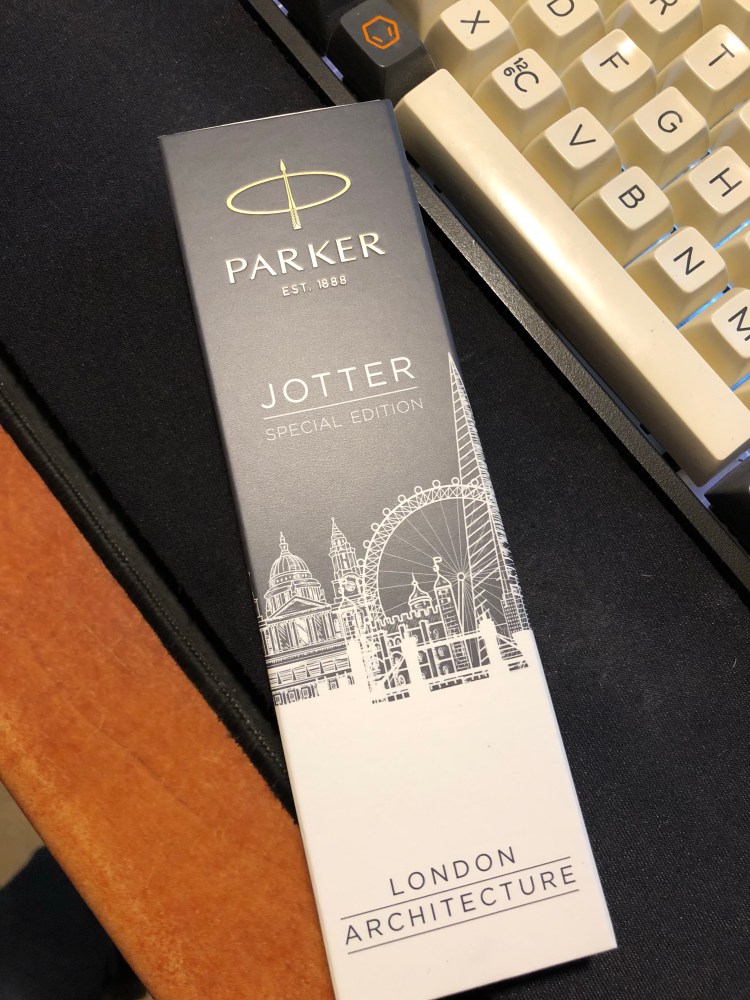
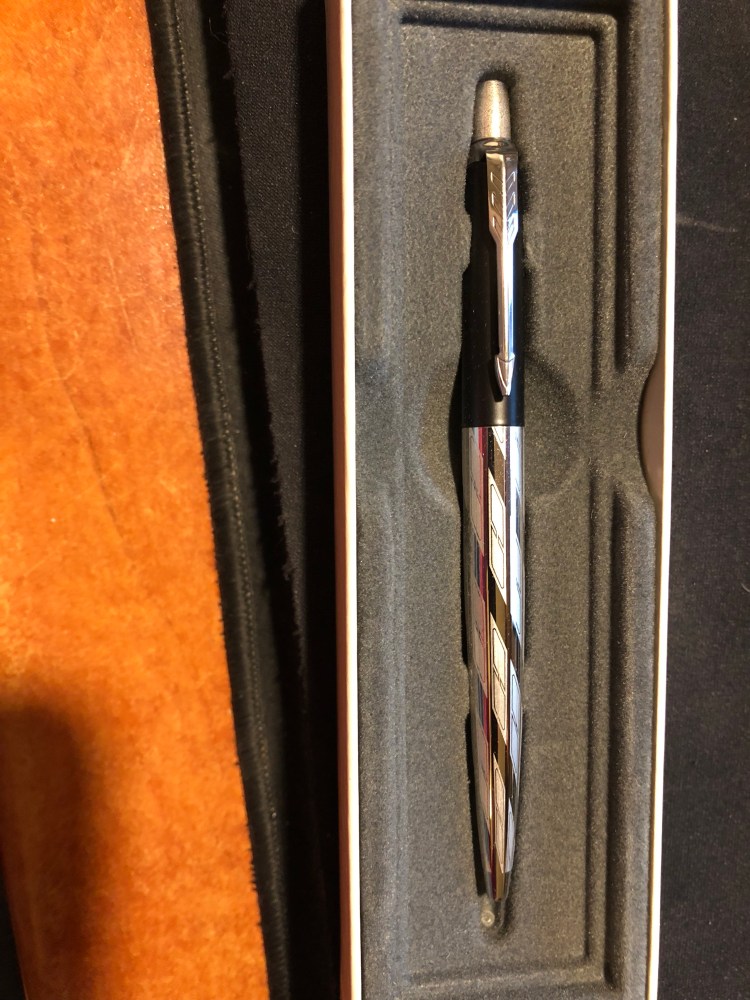
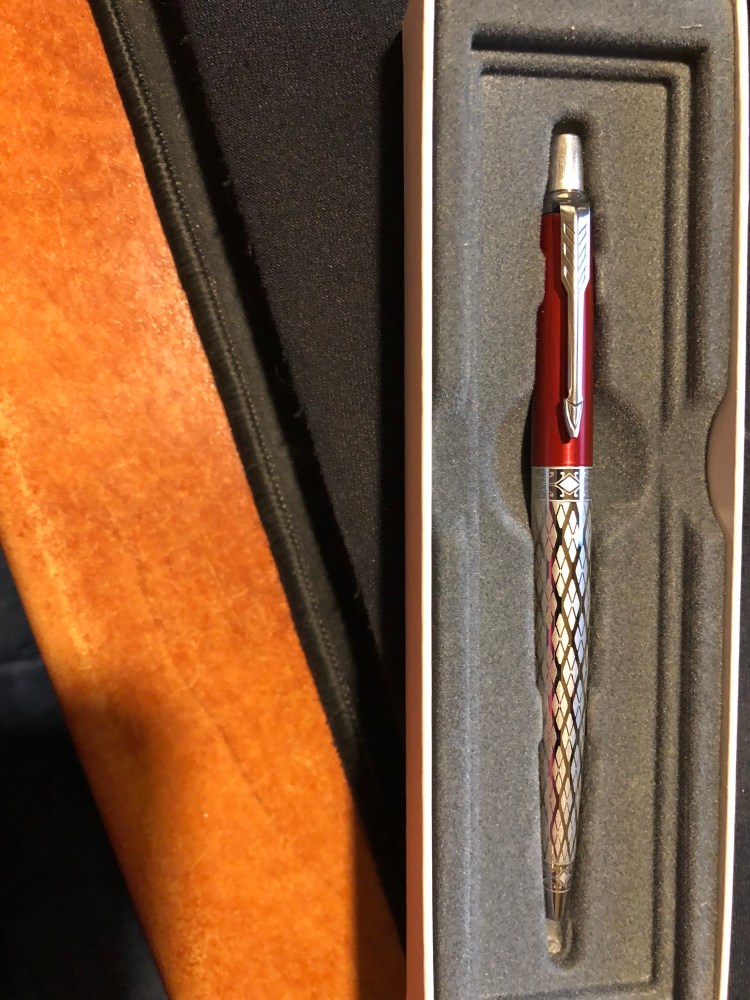
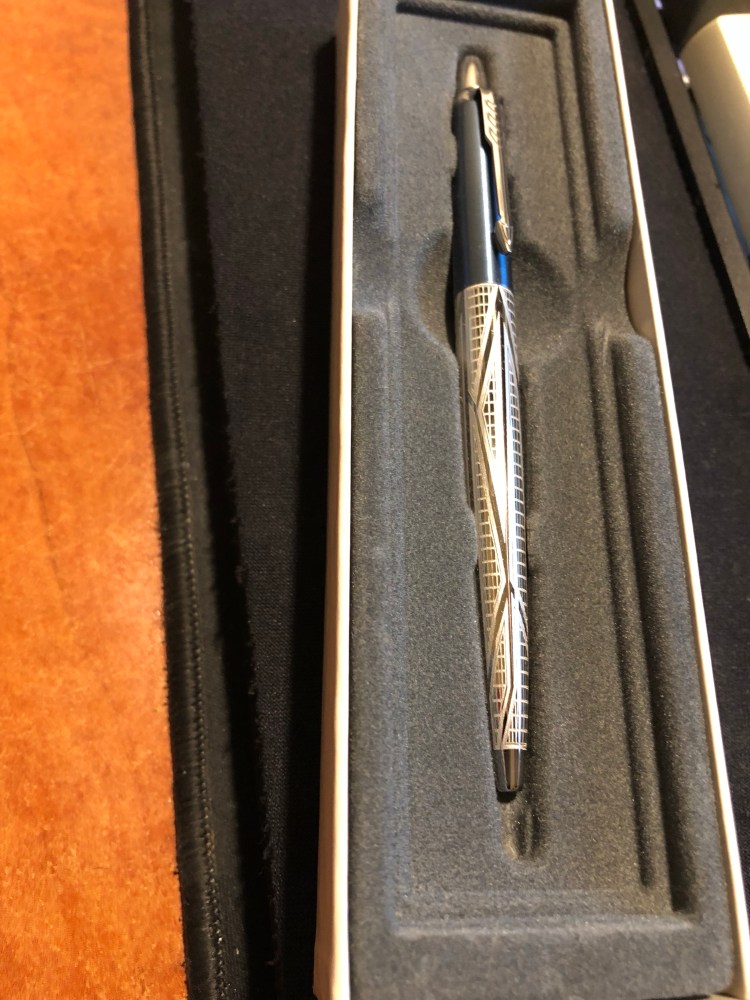
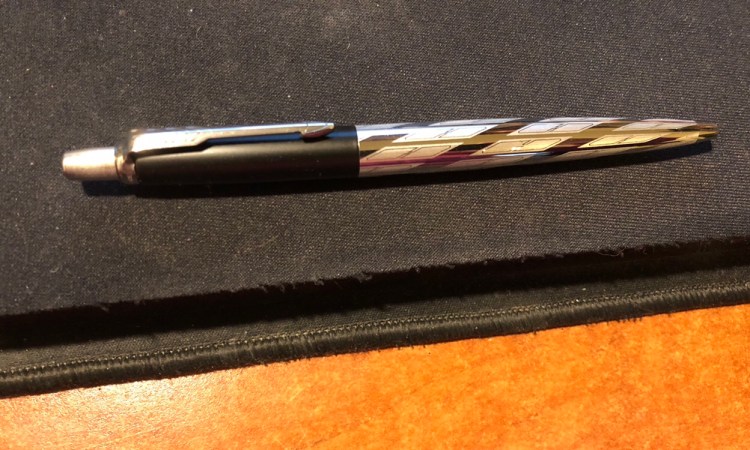
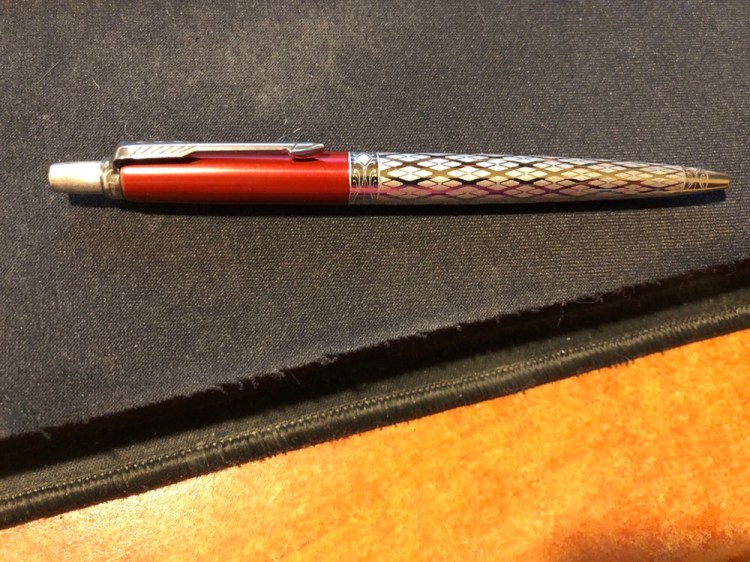
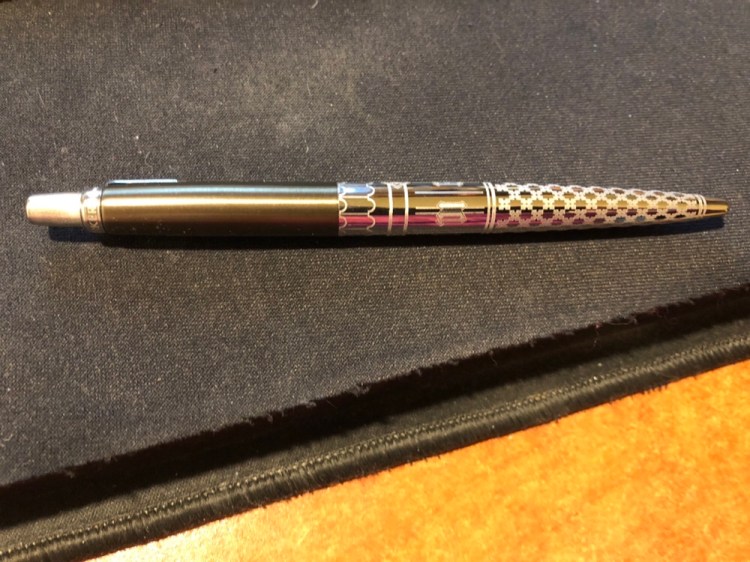
But when Jet Pens added four limited edition Parker Jotters, each one celebrating a different London architectural icon (Bronze for Big Ben, Red for Buckingham Palace, Sky Blue for the Shard, and Black for the Gherkin), I knew I had to reopen the ballpoint chapter in my life.

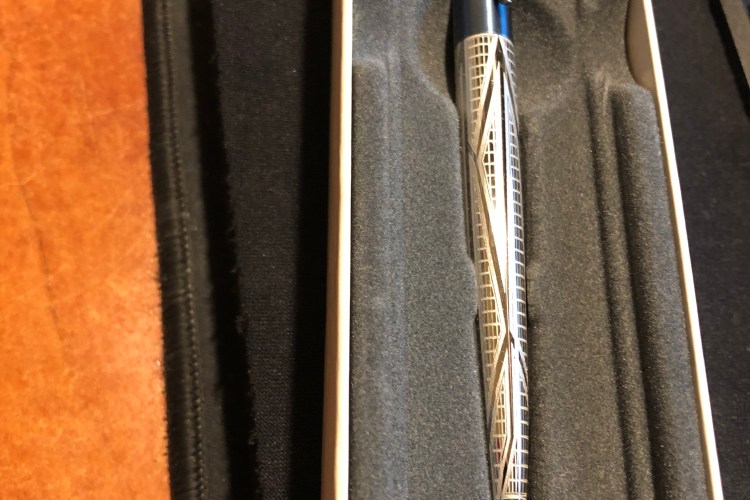
The packaging is stunning, as you can see for yourself:

Not many pens at this price level come in such nice boxes, which makes them perfect gifts (I bought all four pens and intend to give away three of them as gifts).

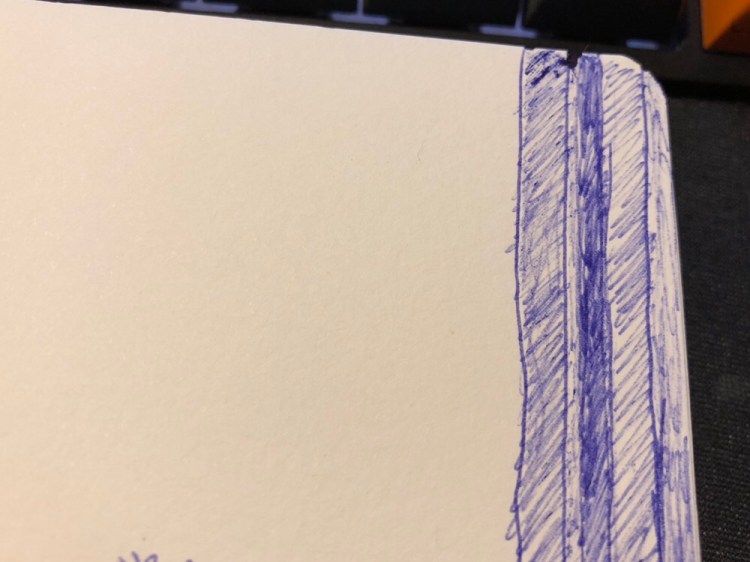
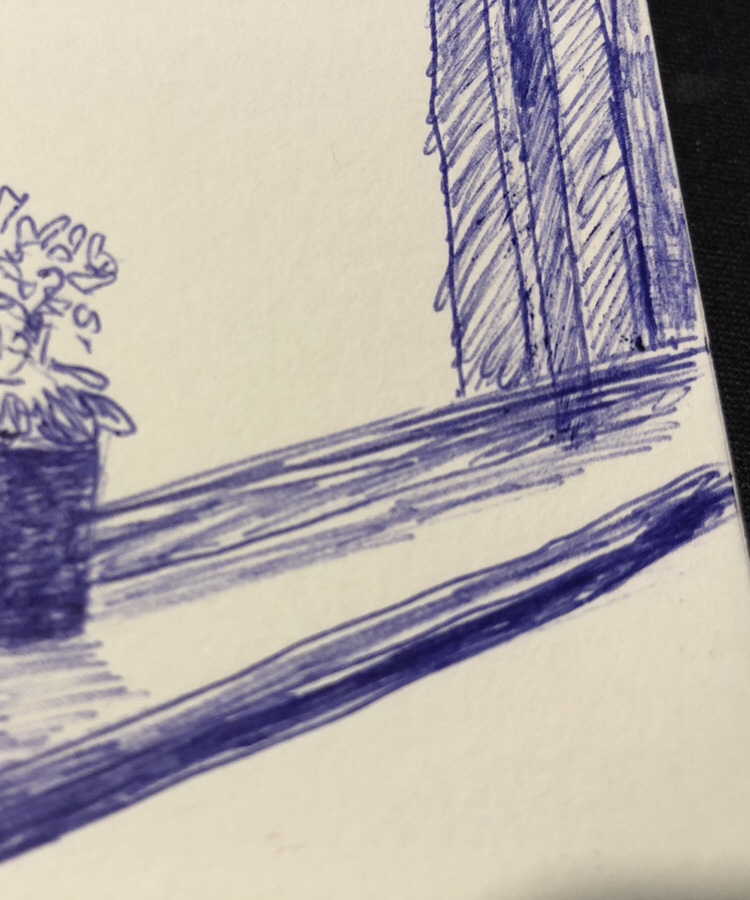
Ballpoints aren’t much fun for me to write with, because I have RSI problems and they require pressure to use, but they are fun to sketch and doodle with. So much shading with one pen:

The etching on the pen makes it very easy to grip once you start writing or sketching, but it does feel a bit rough on the fingers when you just pick the pen up or fiddle with it. The click mechanism and clip are Parker solid, and colours and design of these pens are fantastic:

The minus is of course the refill, which is smooth with no railroading, but does blob a bit, mostly when you sketch, not so much when you just write with it.

The funniest thing about these pens that celebrate such very British icons, is that they are made in France (until 2011 Parker pens were made in the UK).

If you enjoy ballpoint pens and don’t have a Parker Jotter or like the look of these pens, I recommend these. They are tough workhorses and good looking pens.

If you love London as much as I do, I recommend these.

If you’re looking for a nice gift for someone, particularly an architecture or design student, I recommend these.

For me personally, gel pens and fountain pens will continue to rule the roost.