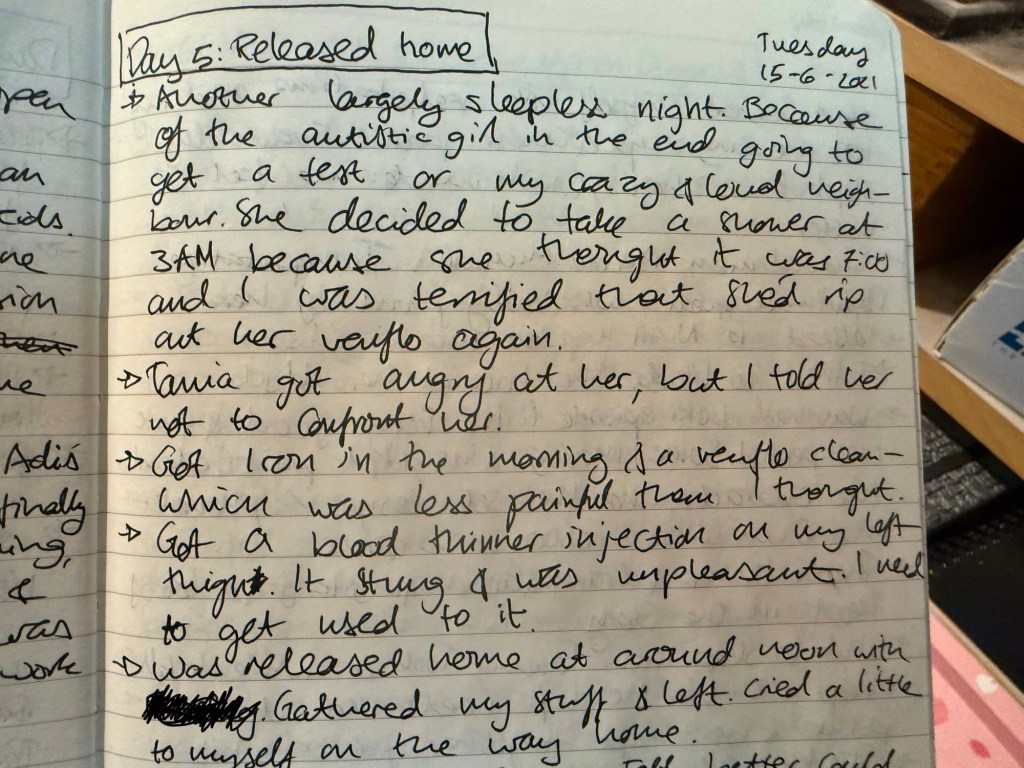
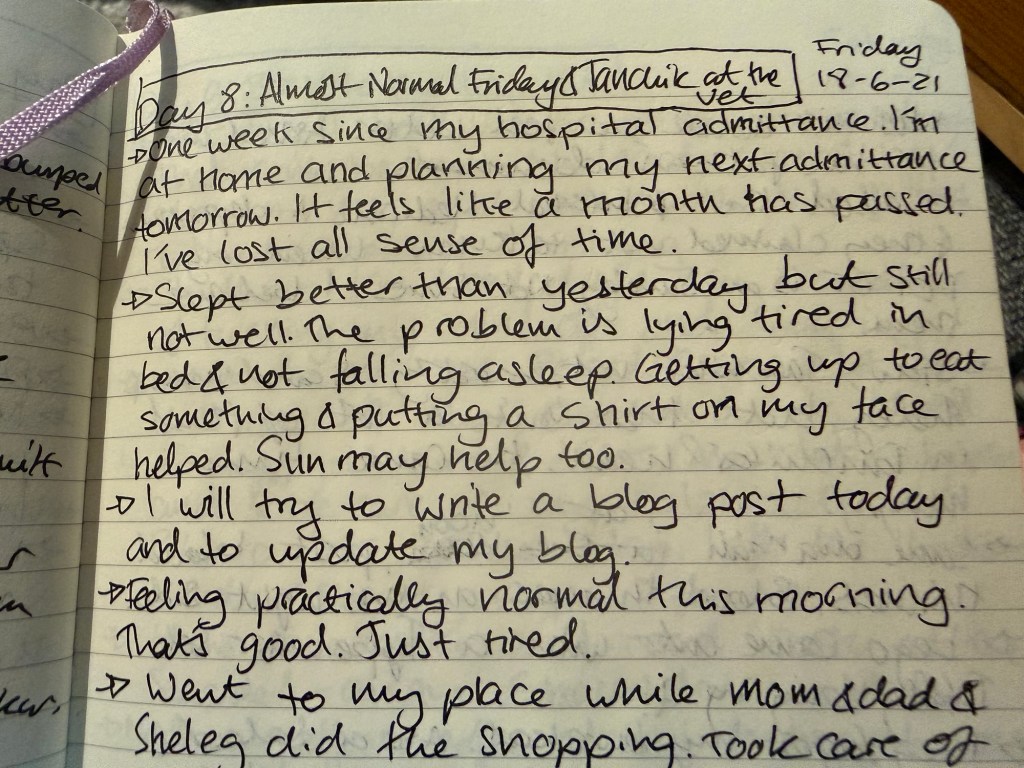
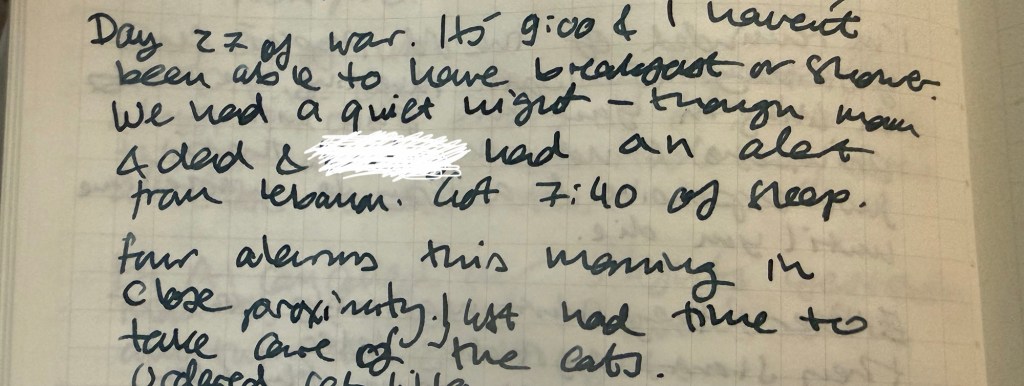
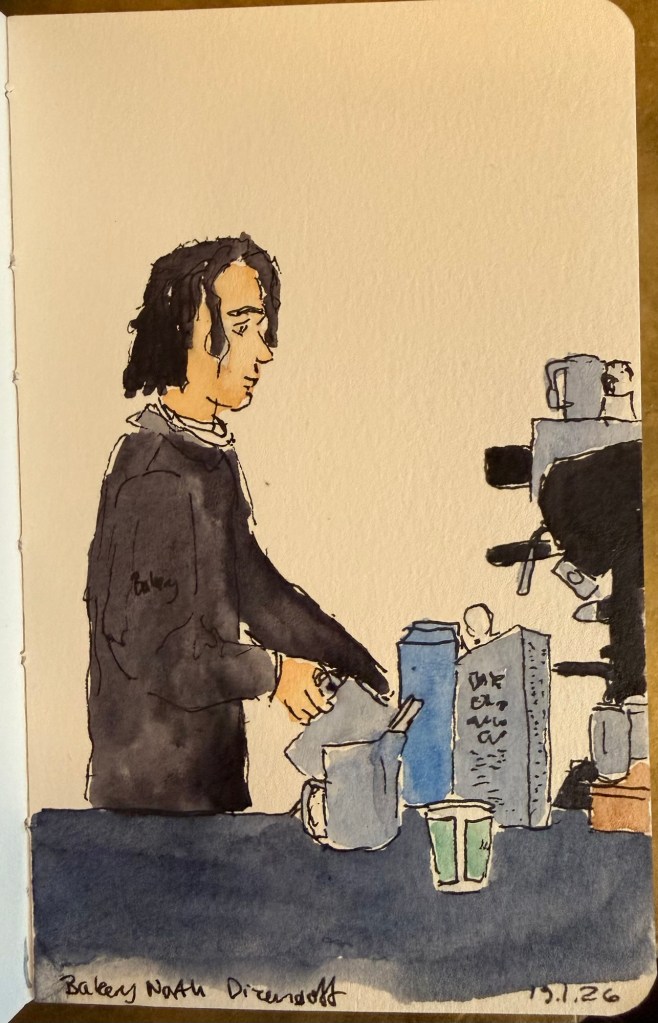
Weekly Update: New Journal and 10 Years of Writing at Large

It’s been a while, mostly because life has been hectic, not because I don’t have things to write about. Here’s to trying to get more posts in, even if they aren’t perfect or particularly long.

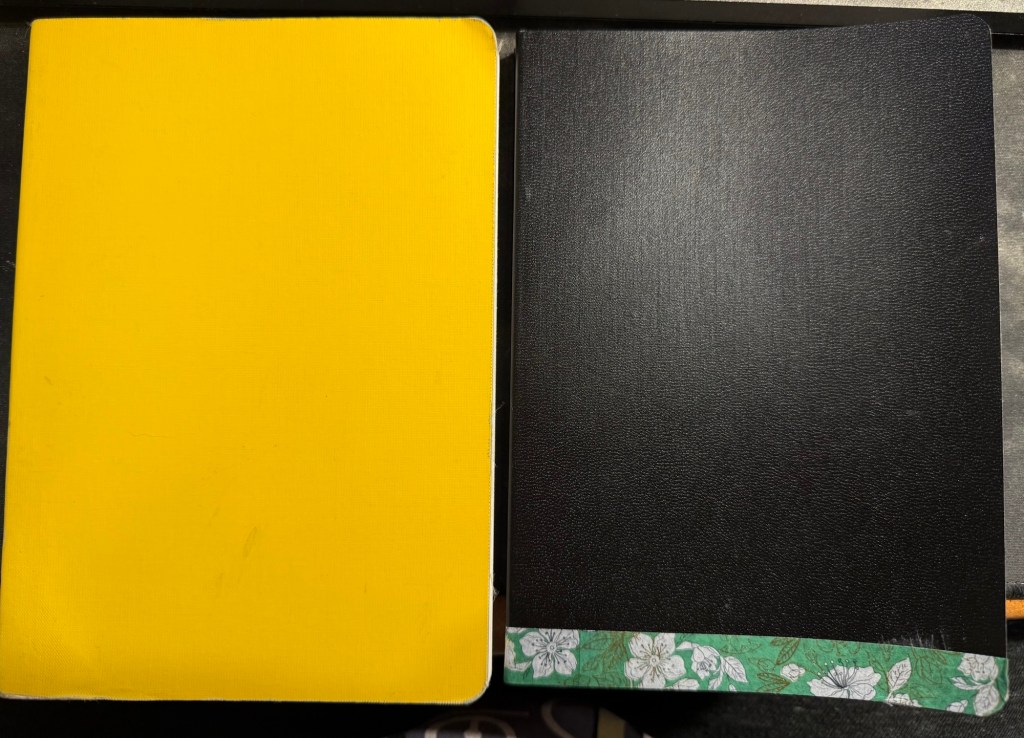
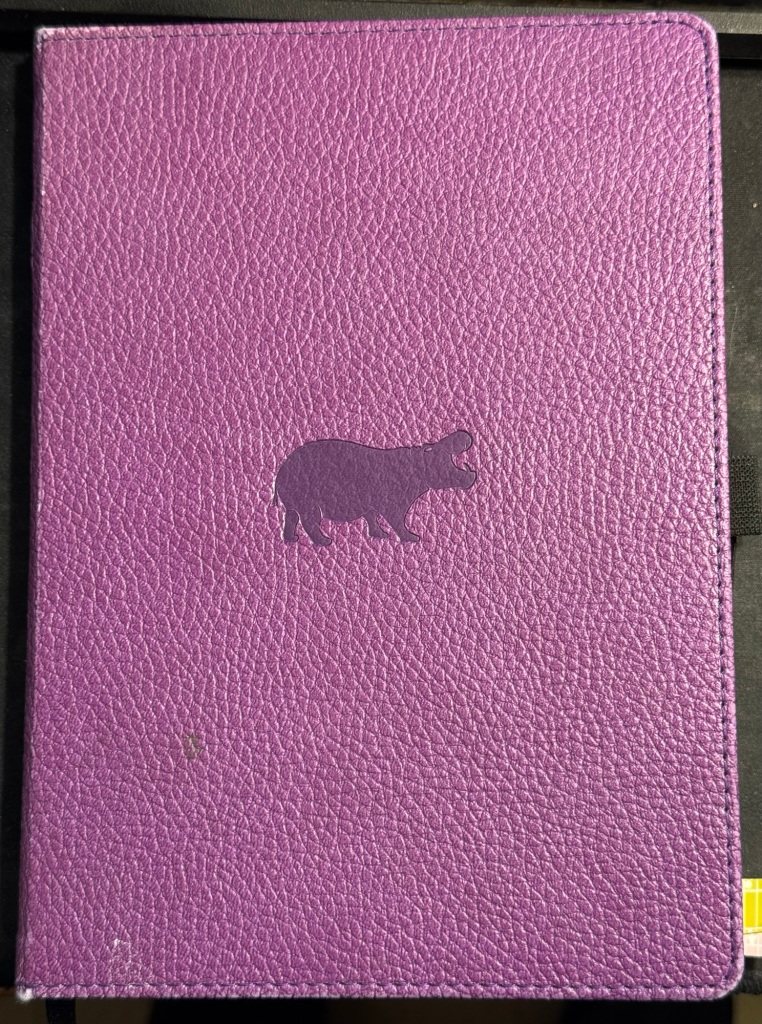
I’ve just finished another journal (the yellow one on the left in the photo below) and have set up my new one. Both are Stalogy 365 B6 notebooks, and both have a similar initial setup:

1.I flip the notebooks upside down so that the header with the dates is on the bottom and out of the way, as I don’t use it.

2. I use the front endpaper to write an “in case of loss” message (my name, email, phone number and a request for the finder to do the right thing).

New journal on the right, old journal on the left.

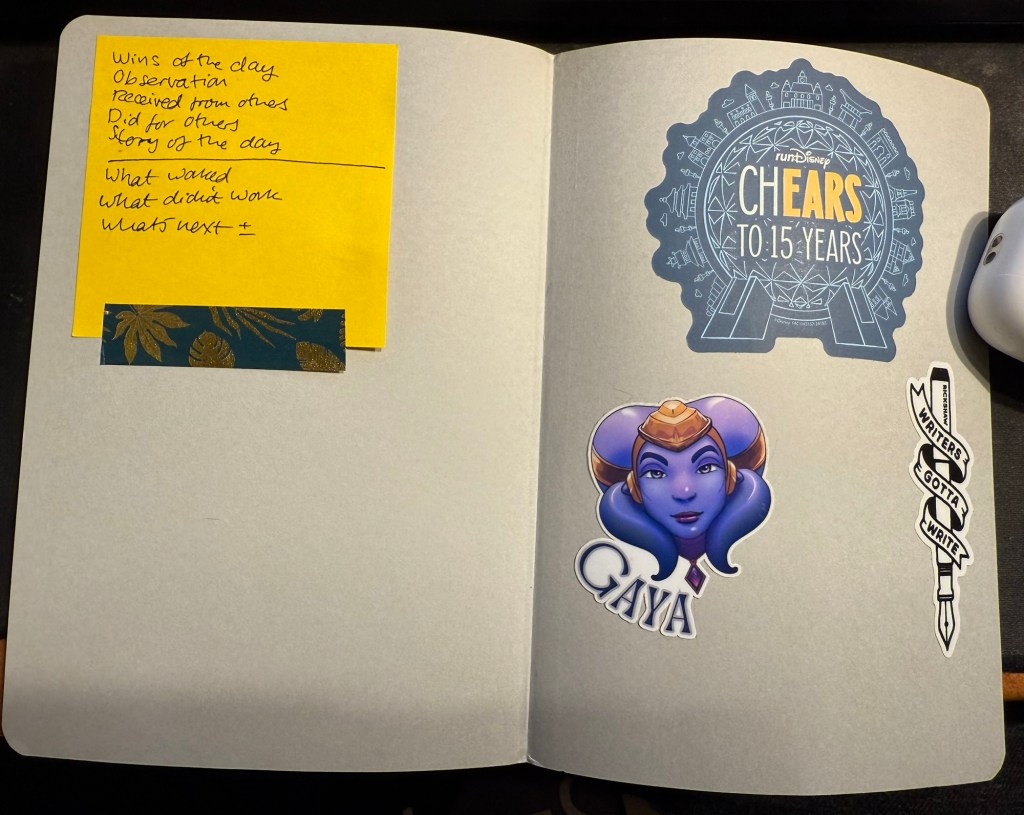
3. I use the back endpaper as a sort of “dashboard”. One side gets stickers on it, the other gets a post it with some journaling and review prompts.

Endpaper view of the new journal.

My new journal’s cover was damaged in transit, so I covered the worst of the damage with washi tape. It adds some character to the black cover, and if it gets too grimy or peels off I can always replace it.

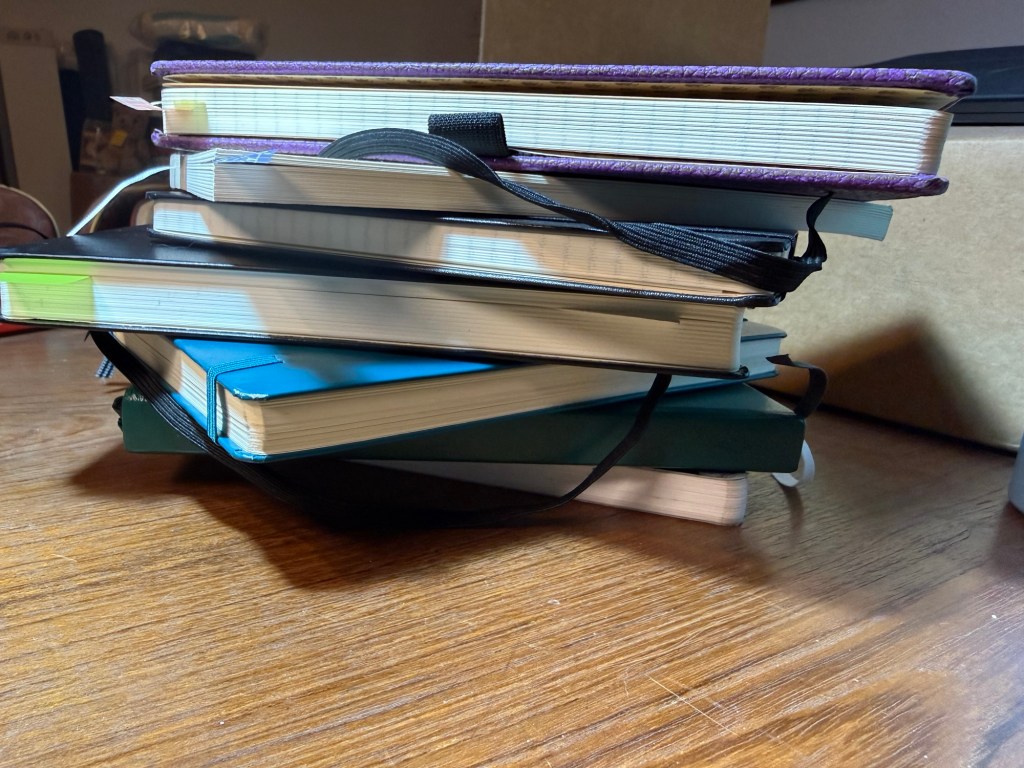
My old journal lasted me for 5 months, which is about what these notebooks last for. My Moleskine journals lasted for 3-4 months because they had fewer paged and I used them for scrapbooking as well.

In other news “Writing at Large” is 10 years old. I never thought that I’d be publishing it for so long, but I’m glad that I started it way back in July of 2015, and I hope to keep it going for many years more. I’ve been through a lot over the past decade, and this site reflects a tiny part of that. If I can recommend something it’s to invest your time in your own site and your own work instead of on social media. If you persist, it pays dividends.

Reading

Finished The Day of the Jackal by Fredrick Forsyth and found it fascinating. I’m planning on reviewing it here.

Started on We Solve Murders by Richard Osman and I’m working on some Ulysses posts.

Health and Fitness

It’s getting hard to run outside, harder than it ever was, in this heat and humidity. Global warming is making treadmill runs more attractive. I’ve started using the NRC app‘s guided treadmill runs and they are pretty good and making treadmill running more bearable.

Have a great week and be kind to each other.

Big Celebratory Birthday Update Part 4

The final post of this series, you can find part one here, part two here, and part three here. Grab a cup of tea or coffee and settle in – this one is long but there’s a lot going on here that’s worth your time.

32. I have been tracking my memory recall issues (a chemotherapy side effect) using the Tally app, which I’m hesitant to recommend. On the one hand it does work as a quick tracking app for a handful of things, but on the other hand it has a scammy pricing model – a fair price for the first year (and free if you just track up to three things, like I do), but then the subscription jumps to about $5 a month. That may be justified for apps that have a lot of features and utility, but Tally is not one of those apps. Day One, a magnificent journaling app for those who prefer to digitally journal, does much more and costs much less.

33. If you haven’t heard of KT tape and you’re a runner or athlete of any kind (or just injury prone) I highly recommend it (and no, I’m not getting paid for this). It’s a roll of pre-cut elastic fabric tape strips that you use in various configurations and levels of tension to relieve the pain and take some of the load off of injured muscles, tendons or joints. It eases recovery and it’s worth having a roll of it in your house and travelling with a few strips when you go abroad. There are YouTube videos that show you how to apply the tape- just search for the area or injury you want to address and “KT tape” and you’ll find official videos and ones made by physical therapists that will guide you. I recommend going for the Pro or Pro Extreme – they cost a bit more but last longer as their adhesive is stronger so you can keep them on for a few days. The tape leaves no residue and is easy to apply by yourself, although there are areas where another pair of hands does help. If you don’t want to buy the tape online, you can find it at your friendly local running store or in certain sporting goods stores.

34. If you are planning on travelling abroad with older relatives or people with a mobility disability, here are some tips that may help:

  • Ask for special assistance when you book the flights (there’s an option there). It helps with the long distances and long lines in the airport. Arrive early and wait patiently for the assistance – it’s worth it.
  • Book hotels and not Airbnbs. You want a place, preferably a well established chain, that you can rely on in terms of catering for your accessibility needs. I can’t tell you how many times we arrived at an Airbnb only to discover that the promised elevator has been broken for weeks, or the place has stairs to the elevator, stairs in the apartment and a bath instead of the promised shower. You want a hotel and not a boutique one because they’ll have an elevator bank, accessible rooms, and someone you can talk to if you run into issues. Chains are good because if there’s an issue with your room there’s a possibility of being catered in another hotel in the network. Contact the hotel ahead of time in writing and reconfirm your needs – elevator, shower with no lip or step, mini-fridge for medication, etc.
  • Use taxis (or rideshares) and buses, not the metro/underground/subway. There’s less walking involved, there’s less stairs involved, and it’s worth the additional time and money.
  • Check the parks you plan to visit – some have motorized tours for disabled patrons.
  • Talk to the staff at museums and exhibitions, preferably ahead of time. There may be an accessible route in that Dior special exhibition that isn’t advertised (there is), or they may tell you that it’s better to arrive at a certain entrance.
  • Theatres oftentimes have special accommodation and pricing for disabled people and their companions. If it’s not on their official site, email or call them and they will likely be able to help.
  • Don’t pack your days full, but rather plan or returning to the hotel for an afternoon nap before the evening’s activities.
  • Plan ahead as much as possible. You are less flexible in your needs so this is not the time to be spontaneous.
  • I can’t stress this enough: spend time, effort and money when selecting travel insurance. Don’t go for the cheapest option because it’s likely to leave you hanging when you need it. Pay a premium for insurance that pays back upfront and doesn’t have you chasing after it if possible. Take the time to read the small print and talk to them if possible.

35. I have gotten several questions about rucking, so here’s a good article describing what it is and the benefits and risks involved. I will add that you need a good pair of shoes with decent ankle support, you need moisture wicking socks to help avoid blisters (I just use my running socks), and you don’t need to buy a GoRuck bag. In fact I don’t recommend them – they’re heavy, overpriced and don’t provide the back support you want. Instead buy a good hiking day pack (I use the Osprey Manta 24) for about half the price and twice the support. My Osprey Manta comes with a hydration system (2.5 litres, which is a good chunk of the weight in my bag), wide padded straps, load lifters, a great hip belt and sternum strap, plus a mesh that is fantastic for the hot climates I ruck in. Also weigh your bag with useful things – water, food, first aid, extra layers, flashlights, sunscreen, etc. – and not with useless weight plates. Put the heaviest things on top, as close as possible to your shoulder blades and upper back. I use a waterproof Rumpl travel blanket at the bottom of my bag, and 80% of my weight is water. The rest is books, which I don’t mind using as weights as I’m rucking in a city park really close to home. If I was hiking in the great outdoors, I wouldn’t carry anything that wasn’t useful if I somehow got stuck on the way.

36. Do you have to generate QR codes and are tired of the spammy, ad filled sites that provide the service when you Google for it? As Cory Doctorow puts it:

“Just a QR Code” is a new site that generates QR codes, operating entirely in your browser, without transmitting any data to a server or trying to cram ads into your eyeballs. The fact that it runs entirely in-browser means you can save this webpage and work with an offline copy to generate QR codes forever – even if the site goes down:

https://justaqrcode.com/

37. My journal is at that delicious phase where it’s passed the 3/4 full mark but hasn’t reached the “only a handful of pages left” mark. I recommend making it a goal to reach that phase in every notebook you use – it’s the best.

38. These little fans are a lifesaver. I’ve used them on trips, on buses with fault ACs, when I’m outdoors waiting in the sweltering heat, etc. Again, not an affiliate link and this isn’t a paid anything – it’s purely a recommendation of a product that I’ve been using and enjoying for a few years.

39. Journaling Tip #4: Did you have weird, overblown reaction to something or someone recently? Take the time to journal about the experience. Write down what happened (facts only), what was your reaction/feeling (be honest), why it’s surprising under the circumstances and finally why do you think that you reacted the way that you did? Does it reveal something about how you view yourself, your insecurities or fears?

40. Lightening Book Review #7: What We Talk About When We Talk About Love, by Raymond Carver. This is a collection of 17 short stories set in rural American in the 70’s first published in 1981 and it hasn’t aged well. The protagonists drink a LOT, they are violent, sexist, despairing and desperate. It’s like watching a series of car crashes – you become numb to the experience after the third or fourth. Carver can write, and there are a few gems here, but it’s all so very miserable and depressing – like hosting an alcoholic for a week. Their stories may be intriguing, but they’re also all so very terrible and tragic that there’s only so much of it that you can take.

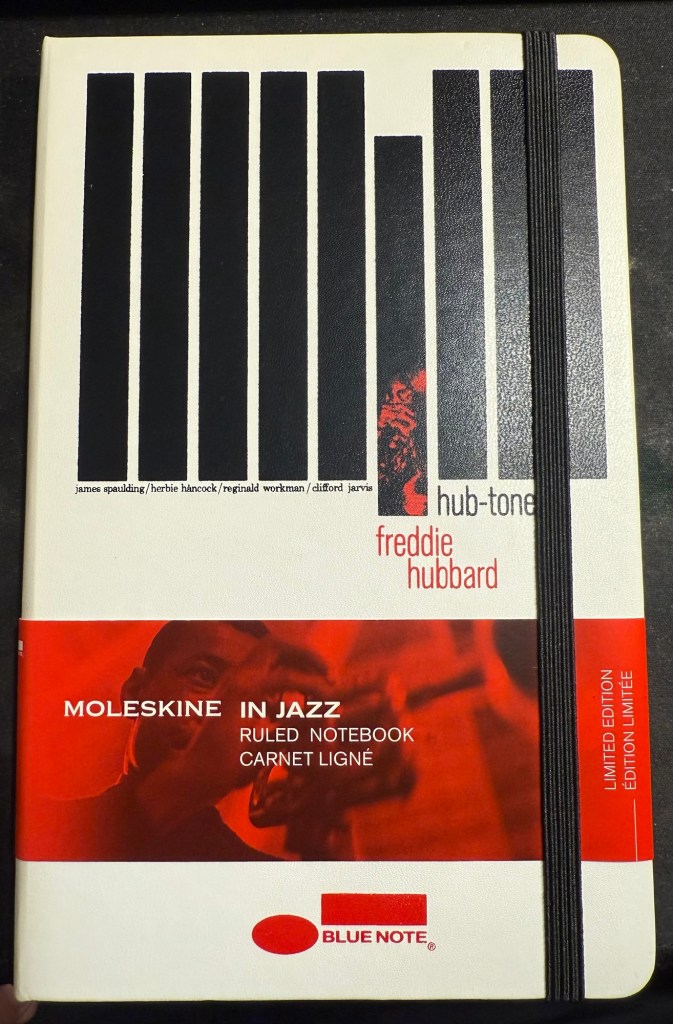
41. I opened a new Moleskine notebook – after not having opened a new one in over a year. This is the one will be used for some writing projects, and it’s one of my favourite limited editions, the Blue Note Hub Tones edition. I’ll maybe post a review of it later, but for now, this is a reminder to use the good china.

Moleskine Blue Note

42. Journaling Tip #5: look at someone close to you, someone you admire for having a skill or approach to life that you don’t have, and write down what you can do over the next few days, week, month to be more like what you like them. That’s what got me to go to more plays, concerts, shows and exhibitions now instead of just waiting until I’m on holiday abroad.

43. Great advice from Adam Savage’s latest Tested livestream – Q-Tip: Quit Taking It Personally. More often than not other people’s behaviour and choices has nothing do with you and everything to do with them.

That’s it – 43 points for 43 years. Have a great week!

View from my rucking session

Big Celebratory Birthday Update Part 2

A smorgasbord of stuff for your delectation. You can read part 1 here.

13. Big bold announcement: next month is Bloomsday, and after much hemming and hawing i’ve decided to reread James Joyce’s Ulysses and blog about it as I go along.
I’ve read Ulysses three or four times between 2009-2013 but I haven’t touched it since. While I still have some of my notes on this book, my goal isn’t to reconstruct them or to lecture on the topic, but to enjoy a very good book, and see how my memory of it fairs post-chemotherapy (which has affected my memory).
Why should you join along? Because Ulysses is a phenomenally good book that is enjoyable to re-read (but very challenging to read for the first time). It’s funny and touching, profound and full of adventure. It’s just built on very well crafted layers of language, meaning and context, and it’s paradoxically a book that is meant to be re-read, not read. Hopefully I will make it a bit easier and less scary to read for the first time for those brave enough to join me.

14. I have been switching my podcast listening queue around lately, which means that I got to listen to this wonderful two part episode of Alie Ward’s “Ologies”: Salugenology (Why humans require hobbies). Guest Julia Hotz talks about the things that we need to be happy as humans, and the conversation is fun to listen to and enlightening. I highly recommend it, and the “Ologies” podcast in general.

15. I’ve stopped buying eBooks from Amazon after they stopped allowing customers to download the books that they purchased (so you basically don’t own the book that you paid for if you buy in from Amazon now). I still use my Kindle Paperwhite, but I’m buying books from Kobo. I buy them DRM free where possible, and if not I use Calibre to strip them of DRM and then this site to transfer them to my Kindle (if they are DRM free you just use the sendtokindle site to upload them to your Kindle). It took me 30 minutes to get the setup working the first time, and it now adds 1-2 minutes tops to every book purchase, which is plus for me. It means that I don’t mindlessly purchase books that I don’t intend to read, and I actually think through each book purchase. I also noticed that the books I’m interested in are priced slightly cheaper on Kobo, which is a nice little bonus.

16. Using yellow ink (Rohrer and Klingner Helianthus) has been a challenge but also an education. Helianthus is readable enough to be used for my daily todo list, but thanks to this ink I’ve been learning to enjoy using a fountain pen for highlighting purposes. It’s more subtle and better behaved than traditional highlighters, and the colour pops on the page without resorting to neon shades.

17.I am thinking about the next inks to put into rotation, which is a bit unusual for me as I normally start with the pens that I want to fill, and then go find inks that go well with them. I want a blue-black for practical reasons, a cheerful green, a pink or orange, and a turquoise or teal. How do you select which pens and inks you use?

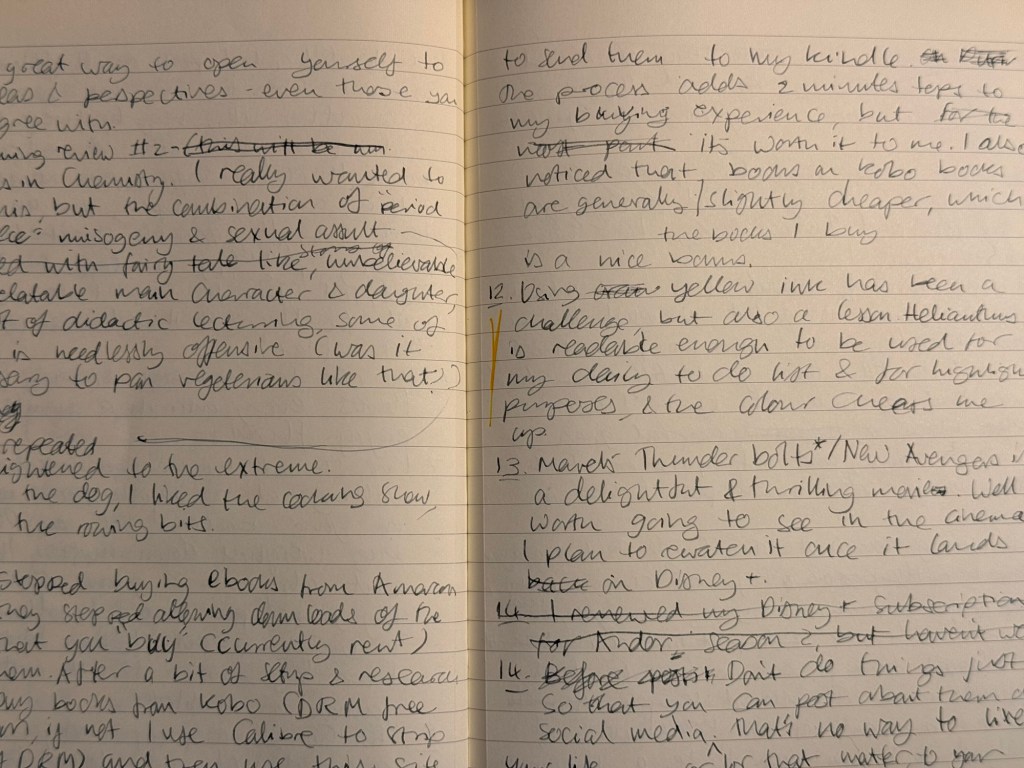
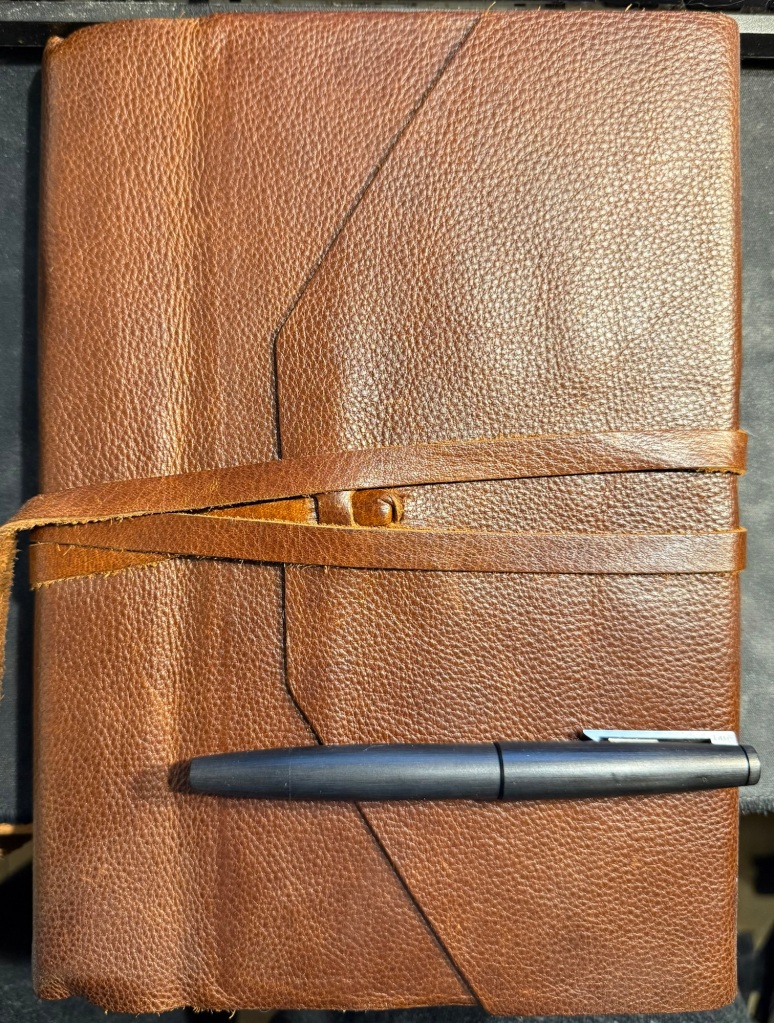
18. A bit of behind the scenes: I draft these posts longhand in a Dingbats notebook and a fountain pen. I think better on paper and it’s a way to use the pens and inks that I have. There are no AI/LLM agents/bots involved in this blog, and that’s the way it will remain. I enjoy writing, I created this blog as a hobby because I enjoy writing, and while I use AI agents as part of my job, I have no intention of letting them take away any part of the creation of this site.

Draft of this post
Well worn Dingbats blogging notebook

19. Journaling tip #1: If you’ve been feeling down lately, take the time at the end of each day to review your day and score it. It doesn’t matter what scoring system you choose, but I recommend that you keep it simple and not too granular: -1, 0, +1 or 1, 2, 3, or “great”, “OK”, “meh”, “terrible”. You just want a quick way to know if the day was a good day, an average day, or a bad day.
At the end of every day for a week or two think back on what happened throughout the entire day, give it a score, and explain the score in no more than a sentence or two. So for me today was: “OK – was super tired at the start, but I managed to get two naps in and recovered enough to get most of what I planned done”.
At the end of the week, when you do your weekly review and plan ahead what you want to stop doing, start doing and keep doing, use these scores as an input for your decisions.
Repeat this whenever you feel the need to recalibrate.

20. Journaling tip #2: if you’ve stopped journaling and want to restart, don’t attempt to backlog the days that you missed. Forgive yourself the journaling “debt” and start fresh. This is easier to do if you switch something up in your journaling routine – use a new pen, pencil or ink, a new notebook, or write in a new location.

21. A dear friend and colleague has moved to a new job in a different company. While I’m happy for him and I wish him the best of luck, I already miss working alongside him. This brings me to the following journaling tip:

22. Journaling tip #3: Take a journal, either your usual one or a new one for a special journaling “events” and write down a list of names of people that have inspired or taught you something that you are grateful for, and write down what it is they taught you. Start with those that affected you by their positive actions (kindness, encouragement, setting good examples), and then challenge yourself to journal about those that taught you by being negative presences in your life. Did an office bully teach you to be kind? Did the talentless brown-nose teach you about how much you value your integrity?
You can write about both people you personally know and those in the public sphere, and you can return and edit or add on to this list whenever you want. It’s a good reference in troubled times to remind you of who you are, what you stand for, and where you want to be.

Manufactus notebook that I plan on using for journaling tip #3

Big Celebratory Birthday Update Part 1

It’s been a long while since I’ve posted a weekly update, and it’s my birthday week, so to celebrate I decided to write 43 points (split up to several posts to make them more manageable), in no practical order:

  1. After a bit of drama I have managed to enrol to the 2025 Urban Sketchers’ Symposium in Poznan, Poland. I will be posting about my sketchbook and art supplies packing list later on, but do let me know in the comments if you’ll be there.
  2. Rising tariffs and shipping costs have made online pen, ink and paper purchases prohibitively expensive for me. This may not be a bad thing, as it should encourage me to use the large stash of “stuff” that I already have.
  3. I have been gifting people nice notebooks and pens lately, and it’s been a surprisingly heartwarming success. Giving people a notebook that matches their style and needs, coupled with a pen that suites them and an encouragement to start journaling about their lives has been one of the joys of my life in recent months.
  4. Moleskine came out with a cool Peanuts collection of notebooks and Blackwing pencils (plus a backpack and set of pins). It’s refreshing to see them use the XL cahiers for a limited edition, as I don’t think they’ve done that since the Art collection about a decade ago.
  5. Lightening Book Review #1 (I have a huge pile of books to review and not enough time to write a dedicated post for all of them): When the Moon Hits Your Eye, John Scalzi. Scalzi is normally very good at humorous sci-fi, but this book is not one of his successes. It’s an overtly silly, very lightweight book that is not on par with the other books he groups in this loosely thematic trilogy, The Kaiju Preservation Society and Starter Villain. It really suffers from the constant jumping around amongst a giant cast – the plot loses momentum, and you find it hard to connect to any set of characters. While it was not great hardship reading it and it’s a decent light read, feel free to skip this one and wait for the next instalment of his “Old Man’s War” series.
  6. It’s OK to splurge and buy yourself flowers every once in a while, if you enjoy flowers.
  7. I’ve started rucking, which is basically walking at a brisk pace outside with weight on your back. I use an Osprey hiking daypack weighed down mostly with water, but also with a giant cookbook, my journal and kindle, which brings it to around 10kg of weight. I take a break about 15 minutes into my session to sit outside and journal or meditate. If you’re curious, start with a bag that has a waist belt and not too much weight for too long, and skip the $400 overhyped specialized bags and weight plates.
  8. Go see a play (not a musical or comedy) at your local theatre. It’s a great way to open yourself to new ideas and perspectives – especially those that you don’t agree with.
  9. Lightening Book Review #2: Lessons in Chemistry, Bonnie Garmus. I really wanted to like this book, but the combination of graphic, repetitive and unrelenting “period piece” misogyny and sexual assault coupled with a frankly unbelievable, non-relatable and largely unlikable heroine made it impossible. Couple this with an even less believable daughter and dog (though the dog is cute), lots of didactic and condescending lecturing that is so blatantly not period true and can at times be needlessly offensive (was the vegetarian bashing necessary?) and this was a book that I didn’t really enjoy. The cooking show, dog and rowing bits were nice, though.
  10. Marvel’s Thunderbolts*/New Avengerts is a delightful, touching, thrilling and generally great movie. It’s well worth the cinema visit, and I plan to rewatch it once it lands on Disney+.
  11. Please don’t do things just so that you can post about them on social media. That’s no way to live your life. It’s the equivalent of voluntarily turning yourself into one of the Matrix human batteries – for AI training models’ and advertisers' use.
  12. Here’s a recent sketch that I did:
Pen and watercolour sketch

Have a great week and see you in part 2.

Three Habits Worth Keeping

Happy New Year!

This is the time of year when people set resolutions, themes, goals, intentions, words of the year, etc. Ambitions are high, intentions are good, but well before March most of these efforts will be abandoned and forgotten. I’ll be writing about my quarterly plan and my 2025 planner later on, but for now here are three habits that worth keeping in 2025 and in general, and a few tips on how to get into them and persist:

Exercise

Any amount and any kind that you can do is excellent. Let’s repeat that: ANY amount of exercise and ANY kind of exercise is a tremendous win. Start with walking if nothing else speaks to you, but try to make sure it’s a brisk walk and not a shuffle if you can. It doesn’t need to take an hour, and it doesn’t need to be 10,000 steps. Remember, anything you can do is good. Local gyms and community centres usually have classes you can try out if you want to give yoga, pilates, kickboxing or jiujitsu a try.

Running offers the best “bang for your buck” in terms of time and money invested per health and fitness gains, but not everyone can run, and not everyone enjoys running. If you want to give running a start, I recommend using any “couch to 5k” app, and then transitioning to the excellent guided runs and training plans in the free NRC app to keep you going. If you need someone to keep you accountable, either join a group of some sort or find a friend or family member to work out with.

The NTC app offers a huge variety of training options – from yoga to full equipment gym workouts, with some excellent body-weight workouts in between. Swimming is a great low impact way to build up cardio and a bit of strength, and weight-lifting isn’t as intimidating as you think – a pair of dumbbells at home is a great way to start exploring it. Yoga with Adriene is great way to get into yoga if you don’t or can’t take a class and the NTC app seems too intimidating.

Soccer, basketball, baseball and other group sports are great ways to expand your social circle, and tennis, pickleball, badminton are great ways for couples to work out together.

The easiest way of getting into the habit is doing a little something every day, and doing it as soon after you wake up as possible. That way you start the day with a win and some endorphins, which is always a nice way to start your day.

If you think you don’t have time to work out, be honest with yourself and track your time for a day or two. How much time is spent on social media? Binge watching TV? Mindless scrolling? Could you cut some of that out? Could you go to sleep a little earlier and wake up a little earlier so you can have some alone time to exercise and clear your mind?

If you already have a solid exercise routine in place, take the time to diversify it if you can. This goes particularly to us runners: strength train. Swim. Cycle. Do things that aren’t just running, because just running is one of the main causes of such relatively high injury rates amongst runners compared to other athletes.

Reading

Most people don’t read, which is their loss because reading is a superpower. Train your brain off the social media dopamine hamster wheel and teach it how to focus for significant stretches of time by picking up a reading habit. You’re standing in line bored? Open your Kindle app and pick up that detective novel or space opera from where you left off. Replace TikTok, social media and YouTube with books, and make sure that they’re books that you want to read. Don’t go off bestseller lists or influencer recommendations or whatever one this or that award, or is considered a classic. When you’re getting back into reading you need to gradually train your mind to get used to this activity. Start with a book that really interests you (not one that’s impressive), and start with a physical copy because they’re easier to read. Reading will do to your brain what exercise does for all of your body: make you better, stronger, faster, healthier and happier.

If you’re already a reader, then mix things up a bit: if you only read non-fiction, read fiction for a change and vice versa. Try something new, because you may just end up liking it. If you’ve only done light reading so far, pick a challenging book and work your way through it. Treat your brain like a muscle you are training, where you gradually progress to bigger and bigger weights. Challenging books are often the most rewarding, but you probably should start with them.

Journaling

Digital or analog, it doesn’t matter, journaling is worth doing. Gain insight to yourself, unleash your creativity, and let loose to your thoughts in a safe environment. This is the path to self improvement, learning to be kind to yourself, and having a positive mental attitude towards life.

If you’ve never journaled before, start small and simple: pick a notebook that you will enjoy writing in (whatever speaks to you, no matter what other people think), use whatever pen or pencil you fancy, and write 3-5 things you are grateful for each day. Add more sections to your daily journal as you go along: a “story of the day”, an account of what you did or what you consumed and what you thought about it, a nightly summary, etc.

Make it a ritual of sorts: write in your journal every morning and evening, every time you switch between major tasks during the day, or when you feel the need to respond to something (don’t post online, post in your journal instead).

Don’t be intimidated by gorgeous and elaborate works of art in various journaling forums, blogs and on Instagram. These are journals as craft projects, and while they are nice, they aren’t what we’re trying to get to here. It’s OK to add stickers and bits and bobs to your journal, but its purpose shouldn’t be to be photographed and posted. It’s there to work for you, so treat it like a workhorse, not a circus pony. Also, remind yourself that many of these journal photos are there to sell: stickers, washi tape, pens, notebooks, ink, the poster’s journaling course, etc. People rarely show off their “real” journals because if you’re honestly journaling only for yourself, that’s just not something that you’ll want to share.

How I Use My Notebooks: Gym Journal

Here’s an idea that I haven’t seen discussed before: take a pen and a pocket notebook with you to the gym and journal in between sets.

This is my gym journal:

Moleskine Pocket lined hardcover Mickey Mouse limited edition and Zebra G-405 pen

It’s a battered Moleskine pocket hardcover lined notebook, a limited edition Mickey Mouse one from years ago. There was a series gash in the spine, so I fixed it with some gaffer tape. I use a Zebra G-450 gel ink pen, and it lays down a bold, 0.7 black line.

I don’t use this notebook during every gym session, but when I’m trying out new things, when I’ve got a lot on my mind, or when I’m trying to solve a specific problem I take it with me. I don’t write details about my workout (rep numbers, weights, etc) as I have an app for that.

So what do I write in this notebook?

  • How things felt during the workout, particularly when I’m trying something new or if I’m recovering from an injury.
  • Notes on other gym goers bad behavior. I don’t want to confront them, but I do get frustrated when people don’t return weights, don’t use a towel or wipe down the equipment, and hoard equipment during the gym rush hour. Writing it down allows me to let off steam and focus on more productive things (like my workout, or returning equipment that I know is no longer in use back to its place, or on anything else).
  • Ideas or projects that I’m brainstorming at the moment. I oftentimes use a workout to think about something I’m considering or something I’m stuck on. I jot a few notes in between sets to not forget the ideas I came up with during that time.
  • Things I want to journal about later, in my “regular” journal. These are usually things that I forgot to journal about and want to get back to later in the day, when I have time to sit down and better process them.

The main point of this journal is to get me as much as possible off my phone. It’s tempting to check the news for the umpteenth time, or doom scroll various feeds, or play mindless games while you wait between sets. My goal is to bring these habits down to a minimum, and this journal is a useful tool in the search for less screen time.

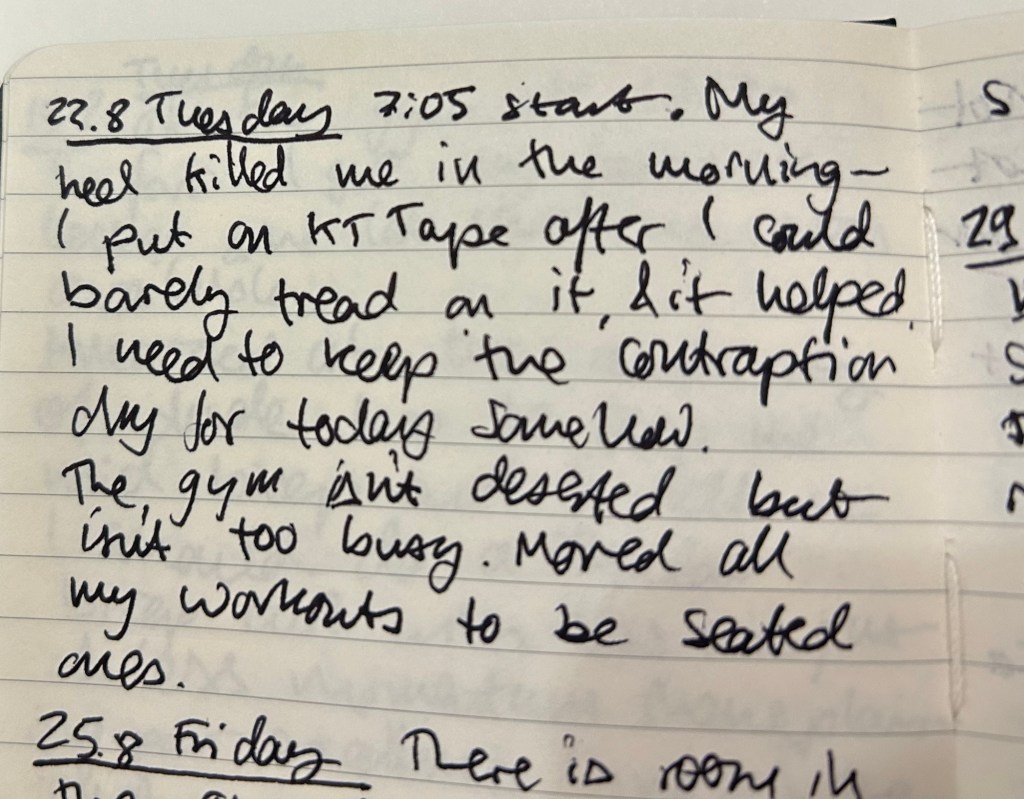
Sample entry from last year. I write with gym gloves on, hence the atrocious handwriting.

I originally thought that it would be embarrassing to use a notebook in the gym, but I decided that “so what, who cares” is the attitude to take in this case. People do much more embarrassing things at the gym and nobody comments on it. I use an inconspicuous notebook that isn’t at all precious, and a hardy, inexpensive, inconspicuous gel ink pen to go with it. Both have survived falls and encounters with misplaced weights, so they are gym hardened, Don’t bring large, colourful notebooks with you, and don’t bring pens that look expensive or draw attention to themselves. You’re going for the “boring, not worth paying attention to” look here.

Would you consider taking a pen and notebook with you to the gym? If you already do, how do you use your gym notebook?

Journaling Series: Journaling in Response to Media

There’s a new show out on a streaming service and I’ve started watching it. It’s part of a large franchise with a vocal fandom, and as usual, the fandom has opinions. These opinions are extreme, because that’s what social media and news sites amplify. Outrage sells. Hate sells. Abusive bot attacks drive up traffic and “engagement” so why should these companies stop them?

I too have opinions about this series, but they aren’t of the outrage kind. A few years ago I would have expressed them on Twitter, More recently I would have written about them in various group chats. These days I do neither.

I journal about them instead.

We have been trained to think that our opinions on the media we consume must be packaged attractively and shared as widely as possible. We have been told that it’s our responsibility to go on social media and let everyone know how we feel about a show, a movie, an album, a book, about every bit of culture we consume. We have been told that it’s for the benefit of our friends and for the benefit of the artists we like. It is not. It is for the benefit of a small group of shareholders.

I have no interest in feeding the outrage machine. Screaming into the bot filled void does nothing but make you hoarse, miserable, angry, and possibly part of a mob.

I also realized that I’m not interested in entering a debate or an echo chamber about this particular series. I just wanted to clarify for myself what worked in this series, what didn’t, and should I continue watching it or not.

So I journaled about it. No outrage. No drama. Just me and a blank page having a bit of a think about a streaming series. There’s no personal affront here, no mob cheering you on to hurl abuse on the series creators, no mob telling you what to think about certain casting choices, plot choices or the series creators.

My thoughts and conclusions about this series aren’t interesting, just as the name of the specific series is irrelevant. I recommend this process with every bit of media you feel the need to share your opinion about, BEFORE you share your opinion on it. It’s what I do with the books that I review. It’s what I do about podcasts, movies, series and shows. It allows for a guiltless, safe place to voice my opinions, to consider and rework them. It’s also far from the maddening crowd, which means I know that these are my own opinions and not the regurgitated opinions of others.

If you’re interested in the process, here are some questions you can use as prompts:

  • Why did I start watching/reading/listening to this?
  • Who would I recommend this to?
  • Am I enjoying each episode/chapter? Am I looking forward to the next one?
  • What is my favourite thing about this show/movie/etc? What is my least favourite?
  • Bonus: How would I change the show/movie/etc to make it better? What would be gained and what would be lost with this change?

Do you journal about media? What prompts do you use?

Journaling Series: On Starting a Journal

After finishing my previous journal I just started a new journal, which is both an exciting and daunting prospect whenever it happens. There is so much potential in a new journal – it makes me want to crack it open and fill as many pages as possible in the first sitting. Yet opening that first blank page also makes me freeze in fear of “ruining” a perfectly good notebook with my scrawls.

Stalogy 365 Days B6

There are many tips on how to overcome that fear, ranging from deliberately destroying the first few pages to using various formulas to inspire you to fill those first pages. What I currently do is just open a new Stalogy 365 Days notebook, turn it upside down (so the header, which I don’t like, is at the bottom) and slap 2-3 stickers on the back endpages. This time I chose a 10th anniversary fountain pen day sticker and a Goulet Pens dream pen sticker to start off, but I usually add a few more stickers as I use the journal.

Stickers on the back

I then turned to the first page and started my first journal entry with the following sentence:

“New journal! My third Stalogy 365.”

After that came my usual daily gratitude list, and so I had most of the first page filled up in no time and had no problem moving on after that.

For those still in search for “new journal” inspiration, here are some pointers:

  • Personalize your new journal in some way. It’s about to hold your innermost thoughts, so you might as well make it your own.
  • Switch formats mercilessly if you find an old journaling format isn’t working for you – page size, ruling, type, etc.
  • Have a starting formula for your journal. If you find it difficult to start journaling each day, then pick a formula that you can use each day – like a daily gratitude list, a quote, notes about the weather, your plans for the day.
  • The first few entries are the hardest, but they’re also only 2-3 days out of the entire life of a journal. It’s worth remembering that and plowing through those days.
  • When in doubt pick a quote from a book or article you’re reading and start a discussion with the author.
  • If you’re really at a loss for starting ideas, use the first page, not the last one, as an ink testing page.

Do you have any new journal rituals or tips? Do you enjoy starting a new journal or find it daunting?

Journaling Series: On Finishing a Journal

As I’m writing this I’m two or three pages away from finishing another journal. It’s not the first journal that I’ve finished, but somehow it’s always a tiny, little momentous occasion. After all from the moment we crack open a new notebook and dare to write on its pristine pages we envision this outcome: a notebook chock full of words, sketches and mementos.

Slightly frayed and ink stained but this Stalogy 365Days B6 notebook has served me well for about 6 months

For me the end of a journal offers a change to review and reflect on its contents. The last few pages aren’t used for normal journaling, but rather are reserved for me to write notes in as I leaf through the completed journal’s pages. What key moments does it hold? What revelations? How can I look back with kindness at moments of weakness or failure, and how can I learn and grow from them? This is not always a pleasant or easy experience, but I have always found it worthwhile.

Sample page with a sketch.

This is also a time when I consider whether I need to switch a journal format or not. I’ve been using the Stalogy Editor’s Series 365Days B6 notebook for the past two journals and I’ve been happy with it, so that’s what I’ll continue using for now.

What about you? Do you have any “end of journal” or “end of notebook” habits and rituals?

Journaling in Hospital

  1. I’ve been spending practically every day for the past week or so with my dad in hospital.
  2. There’s this phenomena that when you most need journaling, the it will help you the most, you find yourself least able to do it.
  3. Hospitals are journaling hostile environments. There are no tables to use, there’s constant noise and distractions, there’s zero privacy and you never know when the staff will pop into the room with something. Whether you yourself are hospitalized or you’re there with someone else, there’s very little opportunity to crack open your journal and start writing.
  4. Hospitals are also where weird, interesting, scary and new things happen, so you generally do what to write about them, to process them on paper. Fo instance, today three policemen escorted a prisoner into the heart surgery department. It wasn’t something I ever expected to see, a sort of non-sequitur that took me a minute or two to process.
  5. The solution is to take temporary notes on your phone, put a reminder for an appointment with your journal in the evening or when things quiet down around you.
  6. If you’re the one hospitalized, try to journal two or three times a day, documenting what’s going on, how you’re feeling, what the staff said, who visited you, etc. The best time to journal is during the nursing staff shift changes, because that’s when nobody will bother you.
  7. Journaling is like running – oftentimes it’s really hard to start, but I haven’t regretted a run or a journaling session yet.
At night you can escape to these empty spaces and write