Daily Doodle: Iron Man
Watched the 1st “Iron Man” movie again today, and I forgot how funny it was.

Field Notes Signature sketch book, Blackwing 16.2 pencil.
A blog about writing, sketching, running and other things
Watched the 1st “Iron Man” movie again today, and I forgot how funny it was.
Field Notes Signature sketch book, Blackwing 16.2 pencil.
I’m currently a third of the way through Italo Calvino’s “If on a Winter’s Night a Traveller” and I love his descriptions of reading experiences.

Field Notes Signature sketchbook and Tombow Mono 100 F pencil. The Seed Radar eraser did the not so fine job of erasing a few lines.
On the left, Field Notes Three Missions, started on the 25th of August and finished yesterday. On the right, Field Notes Costal, which I’m starting on today. This is the fastest I’ve ever filled a Field Notes, ever, mostly because it was such a fun edition to batter up and use.

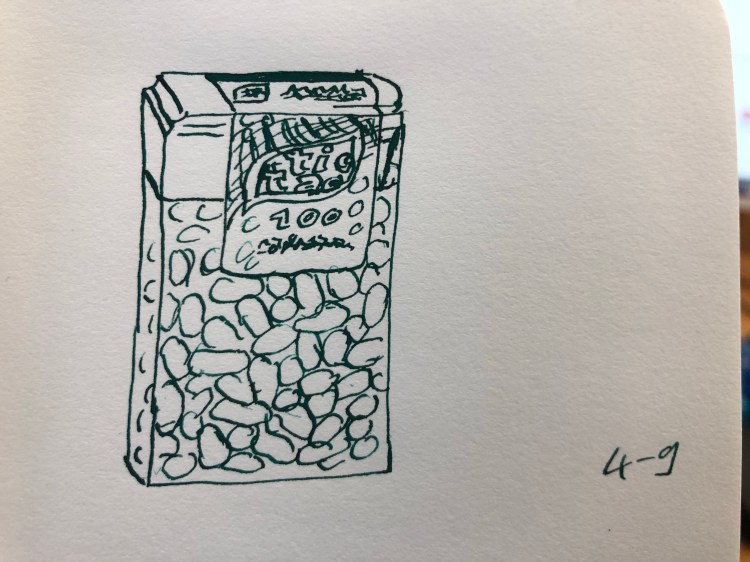
Field Notes signature sketch book, Super5 0.7 calligraphy nib, Rohrer & Klingner Lotte SketchINK.
I found a box of Tic Tacs in my drawer at work, an unexpected little treat.
As you can see, the Field Notes signature sketch book isn’t 100% fountain pen friendly (there’s some feathering), but it’s good enough in a pinch.
I’m reading Daniel O’Malley’s “Stiletto” right now, and more than halfway through I still can’t figure out why that’s the book’s title.
Potato quality photo of a potato quality doodle. Field Notes Signature Sketch Book, Pilot Futayaku Double-Sided Brush Pen. I love this brush pen, but the fine side dried up, so I was forced to use the wide side (it’s called medium, but it’s a broad brush, don’t let Pilot fool you). A bit of shaking and doodling later and the fine side is working once again – yay!

I love reading about how other people use their notebooks and pens/pencils, so I decided to take the time to list what I’m currently using and how:
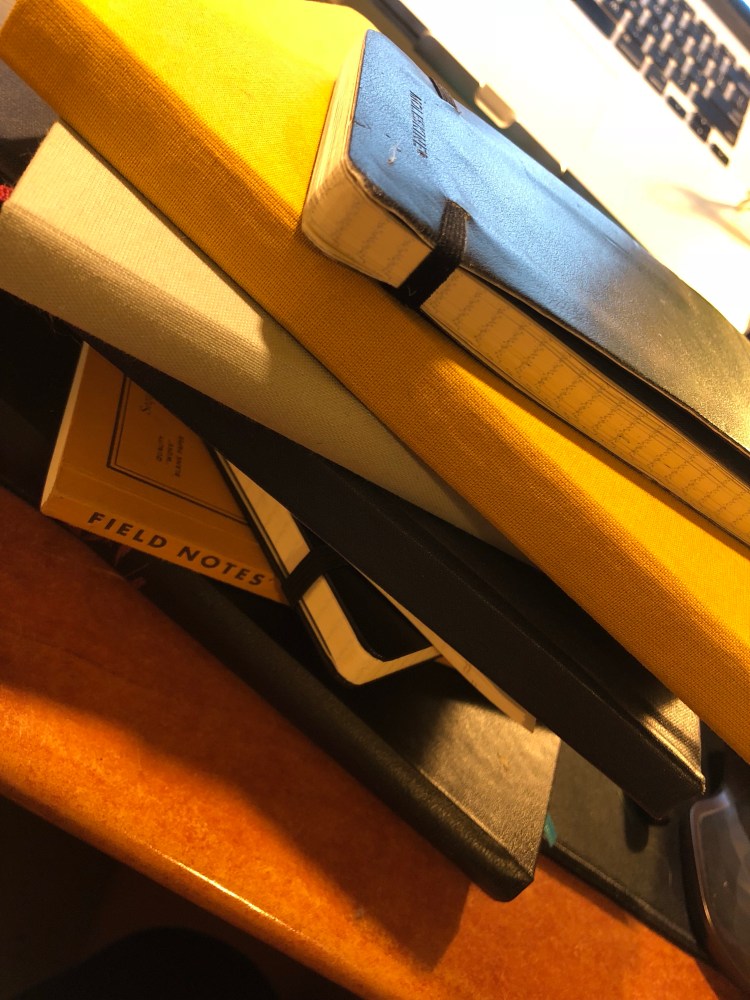
A large pile of notebooks
I just received a pack of the Field Notes Signature blank page edition and noticed that on the front of the band it said,”Sketch Book” right below the “Plain Paper”. I opened it up and saw that unlike my beloved Dime Novel edition, these notebooks had no page numbers (a plus for me) and their pages were white and not cream coloured. That made me decide to break them out for a very quick sketching opportunity, to see how well they faired.
The notebook doesn’t open flat, and it tends to want to close on itself, so I used a clip to keep it open when I was sketching. Ideally you’ll need two clips and maybe a backboard of some kind to use it comfortably. The paper, as is normal with sketching paper, doesn’t take washes too well. It’s relatively thin and it buckles pretty easily, so only the lightest of washes should be attempted with it.
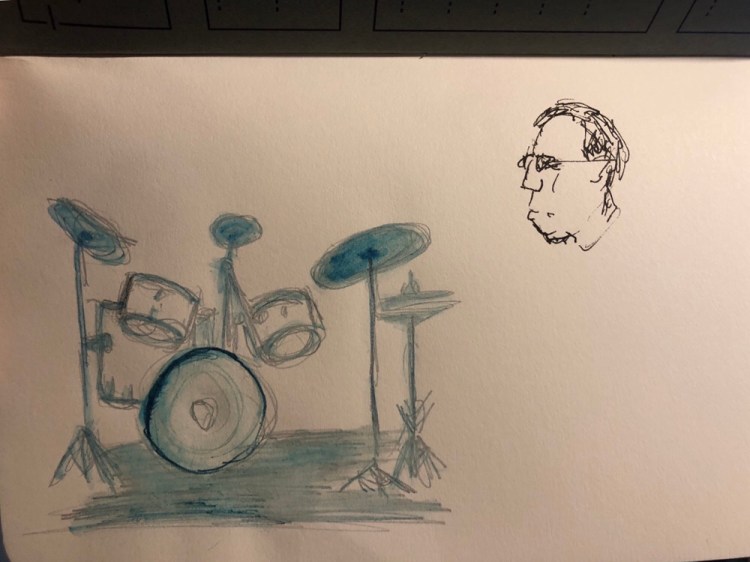
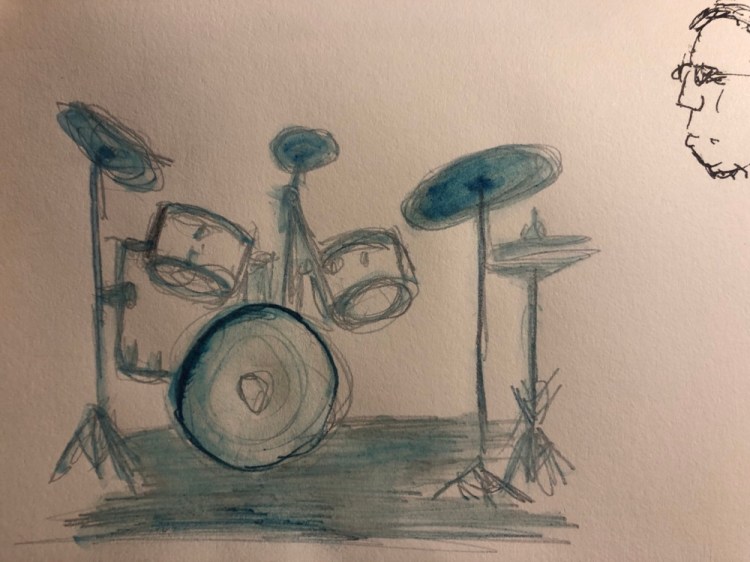
The drum set above was sketched with a Sanford No-Blot Pencil. You can see the paper buckling even though very little water was applied with a water brush.
The paper fared better with fine brush pens:
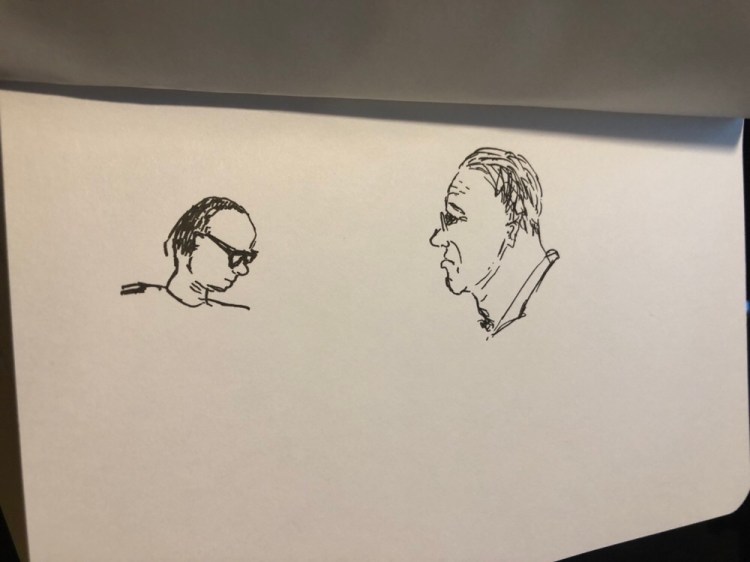
A tiny bit of spread when you lay down the ink too thickly: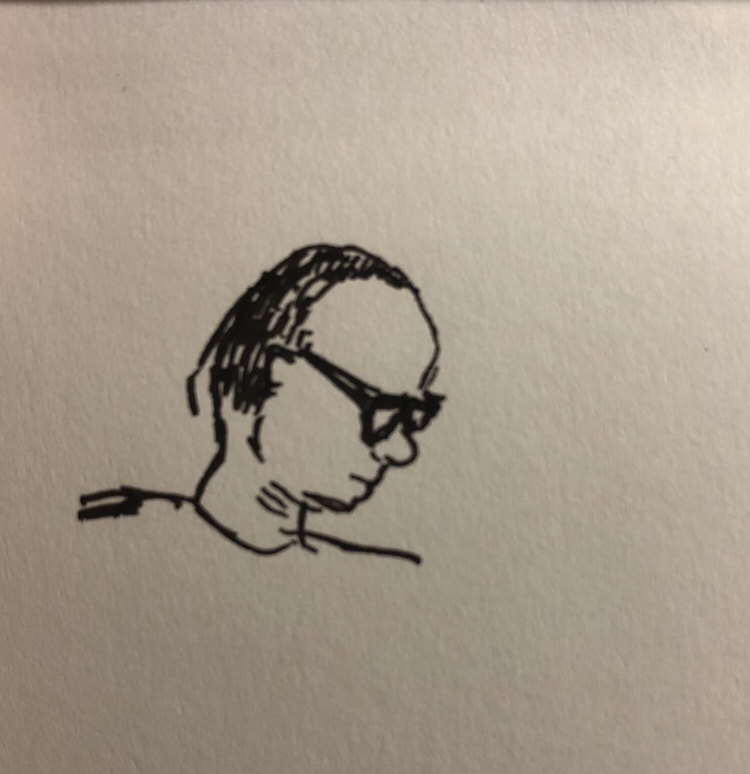
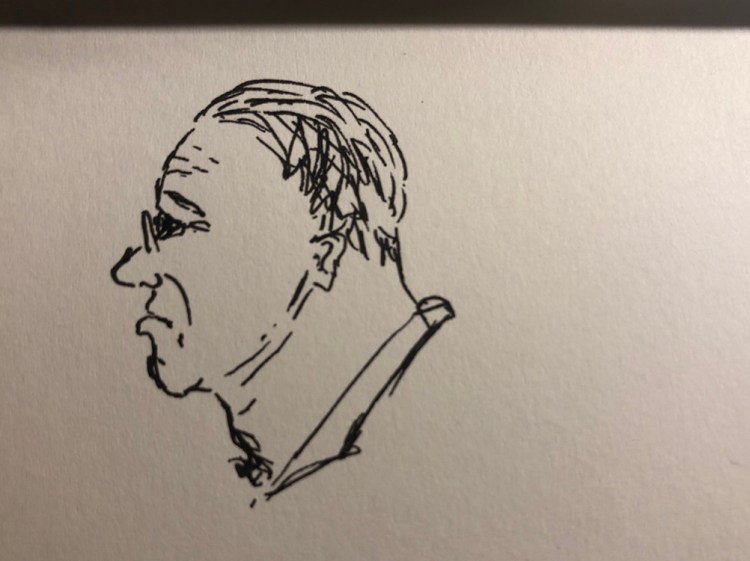
Zero complaints when it comes to pencil sketches:
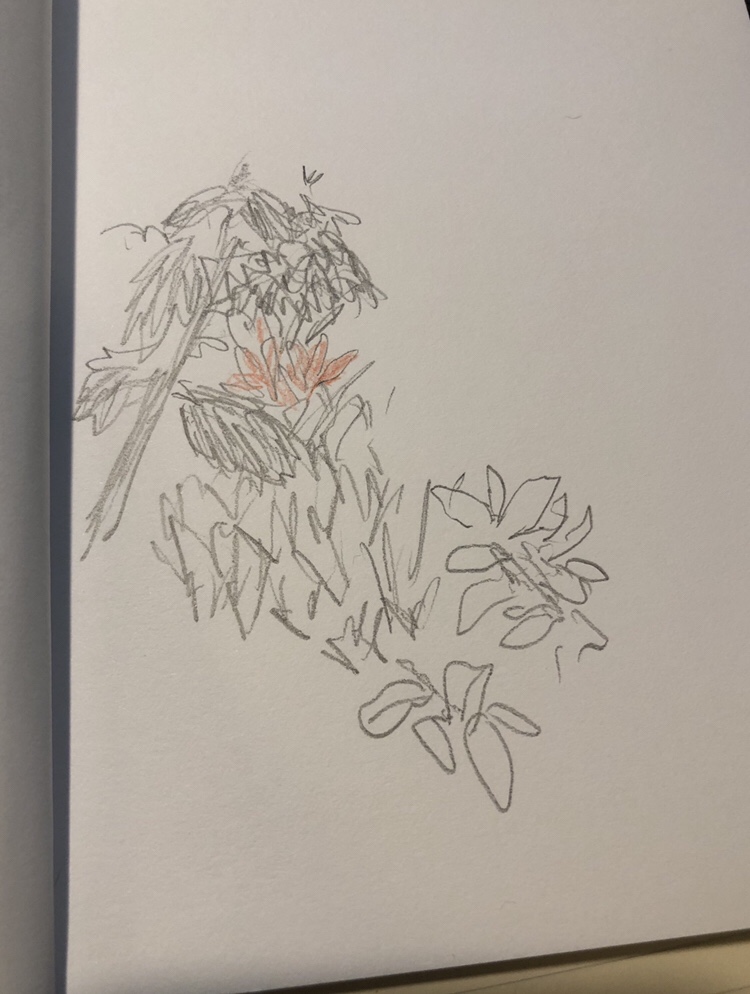
As is to be expected with this kind of paper, it works well with pencils and coloured pencils, having just enough tooth to make it work well with them, but not so great with fine and extra fine fountain pens and thin technical pens.
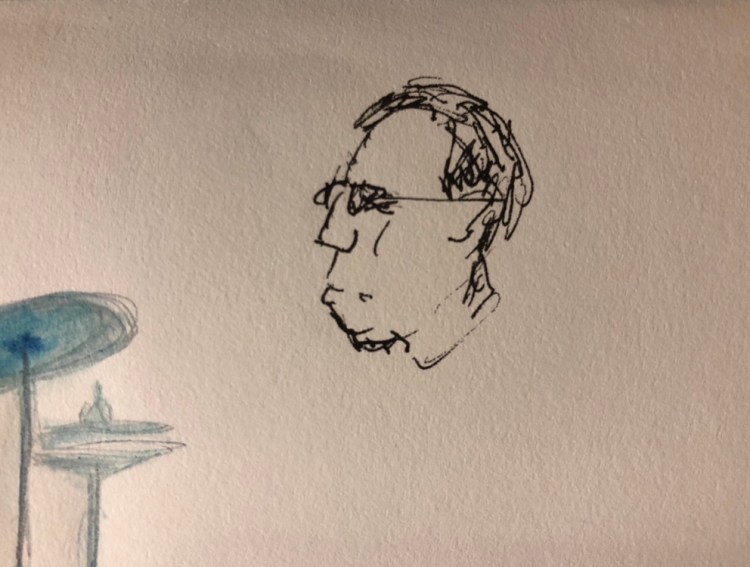
As you can see above, the Extra Fine Waterman Phileas (with Colorverse Selectron pigment ink) stuttered on the page.
The Signature also suffers from being an awkward size for a sketchbook: too large to be truly pocketable, too small to allow for anything more than tiny, quick sketches.
As a sketchbook, I’d not recommend it. There are better options in the market, ones that open flat, in better sizes, with hardcovers (a plus when sketching on the go), that take washes a bit better than the Signature does.
That being said, it’s a fountain pen friendly Field Notes, and so long as you’re not set on using nibs that in the extra fine realm or using this notebook as your main sketchbook, it’s a nice little thing to carry around and play with. There’s nothing wrong with a notebook that can take a little doodle next to your todo list…
After reading the great “How to Be Miserable” I decided to start keeping a “three good things” journal at my bedside and write in it every night, right before I go to bed.
The idea is to write three good things that happened to you today, and if possible attribute them. It breaks off the habit of always remembering the bad, upsetting or embarrassing parts of your day, and I also found that it helps me (together with regular journaling) clear my mind and fall asleep sooner.
The good things don’t have to be large, sometimes they’re just a nice meal that I shared with someone, or something good that I read or watched, or just a friendly exchange with a friend or someone at work. The thing is, once you start doing it you:
I’ve been using the Field Notes Resolution weekly planner for that, but you might want to use something larger. I just chose the Resolution because it gave me a reason to use the notebook, and it’s small enough that I’m sure that I will have something to write in it every day.
 Writing at Large