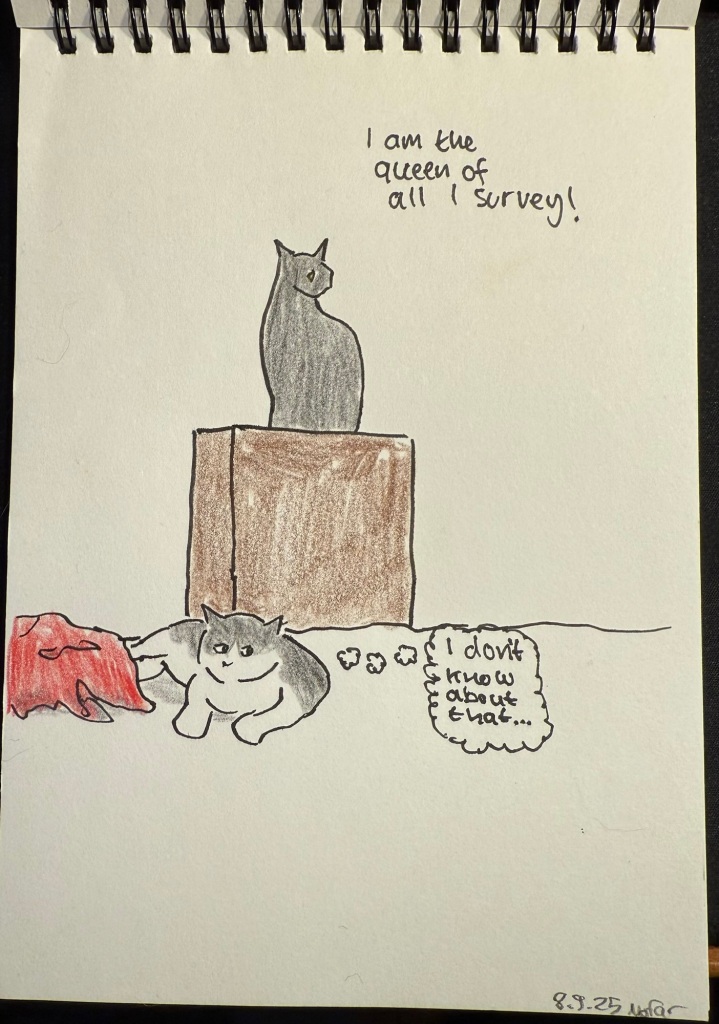
Quick cat sketch
My parents’ cats in action.
A blog about writing, sketching, running and other things
My parents’ cats in action.
This is the first of 26 posts on cancer, as part of the alphabet superset challenge. You can read about it here.
In the wonderful sequel to the novel “Daddy Long Legs”, “Dear Enemy”, Sallie McBride, the red haired protagonist who finds herself running an orphanage, clashes with the institution’s doctor, Robin ‘Sandy’ McRae:
“Sandy has two passions in life: one is for cod-liver oil and the other for spinach, neither popular in our nursery. Some time ago—before I came, in fact—he had ordered cod-liver oil for all of the {aenemic}—Heavens! there’s that word again! aneamic children, and had given instructions as to its application to Miss Snaith. Yesterday, in his suspicious Scotch fashion, he began nosing about to find out why the poor little rats weren’t fattening up as fast as he thought they ought, and he unearthed a hideous scandal. They haven’t received a whiff of cod-liver oil for three whole weeks! At that point he exploded, and all was joy and excitement and hysterics”.
Jean Webster, Dear Enemy
Anaemia, which Sallie struggles to spell correctly in her letters to her friend, is a medical condition common not only among malnutritioned orphans in the early 20th century. Almost a quarter of the population worldwide suffers from anaemia, a condition marked by a deficiency in red blood cells or in hemoglobin in the blood. It means that your cells aren’t getting enough oxygen, and the symptoms include tiredness, dizziness, weakness, shortness of breath, pallor. Anaemia in general is associated with poor health outcomes, increased morbidity and mortality, and tends to complicate any existing medical conditions.
It’s also one of cancer’s best friends.
Wait, what? I thought anaemia just meant that I need to get more iron, B12 or folic acid in my diet?
While most cases of anaemia are caused by dietary deficiencies, anaemia is also a symptom of many types of cancer. In particular it’s a symptom of blood cancers (leukemia, lymphoma and myeloma), breast cancer, lung cancer, colorectal cancer, cervical cancer, kidney cancer and prostate cancer. If you have anemia it doesn’t mean that you have cancer, but if you have cancer, there’s a good chance that you’ll have anaemia.
Why does cancer cause anaemia? For various reasons – from bleeding that causes red blood cell loss (cervical cancer, colorectal cancer and breast cancer), to blood cancers which affect the bone marrow directly or indirectly, to high red blood cell turnover caused by immune system targeting affects of cancer, to iron deficiency (lung cancer and advanced cancers in general).
If the cancer itself left your hemoglobin levels normal, the cancer treatments are likely to trash them. Chemotherapy and radiotherapy target fast growing cells, which include our bone marrow. In the case of blood cancers this is particularly acute. Leukemia and lymphoma patients are particularly susceptible to anaemia, as these cancers indirectly affect red blood cell production, and the treatments target the same areas as well.
And anaemia spells poor outcomes wherever it appears, which is why oncologists aggressively combat it, with medication or with blood transfusions.
When I was first hospitalized I got a battery of blood tests — blood is the love language of hematologists (blood doctors). I had a lymphoma diagnosis (though it was yet unclear which type of lymphoma it was), and unsurprisingly, I had anaemia. Enter iron infusions — sacks of brown, burnt caramel smelling stuff that was infused into my veins over several days in an attempt to get me in as good as shape as possible into the treatments.
You see, we have iron stores in our body, and even if we don’t consume enough iron in a particular day, our bodies know how to use these iron stores to make up for it. My anaemia was caused not by red blood cell destruction (at this point), but by low Ferritin — low iron stores.
Iron infusions are a bit aggressive — usually if you have iron deficiency anaemia you’ll be told to take iron supplements. These used to cause stomach issues, but there are new “soft iron” supplements that are more gentle on the gastric system. They do take time to take affect, and time wasn’t something I had, so I got the fast lane — iron infusion.
That wasn’t my last bout with anaemia though.
My chemotherapy caused anaemia several times, which I was expecting as it’s a common side effect of blood cancer chemotherapy treatments. Every time I came in to get treatments I had to have my blood tested and if my hemoglobin was too low then the treatment was postponed or if it was very low, you’d get a blood transfusion before treatment. Luckily enough for me my bone marrow was robust enough to survive treatment without me needing (extremely painful) bone marrow growth medication or (very painful and very lengthy) blood transfusions.
Blood transfusions take hours and they burn because of the anti-coagulation medication mixed in with the transfused blood (it’s how the blood is store without clotting). There’s never enough blood to go around (particularly during the pandemic) so doctors have to fight over every blood transfusion they order, and nurses hate dealing with them because of the paperwork and procedure around them and how long they take, and patients loath them because who wants to be connected for hours to a burning IV?
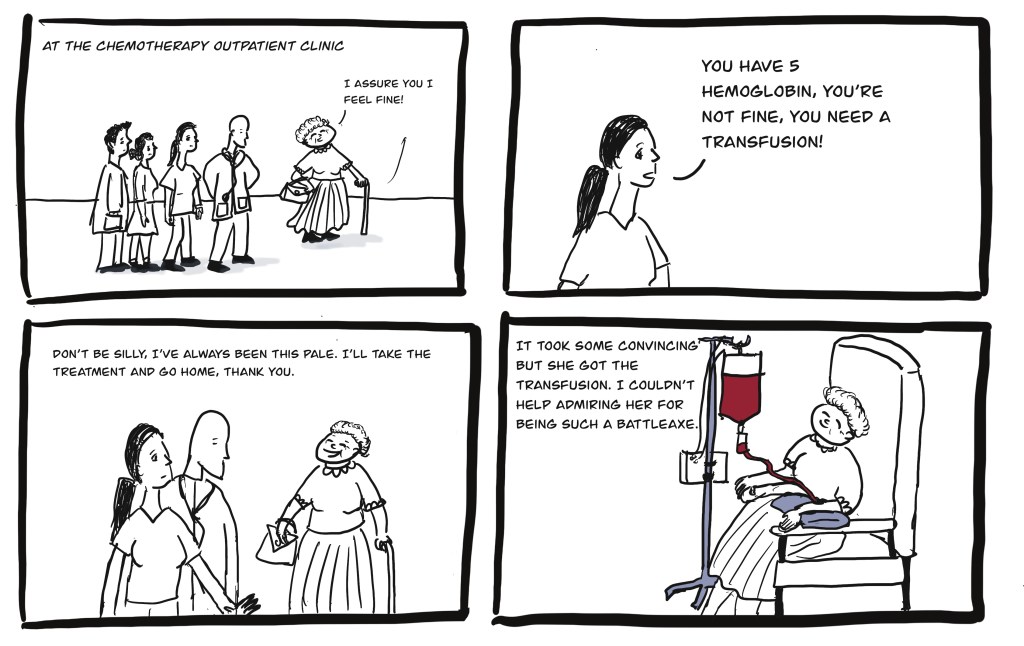
This means that if you’re getting a blood transfusion during treatments it’s because you really, really, really need them. Which brings me to this little anecdote that happened during one of my treatments:
While I was prepared for anaemia during treatments, what caught me by surprise was the anaemia after the treatments. A persistent and annoying “friend” that I had collected along the way, post-treatment anaemia is common with the type and intensity of chemotherapy that I had received. I had also been forced to change my diet significantly post treatment, which meant that I had a B12 deficiency — another common cause of anaemia (particularly among vegetarians, vegans and those that have had bariatric surgery). Several months of B12 supplementation and time for my bone marrow to recover kicked the anaemia’s ass — for now. However, like many cancer patients, anaemia is a red flag, and so my blood work is being constantly monitored, several times a year. It’s probably not surprising that it’s the first thing that both I and my hemato-oncologist check when we go over my blood tests.
1. Get regular bloodwork done. Talk to your family physician/GP about getting regular blood tests — before I was diagnosed with cancer I got them once a year. Once you get your bloodwork done, check your hemoglobin levels. Hemoglobin blood tests are part of a CBC (complete blood count) test.
2. If you do feel weak, dizzy, you’re pale, your feet are swollen, you have heart palpitations, shortness of breath or any other anaemia related symptoms, talk to your doctor.
3. If you can donate blood, please donate blood. Blood transfusions help cancer patients survive, as well as helping trauma patients, patients undergoing serious surgery and pregnant women during labour. Every blood donation saves lives (usually multiple). Be a hero — donate if you can.
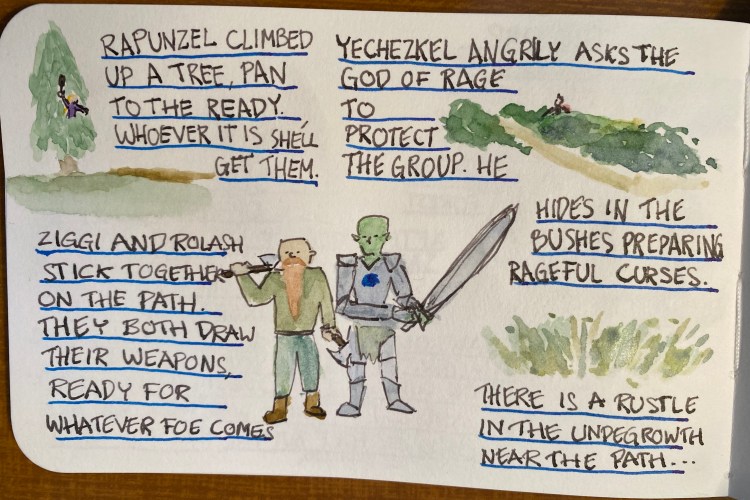
You can find part 1 here. You can see that there is a slight bit of show through with the Stillman and Birn Epsilon, but at only 150 gsm that’s to be expected.
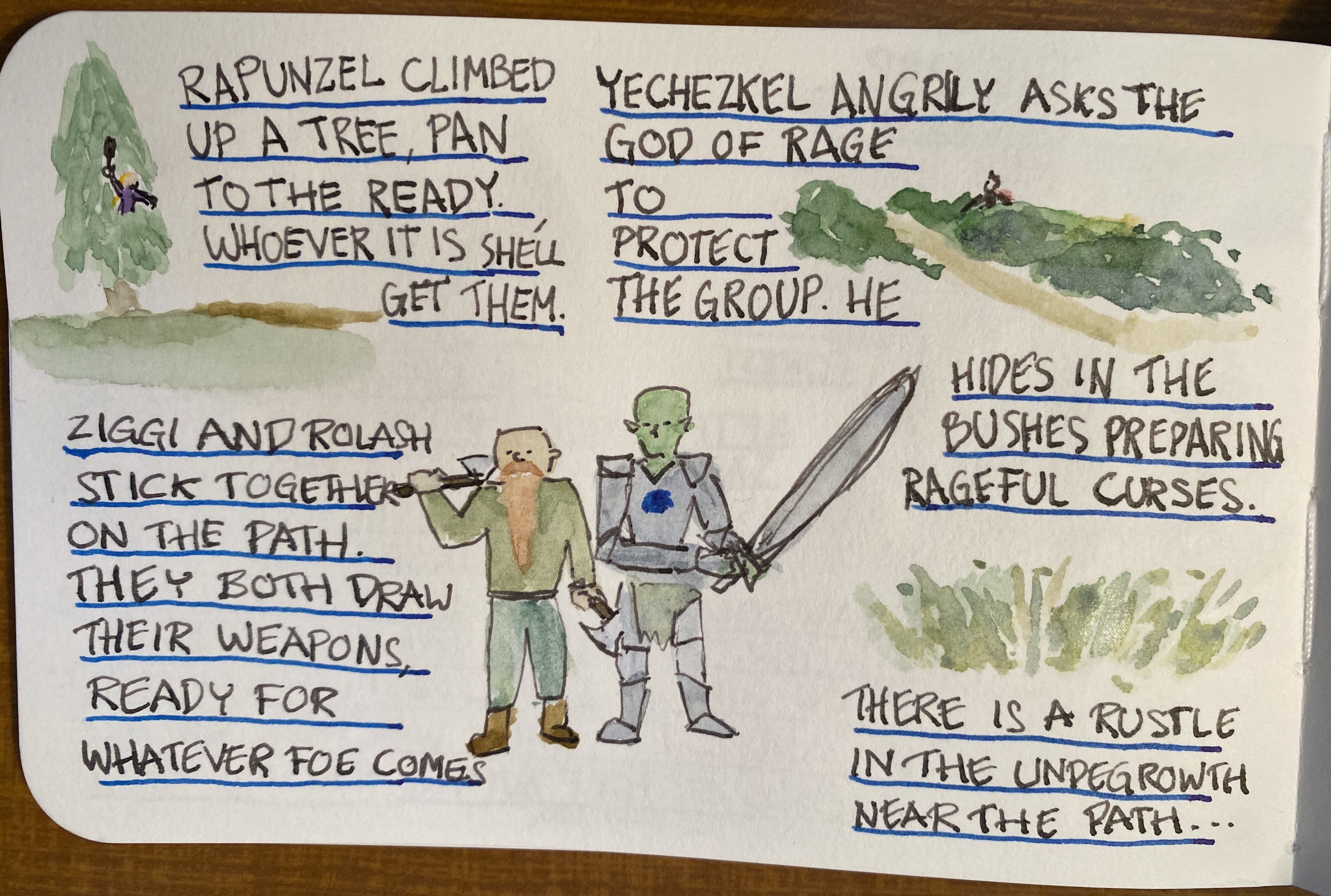
I decided to play a bit more with ink colours and wider nibs here, so that’s a Sailor medium stub nib and Diamine Inkvent Blue Edition Candy Cane ink for spells and effects:
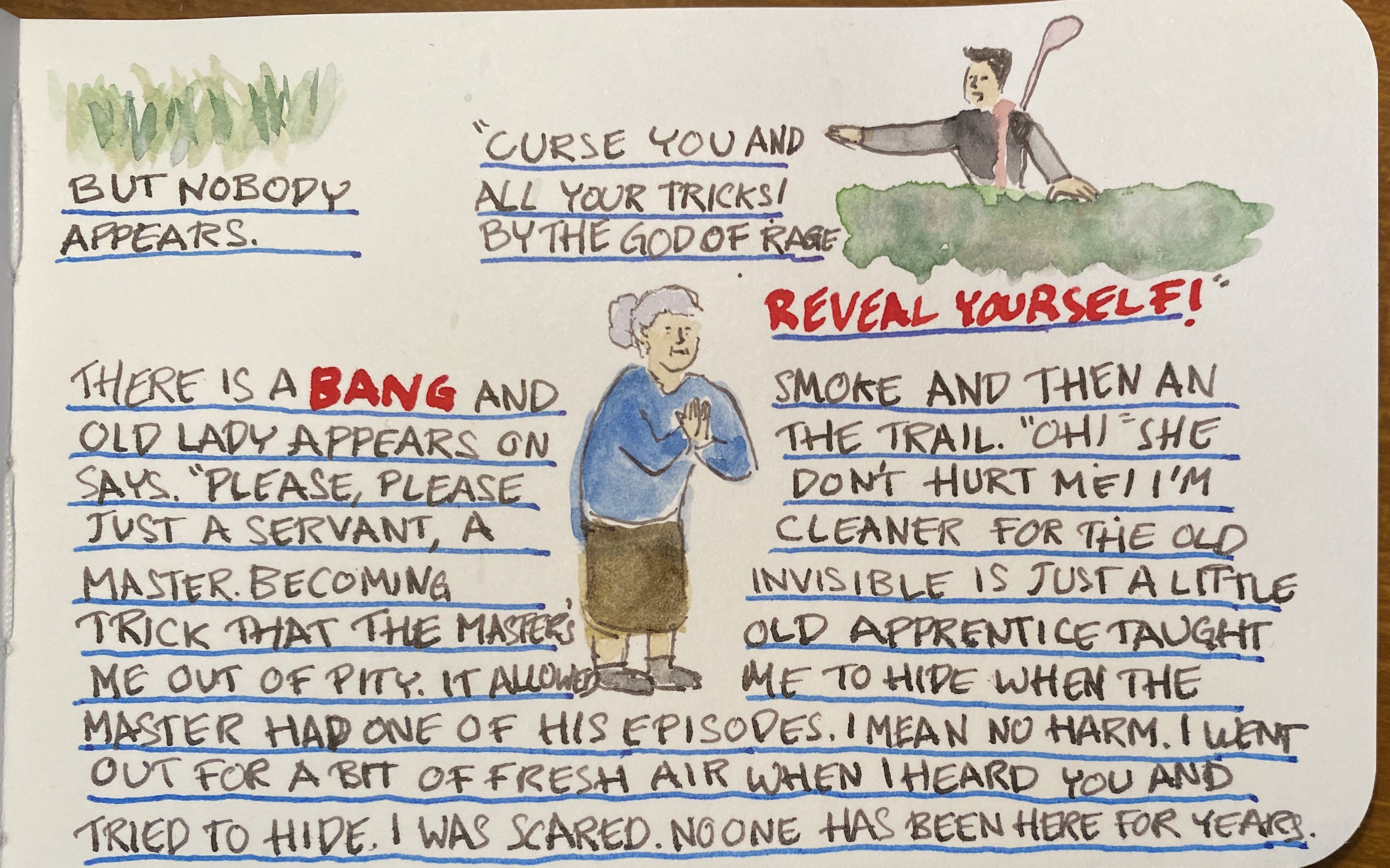
There’s no show through for the ink, and though it may not seem that way, there was no spreading. Also, if you like granulating watercolour effects, the Stillman and Birn Epsilon paper seems to be a champ for that.
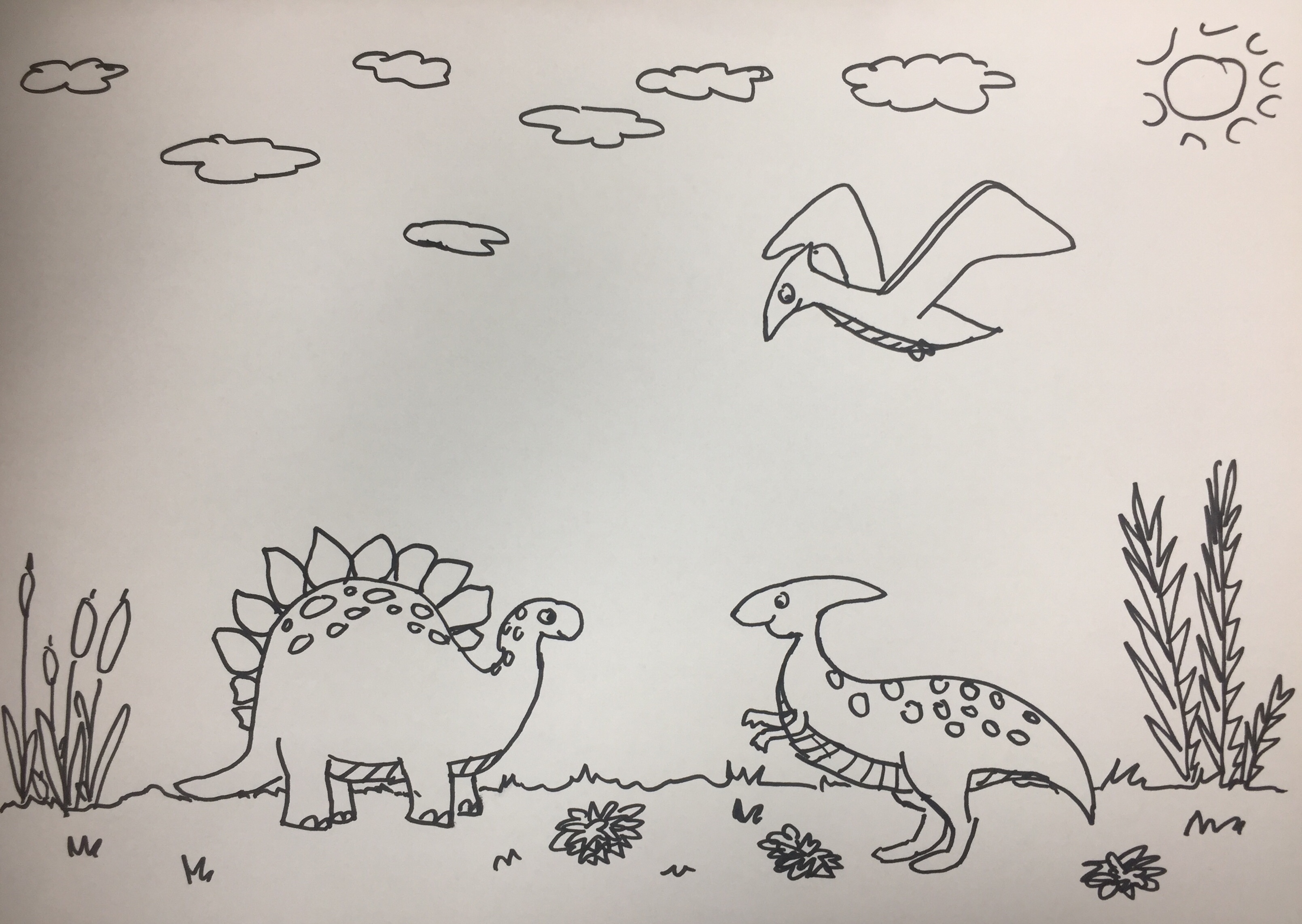
The end of summer is upon us and my services as creator of kids’ colouring pages are now in high demand in the office, as desperate parents bring their kids to work for a few hours in lieu of camp or a sitter. After ruining several brush pens on these drawings I’ve settled on the best pen for this purpose: the Pilot V Sign Pen.

The Pilot V Sign Pen is a liquid ink pen with 2.0 mm bullet tip that creates the consistent kind of lines that kids seem to prefer.
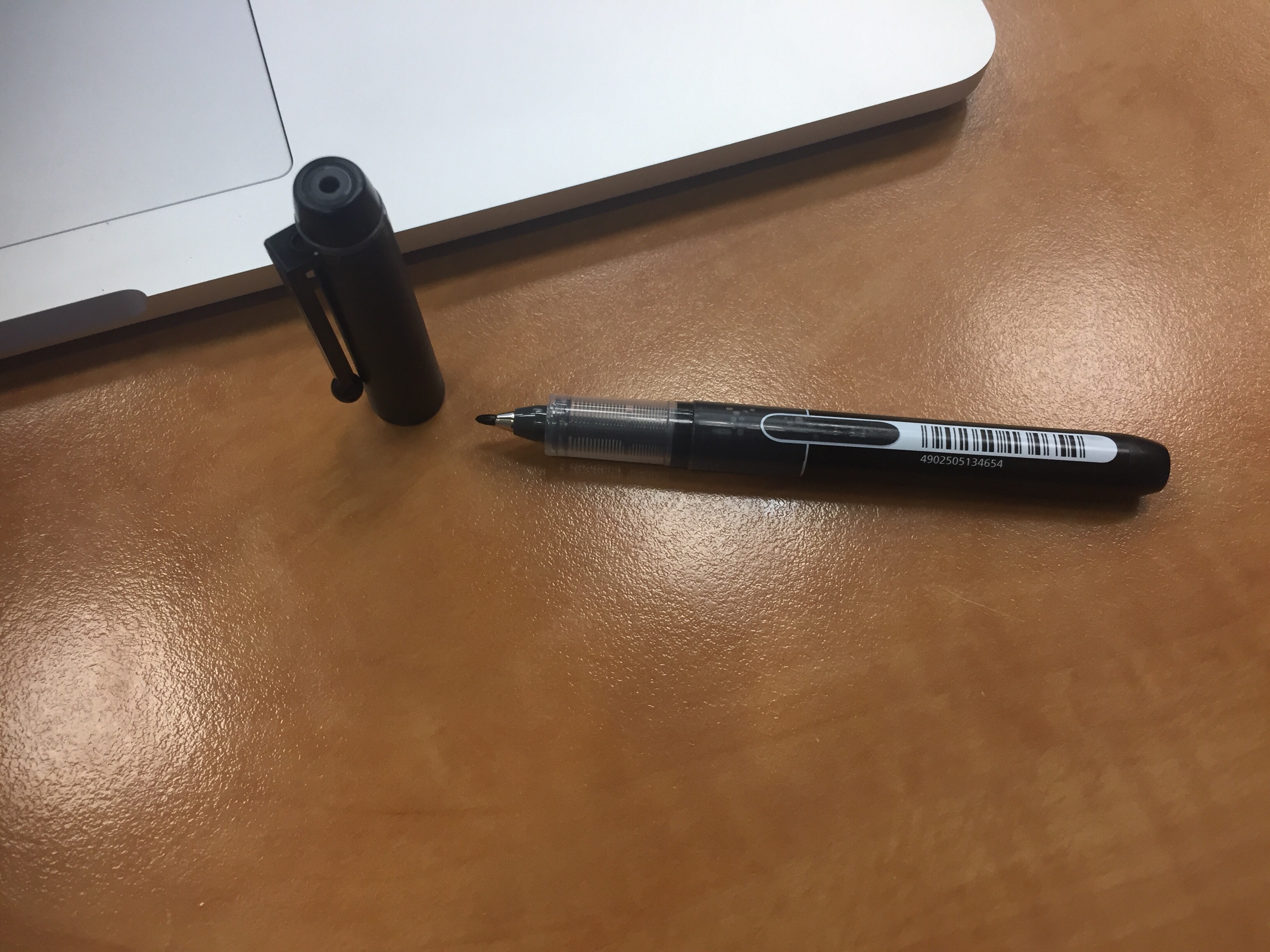
The V Sign has a cheap looking plastic body, complete with ugly barcode printed on the barrel. It’s pretty ergonomic though, with a relatively wide barrel and a light weight body.

I just replaced my old V Sign Pen as it has run out of ink, and as you can see above and below, the tip does get worn down with use, though compared to most plastic tipped pens it’s super durable.
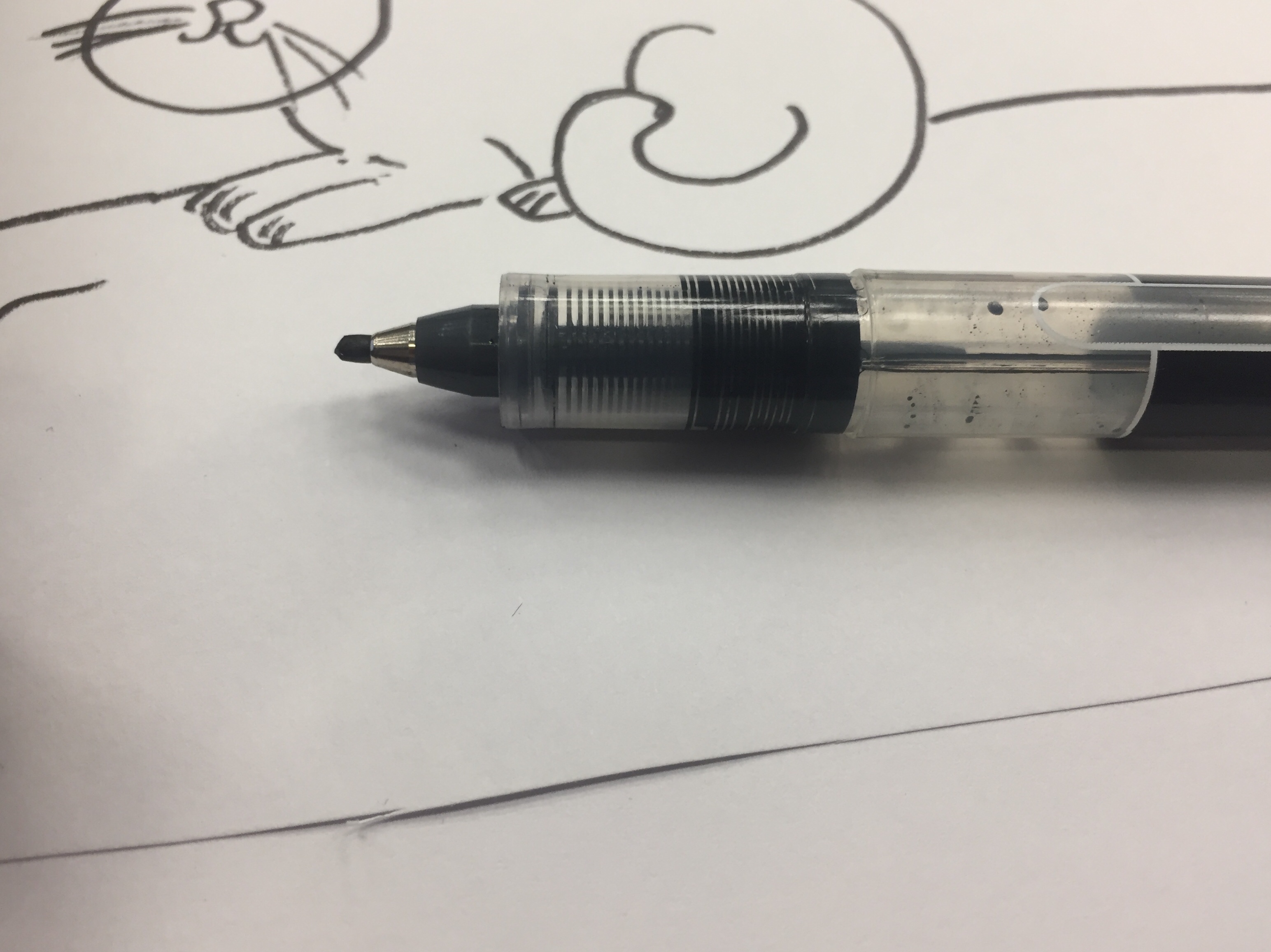
This V Sign works on cheap copier paper with a little bleed through and a lot of show through. It’s non-waterproof, and I’m pretty sure it’s not archival. It is, however, a lot of fun to use. For office doodles of this kind, it’s absolutely perfect; For anything else, I’d recommend something archival and waterproof instead.
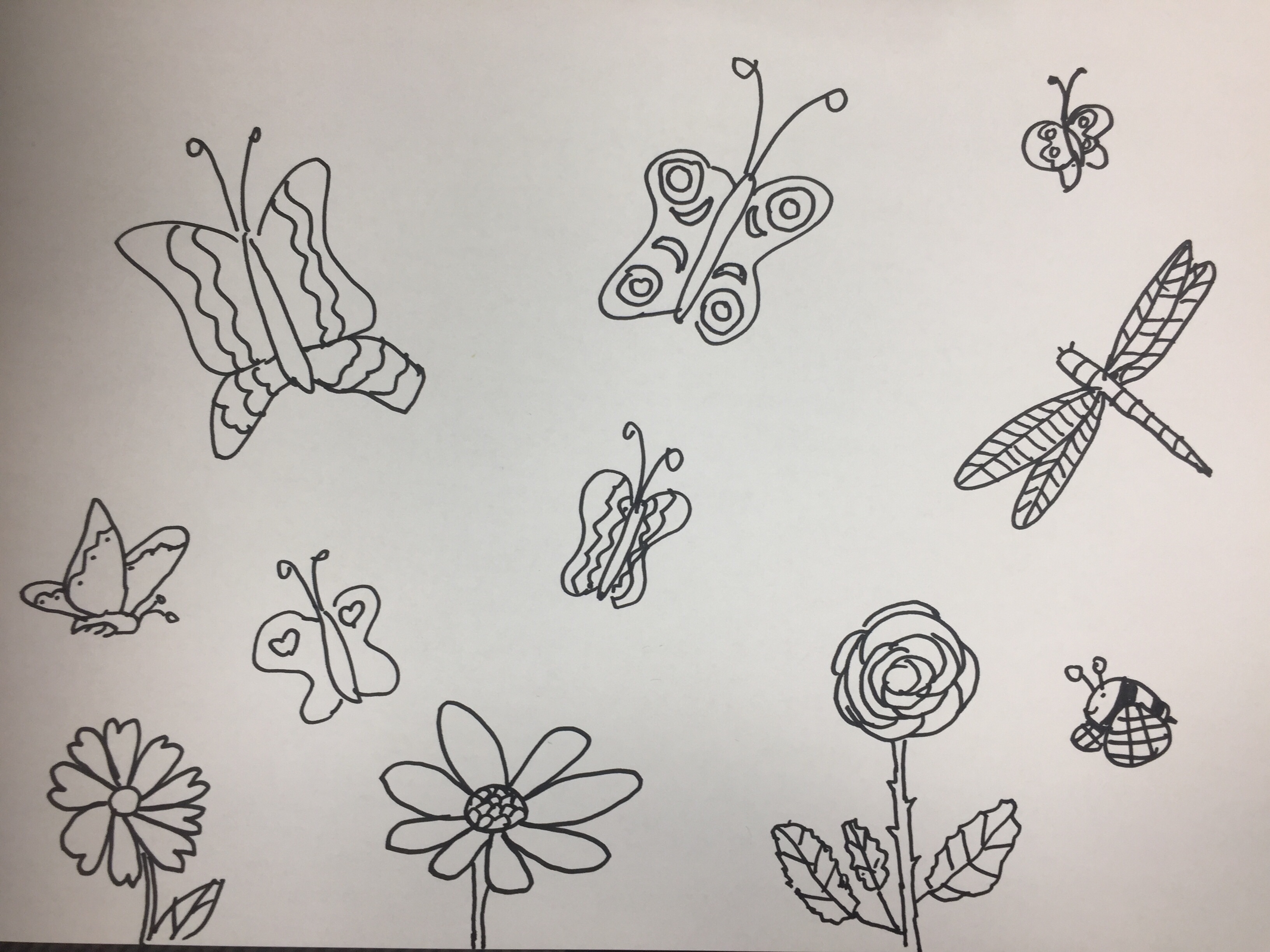
To all those parents out there, here are some colouring pages that I’ve drawn. Feel free to print them out for your own personal use, and gain a few minutes of peaceful bliss.

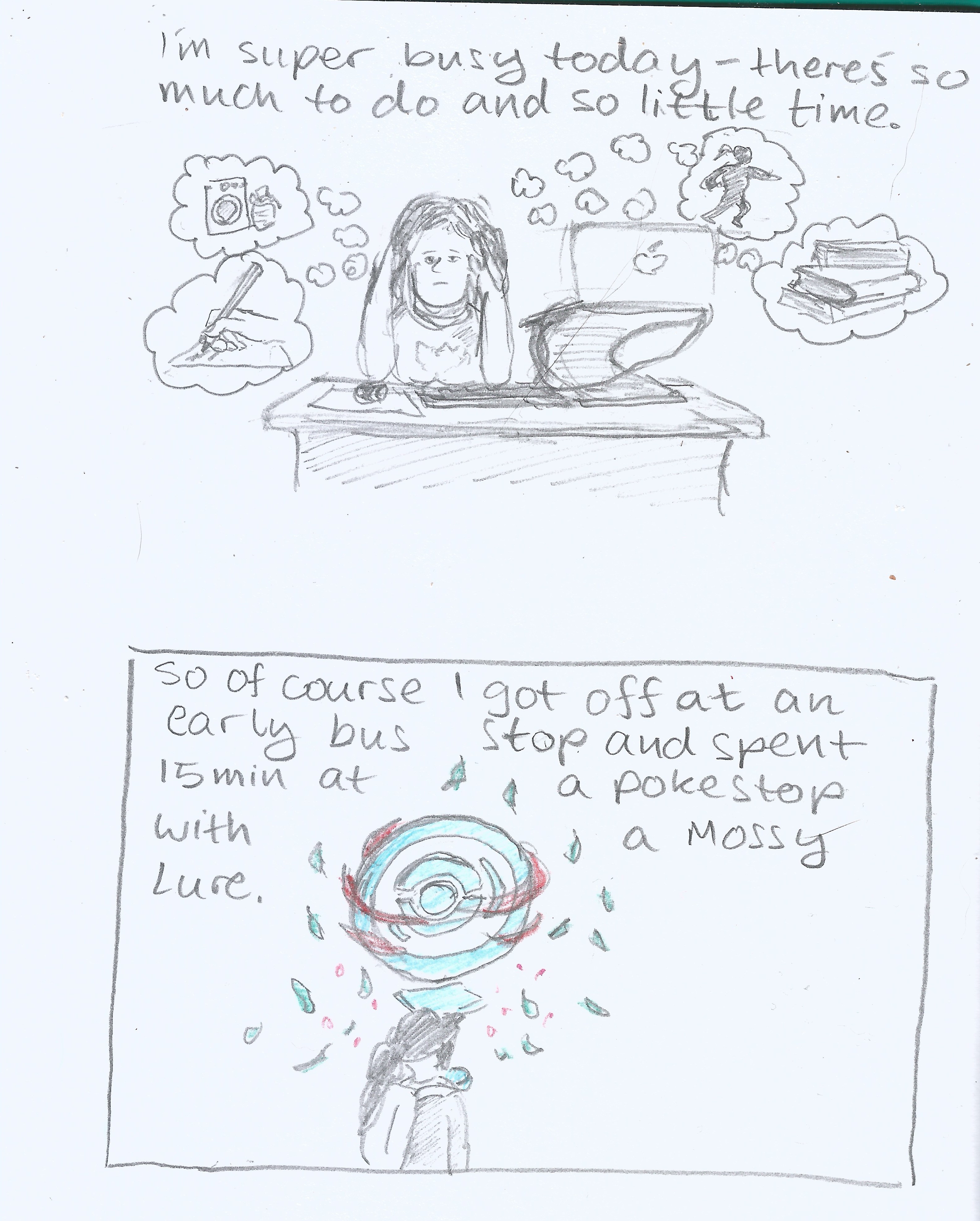
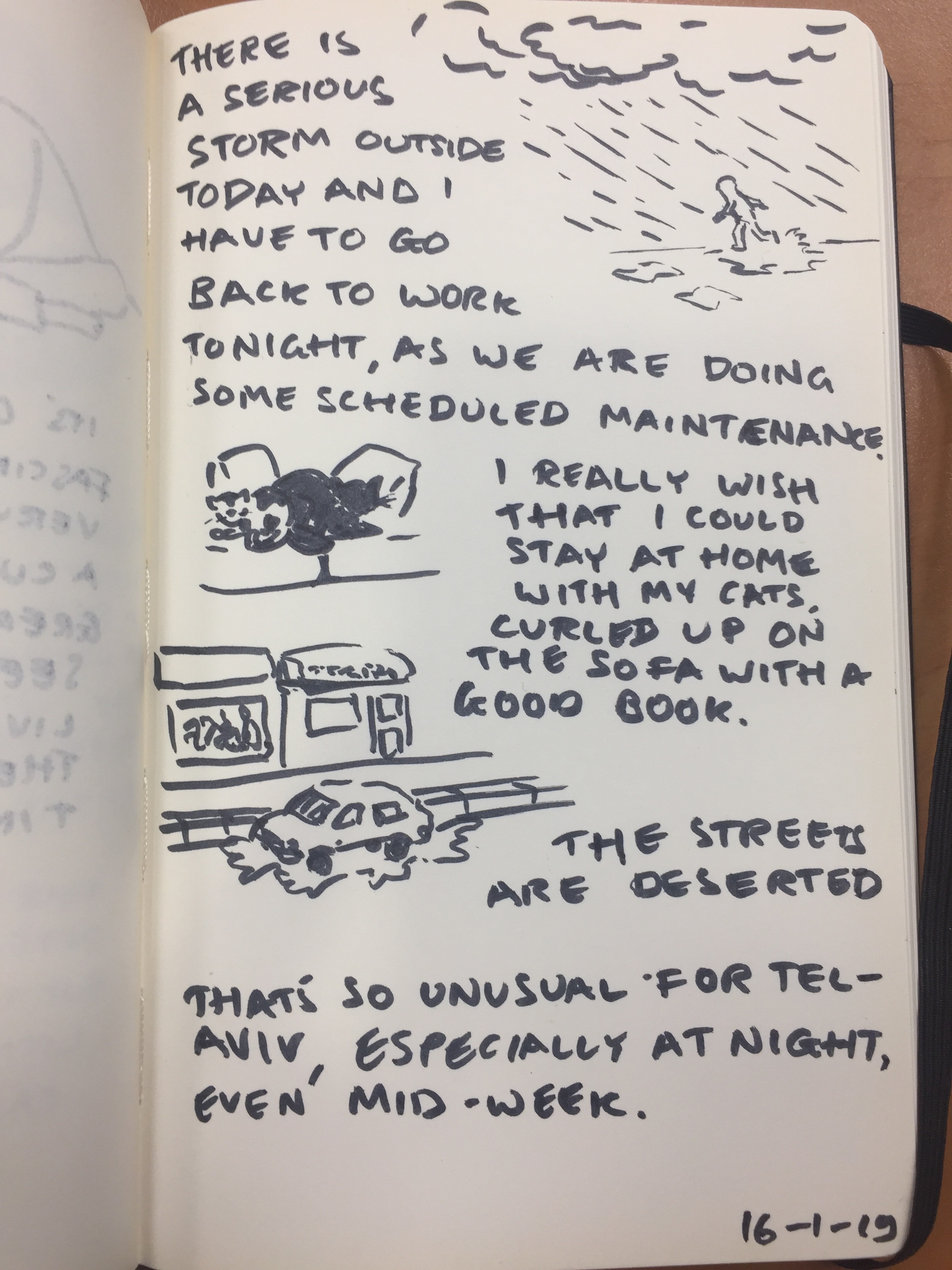
Journal comic created with a Sharpie brush pen on a Moleskine Star Wars crawl text limited edition blank notebook.

Journal comic drawn with a Sharpie brush pen on a Moleskine Star Wars crawl text limited edition plain notebook.
And there’s a police station 200 meters away…
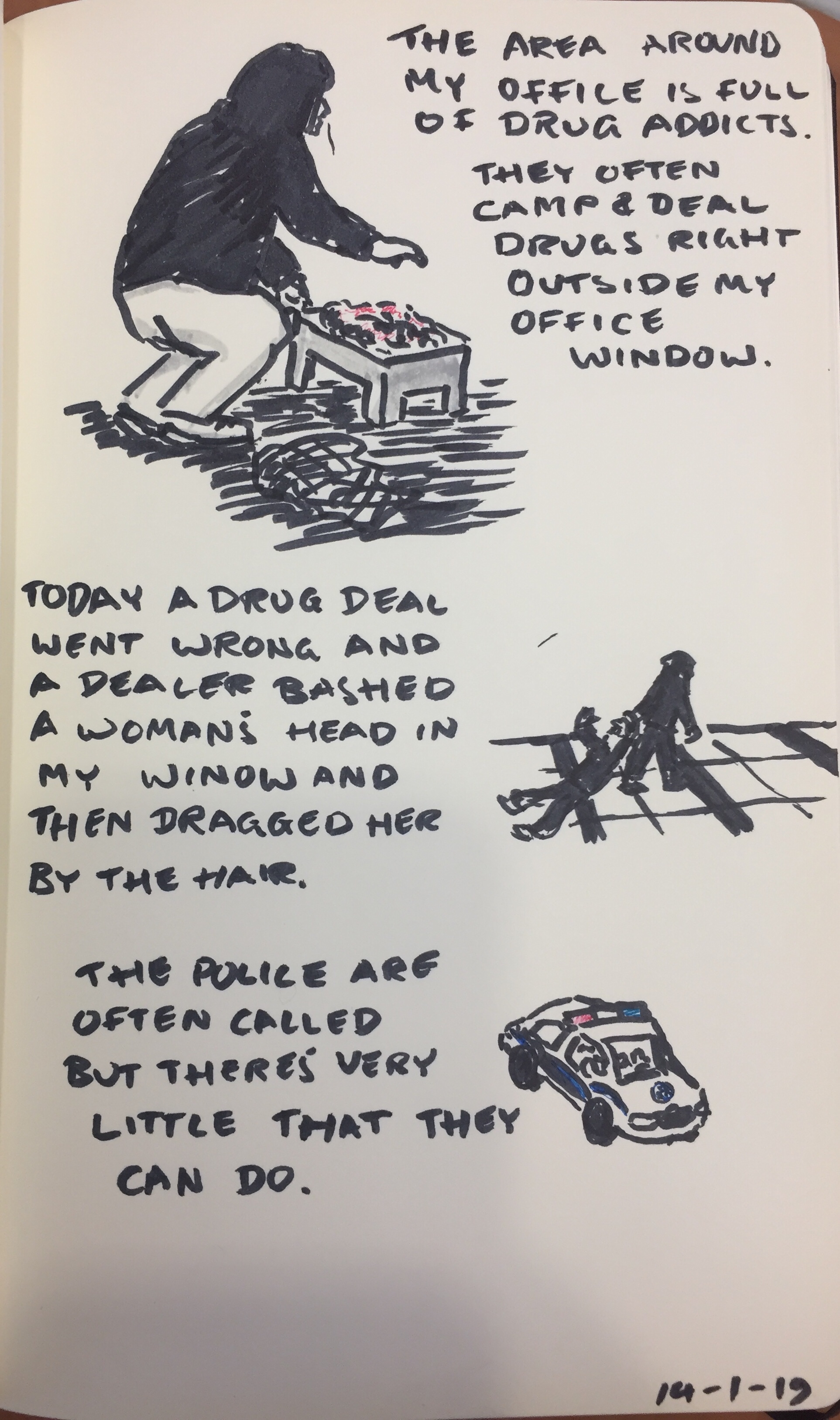
Journal comic drawn with a Sharpie brush pen, Pilot Hi Tec-C pens, and a Zebra grey mildliner highlighter on a Moleskine Star Wars scroll text limited edition blank notebook.
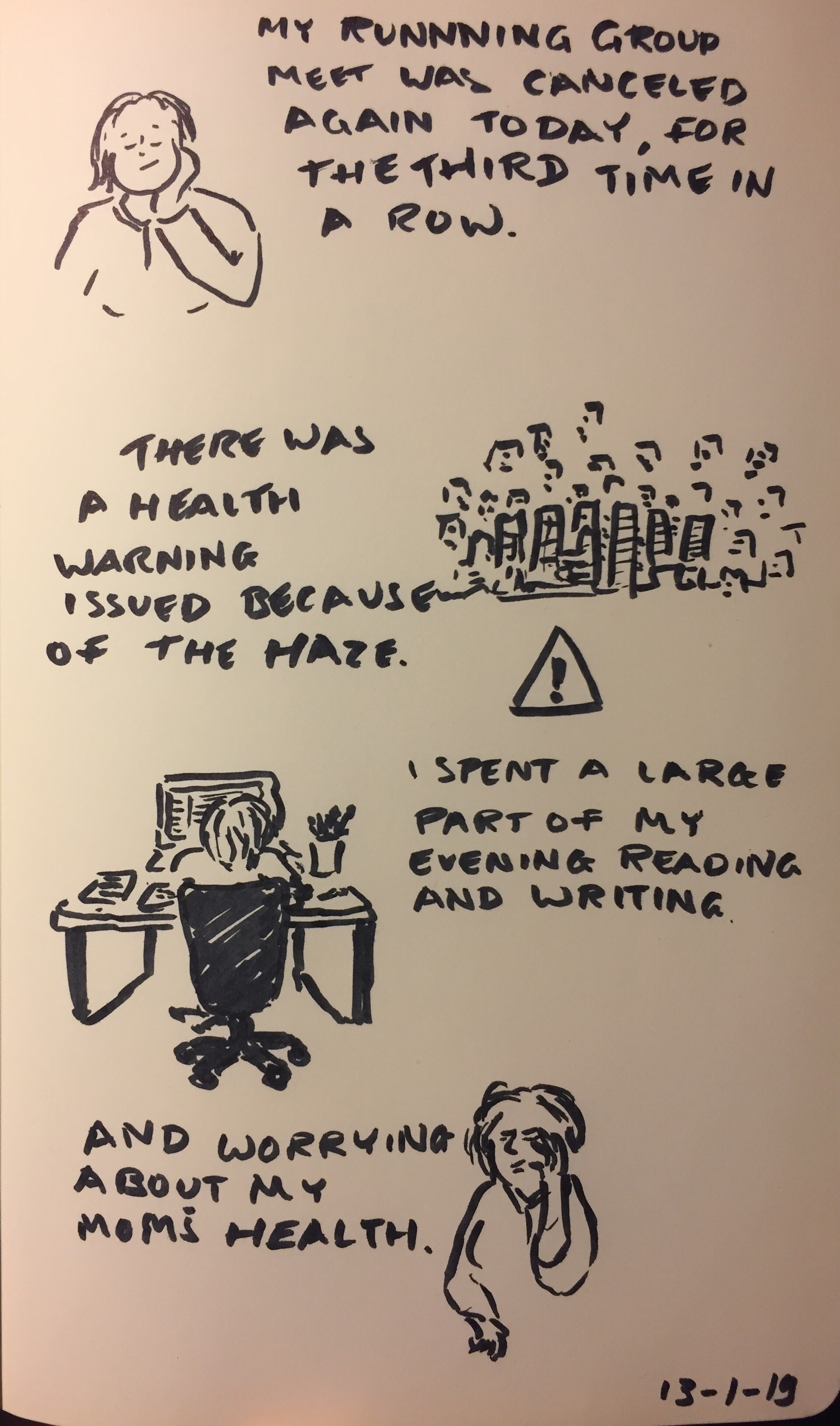
Journal comic for January 13th, 2019. Sharpie brush pen on a Moleskine blank Star Wars crawl text limited edition notebook.
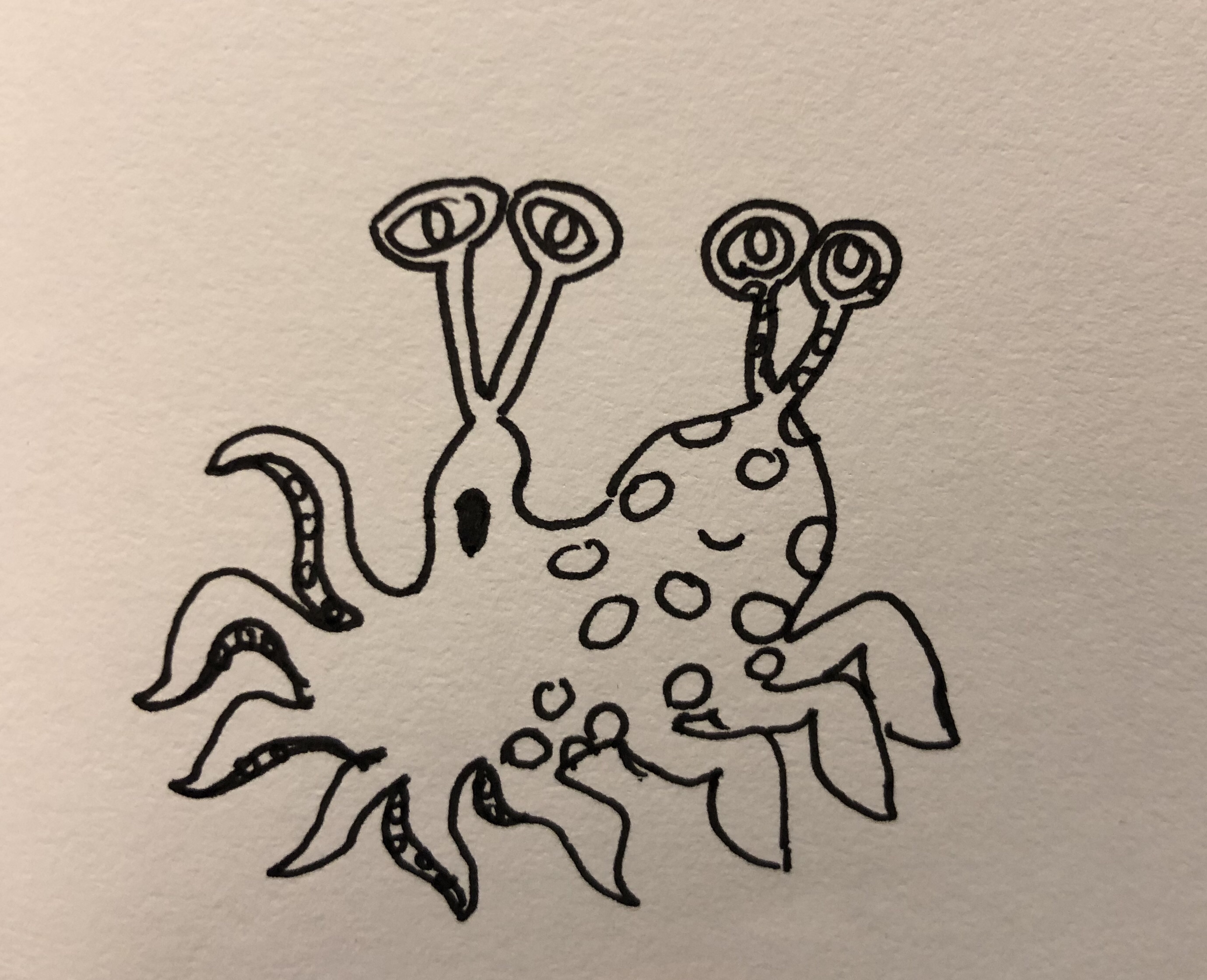
One of my favourites. Staedtler pigment liner 0.3 on a Field Notes Signature sketchbook.
 Writing at Large