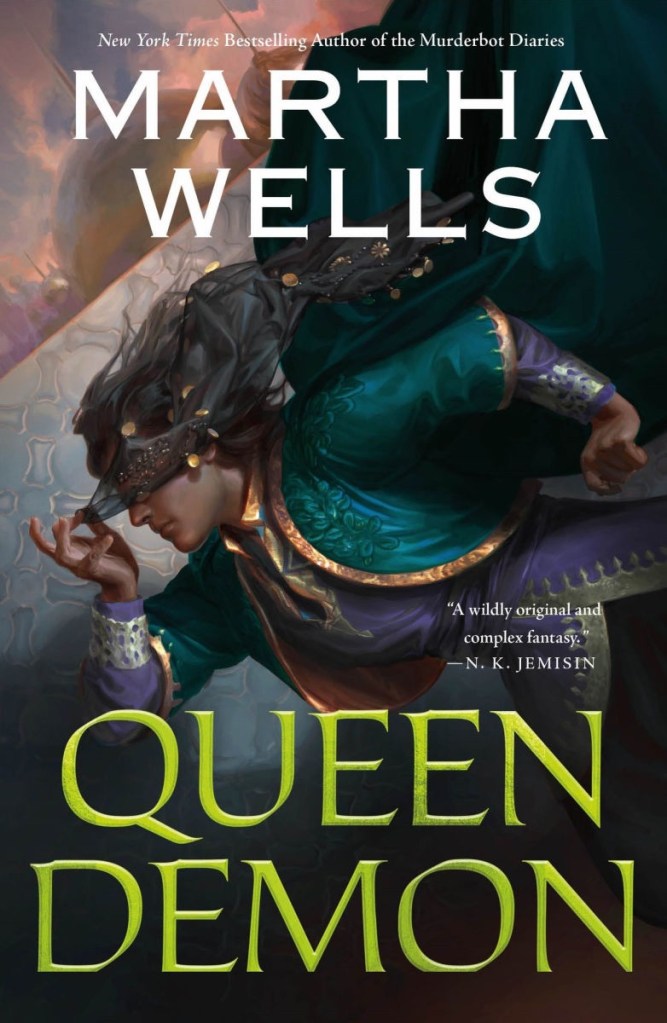
Queen Demon is the sequel to Witch King, and starts where Witch King ends. Like the previous novel, this epic fantasy has a double narrative structure: in the present Kai and his companions follow up on Dahin’s theory of the Hierarch’s Well and the origin of the Hierarchs themselves. In the past, Kai becomes the Witch King, a leader in Bashasa’s rebellion, and faces some very difficult personal choices.
The pace is slower and more ponderous than in Witch King, because Wells spends more time developing her characters. We learn more about Dahin, Kai’s relationship with Bashasa, Bashasa’s role as a leader, witches, demons, hierarchs and expositors. We see less of Sanja, and I still feel like I want to know Zeide and Tahren more, but all in all Wells spends less time world-building and more time with the characters in that world. The scope of the tale may be heroic and epic, but we get a lot of small moments and individual choices.
Witch King was excellent. Queen Demon is very, very good. It’s not as punchy as its predecessor, but it’s still very well written, interesting and remarkable in the depth and complexity of character it manages to develop in such a relatively short time.
It does feel like a book that requires a sequel, unlike Witch King, but that’s not necessarily a bad thing. Wells has written a fantasy that is good enough to justify time away from her fabulous Murderbot books – and believe me, that’s high praise indeed.
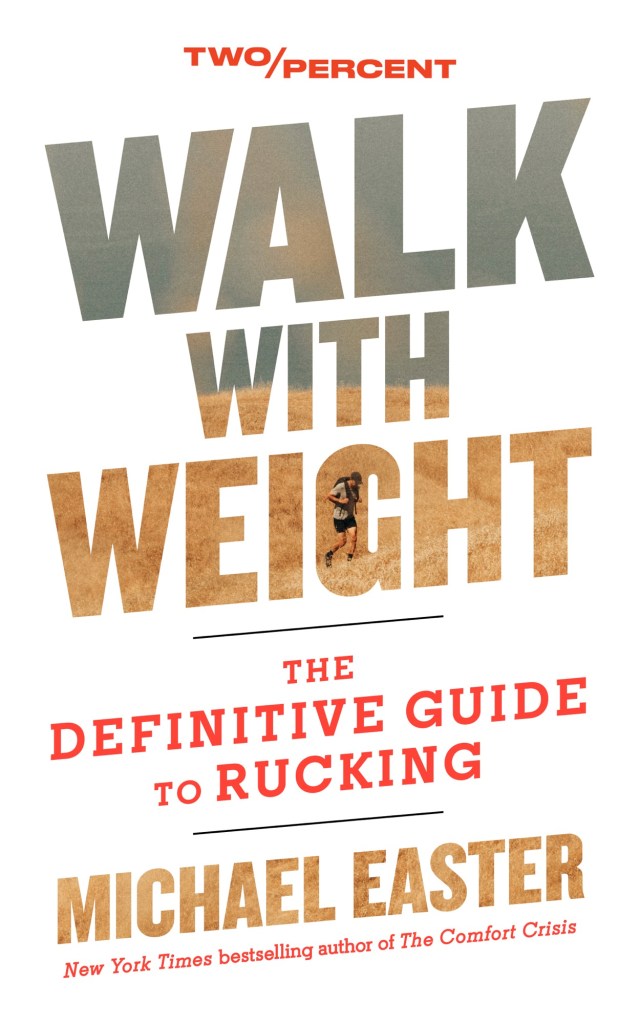
I think that Michael Easter’s The Comfort Crisis is one the best self-help books around. I know that’s not saying much, as most self-help books aren’t worth the paper they’re printed on, but The Comfort Crisis got me to change several things about my life that made it measurably better.
So when I saw that he’s published another book, this time about rucking (walking with weight, or yomping) I immediately bought and read it. I am interested in rucking as a form of cross-training for my running, and I think Easter is a capable writer, good at making scientific papers and ideas accessible to a general audience. My expectation was that this book would be a useful guide to getting more into the habit of rucking, and in a way I got what I wanted. The issue was that I also got a lot of what I didn’t.
I’ll explain.
If you know nothing at all about walking with weight, then this is a good book to get and read. However, if you have some familiarity with rucking, I think you will find this book a disappointment.
The issue is twofold:
Unlike in The Comfort Crisis there’s a lot of repetition and padding and fluffing to get the word count up. This is basically two or three blog posts inflated into a book.
Easter spends a lot of time selling merchandise from his partner company, WalkFully. The hilarious thing is that if you go to the WalkFully website you will find that the vests and backpacks he so enthusiastically touts are nowhere to be found. He currently sells a fanny pack (a form of carrying weight not mentioned anywhere in the book) and some minor weights.
So is this book a complete waste of time? No. There are still two or three blog posts worth of good content in it. There’s just also 100 extra pages of needless fluff – fluff that should have been replaced with an actual rucking experience Easter went through. As someone who regularly goes on long hikes in the wilderness, Easter just should have discussed his experiences if he needed to get to a certain page count. It would have been much more interesting.
If you’re completely new to rucking – this is likely worth the time and effort (it’s not a long book).
If you’ve started rucking or read about it a bit – you’d probably still get some use out of Walk with Weight. Just be prepared to skim most of the first part of it.
If you’re an experienced rucker, skip this book. There’s nothing new that Easter can teach you here.
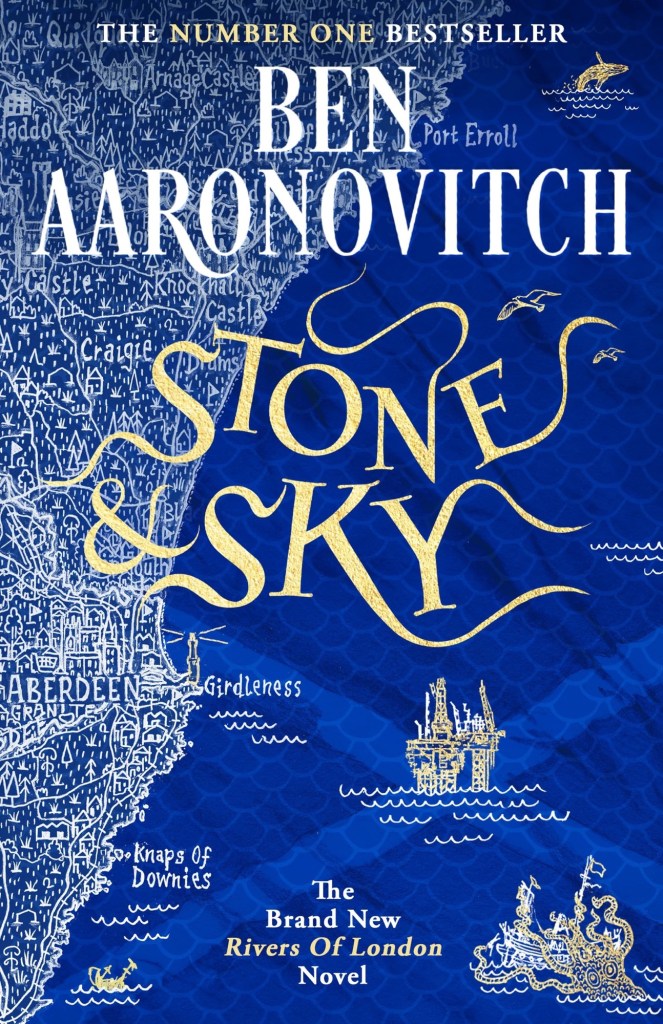
Aaronovitch is back in form with this 10th instalment of the “Rivers of London” series. The series has been muddled, mediocre and meandering since Aaronivitch finished the “faceless man” part of it (the first seven books of the series, most of them very good), but this one flows well and is a fun book to read.
Peter Grant is in Scotland, with his whole extended family (Nightingale, his wife Beverly, his twins, his parents, his father’s jazz band and their manager, and his cousin Abigail) in a bit of a contrived mission to take a family holiday while looking into some strange cryptozoological incidents. There’s the familiar wry Peter Grant humour and Abigail sass (the narrative is split between the two), imaginative world-building (this time with mermaids and selkies) and a nice set of villains to catch.
The setting is interesting, the final battle is suitably epic, and I like Abigail’s new mermaid girlfriend. I think Aaronovitch is facing the issue where there are so many books in the series and so much history to it that it’s sometimes hard to follow who is who and what happened when, but he does a decent enough job of keeping the readers informed about the most crucial parts of the past. Abigail’s brother’s death lies heavy over this one, and Aaronovitch handles her grief with subtlety and heart.
If you’ve read the other books in the series you’re bound to love this one. It does still suffer from the “oh boy, big bad things are coming in the future, look at all these vague portents” issues that the past few books in the series have had. It’s clear that Aaronovitch want another villain in the calibre of the faceless-man but isn’t able to come up with one. It also has the usual overdose of architectural descriptions that you see with other books in the series.
Another peculiar thing about this book is the name. Stone and Sea or even Sea and Sky would have been better than Stone and Sky. You’l understand why once you read it.
A solid addition to a good urban fantasy series, well worth the read for series regulars – but if you’re just getting started, go to book one of the series, the excellent Rivers of London.
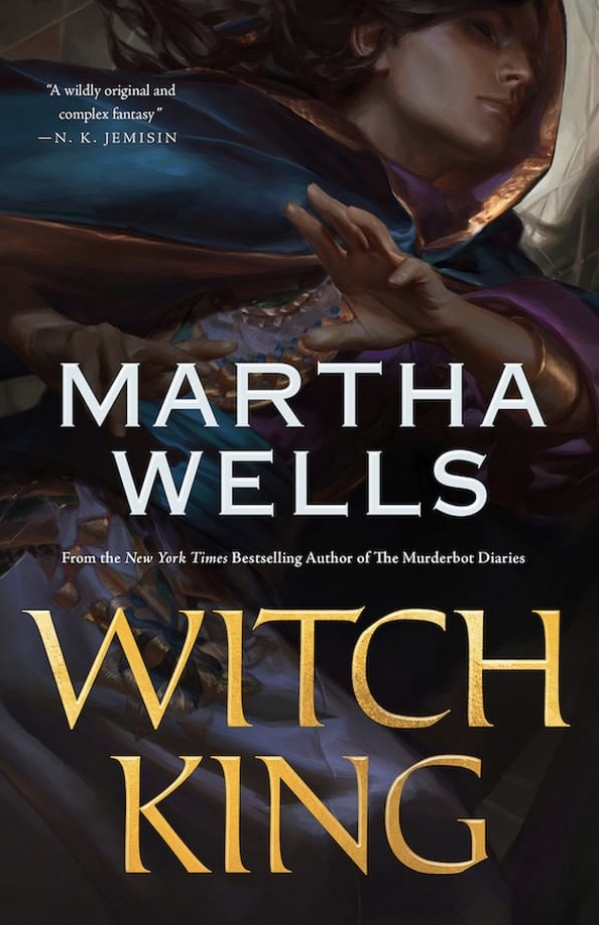
Martha Wells is a phenomenal world-builder, and she knows how to create brilliant characters that you just can’t help rooting for. She did it in the Murderbot series and she’s done it again in Witch King.
The titular character, Kai, a demon prince, is captured and entombed by unknown enemies. As he frees himself, his witch friend Ziede, and street urchin Sanja, the three go on a quest to find Tahren, Ziede’s wife, and figure out who was behind the conspiracy to capture them. The narrative splits early on, with the main thread following current events and the search for Tahren and her brother Dahin, and a secondary thread following the past – Kai’s origin story and the story of the Rising World Coalition.
Wells knows how to write a fast and intricate narrative, and the conspiracies of the present and rebellion of the past unfold independently and yet somehow also mirror and enmesh with each other. There’s a lot Wells says here about friendship, belonging, loyalty, and courage, but none of it feels obvious, didactic or forced. Relationships are earned here, as are your affections towards Kai, Ziede, Sanja, Dahin, Bashasa and others.
The world-building is rich and dense, with no “standard” human/clothing/culture/architecture. Wells walks us through it, but there’s no hand-holding here. You are meant to jump in and immerse yourself in her world, learning about it as the plot speeds you along. It’s disorienting for the first chapter or two, and then it just flows. You end up wanting to spend more time in this world, exploring it, really getting to know its people, cultures and geography.
The only minus in Witch King is that you don’t get enough time with certain characters. I want to know Tahren and Tenes more, I want to see the group in their home at Avagantum. This is why I immediately bought the second book in the series, Queen Demon, once I finished this one.
A superb fantasy book that is hard to put down and is well worth your time.
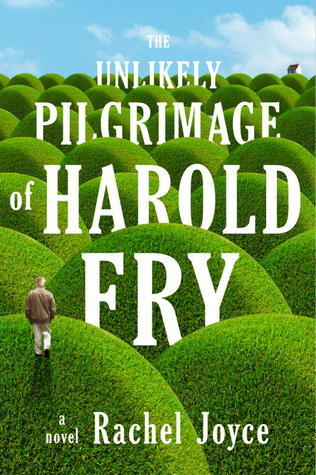
I picked up this book because I was supposed to go see the West End musical based on it and I wanted to know what to expect before I went.
The book is built to be a tear-jerking, moving affair, and it delivers on its promise. Joyce clearly knows the tropes that we expect, and cleverly weaves her narrative in and around them. The things that you are sure to happen to Harold on his way don’t happen, though the narrative is well aware of their possibility. What you’d expect his wife Maureen to do is also something Joyce enjoy subverting. There is something delicious about seeing a capable writer at work.
In any case, the basic plot is that Harold, a recently retired company man who lives in a village in southern England is stuck in his life. His wife Maureen lives in the same house with him, both of them recluses, and spends her days cleaning the house, finding fault with everything Harold says or does (the couple live in separate rooms and have been for years) and complaining about him to their son David. Maureen keeps expecting David to come visit, and Harold seems to have no friends, no hobbies, no prospects, no future.
This all changes when Harold gets a letter from his friend Queenie, a coworker that he hasn’t been in touch with for 20 years. She’s in a hospice, dying from cancer, and the letter is her farewell note to Harold. It moves him deeply, and he decides to write back to her. Instead of just posting the letter, he starts to aimlessly walk from one postbox to another, each time postponing sending the note – until a chance conversation with a woman at a gas station has him setting on an ill conceived pilgrimage to Queenie’s hospice, 450 miles away in the border between England and Scotland. As he meets people on the way he contemplates about his past, and we slowly piece together what happened that brought Harold, Maureen and Queenie to where they are today.
There are moving bits, frustrating bits, and one big, gut-wrenching revelation that makes you want to hug all three characters tightly. But mostly it’s a story about invisible people, people that seem dull but have huge tragedies and love stories and dreams in their lives, a story about connecting with others and about finding redemption through your feet.
Is this book perfect? No. It’s like Harold – a bit frumpy, sometimes dull, but it has a lot of heart in it, good intentions and it’s worth spending an afternoon with, preferably with some hot tea and biscuits.
This is a book review that requires a bit of a preface.
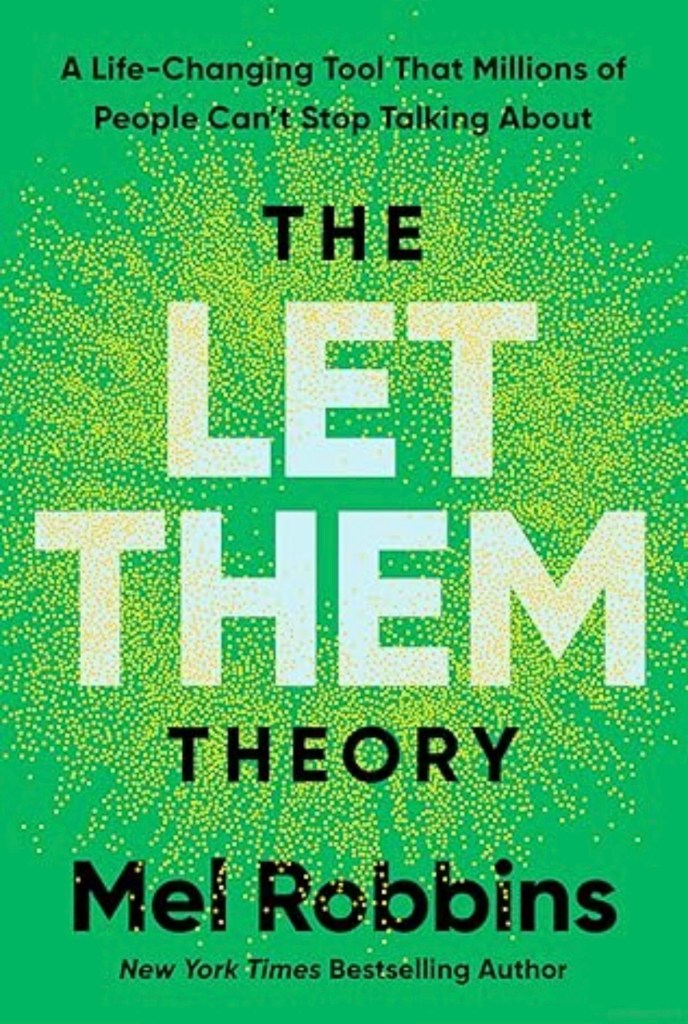
I had no idea who Mel Robbins was but I did notice “The Let Them Theory” explode in popularity from the minute it was published. There are some self-help books, like “Atomic Habits,” that become phenomenons, and “The Let Them Theory” was clearly one of them. My first encounter with Mel Robbins was through a YouTube video Ryan Holiday made of her visit to his bookstore. Her over the top reactions seemed wild to me, particularly considering the setting. Once doesn’t expect people to be this vocally enthusiastic in a bookstore. As my interest in the video was more focused on the children’s books that Ryan recommended, I didn’t give Robbins much thought beyond noting that she was quite a character.
The YouTube algorithm being what it is, it next offered up her appearance on Rich Roll’s podcast. I don’t watch podcasts on YouTube (I listen to them on Overcast, usually during long runs or when I’m doing mindless chores), and I don’t subscribe to Rich Roll’s podcast, but I have listened to an episode here and there over the years. He’s generally a good interviewer, and as I was intrigued by Mel Robbin’s character and the book’s meteoric success, I downloaded the episode and listened to it while I was training for my latest 10k. I later also listened to Ryan Holiday interview Mel Robbins, and I have to say that was just pointless marketing fluff where both of them appeared to talk but not really listen to each other.
The Rich Roll interview on the other hand is worth listening to if you have any interest in the book or the phenomena around it. Roll not only delved into the ideas in “The Let Them Theory” but also pushed back against a good chunk of them, and the back and forth between the two taught me a lot about both Mel Robbins and her book. If you’re at all curious about “The Let Them Theory” I recommend listening to this podcast. You’ll get 80-90% of what’s in the book, plus a lot of interesting insights from Rich that go beyond what Mel Robbins provides.
End of preface.
I bought the book and read it. The amount of hate and vitriol that people seem to enjoy spewing at this book in places like GoodReads beggars belief. You’d think that Mel Robbins is the source of all the world’s problems. The reality is that this a pretty standard self-help book. There’s two and half ideas in it, it could have totally been a blog post, and most of the book is anecdotes, personal stories, repetition and fluff. The ideas in it aren’t new. Mel Robbins doesn’t claim they are – she just found a pretty useful way to package them. If you’re familiar with detachment, there’s nothing new this book will teach you. It is, however, easily digestible, entertaining and light hearted. The main ideas in it are: “let them” (detach but preserve your ego in the process), “let me” (don’t be an aloof a-hole), and put yourself in their place to encourage empathy with other people and their perspective.
The thing that I find curious is the kind of “Oprah Winfrey” vibe the whole thing has. Robbins is very enthusiastic, seems very mercurially sincere, and seems to enjoy using herself and her close family as test subjects and example for her “theory”.
And here we come to the word that has maybe angered more reviewers than any other when it comes to this book: “theory”.
Let me be clear – this isn’t a theory, it never was a theory, it’s a catchphrase. But the “Let Them Catchphrase” doesn’t sell as many copies, does it?
In then end I’d give this book 3.5 stars, rounded up to 4. Why? Because I grade books on a curve, and compared to other self-help books this one is entertaining and is potentially useful. The ideas in it aren’t new, but there are practically no self-help books that present new ideas – it’s all in the packaging. I’ve tried the ideas in it, and I’ve offered them to others, and they work, because we are egotistical beings, and because remembering “let them” is easy when you’re in the heat of the moment. It’s also readable and fun, which is a rarity for a self-help book. Robbins knows how to tell a good story, and her character comes through in her writing. That may rub you the wrong way, or you may find it joyful – that’s mostly up to you.
Would I recommend this book? Maybe. Listen to the Rich Roll podcast. If you want to delve a bit more into the ideas there, then get the book. Otherwise, skip it. Just don’t buy the book to rage review how books like this are ruining Western Civilization. That’s neither true nor helpful.
This is another book that got onto my Kindle years ago and I’ve only now finished reading it. This is How You Lose the Time War is a short sci-fi novel about two agents that time travel all over time and space to further the agenda of their warring factions.
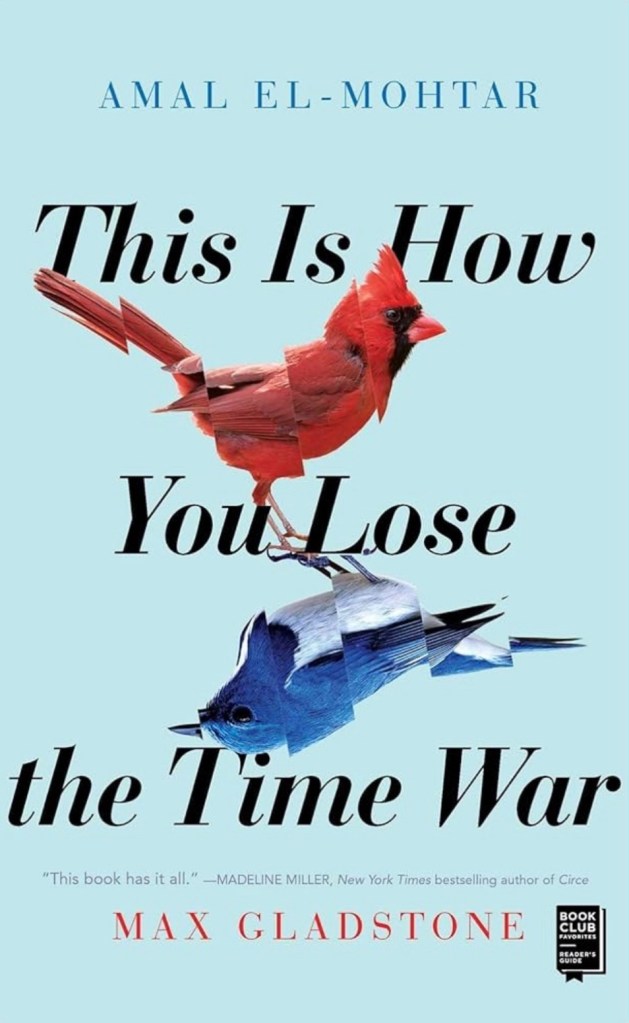
Title Page
“Red” represents the Agency, a techno-dystopia that echoes the Matrix film. “Blue” represents the Garden, an equally destructive faction that is represented more favourably not so much because of the moral or ethical viewpoint they foster, but more because of the biases the authors and the audience are likely to bring to the novel.
The agents start sending letters to each other, at first taunting ones, and then, when you start to get fed up with the pointless repetition of it all, they start developing a friendship which blossoms into a romantic relationship.
The contact between the agents is done entirely through letters, and there’s a lot of literary references and clever uses of narrative and allusion to various “Classics”.
I will not spoil the story, as it’s well worth reading, I will just note that I found it lyrical, moving and very cleverly constructed. It also managed to be readable despite the complex narrative and the sheer amount of worlds and world-building introduced in such a short span of time.
Highly recommended, although it’s not a light read.
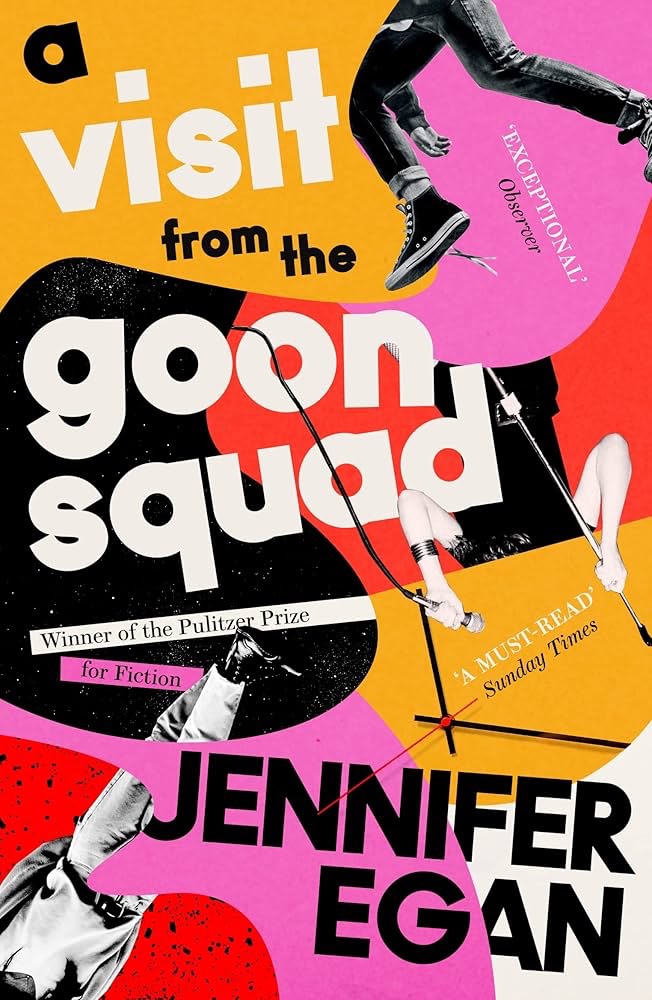
I bought A Visit from the Goon Squad back in 2011, as it was part of that year’s Tournament of Books. It has languished on my Kindle ever since. This year, however, I have decided to read the oldest unread books on my Kindle, and so it was A Visit from the Goon Squad’s turn.
First of all, the book has a dreadful name. It’s trying to be sophisticated, it ends up being uninformative and unappealing. It’s sounds like a book about comedians, or maybe a family saga of some kind, but it’s basically a string of partially connected episodes about people that work or have worked in the music industry.
The post Pulitzer win book cover
I almost gave up on this book as about 50 pages in I found myself not liking any of the characters and finding the narrative dull and bland. Then Rhea appeared, and I found myself pulled into the story. She redeemed the book, and it got better and better as I read along.
A Visit from the Goon Squad is a very readable book, apart from the deliberately dreadful writing of the only writer in the novel, Jules Jones. There’s a character that didn’t redeem himself – the more I saw of him the less I liked.
The book didn’t age well, and will likely age even worse with time. It’s embedded in a certain era – pre smart phones, social media and AI – but it’s not written in a way that will allow it to be timeless. The powerpoint penultimate chapter reads as a dated gimmick, and the last, “futuristic” chapter is truly terrible. It really brings the book down, as even for its time it serves mainly as a window to Egan’s biases and anxieties more than to the true zeitgeist of the time.
Egan’s choice to build the narrative on episodic encounters with loosely connected characters was groundbreaking for the time, and the book won a Pulitzer Prize. In 2019 Bernadine Evaristo will take this concept and do it much, much better with Girl, Woman, Otherthus leaving Egan’s novel in the dust.
While I don’t regret reading A Visit from the Goon Squad I wouldn’t recommend it. It didn’t stand the test of time, there are much better books to read, and it’s attempt to capture the zeitgeist of a time so fleeting it practically didn’t exist (the oughts) isn’t worth the reader’s time. Read Evaristo’s novel instead.
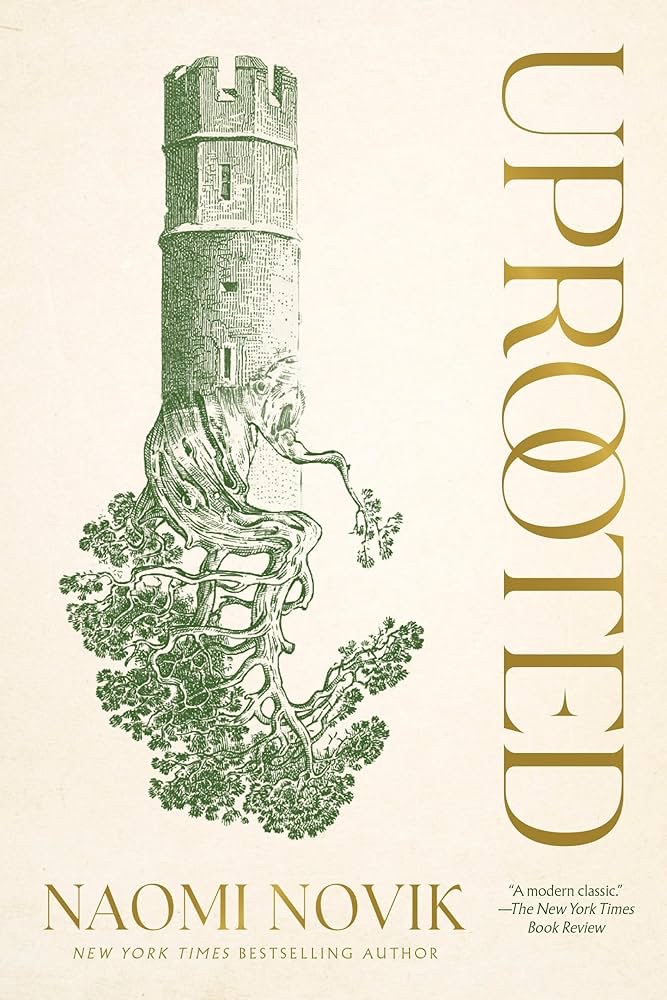
A fairy tale for grown ups, Uprooted by Noami Novik is a beguiling novel about being deeply rooted in a place, and yet also uprooted, a perpetual stranger in your homeland and community.
“Our Dragon doesn’t eat the girls he takes, no matter what stories they tell outside our valley. We hear them sometimes, from travelers passing through. They talk as though we were doing human sacrifice, and he were a real dragon. Of course that’s not true: he may be a wizard and immortal, but he’s still a man, and our fathers would band together and kill him if he wanted to eat one of us every ten years. He protects us against the Wood, and we’re grateful, but not that grateful.” Agnieszka loves her valley home, her quiet village, the forests and the bright shining river. But the corrupted Wood stands on the border, full of malevolent power, and its shadow lies over her life. Her people rely on the cold, driven wizard known only as the Dragon to keep its powers at bay. But he demands a terrible price for his help: one young woman handed over to serve him for ten years, a fate almost as terrible as falling to the Wood.
The next choosing is fast approaching, and Agnieszka is afraid. She knows-everyone knows-that the Dragon will take Kasia: beautiful, graceful, brave Kasia, all the things Agnieszka isn’t, and her dearest friend in the world. And there is no way to save her. But Agnieszka fears the wrong things. For when the Dragon comes, it is not Kasia he will choose.
Like all good fairy tales and myths, Uprooted has a compelling, readable narrative that sweeps you from the first paragraph about “Our Dragon” to the very end (which like good fairy tales also ends with Agnieszka talking about the Dragon). It evokes Polish and Russian folklore, Greek mythology, and classic fairy tales in a Polish medieval setting. You can tell just how much Novik knows and loves the source material she draws on, and how much respect she has for the cultures that wove these stories of magical beings, wizardry and mythic beasts to deal with the dark terrors of their world.
Novik is a magical story teller and Uprooted manages to be both very much part of the fantasy world that she creates, and also a timeless tale about identity, belonging, and love. There is a lot of heart in this adventure, a lot of compassion for the characters within it. Novik manages to create not only a very believable world, but a cast of real, nuanced characters: heroes with flaws, villains that you understand and feel compassion for.
Naomi Novik is a phenomenally good fantasy author, and this book justifiably won awards. If you liked her Scholomance series you will love Uprooted, and I am looking forward to reading more of Novik’s work.
Yesterday was the last day of Tom Sachs and Nikecraft’s I.S.R.U Summer Camp challenge. Since the 17th of August you could download the ISRU (In Situ Resource Utilization) app and participate in a series of “rituals” to earn points towards getting the chance to purchase Sachs’s coveted Mars Yard 3.0 Nike sneakers.
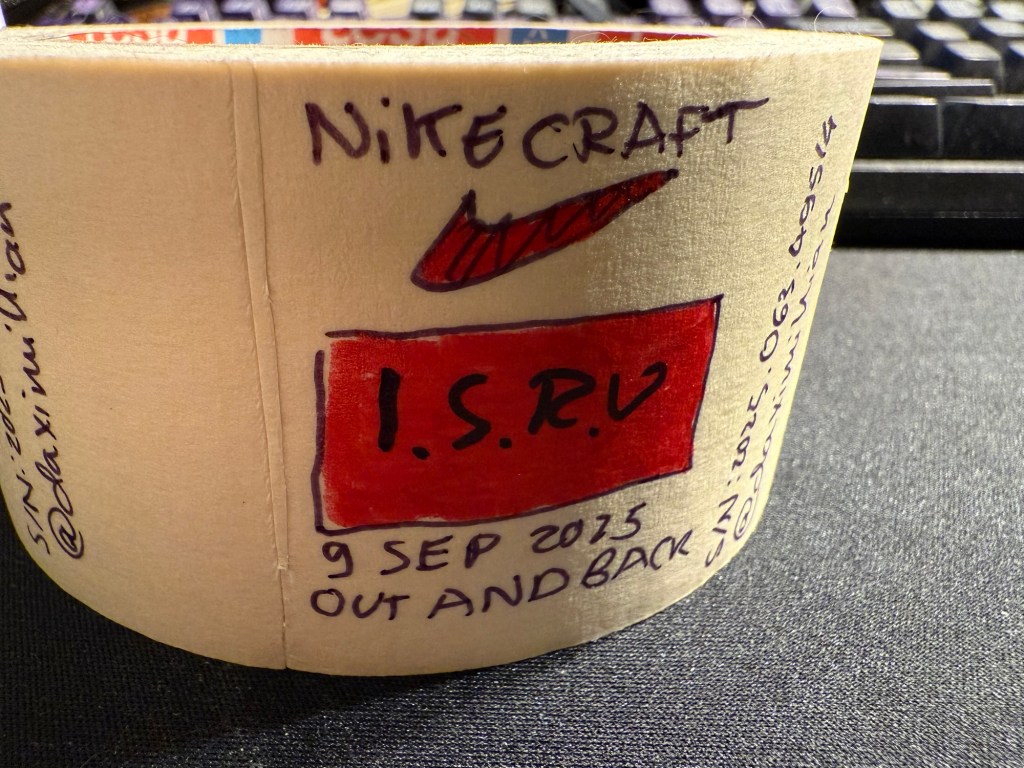
Tape waiting for the Out and Back ritual
So what’s the deal with the shoes? You can see a film about the Mars Yard shoes here, but for me personally they are just cool shoes with an interesting design story. I downloaded the app out of curiosity and even though I participated in all the “rituals” and am currently in the 95th percentile of people on the ISRU app’s leaderboard, I doubt that I will get the chance to purchase them.
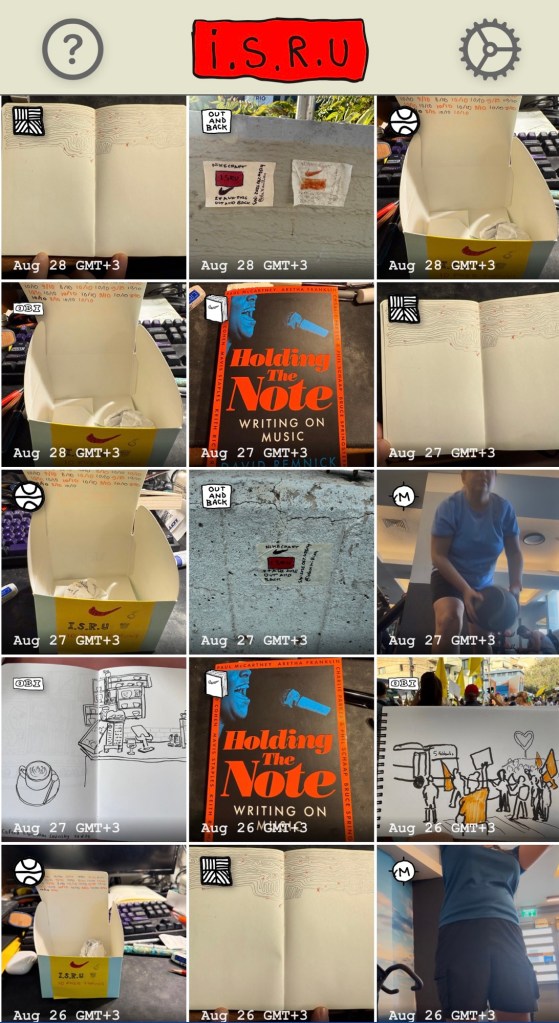
Part of my wall in the ISRU app.
I’m writing about this challenge and this app because after a month and a half of participation I think the rituals and habits that I garnered from the experience are worth sharing.
There are six daily rituals in the app, and they were revealed week-by-week. If you plan on participating, I’d suggest adding all the rituals gradually and in the same order that they were added in the app: you are building a set of disciplines after all.
The rituals are:
Ten Free Throws – shoot 10 free throws at something. I settled on a small box and a crumpled piece of paper as a ball, and I use an orange and a black sharpie to keep score on the box. This seems silly but it’s a lot of fun and a quick palette cleanser in the middle of the day.
Output Before Input – if there’s only one ritual/habit that you should take from this it’s this one. When you wake up, don’t reach for your phone. Create something instead. I started out this ritual by journaling, but now I’m sketching in the morning and it’s the best way to start the day.
Out and Back – another great habit – run for 20 minutes, and mark the halfway point. I run for more than 20 minutes usually, and there are rest days when I walk, but this has been a great reminder to get out there and move.
Wall Drawing – tire out your arms with push ups, and then draw a line on a “wall” (either a real one or a piece of paper). Stop when your line touches a previous line or when you lift your pencil up from the wall or when you reach the end. Mark your stopping point with a red X. This is a way to get push ups and some interesting artwork done.
Read Before Bed – read a physical book before bed instead of staring at a screen. Excellent ritual, and one that I really needed.
Medicine Ball – create your own medicine ball out of cans, bubble wrap and duck tape (I used the one in the gym), and perform 5 daily exercises with it.
Apart from these there was a one time “Choose Your Ritual” challenge where you had to create a 1 minute or less movie about your ritual and upload it to the app. This was a tough challenge, but it got me to learn iMovie and how to edit videos on my phone, so I really appreciate it.
Even though the challenge has ended I’ve decided to continue doing these daily rituals and updating the app. These are just good habits to have and the ISRU app is a pretty great habit tracker for these.
There are also some great films that were uploaded to the app as part of the challenge. My favourite is How to Learn How to Surf.
How about you? Did you participate in the challenge? Are you interested in any of these rituals?
 Writing at Large