Dealing with Difficult People is part of a series of small booklets on the topic of emotional intelligence that the Harvard Business Review published. It’s a collection of essays, each of them short, well-written, and contains useful and practical information on different aspects of dealing with difficult people in workplace settings: colleagues, bosses, reports and even how do you avoid being a difficult person to work with yourself.
The articles in this collection include “To Resolve a Conflict, First Is It Hot or Cold?” by Mark Gerzon; “Taking the Stress Out of Stressful Conversations,” by Holly Weeks; “The Secret to Dealing with Difficult It’s About You,” by Tony Schwartz; “How to Deal with a Mean Colleague,” by Amy Gallo; “How To Deal with a Passive-Aggressive Colleague,” by Amy Gallo; “How to Work with Someone Who’s Always Stressed Out,” by Rebecca Knight; “How to Manage Someone Who Thinks Everything Is Urgent,” by Liz Kislik; and “Do You Hate Your Boss?” by Manfred F. R. Kets de Vries.
The essays are all interesting and make their points well and concisely. Many of them offer relatively realistic scenarios that you can encounter when dealing with a certain type of difficult person, and then walk you through how to best deal with each scenario. Because all the essays are short the ratio of actionable advice to lines of text in the articles is excellent – there’s no padding or fluff here. There is a good range of tools that you can add to your “people wrangling” toolbox, and that’s always a plus.
Where this booklet falls short is precisely in its brevity. Complex scenarios are breezed through, things are solved relatively easily and on the first try. In reality dealing with difficult people in the workplace is a “superpower” that requires a lot of consistent effort and skill. You will never reach a tolerable equilibrium on the first try – indeed there’s a chance that you will never reach it at all. There is no book, let alone a slim booklet, that can teach you all that it takes in one fell swoop. You’ll need to deal with every situation and person as they occur, and what books of this kind can do is provide you with tools and approaches to do that.
If you are dealing with difficult people in the workplace, then this is book is a good place to start from. Just take into account that it’s going to be a long and hard process, and one little book isn’t going to solve all your problems and give you everything you need. Set your expectations accordingly and you won’t be disappointed.
There’s a story of tight-knit community under threat. There’s a love story of a kind rarely portrayed in fiction these days – one deeply mundane, pragmatic, pedestrian, and also deeply tragic, transformative and profound. There’s a Bildungsroman element, a gangster story element, a mystery, a religious element, and even time devoted to plants. There are many stories of friendships, many of them unlikely, and a few stories of rivalries, some of them rivalries to death. There’s a particular story of friendship, through hardship, alcohol, cheese and furnaces, that is alone worth the read. There’s a budding romance between two star-crossed and not young lovers. There are heart breaking moments, and there are laugh out loud funny ones (the funny ones outnumber the heartaches, I promise). There’s a cop story, a feisty grandma story, a story of racial struggle, and a story of medieval religious art.
Read this book. It’s a delight, it’s full of heart and surprises, and it’s one of the most original works of fiction that you’ll get to read. Wonderfully well written, jumping with life, and a joy to experience.
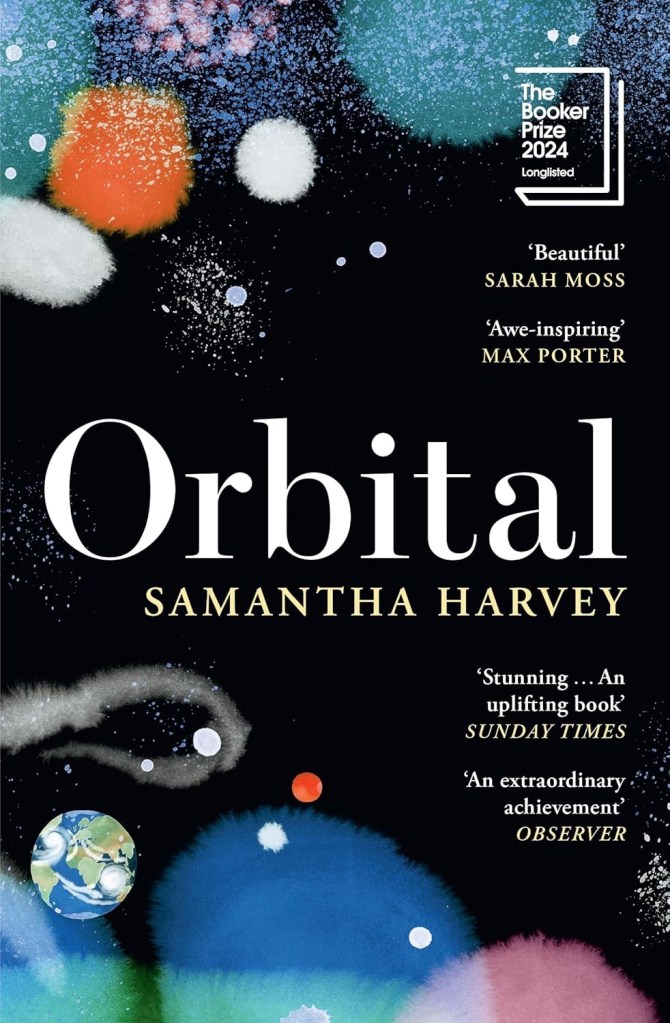
This book won the Booker award, the 2024 Booker award, and for the life of me I don’t know why.
Though the book’s subtitle is “a novel”, at 137 pages Orbital is basically a novella. Mostly it’s a book about nothing, involving six people that you are guaranteed to not care much about, set in the International Space Station. Garnish the whole thing with a mountain of purple prose, and that’s Orbital for you.
Could Harvey have come up with a more interesting premise involving the International Space Station (ISS)? Of course she could. What if Orbital would have been set during the pandemic, with astronauts basically stranded up there, worried about their families and friends, worried about their resupply or how to get back home (see also the eight day space mission that will last for nine months). What if one of the astronauts that was meant to return from orbit refused to return? (It happened in the past). There’s no end to the interesting dramatic situations that being in orbit in the ISS offers. Harvey will have none of that.
The astronauts themselves are a dull lot, that you learn very little about. There’s a religious guy with a postcard that’s supposed to be profound but isn’t; there’s an Italian guy that went scuba diving on his honey moon; there’s a Japanese woman who’s mother dies of old age (spoiler: that’s the drama in the novel); there’s a woman that’s possibly Irish, possibly British that has a peculiar non-relationship with her husband, but don’t worry we don’t get to explore that. And there are two Russian guys. That’s the extent of the characters in Orbital, and that’s how well you get to know them or care about them.
The novella takes place during 16 orbits of the ISS around earth, and there’s a giant typhoon that takes place during a few of these orbits. There’s a weird “white saviour” bit, but without the “saviour” part of it with the Italian astronaut and a poor fisherman’s family that he met during his honeymoon and we’re to believe they kept in close touch with for years until the story takes place. Don’t worry – Harvey doesn’t want drama anywhere near her work, so there is none even at this point.
What there is a lot of is self-involved, bloated purple prose about the beauty and fragility of our planet, space and humanity. None of it is earned, none of it is attached to the narrative, all of it could have been cut out – but then there would be no Orbital.
I rarely review books that I dislike, and I should have given up on Orbital a quarter of the way through, like I originally wanted, but I didn’t. So let this be a warning to you: not all Booker award winners are worth reading.
It’s been three years today since I finished my chemotherapy and have been in remission. I spent the day celebrating with my family, I’ll have another celebration next week, and I’m about to watch Mischief Movie Night In to finish a very nice day indeed.
Having dealt with cancer at a relatively young age sets certain priorities very straight in life. Health, family, friends are above all. I start my journaling every day with a 4-5 things that I’m grateful for. I’m constantly aware that everything in life is fleeting, everything can be taken away from you at any time, so it’s really important to take the time and appreciate everything that you have, even if it’s not always everything that you’ve wanted.
Teddy bears getting ready to be photographed for Inkvent
Reading
I have finished two books this week, Cal Newport’s “How to Become a Straight A Student” and Samantha Harvey’s “Orbital”. Newport’s book was excellent and I plan on using the advice within it to help me prepare for a big certification exam that I’m taking this year. Harvey’s “Orbital” won this year’s Booker prize, which is why I read it, and it’s a complete waste of time. It’s around 140 pages of bloated, purple description, with no plot, no interesting or fleshed out characters, and nothing but platitudes to say about humanity, humankind or the planet. I have no idea why it won, and it was so bad that it completely put me off of trying to read Booker award winning books.
Inkvent
I’ve managed to build a small buffer, which will come in useful as I have to write this year’s Inkvent summary post and I’m still not sure how I’ll tackle it. This year’s calendar isn’t like the ones previous, and so I will need a fresh approach to this summary post this time.
Planning
I’m gearing up to switch planning notebooks after next week, and to start a new quarter. My plan for next quarter is largely ready, and is a little different this time. I’ve pared things down, and I might even streamline them more. I have a week to hammer out the final details, and I’ll likely be dedicating a post to the process in the end.
Have a great week and remember to count your blessings.
It’s been a while since I’ve posted a weekly update, but as part of my effort to get back to a regular blogging schedule I want to start posting these.
Here are some cute kittens cuddling together to cheer you up
Reading
I’ve recently finished Ben Aaronovich’s “The Masquerades of Spring” (nice enough, I’m hoping to review it later) and John McPhee’s “Draft No. 4: On the Writing Process” which was fascinating and very well written. Then I started reading “Orbital” by Samantha Harvey. It’s this year’s Booker winner and yet I’m struggling to read it because it’s so dull and lifeless. I’m a quarter of the way through but I may just give up on it in favour of more interesting things on my list.
Running
After participating in a 5k and 10k at Disney World last month, I’ve been struggling to get back to my training plan. The solution, as always, is a combination of patience, perseverance and enrolling to another race. I have a 10k at the end of February and I want to be in good shape for it as the running conditions will likely be less than ideal (i.e. too hot).
Other things
At the Gentleman Stationer there’s some very good advice on which stationery items make for bad gift ideas. I will add to this: don’t buy the artist in your life art supplies unless they gave you very specific information on what to get them. Good art supplies are usually not inexpensive and you’re very likely to go wrong if you just try to muddle your way through an art supply store. Either get them a gift card to their favourite art supply store (a brick and mortar one, preferably), or ask them to tell what they want. If you insists on going on this route then sketchbooks from Stillman and Birn (go for the softcover ones and never buy coloured paper), or a set of Faber Castel 9000 sketching pencils will likely be welcome.
If you haven’t gone to see the movie “Wicked,” then go and see it. It’s a great adaptation to a very good musical and I promise you’ll enjoy it.
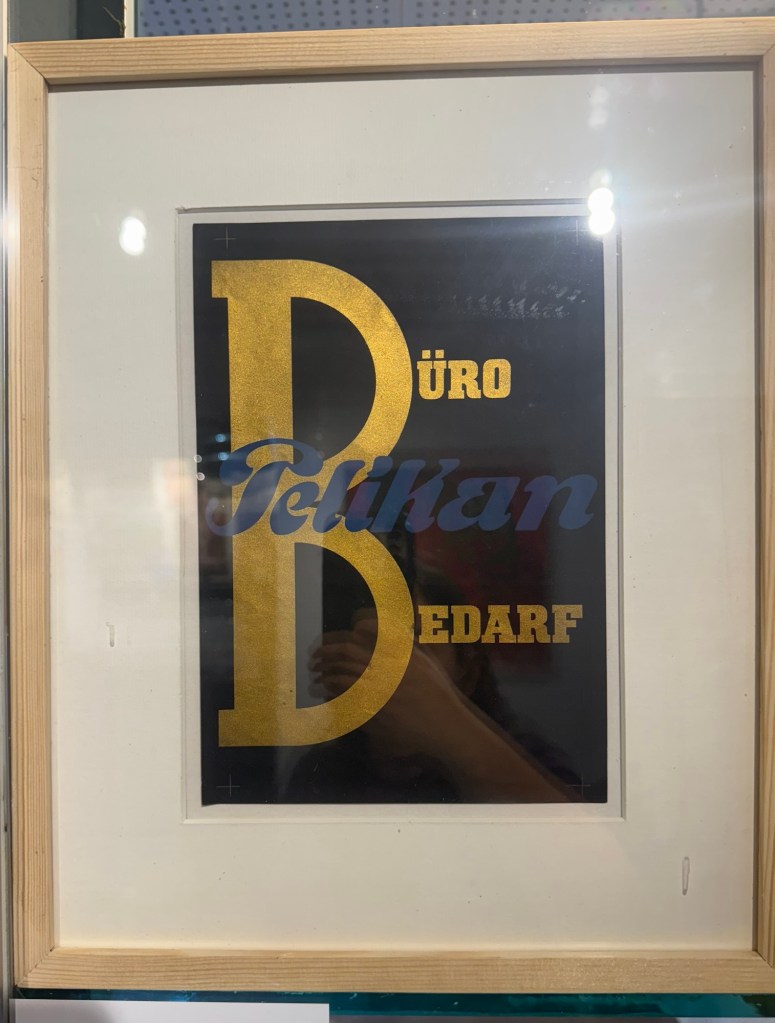
I went to a pre-auction exhibition today and got to see this original cover for a pre-war Pelikan catalog created in gauche and bronze powder by El Lissitzky:
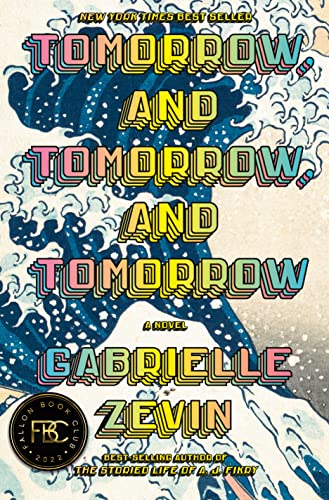
It turns out that when you take a bunch of stuff that you happen to like and put it in a blender, a book doesn’t come out. That should have been the tagline for this best-selling mediocre, patchwork of little substance.
“Tomorrow, and Tomorrow, and Tomorrow” by Gabrielle Zevin starts very promisingly. The first chapter, and particularly the first half of the first chapter is wonderfully well written and a joy to read. Then there are parts here and there, certain imaginative landscapes and certain descriptions mostly, that are excellently written. But the novel as a whole is a giant void of nothingness, lavishly sprinkled with clichés and woke politics, with “spicy” characters and themes thrown in every time Zevin felt that she might be losing her reader. Reading this book is like eating at a fast food restaurant – things may look enticing at first, but there’s no there there and you end up leaving hungry.
Some main points:
The childish, selfish, self involved, self destructive Sadie and Sam (the main characters) don’t change at all during this novel. They behave as adults exactly as they behaved as children. Not only is this incredibly boring, it’s also bewildering that this was termed a “coming of age” novel. They don’t grow up, so what exactly is the plot here?
There is no plot. It’s just time passing with incidents and character behaviours and interactions that are unearned and unwarranted. The only reason things seem to be “happening” is because Zevin feels like she might be losing her reader. The happening is in brackets because the events show little to no lasting effect on the main characters’ behaviour or choices beyond the superficial. The worst of these “happenings” is the killing off of a likeable character. Once he’s killed you realize that the only reason he was there and was likeable was so that Zevin can kill him off. It’s unwarranted, unearned, and insulting to the intelligence of the reader. It’s then that you realize that his involvement with Sadie and Sam was so outlandish in the first place that Zevin felt the need to justify it several times in the novel.
The characters include (I kid you not): a manic dream pixie girl that composes music naked to feel closer to her instrument, a Jewish Korean only child that is a talented math nerd who goes to an Ivy League college, a gay video game designer couple, a Jewish princess video game designer, an ex-Mormon video game designer couple. The book is trying so hard to be woke that it is breaking into a sweat and not really addressing or representing the historical era it is set in or the video game industry. As a woman in tech, a system programmer in an as male dominated field as Sadie’s, her experience is utterly, utterly unrepresentative. There’s lip service in a few scenes where Sam get the credit for her work, but Zevin was clearly not really interested in tackling the experience of always being the only woman in a room full of people who don’t believe you should be there.
The book skirts all kinds of interesting themes (sexism, racism, abuse, trauma, disability, the immigrant experience, financial and class disparities, creative ruts) but tackles non of them. They all just go “whoosh” by, leaving no mark, placed there just as if they were chores on Zevin’s to do list.
My guess is that reviewers and book club recommenders were taken in by the first chapter and didn’t really trudge through the entire 400 plus pages of the book. I would strongly recommend that you spend your reading time elsewhere. The bits and pieces that are worth reading aren’t worth the bits and pieces that are not.
Oh, and the use of Shakespeare (and “The Iliad”) is utterly unearned and jarring. I have no idea how either Zevin or her publisher had the gall to name the book after such a masterpiece of a speech.
Set in 1958 this tightly plotted, precise and polished mystery/detective story is very set in its time. Tokyo Express by Seichō Matsumoto, translated from Japanese by Jesse Kirkwood, is a masterwork of minimalist craftsmanship. No detail is extraneous. No scene could be cut. The setting starts as a thriller more than a murder mystery, but turns into a murder mystery a few chapters in.
This is a novel of timetables and alibis, politics and very realistic oftentimes tedious and frustrating detective work. While “Tokyo Express” has a general air of melancholy about it, it shows more empathy to its detectives than to its murder victims. The result feels a bit like a Japanese take on noir fiction, with a more minimalist take on the genre. It’s not that you dislike the victims (as is common in Golden Age detective novels), it’s that you are kept at the same distance from them as the detectives have.
This is also not the “amateur sleuth saves the day in the face of stupid detectives” type of novel. The detectives are thorough, thoughtful, methodical, not easily fooled. They use no flashy techniques, no DNA, no modern day CSI methods. It’s the old fashioned repeated, grey work of questioning people, trying to get timetables sorted out, working in small steps that the reader is always privy too (no Sherlock Holmes-like jumps made by omitting key points in the narrative).
There is nothing flashy in “Tokyo Express”. There is superb craftsmanship and a very noir novel that is well set in its time and place. I enjoyed reading it and I particularly liked the addition of maps and timetables to the book. Even if detective novels aren’t your usual fare, I’d give “Tokyo Express” a read, as it’s not the usual “whodunnit” fare.
When I started reading “4321” Paul Auster was still alive. By the time I finished it he had passed away. That does add an element of difficulty when discussing a work that is far from perfect – one feels that it’s somehow rude to point out the flaws in a recently deceased author’s works.
Nevertheless, here’s my review:
“4321” is doorstop of a book, a massive tome that demands quite a lot of time but not a lot of effort to read. Auster is good writer and he is very capable of writing very readable books. At no point during “4321” will you feel that the writing drags or that you’re struggling to understand what’s going on. In his telling and retelling of Archie Ferguson’s life in all four variations of it, Auster very adeptly makes sure that you don’t lose sight of the plot and get confused wondering which version of Archie are you tracking now.
That’s the highlight of this book, and it may also be its downfall. “4321” is Auster in his most polished, most controlled, and most repetitive. It’s all the previous themes that you’ve met in previous Auster novels, coupled with Auster’s own biography and his love for certain types of characters and relationships. It’s like watching Kenneth Branagh’s “Hamlet” – a work of supreme technical difficulty and accomplishment, polished to a mirror-like quality, and reflecting only the creator himself. Somehow after more than 900 pages you realize that there’s no there there.
The most interesting characters are the ones that Auster glosses over, slotting them into their role in Archie’s narrative (his mother Rose is perhaps the most glaring example of this), and the characters he does care about are… uninteresting. Archie, through his 4 turns in life, never evolves. He’s always a detached, not very interesting young man that looks at the events of the century from the sidelines. His friends also never evolve, and while his path to becoming a writer might be fascinating to Auster, it wasn’t very interesting to me. It was too neat, too clean, too uncomplicated. The whole thing was rather bloodless, the rank opposite of Doctorow’s “Ragtime,” which is a messy but punchy and lively affair.
You spend over 900 pages of uncomplicated, almost light reading, and get to… not a lot really. There’s nothing here that hasn’t been written about elsewhere and much better about love, life, creation and the creative mind. What you do get is to view the supreme craftsmanship of a very good storyteller. Maybe that’s enough. For me it wasn’t.
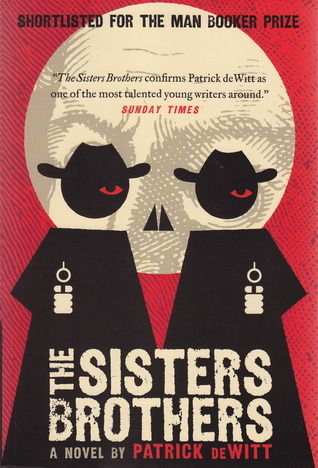
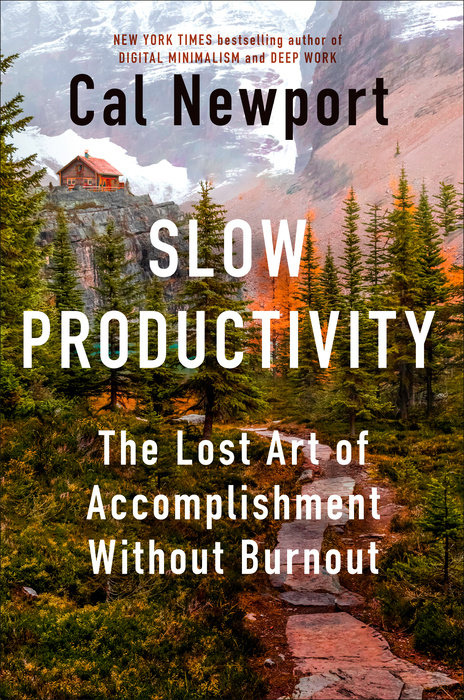
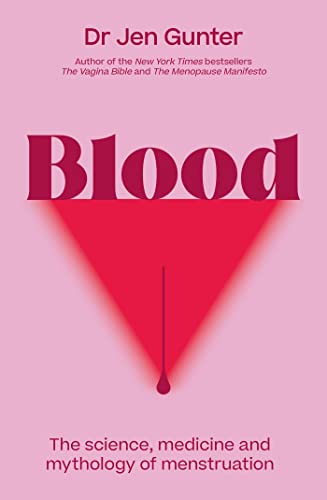
I read four books in March (and started reading Paul Auster’s mammoth of a book 4321). Three of them were very good (Prospero’s Cell, The Sisters Brothers and Blood) and one that was a bit of a disappointment (Slow Productivity) mostly because I was already familiar with the concepts in it. All in all not a bad reading record for the month.
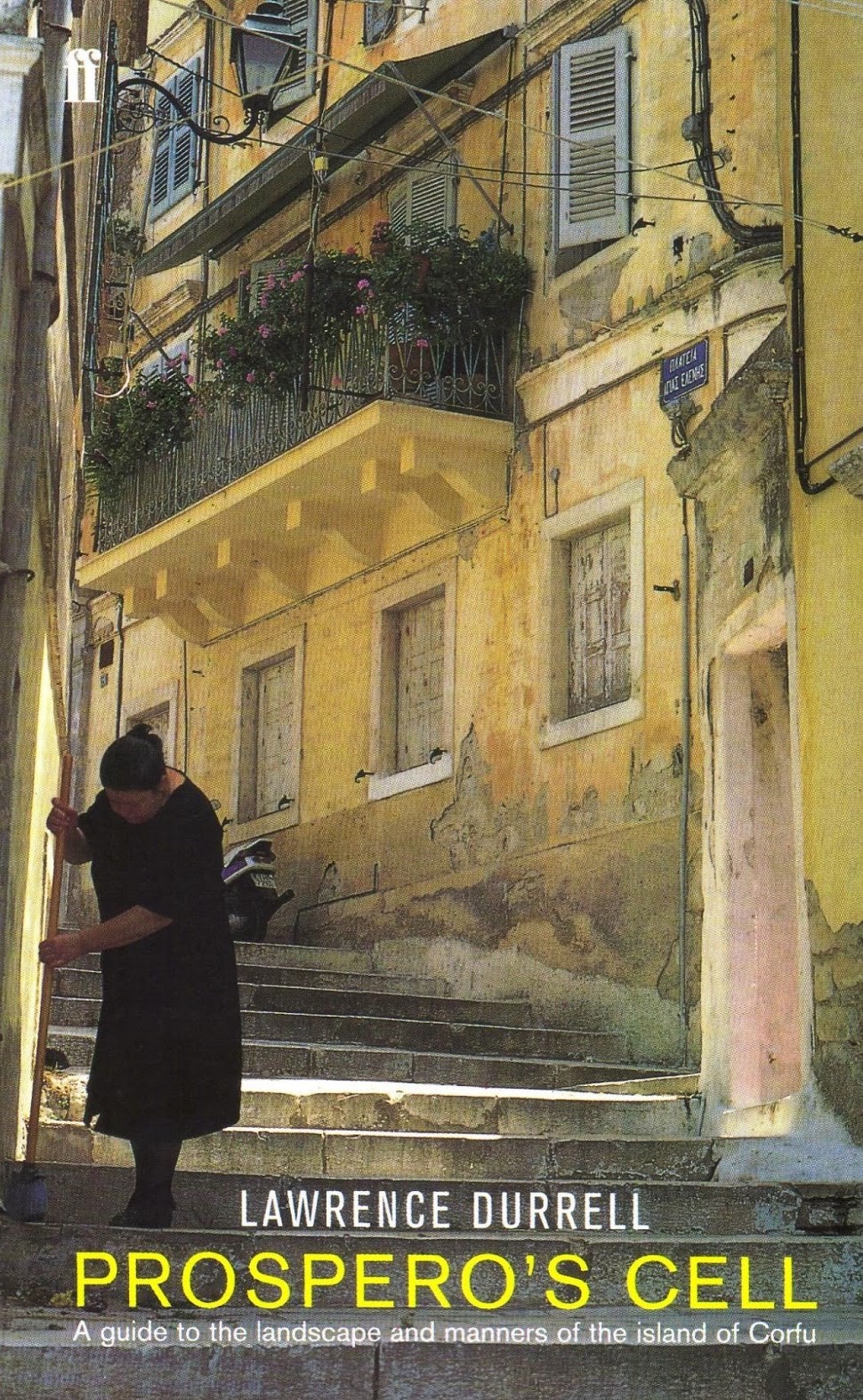
Prospero’s Cell: A Guide to the Landscape and Manners of the Island of Corfu, Lawrence Durrell
This isn’t a guidebook, nor a travel book, nor purely a work of non-fiction. Durrell lived in Corfu for a few years before WWII (his brother, Gerald Durrell wrote several books about their time there, the most famous of which is the wonderful “My Family and Other Animals”. I’ve read that book so many times I know parts of it by heart) with his wife Nancy and a group of artistically minded friends. This book pretends to be a guide to the island only in its title and a few peculiar appendixes in the end. In reality it’s a stylized diary of a year and a half of Durrell’s time there, just before the war broke out. Durrell is a master of description, and for that alone the book is worth the read. It’s a sliver of a book that captures in a pile of amber words a time, a place and a community that now no longer exist. It was written while Durrell was exiled in Alexandria, and you can feel the melancholy and mourning for a golden age that was once his and is now lost.
The Sisters Brothers, Patrick deWitt
I’ve had this book for so long on my reading list I managed to buy both a digital and physical copy of it. The design of the paperback is wonderful, by the way, so I recommend getting it if you can (that’s the edition I ended up reading).
Charlie and Eli Sisters are brothers and professional killers in 1851 frontier America. They’ve been sent to California to kill an elusive prospector, Hermann Kermit Warm, at the request of their employer, the enigmatic, powerful and cruel Commodore. The novel is a sort of Noir Don Quixote/Cohen Brothers telling of the story of their trip there and back, from the point of view of Eli Sisters, the younger brother. Eli is a fascinating character, and much of the interest in the story is seeing him grow more self-aware and conscious of his life and choices. The novel manages to be funny and tragic, cruel and heartwarming at the same time. It has a lot to say about agency, morality, violence and the rush for gold vs quality of life, and it goes about it without preaching to the reader.
A truly original novel that is hard to put down, and manages to be both entertaining and illuminating. Well worth the read.
Slow Productivity:The Lost Art of Accomplishment Without Burnout, Cal Newport
I’ve read Newport’s Digital Minimalism and Deep Work, which I liked and utilized to great effect, and his So Good They Can’t Ignore You, which isn’t as good as the others. I also listen to his excellent podcast, Deep Questions, and so I pre-ordered this book the minute he started talking about it.
Herein lies the paradox of this book. If you’re a regular listener of Newport’s podcast there’s very little in this book for you beyond a few anecdotes. Newport has basically workshopped and talked about all the ideas in Slow Productivity for months on his podcast, going into much more depth and implementation specifics than he does in this book.
If you aren’t a listener of his podcast, AND you’re a knowledge worker with some level of control over your schedule and tasks, then Slow Productivity is worth reading. You’ll learn about pseudo-productivity, its origin and its breaking point, and you’ll learn about an alternative framework: slow productivity. “Do fewer things. Work at a natural pace. Obsess over quality”.
Where the book fails and podcast triumphs is in the implementation of these ideas. The book does give you a few ideas to try out, but through a much lengthier discussion in the podcast, plus real-world questions that listeners asked you get a better idea of how this would work in real life.
As I’ve been listening to the podcast for a few months, I already started implementing these ideas at my job (before the book was published). I work on only one project at a time, the rest stays in the backlog. I was told to cut corners and do a mediocre job on my current project in an attempt to rush it, but I deflected that request. Once I presented my initial results, the tune changed – this was high quality work! Totally worth the work and the wait, keep it up!
Bottom line: skip if you’re a podcast listener/viewer, read if you feel overwhelmed at your job and want an introduction to an alternative productivity framework that’s not as frenetic as the normal knowledge worker’s fare.
Blood: The Science, Medicine and Mythology of Menstruation, Dr Jen Gunter
Like many other readers that reviewed this book, I wish I had access to it when I started menstruating. Dr Gunter is as usual informative, caring and entertaining at the same time, which is quite an accomplishment. Complex medical processes are explained with great clarity and compassion, and the reader is left with a LOT of very useful information to use when making medical choices or advocating for themselves in medical settings. This and Dr Gunter’s The Menopause Manifesto are must reads and treasure mines of solid, well-researched and vetted medical information in a world full of medical disinformation and misinformation. There are a few pages here that would have saved me months of needless anguish during chemo.
An absolute gem of a book, one to read cover to cover and then reference in times of need.
Have you read anything good or interesting last month?
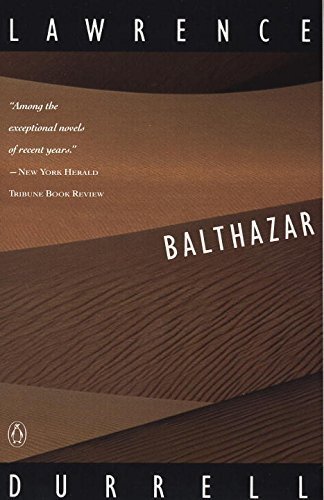
The second of the Alexandria Quartet this book is much easier to read than the first one, Justine. While it is written from the point of view of the same narrator as Justine was, Balthazar undoes and rewrites significant parts of the previous narrative. This isn’t an accident, but a very deliberate, very well thought out move by Durrell. He’s not merely creating an unreliable narrator, he’s creating a narrator that doesn’t see the full extent of the reality he’s living in, and then has a trusted friend come in and fill in the gaps, correct him, reveal truths he had no way of knowing. As Balthazar’s insights force the narrator to reflect again on what happened in Alexandria at the time, more memories begin to surface and so a few new characters join us (chief among them the enigmatic Mountolive) and a few others get revealed in surprising ways. Nessim becomes fleshed out and more human and relatable as we see him with his brother and mother at the family estate. Scobie shows hidden parts of himself that make him tragically human, and not just a comic relief. Justine too becomes less of a fable and more of an actual person, and Clea gets a bit more depth (though she’s still something of a mythical creature here). Nessim’s brother Narouz and his mother Leila are fantastic characters in and of themselves, and the narrative comes to life with their addition and with the fact that we get some distance from the overly cerebral and neurotic narrator. Balthazar brings high romance to the story, an air of a Victor Hugo novel at times, and so this book flows more easily, is much kinder in its demands from the reader than Justine was.
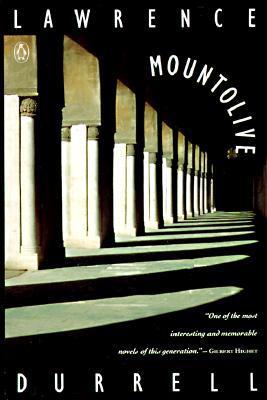
Mountolive, Lawrence Durrell
The third novel in the Alexandria Quartet and the one I was most looking forward to reading. While Justine set the basic story and introduced the main characters, and Balthazar gave new depth, perspective and meaning to their actions, Mountolive overturns them both by giving the characters motives and political context.
Without spoiling the novel, Mountolive introduces David Mountolive, the new British Ambassador to Egypt and Leila’s former lover. Leila is Nessim and Narouz’s mother, and she and her family become the heart of the story, with Darley (the narrator and protagonist of the previous two novels) barely appearing in Mountolive. The narrator changes, pace changes, the love story changes, even the genre changes in this novel compared to the other two, and Durrell has done a magnificent job with this switch. You don’t see it coming, but once he starts revealing what really took place you see that he’s very quietly laid all the groundwork for it there.
Mountolive himself is a fantastic character, and Narouz… I tip my hat to Durrell for creating a larger than life character that could be at home in a Victor Hugo novel and yet is completely believable.
It’s worth reading Justine and Balthazar just to read Mountolive, and no, you can’t skip them just to read this.
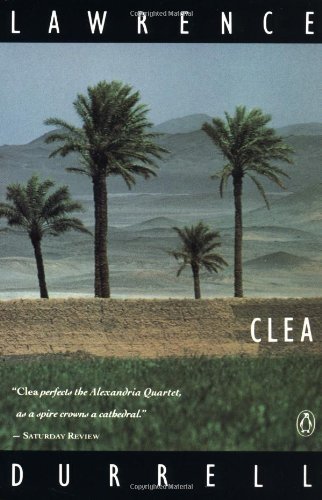
Clea, Lawrence Durrell
The fourth and final book of the Alexandria Quartet Clea takes place a few years after the events in the first three books (which happen simultaneously), during and immediately after WWII. It’s the final layer of a multi-layered narrative, one that reveals more about the characters, allows them to mature, evolve, create new ties and explore old ones. Scobie gains a deserved mythical status, Darley grows up, Clea becomes more human and less of an angel in the shape of a woman, and Justine, Nessim and even Narouz get their final say. Above all this is a farewell to Alexandria, which is arguably the main character in this quartet. The city looms large over the life and events of these novels, providing much more than a setting. Durrell is a master at evoking the spirit of place, and here he is at the heights of his powers, writing what is likely one of the most nuanced, multi-layered, tormented and transcendent boy-meets-girl stories ever written.
The Alexandria Quartet
The Alexandria Quartet as a whole is a difficult and demanding set of novels to read – it makes demands on the reader, and some of the content is hard for both contemporary and current audiences. Yet Durrell isn’t creating a picture postcard of a city, or of his characters. They both have teeth and a significant underbelly and have no problem showing either one. Characters you like show mean, petty and intolerant streaks, and the city is both magnificently charming and a seat of horrors beyond description at the same time.
When it comes to reading demanding books, the question always is “was it worth it”? In the case of The Alexandria Quartet it most certainly is. The dizzying narrative of Justine, that gives to credence to the linear narrative, is overturned by Balthazar, which adds order, depth, insight to it, and a multitude of various contexts. Mountolive adds political and social context and depth over what Balthazar provided, and another set of love stories, this time ones coloured by tragedy. Then Clea breathes time over the trilogy, allowing characters to mature, evolve, reinvent themselves. The artist lost in Mountolive inspires a wedding and two artists found in Clea, and Justine finds her true calling once again.
My only regret with this quartet is that I read it on a kindle. These books require paging backwards and forwards (especially Justine), and they need deep reading not fast reading. I have several more of Durrell’s books that I plan on reading, and all of them are in print format. He is a writer to savour, not to rush through.







 Writing at Large