Deep Sea Adventure board game review

I bought this game at Jeux Descartes while I was in Paris, as an interesting looking short game with simple rules that can be played as an interstitial game during a longer game night. I highly recommend going to Jeux Descartes shop if you’re in Paris and checking out their fantastic board game and mini selection. Don’t be daunted by the French, as board games include rules in multiple languages out of the box, and Board Game Geek lists which games are language dependent and which aren’t.

Technical details about the game can be found here, and this is not yet a full review, as I’ve only had the chance to play it with two players, and the game is definitely better with more players.
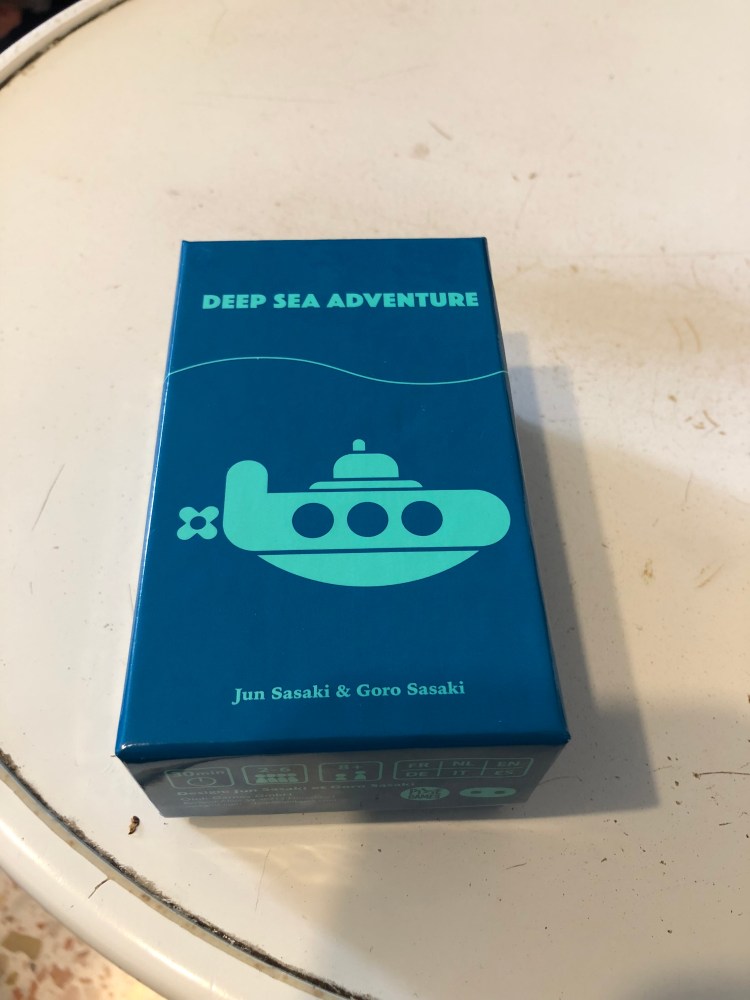
The rules are simple and easy to learn, but take the time to read them carefully, as there are a few important nuances there that make the gameplay more interesting and strategic than what it would seem.

Visually the game is stunning, and a lot of fun to set up. It takes about 5 minutes to spread out all the tiles, shuffle and organize them, and the game itself from start to finish takes about 30 minutes, as written on the box.

The concept is original: you’re a group of poor deep sea treasure hunters trying to get as much treasure as possible with as high a value as possible, while being forced to share valuable oxygen amongst each other. You either move forward or backwards with your delightfully designed meeple (a choice that you can make only once per round, so there’ not much room for cautious play here — you’re an adventurer after all), and as you pick up treasure it becomes more difficult for you to move and oxygen runs out of your sub — and with it the time for the round.
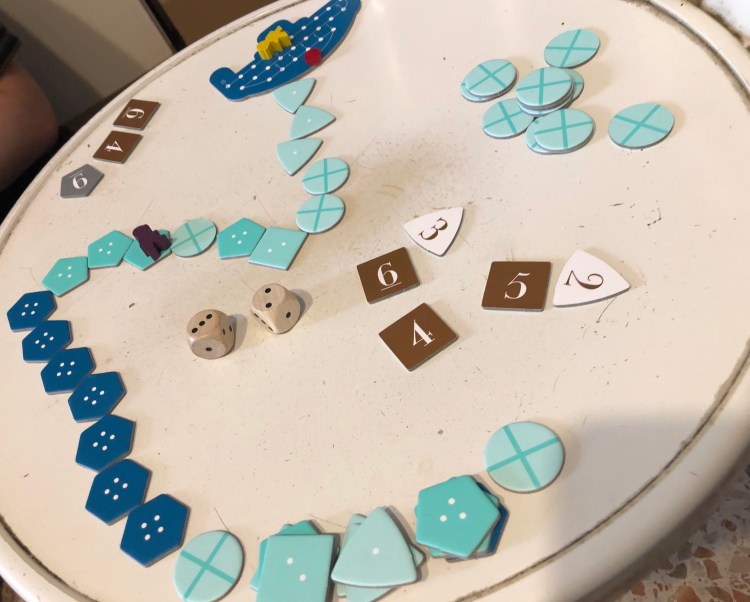
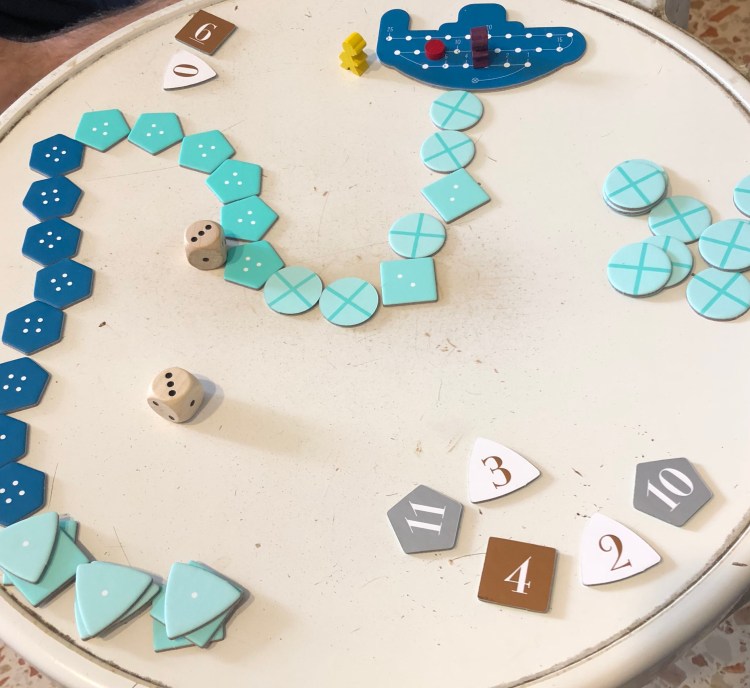
There are three rounds, each one with several turns that are played very quickly, as even though there’s quite a bit of hidden strategy in the game, there isn’t a lot of choices each player can dawdle with. You either move forward or back, pick up a treasure tile or don’t, and in rare cases, drop a treasure tile. The more players there are the faster you can move deeper down the sea, because you skip other players’ tiles, and the line grows shorter the more treasure is picked up in a round. The deeper you go, the more valuable the treasure is, but if you don’t return back to the sub by the end of the turn, you drop your tiles at the end of the line in very nifty little piles of three. And here is where the real genius of the game comes in, because each of those piles of treasure counts as only one treasure in terms of oxygen and weight, so you can pick up much more treasure and move much faster that way. A strategy of picking valuable tiles up on the first round so that you can drop them and pick them up on the second and third rounds becomes pretty enticing. As you can organize your dropped tiles in whatever order you like, and other players will want to try for that strategy too, not to mention that there’s an element of chance to dice controlled movement makes for a very interesting game. Plus, players closer to the sub can play to deliberately shorten the game by picking up lower value treasure to run the oxygen timer up.

All this makes for a very interesting short game that is a lot of fun to play and is pure eye candy to look at. I highly recommend it.
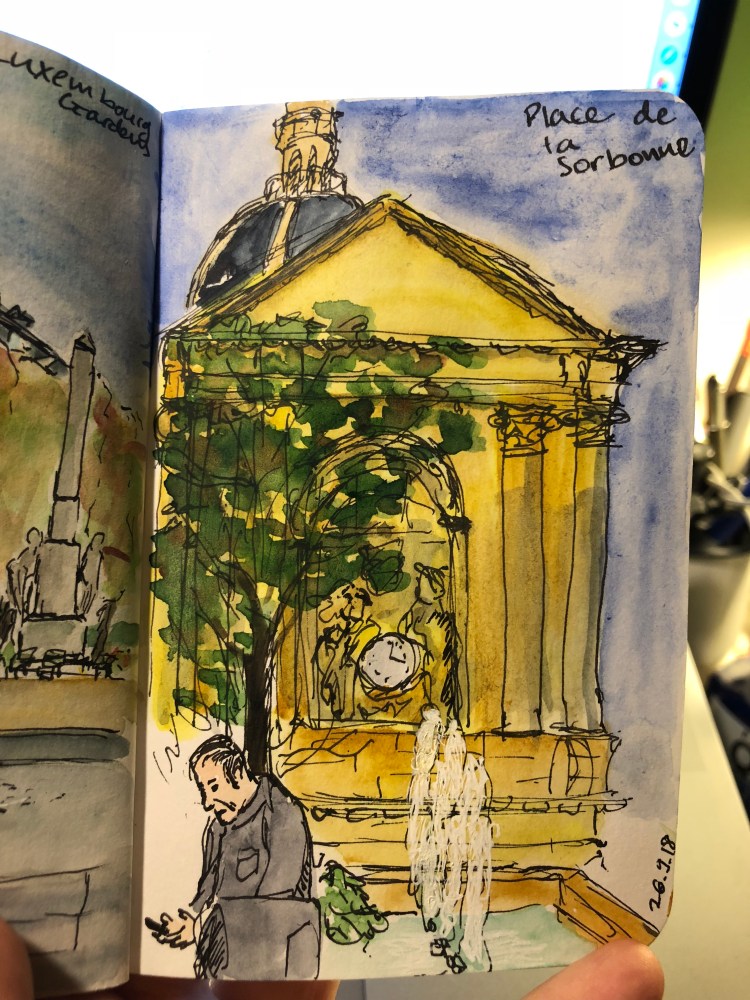
Place de la Sorbonne sketch

I had less than 20 minutes for this one, so it came out all wrong in terms of the proportions of the Sorbonne building, but by the time I realised this it was too late, and I had a plane to catch. Posting this here because even mistakes have some charm to them.

SketchINK Lotte ink in a Super5 0.7 fountain pen on a Stillman and Birn pocket Alpha and Schmincke watercolours.

New books

New books arrived today and I can’t wait to dig in.

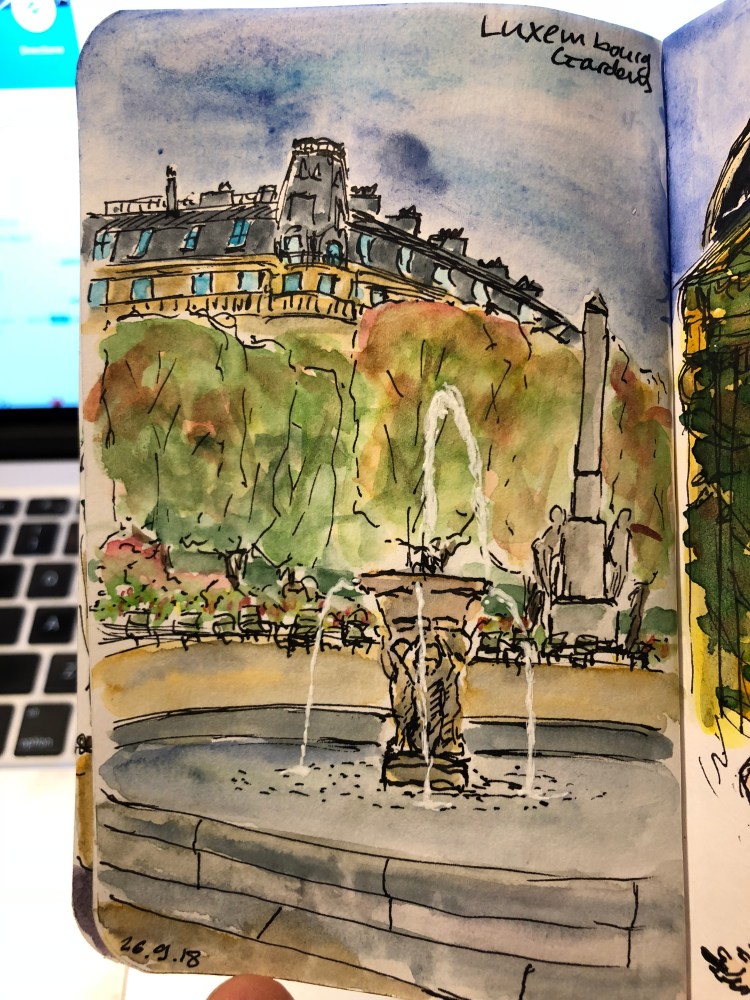
Luxembourg Gardens sketch

A quick sketch in Luxembourg Gardens, Paris on a Stillman and Birn pocket Alpha. Still learning how much water this paper can take, and that’s the first use of a Uniball Signo white pen for the water in the fountain. I’m very pleased with this little trick I learned in the Urban Sketchers Symposium in Porto.

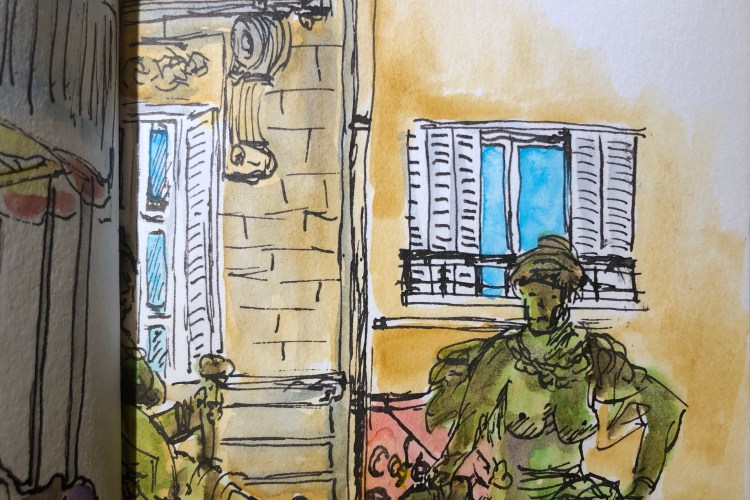
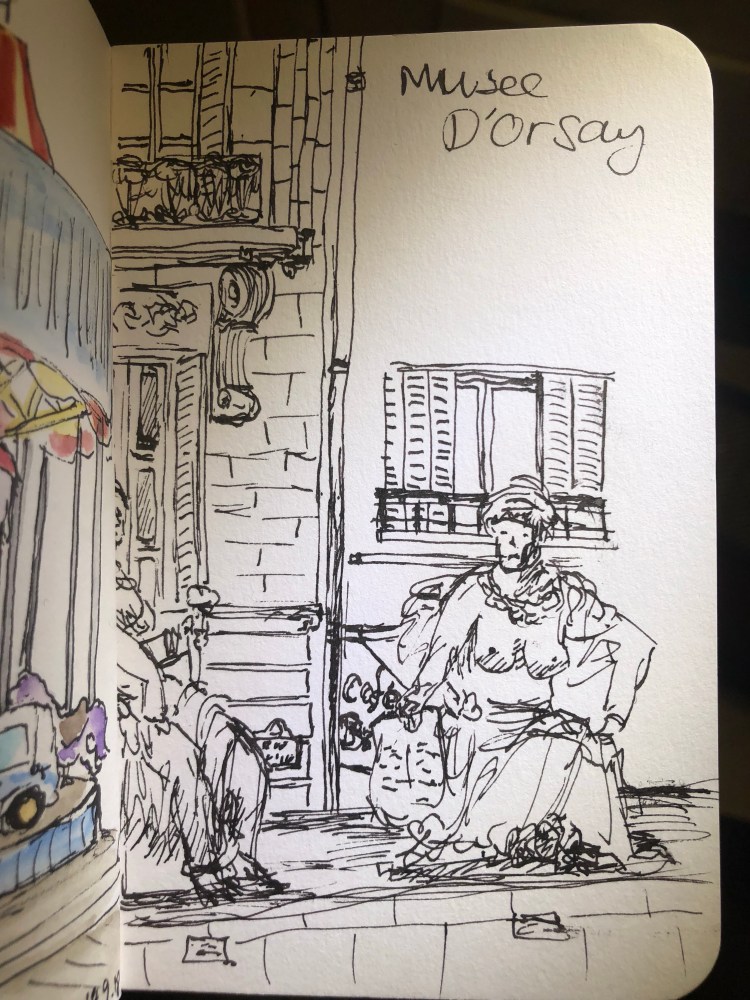
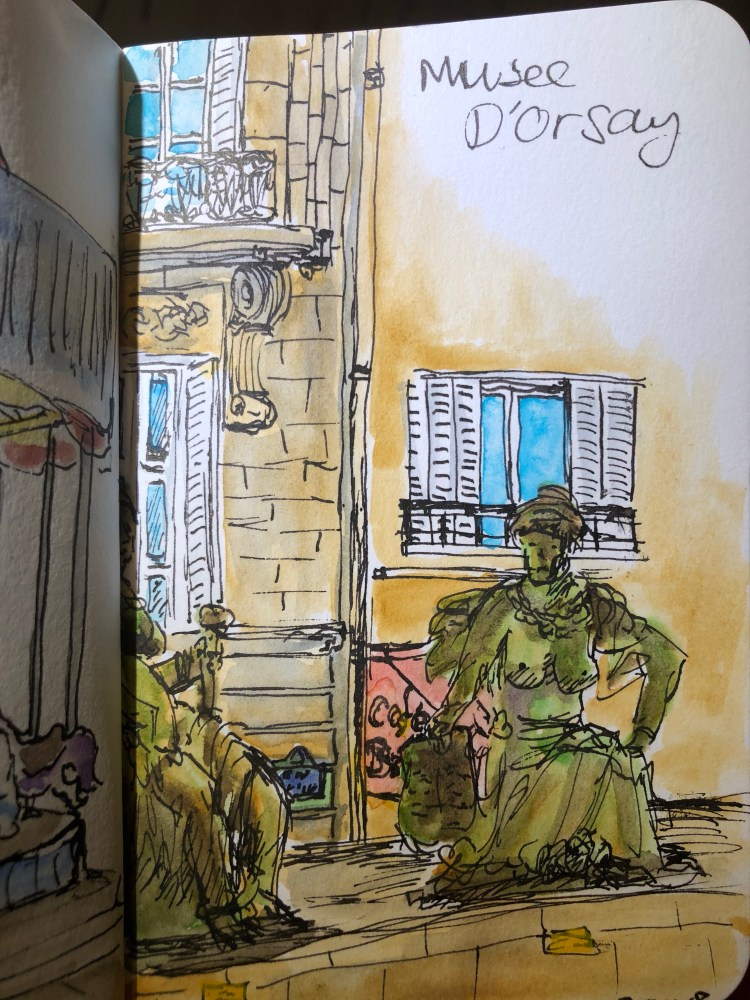
View from the queue to the Musee d’Orsay

Made this quick sketch while waiting outside the Musee d’Orsay, and coloured it later with watercolours.

Stillman and Birn Alpha, Super5 0.7 fountain pen, Rohrer and Klingner Lotte SketchINK, Schmincke watercolours.

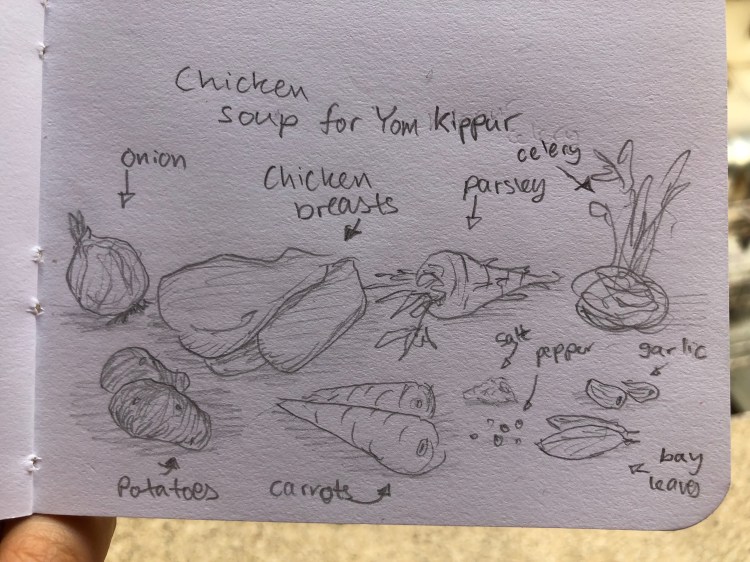
Daily doodle: chicken soup

Preparing food for the Mafseket meal for Yom Kippur. Chicken soup is obviously a must.

Field Notes Signature sketch book with a Tombow Mono 100 F pencil.

Pho

Had Pho for the first time today, and it was strange but good, especially as a post run meal. It’s surprisingly difficult to find Pho in Tel Aviv, but maybe more places will offer it when the weather cools down.

Daily Doodle: Iron Man

Watched the 1st “Iron Man” movie again today, and I forgot how funny it was.

Field Notes Signature sketch book, Blackwing 16.2 pencil.

Beginner’s Tips to Watercolours, Part 1: How to Build Your First Palette

Watercolours are scary to work with, because unlike other drawing mediums (except ink washes), they have a mind of their own and don’t stay where you put them, and they don’t mix like other mediums, because of their transparency. There’s also a lot of very cheap, poor quality watercolours out there that the beginner may be tempted to buy, that will only be able to produce “grainy” or washed-out drawings. So, here’s how to build your first watercolour palette:

Which company should I choose?

Any company that has artist grade watercolours that has several series of paints, with different price points for each series, is a good choice. The key word is “artist” and not “student” grade, and that Cobalt Blue (expensive) should not cost the same as Yellow Ochre (cheap).

Quick explanation: student grade pigments are low quality pigments whose only winning quality is that they’re cheap. Your time and work are worth more than that, trust me. Artist grade pigments are much higher quality, and since we live in a “post truth” world, don’t trust the label, check that there’s a price difference between different pigments. Certain pigments cost more, and the companies that use them want you to pay for that. Usually companies will have about 4 “series”, with 1 being the cheapest, and where you’ll find most of the browns, and series 4 being most expensive and where you’ll find most of the blues and some yellows and reds. Don’t fall into traps like “this is a Japanese maker,” or “these are hand made,”  — every good quality maker will have grades to their paints. It’s not a “Western” or “Big Company” thing — it’s economical common sense.

OK, artist grade and several, differently priced series, but really, which company should I choose?

It depends what you’re going for and where you live. If you live in the US, Daniel Smith is a good option, since they’re the most readily available. The problem is they come in tubes, which isn’t the most economical or convenient of ways to start working with watercolours. If you want to start with Daniel Smith you’ll either need to buy empty half-pans and fill them, waiting for a few days for them to set, or buy a plastic watercolour palette with wells, fill them and wait for them to set.

Winsor and Newton Professional half-pans are probably the best place to start, if you can get them (and they’re pretty widely available). These are excellent and affordable. Just avoid the Cotmans paints, which are their student grade ones. Make sure that there’s “professional” printed on the label. They are the goldilocks of watercolour pigments

Schmincke Horadam (not Academie) is what I use, and is the favourite of many watercolourists as it has the most vibrant pigments that are the easiest to lift and rework. They’re more expensive and difficult to obtain, and if you’re used to other pigments their vibrancy might scare you off at first. (BTW – Schmincke is pronounced shmin-keh, and not schminkee. It’s a German company).

Sennelier is even more difficult to find, and is the opposite of Schmincke, being more subdued and transparent. If you really want to get into glazing, these may be for you, otherwise, I wouldn’t recommend them.

White Nights watercolours are also good, a midway between W&N and Schmincke, but they’re difficult to find, particularly outside of sets.

Which should I pick: Half-Pans, Full-Pans or Tubes?

Half-pans.

Quick explanation: you’re starting out, so half-pans are the best, and should last you for a long, long time, since you use so little pigment in watercolour painting. This will also let you experiment with different pigments later on, maybe even switching companies without breaking the bank. When you get into “heavy” use, you can switch to full-pans, or tubes, which are the most economical of options, if you actually get to use them.

Which colours to choose?

Start with these: Lemon Yellow, Raw Ochre, Burnt Sienna, Raw Umber, Ultramarine Blue, Cobalt Blue, Sap Green, Alizarine Crimson, Payne’s Grey (blue tone).

Every company will have them, although their names may differ a bit.

Later on I’ll discuss how to understand pigment labels (so you can pick your own), and which ones to pick for different kinds of drawing, but with these you’ll be able to draw landscapes, portraits and still-life, and they’re all transparent pigments, which means they mix well and glaze well, without creating “muddy” effects.

Quick explanation: this is the standard, classic watercolour palette, except that I’ve switched a few pigments with others that mix better. That’s why there’s no Cadmium Yellow or Cadmium Red here. Payne’s Grey is God’s little gift to watercolourists — you’ll use it a lot for shading and mixing, and as an added bonus, except the Cobalt Blue, these are all series 1 and 2 paints, which make them cheap.

Tel Aviv Port’s Carousel Sketch

Tel Aviv Port’s baby carousel. Quick sketch during Urban Sketchers Tel Aviv’s sketch walk.

Stillman and Birn Alpha, Staedtler pigment liner 0.7, Schmincke watercolours.