Black Labrador Retriever Sketch
This one belongs to a former colleague


A blog about writing, sketching, running and other things
This one belongs to a former colleague
10 minute sketch using a Staedtler 0.8 fineliner, Faber Castell Pitt brush pens and a pocket watercolour Moleskine notebook.
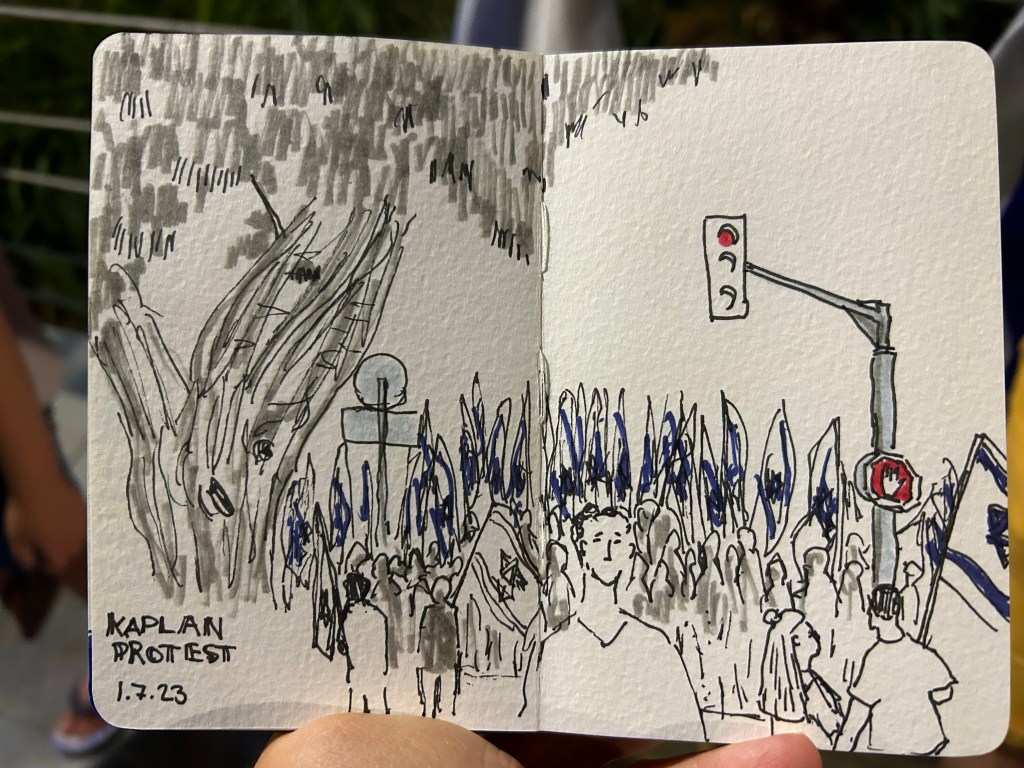
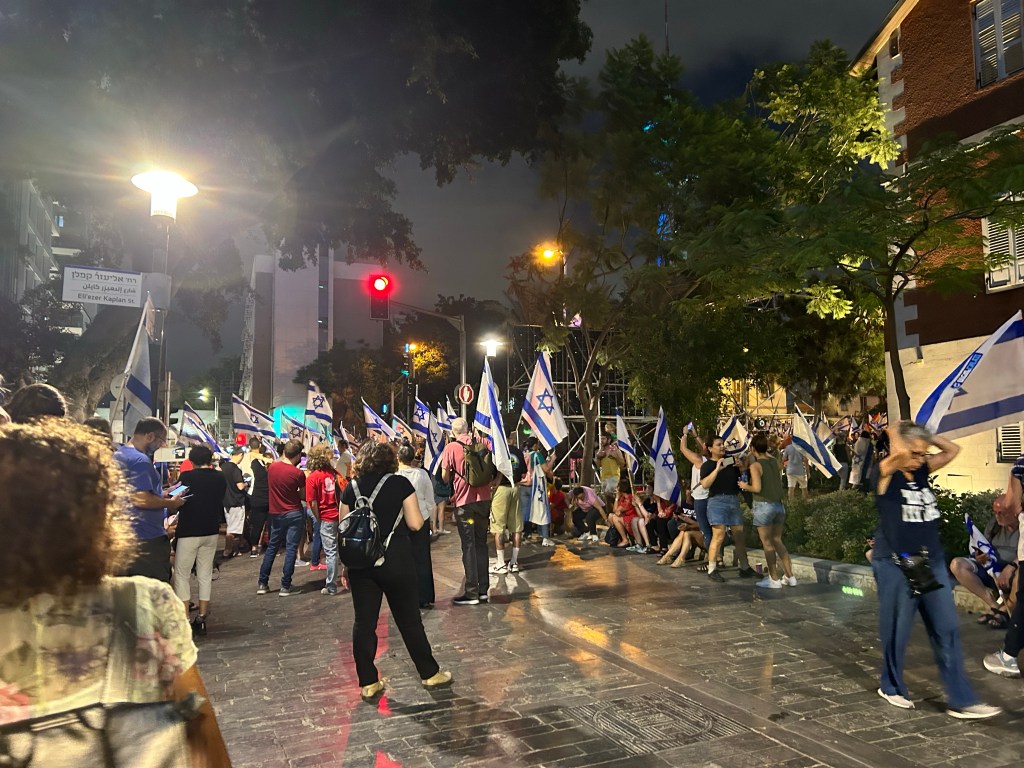
I went to a very special Urban Sketchers sketchwalk and drink and draw today. The event celebrated the end of a special sketch swap between a group of sketchers in Barcelona and in Tel Aviv, and there were sketchers there from all over the world (Spain, the Netherlands, Canada, India, etc). We met at Gan Meir in central Tel Aviv for a sketchwalk followed by a drink and draw at the top of Libling house. It was hot, it was humid, and I needed a break by the time I got to the garden, so I went to the nearby Stephan Austrian Bakery for a cold coffee and a Sachertorte, a rare but much needed treat.

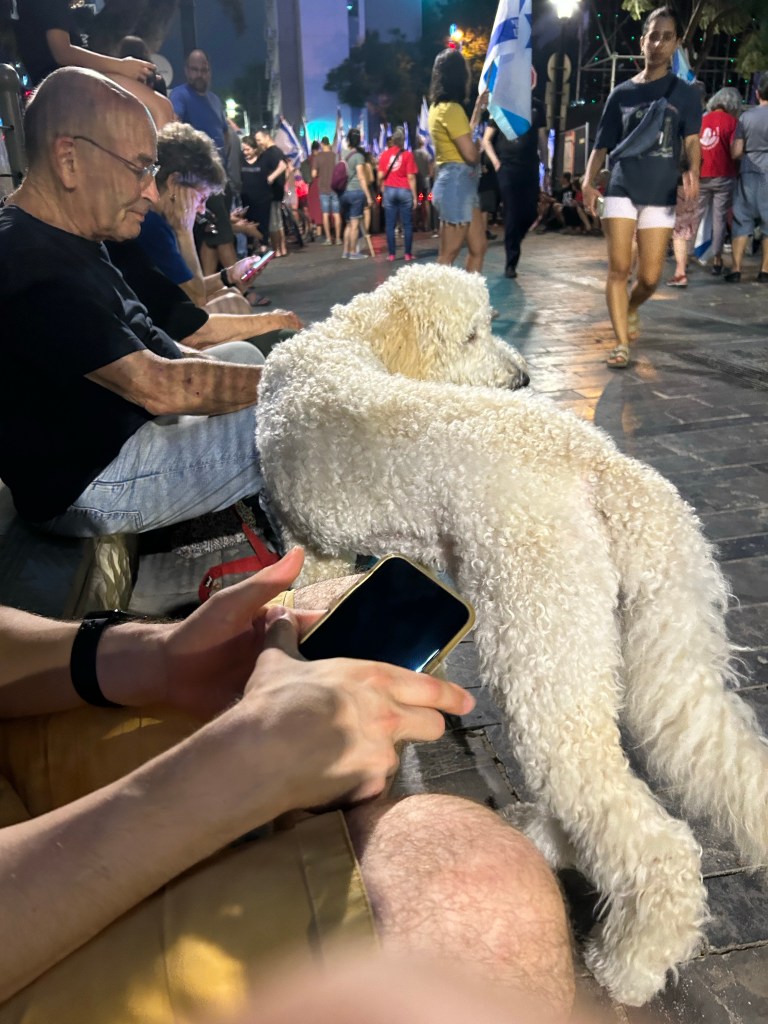
A lot of people came in to pick up an ice cream cone, including this little fellow:

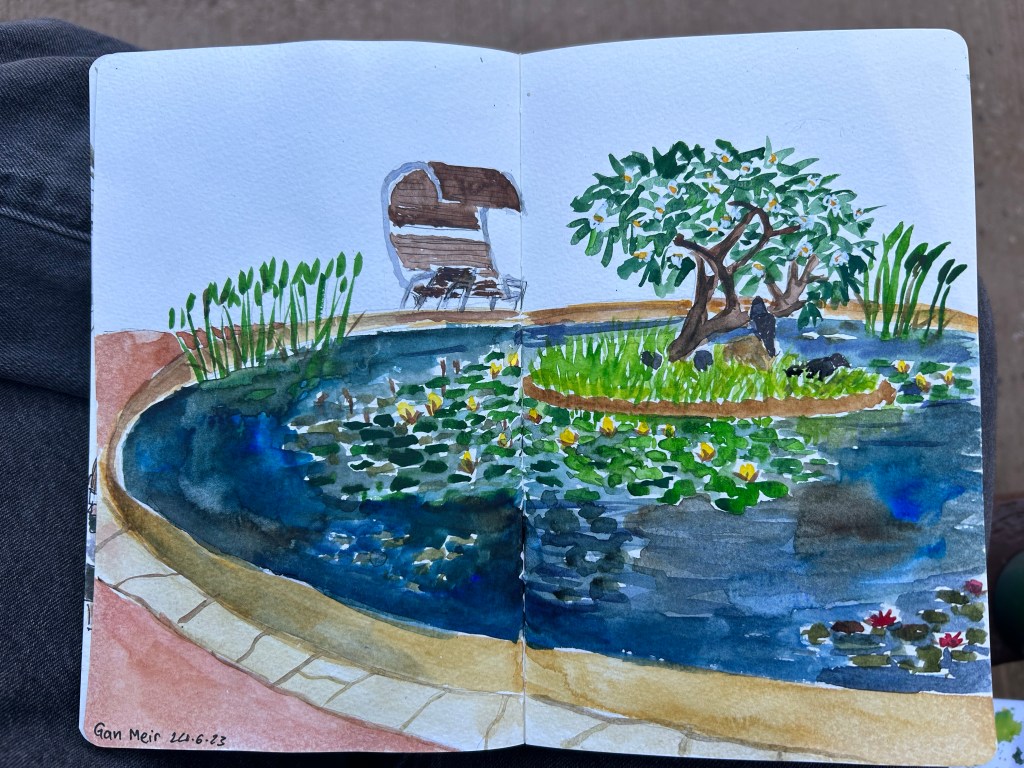
I then went back to the garden and started sketching the waterlily pool:
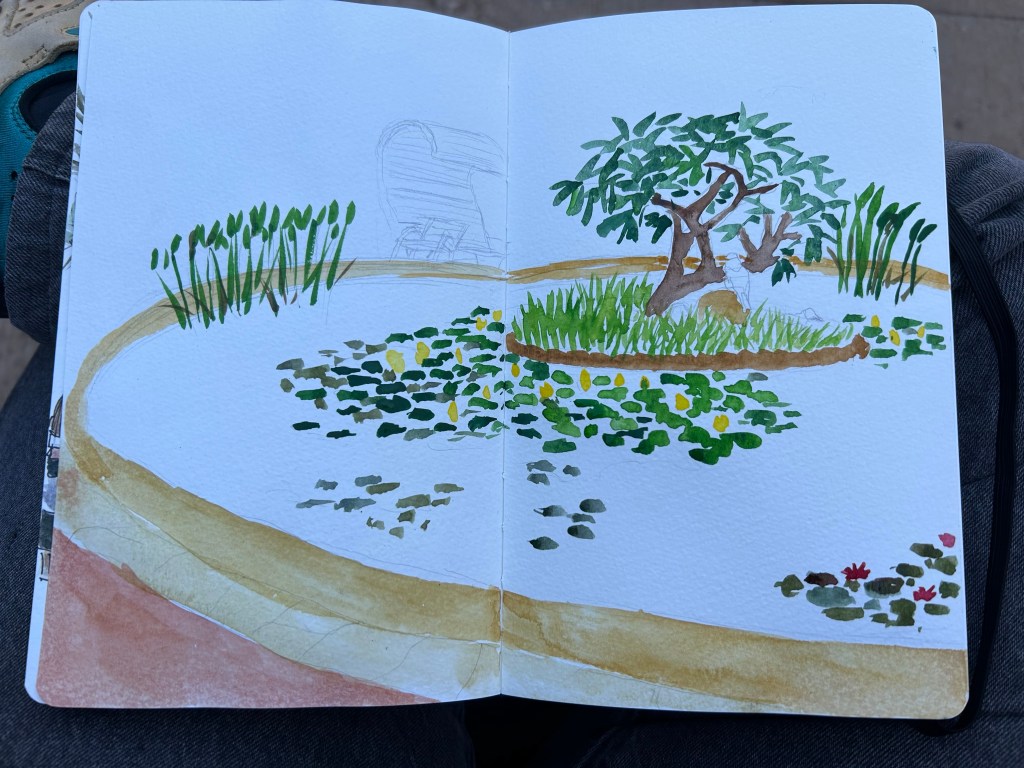
There was a group of ping pong players nearby, and I got hit by balls several times. I was also visited by several curious children. It’s all part of the Urban Sketching charm.
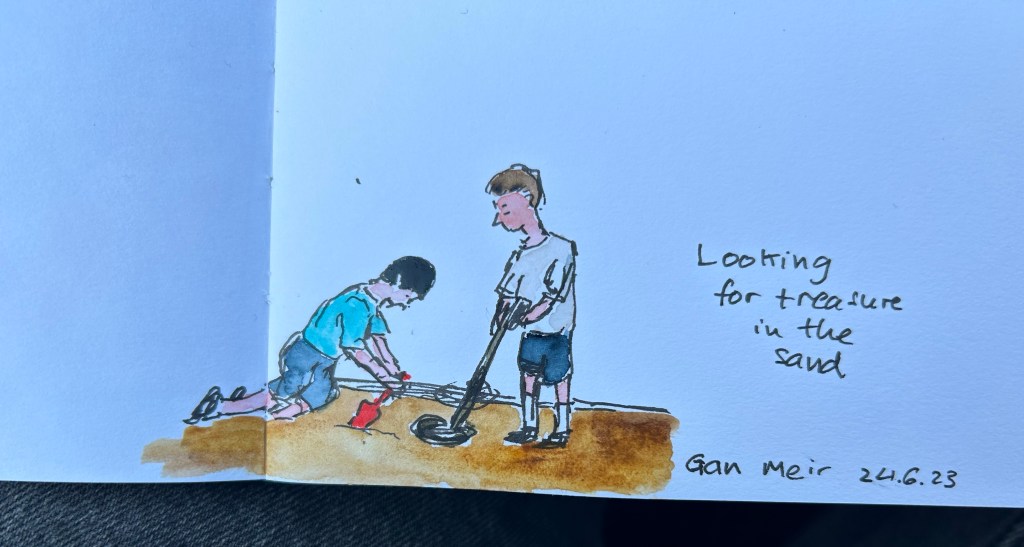
I then saw a group of kids with a metal detector, searching for treasure in the sand, so I sketched them quickly:
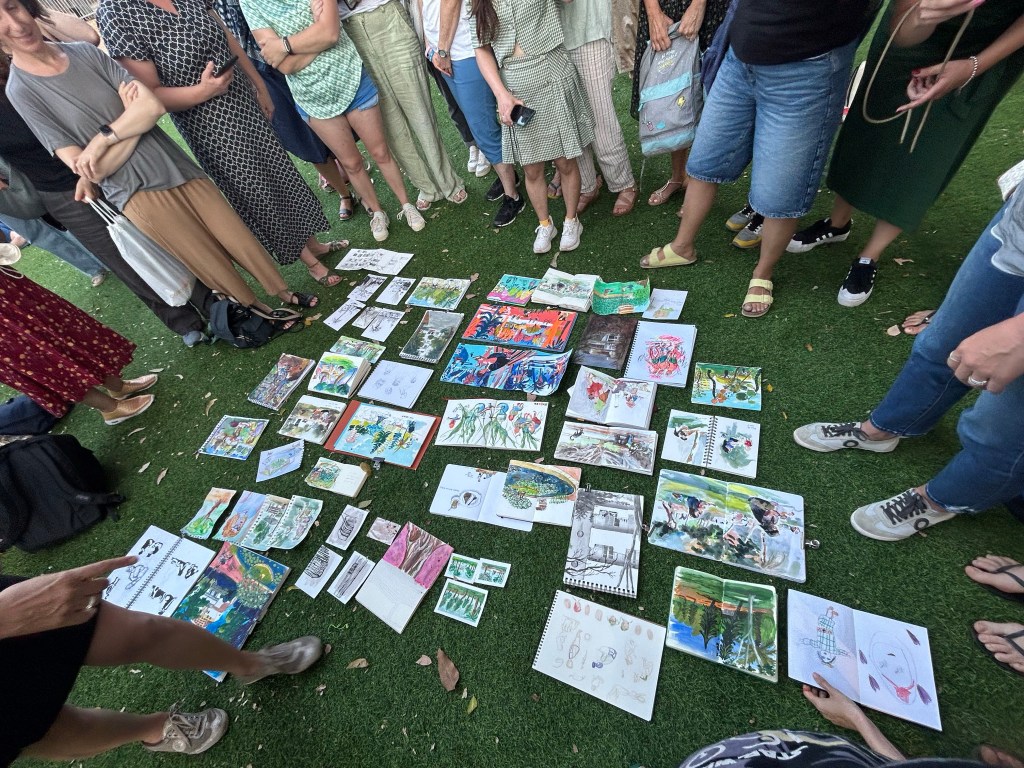
This was our sketchbook throw down, and I loved seeing all the different styles and sketch subjects together,
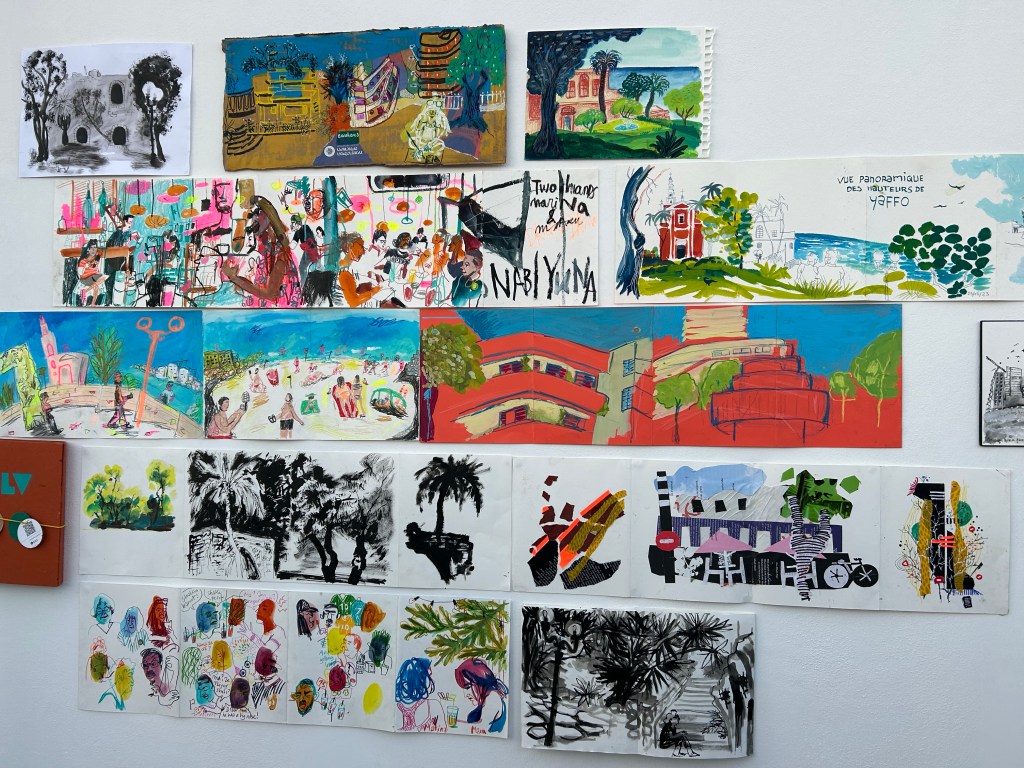
We then went to Leibling House nearby, and there saw some of the sketch swap participants’ work. We had a party on the roof, and I got to talk to sketchers from all over the world, and see so many different sketching styles.
I had to leave early, but I did get to check out Leibling House and see their Frankfurt Kitchen, which is pretty amazing:
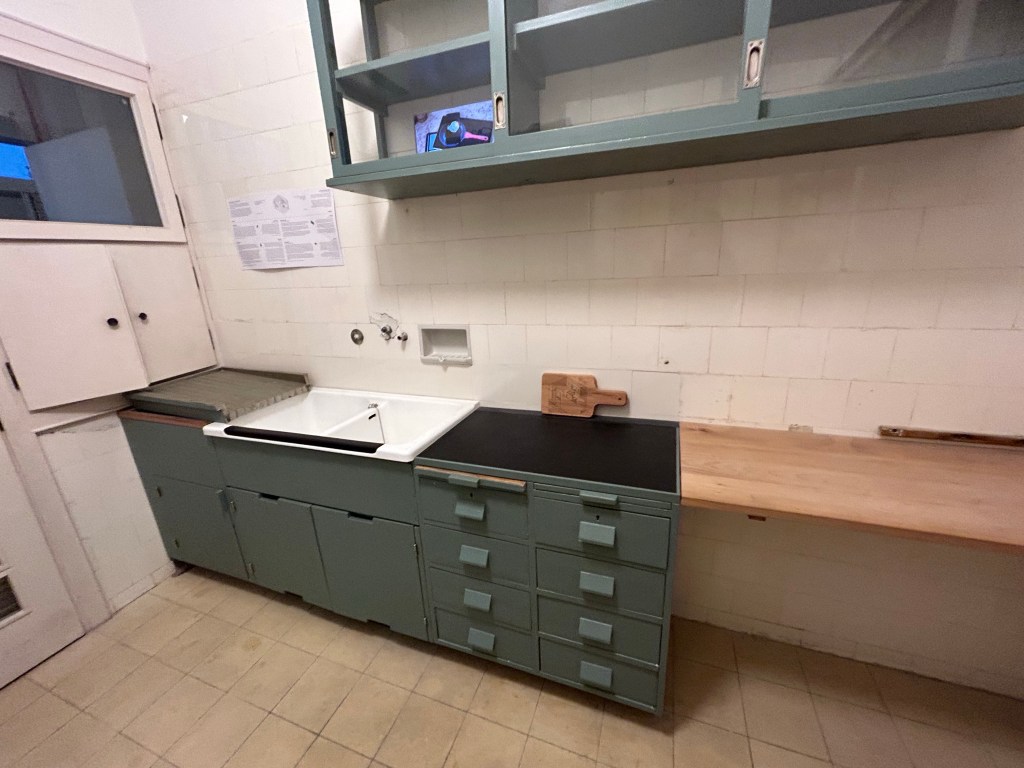
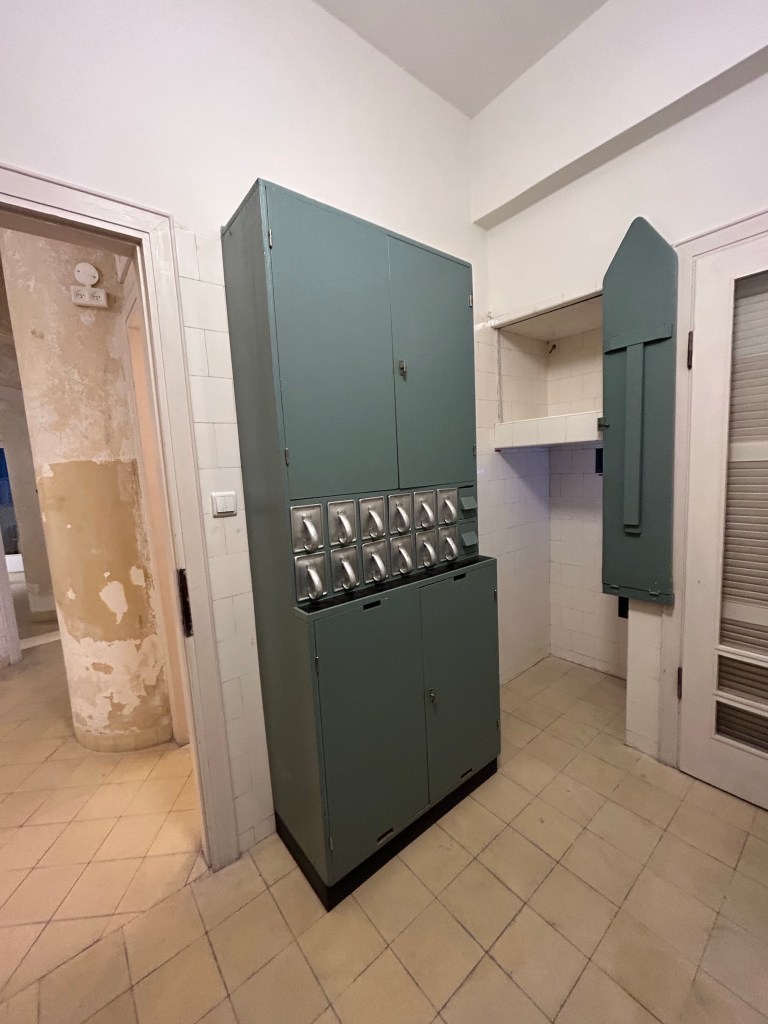
What struck me most is how the sketchers from abroad saw and sketched the same tired old local monuments and tourist attractions. Through their work I got to see them with new eyes, and it made me want to visit them and try to sketch them myself. I also got to see Leibling House for the first time, and I plan on returning to it in the future, as it’s a wonderful museum and exhibition space.
This review has been languishing in my drafts for the past two months, as life (and particularly work) has gotten so hectic. As I wrote the Franklin Christoph x Stilo e Stile 03 Sparkling Rock dry today, I thought that it was about time to finish this review and publish it.
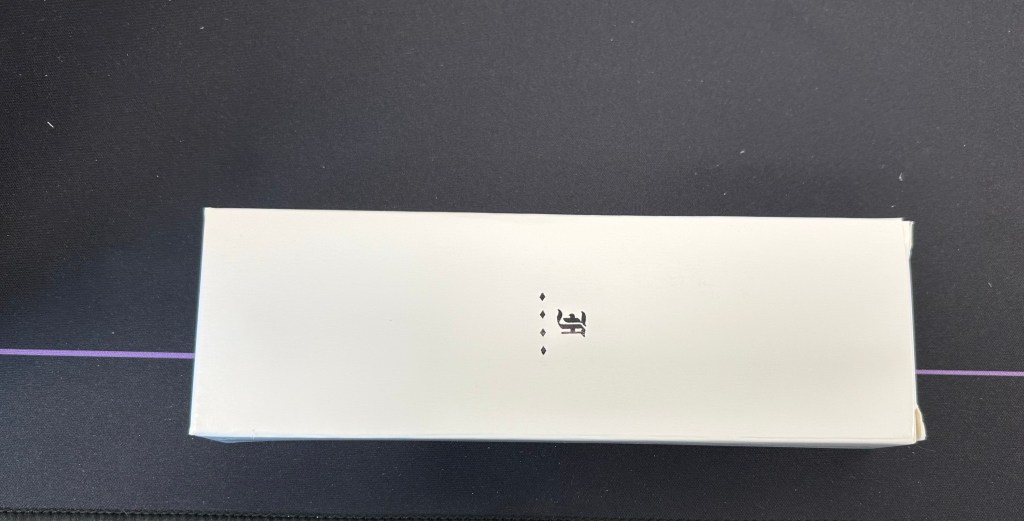
I don’t write much about packaging since I don’t care much for it, unless it is clearly overdone and something that unnecessarily added to the price. Franklin Christoph’s packaging is one of my favourites as the outer box is simple and elegant enough to be sent as a gift to someone, without being flashy. But what makes it even better is that many of their pens come with a pen pouch. These pouches are fantastic, and the one that I got features a velvety interior that protects the pens from scratches, and a grey, denim-y like external fabric that I really like.
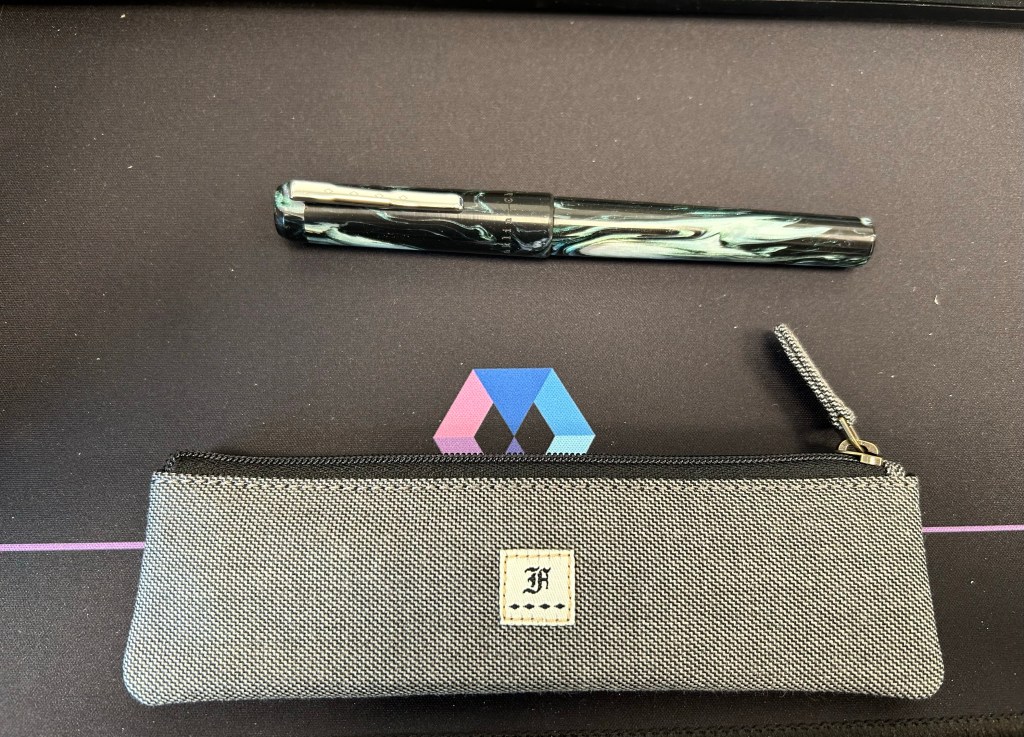
This collaboration between Franklin Christoph and Italian pen store Stilo e Stile is a model 3 pen with a gorgeous black, white and green resin with chatoyance, sparkle and a great deal of depth to it. Photos flatten it out and do it no justice. It’s a breathtaking material.
I purchased an extra-fine nibbed pen, and used it for writing and a bit of sketching using the Sailor Studio 224. The 224 grows a bit darker with time, but still features a lot shading and some gorgeous dual colouring. I was worried that it would be too light to be readable, but that was not the case.
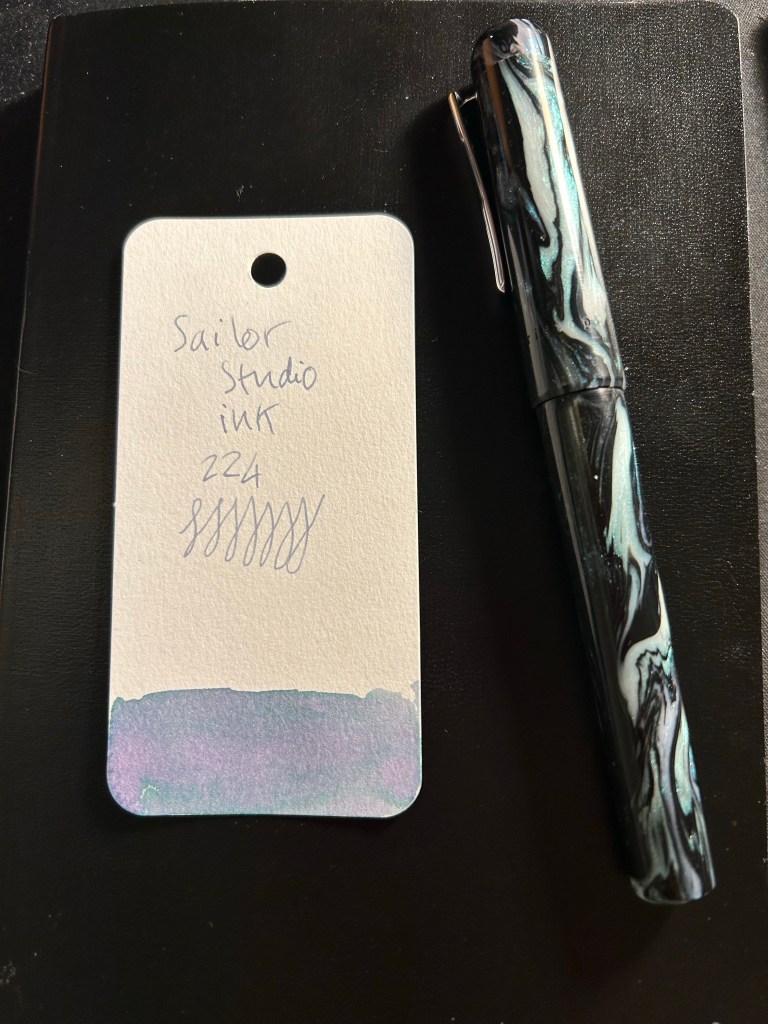
I have a few Franklin Christoph pens and I love the pens that they make, but this is the first Franklin Christoph pen that I have that has a pen clip. So while the model 03 is as well made and well balanced as the other Franklin Christoph’s I’ve tried, I did notice that the finial above the clip had a tendency to screw itself a bit loose sometimes. It never got to the point where it screwed off and got lost, and I doubt that it will, so it wasn’t really an issue, just something that I noticed. The clip is secured to the cap with a screw, and is robust and springy, and completely unaffected by the state of the finial.

This is the Sparkling Rock 03 as I used it, uncapped and unposted (you can technically post it, but I don’t see why as it’s long enough and clearly better balanced to be written unposted), and it is perfectly sized to be comfortable for long writing sessions. Unless you grip your pen with your fingers right on top of the nib, the two ridges in the end won’t bother you. I found them useful as they helped me position my hand better.

The nib unit is a standard number 6 nib, and screws out easily, for both cleaning and swapping out. The pen itself, like all Franklin Christophes, is a cartridge-converter, and comes with a good quality converter.
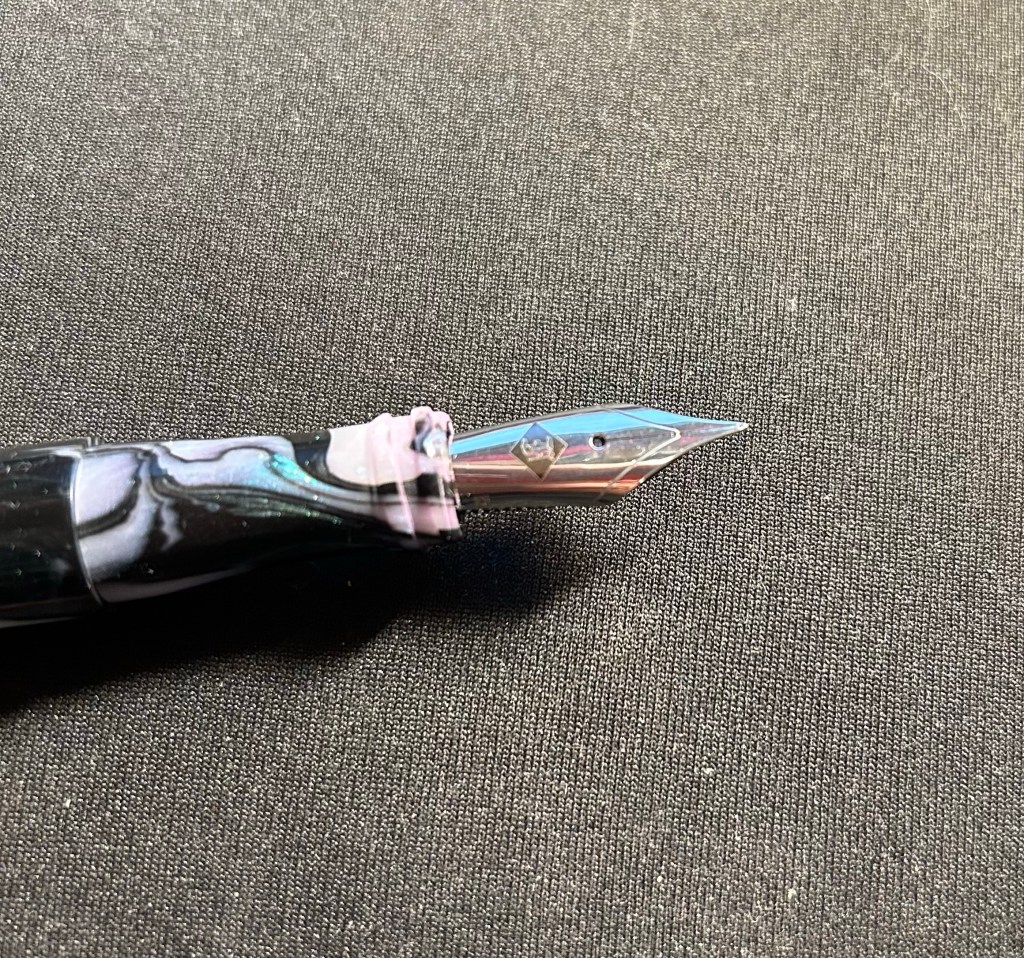
This brings me to the reason for this review: in a pen market that features ever increasing limited-editions in ever increasing prices, Franklin Christoph offers a refreshing alternative. You can go to their website, find a variety of pen shapes in a variety of resins, know that you are getting a very good quality pen that will be a breeze to clean and maintain, and in many cases to convert to an eyedropper if you so please. And the prices aren’t eye watering. You can even splurge on an interesting nib grind, allow yourself to experiment a little, knowing that in the worst case you can easily swap out a nib on your own. It’s the ultimate fountain pen for those venturing out of the beginner pen group and wanting to experience something better, without paying gold nib prices or going the vintage route. It’s also very tempting to collect more and more of them, as you try out different shapes, sizes and resins, which explains why there are quite a few members in the 50th pen club (after buying 49 FCs you get the 50th, personalized, and for free).

Trying out a new sketching setup so I decided to sketch Belle. She’s a young Australian Shepherd that belongs to a colleague and regularly comes to the office.


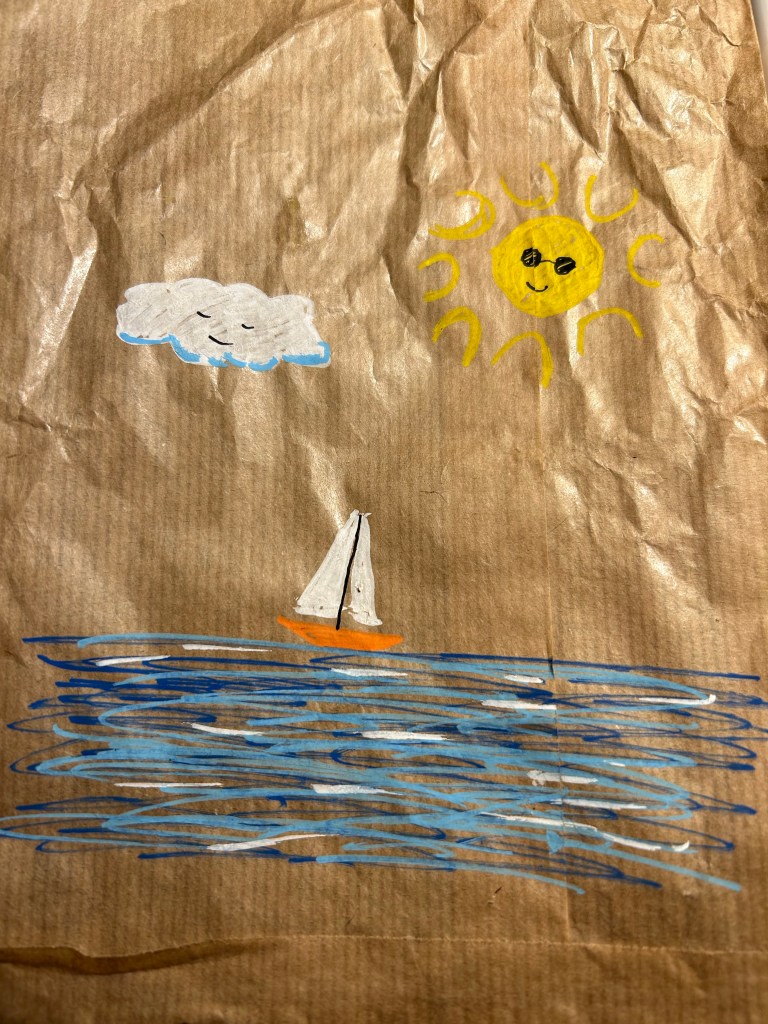
Had a sandwich, had some Posca paint markers, decided to doodle.
Good morning!
So after writing this post about the physical side of building a new watercolour paint box, here is my updated palette. I’m using a new Moleskine Portrait Watercolour Sketchbook as my sketchbook of choice for the watercolour part of Liz Steel’s teacup course (that starts today), and so I used the first page to create an index for my current palette.
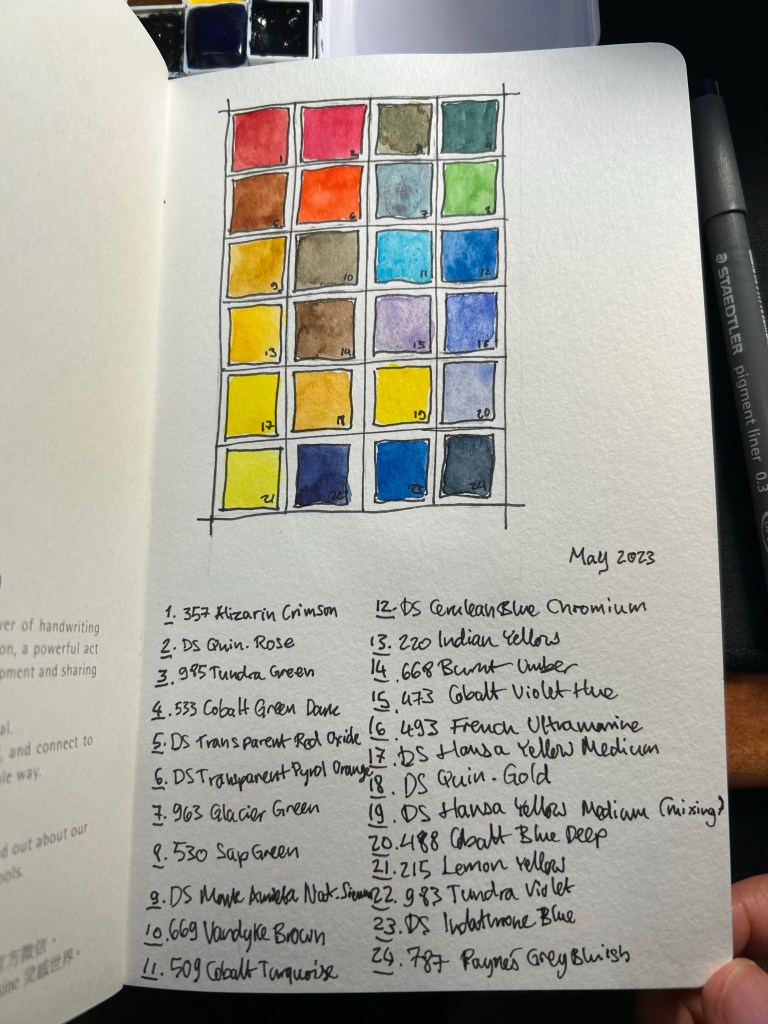
Every watercolourist’s palette is unique and full of choices that reflect their subject matter preference, the place they live in, and various personal idiosyncrasies. Please don’t copy anyones palette as-is (including mine), but rather understand the artist’s choices and tailor your palette choices to your own needs. To this end, I will explain some of the choices behind my paletter.
There are 24 half-pans in my palette, and 23 unique colours. Daniel Smith Hansa Yellow Medium now appears twice in my palette, once for mixing and once for using as an unmixed mid warm yellow. Yellow paints get dirty if you even look at them, and they are difficult to clean after a dab of this or that paint made its way to them. Of the three yellows in my palette I use DS Hansa Yellow Medium the most for mixing, which is why I opted to have a second half-pan of it this time (it’s a new change that I’m trying out).
Of the 23 paints, 15 are Schmincke Horadam and the rest are Daniel Smith. I’m pointing this out so that you feel comfortable mixing between paint manufacturers on your palette. This can be done so long as you are using the same grade of paint in each maker (artist grade, for example).
There are some classic examples of watercolour palette building in this palette and some that are a bit off. There are warm and cold sets of yellow (Hansa Yellow Medium, Lemon Yellow), red (Quin. Rose and Alizarin Crimson) and blue (French Ultramarine and Cobalt Blue deep), and there’s a rather standard set of earth tones (Pyrol Oxide, Monte Amiata Natural Sienna, Van Dyke Brown and Burnt Umber) but there’s some weird stuff too. I’ll be focusing mostly on the weird stuff.
There are three greens in my palette. I sketch mostly landscapes and having premixed greens saves a LOT of time. Of the three greens I use Sap Green the most, either by itself or lightening it with yellow or darkening it with blue. It also has a brightness and vivacity that you cannot obtain by mixing your own green. The two other greens are opaque (which means they don’t mix well), and cover two very common and difficult to mix green shades. Schmincke Tundra green is part of their super-granulating series, and has some pink undertones to it. It also covers a wide variety of olive coloured local plants. The Cobalt Green Dark is a brand new addition to the palette, replacing Schmincke’s forest green. This paint works as an “artificial” green, for things like benches and fences that were painted green, and a greyish-green for the many greyish-green local plants.
Then there are some “magic” paints. Schmincke Glacier Green is on the palette as a cool “glass” and sea blue, and it’s super-granulating and dual pigmented. You can see the pigment party going on with it in my swatch of this colour.
Liz Steel has influenced me to add an orange and a turquoise to the palette. They bring joy to the painting, the turquoise is useful as “glass” and “windows” when I want something brighter than the Glacier Green and the orange paint is much brighter and more alive than any mixed orange that I could ever hope to create. It’s useful to add a splash of colour to a painting, to help focus the eye in a certain area. The two Daniel Smith blues on my paletter are also Liz Steel inspired, and at least one of them may be on its way out due to low use.
Paynes Grey Bluish is one of my most heavily used pigments, as part of sky and sea scenes, denim jeans, as a shadow colour, for asphalt and to darken other mixes. A must have for me.
The two violets on the palette are also personal choices, though the Tundra Violet will likely be replaced with something else in the near future. Purples are very difficult to mix without getting muddy not registering as purple, which is why the Cobalt Violet Hue paint on my palette. The super-granulating Tundra Violet is much less useful, and may find its way out my palette.
I hope this gave you some insight as how to think about the pigment choices that you make for your palette. Again – create your own palette and don’t just force yourself to use a copy of someone else’s
The wonderful Liz Steel is starting a new teacup sketching course, and I decided to enrol to it. I don’t have many teacups, but I do love the ones that I have, and I think that they are interesting objects to sketch. As Liz points out, many teacups and coffee mugs have vivid memories tied to them, and they oftentimes have interesting shapes, colours and patterns. I was also looking for a way to kickstart my sketching again, and as this is a short course (just 4 weeks) I thought that this was a good place to start.
As is customary in Liz’s courses, I created a “pre course” sketch: a teacup sketch to demonstrate where I’m starting from. I started with a pencil sketch and then worked over it with a Staedtler pigment liner only to have the whole thing ruined when I used a new eraser that was too aggressive for the paper. You don’t often get to see failures on display, so I’m attaching the photo of my failed first attempt so that we can all learn from my mistake.
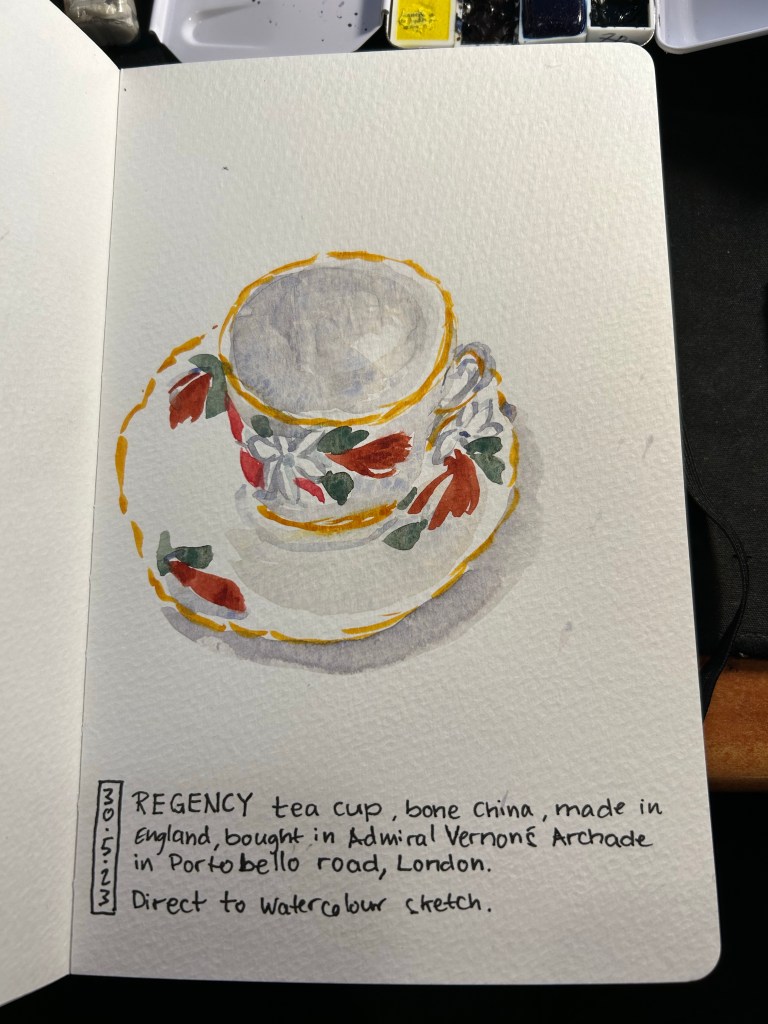
I then decided to risk going directly to watercolour. The teacup I sketched was both complex in terms of shape and pattern, so going this route was not something I would have chosen if not for my initial failure. The result came out better than I expected. It’s far from perfect but it’s not terrible. A start that I can improve upon, at the very least.
Here is my failure sketch. You can see the mess of the paper. But if you don’t experiment and try new things, you don’t know what works and what doesn’t. That eraser is relegated to non-watercolour paper from now on, and it was a lesson worth learning on a sketch of this kind and not on something more precious.

Don’t be afraid to try stuff out. It’s worth it even if the result isn’t what you’d term a success.
I’m working on my backlog of posts after about a month of hiatus (work and health related) so here’s a look into more of my haul from my latest London trip.
Muji happened to have a sale on its standard pen sets, so I bought a pouch of these 0.38 gel pens (I think that Zebra makes their refills but I’m not sure) to have around. There are 10 pens in the set, and my plan is to bring them into the office to have them around as occasional highlighters, pens to doodle with or pens to loan with no expectations of seeing them again.
The red Olfa Touch Knife was an impulse buy and is the thing I use most from this bunch. I used it while gift wrapping books, I used it to open packages, and I’m using it now to open Lego bags for my current build (the large Disney Castle). This is a nifty and handy little tool and I’ll probably buy another one at some point as a backup.
The bronze paper clip is just a nicer version of the clip that I use to keep my pocket Stillman and Birn Alphas shut, as they don’t come with any kind of elastic closure.
The gold bics are from Present and Correct and they made me laugh. I plan on giving one away to a designed friend, in the hopes that it will make her laugh too. I used to use them so much when I was a teenager (before gel ink pens became widely available) and I hated them so much that having a gold one is just beyond perfect.
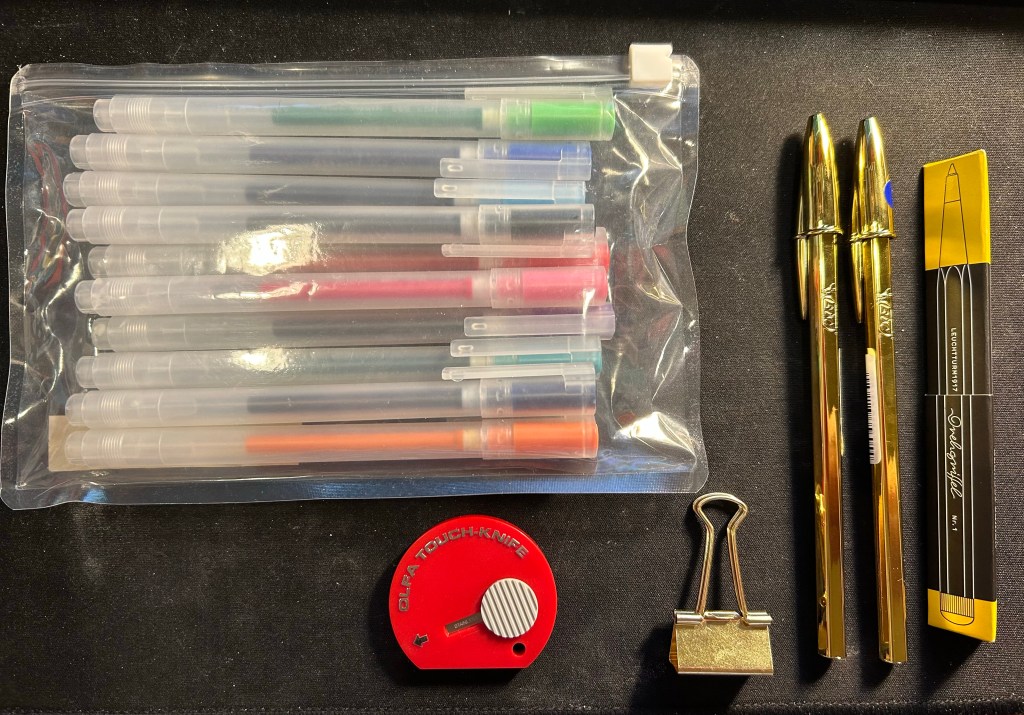
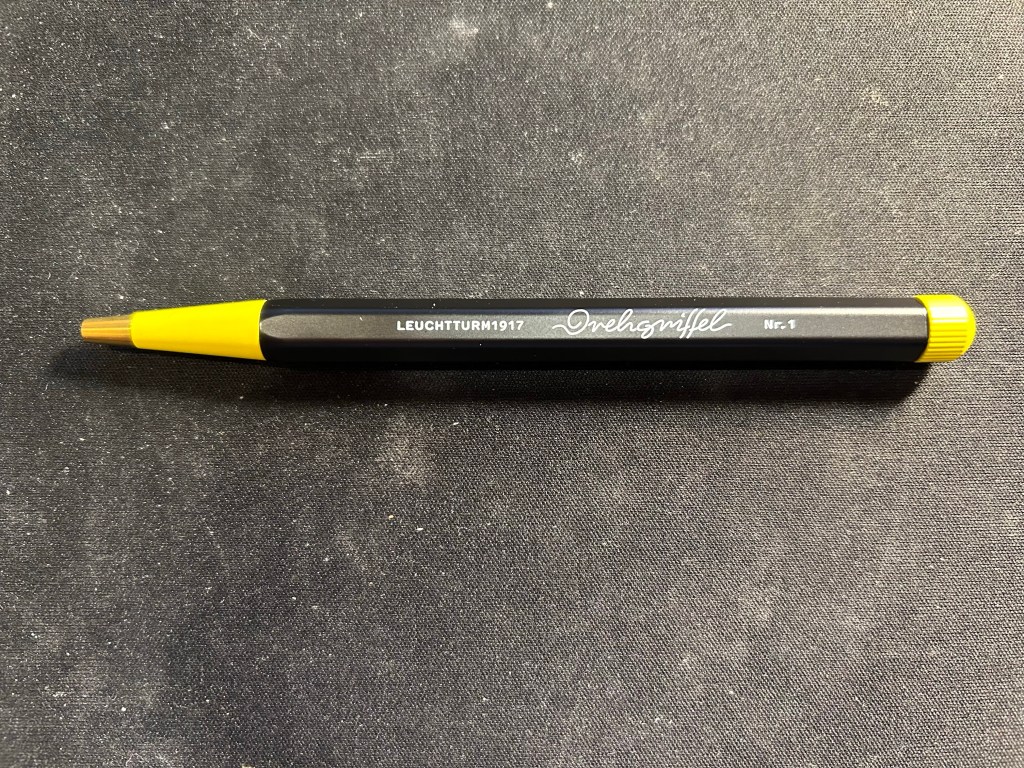
The black and yellow pen is the Bauhaus edition of the Leuchtturm1917 Drehgriffel Nr. 1 ballpoint. It’s a twist mechanism aluminium and brass hexagonal ballpoint pen that comes with a blue refill. I reviewed the gel ink version (identical apart from the refill) here. I purchased this pen in London Graphic Centre near Seven Dials/Covent Garden, and it was completely an impulse buy. Should you buy one yourself? If you’re in need of a pocketable ballpoint that doesn’t use a click mechanism, then maybe. Ergonomically it’s not the best for long writing sessions, and the twist mechanism doesn’t make it great for quick deployment, so there are better options in the market. The design is very fetching, and if you like it you might be willing to overlook the pen’s shortcomings. The Bauhaus edition was created as a companion to Leuchtturm’s Bauhaus notebooks.
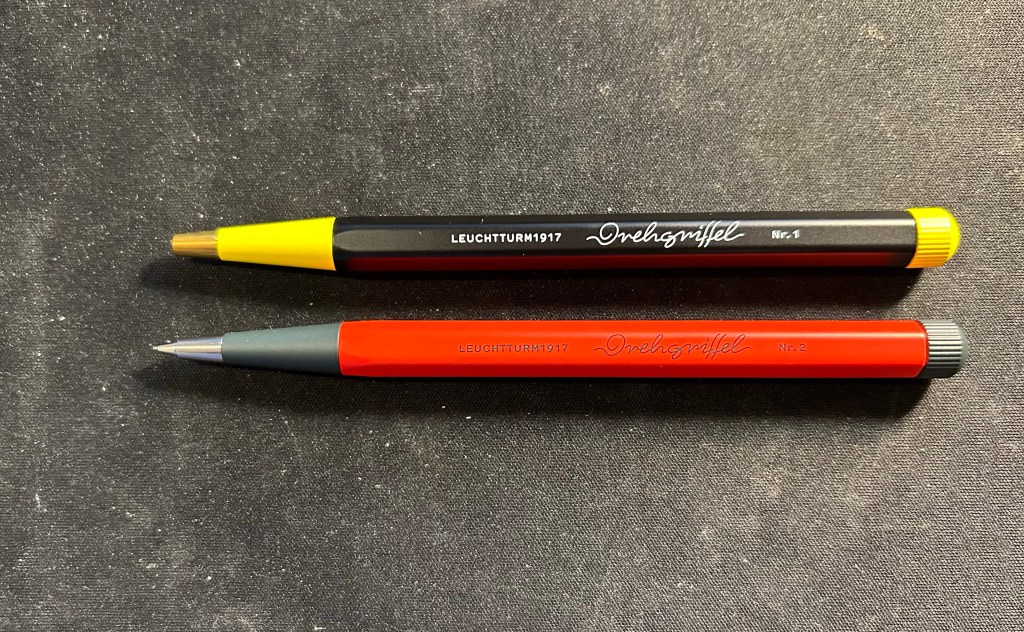
I bought the Drehgriffel ballpoint to accompany the Drehgriffel mechanical pencil that I bought at the same time. The pencil is fire engine red and grey with silver trim, and the pen is black and yellow with brass trim, and the pencil is slightly heavier than the pen, though they’re both the same size.
I also got two carrying cases, one a blue Cordura pen case from Midori. The case is called the two way pouch, and it appears very well made.

The pouch is divided into two identical compartments (hence the name) each with a small divider/pocket inside. It also has a prominent and robustly built handle. I am considering using this pen case for my Caran d’Ache neocolors, but we’ll see.

The second case is a heavily discounted net pouch from Muji. This is going into my travel backpack as a way to keep easily lost bits and bobs together and easily found.

The net is just on one side of the case, which is perfect, as it allows you to see what’s inside the pouch and also have this little bag have some sort of body and structure to it due to the solid side.
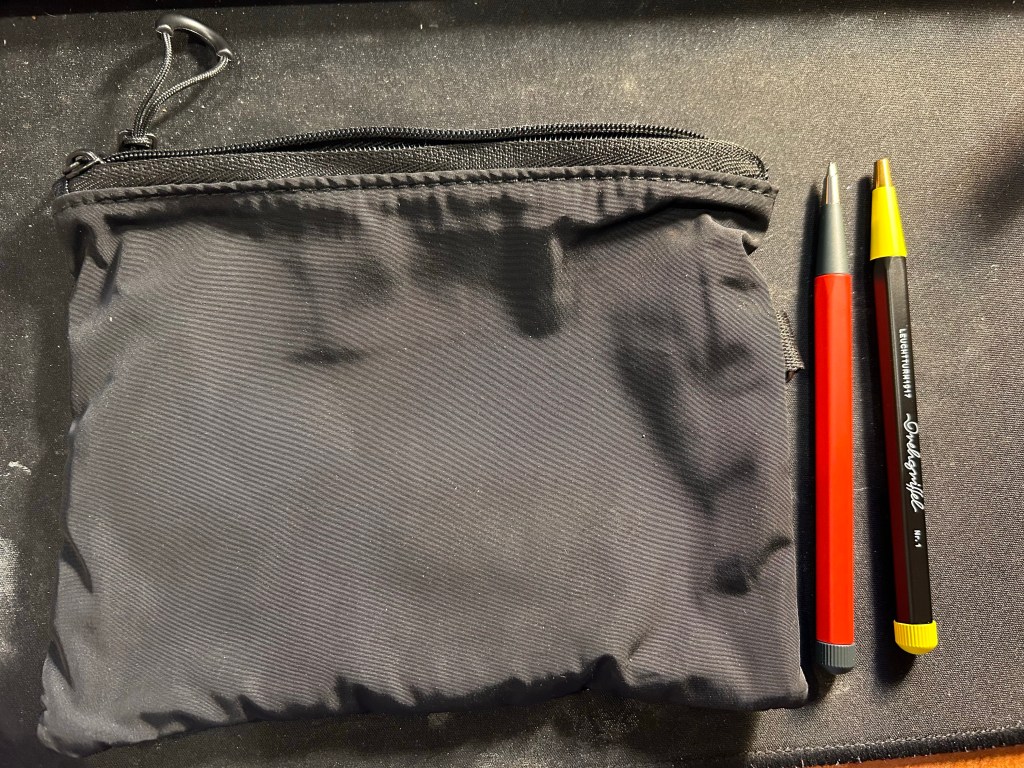
I also bought a solid plastic box for the my neocolors at Muji, but I decided not to use if for them in the end. It was too small for them and they rattled around in it and made a racket every time I walked, and I didn’t like that.
All in all this was probably my most “impulse buy” bit of the trip, and I’m OK with that. Compared to previous years I’ve really toned down my “must try all the pens in the world to find just the perfect one!” tendencies. If you’re reading this I assume that you can relate.
Now to just use it all…
I’ve recently misplaced my beloved watercolour paint box and after searching for it for more than two weeks, I gave up and decided to build a new paint box, with the hopes that the old one will show up one day. Good quality watercolour paint boxes and artist grade watercolours aren’t cheap, which is why I put this off for a while, but they do last for a very long time if you invest a little bit in them.
This post won’t be so much about my palette choices but rather more about the physical properties of the box that I use and the paints within it. If you have had a taste of watercolours and decided that you enjoy the medium and would like to create a long lasting field paint set, this post is for you.
For years I used the excellent Windsor Newton Cotman Watercolour Field Box. The box comes with a set of Cotman student grade watercolours that I gifted away (they aren’t worth your time. If there’s something worth investing in when it comes to watercolours it’s the paints. The order is paints -> paper -> brushes), a handy little built in water bottle and water cup, a sponge, and a foldable brush that is mediocre but usuable in a pinch (you’ll probably lose it shortly after buying the box, but that’s ok). The box officially holds 12 half pans, but in reality you can squeeze 14 half pans in with no effort. If you are getting into Urban Sketching this is an excellent set to have, a nifty little workhorse that will last you easily for a few years. For a very compact size you get a surprisingly large set of mixing areas, and while I’d only use the included water bottle as a backup because it holds very little water, it’s good to have around.
The pros of this kit are many: it’s small, light, well designed, cheap, easy to use, and holds a lot for such a small, pocketable package. The cons are why after three Field Boxes I finally switched over to my current setup: the boxes deteriorate and fall apart after 2-3 years of use at most, they are difficult to clean, and it’s difficult to switch out paints if you’re experimenting with your palette.
The build quality in particular has taken a hit in recent years, to the point where I cannibalise old Field Boxes for parts for the new ones. However, even the old boxes didn’t last for more than 3-4 years, because the plastic would deteriorate and the attached mixing flats would drop off, leaving you with very few mixing space in the end.
Enter my current setup, one that I’ve been using for a few years now: the Schmincke 12 half pan metal paint box, filled with 24 half pans.

There are many pocket sized enamelled paint boxes, but after trying several generic ones, I found that Schmincke’s box is worth the extra money. Generic boxes didn’t have such a good mixing area configuration, and they tended to rust off on me. The Schmincke box can take a hell of a beating without the enamel flaking off, and when working with watercolours, as soon as there’s a chip in the enamel, rust will take hold of your box.
The box comes with an insert meant to allow for two rows of six half pans and a compact, foldable brush in the middle. I take that insert out and toss it. That leaves me the whole box for a whopping 24 half pans, or a mix of half pans and full pans. Here I my usual setup, which is about 60% Schmincke and 40% Daniel Smith watercolours. Some of them are paint filled half pans that I purchased, and most of them are half pans that I filled with paint myself. Buying tubes and filling your own pans is cheaper in the long run, particularly for paints that you use often.
Filling your own half pans with paint is very easy, and also exposes interesting properties of the paints that you use. For instance, Van Dyke Brown takes ages to cure, while all my yellow paints cure super fast. I’ll also note that Daniel Smith watercolours loose A LOT of volume after drying up, shrinking at times to almost 50% of their original volume. It always takes 2-3 passes to fill a Daniel Smith half-pan, and with Schmincke one pass is enough. So you can see the ugly crack in my Hansa Yellow Medium, where the paint shrunk to half its size and I filled the other half of the pan again.
On the other hand, Schmincke’s half pan packaging is infuriating. The pans come wrapped in wax paper which often sticks to the paint as you unwrap it (imagine peeling off a sticker and having bits of sticker left behind). You can see this on the Lemon Yellow on the bottom left and on the Cobalt Blue Deep on the second to last row, on the right. After much of a struggle I got the residue off the Cobalt Blue, but I left it to scrape off later from the Lemon Yellow. It is a hassle to remove these bits of leftover paper, and they ruin the paint.

As there’s a bit of a gap left that allows the pans to travel freely in the box, I cut a bit of foam and put it in the box, creating a friction fit for all the pans. Removing a pan and switching it over is a breeze this way – you can always lift out the foam and then easily remove the paint pan.
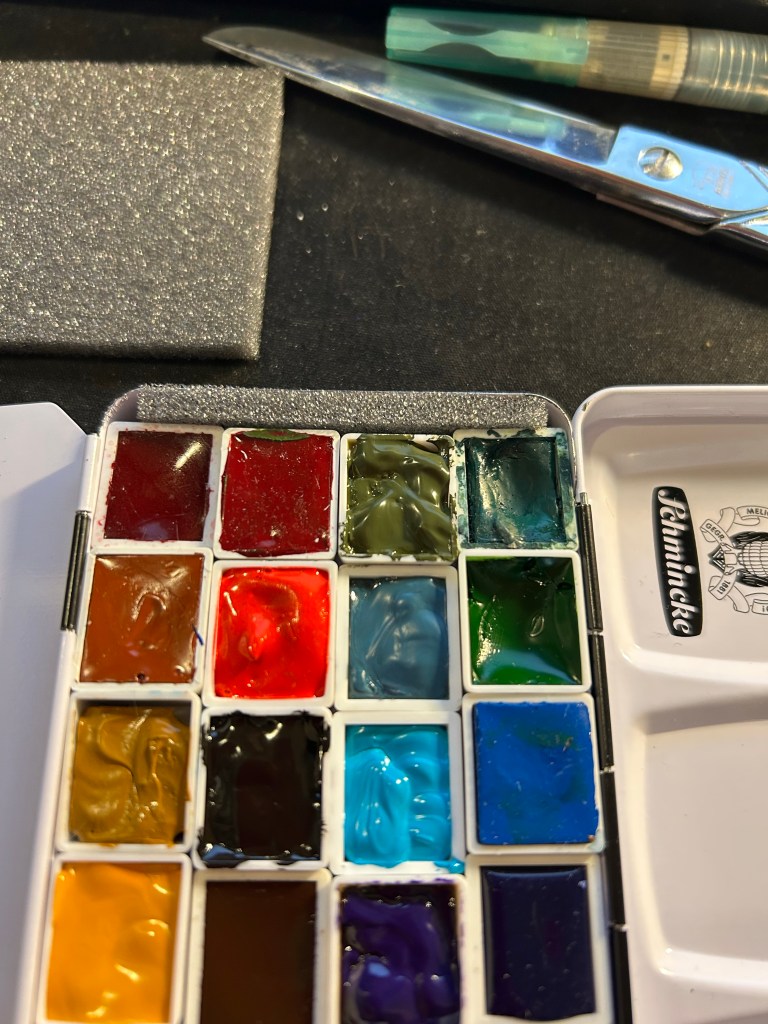
The box has two large mixing areas, one divided into three large wells which I use to mix often use colours or paint for large areas. The second area is divided into six small wells (you can see this all in the first photo of the set) which are good for small mixes. As it’s enamelled metal it’s very easy to clean, and the set is much more robust than the W&N Field Box.
If you like to experiment with your palette (I always have 2-3 paints that I switch out every 3-4 months), and you are looking for an ultra durable compact field set, I highly recommend investing in the Schmincke 12 half-pan box and filling it with whichever paints you choose. Pre-made watercolour sets are always terrible (they include at least 1-2 colours that you will never ever use), and building a set that fits your needs is a crucial step in making your watercolour painting more streamlined and enjoyable.
What watercolour box do you use? Let me know in the comments, as I love hearing from other sketchers about their tool choices.
 Writing at Large