John McPhee is a master creative nonfiction writer. He excels at bringing people and places to life, bringing interest and life into topics that seem at first esoteric or dull (like oranges).
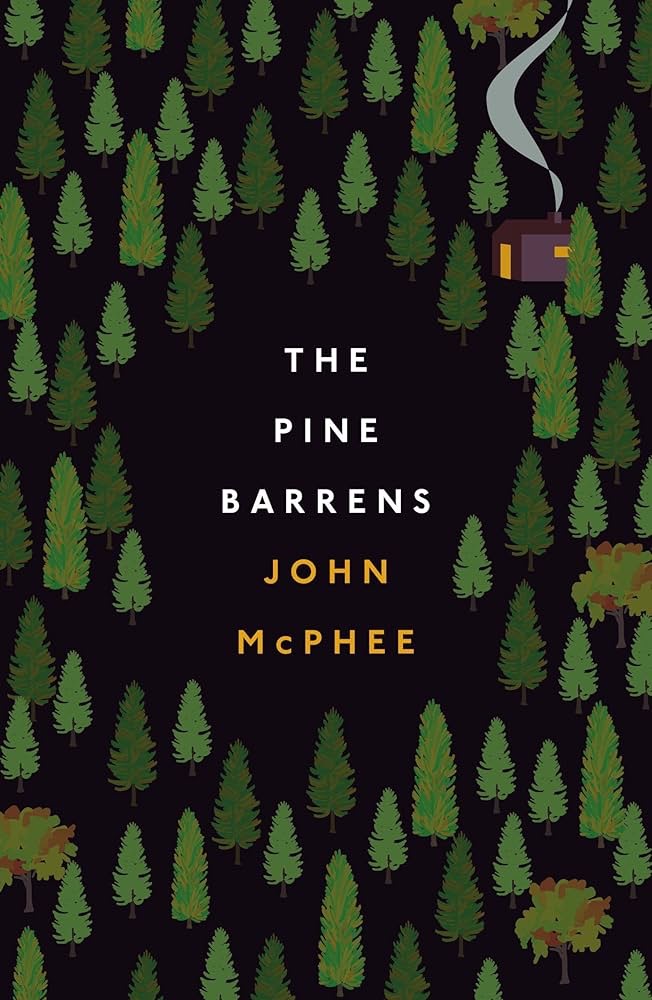
The Pine Barrens is a huge near wilderness sandy pine forest in New Jersey, enclosed by suburban industrial sprawl. A handful of people live there, (“pineys”) many of them living an almost pioneer way of life, steeped in folklore and local traditions. The pine, cedar and oak forest ecosystem is also unique, tempered seasonally by fire, growing on poor sandy soil, with cranberry and blueberry bogs dispersed among them.
McPhee zigzags across the land, painting a portrait of people and places, moving between past and present, science, history, folklore and myth like the master storyteller he is. It’s clear from the elegiac tone of this book that McPhee circa 1967-68 was expecting the place to be gone within a few years. Plans for a monstrous jetport, a sprawling city, industrial estate and housing was in the works, and the ecology, history and spirit of the place was about to be utterly destroyed. McPhee was there to document the Pine Barrens, preserve what he could before they were gone. They are still there, and the development fell through, like most other Pine Barren real-estate bonanzas.
Being McPhee he also shows you the developer’s side of the story, the state’s view of the place, and the darker side of the Pine Barrens and its people.
While I understand McPhee’s deliberate choice to make this a wandering narrative, much like the sandy trails in the forest that people get lost in, I think that The Pine Barrens isn’t the best of his writing precisely because of this structural choice. The resulting charm of the piece doesn’t make for the lack of “oomph” that other McPhee pieces have. Comparing The Pine Barrens with another elegiac book of his, Looking for a Ship, and you see that the ending lacks something. Perhaps a wildfire would have brought home the fragility and resilience of this unique place.
All in all, a recommended book, well worth your time even if it isn’t McPhee’s masterpiece.
 Writing at Large